Showing posts with label Paganism. Show all posts

Wednesday, June 30, 2021

'The Many Faces of the Occult'


The Many Faces of the Occult

180,823 views - December 23, 2019

The Atlantic

An intimate glimpse into a diverse community of witches, druids, wizards, sacred drummers, and Christo-pagans. Read more: https://www.theatlantic.com/video/index/604084/pagans/

"Pagans" was directed by Iqbal Ahmed (https://www.iqbalahmed.com). It is part of The Atlantic Selects, an online showcase of short documentaries from independent creators, curated by The Atlantic.

Subscribe to The Atlantic on YouTube: http://bit.ly/subAtlanticYT


************


"Witchcraft is in my blood line I can’t leave it alone I love it"
-- Elissandra Weidermann


.

Sunday, April 12, 2020

Easter Rebirth: How Rabbits and Eggs Came to Symbolize New Life


EASTER REBIRTH: How Rabbits and Eggs Came to Symbolize New Life

Ancient Origins

12.6K subscribers

http://bit.ly/AOHISTORY

Easter is one of the most misunderstood and varied holidays celebrated today. How did a story of resurrection become associated with rabbits and chocolate eggs? The pagan origins of these ancient traditions may surprise you!

This is Ancient Origins, and today we'll be exploring the surprising origins of the Easter celebration.

Check out one of our Easter articles on our Ancient Origins website:
https://www.ancient-origins.net/myths-legends/ancient-pagan-origins-easter-001571

Visit our Ancient Origins website: https://www.ancient-origins.net/

Stay up to date by following us on social media:
Facebook: https://www.facebook.com/ancientoriginsweb/
Twitter: https://twitter.com/ancientorigins
Instagram: https://www.instagram.com/ancient_origins/?hl=en
Minds: https://www.minds.com/Ancient-Origins
LinkedIn: https://www.linkedin.com/company/ancient-origins
Tumblr: https://www.tumblr.com/login?redirect_to=%2Fblog%2Fancientorigins
YouTube: https://www.youtube.com/user/TheAncientOrigins

Music by AfterInfinity
Images and video by Videoblocks.


************


'The Ancient Pagan Origins of Easter'

Joanna Gillian - Ancient-Origins.net - April 9, 2020

Easter is a festival and holiday celebrated by millions of people around the world who honor the resurrection of Jesus from the dead, described in the New Testament as having occurred three days after his crucifixion at Calvary. It is also the day that children excitedly wait for the Easter bunny to arrive and deliver their treats of chocolate eggs.

The date upon which Easter is held varies from year to year, and corresponds with the first Sunday following the full moon after the March equinox. It occurs on different dates around the world since western churches use the Gregorian calendar, while eastern churches use the Julian calendar.

While Easter, as we know it today, was never a pagan festival, its roots and many of its traditions have associations with ancient pagan customs and beliefs.

According to the New Unger’s Bible Dictionary: “The word Easter is of Saxon origin, Eastra, the goddess of spring, in whose honour sacrifices were offered about Passover time each year. By the eighth century Anglo–Saxons had adopted the name to designate the celebration of Christ’s resurrection.” However, even among those who maintain that Easter has pagan roots, there is some disagreement over which pagan tradition the festival emerged from. Here we will explore some of those perspectives.


Resurrection as a Symbol of Rebirth

One theory that has been put forward is that the Easter story of crucifixion and resurrection is symbolic of rebirth and renewal and retells the cycle of the seasons, the death and return of the sun.

According to some scholars, such as Dr. Tony Nugent, teacher of Theology and Religious Studies at Seattle University, and Presbyterian minister, the Easter story comes from the Sumerian legend of Damuzi (Tammuz) and his wife Inanna (Ishtar), an epic myth called “The Descent of Inanna” found inscribed on cuneiform clay tablets dating back to 2100 BC. When Tammuz dies, Ishtar is grief–stricken and follows him to the underworld. In the underworld, she enters through seven gates, and her worldly attire is removed. "Naked and bowed low" she is judged, killed, and then hung on display. In her absence, the earth loses its fertility, crops cease to grow and animals stop reproducing. Unless something is done, all life on earth will end.

con't....


.

Friday, October 13, 2017

Aristocracy vs. Ancestral folkways

"It is said that blood is thicker than water. It is what defines us, binds us, curses us. For some, blood means a life of wealth and privilege. For others, a life of servitude." -- Barnabas Collins in the opening scene of the film 'Dark Shadows' (England 1760)

Right up until America established itself as a supreme world power, most of the world was ruled by deep-rooted semi-despotic aristocratic systems. Systems in which nation states, and right down to small rural impoverished territories, were dominated by a privileged few based on their direct family lineage. These systems conflated with the power bases of a society; generally monarchy, religion, banking, economics, and the institution of law. Once established, it was extremely difficult to wrestle power from their powerful grip. It should be noted that many of these aristocracies became disgenic and inbred over time.... aka "genetically unfit" in the eyes of nature. False evolutionary struggle.

Underneath these established choke points of a nation were the aristocracy of large cities which ruled over the provinces. For example, the Brescian Council of the Middle Ages was clearly a regional aristocratic oligarchy. There were too many aristocratic families involved to be considered a monarchy; however, for example, the fine reputation of your great-grandfather was literally a requirement for membership. That is not an exaggeration. In fact, certain legal and necessary businesses were shunned because they were just too dirty or harsh in their activities. Are we so much better today? Many snobby urban "intellectual" conservatives and liberals totally dismiss "farmers" or people who merely live in rural areas as somehow "beneath them."

Even within an impoverished rural province, such as the Swiss Canton of Ticino in the nineteenth century, who your father was dictated your upward advancement in that society. Not surprisingly, after living generations amid that type of social restriction, Ticinese immigrants became very industrious in capitalist-friendly California, Australia, or Britain. Capitalism can be either a blessing or a curse within this concept; although more often it removed the invisible shackles of aristocracy. If not kept in check however, it can coalesce into an oligarchic defacto-aristocracy with bloodline merely replaced by money.

Communist dictatorships create a type of aristocracy even more than Capitalism does, because it will always be the few ruling over the many. "The intellectuals" who led the revolution now become the new dictators.... usually worse than the old ones. Cubans in south Florida dominate many of those economies, but only after initially living under a Communist dictatorship. Even to use a religious example, the Mullahs who now rule Iran are at least just as despotic as when the Shah was in charge. The Shah was only brutal towards anyone who opposed him, the Mullahs are full on religious tyrants.

Digressing to the original concept of "aristocracy" based on the bloodline, those family bloodlines have a terrible track record in terms of how they treat the people of their own culture. In other words, their concept of a bloodline ends outside of their monarchical circle. This has been proven time and time again, over centuries. In my opinion, it was their very worst trait! At times, they acted almost as though they hated their people. Only during times of war did the scoundrels start talking "we and us." I think that can hold equally true in Capitalism, Communism, monarchies, and religion.

Outside of the realms of the usual aristocratic suspects, native folkways provide for a love of one's people and the land. Although one can find some historical elements of brutality, much more often they displayed the qualities of 1) love for one's people, love for the land, love for animals, the divine masculine (law), the divine feminine (justice), and fairness; and 2) respect for nature's laws, including accepting the concept of evolutionary struggle and the necessity of defending their communities.

Law and justice worked together! Everyone within a community was cared and looked after; however if someone was destructive upon their society, there would be consequences. Pulling one's weight to their ability was a requirement. People like the Koch Brothers or George Soros wouldn't last very long. Activities which would harm society would not be tolerated in the tribal-minded society. Had those societies been allowed to ascend in the world, there wouldn't be poisoned water from fracking or sex parades in front of children.

If patriarchal societies based on wealth, aristocracy, and Abrahamic religion is "traditionalism," then ancestral folkways represent "radical traditionalism." Aristocracy wasn't "bloodline" as much as just greedy selfish families in control. Folkways are the love of one's people and respect for nature's laws. The real struggle isn't "Left vs Right," which are just two expressions of the same thing ("opposames"), but the aristocratic mindset vs. the ancestral folkways... true opposites.

I think mankind is at it's best when we are energetically humble. Not the disempowering type of humble, but the type of humble such as when someone is a gracious guest. I'm enriched when raccoons, foxes, skunks, hawks, and owls come out've the nearby mountains and woods and travel across the hillside where I reside. I like that I can share the earth with them, while still understanding and respecting nature's laws and evolutionary struggle. 

I don't think we are served best when society attempts to make us "totally safe." I like to hear coyotes howling in the darkness of a nearby canyon at night. Awhile back I saw all sorts of white feathers outside my window. Several ravens were attacking and killing a sea gull. Nature is both beautiful and harsh. We are part of that.

One common feature amid the sewer of modern politics is a prevailing attitude that "everything is about ME!!" We're a good fifty years into the era of bad people making decisions for us, so I would have some sympathy for that problem; but everything is not about us. We already had it right thousands of years ago. Nobody can explain why technology is rising so fast, but not as fast as IQ scores are plummeting! People are being killed walking into heavy traffic, across train tracks, or off of cliffs because they can't take their eyes off of their devices. Everything is completely out've balance in human society.

.

Wednesday, April 6, 2016

Polytheistic Religions in Pre-Roman Italy: Part III

South of Umbrians and Picenes, the Sabines, speaking Oscan and culturally close to Samnites, settled on Central Apennines. They were one of the most ancient populations in Italy and soon merged with Romans, to whom they handed down the pride they had in common with Samnites and the adherence to frugal customs and rural values we can find in archaic Roman writers, like Catone, who reports the presupposition that the Sabines’ name came from Sabo, son of Sancus, their main god, phonetic variant of Umbrian Saku, but this presupposition has no serious bases. Apart from Sancus-Saku, Umbrian religion and Sabine had much more in common: Sabines also worshipped the male parallel of Roman goddess Pomona, calling him Poimuni. Their goddesses Ardoina and Curi were identified respectively with Diana and Juno.

Vestini were very similar to Sabines. They settled in the Aterno valley and on Adriatic coast of current Abruzzo. They are known for the statue of the so-called Capestrano warrior; their name may come from the goddess Vesta, who became goddess of fireplace, home and preservation of life. Along the same river the Marrucini settled; they were an Osco-Umbrian population, too, and they might have been a branch of Marsi which moved north; both names may come from god Mars’.

We know very little about other Osco-Umbrian groups’ religion such as Aequi’s or Hernici’s, apart from what we can deduce from their belonging to this branch of Italic populations. We can deduce from Marsi’s name that they could practise a strong cult to the god Mars or that they might be born from a ver sacrum ceremony, as ancient sources say. Marsi settled at first in Sabine region, then moved to the region called Marsica from their name, under Umbrian pressure. Romans told that Marsi were snake-charmers or immune to their bite, so the snake should have had an important religious or totemic role among them, a role we can imagine linked to healing if we observe a christian rite which takes place in the same region nowadays, consisting in covering saint Dominic’s statue with snakes that are to be touched and taken by believers who want to heal or to preserve health. Marsi’s goddess Angizia held knowledge of medicinal herbs, of which they were experienced, and was a snake-charmer too.

The Paelignans settled in Samnio region, on Abruzzo’s Apennines, and made the Marsic league with Marsi, Marrucini, and Vestini; once they were believed to be of Illyric origins, but their language is Oscan. We don’t know much about their culture, because they romanized very quickly after the defeat they suffered during social war. The same happened with Frentani, inhabitants of basins of Fortore, Tiferno and Sangro rivers, on Adriatic coast of current Abruzzo and Molise. Their name may come from the word meaning “deer”, the sacred animal who led them during the ver sacrum from which they took origin.

The Volscians founded some cities which survived during Roman period: Antium, with a patron goddess who was interpreted as Fortune but had a larger “sphere of competence”: she was a goddess linked to fertility, birth, healing especially of reproductive organs, but also to navigation and agriculture; Anxur, where there were a temple dedicated to Iuppiter anxurus or Jupiter as a child, built in IV century a.e.v., over which Sulla made another temple to be built. Cassino is a Volscian city too, and there are traces of a cult to a deity of waters, later identified with Apollo.

Certainly Samnites are the most known among Osco-Umbrians, because of their pride and opposition to Roman conquest: these qualities are disclosed in books, where the role they had in Roman culture’s development is often forgotten. In facts, Atellans, farces of scurrilous humor, have a Samnite origin and were taken by Roman first attempt of literary production. For long Samnites were believed not to be a urban population: actually, while Samnites living on the mountains stayed reserved and conservative, those living in plains opened to influences coming from other populations, Grecians included, and rebuilt some cities: Pompeii, Etruscan city, was rebuilt by Samnites as the temple consecrated to fertility goddess of sulphurous waters, Mefitis, worshiped especially by Samnites, demonstrates; near the city of Capena, in southern Latium, there was a sacred area called in Latin lucus Feroniae, the wood sacred to the goddess Feronia, linked to springs and woods, whose cult was spread all over Central Italy: under Roman rule, this sacred area was widened.

As we have information about Umbrian religion from Gubbio’s tables, so we have information about Samnite religion from Agnone’s tables, regulating the practice of cult inside the sacred enclosure of Agnone, consecrated mainly to Ceres (Kerres, in their language) and subordinately to sixteen deities listed in these tables, often called “Kerriiais”, meaning “Cereal” and thereby “who makes grow”, referring to their function of inducing growth and coming from the name of the goddess Ceres, goddess of vegetation and harvest.

These deities are: Vezkei, in Latin Veiovis; Evklui Paterei, Father Euclo, called Hades or Hermes by Grecians, so he may have been a psychopomp god; Futrei Kerriai, Ceres’ daughter; Anter Statai, or Stata Mater for Latins; Ammai Kerriiai, Maia, Italic goddess of Spring, later identified with her Greek namesake, Hermes’ mother; Diumpais Kerriiais, Nymphs of springs; Liganakdikei Entrai, deity of vegetation and fruits; Anafriss Kerriiuis, Nymphs of rain; Maatuis Kerriiuis, dew’s goddess; Diuvei Verehasiui, or in Latin Jupiter Virgator, whipper, maybe someway bound to Lupercalia rites, during which some priests hit with leather straps the hands of women stretching out them to ensure fertility; Diuvei Regaturei, Jupiter Pluvius, who makes it raining; Hereklui Kerriiui, Hercules; Patanai Piistiai, goddess of wine making; Deivai Genetai, in Latin Mana Geneta; Pernai Kerriiai, Latins’ Pales, goddess of sheep farming; Fluusai, Flora, goddess of earth and patron of sprouds.

Samnites living near Agnone paid a tax for sacred enclosure’s maintenance and tables says that the enclosure belongs to those who paid this decima and have the right to attend it. There were fifteen altars inside this sacred garden; rites honoring Flora were performed outside it. Agnone’s sacred garden is an example of what Samnites’ first worshiping places looked like: they were open spaces, woods and valleys; only later Samnites began building sanctuaries, the most known of which is the sanctuary near Pietrabbondante, federal sanctuary of Samnite League. It had a big temple with three cellae and three altars dedicated to three deities, one of which was the goddess Victory, and a theatre. The architecture of this sanctuary shows consequences of the influence exerted by Grecians since VI century a.e.v. Mamerte, parallel to Latins’ Mars, was a very important god; his comrade-in-arms was the god Heres; like Sabines, Samnites worshipped Famel, goddess of earth. Lucina, goddess of birth, was a so important goddess that first Romans adopted her as an independent goddess and later her name became one of Juno’s appellations. Samnites had a sacred animal, like other Osco-Umbrian populations; theirs was the bull, while the cock was Samnite league’s sign.

Hirpini had the wolf as sacred animal and their name comes from the Samnite word for wolf, hirpus. They were an Oscan-speaking population, settled in southern Sannio, where Romans founded the colony of Beneventum. They, or their priests, were also called Hirpi Sorani (wolves of mount Soratte, from the place where this cult was celebrated); the historiographer Servius said that Hirpini practised the cult to Dis Pater, a Latin deity of underworld, with whom the original deity must have been identified, so some scholars believe that the adjective “Sorani” may come from Suri, an Etruscan underworld god. Hirpini also practised fire-walking, walking on coals with bare feet.

Lucanians’ sacred animal was the wolf, too, if we consider their name as given to them by Grecians, coming from the word meaning wolf, lukos; according to some philologists, their name is rather derived from the Latin word for “sacred wood”, lucus.

To their south, the Bruttii settled in current Calabria; ancient historiographers said they were shepherds or servants to Lucanians, but soon rebelled against them. They were a rough and nomadic population who conquered many cities of Magna Graecia before being defeated by Romans during the Punic Wars, when they were Hannibal’s allies. Archaeological findings demonstrate that they never founded real cities and their settlements consisted in an oppidum (fortification) and its connected villae. We don’t have traces of their culture.

The third Indo-European wave came from Illyria, preceding those of Grecians, Celts and Germans: various populations crossed the Adriatic and settled in current Apulia, between Abruzzo and Marches where overlapped to Osco-Umbrians population (Picenes) or in current Veneto. In Apulia, Illyrians were Daunii, Peucetii and Messapians; Liburni  settled in Picene region: we don’t know much about their religion because they merged with local Osco-Umbrians so that some historians believe Illyrian influences to be the result of relations at a distance and that Liburni never really settled in Italy; so Veneti were Illyrians too, and archaeologists prefer calling them Palaeoveneti, to avoid confusion with other populations reported under the same name, for example a Celtic group settled in Brittany, skillful navigators defeated by Cesar.
This confusion derives from uncertain origins of the name Veneti: it may come from the root ven- meaning “loved, friend”, and thereby Veneti means “members of groups united by blood ties”, or may come from a similar root meaning “to win” and so Veneti means “winners”; so Veneti is a generic name. The Veneti we are talking about may be, according to some sources, the Enetoi (Greek word for “praiseworthy”) mentioned in Iliad as a population coming from Paflagonia and by Herodotus as an Adriatic population, known to Grecians and then to Romans as skilful horse breeder. The so ancient use of this name doesn’t implies the existence of an original group later divided. The Palaeoveneti came from Illyria in XIII century a.e.v.; their language, attested by inscriptions, is an Indo-European language with similarities with Italic, Greek and Germanic branch, while their alphabet derives from the Etruscan alphabet of the city of Chiusi by adding the Greek letter O (in facts, this sound doesn’t exist in Etruscan language) and they have a syllabic script.


The Palaeovenetic culture is also called “atestina”, meaning “of the city of Este”, being this city their principal centre, near which there were four temples. The main one was dedicated to the goddess Reitia, connected to healing, as the ex-votos found around it show, but also to writing, as many alphabetic tablets and styli for writing have been found near the temple. Maybe the sanctuary contained also schools. The other temples were dedicated to the Dioscuri (Greek interpretatio of twin deities, common feature among Indo-European religions), to a warlike goddess whose name is not known, and the fourth may have been an auguraculum (a place where divination was practised). Most of Venetic temples are near waters; in Cadore region (Alps of current region Veneto) there was a temple consecrated to a triform goddess or to the god Trumusiate; near Abano’s thermal spring the cult of Hercules was practiced and there was a temple to the god Apono.

Iapyges was the collective noun for all the Illyrian population settled in current Apulia, who were believed to come from Crete according to some ancient sources: Sallentini, Calabrians, Messapians, Peucetii, Daunii. We don’t know much about Sallentini, Calabrians and Peucetii; we know something more about Daunii and Messapians.

Daunii settled in northern Apulia; they didn’t pass down much of their religion, but there remains some anthropomorphous stelae, bearing arms and hands drawn on them. Male stelae have an armor drawn on them, female ones a dress; some have a pin at the top, on which a head should be put. The of the entity drawn on the stele, which may be related to commemoration of dead people, was shown by other drawings: jewels, weapons, spheroid graphemes, colored scenes with people and animals. Scenes are different according to the stele’s sex: male stelae have fighting and hunting scenes, while female ones have a great variety of themes. On the latter representations of opium poppies were notices, so it is thought the Daunii used this flower not only for healing, but also for ecstatic and religious purposes.

Messapians settled in southern Apulia; they went to Italy during the Iron Age and stayed in touch with other Illyrian populations, both with those on the opposite coast of Adriatic and with those who came to Italy too, especially with Veneti. Some ancient historiographer, for example Herodotus, said Messapians were descendant of Cretans, who merged with local population. Messapian language is attested by many public, funerary, votive and numismatic inscriptions in Greek alphabet from Taranto and it is an Illyrian language. Their religion went under Grecians’ influence so that some Messapian deities have names which are very similar to those of Greek deities. In Torre dell’Orso’s and Roca’s inscriptions there are some names of typically Messapian deities: Tator or Taotor, one of the most important gods, or Batio, who was worshipped in brambles (and so his name, from the Messapian word for bramble) and represented sometimes as a god and sometimes as a goddess breast-feeding her child. Later, Batio was identified with Jupiter and worshiped as Jupiter Batio, but the cult of the goddess of growth survived in post-messapian period. Ana was another goddess, later identified with Aphrodite, as in a dedication on a capital to Aphrodite Ana.

 This is the general picture of Italian situation. Of course, it’s only an overview, just to give an idea of complexity and tissue of populations in the territory of what we call Italy nowadays. Even though I introduced them as distinct populations, actually they overlapped everywhere until they definitively merged under Roman rule.

The Federazione Pagana doesn’t have a predominant ethnic-religious orientation (except in “numeric” sense of word, I mean for what concerns the majority of members) and so its purpose is to support development of paganism in Italy and thereby of these paganisms and others and to let every single person search for his/her historic and emotional roots.

Manuela Simeoni


[2] It’s what happens with those who start studying “stregheria”, but they believe they can’t practice it or they won’t find a master because they don’t have Italian ancestors.

[3] Ante Era Vulgare: before current era, it means b.c.

[4] From now on, I will use mainly Latin names of population where I couldn’t find the English word for them. Latin names are in italic.

.

Friday, May 22, 2015

Ancient Aliens - 'The Viking Gods' - Part 3


The following text apparently no longer has any type of copyright, and I wanted to save this particular writing from being lost. I would suggest using FromTextToSpeech.com for anyone who just wanted to sit back and listen rather than read. I find the "Heather" voice to be clear and easy to understand. I can recall republishing a wonderful text interview which the Odinic Rite conducted with a representative of the Slavic Faith Association from Poland a few years ago. I was very surprised that the OR discarded it. Also, I wanted to add that this isn't necessarily a "Norse Creation Myth" as much as it is a Teutonic Creation Myth. It could very well have originated in the original Teutonic homeland north the the Himalayas, probably well over 10,000 years ago, and perhaps much longer. "Nordic" is a region, while "Teutonic" is a people who lived in many regions over the course of time. 


Odinic/Asatru Creation Myth
   
In the beginning, there was Ginnungagap, the yawning void or the vast abyss. It was a region so tremendous, so limitless that it extended for ever in any direction, with space to contain a million universes and still have room for another few million. To contemplate it would make you sick with dizziness, would make you weightless, would bend your mind with terror for it had no length, no breadth, no up, no down. In the beginning there was nothing in Ginnungagap that any human thought could grasp, not a drop of water, not a blade of grass, not a even a grain of sand. There was no light, no darkness, no silence and yet no sound - only a yawning void. Although this nothingness was so vast and shapeless, it was still not empty.  It had no form but it was definitely not empty. Only the gods know this secret. After the beginning, this nothing began to be something and there were seen to be in it two contrasting regions.

First of all was a region of fire, called Muspell (also known as Muspellheim). No ordinary being could live there for the land was ablaze and the air aflame. Later the combusting fire giants were to make Muspell their home. Muspell means "Home of the Destroyers of the world".

The second of the great regions in the vast abyss of Ginnungagap was cold, bleak wilderness of ice and snow and freezing fog, called Niflheim. Niflheim like Muspell, had existed for countless ages before our earth was created. In the center of Niflheim there surged and foamed up the mighty fountain of Hvergelmir, the Roaring Cauldron. All the rivers of all time proceeded from Hvergelmir. Their names were fearsome and their forms were magic: Howling, one was called, others Storming, Frightful, Bubble-blasting. One was said to be composed entirely of chunks of ice fighting their way along in the shape of weapons - spears, javelins, swords and battle-axes.

Another tumultuous fountain in Niflheim was Elivagar or Icy Waves. Elivagar, too had welled up from its unknown source since time immemorial. Some even say that Hvergelmir and Elivagar were only different names for the one primeval fountain. However that may be Elivagar's crunching, creaking, groaning mountains of ice expanded and exploded and spread lay upon layer as glaciers all over the northern quarter of Ginnungagap. And across the ever growing sierras of ice, whirled winds of hail, blizzards and frozen torrents of rain.

Most important, there bubbled up through Elivagar a poisonous scum which set the slag which runs out of a furnace. This hardened into black ice. When the mass stopped and flowed no further it hung suspended, forming colossal icicles and icebergs log jammed up and up, one on top of another. So between them, Hvergelmir and the poisoned Elivagar completely filled the northern part of Ginnungagap. At last the yawning void which lay to the north quarter was blocked with heavy and crushing ice and frost; while in contrast, the southern sky of Ginnungagap glared with sparks and molten gases gushing out of Muspell.


It was quite obvious that after eons of time the regions of fire and ice in the yawning void must meet. When this eventually happened there arose that most amazing of all phenomena, which no one since the world began has been able to explain - Life. When the two elements came together in space, the yawning void was as mild as the windless air, but as the ice of Niflheim touched the fire of Muspell there was a tremendous explosion and a mighty booming band. The fermenting drops of venom bubbling up through Elivagar were fused to life by the fire and across the length and breadth of Ginnungagap their there formed the body of a giant. He was shaped like a man and at first he hardly moved. A broth of bubbling and boiling mud and ice gave birth to his ferocious head, his arms, his torso and his sludge-streaked legs. His later descendants, the frost giants, named him Aurgelmir which meant Mud Boiler, for they knew the secret of his creation; but others called him Ymir.

For long ages Ymir lay sleeping in his porridge of poisonous, seething mud and ice. At last his body was solid and he began to sweat. Under his armpit grew a male and a female; then one of his feet mated with the other to produce a six-headed son, Thrudgelmir, who in due course gave birth to Bergelmir, the direct ancestor of the frost giants.

Not all the ice of Niflheim was impregnated with the poison from Elivagar, and where it remained pure but was still melted by the fires of Muspell, a vast cow appeared in the thawing ice. Her belly spread across the heights as a colossal cumulus cloud and her legs were columns at the corners of space. From the udder of this great cow the giant Ymir suckled. The frost giants called her Authumla meaning Great Nurse. Authumla herself needed sustenance and she began to lick the continents of ice about her, finding them pleasantly salty to her taste. Just as a master sculptor sees in a block of marble an image which only he can release, so when Authumla  licked the ice something new began to appear.

By the evening of the first day her questing tongue had licked out the hair of a man. All next day she nuzzled and slobbered until a man's head appeared. By the third day she had licked a complete man into shape. The gods called him Buri for they claim him as their firs ancestor: he was beautiful and bright to look at, a great and mighty god. As time went on, Buri had a son called Bor, a name which means born, for all those thousands of years ago there were still not very many words available. Bor's wife was Bestla the daughter of a giant known as Balethorn. Bor and Bestla had three sons called Odin, Vili and Ve.


All these beings, the ancestors of the giants and the gods, and the universal cow Authumla, had formed the primeval form lessness Ginnungagap. Because of the venom proceeding from Elivagar some were evil. Others, like Buri, were good. But it is well known that good and evil cannot live peacefully together and before long there was a tremendous battle between the cosmic powers.

The frost giants were a dark and violent race, misshapen, monstrous and noisy. Old Ymir's son, born by the union of his foot with the other, was a glacier-like being with six-heads called Thruthgelmir or Mighty Roarer, and his son was known as Bergelmir or Rock Roarer. When they and their ancient father and grand father Ymir met in council with the notice was ugly and and Odin, Vili and Ve, the sons of Bor were irritated beyond endurance.

Odin and his two brothers quarreled with old giant Ymir and after a great battle they killed him. When he fell, hacked to pieces, so much blood flooded from his body that all his giant family were drowned except the youngest, Bergelmir, and his wife. Bergelmir swam through the billows of blood dragging his wife by the hair until he was able to scramble on to a giant mill and there they sprawled across the millstone gasping for breath. In this way, the race of frost giants and hill ogres was able to continue.

Odin, Vili and Ve dragged Ymir's carcass, still pouring volumes of blood into the middle of Ginnungap. There were so many wounds in Ymir's body that the blood flowing out formed the sea. All oceans, lakes, rivers, waterfalls, pools and streams came from Ymir's blood.

Wondering what to do with the remains, the sons of Bor decided to sculpt it into something useful, so they set to work. They pounded, kneaded, chopped and slashed his tremendous corpse, pushing and pulling his flesh this way and that as though it were clay until they were satisfied. When they had finished the first part of their gruesome task they had produce the groundwork of the earth: the rolling hills, plains, dry river beds, empty lakes, and empty sea-bed. Into all these hollows they poured Ymir's blood so that the earth lay entirely surrounded by the sea with rivers running through it. His bones they hacked and splintered to make mountain crags. They made individual rocks and seashore pebbles from his toes, double teeth and remains of broken bone. They used Ymir's hair for tree's and bushes. For soil the made out of his flesh, and the race of dwarfs appeared spontaneously rather like maggots. Bor's sons had now created the earth and the beaches and the sea but yet there was no sky. So Odin, Vili and Ve between them heaved up the mighty skull of Ymir to form a dome over the earth. Now they had to find a way to keep it in place.


Fortunately (because without a sky the earth would been a dark and miserable, not to mention uninteresting place to live in) a solution was at hand: they were able to make use of the dwarfs. Odin, Vili and Ve peremptorily ordered four of them to stand forever at the four corners of the world to hold up the sky. They called them Nordi (North), Sudri (South), Austri (East) and Westri (West). A little later on Odin created the winds by posting a giant (one of Bergelmir's sons) in the form of an eagle at eh ends of the earth to flap his wings for ever. And into the stream of air Bor's sons cast Ymir's brains to make the clouds.

The dome of the sky was now firmly fixed, but it remained dark and menacing. Freed from the supporting sky, the sons of Bor caught the glowing cinders and sparks which were thrown up and out of Muspell and poised them in the middle of the yawning gulf to light both heaven and earth. They appointed positions to all the stars: some were fixed in heaven, some were to pass backwards and forwards in regular patterns. In this way the seasons of the years were marked out, but as yet there was no sun and moon, and day was not separated from night.

Odin, Vili and Ve now gave a great grant of land encircling the outward shores of the ocean for the race of giants to settle in, calling it Jotunheim or Giant land. Finally the gods took Ymir's brows to build a circular stronghold of the cliff-like walls around the earth. They called this fortress Midgard, meaning the Middle Enclosure. 


Creation of Night and Day

Narfi, one of the first giants to colonize Jotunheim, had a stunningly beautiful daughter who was quite unlike the Viking women in appearance. She had a dark complexion and dusky hair. Her name was Nott (Night). Beautiful she was, she made herself more so by wearing bright stars in her long dark hair. Naturally enough, many men wished to marry her and being a young woman of strong character, she married three husbands, one after another.


 Nott's first husband was a handsome young fellow called Naglfari or Darkling, who may well have been a distant cousin of hers. Their marriage did not last long, but long enough for them to produce a son called Aud (Space). If you happen to be alone on a dark night with no clouds and the stars twinkling away into infinity, you will be well aware of the presence of Aud.

There was some mystery about Nott's second husband. Nobody ever called him anything else but Annar (Another). It looks suspiciously as if 'Annar' was simply a bye-name, a name employed to disguised the person's identity. People frequently speculated about who could really be or where he came from. There seems no doubt that he was not a giant and if that was the case, then he must have been a God, for no other beings have been created at that time. It is probably no was to find out whether Annar was someone of supreme importance who felt embarrassed about acknowledging a relationship by marriage to the giants. Whoever he was, Nott and her second husband Annar had a lovely daughter who was named Erda (Earth). Now, here is the surprising thing: of all the gods, Odin himself also had a daughter called Erda - so people are left to draw their own conclusions.

Night's third and last husband was Dellinger (Dawn), god of Dawn, He was definitely a relative of the gods and as his name implies, he was bright and fair. Their son Dag (Day), took after his father's side of the family and was very blond and beautiful.

It is clear that the Gods knew all about Nott and her various children and they were only too happy to work them into their scheme for the universe. The gods decided that each twenty-four hours should be divided into twelve and twelve and that half should be light and half dark. They gave Nott and her son Dag each a chariot and a pair of horses and sent them up to the heavens to drive around the earth, one after the other, once every twenty-four hours.


Nott drove first with her lead horse, Hrimfaxi (Frostymane) who each morning sprinkles the ground below with dew as he champs at his bit. The froth and glitter of his spit can be seen as it gathers in beads on the leaves and petals before dawn.

Behind, gallops Dag. His lead horse Skinfaxi (Shiningmane). The resplendence of his two shining steeds and of his own long golden hair, illumines all the earth and the sky with light.


Creation of Sun and Moon

In the old days the sun and moon, made like the other stars and planets from the flames of Muspell, swung unguided across the heavens. At that time there lived on earth a man named Mundilfari. It is not clear whether he was of the giant race of a poor relation of the gods. His name means 'the world turner' and in the beginning he man well have charged with making the world spin round - under the direction of the Gods of course. Perhaps this important work may explain his rather arrogant nature which in the end, got him into trouble.

Mundilfari had two children so bright and handsome that he thought nothing in creation could compare with them except the sun and the moon. Proudly he called the boy Mani (Moon) and the girl Sun (Sol). When the Gods heard about this they took offense. Vainglory of this kind was too much for them to bear and they snatched the children away from their father and put them to work in the heavens. It is these children we see as bright lights in the sky.

They made the girl he named Sol ride like a jockey on one of the horses pulling the chariot of the sun. The two horses drawing Sol's chariot, Arvakr and Alsvin (Early-Wake and Supreme-in-Strength), had to be protected from Sol's great heat, the Gods fixed an indestructible shield known as Svalin (Iron Cool) between the horses and Sol. Year after year, until the end of time, they follow their path across the sky, varying its height and length with the regular pattern of the changing seasons.
 

Sol's brother had to ride one of the horses of the moon, called Alsvider. But because his journeys were much more complicated than because the moon he was set to a guide of waxes and wanes each month so that it is never quite the same for two days in a row. Mani could not manage this himself and he in his turn kidnapped two other children from earth. A little boy named Bit and his sister Hiuki, had been sent up a high mountain by their father to fetch water from a well. That was the last the old man ever saw of them.

As Mani drove behind the peak in his glowing chariot, he snatched the unsuspecting children and took them along with him. On a clear night of the full moon they are both visible: people on earth call them the children in the moon and it is they who make the moon wax and wane. How exactly they do this is a puzzle. No one knows whether they draw a curtain across Mani's face, or whether they persuade him gradually to turn his head sideways and then back again.

From the earth both the son and the moon can be seen racing across the sky. This is not only because they are drawn by splendid galloping horses. They have a pressing reason for losing no time in their journey: they are both being pursued by wolves.

A long, long way away from Midgard, where it is almost always winter and dark forests stretch as far as the eye can see, in one desolate ravine where the tree trunks are corroded iron, live evil witches, troll women known as Ironwooders. Evil breeds evil. The worst of these witches became the mother of dozens of giants, all born in the form of wolves. Their brutish father was himself a wolf or at least a werewolf and it is said that he was no other than the famous Fenrir. Two of his cubs grew into such huge, terrifying animals that the powers of evil were able to set them like ravening dogs onto the sun and the ever-changing moon.


Bounding through the sky, the wolves chase the horses and the chariots as though they are rabbits or hares. One shaggy, dark wolf pursues the sun; the other just as hideous, leaps along, following the moon. Sun and moon have no hiding place from these evil beasts and are doomed to run away until the doom of the Gods.

The prophecies say that in the end the wolves will overtake Mani and Sol and swallow them up completely. 


Creation of Humans

The three sons of Bor were at first known as Odin, Vili and Ve. Though Odin developed many names during his years, he was still mainly known as Odin. Vili was sometimes known as Hoenir and Ve often called Lothur.

One morning, when all creation was new, the sons of Bor were walking together along the ocean shore. As they looked about them they could not help admiring the world they had made. The pure air sparkled with light for everything was running according to their plan - the sun was thinning, the breezes were blowing enough to cool and refresh the skin, puffy white clouds adorned the blue sky and the waves lapped pleasantly along the vast empty strand.


Empty? Well, not quite. In the distance, just beyond the waterline, the three gods made out two logs of driftwood. They had only been recently deposited on the yellow sand by the waves sweeping in from the ocean and were so near the water's edge that the tide still splashed the side of the one nearest to the sea.

Odin looked at his brothers Hoenir and Lothur and a wild idea came into his mind. Together they strode along the firm golden sand until they stood over the two logs. As the bay curved round, the sun happened to be behind them and Hoenir's shadow fell along the log nearest the water while Lothur's shadow lay along the other one.

Odin watched as the shadows of their legs and arms moved, making it look as if the logs too, were moving. He dropped down onto his knees by the log nearest the shore; it had been the trunk of some primeval elm tree. Placing his lips to the rough bark of the tree, he breathed out his divine spirit. Then he stood up and the three stepped back to watch.

Slowly, perhaps even hesitantly, the bark of the elm log began to shrivel and split and roll back until the body of a naked woman appeared. She was very beautiful but her skin was blanched like plant grown for a long time with out light and her eyes were vacant. She lay quite still without moving a limb.

Odin bent over the other log, which had come from an ash tree. Once more he breathed on the thin bark and this time the figure of a man appeared in the wood. His eyes open vacantly and he, too, lay motionless.

All this time the shadows of Hoenir and Lothur lay alone the newly released bodies. The three young Gods looked at each other and without speaking each knew what to do.
Odin had released Woman and Man and given them a soul and life. Now the other two brothers made their gifts.

As Lothur looked down on the woman he transferred to her the flush of youth, the use of her five senses and the power of understanding. Slowly she sat up, looking around the new world. Then she turned to look at the body still lying motionless and empty beside her.

Lothur then transferred his power to Man. The warmth of blood began to course through his veins and he, too, received understanding and the gifts of sight, hearing, smell, taste and touch.

Hoenir's gift was the faculty of speech.

The two new beings, the first man and the first woman, looked at each other in full understanding, rose to their feet and embraced. Odin name the man Ask (Ash) and the woman Embla (Elm), from the trees out of which they had been formed. He took off his clock and draped it over the woman and put his tunic around the man's shoulders. Together the first human beings turned away from the sea and walked hand in hand into their new world.


.

Wednesday, November 12, 2014

Remembering Evelyn Paglini: Part V


Prayer to Diana.... Goddess of the Hunt

Lovely Goddess of the bow!

Lovely Goddess of the arrows!

Of all hounds and of all hunting

Thou who wakest in starry heaven

When the sun is sunk in slumber

Thou with moon upon they forehead,

Who the chase by night preferrest

Unto hunting in the daylight,

With thy nymphs unto the music

Of the horn-thyself the huntress,

And most powerful: I pray thee

Think, although but for an instant,

Upon us who pray unto thee!

**************************************************

Goddess Diana
Video from 1980 

Dr. Evelyn Paglini handles and deciphers very dangerous unearthed demonic artifact in Glen Ellyn, Illinois. I wasn't able to imbed it. Give it a look.

WLS Channel 7 - Eyewitness News - "The Curse Of The Evil Devil Stone" (1980)WLS Channel 7 - Eyewitness News - "The Curse Of The Evil Devil Stone" (1980)

**************************************************

Stregheria Wiki

"I foresee that a day will come, and that perhaps not so very far distant, that the world of scholars will be amazed to consider to what a late period an immense body of antique tradition survived in northern Italy, and how indifferent the learned were regarding it; there having seen in truth, only one man, and he a foreigner, who earnestly occupied himself with collecting and preserving it."
--Charles Godfrey Leland 1899

This site is operated by initiates of Italian witchcraft in conjunction with author Raven Grimassi.

**************************************************

Aunte Aislinn

Dr. Evelyn Paglini's entire estate has been auctioned off; however her whole personal occult book collection is being auctioned off by one company called occultauctions on ebay... here is the link http://stores.ebay.com/occultauctions/The-Paglini-Collection-/_i.html?_fsub=5245711016
I plan to bid... hope I win, just thought I would share!

the paglini collection

Voice of Evelyn Paglini

**************************************************

Links from this series

Remembering Evelyn Paglini

Remembering Evelyn Paglini - Part II

Remembering Evelyn Paglini - Part III

Remembering Evelyn Paglini - Part IV

**************************************************

Remember the names of the past... ancestors and heroes

I had mentioned another time that there wasn't anything that would truly leave a lasting legacy for Dr. Paglini's work. I should have clarified that there is a huge legacy, but it will apparently remain something more "underground" within those circles. She was part of a long tradition, which makes her a little different than others who have a following. With those popular individuals it's more of a thing which disappears when the person is gone. Evelyn's "craft"---the deeper metaphysical science---is still out there within those circles. Had she wished to write books, then it would be like Madame Blavatsky's huge complex books. I assume that she didn't want to just put all of that out there.

There's a difference between a student and a fan. A fan will usually forget; while a student or someone with a deeper connection won't forget. Her work will go on, just not in the public eye. I wish I could add more to that, but I can't. I guess it's a bit like Leo Martello. Martello is definitely remembered, but just not as much as one may expect. I always thought that it was a powerful gesture to hold a gathering in someone's name. It should always be remembered that she was one of the world's leading authorities on the subject of Parapsychology, as well as "one of the most powerful witches and psychics of all time."

************************************************** 


More related links

Mystical Blend/Dr. Evelyn Paglini website

Dr. Evelyn Paglini facebook

OccultAuctions.com

The Paglini Collection
As the Paglini Collection Auctions come to a close, we would like to say thank you to all of you who bid and participated in honoring Dr. Evelyn Paglini! Occult Auctions although sad that the Paglini adventure is nearing it's end, is excited for new beginnings and what the future has in store!  Check back often as we have a whole new world of items for you to enjoy starting next week! 

Occult Auctions on ebay

Occult Auctions on ebay (items)

Occult Auctions on ebay (The Paglini Collection; actually I think this has all been sold out and it reverted to the regular auction items)

Occult Auctions on ebay (final 5 Paglini items; books with certificates of authenticity)

**************************************************

Hans Holzer 1920-2009

I noticed one of Dr. Paglini's books was one authored by the late Hans Holzer, an American paranormal researcher and author, born in Austria. He wrote well over 100 books on supernatural and occult subjects. Upon searching him on Amazon.com, I found some very interesting subject titles, and you can get them for a buck or two. He also wrote about the famous Amityville case, which has been the subject of a lot of television documentaries recently. All of these subjects seem to be converging and gaining much more interest, which is exciting. There are also many Hans Holzer interviews on YouTube.

.

Friday, August 8, 2014

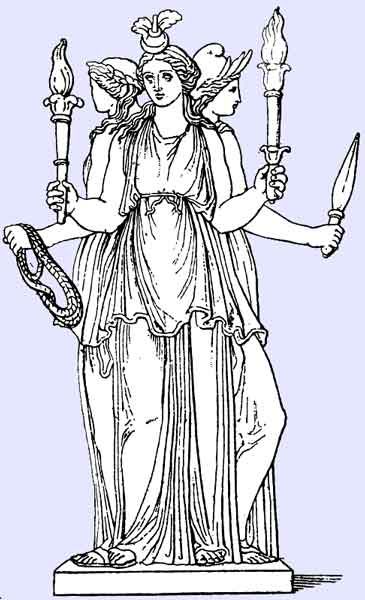
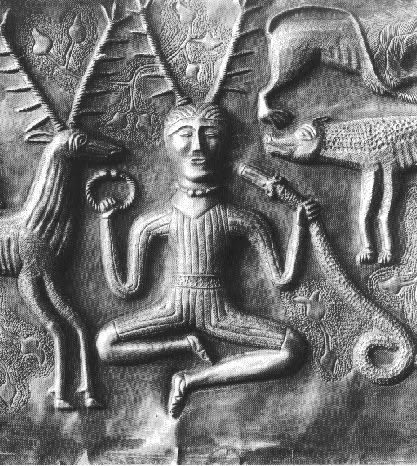
Hecate and Cernunnos: Locating the proto-European spiritual paradigm

A few evenings ago, I had an online chat with a Celtic polytheist. When asked what my spiritual paradigm was, I tried to convey across that I was an adherent of European paganism aka "European witchcraft".. not Wiccan. She seemed to be against the Wiccan concept partly because it was so eclectic, which makes sense. However, when pressed for a rundown of deities, I mentioned Hecate and Cernunnos. Being someone who doesn't believe in mixing paradigms, she quickly responded by finding it odd that "Cernunnos is Celtic and Hecate is Greek." She herself seemed confused as to whether she was a Gaelic polytheist or a Gaulish polytheist.

This brought up the issue of the proto-European--aka "Alpine race"--role in the ancient world. To begin with, people just can't seem to grasp the fact that the Europe of the last glacial movement was one which was basically devoid of both Mediterranean and Teutonic peoples... and it was almost half covered in massive ice sheets. Demographically, Europe, north Africa, and the Middle East/western Asia cannot be compared to today.

Hecate seems to clearly be a deity which predates classic Greek mythology... clear back to the proto-European world. I believe a local name--in what is now Greece and Turkey--for a "European goddess"... not a "Greek goddess." The Mother Goddess, or what I call "the Almother." Being that Hecate is perhaps the strongest historical manifestation for this goddess, then her name would seem to be a good one to use. The gods and goddesses of Greek antiquity were different from those of the more distant past. The Almother was a European goddess... which manifested in Greece as Hecate. Just for the record, this was thousands of years before there were any Turkic people in what is now Turkey.

Cernunnos was probably a fusion of the proto-European "horned god" and Odin or Tyr of the incoming Teutonic peoples. Therefore "Cernunnos"--which is a Romanized name for the chief god of Gaul--is as much proto-European as he is Gaulish/Celtic. I just don't see the point in renaming the Mother Goddess and Horned God of the proto-Europeans. There probably was not "one name" for these deities, but regional names for them. Stewart Farrar, a pioneer of Wicca, used the name "Karnayna" for Cernunnos. Hecate is also spelled "Hekate." To attempt to make some distinction, perhaps these names could be used since they possibly might be closer to the proto-European names in those locales, as well as being the strongest manifestations of "the Alfather" (Cernunnos) and "the Almother" (Hecate).


When coming up with a name for a larger collective, most often one must use some local name. There's often no way around this. For example, the name "Asatru" is an Icelandic name... used for a larger Odinic collective. There were other local names as well. Therefore "Asatru"--within the expanded meaning of the collective--can be used in reference to the Odinic manifestation of Austria, Ukraine, or Spain. It's no longer just in reference to Iceland. Coming up with entirely new names for every expression of the same thing would add further confusion to an already somewhat confusing endeavor.


Vehmology

"Vehme" stands for the same five elements (earth, air, fire, water, and spirit) as does the pentacle star, and seems to have been the basis for European witchcraft. The proto-European spiritual tradition was based on science! It took into account the metaphysical... "spirit." What I call "Vehmology" is science. Magic and science were the same. The true purpose of the coming "Religion vs. Atheism" conflict in society is to prevent the scientific study of metaphysics. Closed-minded religion, closed-minded Atheism, and closed-minded science all have a vested interest in preventing the mere academic study of metaphysical science, which makes them Hegelian "opposames" rather than true opposites.

.

Saturday, June 7, 2014

Maddalena Taluti: Daughter of Wisdom


Borrowed from www.stregheria.com:


Maddalena

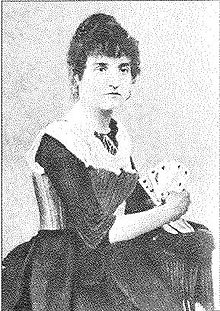
In the history of Witchcraft there is perhaps no figure more mysterious than the Witch known as Maddalena. As described by folklorist Charles Leland in several of his books, Maddalena was an Italian fortune teller and Witch. She supplied Leland with a great deal of Italian Witch lore including the text Leland later published as the Gospel of the Witches in 1899. Maddalena was also known to folklorists Roma Lister and Lady de Vere (to who she was introduced as "Margherita").

New findings related to Maddalena have recently come to light through some research I conducted at the Library of Congress. At the Pantheacon conference, on February 17th, 2008, I presented a copy of a page from The International Folklore Congress: Papers and Transactions, 1891. On page 454, Maddalena's name appears as a contributor to an exhibit presented by Charles Leland. Her name is given as Maddalena Taluti. In the modern Pazzaglini translation of Aradia, contributing writer professor Robert Mathiesen wrote that he believed Maddalena's last name to be Talenti. In light of new findings he is incorrect, but he does state that her name was almost illegible in the document he examined.


According to Leland, in his book Etruscan Roman Remains, Maddalena was originally from the town of Rocca Casciano, which is now called Rocca San Casciano. It is located in the Province of Forli-Cesena in the Italian region of Emilia-Romagna. She reportedly traveled a great deal, making a living telling fortunes and selling charms.  According to Leland, Maddalena claimed to have been trained in a family tradition of Italian Witchcraft, which was passed on to her by aunts and by her step-mother.

The Aradia material obtained for Leland differs greatly from the material that Maddalena had previously supplied to him. In the book Etruscan Roman Remains, Leland describes the Witches of Italy as being both good and bad.  By contrast the Aradia material portrays Witches in a negative light. It is noteworthy that he describes a group that he calls the "beautiful witches of Benevento." Concerning Maddalena herself, Leland describes her as:

"a young woman who would have been taken for a Gypsy in England, but in whose face, in Italy, I soon learned to know the antique Etruscan, with its strange mysteries, to which was added the indefinable glance of the Witch.  She was from the Romagna Toscana, born in the heart of its unsurpassingly wild and romantic scenery, amid cliffs, headlong torrents, forests, and old legendary castles. I did not gather all the facts for a long time, but gradually found that she was of a Witch family, or one whose members had, from time to immemorial, told fortunes, repeated ancient legends, gathered incantations, and learned how to intone them, prepared enchanted medicines, philtres, or spells. As a girl, her Witch grandmother, aunt, and especially her stepmother brought her up to believe in her destiny as a sorceress, and taught her in the forests, afar from human ear, to chant in strange prescribed tones, incantations or evocations to the ancient gods of Italy, under names but little changed, who are now known as folletti, spiriti, fate, or lari - the Lares or household goblins of the ancient Etruscans."

After receiving material from Maddalena, which became the foundation for the books Legends of Florence and Etruscan Roman Remains, Leland made another request. In 1886, Leland asked Maddalena to try and locate a text that he had heard of that was a type of Witches gospel. Eleven years later she sent him some material that Leland published as Aradia; or the Gospel of the Witches.  It is noteworthy that Maddalena had fulfilled Leland's previous requests for material within a short period of time. The fact that it took her ten years to present the Aradia material strongly suggests that she was originally unaware of it. This further suggests that the tradition it represented was not the one she personally practiced.


The tradition that Maddalena most likely practiced is reflected in Leland's books Etruscan Roman Remains, Legends of Florence, and Legends of Virgil. The portrayal of Witches and Witchcraft in Leland's Gospel of Aradia does not reflect the same image as his earlier works. This is another indication that the material came from a system outside of Maddalena's own knowledge and experience.

A letter from Leland to his niece, which I presented a copy of at the Pantheacon conference, describes Maddalena performing a ritual in which she invokes a goddess and a god. During the invocation, Maddalena reportedly went into convulsions, and Leland had to send out for two pints of brandy in order to restore her back to normal. This speaks to Maddalena as a genuine practitioner of the Old Religion. Leland goes on in the letter to say that if ever there was a true depiction of the witch, Maddalena demonstrated it through her magic.

In the book Aradia, Leland notes that he lost touch with Maddalena after receiving a letter from her that she was marrying her shoemaker (Lorenzo Bruciatelli) and immigrating to America. As a result of this comment, the view has been held that Leland never heard from Maddalena again, and what became of her is unknown.  Fortunately, another recent discovery by me came in the form of a letter found in the archives of the Library of Congress (buried in a stack of old letters). The letter, written by Leland to his niece, mentions that Maddalena did not move to America, but left her husband and went to Genoa to make a living there on her own. She wrote to Leland letting him know what happened, and she asked him if he could send her ten francs as she was in a difficult financial situation. He complied, but it seems that the two never met again after this communication.

As the materials discovered in my research continue to be read and documented, many more interesting tid-bits no doubt await those who are interested in Leland, Maddalena, and Aradia.


.

Monday, June 2, 2014

The Arctic Home in the Vedas: Part 18 - "Arkaim"


Although I find myself shifting a bit while looking at all of this evidence, it seems virtually certain that the "Aryans" were neither Germanic, Iranian, or Indian in the modern sense of those terms; but rather clearly were a special fusion of ancient true-Mediterraneans with south-migrating pure Teutonic people. When I say "pure," I mean that they were a little different than modern Germanic people who are basically a proto-European and Teutonic mixture. I think they probably would resemble each other though. It would be fair to loosely label them "ancient Persians."


Arkaim: a time when science and magic were one
Arkaim (Wikipedia)

Arkaim is an archaeological site situated in the Southern Urals steppe, 8.2 kilometres (5.1 mi) north-to-northwest of Amurskiy, and 2.3 km (1.4 mi) south-to-southeast of Alexandronvskiy, two villages in the Chelyabinsk Oblast, Russia, just to the north from the Kazakhstan border.

The site is generally dated to the 17th century BC. Earlier dates, up to the 20th century BC, have been proposed. It was a settlement of the Sintashta-Petrovka culture [probably speakers of the ancient Persian-Aryan language].

The evidence shows that the general territory which we now call Kazakhstan was likely one of the first Teutonic settlements after the last glacial movement. As to whether or not Arkaim itself was constructed by Teutons, Mediterraneans, or Aryans--I don't think is truly known, and may obscure more important questions. I would guess, based on it's northern location, that the population was "Aryan," with more of a Teutonic mixture.


Settlement

Although the settlement was burned and abandoned, much detail is preserved. Arkaim is similar in form but much better preserved than neighbouring Sintashta, where the earliest chariot was unearthed. The site was protected by two circular walls. There was a central square, surrounded by two circles of dwellings separated by a street. The settlement covered ca. 20,000 m2 (220,000 sq ft). The diameter of the enclosing wall was 160 m (520 ft). It was built from earth packed into timber frames, and reinforced with unburned clay brick, with a thickness of 4–5 m (13–16 ft). and a height of 5.5 m (18 ft). The settlement was surrounded with a 2 m (6 ft 7 in)-deep moat.


There are four entrances into the settlement through the outer and inner wall with the main entrance to the west. The dwellings were between 110–180 m2 (1,200–1,900 sq ft) in area. The outer ring of dwellings number 39 or 40, with entrances to a circular street in the middle of the settlement. The inner ring of dwellings number 27, arranged along the inner wall, with doors to the central square of 25 by 27 m (82 by 89 ft). The central street was drained by a covered channel. Zdanovich estimates that approximately 1,500 to 2,500 people could have lived in the settlement.


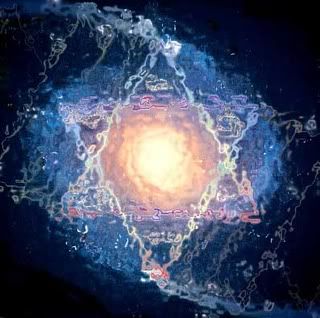
The six-pointed hexagram, sacred ancient symbol for Saturn
Surrounding Arkaim's walls, were arable fields, 130–140 m by 45 m (430–460 ft by 150 ft), irrigated by a system of canals and ditches. Remains of millet and barley seeds were found.

The 17th century date suggests that the settlement was about co-eval to, or just post-dating, the Indo-Aryan migration into South Asia and Mesopotamia (the Gandhara grave culture appearing in the Northern Pakistan from ca. 1600 BC, the Indo-European Mitanni rulers reached Anatolia before 1500 BC, both roughly 3,000 kilometres (1,900 mi) removed from the Sintashta-Petrovka area), and that it was either an early Iranian culture, or an unknown branch of Indo-Iranian that did not survive into historical times.


Arkaim: Russia’s Ancient City and the Arctic Origin of Civilization

This is a fascinating article, but long. I would recommend  http://www.fromtexttospeech.com/ for long articles. You can enter large blocks of text, and it will read it back to you... and you may even save the audio file. This important article both clarifies the bigger picture, as well as poses even more questions. Recent stunning archeological finds have added more credibility to these ideas. These very ancient sites were both cities, as well as "wisdom centers." They were constructed with magical properties aka "sacred geometry" based on ancient wisdom aka "science," with astronomical observatories. Their "Cult of the World Pillar" may have been the basis for the "World Tree" from numerous cultures.

Ancient symbols--such as the Swastika, the Triskellion,  the six-pointed Hexagram ("Star of David"), and the Pentagram--were a big part of this sacred geometry. Ironically, the Swastika (symbol of our "primary sun") and the six-pointed Hexagram (symbol of our once "second sun") were both once beloved sacred symbols of scientific geometry within this bio-astro-theology. Today, when the twin-spiritual infants--closed-minded religious supremacists and closed-minded scientific atheists--engage in debates, we can see just how far we have devolved spiritually.


Arkaim: Russia’s Stonehenge and a Puzzle of the Ancient World
 

Arkaim structure

Arkaim may have functioned as both a preemptive place of refuge, as well as centers of spirituality, science, and wisdom. A place where ALL FIVE POINTS of science were honored.


Arkaim Google images (must see!)


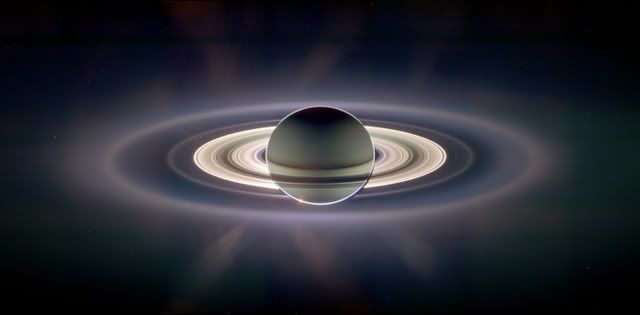
Saturn the dwarf star, once our "second sun"

The original Teutonic race first dwelt north of the Himalayas, and up to the north pole when Saturn was our active "second sun" in the north sky, and this region was daylight twenty-four hours a day. The Triskellion was likey their main pre-Aryan cultural symbol early on. Arkaim was one of the post-glacial cities, constructed within the science of sacred geometry. They lived in spiritual harmony with the Earth, and utilized its free energy. Magic and science were one. When Saturn became a dwarf star, this changed everything. The word "Satan" is really just another word for Saturn. There exists today, a strange "Cult of Saturn" which somehow believes that there is a competition between the suns, and the mere existence of the ancient Saturnian sun is something which must be kept from us... as an unfortunate part of "this fetish."


Arkaim swastika city 1 (video)

These videos are based on the above article, and are from a Slavic-nationalist view of the world. I think this outdates the world of 4,000 years ago by a lot, and we shouldn't be rushing to conclusions. Mainstream Western historians and archeologists, in usual fashion with things they cannot explain, for the most part... have simply chosen to ignore it. 


The Teutonic sky god Odin
Arkaim swastika city 2 (video)

Arkaim

Arka = "Earth"

Im = "Sky"

"The place where the sky touches the Earth"

The city was constructed in the model described in ancient text of Troy in Homer's 'Iliad', in Plato's "Atlantis," Electris in "Hyperborea," and Asgard in the Norse 'Edda'.


Arkaim swastika city 3 (video)

Arkaim was a shrine dedicated to the Aryan Sun religion. yet the roots of its dedication would have lain ultimately in the far older cult of the Pole star (Saturn). 

Swastikas are featured prominently among the many artifacts unearthed in Arkaim. It should also be mentioned that there are other ruins connected to Arkaim in the surrounding area.

It is the oldest religion known to us and goes back to the most remote antiquity when men saw the heavens as revolving around the axis of the Pole Star. Only later did the Sun, as the center of the revolving stellar system, replace the Pole Star as the supreme deity of the Pillar cult and lead to the elevation of the Sun God of the Indo-European peoples.

There it is. The "Pole Star" Saturn fizzled out thousands of years ago, and was replaced--at least in the northern hemisphere--by the Sun as the "supreme deity."

"Troy towns" like Electris--and Arkaim--were built as stellar observatories. Their function was to unite earth to the starry cosmos above according to the principle of "as above so below" by means of a central axis symbolized by a stone pillar.

Now it gets into some of the roots of early Paganism, some of which exists to this day; as well as early astro-theology and the "electric universe" mentioned in earlier sections. Just the fact that some of the concepts survived in forced underground schools of knowledge--or even within family lines!--is amazing just in itself.


Arkaim swastika city 4 (video)

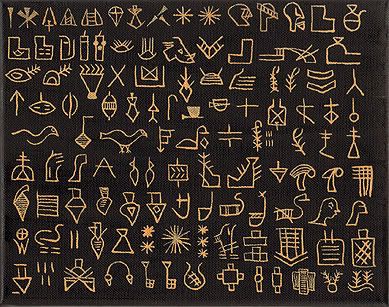
Some "Slavic nationalist" types have taken this pretty far, as you may see here with their history of "Slavic script." I think this should be pondered, but it seem pretty clear that this civilization predated modern ethnic groups as we may know them today.


Arkaim swastika city 5 (video)

The various types of Swastikas and sun wheels found in Arkaim and with the Tarim mummies brings up the inescapable question of... what did the National Socialists really know about this ancient region? These finds were not known to the world then, yet some of these symbols were used by the Third Reich. One major symbol associated with some of those former Teutonic territories was the Triskellion, a symbol not used by them.


Arkaim swastika city 6 (video)

It should be stated again that Arkaim has much to do with the old "Golden Age" covered earlier. A time when two suns were present in our sky. As far as where "Atlantis" or "Lemuria" fit into this, that's more than I'm willing to cover here due to lack of evidence and continuity. But that doesn't mean that it's not possible. Also, the many large and very long-skulled remains found on different continents likely fit into this somehow.


Tracking the Aryans 2011 , with Bettany Hughes ,Arkaim swastika

There really shouldn't be "political implications" to ruins and artifacts. The "Aryans" were not Iranians, Indians, Germans, Scandinavians, Semites, or Slavs. They were the fusion of ancient Teutons from north of the Himalayals, who migrated south after the last glacial movement, and ancient true-Mediterraneans. There's almost a neuro-psychological fear of the world "Aryan," who were merely ancient Persians... and those who eventually migrated outward. Arkaim and its allied cities may have been a northern flank of the Aryan civilization. There may not be a single word in existence which makes so many people, so stupid, so quickly!

Archeologist David Anthony--much like any religious zealot--clearly is horrified at the mere thought of a northern origin of the ancient Aryans... so he apparently has decided to play what I would call the "willful ignorance card." He's playing it off as if modern demographics are the same as they were 4,000 years ago... and the perceptions of the average person would tend to go along with his train of thought. On the other hand, archeologist Bettany Hughes is open-minded and follows what the evidence shows... and is much more worthy of the title of the profession, as well as the spirit of exploration.

The gods and goddesses of this northern flank culture seemed to resemble those of Asatru. There was a chief deity, a sky-god. Well, Odin is/was a "sky god." There was a god of "war and thunder," which sounds a lot like Thor. There is evidence that the native spirituality of the Teutons seems to have had a great impact on the Aryan civilization, and as it migrated elsewhere. Indians, who tend to be ethnocentric, don't like ideas like this; yet we are still presented with the question of why the Icelandic and Sri Lankan languages are in the same language family? The only explanation seems to be 1) that the world population was comparatively low; 2) that the basic root of the Indo-European language family was from the early Teutonic language; 3) that most of those Teutons--over thousands of years--migrated westward into Europe and strongly influenced those languages; and 4) that other Teutons migrated south into ancient Persia, where they strongly influenced what was to become the Aryan language... which later migrated and dispersed into India. The mainstream theory is one of politically correct paranoia and nationalist megalomania; the ideas here project something of a shared world heritage, and the facts support it.


Again, I feel the need to clarify yet again. This has nothing to do with Teutonic supermen founding civilization. Civilization overwhelmingly was a product of ancient true-Mediterraneans. These migrating Teutons must have been fascinated by the Mediterraneans they encountered. The Teutonic symbol may have been their symbol for the Sun, the Swastika; however, the evidence is still unclear as to the origin of the Swastika. For the Mediterraneans of that time and place, at least one of their chief symbols was the six-pointed Hexagram, the symbol of Saturn. Quite ironic, in light of the projected "controversy." Just the fact that modern society isn't even aware that this Hexagram is in fact the symbol of Saturn, says so much about the superstitions and paranoia of the modern world. Modern scientific careerists might look down at the superstitions of some tribe in the South Pacific, yet many display an equal array of paranoiac quirks. In a hypothetical "fair world," both the Swastika and the six-pointed Hexagram should be renamed and only associated with the ancient cultures from which they sprang. There aren't very many things more immature than protesting against ancient symbols.

Arkaim

Arka = "Earth"

Im = "Sky"

"The place where the sky touches the Earth"

Odin, the Teutonic "sky god"

Arkaim: "The place where the sky touches the Earth"... "The place where Odin connects with his people"... long ago... on that vast central Asian plain... which may have been a woodland. Unlike the Saturn-worshiping Sumerians, Arkaim was a temple of the Sun.

An understanding of the forces which have shaped human history is predicated not only on facts to be learned, but also on secrets to be discovered.
  .