Showing posts with label pagan. Show all posts

Sunday, January 17, 2016

'Rhiannon'


Rhiannon, a figure in English and Welsh literature and earlier Celtic mythology, as well as the great song by Fleetwood Mac. The song lyrics almost suggest more of a spirit than a person, or at least a free spirit. The song, as well as Stevie Nicks, were featured in a couple of episodes of 'American Horror Story: Coven' in 2014; centering around the character Misty Day who looked a bit like the young Stevie Nicks actually.

If you visit this video webpage, it's easy to see that younger horror fans and pagans have discovered the song.....

A small fire crackling away on the patio, the night sky above me, cold winter chill to the air, candles softly glowing and a glass of mead in my hand as I listen to this song and twirl and dance, taking in the elements. :) By the Gods and Goddess' I love this song! Now, back to my crazy dancing...(Wonder what my new neighbours will think when they catch me dancing in my garden at 2.30am? lol!)
-- VampiressOfShadows 

Rhiannon.... is often considered to be related to the Gaulish horse goddess Epona. The resemblance is her horse affinity, and her son's, as mare and foal; also a paradoxical way of sitting on her horse in a calm, static way, like a key image of Epona. While this is generally accepted connection among scholars of the Mabinogi and Celtic studies, Ronald Hutton as a general historian, is sceptical.

Misty Day
  .

Saturday, January 16, 2016

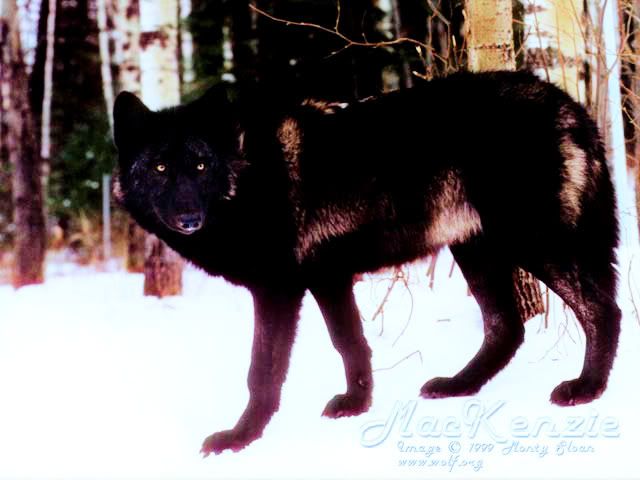
Oms upon the approaching full wolf moon II


More thought-provoking quotes

I just wanted to add regarding the first quote, as it was mainly in regards to people who "just follow orders" regardless if it's right or wrong, or the unthinking underlings of demigod figures in authority. It wasn't in regards to "religion" in particular.

What is a cult?
A system of religious veneration and devotion which expouses beliefs that are dangerous, especially to the lives, rights and freedoms of those who are NOT its members.
-- Mark Passio

It is the province of knowledge to speak and it is the privilege of wisdom to listen.
-- Oliver Wendell Holmes, Sr.

Integrity without knowledge is weak and useless, and knowledge without integrity is dangerous and dreadful.
-- Samuel Johnson

Hospitality
The virtue which induces us to feed and lodge certain persons who are not in need of food and lodging.
-- Ambrose Bierce, 'The Devil's Dictionary

The man of science is a poor philosopher.
-- Albert Einstein

Tradition is a guide and not a jailer.
-- Somerset Maugham

Of all tyrannies, a tyranny sincerely exercised for the good of its victims may be the most oppressive. It would be better to live under robber barons than under omnipotent moral busybodies. The robber baron's cruelty may sometimes sleep, his cupidity may at some point be satiated; but those who torment us for our own good will torment us without end for they do so with the approval of their own conscience.
-- C.S. Lewis


3 unusual towns

Arden, Deleware (Satanism), Silverton, Oregon (Freemasonry), and Islamberg, New York (Islam).


The Prince symbol

Did you know that the musician Prince changed his name to a "non-name" symbol to get out of massive contractual obligations and fees. Since he literally had no written name, private legally binding contracts no longer applied to him. I'm sure that it was a little more complex than that, but that's the gist of it. That's why he went from Michael Jackson type fame, to being largely ignored by the media. He made powerful men angry. Also, the Dr. Pepper "Mr. Sweet" ads--although funny--are clearly a caricature of him which goes against the usual protocol of commercial industries and advertisement.


The "Jesus tree"

A fluke of nature?


Ancient Greek Temple Aligned to Full Moon

An ancient Greek temple was built to face the setting full moon near the winter solstice, according to new research that sheds new light on the orientation of sacred monuments.


.

Friday, May 1, 2015

The Maypole and May Day - Part 1

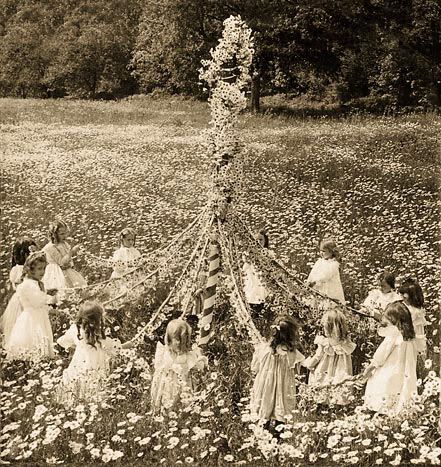
May 1 marks the ancient northern folk festival of "May Day." Part of the festiveness of this European celebration is centered around the Maypole. 

May Day on May 1 is an ancient Northern Hemisphere spring festival and usually a public holiday; it is also a traditional spring holiday in many cultures. Dances, singing, and cake are usually part of the celebrations that the day includes.

A maypole is a tall wooden pole erected as a part of various European folk festivals, around which a maypole dance often takes place. The festivals may occur on May Day or Pentecost (Whitsun), although in some countries it is instead erected at Midsummer. In some cases the maypole is a permanent feature that is only utilized during the festival, although in other cases it is erected specifically for the purpose before being taken down again.

Primarily found within the nations of Germanic Europe and the neighboring areas which they have influenced, its origins remain unknown, although it has been speculated that it originally had some importance in the Germanic paganism of Iron Age and early Medieval cultures, and that the tradition survived Christianization, albeit losing any original meaning that it had. It has been a recorded practice in many parts of Europe throughout the Medieval and Early Modern periods, although became less popular in the 18th and 19th centuries. Today, the tradition is still observed in some parts of Europe and among European communities in North America.


Like so many aspects of ancient European folk traditions, May Day was co-opted by Christian denominations and political extremists. Still, it remains a powerful symbol of how ancient peoples related to the Earth, the Sun, the Moon, the seasons, their harvests, and each other. May Day--although more Germanic in tradition--was also celebrated by the Romans.

The earliest May Day celebrations appeared in pre-Christian times, with the Floralia, festival of Flora, the Roman goddess of flowers, held April 27 during the Roman Republic era, and with the Walpurgis Night celebrations of the Germanic countries. It is also associated with the Gaelic Beltane, most commonly held on April 30. The day was a traditional summer holiday in many pre-Christian European pagan cultures. While February 1 was the first day of Spring, May 1 was the first day of summer; hence, the summer solstice on June 25 (now June 21) was Midsummer.

.

Friday, January 30, 2015

Reflections upon Lupercus

Festa di Lupercus (February 2)

The Festival of Lupercus marks the puberty of our Lord, Lupercus. The Grigori have set “twelve labours” before the young Wolf God that he must master to prove his worth as the new Sun God. Lupercus proves his worth by completing the tasks. Lupercus is invoked at this time of year to scatter the wolves of the dark winter night. Assisting us in releasing the atavistic power within us all. Through him, we are free of the constraints of our bodies, and of the winter season.

Clearly "Lupercus" stems from the root word "Lupus"... or wolf. The Stregherian legend may come from ancient Etruscan mythology, or possibly may be tied to pre-Etruscan pagan culture...or perhaps both. This festival is the equivalent of Imbolc. While I am on the subject, my position on Stregheria is that it is impossible to pacify everyone as to forming one tradition. Raven Grimassi has made this crystal clear, yet some people are still too dense to grasp the simple idea. His family tradition from the Naples area, could even be a bit different from a nearby part of Campania. What is so hard to understand about that!??


Groundhog Day (February 2)

The celebration, which began as a Pennsylvania German custom ("Grundsaudaag ") in southeastern and central Pennsylvania in the 18th and 19th centuries, has its origins in ancient European weather lore, wherein a badger or sacred bear is the prognosticator as opposed to a groundhog. It also bears similarities to the Pagan festival of Imbolc (the seasonal turning point of the Celtic calendar, which is celebrated on February 1 and also involves weather prognostication) and to St. Swithun's Day in July 15.

The annual "Punxsutawney Phil" Groundhog Day celebration, depicted in from the memorable 1993 Bill Murray movie 'Groundhog Day', is an actual event. Not to be left out, the holiday also has a Christian connection with "Candlemas"... also on February 2.


"Three blackbirds" 

In my family's old arms, one symbol which is very present is of "three blackbirds." That's curious enough in of itself, except that I experience a lot of synchronicity tied to this symbol. I frequently see three blackbirds, and it's difficult to express how this complex synchronicity occurs. However, for example, just looking this concept up online in search of a possible meaning.. I noticed very non-ambiguous symbols from "my own personal unrelated last twenty-four hours" merely in the search. A person cannot truly prove synchronicity to anyone, except to themselves. I can go many weeks without anything.. then suddenly a deep pattern unfolds.


Valentine's Day (February14)

Valentine's Day is of Christian origin; although the "heart of Freya" is frequently used to symbolize it. St. Valentine's Day began as a liturgical celebration one or more early Christian saints named Valentinus. 

Another symbol is the Roman god Cupid. In classical mythology, Cupid (Latin Cupido, meaning "desire") is the god of desire, erotic love, attraction and affection. He is often portrayed as the son of the love goddess Venus, and is known in Latin also as Amor ("Love"). His Greek counterpart is Eros.

Legend

Saint Valentine supposedly wore a purple amethyst ring, customarily worn on the hands of Christian bishops with an image of Cupid engraved in it, a recognizable symbol associated with love that was legal under the Roman Empire; Roman soldiers would recognize the ring and ask him to perform marriage for them. Probably because of the association with Saint Valentine, amethyst has become the birthstone of February, and it's thought to attract love.


Folk tradition

Another proverb says "Valentin – prvi spomladin" ("Valentine — the first spring saint"), as in some places (especially White Carniola), Saint Valentine marks the beginning of spring. Valentine's Day has only recently been celebrated as the day of love. The day of love was traditionally March 12, the Saint Gregory's day, or February 22, Saint Vincent's Day. The patron of love was Saint Anthony, whose day has been celebrated on June 13.


Lupercalia (February 13 to 15)

Lupercalia was a very ancient, possibly pre-Roman pastoral festival, observed on February 13 through 15 to avert evil spirits and purify the city, releasing health and fertility. Lupercalia subsumed Februa, an earlier-origin spring cleansing ritual held on the same date, which gives the month of February (Februarius) its name.

It's interesting to note that Lupercalia and the Festival of Lupercus both likely originated with the Etruscans, and both share the same root word ("Lupus").

.

Tuesday, October 28, 2014

'Odin, Hear Me!' by Steve McNallen

'Odin, Hear Me!'

This is a prayer (if that's the word) to Odin I wrote back in the 1970's, and published in A Book of Uncommon Prayers, available through the Asatru Folk Assembly.

Odin! Rune-God, Raven-God, Wolf-God, Odin!  I call out to you, not as a slave, or on bended knee, but on my feet and open-armed, a befits your offspring.  Watch me as I struggle.  But the fight and the fame must both be mine; grant me that victory which I win by might and main.  If I fight well, Odin, take me into Valhalla, where I may feast and drink and be merry with your heroes until the time comes to fight once more.  Odin, hail!

Steve McNallen

Asatru Folk Assembly
http://runestone.org


.

Thursday, October 23, 2014

Papal Bull of 1455


Papal Bull of 1455:

...Champions of the Christian Faith...

to invade, search out, capture, vanquish and subdue all Saracens and Pagans whatsoever and other enemies of Christ wheresoever placed and to reduce their persons to perpetual slavery...

The struggle of Christian and Saracen was one of which both sides played the roles of both perpetrator and victim. In other words, the Muslims of those times committed the same type of aggression as above. However, with the Pagans--or "native believers" (those who believed in the spirituality of their ancestors--the socio-political/religious dynamic was very different. These were not people from some foreign land, but those who adhered to the pre-Christian ways of at least 40,000 years of history.

.

Friday, September 5, 2014

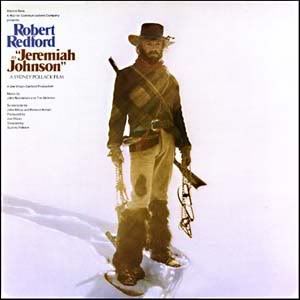
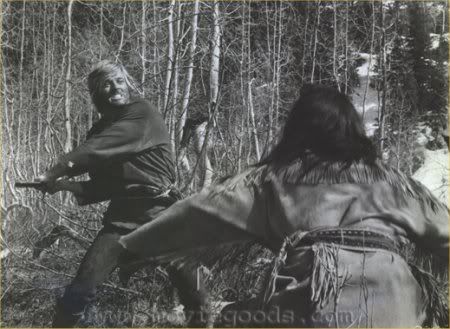
'Jeremiah Johnson' - movie review


'Jeremiah Johnson' (Wikipedia)

Jeremiah Johnson is a 1972 western film directed by Sydney Pollack and starring Robert Redford as the title character and Will Geer as "Bear Claw" Chris Lapp. The film has been said to have been based in part on the life of the legendary mountain man Liver-Eating Johnson, based on Raymond Thorp and Robert Bunker's book 'Crow Killer: The Saga of Liver-Eating Johnson' and Vardis Fisher's 'Mountain Man'.

The script was written by John Milius and Edward Anhalt; the film was shot at various locations in Redford's adopted home state of Utah. It was entered into the 1972 Cannes Film Festival.


I try to be somewhat objective when typing movie reviews, but I think I will put my own stamp on this one. I saw a lot of symbolism that I wanted to delve into. I think 'Jeremiah Johnson' was a great movie, an original western, and it's a distinctly Ameican story. When I viewed it again recently however, I saw even deeper connections. I saw Odinic connections for one thing. The rugged White characters, with their long beards and survivalist mindset, reminded me of the perception of what Germanic tribesman were like. Perhaps something like the Langobards, and the Camunians were a mountain people. Also, the Amerindians represented the northern Mongolians who have historically shared the northern stretches of the Earth. The "son" at the end of Johnson reminded me of a Norse or Viking name, of which it probably has strong connections to. One scene referred to "Jeremiah" as a "Christian name," and I suppose that it could be said that "Johnson" was symbolically his "Odinic name." The movie portrays pure evolutionary struggle.


All of the actors and actresses were good in their roles.. and I thought that the three primary mountain men (Robert Redford, Will Geer, and Stefan Gierasch as Del Gue) were great.. real "characters" in the other sense of the word. Robert Redford and Will Geer are/were so totally different in every way than their characters here... the magic of the movies. The Pagan Amerindians, as well as the White mountain men (my symbolic "Odinic" survivalists) were pure fighting machines.. and I think the movie gave at least a glimpse of that. Apparently, the real man about whom the film was based, "Liver-Eating Johnson," was so fearsome that the Amerindians--rather than hate him--actually honored him. At one point, Johnson asked a settler what the neat collection of artifacts were near his cabin, and the settler told him that it was a monument to him (Johnson). "Some say that you're dead on account of this. Some say that you'll never die on account of this."

There was an actual Del Gue, who was his trapping partner according to the real account. There were a lot of French who came into probably Quebec mostly, and worked their way down into the United States frontiers like the Rocky Mountains, and established rural trade economies. The Rocky Mountains encompass such a vast highlands region in the center of North America, not just Colorado. They stretch from northern New Mexico to northern British Columbia. According to Wikipedia: Mountain men were most common in the North American Rocky Mountains from about 1810 through the 1880s (with a peak population in the early 1840s). The movie at times, sort've symbolically, showed the Rocky Mountains as "the top of the world"... a tremendous allure.

"The Rocky Mountains is the marrow of the world. I ain't ever seen 'em, but my heart tells me that the Andes is foothills and the Alps are for children to climb." --Del Gue

The soundtrack is worth mentioning. It's a blend of American folklore, the spiritual, and nature... and it worked well within the movie. It reflected both nature's harmonious and innocent side.. and it's harsh and violent side. The bear, to me, represents these dual sides of nature. The movie begins with Jeremiah Johnson arriving by river boat at a trading post at the base of the mountains, ready to begin his trek. Soon, a particular wise-looking Amerindian observes Johnson appearing somewhat buffoonish as he tries to catch fish in a river amid the snow. Much later, well after Johnson has been transformed into a legend, he runs into that same Amerindian... but I don't want to give away the powerful scene.

Numerous scenes during the winter show how harsh and lonely mountain life can be. The vast majority of people today could not survive long if they were placed in that environment, no matter how well equipped they were. The log cabins shown in the movie were great, with a particular wide and low to the ground design. To me, symbolically, this type of transformation of a person is well represented by the "werewolf" concept. Even a soft person could be transformed into a rough, survivalist, fighter if they were pushed to it... and they had the will to survive. In one scene, after he had to fight for his life, he gave out a loud scream... perhaps symbolically like a wolf's howl. A wolf can seem sort've happy-go-lucky... yet can become a ferocious fighter at the drop of a hat. The North American timber wolf is originally from Europe as their DNA has shown; having crossed an ice-bridge long ago. Coyotes are native to North America.

Part of the transformational concept is that a person living in the wild develops a "sixth-sense," which the movie portrayed. "Bear Claw," who became Johnson's mentor, said "The mountain has its own ways." I think he meant the cycle of nature, the cycle of life, the natural process of things. In this world, nature was in full command. That process is enhanced even more in the harsh mountains. There's a certain inherent morality to nature.

There is a book about the real person named John Johnson, known as Liver-Eating Johnson. It's called 'Crow Killer: The Saga of Liver-Eating Johnson'. The "Crows" were one of the Amerindians tribes, and he went to war with them after they killed his wife and unborn child. That's the account, and the larger "who did what to whom" is something that could be discussed all day. The struggle did symbolize the overall struggle between the two "northern races" over the course of history. Genghis Khan was a northern Mongol who invaded Europe. The earliest fossils in at least North America were proto-European ("Kennewick Man") and were apparently defeated by the incoming Mongols. However, basically these mountain men conducted peaceful trade with the native tribes, and there were missionaries, trading posts, etc.


The other book that the film was based on was 'Mountain Man', a fictional account of that period. I still remember that up to the late 70s, when someone liked a movie, there were no DVDs or even VHS tapes to buy. They would buy soundtracks, books, posters, or novelty items about a popular movie. This movie was popular, as it was the seventh highest grossing film in 1972.

I don't want to give away too much of the plot, but at one point the Crows kill Johnson's family in what was a revenge attack from their point of view. Johnson--my symbolic Odinic survivalist--gives them what appeared to be a "Viking funeal" by assembling the bodies and burning the cabin. I know, it probably wasn't intended to symbolize that... but I saw Odinic symbolism... or Pagan Amerindian symbolism for that matter. At one point, Johnson warned U.S. Cavalrymen not to enter Crow burial grounds... as they "guarded it with spirits."

The Del Gue character was a real wildman, with a real way with words. Near the end of the movie, he is riding away and gives a particularly great rant about being a mountain man... and it only really makes sense upon actually hearing it. Initially, his gregarious personality and headstrong manner overwhelmed Johnson... who was still a novice. However, upon meeting Johnson much later on, he appears somewhat in awe of the legend.. "Jeremiah Johnson." There were a lot of subtle messages like this that perhaps can't easily be put into words... but they helped make it a great movie.

Below, the theme song from the movie: 'The Way That You Wander'

The way that you wander is the way that you choose,
The day that you tarry is the day that you lose.
Sunshine or thunder, a man will always wonder.
Where the fair wind blows.


At the end of the movie... one extra line is added to the lyrics...

“And some folks say…he’s up there.. still…” 


 .

Tuesday, August 5, 2014

Hazel tree patchwork: Part 1


August 5th is known in pagan circles as the start of “Hazel Celtic tree month” or “Hazel Moon,” August 5th to September 1st. This appears to be originated from British Isles Celtic. I’m not sure it pertains to continental Celtic as well. 


******

The image above is Mount Shasta in far northern California. This 14,162 foot tall inactive volcano is the location of many mysteries, which ties into the "mystery of the mountain" concept covered here. Some of these old legends--such as connections to UFOs, Atlantis, Lemuria, "inner earth," etc.--are not covered on this blog. You can find much on YouTube about these legends of Mt. Shasta. I believe at the least that the mountain, which stands alone and is not connected to any other mountains, make a perfect antennae to the beyond. This energy may account for all the strange lights seen by people over the many decades.

******

One unusual little thing happened here recently. A calico-colored cat belonging to someone, has hung around here for the last few years. It always seems to be out and about, displaying it's casual nature.. "catitude" as some call it. While out in front, I saw a raven swoop down and attack it from the air as the cat was walking across the street. The cat looked surprised and trotted away. When a raven group sets up camp in an area, they drive all other birds and some animals away. They never show aggression against humans that I have ever known. Some years ago, I saw many white feathers swirling in the air out the window one day. Some ravens had attacked a sea gull, as the gulls frequently make their way from the coast to the bay over this area. I have seen them attack hawks on many occasions, with the hawks not seeming especially intimidated.

******


An American pioneer of modern Wicca, Margot Adler, passed away this past week. She had produced numerous books and other material on the subject. There's a well-known quote by her that is still relevant I think:

"We are not evil. We don't harm or seduce people. We are not dangerous. We are ordinary people like you. We have families, jobs, hopes, and dreams. We are not a cult. This religion is not a joke. We are not what you think we are from looking at T.V. We are real. We laugh, we cry. We are serious. We have a sense of humor. You don't have to be afraid of us. We don't want to convert you. And please don't try to convert us. Just give us the same right we give you--to live in peace. We are much more similar to you then you think." --Margot Adler


******

I had been curious about the significance of what is called the "new moon," when the moon is in it's darkest phase of its cycle. In a post on the Traditional Stregheria Yahoo Group I wrote:

"....during the new moon rite of this past week.. I not only felt nothing, but I felt depressing feelings. I made no connections at all, as I always have. This is the first time I have experienced this. I always make connections, often euphoric ones. I always feel so energized by the Moon, but I must have always taken this energy for granted... as though I though it a focal point like an antenae, and not a true intrinsic energy source. Did I feel sorrow for the absence of the energy source?

I don't like to sound confused or needy... but I am confused. I suspect that I will have part of my answer on the evening of Aug 9th... if everything is as it always has been for me.."


I'm anxious for the "supermoon" on August 10th, to see if all the energy and connections will come back for me. An online search for "new moon depression" seems to show that this wasn't my personal quirk, but something that many experience. Although there is ritual associated with the new moon, I'm not in a big hurry to try to connect with a new moon any time soon.


"New moon/dark moon magick can be used in several different ways.  It can be used to work with the ancestors, divination, destroying a disease, bindings and working with spirits of the underworld. 

You can do "crossroad" magick, in otherwords, if you don't have a crossroads nearby, you can create one on your altar.  However, it it only used if you have reached a crossroads in your life and you need to reach a decision, or for tough decision making purposes in which you may not know what road to take. 

New moons are also used to send negativity back that you feel is being sent your way." --Toni, administer of Traditional Stregheria Yahoo Group.

"I find I am 'strongest' and have the easiest time making connections during the new moon." --Alwaysride from the group
 
******

To go off-topic a little, a couple of days ago, I saw where the 2008 movie 'The Wrestler' with Mickey Rourke was on the Independent Film Channel. The movie won a number of awards, including a Academy Awards nomination for best actor and supporting actress (Marisa Tomei). I saw it for the first time a couple of months ago. I was thinking how this movie, in many ways, shows how life really is for most people. You're popular in some circles, neutral in others such as a job, and often treated shabbily during the day with strangers... such as a store clerk immediately reaching out and grabbing your money off the counter before you're even able to count.it. These things happen frequently to most people, and are usually just ignored. The vast majority of people don't like to admit to family and friends that they were treated in this manner by some damn stranger. Anyway, it was a good movie, with highs and lows, and a great ending... in its own way.

 
Also, related to the movie, there's a simple quote that rings true I think for just about everyone: "No matter how much that you have changed, you still must answer for what you have done." 

******

I have not yet seen the 'Hansel & Gretel: Witch Hunters' movies. Apparently I'm the only one who thinks that this concept just seems a little strange. A spiritual tradition which was the native culture once, shown yet again in a negative light, and with this..justification that they must be hunted down and murdered? What other religion would that portrayal be acceptable? Wow.. is this overly sensitive or unreasonable!?
 
******

It's a well-established fact that early Christian movements, for centuries, combined local pagan holidays and traditions into Christianity in order to make a smooth transition during the mostly forced conversion periods. The amount of such melding over time is pretty substantial, especially in regards to Christimas. It is then quite frustrating when certain overzealous Christian figures somehow try to suggest that these connections are part of some "occult conspiracy." If there are "occult conspiracies," they really have nothing to do with native European pre-Christian spiritual traditions. There is a big difference between eastern occultism and the forced occultism that was a result of Christian inquisitions. One such figure of many, is Doc Marquis. It's not that he's incorrect as far as these pagan connections, but he purposely misleads gullible people as to how this came about.

.

Tuesday, July 29, 2014

Annual "Carnival of Bagolino" in Val Sabbia - Part 2


Il Carnevale di Bagolino 

Translated from the video description:

The Carnival of Bagolino is a rare and precious survival of local folklore. The carnival has existed in this village from 1500 due to the isolated location and the passion of its people who handed it down from generation to generation. It gained growing notoriety, attracting the attention of scholars of ethnology. The Festival is divided into two distinct events, animated by elegant figures of Balarì (dancers and musicians) and the grotesque figures of Maschér (masks). 

This video is a documentary, and it shows more of the beauty of the village location in the Sabbia Valley. There are numerous other videos of the carnival. The festival seems to be a blend of both folk pagan and Christian elements. It seems appears to be disciplined as far as the symbolism it seeks to convey; as opposed to more urban festivals where people go out of their way to be bizarre... and perhaps miss the point. Part of the origin goes back to ancient fertility rites, and with this carnival occurring at the at the end of Winter.

.

Monday, July 28, 2014

Annual "Carnival of Bagolino" in Val Sabbia - Part 1


The dancers and masks of the traditional Carnival of Bagolino

By Claudia Moreschi - http://www.italianstorytellers.com/ - July 2, 2014

Dancers, masks and weird traditions. This is Bagolino Carnival!


Bagolino is a small village in Sabbia Valley, in the province of Brescia, on the border with Trentino Alto Adige. It is in the dairy production area of the local “Bagòss” cheese and is famous for its peculiar Carnival celebrations that date back to the XVI century, as documented by the writings preserved in the municipal archive.

Because of the isolated position of the village, the Carnival of Bagolino (also called ‘Bagosso‘ carnival) has preserved its historic characteristics during the years. Due to its particular folklore it has become increasingly renown drawing also the attention of scholar ethnologists. The Carnival of Bagolino has been ranked among the most important ethnological discoveries of the past 200 years.

The celebrations of the Bagolino Carnival are made up of 2 different performances, led by:


* the ‘Balarì‘, elegant dressed dancers and players

* the grotesque ‘Maschér‘ (masks).

The musical origins of the ‘Bagosso Carnival’ are yet to be discovered. Probably its music reportory roots in Continental Europe: according to scholars, it inherited the practice of instrumental musicians from Austrian Tyrol.

The movements of the dancers mime the ancient court dances, revisited and voiced in their own way by the Bagolino inhabitants.


The Balarì

‘Balarì‘, the dancers, perform only on the Monday and Tuesday of Carnival along the streets and in the squares of Bagolino. Their show is the most spectacular of all the Bagolino Carnival because of their peculiar music and refined dance. A unique event in Italy with only few equivalents in Europe. It provides a striking example of the level of complexity which a folk musical culture can reach.

Violin is the main instrument that gives the leading melody of the various songs that make up the large music repertory that accompanies the dances.

The dancers’ costumes are very characteristic. They wear a felt hat entirely covered by a long red ribbon cleverly folded, adorned with embroidery, jewelry and multicolored ribbons that make up a large bow. On the red band there are family (or borrowed) gold jewels (chains, brooches, earrings, rings etc.). That’s why they don’t peform their dance outdoors in case it rains : there is the risk of losing the gold!

The dancers’ face is hidden by an ivory mask and they wear a dark suit with jacket and pants to the knees, dark tie, white shirt, white gloves, white decorated socks and black shoes. On their shoulders they wear a large shawl with fringes falling down on their back and a wide silk stripe over their left shoulder with flower embroidery or lace inserts.


The Maschér

The tradition of the ‘Maschér‘ – the masks – has a more popular origin referring to the Carnival jokes. Identity is kept unknown.

The masks disordely move among the crowd wearing grotesque or frightening masks and wooden clogs that makes noise on the street pavement. They mock people by touching their genitals, an old habit reminiscent of ancient fertility rituals. Tradition has it that in ancient times the jokes had as polemical target the Counts of Lodrons, often hated by the Bagolino inhabitants.

The masks wear ancient traditional dresses; they usually move in pairs dressed disguised as old woman (‘vecia‘) and old man (‘vecio‘). In addition they move with an awkward posture, stomping and with a falsetto voice.

The maschér ritual is infused with symbolism and many gestures related to a courtship ritual.

The Carnival of Bagolino takes place every year on Sunday, Monday and Mardi Gras. This year will be on March from the 2nd to the 4th 2014.

Participation is free and recommended to anyone who doesn’t want to miss such an extraordinary and unique Carnival!


.

Sunday, July 27, 2014

Badalisc: Camunian folklore - Part III


Pre-Christian Alpine traditions

The central and eastern Alps of Europe are rich in folklore traditions dating back to Pagan (pre-Christian) times, with surviving elements amalgamated from Germanic, Gaulish (Gallo-Roman), Slavic (Carantanian) and Raetian culture.


Survival through the ages

Ancient customs survived in the rural parts of Austria, Switzerland, Bavaria, Slovenia, western Croatia and Italy in the form of dance, art, processions, rituals and games. The high regional diversity results from the mutual isolation of Alpine communities. In the Alps, the relationship between the Roman Catholic Church and paganism has been an ambivalent one. While some customs survived only in the remote valleys inaccessible to the church's influence, other customs were actively assimilated over the centuries. In light of the dwindling rural population of the Alps, many customs have evolved into more modern interpretations.


Krampus

The word Krampus originates from the Old High German word for claw (Krampen). In the Alpine regions, the Krampus is a mythical horned figure represented as accompanying Saint Nicholas. Krampus acts as an anti–Saint Nicholas, who, instead of giving gifts to good children, gives warnings and punishments to the bad children. Traditionally, young men dress up as the Krampus in the first two weeks of December, particularly in the evening of December 5, and roam the streets frightening children and women with rusty chains and whips and bells. This figure is believed to originate from stories of house spirits such as kobolds or elves.


Perchten

Originally, the word Perchten (plural of Perchta) referred to the female masks representing the entourage of an ancient goddess, Frau Perchta, or Pehta Baba as it is known in Slovenia. Some claim a connection to the Nordic goddess Freyja, though this is uncertain. Traditionally, the masks were displayed in processions (Perchtenlauf) during the last week of December and first week of January, and particularly on 6 January. The costume consists of a brown wooden mask and brown or white sheep's skin. In recent times Krampus and Perchten have increasingly been displayed in a single event, leading to a loss of distinction of the two. Perchten are associated with midwinter and the embodiment of fate and the souls of the dead. The name originates from the Old High German word peraht ("brilliant" or "bright").

Regional variations of the name include Berigl, Berchtlmuada, Berchta, Pehta, Perhta-Baba, Zlobna Pehta, Bechtrababa, Sampa, Stampa, Lutzl, Zamperin, Pudelfrau, Zampermuatta and Rauweib. The Roman Catholic Church attempted to prohibit the sometimes rampant practise in the seventeenth and eighteenth centuries but later condoned it, resulting in a revival.


In the Pongau region of Austria large processions of Schönperchten ("beautiful Perchten") and Schiachperchten ("ugly Perchten") are held every winter. Other regional variations include the Tresterer in the Austrian Pinzgau region, the stilt dancers in the town of Unken, the Schnabelpercht ("trunked Percht") in the Unterinntal region and the Glöcklerlaufen ("bell-running") in the Salzkammergut. A number of large ski-resorts have turned the tradition into a tourist attraction drawing large crowds every winter.

Sometimes, der Teufel is viewed to be the most schiach ("ugly") Percht (masculine singular of Perchten) and Frau Perchta to be the most schön ("beautiful") Perchtin (female singular of Perchten).


Badalisc


The Badalisc is a "good" mythological animal who lives in the woods of Andrista, in Val Camonica, Italy. During an annual town festival someone dresses up as the creature and is "captured" and brought to the town. The animal is made to tell the people of the town gossip. At the end of the festival the creature is released until the next year's ceremony.


.

Saturday, June 7, 2014

Maddalena Taluti: Daughter of Wisdom


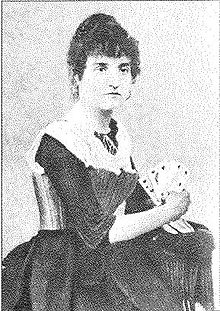
Borrowed from www.stregheria.com:


Maddalena

In the history of Witchcraft there is perhaps no figure more mysterious than the Witch known as Maddalena. As described by folklorist Charles Leland in several of his books, Maddalena was an Italian fortune teller and Witch. She supplied Leland with a great deal of Italian Witch lore including the text Leland later published as the Gospel of the Witches in 1899. Maddalena was also known to folklorists Roma Lister and Lady de Vere (to who she was introduced as "Margherita").

New findings related to Maddalena have recently come to light through some research I conducted at the Library of Congress. At the Pantheacon conference, on February 17th, 2008, I presented a copy of a page from The International Folklore Congress: Papers and Transactions, 1891. On page 454, Maddalena's name appears as a contributor to an exhibit presented by Charles Leland. Her name is given as Maddalena Taluti. In the modern Pazzaglini translation of Aradia, contributing writer professor Robert Mathiesen wrote that he believed Maddalena's last name to be Talenti. In light of new findings he is incorrect, but he does state that her name was almost illegible in the document he examined.


According to Leland, in his book Etruscan Roman Remains, Maddalena was originally from the town of Rocca Casciano, which is now called Rocca San Casciano. It is located in the Province of Forli-Cesena in the Italian region of Emilia-Romagna. She reportedly traveled a great deal, making a living telling fortunes and selling charms.  According to Leland, Maddalena claimed to have been trained in a family tradition of Italian Witchcraft, which was passed on to her by aunts and by her step-mother.

The Aradia material obtained for Leland differs greatly from the material that Maddalena had previously supplied to him. In the book Etruscan Roman Remains, Leland describes the Witches of Italy as being both good and bad.  By contrast the Aradia material portrays Witches in a negative light. It is noteworthy that he describes a group that he calls the "beautiful witches of Benevento." Concerning Maddalena herself, Leland describes her as:

"a young woman who would have been taken for a Gypsy in England, but in whose face, in Italy, I soon learned to know the antique Etruscan, with its strange mysteries, to which was added the indefinable glance of the Witch.  She was from the Romagna Toscana, born in the heart of its unsurpassingly wild and romantic scenery, amid cliffs, headlong torrents, forests, and old legendary castles. I did not gather all the facts for a long time, but gradually found that she was of a Witch family, or one whose members had, from time to immemorial, told fortunes, repeated ancient legends, gathered incantations, and learned how to intone them, prepared enchanted medicines, philtres, or spells. As a girl, her Witch grandmother, aunt, and especially her stepmother brought her up to believe in her destiny as a sorceress, and taught her in the forests, afar from human ear, to chant in strange prescribed tones, incantations or evocations to the ancient gods of Italy, under names but little changed, who are now known as folletti, spiriti, fate, or lari - the Lares or household goblins of the ancient Etruscans."

After receiving material from Maddalena, which became the foundation for the books Legends of Florence and Etruscan Roman Remains, Leland made another request. In 1886, Leland asked Maddalena to try and locate a text that he had heard of that was a type of Witches gospel. Eleven years later she sent him some material that Leland published as Aradia; or the Gospel of the Witches.  It is noteworthy that Maddalena had fulfilled Leland's previous requests for material within a short period of time. The fact that it took her ten years to present the Aradia material strongly suggests that she was originally unaware of it. This further suggests that the tradition it represented was not the one she personally practiced.


The tradition that Maddalena most likely practiced is reflected in Leland's books Etruscan Roman Remains, Legends of Florence, and Legends of Virgil. The portrayal of Witches and Witchcraft in Leland's Gospel of Aradia does not reflect the same image as his earlier works. This is another indication that the material came from a system outside of Maddalena's own knowledge and experience.

A letter from Leland to his niece, which I presented a copy of at the Pantheacon conference, describes Maddalena performing a ritual in which she invokes a goddess and a god. During the invocation, Maddalena reportedly went into convulsions, and Leland had to send out for two pints of brandy in order to restore her back to normal. This speaks to Maddalena as a genuine practitioner of the Old Religion. Leland goes on in the letter to say that if ever there was a true depiction of the witch, Maddalena demonstrated it through her magic.

In the book Aradia, Leland notes that he lost touch with Maddalena after receiving a letter from her that she was marrying her shoemaker (Lorenzo Bruciatelli) and immigrating to America. As a result of this comment, the view has been held that Leland never heard from Maddalena again, and what became of her is unknown.  Fortunately, another recent discovery by me came in the form of a letter found in the archives of the Library of Congress (buried in a stack of old letters). The letter, written by Leland to his niece, mentions that Maddalena did not move to America, but left her husband and went to Genoa to make a living there on her own. She wrote to Leland letting him know what happened, and she asked him if he could send her ten francs as she was in a difficult financial situation. He complied, but it seems that the two never met again after this communication.

As the materials discovered in my research continue to be read and documented, many more interesting tid-bits no doubt await those who are interested in Leland, Maddalena, and Aradia.


.

Friday, May 9, 2014

The Almother, Carnuntum, and "Pagan's Gate": The ancient cultural and spiritual overlap between the "two Austrias" and the north Balkans

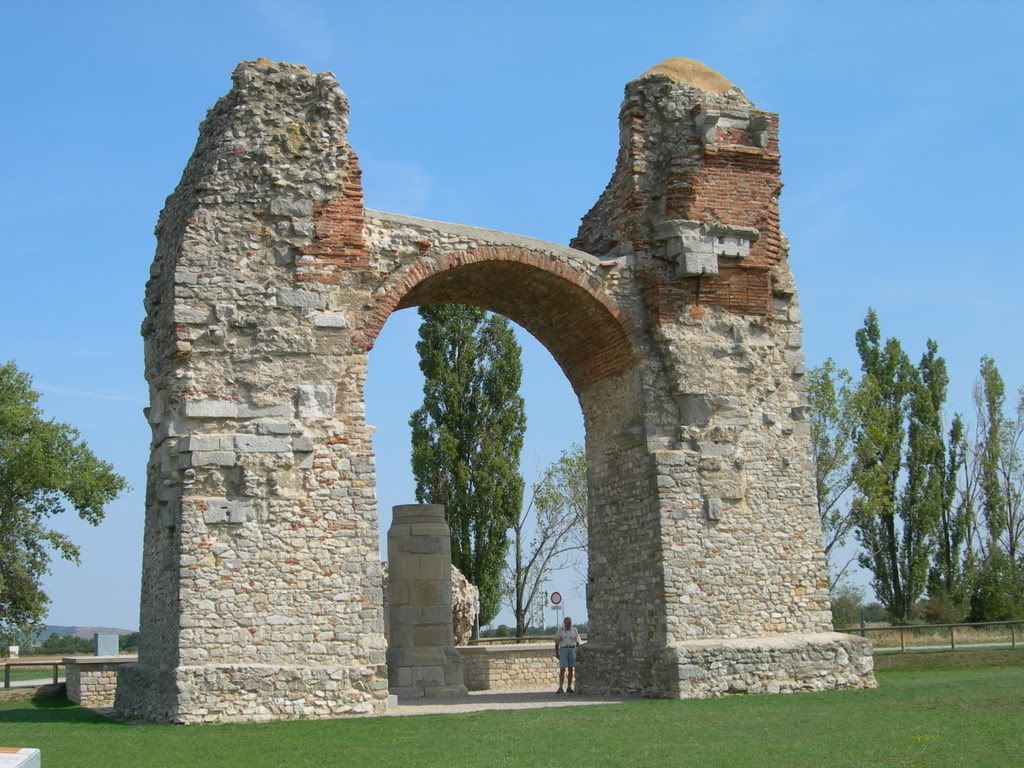
Heidentor aka "Pagan's Gate"


From an overall historical point of view, the Austrians could seem more like an old rival than a kindred people. The region of the eastern Alps and north of the Adriatic Sea has long been a tri-cross-cultural area between the Italo-Roman speaking world, the German-speaking world, and the Slavic-speaking world. For example, some parts of the north Balkans are more culturally and politically tied to Russia than to nearby Austria or the Veneto; in most ways, the tri-Veneto area has more in common with Rome than to St. Moritz; and in general, Austrians would tend to see themselves as being more ethnically tied to Scandinavia than to the nearby Venetians or Slovenes.

By the "two Austrias" I mean the original, and actually proper term "Austria," state within the old Langbard Kingdom... which was approximately the northeast Italian peninsula between Lombardy and the tri-Veneto area. Much later, the term "Austria" was clumsily resurrected as the English-language nickname for Österreich... or the Austria we know today.

Five thousand years ago, there would have been no difference at all between peoples of this region. They would have all been proto-European. The early stream of Teutonic migration formed the loosely defined Celtic culture, which later overran the general Lombardo-Venetian area. Still, approximately three thousand years ago, there was little difference. I'm guessing that this would have also included the north Balkans as well. Without going into the entire history of it.... a later "final push" of Teutonic tribes burst into Switzerland, Austria, Bavaria, Hungary, Bohemia, etc.... an equally intense migratory push of Slavic tribes moved into the Balkans... and--of course--the march of the Roman Empire overtook generally all of what is now "Italy."


The Roman province of "Raetia" was north of the Alps, even though the original "Raetians" were an ancient people who lived in a much larger area at one time. Although a clear lingo-ethnic divide was established between the three, each clearly influenced the other two. For example, in the Middle Ages when parts of the Friul were decimated by plagues, Slavic people were invited in to repopulate, and there is a clear Slavic influence in the Friulian dialect. Also in the Middle Ages, Cimbrians from Bavaria migrated into the Veneto, and many Cimbrian villages were still very linguistically and culturally distinct until the Fascist era. That particular brand of nationalism actually destroyed regional culture. One modern Camunian surname is "Mitterpergher," which is probably of Cimbrian origin, meaning "a person from the middle of the mountain"... and with the old-Bavarian spelling for "mountain person".... "pergher" rather than "berger."

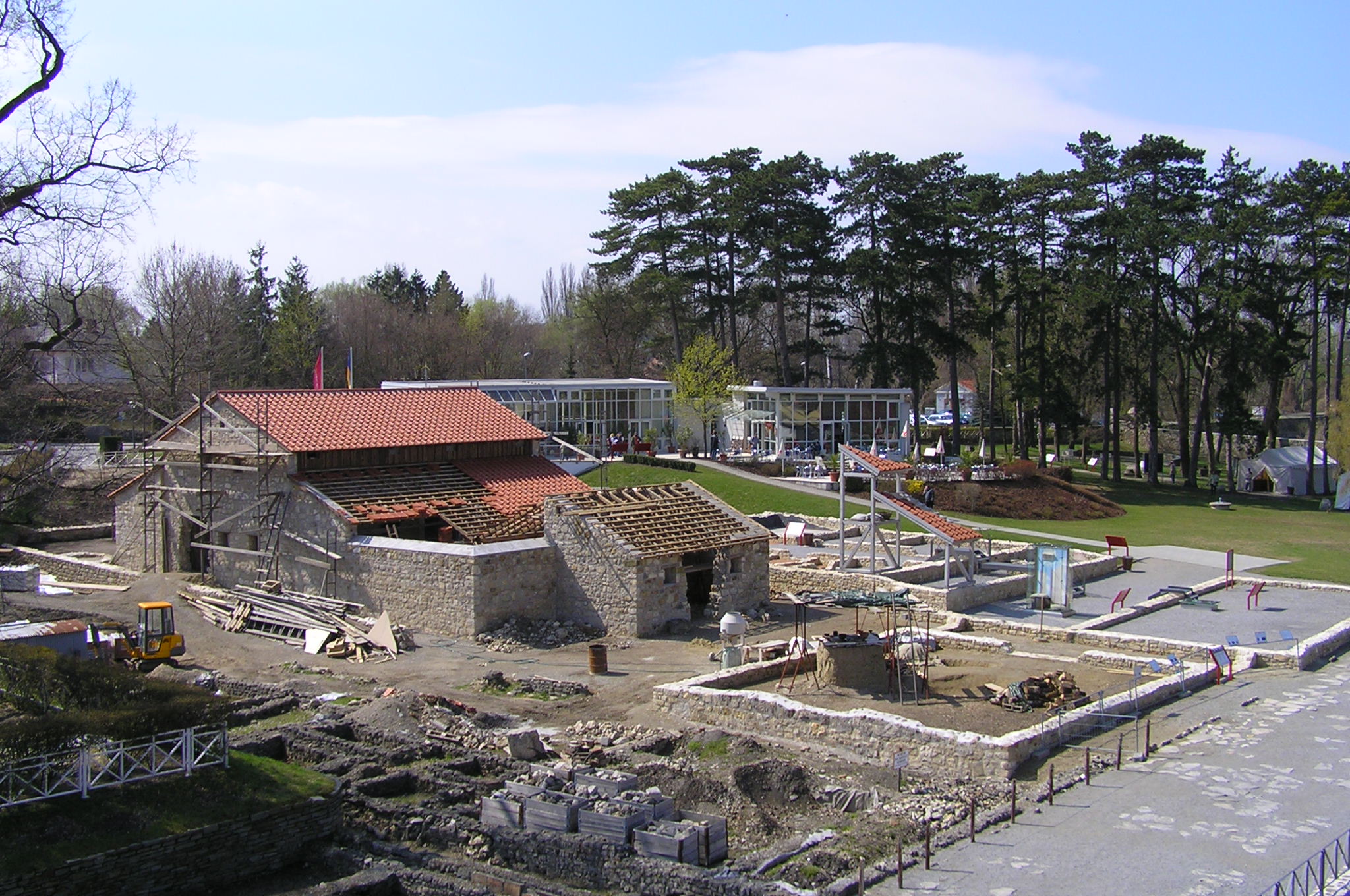
During the Roman era, the Romans did most of the pushing, while the Germanic tribes took over that role in the early Middle Ages. Of course, the ancient territorial struggle between Germans and Slavs occurred over a very long time. In the first century, the Romans established a military base on the Danube River, in what is now Austria, called Carnuntum. This camp served as a trading center, as well as a political headquarters for further Roman expansion. This particular Celtic kingdom was called Noricum. Interestingly, in typical passive-aggressive Roman political style, they used a regional Celtic name.. which was apparently "Karnuntum" originally. I'm not absolutely certain, but it appears that a migration of northern Teutons--separate from the regional Celts--later invaded and destroyed Carnuntum.

The Teutonic destruction of this Roman expansion was glorified in Guido von List's late 19th century book 'Carnuntum'. This book has not been translated into English to my knowledge, so I can't vouch for it in any way... although I would like to read it. For some reason, List was fascinated by what is apparently the leftover opening gate to Carnuntum... after the invading Teutons demolished the walls, or perhaps this occurred over a longer period. That leftover ruin is now called "Heidentor," or evidently "Pagan's Gate" in German. Ironically, "Pagan's Gate" could be seen as a monument to both the Romans and the Germans. To List, I think it represented a regional Austrian symbol of the glory of past victory. Also, there were many old legends surrounding the ruin. In List's day, historians and archeologists didn't know anything about ancient German-Celts. It actually got it's name in the Middle Ages because it was once thought to have been constructed by ancient pagans. Austria is now reconstructing Carnuntum if you would like to look that up.


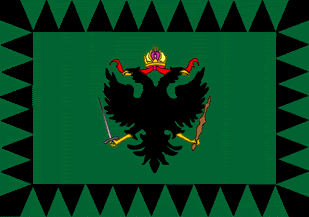
Flag of Lombardy-Venetia
Venus of Willendorf is a 27,000 to 32,000 year old artifact discovered in Austria. This little statue was carved from limestone not native to the area, and I believe was part of a much larger proto-European archetypical symbol of the "mother goddess." Also significant is its age, which would make it a counterpart to the "horned god." Because there are so many regional names for this goddess, which I think are linked back to the last glacial movement, I refer to her as "the Almother"... the proto-European equivalent to "the Alfather" Odin within old Teutonic culture. Among other things, the Almother was a fertility goddess in those early days. As strange as this may sound, there is ample evidence that the Roman goddess Diana of the Carnuntum era, and Venus of Willendorf, have a common origin going back to the last Ice Age. The Almother in the Italian peninsula, of course, going through many more manifestations over time. However, when half of Europe was covered under a massive continental ice sheet, the local manifestations of the mother goddess and the horned god would have been very likely of the same origin.

As far as the later colonial aggression of the Habsburgs... I mean lets face it, this was basically a soft dictatorship in which the average citizen of Austria-Hungary was not really responsible for national/monarchial policy anymore than a Roman citizen was responsible for Roman imperialism. The Austrian soldiers stationed in Lombardy-Venetia could, at times, be brutal... but probably not any more brutal than other occupations. It could be said with certainty that during pre-Roman times---which would have been pre-Teutonic and pre-Slavic times as well---this tri-cultural region would have been largely of the same people. Nobody there spoke Italian, German, or Slavic back then. Three very aggressive peoples came later and staked their territorial claim, and consequently the past etho-cultural dynamic was forgotten.

.

Monday, June 17, 2013

Italy's summer solstice


Strega Bella YouTube Channel

Midsummer/Summer Solstice
Midsummer is the period of time centered upon the summer solstice, and more specifically the European celebrations that accompany the actual solstice or take place on a day between June 21 and June 25 and the preceding evening. The exact dates vary between different cultures. Midsummer is especially important in the cultures of Scandinavia, Finland and the Baltics where it is the most celebrated holiday apart from Christmas and New Year's Eve.

.

Sunday, June 2, 2013

Boudicca: Celtic Pagan Warrior Queen


Even though this is part of English history, I still thought it very applicable since Boudicca was an ancient "Celtic Briton," and apparently fiercely pagan (the Druidic tradition). She was a woman, a leader, a Celt, a warrior, and a pagan to remember.


.

Wednesday, March 20, 2013

Saint Patrick, the Irish Druids, and the Conversion of Pagan Ireland to Christianity: Part III


Some scholars give a good explanation of what this conversion may have looked like. They suggest that this conversion is not what we would consider conversion by today's standards. Indeed, just because some pagans decided to accept Patrick's gods does not necessarily mean that they abandoned their own. Because pagans were used to accepting a number of different gods into their pantheon, it would follow that when they were introduced to this new god, it probably meant that they included him in their worship, not that they limited their worship to him (Hopkin 21).

So, unlike in Muirchu's account of the conversion of Ireland, no one found Patrick so threatening as to warrant a call to arms over Christianity. There was never a recorded act of violence between Christian and pagan, nor was there a single martyrdom in Ireland over the conversion to Christianity (Hopkin 21).

Although Patrick began the process of introducing the Irish to Christianity, it does not appear that he had nearly the phenomenal success that later writers would attribute to him. In fact, Patrick himself died in obscurity. Far from being the arrogant miracle-worker who made disbelievers pay for their skepticism, the historical Patrick "was not remembered as an enormously successful missionary—because he was not enormously successful. At the time of his death Ireland was still predominantly pagan, aggressively pagan" (Thompson 158).

Why, then, does Muirchu go out of his way to describe Patrick as being singlehandedly responsible for the submission of pagan religion to Christian belief, or for the annihilation of the Irish druids? What exactly were the circumstances surrounding the conversion of Ireland to Christianity, if Patrick himself had little impact on the Irish? And how did the Irish druids react to this conversion?

It would not be out of the question to assume that in the years Muirchu was writing, around the late 600s, a large part of the Irish population was Christian and not pagan. At least, the pagans and druids who remained were not "aggressively pagan" as they had been immediately after Patrick's death. Otherwise, how could Muirchu get away with his harsh portrayal of pagan and druid alike? If Patrick could not get away with such hubris in the fifth century AD, it would follow that Muirchu could not do so either among an "aggressively pagan" society. So what happened during these two hundred years that brought pagans over to Christianity? Historical Saint Patrick did introduce the island to Christianity, but we know that his success was small. What brought the majority of Irish over to Christian belief enough to tolerate such a negative portrayal of paganism and the keepers of paganism, the druids? And what was the point of Muirchu writing such an untruthful hagiography of Patrick?

Most scholars agree that Muirchu was successful in reintroducing the Irish to the accomplishment and life of Patrick (Hopkin 36). In the seventh century AD, few in Ireland knew who Patrick was (Thompson 156). He obviously did not have a huge impact on their collective consciousness, and so writers like Muirchu were allowed to reinvent Patrick to suit their own purposes.

These purposes are not in doubt. We know that Muirchu belonged to the monastery of Armagh near the Hill of Tara. The clergy claimed this monastery was founded by Patrick. At the time Muirchu was writing, there was a divide between the northern church and the southern church on the island. It appears that the northern church of Armagh needed propaganda to promote the position that their church should reign supreme in Ireland. So Muirchu's stories of Patrick being the primary force behind the conversion of Ireland to Christianity helped their goal in their "campaign to dominate the Irish church. As its power grew, so too did the cult of its founder" (Eaton, McCaffrey).

It is also clear that the church leaders in Ireland wanted very much to convert the remaining pagans to Christianity. By the seventh century AD, they were in a far better position to do so, for it is known that the majority of pagans had already turned to Christianity en masse. The exact reason for this change of religion is debated.

Some say that the majority of pagans turned to this new religion for reasons unflattering to the church. They argue that this conversion came as a result of the natural disasters and massive plague that killed off half of the population one century earlier in the sixth century AD. It appears that church leaders attempted to convince the people that such tragedies stemmed from the worship of pagan gods. "Christianity's spread across Ireland was accelerated in the sixth century by climate disaster and plague, the result, according to church leaders, of pagan wickedness" (Eaton, McCaffrey).

In addition, "Scholarly monks in the seventh century AD reinvented Ireland's heroic, mythical past—the stories known today—in order to convert its pagan people" (Eaton, McCaffrey). "Since writing only came to Ireland with Christianity, the church also controlled literacy and thus the primary means of education." (Eaton, McCaffrey) Hence the vitriolic stories of the pagans and druids that writers like Muirchu espoused. Another method Christians used to convert pagans was to take over traditional druidic sites of worship, usually holy wells, and give them Christian names (Ellis 19). The takeover also extended to various holidays, as illustrated when Muirchu's Patrick proved the superiority of Easter over the pagan Beltane feast.

Other scholars say that the conversion of pagans between the fifth and seventh centuries was a result of less sinister motives. They suggest that Christianity offered pagans values not embraced by the pagan theology, such as forgiveness and redemption. The renaming of wells, then, does not necessarily demonstrate a threatening behavior, but instead showed the willingness of Christians to adopt and welcome the pagan beliefs that had come before (Sellner 21).


Scholars know very little about the druids as a group, so it is no surprise that we have no recorded reactions from the Irish druids about the methods of conversion. Since druidic beliefs were exactly what Christians wanted to replace, some historians argue that one way they did that was through devaluing the worth of the druid in society. druids still existed at that time, as they were still mentioned in the law books as having a place in Celtic society (Ellis 20). But it appears that by the time Muirchu came along, they were far fewer in number.

The re-characterization of druids as sorcerers seems to have played a large part in the Christian propaganda of the seventh century AD, when Muirchu wrote the Life of St. Patrick. Muirchu was not unusual in his portrayal of druids as magicians. This was effective in downplaying their importance. Some argue that Christians replaced them as the intellectual class.

    [T]he general Christian attitude to the druids was inimical. They were obviously portrayed as opponents of Christianity, upholders of the ancient religion, and thereby were relegated to the role of shamans, magicians . . . although this prejudice varied from writer to writer. (Ellis 70)

With all these negative assessments of the importance of druids in Irish society, is it any wonder that the druids turned to Christianity as a way to fulfill the functions their ancestors had filled in the past? Christians were the new intellectual class. It seems that if one wanted to be a respected member of the learned class, one did not go into the woods to learn "oak knowledge" as in the past, but rather to the nearest monastery. Being a part of the clergy was respected, while being a druid was not anymore. As Ellis argues, "With the arrival of Christianity, the druids began to merge totally with the new culture, some even becoming priests of the new religion and continuing as an intellectual class in much the same way as their forefathers had done for over a thousand years previously" (18). Other scholars argue that the young Irish were attracted to the new values advocated by Christians, such as forgiveness and redemption.

There is a story that illustrates the decline in druidic religion better than any research paper could ever do. In this story, the druid preferred to die with his faith rather than convert. Two hundred years after Muirchu wrote Patrick's hagiography, a man named Wrdistan wrote a hagiography of the sixth-century Saint Guenole, who lived in Brittany, a Celtic region of modern-day France. In this land, the druids were considered "elderly adherents to a dead religion" (Ellis 89). When the king of Brittany was dying, he called the saint over, and there the saint saw the druid. The king warned St. Guenole not to treat the druid poorly because the druid had endured much already. The king said the druid "has lost his gods! What sorrow can compare with this sorrow? Once he was a druid; now he mourns a dead religion" (Ellis 90). The druid and the monk buried the king, and in that spot the druid asked Guenole to build a monastery, admitting that that spot used to be a sacred site for his kind. He insisted that it be done anyway, and said, "[I]t is my wish, the wish of one conquered but resigned to the changing order of the times, one who feels neither bitterness nor hatred" (Ellis 90). The druid handled the loss of his religion, and thus of his connection to his ancestors, gracefully. When the monk suggested that the druid take up Christianity in place of his dying faith, the druid kindly refused by pointing to the sky and telling the monk that when they died, maybe they would come to realize that all their different faiths were in vain for "perchance there is nothing but a great mistake" (Ellis 90). When Guenole became outraged at this and again urged the druid to come with him back to the monastery, the druid once again gently refused. He would rather dwell in the woods as he had always done. Besides, he told Guenole on his way toward the forest, "Do not all tracks lead to the same great centre?" (Ellis 90).

In conclusion, the historical Saint Patrick did not banish the druids or the pagan faith by sheer force of will as Muirchu suggested. The saint's pilgrimage to Ireland brought about the changes in that island that would eventually come to replace the old ways. Some pagans may have converted because they were attracted to new Christian values such as forgiveness, while others may have responded to more manipulative methods of conversion. Muirchu was not unusual in typifying the Irish druids as superstitious workers of magic. This seems to have been one of a number of tactics for converting the pagan Irish people to Christianity. These included appropriating Druidic sites for Christian worship and taking advantage of the natural disasters that befell the Irish people in the sixth century AD by saying that these were the result of pagan beliefs.


Footnotes

[1] Presumably, the prominence of snakes in Irish Celtic spirituality is a holdover from the Celts' earlier ancestors, who did not originate in Ireland but instead migrated from mainland Europe. Additionally, Irish Celts had frequent interaction with their British neighbors to the east, and certainly would have known of snake species abroad.

[2] It is likely that the church's views on the Celts were influenced by earlier Roman accounts of Celtic customs, which were overwhelmingly negative and described such practices as headhunting and human sacrifice. The validity of ancient Roman sources has since been called into question by modern scholars. Whether such practices occurred or not is better left to a separate article, but as far as Roman scholars were concerned, descriptions such as these served the function of painting the Celts as uncivilized. Modern scholars suspect that most Roman accounts of Celtic activity can be traced back to one source: Posidonios, a Greek ambassador of Rhodes, who set out to study barbarism as an exercise in stoic philosophy (Ellis, 50). Though Posidonius's works survive only in fragments, he is known to have been a friend of Pompey, and seems to have taken an amicable view of Roman expansionism (Franklin). Contemporaneously, when Julius Caesar wrote about the Celts, he was in the process of subjugating various Celtic strongholds to Roman rule. He had a vested interest in portraying the Celts as barbarous and in need of a civilizing presence such as Rome (Ellis 53).


Works Cited

Bieler, Ludwig. The Patrician Texts in the Book of Armagh. Dublin, Dublin Inst. Adv. Studies, 1979.

Bonwick, James. Irish Druids And Old Irish Religions. 1894.

Eaton, Leo and McCaffrey, Carmel. "In Search of Ancient Ireland: Religion." PBS.

Ellis, Peter Berresford. The Druids. Grand Rapids: William Eerdmans Pub. Comp., 1994.

Franklin, Claire. "To what extent did Posidonius and Theophanes record Pompeian ideology?"   Digressus Sup. 1 (2003): 99-110.

Hanson, R. P. C. The Life and Writings of the Historical Saint Patrick. New York: Seabury Press, 1983.

Hopkin, Alannah. The Living Legend of St. Patrick. New York: St. Martin's, 1989.

Piggot, Stuart. The Druids. New York: Thames and Hudson, 1975.

Sellner, Ed. The Celtic Soul Friend: A Trusted Guide for Today. Notre Dame: Ave Maria, 2002.

Thompson, E. A. Who was Saint Patrick?. New York: St. Martin's Press, 1985.


Bridgette Da Silva is still pursuing her dream of taking over the world with her husband Notah and two mischievous rabbits. She is a Phi Beta Kappa graduate from St. Catherine University (formerly the College of St. Catherine) and continues to write historical and speculative fiction as well as nonfiction. She has another Strange Horizons article entitled "Medieval Mindsets: Narrative Theory and The Mists of Avalon." Updates on her writing can be found on her blog, or feel free to email her at dasi0004@yahoo.com.


.