Showing posts with label Alpine race. Show all posts

Tuesday, May 26, 2015

Ancient Camunian petroglyph standing stone - 3,000 BCE

I couldn't find much information about this standing stone. Apparently it was carved and erected by the ancient Camunni tribe somewhere between the 2nd and 3rd millennium BCE. Evidently it was relocated to a museum, which appears to be the Teglio Antiquarium Tellinum (Archaeological Museum). The location was said to be Cornal, Val Camonica; although it wasn't clear as to whether or not this was the original location, or the location of the museum itself. It may be a very small village or more of a type of place name in the old language. The flat square stone, resembling an Odinic runestone, was described as an "idol statue with graffiti."


I feel a bit cheated, since this a beautiful very ancient artifact, and I want to know more about it. The "graffiti" looks something like a labyrinth, which was an important symbol to the Camunni. It may be of something else, although it's not clear. It does look very interesting and meaningful. It's at least as thought provoking as one image of an ancient Camunnian warrior doing battle with a Spartan-like helmet, sword, and shield. Remember, the Camunni weren't afraid to do battle with the Romans.

[Petroglyph standing stone in case the above link doesn't hold]


1937 National Socialist expedition to Val Camonica

The Ahnenerbe was an institute in Nazi Germany purposed to research the archaeological and cultural history of the Aryan race. Founded on July 1, 1935, by Heinrich Himmler, Herman Wirth, and Richard Walther Darré, the Ahnenerbe later conducted experiments and launched expeditions in an attempt to prove that mythological Nordic populations had once ruled the world.

In 1937, the Ahnenerbe sent the archaeologist Franz Altheim and his wife, the photographer Erika Trautmann, to Val Camonica, to study prehistoric rock inscriptions. The two returned to Germany claiming that they had found traces of Nordic runes on the rocks, supposedly confirming that ancient Rome was originally founded by Nordic incomers.

Wikipedia displays the following image as an example of Camunic runes in Val Camonica. What is interesting is that--despite the fact that the Camunni were an Alpine/proto-European people, and not Teutonic--the ancient Camunic alphabet is made up of some symbols which appear to be of Teutonic origin. For example, the Life rune and the Death rune (see letter "Z"). Although some of the Norse runes actually have their origin in the Italian peninsula, those two particular runes are of Norse origin. Also, there's a type of "double-Life rune" as well (see letter "S).

If you compare the runes from the Camunic alphabet above to the Teutonic/Odinic runes, clearly some are the same. For the record, the Camunic alphabet is from the first century BCE in the Val Camonica and the Valtellina. Although it can be confusing, some of these ancient symbols moved around; perhaps via the old trading routes. Although I believe that the National Socialists got the eastern Teutonic origins--including very ancient symbology--largely correct; the idea of "Teutonic Romans" was an embarrassing falsehood. 

The Romans would seem to have been primarily a shorter, heavy-boned Alpine type with true-Mediterranean admixture. This is why the old statues didn't particularly appear to be Mediterranean; for example, with Roman noses. I use the term "Alpine" loosely, since I'm referring to a more widespread stock 3,000 years ago.

.

Friday, August 8, 2014

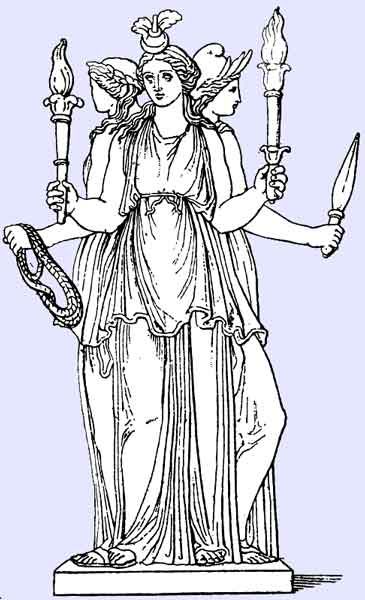
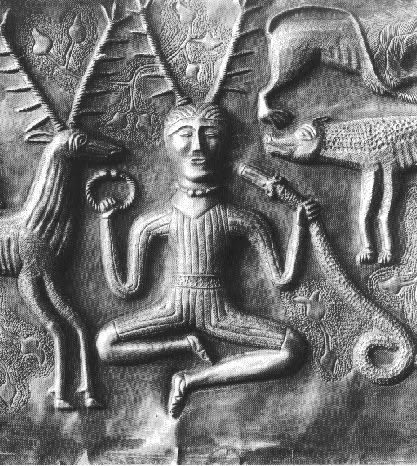
Hecate and Cernunnos: Locating the proto-European spiritual paradigm

A few evenings ago, I had an online chat with a Celtic polytheist. When asked what my spiritual paradigm was, I tried to convey across that I was an adherent of European paganism aka "European witchcraft".. not Wiccan. She seemed to be against the Wiccan concept partly because it was so eclectic, which makes sense. However, when pressed for a rundown of deities, I mentioned Hecate and Cernunnos. Being someone who doesn't believe in mixing paradigms, she quickly responded by finding it odd that "Cernunnos is Celtic and Hecate is Greek." She herself seemed confused as to whether she was a Gaelic polytheist or a Gaulish polytheist.

This brought up the issue of the proto-European--aka "Alpine race"--role in the ancient world. To begin with, people just can't seem to grasp the fact that the Europe of the last glacial movement was one which was basically devoid of both Mediterranean and Teutonic peoples... and it was almost half covered in massive ice sheets. Demographically, Europe, north Africa, and the Middle East/western Asia cannot be compared to today.

Hecate seems to clearly be a deity which predates classic Greek mythology... clear back to the proto-European world. I believe a local name--in what is now Greece and Turkey--for a "European goddess"... not a "Greek goddess." The Mother Goddess, or what I call "the Almother." Being that Hecate is perhaps the strongest historical manifestation for this goddess, then her name would seem to be a good one to use. The gods and goddesses of Greek antiquity were different from those of the more distant past. The Almother was a European goddess... which manifested in Greece as Hecate. Just for the record, this was thousands of years before there were any Turkic people in what is now Turkey.

Cernunnos was probably a fusion of the proto-European "horned god" and Odin or Tyr of the incoming Teutonic peoples. Therefore "Cernunnos"--which is a Romanized name for the chief god of Gaul--is as much proto-European as he is Gaulish/Celtic. I just don't see the point in renaming the Mother Goddess and Horned God of the proto-Europeans. There probably was not "one name" for these deities, but regional names for them. Stewart Farrar, a pioneer of Wicca, used the name "Karnayna" for Cernunnos. Hecate is also spelled "Hekate." To attempt to make some distinction, perhaps these names could be used since they possibly might be closer to the proto-European names in those locales, as well as being the strongest manifestations of "the Alfather" (Cernunnos) and "the Almother" (Hecate).


When coming up with a name for a larger collective, most often one must use some local name. There's often no way around this. For example, the name "Asatru" is an Icelandic name... used for a larger Odinic collective. There were other local names as well. Therefore "Asatru"--within the expanded meaning of the collective--can be used in reference to the Odinic manifestation of Austria, Ukraine, or Spain. It's no longer just in reference to Iceland. Coming up with entirely new names for every expression of the same thing would add further confusion to an already somewhat confusing endeavor.


Vehmology

"Vehme" stands for the same five elements (earth, air, fire, water, and spirit) as does the pentacle star, and seems to have been the basis for European witchcraft. The proto-European spiritual tradition was based on science! It took into account the metaphysical... "spirit." What I call "Vehmology" is science. Magic and science were the same. The true purpose of the coming "Religion vs. Atheism" conflict in society is to prevent the scientific study of metaphysics. Closed-minded religion, closed-minded Atheism, and closed-minded science all have a vested interest in preventing the mere academic study of metaphysical science, which makes them Hegelian "opposames" rather than true opposites.

.

Friday, May 9, 2014

The Almother, Carnuntum, and "Pagan's Gate": The ancient cultural and spiritual overlap between the "two Austrias" and the north Balkans

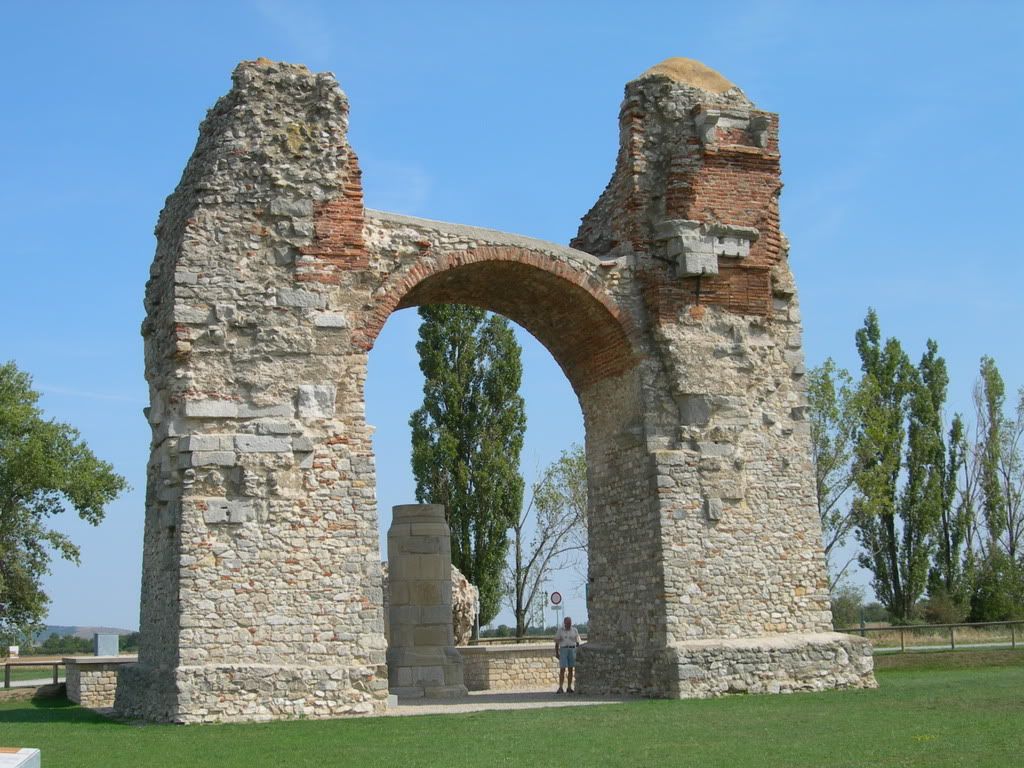
Heidentor aka "Pagan's Gate"


From an overall historical point of view, the Austrians could seem more like an old rival than a kindred people. The region of the eastern Alps and north of the Adriatic Sea has long been a tri-cross-cultural area between the Italo-Roman speaking world, the German-speaking world, and the Slavic-speaking world. For example, some parts of the north Balkans are more culturally and politically tied to Russia than to nearby Austria or the Veneto; in most ways, the tri-Veneto area has more in common with Rome than to St. Moritz; and in general, Austrians would tend to see themselves as being more ethnically tied to Scandinavia than to the nearby Venetians or Slovenes.

By the "two Austrias" I mean the original, and actually proper term "Austria," state within the old Langbard Kingdom... which was approximately the northeast Italian peninsula between Lombardy and the tri-Veneto area. Much later, the term "Austria" was clumsily resurrected as the English-language nickname for Österreich... or the Austria we know today.

Five thousand years ago, there would have been no difference at all between peoples of this region. They would have all been proto-European. The early stream of Teutonic migration formed the loosely defined Celtic culture, which later overran the general Lombardo-Venetian area. Still, approximately three thousand years ago, there was little difference. I'm guessing that this would have also included the north Balkans as well. Without going into the entire history of it.... a later "final push" of Teutonic tribes burst into Switzerland, Austria, Bavaria, Hungary, Bohemia, etc.... an equally intense migratory push of Slavic tribes moved into the Balkans... and--of course--the march of the Roman Empire overtook generally all of what is now "Italy."


The Roman province of "Raetia" was north of the Alps, even though the original "Raetians" were an ancient people who lived in a much larger area at one time. Although a clear lingo-ethnic divide was established between the three, each clearly influenced the other two. For example, in the Middle Ages when parts of the Friul were decimated by plagues, Slavic people were invited in to repopulate, and there is a clear Slavic influence in the Friulian dialect. Also in the Middle Ages, Cimbrians from Bavaria migrated into the Veneto, and many Cimbrian villages were still very linguistically and culturally distinct until the Fascist era. That particular brand of nationalism actually destroyed regional culture. One modern Camunian surname is "Mitterpergher," which is probably of Cimbrian origin, meaning "a person from the middle of the mountain"... and with the old-Bavarian spelling for "mountain person".... "pergher" rather than "berger."

During the Roman era, the Romans did most of the pushing, while the Germanic tribes took over that role in the early Middle Ages. Of course, the ancient territorial struggle between Germans and Slavs occurred over a very long time. In the first century, the Romans established a military base on the Danube River, in what is now Austria, called Carnuntum. This camp served as a trading center, as well as a political headquarters for further Roman expansion. This particular Celtic kingdom was called Noricum. Interestingly, in typical passive-aggressive Roman political style, they used a regional Celtic name.. which was apparently "Karnuntum" originally. I'm not absolutely certain, but it appears that a migration of northern Teutons--separate from the regional Celts--later invaded and destroyed Carnuntum.

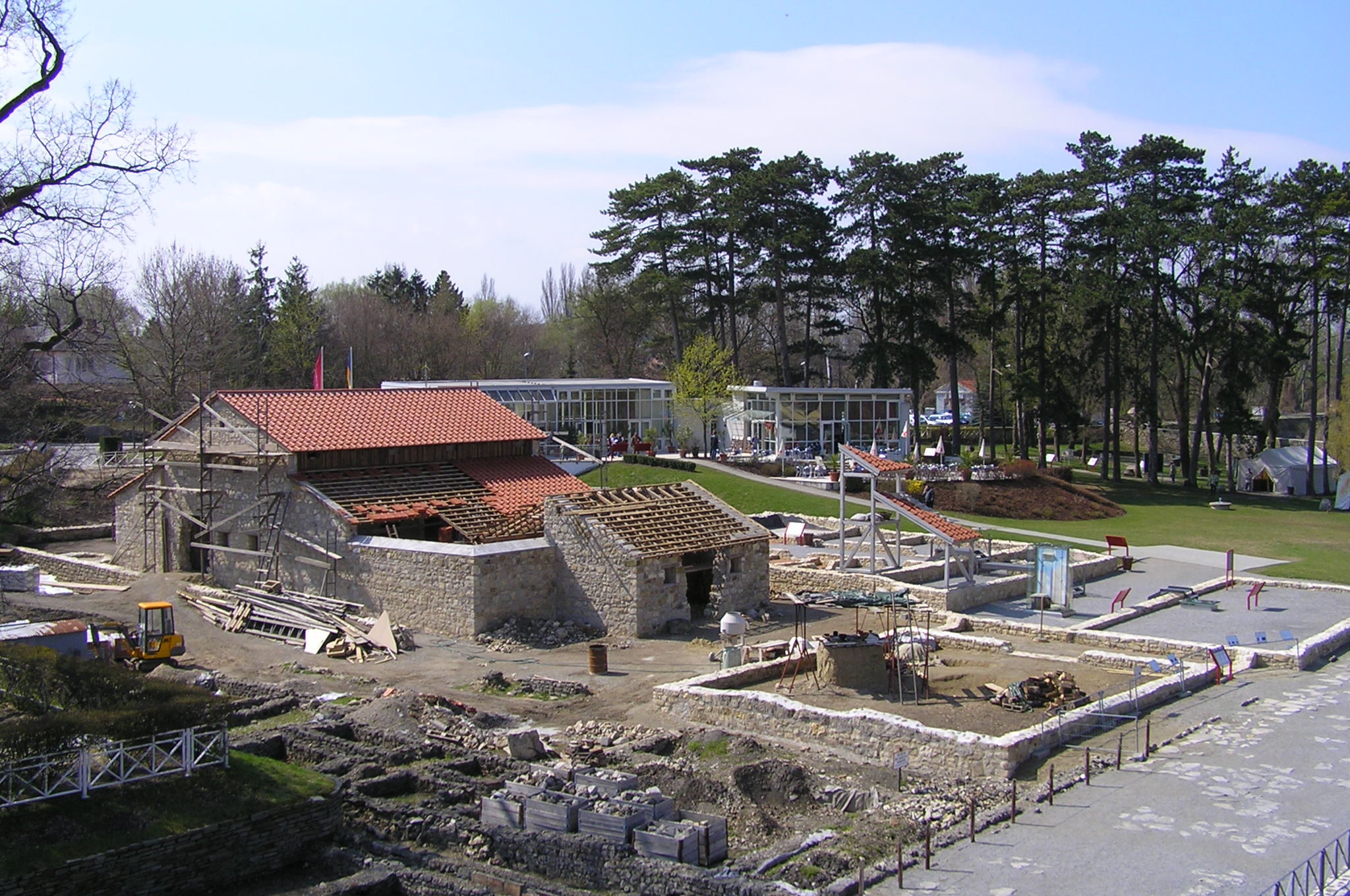
The Teutonic destruction of this Roman expansion was glorified in Guido von List's late 19th century book 'Carnuntum'. This book has not been translated into English to my knowledge, so I can't vouch for it in any way... although I would like to read it. For some reason, List was fascinated by what is apparently the leftover opening gate to Carnuntum... after the invading Teutons demolished the walls, or perhaps this occurred over a longer period. That leftover ruin is now called "Heidentor," or evidently "Pagan's Gate" in German. Ironically, "Pagan's Gate" could be seen as a monument to both the Romans and the Germans. To List, I think it represented a regional Austrian symbol of the glory of past victory. Also, there were many old legends surrounding the ruin. In List's day, historians and archeologists didn't know anything about ancient German-Celts. It actually got it's name in the Middle Ages because it was once thought to have been constructed by ancient pagans. Austria is now reconstructing Carnuntum if you would like to look that up.


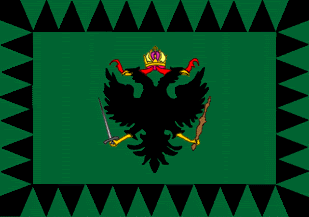
Flag of Lombardy-Venetia
Venus of Willendorf is a 27,000 to 32,000 year old artifact discovered in Austria. This little statue was carved from limestone not native to the area, and I believe was part of a much larger proto-European archetypical symbol of the "mother goddess." Also significant is its age, which would make it a counterpart to the "horned god." Because there are so many regional names for this goddess, which I think are linked back to the last glacial movement, I refer to her as "the Almother"... the proto-European equivalent to "the Alfather" Odin within old Teutonic culture. Among other things, the Almother was a fertility goddess in those early days. As strange as this may sound, there is ample evidence that the Roman goddess Diana of the Carnuntum era, and Venus of Willendorf, have a common origin going back to the last Ice Age. The Almother in the Italian peninsula, of course, going through many more manifestations over time. However, when half of Europe was covered under a massive continental ice sheet, the local manifestations of the mother goddess and the horned god would have been very likely of the same origin.

As far as the later colonial aggression of the Habsburgs... I mean lets face it, this was basically a soft dictatorship in which the average citizen of Austria-Hungary was not really responsible for national/monarchial policy anymore than a Roman citizen was responsible for Roman imperialism. The Austrian soldiers stationed in Lombardy-Venetia could, at times, be brutal... but probably not any more brutal than other occupations. It could be said with certainty that during pre-Roman times---which would have been pre-Teutonic and pre-Slavic times as well---this tri-cultural region would have been largely of the same people. Nobody there spoke Italian, German, or Slavic back then. Three very aggressive peoples came later and staked their territorial claim, and consequently the past etho-cultural dynamic was forgotten.

.

Saturday, April 6, 2013

The Arctic Home in the Vedas: Part 11

Margaret Murray was right: Part II


The North Pole prior to about 12,000 years ago was somewhere in todays northern United States, probably where the Great Lakes are today. This sudden plate shift not only “pushed” the North Pole up from its present position from the viewpoint of North America; but it also “pulled” the Eurasian land mass up to the Arctic Circle. This is why, for example, so many perfectly preserved mammoths have been discovered. The northernmost stretches of Europe and Asia had very mild climates prior to this dramatic plate shift. It should also be noted that this sudden pole-shift caused a massive global flood as the poles were suddenly in much warmer weather. This explains why so many ruins of ancient cities now lay on the bottom of the oceans.

Prior to this plate-shift, the three sub-races---of which later became the Indo-European people---were geographically separated. It’s important to note that natives of the Far East, the Indian subcontinent, and true-Semites (based in the southern Saudi peninsula), didn’t live in Europe, North Africa, or most of Asia (including the Near and Middle East). Also, Turko-Mongolian racial types had not come to be as of yet. The Earth’s population was smaller than what we can imagine by todays standards.

The sub-race which I refer to as the “true-Mediterraneans” (not Semitic, or even necessarily what we call “Mediterranean” today) lived in the Near and Middle East; and founded the first post-flood civilizations. The sub-race which I refer to as the “proto-Germanics” (these were pure Germanics, not the largely Alpine-Germanic people whom we call “Germanic” today) lived north of the Himalayas up to the northern Eurasian coast. The sub-race which I refer to as “proto-Europeans” or “Alpines” lived in Europe, and probably well east of it in some places, and in parts of North Africa.

The spiritual culture of these proto-Europeans was the progenitor of Margaret Murray’s “Witch-cult.” All of the evidence points to it so clearly. The ancient stag god and the moon goddess. So many common themes. As small bands of proto-Germanic people migrated westward across central Europe thousands of years ago, they merged with these natives to form the “Celtic” cultures, and their spiritual traditions merged to form new ones. However, the “Witch-cult” always seemed to stick around as a separate tradition. When true-Mediterraneans migrated westward across Southern Europe and North Africa, and then northward along the Atlantic coast and into the British Isles, the same dynamic occurred. They merged with the natives, and their respective spiritual traditions merged as well; and yes, the ancient “Witch-cult” continued to exist separately. In fact, in many parts of both northern and southern Europe, “Alpine” tribes coexisted with the newer cultures that were much greater in number.
At some later point, approximately four to five thousand years ago, a large final migration of proto-Germanic people poured into Europe and overran Scandinavia and a large part of central Europe. I would theorize that they may have largely bypassed Eastern Europe, which then remained of the more native stock. Unlike the two prior migratory patterns into Europe, Germanic language, culture, and spirituality were much more dominant in these newly acquired territories. Yet still, the “Witch-cult” continued to exist even within these new Odinic cultures.

One well-documented example of this transformation from “Witch-cult” to other pagan traditions was in ancient Greece. When ancient Hellenic religion became dominant in Greece, the government declared that the “Old Religion” didn’t qualify as a religion at all. Although some may consider Christianity as the source of the deconstruction of the “Witch-cult,” it actually started long before that. It’s clear that the tradition of the moon goddess Hecate, and the Dianic tradition, existed long before Greece and Rome rose to prominence. Many names, same goddess.

Virtually all of the various spiritual “reconstructionist” groups do not lay claim to the scores of ancient stone megaliths, like Stonehenge, and rather attribute them to some earlier culture. Could that “earlier culture” have been this proto-European people, their culture, and maybe their spiritual tradition as well? Since so little is known about most of these massive stone structures, we may never know the exact truth; but it seems to me that this is a probability.

The Basques, the Welsh, and even the Camunians, are---at least partly---modern survivals of this ancient European type; particularly the Basques. Recent DNA studies have revealed that many English types have more genetic connection to this very ancient stock than previously thought. “Cheddar Man,” excavated in 1903, lived in southwest England over 9,000 years ago. After his DNA was extracted, and samples of local people were compared to it in 1997, one of this man’s direct descendants was living a half-mile away from his burial site. That’s pretty incredible since it has been over 90 centuries and about 300 generations.

This ancient---and extremely resilient---spiritual culture, in all of its related forms, is in need of a new, more dignified name for reference at least. A name that puts it within historical perspective, and one that sounds better than the clumsy, disrespectful-sounding term “Witch-cult.” Since I have gone this far, I would like to suggest a new name: “Witcheathenry.” I would guess that most of the ancient adherents of what was likely an open/non-occultic folk religion, were not practitioners of “magic” or “craft.” The literal "practice of magic” was left to the high initiates. Ancient women of renown… waiting for redemption.

.

Friday, April 5, 2013

The Arctic Home in the Vedas: Part 10

Margaret Murray was right: Part 1

   
Margaret Murray (Wikipedia)

Margaret Alice Murray (13 July 1863 – 13 November 1963) was a prominent British Egyptologist and anthropologist. Primarily known for her work in Egyptology, which was "the core of her academic career," she is also known for her propagation of the Witch-cult hypothesis, the theory that the witch trials in the Early Modern period of Christianized Europe and North America were an attempt to extinguish a surviving pre-Christian, pagan religion devoted to a Horned God. Whilst this theory is today widely disputed and discredited by historians like Norman Cohn, Keith Thomas and Ronald Hutton, it has had a significant effect in the origins of Neopagan religions, primarily Wicca, a faith she supported.

Her work in Egyptology took place largely alongside her mentor and friend, the archaeologist Sir Flinders Petrie, whom she worked alongside at University College London. One of the earliest women to "make a serious impact upon the world of professional scholarship," she was also an ardent feminist, being actively involved in the Suffragette movement. From 1953 to 1955, she was the president of the Folklore Society, although since her death various members of the society have attempted to dissociate the organization from her and the Murrayite theory of the Witch-Cult.


The Witch-Cult in Western Europe (Wikipedia)

The Witch-Cult in Western Europe by Margaret Murray was published in 1921, at a time when the influence and success of The Golden Bough by anthropologist James George Frazer was at its height. In those days Margaret Murray was celebrated in university circles as the expert on western witchcraft. In the period 1929-1968 she even wrote the article on witchcraft in the successive editions of the Encyclopaedia Britannica. In 1962, her main work was reprinted by Oxford University Press. Her theory, also known as the witch-cult hypothesis suggests that the things told about witches in Europe were in fact based on a real existing pagan religion that worshiped a horned god. 


Witch-cult hypothesis (Wikipedia)

The Witch-cult is the term for a hypothetical pre-Christian, pagan religion of Europe that survived into at least the early modern period. As late as the 19th and early 20th centuries, some scholars had postulated that European witchcraft was part of a Satanic plot to overthrow Christianity; most of the evidence for this theory was compiled by studying the accounts of the persecutors in the witch trials in early modern Europe. From the late 19th century an opposing view arose, that witches were not Satanists, but adherents of a surviving underground pagan religion. In the 20th century, the theory gave rise to the neopagan religion of Gardnerianism, with its various offshoots and traditions summarized under the term Wicca.

The theory was pioneered by authors such as Karl Ernst Jarcke and Jules Michelet in the 19th century, but received its most prominent exposition with Margaret Murray's 1921 book, The Witch-Cult in Western Europe, and her contributions to the Encyclopedia Britannica. Scholars have criticized the theory and the general consensus is that the witch cult never existed and is entirely pseudohistorical, while scholars consider some folk magical practices to have influenced witchcraft stereotypes.

Gerald Gardner claimed that he had discovered the New Forest Coven, a group still practicing the religion (which he called Witchcraft) in his 1954 book, Witchcraft Today, a claim which was endorsed by Murray. Similarly, Sybil Leek, Robert Cochrane, Charles Cardell, Rosaleen Norton and Alex Sanders also made claims to having been members of a family line of adherents to the witch-cult. Some contemporary Wiccans have since distanced themselves from the theory.

According to the general consensus in the mainstream historical-academic community---including scholars who have been involved in studies specifically pertaining to religious studies and ancient folklore---Margaret Murray’s “Witch-cult hypothesis” has been sufficiently discredited. As this moment, my mind is failing to come up with adjectives to sufficiently describe the extent to which I disagree. They’re not going back far enough! Margaret Murray was right.

The problem stems from the failure to---historically-speaking---divorce both ancient Germanic and ancient Mediterranean peoples from Europe long enough to at least take a look at the culture of the proto-Europeans prior to 5,000 years ago. They just can’t seem to wrap their minds around the idea that proto-Germanic people didn’t live in Europe until about 5,000 years ago; and that true- Mediterraneans probably didn’t arrive in Europe until about 9,000 years ago.

The origins of the deconstruction of the “Witch-cult” occurred long before Christianity. This is such a no-brainer that it frustrates me! I’ll go through the logical steps yet again for posterity’s sake. The last Ice Age occurred about 25,000 years ago. Every 45,000 years, after both poles have frozen enough of the earth’s water to sufficiently weigh them down, the incredible amount of sheer weight forces a movement of the Earth’s tectonic plates about 2,000 miles. The outer crust of the earth literally moves as if it were a loose outer peel of an orange. This is not the same natural phenomena as an Ice Age.

.

Thursday, March 7, 2013

The Arctic Home in the Vedas: Part 9

The Týrlanders
 
About every 45,000 years, after the two poles have attained enough of the earth's water within their massive frozen zones, the outer crust of the earth moves about 2,000 miles like a loose outer layer of an orange. This last happened about 12,000 years ago. It wasn't really a "pole shift," but a tectonic "plate shift." The direction of this movement was southward from the standpoint of North America, and northward from the point of view of Eurasia. Therefore, North America melted and became a temperate climate zone, while Eurasia was thrust up towards and even into the arctic. This caused an immediate and dramatic earth change. For example, mammoths died and froze so quickly that some are still being found in perfectly preserved condition.

Some of the Mongol (the sub-racial meaning) ancestors of Amerindians were forced to migrate over the frozen land bridge between Siberia and Alaska, which would be almost like going south at that time in terms of climate. People from the proto-Germanic homeland, which was somewhere along the Kara Sea in northern Eurasia, suddenly found themselves living near or even above the Arctic Circle, which directly ties into Bal Gangadhar Tilak's theory in 'Arctic Home in the Vedas'. In other words, it's not a "theory," but a fact. It should be noted that this very ancient proto-Germanic homeland had a climate and terrain which was probably much like Montana. The only feature of Tilak's theory which wasn't really true was that he lumped all modern Europeans into one basket and sincerely proclaimed point-blank that they weren't native to Europe originally. This was what I would call a half-truth which he overlooked.

The proto-Germanics seemed to continue to live in this homeland--let just call it "Týrland" after what seems to have been the chief god of the proto-Germanics at one time, until if and when someone comes up with a better name--for a period of time until migrating to other lands. Some migrated to a land which later became known as the Tibet Autonomous Region, and although there isn't a trace of them left, modern natives of this region still use a version of the proto-Germanic triskelion as one of their most sacred symbols. Some migrated down into lands east of the Caspian Sea and north of the Himalayas, like the Tarim Basin. Some then continued to migrate into what is today Iran, and then eventually their uniracial/interethnic (I'm guessing "Balkan-looking"; Note: White "interethnic," not "interracial") descendants into the Indus Valley. I believe that others migrated into ancient Assyria. Still others migrated into Europe, where they merged with native "Alpine" proto-Europeans in many places to produce the Celtic-cultures; and eventually they moved in mass into northern Europe, and being checked at the border of ancient Gaul (for a while).


Eastward migration after the "plate-shift?"

Could some of the ancient "Týrlanders" have migrated eastward, and even into the Americas? "Kennewick Man"--found near Kennewick, Washington--comes to mind, but we still don't know the origins of this man. The Army Corps of Engineers purposely destroyed the area of this find so no further evidence can be found there; as well as outrageously mismanaging the remains, compromising any future DNA studies of it. All we really know about Kennewick man is that he lived over 9,000 years ago and clearly had a Caucasian skull type. He could have been proto-Germanic, originating from a genetic migration from either the eastern or western land bridges. He may have been an ancient proto-European (non-Germanic) type who was part of a westward migration; or he may very well have been part of an ancient migration of Ainu people, who were a "Caucasian-like" people whose true origins are unknown.


Clearly based on their actions, the establishment does not want any of us to look at the evidence of Ainu, proto-Germanic, Chinese, Egyptian, Phoenician, proto-European/Welsh, Roman, ancient Hebrew, or Viking movements into the Americas. Only Leif Erikson is "allowed" to have been the sole non-Amerindian to have visited the pre-Columbian Americas, despite clear evidence to the contrary. Very clear non-Amerindian artifacts--like those left by Chinese travelers on Victoria Island, or Egyptian artifacts found along the Mississippi River and in the Grand Canyon--are either permanently put away in storage or disappear into private collections. Curiously, the Amerindians on Victoria Island today look much more Chinese than Amerindian. Usually numerically smaller cultures who are absorbed into larger ones are just thought of as being "one people" at the end of the day. However, for some reason, the establishment has decided on their own that Amerindians are the ONE exception to this rule, and other peoples/cultures may not be discussed.

Excerpt from pages 97 and 98 of 'The Suppressed History of America' (Schrag; Haze; 2011):

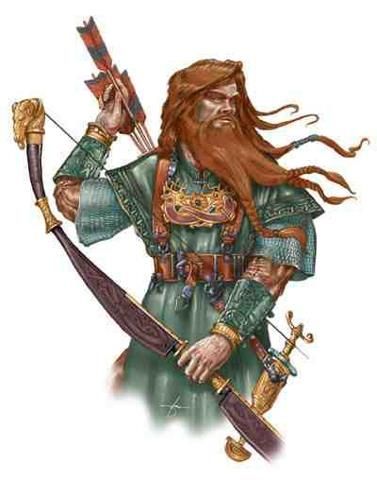
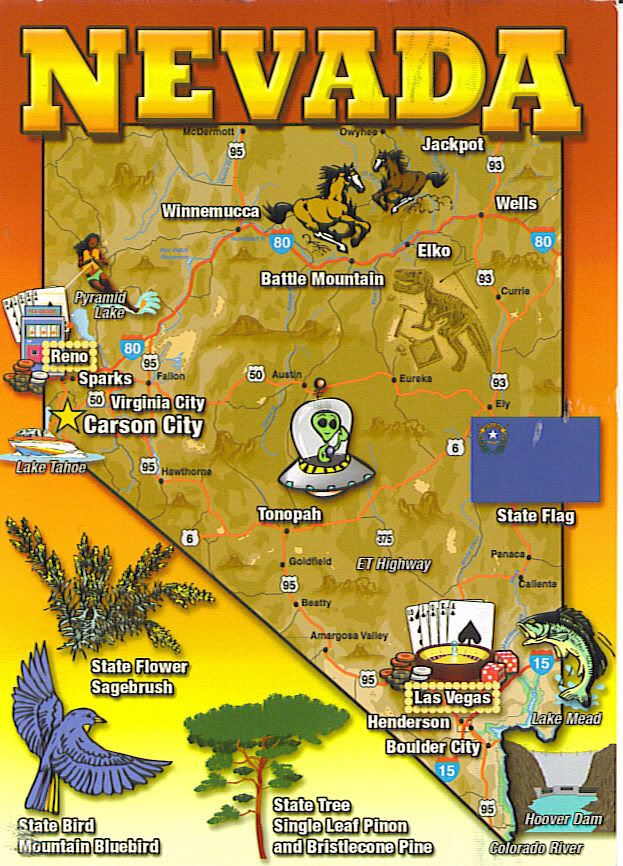
According to an article published in the May 13, 1928, edition of the Humboldt Star, a nine-foot-tall red-haired mummy was discovered deep inside the Lovelock Cave, located twenty miles south of the town of Lovelock, Nevada. Isolated on top of a high hill, the cave is estimated to be 40 feet deep and 180 feet wide. The Piute Indians told the early Nevadan settlers fantastic stories about the origins of the cave, including tales about their fierce battles with red-haired white giants. In their oral history they claimed to have cornered the remaining giants in Lovelock Cave. Once the giants were trapped, the Piutes blocked the entrance with sagebrush and set it on fire. They reportedly stoked the fire until all the remaining giants had been smothered by smoke.

Further evidence supporting local legends about giants had emerged in 1911 when a mining company plowing for bat guano in Lovelock Cave began to find amazing artifacts. They discovered layers of burned materials and broken arrows that validated the Piutes' claims. Further down they found the remains of giant red-haired mummies, along with strange stone artifacts and shells carved with mysterious symbols. As usual most of these artifacts were either lost or fell into the hands of private collectors who whisked them away. One museum did manage to preserve some of the items discovered at Lovelock Cave.

The Humboldt County Museum at Winnemucca, Nevada, has in its collection a skull from one of the giants. Stan Nielsen, the famed treasure hunter, pilot, and photojournalist, went to investigate this skull with some dental plaster and a camera. The museum curator graciously allowed Nielsen to compare the plaster model of a normal-size man's jaw with a jaw of one of the giants found in the museum's collection. The photographic evidence clearly shows the vast difference in size between the plaster model and the immense jaw from the giant skull. What's more amazing is that anyone can see this skull for themselves by contacting the friendly staff at the Humboldt County Museum. Recent e-mail transactions have verified that some of the sensational Lovelock Cave artifacts, including a giant skull, are being kept in the back room of the museum.

This event--the killing of this tribe--took place about five or six hundred years ago, long after eastward traveling proto-Germanics may have crossed the Bering Strait land bridge. One curious note is that during the global flood which followed the last "plate shift" 12,000 years ago, California's huge Central Valley was flooded by the ocean. It was literally part of the Pacific Ocean, and the "coast" would have come right up close to northern Nevada. That dynamic may have existed right up to five or six thousand years ago. Could this red-haired tribe--which most clearly was of an Indo-European type based on the existing skulls--have been a last remnant of ancient eastward-migrating proto-Germanic people? Maybe they were part of, or descended from, a more recent westward traveling group? Could this tribe have traveled by boat--possibly either around the tip of South America, or even across the waters north of Canada and Alaska--thousands of years ago to this ancient inland coast? Were these people among the last remnants of the migrating post-glacial movement (actually "post-plate shift") "Týrlanders" In North America?


There are some issues that need to be addressed regarding what is known about this mysterious tribe. First, the archeological establishment clearly isn't having any of it. To them, these are "Native Americans," plain and simple, despite CLEAR evidence to the contrary! Next, I have seen some of the old photographs which were taken prior to these mummies being taken away and "lost." They were quite similar to the Tarim mummies. They appeared as "Norse-looking," and with red hair as was evident even in the black and white photographs. They were more "mummified" rather than mummies from a burial rite. It isn't likely that they were Vikings, since red hair is not common in Scandinavia in particular. I would love to know what those "mysterious symbols" looked like. If, for example, there was a triskelion symbol, then this would be a closed issue. Since some of those symbols still exist for public view, we need to see them! If anyone reading this lives or will be near Winnemucca, and is interested in this subject, then by all means get permission and get in that back room and take some pictures!!

Next, evidently, only two of the remains were incredibly tall--about eight and a half feet--while the rest apparently averaged between six and a half to seven feet..... which would only be about six inches taller than the average height of modern Montenegrins (6'3"). If these were pure proto-Germanics, then this "giant concept" would not be all that amazing. That is pretty damn tall though! In addition, they didn't live in that cave. Apparently, the Piutes used that cave for food and storage, so it would seem that most of the artifacts were Piute. However, since the symbols were alien to them, they were likely from this mysterious tribe... and certainly we need to see them. In other words, they weren't "cave men." As far as cannibalism, we probably will never know. Perhaps during this war, there was an act of cannibalism, or maybe there was propaganda among the Piutes to get them in a war mode. If this tribe was perhaps seventeen inches taller on average than the Piutes, coupled with the fact that they were at war, then exaggerations were possible... "giants."

Lastly, the "dental comparison" isn't quite as incredible when you overlay the normal dental mold directly over the teeth of "the giant." It's certainly big, but not all that comparatively "giant." Look for yourself. Definitely big... but not so "giant." Also, based on the remaining skulls, the report of these people as having "layers of teeth" seems to have been a misrepresentation of the initial evidence. This was certainly a big tribe though, and probably were part of a really big strain of ancient pure "Týrlander." You can't really think only of modern Scandinavians--the purest modern Teutonic strain--as far as comparison. The average height for males in Scandinavia is just under 5'11," which is tall for an average height, but may have been on the short side in ancient "Týrland." However, this mysterious tribe must have been an unusually tall sub-grouping.

Video: Nevada - Spirit Cave and Lovelock Mummies

 
~~~ Týrland was the Arctic homeland ~~~

Proven.

.

Monday, January 7, 2013

Sacred woods, the Allmother, and Elderflower


I'm basing this post partly on an article by our friend Deep~Glade entitled 'The Nine Sacred Woods of the Bonfire'. One of the sacred woods listed there is Elder wood, from the Elder or "Goddess tree." This tree is never to be cut or burned in any way if you are a magical-heathen. This is because the "old crone" of the Triple Goddess lives within the Elder tree. I think of the "Triple Goddess" as three separate goddesses, with the Mother (Lunar/Moon) called "the Allmother" (or "Almother" and "All-Mother"); the same as Odinists calling Odin (Solar/Sun) "the Allfather."

The pre-Germanic/pre-Mediterranean Europeans seemed to clearly be more maternally-oriented in a spiritual way. This partially translated to everyday life. The husband/father [Law] was the "provider in charge of the economic-component" to the family and "head of the family; while the wife/mother [Justice] was "matron" and "head of the household."

I believe that male and female were more-or-less equal, as the tribal and clan leaders [Law] may have been male; however, the spiritual leaders [Justice] were female. Whether great or small, I don't believe that they got in each others way in the same way that we might think of in modern times. For example, men had their world away from the home, and had friendships and rivalries among each other. Women, closer to village life, had their world, and also had friendships and rivalries among each other. To make myself clear, I am referring to pre-Celtic Europe.

If they lived within more of a larger clan, then it was basically the same dynamic except that the economic and home life responsibilities would be shared. Family, clan, and tribe. The tribe was usually a small "nation," unless it was a large tribe or the tribe was part of some type of federation; in which case there would have been some type of geographical-administrative system.

From the article:

The one tree Wiccans are admonished NOT to burn in a sacred fire (or any fire for that matter) is the Elder. As the Wiccan Rede says:
 

Nine woods in the Cauldron go, burn them quick a’ burn them slow. Elder be ye Lady’s tree; burn it not or cursed ye’ll be.

This is because Elder is the Goddess’s tree, strongly connected to Goddess spirituality and also because within the tree lives the Elder Mother or Hylde-moder. The elder is the Old Crone aspect of the triple Goddess, a wise old energy at the end of the year’s cycle. One should NEVER cut down any part of an Elder tree without the explicit consent of Elder Mother, lest you bring downfall upon yourself.


Many food and beverage products are made from cultivated Elder trees. Of course that brings up the question as to whether or not this is okay according to ancient tradition? I asked Deep~Glade this question.

Joseph: Thank you Deep~Glade. I wonder if it’s okay to cultivate the Elder tree for it’s dried flowers and beverages?
 

deepglade: Yes, I think it is ok to cultivate Elder as long as you do it with due respect. Here is some information I’ve found on the cultivation and harvesting of Elder – It is a perennial to Zone 5. Germination is in 10-20 days. Soak seed 2 months at 60-65F, stratify then sprout at 40F. Space 10 feet from each other, or grow smaller herbs beneath it. Soil temperature 65-70F; soil nitrogen-rich, moist or with high water table. pH: 5.5-7.5. Partial shade preferred or full sun. Compost around the base of the plants is ideal for continued health and productivity. Also sow ripe berries 1 inch deep in a pot outdoors. Plant seedlings out in a semi-shaded position when large enough.Usually propagated by cuttings or sometimes root division of young plants. Flowers with the supporting peduncle are harvested as they are just starting to open, usually in early summer. They should never be harvested soon after they have gotten wet as this will cause them to blacken. Flowers are harvested with pruning shears. Fruits with the peduncle are harvested in the fall by hand when they are ripe and juice. A harvest is usually possible the second or third year after planting. Flowers should be dried carefully with as little bruising as possible. Drying time is 7 to 10 days.

Hope this helps
:)

**************************************************


I think you may find the following link interesting:

Amazon.com search for "elderflower" products

.

Monday, December 17, 2012

Guido von List: Part 23 - "The Cult Of Saturn"


Video from YouTube channel SkyRifter

This is possibly the most thought provoking video that I have ever seen on YouTube. I say that even though I disagree with a few associations and interpretations that he made. However, I highly recommend it. It represents possibly the greatest mystery in the history of humanity. On south pole of Saturn exists a massive continuous storm in the form of vortex which retains its "eye of the storm" shape (seen here). When photographed by Voyager in the early 1980s, it eerily appears in the shape and dimensions of a human eye. Voyager also photographed Saturn's north pole, and there exists a surface feature in the shape of a perfect six-pointed hexagram. Within that hexagram shape is a close-to-perfect five-pointed vehme star (both seen here).

To the ancient Sumerians and Akkadians, symbols which clearly pertain to the features of Saturn were used and explicitly associated to Saturn. Chiefly the "Star of David," which was only adopted by Judaism about one thousand years ago. Also, often, this six-pointed star was featured along with the five-pointed pentagram (vehme); and it is a symbol geometrically associated with the hexagram (in the middle of it). In addition, there are many geometric elements to all of this which mathmatically equate to "triple six." I don't want to write it, because I associate it with marginal bad luck. Now how could the Sumerians and others in the ancient world have possibly known about these surface features of Saturn? The "Star of David," the eye, the pentagram, and all the triangle shapes which are featured together and explicitly associated with Saturn... how? Is this proof of extraterrestrial contact?

The hexagram also is a shape which geometrically is associated with a three-dimensional cube or box shape as seen here. Now the north pole of Saturn--just like the south pole--is continuously circling. Not circling merely due to the planet spinning, but due to the weather as it is a mostly gas planet. This "gas storm" is continuously revolving counter-clockwise in and around the hexagram "cube." This will be very difficult to believe, but if you watch this following video here, you will see in Mecca, Muslim pilgrims circling the "black box" counter-clockwise as it is suggested to them to circle the box seven times. We all have our own way to calculate the odds of something, and of ALL of this being merely coincidence. I say the odds are too long on coincidence here. What do you think? Here is the second part of that video.

Other symbols which tie in to hexagram geometry are the two main "hex signs," which are the flower of life ("rosette"; "sun of the Alps") and "the inverted Star of David." It should be stated that both the Star of David and the pentagram are Sumerian symbols. Also in Islam, the pentagram is used; and even the "Star of David," although they don't use that name. Also, the Norse Life Rune has a clear geometric tie-in to the hexagram. Lastly, the symbolism of the ring of Saturn and the "Saturnian rays" which were photographed by Voyager from a side angle.

Saturn symbology:
Ring of Saturn (circle)
The eye (south pole)
The hexagram (north pole)
The Vehme star (north pole)
"Star of David" (geometric hexagram association)
Inverted "Star of David"
Sun of the Alps (geometric hexagram association; European in origin)
The cube or black square (Islamic, Masonic)
The Life Rune (Norse; geometric hexagram association)

Even if you don't want to sit through the entire hour, at least take a look from about 28 to 32.30 minutes.


The Listian connection

From 'Secret of the Runes', pages 86 and 87:

The five-angled star, the Vehme star, the Truthenfuss (truth = turn, fuss = foot) is the hieroglyph of "revolving or turning generation," of "rebirth"--one of the most important articles of faith in the Aryan religion. In its exoteric interpretation this sign simply says "return"....

"The five-angled star" ...... "revolving or turning generation" ...... now combine this concept with the Muslims "revolving or turning" around the black box ...... literally the Saturnian Vehme, which in this case was via the earlier Sumerians and other civilizations. It should be pointed out that although on the surface, we're comparing Germanic to Semitic, the conceptual stem from the ancient world was probably a comparison of Alpine European and true-Mediterranean.

Also.... In its exoteric interpretation this sign simply says "return"..... were the Voyager and the Cassini-Huygens Missions to Saturn "returning?" Returning to the Vehme sign. Perhaps I'm reaching, but there is literally a clear Vehme star on the north pole of Saturn which is in the direct center of an ever "revolving or turning generation" of storm gases. I would normally say impossible, except for ALL of the other connections! Guido von List would not have known this as he was merely interpreting his archeological, scientific, mathmatical, geometrical, and mystic findings.

The ancient Alpines may have had some of this "forbidden knowledge." In Bulgaria today--even though it is almost entirely ignored by the mainstream media--there is an archeological dig which appears to be fifteen or twenty thousand year old pyramids buried underneath large hills of earth. That would make this civilization much older than the Sumerians! Now List was only thinking of the ancient Teutonic connections, as in his time there wasn't the evidential connection to the earlier Celts and Alpines. Certainly not the Celts, so he could only assume that it was Teutonic via the clear Odinic tie-ins to the ancient Heathenry of the Transalpine region.
  
On the other hand, regarding Saturn, there is a clear tie-in to the Nordic Life Rune as you can see here. Ultimately though, it is from the Sumerian connections that we see the more shocking connections to Saturn. How could they have possibly known about the surface features of Saturn? Saturn, at best, would have appeared as just a star to them. The Sumerians do have a written history which points to visitors from another world, as you may already know. That has been attributed to mere mythology. The Sumerians did, however, know the positions of all of the planets in our solar system. That cannot simply be dismissed either.

While I'm on this subject.... we're going to find out in a few days if anything will happen on that most interesting date of December 21, 2012. So many cultures have pointed to that date. I'm not especially worried about it, as there is so much evil on this planet now. I'm not even suggesting one thing, but it's a lot deeper than that. We actually may need a positive "intervention" on this planet, and one that is not from our self-serving global mis-leaders.

.

Friday, November 16, 2012

The Arctic Home in the Vedas: Part 5


"As we have already shown, the symbol of the zero is likewise derived from the holy-sign of the circle, which symbolizes the unrevealed God, and also the other numerical symbols--falsely called "Arabic--were developed from the circle combined with the sign of multiplication, the gibor-rune: X which resulted in this matrix...... The series of these holy number-runes which appear in the following manner in a 13th century manuscript in the Royal Imperial Library in Vienna, the so-called Imperial Chronicle......  whence the old linear formations can still rather closely be made out. That these numerical signs have been referred to as "Arabic-Indian numerals" in more recent times, proves that belief in Aryanism is finally beginning to break through. Certainly the same thing is true for Sanskrit, but it should not be thought that Sanskrit is the root, but rather it is but one of the older branches of the Aryan World-tree, which was derived from the proto-Aryan, like our Germanic languages. Therefore, it shares a common origin and is of the same age as our Germanic languages in which Old Aryan still lives." --Guido von List, 'The Religion of the Aryo-Germanic Folk'


World tree

From Wikipedia:

The world tree is a motif present in several religions and mythologies, particularly Indo-European religions, Siberian religions, and Native American religions. The world tree is represented as a colossal tree which supports the heavens, thereby connecting the heavens, the world, and, through its roots, the underworld. It may also be strongly connected to the motif of the tree of life.

Specific world trees include világfa in Hungarian mythology, Ağaç Ana in Turkic mythology, Modun in Mongolian mythology, Yggdrasil (or Irminsul) in Germanic (including Norse) mythology, the Oak in Slavic and Finnish mythology, and in Hindu mythology the Ashvattha (a Sacred Fig).


Norse mythology

In Norse mythology, Yggdrasil is the world tree. Yggdrasil is attested in the Poetic Edda, compiled in the 13th century from earlier traditional sources, the Prose Edda, written in the 13th century by Snorri Sturluson. In both sources, Yggdrasil is an immense ash tree that is central and considered very holy. The Æsir go to Yggdrasil daily to hold their courts. The branches of Yggdrasil extend far into the heavens, and the tree is supported by three roots that extend far away into other locations; one to the well Urðarbrunnr in the heavens, one to the spring Hvergelmir, and another to the well Mímisbrunnr. Creatures live within Yggdrasil, including the harts Dáinn, Dvalinn, Duneyrr and Duraþrór, an unnamed eagle, the squirrel Ratatoskr and the wyrm Níðhöggr. Scholarly theories have been proposed about the etymology of the name Yggdrasil, the potential relation to the trees Mímameiðr and Læraðr, and the sacred tree at Uppsala.


Other cultures

Remnants are also evident in the Kalpavriksha or "wish-fulfilling tree" of the South Asian religions.

In Brahma Kumaris religion, the World Tree is portrayed as the "Kalpa Vriksha Tree", or "Tree of Humanity", in which the founder Brahma Baba (Dada Lekhraj) and his Brahma Kumaris followers are shown as the roots of the humanity who enjoy 2,500 years of paradise as living deities before trunk of humanity splits and the founders of other religions incarnate. Each creates their own branch and brings with them their own followers, until they too decline and splits. Twig like schisms, cults and sects appear at the end of the Iron Age.


A reoccurring daydream

For as long as I can remember, I have had a daydream--maybe a night dream as well--of being at low elevation and traveling in a straight line towards a very high point far in the distance. As I travel along, I keep climbing towards higher and higher elevation. From grassy lowlands, I travel through rocky highland forests, with the sun still beating down from a clear sky. Soon it becomes cloudier as I start to see sparse pockets of snow, and I can no longer see where I started from. I picture myself in an automobile, because that makes it easier to imagine. Eventually it's overcast and windy, with less tree cover as I climb up steep mountains in a slow ascent. Finally, usually after a blizzardy phase, it's somewhat clear again, and I just keep climbing upward towards a peak that I never reach. I don't want to look back. I know that this road leads to the "roof of the world." THE top of the earth.

Perhaps it's the result from the genetic memory of possibly thousands of years of living in the pre-Alps, and always seeing the endless ascent to the sky. Maybe it could be from some ancient memory from Teutonic ancestors who lived in a strange, harsh, very far off unrecognizable place, with strange animals abound, many thousands of years ago. Perhaps it was within view of an ominous, mile high sheet of ice. Some of my ancestors were known as the "Winnili," which is similar to the word "Wihinei"--a word which List used for esoteric religion. Sometimes I imagine the location of my reoccurring daydream; Alaska, the Pacific Northwest, the Sierra Nevadas, the Rocky Mountains, the Alps... but maybe somewhere very deep in my genetic memory... maybe it could be the Himalayas, "the roof of the world." I feel the same as I do during winter hikes when I reach a peak or high point, and feel invigorated by the cold wind.


The republication of 'The Arctic Home in the Vedas' (2011)

'The Arctic Home in the Vedas' was written by Bal Gangadhar Tilak, and first published in India in 1903. Ironically, his biography sounds similar to Guido von List. The only difference was that Tilak was knee-deep in revolutionary resistance, while List merely knew nationalists as he was not directly "political."


Book Description
 

The idea of a lost ancient civilization located at the North Pole at a time when its climate was friendlier to human habitation is suggested in many of the world's oldest myths and sacred scriptures. Drawing upon his vast knowledge of the Hindu Vedas and the Zoroastrian Avesta, Tilak makes a painstakingly detailed analysis of the texts and compares them with the geological, astronomical and archaeological evidence to show the plausibility of the Arctic having been the primordial cradle of the Aryan race before changing conditions forced the Aryans southward into present-day Europe, Iran and India. Although this theory has never gained widespread acceptance among mainstream scholars since it was first published in 1903, Tilak has made a compelling case which is not easily refuted.

Bal Gangadhar Tilak (1856-1920), who was given the honorary title Lokmanya ("chosen leader of the people"), was one of the fathers of India's independence movement in opposition to British colonial rule. He was imprisoned several times for his vocal advocacy of violent revolt against the colonial authorities on the basis of Vedic scripture. His time in prison gave him time to work on his more scholarly projects, such as the present book. Although he did not live to see the ultimate victory of the movement he had helped to establish, he is widely acknowledged as having been one of the main driving forces behind it due to his influence on Gandhi and the other leaders who saw his mission through to its end in 1947.


Bal Gangadhar Tilak

Lokmanya Tilak, born as Keshav Gangadhar Tilak (23 July 1856 – 1 August 1920), was an Indian nationalist, journalist, teacher, social reformer, lawyer and independence activist who was the first popular leader of the Indian Independence Movement. The British colonial authorities derogatorily called him "Father of the Indian unrest". He was also conferred with the honorary title of "Lokmanya", which literally means "Accepted by the people(as their leader)".

Tilak was one of the first and strongest advocates of "Swaraj" (self-rule) and a strong radical in Indian consciousness. His famous quote, "Swaraj is my birthright, and I shall have it!" is well-remembered in India even today.


One more look at climate, timeline, demographics, and geography

Actually, the 45 degree latitude for the northern ice sheet was accurate in some places, such as North America. However, in Europe, the ice sheet covered the British Isles, Belgium, the Netherlands, northern Germany, before taking a slight southernly direction at Poland and through eastern Europe; then a sharp northeastern direction in Asia. The Alps were covered in ice, and there seemed to be a harsh region north of it, likely preventing northern passage for a long period. What this all boils down to is that the region of ancient Iran was probably more like modern British Columbia in terms of climate, while India was perhaps something similar to Oregon and California.

Also, the last ice age seemed to end about 12,000 to 13,000 years ago, which fits perfectly into this "Ice Age Iran/proto-Norse" theory. I would guess that there were proto-Norse tribes living north of the mountains of Iran, probably all around the Caspian Sea at this time. Remember, this was long before Semitic, Turkic, and Mongol expansion. These more northern tribes were more than likely the ones who migrated across northern Europe, and they would explain the mummies of the Tarim Basin in what is today far western China. They were the ones who remained. Archeologists just assumed that they migrated from northern Europe. In other words, psychologically, they can't seem to geographically divorce "Nordics" from northern Europe.

I would theorize that at the end of the last Ice Age twelve thousand years ago, Europe was about 60% of its current habitable land, and was populated by Alpine peoples of which the Basques are a modern survival. Smaller early bands of proto-Norse, probably over thousands of years, migrated across northern Europe and most of Spain and intermingled with the native Alpine peoples. This cultural fusion formed the various Celtic cultures over a large area. When the bulk of the proto-Norse finally did arrive later on, they swarmed over Scandinavia and northern Germany, but were checked at Gaul and southern Germany. Only much later did they finally overrun south Germany, Austria, and Switzerland, driving many Celtic tribes into Italy.

The original Mediterranean peoples stayed in the Middle East and founded the earliest civilizations. They also migrated across southern Europe and north Africa, up into France, and into the British Isles, and fused with the various Alpine and Celtic peoples. I'm oversimplifying it. The earlier westward proto-Norse migrations into Europe probably overlapped the westward Mediterranean migrations. I'm only considering the time frame from approximately 13,000 to 5,000 years ago.

The ancestors of the people who we today call "Arabs" were true Semites who lived at the southern part of the Saudi peninsula and perhaps the horn of Africa. At this time, they would have looked very different than the ancient Middle Easterners. This was the Ice Age. Everything in the world would have been pushed south! The contact we're looking at is between these Mediterranean/proto-Norse "Aryans," and the dark skinned Dravidian race in India. I don't see any other explanation for this "Aryan and Indo-European language" quagmire that so many people have pondered and deliberated about for so long.

Before the Aryan culture, could the "Arctic Home in the Vedas" have been the Ice Age proto-Norse who lived around the Caspian Sea; a region which would have been "Arctic" prior to 13,000 years ago? Some could have migrated over the mountains to the south and settled in a warmer climate and merged with the very ancient Persian Mediterraneans, whose homogenized descendants were the Aryans! You need to force your mind to see the world at it existed then... not now. It's possible that the early proto-Norse occupied a larger region north of the Himalayas.

According to Bal Gangadhar Tilak, the last post-glacial period occurred between eight and ten thousand years ago, which easily fits the above hypothesis. In part six, you can see that Tilak was presenting a theory which was largely different than this one. However, it's not entirely impossible that the two ideas could tie-in closely. In other words, these proto-Norse may have migrated southward into the region around the Caspian Sea from far northern stretches at an earlier time; and then some eventually moving southward over the mountains of northern Iran, and settling in the high interior plateau, which may be more-or-less be the same basic theory. It should be added that the bulk of the proto-Norse migrated across most of northern Europe, which again would be fairly consistent with Tilak's book.

It would seem that the ancient Mediterraneans--in a world with only a tiny fraction of todays population--would have remained in the lowlands of the Near East, which would have been green and comfortable then. It's not likely they would have been especially interested in living in the harsher mountainous conditions of ancient Iran until well after the weather cooled down. When they eventually did, it probably then resembled modern Colorado.

12-14-12 ADDITION: All individual storehouses of knowledge and solutions to problems (not mere dead memorized data!) are thus evaluated. Such storehouses are not lost upon death, but rather they are preserved in death and once more brought back to the world of men upon the next reincarnation. People call these spiritual storehouses that the reborn individuals bring to the earth "natural abilities," "talent" or "innate genius," which has already been established and discussed above. But just as the unrevealed God is only able to reveal himself in matter and become the world-spirit (First Logos), and just as the revealed God has to activate himself in creation generatively (Second Logos), in order to come to a vision and knowledge of himself, and finally just as the human spirit (Third Logos) had to attain this through an apparent descent from divinity for the sake of awareness of divinity itself, i.e. his own selfhood, so too the human being can only rediscover the divinity within himself (the divine inwardness) after he has lost it, after he has searched for God unseccessfully outside himself "up there in heaven," in temples and churches, finally only to rediscover his God within his own heart on the painful detour through atheism--and this time he does so in a way that God will never again be lost. And here we recognize in the world-ash, Yggdrasil--the imagematic tree of knowledge--the holy tree Zampuh of Tibetan myth, the Assyrian tree of life, and the other similar tree in Indian, Persian and other mythologies. Thus we find our way back to Yggdrasil again. --Guido von List, 'The Religion of the Aryo-Germanic Folk', from pages 45 and 46 of the Runa-Raven Press translation.

List was explaining what he called the "Garma" of the soul, and it's ascent over many incarnations. He mentions here "The Tree of Life," and it's existence in Germanic, Tibetan, Assyrian, Indian, and Persian spiritual traditions. Although so much of the technology from the "cradle of civilization" came from ancient true-Mediterraneans, the spirituality seemed to come from the proto-Norse people migrating south from their trans-Himalayan homeland... and ultimately from their very ancient Arctic homeland. It sounds like just a fanciful notion until you really look at the evidence. Aside from ancient Persia and later the Indus Valley, some of these proto-Germanic people may have migrated to other locations--like ancient Assyria--where they spread those spiritual traditions... such as "The Tree of Life."

In Greater Tibet, I would guess that the migrating proto-Norse were small in number, and their characteristics disappeared with later expansion from the Far East. Only their spirituality remained, and could be symbolized by the triskelion motif, a symbol they left behind, which is still popular in the region today. The triskelion probably went all the way back to the Arctic homeland. It was brought by very early migrating proto-Norse into Europe, where it manifested into the Celtic cultures. Today, the same symbol is present on the flags of the Isle of Man, Sicily, and places that I couldn't pronounce in the Caucasus, and far east into the Russian administrative territories; as well as in symbolism and arms from Greece, Germany, Ireland, Portugal, etc.

It probably should be pointed out again--despite the genuine and fascinating lore of the early proto-Norse migrations--they were not "the Aryans." The Aryan civilization was the result of east-migrating true-Mediterraneans and south-migrating proto-Norse, culturally and genetically merging together in ancient Persia. Technology from true-Mediterraneans merged with deep spiritual traditions of the proto-Norse, which developed into one of the great civilizations of the ancient world. This spirituality was not exactly the same as what later became known as Odinism or Asatru. These spiritual traditions were constantly evolving, mainly due to contact with other peoples. For example, Odinism may have been influenced by earlier Alpine peoples.

.