Showing posts with label Teutonic origins. Show all posts

Sunday, September 27, 2020

The Arctic Home in the Vedas: Part 25 - Jötunheim linguistic roots

Excerpt from 'The Tradition of Household Spirits' (Lecouteux; 2000), Chapter 3 ('The Openings of the House'), 'The Windows', page 62:


Originally the window was an opening that allowed some light to enter the building as well as to aerate it. The English "window," which derives from the Norse vindauga, "wind eye," and which has a parallel in the Sanskrit vātyāana, "wind passage," allows us to grasp the concept.


There is a clear linguistic connection---literally separated by thousands of years---from the Teutonic homeland of Jötunheim in ancient northern Eurasia, to the Aryan (ancient Persian) invasion of India (2,000 BCE), to modern English! This ancient tongue no doubt spread wherever the Teutons traveled or invaded. This would include the Tarim Basin, Arkaim, ancient Persia, ancient Tibet, Assyria, Phoenicia, and obviously around Europe. English text from the early Middle Ages looks like modern German. As the English language developed, the letter "W" emerged out of "V," but of course to the present day it's still read with a "VEE" sound by German speakers.


************


Excerpt from 'The Arctic Home in the Vedas: Part 18 - "Arkaim" ':


Arkaim

Arka = "Earth"

Im = "Sky"

"The place where the sky touches the Earth"

Odin, the Teutonic "sky god"

Arkaim: "The place where the sky touches the Earth"... "The place where Odin connects with his people"... long ago... on that vast central Asian plain... which may have been a woodland. Unlike the Saturn-worshiping Sumerians, Arkaim was a temple of the Sun.


************


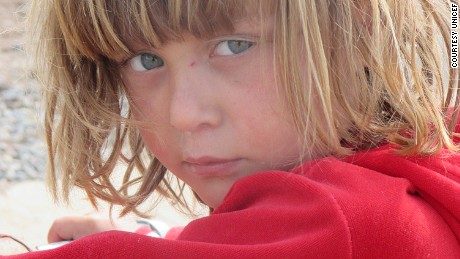
Bollywood actress with ancient Teutonic DNA
Sanskrit

Sanskrit is an Indo-Aryan or Indic language of the ancient Indian subcontinent with a 3,500-year history. It is the primary liturgical language of Hinduism and the predominant language of most works of Hindu philosophy as well as some of the principal texts of Buddhism and Jainism. Sanskrit, in its variants and numerous dialects, was the lingua franca of ancient and medieval India, predominantly modern day Bangladesh, Nepal, North India and Pakistan. In the early 1st millennium CE, along with Buddhism and Vedism, Sanskrit migrated to Southeast Asia, parts of East Asia and Central Asia, emerging as a language of high culture and of local ruling elites in these regions.

Modern Sanskrit is traceable to the 2nd millennium BCE in a form known as Vedic Sanskrit, with the Rigveda as the earliest-known composition.The phonology, grammatical forms of Sanskrit has remained similar to the Vedic language. A more refined and standardized grammatical form called Classical Sanskrit emerged in the mid-1st millennium BCE with the Aṣṭādhyāyī treatise of Pāṇini. An ancient Proto-Dravidian language has been found to influence the Vedic Sanskrit language. The broader definition of Sanskrit refers to the whole range of mutually intelligible Old Indo-Aryan dialects spoken in North-western India at the time of the composition of the Vedas and thus can be treated as the ancestor of the Prakrits and Pali, and consequently, of all Modern Indo-Aryan languages like Hindi, Marathi, Bengali, Punjabi, Gujarati, Sindhi, Kashmiri, Kumaoni, Garhwali, Urdu, Dogri, Maithili, Konkani, Assamese, Odia, and Nepali. On the other hand, the standardized Classical and Epic Sanskrit was a literary language and not the ancestor of any Indo-Aryan language. Sanskrit has significantly influenced the phonology, lexicology, morphology and grammatical systems of South Indian languages of Kannada, Telugu, Tamil and Malayalam.

Sanskrit is an Old Indo-Aryan language. As one of the oldest documented members of the Indo-European family of languages, Sanskrit holds a prominent position in Indo-European studies. It is related to Greek and Latin, as well as Hittite, Luwian, Old Avestan and many other living and extinct languages with historical significance to Europe, West Asia, Central Asia and South Asia. It traces its linguistic ancestry to the Proto-Indo-Aryan, Proto-Indo-Iranian and Proto-Indo-European languages.


************


Triskelion of Tibet


The Triskellion is a very ancient symbol, which may have initially symbolized the early sky gods, the sun, the rotating nature of the universe, and the cycle of life. This symbol has been found wherever Teutonic peoples have roamed, and which had also been perpetrated by culturally Celtic or Proto-European peoples as well. To the right, a triskelion from Tibet in the northern Himalayan Plateau.


************


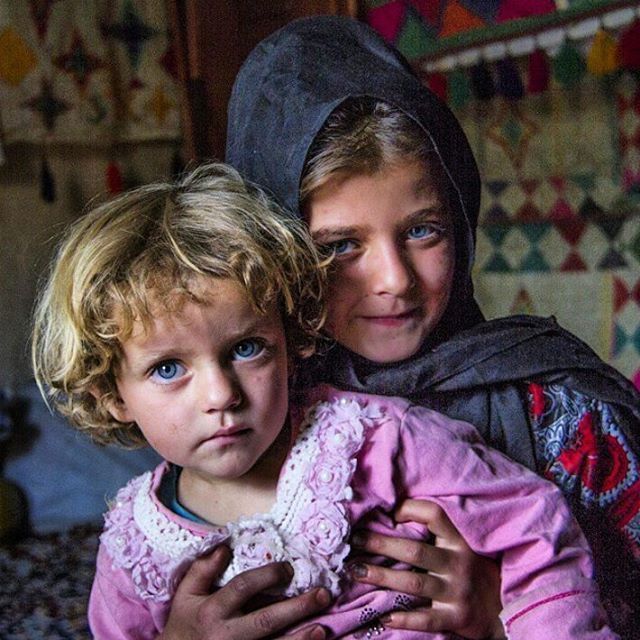
Yazidi people of northern Iraq


This 20 year old Yazidi woman committed suicide. ISIS has been exterminating them (their religion is Armenian Orthodox) and using their women as sex slaves. In other words, they just want to impoverish, punish, murder, rape, and just generally devour them in every way imaginable. It's something to look up and consider. Our government and mainstream media doesn't care very much.


Saturday, August 5, 2017

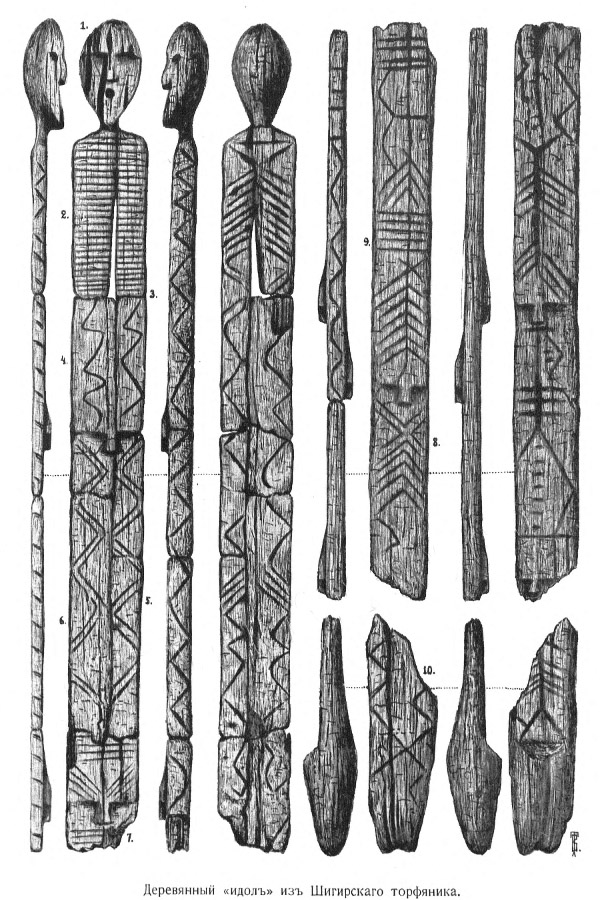
The Shigir Idol - Likely remnant of the Ancient Teutonic Homeland of 9,000 BCE

'Haunting Russian statue discovered to be 11,000-years-old'

Covered in a mysterious code, the Shigir Idol is the oldest wooden structure in the world.

Michael d'Estries - Mother Nature Network - August 30, 2015

Thousands of years before the ancient Egyptians quarried even the first block of granite for the great pyramids, a massive wooden totem nearly 17.5 feet tall fell into a peat bog in the western fringes of Siberia, Russia. There it lay, preserved in a kind of natural time capsule, until it was discovered in 1894.

Called the Big Shigir Idol, the mysterious statue has baffled researchers for decades due to the coded hieroglyphics covering its surface. While some have surmised that it may contain stories about the creation of the world by ancient man, others believe it to be nothing more than decoration. One thing we do know for sure: This thing is old — really, really, old.

Back in 1997, an initial analysis using radiocarbon dating placed the Shigir Idol's age at roughly 9,500 years. A new analysis this year using seven small wooden samples from the Idol placed inside an accelerated mass spectrometer determined it to be 11,000 years old. That's more than twice the age of the Egyptian pyramids or Stonehenge.

cont...

*************************

Tibetan Swastika
Sverdlovsk Oblast is  located in what would have been well within the territory of what I would call the Ancient Teutonic Homeland of 11,000 years ago. The designs carved into the Shigir Idol could contain  some of the mysteries of those people. If you look at the above sketch of the totem's markings and signs, there is what appears to be an Othala-like design. I'm not saying that it is an Othala, but if you right-click/view image and place two fingers (top and bottom) on it... it does indeed look like an Othala on a couple of parts of it. Now if we consider that part of the meaning of this symbol is "Homeland," it presents a very alluring possibility. You Asatrar/Odinists out there should be all over this. The Shigir Idol is the oldest preserved wood carving in the world.

It's curious that this design resembles the "endless knot" of Tibetan Buddhism, which could have a similar meaning to the "flower of life." I believe that as demographic changes occurred on the "earth island" over millennia, some of the very ancient symbols were left behind in some capacity. Perhaps the incoming Mongols merely discovered the symbols after the last glacial movement? Just last evening on 'Ancient Aliens' (episode 'The Replicants'), it showed a Tibetan symbol which strongly resembled what I call a "Vehmic Rune" within a circle. Within each of the five sections were Tibetan symbols and text I recall. I believe that this was a real ancient rune, which I had thought was Proto-European; but perhaps had a Teutonic origin, or both.

Teutonic genes in modern Iran
In addition to the endless knot and the Vehmic rune, there are variations of the Triskelion within various cultures around eastern Europe, western and central Asia, and even in Tibet. Swastikas and what looks like the "wheel of the year" (Dharmachakra) are both featured prominently within Tibetan Buddhism. Even ancient Japanese symbols have similar features to many from this very ancient central Asian concept, but I don't want to reach too much here. Then of course there's the Indo-European language brought into India at a later time period by "Aryans" who were an Indo-European people (Mediterranean/Teutonic).

.

Tuesday, November 1, 2016

The Arctic Home in the Vedas: Part 22 - Was Jötunheim the original Teutonic homeland?


For the most part, what is today known as the culture of Asatru came into being in northern Europe within the last 3,000 years. For example, prior to about 1,000 BCE, there were no runes carvings. It's at least possible that this culture was actually formed from a fusion between proto-Europeans and the incoming Teutons. Would it be a stretch to speculate that the legend of Jötunheim, and it's giants (the Jötnar), could have originated with the proto-Europeans regarding the early migration of Teutons? The original Teutonic homeland was likely located from the Himalayas to the Arctic Sea, not including later migratory outposts such as ancient Aryan Persia.

The average height of men back then was a little over five feet tall; and I'm guessing that the pure Teutons were at least a foot taller than that on average.... "Giants." I can recall reading of how the Greek Byzantines thought of the Langobards as "giants." Even today, the Dinka tribe in Africa has an average height of about ten inches taller than the surrounding peoples; so there is genetic precedent for this type of height disparity between basically similar peoples. Montenegrins are about seven inches taller on average than their Balkan neighbors. It may sound crazy, but the Teutons could have been 15 inches taller than the proto-Europeans... having now been diffused down to an average of 5'11".

The imcoming Teution warriors must have struck tremendous fear into the proto-Europeans of northern Europe. To put it bluntly... could northern Europe have been "Midgard" and northern Eurasia "Jötunheim"? "Nordic" is a regional ethnographic term, and the traditional Norse are themselves partly descended from proto-Europeans. Aspects from the ancient indigenous people could also have simply merged into what later became Asatru. What may sound sort've odd today, "different" types of Scandinavians, has at least some equivalent examples in northern Europe in the written record. For example, there were different "types" of Irish people a thousand years ago.... some Teutonic, some Atlanto-Mediterranian; some dark haired, some blonde; some tall, some short..... different cultures which later became "the Irish."

The worst and coldest winters blow from Siberia across northern Europe, that is from the east, where the frost-giants waft cold blasts of wind to blacken tender buds and chill the hearts of men, but it was in the far north, where the night reigned longest and the ice never melted that the entrance to Nefl-heim and Angerbode's Ironwood lay. In the psycho-geography of the Other World, Angerbode could be both east of Midgard in Jötunheim and in Ironwood; such was her reputation that she dwelt simultaneously in the world of places.

-- Leo Ruickbie, 'Witchcraft Out of the Shadows' (1988), 'East of Midgard: Witchcraft, Magic and Religion Amongst the Pagan Tribes of Northern Europe', page 43

I'm not suggesting that the entire legend originated with the proto-Europeans, but that certain aspects may have come from their long-ago culture and perspective. Other aspects may have been different. Some may have seen the Teutons as "gods" or some other mystical concept. I suppose that it's even possible that the fantastic Germanic "imagination of itself," from more modern history, may have been a long cultural carryover from the original indigenous people. I suppose that you could say that Dolph Lundgren could be sort've a modern representative of the original Teutonic element, and Mariska Hargitay a modern representative of the proto-European element of northern Europe... a perfect mixture. Even their names give a certain mystical clue; the powerful Teuton and the magical Alpine.


Nordic/Viking Music - Jötunheimr

Adrian von Ziegler

566,257 subscribers

1,087,396 views for this video

Published on Feb 23, 2014

You can get the song here, together with all my other music:
https://adrianvonziegler.bandcamp.com/album/the-complete-discography

You can also support me and my music directly on Patreon if you wish:
https://www.patreon.com/AdrianvonZiegler

Facebook: http://www.facebook.com/AdrianvonZiegler
iTunes: https://itunes.apple.com/artist/adrian-von-ziegler/id445469270
Bandcamp: http://adrianvonziegler.bandcamp.com/
Real CD's: http://www.cdbaby.com/Artist/AdrianvonZiegler
Twitter: http://twitter.com/#!/AdrianVZiegler

A new Viking song that goes straight into Norse Mythology! It's the longest and most powerful Viking song that I made so far, and we're one step closer again to the video of "1 Hour of Viking Music" that I promised. =) Hey, if you already know what the title means feel yourself high-fived by me, and if you can pronounce it then feel double high-fived!^^


Jötunheimr is the home world of the Giants from Norse Mythology (one of the Nine Worlds, more known worlds are for example Midgard and Asgard). Jötunheimr is definitely one of the lesser known worlds commonly, but for me it was always one of the most fascinating. Therefore since I started making those songs that are focused on Vikings and Norse Mythology I always knew that I would do a song specifically about Jötunheimr one day. And here it is!^^

Ah yes, the voice that you hear in the song is my own, and believe it or not: It's not edited. It's a raw recording, only hall effect was added.^^ People already asked me in the song „Einherjer" whether I edited my voice to make it deeper, but it's naturally like that. Maybe I'll show you once. xD

Also, adding this note again because I want no misunderstandings: (I know many people are very fond of Viking culture -- I'm one of them^^)

People were asking me how would I know what kind of music the Vikings really made, since they are gone since centuries. But I don't claim to know that, what I do is writing ABOUT Vikings.^^ I don't know what they played 1000 years ago, I simply compose music that I personally see fitting to tell tales about them. So if there are Fantasy elements or Film music-like parts included -- that's why.^^ I mostly try to keep it traditional though, as well as my knowledge about it lets me do that. =)

Composed and arranged 100% by myself as always, on keyboard.

The artwork was created by this great artist:
http://1rich1.deviantart.com/

© All audio material is copyrighted by Adrian von Ziegler.


*************************

The misty forest gave a sense of foreboding, that the warrior could not disagree with. But, he was a Viking; he would not run just because of the tales women tell while at the spindle. He removed his helmet, setting it down in front of him and drew his sword and a rag, wiping off the dark ichors of the last fight.

Thump.

He heard it, looking up. It was a loud sound, as if a tree fell in the distance. He quietly returned to work on his blade, hand gripping the hilt tightening.

CRACK!

He heard the splintering of a great oak. Closer. He stood, placing his helmet on as a dark shape towered over him in the mist, it was massive, at least as tall as a house. Two piercing white eyes illuminated the fog, watching him. “Norseman...” It rumbled. “These woods are not your place.”

“I shall not be cowed with words!” He declared back, sword in hand, “A brave one too...” The giant mused, cocking it's head. “And meat. There is good meat on you...” It crouched down to get a better look, gripping a tree, the wood straining under it's crushing grip. “What brings you to this cursed wood?” The viking weighed his odds. He had the arrow wounds from the last fight, his shield had been smashed, and his body ached. He smiled grimly.

“Victory, or Valhalla.”


-- Troy Nelson, YouTube user

.

Tuesday, May 26, 2015

Ancient Camunian petroglyph standing stone - 3,000 BCE

I couldn't find much information about this standing stone. Apparently it was carved and erected by the ancient Camunni tribe somewhere between the 2nd and 3rd millennium BCE. Evidently it was relocated to a museum, which appears to be the Teglio Antiquarium Tellinum (Archaeological Museum). The location was said to be Cornal, Val Camonica; although it wasn't clear as to whether or not this was the original location, or the location of the museum itself. It may be a very small village or more of a type of place name in the old language. The flat square stone, resembling an Odinic runestone, was described as an "idol statue with graffiti."


I feel a bit cheated, since this a beautiful very ancient artifact, and I want to know more about it. The "graffiti" looks something like a labyrinth, which was an important symbol to the Camunni. It may be of something else, although it's not clear. It does look very interesting and meaningful. It's at least as thought provoking as one image of an ancient Camunnian warrior doing battle with a Spartan-like helmet, sword, and shield. Remember, the Camunni weren't afraid to do battle with the Romans.

[Petroglyph standing stone in case the above link doesn't hold]


1937 National Socialist expedition to Val Camonica

The Ahnenerbe was an institute in Nazi Germany purposed to research the archaeological and cultural history of the Aryan race. Founded on July 1, 1935, by Heinrich Himmler, Herman Wirth, and Richard Walther Darré, the Ahnenerbe later conducted experiments and launched expeditions in an attempt to prove that mythological Nordic populations had once ruled the world.

In 1937, the Ahnenerbe sent the archaeologist Franz Altheim and his wife, the photographer Erika Trautmann, to Val Camonica, to study prehistoric rock inscriptions. The two returned to Germany claiming that they had found traces of Nordic runes on the rocks, supposedly confirming that ancient Rome was originally founded by Nordic incomers.

Wikipedia displays the following image as an example of Camunic runes in Val Camonica. What is interesting is that--despite the fact that the Camunni were an Alpine/proto-European people, and not Teutonic--the ancient Camunic alphabet is made up of some symbols which appear to be of Teutonic origin. For example, the Life rune and the Death rune (see letter "Z"). Although some of the Norse runes actually have their origin in the Italian peninsula, those two particular runes are of Norse origin. Also, there's a type of "double-Life rune" as well (see letter "S).

If you compare the runes from the Camunic alphabet above to the Teutonic/Odinic runes, clearly some are the same. For the record, the Camunic alphabet is from the first century BCE in the Val Camonica and the Valtellina. Although it can be confusing, some of these ancient symbols moved around; perhaps via the old trading routes. Although I believe that the National Socialists got the eastern Teutonic origins--including very ancient symbology--largely correct; the idea of "Teutonic Romans" was an embarrassing falsehood. 

The Romans would seem to have been primarily a shorter, heavy-boned Alpine type with true-Mediterranean admixture. This is why the old statues didn't particularly appear to be Mediterranean; for example, with Roman noses. I use the term "Alpine" loosely, since I'm referring to a more widespread stock 3,000 years ago.

.

Tuesday, March 17, 2015

The Cult of Saturn: Part V

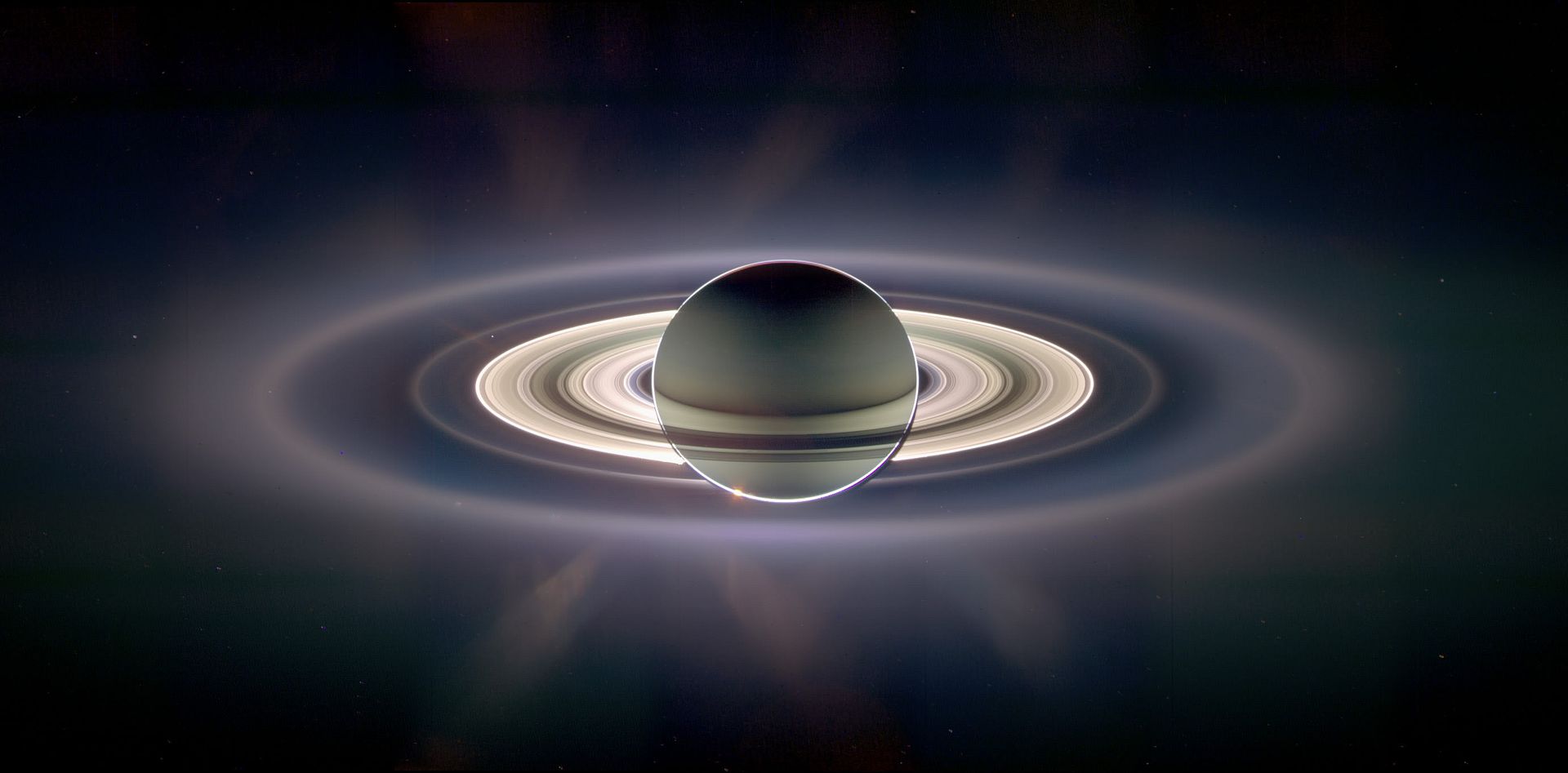
The “electric universe” theory is a related but separate concept from the idea that our solar system rearranged only in the thousands of years ago. During The Golden Age, some of the planets were to have appeared as dramatically as the Moon currently appears in our sky. Saturn sat motionless in the northern sky, much closer to the Earth. It could also be said that Saturn appears like an “eye” when viewed from top to bottom so to speak. Also, Mars with Venus behind it was to have appeared like an eye as well; with Mars as the “pupil”.. with Venus appearing subtly in the background, often appearing as a “bottom rocker.” Apparently, these ancient “sun wheels” had either five, six, or eight points of electrical discharge emanating from them, giving rise to the many ancient symbols from around the world.

The rays of electrical discharge surrounding the Mars-Venus configuration was to have created the appearance of “horns” as like a bull or an owl. This would explain the archetypes from, for example, Babylon (“bull worhip") and Phoenicia-Canna (“owl worship”). Also, the obsession with “the horns” within the Cult of Saturn. Instead of being privy to this as part of our fascinating collective history, we are forced to endure adult infants in popular mainstream culture using these symbols in an unhealthy way.. while at the same time this history is being kept hidden from us. Also, the ancient worldwide symbol of the dragon or serpent was to have originated from the appearance of the electrical interaction between Mars and Venus.

According to Arthur C. Clarke, who was a part of this milieu, the “monolith” from the 1968 film ‘2001: A Space Odyssey’ was actually a representative of the pyramid. However, the pyramid would have been too overt a symbol to use. The filmmaker Stanley Kubrick, who produced and directed ‘2001’, has been described as either an insider of this milieu.. or someone who tried to “expose” this systemic underworld. He was a person commissioned, through his work, to facilitate the ancient Saturnian code of allowing the information to become available for “those who wish to know.”

The Black Sun
Kubrick passed away on March 7, 1999, which is exactly 666 days before January 1, 2001. Of course, this may be a simple coincidence. However, there are hundreds of such examples; which, if someone were able to spend a few million dollars and assemble them all to feed into a computer, would be statistically impossible with the odds being in the many trillions. There are other Pythagorean-numerical coincidences surrounding certain historical events which are extremely eery, and seemingly would be impossible to artificially coordinate. This is why this “Cult of Saturn” series is next to impossible to adequately write. Nobody could possibly put it all together correctly in a manner which would truly illuminate the magnitude of the system. I can’t do it. I’ve just grazed the surface here.

I should have been more clear earlier that the “black sun” symbol, associated with the National Socialists, apparently originated with the early Saturnian religious expression of Teutonic peoples when they lived in the northern part of west/central Asia during the last glacial movement. Other possible Saturnian symbols from this expression were the more circular forms of both the swastika and the triskelion. Often it’s not clear whether or not a symbol represents the Sun or Saturn. I think that it’s at least very likely that the black sun wheel is Saturnian. There is a lot more evidence of a very ancient Teutonic/Hyperborean homeland in the far north during The Golden Age, than there is evidence of any super Teutonic civilization. Those are two different ideas. However, the ancient Persian/Aryan civilization was of a true-Mediterranean and Teutonic mix.

Here is one amazing image of the hexagram on the north pole of Saturn, with the "ring of fire" at the center; which could also form another symbolic perception of an "eye." In the Johnny Cash song entitled "Ring of Fire," the lyrics clearly reflect someone "going to Hell." However, that negative idea originated from a Christian (Solar cult) point of view. Since the word "Hell" originated from the Saturnian God "El," and since the "ring of fire" is located on Saturn's north pole, a person visiting the "ring of fire" would literally be "going to El" in a benign sense.

.

Tuesday, February 4, 2014

The Arctic Home in the Vedas: Part 17 - "Thule, Saturn, & an alternative explanation"


Thule, Saturn, & an alternative explanation: Part 6

This is part of a video produced by the scientists at The Thunderbolts Project
http://www.thunderbolts.info/wp/
https://www.youtube.com/user/ThunderboltsProject

Wal Thornhill and Dave Talbott will each give two thought-provoking presentations at EU2014 Conference: All About Evidence, Albuquerque, New Mexico, USA, March 20 - 24, 2014. For more information on all the speakers start here:
http://www.thunderbolts.info/wp/2013/09/10/eu2014-home-page/

Here we offer David Talbott's first glimpses of celestial dramas in ancient times. Just a few thousand years ago a gathering of planets hung as towering forms in the ancient sky close to the earth, provoking spectacular electric discharge formations above our forebears.

For clips from episode 2, proceed to:
https://www.youtube.com/watch?v=V_T6__JDeyw

Subscribe to Thunderbolts Update weekly newsletter:
http://thunderbolts.us7.list-manage.com/subscribe?u=1b8e5fc5ffab70f95805dea12&id=1976765bd9

Thunderbolts Project Home:
http://www.thunderbolts.info/wp/

Facebook:
https://www.facebook.com/thunderboltsproject

Picture of the Day:
http://www.thunderbolts.info/wp/daily-tpod/

Electric Universe (Wal Thornhill):
http://www.holoscience.com/wp/

Essential Guide to the Electric Universe:
http://www.thunderbolts.info/wp/eg-contents/


The "electric universe" theory is gaining momentum; however, so many of the biggest names in "mainstream science" have entire careers invested into ideas which may not be true ("gravity universe", "black holes", "big bang theory"). As a consequence, they almost always will not even listen or respond to any new ideas; and will depend on the establishments of the world to back them up. The 1994 book 'Forbidden Archeology: The Hidden History of the Human Race'--by Michael A. Cremo and Richard L. Thompson--documents clear evidence that mainstream archeology literally hides away in storage locations because they can't explain them away.

The idea that a "Teutonic homeland" may have existed on the North Pole seems too incredible to believe until one looks at all the evidence. I see much more evidence to support it than there is evidence to the contrary. As to whether they were somehow a superior people isn't really applicable to whether or not this homeland existed. There's much more basis for an ancient Mediterranean origin of civilization than any other race or culture.

Could there have been an Earth with no seasons in the not-too-distant past? We know that Antarctica was once a continent with a warm climate and thriving with life. If you watched the above video, then if true it could explain a Thule-like civilization.. or at least a Teutonic settlement... literally on the North Pole. Was a still viable star Saturn the sun in the northern sky? Were the dramatically nearby interacting planets "the gods?" This electric solar system of only a few thousand years ago would be the last piece of evidence to finally prove Bal Gangadhar Tilak's theory of "the Arctic home in the Vedas."

As far as the massive "Saturnian symbolism" in the world today, that goes beyond where I want to go here. Also, the presence of some people who were eight to nine feet tall--which is true since there are the remains to prove it--still are not numerically numerous enough to point-blank state that "these were the ancient Teutons." They may have been a different type of human being altogether. I do, however, believe that the original Teutons could have been six and a half to seven feet on average. There is at least one sub-Saharan tribe today which has an average height of close to seven feet. The average height of Scandinavians today is 5'11", which would work as far as a northern Europe of largely Teutonic and proto-European mixtures.

.

Saturday, February 1, 2014

The Arctic Home in the Vedas: Part 16 - "Thule, Saturn, & an alternative explanation"


Thule, Saturn, & an alternative explanation: Part 5

The way the Greeks understood their relationship with non-Greek peoples was significantly moulded by the way myths of the Golden Age were transplanted into the contemporary scene...

We often hear the phrase “golden age” in reference to the zenith of something; “the golden age of cinema.” However, there was THE golden age, and it may be stranger than anything we will ever uncover. It has to do with everything from the deep past to the present day. It has to do with every ancient culture, and in particular the original Teutonic people before their migrations. I will tie this big loose end. But for now, we are talking about a “Golden Age” in which there were no seasons as we know them today; and in which the North and South Poles was literally habitable.

A particular Hyperborean legendary healer was known as "Abaris" or "Abaris the Healer" whom Herodotus first described in his works. Plato (Charmides, 158C) regarded Abaris as a physician from the far north...

Could Abaris the Healer have been of a migrating people from the “far north”… Thule? The ancient Greeks were very scientifically-minded, so couldn’t this “shaman”--who caused such a stir--seem a little out of place?

Above the Arctic Circle, from the spring equinox to the autumnal equinox (depending on latitude), the sun can shine for 24 hours a day...


There is a deep tie-in here with the “Golden Age” and Bal Gangadhar Tilak’s theory, but I will have to wait until Part 17 to reveal it.

Unaware of the explanation offered by modern science (i.e. that these insects had lived in times when the climate of northern Europe was much warmer, their bodies preserved unchanged in the amber) the Greeks came up with the idea that the coldness of northern countries was due to the cold breath of Boreas, the North Wind. So if one travelled "beyond Boreas" one would find a warm and sunny land.

This is clearly part of the Greek mythology of the “Golden Age.” However, these mythologies of that possible era are present in the mythologies of every ancient civilization. Again, I’m focusing mostly on the legend of Thule, but this “Golden Age” affected every person living on Earth at that time if it was real.

Northern Europeans (Scandinavians), when confronted with the classical Greco-Roman culture of the Mediterranean, identified themselves with the Hyperboreans, neglecting the traditional aspect of a perpetually sunny land beyond the north.

This was only a perception, but could it literally be tied to a real time and place? There is now mounting evidence that it may.


Hyperborean Indo-European hypothesis

John G. Bennett wrote a research paper entitled "The Hyperborean Origin of the Indo-European Culture" (Journal Systematics, Vol. 1, No. 3, December 1963) in which he claimed the Indo-European homeland was in the far north, which he considered the Hyperborea of classical antiquity. This idea was earlier proposed by Bal Gangadhar Tilak (whom Bennett credits) in his The Arctic Home in the Vedas (1903) as well as the Austro-Hungarian ethnologist Karl Penka (Origins of the Aryans, 1883).

Now this is a big tie-in, and in hindsight part of the intellectual process of looking into something which seemingly is impossible. They weren’t, however, “Indo-Europeans.” They were the original Teutonic race. This intrinsically has nothing to do with the Nazis. In fact, the German sub-race--specifically--is less than half Teutonic.. and less so in the southern German lands. The larger part being primarily proto-European (“Alpine”).

According to these esoterists, Hyperborea was the Golden Age polar center of civilization and spirituality...


I doubt this part, as there is no strong evidence of it. That doesn’t mean that evidence of a great Thule civilization couldn’t be out there undiscovered. We can look into what may exist as far as ruins at a later point. What there is evidence of is the presence of Teutonic people in some of these lost lands like the Tarim Basin.

Robert Charroux first related the Hyperboreans to an ancient astronaut race of "reputedly very large, very white people" who had chosen "the least warm area on the earth because it corresponded more closely to their own climate on the planet from which they originated."

After Part 17, this may show to be theoretically possible, but wild theories can and do hurt the areas where facts can be established. In any case, this original Teutonic race would no longer exist in the exact form that they did. Even in the far north of the post-Golden Age Europe, or in modern times, I would guess that this certain stock would be at no more than 50%.


They may not have been as physically attractive as their Teutonic-Protoeuropean descendants later became. The very tall, square-headed, almost white-haired, very light blue-eyed, and pure white skinned people became shorter, rounder-headed, more ash or wheat blonde haired, more medium blue-eyed, and perhaps a bit tan to give one possible example.

Unlike other places where Teutonic people came and ruthlessly conquered, they were taken with these shorter, stocky, sexier, probably brown-eyed, perhaps dark brown haired European natives.. and merged with them. Only in what I would call the “final great migration,” a horde of more pure stock Teutons came and permanently placed their clear genetic and linguistic stamp on some places like Scandinavia and northern Germany.


The one other example of where they mixed their blood was in ancient Persia, which produced the Aryan culture and people (original Teutons & true Mediterraneans). To make this perfectly clear, this original Teutonic race didn't produce "The Golden Age"; the Golden Age may explain their origins. I use the term "Teutonic" for the original stock; as opposed to the modern "Germanic," which is a loose and somewhat undefined term. For example, the "Germanic Austrians" probably have only a minimally larger Teutonic element than say Venetians, Croatians, or Slovenes... yet the loud terms "GERMAN," "ITALIAN," or "SLAV" are thrown around recklessly by many. Language often defines a culture more than actual racial stock in the perceptions of most people.


Golden Age (Wikipedia)

The term Golden Age (Greek: Χρυσόν Γένος Chryson Genos) comes from Greek mythology and legend and refers to the first in a sequence of four or five (or more) Ages of Man, in which the Golden Age is first, followed in sequence, by the Silver, Bronze, Heroic, and then the present (Iron), which is a period of decline. By extension "Golden Age" denotes a period of primordial peace, harmony, stability, and prosperity. During this age peace and harmony prevailed, humans did not have to work to feed themselves, for the earth provided food in abundance. They lived to a very old age with a youthful appearance, eventually dying peacefully, with spirits living on as "guardians". Plato in Cratylus (397 e) recounts the golden race of humans who came first. He clarifies that Hesiod did not mean literally made of gold, but good and noble.

There are analogous concepts in the religious and philosophical traditions of the South Asian subcontinent. For example, the Vedic or ancient Hindu culture saw history as cyclical, composed of yugas with alternating Dark and Golden Ages. The Kali yuga (Iron Age), Dwapara (Bronze Age), Treta yuga (Silver Age) and Satya yuga (Golden Age) correspond to the four Greek ages. Similar beliefs occur in the ancient Middle East and throughout the ancient world, as well.

In classical Greek mythology the Golden Age was presided over by the leading Titan Cronus. In some version of the myth Astraea, also ruled. She lived with men until the end of the Silver Age, but in the Bronze Age, when men became violent and greedy, fled to the stars, where she appears as the constellation Virgo, holding the scales of Justice, or Libra.


European Pastoral literary and iconographic tradition often depicted nymphs and shepherds as living a life of rustic innocence and simplicity, untainted by the corruptions of civilization — a continuation of the Golden Age — set in an idealized Arcadia, a region of Greece that was the abode and center of worship of their tutelary deity, goat-footed Pan, who dwelt among them. This idealized and nostalgic vision of the simple life, however, was sometimes contested and even ridiculed, both in antiquity and later on.


Abaris the Hyperborean (Wikipedia)
Abaris the Hyperborean (Greek: Ἄβαρις Ὑπερβόρειος, Abaris Hyperboreios), son of Seuthes, was a legendary sage, healer, and priest of Apollo known to the Ancient Greeks. He was supposed to have learned his skills in his homeland of Hyperborea, near the Caucasus, which he fled during a plague. He was said to be endowed with the gift of prophecy, and by this as well as by his Scythian dress and simplicity and honesty he created great sensation in Greece, and was held in high esteem.


Gothicismus (Wikipedia)

Gothicismus, Gothism, or Gothicism (Swedish: Göticism) is the name given to what is considered to have been a cultural movement in Sweden, centered around the belief in the glory of the Swedish ancestors, originally considered to be the Geats, which were identified with the Goths. The founders of the movement were Nicolaus Ragvaldi and the brothers Johannes and Olaus Magnus. The belief continued to hold power in the 17th century, when Sweden was a great power following the Thirty Years' War, but lost most of its sway in the 18th. It was revitalized by national romanticism in the early 19th century, this time with the vikings as heroic figures.


**************************************************


By extension "Golden Age" denotes a period of primordial peace, harmony, stability, and prosperity. During this age peace and harmony prevailed, humans did not have to work to feed themselves, for the earth provided food in abundance. 

This sounds a bit like someone's warm and fuzzy account of some long ago "place" in their imagination. However, this will make a lot more sense during Part 17.

He (Abaris) was supposed to have learned his skills in his homeland of Hyperborea, near the Caucasus...

Apparently Abaris was a real figure who caused a sensation in early Greek civilization. Since he dressed like a Scythian, there seems to be a Persian connection, which would tie-in well as far as his possible Teuton roots at that time. If it was about one-thousand BCE, then the Aryan connection would make sense here.


Gothicismus

There is a definite tie-in here, but this national/racial historical perception (likely partly true in this case) starts to lead us down some rabbit trails and into confusion. Suffice to say that there were some early Gothic legends of Thule.

.

Wednesday, January 15, 2014

The Arctic Home in the Vedas: Part 14 - "Thule, Saturn, & an alternative explanation"


Thule, Saturn, & an alternative explanation: Part 3

The 80's musical track from the above video is entitled 'Hyperborea' by a German band called Tangerine Dream, which has been active from 1967 to the present. The theme song ('Betrayal') from the 1977 movie 'Sorcerer' was produced by them, as well as over sixty other film tracks. Anyway, I thought the above video captured the allure of what now seems clear to me to have been a real place; although there's no proof as of yet that it was a great civilization. At the very least, this ancient land of legend--and it's latter migrating peoples--are a big part of Indo-European history.

The "Arctic Home in the Vedas" is not just about Teutonic origins, but may say just as much about the very ancient proto-European culture. as well as the original pre-Greek and Roman Mediterranean civilizations. All three of those subraces are not given proper respect as far as their true origins. The Tarim mummies are just the tip of the iceberg. In hindsight, Bal Gangadhar Tilak was quite a pioneer; and the evidence proving him correct is mounting.

The ancient Greeks must have had periodic contact with these Teutons who were migrating outward after the last glacial movement. Perhaps some of them may even have contributed to ancient Greece and Assyria. I'm going to present this year some stunning information that may blow this thing out've the water as far as at least part of the Arctic circle being a livable place four or five thousand years ago. Much of this Greek-Teutonic contact likely occurred at the early stages of Greek civilization, where the legend developed.


This Hyperborean hypothesis seems to point to the logical location of northern Central Asia for what was probably some of the later settlements... like the Tarim Basin. It seems as though Greek conventional thinking later placed the Teutons as being from a location more like the British Isles; but they probably had it correct early on. Starting about three thousand years ago, some of these Teutons were migrating into Europe and merging with the proto-European/Alpine peoples; thus forming the "Celtic cultures." This is probably what confused them. It still confuses us today! Teutons were then associated with mary parts of the north from ancient Briton to ancient Tibet.


Hyperborea (Wikipedia)

In Greek mythology the Hyperboreans (Ancient Greek: Ὑπερβόρε(ι)οι, pronounced [hyperbóre(ː)ɔi̯]; Latin: Hyperborei) were a mythical people who lived "beyond the North Wind". The Greeks thought that Boreas, the god of the North Wind (one of the Anemoi, or "Winds") lived in Thrace, and therefore Hyperborea indicates a region that lay far to the north of Thrace.

This land was supposed to be perfect, with the sun shining twenty-four hours a day, which to modern ears suggests a possible location within the Arctic Circle. However, it is also possible that Hyperborea had no real physical location at all - for according to the classical Greek poet Pindar,

neither by ship nor on foot would you find
the marvellous road to the assembly of the Hyperboreans.


Pindar also described the otherworldly perfection of the Hyperboreans:

Never the Muse is absent
from their ways: lyres clash and flutes cry
and everywhere maiden choruses whirling.
Neither disease nor bitter old age is mixed
in their sacred blood; far from labor and battle they live.


Early sources


Herodotus

The earliest extant source that mentions Hyperborea in detail is Herodotus's Histories (Book IV, Chapters 32–36), written circa 450 BC. However, Herodotus recorded three earlier sources that supposedly mentioned the Hyperboreans, including Hesiod and Homer, the latter purportedly having written of Hyperborea in his lost work Epigoni: "if that be really a work of his." Herodotus also wrote that the 7th century BC poet Aristeas wrote of the Hyperboreans in a poem (now lost) called Arimaspea about a journey to the Issedones, who are estimated to have lived in the Kazakh Steppe. Beyond these lived the one-eyed Arimaspians, further on there were gold-guarding griffins, and beyond these the Hyperboreans. Naturally, Herodotus used to assume the location of Hyperborea somewhere in the Northeast Asia.

Pindar, Simonides of Ceos and Hellanicus of Lesbos, contemporaries of Herodotus in the 5th century BC, also all briefly described or referenced the Hyperboreans in their works.


Location of Hyperborea

The Hyperboreans were believed to live beyond the snowy Riphean Mountains which Homer first referenced in his Iliad (15. 171; 19. 358)[7] or beyond the home of Boreas.

According to Pausanias: "The land of the Hyperboreans, men living beyond the home of Boreas."

Homer placed Boreas in Thrace, and therefore Hyperborea in his opinion was somewhere to the north of Thracian territory, perhaps Dacia. Sophocles (Antigone, 980–987), Aeschylus (Agamemnon, 193; 651), Simonides of Ceos (Schol. on Apollonius Rhodius, 1. 121) and Callimachus (Delian, [IV] 65) also placed Boreas in Thrace. Other ancient writers however believed the home of Boreas or the Riphean Mountains were in a different location. For example, Hecataeus of Miletus believed that the Riphean Mountains were adjacent to the Black Sea. Alternatively Pindar placed the home of Boreas, the Riphean Mountains and Hyperborea all near the Danube. Heraclides Ponticus and Antimachus in contrast identified the Riphean Mountains with the Alps, and the Hyperboreans as a Celtic tribe (perhaps the Helvetii) who lived just beyond them. Aristotle placed the Riphean mountains on the borders of Scythia, and Hyperborea further north. Hecataeus of Abdera and others believed Hyperborea was Britain.

Later Roman and Greek sources continued to change the location of the Riphean mountains, the home of Boreas, as well as Hyperborea, supposedly located beyond them. However all these sources agreed these were all in the far north of Greece or southern Europe. The ancient grammarian Simmias of Rhodes in the 3rd century BC connected the Hyperboreans to the Massagetae and Posidonius in the 1st century BC to the Western Celts, but Pomponius Mela placed them even further north in the vicinity of the Arctic.

In maps based on reference points and descriptions given by Strabo, Hyperborea, shown variously as a peninsula or island, is located beyond what is now France, and stretches further north-south than east-west. Other descriptions put it in the general area of the Ural Mountains.


Later classical sources


Plutarch, writing in the 1st century AD, connected the Hyperboreans with the Gauls who had sacked Rome in the 4th century BC (see Battle of the Allia).

Aelian, Diodorus Siculus and Stephen of Byzantium all recorded important ancient Greek sources on Hyperborea, but added no new descriptions.

The 2nd century AD Stoic philosopher Hierocles equated the Hyperboreans with the Scythians, and the Riphean Mountains with the Ural Mountains. Clement of Alexandria and other early Christian writers also made this same Scythian equation.


Ancient identification with Britain

Hyperborea was identified with Britain first by Hecataeus of Abdera in the 4th century BC, as in a preserved fragment by Diodorus Siculus:

In the regions beyond the land of the Celts there lies in the ocean an island no smaller than Sicily. This island, the account continues, is situated in the north and is inhabited by the Hyperboreans, who are called by that name because their home is beyond the point whence the north wind (Boreas) blows; and the island is both fertile and productive of every crop, and has an unusually temperate climate.

Hecateaus of Abdera also wrote that the Hyperboreans had a 'circular temple' on their island, and some scholars have identified this with Stonehenge. This is further supported by the fact that Stonehenge has been known as Apollo's Temple since classical antiquity, and Hyperborea in Greek legend was related to Apollo.

Pseudo-Scymnus, around 90 BC, wrote that Boreas dwelled at the extremity of Gaulish territory, and that he had a pillar erected in his name on the edge of the sea (Periegesis, 183). Some have claimed this is a geographical reference to northern France, and Hyperborea as the British Isles which lay just beyond the English Channel.

Ptolemy (Geographia, 2. 21) and Marcian of Heraclea (Periplus, 2. 42) both placed Hyperborea in the North Sea which they called the "Hyperborean Ocean."


Legends

Alone among the Twelve Olympians, Apollo was venerated among the Hyperboreans, the Hellenes thought: he spent his winter amongst them. For their part the Hyperboreans sent mysterious gifts, packed in straw, which came first to Dodona and then were passed from tribe to tribe until they came to Apollo's temple on Delos (Pausanias). Abaris, Hyperborean priest of Apollo, was a legendary wandering healer and seer. Theseus visited the Hyperboreans, and Pindar transferred Perseus's encounter with Medusa there from its traditional site in Libya, to the dissatisfaction of his Alexandrian editors.

Along with Thule, Hyperborea was one of several terrae incognitae to the Greeks and Romans, where Pliny, Pindar and Herodotus, as well as Virgil and Cicero, reported that people lived to the age of one thousand and enjoyed lives of complete happiness. Hecataeus of Abdera collated all the stories about the Hyperboreans current in the fourth century BC and published a lengthy treatise on them, lost to us, but noted by Diodorus Siculus (ii.47.1–2). Also, the sun was supposed to rise and set only once a year in Hyperborea; which would place it above or upon the Arctic Circle, or, more generally, in the arctic polar regions.

The ancient Greek writer Theopompus in his work Philippica claimed Hyperborea was once planned to be conquered by a large race of soldiers from another island (some have claimed this was Atlantis), the plan though was abandoned because the soldiers from Meropis realized the Hyperboreans were too strong for them and the most blessed of people; this unusual tale, which some believe was satire or comedy, was preserved by Aelian (Varia Historia, 3. 18).

Apollonius wrote that the Argonauts sighted Hyperborea, when they sailed through Eridanos.


Physical appearance


Greek legend asserts that the Boreades, who were the descendants of Boreas and the snow-nymph Chione (or Khione), founded the first theocratic monarchy on Hyperborea. This legend is found preserved in the writings of Aelian: "This god [Apollon] has as priests the sons of Boreas (North Wind) and Chione (Snow), three in number, brothers by birth, and six cubits in height [about 3 metres]."

Diodorus Siculus added to this account: "And the kings of this (Hyperborean) city and the supervisors of the sacred precinct are called Boreadae, since they are descendants of Boreas, and the succession to these positions is always kept in their family."

The Boreades were thus believed to be giant kings, around 3 metres tall, who ruled Hyperborea.

No other physical descriptions of the Hyperboreans are provided in classical sources. However, Aelius Herodianus, a grammarian in the 3rd century, wrote that the mythical Arimaspi were identical to the Hyperboreans in physical appearance (De Prosodia Catholica, 1. 114) and Stephanus of Byzantium in the 6th century wrote the same (Ethnica, 118. 16). The ancient poet Callimachus described the Arimaspi as having fair hair but it is disputed whether the Arimaspi were Hyperboreans.


.