Showing posts sorted by relevance for query Jötunheim. Sort by date Show all posts

Tuesday, November 1, 2016

The Arctic Home in the Vedas: Part 22 - Was Jötunheim the original Teutonic homeland?


For the most part, what is today known as the culture of Asatru came into being in northern Europe within the last 3,000 years. For example, prior to about 1,000 BCE, there were no runes carvings. It's at least possible that this culture was actually formed from a fusion between proto-Europeans and the incoming Teutons. Would it be a stretch to speculate that the legend of Jötunheim, and it's giants (the Jötnar), could have originated with the proto-Europeans regarding the early migration of Teutons? The original Teutonic homeland was likely located from the Himalayas to the Arctic Sea, not including later migratory outposts such as ancient Aryan Persia.

The average height of men back then was a little over five feet tall; and I'm guessing that the pure Teutons were at least a foot taller than that on average.... "Giants." I can recall reading of how the Greek Byzantines thought of the Langobards as "giants." Even today, the Dinka tribe in Africa has an average height of about ten inches taller than the surrounding peoples; so there is genetic precedent for this type of height disparity between basically similar peoples. Montenegrins are about seven inches taller on average than their Balkan neighbors. It may sound crazy, but the Teutons could have been 15 inches taller than the proto-Europeans... having now been diffused down to an average of 5'11".

The imcoming Teution warriors must have struck tremendous fear into the proto-Europeans of northern Europe. To put it bluntly... could northern Europe have been "Midgard" and northern Eurasia "Jötunheim"? "Nordic" is a regional ethnographic term, and the traditional Norse are themselves partly descended from proto-Europeans. Aspects from the ancient indigenous people could also have simply merged into what later became Asatru. What may sound sort've odd today, "different" types of Scandinavians, has at least some equivalent examples in northern Europe in the written record. For example, there were different "types" of Irish people a thousand years ago.... some Teutonic, some Atlanto-Mediterranian; some dark haired, some blonde; some tall, some short..... different cultures which later became "the Irish."

The worst and coldest winters blow from Siberia across northern Europe, that is from the east, where the frost-giants waft cold blasts of wind to blacken tender buds and chill the hearts of men, but it was in the far north, where the night reigned longest and the ice never melted that the entrance to Nefl-heim and Angerbode's Ironwood lay. In the psycho-geography of the Other World, Angerbode could be both east of Midgard in Jötunheim and in Ironwood; such was her reputation that she dwelt simultaneously in the world of places.

-- Leo Ruickbie, 'Witchcraft Out of the Shadows' (1988), 'East of Midgard: Witchcraft, Magic and Religion Amongst the Pagan Tribes of Northern Europe', page 43

I'm not suggesting that the entire legend originated with the proto-Europeans, but that certain aspects may have come from their long-ago culture and perspective. Other aspects may have been different. Some may have seen the Teutons as "gods" or some other mystical concept. I suppose that it's even possible that the fantastic Germanic "imagination of itself," from more modern history, may have been a long cultural carryover from the original indigenous people. I suppose that you could say that Dolph Lundgren could be sort've a modern representative of the original Teutonic element, and Mariska Hargitay a modern representative of the proto-European element of northern Europe... a perfect mixture. Even their names give a certain mystical clue; the powerful Teuton and the magical Alpine.


Nordic/Viking Music - Jötunheimr

Adrian von Ziegler

566,257 subscribers

1,087,396 views for this video

Published on Feb 23, 2014

You can get the song here, together with all my other music:
https://adrianvonziegler.bandcamp.com/album/the-complete-discography

You can also support me and my music directly on Patreon if you wish:
https://www.patreon.com/AdrianvonZiegler

Facebook: http://www.facebook.com/AdrianvonZiegler
iTunes: https://itunes.apple.com/artist/adrian-von-ziegler/id445469270
Bandcamp: http://adrianvonziegler.bandcamp.com/
Real CD's: http://www.cdbaby.com/Artist/AdrianvonZiegler
Twitter: http://twitter.com/#!/AdrianVZiegler

A new Viking song that goes straight into Norse Mythology! It's the longest and most powerful Viking song that I made so far, and we're one step closer again to the video of "1 Hour of Viking Music" that I promised. =) Hey, if you already know what the title means feel yourself high-fived by me, and if you can pronounce it then feel double high-fived!^^


Jötunheimr is the home world of the Giants from Norse Mythology (one of the Nine Worlds, more known worlds are for example Midgard and Asgard). Jötunheimr is definitely one of the lesser known worlds commonly, but for me it was always one of the most fascinating. Therefore since I started making those songs that are focused on Vikings and Norse Mythology I always knew that I would do a song specifically about Jötunheimr one day. And here it is!^^

Ah yes, the voice that you hear in the song is my own, and believe it or not: It's not edited. It's a raw recording, only hall effect was added.^^ People already asked me in the song „Einherjer" whether I edited my voice to make it deeper, but it's naturally like that. Maybe I'll show you once. xD

Also, adding this note again because I want no misunderstandings: (I know many people are very fond of Viking culture -- I'm one of them^^)

People were asking me how would I know what kind of music the Vikings really made, since they are gone since centuries. But I don't claim to know that, what I do is writing ABOUT Vikings.^^ I don't know what they played 1000 years ago, I simply compose music that I personally see fitting to tell tales about them. So if there are Fantasy elements or Film music-like parts included -- that's why.^^ I mostly try to keep it traditional though, as well as my knowledge about it lets me do that. =)

Composed and arranged 100% by myself as always, on keyboard.

The artwork was created by this great artist:
http://1rich1.deviantart.com/

© All audio material is copyrighted by Adrian von Ziegler.


*************************

The misty forest gave a sense of foreboding, that the warrior could not disagree with. But, he was a Viking; he would not run just because of the tales women tell while at the spindle. He removed his helmet, setting it down in front of him and drew his sword and a rag, wiping off the dark ichors of the last fight.

Thump.

He heard it, looking up. It was a loud sound, as if a tree fell in the distance. He quietly returned to work on his blade, hand gripping the hilt tightening.

CRACK!

He heard the splintering of a great oak. Closer. He stood, placing his helmet on as a dark shape towered over him in the mist, it was massive, at least as tall as a house. Two piercing white eyes illuminated the fog, watching him. “Norseman...” It rumbled. “These woods are not your place.”

“I shall not be cowed with words!” He declared back, sword in hand, “A brave one too...” The giant mused, cocking it's head. “And meat. There is good meat on you...” It crouched down to get a better look, gripping a tree, the wood straining under it's crushing grip. “What brings you to this cursed wood?” The viking weighed his odds. He had the arrow wounds from the last fight, his shield had been smashed, and his body ached. He smiled grimly.

“Victory, or Valhalla.”


-- Troy Nelson, YouTube user

.

Sunday, September 27, 2020

The Arctic Home in the Vedas: Part 25 - Jötunheim linguistic roots

Excerpt from 'The Tradition of Household Spirits' (Lecouteux; 2000), Chapter 3 ('The Openings of the House'), 'The Windows', page 62:


Originally the window was an opening that allowed some light to enter the building as well as to aerate it. The English "window," which derives from the Norse vindauga, "wind eye," and which has a parallel in the Sanskrit vātyāana, "wind passage," allows us to grasp the concept.


There is a clear linguistic connection---literally separated by thousands of years---from the Teutonic homeland of Jötunheim in ancient northern Eurasia, to the Aryan (ancient Persian) invasion of India (2,000 BCE), to modern English! This ancient tongue no doubt spread wherever the Teutons traveled or invaded. This would include the Tarim Basin, Arkaim, ancient Persia, ancient Tibet, Assyria, Phoenicia, and obviously around Europe. English text from the early Middle Ages looks like modern German. As the English language developed, the letter "W" emerged out of "V," but of course to the present day it's still read with a "VEE" sound by German speakers.


************


Excerpt from 'The Arctic Home in the Vedas: Part 18 - "Arkaim" ':


Arkaim

Arka = "Earth"

Im = "Sky"

"The place where the sky touches the Earth"

Odin, the Teutonic "sky god"

Arkaim: "The place where the sky touches the Earth"... "The place where Odin connects with his people"... long ago... on that vast central Asian plain... which may have been a woodland. Unlike the Saturn-worshiping Sumerians, Arkaim was a temple of the Sun.


************


Bollywood actress with ancient Teutonic DNA
Sanskrit

Sanskrit is an Indo-Aryan or Indic language of the ancient Indian subcontinent with a 3,500-year history. It is the primary liturgical language of Hinduism and the predominant language of most works of Hindu philosophy as well as some of the principal texts of Buddhism and Jainism. Sanskrit, in its variants and numerous dialects, was the lingua franca of ancient and medieval India, predominantly modern day Bangladesh, Nepal, North India and Pakistan. In the early 1st millennium CE, along with Buddhism and Vedism, Sanskrit migrated to Southeast Asia, parts of East Asia and Central Asia, emerging as a language of high culture and of local ruling elites in these regions.

Modern Sanskrit is traceable to the 2nd millennium BCE in a form known as Vedic Sanskrit, with the Rigveda as the earliest-known composition.The phonology, grammatical forms of Sanskrit has remained similar to the Vedic language. A more refined and standardized grammatical form called Classical Sanskrit emerged in the mid-1st millennium BCE with the Aṣṭādhyāyī treatise of Pāṇini. An ancient Proto-Dravidian language has been found to influence the Vedic Sanskrit language. The broader definition of Sanskrit refers to the whole range of mutually intelligible Old Indo-Aryan dialects spoken in North-western India at the time of the composition of the Vedas and thus can be treated as the ancestor of the Prakrits and Pali, and consequently, of all Modern Indo-Aryan languages like Hindi, Marathi, Bengali, Punjabi, Gujarati, Sindhi, Kashmiri, Kumaoni, Garhwali, Urdu, Dogri, Maithili, Konkani, Assamese, Odia, and Nepali. On the other hand, the standardized Classical and Epic Sanskrit was a literary language and not the ancestor of any Indo-Aryan language. Sanskrit has significantly influenced the phonology, lexicology, morphology and grammatical systems of South Indian languages of Kannada, Telugu, Tamil and Malayalam.

Sanskrit is an Old Indo-Aryan language. As one of the oldest documented members of the Indo-European family of languages, Sanskrit holds a prominent position in Indo-European studies. It is related to Greek and Latin, as well as Hittite, Luwian, Old Avestan and many other living and extinct languages with historical significance to Europe, West Asia, Central Asia and South Asia. It traces its linguistic ancestry to the Proto-Indo-Aryan, Proto-Indo-Iranian and Proto-Indo-European languages.


************


Triskelion of Tibet


The Triskellion is a very ancient symbol, which may have initially symbolized the early sky gods, the sun, the rotating nature of the universe, and the cycle of life. This symbol has been found wherever Teutonic peoples have roamed, and which had also been perpetrated by culturally Celtic or Proto-European peoples as well. To the right, a triskelion from Tibet in the northern Himalayan Plateau.


************


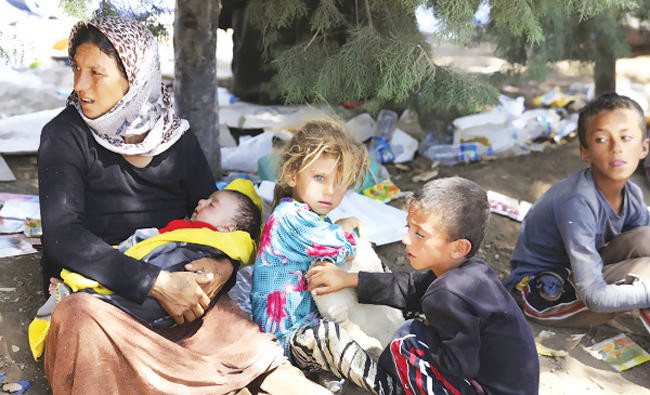
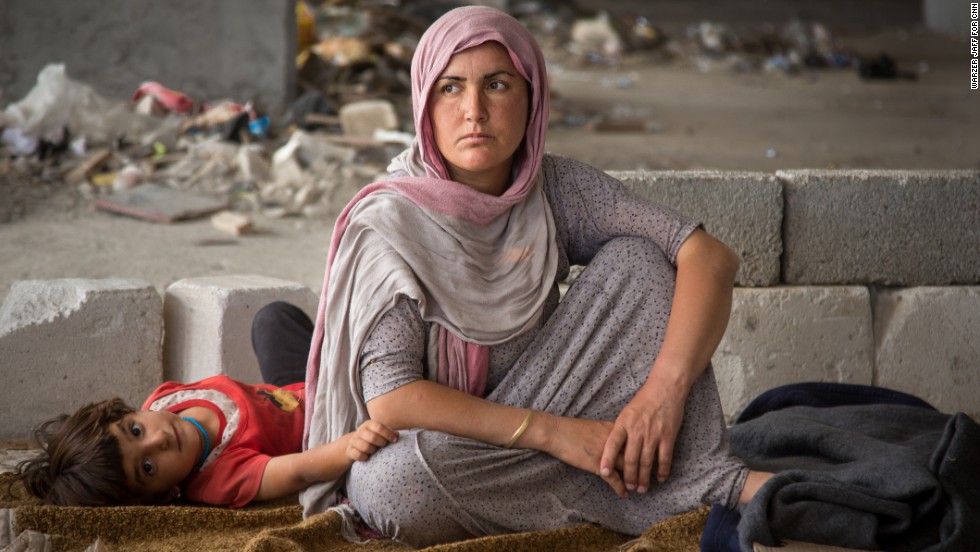
Yazidi people of northern Iraq


This 20 year old Yazidi woman committed suicide. ISIS has been exterminating them (their religion is Armenian Orthodox) and using their women as sex slaves. In other words, they just want to impoverish, punish, murder, rape, and just generally devour them in every way imaginable. It's something to look up and consider. Our government and mainstream media doesn't care very much.


Friday, November 4, 2016

The Arctic Home in the Vedas: Part 23 - Was Jötunheim the original Teutonic homeland? II

One obvious question which would seem to come to the fore from this series is, to overstate it a bit, were the proto-Europeans a culture of Matriarchal tree huggers who were invaded by a Patriarchal warrior culture? I would argue essentially yes; although I know that there are many Asatruar who would argue that Asatru--unlike Abrahamic religion--possesses a strong Matriarchal element as well. As bio-spiritual beings, we need both the Divine Masculine and the Divine Feminine to flourish as a civilization. Those who invented "Feminism" did so with the idea that it would be a type of controlled opposition; the only game in town. It has operated like a computer virus; evolving over time with unexpected consequences for those who have adopted it. "Feminism" is not feminine, Matriarchal, nor the Divine Feminine. It was constructed to emit male energy, therefore destroying the Divine Feminine. As stated earlier, we all possess aspects of both the Divine Masculine and Feminine. For example, masculine kindness is a positive trait from the Divine Feminine.

There is no evidence that I am aware of, which shows any particular cultural-spiritual conflict as various pre-Christian Indo-European groups came into contact with one another. The various spiritual traditions just seemed to harmoniously merge together. Even the ancient Romans used religious-merger as part of their colonial policy. I know that the Etruscans and Celts engaged in some small skirmishes, and Olympian Greek culture pushed aside the earlier Hekatean tradition. Still, these conflicts--at least in terms of pre-Christian religious traditions--apparently were quite small. Would it be too much of a stretch to state that thousands of years ago, largely Patriarchal Mediterranean and Teutonic cultures migrated into Europe; coming into contact with largely Matriarchal proto-European cultures, which resulted in a very natural merging of the Divine Masculine and the Divine Feminine? In other words, for example, could much of the Matriarchal aspect of Asatru be the result of the influence of that ancient cultural-spiritual merger?

Reviewing the discoveries of archeologist Marija Gimbutas, sociologist Theodore Roszak wrote:

In Marija Gimbutas’s influential formulation, it was the Indo-European incursion of warlike Indo-European nomadic tribes, worshippers of masculine sky-gods, that replaced the matricentric cultures of Old Europe with an “androcratic warrior” society and that henceforth claimed all virtues of “civilization” for itself. But before that there had been a “civilization of the goddess" marked by peace and high art. Under the spell of this original version of Gaia, there was even a different kind of "city," one that honored the Earth and rested lightly upon it.

-- 'The Voice of the Earth' (Roszak; 2001)


Even coming from people who may not exactly have our best interests at heart, some truth can come out. Wasn't it really Abrahamic religion which, in it's ever fear of the spiritual and healing power of many women, formed this particular negative-Patriarchy which the world has now witnessed for many centuries? Isn't "Feminism" really just that same negative-Patriarchy for women? Instead of being a Patriarchal Traditionalist or it's like-minded Matrio-Patriarchal daughter.... why not embrace Radical Traditionalism! Our ancestors had already done it, prior to Emperor Constantine's conversion. The merger of the Divine Masculine and the Divine Feminine is really a union, and has nothing to do with the daily Rocky Horror Picture Show which so-called Western culture has embraced all-at-once overnight (government, media, education, sports and entertainment, the corporate world, celebrities, etc.). I certainly hope that what we're witnessing is not what the powers-that-be would call an "alchemical wedding." Knowing a little bit about these people, I'm not convinced that it isn't.

I think we can all think of at least a few strong but negative men and women, perhaps mistreated by certain individuals of the opposite sex, who met just the right person with noble qualities and all of their inherent positive instincts came back to them at once. Their dormant instincts were still there, as suddenly they became nurturing protectors after having been so self-destructive, negative, and critical. In the same way that our enemies are a coalition of many incongruent things, loosely tied together by the source of their funding.... we can and should be a coalition of at least different aspects of largely the same essential thing. Through a quirk of history, powerful aspects of both the Divine Masculine and Feminine came together to form the "original Western civilization" of our ancestors... then we were forced to give up the best thing we ever had.

.