
Showing posts with label Indo-European history. Show all posts
Showing posts with label Indo-European history. Show all posts
Saturday, April 13, 2019
The Arctic Home in the Vedas: Part 24 - "Aryan Invasion of India"
Aryan Invasion of India: Myth or Reality?
Survive the Jive
DNA evidence has shed new light on the origins of the Indian people, the Hindu religion and the Sanskrit language. Pastoralists of the Andronovo culture from the Bronze age steppe invaded India from the North West and brought Indo-European languages to the Indian subcontinent. These pastoralists were ethnically white people, and they mixed with Indians to create the modern genetic diversity of India.
This theory has been developed over 200 years, and has often been attacked as a colonial fable or even as Nazi propaganda, but now genetic science has vindicated the Victorian scholars who said the roots of the Aryans lay in the Corded Ware culture of Europe.
This channel depends on your support:
Paypal: https://www.paypal.me/survivethejive
Patreon: https://www.patreon.com/survivethejive
************
The original Teutonic homeland was in northern west Asia and north of the Himalayas, then migrating into Europe in small waves which formed the widespread Celtic cultures. Later, a large scale migration occurred which overwhelmed Scandinavia and the German-speaking regions which we know today. They also migrated southward into ancient Persia and mixed with ancient Mediterraneans, which formed the dynamic Aryan civilization ("Ancient Persians").
These were "pure" Teutons so to speak, and I'm guessing that they mostly took after the Teutonic side since True-Mediterranean mixes tend to pass on Teutonic traits very well. As to whether or not they contributed to Sumeria, Babylon, and Mesopotamia.... I have no idea. The evidence seems to suggest that they did strongly influence Assyrians, later Persians, the Indus Valley, India, and other civilizations. Everything in this video--based on DNA evidence--fits my theory. There's still an unwillingness to acknowledge that the Teutonic people originated in the northern stretches of ancient western/central Asia.
.


Wednesday, September 13, 2017
The Military Cult of Mithras
The Military Cult of Mithras - Very Indo-European
Survive the Jive
The Indo-Iranic god Mitra is found in both Indian and Persian religions. His cult was transferred to Rome where it transformed into an initiatic military order for soldiers. The roots of the god are of course in the Eastern branch of the Indo-European religions, but even in his Western form, he took on certain attributes that recall the original Proto-Indo-European religion, namely the sacrifice of a bull. The god was worshipped in a cave or cave like structure called a Mithraeum. The Phrygian cap is also of great antiquity and originates among Indo-European peoples of the Near East (perhaps it is even older).
This channel depends on your support:
Paypal: https://www.paypal.me/survivethejive
Patreon: https://www.patreon.com/survivethejive
FB: https://www.facebook.com/SurviveTheJive/
Music: Richard Wagner - Das Rheingold Act 1 - performed by US Marine Band.
************
Cult of Mithras Explained
*************************

.
Thursday, September 7, 2017
Stephen E. Flowers - Restoring the Indo-European Religion; "SeekTheMystery.com"
Stephen E. Flowers - Restoring the Indo-European Religion: Zoroastrianism, Germanic Paganism...
Red Ice TV
Stephen E. Flowers - Restoring the Indo-European Religion: Zoroastrianism, Germanic Paganism, & Rune Magic - Hour 1 Stephen Edred Flowers, also known by the pen-name Edred Thorsson, is an American Runologist and proponent of occultism, Germanic mysticism, Odinism, esoteric runosophy, Asatru, and Mazdaism. He is known for being instrumental in the early establishment of the Germanic Neopagan movement in North America and has been involved in Left-Hand Path organizations. Flowers has hundreds of published papers and over three dozen books, including “The Good Religion” and the forthcoming release, “Original Magic”.

We talk about the centuries-long, coercive Christianization process that eroded away the ancient organic values of Indo-European folk-groups and flipped the true position of humanity on its head with the idea of original sin. Stephen highlights his understanding of the connection between the formation of the Germanic religion and the Zoroastrian way, and he emphasizes how the absence of culturally conditioned images allowed different cultural spheres to develop according to a veneration for their own symbols, myths and rituals.
In the members’ segment, Flowers talks about ancient horse domestication and the profoundness of the great myth of the American frontier. Then, Stephen explains the history of the Germanic writing system called the Runes and the relationship between the theory of magic and the mystical study of runes. We discuss rune magic, the use of artistic, mythical components in conveying messages, and the function of rune stones in immortalizing the dead and instilling motivation for group survival.

Guest's Website: http://seekthemystery.com/
Listen to the second hour of this show and get full access to our archives: http://redicemembers.com
Subscribe and stream or download over 1000 programs on all the topics you are not supposed to know about.
More Red Ice Radio:
http://redicecreations.com
http://rediceradio.net
Follow us on Twitter: http://twitter.com/rediceradio
Like us on Facebook: http://facebook.com/RedIceCreations
Listen on Soundcloud: https://soundcloud.com/red-ice-radio
RSS feeds: http://redicecreations.com/rss.php
*************************
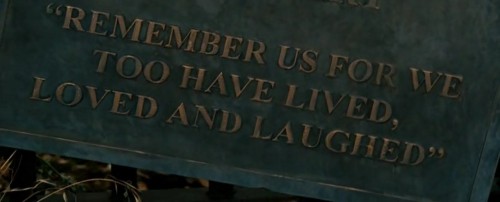
...the epitaph on the entrance of the cemetery in the movie 'Shutter Island':
"Remember us for we too have lived, loved and laughed."
.
Friday, November 4, 2016
The Arctic Home in the Vedas: Part 23 - Was Jötunheim the original Teutonic homeland? II

There is no evidence that I am aware of, which shows any particular cultural-spiritual conflict as various pre-Christian Indo-European groups came into contact with one another. The various spiritual traditions just seemed to harmoniously merge together. Even the ancient Romans used religious-merger as part of their colonial policy. I know that the Etruscans and Celts engaged in some small skirmishes, and Olympian Greek culture pushed aside the earlier Hekatean tradition. Still, these conflicts--at least in terms of pre-Christian religious traditions--apparently were quite small. Would it be too much of a stretch to state that thousands of years ago, largely Patriarchal Mediterranean and Teutonic cultures migrated into Europe; coming into contact with largely Matriarchal proto-European cultures, which resulted in a very natural merging of the Divine Masculine and the Divine Feminine? In other words, for example, could much of the Matriarchal aspect of Asatru be the result of the influence of that ancient cultural-spiritual merger?

In Marija Gimbutas’s influential formulation, it was the Indo-European incursion of warlike Indo-European nomadic tribes, worshippers of masculine sky-gods, that replaced the matricentric cultures of Old Europe with an “androcratic warrior” society and that henceforth claimed all virtues of “civilization” for itself. But before that there had been a “civilization of the goddess" marked by peace and high art. Under the spell of this original version of Gaia, there was even a different kind of "city," one that honored the Earth and rested lightly upon it.
-- 'The Voice of the Earth' (Roszak; 2001)
Even coming from people who may not exactly have our best interests at heart, some truth can come out. Wasn't it really Abrahamic religion which, in it's ever fear of the spiritual and healing power of many women, formed this particular negative-Patriarchy which the world has now witnessed for many centuries? Isn't "Feminism" really just that same negative-Patriarchy for women? Instead of being a Patriarchal Traditionalist or it's like-minded Matrio-Patriarchal daughter.... why not embrace Radical Traditionalism! Our ancestors had already done it, prior to Emperor Constantine's conversion. The merger of the Divine Masculine and the Divine Feminine is really a union, and has nothing to do with the daily Rocky Horror Picture Show which so-called Western culture has embraced all-at-once overnight (government, media, education, sports and entertainment, the corporate world, celebrities, etc.). I certainly hope that what we're witnessing is not what the powers-that-be would call an "alchemical wedding." Knowing a little bit about these people, I'm not convinced that it isn't.

.
Saturday, February 1, 2014
The Arctic Home in the Vedas: Part 16 - "Thule, Saturn, & an alternative explanation"

Thule, Saturn, & an alternative explanation: Part 5
The way the Greeks understood their relationship with non-Greek peoples was significantly moulded by the way myths of the Golden Age were transplanted into the contemporary scene...
We often hear the phrase “golden age” in reference to the zenith of something; “the golden age of cinema.” However, there was THE golden age, and it may be stranger than anything we will ever uncover. It has to do with everything from the deep past to the present day. It has to do with every ancient culture, and in particular the original Teutonic people before their migrations. I will tie this big loose end. But for now, we are talking about a “Golden Age” in which there were no seasons as we know them today; and in which the North and South Poles was literally habitable.
A particular Hyperborean legendary healer was known as "Abaris" or "Abaris the Healer" whom Herodotus first described in his works. Plato (Charmides, 158C) regarded Abaris as a physician from the far north...
Could Abaris the Healer have been of a migrating people from the “far north”… Thule? The ancient Greeks were very scientifically-minded, so couldn’t this “shaman”--who caused such a stir--seem a little out of place?
Above the Arctic Circle, from the spring equinox to the autumnal equinox (depending on latitude), the sun can shine for 24 hours a day...
There is a deep tie-in here with the “Golden Age” and Bal Gangadhar Tilak’s theory, but I will have to wait until Part 17 to reveal it.
Unaware of the explanation offered by modern science (i.e. that these insects had lived in times when the climate of northern Europe was much warmer, their bodies preserved unchanged in the amber) the Greeks came up with the idea that the coldness of northern countries was due to the cold breath of Boreas, the North Wind. So if one travelled "beyond Boreas" one would find a warm and sunny land.
This is clearly part of the Greek mythology of the “Golden Age.” However, these mythologies of that possible era are present in the mythologies of every ancient civilization. Again, I’m focusing mostly on the legend of Thule, but this “Golden Age” affected every person living on Earth at that time if it was real.
Northern Europeans (Scandinavians), when confronted with the classical Greco-Roman culture of the Mediterranean, identified themselves with the Hyperboreans, neglecting the traditional aspect of a perpetually sunny land beyond the north.
This was only a perception, but could it literally be tied to a real time and place? There is now mounting evidence that it may.
Hyperborean Indo-European hypothesis
John G. Bennett wrote a research paper entitled "The Hyperborean Origin of the Indo-European Culture" (Journal Systematics, Vol. 1, No. 3, December 1963) in which he claimed the Indo-European homeland was in the far north, which he considered the Hyperborea of classical antiquity. This idea was earlier proposed by Bal Gangadhar Tilak (whom Bennett credits) in his The Arctic Home in the Vedas (1903) as well as the Austro-Hungarian ethnologist Karl Penka (Origins of the Aryans, 1883).
Now this is a big tie-in, and in hindsight part of the intellectual process of looking into something which seemingly is impossible. They weren’t, however, “Indo-Europeans.” They were the original Teutonic race. This intrinsically has nothing to do with the Nazis. In fact, the German sub-race--specifically--is less than half Teutonic.. and less so in the southern German lands. The larger part being primarily proto-European (“Alpine”).
According to these esoterists, Hyperborea was the Golden Age polar center of civilization and spirituality...
I doubt this part, as there is no strong evidence of it. That doesn’t mean that evidence of a great Thule civilization couldn’t be out there undiscovered. We can look into what may exist as far as ruins at a later point. What there is evidence of is the presence of Teutonic people in some of these lost lands like the Tarim Basin.
Robert Charroux first related the Hyperboreans to an ancient astronaut race of "reputedly very large, very white people" who had chosen "the least warm area on the earth because it corresponded more closely to their own climate on the planet from which they originated."
After Part 17, this may show to be theoretically possible, but wild theories can and do hurt the areas where facts can be established. In any case, this original Teutonic race would no longer exist in the exact form that they did. Even in the far north of the post-Golden Age Europe, or in modern times, I would guess that this certain stock would be at no more than 50%.
 They may not have been as physically attractive as their Teutonic-Protoeuropean descendants later became. The very tall, square-headed, almost white-haired, very light blue-eyed, and pure white skinned people became shorter, rounder-headed, more ash or wheat blonde haired, more medium blue-eyed, and perhaps a bit tan to give one possible example.
Unlike other places where Teutonic people came and ruthlessly conquered, they were taken with these shorter, stocky, sexier, probably brown-eyed, perhaps dark brown haired European natives.. and merged with them. Only in what I would call the “final great migration,” a horde of more pure stock Teutons came and permanently placed their clear genetic and linguistic stamp on some places like Scandinavia and northern Germany.
The one other example of where they mixed their blood was in ancient Persia, which produced the Aryan culture and people (original Teutons & true Mediterraneans). To make this perfectly clear, this original Teutonic race didn't produce "The Golden Age"; the Golden Age may explain their origins. I use the term "Teutonic" for the original stock; as opposed to the modern "Germanic," which is a loose and somewhat undefined term. For example, the "Germanic Austrians" probably have only a minimally larger Teutonic element than say Venetians, Croatians, or Slovenes... yet the loud terms "GERMAN," "ITALIAN," or "SLAV" are thrown around recklessly by many. Language often defines a culture more than actual racial stock in the perceptions of most people.
Golden Age (Wikipedia)
The term Golden Age (Greek: Χρυσόν Γένος Chryson Genos) comes from Greek mythology and legend and refers to the first in a sequence of four or five (or more) Ages of Man, in which the Golden Age is first, followed in sequence, by the Silver, Bronze, Heroic, and then the present (Iron), which is a period of decline. By extension "Golden Age" denotes a period of primordial peace, harmony, stability, and prosperity. During this age peace and harmony prevailed, humans did not have to work to feed themselves, for the earth provided food in abundance. They lived to a very old age with a youthful appearance, eventually dying peacefully, with spirits living on as "guardians". Plato in Cratylus (397 e) recounts the golden race of humans who came first. He clarifies that Hesiod did not mean literally made of gold, but good and noble.
There are analogous concepts in the religious and philosophical traditions of the South Asian subcontinent. For example, the Vedic or ancient Hindu culture saw history as cyclical, composed of yugas with alternating Dark and Golden Ages. The Kali yuga (Iron Age), Dwapara (Bronze Age), Treta yuga (Silver Age) and Satya yuga (Golden Age) correspond to the four Greek ages. Similar beliefs occur in the ancient Middle East and throughout the ancient world, as well.
In classical Greek mythology the Golden Age was presided over by the leading Titan Cronus. In some version of the myth Astraea, also ruled. She lived with men until the end of the Silver Age, but in the Bronze Age, when men became violent and greedy, fled to the stars, where she appears as the constellation Virgo, holding the scales of Justice, or Libra.
European Pastoral literary and iconographic tradition often depicted nymphs and shepherds as living a life of rustic innocence and simplicity, untainted by the corruptions of civilization — a continuation of the Golden Age — set in an idealized Arcadia, a region of Greece that was the abode and center of worship of their tutelary deity, goat-footed Pan, who dwelt among them. This idealized and nostalgic vision of the simple life, however, was sometimes contested and even ridiculed, both in antiquity and later on.
Abaris the Hyperborean (Wikipedia)
Abaris the Hyperborean (Greek: Ἄβαρις Ὑπερβόρειος, Abaris Hyperboreios), son of Seuthes, was a legendary sage, healer, and priest of Apollo known to the Ancient Greeks. He was supposed to have learned his skills in his homeland of Hyperborea, near the Caucasus, which he fled during a plague. He was said to be endowed with the gift of prophecy, and by this as well as by his Scythian dress and simplicity and honesty he created great sensation in Greece, and was held in high esteem.

Gothicismus (Wikipedia)
Gothicismus, Gothism, or Gothicism (Swedish: Göticism) is the name given to what is considered to have been a cultural movement in Sweden, centered around the belief in the glory of the Swedish ancestors, originally considered to be the Geats, which were identified with the Goths. The founders of the movement were Nicolaus Ragvaldi and the brothers Johannes and Olaus Magnus. The belief continued to hold power in the 17th century, when Sweden was a great power following the Thirty Years' War, but lost most of its sway in the 18th. It was revitalized by national romanticism in the early 19th century, this time with the vikings as heroic figures.
**************************************************
By extension "Golden Age" denotes a period of primordial peace, harmony, stability, and prosperity. During this age peace and harmony prevailed, humans did not have to work to feed themselves, for the earth provided food in abundance.
This sounds a bit like someone's warm and fuzzy account of some long ago "place" in their imagination. However, this will make a lot more sense during Part 17.
He (Abaris) was supposed to have learned his skills in his homeland of Hyperborea, near the Caucasus...
Apparently Abaris was a real figure who caused a sensation in early Greek civilization. Since he dressed like a Scythian, there seems to be a Persian connection, which would tie-in well as far as his possible Teuton roots at that time. If it was about one-thousand BCE, then the Aryan connection would make sense here.
Gothicismus
There is a definite tie-in here, but this national/racial historical perception (likely partly true in this case) starts to lead us down some rabbit trails and into confusion. Suffice to say that there were some early Gothic legends of Thule.
.
Monday, November 12, 2012
The Arctic Home in the Vedas: Part 1

Just to give some background--part fact, part theory--the proto-Norse during the last Ice Age, lived approximately in what is today Iran. That land looked very different 25,000 years ago. There was an ice cap a mile high above the 45 or 50 degree latitude in the northern hemisphere. Now if you look on a map, that would make "ancient Iran" and the surrounding territory into something of an Alaska! A totally different environment: dim, cold, mountainous, wooded. A harsh land of wood and snow, with whoolly rhronoceros, mammoth, and lion. These proto-Norse were not specifically "European" then; although this is part of "the Indo-European story."
"Apparently the belief (earth-based/month-birth classification system) is mainly a Norse conception, since it was the Nordic peoples, of all the ancients, who most clearly expressed their ideas in Nature. Some authorities assert that it comes from the East, whence comes all mystical lore. But since modern scholars now prove the Norse tribes to have migrated from Asia, originally, there may easily be a common origin of ideas. Certain it is that, far away in the dim ages of our nation's (UK) dawning, when wandering Aryan tribes, said to have come originally from the plain of Iran, in Central Asia, swarmed over and settled in Northern Europe, they found their ideas of God in Nature."
--Margaret Baillie-Sanders (UK), 'Your Birthday Month and You', 1932
Numerous authors and researchers--including Guido von List--who studied and wrote about subject matter basically dealing with Odinic-type spiritual traditions, eventually drifted off to other cultures to the south and east, and to India. It's as if there's a loose concept that the roads to all pre-Christian spiritual traditions, of the "earth island" and beyond, lead to ancient India. Some people believe that there once existed "mystery schools" which once tied together ancient wisdom from England to India. I don't believe that; but I think there could have been geographically smaller spiritual tie-ins between east and west, and which vibrated outward over thousands of years.
.
Subscribe to:
Posts (Atom)