Golowan Prayer As the sun rides high O'er the rolling hills The spirits below make Contact at this time of Midsummer. May the dreamtime of the Fae Whisper secrets and wisdom Of the Sacred summer landscape And may the holy flame of light continue To be kindled, Lighting a torch of hope, love and healing; Reconnecting lost souls, loves and friendships Across the vibrant green cloaked And sacred sun drenched summer land. Deep peace of the running wave to you. Deep peace of the flowing air to you. Deep peace of the quiet earth to you. Deep peace of the shining stars to you. Deep peace of the infinite peace to you. Awen.
Full Moon for July 2016 July Full Buck Moon Learn about the Full Moon for July 2016—plus moon phase dates, best days by the Moon, folklore, and more!
Moon Phases for July 2016 All dates and times are ET. See the Moon Phase Calendar for YOUR city/state. New Moon: July 4, 7:01 A.M. First Quarter: July 11, 8:52 P.M. Full Moon: July 19, 6:56 P.M. Last Quarter: July 26, 7:00 P.M.
July Full Moon Names The Full Moons have descriptive names that come from Native Americans and Colonial Americans who used the Full Moons as a sort of calendar to keep track of the seasons. July is the month of the Full Buck Moon. Bucks begin to grow new antlers at this time. This Full Moon was also known as the Thunder Moon because thunderstorms are so frequent during this month.
July Full Buck Moon Video Each month, we will explain the traditional names of the Full Moon along with some fascinating Moon facts. This month, learn about the Full Buck Moon, why July is such an important month in Moon history, and how scientists measure the distance from Earth to the Moon. Click below to watch the video.
Full Buck Moon: July Old Farmer's Almanac Learn about the Full Buck Moon, and why July is such an important month
in Moon history. Also, learn about how scientists measure the distance
from Earth to the Moon.
Best Days in July 2016 Below are the best days for activities, based on the Moon’s sign and phase in July. For Cutting Hay: 24–26 For Setting Eggs: 19–21 For Fishing: 4–19
Moon Facts On July 20, 1969, Neil Armstrong became the first person to step foot on the Moon. He also placed the U.S. flag there. On July 31, 1999, the ashes of astrogeologist Eugene Shoemaker were deposited on the Moon.
Midsummer festival in Rumania
The Wickerman Festival - Revived The Wickerman Festival is an annual music festival held near to Dundrennan in Dumfries and Galloway, Scotland. Dubbed "Scotland's Alternative Music festival", the festival celebrated its 10th Birthday in 2011 on Friday 22 and Saturday 23 July. The movie 'The Wicker Man' has been covered here. It's truly a multi-generational cult classic, which could be thought of as either a mystery, horror, musical, or pagan rite. I found an interesting review of the movie on Phillip Coppens website called 'The Wicker Man: the Return of the Pagan World'. "The Wicker Man is a remarkable story of the duality between the Christian and pagan ways, set against a Scottish background. In recent years, the story of the movie itself has been used as the struggle between the old Christian establishment and the reintroduction into Western society of “pagan movies”, of which The Wicker Man was one of the most shining examples." -- Philip Coppens
United Ancient Order of Druids of California The United Ancient Order of Druids of California are a fraternal benefit organization established in Placerville in 1860. It has its origins in England, but is not associated with the sacrificial Druids of Stonehenge. The Order is based on the ancient Druids beliefs of benevolence and education and was founded on sound morality. It is a "secret" ritualistic Order only in the manner in which the meetings are conducted. It asks no promises of you that conflict with any religious system or the laws of any civilized country.
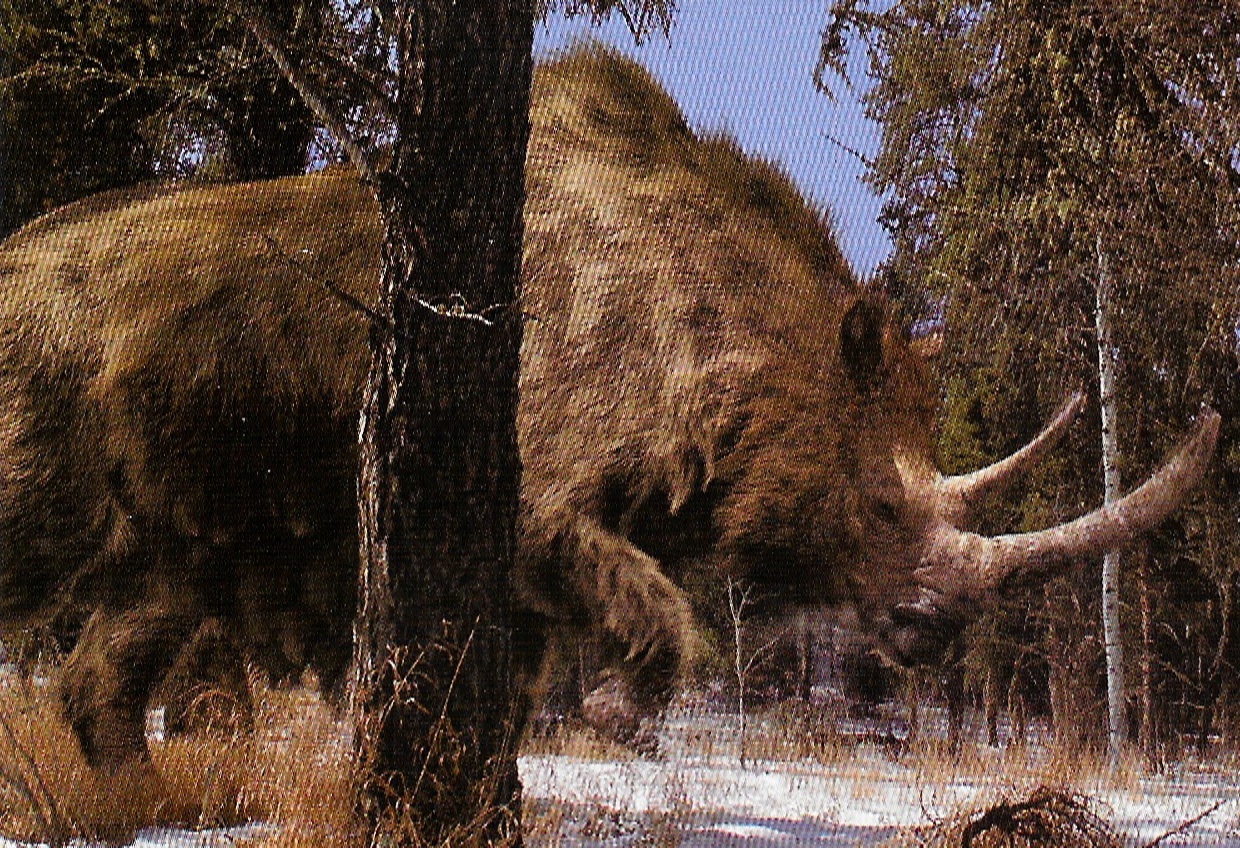
'Ancient Europe Was Full of Lions, Elephants, Rhinoceros and Hippopotamuses' Plans to re-introduce extinct megafauna Stefan Anitei - Softpedia.com - June 1, 2007 During the Ice Age, huge beasts forming the megafauna, like mammoths, saber-toothed cats and woolly rhinos roamed the continents of our planet. But the Ice Age ended some 10,000 years ago and most of the megafauna disappeared, a fact which is connected to the spread of modern humans. This fauna loss left the Holocene, the current era (which started 10,000 years ago) with a very poor megafauna. Species like the American mastodon, dire wolf, giant deer and ground sloth are long vanished, but some species, or related subspecies, still persist, and a Pleistocene-like megafauna and their ecosystems can be re-created. cont'd
Allman Brothers Band - Ramblin' Man TheClassicRewind "Ramblin' Man" by The Allman Brothers Band Year: 1973 Album: Brothers and Sisters
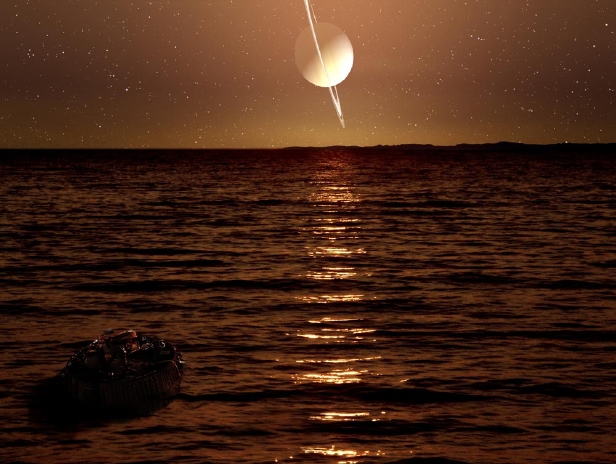
Five mind-blowing facts about Saturn’s moon Titan Jonathan O'Callaghan - SpaceAnswers.com - February 2013 Did you know you could fly on the surface of Titan with a pair of homemade wings? Well, you could. Find out why, and more, in these amazing facts. You could fly in its sky Titan’s thick atmosphere, low gravity (less than our Moon) and reasonable surface pressure (50% of Earth’s) mean that, by flapping a pair of wings strapped to your arms, you could fly in its skies with no more effort than walking. It’s the only other world with liquid (that we know of) Aside from Earth, Titan is the only world we know of that has liquids on its surface. These are in the form of lakes and rivers composed of liquid hydrocarbons including Ontario Lacus, a lake 240 kilometres (150 miles) long in Titan’s southern hemisphere.
It has a climate system like Earth The liquids on Titan undergo a similar cycle to water here on Earth. Liquid methane evaporates from the surface, forming extremely thick clouds in the skies, before eventually raining down and replenishing the lakes and rivers on the ground. We’ve landed on it, and we will again The Saturn-orbiting spacecraft Cassini carried with it the Huygens probe, which landed on Titan (our only landing in the outer Solar System) on 14 January 2005. There are proposals being discussed for another landing, this time possibly using a boat. It’s bigger than Mercury Titan is beaten in size only by the Sun, the seven planets other than Mercury, and Jupiter’s Ganymede. It is over 8,000 kilometres (5,000 miles) wide, and is significantly more massive than all Saturn’s 61 other known moons combined.
The Cathars... today Catharism Catharism, "the pure ones" was a Christian dualist or Gnostic revival movement that thrived in some areas of Southern Europe, particularly northern Italy and southern France, between the 12th and 14th centuries. Cathar beliefs varied between communities, because Catharism was initially taught by ascetic priests, who had set few guidelines. The Catholic Church denounced its practices including the 'Consolamentum' ritual, by which Cathar individuals were baptized and raised to the status of 'perfect'. The Cathar Temple John of the Holy Grail
************************* The main figure of this mostly British, Spanish, and American movement is John Bogomil, who has written 450 books. That's a lot of books to author. The Cathars were burned by the Catholic Inquisitors. Catharism ties into Ghostics, Hyperborea, and a lot of other things. It's interesting that the Cathars are back.
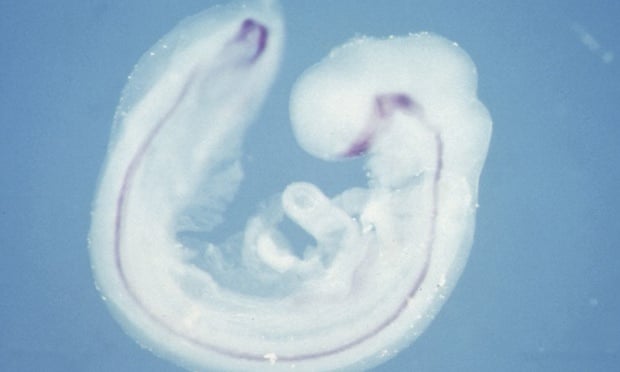
A cure for paralysis no longer just a pipe dream Scientists create lab-grown spinal cords Researchers in Germany have grown complete spinal cords in a Petri dish TheGuardian.com - October 10, 2014 As regenerative medicine and stem cell technologies continue to progress, so the list of tissues and organs that can be grown from scratch – and potentially replaced – continues to grow. In the past few years, researchers have used stem cells to grow windpipes, bladders, urethras and vaginas in the lab, and, in some cases, successfully transplanted them into patients. Others are making progress in growing liver and heart tissue; one team in London is busy growing blood vessels, noses and ears; and some have even managed to grow tiny chunks of brain tissue, the most complex of all the tissues in the human body. Now, researchers in Germany report that they have grown complete spinal cords from embryonic stem cells. cont'd
Triple Moon... and now Triple Sun If the Triple Moon represents the Almother Goddess, then would the Triple Sun represent the Alfather God? The above also shows what amounts to a complete Solar Cross.
Sun dogs Sun dogs (or sundogs), mock suns or phantom suns, scientific name parhelia (singular parhelion), are an atmospheric phenomenon that consists of a pair of bright spots on either horizontal side on the Sun, often co-occurring with a luminous ring known as a 22° halo. Sun dogs are a member of a large family of halos, created by light interacting with ice crystals in the atmosphere. Sun dogs typically appear as two subtly colored patches of light to the left and right of the Sun, approximately 22° distant and at the same elevation above the horizon as the Sun. They can be seen anywhere in the world during any season, but they are not always obvious or bright. Sun dogs are best seen and are most conspicuous when the Sun is close to the horizon.
Cheddar Man Cheddar Man is the name given to the remains of a human male found in Gough's Cave in Cheddar Gorge, Somerset, England. The remains date to the Mesolithic, approximately 7150 BC, and it appears that he died a violent death. A large crater-like lesion just above the skull's right orbit suggests that the man may have also been suffering from a bone infection at the time. It is Britain’s oldest complete human skeleton. ************************* Below, from 1996, a Welsh school teacher is proven through mitochondria DNA to be the direct descendant of Cheddar Man. Even though over 9,000 years had elapsed, I had once heard that the school teacher lived less than one mile from where Cheddar Man was excavated. To the best of my understanding, Wales was a part of the southern portion of the island which was not covered in an ice sheet during the last glacial movement. That could give some clue of how the Welsh are true natives, and how there was tremendous continuity. However, this story is amazing. After 400 generations, and the descendant is living less than a mile away!
Eric Close and Cheddar Man Tanya Ivanna From "The Hunt For Amazing Treasures" hosted by Eric Close, season 1 volume 1, 2001. Cheddar Man. For all fans of Eric, it's a great documentary.
Meet The Coywolf (Wildlife Documentary) AnimalPortal ************************* Coywolf Coywolf (sometimes called woyote) is an informal term for a canid hybrid descended from coyotes and one of three other North American Canis species, the gray, eastern and red wolf. Coyotes are closely related to eastern and red wolves, having diverged 150,000–300,000 years ago and evolved side by side in North America, thus facilitating hybridization. In contrast, hybrids between coyotes and gray wolves, which are Eurasian in origin and diverged from coyotes 1–2 million years ago, are extremely rare. Such hybridization in the wild has only been confirmed in isolated gray wolf populations in the southern United States, while several specimens were produced in captivity via artificial insemination from sperm extracted from northwestern wolves introduced to female western coyotes. Although it has evolved via hybridization, it has been proposed that the northeastern coywolf be given individual species status, as it is morphologically and genetically different from other North American Canis species and has now largely replaced the former territory and filled the historical predator-prey roles of the now nearly extirpated eastern wolf.
Raven Grimassi on Mind, Brain, and Body (Blog Talk Radio) The embedding wouldn't hold, so I'm just placing the link. I love the idea of Blog Talk Radio, but it's a strange site in some ways. It's slow, difficult to navigate, and even simple searches are far from adequate. You can find some hidden gems though. Man, Myth and the Occult: Ancestral DNA with Raven Grimassi Join hosts Dr. Bryan Ouellette and Michael Kell as they welcome Neo-Pagan author Raven Grimassi to the show. Raven will be discussing his recent exploration of "the idea that through our DNA we are passed more than the instructions on how to make us; we also inherit the 'ancestral spirit' that is carried in the energy that holds the DNA cohesive regarding its structure and "data". To pose a question or present a comment, join the discussion in the chat room or call into the show at 347-9963-3307 and press 1 to queue to the switchboard.
Marilyn Manson - Disposable Teens MarilynMansonVEVO Music video by Marilyn Manson performing Disposable Teens. (C) 2000 Nothing/Interscope Records ************************* 'Disposable Teens' was used for the opening scene of the 2000 movie 'Book of Shadows: Blair Witch 2'. I don't know much about Marilyn Manson, but he is apparently either a Satanist or at least projecting that image. He is also very occultic. One lyrical line from this seemingly convoluted song, which he sings with particular fervor, caught my eye: I never really hated a one true God, But the God of the people I hated! On his website - "The Nachtkabarett - Marilyn Manson, Art, and the Occult" - he appears to explain himself and his art/music. Usually, as with AC/DC or Black Sabbath, occultic musical acts just leave it up to you to decide what it all means. The website goes onto explain many other dark aspects of Alchemy, Hollywood, Charles Manson, dark art, Saturn, Fascism, Egyptian mythology, Freemasonry, Aleister Crowley, Jesus, Satanism, the Kabbalah, etc. My own feelings about some of this is that for thousands of years, our ancestors lived with both light and dark concepts and symbolism, and I think that our natural inclination is to gravitate to both. For example, a few days ago I was hiking and it had gotten quite dark along the trail I was on. I felt uncomfortable. There could be a person or coyote lurking amid one of the many dark places all around me. I also felt invigorated. We were never intended to be so safe and secure at every point in our entire lives.
The Preincarnation of Jesus 'Jesus in the Old Testament' By Walter C. Kaiser, Jr., Ph.D. - President Emeritus - Gordon Conwell Theological Seminary Excerpts: "There is no finer teacher on whether Jesus is to be found in the pages
of the Old Testament than the teaching of our Lord Jesus himself." "It is only right that we should find that Jesus was both actually present in the Old Testament and accurately predicted..."
"Old Testament Predictions of the Coming Messiah Jesus is first seen in the Old Testament as the person who appeared as
“the Angel of the Lord” in his sudden confrontation with Sarah’s
maidser- vant, Hagar (Gen 16:7). Thereafter, he continued to appear
intermittently throughout the earlier books of the Old Testament."
"Other instances of Jesus’ appearances in the Old Testa- ment can be seen representatively in Genesis 22:11, 15, where it was the Angel of Yahweh who spoke from heaven to Abraham when Abraham was about to sacrifice Isaac, and stopped him from proceeding. Again, it was the Angel of Yahweh who appeared to Moses in the flame of fire in Exodus 3:2. Throughout the dialogue at that burning bush, it was also declared that he was no one less than “Yah- weh,” who spoke at that time, causing Moses to hide his face from him (Ex 3:6). Later, it was the same Angel of the Lord who appeared to the wife of Manoah (Judg 13:2-25), mother of Samson, whom she reported to her husband was indeed a “man of God” that had appeared to her. When Manoah asked for the “Angel of the LORD” to also appear to him as he had appeared to his wife, the Angel repeated the appearances and his conversations to him, after which he ascended in the flame of the altar (Judg 13:20), implying the sacrifice was in worship of the Lord himself! Moreover, this “An- gel” is regarded as a “Redeemer,” who saves Israel from evil (Isa 63:9)."
Massa Marittima Mural Medieval Mural and its tale of Witches Raven Grimassi - Stregheria.com A mural that has recently come to light in Tuscany has been identified by a British university lecturer as the earliest surviving representation of witchcraft in Christian Europe. A book published in Italy by George Ferzoco (director of the center for Tuscan studies at the University of Leicester) argues that at least two of the women in the erotic wall painting are sorceresses. "I have no doubt that this is by far the earliest depiction in art of women acting as witches," Ferzoco says. The 13th-century mural was discovered on August 6th, 2000, at Massa Marittima, a town south-west of Siena. The large, richly colored painting - seven meters high - was found under layers of subsequent over-painting next to a fountain in the centre of Massa Marittima. It shows a tall, spreading tree with two groups of women standing below it. The first thing that was noticed about the tree was its unusual "fruit," which is apparently sprouting from the branches as twenty-five phalluses. cont'd
'300: Rise of an Empire' (2014) A couple of days ago I watched this movie, not really expecting it to be much more than a typical sequel in response to the commercial success of the popular first movie '300'. I was surprised, I thought it was awesome! Especially how it builds up to the end. Great great ending. I thought it was a better movie than the first one. It's off topic to review, and I don't want to spoil it here. A truly heroic movie based on historical events, but done in a semi-fantasy style. Very well acted in as much as how they wanted to develop these characters within the films' scheme.
Raven symbolism I live on a mountainside right among ravens. They're part of my everyday life. They aren't aggressive towards humans, but are fiercely territorial with other animals. I've observed them go after smaller birds, sea gulls and occasionally hawks. Once even a cat. They can be pets and trained to mimic human speech as a parrot or myna bird does.
Cultural depictions of ravens There are many references to ravens in legends and literature. Most of these refer to the widespread common raven. Because of its black plumage, croaking call, and diet of carrion, the raven has long been considered a bird of ill omen and of interest to creators of myths and legends. Greco-Roman antiquity In Greek mythology, ravens are associated with Apollo, the god of prophecy. They are said to be a symbol of good luck, and were the god's messengers in the mortal world.
Germanic cultures and Viking Age To the Germanic peoples, Odin was often associated with ravens. The raven was a common device used by the Vikings. Ragnar Lodbrok had a raven banner called Reafan, embroidered with the device of a raven.
'What Star Gazing Looks Like From the Last of the Wild Roads' At the crest between valleys, I take out binoculars, and in turn they take my breath, multiplying the number of visible stars tenfold. I feel as though I’m falling, have to pull away to find my balance in the dark. By Paul Bogard - Readers Digest True darkness is rare in our lit-up world. But our well-being depends on the still—and the thrill—of the night. “We’re going to be in a big black hole on the map,” says Dan Duriscoe, slowing his red Toyota Tundra so we can gaze down into Death Valley National Park. “There’s nothing between us and that mountain, and then there’s nothing for another 100 miles.” Dan speaks in a low, gravelly voice and has encyclopedic knowledge of the desert west. He’s full of dirt roads leading off into deserted valleys and turnoffs no one else knows. As a founding member of the National Park Service’s Night Sky Team, Dan has traveled all over the United States documenting levels of darkness. Death Valley holds some of the darkest places he’s seen. Tonight we are headed to one of his favorite spots, Eureka Valley, between the Last Chance Range and the Sylvania Mountains. “This is about as isolated as you can get in California,” he says. We drop into Eureka Valley, hit washboard gravel for miles, turn and climb 100 yards past a Road Closed sign, and park. Immediate stillness and quiet, no wind, no bugs, the scent of sagebrush and creosote, distant sand dunes 60 feet high. We set up chairs and a table and build a fire.
“This is what I live for,” he says. “I can’t imagine life without this.” In the West, Venus is a brilliant white ball just above the desert mountain silhouette, bright like a porch light or like a headlight coming over the ridge. But there is no house, and there is no car. A loose chain of planes bobs toward San Francisco far to the north, a faint amber glows from Los Angeles to the southwest, but there is no one anywhere for miles around and not a single individual artificial light in any direction. Already the sky feels ancient—big, darker each minute, and filling with light, as though the growing dark is sifting stars, spreading them on black fabric before us. Primitive darkness. The desert before civilization, before settlement. The dark land with no light of its own, and stars coming all the way to the ground: the Big Dipper setting, revolving into the northern horizon, Orion rising from southeast earth with Betelgeuse flashing its red-orange cape in the atmosphere. The zodiacal band, like a fainter Milky Way, twirls skyward from the western horizon. The valley so dark you see night’s natural light—the zodiacal light and airglow, and maybe 10 percent from the stars. Dan and I see each other faintly. With no trees or woods, we see in all directions to where mountains saw jagged horizons from the bottom of the sky. That sky becomes brighter and darker the longer we stay out, in a way almost no one in America experiences now. cont'd
'Habitable' planet discovered circling Tau Ceti star World is one of five thought to be circling star just 12 light years away, say scientists 'The Guardian' - December 19, 2012 A planet with conditions that could support life orbits a twin neighbour of the sun visible to the naked eye, scientists have revealed. The world is one of five thought to be circling Tau Ceti, a star just 12 light years away that is almost identical to the sun. Astronomers estimate the Tau Ceti planets to be two to six times bigger than Earth. One of them, with five times the Earth's mass, lies in the star's "habitable zone". Also known as the "Goldilocks zone", this is the orbital region that is neither too hot nor too cold to allow liquid surface water and, potentially, life. Details of the discovery are to appear in the journal Astronomy & Astrophysics. Because of the difficulties involved in detecting extra-solar planets, most found so far have had high masses. The Tau Ceti planetary family is thought to be the lowest-mass solar system yet detected. Scientists found the planets using a highly sensitive technique that combined data from more than 6,000 observations from three different telescopes. They used the radial velocity method, which looks for "wobble" in a star's movement caused by the gravitational tug of planets.
Dr James Jenkins, a member of the international team from the University of Hertfordshire, said: "Tau Ceti is one of our nearest cosmic neighbours and so bright that we may be able to study the atmospheres of these planets in the not-too-distant future. "Planetary systems found around nearby stars close to our sun indicate that these systems are common in our Milky Way galaxy." More than 800 planets have been discovered orbiting stars beyond the sun since the 1990s. Those found around the nearest sun-like stars are the most interesting to astronomers. Professor Steve Vogt, another team member, from the University of California at Santa Cruz, said: "This discovery is in keeping with our emerging view that virtually every star has planets, and that the galaxy must have many such potentially habitable Earth-sized planets. They are everywhere, even right next door." Professor Chris Tinney, an Australian member from the University of New South Wales, said: "As we stare at the night sky, it is worth contemplating that there may well be more planets out there than there are stars, some fraction of which may well be habitable." Jenkins is a visiting fellow at the University of Hertfordshire who is based at the University of Chile.
Gothic Subculture Documentary - An Inside Look For Outsiders Documentaries Gothic Subculture Documentary - An Inside Look For Outsiders - World Documentaries The goth subculture is a modern subculture located in lots of nations. The goth subculture has survived a lot longer compared to others of the very same time, as well as has actually continued to diversify. The goth subculture has actually associated tastes in songs, aesthetics, as well as style. The music of the goth subculture incorporates a number of various styles, including gothic rock, deathrock, post-punk, darkwave, angelic wave, and neoclassical.
Goth subculture The goth subculture is a contemporary subculture found in many countries. It began in England during the early 1980s in the gothic rock scene, an offshoot of the post-punk genre. Notable post-punk groups that presaged that genre are Siouxsie and the Banshees, Joy Division and Bauhaus. The goth subculture has survived much longer than others of the same era, and has continued to diversify. Its imagery and cultural proclivities indicate influences from the 19th century Gothic literature along with horror films. The goth subculture has associated tastes in music, aesthetics, and fashion. The music of the goth subculture encompasses a number of different styles, including gothic rock, industrial, deathrock, post-punk, darkwave, ethereal wave and neoclassical. Styles of dress within the subculture range from deathrock, punk and Victorian styles, or combinations of the above, most often with dark attire (often black), pale face makeup and black hair. The scene continues to draw interest from a large audience decades after its emergence. In Western Europe, there are large annual festivals, mainly in Germany. Gothic rock
Stonehenge Maryhill, WA Ed Nease ************************* Maryhill Stonehenge The Maryhill Stonehenge is a replica of Stonehenge in England located in Maryhill, Washington. It was commissioned in the early twentieth century by businessman Samuel Hill and dedicated on July 4, 1918 as a memorial to those who had died in World War I. The memorial was completed in 1929. It is constructed of concrete. Stonehenge replicas and derivatives
*************************
I may have even posted something about Maryhill once before. I saw some pictures of it at dusk, and it's beautiful in a simple way... sitting alone out there. I definitely want to visit it.
If I leave here tomorrow Would you still remember me? For I must be travelling on, now, cause theres too many places Ive got to see. But, if I stayed here with you, girl, Things just couldnt be the same. cause Im as free as a bird now, And this bird you can not change. Lord knows, I cant change.
Bye, bye, its been a sweet love. Though this feeling I cant change. But please dont take it badly, cause lord knows Im to blame. But, if I stayed here with you girl, Things just couldnt be the same. Cause Im as free as a bird now, And this bird youll never change. And this bird you can not change. Lord knows, I cant change. Lord help me, I cant change (AWESOME GUITAR SOLO)
[Published by the Pederazione Pagana in Italy, based in Venice] Celsus, Alethès Logos, V, 25
“Every population cultivates its own traditions, anyway they have been established. And this seems to happen not only because every population believed that was right to follow its own customs and necessary to preserve the principles in force, but also because, as it’s very similar, all parts of earth, assigned some to a tutelary deity and some to another from the beginning and divided into fixed domains, are still administered in this way. Besides, what is done by every population is right in so far as it is done in the way those tutelary deities like it. It will be impious to subvert the original institution of the various places”
So Celsus says in his work reconstructed from its criticism written by Origen; the basic concept is that every population has the right-duty to preserve its costumes, beliefs and deities of the land it belongs. Although Celsus is a late and not very reliable source, since his work comes to us indirectly, the idea he expresses here should be widely spread in Greco-Roman world. Just think that Greeks described other religions in geographical works or geographical parts of historical works (for example, the Histories by Herodotus, which Celsus often refers to) while Romans used, during wars, to call the enemies’ deities to Rome, where they promised they would built a temple for them.
After the long interruption due to Christianism, today in Europe we see the rebirth of the so-called “ethnic” religions, or, to use a word we are taking back to its ancient meaning, paganism. In Europe we don’t see that restless seeking for one’s origins as we see in America, where there are some Wiccans who feel sorry for they don’t have the “right” roots of the tradition they chose[2]. But it’s true that the pagan path to walk is often chosen on the strength of a sense of belonging, which comes from individual sensibility and not necessarily has an effective connection to a person’s geographical background.
This is more true in Italy, where the ethnic groups, both native and immigrant ones, before and after Christianity, merged in various ways and everyone of them leaved its mark on the country; so, before and after the Romans’ conquest, ancient populations’ religion lived together on the same territory. So an Italian person can have Celtic, Germanic, Italic, Pre-Latin, Latin, Roman, Grecian roots without fully identify with only one of them: this is the sense of belonging who lead someone, for example many of those who find their Roman roots, to feel him/herself as a descendant of one ethnic groups, some others to feel him/herself part, to practise or to study more than one ancient religions, which can all be called traditional. Many of those traditions are probably still buried under the sands of time, some of them are “recovered” in a wiccan way: that’s the case of a Wiccan current in Veneto, putting on the center of their practices the ancient Venetic goddess Reitia.
I don’t want to enter into the merits of the choice; what I want to present here is some kind of geographic map of ancient polytheistic religions who came across Italy during the centuries before Christianity, showing superpositions among them and how they stratified on the territory. To be brief, I won’t talk over the most developed religions, those which are the most known and exerted a strong influence on Italic paganism: I mean Grecian religion, coming from the colonies of Magna Graecia since VIII century a.e.v.[3], Etruscan religion, Celtic religion, Phoenician religion and Roman religion, which developed from the union of Italic, Etruscan and later Grecian elements.
But in Italy the Germanic element didn’t lack, under the guise of the Cimbrian, who settled on the Alps and in northern Italy. The complexity of those religion and the abundance of information we have, if we compare it to the scarcity of sources we have about other ancient Italic religions, make it very difficult to discuss them here, where I simply want to give an overview of religious situation in Italy from the beginning to Rome. All those religion deserve a better elaboration (to which I will apply myself) also about the linksamong them I just sketched here. The Italian peninsula was occupied since the Palaeolithic era; the most ancient archaeological finds go back to about 850,000 years ago.
Since the Palaeolithic we can distinguish three different cultures, with different kind of tombs, all with rich outfits. These three groups fragmented still further during the Mesolithic, when we can date the so-called “Venuses”, little sculptures with marked feminine features. During the Neolithic, some new populations, coming from the East by sea or from the Danubian basin, came to Italy and brought some important innovations, like agriculture and ceramic. These populations also had a great surgical knowledge and could do the trapanning of the skull, making the patient to survive. Later the use of metals spread in the peninsula.
During the Eneolithic, cultural groups established and spread: in this period, in the region now called Emilia, developed the civilization of “terramaras”, characterized by palafitte and manufacts spread in the whole Central-southern Italy. In the same period started in Europe the spreading of Indo-European languages coming from East in consecutive waves.
So the eldest local population are born in proto-historic Europe; later other immigrant population will arrive and add to them. In this article, because of its features of synthesis, I won’t dwell long on archaeological and social features of every civilization, but I’ll try to focus my attention, as much as possible and even when I’ll be forced to simply make a list of deities’ names, on religious aspects of those civilizations. Although, it’s necessary to keep in mind that ancient “pagan” cultures didn’t separate sacred and profane as monotheistic religions do, but everything had a sacred part and a profane (as we will define it nowadays) one.
Ancient sources pass down some names [4] of ancient populations living in the peninsula before Latins and Osco-Umbrian, but for these names we don’t have a strict definition nor enough finds to identify them accurately: the Ausonians, ancient inhabitants of Samnius, whose name we find in Virgil’s work, belong to this group. Maybe the word indicates all the ancient non-Grecian inhabitants of the area, but if they really were a civilization, they extinguished during V century a.e.v. The same can be said about the Oenotrii, ancient inhabitants of Southern Italy before Sabellian populations’ arrival. Some traces of their language remain in dialects, some tombs were found and Cato passes down three names of tribus (Coni, Morgetes, Vitales).
In ancient Italy there were also other populations whose origin we don’t know for certain, but which are probably non-Indo-European: Sardinians, whose civilization is called “nuraghic”; Sicanians, inhabitants of that island that Homer calls “Sikania” from their name, now Sicily, and their neighbours the Elimi; in current Veneto Rhaetians and Euganeans; the Villanovan civilization, ancestors of Etruscans; and above all the Ligurians.
The Sardinian nuraghic civilization’s religion was a naturalistic one, perceiving deities in natural elements. Their sanctuaries were built between 1300 and 900 a.e.v. and were used, as in other ancient cultures, also as a market place and for politic meetings; at their center there was a well-temple, consisting in a doorway at ground level, a stair going down under the ground, a sunken room with a false dome vault and the sacred spring just down the stairs. On the ground, the sacred area was delimited by a stone fence. There are still about forty of those well-temples dedicated to water deities (water is very precious in a so dry region as Sardinia is); a christian rural church was often placed side-by-side to them.
Sardinians prosecuted their ancestors’ cults, worshiping a Mother Goddess and a Bull God, both deities of fertility, being the two forces who combine to generate life, whose cult was someway linked to the cult of the dead. The tombs they built were collective and enormous, with a semicircular façade in a bull’s horns shape and a stele with a little door to go inside the tomb. All around this tombs, called “Giants’ tombs” because of their impressive dimensions, there were some stone sedilia on which the dead ones’ relatives can sleep, maybe to communicate with their dearest in dreams, practicing the incubation. In front of the tombs there were some “betili”, a Sardinian word meaning little menhirs, phallic symbols of fertility carved with two eyes or two breasts: the betili having eyes were guardian deities of the dead, the betili having breasts represent the unity of the male deity with the feminine one to bring back the life.
Sardinians had other kind of temples, the temple in a cave with a stalagmite for altar and a sacrificial fireplace, and the temple with rectangular plan. We have some remaining examples of both, but we don’t know who was the deity they were consecrated to; temples in caves are supposed to be consecrated to chthonian deities. Later, Sardinian were affected by Grecian and Carthaginian people; during Roman period, an ancient local god was known under the name of Sardus Pater (father Sardo): this god derived from or was similar to the Carthaginian god Baal. Ancient mythographers believed that Sardus Pater was Hercules’ son, and that Hercules came to Sardinia from Libia (so he can be considered son of Hercules-Melqart, a Greco-Roman interpretation of the Phoenician god Melqart).
Homer calls the other Italian big island “Sicania”, from the name of its ancient inhabitants, the Sicanians, who were pushed to the western part of Sicily by the Sicels. Thucydides said that Sicanians already lived in the island during Trojan war but they came from Iberia across Italy, while according to Antiochus and Thymeus Sicanians are native of Sicily. We know very little about them, because they lost their ethnic features during the IV century a.e.v. under Grecian and Phoenician influence. The same lot was shared by the Elimi, who ancient authors believed to be native of southern Italy, of which the Oenotrii pushed them out (Hellanicus), or to be a group originated in Asia from the union between Trojan exiles and other people (Thucydides); they underwent a quick process of Hellenization and disappeared under Carthaginian rule during I century a.e.v.
According to contemporary scholars, they could have a Sicanian origin, or a Ligurian one; somebody believes they are Semites, a mixed population of Persians, Phoenicians and Trojans, whose name may come from that of the region Elam. Their main deity was a goddess belonging to the group of Mother Goddesses (with this name anthropologists call all ancient goddesses with maternal features and related to fertility): her main sanctuary stood on mount Erice and this goddess was called Aphrodite by Grecians and Venus by Romans, but she has also something in common with the Phoenician Astarte. Venus Ericina (Venus of mount Erice) has an ear of wheat as her symbol and she’s represented with a dog and other animals by her side (she’s a “potnia theron”, a “Mistress of animals”); her rites were celebrated outside, so that the dew could wash the stains due to sacrifices.
Her cult was admitted in Rome, but with some restrictions on it because Roman magistrates thought it contravened Romans’ sense of decency; Venus Ericina’s day was on the 23rd of April, that was also the day of Vinalia, but the cult of the goddess was reserved to seventeen cities of Sicily, probably Elimi’s cities, which had the honor of presenting a wreath to her, and to prostitutes (because of this, some scholars believed that sacred prostitution was practiced around the original temple in Sicily), while it was forbidden to other women to take part to it. Main Elimi’s city was Segesta: a Roman agricultural deity has the same name and her symbol was an ear of wheat like Venus Ericina’s, but the relation between the two is not clear.
In present region of Veneto, before of the arrival of palaeovenetic culture, there were two non-indoeuropean population, who left traces in names of local mountains: Rhaetian Alps derive their name from the Rhaetians, while the Euganean Hills from the Euganeans.We don’t know much about these two populations: the Rhaetians are supposed to be an ensemble of population including some groups coming from Illyria (from which the Palaeovenetics came, too) and Celtic groups also, while the Euganean are supposed to be part of the Ligurian culture, and were divided into Stoni, Camuni (who made rupestrian figures in Val Camonica) and Triumpilini (who made rupestrian figures of Val Trompia). Both Rhaetians and Euganeans merged with Celts, Etruscans and later Venetics.
On the contrary, we have enough about Etruscan religion, which influenced the Roman one as Grecians did (for a long time, the scholars believed that the Etruscans had been cultural mediators between Grecians and Romans but later direct contacts between these two cultures were proved), just as Etruscans joined Roman society: it goes without saying that three among the seven legendary kings of Rome were Etruscans. Etruscan language seems not to belong to Indo-European stock, while their alphabet had a Grecian origin: in their turn, Etruscans taught it to various population settled in northern Italy, but not, as it seems, to Latins, who learnt it directly by Grecians. Many hypotheses were made about the origin of Etruscan people: the authochtonal theory was abandoned after the discovery of Lemnos’ inscriptions, made in a non-Grecian language, but very similar to the Etruscan one, so someone believes that Etruscans were descendants of some groups of Lemnos’ inhabitants who came to Italy and merged with local population.
This union gave rise to Villanovan culture, first germ of the Etruscan one; at the present time, none of the theories about Etruscans’ origin can be proved with certainty. Even after this population’s decline, their language was used in Rome until the Augustan period, as it was a sacred language, used also for divinatory books, which collected cult and divinatory practices and rules of civilian life, all that was called by Romans “Etruscan subject”. Divination is the most known aspect of their religion, they taught to Romans the haruspicy, divination by observation of sacrificial victims’ viscera, of birds’ flight and of lightnings. Lightnings were particularly revered and were attributes of many deities, who could throw just one at a time, and of Tinia, later identified in Jupiter, a celestial god, who could throw three of them: the first to warn, the second to terrify and the third to destroy.
Contrary to what happens with other Italic deities, we know many names of Etruscan deities (in their original version or through the Greco-Roman interpretatio) and we know how the priesthood was organized. According to what Romans passed down to us, Etruscan deities were hierarchically organized and there was a triad of deities at the top, consisting in Tinia, Uni and Menvra, more or less corresponding to Romans’ Jupiter, Juno and Minerva; there was also a chthonian triad consisting in Mantus, a god with features similar to those of Grecians’ Hades and Bacchus, Mania and another goddess, Phersipnei (Persephone) or Serfue (Ceres).
Among Etruscan deities, we can distinguish deities with an Etruscan origin (Amharia, justice and revenge, Cautha, solar deity, Cilens, Colalp, Ethausva, Letham, Tecum, Thufltha, Tolusco and, known under his Latin name, Vertumnus or Volturnus, the turn of seasons), deities of Grecian origin or that we know with Hellenic features (Fufluns-Dionysus, Sethlans-Hephaestus, Turms-Hermes, Turan-Aphrodite, Aplu-Apollo, Artume-Artemis, Hercle-Hercules, Aita-Hades, Phersipnei-Persephone), deities of Italic origin (Maris-Mars, Nethuns-Neptune, Menvra-Minerva, Usil-Sun), Latin or Latinized deities (Uni-Juno, Ani-Janus, Selvans-Sylvan, Satre-Saturn, Vetis-Veiovis).
Near the Etruscan city of Capena, there was the Lucus Feroniae, goddess Feronia’s sacred wood, dedicated to a Sabine deity. Priests compiled the calendar on a lunar basis; there was also a high priest who led the priesthood and was elected every year during federal festival of Fanum Voltumnae. The Etruscans’ religion is subject of many studies, so I won’t spread here about it, just as I won’t deal here with Grecian, Roman, Celtic and Phoenician religion, which are basic for Italian paganism, but for which I refer the reader to more exhaustive studies, as there are some deserving ones. .
Thule, Saturn, & an alternative explanation: Part 5
The way the Greeks understood their relationship with non-Greek peoples was significantly moulded by the way myths of the Golden Age were transplanted into the contemporary scene...
We often hear the phrase “golden age” in reference to the zenith of something; “the golden age of cinema.” However, there was THE golden age, and it may be stranger than anything we will ever uncover. It has to do with everything from the deep past to the present day. It has to do with every ancient culture, and in particular the original Teutonic people before their migrations. I will tie this big loose end. But for now, we are talking about a “Golden Age” in which there were no seasons as we know them today; and in which the North and South Poles was literally habitable.
A particular Hyperborean legendary healer was known as "Abaris" or "Abaris the Healer" whom Herodotus first described in his works. Plato (Charmides, 158C) regarded Abaris as a physician from the far north...
Could Abaris the Healer have been of a migrating people from the “far north”… Thule? The ancient Greeks were very scientifically-minded, so couldn’t this “shaman”--who caused such a stir--seem a little out of place? Above the Arctic Circle, from the spring equinox to the autumnal equinox (depending on latitude), the sun can shine for 24 hours a day...
There is a deep tie-in here with the “Golden Age” and Bal Gangadhar Tilak’s theory, but I will have to wait until Part 17 to reveal it.
Unaware of the explanation offered by modern science (i.e. that these insects had lived in times when the climate of northern Europe was much warmer, their bodies preserved unchanged in the amber) the Greeks came up with the idea that the coldness of northern countries was due to the cold breath of Boreas, the North Wind. So if one travelled "beyond Boreas" one would find a warm and sunny land.
This is clearly part of the Greek mythology of the “Golden Age.” However, these mythologies of that possible era are present in the mythologies of every ancient civilization. Again, I’m focusing mostly on the legend of Thule, but this “Golden Age” affected every person living on Earth at that time if it was real.
Northern Europeans (Scandinavians), when confronted with the classical Greco-Roman culture of the Mediterranean, identified themselves with the Hyperboreans, neglecting the traditional aspect of a perpetually sunny land beyond the north.
This was only a perception, but could it literally be tied to a real time and place? There is now mounting evidence that it may.
Hyperborean Indo-European hypothesis
John G. Bennett wrote a research paper entitled "The Hyperborean Origin of the Indo-European Culture" (Journal Systematics, Vol. 1, No. 3, December 1963) in which he claimed the Indo-European homeland was in the far north, which he considered the Hyperborea of classical antiquity. This idea was earlier proposed by Bal Gangadhar Tilak (whom Bennett credits) in his The Arctic Home in the Vedas (1903) as well as the Austro-Hungarian ethnologist Karl Penka (Origins of the Aryans, 1883).
Now this is a big tie-in, and in hindsight part of the intellectual process of looking into something which seemingly is impossible. They weren’t, however, “Indo-Europeans.” They were the original Teutonic race. This intrinsically has nothing to do with the Nazis. In fact, the German sub-race--specifically--is less than half Teutonic.. and less so in the southern German lands. The larger part being primarily proto-European (“Alpine”). According to these esoterists, Hyperborea was the Golden Age polar center of civilization and spirituality...
I doubt this part, as there is no strong evidence of it. That doesn’t mean that evidence of a great Thule civilization couldn’t be out there undiscovered. We can look into what may exist as far as ruins at a later point. What there is evidence of is the presence of Teutonic people in some of these lost lands like the Tarim Basin.
Robert Charroux first related the Hyperboreans to an ancient astronaut race of "reputedly very large, very white people" who had chosen "the least warm area on the earth because it corresponded more closely to their own climate on the planet from which they originated."
After Part 17, this may show to be theoretically possible, but wild theories can and do hurt the areas where facts can be established. In any case, this original Teutonic race would no longer exist in the exact form that they did. Even in the far north of the post-Golden Age Europe, or in modern times, I would guess that this certain stock would be at no more than 50%. They may not have been as physically attractive as their Teutonic-Protoeuropean descendants later became. The very tall, square-headed, almost white-haired, very light blue-eyed, and pure white skinned people became shorter, rounder-headed, more ash or wheat blonde haired, more medium blue-eyed, and perhaps a bit tan to give one possible example.
Unlike other places where Teutonic people came and ruthlessly conquered, they were taken with these shorter, stocky, sexier, probably brown-eyed, perhaps dark brown haired European natives.. and merged with them. Only in what I would call the “final great migration,” a horde of more pure stock Teutons came and permanently placed their clear genetic and linguistic stamp on some places like Scandinavia and northern Germany.
The one other example of where they mixed their blood was in ancient Persia, which produced the Aryan culture and people (original Teutons & true Mediterraneans). To make this perfectly clear, this original Teutonic race didn't produce "The Golden Age"; the Golden Age may explain their origins. I use the term "Teutonic" for the original stock; as opposed to the modern "Germanic," which is a loose and somewhat undefined term. For example, the "Germanic Austrians" probably have only a minimally larger Teutonic element than say Venetians, Croatians, or Slovenes... yet the loud terms "GERMAN," "ITALIAN," or "SLAV" are thrown around recklessly by many. Language often defines a culture more than actual racial stock in the perceptions of most people.
Golden Age (Wikipedia) The term Golden Age (Greek: Χρυσόν Γένος Chryson Genos) comes from Greek mythology and legend and refers to the first in a sequence of four or five (or more) Ages of Man, in which the Golden Age is first, followed in sequence, by the Silver, Bronze, Heroic, and then the present (Iron), which is a period of decline. By extension "Golden Age" denotes a period of primordial peace, harmony, stability, and prosperity. During this age peace and harmony prevailed, humans did not have to work to feed themselves, for the earth provided food in abundance. They lived to a very old age with a youthful appearance, eventually dying peacefully, with spirits living on as "guardians". Plato in Cratylus (397 e) recounts the golden race of humans who came first. He clarifies that Hesiod did not mean literally made of gold, but good and noble.
There are analogous concepts in the religious and philosophical traditions of the South Asian subcontinent. For example, the Vedic or ancient Hindu culture saw history as cyclical, composed of yugas with alternating Dark and Golden Ages. The Kali yuga (Iron Age), Dwapara (Bronze Age), Treta yuga (Silver Age) and Satya yuga (Golden Age) correspond to the four Greek ages. Similar beliefs occur in the ancient Middle East and throughout the ancient world, as well.
In classical Greek mythology the Golden Age was presided over by the leading Titan Cronus. In some version of the myth Astraea, also ruled. She lived with men until the end of the Silver Age, but in the Bronze Age, when men became violent and greedy, fled to the stars, where she appears as the constellation Virgo, holding the scales of Justice, or Libra. European Pastoral literary and iconographic tradition often depicted nymphs and shepherds as living a life of rustic innocence and simplicity, untainted by the corruptions of civilization — a continuation of the Golden Age — set in an idealized Arcadia, a region of Greece that was the abode and center of worship of their tutelary deity, goat-footed Pan, who dwelt among them. This idealized and nostalgic vision of the simple life, however, was sometimes contested and even ridiculed, both in antiquity and later on.
Abaris the Hyperborean (Wikipedia) Abaris the Hyperborean (Greek: Ἄβαρις Ὑπερβόρειος, Abaris Hyperboreios), son of Seuthes, was a legendary sage, healer, and priest of Apollo known to the Ancient Greeks. He was supposed to have learned his skills in his homeland of Hyperborea, near the Caucasus, which he fled during a plague. He was said to be endowed with the gift of prophecy, and by this as well as by his Scythian dress and simplicity and honesty he created great sensation in Greece, and was held in high esteem.
Gothicismus, Gothism, or Gothicism (Swedish: Göticism) is the name given to what is considered to have been a cultural movement in Sweden, centered around the belief in the glory of the Swedish ancestors, originally considered to be the Geats, which were identified with the Goths. The founders of the movement were Nicolaus Ragvaldi and the brothers Johannes and Olaus Magnus. The belief continued to hold power in the 17th century, when Sweden was a great power following the Thirty Years' War, but lost most of its sway in the 18th. It was revitalized by national romanticism in the early 19th century, this time with the vikings as heroic figures.
By extension "Golden Age" denotes a period of primordial peace, harmony, stability, and prosperity. During this age peace and harmony prevailed, humans did not have to work to feed themselves, for the earth provided food in abundance. This sounds a bit like someone's warm and fuzzy account of some long ago "place" in their imagination. However, this will make a lot more sense during Part 17.
He (Abaris) was supposed to have learned his skills in his homeland of Hyperborea, near the Caucasus... Apparently Abaris was a real figure who caused a sensation in early Greek civilization. Since he dressed like a Scythian, there seems to be a Persian connection, which would tie-in well as far as his possible Teuton roots at that time. If it was about one-thousand BCE, then the Aryan connection would make sense here.
Gothicismus
There is a definite tie-in here, but this national/racial historical perception (likely partly true in this case) starts to lead us down some rabbit trails and into confusion. Suffice to say that there were some early Gothic legends of Thule. .


 Full Moon for July 2016