Thule, Saturn, & an alternative explanation: Part 5
The way the Greeks understood their relationship with non-Greek peoples was significantly moulded by the way myths of the Golden Age were transplanted into the contemporary scene...
We often hear the phrase “golden age” in reference to the zenith of something; “the golden age of cinema.” However, there was THE golden age, and it may be stranger than anything we will ever uncover. It has to do with everything from the deep past to the present day. It has to do with every ancient culture, and in particular the original Teutonic people before their migrations. I will tie this big loose end. But for now, we are talking about a “Golden Age” in which there were no seasons as we know them today; and in which the North and South Poles was literally habitable.
A particular Hyperborean legendary healer was known as "Abaris" or "Abaris the Healer" whom Herodotus first described in his works. Plato (Charmides, 158C) regarded Abaris as a physician from the far north...
Could Abaris the Healer have been of a migrating people from the “far north”… Thule? The ancient Greeks were very scientifically-minded, so couldn’t this “shaman”--who caused such a stir--seem a little out of place?
Above the Arctic Circle, from the spring equinox to the autumnal equinox (depending on latitude), the sun can shine for 24 hours a day...
There is a deep tie-in here with the “Golden Age” and Bal Gangadhar Tilak’s theory, but I will have to wait until Part 17 to reveal it.
Unaware of the explanation offered by modern science (i.e. that these insects had lived in times when the climate of northern Europe was much warmer, their bodies preserved unchanged in the amber) the Greeks came up with the idea that the coldness of northern countries was due to the cold breath of Boreas, the North Wind. So if one travelled "beyond Boreas" one would find a warm and sunny land.
This is clearly part of the Greek mythology of the “Golden Age.” However, these mythologies of that possible era are present in the mythologies of every ancient civilization. Again, I’m focusing mostly on the legend of Thule, but this “Golden Age” affected every person living on Earth at that time if it was real.
Northern Europeans (Scandinavians), when confronted with the classical Greco-Roman culture of the Mediterranean, identified themselves with the Hyperboreans, neglecting the traditional aspect of a perpetually sunny land beyond the north.
This was only a perception, but could it literally be tied to a real time and place? There is now mounting evidence that it may.

Hyperborean Indo-European hypothesis
John G. Bennett wrote a research paper entitled "The Hyperborean Origin of the Indo-European Culture" (Journal Systematics, Vol. 1, No. 3, December 1963) in which he claimed the Indo-European homeland was in the far north, which he considered the Hyperborea of classical antiquity. This idea was earlier proposed by Bal Gangadhar Tilak (whom Bennett credits) in his The Arctic Home in the Vedas (1903) as well as the Austro-Hungarian ethnologist Karl Penka (Origins of the Aryans, 1883).
Now this is a big tie-in, and in hindsight part of the intellectual process of looking into something which seemingly is impossible. They weren’t, however, “Indo-Europeans.” They were the original Teutonic race. This intrinsically has nothing to do with the Nazis. In fact, the German sub-race--specifically--is less than half Teutonic.. and less so in the southern German lands. The larger part being primarily proto-European (“Alpine”).
According to these esoterists, Hyperborea was the Golden Age polar center of civilization and spirituality...
I doubt this part, as there is no strong evidence of it. That doesn’t mean that evidence of a great Thule civilization couldn’t be out there undiscovered. We can look into what may exist as far as ruins at a later point. What there is evidence of is the presence of Teutonic people in some of these lost lands like the Tarim Basin.
Robert Charroux first related the Hyperboreans to an ancient astronaut race of "reputedly very large, very white people" who had chosen "the least warm area on the earth because it corresponded more closely to their own climate on the planet from which they originated."
After Part 17, this may show to be theoretically possible, but wild theories can and do hurt the areas where facts can be established. In any case, this original Teutonic race would no longer exist in the exact form that they did. Even in the far north of the post-Golden Age Europe, or in modern times, I would guess that this certain stock would be at no more than 50%.
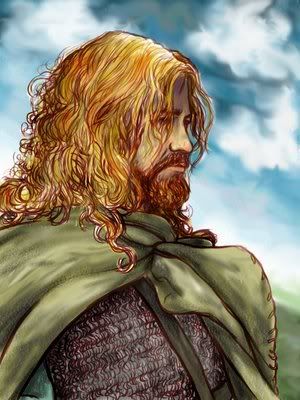
 They may not have been as physically attractive as their Teutonic-Protoeuropean descendants later became. The very tall, square-headed, almost white-haired, very light blue-eyed, and pure white skinned people became shorter, rounder-headed, more ash or wheat blonde haired, more medium blue-eyed, and perhaps a bit tan to give one possible example.
Unlike other places where Teutonic people came and ruthlessly conquered, they were taken with these shorter, stocky, sexier, probably brown-eyed, perhaps dark brown haired European natives.. and merged with them. Only in what I would call the “final great migration,” a horde of more pure stock Teutons came and permanently placed their clear genetic and linguistic stamp on some places like Scandinavia and northern Germany.
The one other example of where they mixed their blood was in ancient Persia, which produced the Aryan culture and people (original Teutons & true Mediterraneans). To make this perfectly clear, this original Teutonic race didn't produce "The Golden Age"; the Golden Age may explain their origins. I use the term "Teutonic" for the original stock; as opposed to the modern "Germanic," which is a loose and somewhat undefined term. For example, the "Germanic Austrians" probably have only a minimally larger Teutonic element than say Venetians, Croatians, or Slovenes... yet the loud terms "GERMAN," "ITALIAN," or "SLAV" are thrown around recklessly by many. Language often defines a culture more than actual racial stock in the perceptions of most people.
Golden Age (Wikipedia)
The term Golden Age (Greek: Χρυσόν Γένος Chryson Genos) comes from Greek mythology and legend and refers to the first in a sequence of four or five (or more) Ages of Man, in which the Golden Age is first, followed in sequence, by the Silver, Bronze, Heroic, and then the present (Iron), which is a period of decline. By extension "Golden Age" denotes a period of primordial peace, harmony, stability, and prosperity. During this age peace and harmony prevailed, humans did not have to work to feed themselves, for the earth provided food in abundance. They lived to a very old age with a youthful appearance, eventually dying peacefully, with spirits living on as "guardians". Plato in Cratylus (397 e) recounts the golden race of humans who came first. He clarifies that Hesiod did not mean literally made of gold, but good and noble.
There are analogous concepts in the religious and philosophical traditions of the South Asian subcontinent. For example, the Vedic or ancient Hindu culture saw history as cyclical, composed of yugas with alternating Dark and Golden Ages. The Kali yuga (Iron Age), Dwapara (Bronze Age), Treta yuga (Silver Age) and Satya yuga (Golden Age) correspond to the four Greek ages. Similar beliefs occur in the ancient Middle East and throughout the ancient world, as well.
In classical Greek mythology the Golden Age was presided over by the leading Titan Cronus. In some version of the myth Astraea, also ruled. She lived with men until the end of the Silver Age, but in the Bronze Age, when men became violent and greedy, fled to the stars, where she appears as the constellation Virgo, holding the scales of Justice, or Libra.
European Pastoral literary and iconographic tradition often depicted nymphs and shepherds as living a life of rustic innocence and simplicity, untainted by the corruptions of civilization — a continuation of the Golden Age — set in an idealized Arcadia, a region of Greece that was the abode and center of worship of their tutelary deity, goat-footed Pan, who dwelt among them. This idealized and nostalgic vision of the simple life, however, was sometimes contested and even ridiculed, both in antiquity and later on.
Abaris the Hyperborean (Wikipedia)
Abaris the Hyperborean (Greek: Ἄβαρις Ὑπερβόρειος, Abaris Hyperboreios), son of Seuthes, was a legendary sage, healer, and priest of Apollo known to the Ancient Greeks. He was supposed to have learned his skills in his homeland of Hyperborea, near the Caucasus, which he fled during a plague. He was said to be endowed with the gift of prophecy, and by this as well as by his Scythian dress and simplicity and honesty he created great sensation in Greece, and was held in high esteem.
Gothicismus (Wikipedia)
Gothicismus, Gothism, or Gothicism (Swedish: Göticism) is the name given to what is considered to have been a cultural movement in Sweden, centered around the belief in the glory of the Swedish ancestors, originally considered to be the Geats, which were identified with the Goths. The founders of the movement were Nicolaus Ragvaldi and the brothers Johannes and Olaus Magnus. The belief continued to hold power in the 17th century, when Sweden was a great power following the Thirty Years' War, but lost most of its sway in the 18th. It was revitalized by national romanticism in the early 19th century, this time with the vikings as heroic figures.
**************************************************
By extension "Golden Age" denotes a period of primordial peace, harmony, stability, and prosperity. During this age peace and harmony prevailed, humans did not have to work to feed themselves, for the earth provided food in abundance.
This sounds a bit like someone's warm and fuzzy account of some long ago "place" in their imagination. However, this will make a lot more sense during Part 17.
He (Abaris) was supposed to have learned his skills in his homeland of Hyperborea, near the Caucasus...
Apparently Abaris was a real figure who caused a sensation in early Greek civilization. Since he dressed like a Scythian, there seems to be a Persian connection, which would tie-in well as far as his possible Teuton roots at that time. If it was about one-thousand BCE, then the Aryan connection would make sense here.
Gothicismus
There is a definite tie-in here, but this national/racial historical perception (likely partly true in this case) starts to lead us down some rabbit trails and into confusion. Suffice to say that there were some early Gothic legends of Thule.
.
Thule, Saturn, & an alternative explanation: Part 2
Thule (Wikipedia)
Inhabitants of Thule
The inhabitants or people of Thule are described in most detail by Strabo in his Geographica, having preserved fragments of the account of Pytheas who was an alleged eye-witness in the 4th century BC:
...the people (of Thule) live on millet and other herbs, and on fruits and roots; and where there are grain and honey, the people get their beverage, also, from them. As for the grain, he says, since they have no pure sunshine, they pound it out in large storehouses, after first gathering in the ears thither; for the threshing floors become useless because of this lack of sunshine and because of the rains.
Solinus in his Polyhistor repeated these descriptions, noting that the people of Thule had a fertile land where they grew a good production of crop and fruits.
Claudian believed that the inhabitants of Thule were Picts. This is supported by a physical description of the inhabitants of Thule by the Roman poet Silius Italicus, who wrote that the people of Thule were blue painted:
... the blue-painted native of Thule, when he fights, drives around the close-packed ranks in his scythe-bearing chariot.
The Picts are often said to have derived their name from Latin pingere "to paint"; pictus, "painted". Martial talks about "blue" and "painted Britons", just like Julius Caesar.
Eustathius of Thessalonica in his 12th century commentary on the Iliad, wrote that the inhabitants of Thule were at war with a dwarf-like stature tribe only 20 fingers in height. The American classical scholar Charles Anthon believed this legend may have been rooted in history (although exaggerated), if the dwarf or pygmy tribe were interpreted as being a smaller aboriginal tribe of Britain the people on Thule had encountered.

Middle Ages to nineteenth century
During the Middle Ages the name was used first of all to denote Iceland, such as by Dicuil, by the Anglo-Saxon monk Venerable Bede in De ratione temporum, by the Landnámabók, by the anonymous Historia Norwegie and by the German cleric Adam of Bremen in his Deeds of Bishops of the Hamburg Church, where they cite ancient writers' use of Thule but also new knowledge since the end of antiquity. All these authors also understood that other islands were situated to the north of Britain.
Petrarch in the 14th century wrote in his Epistolae familiares (or Familiar Letters) that Thule lay in the unknown regions of the far north-west.
A madrigal by Thomas Weelkes entitled Thule from 1600, describes it thus:
Thule, the period of cosmography,
Doth vaunt of Hecla, whose sulphureous fire
Doth melt the frozen clime and thaw the sky;
Trinacrian Etna's flames ascend not higher...
Note: Hekla is an Icelandic volcano. Thule is referred to in Goethe's poem "Der König in Thule" (1774), famously set to music by Franz Schubert (D 367, 1816), and in the collection Ultima Thule (1880) by Henry Wadsworth Longfellow.
Edgar Allan Poe's poem "Dream-Land" (1844) begins with the following stanza:
By a route obscure and lonely,
Haunted by ill angels only,
Where an Eidolon, named Night,
On a black throne reigns upright,
I have reached these lands but newly
From an ultimate dim Thule –
From a wild weird clime, that lieth, sublime,
Out of Space – out of Time.
 Modern use
A municipality in northern Greenland (Avannaa) was formerly named Thule after the mythical place. The Thule People, the predecessor of modern Inuit Greenlanders, were named after the Thule region. In 1953, Thule became Thule Air Base, operated by United States Air Force. The population was forced to resettle to Qaanaaq, 67 miles to the north (76°31′50.21″N 68°42′36.13″W only 840 NM from the North Pole).
Southern Thule is a collection of the three southernmost islands in the South Sandwich Islands in the South Atlantic Ocean, one of which is called Thule Island. The island group is a part of the British overseas territory of the United Kingdom and uninhabited.
The Scottish Gaelic for Iceland is "Innis Tile", which means literally the "Isle of Thule". Ultima Thule was the title of the 1929 novel by Henry Handel Richardson, set in colonial Australia.
Additionally, Thule lends its name to the 69th element in the periodic table, Thulium.
Ultima Thule is also the name of a location in the Mammoth Cave system. It was formerly the terminus of the known-explorable southeastern (upstream) end of the passage called "Main Cave," before discoveries made in 1908 by Ed Bishop and Max Kaemper showed an area accessible beyond it, now the location of the Violet City Entrance. The Violet City Lantern tour offered at the cave passes through Ultima Thule near the conclusion of the route.
Popular culture
Thule is used in Hal Foster's work, Prince Valiant, as the homeland of the eponymous character.
Nazi "Aryan" Thule
Nazi occultists believed in a historical Thule/Hyperborea as the ancient origin of the Aryan race. Much of this fascination was due to rumours surrounding the Oera Linda Book "found" by Cornelis Over de Linden during the 19th century. The Oera Linda Book was translated into German in 1933 and was favored by Heinrich Himmler. The book has since been thoroughly discredited. Professor of Frisian Language and Literature Goffe Jensma wrote that the three authors of the translation intended it "to be a temporary hoax to fool some nationalist Frisians and orthodox Christians and as an experiential exemplary exercise in reading the Holy Bible in a non-fundamentalist, symbolical way."
The Traditionalist School expositor Rene Guenon believed in the existence of ancient Thule on "initiatic grounds" "alone". According to its emblem, the Thule Society was founded on August 18, 1918. It had close links to the Deutsche Arbeiter Partei (DAP), later the Nationalsozialistische Deutsche Arbeiterpartei (NSDAP, the Nazi party). One of its three founding members was Lanz von Liebenfels (1874–1954). In his biography of Liebenfels (Der Mann, der Hitler die Ideen gab, Munich 1985), the Viennese psychologist and author Wilhelm Dahm wrote: "The Thule Gesellschaft name originated from mythical Thule, a Nordic equivalent of the vanished culture of Atlantis. A race of giant supermen lived in Thule, linked into the Cosmos through magical powers. They had psychic and technological energies far exceeding the technical achievements of the 20th century. This knowledge was to be put to use to save the Fatherland and create a new race of Nordic Aryan Atlanteans. A new Messiah would come forward to lead the people to this goal." In his history of the SA (Mit ruhig festem Schritt, 1998), Wilfred von Oven, Joseph Goebbels' press adjutant from 1943 to 1945, confirmed that Pytheas' Thule was the historical Thule for the Thule Gesellschaft.
.
Thule, Saturn, & an alternative explanation: Part 1
The ancient original Teutonic homeland which I have loosely coined "Týrland," was first written about by ancient Greeks and Romans (Thule). This land was apparently based on legends of a land in the "far north" going clear back into the ancient world. Speculation since the time of these writings has always suggested various locations in the far north of Europe, Greenland, and northern stretches of western Asia. It was not even determined who the inhabitants of Thule were. Therefore, then as now, Thule has become something of a legend such as Atlantis or Lemuria.
Thule (Wikipedia)
Thule (Greek: Θούλη, Thoúlē), also spelled Thula, Thila, or Thyïlea, is, in classical European literature and maps, a region in the far north. Though often considered to be an island in antiquity, modern interpretations of what was meant by Thule often identify it as Norway, an identification supported by modern calculations. Other interpretations include Orkney, Shetland, and Scandinavia. In the Late Middle Ages and Renaissance, Thule was often identified as Iceland or Greenland. Another suggested location is Saaremaa in the Baltic Sea. The term ultima Thule in medieval geographies denotes any distant place located beyond the "borders of the known world". Sometimes it is used as a proper noun (Ultima Thule) as the Latin name for Greenland when Thule is used for Iceland.
Ancient geography
The Greek explorer Pytheas is the first to have written of Thule, doing so in his now lost work, On the Ocean, after his travels between 330 BC and 320 BC. He supposedly was sent out by the Greek city of Massalia to see where their trade-goods were coming from. Descriptions of some of his discoveries have survived in the works of later, often skeptical, authors. Polybius in his Histories (c. 140 BC), Book XXXIV, cites Pytheas as one "who has led many people into error by saying that he traversed the whole of Britain on foot, giving the island a circumference of forty thousand stades, and telling us also about Thule, those regions in which there was no longer any proper land nor sea nor air, but a sort of mixture of all three of the consistency of a jellyfish in which one can neither walk nor sail, holding everything together, so to speak."
Strabo in his Geography (c. 30), Book I, Chapter 4, mentions Thule in describing Eratosthenes' calculation of "the breadth of the inhabited world" and notes that Pytheas says it "is a six days' sail north of Britain, and is near the frozen sea." But he then doubts this claim, writing that Pytheas has "been found, upon scrutiny, to be an arch falsifier, but the men who have seen Britain and Ierne (Ireland) do not mention Thule, though they speak of other islands, small ones, about Britain." Strabo adds the following in Book II, Chapter 5:
Now Pytheas of Massilia tells us that Thule, the most northerly of the Britannic Islands, is farthest north, and that there the circle of the summer tropic is the same as the Arctic Circle. But from the other writers I learn nothing on the subject—neither that there exists a certain island by the name of Thule, nor whether the northern regions are inhabitable up to the point where the summer tropic becomes the Arctic Circle. Strabo ultimately concludes, in Book IV, Chapter 5, "Concerning Thule, our historical information is still more uncertain, on account of its outside position; for Thule, of all the countries that are named, is set farthest north."
Nearly a half century later, in 77, Pliny the Elder published his Natural History in which he also cites Pytheas' claim (in Book II, Chapter 75) that Thule is a six-day sail north of Britain. Then, when discussing the islands around Britain in Book IV, Chapter 16, he writes: "The farthest of all, which are known and spoke of, is Thule; in which there be no nights at all, as we have declared, about mid-summer, namely when the Sun passes through the sign Cancer; and contrariwise no days in mid-winter: and each of these times they suppose, do last six months, all day, or all night." Finally, in refining the island's location, he places it along the most northerly parallel of those he describes, writing in Book VI, Chapter 34,: "Last of all is the Scythian parallel, from the Rhiphean hills into Thule: wherein (as we said) it is day and night continually by turns (for six months)."
The Roman geographer Pomponius Mela placed Thule north of Scythia.
When scientists of the Institute of Geodesy and Geoinformation Science of the Technical University of Berlin were testing the antique maps of Ptolemy, they recognized a pattern of calculation mistakes which occurred if one tried to convert the old coordinates from Ptolemy into modern geographical coordinates. After correcting for the mistakes, the scientists mapped Ptolemy's Thule to the Norwegian island Smøla.
Other late classical writers and post-classical writers such as Orosius (384-420 A.D) and the Irish monk Dicuil (late 8th and early 9th century), describe Thule as being North and West of both Ireland and Britain. Dicuil described Thule as being beyond islands that seem to be the Faroes, strongly suggesting Iceland. In the writings of the historian Procopius, from the first half of the 6th century, Thule is a large island in the north inhabited by twenty-five tribes. It is believed that Procopius is really talking about a part of Scandinavia, since several tribes are easily identified, including the Geats (Gautoi) in present-day Sweden and the Saami (Scrithiphini). He also writes that when the Heruls returned, they passed the Varni and the Danes and then crossed the sea to Thule, where they settled beside the Geats.
Ancient literature
Virgil coined the term Ultima Thule (Georgics, 1. 30) meaning furthest land as a symbolic reference to denote a far-off land or an unattainable goal.
The 1st century BC Greek astronomer Geminus of Rhodes claimed that the name Thule went back to an archaic word for the polar night phenomenon – "the place where the sun goes to rest". Dionysius Periegetes in his De situ habitabilis orbis also touched upon this subject as did Martianus Capella. Avienus in his 'Ora Maritima' added that during the summer on Thule night lasted only two hours, a clear reference to the midnight sun.
Cleomedes referenced Pytheas' journey to Thule, but added no new information.
 A novel in Greek by Antonius Diogenes entitled The Wonders Beyond Thule appeared c. AD 150 or earlier. Gerald N. Sandy, in the introduction to his translation of Photius' ninth-century summary of the work, surmises that Thule was "probably Iceland."
The Latin grammarian Gaius Julius Solinus in the 3rd century AD, wrote in his Polyhistor that Thule was a 5 days sail from Orkney:
...Ab Orcadibus Thylen usque quinque dierum ac noctium navigatio est; sed Thyle larga et diutina Pomona copiosa est.
...Thyle, which was distant from Orkney by a voyage of five days and nights, was fruitful and abundant in the lasting yield of its crops.
The 4th century Virgilian commentator Servius also believed that Thule sat close to Orkney:
...Thule; insula est Oceani inter septemtrionalem et occidentalem plagam, ultra Britanniam, iuxta Orcades et Hiberniam; in hac Thule cum sol in Cancro est, perpetui dies sine noctibus dicuntur...
...Thule; an island in the Ocean between the northern and western zone, beyond Britain, near Orkney and Ireland; in this Thule, when the sun is in Cancer, it is said that there are perpetual days without nights...
Early in the fifth century AD Claudian, in his poem, On the Fourth Consulship of the Emperor Honorius, Book VIII, rhapsodizes on the conquests of the emperor Theodosius I, declaring that the Orcades ran red with Saxon slaughter; Thule was warm with the blood of Picts; ice-bound Hibernia [Ireland] wept for the heaps of slain Scots." This implies that Thule was Scotland. But in Against Rufinias, the Second Poem, Claudian writes of "Thule lying icebound beneath the pole-star." Jordanes in his Getica also wrote that Thule sat under the pole-star.
Over time the known world came to be viewed as bounded in the east by India and in the west by Thule, as expressed in the Consolation of Philosophy (III, 203 = metrus V, v. 7) by Boethius.
For though the earth, as far as India's shore, tremble before the laws you give, though Thule bow to your service on earth's farthest bounds, yet if thou canst not drive away black cares, if thou canst not put to flight complaints, then is no true power thine.
The Roman historian Tacitus, in his book chronicling the life of his father-in-law, Agricola, describes how the Romans knew that Britain (which Agricola was commander of) was an island. He writes of a Roman ship that circumnavigated Britain, and discovered the Orkney islands and says the ship's crew even sighted Thule. However their orders were not to explore there, as winter was at hand.
Seneca the Younger writes of a day when new lands will be discovered past Thule. This was later quoted widely in the context of Christopher Columbus' discovery of America.
.


 They may not have been as physically attractive as their Teutonic-Protoeuropean descendants later became. The very tall, square-headed, almost white-haired, very light blue-eyed, and pure white skinned people became shorter, rounder-headed, more ash or wheat blonde haired, more medium blue-eyed, and perhaps a bit tan to give one possible example.