Showing posts with label Alpine. Show all posts

Sunday, December 11, 2022

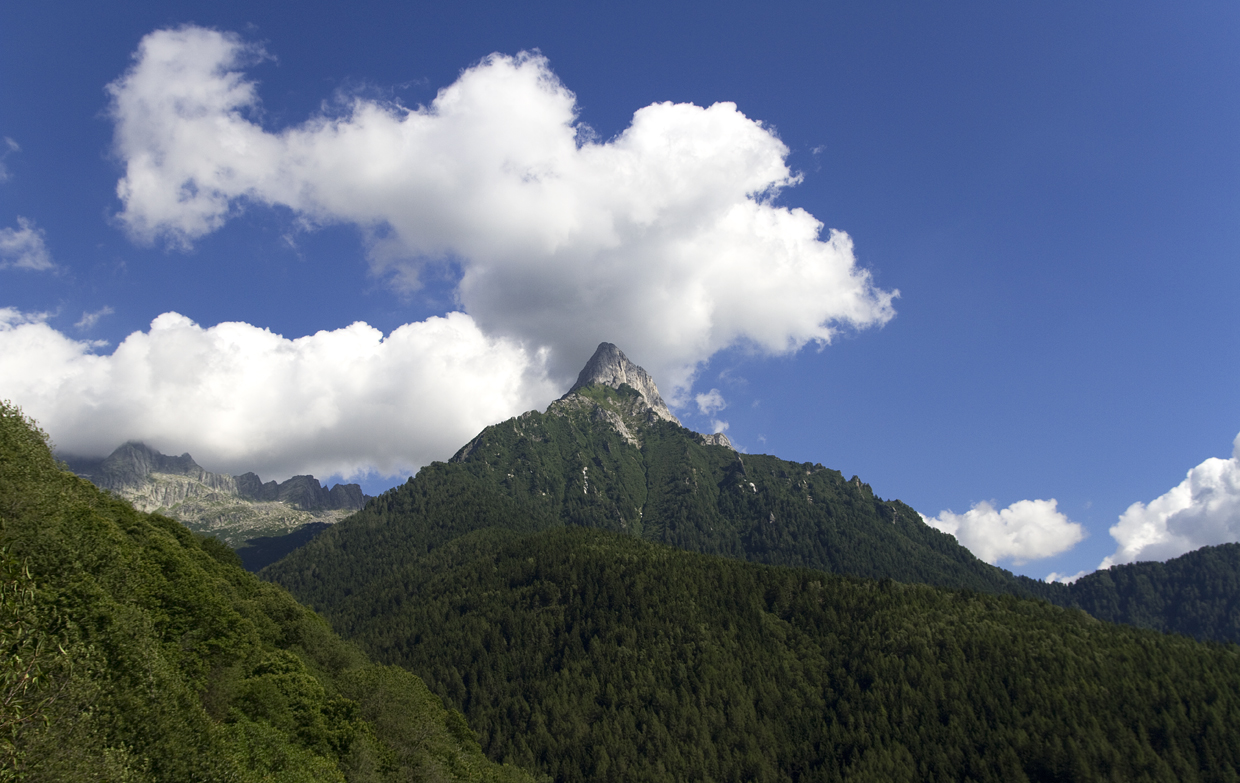
Bossico - At the base of Mt. Colombina, and on the edge of Lake Iseo

In volo su Bossico

Enrico Digital One


************


More Bossico videos


************


"The big lake" - Family folklore

Val Camonica ends where the Oglio River pours into Lake Iseo. Lovere, which is right along the lake, is usually considered a part of the valley that ended up administratively on the Bergamasque side. Bossico is located on slopes of Mt. Colombina, along Lake Iseo; therefore right on the edge of the valley as well. I remember my father telling me of his grandparents telling him stories about "the big lake," which had to be Lake Iseo; although my father didn't know which lake at that time.

A few people consider the possibility that Mt. Colombina is a pyramid, such as the main "Bosnian pyramid." I don't believe that, even though I think clearly that the one in Bosnia was carved, and has portions of it's side flat with very ancient mortar, and deep carved out tunnels.


************


MONTE COLOMBINA IN DRONE

massimiliano violi

MONTE COLOMBINA DA BOSSICO (BG)


************


More Monte Colombina videos


************

.

Saturday, September 22, 2018

The Field of Folk Pagan Dreams


I confess, I tend to believe that potentially all of us can be chosen--by whatever one wants to call it... the gods, fate, ancestral spirits, or the universe--to deliver a certain message(s) in response to a larger collective folk endeavor. When Raven Grimassi put Aradia's words in print, I tend to believe that he was performing a special function for a larger collective. Her energy came alive in those words! This may be due to the fact that a particular individual is more suited for a certain task. Feelings like this may be partly based on our own personal ego, but think of the wealth of riches that many authors, researchers, and a few academics have contributed to this movement(s). Since the old ways were destroyed so thoroughly centuries ago, it takes a tremendous amount of extraction of information from many sources to produce a synthesis of traditions from a distant past.

I tend to believe that mystical experiences can also be part of that idea. At the least, they should be compared to the data that we do have; is the visual perception reflected in congruence with the known facts and evidence? Among many other things, Guido von List was a mystic; and I would have less faith in that if I had not had experiences of my own. I believe that he was--in part--tapping into ancient traditions that existed prior to the arrival of the Teutonic people... the Proto-Europeans. Even he pondered this concept from all of his research... but as far as I know, never openly stated that there may have been more than one historical sub-cultural tradition in places like Lower Austria.

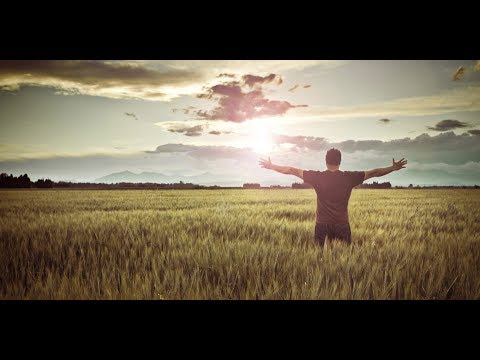
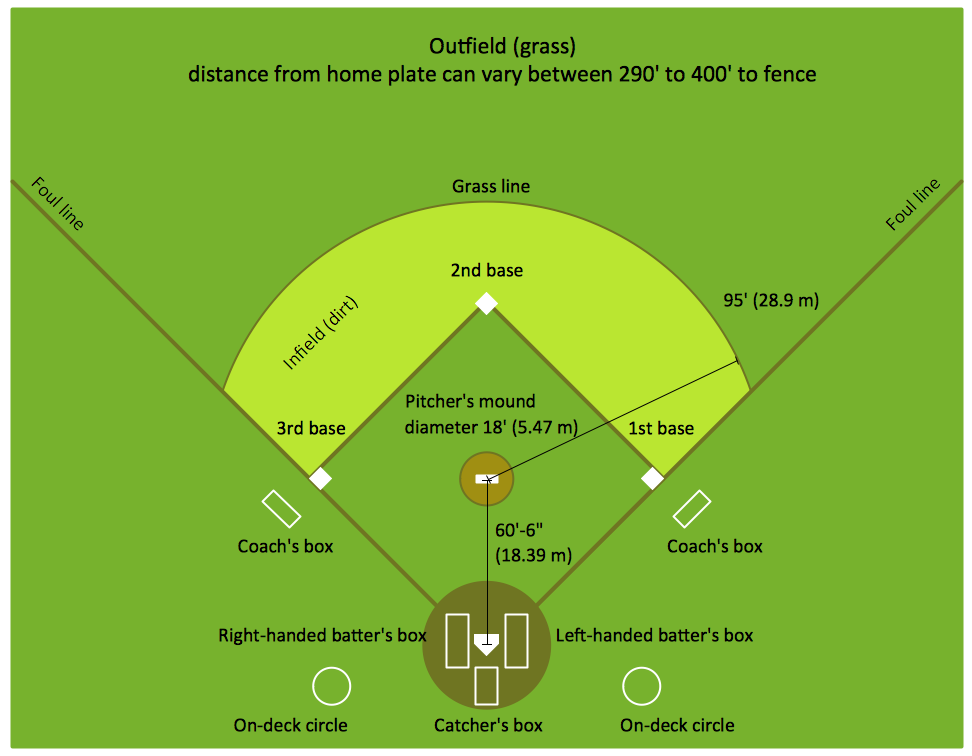
From the film 'Field of Dreams'--which I have not viewed since it came out--the vision of the baseball field in the middle of a massive cornfield comes to mind. I remember little of the film, except that magical field; particularly its unusual location. It was seemingly on the edge of forever; where time and space didn't exist. Unlike other sports, the outer perimeter of a baseball field possesses a strange ambiguity where the play could theoretically extend beyond the wall or fencing. Also, baseball is the only sport that I know of where the geometry goes so far beyond the rigid grid of squares and rectangles. For example, triangle, semicircle, diamond, small circles, square, triangle, small boxes, and even a pentagon! There are even numerous raised platforms of several different shapes; the bases and the pitcher's mound. Also, there is the interaction of shapes within shapes. It's almost set up like a complex altar, such as the grid of Washington D.C. The general consensus is that baseball was invented in 1839 by Abner Doubleday...... yes... a Freemason.


There is much material regarding baseball's Masonic connection, and I have not even looked into any of it. I wanted to go in a different direction with this; something more in line with the Proto-European connection. In other words, not tied to Freemasonry, Alchemy, Rosicrucianism, Western Ceremonial Magic, etc. For once, the spirit of the native believer! Half of the reason that I describe these things is because I want to encourage other folk pagans to look more closely around them for hidden gems within the local landscape; and the other half of this is that I tend to believe that I experienced something of an imaginative reality vision. Something that I had seen in my mind many times... and then it unexpectedly was just "there."

Thursday was a warm day here, and I left the house to get a large cup of iced sweet tea at a nearby establishment. Being a clear evening with an almost full moon, I couldn't resist the temptation to explore a location where I had not actually walked on before. As strange as it sounds, sometimes we can drive by a location hundreds of times... but not truly see it. It is located on one side of a small but well formed valley. It was a baseball field that sits all alone on the side with pleasant rolling hills of dry grass above it. There were lights in the distance which gave it just enough light to illuminate it a bit, but it was still a dark field.

I walked out onto the large field, and out to the edge of the outfield. Just a little bit beyond the fencing was a fairly steep drop... but not a cliff. Below--in the flat valley plane--were the streets, lights, trees, shadows, and modest structures of an old industrial area. Beyond that was the other side of the valley; a much more dramatic black mass of mountains covered with mostly heavy shrub. Above that were the moon and stars. Something looked oddly familiar about this environment, but I was more immediately interested in the sweet tea and not thinking about complex or spiritual things. Slowly however, the basic geometry of the landforms around me came into focus.

Surrounding me--with a 360-degree panoramamic view--was what one could imagine to be a mountain altar. The outfield was a semicircle sitting well above the the flat industrial plane below, but equally well below the grassy hillsides, and still low enough to look up at the mountains on the other side. Now add the clear dark sky, the moon, the stars, the black abyss of the mountains, along with the occasional sounds of coyotes and owls.... well, it was just about as perfect as perfect could be. It reminded me of a scaled-down version of how I imagined what my pagan ancestors saw when they traveled north deep into the Alps to celebrate the eight seasonal festivals and full moons.


Pagans, as late as the seventeenth century, would travel north from the three Brescian valleys and connect with pagans who had traveled south from Valtellina and Val Chiavenna. They celebrated on the mountain passes in between, and certainly must have observed the moon during night rituals. Of course, there likely were permanent locations and altars... or perhaps even one permanent central location. They may have sung and performed time honored rituals from clear back into the ancient past. On a few occasions, I have heard people ask others what event or time period that they would visit from the past... as if they could travel back in a time machine. For me, it would be to partake in one of those mountain rites. Perhaps this experience jogged something deep within my ancestral memory. It was so very perfect: the moon, the stars, the clear evening, the warmth, the mountains, the valley, the coyotes howls, the hoots of an owl, and the semicircle outfield altar.

The grass carpet was so thick and lush that you could just lay down and fall asleep if you wished to. It would not be hard to imagine the plane below as wooded, the night much darker minus the lights, a fire pit upon that semicircle, and of course no fencing... just an altar resting high above the dark abyss below and in the distance. I can imagine people of all ages, some carrying torches, singing and venerating the Goddess under her magical moonlight. The Alpine tribes once made up a Proto-European nation of Rhaetian people; before Germans, French, Italians, or Slavs. However, I don't want to pigeonhole this concept to one particular people, tradition, or landscape. For some, their ancestral altars may have been something more like the outfield from "The Field of Dreams"... or some other natural environment; upon water or woods. It may have been more tied to agriculture, hunting, or fishing.

If we take this particular concept of a semicircle altar and landscape, it would encompass four basic levels of elevation: the mountains, the less physically imposing hills, the lower plane, and of course the altar in the middle. One of the surnames from our village history is "Mitterpergher"... which basically translates to "a person from the middle elevation of the mountain." There would be additional features, such as the moon and stars. All of this could be laid out upon a diagram, in the same general manner as Freemason Abner Doubleday's baseball field. We could have our own version of "as above, so below"... with a half moon and the semicircle altar... or a full moon and perhaps a full circle altar constructed with stones or bricks. A five-pointed vehmic symbol could be added, which would produce a different "as above, so below" along with the perception of a "star" (five-pointed).... or a star with a different number of points.

To be blunt... folk pagans have just as much impetus to form our own symbology--"occult" or otherwise--as those wacky Masons do!

.

Wednesday, September 14, 2016

Bernina Alpine Mountain Range


Bernina Range

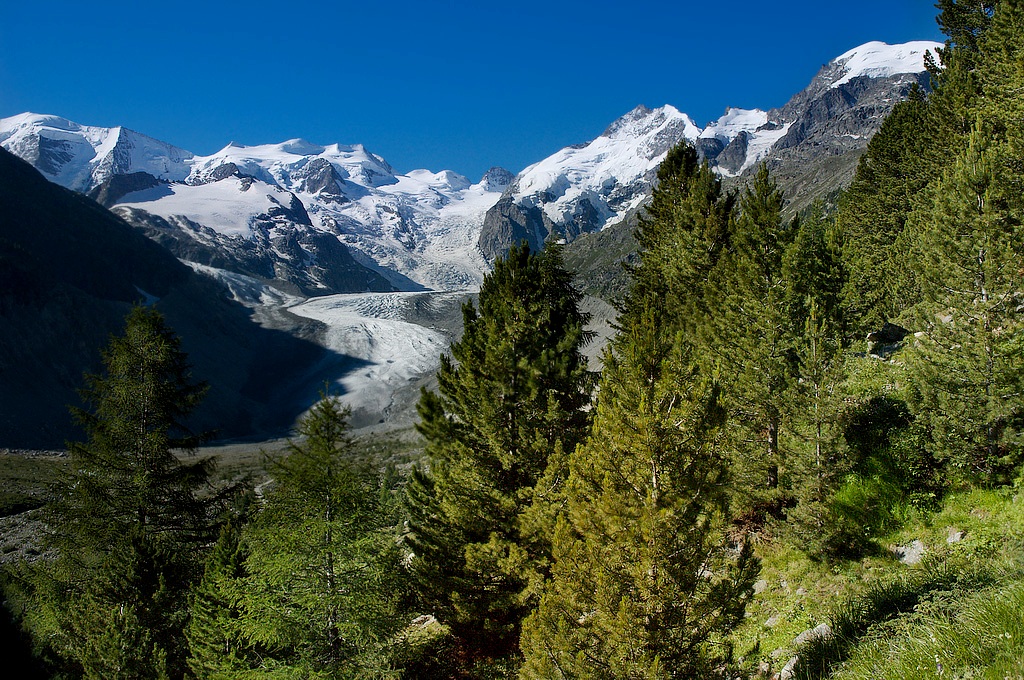
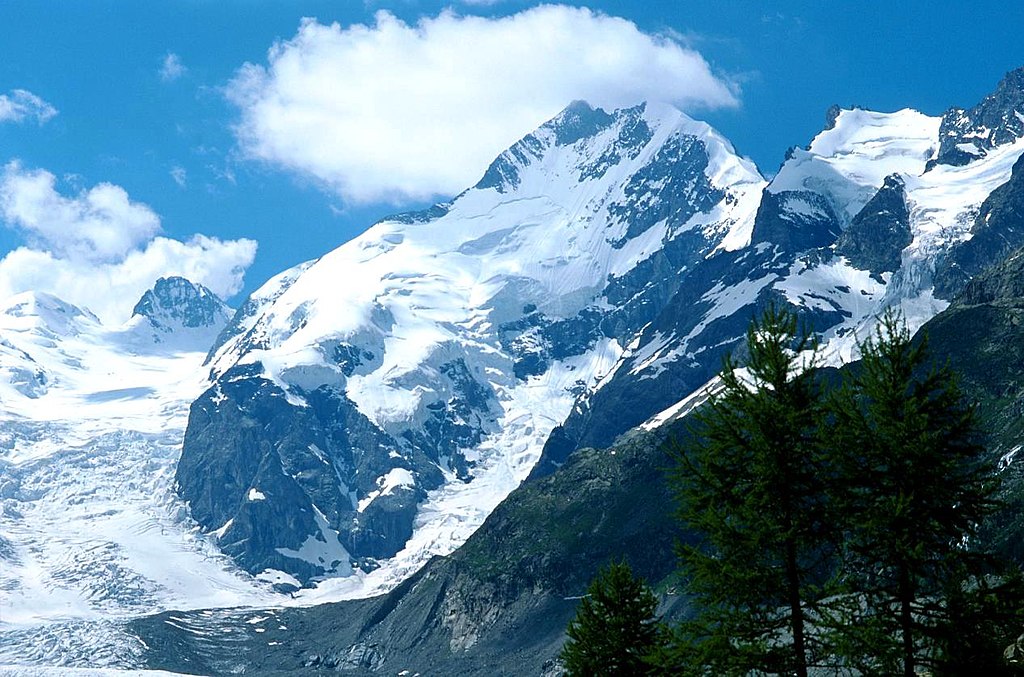
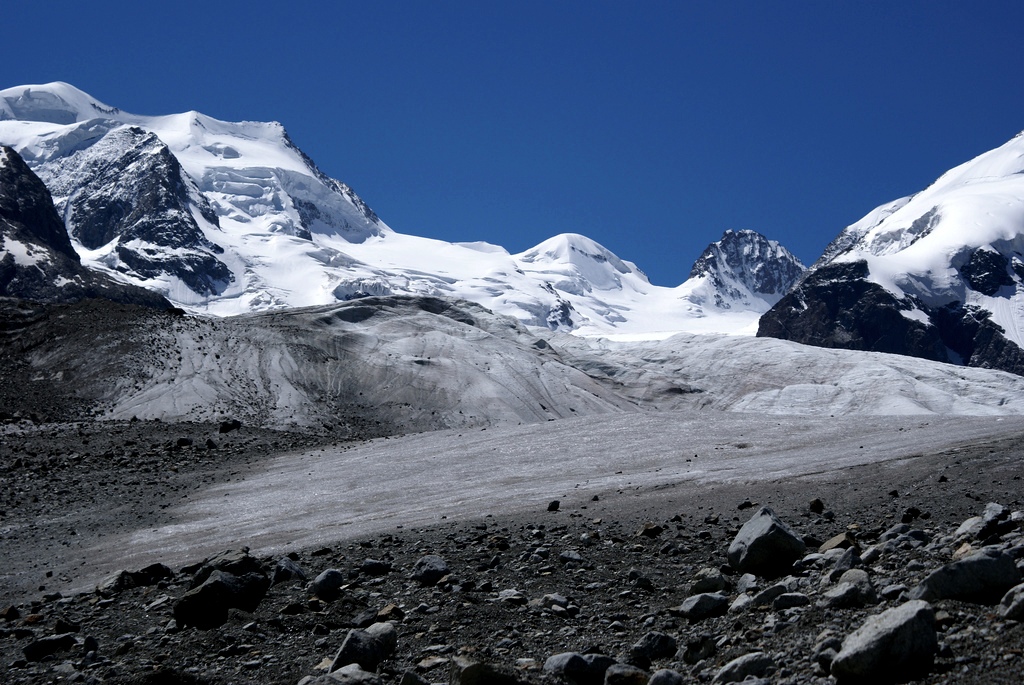
The Bernina Range is a mountain range in the Alps of eastern Switzerland and northern Italy. It is considered to be part of the Rhaetian Alps within the Central Eastern Alps. It is one of the highest ranges of the Alps, covered with many glaciers. Piz Bernina (4,049 m), its highest peak, is the most easterly four thousand-metre peak in the Alps. The peak in the range which sees the most ascents is Piz Palü.

The Bernina Range is separated from the Albula Range in the north-west by the Maloja Pass and the Upper Engadin valley; from the Livigno Range in the east by the Bernina Pass; from the Bergamo Alps in the south by the Adda valley (Valtellina); and from the Bregaglia Range in the south-west by the Muretto Pass. The Bernina Range is drained by the rivers Adda, Inn and Maira (Mera in Italy).

The term Bernina Alps can also be used in an extended sense to include both the Bernina and Bregaglia ranges; this is the area coloured red on the map (right) and labelled ‘Bernina Alpen’.


The Bernina Range extends right to the edge of the Val Chiavenna, Valtellina, and the Bergamo Alps, and is part of the greater Rhaetian Alps.

Included here are numerous valleys, including the Valtellina, Valchiavenna, Valle dell'Adige, the Val Camonica and the Val Isarco. -- Italian Wiki/Rhaetian Alps


When observing these mountain ranges, one can come to an understanding as to how the larger valleys--such as the Valtellina and the Val Camonica--became defacto "little nations" with their own dialects, culture, spirituality, cuisine, folklore, and collective personality... regardless of what monarchy, banking dynasty, church, supernational entity or dictator actually held onto the property deed. In the Middle Ages, these valleys would have been highly isolated.


There is a such thing as "ancestral memory" written into our DNA. Even when I'm in the Santa Cruz Mountains here in San Mateo County, looking across from one side of a valley out to the next, my spirit fires up.. I'm feel that I've returned home. The wonderful green, brown, grey, blue and white of the trees, earth, rock, sky and clouds... the warmth, the scent... timeless.


All the birds have flown up and gone;
A lonely cloud floats leisurely by.
We never tire of looking at each other -
Only the mountain and I.

-- Li Po


.

Friday, June 10, 2016

From skyscrapercity.com forum: "The Valcamonica appreciation thread!!!" - Part 1

Valcamonica appreciation thread


Ancient Camunni rock art


.


.


.
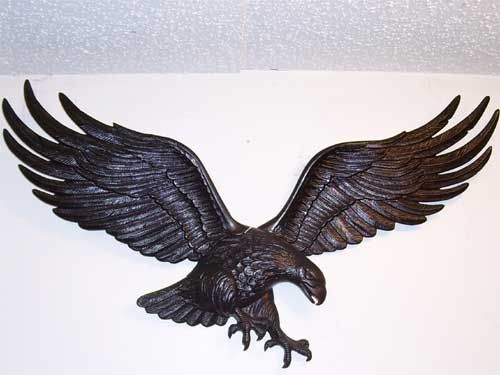
An eagle upon a stag: The symbol of the Val Camonica


.


.
Distinct traditional Subalpine architecture


 .


.


.


.


.

Tuesday, July 14, 2015

'Swiss close Matterhorn 150 years after 1st ascent'


'Swiss close Matterhorn 150 years after 1st ascent'

AP - July 14, 2015

BERLIN (AP) — No climbers were allowed on Switzerland's Matterhorn mountain Tuesday, as authorities declared a daylong 'silence' on the 150th anniversary of the first ascent to honor more than 500 climbers who have died trying to reach the top.

A group of seven mountaineers led by Briton Edward Whymper became the first to scale the peak on July 14, 1865. Four members of the team died on the descent.

The solemn silence on the Matterhorn — underlined with the threat of a 5,000 Swiss francs ($5,290) fine — was part of a series of events marking the anniversary, which also included a light display along the route of the original ascent.

Authorities have also taken longer-term steps to calm the crush of mountaineers trying to reach the iconic 4,478-meter (14,692-foot) Alpine peak that Switzerland shares with neighboring Italy. The Hoernlihuette base camp refuge, also reopened Tuesday, has been reduced to 140 beds from 170.

An anniversary ascent by a team of climbers from Britain, France, Italy and Switzerland — reflecting the nationalities on the first ascent — is planned for Friday.


**************************************************

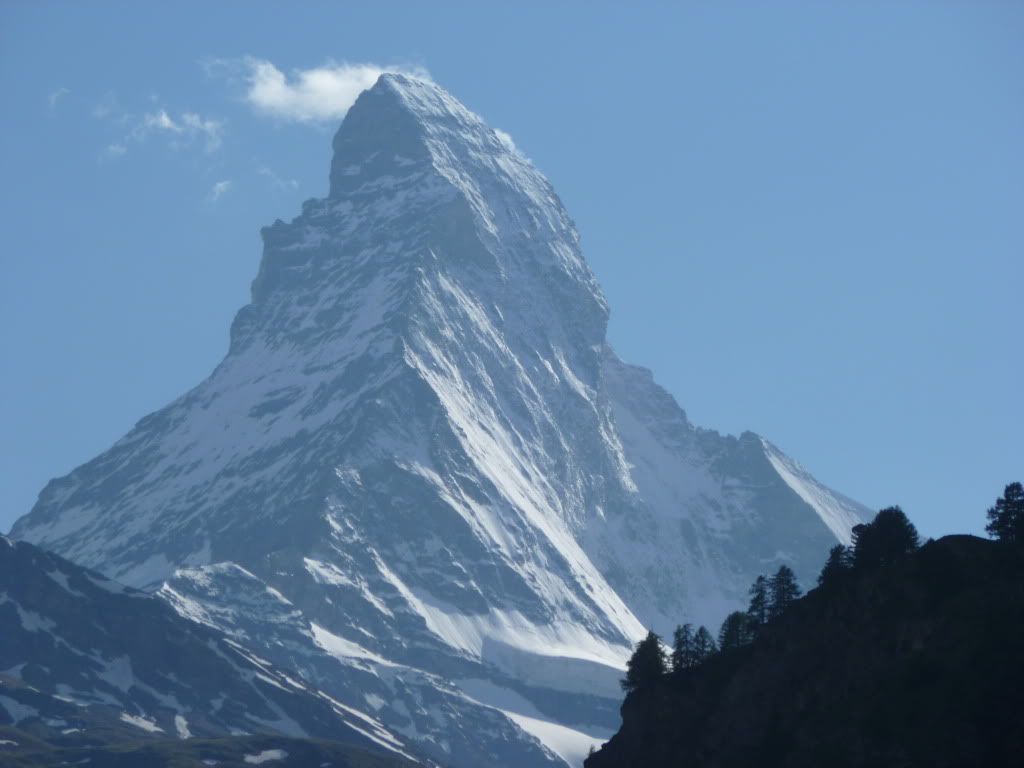
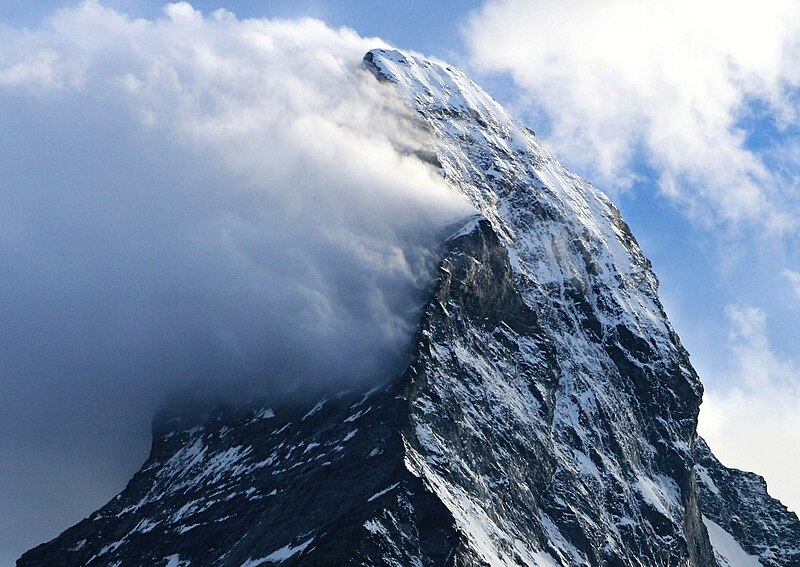
The Matterhorn, which is close to the Italian border at Zermatt, has been called "the mountain of mountains." I had no idea that 500 climbers have been killed making that accent. The Matterhorn is 14,692 feet, making it one of the highest peaks in Europe. Although the dramatic "horn" tip is so well-known, the overall mountain is larger apparently. Many photos show the horn with frosty fog gathered around it, looking like steam. The mountain is a symbol of nature at it's most rugged and beautiful, and a symbol of the Alpine region.

Matterhorn

First ascent of the Matterhorn

Edward Whymper

Golden age of alpinism

Quintino Sella

**************************************************

Wolves and Doves - Perception vs. Reality

Within human perception, wolves are a symbol of violence and aggression. Despite the overwhelming love for the canine, wolves have been driven away by concerted force. The "big bad wolf." Also, within human perception, doves are a symbol of peace and tranquility. Hence the phrase "the dove of peace." In reality, wolves never kill each other; while doves, like humans, do kill each other. So do we need to change that phrase to.... "the wolf of peace?"

.

Thursday, August 28, 2014

Gotthard Base Tunnel: Alpine tunnel connecting Uri to Ticino opens in 2016


Documentary about the massive transalpine-cisalpine tunnel project.


Gotthard Base Tunnel (Wikipedia)

The Gotthard Base Tunnel (GBT) is a railway tunnel in the heart of the Swiss Alps expected to open in 2016. With a route length of 57 km (35.4 mi) and a total of 151.84 km (94.3 mi) of tunnels, shafts and passages, it is the world's longest rail tunnel, surpassing the Seikan Tunnel in Japan.

Its main purpose is to increase total transport capacity across the Alps, especially for freight, notably between Germany and Italy, and more particularly to shift freight volumes from road to rail to reduce environmental damage caused by ever-increasing numbers of heavy lorries. A secondary benefit will be to cut the journey time for passenger trains from Zürich to Milan by about an hour and from Zürich to Lugano to 1-hour 40 minutes.


The project consists of two single-track tunnels. It is part of the AlpTransit project, also known as the New Railway Link through the Alps (NRLA), which includes the Lötschberg Base Tunnel between the cantons of Bern and Valais and the under construction Ceneri Base Tunnel (scheduled to open late 2019) to the south. It bypasses the Gotthardbahn, a winding mountain route opened in 1882 across the Saint-Gotthard Massif, which is now operating at capacity, and establishes a direct route usable by high-speed rail and heavy freight trains.


After 64 percent of Swiss voters accepted the AlpTransit project in a 1992 referendum, tunnel construction began in 1996. Drilling operations in the eastern tunnel were completed on 15 October 2010 in a breakthrough ceremony broadcast live on Swiss TV, and in the western tunnel on 23 March 2011. AlpTransit Gotthard Ltd. was planned to hand over the tunnel to Swiss Federal Railways (SBB) in operating condition in December 2016; this date was modified to 5 June 2016 on 4 February 2014 with the commencement of an 850-day opening countdown calendar on the AlpTransit homepage. Total cost of the project is 9.8 billion Swiss francs, or US$10.3 billion.

The two portals are near the villages of Erstfeld, Uri, and Bodio, Ticino. Nearby are two other St. Gotthard Tunnels: the 1881 Gotthard Rail Tunnel and the 1980 Gotthard Road Tunnel.

When completed, the Gotthard Base Tunnel will have been one of the longest tunnel construction projects in the world: 20 years of constant construction and preparation.


.

Sunday, July 27, 2014

Badalisc: Camunian folklore - Part III


Pre-Christian Alpine traditions

The central and eastern Alps of Europe are rich in folklore traditions dating back to Pagan (pre-Christian) times, with surviving elements amalgamated from Germanic, Gaulish (Gallo-Roman), Slavic (Carantanian) and Raetian culture.


Survival through the ages

Ancient customs survived in the rural parts of Austria, Switzerland, Bavaria, Slovenia, western Croatia and Italy in the form of dance, art, processions, rituals and games. The high regional diversity results from the mutual isolation of Alpine communities. In the Alps, the relationship between the Roman Catholic Church and paganism has been an ambivalent one. While some customs survived only in the remote valleys inaccessible to the church's influence, other customs were actively assimilated over the centuries. In light of the dwindling rural population of the Alps, many customs have evolved into more modern interpretations.


Krampus

The word Krampus originates from the Old High German word for claw (Krampen). In the Alpine regions, the Krampus is a mythical horned figure represented as accompanying Saint Nicholas. Krampus acts as an anti–Saint Nicholas, who, instead of giving gifts to good children, gives warnings and punishments to the bad children. Traditionally, young men dress up as the Krampus in the first two weeks of December, particularly in the evening of December 5, and roam the streets frightening children and women with rusty chains and whips and bells. This figure is believed to originate from stories of house spirits such as kobolds or elves.


Perchten

Originally, the word Perchten (plural of Perchta) referred to the female masks representing the entourage of an ancient goddess, Frau Perchta, or Pehta Baba as it is known in Slovenia. Some claim a connection to the Nordic goddess Freyja, though this is uncertain. Traditionally, the masks were displayed in processions (Perchtenlauf) during the last week of December and first week of January, and particularly on 6 January. The costume consists of a brown wooden mask and brown or white sheep's skin. In recent times Krampus and Perchten have increasingly been displayed in a single event, leading to a loss of distinction of the two. Perchten are associated with midwinter and the embodiment of fate and the souls of the dead. The name originates from the Old High German word peraht ("brilliant" or "bright").

Regional variations of the name include Berigl, Berchtlmuada, Berchta, Pehta, Perhta-Baba, Zlobna Pehta, Bechtrababa, Sampa, Stampa, Lutzl, Zamperin, Pudelfrau, Zampermuatta and Rauweib. The Roman Catholic Church attempted to prohibit the sometimes rampant practise in the seventeenth and eighteenth centuries but later condoned it, resulting in a revival.


In the Pongau region of Austria large processions of Schönperchten ("beautiful Perchten") and Schiachperchten ("ugly Perchten") are held every winter. Other regional variations include the Tresterer in the Austrian Pinzgau region, the stilt dancers in the town of Unken, the Schnabelpercht ("trunked Percht") in the Unterinntal region and the Glöcklerlaufen ("bell-running") in the Salzkammergut. A number of large ski-resorts have turned the tradition into a tourist attraction drawing large crowds every winter.

Sometimes, der Teufel is viewed to be the most schiach ("ugly") Percht (masculine singular of Perchten) and Frau Perchta to be the most schön ("beautiful") Perchtin (female singular of Perchten).


Badalisc


The Badalisc is a "good" mythological animal who lives in the woods of Andrista, in Val Camonica, Italy. During an annual town festival someone dresses up as the creature and is "captured" and brought to the town. The animal is made to tell the people of the town gossip. At the end of the festival the creature is released until the next year's ceremony.


.

Tuesday, March 11, 2014

Mountain and Spirituality


Mountain and Spirituality
 

[borrowed from Odinic-Rite.org]

By Hariulf OR

As many of you know I have the chance to live in the beautiful Swiss Alps. It goes without saying that the mountain has always played a great role in my life. These are also these beautiful Alps who inspired me this article. I hope it will be not to confuse, I always have a lot of difficulties to translate my thoughts into words. So I hope this short article will have sense for you.

The mountain seems to have played an important role in the spiritual traditions of the Indo-European people. We find several Sacred Mountains into the different Indo-European mythology: for example the Mount Meru from the Vedic tradition, the Olympus Mount from the Greek tradition. In our mythology we find Himinbjorg. Himinbjorg means “heaven’s castle” or “heaven mountain”.

In many of these traditions, the mountain was considered as the symbol of transcendent inner states. The mountain was also seen allegorically as the seat of divine beings, heroes or transfigured creatures that have risen high above the human condition. If we look more closely in our mythology, Himinbjorg is the home of the god Heimdall. Heimdall is the watchman of the gods, and he sits on the edge of heaven to guard the Bifrost Bridge from the jotuns. Heimdall requires less sleep than a bird, can see at night just as well as if it were day, and for over a hundred leagues. Heimdall’s hearing is also quite keen; he can hear grass as it grows on the earth, wool as it grows on sheep, and anything louder. Heimdall possesses a trumpet, Gjallarhorn, that, when blown, can be heard in all worlds, and “the head is referred to as Heimdall’s sword”. From this description we can see that Heimdall embodies the quality of a “person” who have risen high above the human condition.

For me Heimdall embodies the two major poles of life according to Julius Evola: action and contemplation. Heimdall is in a certain way a god of “contemplation” (his role of watchman, his constant watch) but also a god of “action” (he will sound the Gjallar Horn announcing the Ragnarok). And all this “action” and “contemplation” took place on the Himinbjorg “mountain”.

In our modern world, mountain represents different things for different people. For some people the mountain is a way to satisfy their appetite for risk, for others it can be a way to practice a very demanding sport, for other the mountain is only a touristic curiosity, a place where people of the plains come to admire the idyllic landscape, away from the urban pollution and concrete jungle.

But for me, the mountain is none of this: for me it is a way of liberation, of self-transcendence and of self-fulfilment. The mountain represents as said above the two major poles of life: action and contemplation. I’m not a good alpinist, far from it. I’m not able to climb a 4000 metres like the Matterhorn or the Monte Rosa. I’m only able to climb some minor summits. But, I think that despite the difference of difficulties, the process is the same

I think that we can make a comparison between the fact to climb a mountain and a spiritual path. When we climb a mountain, we are alone (even if we are part of a roped party). We are alone with our strengths and our weaknesses. We must look inside us and be aware of our capabilities, be ready to make a lot of efforts and sacrifices. When we climb from rock to rock, from crest to crest, we must be aware of the altitude and of the many dangers. Every step, everything we do should be reflected. We must be totally focused on our ascent, our mind only directed towards our goal. It’s hard to explain in words, but when you climb a mountain, your mind is in a certain way “totally empty”. All your being is only focused on action. This is a pure action who help us to transcend our inner state, to rise physically and also “spiritually” high above the human condition. The act of climbing a mountain, an action who ask for a lot of self-discipline, symbolizes a mysterious process of surpassing of oneself, of liberation and of spiritual integration.

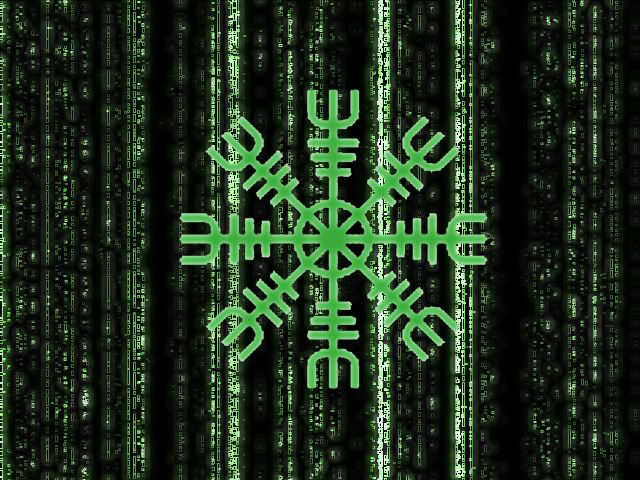
And after the action come the contemplation. The moment when we reach the summit, when we sit on it to contemplate the landscape above us, is for me a moment of pure magic. It’s a moment “out of the world” and “out of the time”. After the summit reached, we feel a great liberation, a solar solitude and a great silence. When we look at the landscape below us and at the purity of the sky above us, we feel the possibility of an awakening, the rebirth of something transcendent. When I’m in a summit, after a moment of very intense meditation and contemplation I always feel the urge to rise and to adopt the Algiz stance to deepen my connection with all that surround me both physically and spiritually. Because of its primordial nature, the mountain allows us to look deep inside us, to transcend our little ego to search something higher than us.

The mountain also taught us the silence. We live in a world of constant noise and the mountain can help us to understand that the silence is important for our spiritual advance. By contemplation, we will be able to see more clearly, and by silence, we truly come to hear more clearly, like Heimdall on Himinbjorg.

So mountain can be seen both spiritually and physically as a mean to gain a greater spiritual awareness. If we are able of action and contemplation, we will be able to transcend our little ego and to climb our own spiritual mountain.

Hael the New Awakening!


.

Saturday, February 1, 2014

The Arctic Home in the Vedas: Part 16 - "Thule, Saturn, & an alternative explanation"


Thule, Saturn, & an alternative explanation: Part 5

The way the Greeks understood their relationship with non-Greek peoples was significantly moulded by the way myths of the Golden Age were transplanted into the contemporary scene...

We often hear the phrase “golden age” in reference to the zenith of something; “the golden age of cinema.” However, there was THE golden age, and it may be stranger than anything we will ever uncover. It has to do with everything from the deep past to the present day. It has to do with every ancient culture, and in particular the original Teutonic people before their migrations. I will tie this big loose end. But for now, we are talking about a “Golden Age” in which there were no seasons as we know them today; and in which the North and South Poles was literally habitable.

A particular Hyperborean legendary healer was known as "Abaris" or "Abaris the Healer" whom Herodotus first described in his works. Plato (Charmides, 158C) regarded Abaris as a physician from the far north...

Could Abaris the Healer have been of a migrating people from the “far north”… Thule? The ancient Greeks were very scientifically-minded, so couldn’t this “shaman”--who caused such a stir--seem a little out of place?

Above the Arctic Circle, from the spring equinox to the autumnal equinox (depending on latitude), the sun can shine for 24 hours a day...


There is a deep tie-in here with the “Golden Age” and Bal Gangadhar Tilak’s theory, but I will have to wait until Part 17 to reveal it.

Unaware of the explanation offered by modern science (i.e. that these insects had lived in times when the climate of northern Europe was much warmer, their bodies preserved unchanged in the amber) the Greeks came up with the idea that the coldness of northern countries was due to the cold breath of Boreas, the North Wind. So if one travelled "beyond Boreas" one would find a warm and sunny land.

This is clearly part of the Greek mythology of the “Golden Age.” However, these mythologies of that possible era are present in the mythologies of every ancient civilization. Again, I’m focusing mostly on the legend of Thule, but this “Golden Age” affected every person living on Earth at that time if it was real.

Northern Europeans (Scandinavians), when confronted with the classical Greco-Roman culture of the Mediterranean, identified themselves with the Hyperboreans, neglecting the traditional aspect of a perpetually sunny land beyond the north.

This was only a perception, but could it literally be tied to a real time and place? There is now mounting evidence that it may.


Hyperborean Indo-European hypothesis

John G. Bennett wrote a research paper entitled "The Hyperborean Origin of the Indo-European Culture" (Journal Systematics, Vol. 1, No. 3, December 1963) in which he claimed the Indo-European homeland was in the far north, which he considered the Hyperborea of classical antiquity. This idea was earlier proposed by Bal Gangadhar Tilak (whom Bennett credits) in his The Arctic Home in the Vedas (1903) as well as the Austro-Hungarian ethnologist Karl Penka (Origins of the Aryans, 1883).

Now this is a big tie-in, and in hindsight part of the intellectual process of looking into something which seemingly is impossible. They weren’t, however, “Indo-Europeans.” They were the original Teutonic race. This intrinsically has nothing to do with the Nazis. In fact, the German sub-race--specifically--is less than half Teutonic.. and less so in the southern German lands. The larger part being primarily proto-European (“Alpine”).

According to these esoterists, Hyperborea was the Golden Age polar center of civilization and spirituality...


I doubt this part, as there is no strong evidence of it. That doesn’t mean that evidence of a great Thule civilization couldn’t be out there undiscovered. We can look into what may exist as far as ruins at a later point. What there is evidence of is the presence of Teutonic people in some of these lost lands like the Tarim Basin.

Robert Charroux first related the Hyperboreans to an ancient astronaut race of "reputedly very large, very white people" who had chosen "the least warm area on the earth because it corresponded more closely to their own climate on the planet from which they originated."

After Part 17, this may show to be theoretically possible, but wild theories can and do hurt the areas where facts can be established. In any case, this original Teutonic race would no longer exist in the exact form that they did. Even in the far north of the post-Golden Age Europe, or in modern times, I would guess that this certain stock would be at no more than 50%.


They may not have been as physically attractive as their Teutonic-Protoeuropean descendants later became. The very tall, square-headed, almost white-haired, very light blue-eyed, and pure white skinned people became shorter, rounder-headed, more ash or wheat blonde haired, more medium blue-eyed, and perhaps a bit tan to give one possible example.

Unlike other places where Teutonic people came and ruthlessly conquered, they were taken with these shorter, stocky, sexier, probably brown-eyed, perhaps dark brown haired European natives.. and merged with them. Only in what I would call the “final great migration,” a horde of more pure stock Teutons came and permanently placed their clear genetic and linguistic stamp on some places like Scandinavia and northern Germany.


The one other example of where they mixed their blood was in ancient Persia, which produced the Aryan culture and people (original Teutons & true Mediterraneans). To make this perfectly clear, this original Teutonic race didn't produce "The Golden Age"; the Golden Age may explain their origins. I use the term "Teutonic" for the original stock; as opposed to the modern "Germanic," which is a loose and somewhat undefined term. For example, the "Germanic Austrians" probably have only a minimally larger Teutonic element than say Venetians, Croatians, or Slovenes... yet the loud terms "GERMAN," "ITALIAN," or "SLAV" are thrown around recklessly by many. Language often defines a culture more than actual racial stock in the perceptions of most people.


Golden Age (Wikipedia)

The term Golden Age (Greek: Χρυσόν Γένος Chryson Genos) comes from Greek mythology and legend and refers to the first in a sequence of four or five (or more) Ages of Man, in which the Golden Age is first, followed in sequence, by the Silver, Bronze, Heroic, and then the present (Iron), which is a period of decline. By extension "Golden Age" denotes a period of primordial peace, harmony, stability, and prosperity. During this age peace and harmony prevailed, humans did not have to work to feed themselves, for the earth provided food in abundance. They lived to a very old age with a youthful appearance, eventually dying peacefully, with spirits living on as "guardians". Plato in Cratylus (397 e) recounts the golden race of humans who came first. He clarifies that Hesiod did not mean literally made of gold, but good and noble.

There are analogous concepts in the religious and philosophical traditions of the South Asian subcontinent. For example, the Vedic or ancient Hindu culture saw history as cyclical, composed of yugas with alternating Dark and Golden Ages. The Kali yuga (Iron Age), Dwapara (Bronze Age), Treta yuga (Silver Age) and Satya yuga (Golden Age) correspond to the four Greek ages. Similar beliefs occur in the ancient Middle East and throughout the ancient world, as well.

In classical Greek mythology the Golden Age was presided over by the leading Titan Cronus. In some version of the myth Astraea, also ruled. She lived with men until the end of the Silver Age, but in the Bronze Age, when men became violent and greedy, fled to the stars, where she appears as the constellation Virgo, holding the scales of Justice, or Libra.


European Pastoral literary and iconographic tradition often depicted nymphs and shepherds as living a life of rustic innocence and simplicity, untainted by the corruptions of civilization — a continuation of the Golden Age — set in an idealized Arcadia, a region of Greece that was the abode and center of worship of their tutelary deity, goat-footed Pan, who dwelt among them. This idealized and nostalgic vision of the simple life, however, was sometimes contested and even ridiculed, both in antiquity and later on.


Abaris the Hyperborean (Wikipedia)
Abaris the Hyperborean (Greek: Ἄβαρις Ὑπερβόρειος, Abaris Hyperboreios), son of Seuthes, was a legendary sage, healer, and priest of Apollo known to the Ancient Greeks. He was supposed to have learned his skills in his homeland of Hyperborea, near the Caucasus, which he fled during a plague. He was said to be endowed with the gift of prophecy, and by this as well as by his Scythian dress and simplicity and honesty he created great sensation in Greece, and was held in high esteem.


Gothicismus (Wikipedia)

Gothicismus, Gothism, or Gothicism (Swedish: Göticism) is the name given to what is considered to have been a cultural movement in Sweden, centered around the belief in the glory of the Swedish ancestors, originally considered to be the Geats, which were identified with the Goths. The founders of the movement were Nicolaus Ragvaldi and the brothers Johannes and Olaus Magnus. The belief continued to hold power in the 17th century, when Sweden was a great power following the Thirty Years' War, but lost most of its sway in the 18th. It was revitalized by national romanticism in the early 19th century, this time with the vikings as heroic figures.


**************************************************


By extension "Golden Age" denotes a period of primordial peace, harmony, stability, and prosperity. During this age peace and harmony prevailed, humans did not have to work to feed themselves, for the earth provided food in abundance. 

This sounds a bit like someone's warm and fuzzy account of some long ago "place" in their imagination. However, this will make a lot more sense during Part 17.

He (Abaris) was supposed to have learned his skills in his homeland of Hyperborea, near the Caucasus...

Apparently Abaris was a real figure who caused a sensation in early Greek civilization. Since he dressed like a Scythian, there seems to be a Persian connection, which would tie-in well as far as his possible Teuton roots at that time. If it was about one-thousand BCE, then the Aryan connection would make sense here.


Gothicismus

There is a definite tie-in here, but this national/racial historical perception (likely partly true in this case) starts to lead us down some rabbit trails and into confusion. Suffice to say that there were some early Gothic legends of Thule.

.

Wednesday, August 8, 2012

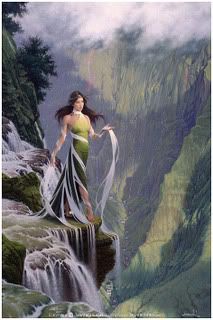
'The Alpine Goddess' (an original new poem)

'The Alpine Goddess'

Oh Lady Reitia
The goddess of health
To your people
There was no greater wealth

You reigned from the frost of the mighty Alps
To the warmth of the sunny Adriatic
Your ancient shrine in the Euganean Hills
Still proudly stands emblematic

They left you offerings of pottery, metal, and inscription
And called you “the good and kind”
Which even today show us
Where you stood in your peoples’ mind

The winds of time have faded your memory
However, your place in history has been sewn
Although some may hold onto hope
That you may still be watching over your own

--by Camunlynx

.

Sunday, November 20, 2011

Guido von List: Part 12

The following quote was taken from the Runic script Wikipedia page:

Historically, the runic alphabet is a derivation of the Old Italic alphabets of antiquity, with the addition of some innovations. Which variant of the Old Italic family in particular gave rise to the runes is uncertain, suggestions including Raetic, Etruscan or Old Latin candidates. All these scripts at the time had the same angular letter shapes suited for epigraphy which would become characteristic of the runes. The process of transmission of the script (the oldest inscriptions being found in Denmark and Northern Germany, not near Italy) is also unknown. A "West Germanic hypothesis" suggests transmission via Elbe Germanic groups, while a "Gothic hypothesis" assumes transmission via East Germanic expansion.

As you can plainly see, there is a definite tie-in with our culture, especially via the old Raetic alphabet. This connection may not have been apparent in Guido von List's day. The perception was that everything south of the Alps was "Roman," without taking into account that the early Roman political strategy was to destroy anything Etruscan, Gaulish, or other local cultural groups in this territory.

The following text was taken from 'The Secret of the Runes', page 68, regarding the original definition, and eventual decline, of the Runes:

.....it has been proven that the runes were more than our letters are today, more even than mere syllable- or word-signs, that is, they were "holy signs" or "magical characters." They were , in a certain way of thinking, something similar to the "spirit sigils" (not "spirit seals"!) of later times, which played a conspicuous role in the notoerious "Hellish Conjuration of Dr. Faust." Actually they were nothing less than "collectors" for the purpose of auto-suggestion, "media" for concentrated thought and intensive meditation. The characterization as "holy-signs" is therefore fully justified, as is the other name "runes," that is, the "rowning [whispering], the "slightly speaking ones."

Only after these beginnings did those runes, and a number of others that the "Runatals thattr Odhins" does not name, gradually shrivel up into letters in our sense of the word--that is, into empty, inarticulate phonetic signs. The great still-uncounted mass of the other "holy signs" or "hieroglyphs," which were not simplified into insubstantial phonetic signs, but which were rather--as has already been stated--often developed with ongoing elaboration into the most elegant ornamental motifs with the characteristic preservation of the basic lines of their primary forms, and which also expanded their names and symbolic values, formed the Aryan system of hieroglyphs or pictographs which remained a secret of the skalds. Until now, no one had thought to decipher or read them, because no one recognized these widely disparate signs as hieroglyphs.

First it would also do well to ascertain where those--until now silent or in the best case misinterpreted--"holy signs" or "hieroglyphs" are to be found, this in order to prove the context of the special formations of individual signs (corresponding to the kind of the areas in which they are found), and finally to establish through their names the primal-words and ideas that they represent, and from these to form a basis for their decipherment and reading.

This particular area of text later goes into root words (see earlier runic examples in this series), or what List called "primal words," of which many other words stem from; and as they tie into the ancient runic system. On some level, List was partial to his German roots. However, we must realize that this area of study was new at that time, and it appeared wholley Germanic then. I see certain Listian "primal words" which are very similar to certain words and syllables in the Camunian dialect, like "mon," "bor," and "ur." Some of these may have had a Celto-Alpine origin, or even an origin with the mysterious ancient Alpine peoples who predated them. Of course, some could have a Norse, Slavic, or other origin.

Just to follow up with the previous primal word examples. "Mòn" is the original Camunian name for the village of Monno; which is interesting because variations of this word, in numerous ancient language origins, generally means "Moon." "Mon," usually as a prefix, is common within the Camunian dialect. Even the name for Valle Camonica in the Camunian dialect is "Al Camònega." "Mon" is a primal word associated with the Norse life rune (also with "the Moon" meaning); however, the connection is most likely just linguistic. Although, the Langobards did bring the runes back to the Italian peninsula, so there's a possibility of a greater connection there. "Borha" (bor) means business or exchange in Camunian; with "bor" being an indirect primal word associated with the Gibor rune. Lastly, "Urdèn" (ur) means order in Camunian; and although it would be fun to ponder whether or not this could linguistically tie into the name Odin, it appears not to. "Ur" is an important primal word associated with the Ur rune, which may be the most primal word associated with the runes. It stands for "the primordial," which the ancient pagan Camunni may have associated with "the order of nature." The suffixes "ur" and "ura" are very common in the Camunian dialect.

I just think much of this text from this part of the book would be difficult to deeply understand unless it was all placed here, and it would be easier for someone to just get the book. Also, some of it, again, showed a pro-Germanic partiality that could be misinterpreted due to the wording. After looking at hundreds of Camunian surnames and words, they appear to likely be of Alpine and Gaulish origin, with some Roman (Latin) and German influence. However, the Lombard language can sound French, but that could be due to the similar "Romanized Gaulish" linguistic direction.

.