Showing posts with label Slavic. Show all posts

Sunday, July 26, 2020

Summer Solstice 2020 - Part III


Believers

'Believers' is a documentary style paranormal program, which are more thoughtfully done than the investigative style ones. It aires on Saturday evenings on The Travel Channel. I know there's an overkill of these types of ghost, mysteries, and paranormal programs, but this one is clearly a cut above the rest. Another good one is 'The UnXplained' which aires on Saturday evenings on the History Channel.


*************************


Carpathian Mountains

'Fly agaric mythology and folklore'

Paul Kendall - https://treesforlife.org.uk/

Think of any fairy tale illustration of elves or goblins sitting on or under a toadstool, and most likely the cap of such a fungus will be bright red with white spots.

The autumnal abundance and vibrant colours of the fly agaric mushroom make it probably the most widely recognised of our fungi. As the name suggests it was formerly used as an insecticide, with pieces often floated in milk, to intoxicate and kill flies attracted by its aroma. Similarly most people will be wary of its poisonous reputation (though fatal reactions are rare), and appreciation of this mushroom will mostly be limited to the aesthetic. It has been suggested that northern Europeans’ wariness of mushrooms may stem from long-established taboos relating to the use of mushrooms containing mind expanding substances. These would originally have been reserved for those shamans or priests who served as intermediaries between the common folk and the unseen worlds of spirit.

The fly agaric may have been the earliest source of entheogens, that is hallucinogenic substances used for religious or shamanic purposes, the use of which date back possibly over 10,000 years. Fly agaric has been put forward as the most likely candidate for the mysterious Soma, mentioned in around 150 hymns of the Hindu Rig-Veda, which was written between 1500 – 500 BC by Aryans in the Indus valley. Soma was a moon god, as well as a related plant and a holy brew which were also worshipped. Though there have been many suggestions as to the identity of the plant, fly agaric fits many of the Vedic references as a substance with which to contact the gods.

Fly agaric contains two toxins, ibotenic acid and muscimol, which are responsible for its psychoactive and hallucinogenic effects. To minimise its toxic side effects fly agaric would be processed in some way eg. dried, made into a drink, smoked or made into ointments. Care in its preparation and ritual were paramount. The Celtic Druids, for example, purified themselves by fasting and meditating for three days, drinking only water. Amongst the Koryak people of north-eastern Siberia the ceremonial use of fly agaric involved the shaman ingesting the mushroom, after which others would drink his urine to partake of its entheogenic effects. Though this sounds distinctly unpleasant to modern ears, if the shaman had been fasting, the urine would have been mainly water containing the hallucinogenic compounds. The body absorbs the fly agaric’s hallucinogens first, and then expels the toxins from the stomach. The hallucinogenic chemicals then exert their influence on the body and are expelled unaltered in the urine. Reindeer in northern Europe are also attracted to the fly agaric’s euphoric effects and Siberian people would notice the drunken behaviour of such animals and slaughter them to get the same effects from eating the meat.

Modern research has also shown that the two active ingredients’ effect on the brain can inhibit fear and the startle reflex. This would corroborate theories that the ferocious Viking Berserker warriors used fly agaric prior to going into battle, bringing on the uncontrolled rage and fearlessness for which they were renowned.

Fly agaric has been a popular icon for the Midwinter and Christmas festivities in central Europe for a long time and is found on Christmas cards and as replica decorations for tree and wreath. Our current concept of Santa Claus can be traced back as an amalgamation of several characters of popular European folklore, such as a more pagan Scandinavian house goblin who offered protection from malevolent spirits in return for a feast at midwinter, and the fourth century Byzantine archbishop who became St Nicolas and was renowned for his kindness to children. More recently it has been suggested that the Siberian use of fly agaric may have played a part in the development of the legend of Santa Claus too. At midwinter festivals the shaman would enter the yurt through the smoke hole and down the central supporting birch pole, bringing with him a bag of dried fly agaric. After conducting his ceremonies he would leave the same way he had come. Ordinary people would have believed the shaman could fly himself, or with the aid of reindeer which they also knew to have a taste for fly agaric. Santa is now dressed in the same colours as the fly agaric, carries a sack with special gifts, comes and goes via the chimney, can fly with reindeer and lives in the ‘Far North’.


Amanita muscaria, from the forest of the Carpathian mountains (videos)

Folk Biology of Slavic-Speaking Peoples (text)

Carpathian Heritage: Wooden Houses (images)

Carpathian Heritage: Wooden Huts (images)

Carpathian Mountains (Wikipedia)

Amanita muscaria (Wikipedia)


*************************


Charlie Rich - The Most Beautiful Girl (Audio)

4,732,555 views - May 19, 2017

CharlieRichVEVO

Music video by Charlie Rich performing The Most Beautiful Girl (Audio). (C) 2017 Sony Music Entertainment

http://vevo.ly/dFcHxF


*************************


Damaging gravestones is always bad energy

One minor but disturbing trend in recent years is the random desecration of gravestones. Vandals, mostly thrill seekers, overrun cemeteries late at night and overturn or smash the markers. This is very bad energy, regardless of whom the person was or what they may have done in life... or whether they did it to you personally. To the right is the stone marker, before it was broken, for the real Bathsheba Sherman from the book and film 'The Conjuring'. Nobody truly knows if it was even her ghost which terrorized the Perron family home in the 1970s. No, she will not come after the vandals, but there will be some karmic payback at some point.


*************************


Octopuses are from space because of alien DNA?

Rumble Viral


con't....


*************************


Johnny Cash - Desperado - 2002 from JoinVimeo on Vimeo.


Johnny Cash - Desperado - 2002

JoinVimeo


.

Sunday, July 27, 2014

Badalisc: Camunian folklore - Part III


Pre-Christian Alpine traditions

The central and eastern Alps of Europe are rich in folklore traditions dating back to Pagan (pre-Christian) times, with surviving elements amalgamated from Germanic, Gaulish (Gallo-Roman), Slavic (Carantanian) and Raetian culture.


Survival through the ages

Ancient customs survived in the rural parts of Austria, Switzerland, Bavaria, Slovenia, western Croatia and Italy in the form of dance, art, processions, rituals and games. The high regional diversity results from the mutual isolation of Alpine communities. In the Alps, the relationship between the Roman Catholic Church and paganism has been an ambivalent one. While some customs survived only in the remote valleys inaccessible to the church's influence, other customs were actively assimilated over the centuries. In light of the dwindling rural population of the Alps, many customs have evolved into more modern interpretations.


Krampus

The word Krampus originates from the Old High German word for claw (Krampen). In the Alpine regions, the Krampus is a mythical horned figure represented as accompanying Saint Nicholas. Krampus acts as an anti–Saint Nicholas, who, instead of giving gifts to good children, gives warnings and punishments to the bad children. Traditionally, young men dress up as the Krampus in the first two weeks of December, particularly in the evening of December 5, and roam the streets frightening children and women with rusty chains and whips and bells. This figure is believed to originate from stories of house spirits such as kobolds or elves.


Perchten

Originally, the word Perchten (plural of Perchta) referred to the female masks representing the entourage of an ancient goddess, Frau Perchta, or Pehta Baba as it is known in Slovenia. Some claim a connection to the Nordic goddess Freyja, though this is uncertain. Traditionally, the masks were displayed in processions (Perchtenlauf) during the last week of December and first week of January, and particularly on 6 January. The costume consists of a brown wooden mask and brown or white sheep's skin. In recent times Krampus and Perchten have increasingly been displayed in a single event, leading to a loss of distinction of the two. Perchten are associated with midwinter and the embodiment of fate and the souls of the dead. The name originates from the Old High German word peraht ("brilliant" or "bright").

Regional variations of the name include Berigl, Berchtlmuada, Berchta, Pehta, Perhta-Baba, Zlobna Pehta, Bechtrababa, Sampa, Stampa, Lutzl, Zamperin, Pudelfrau, Zampermuatta and Rauweib. The Roman Catholic Church attempted to prohibit the sometimes rampant practise in the seventeenth and eighteenth centuries but later condoned it, resulting in a revival.


In the Pongau region of Austria large processions of Schönperchten ("beautiful Perchten") and Schiachperchten ("ugly Perchten") are held every winter. Other regional variations include the Tresterer in the Austrian Pinzgau region, the stilt dancers in the town of Unken, the Schnabelpercht ("trunked Percht") in the Unterinntal region and the Glöcklerlaufen ("bell-running") in the Salzkammergut. A number of large ski-resorts have turned the tradition into a tourist attraction drawing large crowds every winter.

Sometimes, der Teufel is viewed to be the most schiach ("ugly") Percht (masculine singular of Perchten) and Frau Perchta to be the most schön ("beautiful") Perchtin (female singular of Perchten).


Badalisc


The Badalisc is a "good" mythological animal who lives in the woods of Andrista, in Val Camonica, Italy. During an annual town festival someone dresses up as the creature and is "captured" and brought to the town. The animal is made to tell the people of the town gossip. At the end of the festival the creature is released until the next year's ceremony.


.

Friday, May 9, 2014

The Almother, Carnuntum, and "Pagan's Gate": The ancient cultural and spiritual overlap between the "two Austrias" and the north Balkans

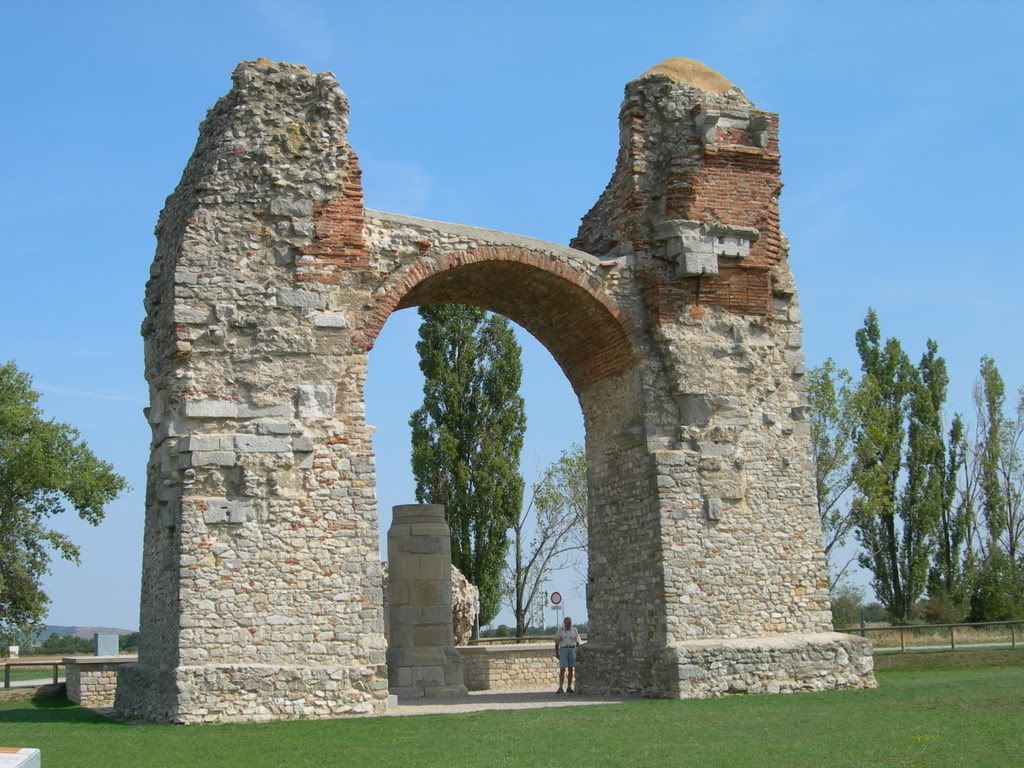
Heidentor aka "Pagan's Gate"


From an overall historical point of view, the Austrians could seem more like an old rival than a kindred people. The region of the eastern Alps and north of the Adriatic Sea has long been a tri-cross-cultural area between the Italo-Roman speaking world, the German-speaking world, and the Slavic-speaking world. For example, some parts of the north Balkans are more culturally and politically tied to Russia than to nearby Austria or the Veneto; in most ways, the tri-Veneto area has more in common with Rome than to St. Moritz; and in general, Austrians would tend to see themselves as being more ethnically tied to Scandinavia than to the nearby Venetians or Slovenes.

By the "two Austrias" I mean the original, and actually proper term "Austria," state within the old Langbard Kingdom... which was approximately the northeast Italian peninsula between Lombardy and the tri-Veneto area. Much later, the term "Austria" was clumsily resurrected as the English-language nickname for Österreich... or the Austria we know today.

Five thousand years ago, there would have been no difference at all between peoples of this region. They would have all been proto-European. The early stream of Teutonic migration formed the loosely defined Celtic culture, which later overran the general Lombardo-Venetian area. Still, approximately three thousand years ago, there was little difference. I'm guessing that this would have also included the north Balkans as well. Without going into the entire history of it.... a later "final push" of Teutonic tribes burst into Switzerland, Austria, Bavaria, Hungary, Bohemia, etc.... an equally intense migratory push of Slavic tribes moved into the Balkans... and--of course--the march of the Roman Empire overtook generally all of what is now "Italy."


The Roman province of "Raetia" was north of the Alps, even though the original "Raetians" were an ancient people who lived in a much larger area at one time. Although a clear lingo-ethnic divide was established between the three, each clearly influenced the other two. For example, in the Middle Ages when parts of the Friul were decimated by plagues, Slavic people were invited in to repopulate, and there is a clear Slavic influence in the Friulian dialect. Also in the Middle Ages, Cimbrians from Bavaria migrated into the Veneto, and many Cimbrian villages were still very linguistically and culturally distinct until the Fascist era. That particular brand of nationalism actually destroyed regional culture. One modern Camunian surname is "Mitterpergher," which is probably of Cimbrian origin, meaning "a person from the middle of the mountain"... and with the old-Bavarian spelling for "mountain person".... "pergher" rather than "berger."

During the Roman era, the Romans did most of the pushing, while the Germanic tribes took over that role in the early Middle Ages. Of course, the ancient territorial struggle between Germans and Slavs occurred over a very long time. In the first century, the Romans established a military base on the Danube River, in what is now Austria, called Carnuntum. This camp served as a trading center, as well as a political headquarters for further Roman expansion. This particular Celtic kingdom was called Noricum. Interestingly, in typical passive-aggressive Roman political style, they used a regional Celtic name.. which was apparently "Karnuntum" originally. I'm not absolutely certain, but it appears that a migration of northern Teutons--separate from the regional Celts--later invaded and destroyed Carnuntum.

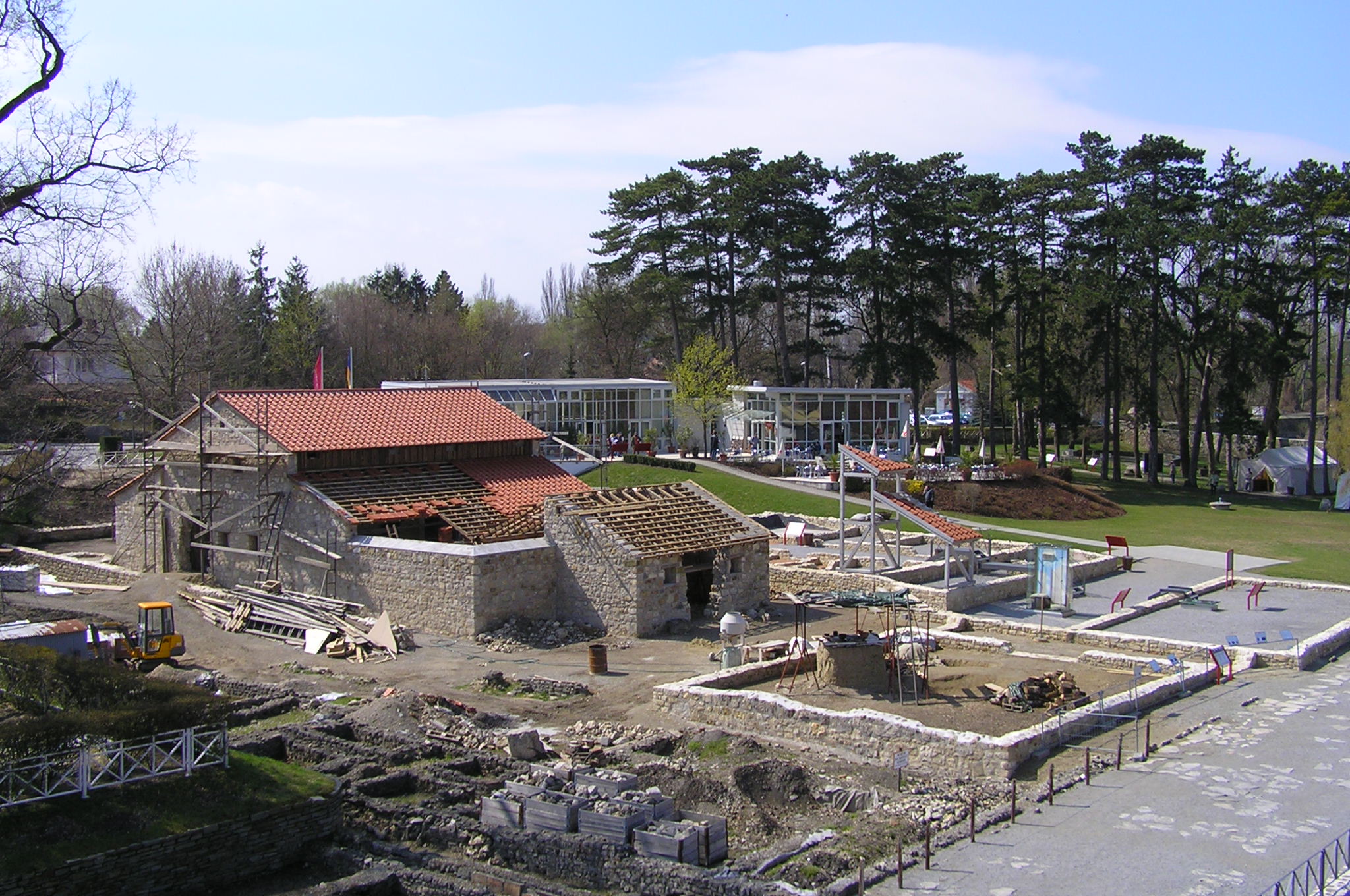
The Teutonic destruction of this Roman expansion was glorified in Guido von List's late 19th century book 'Carnuntum'. This book has not been translated into English to my knowledge, so I can't vouch for it in any way... although I would like to read it. For some reason, List was fascinated by what is apparently the leftover opening gate to Carnuntum... after the invading Teutons demolished the walls, or perhaps this occurred over a longer period. That leftover ruin is now called "Heidentor," or evidently "Pagan's Gate" in German. Ironically, "Pagan's Gate" could be seen as a monument to both the Romans and the Germans. To List, I think it represented a regional Austrian symbol of the glory of past victory. Also, there were many old legends surrounding the ruin. In List's day, historians and archeologists didn't know anything about ancient German-Celts. It actually got it's name in the Middle Ages because it was once thought to have been constructed by ancient pagans. Austria is now reconstructing Carnuntum if you would like to look that up.


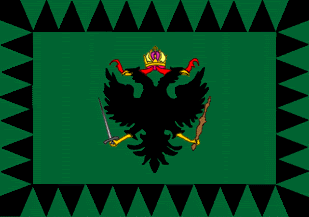
Flag of Lombardy-Venetia
Venus of Willendorf is a 27,000 to 32,000 year old artifact discovered in Austria. This little statue was carved from limestone not native to the area, and I believe was part of a much larger proto-European archetypical symbol of the "mother goddess." Also significant is its age, which would make it a counterpart to the "horned god." Because there are so many regional names for this goddess, which I think are linked back to the last glacial movement, I refer to her as "the Almother"... the proto-European equivalent to "the Alfather" Odin within old Teutonic culture. Among other things, the Almother was a fertility goddess in those early days. As strange as this may sound, there is ample evidence that the Roman goddess Diana of the Carnuntum era, and Venus of Willendorf, have a common origin going back to the last Ice Age. The Almother in the Italian peninsula, of course, going through many more manifestations over time. However, when half of Europe was covered under a massive continental ice sheet, the local manifestations of the mother goddess and the horned god would have been very likely of the same origin.

As far as the later colonial aggression of the Habsburgs... I mean lets face it, this was basically a soft dictatorship in which the average citizen of Austria-Hungary was not really responsible for national/monarchial policy anymore than a Roman citizen was responsible for Roman imperialism. The Austrian soldiers stationed in Lombardy-Venetia could, at times, be brutal... but probably not any more brutal than other occupations. It could be said with certainty that during pre-Roman times---which would have been pre-Teutonic and pre-Slavic times as well---this tri-cultural region would have been largely of the same people. Nobody there spoke Italian, German, or Slavic back then. Three very aggressive peoples came later and staked their territorial claim, and consequently the past etho-cultural dynamic was forgotten.

.

Thursday, December 23, 2010

An Interview with the Slavic Faith Association (by the Odinic Rite)

This was a text interview from either in late 2009 or early 2010, which was not conducted by us, but was published by the Odinic Rite. However, since the OR has removed it from their press service website, and we were able to retrieve it, we wanted to post it here so it would not be lost.

It's so interesting to examine how certain pre-Christian traditions overlapped one another. For example, how the old Gallic paganism (what we call "Cernism") overlapped with Odinism in the north and east or with the British Isles. Also, in this case, how Slavic paganism overlapped with Odinism. There are many common themes and symbols.

One interesting term used by the interviewee was "native believer," or anyone who believes in their specifically ancestral faith. Also interesting is a reference to the Celtic people who lived in Poland in ancient times. Especially around Slenza mountain, as he mentioned. Celtic roots are such a common thread among European peoples, hence the Celtic solar cross found all over from the ancient world.

An Interview with the Slavic Faith Association

OR: What is the name of your organization and what is it’s purpose? What are it’s aims?

SFA: The full and official name of our organization is The West – Slavic Denominational Association “Slavic Faith” (ZZW “Słowiańska Wiara”) but we’re commonly known as “Slavic Faith” or “Slavonic Faith”. Our aim is to deepen our Slavic beliefs, to create a unique philosophy of life and sustain our heritage. Over the past few years we have created an inimitable community of people dedicated to this aims.

OR: When was your organization formed?

SFA: Unofficially the organization was formed nearly 3 years ago. First ideas had been in our minds since about 2004. It took time to find other really devoted neopagans from all around Poland. I became a native-believer about 12 years ego. And I don’t remember such a successful enterprise over the previous decade. This has taught me to be patient.

OR: What are the beliefs of the Slavic Faith?

SFA: Let me quote the first point of the Denomination of Slavic Faith, the most important of our declarations:

“We believe in the Slavic Gods. We believe in the wisdom, goodness and beauty hidden under their countenances. Slavic Gods are the founts of life, power and happiness. Belief in our Gods is the heritage which we continue.”

OR: What are the values of the Slavic Faith?

SFA: The eighth point says:

“We are the defenders of our values, families and community. We defend the right to live on our own territory; we defend the space of our civilization. This duty arises from the most obvious laws of nature.”

The whole 12 paragraphs of Denomination of Slavic Faith is available here:

www.slowianskawiara.pl/wyznanieanglia.html

OR: What are some of the symbols used in Slavic Paganism?

SFA: We have just sent some documents to the polish ministry of internal affairs (MSWiA). these include lists of Slavic pagan symbols. We want to create official documents which specify these symbols and allow us to protect them by law, like the Christian cross, the Star of David or the Crescent. These symbols in most cases have a Solar origin. Some of those aren’t widely known, for e.g. God’s Hands. Picture below:

OR: What is the relevance of the fylfot/swastika to Slavic Paganism? What about the triskelion?

SFA: Of course the swastika was widely known and has been used in Poland for hundreds of years. It has appeared on house ornaments, carvings, costumes. Before World War Two it was even used as an ornament of distinction by some polish corps. But one of the Solar symbols is specially important for us. This symbol is the Swarzyca. A carved Swarzyca symbol appeared in a wall stone on the outside of a collegiate church in Kruszwica (central Poland). We think that this stone block was part of pagan temple from around a thousand years ago.

The Triskelion has also been used in Poland. The Triskelion from the picture below comes from Plock (Central Poland) from the XII century.

OR: What are your holy days and what do you do to celebrate them?

SFA: During the year we celebrate 5 of the biggest ceremonies in Poland. 4 of them are: the autumnal/ vernal equinox and the summer/winter solstice plus Ancestors Day which is around 1st November.

In addition to these five we also celebrate two more international festivals. The most important celebration in Slovakia is Peruns Day at midsummer and the Mokosz celebration in Czech Republic (autumn).

We also have some special events such as the swearing in of a new member of the association as well as Slavic weddings and many more. The Slavonic Faith organizes them all.

OR: What types of rituals do you perform?

SFA: Every celebration contains different types of rituals, prayers, songs and offerings.

Every stanza, every word, every gesture expressed by the priests (we call them Kaplan) has a deep meaning. It’s all based on mythology and our reflections. There is no place for improvisation. When someone is coming to our ceremony unprepared, he might only see… well I would say “poetic performance” and nothing more. But even for people without the necessary knowledge, those festivals always make a big impression.

OR: How important are your ancestors?

SFA: Two of the most important festivals in our calendar are: Slavic Spring (March equinox) and Ancestors Day. Ancestors are very important indeed and I’m not talking only about our community. For all Polish people, the memories of our ancestors is something extraordinarily important. There were so many thousands of martyrs in our history, that the memories of them are still alive. This has really nothing to compare with Western Europe. 1st November is National Ancestor Day. On this day all Polish people go to the graveyards to light candles on the tombs of relatives. If you could see satellite pictures from Poland on that day, it would looks like the whole country is burning.

OR: How important are your folk (tribe/people)?

SFA: I became a native believer because these things were the most important in my life. My community provides me with an environment where I can be a better person. I want to be a better person to help and to support my community.

OR: How are men and women viewed in Slavic Paganism?

SFA: "Slavic Faith is an Oak (symbol of male element in nature) and Linden (symbol of female element) braided together, it’s family it’s union”. Women and Men have different roles to fulfill. I’m glad there are more and more women in our community every year (it was always less women than men). In this way we pursue the full harmony. Of course we are against mixing up the natural roles of both sexes in society. We’re traditionalist.

OR: What do you believe about death and life after death?

SFA: I must refer again to the Denomination of Slavic Faith:

“We assume that the death of a man ends a certain stage. It is the condition of the transformation into a new form of existence. It is the shedding of the old, exhausted form. The noble and persistent ones will be rewarded with entering into continuously higher and higher levels of existence, more conscious, more significant and closer to the Gods.”

It’s a very complex problem (of course it is), but what we try to avoid is giving people simple answers. This is the Holy Book, read it, do what we tell you and you gonna be saved – at least that is how monotheistic religions work. We don’t know exactly what happens after death. The core of pagan philosophy is to keep trying to understand the world around us. We have to improve our knowledge. If you want achieve something you must refer to your strength and will, you won’t get anything valuable for free. That is why our religion is never gonna be very popular. We don’t give simple answers for everyone.

OR: Are there any sites which are particularly holy to Slavic Paganism? Could you tell us about them?

SFA: There is many of these places. But I wish to tell about one specific place. It’s the Slenza mountain, 30 km south of Wrocław. It is only 718 meters above see level, but it’s an absolutely magical place. It’s the pagan heart of Poland. It’s a place where you can find remnants of Celtic tribes, a place where pagan rituals have been performed for hundreds of years after the christening of Poland. And a place with a few thousand years old Solar Altar, even an armed cross carved on a big megalithic block hidden somewhere half-way up the Mountain. At the foot of the Slenza, the Slavic Faith organize ceremonies.

OR: How do you see Slavic Paganism in the modern world? Is it relevant to today?

SFA: It is relevant. Relevant for my community and in a cultural aspect relevant for my country. I would say it’s also relevant for Europe. European culture is slowly dying. Careless about heritage and our roots, Europe is becoming another cosmopolitan place. We are probably one of the last bastions of tradition and culture. And I always emphasize, that we are not pagans from Xth century. We are modern living people. We not trying to live the way people lived thousand years ago. We struggle with today’s problems and the neopagan religion helps us deal with the present.

OR: How does your faith affect your day-to-day life?

SFA: I’m one of the fifteen sworn members who are trustees. We have a lot to do. Sometimes the Slavic Faith is like a second job for me.

OR: What do you see for the future of your faith? What role will it play?

SFA: I think the future is bright for us. As an organization we are growing up quickly. We are going to buy some land which will let us organize celebrations without any permission. We want to publish books about our beliefs in the near future and also to persuade the government to enlarge the content of school books about paganism. We want to officially register the Slavic Faith as a legal entity. We also want to strengthen cooperation between pagans from all Slavic countries and also cooperate with other European native believers. (We were thinking about creating an international association to help people to cooperate all around Europe) And many other ideas.

OR: How does society react to you? You are based in a country that is known for it’s Catholicism. Does that create any problems? Have you ever had to deal with discrimination or persecution? If so how do you deal with it?

SFA: I must say, we never have any problems with Catholics. So far so good. We had one serious incident when the police didn’t allow us to celebrate the Spring Festival in a public park. (I don’t think that this was religious harassment, rather pure stupidity) But we know how to execute law, so this case is now being considered in the public prosecution service.

OR: Do you see any similarities between Slavic Paganism and Odinism? The mythology and/or Gods? The value systems? Etc.

SFA: I must say 90% of values represented by Odinism and Slavic Paganism are the same. Heroism, family, the maternal instinct, friendship, loyalty, bravery, honesty. It can’t be different, after all we descended from the same cultural circle . All differences are based on different cultural foundations. And of course these differences are very important. These differences make us unique. What is good for a Buddhist not necessarily must be good for an American. What is good for an American Indian is almost certainly wrong for a German. Monotheistic religions assume the all human kind is this same (at least ought to be). As children of one God we should learn from one holy book and have the same system of values. Sometimes it looks like some insane idea of mixing up everyone to create some amorphous cultural pulp. We should learn from each other, which doesn’t mean trampling out our own culture.

Similarities between Gods ? Well, there is so many common notions, and many of them are so evident. Thor – God of warriors, who sends thunder strokes from heaven. Slavonic God – Perun – God of warriors, who sends thunder strokes from heaven. I can give hundreds of these examples. Sometimes I’m really surprised by how much we have in common.

OR: Where can one find more information about your faith in general and your organization in particular?

SFA: Unfortunately there is no much English language literature about Slavic mythology. This is obviously the fault of the Slavs themselves. We know a huge number of really good scientific publications which have never been translated into English. As an association we have to take action; in the future we’ll translate the most valuable works into English and other European languages.

The simplest way to meet us is to click on: www.slavicfaith.com Here you can find the English (simplified) version of our website. For more news about our activities you can contact ours representatives via the e-mail addresses available on this webpage. We willingly provide information about our activities.

OR: Do you have anything you would like to add?

SFA: I really wish to see you one day at any of our festivals. As native believers we are a really small bunch of people. We don’t even compare to any of the monotheistic communions. That’s why it is so important to cooperate. And by cooperation I mean all kinds of intellectual, spiritual and moral support.

Slavic Faith Association

Przemysław Mrugacz – Executive Member

.