Showing posts with label Celtic. Show all posts

Monday, February 15, 2016

Incontri Tra/Montani: Acknowledging the importance of our shared pagan past II - "Camunian runes"


Although the ancient Camunni language and alphabet have been covered here before, there may be another way of looking at it, and in relation to the Camunian-Valtellinese link from a greater historical viewpoint. To start with, the ancient Camunic language was spoken and written in both the Val Camonica and the Valtellina, and I'm guessing that may well include the Bergamo Alps, Val Chiavenna, Val Sabbia, Val Trompia, and all the connecting valleys in the "Camuno-Valtellinese region." This ancient language was, of course, tied to the Camunian alphabet (see link). When viewing the characters of this alphabet, they appear more like Norse runes than the Phoenician-originated alphabet that we use today.

The actual origin of ancient regional scripts can be confusing since some of the various characters have been adopted back and forth, often via trade routes (Greeks, Romans, Etruscans, Phoenicians, Celts). I would guess that the forgotten trading centers and roads of the Celtic world were how many ancient scripts and characters were spread back and forth between the rather isolated Teutonic world and the Mediterranean world. In other words, a trading center along the southern coast of Gaul three thousand years ago would have Gauls coming into contact with Phoenicians for example. The Gauls had access to Scandinavia and the Teutonic world, and the Phoenicians had access to the known sea routes.

The Camunian alphabet shown in the above link, includes clear recognizable symbols from both north and south, as well as those unique to the ancient Camuns/Tellines. Also, this alphabet was taken from rock carvings; therefore the difference between the various alphabet characters and symbols of the spirit or earth, is more narrow than it would at first appear. For example, the very regional Camunian rose and characterizations of the god Cernunnos. Within the alphabet is a circle with a dot in the middle, a symbol of the sun, probably originating from the sun-worshiping Teutons. Also, it possibly may have been a symbol of Odin, and maybe Tyr before that. Its ultimate origin may have been Saturn when it was illuminated in the northern sky thousands of years ago.

Also included in this alphabet are both the Norse life and death runes, and a number of other other Norse runes. Since some of the Norse runes are of Etruscan origin, I believe that a few of these characters were both adapted directly from Etruscan script (lower Lombardy was within the Etruscan sphere of influence) and also probably from frequent contact with migrating Celts from the north who settled near them. At least the life/death runes and the sun-circle were of true Teutonic origin; and Cernunnos was Gaulish. In conclusion, these are runes! By definition, being both an alphabet and spiritual symbols, they are as "runic" as the Norse runes. I have a good idea of what my next art project will be.

 
2-21-16 ADDITION: Regarding the 1937 German Ahnenerbe institute expedition to the Val Camonica:

In 1937, the Ahnenerbe sent the archaeologist Franz Altheim and his wife, the photographer Erika Trautmann, to Val Camonica, to study prehistoric rock inscriptions. The two returned to Germany claiming that they had found traces of Nordic runes on the rocks, supposedly confirming that ancient Rome was originally founded by Nordic incomers. 

.

Friday, June 12, 2015

Mother of Times - Neopagan and Heathen music 1 of 3


Mother Of Times

KeepMusicPagan

Song: 'Mother Of Times'

Artist: Hagalaz' Runedance

Album: The Winds That Sang Of Midgard's Fate

Music: "Mother Of Times" by Hagalaz' Runedance (Google Play • iTunes • AmazonMP3 • eMusic)


Symphonic Metal - Feather and Skull 

Adrian von Ziegler

Facebook / iTunes / Bandcamp:
http://www.facebook.com/AdrianvonZiegler
http://itunes.apple.com/artist/adrian...
http://adrianvonziegler.bandcamp.com/

Real CD's / Twitter / Merchandise:
http://www.cdbaby.com/Artist/Adrianvo...
http://twitter.com/#!/AdrianVZiegler
http://adrianvonziegler.spreadshirt.com/

This is a Dark Orchestral Metal-Song I composed on Keyboard and Guitar.
The Meaning of the Title is free for Interpretation.

© Copyright of all Audio belongs to Adrian von Ziegler.

DISCLAIMER:
I do not own this picture, it was made by this great artist:
http://cesarts.deviantart.com/


Arkona- Odna

ElwethTaureedhel


Official site: http://www.arkona-russia.com

Facebook official site: https://www.facebook.com/arkonarussia

Odna (Alone) next of perfect new songs and one of beautiful pictures in the CD booklet (by Kris Verwimp) 


Music: "Odna" by Arkona (Google Play • iTunes • AmazonMP3)


**************************************************

Hagalaz' Runedance is from Germany, and they have produced a lot of great Heathen music. They're been around awhile, and they're not under the definition of "pagan black metal." Adrian von Ziegler is new I think, and hails from Switzerland. He also is not pagan metal, and composes various types of music.. often with a Continental Celtic theme. Arkona is a popular pagan metal band from Russia. Some of the European bands of these genres do get around. Several years ago I saw where Arkona was performing in San Francisco, but I wasn't able to attend. There are many sub-genres, so sorry if I conflate them in my terminology. Generally there's the black metal type and the spiritually-themed type; somewhat like the duel-personality of nature itself.

.

Friday, May 9, 2014

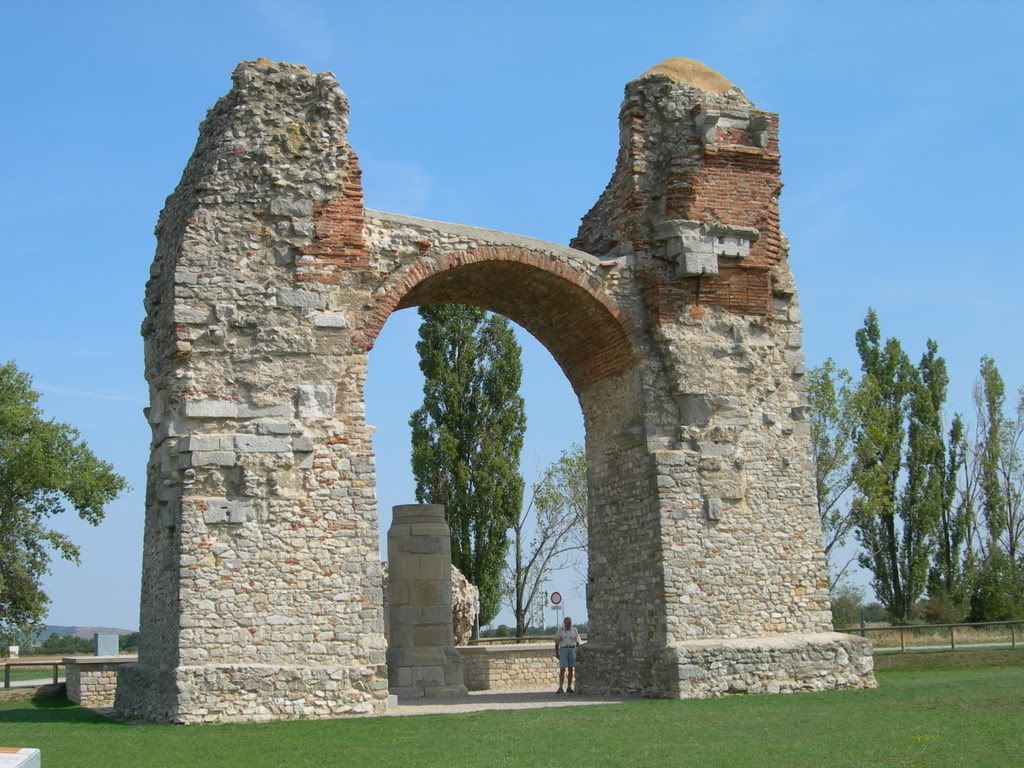
The Almother, Carnuntum, and "Pagan's Gate": The ancient cultural and spiritual overlap between the "two Austrias" and the north Balkans

Heidentor aka "Pagan's Gate"


From an overall historical point of view, the Austrians could seem more like an old rival than a kindred people. The region of the eastern Alps and north of the Adriatic Sea has long been a tri-cross-cultural area between the Italo-Roman speaking world, the German-speaking world, and the Slavic-speaking world. For example, some parts of the north Balkans are more culturally and politically tied to Russia than to nearby Austria or the Veneto; in most ways, the tri-Veneto area has more in common with Rome than to St. Moritz; and in general, Austrians would tend to see themselves as being more ethnically tied to Scandinavia than to the nearby Venetians or Slovenes.

By the "two Austrias" I mean the original, and actually proper term "Austria," state within the old Langbard Kingdom... which was approximately the northeast Italian peninsula between Lombardy and the tri-Veneto area. Much later, the term "Austria" was clumsily resurrected as the English-language nickname for Österreich... or the Austria we know today.

Five thousand years ago, there would have been no difference at all between peoples of this region. They would have all been proto-European. The early stream of Teutonic migration formed the loosely defined Celtic culture, which later overran the general Lombardo-Venetian area. Still, approximately three thousand years ago, there was little difference. I'm guessing that this would have also included the north Balkans as well. Without going into the entire history of it.... a later "final push" of Teutonic tribes burst into Switzerland, Austria, Bavaria, Hungary, Bohemia, etc.... an equally intense migratory push of Slavic tribes moved into the Balkans... and--of course--the march of the Roman Empire overtook generally all of what is now "Italy."


The Roman province of "Raetia" was north of the Alps, even though the original "Raetians" were an ancient people who lived in a much larger area at one time. Although a clear lingo-ethnic divide was established between the three, each clearly influenced the other two. For example, in the Middle Ages when parts of the Friul were decimated by plagues, Slavic people were invited in to repopulate, and there is a clear Slavic influence in the Friulian dialect. Also in the Middle Ages, Cimbrians from Bavaria migrated into the Veneto, and many Cimbrian villages were still very linguistically and culturally distinct until the Fascist era. That particular brand of nationalism actually destroyed regional culture. One modern Camunian surname is "Mitterpergher," which is probably of Cimbrian origin, meaning "a person from the middle of the mountain"... and with the old-Bavarian spelling for "mountain person".... "pergher" rather than "berger."

During the Roman era, the Romans did most of the pushing, while the Germanic tribes took over that role in the early Middle Ages. Of course, the ancient territorial struggle between Germans and Slavs occurred over a very long time. In the first century, the Romans established a military base on the Danube River, in what is now Austria, called Carnuntum. This camp served as a trading center, as well as a political headquarters for further Roman expansion. This particular Celtic kingdom was called Noricum. Interestingly, in typical passive-aggressive Roman political style, they used a regional Celtic name.. which was apparently "Karnuntum" originally. I'm not absolutely certain, but it appears that a migration of northern Teutons--separate from the regional Celts--later invaded and destroyed Carnuntum.

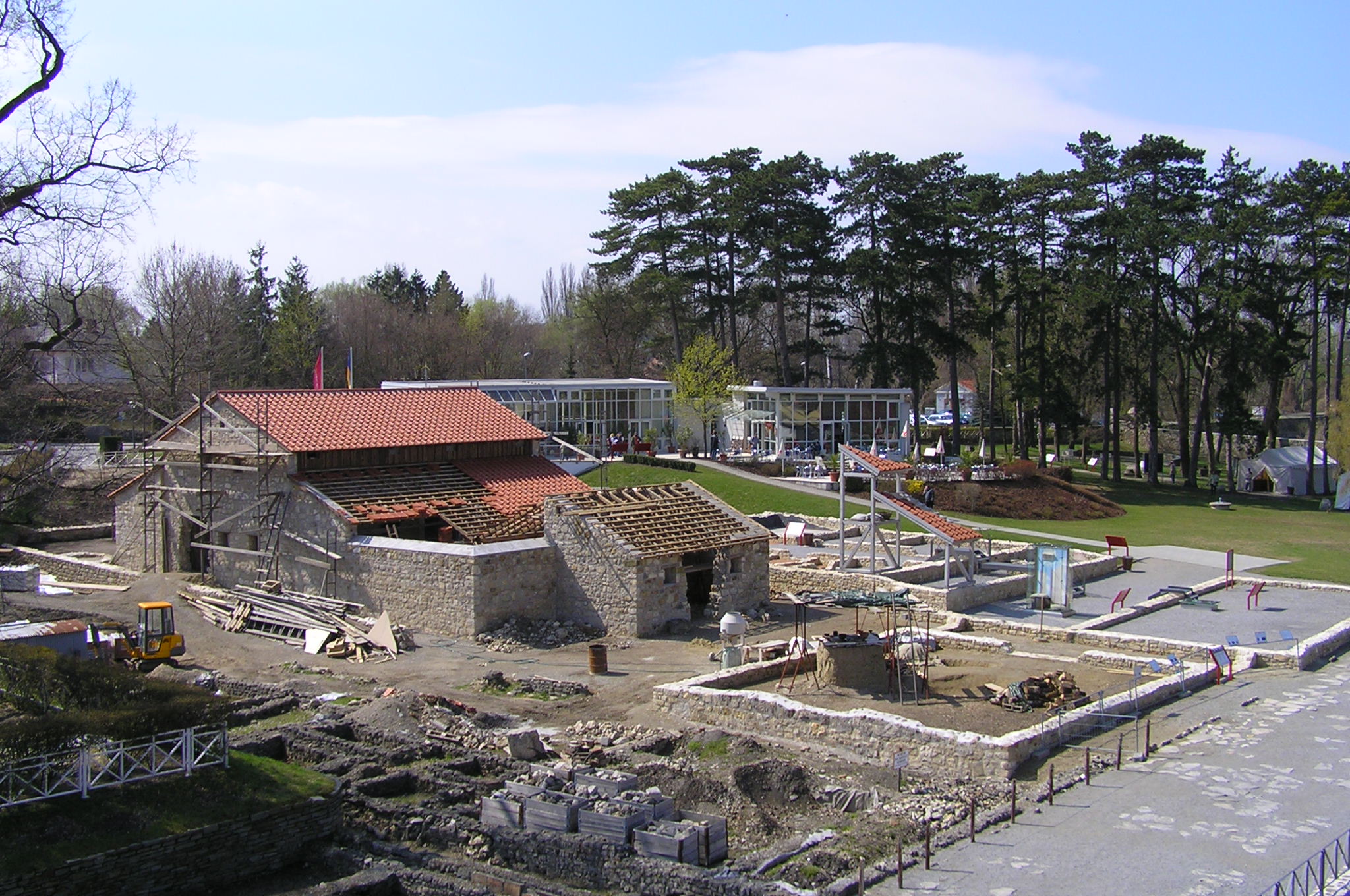
The Teutonic destruction of this Roman expansion was glorified in Guido von List's late 19th century book 'Carnuntum'. This book has not been translated into English to my knowledge, so I can't vouch for it in any way... although I would like to read it. For some reason, List was fascinated by what is apparently the leftover opening gate to Carnuntum... after the invading Teutons demolished the walls, or perhaps this occurred over a longer period. That leftover ruin is now called "Heidentor," or evidently "Pagan's Gate" in German. Ironically, "Pagan's Gate" could be seen as a monument to both the Romans and the Germans. To List, I think it represented a regional Austrian symbol of the glory of past victory. Also, there were many old legends surrounding the ruin. In List's day, historians and archeologists didn't know anything about ancient German-Celts. It actually got it's name in the Middle Ages because it was once thought to have been constructed by ancient pagans. Austria is now reconstructing Carnuntum if you would like to look that up.


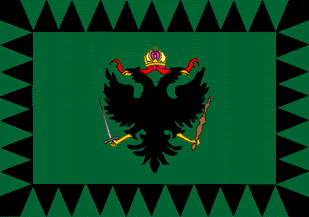
Flag of Lombardy-Venetia
Venus of Willendorf is a 27,000 to 32,000 year old artifact discovered in Austria. This little statue was carved from limestone not native to the area, and I believe was part of a much larger proto-European archetypical symbol of the "mother goddess." Also significant is its age, which would make it a counterpart to the "horned god." Because there are so many regional names for this goddess, which I think are linked back to the last glacial movement, I refer to her as "the Almother"... the proto-European equivalent to "the Alfather" Odin within old Teutonic culture. Among other things, the Almother was a fertility goddess in those early days. As strange as this may sound, there is ample evidence that the Roman goddess Diana of the Carnuntum era, and Venus of Willendorf, have a common origin going back to the last Ice Age. The Almother in the Italian peninsula, of course, going through many more manifestations over time. However, when half of Europe was covered under a massive continental ice sheet, the local manifestations of the mother goddess and the horned god would have been very likely of the same origin.

As far as the later colonial aggression of the Habsburgs... I mean lets face it, this was basically a soft dictatorship in which the average citizen of Austria-Hungary was not really responsible for national/monarchial policy anymore than a Roman citizen was responsible for Roman imperialism. The Austrian soldiers stationed in Lombardy-Venetia could, at times, be brutal... but probably not any more brutal than other occupations. It could be said with certainty that during pre-Roman times---which would have been pre-Teutonic and pre-Slavic times as well---this tri-cultural region would have been largely of the same people. Nobody there spoke Italian, German, or Slavic back then. Three very aggressive peoples came later and staked their territorial claim, and consequently the past etho-cultural dynamic was forgotten.

.

Sunday, June 2, 2013

Boudicca: Celtic Pagan Warrior Queen


Even though this is part of English history, I still thought it very applicable since Boudicca was an ancient "Celtic Briton," and apparently fiercely pagan (the Druidic tradition). She was a woman, a leader, a Celt, a warrior, and a pagan to remember.


.

Thursday, April 11, 2013

A few thoughts on Neo-Druidry

I don't know much about Neo-Druidry, but I have found it interesting to look at the activity of groups throughout the world. Much of it seems rather informal, at least in the past. In some places in the South, which was settled largely by Scots and Scotch-Irish long ago, I have at least heard that there has been Neo-Druidic gatherings going back to at least the 70s. It was interesting to listen to some old accounts of this from a couple of YouTubers, especially since this was nothing that one would see on Wikipedia. Maybe it's just me, but the image of loosely associated Neo-Druids gathering in a heavy wood and brush area during the Summers in the 70s is an interesting visual. Perhaps something from genetic memory comes alive in people.

Not a lot is actually known about the actual practices of the pre-Roman Druids, so there is more of a need to distinguish between Druidry and Neo-Druidry. I have gotten the impression that it may have began thousands of years ago, and was something of a fusion of early native magical traditions mixing with Odinic traditions from early incoming Teutonic tribal groups in Western Europe. Druids were mainly in what is today the British Isles, France, and Germany. I don't know if the German Druids were from the ancient Celtic south, or perhaps from an eastward spiritual migration. It's possible that there may have been some elements of Druidism in what is today the Netherlands, Belgium, Northern Spain, and Northern Italy, but there doesn't seem to be much proof of that.

The first attempts at reconstructionism were in Britain during the seventeenth and eighteenth centuries. Some Freemason Lodges there developed a Druidic style to them apparently. Winston Churchill was a Neo-Druid, which perhaps came via this type of "Druidic-Freemasonry." At one point all of the British Isles were more culturally if not ethnically unified, and heavily Druidic. One of the greatest women in history, Boudicca, must have been a Druid. I found one very interesting website from the UK called The Order of Bards, Ovates and Druids. I love podcasts, and they have a lot of them, which you can see the link at the bottom of the page. I've only listened to the first three. There are interviews, music, story-telling, and more. It's been awhile since I listened. There are also links to apparently connected Neo-Druid groups in France, Germany, the Netherlands, the Czech Republic, Portugal, and Italy; and it appears that there will be ones in Spain and Russia. There could have been some Druidic elements in all of those places, except Russia I think. But, there were Celts in Poland, so who knows. The Italian group is called L'Ordine dei Bardi, Ovati e Druidi. YouTube is a great place to get a perspective of both Druidry and Neo-Druidry.


4-15-13 NOTE: Upon further study, Druidism was apparently also present in a few places in Scandinavia; although the center seems to have been the British Isles and northern Gaul.

.

Saturday, December 1, 2012

The Mystic Druids


The Mystic Druids Part 1

From YouTube channel RealmOfDestiny

**************************************************

 One question is whether or not there was a Druidic culture in Cisalpine Gaul, as there was in Gaul and the British Isles. I still don't have the answer to this. From the incongruent information which I have looked at, my guess would be that there was some, more in the area of ancient Piedmont. For the most part, the more native spiritual traditions predominated.

My theory is that Druidism--and generally the Celts themselves--came about, over a long period of time, as a result of more paternally-oriented Teutonic-Odinic people merging with more maternally-oriented native Alpine and some Alpinized-Mediterranean people and their magical traditions. The sun people and the moon people.

**************************************************

The Mystic Druids Part 2


.

Sunday, October 28, 2012

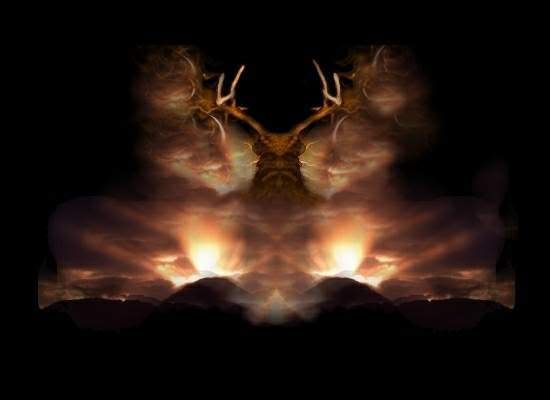
'Cernunnos' by Deep~Glade

Cernunnos

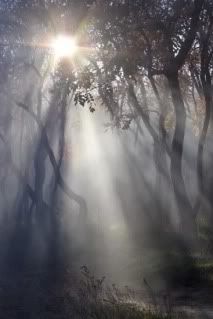
I first met Cernunnos deep in the Forest of Dean, alone and within a forest glade with the sun filtering down through thee gently rustling leaves, the humming insects but most of all the silence…and there He was! Some might say he was merely a mirage, a spark of my imagination but to me He was, and is, as real as you or I.

Who is Cernunnos? Well, popularly he is A Gaulish god associated with the stag and all hoofed animals, a god of fertility. abundance and the wild. He is probably best known from his image on the Gundestrup Cauldron, found in Denmark, and dating from between 200 BC and 300 AD. But scholars now believe that the name ‘Cernunnos’ doesn’t necessarily refer to one particular god but probably was a name given to many tribal gods that had similar characteristics in an attempt to ‘nationalize’ these gods under one name during Roman rule.

The name ‘Cernunnos’ is now generally believed to be derived from the proto-Indo-European root *krno, which also gives us the Gallic cernon, the Welsh carn, the Latin cornu and the Germanic *hurnaz, all of which mean ‘horn’. We can also see this root in words such as cornucopia and coronet (a small crown). As I’ve mentioned the most dramatic representation of Cernunnos appears on the Gundestrup Cauldron. Here he is seen sitting cross-legged, or crouching, holding a ram-headed serpent in one hand and a torc in the other, he also wears a torc himself and is surrounded by wild animals, including the wolf and the stag. Regarding his sitting position, many have believed that this rather buddha-like position suggests he is a god derived from the far East but when you think about the way the ancient Celts habitually sat we can see that this is merely a representation of their culture. Classical writers reported that the ancient Celtic Gauls did not sit on seats but were to be found sitting on the ground, either in a crouching position or cross-legged. The ram-headed serpent he holds aloft is of special significance as serpents were a symbol of fire coming from the earth; rebirth and renewal (note also that snakes shed their skins in entirety annually) and hibernate during the winter months and then become active again during the spring, thus seen as ‘coming alive’ again. Ram-headed serpents were always seen as symbols of chthonic wisdom and transformation. The torcs were always a sign of power and leadership in Celtic culture, so wearing one and also holding one shows us that Cernunnos was someone of great power and leadership. Leadership over whom? Well the fact that he is surrounded by wild animals gives us a good clue. Generally seen as a god ruling the wild spaces, and animals.


However, there is more to Cernunnos than just a fertility god. In fact he has more to do with hunting, culling, and purification through selection and sacrifice than fertility. He is equated with Herne the Hunter, great lord of Windsor Park who takes the spirits of the dead to the Underworld in what is known as ‘The Wild Hunt’, and also Gwyn ap Nudd and Arawn, who in the Mabinogion is the Lord of Annwn, the Underworld. Moreover, the Romans equated him with Dis Pater, not only a god of abundance but also god of death. So Cernunnos has mastery over the energies of nature but is also what is known as a psychopomp, a gate-keeper god who has province over leading souls of the dead to the underworld.

So what about my experience with Cernunnos? Well it moved me to write a poem in his honour as he has become one of my patron deities.


At the edge of the glade
In liminal places,
Arms branch out, feathered leaves
Rustling in a soft breeze….

Softly green merging with space
Antlers garlanded with grace,
and ‘Who am I?’ written on his face.

A question? Or a statement?
My heart flutters, my soul sings…
Poised on a moment of eternity,
All is within and without.

Was it a voice in my head?
An aching echo of a long distant past?
‘Know me’ he said,
‘Embrace me’ he echoed down the halls of emptiness.
My soul reaches out…

Out into the space, into the trees, into the leaves,
With green and golden tints.
Swallowed up by the coolness of dew,
The musky odour of hide,
The moist earthiness.

And we were one
Cernunnos and I.


Written by Deep Glade


References

Celtic Gods & Goddesses by R.J. Stewart
Horns of Power: Manifestations of the Horned God by David Rankine

Magic of the Celtic Gods & Goddesses by Carl McColman & Kathryn Hinds

.

Friday, October 7, 2011

Cernic poem


At the edge of the glade
In liminal places,
Arms branch out, feathered leaves
Rustling in a soft breeze.


Softly green merging with space
Antlers garlanded with grace,
and ‘Who am I?’ written on his face.


A question? Or a statement?
My heart flutters, my soul sings…
Poised on a moment of eternity,
All is within and without.


Was it a voice in my head?
An aching echo of a long distant past?
‘Know me’ it said,
‘Embrace me’ he echoed down the halls of emptiness. 
My soul reaches out…

Out into the space, into the trees, into the leaves,
With green and golden tints.
Swallowed up by the coolness of dew,
The musky odour of hide,
The moist earthiness.


And we were one – are one!
Cernunnos and I.


Written by Deep~Glade

 
[Humbly borrowed from A Sacred Path blog]


.

Monday, May 30, 2011

Are Cernunnos and Odin the same god?


The following text is from the book 'Creed of Iron' (McVan; 1997), from a chapter entitled 'Horned Gods' (pages 38-41). Odin, or Wotan, was the chief god of the ancient Teutonic tribes; while Cernunnos was one of, if not the chief god of the Gallic people. Could they have come from a common source? Certainly there was a lot of cultural interchange between Teutons and Gauls. The Triquetra symbol, which has long been associated with Celtic/Gallic cultures, was used by some ancient peoples as a symbol of Odin. But wasn't Odin a Teutonic god? One of the well-known ancient depictions of Cernunnos is located on Gotland Island in Scandinavia. But wasn't Scandinavia prime Odinic territory? You can decide for yourself. It's possible that the answer could lay somewhere in the middle, or perhaps a later connection developed after the very ancient Norse migrated westward into Northern Europe tens of thousands of years ago.

HORNED GODS

It was no accident that the Horned Gods of the early Aryan pagan religions of Europe would later become vilified under the alien religious domination of Christianity. It has always been the nature of rival ideologies to demonize and destroy their opposition, and the storm to power by Christianity was certainly no exception.

In the ancient religions and arcane mysteries horns on the human head were always symbolic of divinity and high wisdom. The horned human image was, also, representative of virility and fertility. It was most common and natural to find such characterizations on many of the early deities. Only after the rise and imposition of Christianity with vigilant campaigns of death and torture did the nature-based pagan religions subsequently withdraw from the world stage of history. In so doing, the great esoteric wisdom and horned gods of ancient days were concealed from the vulgar. This hidden knowledge was later to become defined as "occult," which simply means "hidden." Occultism is, therefore, the study of the hidden, dissolving the diabolical implications of the term.

Through anthropological research one can trace the line of horned god prototypes back to Paleolithic times. The earliest known representation of such a figure is found painted on the interior walls of the Caverne des Trois Frères in Ariège, France and dates to the late Paleolithic period. Among an assemblage of animals, a figure of a man is clothed in the skin of a stag and wearing on his head the antlers of a stag. It seems evident from the relative position of all the figures that the man is dominant and that he is in the act of performing a ceremony.

Though the stag-man is the most important of the horned figures of this early period, there are many smaller drawings of masked and horned men on bone and antler. The art of the Paleolithic period came to a sudden and complete end before the Neolithic era; it was utterly wiped out in Europe. The Neolithic Aryans have left few artistic remains; the surviving figures are predominantly female depictions.

It is into the Bronze Age when the horned figure flourished again among the Indo-European (Aryan) tribes of Egypt, Mesopotamia and India. Horned gods were quite common in Mesopotamia, as in Babylon and Assyria. The copper head found in the gold tombs of Ur is believed to be earlier than the first Egyptian dynasty, displaying an advanced stage of metal-working.

When Alexander the Great raised himself above the kings of the earth and declared himself a "god," he wore a horned head piece as a symbol of his divinity. Polytheism appears to have arisen among the Aryan cultures, East and West, with the amalgamation of tribes, each with its own gods. The horned deities were prevalent throughout Greece and Rome.

The greatest horned god of pagan Gaul was known as Cernunnos. Images of this archetype date back as far as 20,000 years ago. The English parlance was "Herne" (i.e. Wotan), or more colloquially, "Old Hornie." In Northern Europe the ancient equivalent "Neck" or "Nick" was used, meaning "spirit." He had such a hold on the affections of the people that the Christian church was forced to accept him. And he was canonized as St. Nicholas, who in Cornwall still retains his horns. Few are aware today that Santa Claus has traditional and symbolic roots to Wotan.

Over the ages the names of deities change, but the essence more often remains the same. In addition to Cernunnos, the ancient Celtic god "Belenus" (Bel) was the most widely worshipped in all of Gaul and is still celebrated in the traditional festival of Beltane. Classical writers associate him with Apollo.

The early Greeks inherited from Mesopotamia a nature-personified god. "Ouranos," which means sky. Ouranos was later usurped as sky-god by his son "Kronos," later to be replaced by "Zeus." The Celtic god "Lugus" was characterized as the "shining one." Caesar identified him with the Roman god "Mercury," who was often compared to Wotan. The ancient deity of the Teutonic tribes was the sky-father "Tyr" (Tiw, Tew, Teu), later to be replaced by Wotan.

Of all the Aryan gods who have come and gone, Wotan remains consistent. Although subtle at times, Wotan is always ready to reemerge from the collective psyche of the Aryan folk. He is a god of many facets, which has no doubt helped him to endure through the ever-changing times. As the horned god, Herne the Hunter, the wearing of the staghorns is symbolic of the Ur-force, the primal power of the forest, as characterized by the Uruz rune. Wotan as Herne shares other similar characteristics with Cernunnos, as Lord of the Forest and the Animals. Wotan is, also, the spirit behind the leaf-faced "Green Man," who is widely represented in the fine arts and architecture of European culture.

Herne was known to be the mystic guide of Robin Hood. Also, we have the connection of Wotan, personified as Merlin, who was mystical seer to King Arthur.

It is interesting to note as this point what is known as the "12 + 1" aspect of the ancient Aryan mysteries. Even Christianity used this gnostic numerology with the concept of Jesus and his 12 disciples. "Twelve plus one" personifies the sun and the twelve signs of the zodiac. Always there are either 12 prophets, 12 patriarchs or 12 disciples: King Arthur and the 12 Knights of the Round Table, Robin Hood and his 12 Merry Men, Charlemagne and his 12 Peers of the Supreme Council, Wotan and the 12 High Gods, Zeus and the 12 Great Gods of Olympus. The number 13 has profound gnostic significance. To give more examples, Romulus, who was both King and incarnate god to the Romans, went about surrounded by his 12 Lictors. And the Danish hero, Hrolf, was always accompanied by his 12 Berserks.

It is through an understanding of world history that Aryan man sees himself and by the comprehension of the mysteries that he knows himself. Wotanism is the incarnation of the indestructible collective soul of the Aryan race.

Since the first horned god was scrawled on the wall of a cave in pre-historic times, the blood essence of our ancestors has continued through the chain of the generations which bind us in a great linkage of destiny, beat and time.

.

Saturday, September 25, 2010

Cernic Rite video

This entry is in regards to the new Cernic Rite video on the Padanian-American League blog. We don't like to duplicate posts between blogs, and the video seemed more appropriate within the entire Gaulic concept, rather than only for Camunian heritage.

Because the Cernic tradition was such a big part of the Val Camonica, we always need to look at any move in this area. The video came out fairly well, with a great "Celtiberian" musical score entitled 'Lacrimae Lugus' by the Celto-Pagan Black Metal band the Crystalmoors from Cantabria, Spain. Lugus was an ancient Gallo-Celtic deity.

The video showed what was possible with some simple footage and a couple of simple props. It starts out with with some late-day footage of a wooded trail for two or three minutes, which was broken up with a couple of images of a real wild cat taken there. The fact that the cat was black with glowing eyes added to the video.

Next was some footage taken at almost twilight inside a dark heavily wooded walkway along a mountainside, which lasted a little over a minute. The lack of light gave it sort of a Black Forest effect. Actually it wasn't quite that dark, but it looked like it was from an old European horror film. The mountains in the distance weren't very visible due to the position of the sun and the dark overgrowth.

The third part, taken at twilight, was of some silvery Celtic-looking standing stones in a circle. The video shows the circle with the hills in the background, and the still visible sun just before dropping under the distant mountain. Totally unplanned, one single ray of sunbeam (at least from the camera perspective) pointed directly at the tallest stone, then the camera focuses in on a pendant of Cernunnos which was placed upon the top of that stone. That was a pleasant surprise.

The footage was then broken up by several striking images of the twilight landscape. After that, footage of tall trees against the dark twilight sky facing straight upwards, then spinning in a circle. It's easy to forget just how easy it is to get dizzy when a person spins in a circle like that. A slower spin would have done fine. This was followed by some footage of a walk through the tall trees which only came out marginally acceptable due to the lack of light, and thus the raw footage had to be cut down quite a bit.

Next some filming of the moon through the trees in a sideways direction while walking. Due to some fog and the lack of light, this wasn't as dramatic as hoped, and also had to be cut down. The footage was broken up by a few images, starting with a skunk. Only it's glowing eyes showed. There were a few flash images of the skunk, which were cut out. This was followed by a clear image of the moon through the trees.

What followed next was a scene of a flashlight in some dark woods which eventually illuminates a tree with a foot wide red Sun of the Alps symbol formed from red electrical tape. Those woods were so dark that the flashlight barely showed up, except when it was placed close to the tree trunk. The night, hills, trees, and foliage all blocked out any light. In other words, when the flashlight was turned off, there was almost 100% blackness. Sometimes, if there's some dense fog, the lights of the cities will illuminate the fog, which in turn illuminates the ground.

Following all that was a scene where the camera was coming out of the dark tunnel of brush into a grassy field, focusing and zeroing in on the moon. The tunnel effect didn't work due to the lack of light, but some good footage of the moon fighting its way through the clouds was obtained. Next were some images to brake up the footage a little. First was an image which was taken at the edge of the trail, back in civilization, of a white house cat. Only the eyes and some body outline showed up, which made the cat appear like an white owl. Actually there was much owl hooting along the trails, but it's very hard to get a picture of owls since they're rarely seen, so the ambiguous image was just left as "maybe an owl" for the viewer. Another image of the moon through the trees, and a more clear image of the Sun of the Alps PAL symbol on the tree, followed.

The video ends with the ending image of tree bark with a photo-shopped Sun of the Alps symbol and the words Padanian-American League on it. It finishes with about twenty-four seconds of the sound of night crickets, followed by about thirty-five seconds of sound from wind through the trees and a few occasional screeches from what were probably a few restless hawks perched in the trees. The video ends with one nice loud screech. Actually, the camera was rolling even though all you see is black.

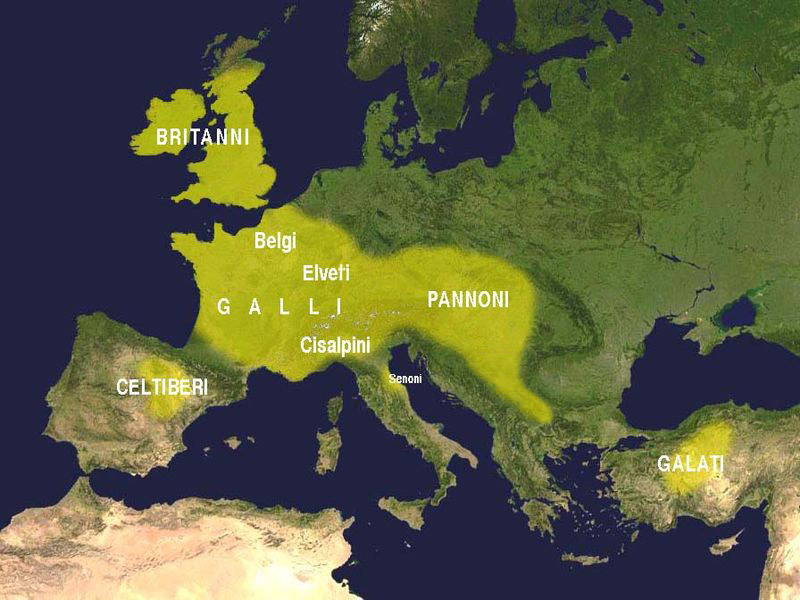
Hopefully this was a fitting tribute to the Cernic tradition, which is often associated with the night forest. One can imagine, over literally thousands of years, life in the unspoiled Alpine forests. It should be noted that the Cernic tradition was part of the history of ancient Gaul, southern Germany/Switzerland/Austria, Cisalpine Gaul including into Tuscany where there was Celtic settlement, and surprisingly in a few parts of Scandinavia. Probably the most impressive and famous Cernic carvings is located on Gotland Island, which is a small island in the Baltic Sea. It would be interesting to look into Cernic influence in Iberia and the Slavic regions, and even down towards Greece. There were Celtic settlements in ancient Turkey. Apparently there was no Cernism in the British Iles.

Lastly, as mentioned, this Cernic tradition linked places like Val Camonica with Gotland Island. One item which deserves a little more study is the torc, which is depicted in the right hand of Cernunnos. Again, although usually associated with the Celts, the torc ties in with the heritage of all Cernic peoples. The famous Roman statue 'The Dying Gaul' depicts a dying Gaulic warrior, naked except for the torc around his neck.

.

Tuesday, March 3, 2009

The Lepontii in Ancient Lombardy


This information was taken from a part of Insubria87's 'Early Celtic Presence in Northern Italy'

Lepontii

The Lepontii were an ancient people occupying portions of Rhaetia (in modern Switzerland and Italy) in the Alps during the time of the Roman conquest of that territory. The Lepontii have been variously described as a Celtic, Ligurian, Raetian, and Germanic tribe. However, most evidence, including recent archeological excavations, and their association with the 'Golasecca culture' of Northern Italy, indicates a Celtic origin although they might actually be an amalgamation of Raetians (who were of Etruscan origin) and Celts.


The chief town of the Lepontii was Oscela, now Domodossola, Italy, and their territory included the southern slopes of the St. Gotthard Pass and Simplon Pass, corresponding roughly to present-day Ossola and Ticino. See also: Lepontic language. This map of Rhaetia [1] shows the location of the Lepontic territory, in the south-western corner of Rhaetia. The area to the South, including what was to become the Insubrian capital Mediolanum (modern Milan), was Etruscan around 600-500 BC, when the Lepontii began writing tombstone inscriptions in their alphabet (one of several Etruscan-derived alphabets in the Rhaetian territory).

http://en.wikipedia.org/wiki/Lepontii


Lepontic language

Lepontic is an extinct Celtic language that was spoken in parts of Rhaetia and Cisalpine Gaul (today's Northern Italy) between 700 BC and 400 BC. Sometimes called Cisalpine Celtic, it is considered a dialect of the Gaulish language and thus a Continental Celtic language (Eska 1998).

The language is only known from a few inscriptions discovered that were written in the alphabet of Lugano, one of five main varieties of Northern Italic alphabets, derived from the Etruscan alphabet. These inscriptions were found in an area centered on Lugano, including Lago di Como and Lago Maggiore. Similar scripts were used for writing the Rhaetic and Venetic languages, and the Germanic runic alphabets probably derive from a script belonging to this group.


Lepontic was assimilated first by Gaulish, with the settlement of Gaulish tribes north of the River Po, and then by Latin, after the Roman Republic gained control over Gallia Cisalpina during the late second and first century BC.

The grouping of all of these inscriptions into a single Celtic language is disputed, and some (including specifically all of the older ones) are said to be in a non-Celtic language related to Ligurian (Whatmough 1933, Pisani 1964). Under this view, which was the prevailing view until about 1970, Lepontic is the correct name for the non-Celtic language, while the Celtic language is to be called Cisalpine Gaulish. Following Lejeune (1971), the consensus view became that Lepontic should be classified as a Celtic language, albeit possibly as divergent as Celtiberian, and in any case quite distinct from Cisalpine Gaulish. Only in recent years, there has been a tendency to identify Lepontic and Cisalpine Gaulish as one and the same language.

While the language is named after the tribe of the Lepontii, which occupied portions of ancient Rhaetia, specifically an Alpine area straddling modern Switzerland and Italy and bordering Cisalpine Gaul, the term is currently used by many Celticists to apply to all Celtic dialects of ancient Italy. This usage is disputed by those who continue to view the Lepontii as one of several indigenous pre-Roman tribes of the Alps, quite distinct from the Gauls who invaded the plains of Northern Italy in historical times.

The older Lepontic inscriptions date back to before the 5th century BC, the item from Castelletto Ticino being dated at the 6th century BC and that from Sesto Calende possibly being from the 7th century BC (Prosdocimi, 1991). The people who made these inscriptions are nowadays identified with the Golasecca culture, which has been ascribed a Celtic identity (De Marinis, 1991). The extinction date for Lepontic is only inferred by the absence of later inscriptions.

http://en.wikipedia.org/wiki/Lepontic_language