Showing posts with label Cernism. Show all posts

Thursday, October 20, 2011

Loose Ends: Valcamonica, Cernunnos, Wicca, Druids, and the Pentagram - Part II


Witches: Part 1 (Part 2 below)

This is an episode of Lifetime's Intimate Portrait: Witches

This I believe aired around mid 90's. I don't remember when I taped it. It's a bit jumpy in a few parts. This was taped originally on VHS (remember them?!)

I cropped out the "Historical" parts. Many of the info is outdated. I tried mostly to get the interviews with Modern day Witches & Wiccans.

However I don't agree or support all of the info. I think this would be interesting for those who follow the teachings of Laurie Cabot, Z. Budapest and Janet Farrar.


**************************************************


The original 'Loose Ends: Valcamonica, Cernunnos, Wicca, Druids, and the Pentagram' was posted on March 5, 2009; and it has been the most popular post from this blog by a country mile! Out of over 10,500 page views, most of that fairly recent, that one post accounts for about 20% of the total. So I think it's only logical to update some of the knowledge. The original was an attempt to tie-in various concepts. It was more of a musing of the subjects. Maybe we can do better.

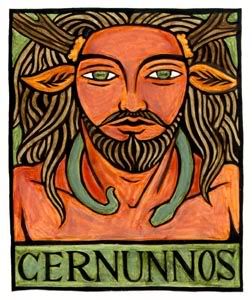
To start with, the "Cernic tradition"--after many centuries of often brutal state and church-sponsored religious condemnation--developed into what is referred to as "European witchcraft." The idea of "Wicca" is a recent development; and one which does not necessarily adhere to it's parent "Celtic paganism." By "Celtic" I mean the spiritual-traditions of the loosely-connected pre-Roman Celtic cultures who lived, at one time or another, from Ireland to Turkey and from Poland to Spain. It seems pretty clear that the Cernic spiritual hub was located in Gaul, and Cisalpine Gaul, but it may have sprung from the Hallstatt culture in what is today south Germany. Horned or antlered images can be traced back as far as 20,000 years ago in central Europe. It seems at least possible that the origins of this spiritual tradition may date back with the early proto-Europeans who predated other Indo-European peoples.

Recent archeology is showing more and more that the ancient Celts built roads which served as trade routes across Europe; from marketplace to marketplace; from community to community. Cernic spiritual concepts likely migrated in this way, and mixed with other spiritual traditions on those far off places. For example, the ancient Celts, in what is today England and Wales, apparently made no reference in art or symbology regarding Cernunnos; but they developed their own concept of the "horned god." It seems to be true that females, special females, were generally the high priestesses of this earth-based spiritual traditon. The forest was their church.
Wicca is a universalist concept developed by Freemasons in the United Kingdom; and the pentagram they adopted goes back to Sumeria. However, there are references to the pentagram within European witchcraft which can be traced back about five centuries. Having "borrowed" many things from other pagan religions worldwide, Wicca only vaguely resembles European witchcraft or Celtic paganism. For example, the ancient Egyptian goddess Isis had nothing whatsoever to do with Cernunnos. It's fun to compare certain traditions, but to splice them together only accomplishes to spoil their uniqueness. Also, modern politics are no place to inject religion; and many well-intentioned people are turned off by politically-minded people within any religion.

But getting back to the Cernic tradition of the ancient world; it's not entirely clear how this spiritual tradition interacted with the Druidic spiritual tradition which was also Celtic in origin. The Druids lived in ancient Gaul as well, although it appears that most of the high priests of Druidism were males. It was also an earth-based spiritual tradition, which also existed in what is now the British Isles. It appears that the Cernic traditions merged with the Teutonic Wotanist traditions in some areas. I haven't seen evidence of how Druidic ideas may have interacted with the Wotanists, but I would guess that all of these beliefs merged in some places. I don't think that today it's pragmatic to open up ancient feuds; but there is absolutely no doubt that Christianity fully replaced the Cernic, Druidic, Wotanist, and many other earth-based rites; either by coercion or force. It was not just the Romans who perpetrated this policy either.

 It should be mentioned that Cernunnos was not the only Celto-Gaulish god, and that there were other gods and goddesses like there is in Odinism; but Cernunnos (pronounced as "KER-new-nos") was the chief one in most places (just as Odin is in Odinism). Some of the dark symbolism in European witchcraft is probably a result of it having to exist underground for so long; but some of it may have always existed. "Dark imagery" does not necessarily reflect "evil." The ancient forests were often dark places. It seems obvious to me that this is mainly just a reflection of nature. To the ancients, the night was a scary place; and they may have counted on Cernunnos to protect them. Any hike at night in a remote natural area will give us an instant connection to that world.

It seems obvious to me that the rightful daughters of Cern today, would be the most logical ones to access "Cernism" and serve as its high priestesses. To the ancient Cernic pagans, the family was at the heart of their culture; and the woman was the head of the household. Not the "head" like she was bossing around her husband, but boss of the "household" while he was away hunting, providing, or at war. This one element of their culture marginally found it's way into later Christian societies, which had entirely different views regarding men and women. The Cernic male represented "law"; while the Cernic female represented "justice." Cernic women were the spiritual leaders of their folk societies. They were at the center of everything.

Cernic women were very strong-women, not "Feminists," which is an entirely modern political construct which attempts to make females more masculine. There were "women warriors" in Cernic societies. They weren't like guys, but simply were just big strong gals, period. Obviously there are some women who could wipe the floor up with weaker men; and these women were pragmatically allowed to serve the tribe in battle. It was all about the family, clan, and tribe... maybe sometimes of a "tribal federation," or loosely their nation.

It's important to compare the Cernic societies with the Odinic societies. Of course, the Cernic culture had it's own mythology, just like Odinism. There are many similarities. Odinism may have developed a little more of a "heroic ethic," which seems to remind one a little more of "the masculine"; while Cernism, although in many ways a "warrior society," somehow seemed to be a little bit more "down to earth," and reminds one a little more of "the feminine." As to where the Druids fit into all of this, I don't know. Some Celtic societies seemed to be Druidic, while others seemed to have been Cernic. I think it's also very important to remember that Cernism influenced other tribal groups. For example, some ancient Norse seemed to be almost Cernic, or at least strongly influenced by them.

Obviously, the first 'Loose Ends" article was from the point of view of historical Camunian culture. The Camunians had not surrendered their native beliefs by the sixteenth century, which is pretty remarkable. However, the Val Camonica witch trials were just two of many such events in Europe during the Middle Ages, and after. In all of these tragic events, think of the great women and men who died. They were martyrs who aren't even given the proper status of martyrs. In the earlier article, I had stated that I believed that the witch trials were exaggerated; and they probably were in most locations in Europe and the American colonies. However, in some locations it was pretty extreme, as the last link above reflects in its 'Counting the Witch Hunt' graph by Ronald Hutton. It's hard to argue with those numbers.

.

Tuesday, June 21, 2011

Cernism: The Social Remaking of Wicca

There are a lot of ideas that need to be incorporated in this post, so I will just enter them in no particular order to speak of. To start with, "Cernism" is a pagan tradition that probably ties more of Indo-European cultures together than does Odinism. Celto-Gallic peoples lived in ancient France, Germany, the all of the British Isles, Iberia, the Italian peninsula, Scandinavia (Gotland Island), and even the Slavic countries (ex. Poland) and Greece (the "Keltoi). Any European-descended person could lay claim to being an heir to the Cernic tradition. It seems to be at least a stronger cultural-geographical bond than is Odinism. Although the name of the male stag god "Cernunnos" may have existed primarily in central Europe and down to Cisalpine Gaul, expressions of it were clearly found elsewhere.

When Gerald Gardner and company started "Wicca," they set out to create a universalist faith which mixed Celtic spiritual traditions with traditions outside of Europe (ex. Egyptian goddess "Isis" as an idol). It probably should be pointed out that the pentagram had been adopted into Euro-pagan circles for a few centuries. To add insult to injury, many modern Wiccans have used their religion as a political front to what they see as male-dominated, conservative Christianity. To quickly sum all that up, there has been a large amount of deliberate unfairness and slander from both sides and on many levels.

We could just ignore all of that and do our own thing, but the one strong blowback from all of this is the real or perceived rivalry between Christians and pagans. Greek communities are overwhelmingly of the Greek Orthodox denomination of Christianity. However, as folkish people they have no problem honoring their pagan ancestral path. That is a model which we should follow. Even if a person was of Celto-Gallic descent, and was a strong Catholic, why would they have any problem merely partaking in a ceremony which honors the tradition of their ancestors? They wouldn't need to take any oath, or "worship" anything. There can be a distinction between a "religion" and a "spiritual tradition." Of course there will be those who will take it much more seriously, and that could be the one difference between the modern incarnations of the Cernic tradition and the gods of ancient Greece. I don't know of anyone who considers themselves a believer of the ancient Greek gods, although "Gaia" is often floated around by the global elite/universalist crowd as part of a political agenda.

The following is a book review from Amazon.com user "templar357" regarding the book 'Wicca for Men' (Drew; 2000). Some of the latter part doesn't support our emerging position very well, from either our Christian or pagan ideal consensus, but it does bring up a lot of food for thought, and it accurately describes the current status quo:

I find myself trying to break away from the unforgiving, intolerant religion of my fathers, only to be shunned by the largest, fastest growing pagan religion in the U.S. It seems that after several millennia of abuse from the "patriarchal" religions, women have taken the only religion that does not oppress them or make them look like Jezebels and tried to make it their own. Thing is, they made it almost exclusively their own, projecting the same attitude toward men as has been shown to them for so long. Well, this book sets the record straight by pointing out that there is a room a plenty at Gods (esses) table. This book embraces all that is male (The Horned God) and introduces HOW TO EMBRACE THE GODESS AS WELL. This book is a true reconciliation between the two sexes. I started reading this book to affirm my place in the Wiccan religion. Only to find out it had already been done, and now know the real difference between a REAL witch, and these scissor-happy, man hating, neo-feminist "earth mothers" I always seem to run into. This book not only points out the incorrect way many Wiccan covens practice this religion, but also assures the curious and spiritually destitute man that Wicca, in fact, means MALE WITCH. (Sorry, ladies) However, this book takes it one-step further. I now realize the true beauty in seeing a gender duality in divinity because I found out that the Goddess (portion of Divinity seen as female) has never hated me nearly as much as I feared her.

Guys, I am happy to report that SHE IS NOT A THREAT and will welcome you with arms open, not closed. She loves and cares for our father and the reverse is true. THEY ARE THE SAME. I feel the Gods rage in this book as he explains through the author the hurt and outrage he feels to this day when it came to be that man had forsaken his wife, his partner. His best friend, his soul mate. OUR MOTHER.

Now that I have digested and assimilated this new philosophy and religion, I see God and myself in a very different light. In doing so, certain things have happened almost literally overnight.

I have come to know a peace I have never known before and it is through tears of joy that I can now release a lifetime of bigotry, sexism, rage, hate and pain. Simply put:

The Goddess has helped me heal.

Now I understand the conceptual philosophy of gender duality attributed to all things divine and profane, I feel that I know now who my mother is.

And she is so...very...beautiful.

I have been shown that to accept my mother DOES NOT MEAN I MUST FORSAKE MY FATHER. It is the piece missing from the myriad of one-side confusion myself and others have been raised to believe. I now see women in a completely different light as a result of seeing myself differently the product of seeing The Almighty differently. This book IS NOT MEANT as an affirmation for men to reassure them that their conception of divinity must be REPLACED, but EXPANDED. Things began to click with me instantly while Ishtar smiled. All she wanted was for me to know who she was. Moreover, to know that although I may have never known WHO or WHAT she was, she has never forgotten who I AM. More is the pity. Better late than never I suppose.

This book is a calling to all male pagans Wiccan and non-Wiccan alike, to now join our sisters in reuniting the planet as a family and not strangers. Though I would venture to say that a reference to the Goddess as the "consort" to the God would be met with equal disdain from the True Wiccan Woman and earth-mother alike, it also serves to show them how equally distasteful it is to us to have the God referred to by the same title. Unless of course, you mean consort as "partner," that is.

That IS what you meant, right?

THIS BOOK IS FOR MEN AND WOMEN BOTH. To enlighten the man about the Ways of the Wood, while setting the record straight with our fairer counterparts as to equality and "practice what you preach." Ladies, I love you all. Please know that we (men) are coming from the same battle torn, madhouse that is modern religion and we are just as bruised, bloody and hurting as you were when you left. We are glad you have capitalized on a little known secret and exposing it to the world, but please remember that those who started this ball rolling in the 20th century meant to re surface something beautiful and a LOT of those pioneers...

WERE MEN. Buckland and Gardener to name but a few. Remember the witch who helped repeal the anti-witchcraft laws of England in 1951? O.K. that, my dearest sisters was a MAN. Quite a few of these guys were in fact, freemasons, like myself. And it is by no means a coincidence that our initiation rituals are so similar. No coincidence at all, ladies. So when you see one of us staggering toward your camp, hungry, beaten and torn, understand that a kind word, a hot meal and a warm bed can do more for a person in that condition (male or female) than a closed door ever could. See what I have come to understand is that the God (or the conception thereof) did not do this to all of us. HIS INSANE FOLLWERS DID. They took off his horns and replaced them with guns. THIS IS NOT THE GOD. This wrongful conception of masculinity must stop and this book subtly points that out. Even if you are a soldier and have been to war, you want to show me how brave you are?

Try changing a diaper tough guy. Lets see how bad you REALLY are.

We are not just soldiers and conquerors. We are husbands, fathers, lovers and protectors. We are the hunter, the farmer and the Holy Man. When did we loose sight of our roles and responsibilities AS MEN?

When did the farmer become the executive, the warrior a soldier? When did the hunter become a poacher, and the father a deadbeat dad? When did the husband become a tyrant and the father become just a picture on somebody's wall. But most importantly:

What about Mom?

WHEN DID WE KICK HER OUT OF THE HOUSE?

When we did that, we kicked out our wives and mothers as well, tossing out the baby with the bathwater, turning our women into slaves and thus begun the Ruination of the World.

Read this book. Because it can change yours.

Blessed Be :-}

In the Cernic tradition, it appears that the female is largely in charge of facilitating spiritual matters on this planet. I don't think that is an innate rule, but the historical record seems pretty clear on that point. As to how this idea merges with Druidic traditions, which were present in ancient Gaul, I have no idea. It's a complete mystery to me. I do seem to get the idea, from reading a bit about Cernism and possible related traditions, that the Cernic tradition strongly influenced other regions in the ancient world, even if those regions were still primarily of a different pagan tradition. For example, within regions which were strongly Wotanist in faith, there seems to be almost like an alternate spirituality which sounds very similar to Cernism; and yes, it seemed to be very female-oriented. There also seemed to be a strong tolerance between different pagan traditions in pre-Christian Europe. This is perhaps because they may have overlapped each other, and many ideas were mixed together. In the book 'Creed of Iron' (McVan; 1997), Ron McVan argues that "Wotanism" was really the main stem of European paganism. I would argue that Cernism, or forms of it, were more widespread in pre-Christian Europe. Even Stregheria shares much in common with Cernism, and like many expressions of Ásatrú, it shares common origins. Cernism is more purely European than "Northern European Wotanism."

"Ásatrú" is another term for Wotanism or Odinism. Some denominations of Ásatrú appear to be following something much closer to Cernism than to Wotanism. Some followers of Ásatrú appear to be following almost like a form of "folkish Wicca," and that leads us to the key to the entire "Cernic Rite movement." The reformation of the very ancient European pagan tradition, which was present all over ancient Europe for tens of thousands of years. I mean more ancient than the Norse or Mediterranean Europeans, of whom many adopted these traditions after their migration eastward many thousands of years ago. What we are really talking about here is a spiritual tradition which goes back forty thousand years or longer.

Lastly, as part of this, and this is the most important point of all, the "Christian vs. pagan" thing needs to finally be put to rest; or at the very least, those unreasonable Christians and Wiccans should be kept away at a safe distance. To be very clear, I am referring specifically to the unreasonable, not to all Christians and Wiccans. In fact, this milieu could be fertile ground to begin this movement. Males and females should be considered as equals, but we need to accept the fact that at least a few exceptional folkish women will be the chief "facilitators" of spiritual matters and ceremonies, as well as the figureheads of small and large groups.

Not to get too far ahead of ourselves, but it would be nice to select a word to be the equivalent of what "hearth" is to Odinism, or to what a "coven" is to Wicca. In other words, a word for a small community of Cernic native believers. I was thinking of perhaps calling it a "bodina," which an ancient Gallic word which seems to mean the same thing as "midgard." Bodina is the origin for the modern French word "borne," which is translated as "milestone" or "landmark," or even "frontier." It almost sounds like a world which could describe the general area that you live in.

.

Thursday, February 24, 2011

Cernic tradition in Iowa


I am borrowing the text of this entry from a blog called The Circle of Shadows. I just wanted to make certain that, in this case, proper credit was given to the author and/or coven. I had originally wanted to post this December 3, 2010 post last Yule, and had sent an e-mail which wasn't responded to.

This is one of the few references to a present day pagan tradition/ritual which actually refers to its Cernic origin. The blog goes in a little bit of a different direction than we usually think of as being Cernist, but sometimes things take time to develop; and to develop a consensus among the larger body of people. It needs some time.


The Coven Ritual for Yuletide 2010 (Cernunnos and the Crone)

December 3, 2010

So, over the past couple of weeks I and few friends of mine have been working on a ritual for this Yuletide season, which falls on December 21, 2010 and also falls on the night of the Full Moon. It will be a very special night since it falls on the rare occaison (though certainly not unheard of) that a Witches Sabbat and Esbat (moon ritual) fall on the same night.

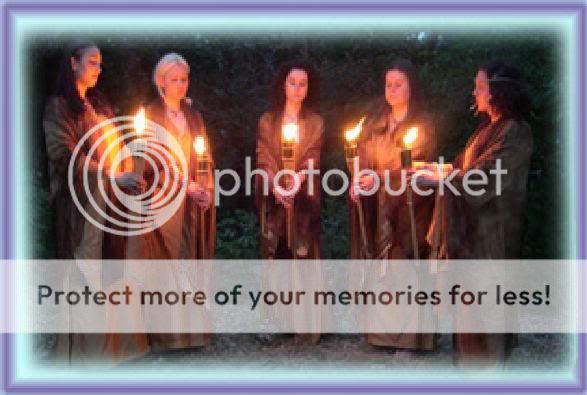
I think one of the great things about our coven so far is that we have managed to put our personal ideas, differences, and preferences aside and just focus on the celebration of the pagan holidays. Our rituals have been generic enough to suit all members, yet they also retain their meaning at the same time. The coven I am now calling the "Circle of Shadows" first met formally on November 7, 2010, the purpose was the observence of Samhain 2010 which actually took place one week prior to our formal observence due to the illness of a member. Upon the conclusion of this meeting we all seemed to feel that this organized grotto of witchcraft was indeed worth pursuing. I think we all feel as though the ritual itself could have been better, but given the lack of preparation (only a couple of weeks) hindered how effective the ritual could have been.

With my personal preferences of more dark sided occultism, and the preferences of other members for a lighter side to such things I feel that we have (in most cases thus far) blended both ideas (and those in between) well. And we all seem to get along with one another very well and have a chemistry that is still developing at this point, but still ever present none the less.

As the high priest at our Samhain meeting and now the High Priest of our Yuletide meeting, we seem to have many obstacles to work through. But yet this Yuletide is the darkest night of the year and thus very mportant to myself. And it is very important to the other members, each for different reasons but we each are able to to afford the the other members thier own importance and celebrate the REBIRTH OF THE SUN. Which is, after all the most important aspect of this holiday!

Om, Sarva Buddha Dakini, Hri Mama Sakta Soha...

Happy Yuletide to all!

Raven Brimstone

.

Saturday, September 25, 2010

Cernic Rite video

This entry is in regards to the new Cernic Rite video on the Padanian-American League blog. We don't like to duplicate posts between blogs, and the video seemed more appropriate within the entire Gaulic concept, rather than only for Camunian heritage.

Because the Cernic tradition was such a big part of the Val Camonica, we always need to look at any move in this area. The video came out fairly well, with a great "Celtiberian" musical score entitled 'Lacrimae Lugus' by the Celto-Pagan Black Metal band the Crystalmoors from Cantabria, Spain. Lugus was an ancient Gallo-Celtic deity.

The video showed what was possible with some simple footage and a couple of simple props. It starts out with with some late-day footage of a wooded trail for two or three minutes, which was broken up with a couple of images of a real wild cat taken there. The fact that the cat was black with glowing eyes added to the video.

Next was some footage taken at almost twilight inside a dark heavily wooded walkway along a mountainside, which lasted a little over a minute. The lack of light gave it sort of a Black Forest effect. Actually it wasn't quite that dark, but it looked like it was from an old European horror film. The mountains in the distance weren't very visible due to the position of the sun and the dark overgrowth.

The third part, taken at twilight, was of some silvery Celtic-looking standing stones in a circle. The video shows the circle with the hills in the background, and the still visible sun just before dropping under the distant mountain. Totally unplanned, one single ray of sunbeam (at least from the camera perspective) pointed directly at the tallest stone, then the camera focuses in on a pendant of Cernunnos which was placed upon the top of that stone. That was a pleasant surprise.

The footage was then broken up by several striking images of the twilight landscape. After that, footage of tall trees against the dark twilight sky facing straight upwards, then spinning in a circle. It's easy to forget just how easy it is to get dizzy when a person spins in a circle like that. A slower spin would have done fine. This was followed by some footage of a walk through the tall trees which only came out marginally acceptable due to the lack of light, and thus the raw footage had to be cut down quite a bit.

Next some filming of the moon through the trees in a sideways direction while walking. Due to some fog and the lack of light, this wasn't as dramatic as hoped, and also had to be cut down. The footage was broken up by a few images, starting with a skunk. Only it's glowing eyes showed. There were a few flash images of the skunk, which were cut out. This was followed by a clear image of the moon through the trees.

What followed next was a scene of a flashlight in some dark woods which eventually illuminates a tree with a foot wide red Sun of the Alps symbol formed from red electrical tape. Those woods were so dark that the flashlight barely showed up, except when it was placed close to the tree trunk. The night, hills, trees, and foliage all blocked out any light. In other words, when the flashlight was turned off, there was almost 100% blackness. Sometimes, if there's some dense fog, the lights of the cities will illuminate the fog, which in turn illuminates the ground.

Following all that was a scene where the camera was coming out of the dark tunnel of brush into a grassy field, focusing and zeroing in on the moon. The tunnel effect didn't work due to the lack of light, but some good footage of the moon fighting its way through the clouds was obtained. Next were some images to brake up the footage a little. First was an image which was taken at the edge of the trail, back in civilization, of a white house cat. Only the eyes and some body outline showed up, which made the cat appear like an white owl. Actually there was much owl hooting along the trails, but it's very hard to get a picture of owls since they're rarely seen, so the ambiguous image was just left as "maybe an owl" for the viewer. Another image of the moon through the trees, and a more clear image of the Sun of the Alps PAL symbol on the tree, followed.

The video ends with the ending image of tree bark with a photo-shopped Sun of the Alps symbol and the words Padanian-American League on it. It finishes with about twenty-four seconds of the sound of night crickets, followed by about thirty-five seconds of sound from wind through the trees and a few occasional screeches from what were probably a few restless hawks perched in the trees. The video ends with one nice loud screech. Actually, the camera was rolling even though all you see is black.

Hopefully this was a fitting tribute to the Cernic tradition, which is often associated with the night forest. One can imagine, over literally thousands of years, life in the unspoiled Alpine forests. It should be noted that the Cernic tradition was part of the history of ancient Gaul, southern Germany/Switzerland/Austria, Cisalpine Gaul including into Tuscany where there was Celtic settlement, and surprisingly in a few parts of Scandinavia. Probably the most impressive and famous Cernic carvings is located on Gotland Island, which is a small island in the Baltic Sea. It would be interesting to look into Cernic influence in Iberia and the Slavic regions, and even down towards Greece. There were Celtic settlements in ancient Turkey. Apparently there was no Cernism in the British Iles.

Lastly, as mentioned, this Cernic tradition linked places like Val Camonica with Gotland Island. One item which deserves a little more study is the torc, which is depicted in the right hand of Cernunnos. Again, although usually associated with the Celts, the torc ties in with the heritage of all Cernic peoples. The famous Roman statue 'The Dying Gaul' depicts a dying Gaulic warrior, naked except for the torc around his neck.

.

Monday, January 4, 2010

"Cernism" and the Camonica Valley

This entry is something of a continuance to the October 25, 2009 Padanian-American League blog entry entitled "Cernism: Finally giving a proper name to an old tradition." The subject of the Celtic pagan deity, known today mainly under the title of Cernunnos, can be a little bit confusing when we try to search for an origin. Although usually attributed as being born from Celtic/Gallic culture, there seems to be at least some overlap with the Germanic world. Also, to add to the confusion, as stated in the Wikipedia Cernunnos webpage: "The earliest known probable depiction of Cernunnos was found at Val Camonica in Italy, dating from the 4th century BC, while the best known depiction is on the Gundestrup cauldron found on Jutland, dating to the 1st century BC." However Wikipedia does clarify part of the issue, as it went on: "The Cauldron was likely to have been stolen by the Germanic Cimbri tribe or another tribe that inhabited Jutland as it originated from south east Europe." One of the best depictions of Cernunnos exists on Gotland Island near Sweden (see Wikipedia link above for a good image of it). Despite that, the tradition clearly is most identified with the Celts.
Although there was some later Celtic influence at times in the Camonica Valley, it does seem odd that the earliest depiction of Cernunnos is found there. That is, the earliest depiction anywhere in Europe. The ancient Camunni were not Celtic, but an Alpine tribe, with roots that go back many thousands of years. The roots of Celtic culture has been strongly linked to what is today the southern reaches of the German-speaking world. Could this spiritual tradition have been passed from the Camunni to the earliest Celtic tribes of the more northern Alpine region? That might seem like a stretch, until we consider that there was a distinct type of culture in the Camunian Valley that has been estimated as being as old as ten thousand years. Scholars seem to at least give a safe estimate at about eight thousand years, but still very old. The Hebrews only go back six thousand years!

The "Cernism" article was mainly to put out the idea that Cernunnos is basically the origin for what passes as modern "Witchcraft" or "Wicca." Wicca is eclectic and universalist, and is only very loosely tied to ancient European Witchcraft. In other words, to add Cernism to the lexicon of neo-paganism once and for all, and present it as an alternative for those who have been disappointed with the direction of Wicca.

The answer to the question of the true origin of the Cernic tradition may never be definitively satisfied. One thing is certain, Cisalpine Gaul, and more specifically the little ever-spiritual Camonica Valley, were a very early part of it. Also, it strongly defines the chief, pre-Roman, spiritual tradition of most of Western Europe.

**************************************************

2-5-13 Addition: I wanted to add a small item from the news in the last week to one of the posts regarding the Cernic tradition... one that I thought was relevant to it. Leading up to Super Bowl XLVII, and also regarding professional athletes from other sports, a small degree of controversy surrounds the use of a performance-enhancing product called by some "deer antler spray." To quote the the UK's 'Daily Telegraph': "Manufacturers claim the product is made from the velvetlike tissue that covers the antlers of male deer..." (see also 'Does Deer Antler Spray Work?' from LiveScience.com). Although perhaps only in a superficial way, this concept ties into the perception of how the antlers of a stag were considered a symbol of male virility, strength, and courage in ancient European cultures. Cernunnos was a "stag god," and was depicted as a man with antlers.

.