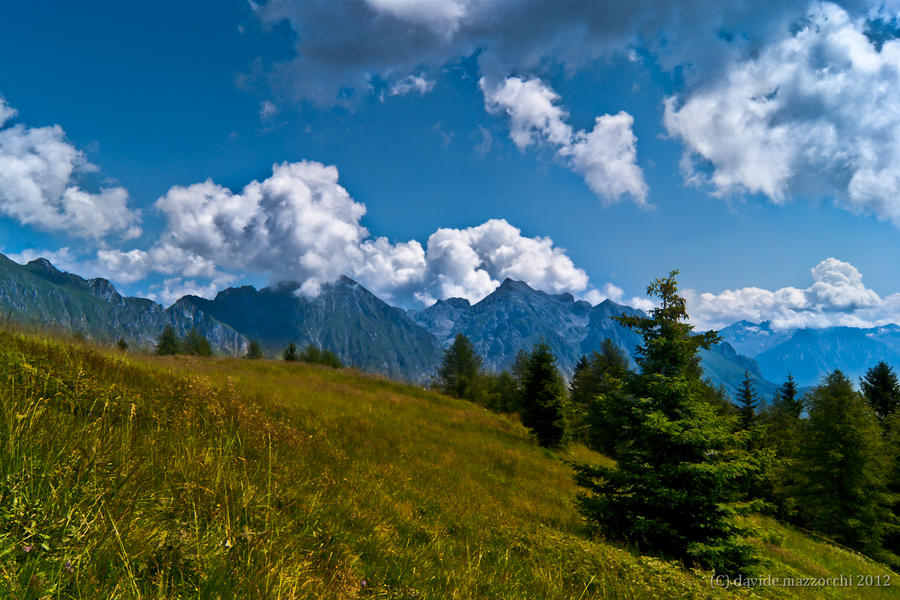
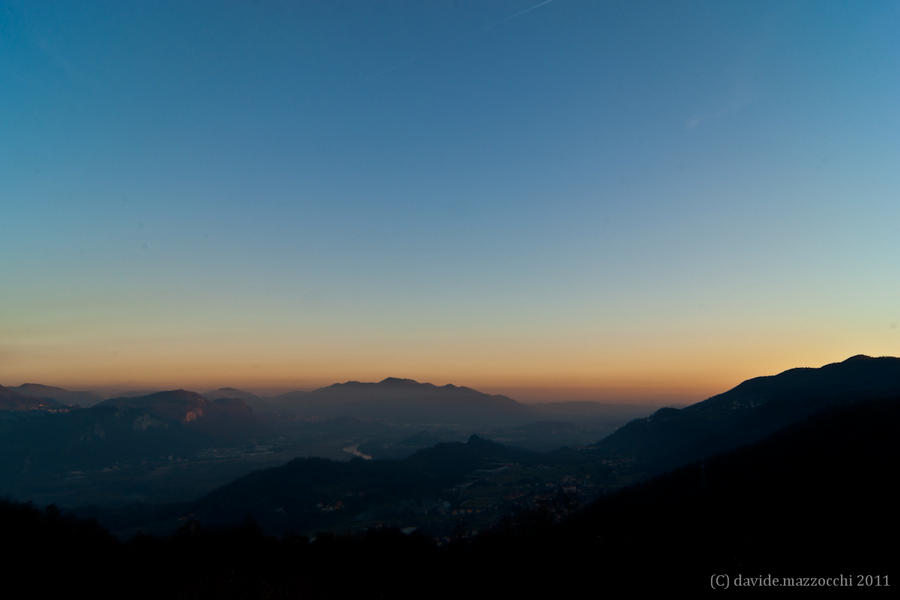
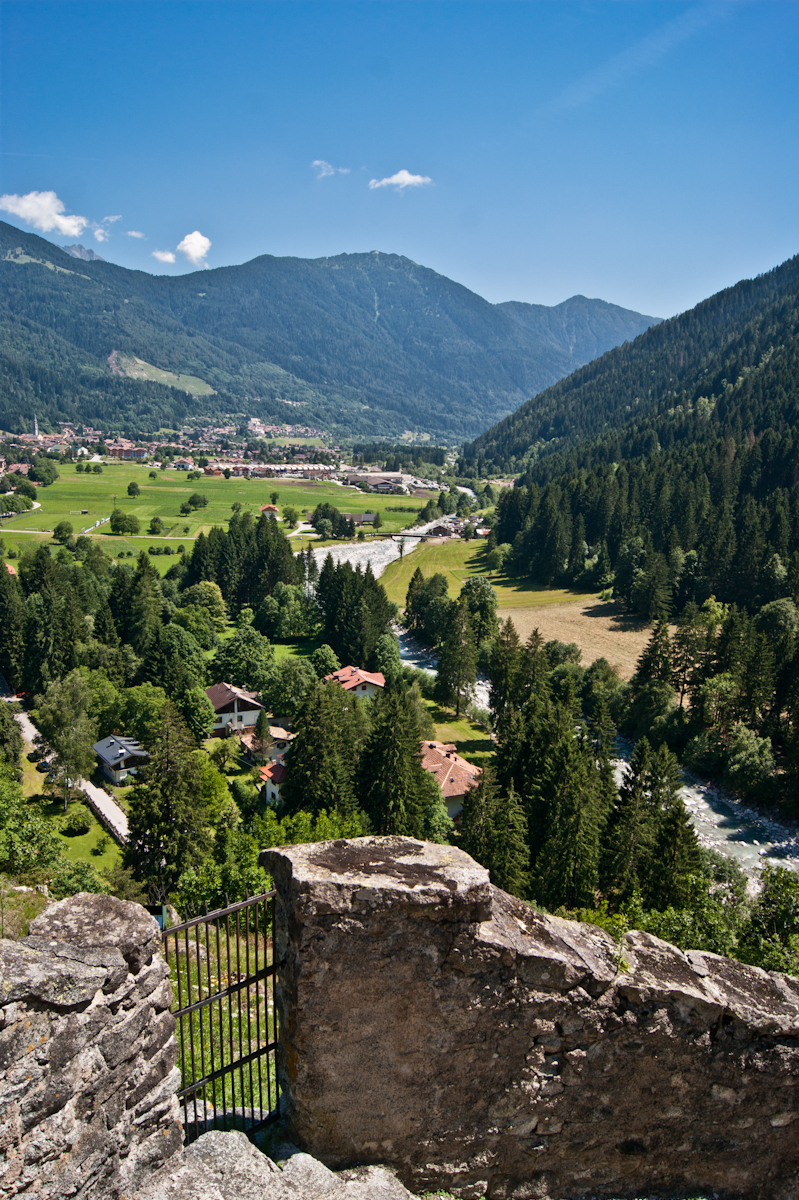
I wanted to post a list of all of the historical family names from all of the villages of the Paisco Loveno comune, or what I prefer to just call Val Paisco. The River Paisco cuts west to east through the mountain pass, and is a tributary to the River Oi which travels the north to south length of the Val Camonica. Val Paisco includes the six villages of Ardinghelli, Case di Bornia, Case del Longo, Grumello, Loveno, and Perdonico. Paisco and Loveno are both administered by one little village government, and I am almost certain that this would include the other villages as well. There are two groups of villages; one in the "Paisco area" and another in the "Loveno area."
In the 1800's, these villages were relatively more heavily populated. I can't vouch for every one of these surnames, as a few of them may have been added over time. A few have disappeared. Beyond "the eighteen families of Loveno Grumello," this would be a compilation of what we can just call "the fifty-one families of Paisco Loveno." For the sake of genealogy research, here are the fifty-one family names of Val Paisco in alphabetical order:
For centuries they were so closely knit. The Paisco Valley was their rural realm, regardless of who or what entity was running the country. Now whether descendants live in Milan, Bordeaux, Sao Paulo, Milwaukee, Toronto, or Melbourne; blood relatives lost in time.
Val Camonica ends where the Oglio River pours into Lake Iseo. Lovere, which is right along the lake, is usually considered a part of the valley that ended up administratively on the Bergamasque side. Bossico is located on slopes of Mt. Colombina, along Lake Iseo; therefore right on the edge of the valley as well. I remember my father telling me of his grandparents telling him stories about "the big lake," which had to be Lake Iseo; although my father didn't know which lake at that time.
A few people consider the possibility that Mt. Colombina is a pyramid, such as the main "Bosnian pyramid." I don't believe that, even though I think clearly that the one in Bosnia was carved, and has portions of it's side flat with very ancient mortar, and deep carved out tunnels.
Richard Wagner - DAS RHEINGOLD - Entrance of the Gods into Valhalla (Solti, 1958) Meyerbeer Smith
287,643 views - August 19, 2016
DAS RHEINGOLD Vorabend des Bühnenfestspiels ‘Der Ring des Nibelungen’ Composer and librettist: Richard Wagner (1813–1883) First performance: Nationaltheater, Munich, 22 September 1869
SETTING: In and around the Rhine, mythic times
PLOT: At the bottom of the river Rhine, the Nibelung dwarf Alberich steals the Rhine gold from the Rhinemaidens and, renouncing love, forges it into a ring of power. Elsewhere, Wotan (=Odin), ruler of the gods, has ordered the giants Fafner and Fasolt to build a castle. Wotan refuses to give them the price they asked: Freia, goddess of youth and beauty. The giants kidnap Freia, and will only return her in exchange for Alberich’s treasure. Without Freia’s golden apples, the gods begin to grow old. Wotan and Loge descend into Nibelheim, where Alberich has used the ring to make the other Nibelungs his slaves. They capture Alberich, and take him to their mountain top. They force Alberich to give up his treasure, including the ring, which Alberich curses. Fafner and Fasolt quarrel over the treasure, and Fafner kills Fasolt. The gods enter their new home, which Wotan names Walhall (Valhalla). The Rhinemaidens lament the loss of their gold.
Entrance of the Gods into Valhalla
Fafner has just slain Fasolt, to the horror of the gods. Donner (=Thor) god of thunder, summons a storm to clear the air. The clouds part to reveal a rainbow bridge spanning the Rhine. Wotan praises the majesty of Valhalla, and leads the gods across the bridge. Loge (=Loki), god of fire, hangs back; he believes the gods are hastening to their end, and considers turning himself back into fire. The Rhinemaidens ask the gods to return the gold, but Wotan orders them to be quiet. Loge tells them that they must now bask in the glory of the gods.
Wotan (baritone): George London Donner (baritone): Eberhard Wächter Froh (tenor): Waldemar Kmentt Loge (tenor): Set Svanholm Fricka (mezzo-soprano): Kirsten Flagstad Freia (soprano): Claire Watson Woglinde (soprano): Oda Balsborg Wellgunde (mezzo-soprano): Hetty Plümacher Floßhilde (contralto): Ira Malaniuk
Conductor: Sir Georg Solti Wiener Philharmoniker Vienna, 1958
************
"Wagner’s operas are really growing on me. Reading the English translations of the lyrics and understanding the mythic roots of the plot makes it even more powerful and enjoyable." -- You don't know me
"Wagner is a magician; once he has you under his spell, he never lets go" -- John Holmes
"This is the definition of divine triumphant music. The sound of Donner’s Hammer hitting the rock is perfect." -- Anna Maria Delgado
"No word can describe the immense beauty and great richness of Wagner Music." -- manouchehr7
" 'Der Ring des Nibelungen' is the most perfect artwork of all time ! Wagner finally accomplished his aims with this timeless unbeatable masterpiece !" -- Hilano Carvalho
This was apparently confirmed by NASA in 2012. This is just one of a lot of "stuff" in our solar system. It would be easy to dismiss, until one looks closely at the finite detail, and of course the dome in the center with a notch at the top of it.... all symmetrical, with perfect right angle turns, and perfectly spaced notches on just one side of each leg.
*************************
☀✪ Pagan Symbols: The Meaning Behind Wicca, Sigils of Power & Protection Spells8
Chart of important Wiccan symbols every Witch should know and their meaning. Also: the wheel of the year, runes, and alchemical elements: Fire, Air, Water, Earth, and Spirit, and other protection sigils.
From the Horned God and Moon Goddess to the Witches Knot, these wiccan magic symbols are used for protection, power, good luck, love and a lot more. Their origins and history can be traced back to the ancient Greek, Irish and even Hindu traditions.
Like other religions, Wicca has its own religious symbols which carry spiritual meanings and sacred power. You have likely seen some of these pictures before, so here's an opportunity to learn their meanings and origins. If you're thinking about getting a tattoo of a pagan symbol, a sigil, or wear a Wiccan charm, learn as much as you can about the origin of the symbol so you can wear it respectfully.
How to use these Wiccan symbols? You could charge them as sigils by carving them or drawing them on a piece of clothing, as jewelry, or in your bedroom/home. Some witches like to hang them near the front door or outside and use them as warding symbols of protection. You could also get a tattoo of a Wiccan symbol to remind you everyday of your faith and your identity as a Witch.
A brief interchange I had from this video lead me to a fundamental question
Deagánach Ó Marúnacathasaigh
The Triskelion represents Manannán Mac Lir the Irish / Celtic God of the Sea.
The Torqu ( what you call the horned God) is one of the many symbols OF Cernunnos the Irish / Celtic God of Nature
An snaidhm or The Celtic Knot is the symbol that represents Bríghíd the Irish Goddess of Agriculture, blacksmithing, fertillity, craftsmanship, childbirth and healing
Joseph
Cernunnos was the regional name in Gaul (modern day France), but there were horned gods in many places.
Deagánach Ó Marúnacathasaigh
@Joseph Yes he was a general Celtic deity but I'm afraid no one would know the name Chornachahaon which is the Irish Cernunnos
What was the name for the Horned God in the Val Camonica?
************
Cerniéra - The horned god in Val Camonica?
If Mòna is the name of the Goddess in Camunian, then what was the name of the God? There are many names of the Horned God across western Europe. Cernunnos is the one that most comes to mind, with a lot of local names: Cern, Cernunno, Cerunico, Kern, Kernunno, Kernunnos, etc. I was able to find one possibility for the Camunian Horned God: "Cerniéra." This word means "interlocking closure," which is cryptic enough. In Asatru, the word Odin can be translated as "master of the order," which possibly could give a clue as the two definitions seem to convey a similar type of message and resonance. Interestingly enough, in the Camunian dialect, the word for "order" is "urdèn" which sounds like Odin! I don't think there's a religious connection there, but I do think that there is a Proto-European linguistic connection as many of the words in Camunian are Proto-European and extremely ancient.
The men in so many of these traditions were the "head of the family," while the women were the "head of the house," and that found its way into Christian cultures. In Italian culture, the mother is at the center of the family, while the father is the final authority, but that authority is not absolute. The Father is Law, while the Mother is Justice. Going clear back into the ancient world, the husband was out on the hunt, or defending the tribe, clan, or homestead, while the wife stayed at home with the children and took care of domestic or village life, including leadership roles within that village and garden. Later, the male took care of economic matters, while the wife took care of domestic matters, so they didn't collectively "compete." However, they competed within their own social milieu. So were the divine masculine and divine feminine energies in the old pagan Val Camonica defined as Cerniéra and Mòna?
Of course, this would have been before the Latin language and the Phoenician system of letters. So academically, it would have been altered as "Cerniero" and "Mona" without the accent marks. The Gaelic language shown above is just as mysterious as the Camuno-Valtellinese-Orobie language was. At least in Gaelic, I think that the language can be studied and spoken, while the ancient language of the latter cannot as it was altered by Gaulish, then by Etruscans when they migrated into ancient Rhaetia, then by Latin after the Roman conquest, then by Germanic, and finally being replaced by Italian. All we have are clues and comparisons to go by. Also, there must have been so many words that were eventually just not used anymore, and forgotten, and didn't make it into the latter days of when the Lombard language was a truly living language in the Alps of Lombardy and a few locales in Switzerland.
*************************
Angie Everhart
The most alluring female vampire of all; 'Bordello of Blood' (1996)
The Asian golden cat is a medium-sized wild cat native to the northeastern Indian subcontinent, Southeast Asia and China. It has been listed as Near Threatened on the IUCN Red List since 2008, and is threatened by poaching and habitat destruction, since Southeast Asian forests are undergoing the world's fastest regional deforestation.
*************************
"Google are deep state. Forget about conventional wars, forget about spies, forget about intelligence agencies, forget about all of that. It's all about the internet and google run the internet. They decide how you feel, what you think, what information you can and can't look at, and ultimately who does and doesn't have a voice."
-- David Bowie's final tweet, December 15, 2015
*************************
"We've clearly moved from reality into a twilight zone. This is no joke now. No metaphor. We are in Armageddon."
"My Mom loved this song! I both smile and cry when I hear this! She was born in 1950 and passed in 2008. I miss ya Mom!" -- Derrick McLovin'
"I love this song and my sister and I would listen to it when she came over before she passed away it makes me sad but happy at the same time" -- Shannon Boyle
"I can't help but smile every time I listen to this song because I remember when I was on 7th grade, a bunch of guys in my choir class (who were normally jerks) got together and practiced this song and during our concert they brought an elderly woman up on stage and started singing this to her and she started crying she was so happy." -- Koralia Thompson
"It seems a lot people in my age range (early 20's) know these songs because our parents play them on their computers and, now, mp3 players. I grew up with these songs in my household (besides my own selection of music, of course). And I like it." -- PhantomSausage
"The feeling it's talking about is timeless, no matter what generation you've been in we've all had somebody make us feel this way. I love how it's so upbeat and playful but if you listen to to words it's actually a sad song." -- Lindsay Shine
"Hey, its music guys, it ain't new music, and it ain't old music. Its just music. Music is timeless, and isn't held to one year or decade. The only thing that holds it is its meaning and each song holds a different meaning to each person." -- Pal_200
"Brings back so many great memories from this time period. This song never gets old." -- Tasha Marie Montelongo
"A timeless classic!" -- Ray Butler
"Awe🤗 This song brings back so many memories. My dad would always sing this song to me when I was a little girl. He would always call me his little buttercup:) No matter how old I get, I’m always going to be his little buttercup💕" -- Kaelynn Ward
*************************
"We have the money, the technology, the scientific know-how, to create a kind of paradise. But we are led by the least among us, and the least intelligent."
The familiar label. Arden Hills, Minnesota. I have relatives who live around that area. Founded July 8, 1921. Agricultural cooperative. 3,963 farmer-owners.
I hope there's no move to eliminate this label. If anything, maybe they could perhaps make her look a bit more Native! I remember my mother said that she remembers, even in rural Wisconsin, of growing up on Cream of Wheat, and of course that familiar label... then that label was eliminated.
*************************
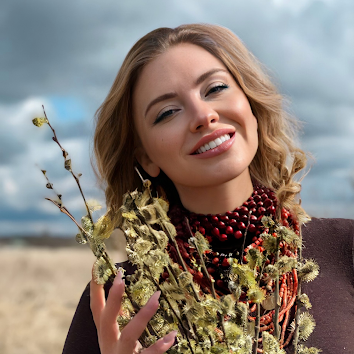
The other YouTube Slavic mystery woman
I had posted one of them, and here's the other. I like the background. It might sound like sort've a crazy thing to think, but I remember being on vacation with my family and driving across Wyoming when I was a kid. I just recall of one day the land and sky looking exactly as this image. I recall the sky was dark and it rained briefly, then the sun came out right afterwards.
Gangkhar Puensum (Dzongkha: Kangkar Punsum, alternatively, Gangkar Punsum or Gankar Punzum) is the highest mountain in Bhutan and the highest unclimbed mountain in the world, with an elevation of 7,570 metres (24,836 ft) and a prominence of 2,995 metres (9,826 ft). Its name means "White Peak of the Three Spiritual Brothers" in Dzongkha.
Gangkhar Puensum lies on the border between Bhutan and Tibet, China.
************
I think this was a recent Windows Spotlight. Very beautiful area. Tibet, unfortunately, used to be many times larger than what is is today.
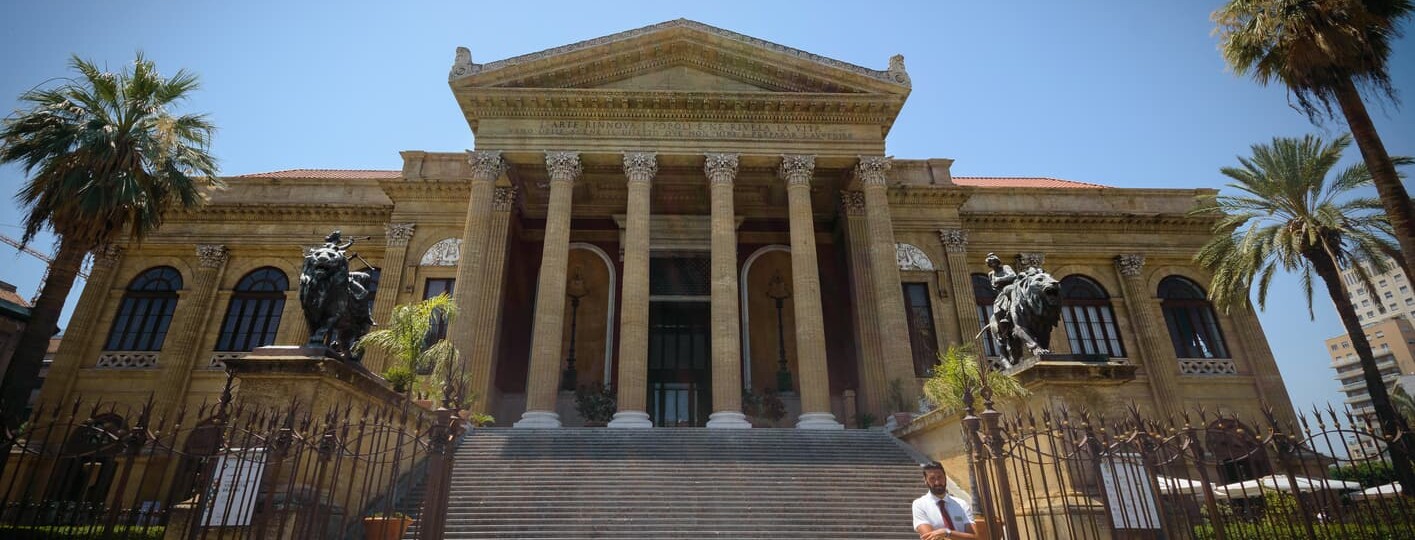
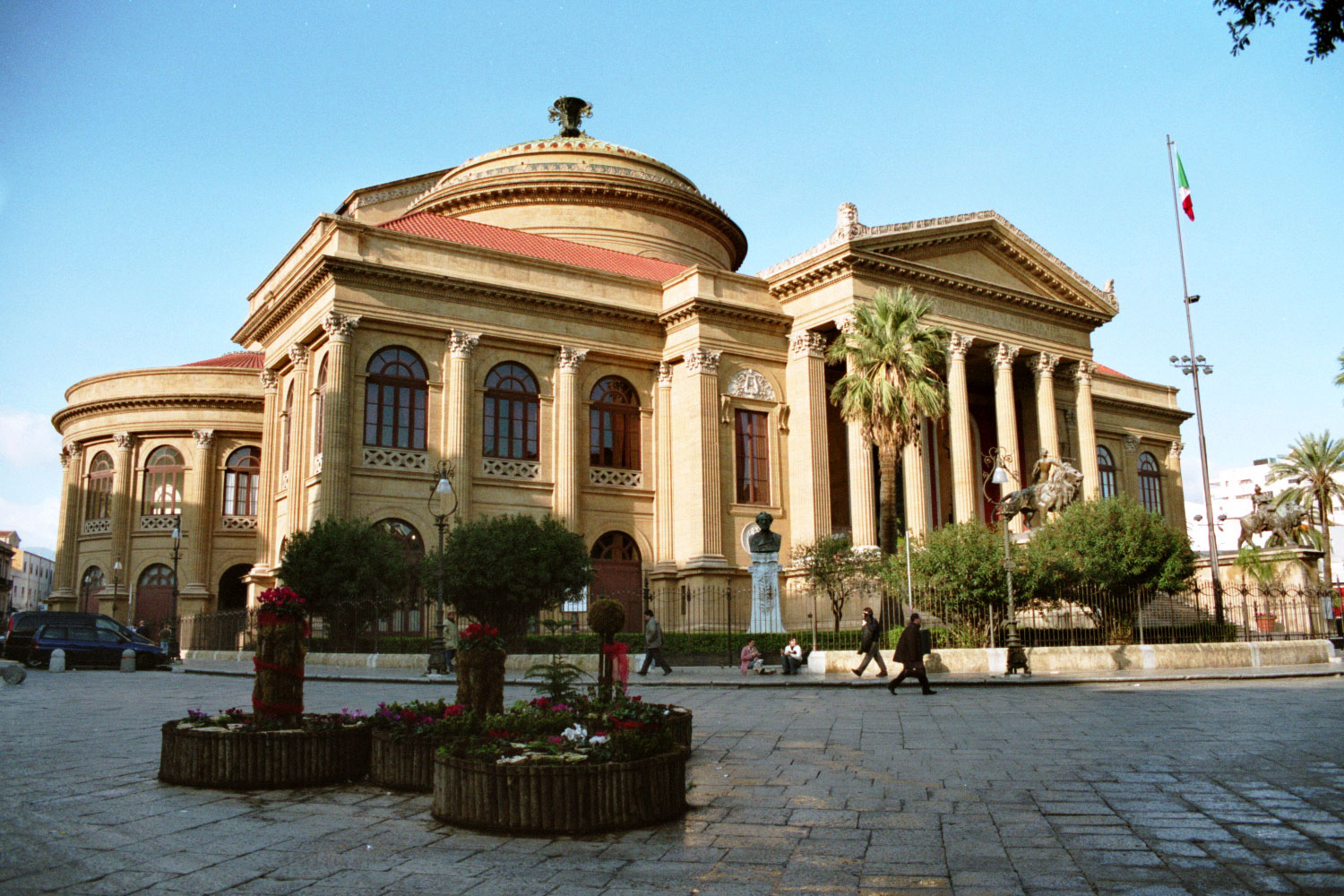
It's tan (rather than white marble) appearance is catchy, as well as its Etrusco-Roman style "wings." Behind is a large rotunda, which is the ceiling of the opera house. It was constructed in 1897.
*************************
HEADS UP LADIES, THIS COULD HAPPEN TO YOU IN A BAR OR NIGHTCLUB, BE VERY CAREFUL
THE RICH PUT IN THEIR SPECIFIC ORDER FOR THE GIRL THEY ARE LOOKING FOR TO ADD TO THEIR SEX TRAFFICKING RING & DEMONS LIKE THIS GO ON THE HUNT. WHEN THEY FIND A TARGET THEY MOVE IN VERY SNEAKY WITH THE BARTENDER, A FEMALE, APPARENTLY ACCEPTING A BRIBE TO LOOK THE OTHER WAY. THANK GOD FOR OTHER'S WHO FELT SOMETHING JUST WASN'T RIGHT.
NEVER ACCEPT A DRINK FROM A STRANGER BUT ALWAYS GET IT STRAIGHT FROM THE BARTENDER IF YOU GO TO THESE TYPES OF PLACES. BEST THING IS TO JUST STAY AWAY FROM THESE DEMONIC PLACES.
SHARE THIS WITH EVERYONE
************
A person's "fairy godmother" isn't always who you think it will be.
*************************
"The masses have never thirsted after truth. They turn aside from evidence that is not to their taste, preferring to deify error, if error seduce them. Whoever can supply them with illusions is easily their master; whoever attempts to destroy their illusions is always their victim."
"This song was popular when I was in high school in the 70’s. Life wasn’t so complicated back then. Love the memories that come back when I listen to it♥️🤩."
As covered on here many times before, the Proto-European people predate the incoming Teutons and Mediterraneans by tens of thousands of years. They are the essential "Europeans." The Italian peninsula very much fit into this paradigm, with the Euganei branch of the Proto-Europeans (aka "Alpine race). Today, the Welsh, Basques, Camunians, Valtellinese, Orobiese, Ladins, Romansh, and people from other historically isolated locales in the Alps, Apennines, Carpathians, etc., are often stubborn throwbacks to a time long past. Some of this is simply genetic, or due to the isolation, but often with more of a proclivity to hold onto old traditions.
The incoming Teutons and Mediterraneans of thousands of years ago probably came into contact with many of these primordial people who were eager to join with them, while some were ether not so enthusiastic about them or were simply more isolated... usually in mountainous regions. There is no evidence that I know of that suggests any conflict between them, but only later were there attempts to bring the "holdouts" to heel; for example, the Roman conquest of the Alps.
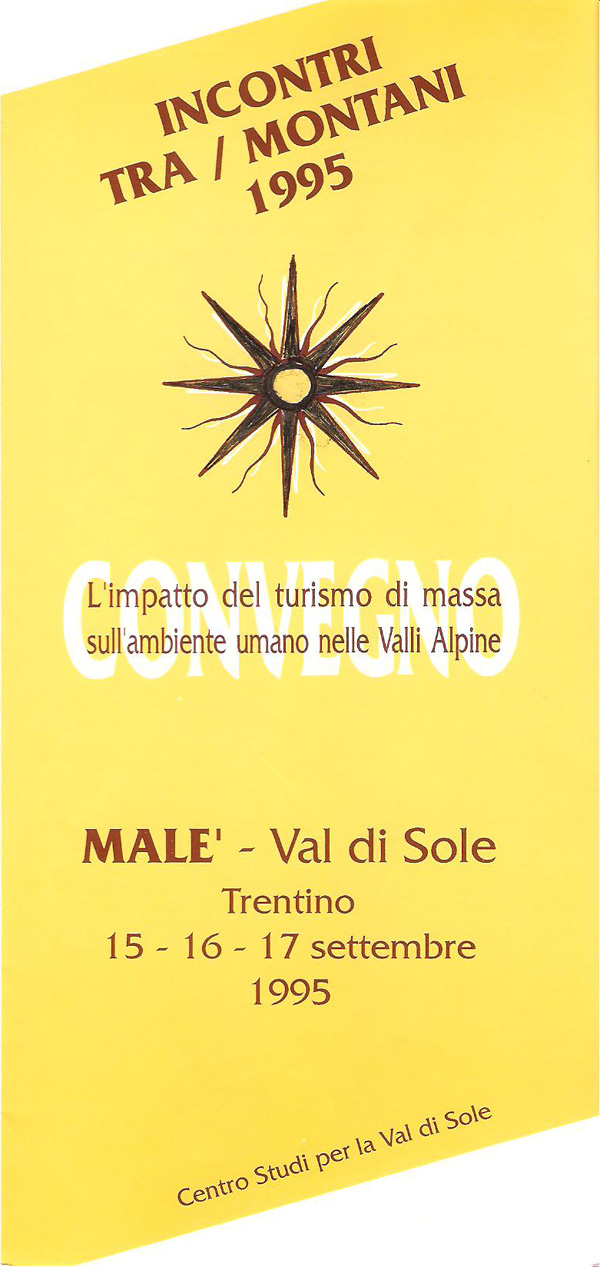
Incontri Tra/Montani means "Meetings Between/Mountains," and to the best of my knowledge was formed to provide a political voice to communities in the eastern Alps of Lombardy, Trentino, and also to other Alpine communities who are often overlooked. I think it's comparable to rural Upper Michigan building an "embassy" near the capitol in Lansing to provide a voice for the detached region. ITM turned 30 last year. I believe that province of Sondrio, the Brescian Tri-Valley, and the Bergamo Alps encompasses a strong cultural milieu as well. Naturally we would like to express solidarity with them.
Incontri Tra/Montani was born in 1990 from a chance meeting between cultural associations of Valle Camonica and Val Trompia. From the observation of a lack of communication between the valleys and from the reading of the great difficulties in which the mountain communities finds itself (exodus, destructive interventions, youth unemployment, etc.), the idea arose of an annual conference that would begin to create a network of non-institutional relations between groups operating in the Italian, Swiss, Austrian, and French Alps with the aim of promoting mutual knowledge, collaboration, exchange of analysis and possible proposals.
In the term Tra/Montani there is a double meaning: 1) The need for dialogue and the consciousness of the sunset of a civilization that was at the center of the pre-industrial economy since all medieval "machines" needed the energy produced by the fall of water.
The study and reflection meetings on issues of common interest in Alpine resorts have been organized regularly since 1990 and touch on topics of various kinds and locations that are always different.
The ITM to which the Valle Camonica, the Giudicarie Valleys, the Val di Sole, Valtellina, Val Seriana, Val Cavallina, Carnia, and Val Verzasca adhere to permanently, has no official seat, nor a statute. It is a self-managed, spontaneous, and free thinking.
Membership of the ITM Group is open to all associations, study centres and cultural groups in the Alps.
The following all collaborated in the realization of the ITM:
• Associazione Comitato Organizzatore Festa di Trate - Gaverina Terme (Bergamo) • Associazione IVS Inventario delle Vie di Comunicazione Storiche (Milano) • Centro Studi e Ricerche Archivio Bergamasco (Bergamo) • Centro Studi Etnografici Val Imagna S. Omobono Imagna (Bergamo) • Centro Studi Judicaria – Tione (Trento) • Centro Studi Val di Sole – Malè (Trento) • Centro Studi Valchiavennaschi Chiavenna (Sondrio) • Circolo Culturale Baradello Clusone (Bergamo) • Circolo Culturale Ghislandi Cividate Camuno (Brescia) • Comune di Montereale Valcellina Montereale Valcellina (Pordenone) • Cooperativa Arca Gardone Val Trompia (Brescia) • Cooperativa Il Chiese - Storo (Trento) • Fondazione Progetto Poschiavo Poschiavo (Svizzera) • Fondazione Val Verzasca Canton Ticino (Svizzera) • L’Arcilettore, Circolo di Sondrio (Sondrio) • Museo Etnografico S. Caterina Valfurva (Sondrio) • Museo Etnografico Tiranese - Tirano (Sondrio) • Pro Vita Alpina - Längenfeld (Austria)
Administrative center of Val Camonica, Breno owes its fame mainly to the Castle, but there are many attractions of the locality: find out more
Breno is a small town in Val Camonica with about 58 square kilometers (14,332 acres) with just under 5,000 inhabitants. Administratively it belongs to the province of Brescia, in Lombardy, and is the administrative center of the Mountain Community of Valle Camonica, also hosting its headquarters.
The territory, located about 340 meters above sea level, is mainly mountainous. To the west it is bordered by the main furrow of the Val Camonica, while to the east it reaches the highest part also includes the Caffaro Valley,until it reaches the border with Trentino Alto Adige. The highest elevation of the municipality of Breno, however, is close to 2,850 meters (9,350 feet), with the Cornone di Blumone, one of the peaks of the Adamella mountain group.
Breno: what to see
In addition to the famous castle, which we will talk about in the next paragraph, there are many attractions present in the Municipality of Breno. First of all its main square, Piazza del Mercato, today dedicated to the memory of General Pietro Ronchi. It is an ancient square, probably born as a place of arms, and is suggestive above all for the splendid palaces that surround it, belonging mainly to the 6th and 7th centuries, such as the Casa Franceschetti.
A detail of the frescoes of the Church of Sant'Antonio di Breno
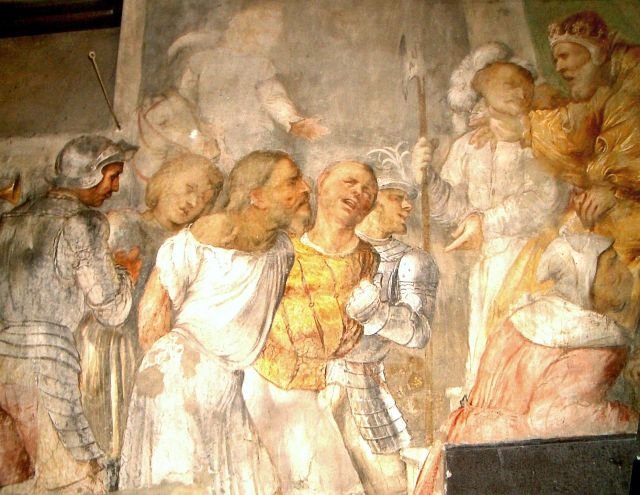
Very interesting, as far as sacred buildings are concerned, is the Church of Sant'Antonio, inside which every year the Art Prize of the city of Breno is held. It dates back to about 1300, and has a Gothic style with a single nave. Inside the presbytery, of considerable value is a fresco attributed to romanino, while the other ornaments date back mainly to the fifteenth century.
Another important example of sacred art is the Church of San Michele, of which today only the foundations dating back presumably to the Lombard era remain. Also noteworthy is the Parish church of San Salvatore,one of the most important Baroque buildings in the entire Val Camonica; dating back to 1600, stands out in particular for its bell tower, 65 meters high. There are numerous artistic masterpieces inside, considered a small museum.
One of the rooms of the Camuno Museum (or CaMus) in Breno
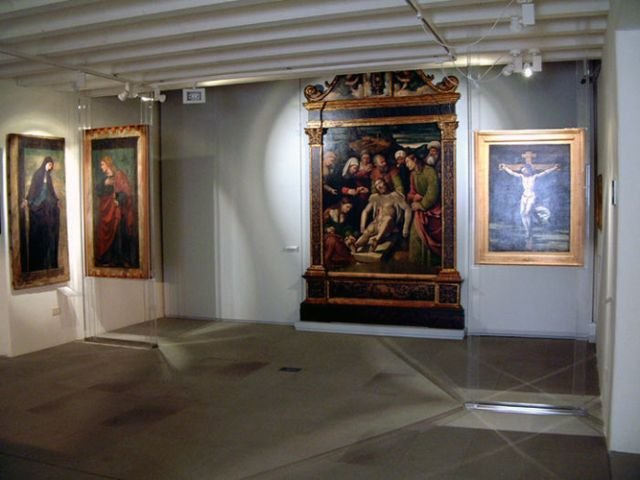
Also worth visiting is the Camuno Museum in Breno, born at the beginning of the twentieth century and today located on the second and third floors of the 'Palazzo della Cultura' in Breno, where the municipal library is also located. Divided into 10 rooms and a loggia, the museum houses finds and works of art from the prehistoric age up to the twentieth century of the Camunian community (from which derives the name of Val Camonica), with pictorial testimonies, coats of arms and portraits of Camunian families, artifacts concerning liturgical furniture and civil furniture and, precisely, finds dating back to the prehistoric age.
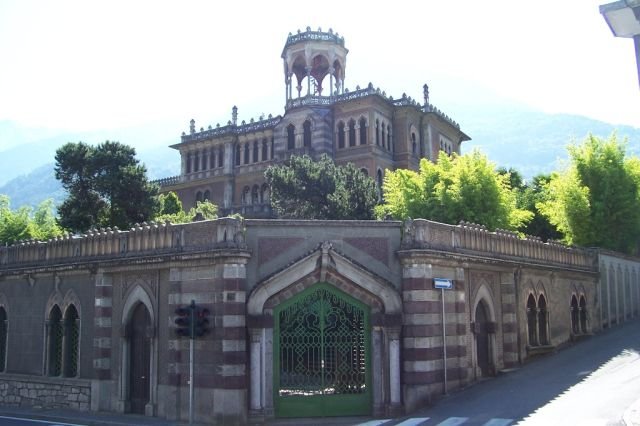
Finally, we recommend a visit to the splendid Villa Gheza, construction of the last century, in arabesque style and 'kitch' so much so that the people of the time, in a period of serious crisis for the area, became indignant and spoke of wasting money. Today, however, it remains a curious and important find of recent history.
The particular 'eastern' structure of villa Gheza in Breno
Castle of Breno
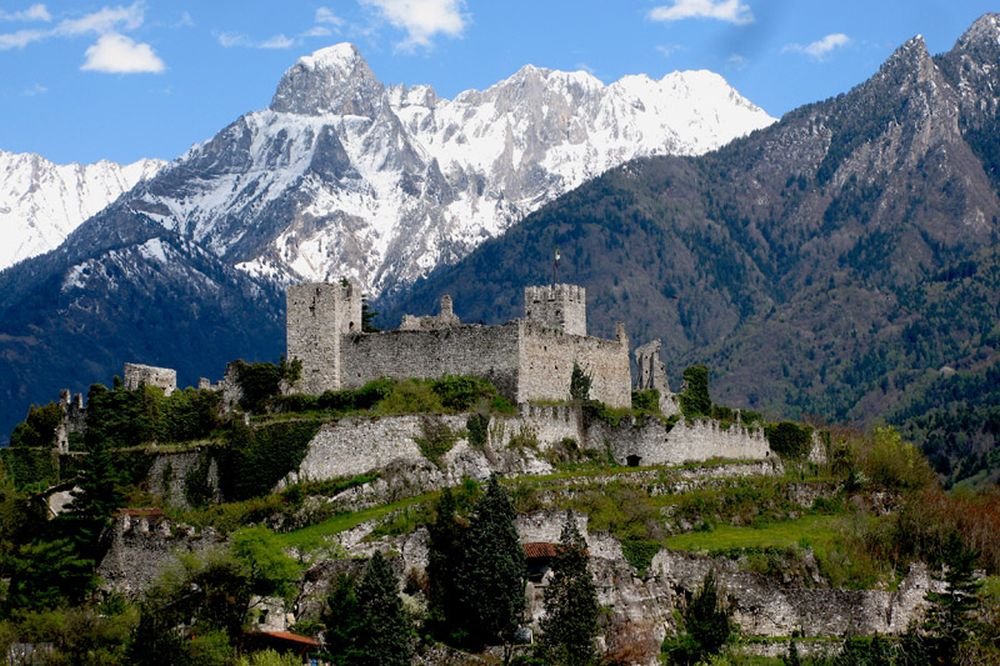
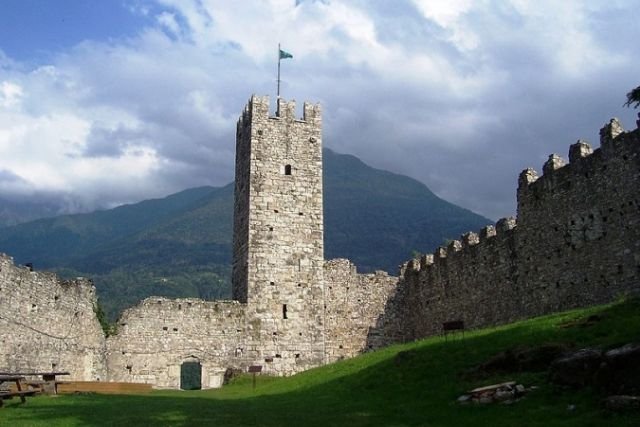
A monument rich in history, the Castle of Breno is the real symbol of the main town of Val Camonica. More than just a castle, it is an intricate complex of buildings, built over the centuries for different purposes. Born under Frederick I Barbarossa (12th-13th centuries), it was transformed into a military stronghold with the Republic of Venice (15th-16th centuries): the current appearance is the result of these historical stratifications, enriched by the fact that it seems that this area was a settlement town already several millennia before the birth of Christ.
The visit to the Castle of Breno starts from the area of the tower, which allows us access to the courtyard, to whose left is located the medieval church, the oldest monument brought to light in Breno. There are many areas in which to observe the historical traces of the castle; we recommend, in particular, the stately two-storey house-tower, and a 1200's palace with a 20-meter tower accessible to visitors. Very interesting, then, the numerous remains of settlements of prehistoric communities of the Paleolithic, Neolithic and Copper Age.
The Tower of The Castle of Breno
Hotels in Breno
Breno is the administrative capital of Val Camonica. A place that has been established for several millennia, in recent decades it has become a tourist destination increasingly sought after by visitors, while also expanding its accommodation, however gaunt compared to demand. In this regard, we recommend two of these facilities in particular.
The first is the Hotel Ristorante La Villetta, a small 2-star structure excellently reviewed by users of the various travel sites. Free private parking, on-site restaurant with Lombard and national specialties, terrace overlooking the mountains and free wifi throughout the property, are just some of the services offered here. Very characteristic are the accommodations, which have flat screen TVs and private bathroom with bidets, bathrobes and courtesy sets, while in some of them you will also have a terrace or panoramic balcony, overlooking the beautiful Val Camonica. Prices more than competitive, highly recommended!
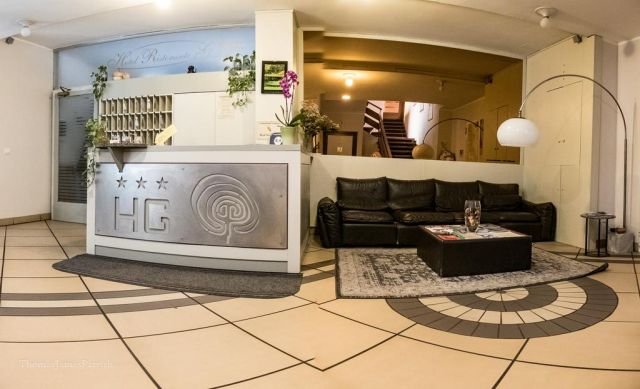
The lobby of the Hotel Giardino
About 250 meters (273 yards) from the Breno station is the Hotel Giardino, a beautiful 3-star structure with all the necessary comforts. Very nice rooms, which have clear walls and curtains and have a TV and a private bathroom with hairdryer and courtesy set, as well as free wifi, available throughout the hotel. Free parking, a rich breakfast buffet with sweet and savory foods (including local organic specialties) and on request menus for particular diets, in addition to an on-site restaurant-pizzeria are the services provided in the common areas. Great location, acceptable prices, courteous and attentive staff: vote, 10!
Breno Climate and Weather
The climate of Breno, given the great difference in height of the municipal territory--almost 2,500 meters! (about a mile and a half)--is very difficult to interpret and describe. Of course, what interests us is the climate of Breno and its vicinity, where you will find your accommodation: well, it is a particularly mild climate, with the average temperatures that only in January and February fall below zero. On the other hand, very cool and breezy summers, with the hottest month, July, which has an average of just 20 degrees.
Brennus, known as Brenno in Italian, is the name of two different Gaulish warlords; one who famously invaded Rome in the 4th century BCE, and another lessor-known Brennus who invaded the Balkans and Greece in the 3rd century BCE. I have heard that the city of Breno possibly may have got its name partly from the first Brennus who invaded Rome, whom was featured in a 1963 Italian film entitled 'Brennus, Enemy of Rome'. At the time of Brennus' invasion of Rome, Cisalpine Gaul would very much have had its allegiance with the Gaulish warlord from north of the Alps, not with Rome. The Camunni were one of the 45 Alpine tribes conquered by the Romans over 300 years later, so Brennus would have been a great hero to all Gaulish peoples. The name of the city of Breno came from the Camunian Bré; also Brenn in old German. However, I wonder if the latter could have been of Langobard, Cimbrian, Celto-German, or even Gaulish origin?
. During the sixteenth century, it is estimated that there were approximately 30,000 people living in the Val Camonica, then part of the Venetian Republic. Out of that number, about 10,000 were adherents of native paganism aka "Camunian witchcraft." I would guess that the whole of the Brescian Tri-Valley, the region of the Bergamo Alps, the Valtellina, and the Val Chiavenna probably had a similar ratio of Roman Catholics to native pagans. There apparently were no problems with between the two. Many times rural Christians had old folkways which would have looked very pagan, or many pagans have long used Christian symbolism. For example, the "cult of Mary" is heavily conflated with the Goddess Diana.... whom was called the Goddess Mona in Camunian; "Mon" being the ancient word for Moon. Separate from the ancient roots of Camunian witchcraft, there was another somewhat unsubstantiated legend of another old tradition. During the Ottoman/Islamic invasion of the western Balkans in mid to late fifteenth century, fairly large numbers of pre-Ottoman Albanians of Illyrian origin--purportedly all Christian--were settled in southern Italy; the Arbëreshë. According to some old Venetian records, but apparently not written in the official historical narrative anywhere, the Venetians accepted a small number of Albanian refugees. Not knowing what to do with them, they just brought them inland and sent them into the Camunian mountains. Perhaps the number was so small that it was neglected by the history books, but according to Venetian and Church authorities some of them were adherents of what they called "witchcraft." They were blamed for the upsurge in what they considered the scourge of ungodly activity in the Val Camonica. Were they just a convenient scapegoat to justify sending an army of Venetian soldiers and Church inquisitors up into the mountains to forcefully reestablish Church rule?
. We'll probably never know, but it's possible that the native pagans at least made some attempt to keep outward displays of their traditions to a minimum. It's also possible that the Albanian pagans did not, so it may have been a combination of the two. The church and state may have wanted to do something about it before, and this allowed them a pretext to action, which one-way-or-another ultimately culminated in the Val Camonica witch trials; perhaps also the witch trials in the Valtellina as well. Aside from the various church complaints that witches' spells had brought droughts, injury, pestilence, fires, and general Satanic heresy, they also mentioned what seemed to be an upsurge of a particular "evil sect." Could that have been the Albanian witches?; or was it merely more of the synergistic bluster they used to galvanize themselves into action?
In the Alps, in the Balkans, and in seemingly every corner of Europe, there was the ancient witch-cult from somewhere very deep in the history of the Proto-European people. In ancient Greece, there was the Hecatean tradition which predated the Olympian pantheon of gods. In central Italy, there were similar traditions which predated the Romans.. and even the Etruscans. In Scandinavia, there was a similar tradition which predated the Vikings, and so on. A tradition before the Mediterraneans, before the Teutons, before the Celts, Slavs.... back beyond the last glacial movement to the mysterious Proto-Europeans. "Witchcraft has no origin, it has always been with us." -- Leo Ruickbie, 'Witchcraft Out of the Shadows: A History' .