Showing posts with label earth changes. Show all posts

Sunday, May 12, 2019

Full Flower Moon 2019


The Full Flower Moon will occur on the evening of May 18.... this Saturday night.


************


From The Old Farmer's Almanac - Moon Calendar 2019


In a Bulgarian folktale, the Sun asks the hedgehog why he is nibbling on stones instead of attending the Sun's wedding to the Moon. The hedgehog replies that he is in training for when no food will grow because of all the little sun offspring that will be shining in the sky. When the Sun takes his point and cancels the wedding, the hedgehog has saved the world.


*************************


"Louisiana Voodoo"

"We will cast a shadow over you that can't be distinguished from Fate." --"Legends of Haiti"

Featured at the start of the 2014 film 'Jessabelle', apparently this quote is tied to Voodoo. The film, set in southern  Louisiana, tries to make a Haitian connection to it; however, these old West African traditions actually continued and developed separately in Louisiana.

'Jessabelle' is, like the recent horror flick 'The Nun', more in line with the many "gotcha!" type films. I think those films should be critiqued and categorized more on that level. I loved the environment and mood of both films though.


************


I don't get the standard pay movie channels, so I just see films as I can. Now and then HBO gives a free three-day sampling, and I tape a few. I would like to review films, but it takes a lot of time to do it right. I liked some of the Sci-Fi films in recent years, such as 'Interstellar', 'Oblivion', 'The Martian', and 'Prometheus'.

 
*************************


Salem.org

A good traveler's guide to the many goings-on in Salem, Massachusetts (events, shops, tours, food, etc.).


*************************


The Minds of Men - Official Documentary by Aaron and Melissa Dykes

If both the past and the external world exist only in the mind, and if the mind itself is controllable - what then? -- George Orwell, '1984'


*************************


[Lyric] Blue Bayou - Alisan Porter

Trần Đại Nghĩa

Song: Blue Bayou (The Voice Performance)
Artist: Alisan Porter
Writers: Roy Orbison, Joe Melson


************


The Voice 2016 Blind Audition Alisan Porter Blue Bayou (live performance)


************


This could be a great allegorical song.... of "that special place." It could even be a "time-place-person," something that one can't truly recreate... except in the mind and soul. Also, a futuristic concept maybe.


*************************


I recall one time hearing Robert Redford state stating that "Anglo culture"--whatever that specifically means--has lost the "art the storytelling." I think he said it in reference to perhaps Mexican culture. At the time I think that I saw it as a somewhat antagonistic comment. However, the real point should have been that a whole lot of people around the world have lost this concept from their lives. People still of course tell of experiences, but not in an explicit "storytelling" manner. I listen to some of these on my iPod when I'm working.


I wasn't even aware until fairly recently that Chuck Missler has passed away a year ago. A very open-minded and highly intelligent Christian for many decades. He covered so many fascinating and ominous subjects.


.

Saturday, February 1, 2014

The Arctic Home in the Vedas: Part 16 - "Thule, Saturn, & an alternative explanation"


Thule, Saturn, & an alternative explanation: Part 5

The way the Greeks understood their relationship with non-Greek peoples was significantly moulded by the way myths of the Golden Age were transplanted into the contemporary scene...

We often hear the phrase “golden age” in reference to the zenith of something; “the golden age of cinema.” However, there was THE golden age, and it may be stranger than anything we will ever uncover. It has to do with everything from the deep past to the present day. It has to do with every ancient culture, and in particular the original Teutonic people before their migrations. I will tie this big loose end. But for now, we are talking about a “Golden Age” in which there were no seasons as we know them today; and in which the North and South Poles was literally habitable.

A particular Hyperborean legendary healer was known as "Abaris" or "Abaris the Healer" whom Herodotus first described in his works. Plato (Charmides, 158C) regarded Abaris as a physician from the far north...

Could Abaris the Healer have been of a migrating people from the “far north”… Thule? The ancient Greeks were very scientifically-minded, so couldn’t this “shaman”--who caused such a stir--seem a little out of place?

Above the Arctic Circle, from the spring equinox to the autumnal equinox (depending on latitude), the sun can shine for 24 hours a day...


There is a deep tie-in here with the “Golden Age” and Bal Gangadhar Tilak’s theory, but I will have to wait until Part 17 to reveal it.

Unaware of the explanation offered by modern science (i.e. that these insects had lived in times when the climate of northern Europe was much warmer, their bodies preserved unchanged in the amber) the Greeks came up with the idea that the coldness of northern countries was due to the cold breath of Boreas, the North Wind. So if one travelled "beyond Boreas" one would find a warm and sunny land.

This is clearly part of the Greek mythology of the “Golden Age.” However, these mythologies of that possible era are present in the mythologies of every ancient civilization. Again, I’m focusing mostly on the legend of Thule, but this “Golden Age” affected every person living on Earth at that time if it was real.

Northern Europeans (Scandinavians), when confronted with the classical Greco-Roman culture of the Mediterranean, identified themselves with the Hyperboreans, neglecting the traditional aspect of a perpetually sunny land beyond the north.

This was only a perception, but could it literally be tied to a real time and place? There is now mounting evidence that it may.


Hyperborean Indo-European hypothesis

John G. Bennett wrote a research paper entitled "The Hyperborean Origin of the Indo-European Culture" (Journal Systematics, Vol. 1, No. 3, December 1963) in which he claimed the Indo-European homeland was in the far north, which he considered the Hyperborea of classical antiquity. This idea was earlier proposed by Bal Gangadhar Tilak (whom Bennett credits) in his The Arctic Home in the Vedas (1903) as well as the Austro-Hungarian ethnologist Karl Penka (Origins of the Aryans, 1883).

Now this is a big tie-in, and in hindsight part of the intellectual process of looking into something which seemingly is impossible. They weren’t, however, “Indo-Europeans.” They were the original Teutonic race. This intrinsically has nothing to do with the Nazis. In fact, the German sub-race--specifically--is less than half Teutonic.. and less so in the southern German lands. The larger part being primarily proto-European (“Alpine”).

According to these esoterists, Hyperborea was the Golden Age polar center of civilization and spirituality...


I doubt this part, as there is no strong evidence of it. That doesn’t mean that evidence of a great Thule civilization couldn’t be out there undiscovered. We can look into what may exist as far as ruins at a later point. What there is evidence of is the presence of Teutonic people in some of these lost lands like the Tarim Basin.

Robert Charroux first related the Hyperboreans to an ancient astronaut race of "reputedly very large, very white people" who had chosen "the least warm area on the earth because it corresponded more closely to their own climate on the planet from which they originated."

After Part 17, this may show to be theoretically possible, but wild theories can and do hurt the areas where facts can be established. In any case, this original Teutonic race would no longer exist in the exact form that they did. Even in the far north of the post-Golden Age Europe, or in modern times, I would guess that this certain stock would be at no more than 50%.


They may not have been as physically attractive as their Teutonic-Protoeuropean descendants later became. The very tall, square-headed, almost white-haired, very light blue-eyed, and pure white skinned people became shorter, rounder-headed, more ash or wheat blonde haired, more medium blue-eyed, and perhaps a bit tan to give one possible example.

Unlike other places where Teutonic people came and ruthlessly conquered, they were taken with these shorter, stocky, sexier, probably brown-eyed, perhaps dark brown haired European natives.. and merged with them. Only in what I would call the “final great migration,” a horde of more pure stock Teutons came and permanently placed their clear genetic and linguistic stamp on some places like Scandinavia and northern Germany.


The one other example of where they mixed their blood was in ancient Persia, which produced the Aryan culture and people (original Teutons & true Mediterraneans). To make this perfectly clear, this original Teutonic race didn't produce "The Golden Age"; the Golden Age may explain their origins. I use the term "Teutonic" for the original stock; as opposed to the modern "Germanic," which is a loose and somewhat undefined term. For example, the "Germanic Austrians" probably have only a minimally larger Teutonic element than say Venetians, Croatians, or Slovenes... yet the loud terms "GERMAN," "ITALIAN," or "SLAV" are thrown around recklessly by many. Language often defines a culture more than actual racial stock in the perceptions of most people.


Golden Age (Wikipedia)

The term Golden Age (Greek: Χρυσόν Γένος Chryson Genos) comes from Greek mythology and legend and refers to the first in a sequence of four or five (or more) Ages of Man, in which the Golden Age is first, followed in sequence, by the Silver, Bronze, Heroic, and then the present (Iron), which is a period of decline. By extension "Golden Age" denotes a period of primordial peace, harmony, stability, and prosperity. During this age peace and harmony prevailed, humans did not have to work to feed themselves, for the earth provided food in abundance. They lived to a very old age with a youthful appearance, eventually dying peacefully, with spirits living on as "guardians". Plato in Cratylus (397 e) recounts the golden race of humans who came first. He clarifies that Hesiod did not mean literally made of gold, but good and noble.

There are analogous concepts in the religious and philosophical traditions of the South Asian subcontinent. For example, the Vedic or ancient Hindu culture saw history as cyclical, composed of yugas with alternating Dark and Golden Ages. The Kali yuga (Iron Age), Dwapara (Bronze Age), Treta yuga (Silver Age) and Satya yuga (Golden Age) correspond to the four Greek ages. Similar beliefs occur in the ancient Middle East and throughout the ancient world, as well.

In classical Greek mythology the Golden Age was presided over by the leading Titan Cronus. In some version of the myth Astraea, also ruled. She lived with men until the end of the Silver Age, but in the Bronze Age, when men became violent and greedy, fled to the stars, where she appears as the constellation Virgo, holding the scales of Justice, or Libra.


European Pastoral literary and iconographic tradition often depicted nymphs and shepherds as living a life of rustic innocence and simplicity, untainted by the corruptions of civilization — a continuation of the Golden Age — set in an idealized Arcadia, a region of Greece that was the abode and center of worship of their tutelary deity, goat-footed Pan, who dwelt among them. This idealized and nostalgic vision of the simple life, however, was sometimes contested and even ridiculed, both in antiquity and later on.


Abaris the Hyperborean (Wikipedia)
Abaris the Hyperborean (Greek: Ἄβαρις Ὑπερβόρειος, Abaris Hyperboreios), son of Seuthes, was a legendary sage, healer, and priest of Apollo known to the Ancient Greeks. He was supposed to have learned his skills in his homeland of Hyperborea, near the Caucasus, which he fled during a plague. He was said to be endowed with the gift of prophecy, and by this as well as by his Scythian dress and simplicity and honesty he created great sensation in Greece, and was held in high esteem.


Gothicismus (Wikipedia)

Gothicismus, Gothism, or Gothicism (Swedish: Göticism) is the name given to what is considered to have been a cultural movement in Sweden, centered around the belief in the glory of the Swedish ancestors, originally considered to be the Geats, which were identified with the Goths. The founders of the movement were Nicolaus Ragvaldi and the brothers Johannes and Olaus Magnus. The belief continued to hold power in the 17th century, when Sweden was a great power following the Thirty Years' War, but lost most of its sway in the 18th. It was revitalized by national romanticism in the early 19th century, this time with the vikings as heroic figures.


**************************************************


By extension "Golden Age" denotes a period of primordial peace, harmony, stability, and prosperity. During this age peace and harmony prevailed, humans did not have to work to feed themselves, for the earth provided food in abundance. 

This sounds a bit like someone's warm and fuzzy account of some long ago "place" in their imagination. However, this will make a lot more sense during Part 17.

He (Abaris) was supposed to have learned his skills in his homeland of Hyperborea, near the Caucasus...

Apparently Abaris was a real figure who caused a sensation in early Greek civilization. Since he dressed like a Scythian, there seems to be a Persian connection, which would tie-in well as far as his possible Teuton roots at that time. If it was about one-thousand BCE, then the Aryan connection would make sense here.


Gothicismus

There is a definite tie-in here, but this national/racial historical perception (likely partly true in this case) starts to lead us down some rabbit trails and into confusion. Suffice to say that there were some early Gothic legends of Thule.

.

Saturday, April 6, 2013

The Arctic Home in the Vedas: Part 11

Margaret Murray was right: Part II


The North Pole prior to about 12,000 years ago was somewhere in todays northern United States, probably where the Great Lakes are today. This sudden plate shift not only “pushed” the North Pole up from its present position from the viewpoint of North America; but it also “pulled” the Eurasian land mass up to the Arctic Circle. This is why, for example, so many perfectly preserved mammoths have been discovered. The northernmost stretches of Europe and Asia had very mild climates prior to this dramatic plate shift. It should also be noted that this sudden pole-shift caused a massive global flood as the poles were suddenly in much warmer weather. This explains why so many ruins of ancient cities now lay on the bottom of the oceans.

Prior to this plate-shift, the three sub-races---of which later became the Indo-European people---were geographically separated. It’s important to note that natives of the Far East, the Indian subcontinent, and true-Semites (based in the southern Saudi peninsula), didn’t live in Europe, North Africa, or most of Asia (including the Near and Middle East). Also, Turko-Mongolian racial types had not come to be as of yet. The Earth’s population was smaller than what we can imagine by todays standards.

The sub-race which I refer to as the “true-Mediterraneans” (not Semitic, or even necessarily what we call “Mediterranean” today) lived in the Near and Middle East; and founded the first post-flood civilizations. The sub-race which I refer to as the “proto-Germanics” (these were pure Germanics, not the largely Alpine-Germanic people whom we call “Germanic” today) lived north of the Himalayas up to the northern Eurasian coast. The sub-race which I refer to as “proto-Europeans” or “Alpines” lived in Europe, and probably well east of it in some places, and in parts of North Africa.

The spiritual culture of these proto-Europeans was the progenitor of Margaret Murray’s “Witch-cult.” All of the evidence points to it so clearly. The ancient stag god and the moon goddess. So many common themes. As small bands of proto-Germanic people migrated westward across central Europe thousands of years ago, they merged with these natives to form the “Celtic” cultures, and their spiritual traditions merged to form new ones. However, the “Witch-cult” always seemed to stick around as a separate tradition. When true-Mediterraneans migrated westward across Southern Europe and North Africa, and then northward along the Atlantic coast and into the British Isles, the same dynamic occurred. They merged with the natives, and their respective spiritual traditions merged as well; and yes, the ancient “Witch-cult” continued to exist separately. In fact, in many parts of both northern and southern Europe, “Alpine” tribes coexisted with the newer cultures that were much greater in number.

At some later point, approximately four to five thousand years ago, a large final migration of proto-Germanic people poured into Europe and overran Scandinavia and a large part of central Europe. I would theorize that they may have largely bypassed Eastern Europe, which then remained of the more native stock. Unlike the two prior migratory patterns into Europe, Germanic language, culture, and spirituality were much more dominant in these newly acquired territories. Yet still, the “Witch-cult” continued to exist even within these new Odinic cultures.

One well-documented example of this transformation from “Witch-cult” to other pagan traditions was in ancient Greece. When ancient Hellenic religion became dominant in Greece, the government declared that the “Old Religion” didn’t qualify as a religion at all. Although some may consider Christianity as the source of the deconstruction of the “Witch-cult,” it actually started long before that. It’s clear that the tradition of the moon goddess Hecate, and the Dianic tradition, existed long before Greece and Rome rose to prominence. Many names, same goddess.

Virtually all of the various spiritual “reconstructionist” groups do not lay claim to the scores of ancient stone megaliths, like Stonehenge, and rather attribute them to some earlier culture. Could that “earlier culture” have been this proto-European people, their culture, and maybe their spiritual tradition as well? Since so little is known about most of these massive stone structures, we may never know the exact truth; but it seems to me that this is a probability.

The Basques, the Welsh, and even the Camunians, are---at least partly---modern survivals of this ancient European type; particularly the Basques. Recent DNA studies have revealed that many English types have more genetic connection to this very ancient stock than previously thought. “Cheddar Man,” excavated in 1903, lived in southwest England over 9,000 years ago. After his DNA was extracted, and samples of local people were compared to it in 1997, one of this man’s direct descendants was living a half-mile away from his burial site. That’s pretty incredible since it has been over 90 centuries and about 300 generations.

This ancient---and extremely resilient---spiritual culture, in all of its related forms, is in need of a new, more dignified name for reference at least. A name that puts it within historical perspective, and one that sounds better than the clumsy, disrespectful-sounding term “Witch-cult.” Since I have gone this far, I would like to suggest a new name: “Witcheathenry.” I would guess that most of the ancient adherents of what was likely an open/non-occultic folk religion, were not practitioners of “magic” or “craft.” The literal "practice of magic” was left to the high initiates. Ancient women of renown… waiting for redemption.

.

Friday, April 5, 2013

The Arctic Home in the Vedas: Part 10

Margaret Murray was right: Part 1

   
Margaret Murray (Wikipedia)

Margaret Alice Murray (13 July 1863 – 13 November 1963) was a prominent British Egyptologist and anthropologist. Primarily known for her work in Egyptology, which was "the core of her academic career," she is also known for her propagation of the Witch-cult hypothesis, the theory that the witch trials in the Early Modern period of Christianized Europe and North America were an attempt to extinguish a surviving pre-Christian, pagan religion devoted to a Horned God. Whilst this theory is today widely disputed and discredited by historians like Norman Cohn, Keith Thomas and Ronald Hutton, it has had a significant effect in the origins of Neopagan religions, primarily Wicca, a faith she supported.

Her work in Egyptology took place largely alongside her mentor and friend, the archaeologist Sir Flinders Petrie, whom she worked alongside at University College London. One of the earliest women to "make a serious impact upon the world of professional scholarship," she was also an ardent feminist, being actively involved in the Suffragette movement. From 1953 to 1955, she was the president of the Folklore Society, although since her death various members of the society have attempted to dissociate the organization from her and the Murrayite theory of the Witch-Cult.


The Witch-Cult in Western Europe (Wikipedia)

The Witch-Cult in Western Europe by Margaret Murray was published in 1921, at a time when the influence and success of The Golden Bough by anthropologist James George Frazer was at its height. In those days Margaret Murray was celebrated in university circles as the expert on western witchcraft. In the period 1929-1968 she even wrote the article on witchcraft in the successive editions of the Encyclopaedia Britannica. In 1962, her main work was reprinted by Oxford University Press. Her theory, also known as the witch-cult hypothesis suggests that the things told about witches in Europe were in fact based on a real existing pagan religion that worshiped a horned god. 


Witch-cult hypothesis (Wikipedia)

The Witch-cult is the term for a hypothetical pre-Christian, pagan religion of Europe that survived into at least the early modern period. As late as the 19th and early 20th centuries, some scholars had postulated that European witchcraft was part of a Satanic plot to overthrow Christianity; most of the evidence for this theory was compiled by studying the accounts of the persecutors in the witch trials in early modern Europe. From the late 19th century an opposing view arose, that witches were not Satanists, but adherents of a surviving underground pagan religion. In the 20th century, the theory gave rise to the neopagan religion of Gardnerianism, with its various offshoots and traditions summarized under the term Wicca.

The theory was pioneered by authors such as Karl Ernst Jarcke and Jules Michelet in the 19th century, but received its most prominent exposition with Margaret Murray's 1921 book, The Witch-Cult in Western Europe, and her contributions to the Encyclopedia Britannica. Scholars have criticized the theory and the general consensus is that the witch cult never existed and is entirely pseudohistorical, while scholars consider some folk magical practices to have influenced witchcraft stereotypes.

Gerald Gardner claimed that he had discovered the New Forest Coven, a group still practicing the religion (which he called Witchcraft) in his 1954 book, Witchcraft Today, a claim which was endorsed by Murray. Similarly, Sybil Leek, Robert Cochrane, Charles Cardell, Rosaleen Norton and Alex Sanders also made claims to having been members of a family line of adherents to the witch-cult. Some contemporary Wiccans have since distanced themselves from the theory.

According to the general consensus in the mainstream historical-academic community---including scholars who have been involved in studies specifically pertaining to religious studies and ancient folklore---Margaret Murray’s “Witch-cult hypothesis” has been sufficiently discredited. As this moment, my mind is failing to come up with adjectives to sufficiently describe the extent to which I disagree. They’re not going back far enough! Margaret Murray was right.

The problem stems from the failure to---historically-speaking---divorce both ancient Germanic and ancient Mediterranean peoples from Europe long enough to at least take a look at the culture of the proto-Europeans prior to 5,000 years ago. They just can’t seem to wrap their minds around the idea that proto-Germanic people didn’t live in Europe until about 5,000 years ago; and that true- Mediterraneans probably didn’t arrive in Europe until about 9,000 years ago.

The origins of the deconstruction of the “Witch-cult” occurred long before Christianity. This is such a no-brainer that it frustrates me! I’ll go through the logical steps yet again for posterity’s sake. The last Ice Age occurred about 25,000 years ago. Every 45,000 years, after both poles have frozen enough of the earth’s water to sufficiently weigh them down, the incredible amount of sheer weight forces a movement of the Earth’s tectonic plates about 2,000 miles. The outer crust of the earth literally moves as if it were a loose outer peel of an orange. This is not the same natural phenomena as an Ice Age.

.

Thursday, March 7, 2013

The Arctic Home in the Vedas: Part 9

The Týrlanders
 
About every 45,000 years, after the two poles have attained enough of the earth's water within their massive frozen zones, the outer crust of the earth moves about 2,000 miles like a loose outer layer of an orange. This last happened about 12,000 years ago. It wasn't really a "pole shift," but a tectonic "plate shift." The direction of this movement was southward from the standpoint of North America, and northward from the point of view of Eurasia. Therefore, North America melted and became a temperate climate zone, while Eurasia was thrust up towards and even into the arctic. This caused an immediate and dramatic earth change. For example, mammoths died and froze so quickly that some are still being found in perfectly preserved condition.

Some of the Mongol (the sub-racial meaning) ancestors of Amerindians were forced to migrate over the frozen land bridge between Siberia and Alaska, which would be almost like going south at that time in terms of climate. People from the proto-Germanic homeland, which was somewhere along the Kara Sea in northern Eurasia, suddenly found themselves living near or even above the Arctic Circle, which directly ties into Bal Gangadhar Tilak's theory in 'Arctic Home in the Vedas'. In other words, it's not a "theory," but a fact. It should be noted that this very ancient proto-Germanic homeland had a climate and terrain which was probably much like Montana. The only feature of Tilak's theory which wasn't really true was that he lumped all modern Europeans into one basket and sincerely proclaimed point-blank that they weren't native to Europe originally. This was what I would call a half-truth which he overlooked.

The proto-Germanics seemed to continue to live in this homeland--let just call it "Týrland" after what seems to have been the chief god of the proto-Germanics at one time, until if and when someone comes up with a better name--for a period of time until migrating to other lands. Some migrated to a land which later became known as the Tibet Autonomous Region, and although there isn't a trace of them left, modern natives of this region still use a version of the proto-Germanic triskelion as one of their most sacred symbols. Some migrated down into lands east of the Caspian Sea and north of the Himalayas, like the Tarim Basin. Some then continued to migrate into what is today Iran, and then eventually their uniracial/interethnic (I'm guessing "Balkan-looking"; Note: White "interethnic," not "interracial") descendants into the Indus Valley. I believe that others migrated into ancient Assyria. Still others migrated into Europe, where they merged with native "Alpine" proto-Europeans in many places to produce the Celtic-cultures; and eventually they moved in mass into northern Europe, and being checked at the border of ancient Gaul (for a while).


Eastward migration after the "plate-shift?"

Could some of the ancient "Týrlanders" have migrated eastward, and even into the Americas? "Kennewick Man"--found near Kennewick, Washington--comes to mind, but we still don't know the origins of this man. The Army Corps of Engineers purposely destroyed the area of this find so no further evidence can be found there; as well as outrageously mismanaging the remains, compromising any future DNA studies of it. All we really know about Kennewick man is that he lived over 9,000 years ago and clearly had a Caucasian skull type. He could have been proto-Germanic, originating from a genetic migration from either the eastern or western land bridges. He may have been an ancient proto-European (non-Germanic) type who was part of a westward migration; or he may very well have been part of an ancient migration of Ainu people, who were a "Caucasian-like" people whose true origins are unknown.


Clearly based on their actions, the establishment does not want any of us to look at the evidence of Ainu, proto-Germanic, Chinese, Egyptian, Phoenician, proto-European/Welsh, Roman, ancient Hebrew, or Viking movements into the Americas. Only Leif Erikson is "allowed" to have been the sole non-Amerindian to have visited the pre-Columbian Americas, despite clear evidence to the contrary. Very clear non-Amerindian artifacts--like those left by Chinese travelers on Victoria Island, or Egyptian artifacts found along the Mississippi River and in the Grand Canyon--are either permanently put away in storage or disappear into private collections. Curiously, the Amerindians on Victoria Island today look much more Chinese than Amerindian. Usually numerically smaller cultures who are absorbed into larger ones are just thought of as being "one people" at the end of the day. However, for some reason, the establishment has decided on their own that Amerindians are the ONE exception to this rule, and other peoples/cultures may not be discussed.

Excerpt from pages 97 and 98 of 'The Suppressed History of America' (Schrag; Haze; 2011):

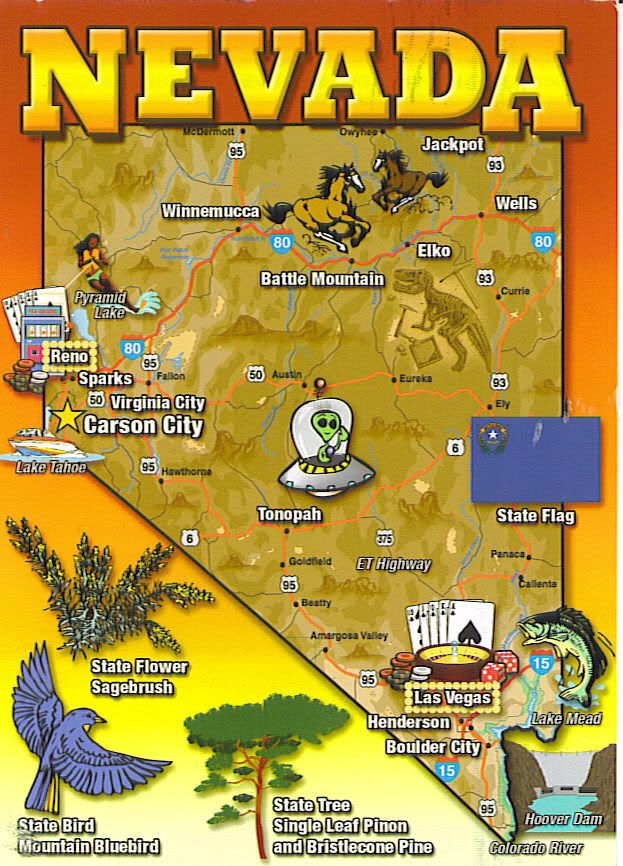
According to an article published in the May 13, 1928, edition of the Humboldt Star, a nine-foot-tall red-haired mummy was discovered deep inside the Lovelock Cave, located twenty miles south of the town of Lovelock, Nevada. Isolated on top of a high hill, the cave is estimated to be 40 feet deep and 180 feet wide. The Piute Indians told the early Nevadan settlers fantastic stories about the origins of the cave, including tales about their fierce battles with red-haired white giants. In their oral history they claimed to have cornered the remaining giants in Lovelock Cave. Once the giants were trapped, the Piutes blocked the entrance with sagebrush and set it on fire. They reportedly stoked the fire until all the remaining giants had been smothered by smoke.

Further evidence supporting local legends about giants had emerged in 1911 when a mining company plowing for bat guano in Lovelock Cave began to find amazing artifacts. They discovered layers of burned materials and broken arrows that validated the Piutes' claims. Further down they found the remains of giant red-haired mummies, along with strange stone artifacts and shells carved with mysterious symbols. As usual most of these artifacts were either lost or fell into the hands of private collectors who whisked them away. One museum did manage to preserve some of the items discovered at Lovelock Cave.

The Humboldt County Museum at Winnemucca, Nevada, has in its collection a skull from one of the giants. Stan Nielsen, the famed treasure hunter, pilot, and photojournalist, went to investigate this skull with some dental plaster and a camera. The museum curator graciously allowed Nielsen to compare the plaster model of a normal-size man's jaw with a jaw of one of the giants found in the museum's collection. The photographic evidence clearly shows the vast difference in size between the plaster model and the immense jaw from the giant skull. What's more amazing is that anyone can see this skull for themselves by contacting the friendly staff at the Humboldt County Museum. Recent e-mail transactions have verified that some of the sensational Lovelock Cave artifacts, including a giant skull, are being kept in the back room of the museum.

This event--the killing of this tribe--took place about five or six hundred years ago, long after eastward traveling proto-Germanics may have crossed the Bering Strait land bridge. One curious note is that during the global flood which followed the last "plate shift" 12,000 years ago, California's huge Central Valley was flooded by the ocean. It was literally part of the Pacific Ocean, and the "coast" would have come right up close to northern Nevada. That dynamic may have existed right up to five or six thousand years ago. Could this red-haired tribe--which most clearly was of an Indo-European type based on the existing skulls--have been a last remnant of ancient eastward-migrating proto-Germanic people? Maybe they were part of, or descended from, a more recent westward traveling group? Could this tribe have traveled by boat--possibly either around the tip of South America, or even across the waters north of Canada and Alaska--thousands of years ago to this ancient inland coast? Were these people among the last remnants of the migrating post-glacial movement (actually "post-plate shift") "Týrlanders" In North America?


There are some issues that need to be addressed regarding what is known about this mysterious tribe. First, the archeological establishment clearly isn't having any of it. To them, these are "Native Americans," plain and simple, despite CLEAR evidence to the contrary! Next, I have seen some of the old photographs which were taken prior to these mummies being taken away and "lost." They were quite similar to the Tarim mummies. They appeared as "Norse-looking," and with red hair as was evident even in the black and white photographs. They were more "mummified" rather than mummies from a burial rite. It isn't likely that they were Vikings, since red hair is not common in Scandinavia in particular. I would love to know what those "mysterious symbols" looked like. If, for example, there was a triskelion symbol, then this would be a closed issue. Since some of those symbols still exist for public view, we need to see them! If anyone reading this lives or will be near Winnemucca, and is interested in this subject, then by all means get permission and get in that back room and take some pictures!!

Next, evidently, only two of the remains were incredibly tall--about eight and a half feet--while the rest apparently averaged between six and a half to seven feet..... which would only be about six inches taller than the average height of modern Montenegrins (6'3"). If these were pure proto-Germanics, then this "giant concept" would not be all that amazing. That is pretty damn tall though! In addition, they didn't live in that cave. Apparently, the Piutes used that cave for food and storage, so it would seem that most of the artifacts were Piute. However, since the symbols were alien to them, they were likely from this mysterious tribe... and certainly we need to see them. In other words, they weren't "cave men." As far as cannibalism, we probably will never know. Perhaps during this war, there was an act of cannibalism, or maybe there was propaganda among the Piutes to get them in a war mode. If this tribe was perhaps seventeen inches taller on average than the Piutes, coupled with the fact that they were at war, then exaggerations were possible... "giants."

Lastly, the "dental comparison" isn't quite as incredible when you overlay the normal dental mold directly over the teeth of "the giant." It's certainly big, but not all that comparatively "giant." Look for yourself. Definitely big... but not so "giant." Also, based on the remaining skulls, the report of these people as having "layers of teeth" seems to have been a misrepresentation of the initial evidence. This was certainly a big tribe though, and probably were part of a really big strain of ancient pure "Týrlander." You can't really think only of modern Scandinavians--the purest modern Teutonic strain--as far as comparison. The average height for males in Scandinavia is just under 5'11," which is tall for an average height, but may have been on the short side in ancient "Týrland." However, this mysterious tribe must have been an unusually tall sub-grouping.

Video: Nevada - Spirit Cave and Lovelock Mummies

 
~~~ Týrland was the Arctic homeland ~~~

Proven.

.