Showing posts with label California. Show all posts

Monday, February 7, 2022

Ticinese heritage in the wine country

The Swiss Hotel

History

[From SwissHotelSonoma.com]

In 1835, fifteen years before the Bear Flag Rebellion that established the California Republic, Mexican General Mariano Vallejo laid out the streets of Sonoma around an 8 acre town square. The square is known locally as The Plaza, and is the crown jewel of Sonoma’s architectural heritage.

Between 1836 and 1840, the General’s Brother, Don Salvador Vallejo, built his family home in the middle of the block on the north side of the Plaza. That beautiful adobe structure still stands today. As a hotel, the home is said to have served as a stagecoach stop in the 1870’s. In 1892 it was acquired by the Toroni family and run as the Ticino Hotel, serving railroad passengers and employees who stopped in Sonoma to spend the night. When another hotel on the west side of the Plaza burned to the ground, the Toronis simply took its name for their own, and to this day the Vallejo home is known as the Swiss Hotel.

Hank Marioni is the fourth generation of his family operating the Swiss Hotel as a hotel and restaurant. His great grandfather, Mose Mastelotto, purchased the building in 1923, and it passed from him to his daughter, Antonetta and her husband Henry Marioni in 1929. In 1945, their daughter, Helen, and her husband Ted Dunlap took over, running the Swiss Hotel until 1991. At that time, their nephew Hank Marioni spent one and a half years remodeling and retrofitting the building, and re-opened the Swiss Hotel as a modern hotel and restaurant while preserving the historic charm.

With a bar that is virtually unchanged through four generations, and walls covered with a photographic history of the town, its people and notable visitors. The Swiss Hotel remains today, as it has for well over 100 years, a beautiful reminder of Sonoma’s colorful past.


*************************


Deep Ticinese roots

Backdated from 9-7-22

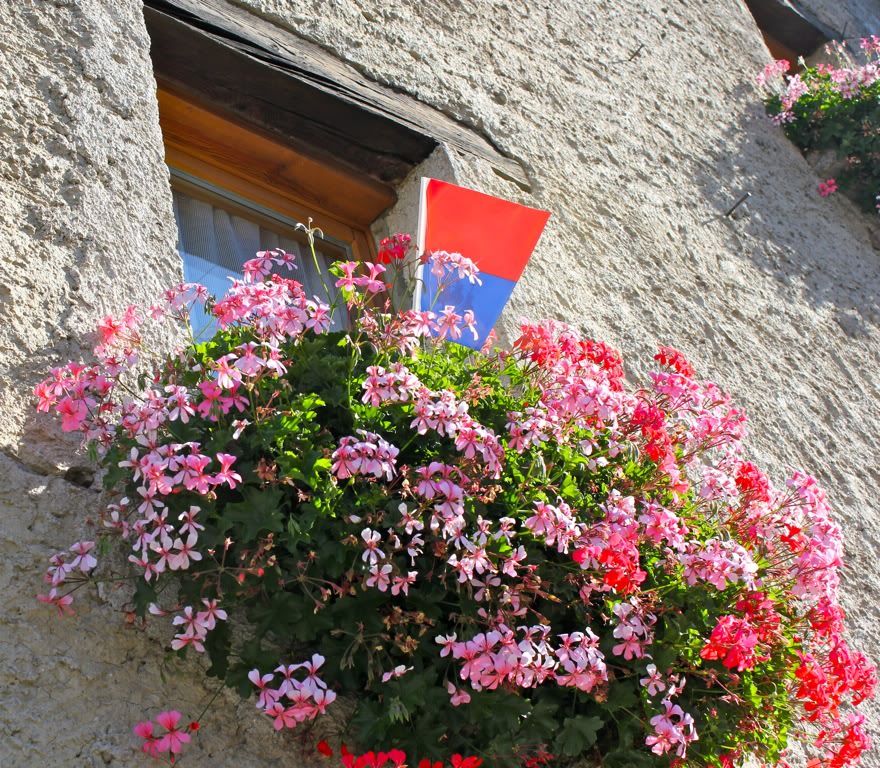
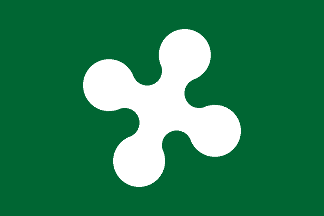
After a long period of disarray, I'm currently living in Sonoma, California. The weather is blazing hot compared to coastside, where heat waves only last two to three days. You don't even need to look at the weather report here during the summer. With a population of only 10,739, the surrounding farmland dwarfs the residential area. The Sebastiani Winery is just down the highway, maybe just over a mile away. The decorative flags downtown reflect the regions' old roots: American, Californian, Mexican, Italian, Spanish, French, English, and Swiss which essentially represents Ticinese roots... although there had also been Swiss German farmers in the distant past.

Ticino--just like the Val Camonica, Valtellina, Val Chiavenna, or the Bergamo Alps--is culturally and liguistically Alpine-Lombard. Along with Italian or Swiss flags, once in awhile a flag of Ticino can be spotted. Ticinese or Swiss Italian heritage is historically connected with San Francisco, San Mateo County, Marin County, Sonoma County, and Napa County. A few months ago back in Brisbane, I noticed a flag of Ticino attached, with a forward mounting bracket, to a fence in the Brisbane hills. Spiritually, I feel like it's a small expression of deep cultural continuity for me across the 60 mile trek from home.

.

Sunday, July 28, 2019

New book about the history of Ticinese farmers in West Marin

'New book tells of West Marin’s first farmers'
 

By Silas Valentino - Point Reyes Light - February 8, 2018

It’s a timeless tale: people emigrate from their countries of origin for a chance at prosperity in America. In West Marin, many of the early settlers who established dairies and ranches with names still recognizable today hailed from the same region of Switzerland, near the border of Italy.

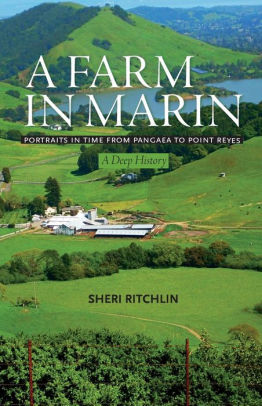
The bridge between Ticino, Switzerland and West Marin receives a thorough historical polishing in a new book by Sheri Ritchlin, “A Farm in Marin: Portraits in Time from Pangea to Point Reyes.” It’s chockablock with deeply researched information to reflect the past from both sides of the immigrant’s journey.

Ms. Ritchlin begins her investigation with the chapter called “Earth Time,” which briefly reinterprets North America’s 15 billion-year-old existence, before following migration patterns from ancient Rome to Milan and, finally, Ticino. Spliced throughout the book are personal anecdotes of her own story in West Marin and family tales from the farm she lived on.

Ms. Ritchlin, who splits her time between West Marin and Ovando, Montana, built her book on interviews with descendants, newspaper clippings, diary entries and fully reprinted, 19th-century letters from the likes of Oscar Shafter, whose family held a land empire on Point Reyes. The book, published by Pointer Oak in October, was the result of 10 years of writing and a successful Kickstarter campaign.

West Marin’s past first captured Ms. Ritchlin while she was a student at the California Institute of Integral Studies over a decade ago. She was living in a 1972 cabover camper at the Ed and Susie Grossi ranch, near the Sonoma County border, where she helped in the vegetable garden. Anecdotes of the family’s origins piqued her interest and she began her research, using the Grossis as her north star. David Rolland’s “Light on the Old Country” series in the Light from the 1990s, for which the writer traveled to Switzerland and Croatia to report on West Marin’s early ancestors, was one of the book’s inspirations.

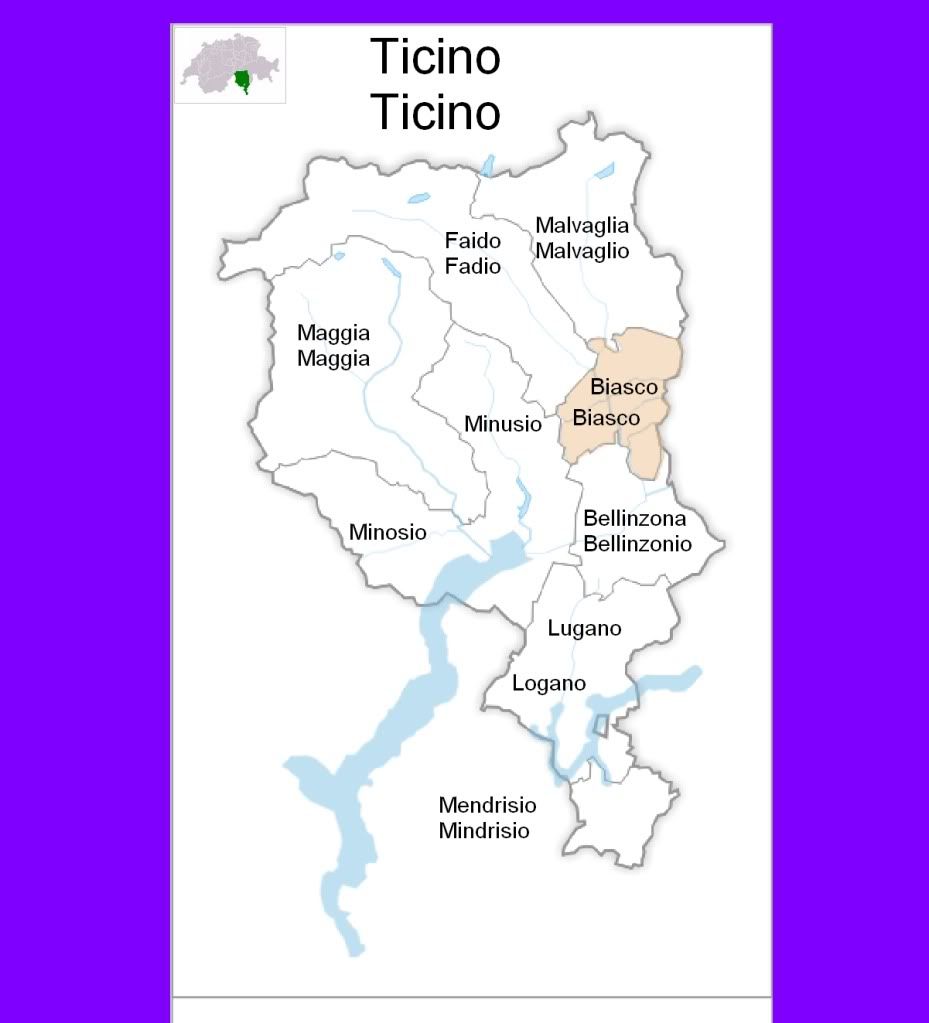
Many West Marin ranch families immigrated to the States from the same corner of the Alps: Ticino (pronounced Ti-CHEE-no). The Italian-speaking region is located in southern Switzerland, close to Milan. While Ticino features rolling green hills akin to West Marin’s, the Swiss Alps are more rugged and sharp—think Matterhorn, not Black Mountain.

The more information Ms. Ritchlin dug up, the clearer the bridge between these places came into view.

The Swiss immigrants began arriving in waves to West Marin, following in the footsteps of their family and fellow Ticino villagers until the ’30s when the United States government slapped quotas on immigration. “Word in Ticino was, ‘Look for old man Grandi, he speaks the language and he’ll help you find a job,’” she said.

The names of the immigrants who poured into West Marin during the second half of the 19th century read like the freshman orientation of West Marin’s first graduating class: Spaletta, Martinelli, Dolcini, Grossi, Cheda and Giacomini.

“In 1860, we find Antonio Jacomeni (as spelled on the census) working on a ranch in Tomales,” she writes. The 1870 census showed that of the 320 people living in Olema, 47 were dairy workers from Ticino, including seven Cheda family members.

By 1886, the Marin Independent Journal would report that of the 8,000 Ticinesi living in California, “about one third reside in Marin County.”

“Already, the Ticinesi are beginning to leave their mark on the Marin landscape, bringing with them the humble skills that had been essential to their survival along the steep valleys of southern Switzerland and will now bring them a share of California gold,” Ms. Ritchlin writes.

Sadly, an unfortunate thread of xenophobia also connects yesteryear with today. Letters to the editor of that era revealed complaints about how these new neighbors were acquiring land and job opportunities. “California is going, and will keep on going to ruin, if these detestable Swiss, Portuguese and Chinese are not politely invited by Uncle Sam to take up their bed and walk to—well, to the shades from whence they came I suppose,” an unidentified “unemployed man” in Olema wrote to the I.J. in January 1870.

But not all reactions to the influx of immigrants were negative. Historian Dewey Livingston dug up a quote from 1881, sourced from an unknown speaker in Olema, that depicted a community beginning to meld together, if with the help of humor: “Several marriages have taken place among the Swiss population. We should give their names to an expectant public, if in the first place we could remember them, and if in the second place we could spell them.”


************


'A Farm in Marin: Portraits in Time from Pangea to Point Reyes' (By Sheri Ritchlin - 2017)


************


Businesses advertised withing the article, owned by a few of the old local Ticinese families....


.

Saturday, July 28, 2018

Rediscovering people's Swiss-Italian roots (Australia, California)


Rediscovering people's Swiss-Italian roots

SWI swissinfo.ch - English


Many people with Swiss-Italian roots who responded to a swissinfo survey last year, recalled their first visit to the land of their ancestors. (Production, photograph/old postcard selection: Christoph Balsiger)


.

Saturday, August 6, 2016

"Bridge of the Gods"


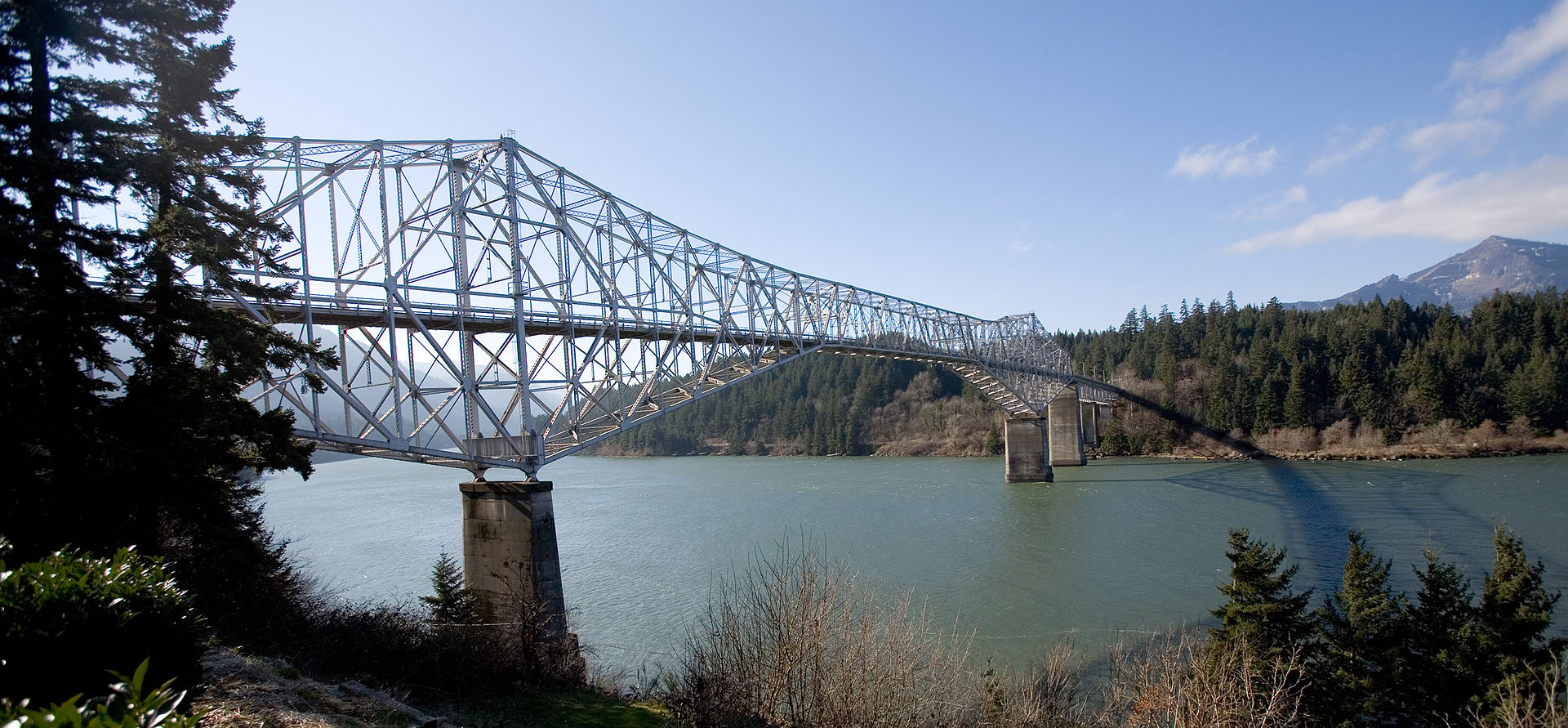
The Bridge of the Gods, which separates Oregon and Washington, was featured in the 2014 film 'Wild'. The steel bridge, constructed in 1926, sits beautifully amid the great trees and mountains of the Pacific Northwest. At least to me, the name and location holds an Odinic feel to it... the Norse Gods.... the Great North.


Bridge of the Gods

The Bridge of the Gods is a steel truss cantilever bridge that spans the Columbia River between Cascade Locks, Oregon, and Washington state near North Bonneville. It is approximately 40 miles (64 kilometers) east of Portland, Oregon, and 4 miles (6.4 km) upriver from the Bonneville Dam. It is a toll bridge operated by the Port of Cascade Locks.

The bridge was completed by Wauna Toll Bridge Company and opened in 1926 at a length of 1,127 feet (343 m). The higher river levels resulting from the construction of the Bonneville Dam required the bridge to be further elevated in 1940 and extended to its current length of 1,856 feet (565 m). The Columbia River Bridge Company of Spokane, Washington, acquired ownership of the bridge in 1953 for $735,000. The Port of Cascade Locks Commission now operates the bridge.

The bridge is named after the historic geologic feature also known as Bridge of the Gods.

The Pacific Crest Trail crosses the Columbia River on the Bridge of the Gods, and the lowest elevation of the trail is on this bridge.


View of 'Bridge of the Gods' Columbia river, Oregon/Washington State line

shikharp


Wild - Movie Review

Chris Stuckmann


*************************

Wild (2014 film)

Wild is a 2014 American biographical drama film directed by Jean-Marc Vallée. The screenplay by Nick Hornby is based on Cheryl Strayed's 2012 memoir Wild: From Lost to Found on the Pacific Crest Trail. The film stars Reese Witherspoon as Strayed, alongside Laura Dern (as Strayed's mother), with Thomas Sadoski, Michiel Huisman and Gaby Hoffmann among several others in supporting roles.


Plot

In June 1995, despite a lack of hiking experience, recent divorcée Cheryl Strayed (Reese Witherspoon) leaves Minneapolis, Minnesota, to hike 1,100 miles of the 2,650-mile Pacific Crest Trail on a journey of self-discovery and healing.


*************************


Storyline

With the dissolution of her marriage and the death of her mother, Cheryl Strayed has lost all hope. After years of reckless, destructive behavior, she makes a rash decision. With absolutely no experience, driven only by sheer determination, Cheryl hikes more than a thousand miles of the Pacific Crest Trail, alone. Wild powerfully captures the terrors and pleasures of one young woman forging ahead against all odds on a journey that maddens, strengthen, and ultimately heals her.

-- Spencer Higham


*************************

I viewed this movie without any expectations. I'm not going to review the movie, which would be a difficult movie to review for various reasons. I just think that the loosely structured Pacific Crest Trail, as it was portrayed, provided an interesting backdrop for the film and the protagonist's journey and reflection. Just making it to the first stopover was important, and a milestone; and a symbolic milestone for someone starting to rebuild their life. I think the movie created renewed interest in this trail, the book, the Bridge of the Gods, and just for hiking itself.

Last evening at twilight, I went for a short hike. Having not hiked for awhile, I found it healing. I saw an owl flying during the daylight; a scene which I had never observed before. It was actually a light grayish color, different than the dark shadow that we may see at night. A new rustic style fence was constructed along a trail, and I was able to smell the cedar. Sometimes at certain spots, especially with fog obstructing the distance, it can feel momentarily feel like "the edge of forever." It was all a good remedy for a melancholy mood.


.

Monday, July 4, 2016

A.C. Milan coming to Chicago, San Jose, and Minneapolis during the next 30 days

Ticketmaster

Schedule:

July 27
Milan vs. Munich
Soldier Field, Chicago

July 30
Milan vs. Liverpool
Levi's Stadium, Santa Clara

August 3
Milan vs. Chelsea
U.S. Bank Stadium, Minneapolis

Coincidentally, the three locations are somewhat close to what had been "Little Lombardys" a century ago (San Rafael CA, Rockford IL, Duluth MN).

.

Wednesday, July 15, 2015

Stella Natura: The Light of Ancestral Fires


Apparently, Stella Natura was an annual concert which started in 2008; and featured various local and international Euro-pagan metal bands and perhaps other types of music. The last concert was held in 2013 in the Tahoe National Forrest. I don't know if this was the location for all of them. It appears that these concerts ran day and night, and perhaps through the weekend; sort've like Ozzfest with quite a few bands, and even different stages. I found out about Stella Natura only after it became defunct. The details are in the link above. It sounds like it was such a great idea. You may see some of the footage in a YouTube "stella natura" search. Perhaps the lesson here is to be smaller and more practical. Maybe only a few bands in a less remote area close to urban centers would work? The Asatru Folk Assembly was one of the sponsors of these concerts. A few images can be found at the Stella Natura facebook page.

Below is footage from the 2012 concert, by an an Australian band called Ironwood. Again, these are mostly Odinic concerns. "Ironwood" is a mystical forest in Norse mythology.


Anarchists and the anti-labor left

A small coalition of people decried Stella Natura as "Fascist." Benito Mussolini, when asked for a definition of Fascism, responded with an answer: "Corporatism".. and obviously the connection between giant corporations and banks with the state. How is some concert "Fascism?" How about Wal-Mart? How about the Bank of International Settlements? How about the American corporations which arm the world, and manufacture the weapons of war right here in this country? They leave them alone. It apparently makes more sense to them to attack some non-political concert. The truth is that the Neo-Liberals and Neo-Conservatives have been in bed with transnational corporations for decades, and have collectively supported every anti-labor outsourcing and trade measure.

Since virtually every person who is fanatical against anything regarding European identity on this marginal level is white--typically from well-to-do families--it does seem strange that they ignore the fact that the state of California is overloaded with identity-specific associations of every kind. All one has to do it look. Social, political, religious, economic, professional, financial, men, women, youth, etc.; all with their doors locked to anyone outside of their ethnic or cultural group. Remember, these were just concerts, and were of a non-political and spiritual nature. Right near where I live, there's a sizable hospital dedicated to one specific ethnic group. It seems almost fantastic, but it's right there on the sign for anyone to read. There's a nearby employment agency dedicated specifically to one particular ethnic group... clearly stated on the window. There's another nearby health center that is dedicated to "recovery" from addictions, such as smoking, drinking, or drugs... and yes, it's dedicated only for one particular race. Says so right on the sign... in nice big letters. C'mon... recovery?? I'm just playing the devil's advocate here. Where's the consistency? The old aristocracy never really went away, they just became liberals. The type of people who have "conditions for friendship," based on politics. This is the result of people who never had to struggle in life for respect.

These Anarchists leave even these extreme examples of "identity" alone. They leave even the arms manufacturing companies alone. They leave the strip mining and fracking companies alone. One strip mining corporation in Arkansas armed a rebel group in a very poor country some years ago, and directly caused thousands of innocent people to get slain; just to get at those resources, which they did once the new regime came into power. They leave people like that alone. I couldn't find where any "Anarchist" ever mentioned this company--much less the CEO!--in any capacity... which intellectually should remove their anti-Fascist status. Well, if they don't care about the Communists murdering 200 million innocent people in the last century, I doubt they would care about "consistency." They're more worried about a concert, and people having a good time in a remote location. If there would somehow be a true political-intellectual public debate in which every established fact must be internalized right down to its logical conclusion, and every internal contradiction must be worked out.... there wouldn't be any "right" or "left" in this country anymore. Politics is the only science in which facts mean virtually nothing.

.

Thursday, June 4, 2015

Swiss-Italian Immigrants Found Marin "Just Like Home"


Swiss-Italian Immigrants Found Marin "Just Like Home"

By Marilyn L. Geary - 'Anne T. Kent California Room Community Newsletter' - April 09, 2013

[Above, clockwise from back left: Isadore, Arcangelo, Giacondo and Romeo Cerini; undated] 

When Giocondo Cerini arrived in Tomales in 1910, he found so many family members, friends, and acquaintances that he said “it was just like home,” according to a 1994 interview in the Point Reyes Light.  His aunt Carrie Piezzi, along with two of his brothers and many fellow Swiss-Italians, were there to welcome him.

Giocondo was born in 1894 in Giumaglio, a small village in the Vallemaggia region of the Ticino Canton in Switzerland.  Giocondo’s brothers Isadore and Romeo had left Giumaglio in 1901, their sister Adele in 1904, sister Caterina (America) in 1906, and brother Arcangelo emigrated in 1914.  Of the eight children born to Giovanni Cerini and Angelina Piezzi Cerini in Giumaglio, six left home to settle in the ranch lands of Marin and Sonoma counties.

On arrival in Marin, Giocondo worked on the dairy ranch of Maurizio Sartori, a pattern followed by many immigrants who worked for compatriots until they saved enough money to lease or purchase their own ranches. Along with two of his brothers, Arcangelo and Romeo, Giocondo saved enough money to purchase the historic John Keys ranch in Tomales. Brother Isadore operated a garage in town. Unfortunately the two sisters died not long after arrival, America from consumption at age 18 and Adele probably from complications of childbirth.


The Cerini family is just one of hundreds in the Vallemaggia that lost family members to Australia and America. During a period of some eighty years, from the 1850s through the turn of the century, over 27,000 emigrants left Ticino to find a better life. Despite obstacles, many of the immigrants succeeded through hard work and determination to own and operate successful dairy ranches in California.

For more on the history of local Swiss-Italian ranchers and their ancestral home, join Marilyn L. Geary for an illustrated presentation April 18th, 2013 from Noon to 1pm in the Marin County Civic Center, Room 330, San Rafael.  


**************************************************

Paull Morton wrote:

Interesting article

I am from Perth , Australia and my Great Great grandfather Natale Cerini emigrated to Bendigo goldfields in Victoria , Australia from Giumaglio at age 14 with a cousin Pietro Cerini also 14 and another G. Cerini (Giacomo or Guiseppe perhaps?) in the 1850`s


**************************************************

Claudio Caccia wrote:

I am from Maggia (a Comune that since 2010 includes the ex-Comune od Giumaglio), Vallemaggia, Switzerland and by pure coincidence I read the article above and the comment. We must somehow be related, since my Grandma Maria Cerini (married Genazzi, born in Giumaglio July 16th 1890, died in Maggia January 29th, 1995) was the sister of the above mentioned Isidoro, Arcangelo, Giocondo, Romeo, Adele, Caterina (America) and the other brother that remained here in Switzerland! By the way, I remember my Grandma saying she was ment to leave too, but here mother desperately needed her here. A big hello to all of you


.

Thursday, May 21, 2015

Swiss Italians in Australia


It should be clarified that the proper term is "Swiss Italian," not Italian Swiss. As has been covered here before, an immigration--earlier than that to California--had been to the state of Victoria, Australia. Just like with other smaller Alpine regions, such as Val Camonica or Valtellina, the Swiss Italians/Ticinese have a local type of cuisine. It appears that there were many similarities between the California settlers and the Victoria settlers.


Swiss Italians of Australia

Swiss Italians of Australia, are Italian-speaking Swiss that settled in Australia during the 1850s and 1860s. The Swiss Italians initially settled in the area around Daylesford, Victoria. The Swiss settlers were from the canton of Ticino and the southern part of Graubünden

The influence of the Swiss Italians of Australia—Italian-speaking Swiss from the cantons of Ticino and Grison and the northern Italians is still present in the township of Hepburn Springs—through the names of its residents, the names of its springs (Locarno) and buildings (Savoia Hotel, Parma House, Perinis, Bellinzona) and the annual Swiss-Italian Festa.

The heart of the Italian-speaking community was the area around the Savoia (Spring Creek) Hotel and the Macaroni Factory. The Savoia is named after the royal family of unified Italy. An Italian reading library was located at the hotel and pasta was made opposite in Lucini's Macaroni Factory which was also home to the Democratic Club. Lucini's moved from Lonsdale Street, Melbourne in 1865, where they had set up as the first pasta factory in Australia in 1864. Vanzetta's bakery supplied bread to the community and Crippa, Perini, and the Gervasoni's (Yandoit Creek) produced wine.

In 2007 the Melbourne Immigration Museum featured a display entitled Wine Water and Stone reflecting the Swiss and Italian heritage of the area.


Swiss Italian food and culture

The Swiss Italians loved sport, food, and music. Their influence on local culture is celebrated annually during the Swiss Italian Festa. Swiss Italians of Australia have made their mark in spheres of art, music, literature, journalism, sport, education, science, and engineering.

A local delicacy is bullboar, which is a sausage made from beef, pork, garlic, and spices. Local families jealously guard their recipes. In 2005 Daylesford Secondary College came in second place in the Australian Broadcasting Corporation's Young Gourmets by making bullboars from the Gervasoni and Sartori recipes, which gained much media attention over the fate of Charlotte the pig, with little concern for the steer involved. The bullboar has been named an endangered recipe by the Slow Food Movement.


The Hepburn Springs Swiss and Italian Festa is an annual  five day celebration in late October of the area's Swiss Italian and Northern Italian heritage, with music, food, art, wine etc. Ticino and Val Camonica are very kindred cultures, both being Lombard-speaking mountain communities. The Lombard cultural relationship doesn't just end because some long ago German king decided to build a fence. This is a part of our culture as well. 

There are local (Bay Area) Swiss Italian events, and in other parts of the state, but they're hard to find as they would usually only pertain to those of that cultural family; and perhaps through the "Pro Ticino" clubs. However, there should basically be no difference between--for example--the Ticinese of west Marin County and the Milanese of east Marin County. Not only does the canton of Ticino border with the province of Milano, but both are from the same "West Lombard" dialect.


I came across an article on the Switzerland information website entitled 'Italian Swiss... or Swiss Italians?' Although interesting, that issue has been covered here before. Still, I wanted to link it for anyone interesting in reading up on it. The Ticino question becomes important to us partly because of the large past immigration in a few areas, and because we should bridge the gap finally with the idea of "Lombard cultural identity."

The "clan" concept is great, but let us not forget the ancient nation of Lumbardia. One "Lumbard" cultural family: Bergamo, Brescia/Val Camonica, Como, Cremona, Lodi, Mantova, Milano, Monza/Brianza, Pavia, Sondrio (Valtellina/Valchiavenna), Süd Graubünden/Val Poschiavo, Ticino, and Varese.

.

Sunday, May 17, 2015

Dr. Fiorella Terenzi - Famous Lombard astrophysicist

Fiorella Terenzi

Fiorella Terenzi is an Italian-born astrophysicist, author and recording artist who is best known for taking recordings of radio waves from far-away galaxies and turning them into music. She received her doctorate from the University of Milan but is currently based in the United States.

Described by Time magazine as "a cross between Carl Sagan and Madonna", Dr. Terenzi has studied opera and composition at Conservatory G. Verdi, Corsi Popolari Serali and taught physics and astronomy at various U.S. colleges and universities; she is currently on the full-time faculty at Florida International University in Miami. In research at the Computer Audio Research Laboratory, University of California, San Diego, she pioneered techniques to convert radio waves emanating from distant galaxies into sound, with some of the results released by Island Records on her acclaimed CD Music from the Galaxies. The goal of her audiofication/sonification of celestial data is to investigate how sound could reflect chemical, dynamical and physical properties of celestial objects, what she calls "Acoustic Astronomy."


Website of Dr. Fiorella Terenzi

Fiorella Terenzi YouTube channel

**************************************************

Dr. Fiorella Terenzi song "Eternal"

Astro-physicist and composer Fiorella Terenzi has used the most modern radio-tele- scopes and computers to convert the natural radiation from a galaxy designated UGC6697 into the audible range then add instrumental harmonies.


.
Wednesday, October 29, 2014

Retracing the steps of Ticino emigrants


From the video description (YouTube channel swissinfovideos):

A group of people from Ticino retrace the first steps of many emigranti on their way to Australia or the United States. At the top of the Sassello pass, they sing the emigranti song, Do you want to come to America? 

.

Thursday, March 7, 2013

The Arctic Home in the Vedas: Part 9

The Týrlanders
 
About every 45,000 years, after the two poles have attained enough of the earth's water within their massive frozen zones, the outer crust of the earth moves about 2,000 miles like a loose outer layer of an orange. This last happened about 12,000 years ago. It wasn't really a "pole shift," but a tectonic "plate shift." The direction of this movement was southward from the standpoint of North America, and northward from the point of view of Eurasia. Therefore, North America melted and became a temperate climate zone, while Eurasia was thrust up towards and even into the arctic. This caused an immediate and dramatic earth change. For example, mammoths died and froze so quickly that some are still being found in perfectly preserved condition.

Some of the Mongol (the sub-racial meaning) ancestors of Amerindians were forced to migrate over the frozen land bridge between Siberia and Alaska, which would be almost like going south at that time in terms of climate. People from the proto-Germanic homeland, which was somewhere along the Kara Sea in northern Eurasia, suddenly found themselves living near or even above the Arctic Circle, which directly ties into Bal Gangadhar Tilak's theory in 'Arctic Home in the Vedas'. In other words, it's not a "theory," but a fact. It should be noted that this very ancient proto-Germanic homeland had a climate and terrain which was probably much like Montana. The only feature of Tilak's theory which wasn't really true was that he lumped all modern Europeans into one basket and sincerely proclaimed point-blank that they weren't native to Europe originally. This was what I would call a half-truth which he overlooked.

The proto-Germanics seemed to continue to live in this homeland--let just call it "Týrland" after what seems to have been the chief god of the proto-Germanics at one time, until if and when someone comes up with a better name--for a period of time until migrating to other lands. Some migrated to a land which later became known as the Tibet Autonomous Region, and although there isn't a trace of them left, modern natives of this region still use a version of the proto-Germanic triskelion as one of their most sacred symbols. Some migrated down into lands east of the Caspian Sea and north of the Himalayas, like the Tarim Basin. Some then continued to migrate into what is today Iran, and then eventually their uniracial/interethnic (I'm guessing "Balkan-looking"; Note: White "interethnic," not "interracial") descendants into the Indus Valley. I believe that others migrated into ancient Assyria. Still others migrated into Europe, where they merged with native "Alpine" proto-Europeans in many places to produce the Celtic-cultures; and eventually they moved in mass into northern Europe, and being checked at the border of ancient Gaul (for a while).


Eastward migration after the "plate-shift?"

Could some of the ancient "Týrlanders" have migrated eastward, and even into the Americas? "Kennewick Man"--found near Kennewick, Washington--comes to mind, but we still don't know the origins of this man. The Army Corps of Engineers purposely destroyed the area of this find so no further evidence can be found there; as well as outrageously mismanaging the remains, compromising any future DNA studies of it. All we really know about Kennewick man is that he lived over 9,000 years ago and clearly had a Caucasian skull type. He could have been proto-Germanic, originating from a genetic migration from either the eastern or western land bridges. He may have been an ancient proto-European (non-Germanic) type who was part of a westward migration; or he may very well have been part of an ancient migration of Ainu people, who were a "Caucasian-like" people whose true origins are unknown.


Clearly based on their actions, the establishment does not want any of us to look at the evidence of Ainu, proto-Germanic, Chinese, Egyptian, Phoenician, proto-European/Welsh, Roman, ancient Hebrew, or Viking movements into the Americas. Only Leif Erikson is "allowed" to have been the sole non-Amerindian to have visited the pre-Columbian Americas, despite clear evidence to the contrary. Very clear non-Amerindian artifacts--like those left by Chinese travelers on Victoria Island, or Egyptian artifacts found along the Mississippi River and in the Grand Canyon--are either permanently put away in storage or disappear into private collections. Curiously, the Amerindians on Victoria Island today look much more Chinese than Amerindian. Usually numerically smaller cultures who are absorbed into larger ones are just thought of as being "one people" at the end of the day. However, for some reason, the establishment has decided on their own that Amerindians are the ONE exception to this rule, and other peoples/cultures may not be discussed.

Excerpt from pages 97 and 98 of 'The Suppressed History of America' (Schrag; Haze; 2011):

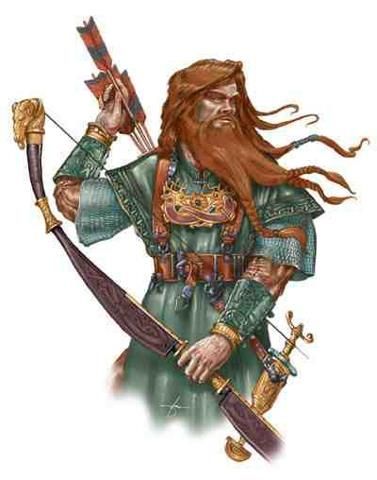
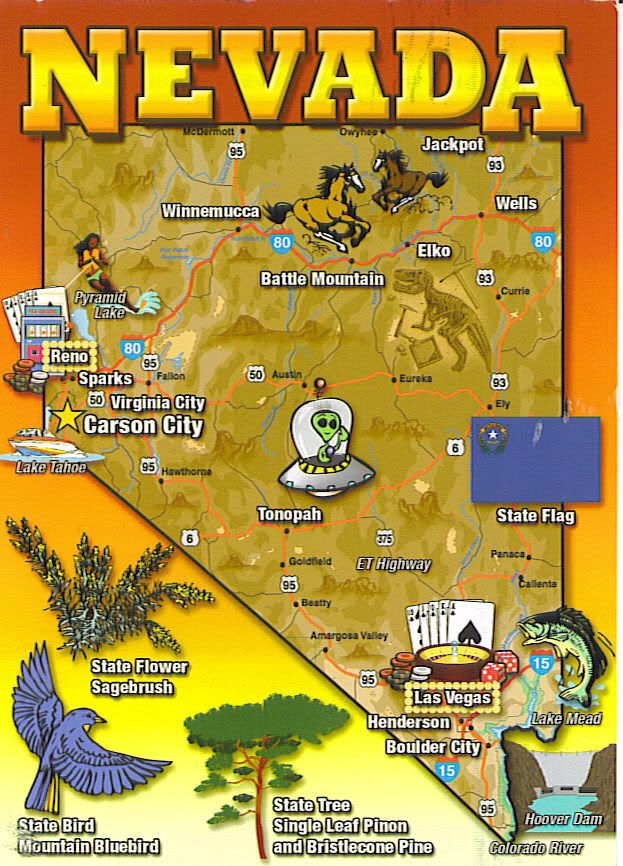
According to an article published in the May 13, 1928, edition of the Humboldt Star, a nine-foot-tall red-haired mummy was discovered deep inside the Lovelock Cave, located twenty miles south of the town of Lovelock, Nevada. Isolated on top of a high hill, the cave is estimated to be 40 feet deep and 180 feet wide. The Piute Indians told the early Nevadan settlers fantastic stories about the origins of the cave, including tales about their fierce battles with red-haired white giants. In their oral history they claimed to have cornered the remaining giants in Lovelock Cave. Once the giants were trapped, the Piutes blocked the entrance with sagebrush and set it on fire. They reportedly stoked the fire until all the remaining giants had been smothered by smoke.

Further evidence supporting local legends about giants had emerged in 1911 when a mining company plowing for bat guano in Lovelock Cave began to find amazing artifacts. They discovered layers of burned materials and broken arrows that validated the Piutes' claims. Further down they found the remains of giant red-haired mummies, along with strange stone artifacts and shells carved with mysterious symbols. As usual most of these artifacts were either lost or fell into the hands of private collectors who whisked them away. One museum did manage to preserve some of the items discovered at Lovelock Cave.

The Humboldt County Museum at Winnemucca, Nevada, has in its collection a skull from one of the giants. Stan Nielsen, the famed treasure hunter, pilot, and photojournalist, went to investigate this skull with some dental plaster and a camera. The museum curator graciously allowed Nielsen to compare the plaster model of a normal-size man's jaw with a jaw of one of the giants found in the museum's collection. The photographic evidence clearly shows the vast difference in size between the plaster model and the immense jaw from the giant skull. What's more amazing is that anyone can see this skull for themselves by contacting the friendly staff at the Humboldt County Museum. Recent e-mail transactions have verified that some of the sensational Lovelock Cave artifacts, including a giant skull, are being kept in the back room of the museum.

This event--the killing of this tribe--took place about five or six hundred years ago, long after eastward traveling proto-Germanics may have crossed the Bering Strait land bridge. One curious note is that during the global flood which followed the last "plate shift" 12,000 years ago, California's huge Central Valley was flooded by the ocean. It was literally part of the Pacific Ocean, and the "coast" would have come right up close to northern Nevada. That dynamic may have existed right up to five or six thousand years ago. Could this red-haired tribe--which most clearly was of an Indo-European type based on the existing skulls--have been a last remnant of ancient eastward-migrating proto-Germanic people? Maybe they were part of, or descended from, a more recent westward traveling group? Could this tribe have traveled by boat--possibly either around the tip of South America, or even across the waters north of Canada and Alaska--thousands of years ago to this ancient inland coast? Were these people among the last remnants of the migrating post-glacial movement (actually "post-plate shift") "Týrlanders" In North America?


There are some issues that need to be addressed regarding what is known about this mysterious tribe. First, the archeological establishment clearly isn't having any of it. To them, these are "Native Americans," plain and simple, despite CLEAR evidence to the contrary! Next, I have seen some of the old photographs which were taken prior to these mummies being taken away and "lost." They were quite similar to the Tarim mummies. They appeared as "Norse-looking," and with red hair as was evident even in the black and white photographs. They were more "mummified" rather than mummies from a burial rite. It isn't likely that they were Vikings, since red hair is not common in Scandinavia in particular. I would love to know what those "mysterious symbols" looked like. If, for example, there was a triskelion symbol, then this would be a closed issue. Since some of those symbols still exist for public view, we need to see them! If anyone reading this lives or will be near Winnemucca, and is interested in this subject, then by all means get permission and get in that back room and take some pictures!!

Next, evidently, only two of the remains were incredibly tall--about eight and a half feet--while the rest apparently averaged between six and a half to seven feet..... which would only be about six inches taller than the average height of modern Montenegrins (6'3"). If these were pure proto-Germanics, then this "giant concept" would not be all that amazing. That is pretty damn tall though! In addition, they didn't live in that cave. Apparently, the Piutes used that cave for food and storage, so it would seem that most of the artifacts were Piute. However, since the symbols were alien to them, they were likely from this mysterious tribe... and certainly we need to see them. In other words, they weren't "cave men." As far as cannibalism, we probably will never know. Perhaps during this war, there was an act of cannibalism, or maybe there was propaganda among the Piutes to get them in a war mode. If this tribe was perhaps seventeen inches taller on average than the Piutes, coupled with the fact that they were at war, then exaggerations were possible... "giants."

Lastly, the "dental comparison" isn't quite as incredible when you overlay the normal dental mold directly over the teeth of "the giant." It's certainly big, but not all that comparatively "giant." Look for yourself. Definitely big... but not so "giant." Also, based on the remaining skulls, the report of these people as having "layers of teeth" seems to have been a misrepresentation of the initial evidence. This was certainly a big tribe though, and probably were part of a really big strain of ancient pure "Týrlander." You can't really think only of modern Scandinavians--the purest modern Teutonic strain--as far as comparison. The average height for males in Scandinavia is just under 5'11," which is tall for an average height, but may have been on the short side in ancient "Týrland." However, this mysterious tribe must have been an unusually tall sub-grouping.

Video: Nevada - Spirit Cave and Lovelock Mummies

 
~~~ Týrland was the Arctic homeland ~~~

Proven.

.

Friday, July 20, 2012

Ticino Specialty Meats

I noticed, while shopping at the new Grocery Outlet Bargain Market in South San Francisco, a brand of meat cuts from a company called "Ticino Specialty Meats." It may just be a name, but actually many Ticinese (Italian Swiss) descendants have deep roots in the area; so I thought it applicable to make mention of it. Camunians and Ticinese share the same Lombard language and Lombard/Alpine heritage.

While searching out the company name, I can easily see just from the names, the Cisalpine influence in the local meat industry. Back to the days when cattle was actually brought by train into the city of San Francisco. Cattle was actually marched down 3rd Street I think, to the slaughterhouses. We're not talking a century ago, but into the 1940s, even the 50s.

When looking into San Mateo County history books in local libraries, I often used to see old photographs of people who were generally of Ligurian and north Tuscan origin; as well as people who were described as "a native of Switzerland," who were Ticinese. In addition, there used to be a heritage society called "Societa Lombarda of South San Francisco"; so San Francisco and San Mateo Counties weren't short on Lombardian heritage. I wasn't even aware of that until very recently, so as I have long said... getting information regarding Lombardian-American history is like pulling teeth! Lombardi nel Mondo has done some work in this area, however they only publish it in Italian.

This company apparently has no website or anything promotional online. All I was able to find was the following:

Ticino Specialty Meats
493 Forbes Blvd.
South San Francisco, CA  94080
"Processing --- Bovine Porcine Avian"


1-30-13 Addition: I just thought I would add that I have now tried this product, and can recommend it. It's very good.

.

Sunday, April 22, 2012

Caffè Como: "Russian Hill's new hotspot"

I believe that this is probably standard Italian cuisine, but since it bears the name of the Lombardian province of Como--and it's in San Francisco--it deserves a mention on that alone. They're even on facebook.

From the San Francisco Chronicle ad:

Caffè Como's Eatery

Caffè Como's staff and fare are top notch. Recently remodled, the space is immaculate and cozy, prefect for a casual meal or an intimate conversation.

Come in and experience Russian Hill's new hotspot, Caffè Como.

Breakfast M-F 7-10AM
Dinner M-Sun 5-10PM
Brunch Sat-Sun 7-3PM

2550 Van Ness Ave (@ Filbert Street)
(415) 529-2615


.

Saturday, April 21, 2012

Osteria Stellina: "Point Reyes Italian" food

This month, the San Francisco Chronicle released it's annual 'Top 100 Bay Area Restaurants'. Included on the list, for the third year in a row, was Osteria Stellina in Point Reyes Station, Marin County; which is described as "Point Reyes Italian" under it's cuisine (in the hard copy version). As you may know, perhaps from earlier entries here, that many of the towns founders and founding families were of Cisalpine or Ticinese origin. Of course, they continue to be a part of West Marin County, especially its dairy farming industry. That name is so cool; reminds me of "Ostara."

Osteria Stellina

11285 Hwy. 1 ( at B Street)
Point Reyes Station
Tel. (415) 663-9988      
Map | www.osteriastellina.com
Christian Caiazzo gathers most of his ingredients from Marin County and calls his creations Point Reyes Italian. Even though the restaurant is still in the 415 area code, Point Reyes Station feels as if it could be on the Irish coast, and the downtown could easily be the set for a spaghetti Western. The food, while homey, is sophisticated; his Beans and Greens alone is well worth a special trip. The interior of this corner storefront is modest, but the care that goes into the restaurant is evident in the fresh flower arrangements and pristine produce displayed around the dining room.

Specialties: Oyster pizza; Tomales Bay mussels with house-made sausage; Beans and Greens; beef stew; braised goat with creamy herbed polenta; grilled cheese at lunch; any dessert.

Hours

Lunch 11:30 a.m.-2:30 p.m. daily; dinner 5-9 p.m. nightly.

Cuisines

  • Italian


Features

  • Beer and wine
  • Credit Cards: Accepted
  • Parking: Easy
  • Lunch
  • Seating (57)
  • Reservations: Accepted

Chronicle Rating

Overall
Price
Noise
Food
Service
Ambience

Chronicle Review History

Date Status Details
04/03/2011 Revisited Top 100 Restaurants 2011  -- Michael Bauer
04/04/2010 Revisited Top 100 Restaurants 2010  -- Michael Bauer
05/10/2009 Reviewed Osteria Stellina bursting with local goodness

.

Thursday, February 12, 2009

San Francisco photographer J.B. Monaco's 1908 pilgrimage to Ticino

One time someone was speaking to me about old immigrants, when they suddenly said something like "immigrants or pioneers." In some ways, the two words are mutually exclusive. When it comes to Italian Swiss immigrants from Ticino, the word "pioneer" comes firmly into focus. They were true self-determinists who needed no role models or nannies to try to motivate them. They settled in many different types of environments throughout California and Nevada, usually undeveloped areas. One such adventurous type was the well known photographer and Italian Swiss immigrant J.B. Monaco.

From the J.B. Monaco website:

"In 1875, nineteen year old J.B. Monaco arrived in the United States from his native Switzerland and immediately joined his older brother Louis in his Eureka, Nevada City Photo Gallery. For J.B., this would be the start of a distinguished sixty two year photographic career.

"The photographic collection of J.B. Monaco (1856-1938) includes a body of work impressive in scope and content. Not only did Monaco photograph the world around him, he painted, sketched, wrote and preserved a good deal of what he created. Thankfully, many of these images have been passed down and archived to the present.

"His unique Earthquake and Fire compositions convey not only drama but also the sense of a moment captured in time: a single frame of a larger moving picture. His recorded account of the disaster takes on an equally human dimension as it describes the saving of his own home from the approaching fire by means of a back yard well and a neighborhood bucket brigade. Even Monaco's hand-drawn map remains, pointedly displaying where the fire was turned back and his block of Russian Hill saved.

"In his lifetime, Monaco was considered the "Dean of North Beach photographers" and was most appreciated for his studio portraiture work of prominent San Franciscans and families, many of whom were neighbors in the City's Italian center. But his reportorial work stands out equally and impresses even more with the test of time. He used camera, pen and brush to document much of early Nevada and Northern California history.

"What Monaco leaves is a tangible legacy, both comprehensive and personal. Thousands of original prints and negatives are preserved. The Earthquake images have been used in numerous documentaries, photographic collections and historical publications. In all, what he left surpasses the work of one man and the detailing of his life and times. It is the story of a people as they endured and enjoyed experiences that would shape a bit of American history.

"In 1908 J.B. Monaco and his brother in law Domenico Battistessa visited '"The Old Country." They were both born in the Swiss Italian province of Ticino, J.B. in Verscio and Domenico in the small village of Collinosca next to Cerentino. J.B. chronicled the trip with over three hundred photos of Switzerland. Most of their time was spent in Vallemaggia where they still had family and friends. This section includes approximately fifty images from the trip.
"

J.B. Monaco website

About J.B. Monaco

Photos of San Francisco photographer JB Monaco's 1908 pilgrimage to Ticino


The website has many old photographs of San Francisco, including the 1906 Quake and North Beach.

Thursday, January 8, 2009

Camunari Circle - San Francisco Metro

The PAL is proud to announce the creation of the Camunari Circle - San Francisco Metro. A private social group which hopefully will be tied into Camuni nel Mondo at some future point.

[Left: The beautiful Camonica Valley in the province of Brescia]

From the CCSFM website:


"STATEMENT OF PURPOSE


"The Camunari Circle (CCSFM) is a private social circle for people of Camuno/Camunian descent, who live in the San Francisco Bay Area. The Camonica Valley is located in the northern part of the Brescia province in Northern Italy, and also in four communes of the Bergamo province. The circle, although private, is openly active through Bresciani nel Mondo - Northern California."

Thursday, November 6, 2008

Newark Swiss Park


Up until a few decades ago in California, and particularly in the Greater Bay Area, there were many Swiss clubs. As far as I know, they were largely Italian-Swiss in culture. The record seems to be very clear on this: the traditional "California Swiss" were Italian-Swiss. However, there were German speaking Swiss as well. Between, roughly, 1850 and 1930, 20,000 immigrants arrived in California from the Italian speaking (Lombard dialect) Swiss canton of Ticino. This was the biggest happening in the history of the tiny canton. Up until the decline of the Swiss clubs, 20,000 people, and perhaps double that in descendants, was a comparatively (in%) larger number of people than it would be today. They apparently thought of themselves as "Swiss," rather than Italian. In fact, culturally and ethnically, they were Lombardian. I view Ticino, like Brescia, as another province of Lombardia.

A few years ago I attended the annual local spring Swiss celebration in Newark. I was hoping, perhaps even expecting, to see at least a booth for the Ticinese culture. When I first entered the park, the friendly entry person asked me if I had a "Swiss connection" of some type. I replied that my family was from Lombardy, and how that culture was the specific one represented in Switzerland. The main building was a marvelous German-Swiss traditional style design. A tall fence surrounded a cement patio area (which included a large grill and stage area) around the building, with also a grassy area with picnic tables. A very practical setting for a gathering. There was music, food, booths, etc.

Surrounding the main area was a grassy area on one side, with a dirt parking lot among some trees, and it was fenced in. It had long been a community center, with a bar and restaurant, events, and a nice large hard wood floor room with a high ceiling, which wasn't in use that day, but I walked in to look around briefly. Traditional dancing was probably a much bigger thing way back when it was constructed. Surrounding the facility was a shopping center and Holiday Inn. The building spoiled the visual environment to be honest. I mean, a beautiful traditional building with one tall modern building next to it. In Italy they are pretty good about planning freeways and large buildings, as to not spoil the look of the countryside. It was clear that there was a mixture of the old with newcomers, from the old country. However, you don't have to be Swiss. Anyone can visit.

In general, although very German, they were not a tall people. More of an Alpine type. I did see one beautiful young woman in traditional dress. A classic tall blonde German beauty. Most Germans (Germans, Austrians, Swiss, etc.) are of Alpine stock, with Nordic traits. It depends, at Oktoberfest, there are definitely some tall people. One time I was watching one video on YouTube, and there were two German girls. They looked eighteen or so, speaking German. One with dark blonde hair, basically Nordic looking, and the other struck me as looking so much like one of my grandmothers. Very Alpine. There are German Alpines, French Alpines, Italian Alpines, and Slavic Alpines. I remember that happened one other time. My family used to have an old photograph of one of my great grandmothers when she was probably in her early twenties. I memorized her face from it being there for so long. Anyway, one time I saw a young woman who had the same face! I think everyone has had an experience like that at least once It's funny because, if you told them, they would never understand.

After we got some bratwurst, as I started to sit at one of the picnic tables, a very burly brooding red haired man with a walrus mustache growled that the seat was taken. However, the people at large were very friendly. Sometimes in popular culture, Germans are portrayed as being brooding, calculating, and humorless. I don't really see how that can wash, as there are so many loud, gregarious, beer drinking, laughing, back-slapping Germans. I never did see anything "Italian-Swiss" at all. There is a group "Pro Ticino Nord California," which is part of what amounts to a Ticinesi nel Mondo type group. I sent them a letter once time, but I received no response.

While I'm on sort've this German-Swiss Alpine subject. Recently I read something online about Bavarian immigrants in America, in certain places, where they, for a couple of generations in America, only married other "Bavarian-Americans." I mean, like, not even other German speaking or descended people. I thought that was curious. Historical regions, like Bavaria, were distinct, regardless of what administrative jurisdiction they were under. I'm referring to the way it was over centuries. For example, even when Polish speaking districts were broken up under different kings or empires, there was still "a Poland." I always thought it was tragic that Prussia was erased from the map.

The following text is from the Newark Swiss Park website: "The Newark Swiss Park was constructed on dairy and farm land in rural Alameda County in 1934, by Swiss Immigrants who wanted to preserve some of their Swiss Culture and Traditions. As time has passed, suburban Newark has grown up around the park. The restaurant and bar is open to the public, serving both American and Swiss/German fare. The Park and Banquet Hall are available for rental use. Many Swiss events are held at the facility and are open to the public: Regular Swiss / German Ländler Music and Dancing; Spring and Fall Schwingfests (Swiss Wrestling Competitions); The Big Swiss Independence Day Celebration, occurring near August 1st each year."

Aside from Newark Swiss Park, there were two other California Swiss websites that I found when I was searching for Newark Swiss Park, which I wanted to place here, even though they are not connected to anything Italian-Swiss. They are the Lugano Swiss Bistro restaurant in Carmel (not Ticinese at all, despite the name), and the Swiss Park Banquet Center in Whittier.

Monday, February 25, 2008

The Story of Anton Nichelini & His Family


by Kathy Kernberger and Shirley Penland

St. Helena Star, Discover St. Helena, Summer 1998

Edited by Douglas A. Patterson


Between 1875 and 1910 world wide depression, poor crops and political unrest in Italy drove thousands of Italians and Swiss-Italians to the United States, with many of the Swiss-Italians settling in the San Francisco Bay area. Most sought opportunity in the large cities like San Francisco but some who knew about both farming and business chose to look for opportunity in the countryside like in Napa and Sonoma counties.

Anton’s father, Franceso Nichelini, was a prime example of this type of immigrant and Anton followed him there later on once Francesco had earned enough money for Anton’s passage. Anton was born Giuseppe Antonio Nichelini on November 22, 1862 to Francesco and Carolina Cotti Nichelini in Verscio, Canton Ticino, Switzerland. The family included six children.

At the age of nine, Anton was sent to Paris to live with his uncle Martino and aunt, Antonesca, in order to learn the art of stone masonry. While living with them, he was able to go to school, and it was thought that for a time he was an altar boy at Notre Dame Cathedral.

At the age of 17, he returned to the family home in Switzerland, an accomplished stone mason. These skills were later put to use in building his house and winery in Napa County’s Chiles Valley. The Nichelinis were one of the Patriziato or leading families in Verscio, good businessmen and, among other things, owned and operated the local grist mill. A visit to the local Catholic church in Verscio today will show that they were very influential in the church with their many crypts honored in the walls.

The records of the church in Verscio start in the year 1600 and there is a Nichelino recorded who, after his first wife died, married another woman and changed his name to Nichelini as best we can tell. All Nichelinis today are descended from him.

The romantic story, not proven, is that in the late 1500’s this fellow Nichelino lived in Nichelino, Italy, a suburb of Turino. His last name was Righetti, and he had fallen in love with a woman with whom neither family approved. So, they eloped, with sufficient money, of course, to Verscio, Switzerland, and became Patriziato. They sort of bought their way in. Supposedly, in those days in Italy one was not allowed to have the name of a town or city as one’s own name. No longer being in Italy, and wanting to have a unique name, they picked Nichelino, their home town. No one the town of Verscio had a name ending in the letter “o”. So, when he remarried, he changed the “o” to an “i”, or so the story goes.

Anton’s uncle, Giuseppe Secondo, had immigrated to San Francisco in 1849. He found gold, not in the Sierra Foothills, but in a pasta factory which he started in 1853.Guiseppe sold the pasta factory in 1865 for a tidy profit which he mentioned far and wide on his return to Switzerland.

Lured by the tales of his brother, Anton’s father, Francesco, came to San Francisco area to seek his fortune as things were looking pretty bleak at home. In 1875, he applied for a homestead grant on the Sonoma side of Mt.Veeder.

Here, he started a vineyard, built a house, and made plans for his family to join him. After he had saved enough money, he sent for some of the children to join him. In typical fashion, the mother sent the oldest child over first, his sister, even though Francesco had asked for Anton, who was younger to be in the first, as he was the most educated and able. He had to wait.

In 1882, at the age of 19, Anton arrived in Sonoma County. He thereafter changed his name to Anton, the French version of Antonio. He emphatically said that he was Swiss and not Italian, an important distinction as the Italians had just replaced the Chinese at the bottom of the local socio-economic ladder. There, he went to work for pioneer winemaker Joshua Cheuvet, who had originally come from France.

Under Chauvet’s guidance, Anton added the skills of viticulture and winemaking to those of stone mason. It also helped business that Anton was very fluent in French, Italian and German with so much of the population first generation Americans. His English textbook was a dictionary, which also helped him with pronunciation as well as understanding and meaning and he very quickly became fluent in his new country’s tongue.

In 1884, Anton decided to apply for a homestead in Napa County. He had heard about the Napa Valley from the Chauvet family, and decided to apply for a homestead of 160 acres in Chiles Valley.

Named for J. B. Chiles, the area was not well known to many people. However, he found a property that was rich in both chrome and magnacite, the later an alloy used in the making a special steel. In addition, Anton felt that hillside grapes were better for making quality wines than fruit on the valley floor. This was the place he hoped to settle and, someday, raise a family.

At that time, in order to acquire a homestead, it was necessary to become a citizen and make a certain amount of yearly “improvements” to the property. Anton, with Caterina’s later help, fulfilled these requirements and was granted a homestead by President Benjamin Harrison in 1892.

In 1890, the Chauvet family urged Anton to go to San Francisco to meet a charming young lady named Caterina Corda. Also a Swiss immigrant from Ticino, she was working at a hotel there. She claimed the Hotel owners would never let her out and it was really more like a prison.

Anton followed the Chauvet’s urgings, and three weeks later, the couple was married in Santa Rosa on July 7, 1890, with Henry Chauvet acting as Anton’s best man.

Family lore has it that Caterina, who was born in Switzerland in 1869, had fallen in love with a man in Switzerland whom her family considered “unsuitable.” Forbidden to marry him, she had come to San Francisco.

On her first “date” with Anton, as the story goes, they had gone for a ride in his buggy. During this ride, Caterina, obviously, a very forthright lady, is said to have asked Anton if he “had honorable intentions” and if so, was he going to marry her or not, and how long it would take him to do it.

After their marriage, not having a house of their own, they lived with relatives. One day, they went to see his homestead in Chiles Valley. Greatly taken with the beauty of the property, she told him “This is where I want to make our home.”

Shortly after, they moved to the small cabin, which Anton had already built on the property. The first four of their twelve children were born in this little cabin. The cabin is still on the Nichelini property today.

The decade from 1890 to 1900 was a busy one for the growing family. Anton worked as a magnacite miner for the Stanley and Bartlett Mines in Chiles Valley. He also started making wines from the vineyard which he and Caterina were expanding. Their growing family required more space than the small homestead cabin could provide.

Anton started building the hand-cut stone winery, and the family home that sits above it. It is still a familiar site for travelers on Highway 128 near the intersection of Lower Chiles Valley Road.

These buildings were completed in 1896. A gala housewarming included more than 100 guests with the as yet unfinished upstairs used as a dance floor with music provided by the Miller and Payne’s orchestra. A midnight supper completed the celebration.

Later, the upstairs was partitioned into the four bedrooms that remain today. Eight more children were born to the couple in the “new house” with Anton acting as “midwife.”

The dozen children were William, Joseph, Josephine, Ida, Rosa, Catherine, Mary, Frederic, Allen, Emma, Antoinette, and Inez.

Dates of the births spanned the years from William in 1891 to Inez in 1916.

In 1902, Father Blake, of the St. Helena Catholic Church, baptized all the five older girls at a family gathering.

“Brother Allen” became a noted football player. At a game between rivals, Napa and St. Helena, he played so well that the Napa fans forgot themselves and began cheering for the St. Helena High School team.

At St. Mary’s College, he was one of the “Galloping Gaels,” under the leadership of coach Edward Madigan. As an All American, he played on the winning team in the Shrine East-West game against President Gerald Ford.

Professionally. Allen played for both the Chicago Cardinals and Los Angeles Bulldogs. And in 1973, he was inducted into the National Professional Football Hall of Fame in Canton, Ohio. One of his helmets remains on display there.

By 1910, Anton was Superintendent of the Red Mountain Mining Company in Livermore. When World War I broke out, he returned to Chiles Valley to work for the Tulare Mining Company. He patented several commercially successful magnacite ore smelting techniques which were later successfully applied to borax mining, including mines in Death Valley where he worked for a while bringing them on line.

His own property had also had chromium deposits that he developed. In 1916, he sold four of these mines to a San Francisco group.

Heart problems caused his health to begin to fail in 1934. On November 9, 1937, Anton died at the St. Helena Sanitarium (now St. Helena Hospital) after a severe heart attack.

Caterina lived until August 19, 1952. That year, she celebrated her 83rd birthday at a party with her 11 children (her daughter Rosa died in 1932). Many of her 29 grandchildren and 24 great grandchildren also attended the party. Many people remembered both “Ma and Pa Nick” for their many acts of kindness and open hospitality.

Today, the winery which Anton and Caterina started is still family-owned, making it the oldest continuously operated family winery in Napa County.

Great grandsons Joseph and Philip Sunseri supply the grapes from vines, some of which were planted by Anton in the late 1920s. Another great grandson, Jim also supplies grapes from his Chiles Valley vineyard.

Yet, another grandson, Greg Boeger, and his son Justin Boeger, and great great granddaughter Aimee Sunseri, all UC Davis graduates, act as winemakers. Sitting literally at the edge of the road, the winery also contains Anton’s original Roman style wine press. To this press, believed to be the only one of its kind in left in tact in California, is well worth a visit. Otherwise, stay, have a glass of wine and enjoy playing bocce ball.

Our thanks to Inez Nichelini Boeger for her help in this article. Also, to Pauline Locey for her help.

Article link at NicheliniWinery.com