Showing posts with label Ticino. Show all posts

Monday, February 7, 2022

Ticinese heritage in the wine country

The Swiss Hotel

History

[From SwissHotelSonoma.com]

In 1835, fifteen years before the Bear Flag Rebellion that established the California Republic, Mexican General Mariano Vallejo laid out the streets of Sonoma around an 8 acre town square. The square is known locally as The Plaza, and is the crown jewel of Sonoma’s architectural heritage.

Between 1836 and 1840, the General’s Brother, Don Salvador Vallejo, built his family home in the middle of the block on the north side of the Plaza. That beautiful adobe structure still stands today. As a hotel, the home is said to have served as a stagecoach stop in the 1870’s. In 1892 it was acquired by the Toroni family and run as the Ticino Hotel, serving railroad passengers and employees who stopped in Sonoma to spend the night. When another hotel on the west side of the Plaza burned to the ground, the Toronis simply took its name for their own, and to this day the Vallejo home is known as the Swiss Hotel.

Hank Marioni is the fourth generation of his family operating the Swiss Hotel as a hotel and restaurant. His great grandfather, Mose Mastelotto, purchased the building in 1923, and it passed from him to his daughter, Antonetta and her husband Henry Marioni in 1929. In 1945, their daughter, Helen, and her husband Ted Dunlap took over, running the Swiss Hotel until 1991. At that time, their nephew Hank Marioni spent one and a half years remodeling and retrofitting the building, and re-opened the Swiss Hotel as a modern hotel and restaurant while preserving the historic charm.

With a bar that is virtually unchanged through four generations, and walls covered with a photographic history of the town, its people and notable visitors. The Swiss Hotel remains today, as it has for well over 100 years, a beautiful reminder of Sonoma’s colorful past.


*************************


Deep Ticinese roots

Backdated from 9-7-22

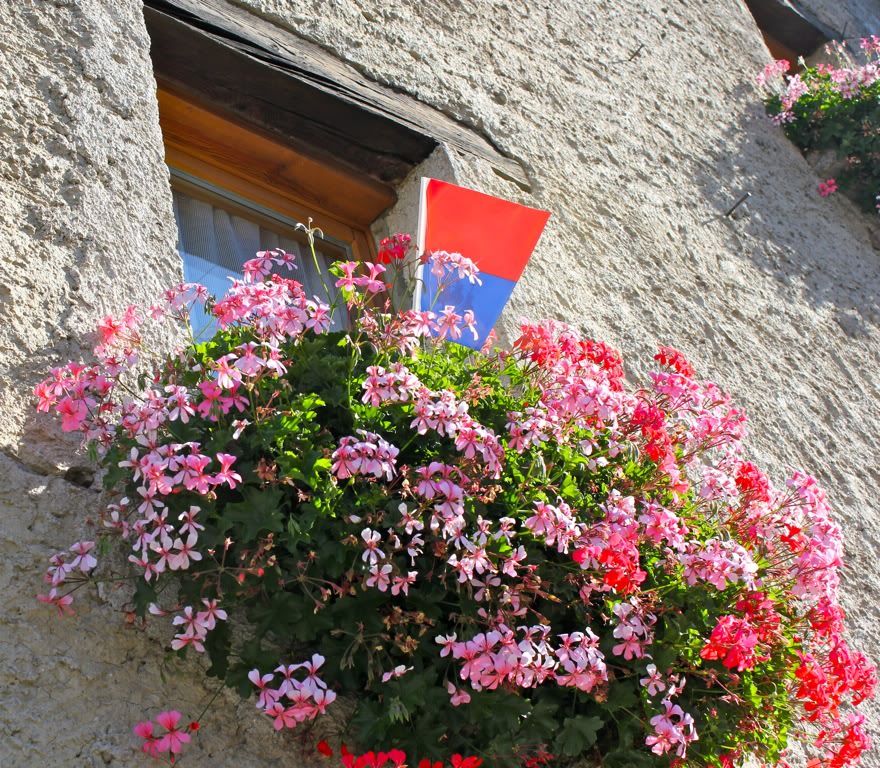
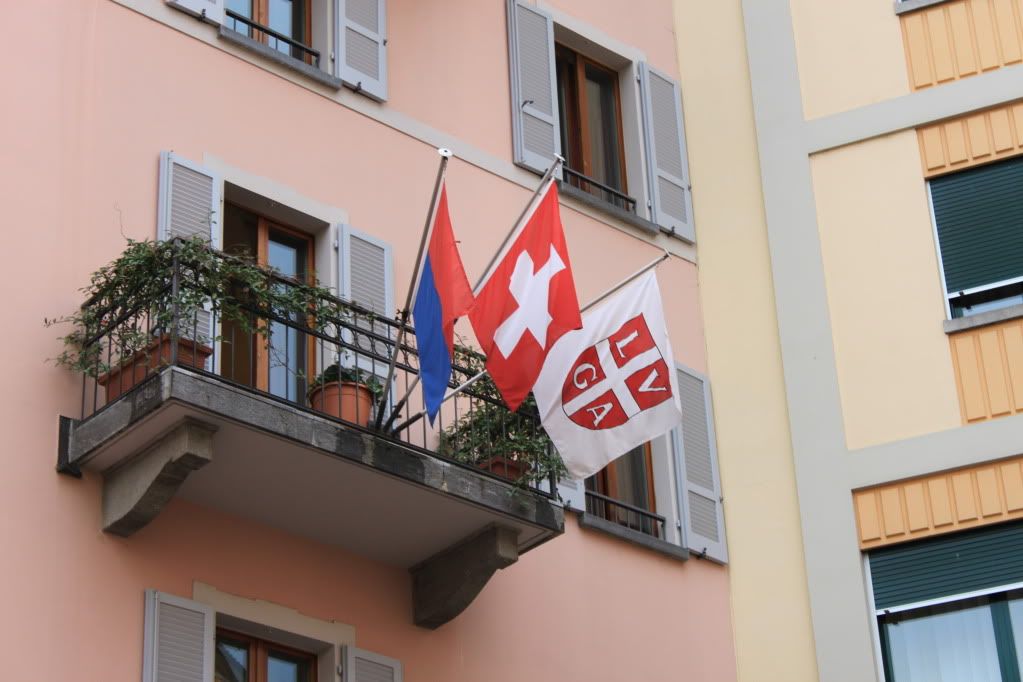
After a long period of disarray, I'm currently living in Sonoma, California. The weather is blazing hot compared to coastside, where heat waves only last two to three days. You don't even need to look at the weather report here during the summer. With a population of only 10,739, the surrounding farmland dwarfs the residential area. The Sebastiani Winery is just down the highway, maybe just over a mile away. The decorative flags downtown reflect the regions' old roots: American, Californian, Mexican, Italian, Spanish, French, English, and Swiss which essentially represents Ticinese roots... although there had also been Swiss German farmers in the distant past.

Ticino--just like the Val Camonica, Valtellina, Val Chiavenna, or the Bergamo Alps--is culturally and liguistically Alpine-Lombard. Along with Italian or Swiss flags, once in awhile a flag of Ticino can be spotted. Ticinese or Swiss Italian heritage is historically connected with San Francisco, San Mateo County, Marin County, Sonoma County, and Napa County. A few months ago back in Brisbane, I noticed a flag of Ticino attached, with a forward mounting bracket, to a fence in the Brisbane hills. Spiritually, I feel like it's a small expression of deep cultural continuity for me across the 60 mile trek from home.

.

Monday, January 3, 2022

"The Bridge" in Ticino featured now in Windows 10 Spotlight


Ponte dei Salti bridge in Lavertezzo, Switzerland

This town in southern Switzerland was first mentioned in the historical record in 1327 as Laverteze. We don't know if the emerald green waters of the Verzasca River are mentioned, but we do know there was no reference to the striking double-arch bridge that rises above the river. That's because it wasn't built until the 17th century. Since then, the Ponte dei Salti bridge has become such a beloved symbol of Lavertezzo that it's been carefully maintained and restored rather than replaced with a new design. Ponte dei Salti translates to Jump Bridge, and some folks take that literally, diving from the span into the crystal-clear water below—although we'd recommend a safer approach from the river's wide banks.


************


Lavertezzo

Lavertezzo is a municipality in the district of Locarno in the canton of Ticino in Switzerland.


************


It always makes all of the travel guides and magazines of Ticino. The double arch stone bridge at Ponte dei Salti has long held a fascination with travelers; an example of rural engineering genius. The double arch stone bridge was built in the 17th century and is one of the most distinctive sights in the village.

.


Saturday, July 28, 2018

Rediscovering people's Swiss-Italian roots (Australia, California)


Rediscovering people's Swiss-Italian roots

SWI swissinfo.ch - English


Many people with Swiss-Italian roots who responded to a swissinfo survey last year, recalled their first visit to the land of their ancestors. (Production, photograph/old postcard selection: Christoph Balsiger)


.

Sunday, October 11, 2015

Regusci Winery - Deep Ticinese roots in the Napa Valley


Regusci Winery


Family

With four generations raised on our family Ranch, farming runs in our blood. During our century on this property, we've planted and grown just about everything, from prunes and hay to citrus and olives. Knowledge about our land passes down from father to son and then father to son. Generation after generation, our passion and commitment only strengthens and through this, we're able to grow and make world-class wines from our home to yours.


Gaetano Reguschi

Born near the Italian-Swiss border, Gaetano Regusci journeyed to Napa Valley in 1891, working at a dairy along today's Silverado Trail. In 1932, Gaetano cashed in his entire life insurance policy and purchased a foreclosed property across the road, known today as the Regusci Ranch.

For the next 30 years, Gaetano wrestled a living from the land, farming corn, hay, walnuts, plums and grapes. He ranched cattle, ran a dairy and opened a retail market. Surviving both prohibition and the Great Depression, Gaetano held onto the Ranch, passing along the historic Stags Leap District property to his son Angelo in the 1960s.

Today the Ranch features 160 acres of vineyards and is home to the third and fourth generations of Regusci farmers. Our proprietary Patriarch red wine is named in Gaetano's honor.


Helvetic Los Angeles (YouTube)

Reguschi: California Wine with Tony

Wine Country at Work Episode 4 Regushi YT (in depth - 30 min)

.

Thursday, June 4, 2015

Swiss-Italian Immigrants Found Marin "Just Like Home"


Swiss-Italian Immigrants Found Marin "Just Like Home"

By Marilyn L. Geary - 'Anne T. Kent California Room Community Newsletter' - April 09, 2013

[Above, clockwise from back left: Isadore, Arcangelo, Giacondo and Romeo Cerini; undated] 

When Giocondo Cerini arrived in Tomales in 1910, he found so many family members, friends, and acquaintances that he said “it was just like home,” according to a 1994 interview in the Point Reyes Light.  His aunt Carrie Piezzi, along with two of his brothers and many fellow Swiss-Italians, were there to welcome him.

Giocondo was born in 1894 in Giumaglio, a small village in the Vallemaggia region of the Ticino Canton in Switzerland.  Giocondo’s brothers Isadore and Romeo had left Giumaglio in 1901, their sister Adele in 1904, sister Caterina (America) in 1906, and brother Arcangelo emigrated in 1914.  Of the eight children born to Giovanni Cerini and Angelina Piezzi Cerini in Giumaglio, six left home to settle in the ranch lands of Marin and Sonoma counties.

On arrival in Marin, Giocondo worked on the dairy ranch of Maurizio Sartori, a pattern followed by many immigrants who worked for compatriots until they saved enough money to lease or purchase their own ranches. Along with two of his brothers, Arcangelo and Romeo, Giocondo saved enough money to purchase the historic John Keys ranch in Tomales. Brother Isadore operated a garage in town. Unfortunately the two sisters died not long after arrival, America from consumption at age 18 and Adele probably from complications of childbirth.


The Cerini family is just one of hundreds in the Vallemaggia that lost family members to Australia and America. During a period of some eighty years, from the 1850s through the turn of the century, over 27,000 emigrants left Ticino to find a better life. Despite obstacles, many of the immigrants succeeded through hard work and determination to own and operate successful dairy ranches in California.

For more on the history of local Swiss-Italian ranchers and their ancestral home, join Marilyn L. Geary for an illustrated presentation April 18th, 2013 from Noon to 1pm in the Marin County Civic Center, Room 330, San Rafael.  


**************************************************

Paull Morton wrote:

Interesting article

I am from Perth , Australia and my Great Great grandfather Natale Cerini emigrated to Bendigo goldfields in Victoria , Australia from Giumaglio at age 14 with a cousin Pietro Cerini also 14 and another G. Cerini (Giacomo or Guiseppe perhaps?) in the 1850`s


**************************************************

Claudio Caccia wrote:

I am from Maggia (a Comune that since 2010 includes the ex-Comune od Giumaglio), Vallemaggia, Switzerland and by pure coincidence I read the article above and the comment. We must somehow be related, since my Grandma Maria Cerini (married Genazzi, born in Giumaglio July 16th 1890, died in Maggia January 29th, 1995) was the sister of the above mentioned Isidoro, Arcangelo, Giocondo, Romeo, Adele, Caterina (America) and the other brother that remained here in Switzerland! By the way, I remember my Grandma saying she was ment to leave too, but here mother desperately needed her here. A big hello to all of you


.

Thursday, May 21, 2015

Swiss Italians in Australia


It should be clarified that the proper term is "Swiss Italian," not Italian Swiss. As has been covered here before, an immigration--earlier than that to California--had been to the state of Victoria, Australia. Just like with other smaller Alpine regions, such as Val Camonica or Valtellina, the Swiss Italians/Ticinese have a local type of cuisine. It appears that there were many similarities between the California settlers and the Victoria settlers.


Swiss Italians of Australia

Swiss Italians of Australia, are Italian-speaking Swiss that settled in Australia during the 1850s and 1860s. The Swiss Italians initially settled in the area around Daylesford, Victoria. The Swiss settlers were from the canton of Ticino and the southern part of Graubünden

The influence of the Swiss Italians of Australia—Italian-speaking Swiss from the cantons of Ticino and Grison and the northern Italians is still present in the township of Hepburn Springs—through the names of its residents, the names of its springs (Locarno) and buildings (Savoia Hotel, Parma House, Perinis, Bellinzona) and the annual Swiss-Italian Festa.

The heart of the Italian-speaking community was the area around the Savoia (Spring Creek) Hotel and the Macaroni Factory. The Savoia is named after the royal family of unified Italy. An Italian reading library was located at the hotel and pasta was made opposite in Lucini's Macaroni Factory which was also home to the Democratic Club. Lucini's moved from Lonsdale Street, Melbourne in 1865, where they had set up as the first pasta factory in Australia in 1864. Vanzetta's bakery supplied bread to the community and Crippa, Perini, and the Gervasoni's (Yandoit Creek) produced wine.

In 2007 the Melbourne Immigration Museum featured a display entitled Wine Water and Stone reflecting the Swiss and Italian heritage of the area.


Swiss Italian food and culture

The Swiss Italians loved sport, food, and music. Their influence on local culture is celebrated annually during the Swiss Italian Festa. Swiss Italians of Australia have made their mark in spheres of art, music, literature, journalism, sport, education, science, and engineering.

A local delicacy is bullboar, which is a sausage made from beef, pork, garlic, and spices. Local families jealously guard their recipes. In 2005 Daylesford Secondary College came in second place in the Australian Broadcasting Corporation's Young Gourmets by making bullboars from the Gervasoni and Sartori recipes, which gained much media attention over the fate of Charlotte the pig, with little concern for the steer involved. The bullboar has been named an endangered recipe by the Slow Food Movement.


The Hepburn Springs Swiss and Italian Festa is an annual  five day celebration in late October of the area's Swiss Italian and Northern Italian heritage, with music, food, art, wine etc. Ticino and Val Camonica are very kindred cultures, both being Lombard-speaking mountain communities. The Lombard cultural relationship doesn't just end because some long ago German king decided to build a fence. This is a part of our culture as well. 

There are local (Bay Area) Swiss Italian events, and in other parts of the state, but they're hard to find as they would usually only pertain to those of that cultural family; and perhaps through the "Pro Ticino" clubs. However, there should basically be no difference between--for example--the Ticinese of west Marin County and the Milanese of east Marin County. Not only does the canton of Ticino border with the province of Milano, but both are from the same "West Lombard" dialect.


I came across an article on the Switzerland information website entitled 'Italian Swiss... or Swiss Italians?' Although interesting, that issue has been covered here before. Still, I wanted to link it for anyone interesting in reading up on it. The Ticino question becomes important to us partly because of the large past immigration in a few areas, and because we should bridge the gap finally with the idea of "Lombard cultural identity."

The "clan" concept is great, but let us not forget the ancient nation of Lumbardia. One "Lumbard" cultural family: Bergamo, Brescia/Val Camonica, Como, Cremona, Lodi, Mantova, Milano, Monza/Brianza, Pavia, Sondrio (Valtellina/Valchiavenna), Süd Graubünden/Val Poschiavo, Ticino, and Varese.

.

Monday, February 23, 2015

History of Ticinese in London


Swiss-Italian emigrations to London
 

From swissinfovideos YouTube channel
 

Peter Barber, historian and head of the British Library's maps collection in London, gave me a brief introduction to the history of Swiss-Italian emigrations to Britain. He showed me some places where the most famous immigrants, Carlo Gatti and his nephews Augosto and Stephanie Gatti, made their fortunes.
 

(swissinfo, Michele Andina)


John Maria Gatti (Wikipedia)


Sir John Maria Emilio Gatti (13 August 1872 – 14 September 1929) was an Anglo-Swiss theatre manager, restaurateur and businessman who was also a promininent Conservative politician in London local government.

Born as Joannes Maria Aemilius in Dongio, in the canton of Ticino, Switzerland, he was the eldest son of the entrepreneur Agostino Gatti. The Gatti family had built up a large family business in Westminster, including the Adelphi and Vaudeville Theatres, a string of cafe-restaurants and the Charing Cross and Strand Electricity Supply Corporation Ltd, which supplied power to most of the West End of London.


Gatti was educated at Stonyhurst College and St John's College, Oxford, before being called to the bar at the Inner Temple. He married Lily Mary Lloyd in 1897 and they had seven children. In the same year his father died, and he took over the family businesses along with his younger brother Rocco Joseph Stefano Gatti.

His business interests, in particular the construction of electricity infrastructure, led him to become interested in the local government of the capital. In 1903 he was elected to Westminster City Council as a representative of the Charing Cross ward. He was a member of the Conservative-backed majority Moderate Party on the council, and was elected Mayor of Westminster for 1911–1912.

In 1908 he was a founding member of the Society of West End Theatre Managers. In 1919–1920 he was chairman of the society, and was involved in negotiating a standard theatrical contract for West End performers.

In 1918 Gatti was co-opted onto the London County Council as a Municipal Reform Party councillor for the Strand division. When elections resumed after World War I, he was elected a councillor for the Westminster Abbey division, holding the seat until his death. Gatti was short-listed to be Official Conservative candidate for the Westminster Abbey by-election in 1924, but lost out to Otho Nicholson who won the poll.

He served as chairman of the county council's finance committee for six years, and was chairman of the county council in 1927–1928. At the end of his term as chairman he received a knighthood.

Sir John Gatti died suddenly at Littleton Golf Club in September 1929 aged 57.


.

Sunday, February 15, 2015

Gaulish, Insubrian, reenactment group in Western Lombardy and Ticino; and "The Torc"


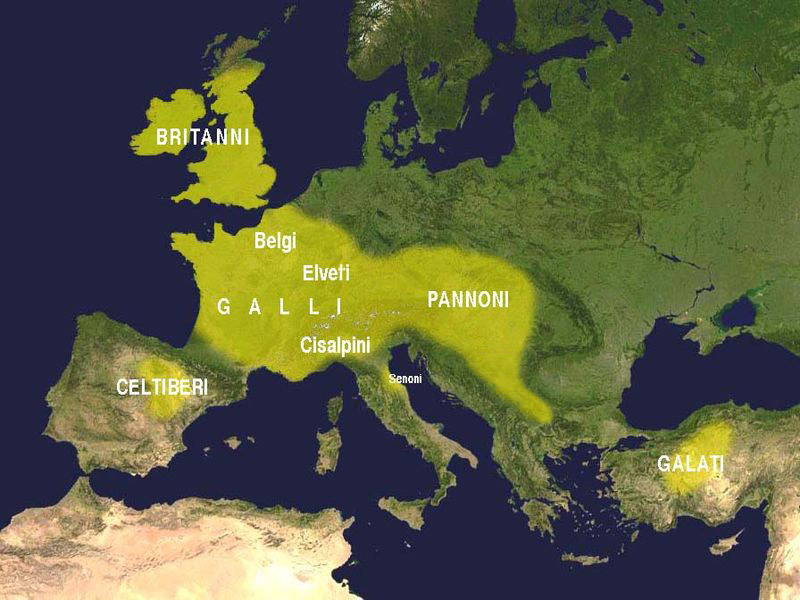
The Insubrians were a major Gaulish tribe which inhabited Western Lombardy (including Ticino, Switzerland) in pre-Roman times. I think Gaulish is perhaps a more descriptive term than "Celtic," even though most of these southern Alpine tribes were part of the greater Celtic world. Western Lombardy, with it's distinct western dialect of the Lombard language, is often referred to as "Insubria" within a regional-national context.


Gianluca Preti YouTube channel

I celti insubri north italian's ancient celtic tribes 

[from the video description]:

The tribe of Insubres placed between today's Lombardy and Canton Ticino (Swiss), was one of the largest Celtic tribe populating a big part of northern Italy's territories. We know from Tito Livio, historical of the I° century. BC., the story that around the seventh century BC Belloveso, a celtic prince, came in a place where was living a tribe with the same name of an Edui's tribe, who was after him: this name was Insubres. He decided to found a village in those lands, and questioned 7 wise druids, who consulted the oracle to get a response to tell him where to place the first stone.

The answer was that seeing a semi-walled sow would be the sign who marked the city's boundary. When in the middle of a clearing a White semi-walled sow was found between hawthorn's bushes, they decided that this was the place where found Medhelan. (Milàn). Today we can suppose that those "Insubres" were the direct descendants of Golasecca culture, whose archaeological remains dating ninth - VIII century. BC, are massively present in the area around Milan and Lombardy.

Recently remains were found even in the Milan's midtown. Most of these findings, concern pottery and artifacts commonly used as, bowls, vases and ornaments such as brooches and jewelry of various kinds, but close to this findings it isn't rare at all to find objects of war, such as swords, shields and studs spearheads. The Celtic people, do not always lived peacefully, though not all disputes between the various tribes, were concluding in real battles. Its also common to find objects associated with religious rituals, proof of a deep spirituality connected with the cult of the Celtic deities.

The worship of the goddess Belisama or Brigh, name who might be the origin of the Brianza's place name thet is representing motherhood and fertility, and the cult of the god Cernunnos, the spirit of the forest with deer antlers and snake at his feet, that is a protector of animals, or worshipof Belenos, the sun-god, are just some examples. What at first seemed like a normal activity of a farming community, in reality could conceal preparations for a battle, as all members of the tribe were called to work for the preparation of weapons. Often, then, the women took part in the battle. Famous are the anthropomorphic hilt swords, found in much of Cisalpine Gaul, example of Insubre's and more generally Celtic art.

The figure of the Druid was in Celtic culture, who acted as intermediary with the divine forces of nature and that could change the fate of a battle with his sorcery. He knew the power of words, writing, used to designate the sacred territories and tombstones. The North Etruscan alphabet or Lepontic recently reclassified as Cisalpine Celtic alphabet, is the oldest form of Celtic writing known, and enable us to reconstruct, albeit in a very limited way, the ancient Celtic language of Insubrians. The splendor of till now discovered archaeological remains are barely unveil the complexities of a culture so far in time but so close to our roots. A documentary about Insubres the ancient celtic tribes who found Milano in north italy, and north italian history.


**************************************************

The torc as a cultural symbol

I wanted to add here the torc as having been an important cultural and spiritual symbol from the iron Age to the period of Romanization and Christianization. It seems to clearly have sprung from the Continental Celts, but extended to other nearby peoples as well, and right up to the edges of the earliest Greek and Roman borders. Cernunnos was depicted as holding a snake (representative of the Ophiuchus constellation) in one hand, and a torc in another. The Hellenic depiction of "The Dying Gaul" showed him wearing a torc, and was apparently a symbol of Greek victory against the nearby Celts. It's ironic that the torc seems to have symbolically "died" along with "The Dying Gaul," at least compared to its former significance over such vast regions. Perhaps it's time to start thinking about this symbol a bit more; maybe as a Gaulish equivalent to the Teutonic hammer or drinking horn?


Torc (Wikipedia)

A torc, also spelled torq or torque, is a large rigid or at least stiff neck ring in metal, made either as a single piece or from strands twisted together. The great majority are open at the front, although some had hook and ring closures and a few mortice and tenon locking catches to close them. Many seem designed for near-permanent wear and would have been difficult to remove. Torcs are found in the Scythian, Illyrian, Thracian, Celtic, and other cultures of the European Iron Age from around the 8th century BC to the 3rd century AD. For the Iron Age Celts the gold torc seems to have been a key object, identifying the wearer as a person of high rank, and many of the finest works of ancient Celtic art are torcs. The Celtic torc disappears in the Migration Period, but during the Viking Age torc-style metal necklaces, now mainly in silver, came back into fashion. Torc styles of neck-ring are found as part of the jewellery styles of various other cultures and periods.

.

Wednesday, October 29, 2014

Retracing the steps of Ticino emigrants


From the video description (YouTube channel swissinfovideos):

A group of people from Ticino retrace the first steps of many emigranti on their way to Australia or the United States. At the top of the Sassello pass, they sing the emigranti song, Do you want to come to America? 

.

Thursday, August 28, 2014

Gotthard Base Tunnel: Alpine tunnel connecting Uri to Ticino opens in 2016


Documentary about the massive transalpine-cisalpine tunnel project.


Gotthard Base Tunnel (Wikipedia)

The Gotthard Base Tunnel (GBT) is a railway tunnel in the heart of the Swiss Alps expected to open in 2016. With a route length of 57 km (35.4 mi) and a total of 151.84 km (94.3 mi) of tunnels, shafts and passages, it is the world's longest rail tunnel, surpassing the Seikan Tunnel in Japan.

Its main purpose is to increase total transport capacity across the Alps, especially for freight, notably between Germany and Italy, and more particularly to shift freight volumes from road to rail to reduce environmental damage caused by ever-increasing numbers of heavy lorries. A secondary benefit will be to cut the journey time for passenger trains from Zürich to Milan by about an hour and from Zürich to Lugano to 1-hour 40 minutes.


The project consists of two single-track tunnels. It is part of the AlpTransit project, also known as the New Railway Link through the Alps (NRLA), which includes the Lötschberg Base Tunnel between the cantons of Bern and Valais and the under construction Ceneri Base Tunnel (scheduled to open late 2019) to the south. It bypasses the Gotthardbahn, a winding mountain route opened in 1882 across the Saint-Gotthard Massif, which is now operating at capacity, and establishes a direct route usable by high-speed rail and heavy freight trains.


After 64 percent of Swiss voters accepted the AlpTransit project in a 1992 referendum, tunnel construction began in 1996. Drilling operations in the eastern tunnel were completed on 15 October 2010 in a breakthrough ceremony broadcast live on Swiss TV, and in the western tunnel on 23 March 2011. AlpTransit Gotthard Ltd. was planned to hand over the tunnel to Swiss Federal Railways (SBB) in operating condition in December 2016; this date was modified to 5 June 2016 on 4 February 2014 with the commencement of an 850-day opening countdown calendar on the AlpTransit homepage. Total cost of the project is 9.8 billion Swiss francs, or US$10.3 billion.

The two portals are near the villages of Erstfeld, Uri, and Bodio, Ticino. Nearby are two other St. Gotthard Tunnels: the 1881 Gotthard Rail Tunnel and the 1980 Gotthard Road Tunnel.

When completed, the Gotthard Base Tunnel will have been one of the longest tunnel construction projects in the world: 20 years of constant construction and preparation.


.

Friday, July 20, 2012

Ticino Specialty Meats

I noticed, while shopping at the new Grocery Outlet Bargain Market in South San Francisco, a brand of meat cuts from a company called "Ticino Specialty Meats." It may just be a name, but actually many Ticinese (Italian Swiss) descendants have deep roots in the area; so I thought it applicable to make mention of it. Camunians and Ticinese share the same Lombard language and Lombard/Alpine heritage.

While searching out the company name, I can easily see just from the names, the Cisalpine influence in the local meat industry. Back to the days when cattle was actually brought by train into the city of San Francisco. Cattle was actually marched down 3rd Street I think, to the slaughterhouses. We're not talking a century ago, but into the 1940s, even the 50s.

When looking into San Mateo County history books in local libraries, I often used to see old photographs of people who were generally of Ligurian and north Tuscan origin; as well as people who were described as "a native of Switzerland," who were Ticinese. In addition, there used to be a heritage society called "Societa Lombarda of South San Francisco"; so San Francisco and San Mateo Counties weren't short on Lombardian heritage. I wasn't even aware of that until very recently, so as I have long said... getting information regarding Lombardian-American history is like pulling teeth! Lombardi nel Mondo has done some work in this area, however they only publish it in Italian.

This company apparently has no website or anything promotional online. All I was able to find was the following:

Ticino Specialty Meats
493 Forbes Blvd.
South San Francisco, CA  94080
"Processing --- Bovine Porcine Avian"


1-30-13 Addition: I just thought I would add that I have now tried this product, and can recommend it. It's very good.

.

Friday, January 28, 2011

Ticinese Union of London

Unione Ticinese di Londra

A Brief History of the Union Ticinese

The Unione Ticinese is one of the oldest Swiss clubs in the United Kingdom. It was founded in February 1874 by Stefano Gatti, a restaurant-owner and entrepreneur whose family had arrived in London from Marogno in the Val di Blenio a few decades earlier. It was a mutual aid society intended to provide care in sickness and company in health to the increasing number of Ticinesi working as waiters, but also as ice men and other professions, usually as emplOscar Gambazzi, Giuseppe Eusebio, Frank de Maria, revised by Peter Barber, Vita Ticinese a Londra : 125 Years of the Unione Ticinese (London: Unione Ticinese, 1999)oyees of more successful Ticinese immigrants in London. Most members came from the Blenio and Leventina valleys.

Subsidised hospital care and sickness pay were provided and almost from the first members had the right to burial in Society graves in Kensal Green and later in East Finchley. After a rocky start, due in large part to political tensions within the colony and inside Ticino itself, the Society flourished. For the first 70 years it was dominated and financially supported by wealthy Ticinese restaurateurs, and notably by the Gatti and later the Meschini families. It centered its activities on the district between Leicester Square and the Euston Road in London where the largest single concentration of Ticinesi was to be found, though there were smaller colonies in almost every resort along the south coast and in the London suburbs. For many decades members usually met at the Schweizerbund in Charlotte Street, though on special occasions banquets were held at the grander Ticinese-run restaurants, such as the Gattis’ Royal Adelaide Gallery , Monico’s on Piccadilly and Pagani’s, which was owned by the Meschini family.

Since 1945 the Society has altered radically. Its main support now comes from the members themselves. Often these are not native-born Ticinesi but friends of Ticino or descendants who want to learn more about the canton from which their ancestors emigrated. The establishment of the National Health Service and the increasing prosperity of members of the Ticinese colony has led to the gradual abandonment of the Society’s legal role as a benevolent society while the geographical dispersal of the Society’s membership throughout the country has inevitably led to a change in the pattern of its activities. Most notably, the Corale or choir, which was a central feature of the Society as late as the 1950s and early 1960s gradually withered away because of the increasing difficulty of organising rehearsals – and finding sufficient members familiar with the old songs. Dining in restaurants has given way to equally excellent meals prepared by the Society’s catering committee.

Over the same period there has been an increase in the number of lectures and outings. A well-attended barbecue in the Sussex countryside in late June has become an annual event. In its efforts to raise the profile of Ticino, the Society has fostered close links with the Museum of London as well as with the Swiss Embassy in London, other Swiss societies in the United Kingdom and governmental and cultural organisations inside Ticino. Its extensive records, particularly those dating from the 1920s, have been deposited with London Metropolitan Archives and are available over the internet as part of the Archives to Archives (a2a) network (http://www.a2a.org.uk/).

Yet in many ways, the Society would still be familiar to its founding members. Several members of today are descendants of founder or early members. The last days of October sees the annual Castagnata, a celebration in roast chestnuts and wine of what was until recently the staple diet of the Ticinesi. In early February the anniversary of the Society’s foundation is commemorated in appropriate style, often combined with a celebration of Carnevale. The Society’s members continue to have the right to burial in one of the Society’s graves in East Finchley. Elderly members receive a panettone around Christmas time when there is an annual gathering at which small children receive gifts from San Nicolao. The Unione Ticinese remains a family-oriented Society which extends a warm welcome to all who want to join, whether Ticinese-born or not.

If you want to learn more about the Society and the community from which it sprung, these books are available from the Unione Ticinese at £7.50 (including postage and packing within the United Kingdom):

Oscar Gambazzi, Giuseppe Eusebio, Frank de Maria, revised by Peter Barber, Vita Ticinese a Londra : 125 Years of the Unione Ticinese (London: Unione Ticinese, 1999).

Peter Barber and Peter Jacomelli, Continental Taste. Ticinese emigrants and their Café-Restaurants in Britain 1847-1987 [Camden History Society Occasional Paper 2] (London, Camden History Society, 1997).
.

Tuesday, November 30, 2010

1990s PBS documentary: "Italian Swiss in California"

I may have mentioned this on a couple of entries, but I have been in search of a particular PBS documentary from the 1990s. I recall watching a documentary, probably in the mid-90s, specifically about Italian Swiss (Ticinese) in California and their descendants. Although I had it on, it was one of those times where someone was over visiting and I probably missed most of it. At the time, I remember feeling a cultural tie-in, but it didn't quite register to me at the time. I recall something fairly comparable to programs about certain ethnic groups. Like just recently, there was a documentary 'The Greek Americans', or some such title, about Greeks in America, past and present.

What I recall about it was it had many interviews, most in somewhat rural areas, with Italian Swiss descendants. It appeared to be in a number of locations in both northern and southern California. Needless to say, today I can see the significance of this and would like to find that documentary. If anyone out there has any information about it, please e-mail me at camun@live.com.

I had heard two estimates of the number of Italian Swiss immigrants to California between the 1850s and probably the 1930s. One was 20,000, and the other was 90,000. Maybe someone can clue me in on that too. I suspect that it was closer to the 90,000 figure. There are a lot of similarities between Ticino and Val Camonica. Both are located in rural and mountainous Alpine terrain, and speak the Lombard language. In other words, both are Lombardian peoples.

.

Monday, October 18, 2010

Evening of Ticinese Culture in San Francisco: Monday, October 19


Settimana della lingua italiana: Evening of Ticinese Culture

The Consulate General of Switzerland and the Italian Cultural Institute of San Francisco invite guests to celebrate the art and architecture of Ticino. Note: Presentations given in the Italian language.

19 Oct 2010 from 6:30 PM to 9:30 PM Pacific Time


Practical Information:


Location:

730 Montgomery St. San Francisco, CA 94111

Free. Advance RSVP required.

In celebration of the tenth Settimana della Lingua Italiana nel Mondo, Week of the Italian Language in the World, the Consulate General of Switzerland and the Italian Cultural Institute of San Francisco cordially invite you to an evening celebration of Ticinese culture, hosted by swissnex San Francisco.

The program includes two presentations in Italian, "Il Ticino: terra di artisti," from by Marco Cameroni, and "Antonio e Giuseppe Sardi da Morcote - Architetti ticinesi nella Venezia del Seicento,” by Paola Piffaretti.

Questions? Contact vertretung@sfr.rep.admin.ch or call 415.788.2272 ext 102.

Organized by the Consulate General of Switzerland in San Francisco and the Italian Cultural Institute, with help from swissnex San Francisco.


Program:

6:30 pm doors open
7:00 pm presentations and Q&A
8:30 pm reception
9:30 pm doors close

****************************************************************************

See above link for more information, to register online, and for directions.

.

Friday, June 11, 2010

Economic crisis and fools gold: Interview with historian Giorgio Cheda

Economic crisis and fools gold: Interview with historian Giorgio Cheda

"We shall not stay long"

Dale Bechtel - SwissInfo.ch - December 1, 2009


Migrations interview: Part one


Historian Giorgio Cheda, the pre-eminent expert on Ticino emigration, provides answers in this five-part interview to many questions about the mass movements abroad.

Cheda, whose own father lived in the United States for a few years, is the author of comprehensive volumes on the migrations to California and the Australian state of Victoria.

In the books, the stories of the 19th and early 20th century "emigranti" come alive through the countless letters they wrote to the loved ones they left behind.

Cheda also based much of his work on research he conducted in archives in the two countries during visits in the 1970s.

swissinfo: What were the economic conditions like in 19th century Ticino, which led to the first wave of migrations overseas?

Giorgio Cheda: There was a period of economic crisis in the mid-19th century, also in Ticino. In particular, there was the potato blight. There was a drop in production from the alpine pastures because there was a very serious disease that decimated the livestock. And, above all, there was an economic embargo.

Since Liberals in Ticino were helping the men of the Italian "Risorgimento" to achieve Italian unity, the Austrian authorities decreed an economic embargo between Ticino and Italy. This led to the immediate return of some 5,000 workers who were employed in Lombardy. It also meant it was impossible to buy grain (because Ticino depended on Lombardy for its bread), and it was impossible to sell timber, cheese, livestock and so on to Lombardy.

So it was a very hard time.

swissinfo: So where did these first "Ticinesi" migrants go, and what influenced their decision to go there?

Giorgio Cheda: The first place to have a real impact was Australia. Why? Because the emigration agencies insisted especially on recruiting immigrants for Australia. The reasons are complex, but I can sum it up as follows: the Hamburg ship owners had invested a lot of money in order to carry emigrants to the goldfields. But the German authorities realised that this form of emigration was also a matter of speculation, and that the clauses in the contracts were not being respected. Since the agencies could no longer recruit further emigrants in Germany, they looked for new sources and so came to Switzerland.

However, strict laws were in force in the cantons regulating the activities of the emigration agencies. Ticino was the only one that had not passed a law of this kind. So for 18 months or a couple of years, the agencies had a free hand.

Through newspaper adverts, personal contacts and other means, they were able to recruit roughly 2,000 Ticinesi, especially from the valleys above Locarno. Almost half of these 2,000 came from the Valle Maggia, and many others from the Val Verzasca. And with these groups of emigrants they stipulated very tough contracts: the voyage was expensive, so almost all of these emigrants had to borrow money, take out a mortgage loan, to be able to buy their tickets for Australia.

Meanwhile, in those years only a few hundred went to California. So there was a difference from the very beginning: speculation on the part of the agencies, which deprived Ticino not only of 2,000 emigrants but also of some SFr2 million to pay for the voyage, while on the other hand those who went to California found fertile ground. Not only were they able to work in the goldfields and save a few dollars; they were also able to invest their savings straight away in land. Unlike in Australia, where land ownership was still the privilege of the British, in America land was available for anybody who wanted to cultivate it.

So these peasant farmers from the valleys of Ticino found fertile ground in California and were able to develop their working skills, like raising livestock, and making good quality butter and cheese, and selling it in centres such as San Francisco, and later Salinas and many other places - Sacramento, Los Angeles and so on.

They were able to perform very productive activities which enabled some of them to progress in time from being ranchers to being traders, or send their children to university and get involved in new professions which, here in Ticino would have been unthinkable for mere peasants. And so they were able to make their fortunes.


Migrations interview: Part two

In this section, historian Giorgio Cheda describes why, in general, the migrations to Australia were a failure and those to California a success.

swissinfo: Can you explain in more detail how and where they got their money from to travel abroad and start new lives, since they were very poor?

Giorgio Cheda: Yes, this is a very significant issue. And it explains the difference between emigration to Australia, which occurred over a period of only two years, and emigration to California, which involved many more people but was spread over a century.

In the case of Australia, as I said before, the issue is very complex because, since the vast majority of these emigrants did not have the money to pay their fares, they had to contract debts. This meant that, in a village, when ten, 15 or 20 young people decided to go to Australia, they would form a partnership and go to a notary. The notary would make them sign a personal contract, but with joint and collective liability. This meant that if, for example, someone died on board ship or during the early days in Australia, without having earned anything, the partners who had signed the contract were obliged to repay the debt of their late companion, as well as their own.

This meant that a great deal of the property of the families in these villages, where 100 or a 150 young people (and not so young people) were going to Australia, became burdened with debt – their houses, cowsheds, and their land. In many cases, I have discovered that part of these debts were repaid, ten or 15 or 20 years later, but with the savings accumulated by their relatives who had emigrated to California.

Therefore in general, albeit with some exceptions for which we have documentation, emigration to Australia was a failure from a financial point of view and also on the human level. Because, of the 2,000 who emigrated to Australia, only ten or so were women. This meant that in Australia they were not able to rebuild their families, as happened in California, where, because emigration was spread over so many years, it could be self-financing. Apart from the first emigrants, who had to contract a debt, those of the second, third and fourth waves were generally funded by their relatives already working in California. So it was self-financing.

Then, many of those who emigrated to California were able to rebuild the kind of family life they had known in Ticino, on the ranches of the Salinas Valley, in Sonoma county, West Marin and so on, where full-scale "colonies" were formed by groups of Ticinesi. The women were Ticinesi. The young men were Ticinesi, and if a young man could not return to Ticino to find a wife, he would write a letter inviting his mother or father to find him a promising young woman, then he would send her the money to join him in California and get married. As a result, many weddings were celebrated in San Francisco, or in Salinas or elsewhere, but still within the village community. So nuclei of Ticinesi peasants were reconstituted, but operating on a different geographical and economic basis from that of the Val Verzasca or the Valle Maggia, because obviously the conditions in California were very different from those of their native valleys.


Migrations interview: Part three

The voyage overseas could only begin once families had given their consent to the emigranti and the necessary funds had been scraped together. In this section, Cheda describes the journey.

swissinfo: Let's take a step back and talk about how they actually travelled abroad. Did the first emigranti in the 1850s begin their journey on foot, or did they take diligences (stagecoaches) to the ports?

Giorgio Cheda: They travelled partly on foot, partly by diligence and partly by train. There were already sections of railway - because in the 1850s they were beginning to build railways very quickly - in both France and Germany. So it was possible to get to the ports of embarkation using fairly good means of transport.

Some parts of the journey did have to be covered on foot, for example the St. Gotthard. They could go as far as Airolo with the diligence, but then they had to cross the pass on foot.

I'm thinking of a letter from someone writing from Hamburg to say they had had to leave one of their companions in a hospital somewhere because, climbing hurriedly over the Gotthard pass in cold weather and snow, he had caught pneumonia.

So this chap had to be taken to hospital, stay there until he was better, then join the following convoy so he could reach Hamburg and take the next ship, which was leaving the following month, and so arrive in Melbourne later than the group with which he had begun the journey. But generally the journey to the port of embarkation was fairly easy, because it could be done by public transport.

swissinfo: Was Hamburg the only port they embarked from?

Giorgio Cheda: Almost all of the 2,000 emigrating to Australia took the ship from Hamburg, for the reason I explained before: the Hamburg recruitment agencies exerted pressure so they could fill their ships with passengers for Australia. Some went to London, some to Dieppe or other northern European ports but almost all left from Hamburg.

But for California the assembly point was Le Havre. In 1850, 1880, 1890, almost all emigrants bound for California embarked at Le Havre for New York.

For Australia, the voyage was by sailing ship. Of course, sailing ships were dependent on the winds and might take up to six months, as I have been able to discover by comparing the dates of embarkation in Hamburg, where I have been to research the ships' passenger lists, with the disembarkation lists in Melbourne.

Meanwhile, the journey to California was fairly long until 1869, because they had to go round South America, round Cape Horn, then sail up the Pacific coast. After 1869, when the construction of the first transcontinental railroad was completed, the train journey from New York to San Francisco took no more than ten days, maybe only a week. So getting to California in 1870 or 1880 was relatively easy. It took about a month: three weeks to cross the Atlantic and then, from New York to San Francisco, a further week by train – and there you were.

This explains why return journeys to California in the late 19th/early 20th century were, I would say, fairly common, especially for those families who, having a ranch in California but still having relatives and friends in the villages here, wanted to return fairly often to visit their places of origin. So many very positive contacts were maintained between the valleys of Ticino and the "colonies" the Ticinesi had founded in California.


Migrations interview: Part four

There were two sides to the migration coin with both winners and losers.

But as Giorgio Cheda argues in this part of the interview, the mass movements abroad, especially those to California, must be seen as benefiting both the emigranti and those who remained in Ticino.

swissinfo: So over many decades, people continued to migrate to California – but not only to California, to Argentina as well between 1880 and 1914 and to London. What impact did the loss of all of these people have on Ticino and the people left behind?

Giorgio Cheda: As always, there were both positive and negative aspects. In my opinion the net result was positive. I know that not everyone agrees with my view, but let me explain. There were negative aspects, of course, which were borne mainly by the women, because emigration created an imbalance of the sexes. It was mainly men who left, especially in the case of Australia and the first waves of people going to California, and the women were left behind. So these women could not get married and it fell to them to perform all sorts of heavy tasks, which also affected them physically.

I've seen some doctors' reports in which they say that women had difficulty in giving birth because they were obliged from childhood to carry heavy burdens up and down the mountainsides carrying, for example, cheese, ricotta and butter from the alpine pastures at 2,000 metres above sea level to the market in Locarno. All this work fell on the women's shoulders. Or think how they had to make hay in the woods to be able to feed a cow or two during the long winters. This was very hard work for a woman, and very dangerous.

These hardships have been illustrated very well by the painter Vanoni, who has left a whole series of ex voto images in our churches graphically portraying the sufferings of the women who were forced to perform these tasks.

So, on the one hand, there was this imbalance of the sexes, which weighed most heavily on the women. But, on the other hand, you have to remember that the departure of many people, mainly to California, also meant fewer mouths to feed with the limited supplies of food that could be produced in our mountains, because the arable land there could produce only a limited amount.

Then senseless deforestation caused partly by politicians out to make a quick profit led to the loss of quite a few hectares of arable land. Then there was the damage caused by the flood of 1868, the year in which emigration from Ticino peaked. The people were demoralised. They no longer saw how they could survive in a valley as poor as the Val Verzasca or the Valle Maggia, so they preferred to go to California. Therefore there is also this very positive aspect: emigration as a safety valve, an outlet for a population that was increasing in numbers and could not make a decent living from its native soil.

swissinfo: Were there other positive aspects?

Giorgio Cheda: A good proportion of those who emigrated to California may have lived a hard life as cowhands, ranching, working all hours of the day, but they were also able to acquire land at an affordable price, especially between 1860 and 1910 –something that would have been unthinkable here in Ticino.

So clearly this explains how a thousand or so of these 27,000 Ticinesi who went to California were able to purchase, in total, an area almost as large as the Sopraceneri (upper part of Ticino): 1,800 square kilometres of land. This is putting together all the small, medium and large-size ranches that the Ticinesi purchased between the border of Oregon, up in Humboldt County, and San Diego and the Mexican frontier, and especially of course in certain counties such as Marin, Sonoma, Napa, the Salinas Valley, San Luis Obispo, the Santa Maria Valley, or on the Sierra, in Plumas County and so on, where the largest and most important "colonies" of Ticinesi became established.

Not forgetting San Francisco, where already in the 19th century - before the San Francisco earthquake - there were more than 500 Ticinesi living. Obviously they were not working on ranches but in the various trades and professions, because the children of the first ranchers had been able to attend college or university, and so they had settled in the major cities – cultural capitals, we might say – of the American West.

We could put it another way: if today we visit the Ticino valleys of Sopraceneri, we find many fine houses built between 1880 and 1910-15, which were paid for with the dollars earned in California. The finest houses in the Valle Maggia and the Val Verzasca, and indeed in other areas such as the Leventina or the Riviera, were built during that period thanks to the savings made by the ranchers in California, or rather by the emigrants, since not all of them were ranchers, of course.

They managed to save a certain amount of money, returned to Ticino and built their houses. Unfortunately, there is a negative side to this, which is often passed over: the failure of the banks. Let us not forget that in 1914 practically all the banks in Ticino collapsed. This represented a loss of a cool SFr40 million, as valued at that time. And almost all of these 40 million, in my humble opinion, were savings remitted by emigrants, largely saved in California - also in Argentina and other places, but most of it had been saved in California.

Years ago, I tried to research this matter in greater depth, but unfortunately I had to give up because all the documentation regarding the 1914 bankruptcies had been destroyed.

But I hold this view because I have read many of the emigrants' letters and have some knowledge of what happened in those years. In particular, we must consider the importance of the Banca Svizzera-Americana, established by the Ticinesi in San Francisco with branches in other towns in California and a centre in Locarno. From Locarno, the Banca Svizzera-Americana reached out into the valleys of Ticino, and played an important role in handling the savings that were regularly remitted from California.

So when the banks crashed, many families lost enormous sums of money, and this must be counted as one of the negative aspects of the (emigration) phenomenon.


Migrations interview: Part five

In the final chapter of the swissinfo interview with Giorgio Cheda, the historian talks about the longing of all migrants – at one time or another – to return to their homeland.

swissinfo: Your own father migrated to California. But he came back...

Giorgio Cheda: My father worked for nine years in California but he returned, as did many, many others. As I told you, 27,000 people emigrated to California but, of these 27,000, only 1,000 established ranches. We need to double that figure, because there were the wives of these ranchers, though not all of them were Ticinesi. And some became involved in other business activities and spent the rest of their lives in California. But others returned, after five, ten, 15, 20 years or more. This is normal because, where emigration is concerned, there is always a longing to return home.

Many emigrants want to come home, sooner or later, and spend the rest of their lives in their native village. This, too, is interesting and positive, especially in my own case (and in the case of many others) because it meant I had a different relationship with California. In other words, for me California was not just any old place. Not only was it a place to which 27,000 Ticinesi had gone, but also close relations, members of my own family. And so I was interested to know what kind of life, what kind of society this relative had experienced when working for a number of years in California. It was the trigger, if you like, that initiated my research into these letters and motivated me to reconstruct this important episode in the history of Ticino.

swissinfo: How strong are the ties today between the descendants of the emigranti and their relatives in Ticino?

Giorgio Cheda: Relations with Ticino emigrants have become reduced to the purely private level today, largely because there is no longer the financial dimension I referred to earlier. Today, there are certainly many families which still have ties with relatives in California. But these are becoming less and less important year on year, because the old people are dying off and the young people are not interested in forming new relationships.

In some cases, there are fairly intense relationships between family members who still have common interests, because there are still some families living in Ticino which have property in California, or economic interests in California, but obviously these are private matters.

I think there must be money coming into Ticino because there are still families which receive income from property acquired by their relatives in California. But they have little impact on modern-day Ticino.

swissinfo: Are people in Ticino today aware of the importance of the overseas migrations of the past?

Giorgio Cheda: Yes, there are quite a few Ticinesi who are aware of their importance, but this is more a matter of nostalgia for the older generation. I would say that the younger generation is not at all interested in this subject. They are much more affected by the phenomenon of immigration.

You only need to consider the success of certain far-right parties, certain xenophobic parties, which make it their business to point the finger at immigrants and blame the most recently arrived for all our social problems and so on. Immigration is viewed negatively, partly because it is exploited by political movements of the right, which would have us curl up hedgehog-like, creating a very closed, limited society such as ours, rather than thinking of the importance of being open, both economically and culturally, which could be a positive benefit of immigration.

.

Saturday, September 5, 2009

The Lost Connection: California Ticinese and the Trentinese Resistance

One historical period, which literally ties many of us together on both sides of the ocean, was the Austrian occupation of the northeast Italian peninsula. This occupation did not end in 1860, but continued on in the Trentino through World War I. The Lombardian resistance, and later the Trentinese resistance, hid out in Ticino. It was naturally an ideal location for many reasons. First, it was the same culture and even the same Lombard dialect. Also, when you view history, "nobody messes with the bank." Nobody interferes with Switzerland, as history shows us. Not Napoleon, not the Hapsburgs, not the National Socialists, nobody.

In response, the Austrian army blockaded the southern borders of Ticino. This cut off many people from employment, supplies, trade, produce, etc. Back then, it was just heavy Alpine mountains to the north. No express trains. I don't know how long or how many times this blockade may have been in place between 1850 and 1930, the years of Ticinese emigration. It must have been a long time since the resistance movements were operating between 1848 and 1918.

[Above: Cesare Battisti, probably the most important figure of the Trentinese resistance]

This time period, although socially and politically long past, is only a blip on the historical scale. Some of us were alive when Cesare Battisti was hanged in Trento in 1916. For a few of us, our grandparents may have been alive during the Cinque Giornate Revolt in Milano in 1848. It's even possible that they were even living in those cities and witnessed it. The Trentinese, the Lombardians, the Venetians, and the Ticinese, are all one people at the end of the day. The following in an article from May, from the 'Sonoma Valley Sun' newspaper, which ties into this subject.


Swiss in Sonoma

George McKale - 'Sonoma Valley Sun' - May 22, 2009

There are two kinds of assumptions. In science, a theory is an assumption, and it is the basis for how one interprets data collected during a scientific study. With this kind of assumption, it is necessary to explicitly describe and declare the underlying assumption (theory) for the investigation. The other assumption is a proposition that is taken for granted, as if it were true without preponderance of the facts. It is this type of assumption one looks to avoid. In last weeks segment I made the second type of assumption stating that Fernando Nichelini was Italian, when in fact, as Walt Picchi, Nichelini’s great nephew has pointed out, he is Swiss. According to Picchi, Nichelini was extremely proud of his Swiss heritage. In restitution, I dedicate this segment to Florindo’s homeland.

Florindo’s father, Francisco, immigrated from Verscio, Switzerland, located in the Italian-speaking Canton Ticino, in 1870. The Swiss nation is a confederation of 26 states called cantons. Francisco settled just north of Sonoma at what is now the Moon Mountain Christmas Tree Farm. Once established, his son Florindo arrived in Sonoma County in 1880 at the age of twelve. The rugged Moon Mountain property reminded Francisco of his homeland. A deed dated September 4, 1920 indicates that the Nichelinis sold the Moon Mountain property in 1920. Two other deeds dating to 1906 and 1908 show Florindo purchasing land from both Joshua and Henry Chauvet in Glen Ellen. In the early 19th century, Switzerland was troubled with political and economic turmoil. Just to the south of Ticino was Italy, and Northern Italian nationalists operated out of Switzerland in their war for independence from Austria. Austria reacted by blocking the Italian-Swiss border, which curtailed commerce between the two nations. Ticinesi families residing in both Switzerland and Italy were no longer able to support their families, and many made the difficult decision to leave their homeland for the United States.

In the first half of the nineteenth century large numbers of Swiss settled in the mid-West. The gold rush brought thousands of Swiss immigrants to California. One of California’s most notable Swiss immigrants was Johann August Sutter (John Sutter), who founded Sutter’s Fort. He referred to the fort as Nueva Helvetia, meaning New Switzerland. Migration out of Ticino and into California began in earnest by the mid-nineteenth century. Of all Swiss immigrants to California, the greatest number came from Ticino. Between 1820 and 1930, 290,000 Swiss migrated to California.

Many of the Ticinesi rebuilt their family life known back in the old country. In northern California, Ticinesi settled on ranches in the Salinas Valley, West Marin, and throughout Sonoma County, forming full-scale colonies. Ticinesi women often married Ticinesi men. Prior to 1869, Swiss immigrants to California had to make a long and grueling journey by boat around the southern tip of South America. With the transcontinental railroad completed in 1869, it took around ten days to travel from the East Coast to the West. This also enabled Swiss immigrants to return for extended visits to the home land, with a ten-day trip by train and a three-week trip across the Atlantic by boat.

The Swiss immigrants did very well in California and were exceptional vintners and ranchers. They were able to send or bring money back to the home land, building larger houses and spurring the economy. In one Ticinesi town, they built a new cemetery with large stone monuments dedicated for those who had returned from California. Ira Cross in his 1927 “History of Banking in California” states, “Among the people of foreign nations who have settled in this country, none have been more worthy of success than those from Switzerland … They possess to a marked degree the innate qualities that go to make a people great in the truest sense.” Picchi stated that Florindo was still climbing windmills well into his eighties. A picture of Florindo at Nichelini’s Hardware on First Street West can be seen hanging at one of our local bars and eatery. Where? None other than the Swiss Hotel. Go have a drink and peruse the wonderful collection of old Sonoma photographs hanging on the walls.

**************************************************

This article has the quote that I had been looking for, which I had lost, regarding predominently the Ticinese immigrants. I suppose it reflected also the German-Swiss in California as well, whose history is also remarkable. The 290,000 number for immigrants from Ticino sounded very high. If that's true, then it changes my perception of their significance. Lastly, the Ticinse and the culture of southernmost part of the Graubünden canton (Grigioni) are Lombardian, as they speak the Lombard dialect.

Saturday, August 1, 2009

Chalet Ticino in Foster City

From the Chalet Ticino website:

Chalet Ticino - Swiss-Italian Restaurant

Established in the 1500's, Canton Ticino is located on the southeast border of Switzerland. Ticino brings the Mediterranean to the mountains and represents an enduring marriage between the competence of Switzerland and the culture of Italy. Italy manifests itself in Ticino's charm, architecture, and cuisine. Canton Ticino is part of the renowned 'Swiss Riviera'.


At Chalet Ticino we offer traditional and also innovated recipes inspired from the Italian, French and German regions of Switzerland. The blending of these influences is what gives the unique flavors found in Canton Ticino.

It is our mission to offer you delicious food, warm and friendly service and charming European ambiance. We are committed to having you, our guest, feel genuinely welcomed while you enjoy a rewarding dining experience. We look forward to getting to know you, and hope you enjoy our food and our company as well.

Owners: Nina and Alexander de Toth

**************************************************

I just wanted to add an interesting trivia fact. The word "canton" is from the Lombard dialect, and means region, territory, state, province, etc., and was adopted by the Swiss nation in reference to their distinct provinces.

Tuesday, March 3, 2009

The Lepontii in Ancient Lombardy


This information was taken from a part of Insubria87's 'Early Celtic Presence in Northern Italy'

Lepontii

The Lepontii were an ancient people occupying portions of Rhaetia (in modern Switzerland and Italy) in the Alps during the time of the Roman conquest of that territory. The Lepontii have been variously described as a Celtic, Ligurian, Raetian, and Germanic tribe. However, most evidence, including recent archeological excavations, and their association with the 'Golasecca culture' of Northern Italy, indicates a Celtic origin although they might actually be an amalgamation of Raetians (who were of Etruscan origin) and Celts.


The chief town of the Lepontii was Oscela, now Domodossola, Italy, and their territory included the southern slopes of the St. Gotthard Pass and Simplon Pass, corresponding roughly to present-day Ossola and Ticino. See also: Lepontic language. This map of Rhaetia [1] shows the location of the Lepontic territory, in the south-western corner of Rhaetia. The area to the South, including what was to become the Insubrian capital Mediolanum (modern Milan), was Etruscan around 600-500 BC, when the Lepontii began writing tombstone inscriptions in their alphabet (one of several Etruscan-derived alphabets in the Rhaetian territory).

http://en.wikipedia.org/wiki/Lepontii


Lepontic language

Lepontic is an extinct Celtic language that was spoken in parts of Rhaetia and Cisalpine Gaul (today's Northern Italy) between 700 BC and 400 BC. Sometimes called Cisalpine Celtic, it is considered a dialect of the Gaulish language and thus a Continental Celtic language (Eska 1998).

The language is only known from a few inscriptions discovered that were written in the alphabet of Lugano, one of five main varieties of Northern Italic alphabets, derived from the Etruscan alphabet. These inscriptions were found in an area centered on Lugano, including Lago di Como and Lago Maggiore. Similar scripts were used for writing the Rhaetic and Venetic languages, and the Germanic runic alphabets probably derive from a script belonging to this group.


Lepontic was assimilated first by Gaulish, with the settlement of Gaulish tribes north of the River Po, and then by Latin, after the Roman Republic gained control over Gallia Cisalpina during the late second and first century BC.

The grouping of all of these inscriptions into a single Celtic language is disputed, and some (including specifically all of the older ones) are said to be in a non-Celtic language related to Ligurian (Whatmough 1933, Pisani 1964). Under this view, which was the prevailing view until about 1970, Lepontic is the correct name for the non-Celtic language, while the Celtic language is to be called Cisalpine Gaulish. Following Lejeune (1971), the consensus view became that Lepontic should be classified as a Celtic language, albeit possibly as divergent as Celtiberian, and in any case quite distinct from Cisalpine Gaulish. Only in recent years, there has been a tendency to identify Lepontic and Cisalpine Gaulish as one and the same language.

While the language is named after the tribe of the Lepontii, which occupied portions of ancient Rhaetia, specifically an Alpine area straddling modern Switzerland and Italy and bordering Cisalpine Gaul, the term is currently used by many Celticists to apply to all Celtic dialects of ancient Italy. This usage is disputed by those who continue to view the Lepontii as one of several indigenous pre-Roman tribes of the Alps, quite distinct from the Gauls who invaded the plains of Northern Italy in historical times.

The older Lepontic inscriptions date back to before the 5th century BC, the item from Castelletto Ticino being dated at the 6th century BC and that from Sesto Calende possibly being from the 7th century BC (Prosdocimi, 1991). The people who made these inscriptions are nowadays identified with the Golasecca culture, which has been ascribed a Celtic identity (De Marinis, 1991). The extinction date for Lepontic is only inferred by the absence of later inscriptions.

http://en.wikipedia.org/wiki/Lepontic_language