Showing posts with label Celts. Show all posts

Saturday, January 18, 2014

The Arctic Home in the Vedas: Part 15 - "Thule, Saturn, & an alternative explanation"


Thule, Saturn, & an alternative explanation: Part 4


From east to west: Celts as Hyperboreans

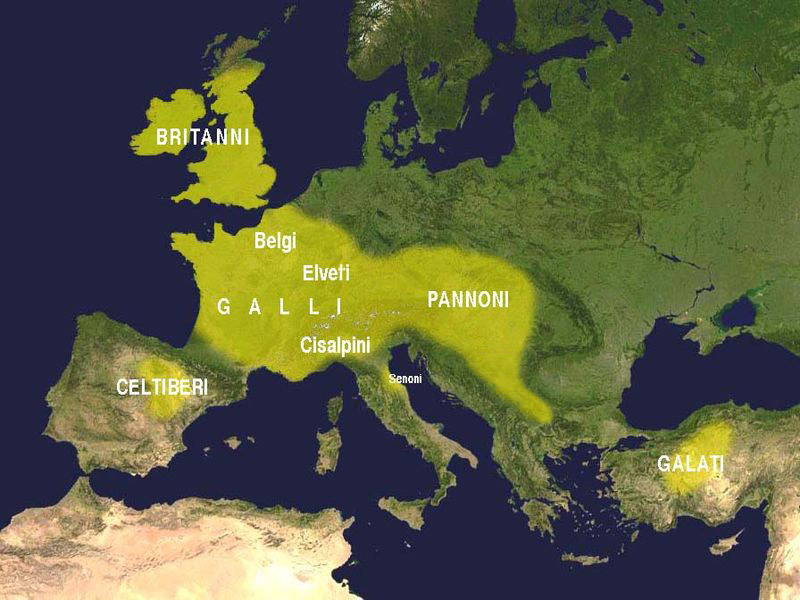
Six classical Greek authors also came to identify these mythical people at the back of the North Wind with their Celtic neighbours in the north: Antimachus of Colophon, Protarchus, Heraclides Ponticus, Hecataeus of Abdera, Apollonius of Rhodes and Posidonius of Apamea. The way the Greeks understood their relationship with non-Greek peoples was significantly moulded by the way myths of the Golden Age were transplanted into the contemporary scene, especially in the context of Greek colonisation and trade. As the Riphean mountains of the mythical past were identified with the Alps of northern Italy, there was at least a geographic rationale for identifying the Hyperboreans with the Celts living in and beyond the Alps, or at least the Hyperborean lands with the lands inhabited by the Celts. A reputation for feasting and a love of gold may have reinforced the connection.


Abaris the Hyperborean

A particular Hyperborean legendary healer was known as "Abaris" or "Abaris the Healer" whom Herodotus first described in his works. Plato (Charmides, 158C) regarded Abaris as a physician from the far north, while Strabo reported Abaris was Scythian like the early philosopher Anacharsis (Geographica, 7. 3. 8).


Modern interpretations

As with other legends of this sort, details can be selectively reconciled with modern knowledge. Above the Arctic Circle, from the spring equinox to the autumnal equinox (depending on latitude), the sun can shine for 24 hours a day; at the extreme (that is, the Pole), it rises and sets only once a year, possibly leading to the erroneous conclusion that a "day" for such persons is a year long, and therefore that living a thousand days would be the same as living a thousand years.

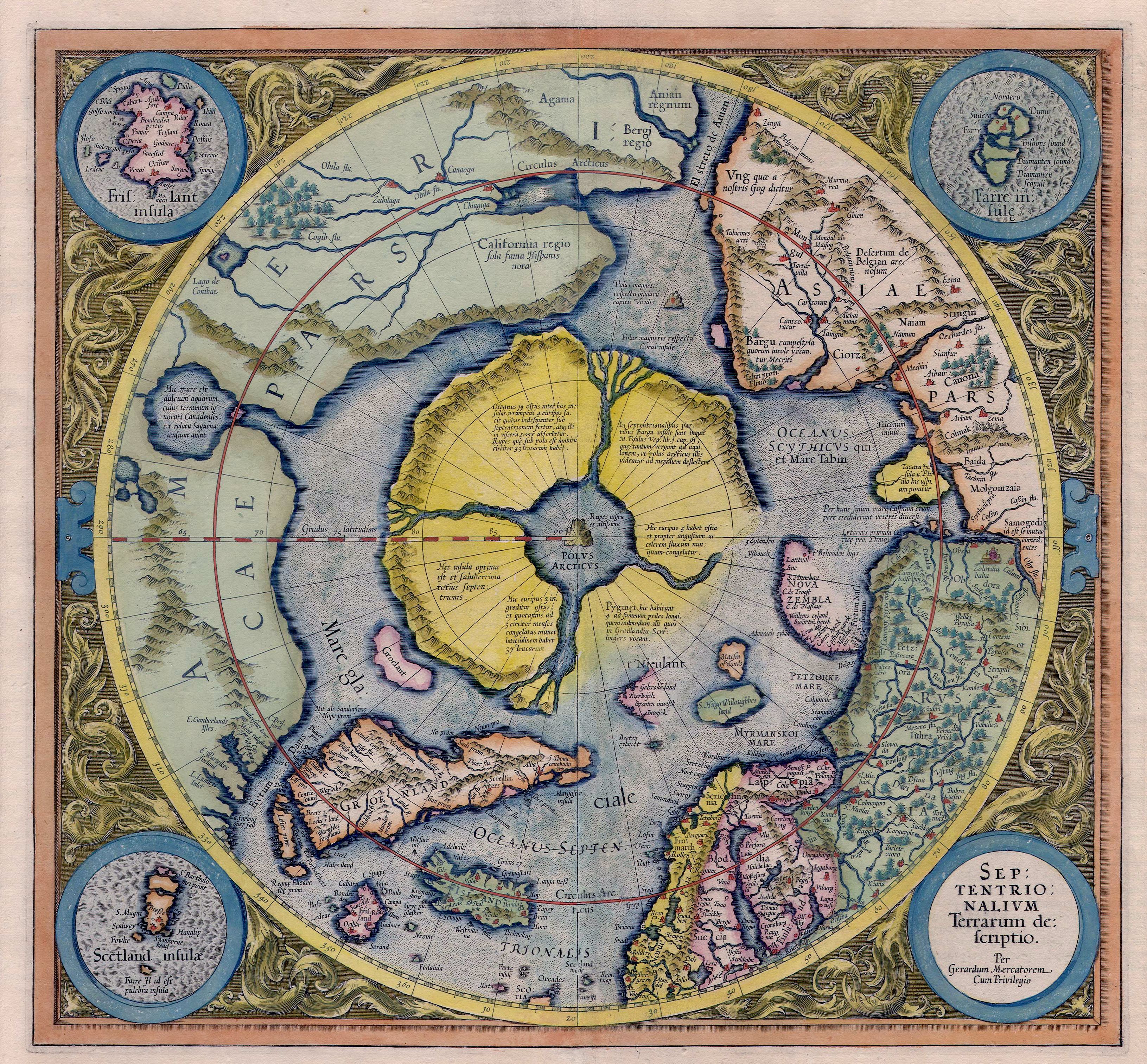
Since Herodotus places the Hyperboreans beyond the Massagetae and Issedones, both Central Asian peoples, it appears that his Hyperboreans may have lived in Siberia. Heracles sought the golden-antlered hind of Artemis in Hyperborea. As the reindeer is the only deer species of which females bear antlers, this would suggest an arctic or subarctic region. Following J.D.P. Bolton's location of the Issedones on the south-western slopes of the Altay mountains, Carl P.Ruck places Hyperborea beyond the Dzungarian Gate into northern Xinjiang, noting that the Hyperboreans were probably Chinese.

Amber arrived in Greek hands from some place known to be far to the north. Avram Davidson proposed the theory that Hyperborea was derived from a logical (though erroneous) explanation by the Greeks for the insects, which apparently originated in a warm climate, found embedded inside the amber arriving in their cities from cold northern countries.

Unaware of the explanation offered by modern science (i.e. that these insects had lived in times when the climate of northern Europe was much warmer, their bodies preserved unchanged in the amber) the Greeks came up with the idea that the coldness of northern countries was due to the cold breath of Boreas, the North Wind. So if one travelled "beyond Boreas" one would find a warm and sunny land.


Identification as Hyperboreans

Northern Europeans (Scandinavians), when confronted with the classical Greco-Roman culture of the Mediterranean, identified themselves with the Hyperboreans, neglecting the traditional aspect of a perpetually sunny land beyond the north. This idea was especially strong during the 17th century in Sweden, where the later representatives of the ideology of Gothicism declared the Scandinavian peninsula both the lost Atlantis and the Hyperborean land. The north of the Scandinavian peninsula is crossed by the Arctic Circle, north of which there are sunless days during the winter and sunlit nights during the summer. Western European culture equally self-identified as Hyperborean; thus Washington Irving, in elaborating on Astoria in the Pacific Northwest, was of the opinion that

While the fiery and magnificent Spaniard, inflamed with the mania for gold, has extended his discoveries and conquests over those brilliant countries scorched by the ardent sun of the tropics, the adroit and buoyant Frenchman, and the cool and calculating Briton, have pursued the less splendid, but no less lucrative, traffic in furs amidst the hyperborean regions of the Canadas, until they have advanced even within the Arctic Circle.

In this vein the self-described "Hyperborean-Roman Company" (Hyperboreisch-römische Gesellschaft) were a group of northern European scholars who studied classical ruins in Rome, founded in 1824 by Theodor Panofka, Otto Magnus von Stackelberg, August Kestner and Eduard Gerhard. Friedrich Nietzsche referred to his sympathetic readers as Hyperboreans in The Antichrist (written 1888, published 1895): "Let us look each other in the face. We are Hyperboreans – we know well enough how remote our place is." He quoted Pindar and added "Beyond the North, beyond the ice, beyond death – our life, our happiness."

The term "Hyperborean" still sees some jocular contemporary use in reference to groups of people who live in a cold climate. Under the Library of Congress Classification System, the letter subclass PM includes "Hyperborean Languages", a catch-all category that refers to all the linguistically unrelated languages of peoples living in Arctic regions, such as the Inuit.


Hyperborean Indo-European hypothesis

John G. Bennett wrote a research paper entitled "The Hyperborean Origin of the Indo-European Culture" (Journal Systematics, Vol. 1, No. 3, December 1963) in which he claimed the Indo-European homeland was in the far north, which he considered the Hyperborea of classical antiquity. This idea was earlier proposed by Bal Gangadhar Tilak (whom Bennett credits) in his The Arctic Home in the Vedas (1903) as well as the Austro-Hungarian ethnologist Karl Penka (Origins of the Aryans, 1883).

Hyperborea in modern esoteric thought

H.P. Blavatsky, René Guénon and Julius Evola all shared the belief in the Hyperborean, polar origins of Mankind and a subsequent solidification and devolution. According to these esoterists, Hyperborea was the Golden Age polar center of civilization and spirituality; mankind does not rise from the ape, but progressively devolves into the apelike condition as it strays physically and spiritually from its mystical otherworldly homeland in the Far North, succumbing to the demonic energies of the South Pole, the greatest point of materialization (see Joscelyn Godwin, Arktos: The Polar Myth).

Robert Charroux first related the Hyperboreans to an ancient astronaut race of "reputedly very large, very white people" who had chosen "the least warm area on the earth because it corresponded more closely to their own climate on the planet from which they originated". Miguel Serrano was influenced by Charroux's writings on the Hyperboreans.


Cultural references

George MacDonald's At the Back of the North Wind features a feminine version of Boreas, named "North Wind", who takes a sickly boy, "Diamond", to "the back of the North Wind", which she herself cannot enter. More than two chapters are devoted to a description of MacDonald's Hyperborea and how Diamond got there.

Dante's Paradise, in his Divine Comedy, is the subject of Hyperborean allusions: it is figured geographically north of Purgatory; and, great and little bears (symbols of the polar north) appear above the summit of Mount Purgatorio.

In Herman Melville's Moby Dick, Ishmael suggests that, among other things, the painting in the Spouter Inn in Chapter 3 could be "a Hyperborean winter scene."

Clark Ashton Smith authored a series of short stories known as the Hyperborean cycle (1931–58). Some elements were borrowed by H. P. Lovecraft in what later became known as the Cthulhu Mythos.

In Robert E. Howard's Conan stories (1932–36), Hyperborea is a land to the north-east of Conan's native Cimmeria.

The "Hyperboreans" (Hyperboreisch-römische Gesellschaft) were a group of northern European scholars who studied classical ruins in Rome, founded in 1824 by Theodor Panofka, Otto Magnus von Stackelberg, August Kestner and Eduard Gerhard.

Australian artist Norman Lindsay in July 1923 first exhibited his etching Hyperborea in Sydney. A month later he published two essays about Hyperborea, the first in Vision, No. 2, in which he said that only a picture or a poem could describe Hyperborea. The essays were later combined as Hyperborea: Two Fantastic Travel Essays by Fanfrolico Press in 1928.

Friedrich Nietzsche referred to those who followed his philosophy as "Hyperboreans" in The Antichrist (translated by Anthony M. Ludovici.)

German electronic music pioneers Tangerine Dream released an album with the title Hyperborea in 1983.

Hyperborea and its inhabitants are referenced several times in the back history of Hellboy comic book universe, particularly in the B.P.R.D series.

In Stephen King's "Dark Tower" series, Calvin Tower calls Jake Chambers "Hyperborean Wanderer."

Ruins of the Hyperborean civilization play a role in the plot of Indiana Jones and the Fate of Atlantis.

In The Last Olympian by Rick Riordan Hyperborean Giants are fighting for Kronos and, with Prometheus, give Percy Jackson Pandora's Box, containing hope. In Rick Riordan's subsequent book The Son of Neptune, Percy Jackson and his friends also encounter the giants in Alaska on their quest to free the god of death, Thanatos.

The Hyperboreans are the subject of the title track of album Hyperboreans by Jackie Oates, an English folk music singer/songwriter.

The Hyperboreans are the subject of the many songs by Bal-Sagoth, an English symphonic black metal band.

The 1977 film Sinbad and the Eye of the Tiger wove a number of related references into the plot. Hyperborea was the name given to an island far in the North Sea, described in the film by the witch Zenobia as being "past the Celtic Isles". The island had been home to the Arimaspi and contained a pyramid structure called The Shrine of the Four Elements, located in a temperate valley hidden amongst the ice of the Arctic Circle.

Several of the characters in Ulysses by James Joyce refer to themselves as Hyperborean, referring to their Celtic ethnicity.


References

Portions of this article were formerly excerpted from the public domain Lemprière's Classical Dictionary, 1848.

Bridgman, Timothy M. (2005), Hyperboreans. Myth and history in Celtic-Hellenic contacts, Studies in Classics, New York and London: Routledge

.

Saturday, December 1, 2012

The Mystic Druids


The Mystic Druids Part 1

From YouTube channel RealmOfDestiny

**************************************************

 One question is whether or not there was a Druidic culture in Cisalpine Gaul, as there was in Gaul and the British Isles. I still don't have the answer to this. From the incongruent information which I have looked at, my guess would be that there was some, more in the area of ancient Piedmont. For the most part, the more native spiritual traditions predominated.

My theory is that Druidism--and generally the Celts themselves--came about, over a long period of time, as a result of more paternally-oriented Teutonic-Odinic people merging with more maternally-oriented native Alpine and some Alpinized-Mediterranean people and their magical traditions. The sun people and the moon people.

**************************************************

The Mystic Druids Part 2


.

Monday, November 15, 2010

Lugas: A Celtic god

I have always preferred the word "god" to the word "deity." Maybe it's just me, but somehow god is a better descriptive word. On our Cernic Rite video, we used a song by the Spanish Celtic/Pagan black metal band the Crystalmoors entitled 'Lacrimae Lugus', which was supposed to be a tribute to Lugus, not to the god Cernunnos. Lugus was a pre-Roman/Christian god in the Celtic world. The Crystalmoors were likely motivated by the fact that Lugus was an important god to the Celtiberians in ancient Iberia (Spain/Portugal). This god was also present in the British Isles, Gaul (France), and in what is today modern day Switzerland.

Wikipedia does not mention Cisalpine Gaul, so I guess this is another area of open study. I had originally written that Druidism was not present in Cisalpine Gaul, but later discovered that it was at least present in some form there. Therefore I suspect the same for Lugus. If it was present in Iberia and Switzerland, then it's likely that it played some role, albeit smaller, in ancient Cisalpine culture. After the Romans conquered Celtic lands, they cleverly assigned one of the Roman gods to each Celtic god to make assimilation more easy. Therefore Lugus became the "Gaulish Mercury." In conclusion, it seems to appear that Lugus may have been to the Celtiberians, what Cernunnos was to the Cisalpines.


Lugus (from Wikipedia page):

Lugus was a deity of the Celtic pantheon. His name is rarely directly attested in inscriptions, but his importance can be inferred from placenames and ethnonyms, and his nature and attributes are deduced from the distinctive iconography of Gallo-Roman inscriptions to Mercury, who is widely believed to have been identified with Lugus, and from the quasi-mythological narratives involving his later cognates, Irish Lugh and Welsh Lleu Llaw Gyffes.

It is possible that Lugus was a triune god, comprising Esus, Toutatis and Taranis, the three chief deities mentioned by Lucan. The "threefold death" in Celtic human sacrifice may reflect the triplicity of this god.

**********************************************************************************

Celtic pantheon (Wikipedia)

**********************************************************************************

'Lacrimae Lugus' by the Crystalmoors


**********************************************************************************

As we've mentioned before, a search for "the Celts" on Amazon.com brings up some interesting books, several of them specifically about Cisaline Gaul.

.

Saturday, September 25, 2010

Cernic Rite video

This entry is in regards to the new Cernic Rite video on the Padanian-American League blog. We don't like to duplicate posts between blogs, and the video seemed more appropriate within the entire Gaulic concept, rather than only for Camunian heritage.

Because the Cernic tradition was such a big part of the Val Camonica, we always need to look at any move in this area. The video came out fairly well, with a great "Celtiberian" musical score entitled 'Lacrimae Lugus' by the Celto-Pagan Black Metal band the Crystalmoors from Cantabria, Spain. Lugus was an ancient Gallo-Celtic deity.

The video showed what was possible with some simple footage and a couple of simple props. It starts out with with some late-day footage of a wooded trail for two or three minutes, which was broken up with a couple of images of a real wild cat taken there. The fact that the cat was black with glowing eyes added to the video.

Next was some footage taken at almost twilight inside a dark heavily wooded walkway along a mountainside, which lasted a little over a minute. The lack of light gave it sort of a Black Forest effect. Actually it wasn't quite that dark, but it looked like it was from an old European horror film. The mountains in the distance weren't very visible due to the position of the sun and the dark overgrowth.

The third part, taken at twilight, was of some silvery Celtic-looking standing stones in a circle. The video shows the circle with the hills in the background, and the still visible sun just before dropping under the distant mountain. Totally unplanned, one single ray of sunbeam (at least from the camera perspective) pointed directly at the tallest stone, then the camera focuses in on a pendant of Cernunnos which was placed upon the top of that stone. That was a pleasant surprise.

The footage was then broken up by several striking images of the twilight landscape. After that, footage of tall trees against the dark twilight sky facing straight upwards, then spinning in a circle. It's easy to forget just how easy it is to get dizzy when a person spins in a circle like that. A slower spin would have done fine. This was followed by some footage of a walk through the tall trees which only came out marginally acceptable due to the lack of light, and thus the raw footage had to be cut down quite a bit.

Next some filming of the moon through the trees in a sideways direction while walking. Due to some fog and the lack of light, this wasn't as dramatic as hoped, and also had to be cut down. The footage was broken up by a few images, starting with a skunk. Only it's glowing eyes showed. There were a few flash images of the skunk, which were cut out. This was followed by a clear image of the moon through the trees.

What followed next was a scene of a flashlight in some dark woods which eventually illuminates a tree with a foot wide red Sun of the Alps symbol formed from red electrical tape. Those woods were so dark that the flashlight barely showed up, except when it was placed close to the tree trunk. The night, hills, trees, and foliage all blocked out any light. In other words, when the flashlight was turned off, there was almost 100% blackness. Sometimes, if there's some dense fog, the lights of the cities will illuminate the fog, which in turn illuminates the ground.

Following all that was a scene where the camera was coming out of the dark tunnel of brush into a grassy field, focusing and zeroing in on the moon. The tunnel effect didn't work due to the lack of light, but some good footage of the moon fighting its way through the clouds was obtained. Next were some images to brake up the footage a little. First was an image which was taken at the edge of the trail, back in civilization, of a white house cat. Only the eyes and some body outline showed up, which made the cat appear like an white owl. Actually there was much owl hooting along the trails, but it's very hard to get a picture of owls since they're rarely seen, so the ambiguous image was just left as "maybe an owl" for the viewer. Another image of the moon through the trees, and a more clear image of the Sun of the Alps PAL symbol on the tree, followed.

The video ends with the ending image of tree bark with a photo-shopped Sun of the Alps symbol and the words Padanian-American League on it. It finishes with about twenty-four seconds of the sound of night crickets, followed by about thirty-five seconds of sound from wind through the trees and a few occasional screeches from what were probably a few restless hawks perched in the trees. The video ends with one nice loud screech. Actually, the camera was rolling even though all you see is black.

Hopefully this was a fitting tribute to the Cernic tradition, which is often associated with the night forest. One can imagine, over literally thousands of years, life in the unspoiled Alpine forests. It should be noted that the Cernic tradition was part of the history of ancient Gaul, southern Germany/Switzerland/Austria, Cisalpine Gaul including into Tuscany where there was Celtic settlement, and surprisingly in a few parts of Scandinavia. Probably the most impressive and famous Cernic carvings is located on Gotland Island, which is a small island in the Baltic Sea. It would be interesting to look into Cernic influence in Iberia and the Slavic regions, and even down towards Greece. There were Celtic settlements in ancient Turkey. Apparently there was no Cernism in the British Iles.

Lastly, as mentioned, this Cernic tradition linked places like Val Camonica with Gotland Island. One item which deserves a little more study is the torc, which is depicted in the right hand of Cernunnos. Again, although usually associated with the Celts, the torc ties in with the heritage of all Cernic peoples. The famous Roman statue 'The Dying Gaul' depicts a dying Gaulic warrior, naked except for the torc around his neck.

.

Tuesday, March 3, 2009

The Lepontii in Ancient Lombardy


This information was taken from a part of Insubria87's 'Early Celtic Presence in Northern Italy'

Lepontii

The Lepontii were an ancient people occupying portions of Rhaetia (in modern Switzerland and Italy) in the Alps during the time of the Roman conquest of that territory. The Lepontii have been variously described as a Celtic, Ligurian, Raetian, and Germanic tribe. However, most evidence, including recent archeological excavations, and their association with the 'Golasecca culture' of Northern Italy, indicates a Celtic origin although they might actually be an amalgamation of Raetians (who were of Etruscan origin) and Celts.


The chief town of the Lepontii was Oscela, now Domodossola, Italy, and their territory included the southern slopes of the St. Gotthard Pass and Simplon Pass, corresponding roughly to present-day Ossola and Ticino. See also: Lepontic language. This map of Rhaetia [1] shows the location of the Lepontic territory, in the south-western corner of Rhaetia. The area to the South, including what was to become the Insubrian capital Mediolanum (modern Milan), was Etruscan around 600-500 BC, when the Lepontii began writing tombstone inscriptions in their alphabet (one of several Etruscan-derived alphabets in the Rhaetian territory).

http://en.wikipedia.org/wiki/Lepontii


Lepontic language

Lepontic is an extinct Celtic language that was spoken in parts of Rhaetia and Cisalpine Gaul (today's Northern Italy) between 700 BC and 400 BC. Sometimes called Cisalpine Celtic, it is considered a dialect of the Gaulish language and thus a Continental Celtic language (Eska 1998).

The language is only known from a few inscriptions discovered that were written in the alphabet of Lugano, one of five main varieties of Northern Italic alphabets, derived from the Etruscan alphabet. These inscriptions were found in an area centered on Lugano, including Lago di Como and Lago Maggiore. Similar scripts were used for writing the Rhaetic and Venetic languages, and the Germanic runic alphabets probably derive from a script belonging to this group.


Lepontic was assimilated first by Gaulish, with the settlement of Gaulish tribes north of the River Po, and then by Latin, after the Roman Republic gained control over Gallia Cisalpina during the late second and first century BC.

The grouping of all of these inscriptions into a single Celtic language is disputed, and some (including specifically all of the older ones) are said to be in a non-Celtic language related to Ligurian (Whatmough 1933, Pisani 1964). Under this view, which was the prevailing view until about 1970, Lepontic is the correct name for the non-Celtic language, while the Celtic language is to be called Cisalpine Gaulish. Following Lejeune (1971), the consensus view became that Lepontic should be classified as a Celtic language, albeit possibly as divergent as Celtiberian, and in any case quite distinct from Cisalpine Gaulish. Only in recent years, there has been a tendency to identify Lepontic and Cisalpine Gaulish as one and the same language.

While the language is named after the tribe of the Lepontii, which occupied portions of ancient Rhaetia, specifically an Alpine area straddling modern Switzerland and Italy and bordering Cisalpine Gaul, the term is currently used by many Celticists to apply to all Celtic dialects of ancient Italy. This usage is disputed by those who continue to view the Lepontii as one of several indigenous pre-Roman tribes of the Alps, quite distinct from the Gauls who invaded the plains of Northern Italy in historical times.

The older Lepontic inscriptions date back to before the 5th century BC, the item from Castelletto Ticino being dated at the 6th century BC and that from Sesto Calende possibly being from the 7th century BC (Prosdocimi, 1991). The people who made these inscriptions are nowadays identified with the Golasecca culture, which has been ascribed a Celtic identity (De Marinis, 1991). The extinction date for Lepontic is only inferred by the absence of later inscriptions.

http://en.wikipedia.org/wiki/Lepontic_language