Showing posts with label Swiss Italian. Show all posts

Monday, February 7, 2022

Ticinese heritage in the wine country

The Swiss Hotel

History

[From SwissHotelSonoma.com]

In 1835, fifteen years before the Bear Flag Rebellion that established the California Republic, Mexican General Mariano Vallejo laid out the streets of Sonoma around an 8 acre town square. The square is known locally as The Plaza, and is the crown jewel of Sonoma’s architectural heritage.

Between 1836 and 1840, the General’s Brother, Don Salvador Vallejo, built his family home in the middle of the block on the north side of the Plaza. That beautiful adobe structure still stands today. As a hotel, the home is said to have served as a stagecoach stop in the 1870’s. In 1892 it was acquired by the Toroni family and run as the Ticino Hotel, serving railroad passengers and employees who stopped in Sonoma to spend the night. When another hotel on the west side of the Plaza burned to the ground, the Toronis simply took its name for their own, and to this day the Vallejo home is known as the Swiss Hotel.

Hank Marioni is the fourth generation of his family operating the Swiss Hotel as a hotel and restaurant. His great grandfather, Mose Mastelotto, purchased the building in 1923, and it passed from him to his daughter, Antonetta and her husband Henry Marioni in 1929. In 1945, their daughter, Helen, and her husband Ted Dunlap took over, running the Swiss Hotel until 1991. At that time, their nephew Hank Marioni spent one and a half years remodeling and retrofitting the building, and re-opened the Swiss Hotel as a modern hotel and restaurant while preserving the historic charm.

With a bar that is virtually unchanged through four generations, and walls covered with a photographic history of the town, its people and notable visitors. The Swiss Hotel remains today, as it has for well over 100 years, a beautiful reminder of Sonoma’s colorful past.


*************************


Deep Ticinese roots

Backdated from 9-7-22

After a long period of disarray, I'm currently living in Sonoma, California. The weather is blazing hot compared to coastside, where heat waves only last two to three days. You don't even need to look at the weather report here during the summer. With a population of only 10,739, the surrounding farmland dwarfs the residential area. The Sebastiani Winery is just down the highway, maybe just over a mile away. The decorative flags downtown reflect the regions' old roots: American, Californian, Mexican, Italian, Spanish, French, English, and Swiss which essentially represents Ticinese roots... although there had also been Swiss German farmers in the distant past.

Ticino--just like the Val Camonica, Valtellina, Val Chiavenna, or the Bergamo Alps--is culturally and liguistically Alpine-Lombard. Along with Italian or Swiss flags, once in awhile a flag of Ticino can be spotted. Ticinese or Swiss Italian heritage is historically connected with San Francisco, San Mateo County, Marin County, Sonoma County, and Napa County. A few months ago back in Brisbane, I noticed a flag of Ticino attached, with a forward mounting bracket, to a fence in the Brisbane hills. Spiritually, I feel like it's a small expression of deep cultural continuity for me across the 60 mile trek from home.

.

Monday, January 3, 2022

"The Bridge" in Ticino featured now in Windows 10 Spotlight


Ponte dei Salti bridge in Lavertezzo, Switzerland

This town in southern Switzerland was first mentioned in the historical record in 1327 as Laverteze. We don't know if the emerald green waters of the Verzasca River are mentioned, but we do know there was no reference to the striking double-arch bridge that rises above the river. That's because it wasn't built until the 17th century. Since then, the Ponte dei Salti bridge has become such a beloved symbol of Lavertezzo that it's been carefully maintained and restored rather than replaced with a new design. Ponte dei Salti translates to Jump Bridge, and some folks take that literally, diving from the span into the crystal-clear water below—although we'd recommend a safer approach from the river's wide banks.


************


Lavertezzo

Lavertezzo is a municipality in the district of Locarno in the canton of Ticino in Switzerland.


************


It always makes all of the travel guides and magazines of Ticino. The double arch stone bridge at Ponte dei Salti has long held a fascination with travelers; an example of rural engineering genius. The double arch stone bridge was built in the 17th century and is one of the most distinctive sights in the village.

.


Sunday, July 28, 2019

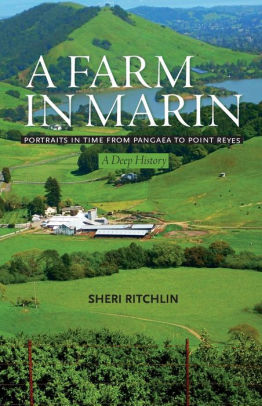
New book about the history of Ticinese farmers in West Marin

'New book tells of West Marin’s first farmers'
 

By Silas Valentino - Point Reyes Light - February 8, 2018

It’s a timeless tale: people emigrate from their countries of origin for a chance at prosperity in America. In West Marin, many of the early settlers who established dairies and ranches with names still recognizable today hailed from the same region of Switzerland, near the border of Italy.

The bridge between Ticino, Switzerland and West Marin receives a thorough historical polishing in a new book by Sheri Ritchlin, “A Farm in Marin: Portraits in Time from Pangea to Point Reyes.” It’s chockablock with deeply researched information to reflect the past from both sides of the immigrant’s journey.

Ms. Ritchlin begins her investigation with the chapter called “Earth Time,” which briefly reinterprets North America’s 15 billion-year-old existence, before following migration patterns from ancient Rome to Milan and, finally, Ticino. Spliced throughout the book are personal anecdotes of her own story in West Marin and family tales from the farm she lived on.

Ms. Ritchlin, who splits her time between West Marin and Ovando, Montana, built her book on interviews with descendants, newspaper clippings, diary entries and fully reprinted, 19th-century letters from the likes of Oscar Shafter, whose family held a land empire on Point Reyes. The book, published by Pointer Oak in October, was the result of 10 years of writing and a successful Kickstarter campaign.

West Marin’s past first captured Ms. Ritchlin while she was a student at the California Institute of Integral Studies over a decade ago. She was living in a 1972 cabover camper at the Ed and Susie Grossi ranch, near the Sonoma County border, where she helped in the vegetable garden. Anecdotes of the family’s origins piqued her interest and she began her research, using the Grossis as her north star. David Rolland’s “Light on the Old Country” series in the Light from the 1990s, for which the writer traveled to Switzerland and Croatia to report on West Marin’s early ancestors, was one of the book’s inspirations.

Many West Marin ranch families immigrated to the States from the same corner of the Alps: Ticino (pronounced Ti-CHEE-no). The Italian-speaking region is located in southern Switzerland, close to Milan. While Ticino features rolling green hills akin to West Marin’s, the Swiss Alps are more rugged and sharp—think Matterhorn, not Black Mountain.

The more information Ms. Ritchlin dug up, the clearer the bridge between these places came into view.

The Swiss immigrants began arriving in waves to West Marin, following in the footsteps of their family and fellow Ticino villagers until the ’30s when the United States government slapped quotas on immigration. “Word in Ticino was, ‘Look for old man Grandi, he speaks the language and he’ll help you find a job,’” she said.

The names of the immigrants who poured into West Marin during the second half of the 19th century read like the freshman orientation of West Marin’s first graduating class: Spaletta, Martinelli, Dolcini, Grossi, Cheda and Giacomini.

“In 1860, we find Antonio Jacomeni (as spelled on the census) working on a ranch in Tomales,” she writes. The 1870 census showed that of the 320 people living in Olema, 47 were dairy workers from Ticino, including seven Cheda family members.

By 1886, the Marin Independent Journal would report that of the 8,000 Ticinesi living in California, “about one third reside in Marin County.”

“Already, the Ticinesi are beginning to leave their mark on the Marin landscape, bringing with them the humble skills that had been essential to their survival along the steep valleys of southern Switzerland and will now bring them a share of California gold,” Ms. Ritchlin writes.

Sadly, an unfortunate thread of xenophobia also connects yesteryear with today. Letters to the editor of that era revealed complaints about how these new neighbors were acquiring land and job opportunities. “California is going, and will keep on going to ruin, if these detestable Swiss, Portuguese and Chinese are not politely invited by Uncle Sam to take up their bed and walk to—well, to the shades from whence they came I suppose,” an unidentified “unemployed man” in Olema wrote to the I.J. in January 1870.

But not all reactions to the influx of immigrants were negative. Historian Dewey Livingston dug up a quote from 1881, sourced from an unknown speaker in Olema, that depicted a community beginning to meld together, if with the help of humor: “Several marriages have taken place among the Swiss population. We should give their names to an expectant public, if in the first place we could remember them, and if in the second place we could spell them.”


************


'A Farm in Marin: Portraits in Time from Pangea to Point Reyes' (By Sheri Ritchlin - 2017)


************


Businesses advertised withing the article, owned by a few of the old local Ticinese families....


.

Thursday, December 27, 2018

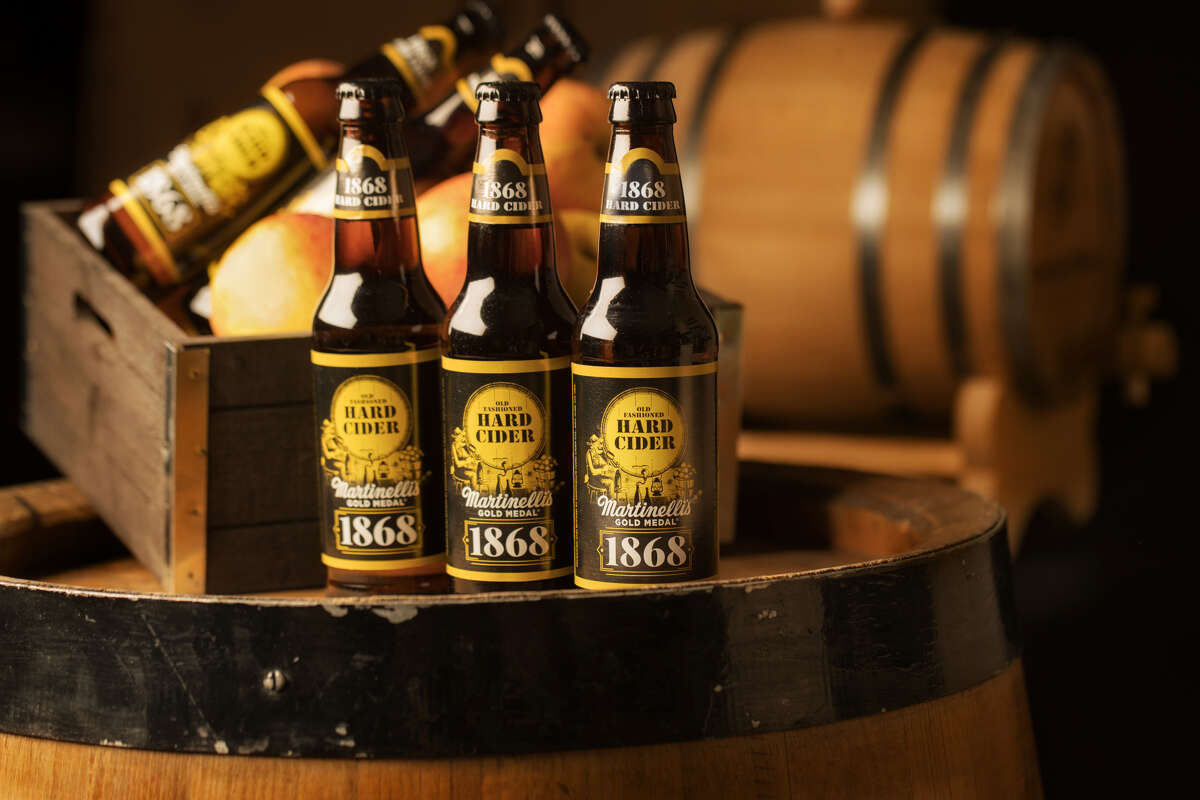
Martinelli's Cidery of Monterey County---with Ticinese origins---turns 150 years old


I wanted to get this in before the end of the year, as 2018 marks a century and a half of Martinelli's Cider.


************


'BREAK OUT THE BUBBLY: MARTINELLI’S TURNS 150!'

By Garrick Ramirez - SantaCruz.com - July 25, 2018

Beloved sparkling cider and apple juice producer S. Martinelli & Company is celebrating its 150th anniversary this year, and we’re bubbling over with excitement! Founded in Watsonville in 1868—the same year Ulysses S. Grant was elected President—the effervescent company is still family-owned, locally-based, and making juice the way they always have: fresh and 100% natural. We’ve got the inside scoop below, and trust us, it gets juicy!

If you were like us, you were introduced to Martinelli’s via their iconic, apple-shaped glass bottle that you begged your mom to buy on trips to the supermarket. Then at Thanksgiving, you’d act cool filling your kids' cup with their sparkling cider from a champagne-style bottle. We weren’t the only ones pretending, either. It’s believed that Dean Martin would swig Martinelli’s—not martinis—onstage, and Martinelli’s cider would double as champagne in Hollywood movies during Prohibition.

But before the Rat Pack and 18th Amendment, there were Swiss-born brothers Stephano and Luigi Martinelli, who immigrated to the U.S. during the Gold Rush years and started farming apples in present-day Watsonville. They introduced a fermented, or “hard,” cider in 1868, and by 1885, they were churning out 15,000 gallons a year (in 2017, Martinelli’s produced that much in less than 2 hours). The brothers began racking up gold medals for their cider at state fairs which explains the medals you see on the labels today. In anticipation of Prohibition, Martinelli’s bottled its first unfermented—alcohol-free—apple juice in 1917. In 1933, the brand introduced its famous apple-glass bottle with the slogan “Drink Your Apple a Day,” and the rest is history.

con't....


************


'Martinelli's, long-known for non-alcoholic cider, celebrates 150 years by bringing back hard cider'

'On Martinelli’s 150th Anniversary, We Remember Stephen C. Martinelli'

'Martinelli’s to Release 1868 Hard Cider for 150th Anniversary'

'150 Years of Martinelli’s Labels'

.

Saturday, July 28, 2018

Rediscovering people's Swiss-Italian roots (Australia, California)


Rediscovering people's Swiss-Italian roots

SWI swissinfo.ch - English


Many people with Swiss-Italian roots who responded to a swissinfo survey last year, recalled their first visit to the land of their ancestors. (Production, photograph/old postcard selection: Christoph Balsiger)


.

Friday, June 23, 2017

On the ground in Valtellina and Italian/Lombard-speaking Graubünden


Breathtaking Road Through Stelvio Pass (Eastern Alps), Italy-Switzerland-Italy.

KirillRealineVlasov

Check out the beauty of Italy and Switzerland! Stelvio Pass (Italian: Passo dello Stelvio; German: Stilfser Joch), located in Italy, at 2757 m (9045 feet) is the highest paved mountain pass in the Eastern Alps, and the second highest in the Alps. It is located on the border of Italy and Switzerland. More about Stelvio Pass read here https://en.wikipedia.org/wiki/Stelvio_Pass

3D Streets https://www.google.ru/maps/@46.528717,10.453634,3a,75y,243.91h,104.65t/data=!3m4!1e1!3m2!1snfA_iexCxRQd7o3pOQSxIw!2e0

Shot on GoPro Hero2.

Music - 'Cherry Blossom' by Stumbleine


*************************


The Stelvio Pass is located in the Ortler Alps in the Valtellina (Bormio) and the South Tyrol.

Driving through the Alps: Tirano (Italy) - St. Moritz (Swiss) [Bernina Pass]

The Bernina Pass, Switzerland.

Some time back, I was walking past some outdoor tables in front of the deli in the Brisbane Village Shopping Center during lunch. I noticed several younger men who looked very Milanese--tall, in-shape, and sharply dressed--sitting at a table speaking Italian. I was in a hurry, but I thought it unfortunate that I couldn't communicate to them that I am Lombard; that my parents are from a largely Lombard community in Upper Michigan, that there was once a Lombard neighborhood in nearby San Rafael (one of about a dozen in the United States; there's still a Lombard club there), that there was once a Societa Lombarda of South San Francisco right nearby, or that the was a large migration of Swiss Italians (Ticinese-Lombards) locally at one time.

I guess that I am like many Americans who seek a connection to what feels like a long lost past. But I had to get going, but I looked back as I was getting into my car. I saw them sitting there with San Bruno Mountain in the background. From that angle, the mountains could have passed for the pre-Alps just north of Milan, Bergamo, or Brescia. Brisbane could almost pass for an Alpine village when viewed from an eastern angle. In any case, 150 years ago all of our ancestors were in one place; all speaking a dialect of the Lombard language, and not at all strangers... but now living somewhere in the world, such as Rome, Paris, San Francisco, Melbourne, Montreal, Sao Paulo, or Buenos Aires.... the Milanese, the Bergamasks, the Brescians, the Camunians, the Ticinese, the Valtellinese, the Poschiavini (Bernina/Poschiavo) etc.


*************************


The Bernina Express....

....between Tirano in the Valtellina to St. Moritz in Graubünden, Switzerland.


*************************


Switzerland Tirano St Moritz

OOO III


*************************

The Bernina Express - Valtellina to Graubünden

Cab Ride. Switzerland. St.Moritz - Tirano

Bernina Express (HD)

As I was writing in the previous paragraph, 150 years ago our great(s)-grandparents were all in one place. When I was a kid in the stands at Candlestick Park in San Francisco, watching the 49ers play, Joe Montana was quarterback. Montana was from Monongahela, Pennsylvania; once a destination for immigrants from the Val Camonica... where Montana's paternal grandparents came from. My grandparents were from the Val Camonica, my parents from the Montreal River between Wisconsin and Upper Michigan. Very unbeknownst to me at the time, the Hall of Fame quarterback's grandparents or great grandparents could have known my grandparents or great grandparents... or some forefathers/foremothers during those many centuries. At the least, they could have communicated in the same Camunian dialect of the Lombard language.

A few weeks ago, I ran into a salesman from Milan. He was in San Francisco on business... leather jackets made in Milan. The company does business all over the world. He fit the gregarious stereotype... and I thought it was too bad that north San Mateo County no longer had any "Little Italy" (or "Little Genoa") to display.... and perhaps show some sort've cultural continuity. That pretty much disappeared in the 70s. Some people still spoke Italian in the 80s.

Some time ago I came across an Italian business woman at a car rental in downtown San Francisco. She was from Florence, about 6'1" and beautiful with long dark hair, big brown eyes, and ivory skin, probably in her 30s, and very well dressed. These Italians mentioned here are the kind've people who have given Italy respect the world over... the people of the north. Their accents were not the accents from some mafia movie... but well spoken English.. firm and with confidence. Many northern immigrants long ago, often from the Genoa area, took the same sea route whether headed for the cone of South America or northern California. From Genoa to one of the eastern ports of South America, around the southern tip and then northward to San Francisco. Now their descendants are strangers... lost in time. We are the same people.


*************************


Bernina Express Tirano-St Moritz - 4K Seitenkameras - Top-Of.tv

DENHARTOGH VIDEO


*************************


I feel closer to the northern stretches of the east Lombard Alps than I do to Brescia and the flatlands of the Po Valley. These scenes almost seem familiar to me, and I know that this is mostly perception; although there is a such thing as ancestral memory. One of the recent videos posted here explained this in detail. Any mountains at least have always felt like familiar territory to me. I have tremendous balance, even on steep ground. In my entire life I have only fallen once due to a rope that ripped apart.

One of these videos showed a farm at one of the train stops. Some of the scenery reminded me of the fifty mile drive along Highway 101 from San Francisco to Santa Rosa (it is also about the same distance from Brescia to Poschiavo). One can still see many farms and displays of rural life, ironically much of it developed by northern people (Genoese, Lucchesi, Piedmontese, Ticinese) long ago. The contrast between urban Milan, Bergamo, or Brescia, and the nearby Lombard Alps--reminds me locally of the contrast between urban San Jose and the Santa Cruz Mountains.

Sonoma County easily reminds one of the rolling hills and vineyards of Tuscany, while Lake County to the north looks much like one of the Lombard-Alpine lake regions. Just in general, California is much like Italy. If you could press down a giant cookie cutter in the shape of Italy, over California, it would resemble the basic natural terrain and weather of the peninsula. I like to call the region consisting of the three Brescian valleys (Val Camonica, Val Trompia and Val Sabbia), the province of Sondrio (Valtellina, Valchiavenna), the Bergamo Alps, and the few small Lombard regions of Graubünden as "the Valtellinese Hinterland."

Bernina Express from Tirano to St. Moritz

Trenino Bernina, Inverno, Tirano - St. Moritz - Full HD

.

Tuesday, March 7, 2017

Swiss Louis Italian & Seafood Restaurant (San Francisco)


Swiss Louis Italian and Seafood Restaurant

Swiss Louis Italian and Seafood Restaurant

A tradition in San Francisco since 1936, our waterfront dining rooms, provides a magnificent view of the Golden Gate Bridge, Alcatraz and the always entertaining Sea Lions. We offer a casual dining experience that includes delicious Traditional Italian fare and fresh seafood at reasonable prices.

Swiss Louis Italian and Seafood Restaurant
Pier 39 Suite #204 San Francisco, CA 94133
(415) 421-2913
http://swisslouis.com/


*************************

It's been a good while since I visited Swiss Louis', so I can't really review it now. I can say--at least--that parking is excellent, as you can just park in the Fisherman's Wharf parking garage and just take the walking-bridge over and you're right there.

.

Monday, June 13, 2016

'The Mysterious Sibyls of Poschiavo'

'The Mysterious Sibyls of Poschiavo: The Illuminati Connection'

Robert V. Kozinets - 2007 - Brand New Worlds 

This is a spooky tale of branding horrors that is going to continue for a few days. Are you ready for it, kiddies, cuz it ain’t gonna be pretty…..

During my recent travels in Europe, I had the opportunity to stay with a good friend in the small, old, beautiful town of Poschiavo, Switzerland, in Italian Switzerland, at the base of the Alps. It’s part of the whole region also called Poschiavo, or the Valley of Poschiavo, branded as Volpasciavo. A few years ago, following the major success of the St. Moritz region and their sunshine logo and branding campaign, came up with the logo above and branded themselves. So far, so good. The place has a ton of natural beauty, great hiking trails and access to skiing in Winter, some wonderful old churches, great restaurants with Swiss-Italian food (great pizzas!), and access to the Bernina Express train line through the Alps, one of the most scenic train rides in the world.

It also has some very cool features that you’re not likely to read about in any tourist book or pamphlet, and that’s what this blog is about today. My family and I were very fortunate to have our good friend, who is also a tourism official and local politician, as tour guide. He provided all kinds of insider information that made me wonder: why doesn’t anybody else know this?
 

Here’s the first part of my touristic tale. It starts with dinner out on our first incredible evening in the Albici hotel, an old and elaborate Manor called piazza del Borgo, owned by the 18th Century Baron De Bassus with ties to the strange and powerful mystical movement termed the “Illuminati.” Here’s some great detail that I found on the wonderful “Conspiracy Archive” website which draws upon the work of one of my favorite modern mystical writers, the late Robert Anton Wilson:

The baron Thomas Maria Freiherr De Bassus was born in Poschiavo, Switzerland, in 1742. He studied jurisprudence at the University of Ingolstadt. Weishaupt (code name Spartacus), who founded the Order of the Bavarian Illuminati, on the 1 May 1776, was his schoolmate. De Bassus practiced for a year as an Adviser of court to Münich in Bavaria. In 1767 he became Patron [Podestà] of Poschiavo, a task already taken from his father Giovanni Maria. . . .At the premature death of his father, he inherited the palace of piazza del Borgo in Poschiavo, known today as the Albrici Hotel, in addition to his wealthy possessions in Valtellina and in Val di Poschiavo. . . .

Entering the Order of the Bavarian Illuminati with the code name of Hannibal, De Bassus had the assignment, like the pseudonym suggests, to spread Illuminism beyond the Alps, above all in the Three Leagues (Swiss) and in the north of Italy. De Bassus acquired a printing company that, with the help of the Illuminatus typographer Joseph Ambrosioni, became the center of the diffusion of Weishaupt’s ideas from Poschiavo. The edition of De Bassus (1782) of the first Italian translation of the Werther of Goethe, written by Gaetano Grassi from Milan, was famous.

    In 1787, police searches of the Baron’s castle turned up incriminating evidence against himself and the Illuminati. He was a great recruiter for the Order. In letters to Weishaupt he boasted of his conquests at Bozen (in the south of Austria), initiating “the President, the Vice-President, the principal Counsellors of Government, and the Grand Master of the Posts.” Later, in his travels to Italy, he sends back word of having initiated “his Excellency the Count W…” in Milan. [AB: 605]


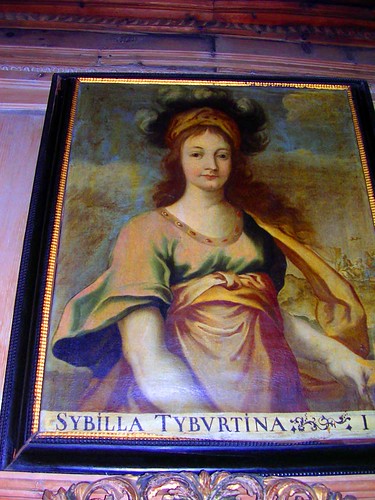
Perhaps most powerfully of all for all for me were the paintings that surrounded us in the dining room, each of a mysterious sibyl. The Sibyls, of course, were the oracular seeress’s of Greek mythology, but these paintings had a variety of different sibyls, not simple the Delphinians, some of the paintings have mysterious signs and iconography.

Here is my photo of one of the paintings: 


This is of the Roman Tiburtine Sibyl, who is famous for an apocalyptic prophesy in which a final Emperor actually slays the Antichrist. As I start my very superficial investigations into these mysterious paintings, I can see how they can weave an amazing tapestry of history, myth, and legend, a lot like the Da Vinci Code book by Dan Brown (but in this case, the quality of the research is up to all of us, these are genuine mysteries, and a genuinely mystical secret society; of course Dan Brown’s Angels and Demons was about the Illuminati).

But maybe the strangest thing about these paintings is their lineage. No one seems to know who painted them, or why, or where or when the Baron got them…they are, like the entire Illuminati movement, shrouded in mystery. They really are a sight to behold, amazing to see, fascinating to investigate, and my picture does not do them justice at all.

Tomorrow, I’ll tell you about the much gorier and horrific Alpine Witch trials, and we’ll continue to wonder…how might this connect to the branding of place and touristic marketing.


.

Sunday, October 11, 2015

Regusci Winery - Deep Ticinese roots in the Napa Valley


Regusci Winery


Family

With four generations raised on our family Ranch, farming runs in our blood. During our century on this property, we've planted and grown just about everything, from prunes and hay to citrus and olives. Knowledge about our land passes down from father to son and then father to son. Generation after generation, our passion and commitment only strengthens and through this, we're able to grow and make world-class wines from our home to yours.


Gaetano Reguschi

Born near the Italian-Swiss border, Gaetano Regusci journeyed to Napa Valley in 1891, working at a dairy along today's Silverado Trail. In 1932, Gaetano cashed in his entire life insurance policy and purchased a foreclosed property across the road, known today as the Regusci Ranch.

For the next 30 years, Gaetano wrestled a living from the land, farming corn, hay, walnuts, plums and grapes. He ranched cattle, ran a dairy and opened a retail market. Surviving both prohibition and the Great Depression, Gaetano held onto the Ranch, passing along the historic Stags Leap District property to his son Angelo in the 1960s.

Today the Ranch features 160 acres of vineyards and is home to the third and fourth generations of Regusci farmers. Our proprietary Patriarch red wine is named in Gaetano's honor.


Helvetic Los Angeles (YouTube)

Reguschi: California Wine with Tony

Wine Country at Work Episode 4 Regushi YT (in depth - 30 min)

.

Thursday, May 21, 2015

Swiss Italians in Australia


It should be clarified that the proper term is "Swiss Italian," not Italian Swiss. As has been covered here before, an immigration--earlier than that to California--had been to the state of Victoria, Australia. Just like with other smaller Alpine regions, such as Val Camonica or Valtellina, the Swiss Italians/Ticinese have a local type of cuisine. It appears that there were many similarities between the California settlers and the Victoria settlers.


Swiss Italians of Australia

Swiss Italians of Australia, are Italian-speaking Swiss that settled in Australia during the 1850s and 1860s. The Swiss Italians initially settled in the area around Daylesford, Victoria. The Swiss settlers were from the canton of Ticino and the southern part of Graubünden

The influence of the Swiss Italians of Australia—Italian-speaking Swiss from the cantons of Ticino and Grison and the northern Italians is still present in the township of Hepburn Springs—through the names of its residents, the names of its springs (Locarno) and buildings (Savoia Hotel, Parma House, Perinis, Bellinzona) and the annual Swiss-Italian Festa.

The heart of the Italian-speaking community was the area around the Savoia (Spring Creek) Hotel and the Macaroni Factory. The Savoia is named after the royal family of unified Italy. An Italian reading library was located at the hotel and pasta was made opposite in Lucini's Macaroni Factory which was also home to the Democratic Club. Lucini's moved from Lonsdale Street, Melbourne in 1865, where they had set up as the first pasta factory in Australia in 1864. Vanzetta's bakery supplied bread to the community and Crippa, Perini, and the Gervasoni's (Yandoit Creek) produced wine.

In 2007 the Melbourne Immigration Museum featured a display entitled Wine Water and Stone reflecting the Swiss and Italian heritage of the area.


Swiss Italian food and culture

The Swiss Italians loved sport, food, and music. Their influence on local culture is celebrated annually during the Swiss Italian Festa. Swiss Italians of Australia have made their mark in spheres of art, music, literature, journalism, sport, education, science, and engineering.

A local delicacy is bullboar, which is a sausage made from beef, pork, garlic, and spices. Local families jealously guard their recipes. In 2005 Daylesford Secondary College came in second place in the Australian Broadcasting Corporation's Young Gourmets by making bullboars from the Gervasoni and Sartori recipes, which gained much media attention over the fate of Charlotte the pig, with little concern for the steer involved. The bullboar has been named an endangered recipe by the Slow Food Movement.


The Hepburn Springs Swiss and Italian Festa is an annual  five day celebration in late October of the area's Swiss Italian and Northern Italian heritage, with music, food, art, wine etc. Ticino and Val Camonica are very kindred cultures, both being Lombard-speaking mountain communities. The Lombard cultural relationship doesn't just end because some long ago German king decided to build a fence. This is a part of our culture as well. 

There are local (Bay Area) Swiss Italian events, and in other parts of the state, but they're hard to find as they would usually only pertain to those of that cultural family; and perhaps through the "Pro Ticino" clubs. However, there should basically be no difference between--for example--the Ticinese of west Marin County and the Milanese of east Marin County. Not only does the canton of Ticino border with the province of Milano, but both are from the same "West Lombard" dialect.


I came across an article on the Switzerland information website entitled 'Italian Swiss... or Swiss Italians?' Although interesting, that issue has been covered here before. Still, I wanted to link it for anyone interesting in reading up on it. The Ticino question becomes important to us partly because of the large past immigration in a few areas, and because we should bridge the gap finally with the idea of "Lombard cultural identity."

The "clan" concept is great, but let us not forget the ancient nation of Lumbardia. One "Lumbard" cultural family: Bergamo, Brescia/Val Camonica, Como, Cremona, Lodi, Mantova, Milano, Monza/Brianza, Pavia, Sondrio (Valtellina/Valchiavenna), Süd Graubünden/Val Poschiavo, Ticino, and Varese.

.

Monday, February 23, 2015

History of Ticinese in London


Swiss-Italian emigrations to London
 

From swissinfovideos YouTube channel
 

Peter Barber, historian and head of the British Library's maps collection in London, gave me a brief introduction to the history of Swiss-Italian emigrations to Britain. He showed me some places where the most famous immigrants, Carlo Gatti and his nephews Augosto and Stephanie Gatti, made their fortunes.
 

(swissinfo, Michele Andina)


John Maria Gatti (Wikipedia)


Sir John Maria Emilio Gatti (13 August 1872 – 14 September 1929) was an Anglo-Swiss theatre manager, restaurateur and businessman who was also a promininent Conservative politician in London local government.

Born as Joannes Maria Aemilius in Dongio, in the canton of Ticino, Switzerland, he was the eldest son of the entrepreneur Agostino Gatti. The Gatti family had built up a large family business in Westminster, including the Adelphi and Vaudeville Theatres, a string of cafe-restaurants and the Charing Cross and Strand Electricity Supply Corporation Ltd, which supplied power to most of the West End of London.


Gatti was educated at Stonyhurst College and St John's College, Oxford, before being called to the bar at the Inner Temple. He married Lily Mary Lloyd in 1897 and they had seven children. In the same year his father died, and he took over the family businesses along with his younger brother Rocco Joseph Stefano Gatti.

His business interests, in particular the construction of electricity infrastructure, led him to become interested in the local government of the capital. In 1903 he was elected to Westminster City Council as a representative of the Charing Cross ward. He was a member of the Conservative-backed majority Moderate Party on the council, and was elected Mayor of Westminster for 1911–1912.

In 1908 he was a founding member of the Society of West End Theatre Managers. In 1919–1920 he was chairman of the society, and was involved in negotiating a standard theatrical contract for West End performers.

In 1918 Gatti was co-opted onto the London County Council as a Municipal Reform Party councillor for the Strand division. When elections resumed after World War I, he was elected a councillor for the Westminster Abbey division, holding the seat until his death. Gatti was short-listed to be Official Conservative candidate for the Westminster Abbey by-election in 1924, but lost out to Otho Nicholson who won the poll.

He served as chairman of the county council's finance committee for six years, and was chairman of the county council in 1927–1928. At the end of his term as chairman he received a knighthood.

Sir John Gatti died suddenly at Littleton Golf Club in September 1929 aged 57.


.

Thursday, January 29, 2015

Wild horses along the Swiss-Italian border


I would guess that this is either in Ticino or the Lombard-speaking parts of Graubünden, near the Italian border (Lombardy). Horses living as they did in ancient times.


YouTube channel swissinfovideos:

Nine years ago a bunch of horses began roaming freely along the mountainous Swiss-Italian border. Swiss and Italians - not always on the friendliest of terms - started an association to support this population of wild horses. (Raffaella Rossello, swissinfo.ch)


.

Saturday, April 21, 2012

Osteria Stellina: "Point Reyes Italian" food

This month, the San Francisco Chronicle released it's annual 'Top 100 Bay Area Restaurants'. Included on the list, for the third year in a row, was Osteria Stellina in Point Reyes Station, Marin County; which is described as "Point Reyes Italian" under it's cuisine (in the hard copy version). As you may know, perhaps from earlier entries here, that many of the towns founders and founding families were of Cisalpine or Ticinese origin. Of course, they continue to be a part of West Marin County, especially its dairy farming industry. That name is so cool; reminds me of "Ostara."

Osteria Stellina

11285 Hwy. 1 ( at B Street)
Point Reyes Station
Tel. (415) 663-9988      
Map | www.osteriastellina.com
Christian Caiazzo gathers most of his ingredients from Marin County and calls his creations Point Reyes Italian. Even though the restaurant is still in the 415 area code, Point Reyes Station feels as if it could be on the Irish coast, and the downtown could easily be the set for a spaghetti Western. The food, while homey, is sophisticated; his Beans and Greens alone is well worth a special trip. The interior of this corner storefront is modest, but the care that goes into the restaurant is evident in the fresh flower arrangements and pristine produce displayed around the dining room.

Specialties: Oyster pizza; Tomales Bay mussels with house-made sausage; Beans and Greens; beef stew; braised goat with creamy herbed polenta; grilled cheese at lunch; any dessert.

Hours

Lunch 11:30 a.m.-2:30 p.m. daily; dinner 5-9 p.m. nightly.

Cuisines

  • Italian


Features

  • Beer and wine
  • Credit Cards: Accepted
  • Parking: Easy
  • Lunch
  • Seating (57)
  • Reservations: Accepted

Chronicle Rating

Overall
Price
Noise
Food
Service
Ambience

Chronicle Review History

Date Status Details
04/03/2011 Revisited Top 100 Restaurants 2011  -- Michael Bauer
04/04/2010 Revisited Top 100 Restaurants 2010  -- Michael Bauer
05/10/2009 Reviewed Osteria Stellina bursting with local goodness

.