Showing posts with label Lombardy. Show all posts

Sunday, December 11, 2022

Bossico - At the base of Mt. Colombina, and on the edge of Lake Iseo

In volo su Bossico

Enrico Digital One


************


More Bossico videos


************


"The big lake" - Family folklore

Val Camonica ends where the Oglio River pours into Lake Iseo. Lovere, which is right along the lake, is usually considered a part of the valley that ended up administratively on the Bergamasque side. Bossico is located on slopes of Mt. Colombina, along Lake Iseo; therefore right on the edge of the valley as well. I remember my father telling me of his grandparents telling him stories about "the big lake," which had to be Lake Iseo; although my father didn't know which lake at that time.

A few people consider the possibility that Mt. Colombina is a pyramid, such as the main "Bosnian pyramid." I don't believe that, even though I think clearly that the one in Bosnia was carved, and has portions of it's side flat with very ancient mortar, and deep carved out tunnels.


************


MONTE COLOMBINA IN DRONE

massimiliano violi

MONTE COLOMBINA DA BOSSICO (BG)


************


More Monte Colombina videos


************

.

Saturday, July 31, 2021

Total Wine & More: 6 wines available from Lombardia - 4 of them from the famous Franciacorta wine region in Brescia!

L'Albereta Hotel at the L'Albereta Winery, Erbusco, Brescia (Franciacorta wine region)


Franciacorta wine region

Ancient Viticulture

The vineyards of Franciacorta were planted in ancient times, as witnessed by the grape seeds from prehistoric times and the archaeological material found throughout the territory. There are also other testimonies of classical authors such as Plinio and Columella a Virgilio. Through historiographical evidences it is possible to trace the passage of different peoples: the Cenomani Gauls, the Romans and the Lombards. The most abundant material is the Roman one and consists mainly of commemorative funeral inscriptions and military stones. Also some places' names and localities' names, such as Cazzago and Gussago, come from Roman courtesy.

The most valuable archaeological resource is the temple architrave (from Erbusco) that was brought to Brescia and then walled in the facade of the palace of Monte di Pietà della Loggia.


TotalWine.com


4 Franciacorta wines

Berlucchi Franciacorta Brut Cuvee Imperiale
750ml
Lombardy, Italy - Clean-cut and full-bodied with appealing, emphatic fruity notes and fine acidity. Rich, lingering, and complex. An ideal aperitif as well as with starters, and dishes based on fish, rice, pasta, white meats, full-flavored fish and fresh cheeses.
BRAND: Berlucchi
COUNTRY / STATE: Italy
REGION: Lombardy
WINE TYPE: Champagne & Sparkling Wine
VARIETAL: Sparkling Wine
STYLE: Elegant
TASTE: Apple, Pear, Spice
BODY: Medium-bodied
SKU: 82158750-1

Roscato Rosso Dolce
750ml
Lombardy, Italy- An irresistible, delicately sweet, gently fizzy red wine from the northern Italian region of Lombardy. Makes a wonderful aperitif and is also incredibly food-friendly.
BRAND: Roscato
COUNTRY / STATE: Italy
WINE TYPE: Champagne & Sparkling Wine
VARIETAL: Sparkling Red Wine
STYLE: Sweet
SKU: 120178750-1

Roscato Rosso Dolce
2-250ml can pack
Lombardy, Italy- An irresistible, delicately sweet, gently fizzy red wine from the northern Italian region of Lombardy. Makes a wonderful aperitif and is also incredibly food-friendly.
BRAND: Roscato
COUNTRY / STATE: Italy
WINE TYPE: Red Wine
VARIETAL: Red Blend
STYLE: Sweet
SKU: 120178266-2

Franciacorta Brut Rose
750ml
BRAND: Franciacorta
COUNTRY / STATE: Italy
WINE TYPE: Champagne & Sparkling Wine
VARIETAL: Sparkling Wine
SKU: 195500750-1


Franciacorta vineyard in Erbusco


Modern Viticulture

Despite boasting a long history, the new course of viticulture of Franciacorta began in all respects at the beginning of the Sixties with the birth of the first wineries. At the end of the Seventies, Italian enology experienced a period of great ferment and in Franciacorta several entrepreneurs invested and focused on the cultivation of vineyards. In fact, even today many wineries that produce Franciacorta have been founded by entrepreneurs from Brescia and province. Afterwards the growth has been very fast until today's Franciacorta fame, a national reference for the wine's production with the classic method.

The production and marketing of bubbles has become increasingly important in the last twenty years, so as to boast the DOCG brand and be known in the wine world for the high quality achieved. The name "Franciacorta" has over time become synonymous with the same DOCG sparkling wine produced in the many vineyards of the area.

Since July 2008, with the publication of the new specification, the name of the DOC "Terre di Franciacorta", used for red and white still wines, has been replaced with Curtefranca.

Today the area is just over two thousand hectares, its increase, which was considerable in the first decade of the 2000s, has now slowed sharply partly because of the global crisis. In fact, no further major growth developments are expected in the coming years. The slowdown is also due to some choices of the consortium Franciacorta aimed at not creating an excess of supply in order to safeguard the producers currently present on the territory.

In 1995 Franciacorta was assigned the first refermented in Italian bottle with the denomination DOCG. This is obtained from Chardonnay and/or Pinot Noir and/or Pinot Blanc grapes and is produced in three types: Franciacorta, Franciacorta Satèn and Franciacorta Rosé. In addition to these, Millesimato and Riserva, which require longer aging, are also produced. Franciacorta has also two other DOC denominations: a white wine and a red wine.

The wine cellars are over one hundred and some are located in buildings of artistic and architectural interest. They are open to the public, so the visitor can learn about the methods of wine production, participate in tastings and buy the product.


************


Franciacorta DOCG

Franciacorta is a sparkling wine from the Province of Brescia (Lombardy) with DOCG status. It is produced using the traditional method from grapes grown within the boundaries of the territory of Franciacorta, on the hills located between the southern shore of Lake Iseo and the city of Brescia. It was awarded DOC status in 1967, the designation then also including red and white still wines. Since 1995 the DOCG classification has applied exclusively to the sparkling wines of the area.

History

The still wines from this area have ancient traditions, referred to by Virgil and Pliny the Elder, and documented in Brescia City council books as "Franzacurta" as far back as in 1277. The name may derive from the tax-exempt (francae) status of the region's towns (curtes) in the Middle Ages. The wines were not called Franciacorta until 1957, when Guido Berlucchi released a white wine named Pinot di Franciacorta. An ambitious young winemaker working for Berlucchi, Franco Ziliani, was permitted to pursue an ambition of producing a fine sparkling wine, and in 1961 was allowed to produce for release 3,000 bottles of a sparkling wine, also sold under the name Pinot di Franciacorta.

Instant interest allowed the following vintage production to be set at 20,000 bottles, and eventually the annual production was 100,000 bottles. The national prominence that followed was soon exploited by several entrepreneurs from Milan and Brescia, and by the time the region was granted DOC status in 1967 there were 11 producers of sparkling Franciacorta, although Berlucchi represented more than 80% of the production.

With its directives, Franciacorta became the first DOC to specify that its sparkling wines must be made by metodo classico. In 1990, the Consorzio per la tutela del Franciacorta was formed, instigating codes of self-regulation with a gradual reduction of yields and elimination of the use of Pinot grigio, becoming the body considered responsible for the efficient elevation of sparkling Franciacorta to DOCG status in 1995. Since August 1, 2003, Franciacorta has been the only Italian wine not obliged to declare its DOCG appellation on the label, in the same manner that a Champagne is permitted to exclude from labels its AOC.

From 1996 to 2006, sales of Franciacorta grew from 2.9 million to 6.7 million bottles. According to Tom Stevenson, the Franciacorta region is "the only compact wine area producing world class sparkling wine in Italy."


2 other wines from Lombardy

Roscato Moscato (Mantua)
750ml
Lugana, Italy - Roscato Moscato is an irresistible, delicately sweet, frizzante wine from Northern Italy. With a touch of sparkle to flawlessly balance the sweetness, Roscato Moscato is the ideal complement for today's cuisine. Enjoy it with delicate cheeses, fresh fruit or spicy food.
BRAND: Roscato
COUNTRY / STATE: Italy
REGION: Lombardy
APPELLATION: Lugana
WINE TYPE: Champagne & Sparkling Wine
VARIETAL: Muscat/Moscato
SKU: 225728750-1

InVino Pinot Noir (Pavia)
750ml
Italy - InVino Pinot Noir is an elegant and light bodied red wine. Flavors and aromas include black cherry, black fruit, currant, wild cherries and dark berry. InVino Pinot Noir pairs well with salmon, roasted chicken or pasta dishes. Enjoy with a group of friends or by yourself!
BRAND: InVino
COUNTRY / STATE: Italy
REGION: Lombardy
WINE TYPE: Red Wine
VARIETAL: Pinot Noir
STYLE: Elegant
ABV: 12%
TASTE: Black Cherry, Currant, Fruity
SKU: 219439750-1


1 famous "honorary Lombard" wine from Novara, Piemonte

[an area which has historically & linguistically been a part of Lombardia; although the winery is located in Novara, it is long associated with Milan]

Campari
50ml
Italy- The shockingly red liqueur is infused with 68 different bitter herbs and aromatic plants, a secret recipe of natural ingredients that dates back to 1860 and has become an Italian tradition.
BRAND: Campari
COUNTRY: Italy
SPIRITS TYPE: Dessert & Fortified Wine
SPIRITS STYLE: Aperitif
SKU: 226725050-1


Vineyards in Valtellina

In Valtellina, wines are produced mainly from Chiavennasca (the local name of Nebbiolo grape variety) with other minor varieties such as Rossola nera permitted up to 20% for the Denominazione di origine controllata (DOC) and 10% for the Denominazione di Origine Controllata e Garantita (DOCG). Grapes are limited to a harvest yield of 12 tonnes/ha. The finished wine must be aged for at least 2 years prior to release (3 years if a Riserva bottling) with a minimum alcohol level of at least 11%. Yields for the DOCG wines are further restricted to a maximum of 8 tonnes/ha. While the aging requirements are the same as the DOC, the minimum alcohol level for the DOCG wine is 12%.

The best-known villages for red wines are: Grumello, Sassella, Inferno, Valgella, and Maroggia. The village names are normally indicated on the label. Additionally there is an Amarone style DOCG wine called Sforzato (Sfursat).


************


Valtellinese wines, such as Il Pettirosso Valtellina Superiore 2016, are easy to purchase online. Total Wine & More stores are all over the country, so I thought that was more noteworthy that you could just walk in and purchase a Franciacorta if one was nearby. I found one Valtellina winery--Bagera Vini di Valtellina--which as a U.S. website: www.ViniBagera.us and facebook page: https://www.facebook.com/BalgeraViniDiValtellina/


Final thoughts

Of course there are some wineries right here locally which are still in the hands of the same old Swiss Italian/Ticinese families, such as the Nichelini Winery in St. Helena, California founded in 1890. They now have a Wikipedia page as well: Nichelini Family Winery. If you're never visited there, make sure that you do! That incredible home that sits above a stone mason cellar was constructed by Anton Nichelini 130 years ago, and it's beautiful as well as the property that sits along the edge of the wooded valley.

Another interesting winery is Raffaldini Vineyards in Ronda, North Carolina. Founded by Jay Raffaldini whose family roots are in Mantua (Mantova). According to the website: "In 2009 Raffaldini Vineyards was voted one of the top ten new vineyards in all of North America, the first time any such vineyard from the Mid Atlantic received that award." The winery hosts a Festa Italiana every fall season. Of course, these wines can be ordered online.


The beautiful Nichelini house in St. Helena
.

Sunday, April 11, 2021

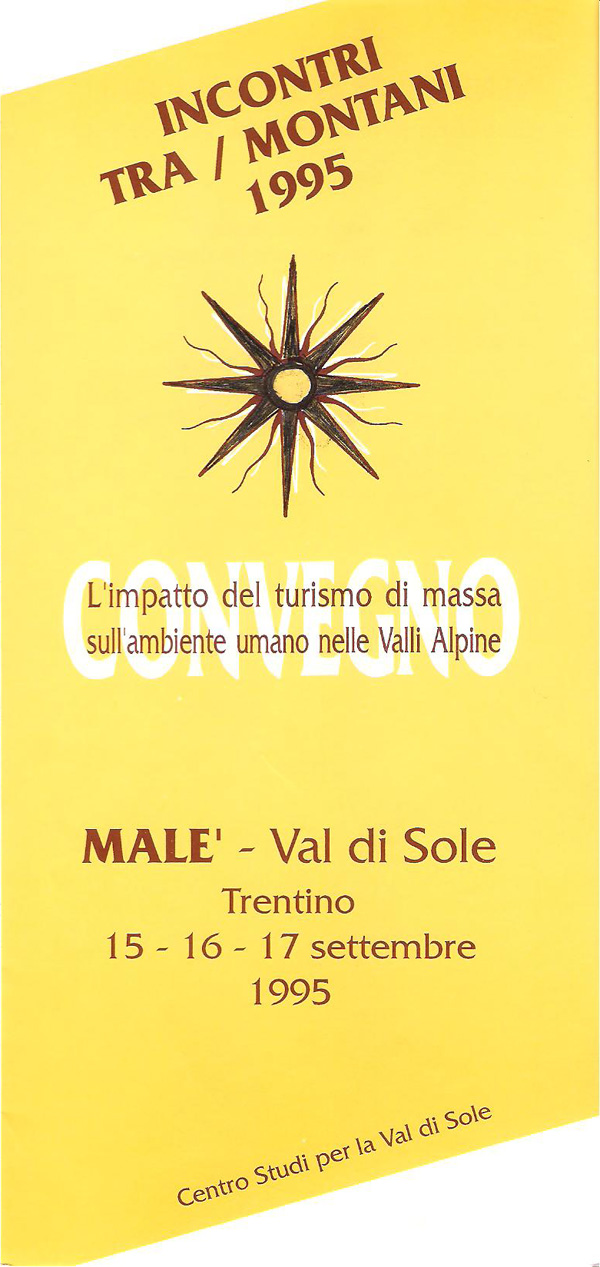
Incontri Tra/Montani - 30 Years

Incontri Tra/Montani means "Meetings Between/Mountains," and to the best of my knowledge was formed to provide a political voice to communities in the eastern Alps of Lombardy, Trentino, and also to other Alpine communities who are often overlooked. I think it's comparable to rural Upper Michigan building an "embassy" near the capitol in Lansing to provide a voice for the detached region. ITM turned 30 last year. I believe that province of Sondrio, the Brescian Tri-Valley, and the Bergamo Alps encompasses a strong cultural milieu as well. Naturally we would like to express solidarity with them.


************


http://www.incontritramontani.it/

https://www.facebook.com/Incontritramontani/

https://twitter.com/itm1990

https://incontritramontani.academia.edu/incontritramontani


************


INCONTRI TRAMONTANI - (PIEVE DI BONO-PREZZO)

gianni beordo

Trentesima edizione: Incontri Tramontani


************


Museo Scuola Rango
"Bello!"


************


A brief history

Incontri Tra/Montani was born in 1990 from a chance meeting between cultural associations of Valle Camonica and Val Trompia. From the observation of a lack of communication between the valleys and from the reading of the great difficulties in which the mountain communities finds itself (exodus, destructive interventions, youth unemployment, etc.), the idea arose of an annual conference that would begin to create a network of non-institutional relations between groups operating in the Italian, Swiss, Austrian, and French Alps with the aim of promoting mutual knowledge, collaboration, exchange of analysis and possible proposals.

In the term Tra/Montani there is a double meaning: 1) The need for dialogue and the consciousness of the sunset of a civilization that was at the center of the pre-industrial economy since all medieval "machines" needed the energy produced by the fall of water.

The study and reflection meetings on issues of common interest in Alpine resorts have been organized regularly since 1990 and touch on topics of various kinds and locations that are always different.

The ITM to which the Valle Camonica, the Giudicarie Valleys, the Val di Sole, Valtellina, Val Seriana, Val Cavallina, Carnia, and Val Verzasca adhere to permanently, has no official seat, nor a statute. It is a self-managed, spontaneous, and free thinking.

Membership of the ITM Group is open to all associations, study centres and cultural groups in the Alps.

'History of the ITM' by Giancarlo Maculotti (pdf file)


The following all collaborated in the realization of the ITM:

• Associazione Comitato Organizzatore Festa di Trate - Gaverina Terme (Bergamo)
• Associazione IVS Inventario delle Vie di Comunicazione Storiche (Milano)
• Centro Studi e Ricerche Archivio Bergamasco (Bergamo)
• Centro Studi Etnografici Val Imagna S. Omobono Imagna (Bergamo)
• Centro Studi Judicaria – Tione (Trento)
• Centro Studi Val di Sole – Malè (Trento)
• Centro Studi Valchiavennaschi Chiavenna (Sondrio)
• Circolo Culturale Baradello Clusone (Bergamo)
• Circolo Culturale Ghislandi Cividate Camuno (Brescia)
• Comune di Montereale Valcellina Montereale Valcellina (Pordenone)
• Cooperativa Arca Gardone Val Trompia (Brescia)
• Cooperativa Il Chiese - Storo (Trento)
• Fondazione Progetto Poschiavo Poschiavo (Svizzera)
• Fondazione Val Verzasca Canton Ticino (Svizzera)
• L’Arcilettore, Circolo di Sondrio (Sondrio)
• Museo Etnografico S. Caterina Valfurva (Sondrio)
• Museo Etnografico Tiranese - Tirano (Sondrio)
• Pro Vita Alpina - Längenfeld (Austria)

.

Tuesday, December 29, 2020

Breno: Defacto Capitol of Val Camonica

'Breno in Val Camonica and it's castle'

Fidelity House (Italy)

Administrative center of Val Camonica, Breno owes its fame mainly to the Castle, but there are many attractions of the locality: find out more

Breno is a small town in Val Camonica with about 58 square kilometers (14,332 acres) with just under 5,000 inhabitants. Administratively it belongs to the province of Brescia, in Lombardy, and is the administrative center of the Mountain Community of Valle Camonica, also hosting its headquarters.

The territory, located about 340 meters above sea level, is mainly mountainous. To the west it is bordered by the main furrow of the Val Camonica, while to the east it reaches the highest part also includes the Caffaro Valley,until it reaches the border with Trentino Alto Adige. The highest elevation of the municipality of Breno, however, is close to 2,850 meters (9,350 feet), with the Cornone di Blumone, one of the peaks of the Adamella mountain group.


Breno: what to see

In addition to the famous castle, which we will talk about in the next paragraph, there are many attractions present in the Municipality of Breno. First of all its main square, Piazza del Mercato, today dedicated to the memory of General Pietro Ronchi. It is an ancient square, probably born as a place of arms, and is suggestive above all for the splendid palaces that surround it, belonging mainly to the 6th and 7th centuries, such as the Casa Franceschetti.


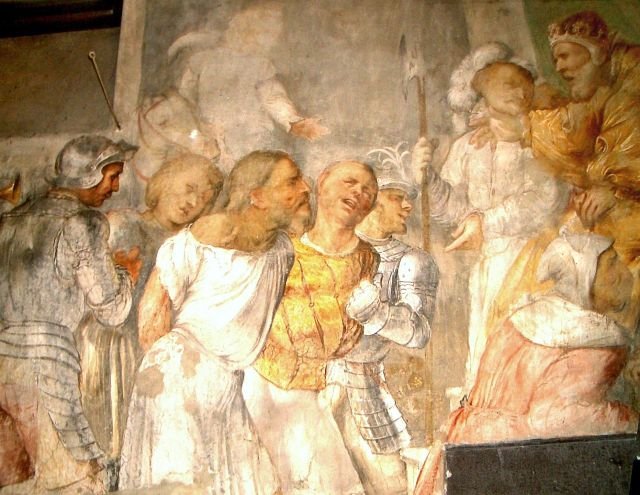
A detail of the frescoes of the Church of Sant'Antonio di Breno

Very interesting, as far as sacred buildings are concerned, is the Church of Sant'Antonio, inside which every year the Art Prize of the city of Breno is held. It dates back to about 1300, and has a Gothic style with a single nave. Inside the presbytery, of considerable value is a fresco attributed to romanino, while the other ornaments date back mainly to the fifteenth century.

Another important example of sacred art is the Church of San Michele, of which today only the foundations dating back presumably to the Lombard era remain. Also noteworthy is the Parish church of San Salvatore,one of the most important Baroque buildings in the entire Val Camonica; dating back to 1600, stands out in particular for its bell tower, 65 meters high. There are numerous artistic masterpieces inside, considered a small museum.


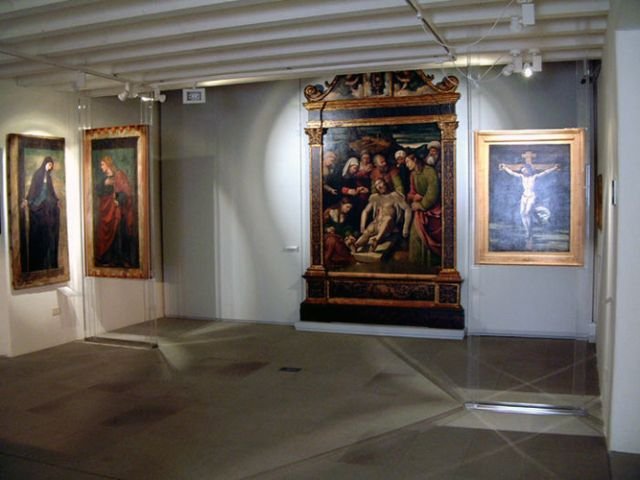
One of the rooms of the Camuno Museum (or CaMus) in Breno

Also worth visiting is the Camuno Museum in Breno, born at the beginning of the twentieth century and today located on the second and third floors of the 'Palazzo della Cultura' in Breno, where the municipal library is also located. Divided into 10 rooms and a loggia, the museum houses finds and works of art from the prehistoric age up to the twentieth century of the Camunian community (from which derives the name of Val Camonica), with pictorial testimonies, coats of arms and portraits of Camunian families, artifacts concerning liturgical furniture and civil furniture and, precisely, finds dating back to the prehistoric age.

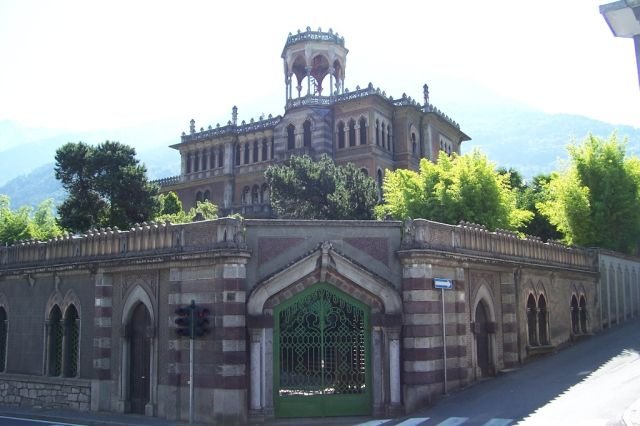
Finally, we recommend a visit to the splendid Villa Gheza, construction of the last century, in arabesque style and 'kitch' so much so that the people of the time, in a period of serious crisis for the area, became indignant and spoke of wasting money. Today, however, it remains a curious and important find of recent history.


The particular 'eastern' structure of villa Gheza in Breno

Castle of Breno

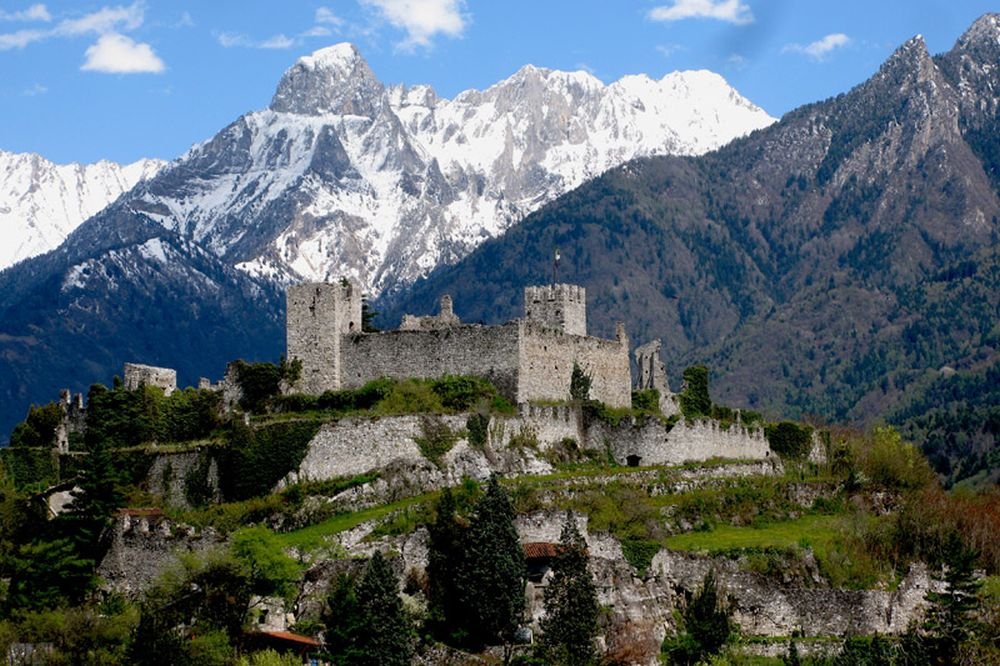
A monument rich in history, the Castle of Breno is the real symbol of the main town of Val Camonica. More than just a castle, it is an intricate complex of buildings, built over the centuries for different purposes. Born under Frederick I Barbarossa (12th-13th centuries), it was transformed into a military stronghold with the Republic of Venice (15th-16th centuries): the current appearance is the result of these historical stratifications, enriched by the fact that it seems that this area was a settlement town already several millennia before the birth of Christ.

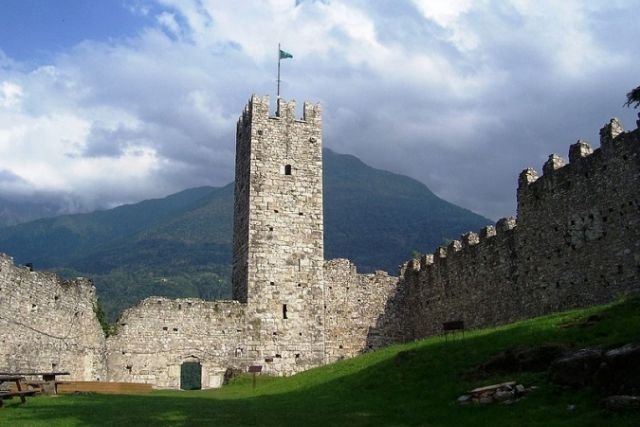
The visit to the Castle of Breno starts from the area of the tower, which allows us access to the courtyard, to whose left is located the medieval church, the oldest monument brought to light in Breno. There are many areas in which to observe the historical traces of the castle; we recommend, in particular, the stately two-storey house-tower, and a 1200's palace with a 20-meter tower accessible to visitors. Very interesting, then, the numerous remains of settlements of prehistoric communities of the Paleolithic, Neolithic and Copper Age.


The Tower of The Castle of Breno

Hotels in Breno


Breno is the administrative capital of Val Camonica. A place that has been established for several millennia, in recent decades it has become a tourist destination increasingly sought after by visitors, while also expanding its accommodation, however gaunt compared to demand. In this regard, we recommend two of these facilities in particular.

The first is the Hotel Ristorante La Villetta, a small 2-star structure excellently reviewed by users of the various travel sites. Free private parking, on-site restaurant with Lombard and national specialties, terrace overlooking the mountains and free wifi throughout the property, are just some of the services offered here. Very characteristic are the accommodations, which have flat screen TVs and private bathroom with bidets, bathrobes and courtesy sets, while in some of them you will also have a terrace or panoramic balcony, overlooking the beautiful Val Camonica. Prices more than competitive, highly recommended!


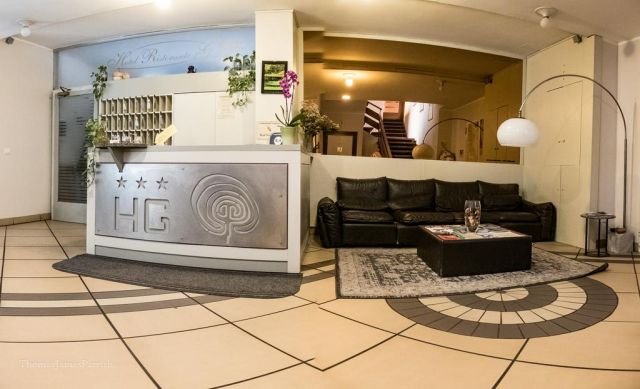
The lobby of the Hotel Giardino

About 250 meters (273 yards) from the Breno station is the Hotel Giardino, a beautiful 3-star structure with all the necessary comforts. Very nice rooms, which have clear walls and curtains and have a TV and a private bathroom with hairdryer and courtesy set, as well as free wifi, available throughout the hotel. Free parking, a rich breakfast buffet with sweet and savory foods (including local organic specialties) and on request menus for particular diets, in addition to an on-site restaurant-pizzeria are the services provided in the common areas. Great location, acceptable prices, courteous and attentive staff: vote, 10!


Breno Climate and Weather

The climate of Breno, given the great difference in height of the municipal territory--almost 2,500 meters! (about a mile and a half)--is very difficult to interpret and describe. Of course, what interests us is the climate of Breno and its vicinity, where you will find your accommodation: well, it is a particularly mild climate, with the average temperatures that only in January and February fall below zero. On the other hand, very cool and breezy summers, with the hottest month, July, which has an average of just 20 degrees.


************


The Legend of Brenno

Brennus, known as Brenno in Italian, is the name of two different Gaulish warlords; one who famously invaded Rome in the 4th century BCE, and another lessor-known Brennus who invaded the Balkans and Greece in the 3rd century BCE. I have heard that the city of Breno possibly may have got its name partly from the first Brennus who invaded Rome, whom was featured in a 1963 Italian film entitled 'Brennus, Enemy of Rome'. At the time of Brennus' invasion of Rome, Cisalpine Gaul would very much have had its allegiance with the Gaulish warlord from north of the Alps, not with Rome. The Camunni were one of the 45 Alpine tribes conquered by the Romans over 300 years later, so Brennus would have been a great hero to all Gaulish peoples. The name of the city of Breno came from the Camunian Bré; also Brenn in old German. However, I wonder if the latter could have been of Langobard, Cimbrian, Celto-German, or even Gaulish origin?

Breno, Lombardy

Brennus: Warlord of the Cisalpine Gauls - Part III

.

Monday, March 9, 2020

Disaster unfolding in Lombardy


Italy plans large-scale quarantine in response to coronavirus outbreak

903,617 views - March 7, 2020

Fox News

U.S. Navy sailor in Italy tests positive for coronavirus and Italy plans large-scale quarantine in response to coronavirus outbreak. Lucas Tomlinson reports.


.

Saturday, March 7, 2020

The "Trident" story - what does the Beretta logo mean?


'The "Trident" story - what does the Beretta logo mean?'

Matteo Recanatini - Beretta Blog - October 12, 2011

One day, we were sitting around the large desk of one of our conference rooms, discussing over and unders and the staggering heritage that links these guns to the five centuries of Beretta history.

At one point, Angela pointed out that most people recognize the Beretta logo: the iconic three arrows and circles often referred to as "Trident," but that most people don't really know why and how Beretta's logo came to be.

On our Facebook and Twitter accounts, we have mentioned it, in the past, and have answered questions about just this, but I thought it wise to publish a quick post about our most recognizable graphic.

Like all respectable 500-year old companies, Beretta has had its share of logos: the shield with the letters "PB" (for Pietro Beretta, the father of the industrialized Beretta,) the duck with open wings, and the more simple "Fabbrica d'Armi Pietro Beretta" are some of the representations that many of our readers will recognize.

And then, there's the "Trident," which (truth be told) is not a trident at all.

The story of this logo starts not far from Gardone Val Trompia, in the small town of Cargnacco, where poet, writer, director, mariner and journalist Gabriele d'Annunzio ended his days, in the late 1930s.

When you walk into the villa that Gabriele d'Annunzio purchased and where he retired, you will find the very first "Trident." It was he who, ever-the-artist, developed this graphic design to symbolize the will to get things done. The encircled arrows represent the three shots fired by a battleship that engages a potential enemy: the arrow on the left reprents the first warning shot, fired at the ship's stern; the arrow on the right represents the second warning shot, fired at the ship's bow. The central arrow is the last round fired, when the ship doesn't yield: this one is aimed at the ship itself. The logo was dubbed "Dare In Brocca" or "hit the target."

Mr. Beretta was fascinated with this symbol, and asked Gabriele d'Annunzio if he could "borrow it." Gabriele d'Annunzio gave Mr. Beretta the rights to use it as the company's symbol, and from that moment, the "Trident" became the company's logo.

So, now you know it. Next time you're wearing a hat like this one, or carry your Beretta firearm to the range or on the field, make sure you share this story with your fellow shooters!


************


'Beretta’s “Trident” logo explained'


************


BerettaUSA.com
 
.

Saturday, December 14, 2019

Sofia Goggia takes dramatic Super-G victory; Two Lombard women finish 1-2

BREAKING: Goggia Wins St. Moritz Super-G

By Sean Higgins - SkiRacing.com - December 14, 2019

Italian sensation Sofia Goggia captured her first World Cup super-G victory in over a year on Saturday, winning in St. Moritz, Switzerland. Early morning winds and fog cast some doubt on the day’s schedule but conditions managed to clear for a beautiful day of racing in the Swiss Alps.

Goggia lost a pole mid-run but managed to sneak ahead of her teammate, Federica Brignone, by only 0.01 seconds for the win, posting a winning time of 1:12.96 seconds. The United States’ Mikaela Shiffrin slid onto the podium in third, 0.13 seconds back.

Following Shiffrin for the Americans in the points was Alice Merryweather in 20th and Alice McKennis in 29th.

Austria’s Michaela Heider crashed out hard during her run and had to be helped off course. An update on her condition will be added once it becomes available.

For complete race coverage, click here.


Top 10

1. Sofia Goggia (ITA) – 1:12.96
2. Federica Brignone (ITA) – +0.01
3. Mikaela Shiffrin (USA) – +0.13
4. Nicole Schmidhofer (AUT) – +0.30
5. Lara Gut-Behrami (SUI) – +0.72
6. Nina Ortlieb (AUT) – +0.87
6. Corrine Suter (SUI) – +0.87
6. Kajsa Vickhoff Lie (NOR) – +0.87
9. Tessa Worley (FRA) – +0.93
10. Viktoria Rebensburg (GER) – +0.96

For complete results, click here.


************


Sofia Goggia wins women’s superG in St. Moritz 2) Federica Brignone Alpine Skiing Italy Sport Ski

Alpine Ski Racing Coach's Corner


************


Apparently the video highlights are protected by copyright, as least for a period of time.

.

Thursday, August 22, 2019

Lake Garda featured now in Windows 10 Spotlight 2


Lombardy: The Italian Lake District

Along with the image of Lake Garda now being featured, there is a link to a Bing image search for "Italian Lake District." This region is mostly in Lombardy and the culturally Lombard Ticino in Switzerland.


Italy's Lake District

[https://www.smithsonianjourneys.org]

A One-Week Stay in Stresa Featuring Lake Maggiore, Lake Como, and Lake Orta

9 days from $4,590

Italy’s breathtaking Lake District has inspired painters, writers, and poets. Immerse yourself in this lovely region during a one-week stay in Stresa at the Hotel La Palma, featuring views of Lake Maggiore and Alpine mountains.

con't....


.


.


.


.


.


.


.


.


.


.

Tuesday, August 20, 2019

Lake Garda featured now in Windows 10 Spotlight


 Windsurfers on Lake Garda, Italy

Italy’s largest lake is so big and comparatively narrow that it creates its own unique wind patterns, drawing windsurfers from around the world. From its north shore, surrounded by mountains, Lake Garda stretches for 32 miles to the south where it reaches a wide plain. The change in topography means different temperatures at either end of the lake, resulting in powerful thermal winds. In the morning, winds form high in the mountains and flow toward the plain at the southern portion of the lake. Later in the day the patterns shift, and winds blow north back up the lake. These various air streams are so regular, and so renowned, they have their own names. And they have some dedicated fans, too, judging by these windsurfers.


.

Wednesday, July 31, 2019

Views from the village of Gromo, Val Seriana


Gromo is a village of 1,204 people in northern Val Seriana. It's name is Gróm in the Bergamasque dialect of the Lombard language. Val Seriana is located in the eastern half of the Bergamo Alps. Although not official, the Val Seriana is part of the "Mountain Community of the Valle Seriana," which has representatives to provide a voice for the region.


.

Tuesday, July 30, 2019

Cenomani postings - Summer 2019


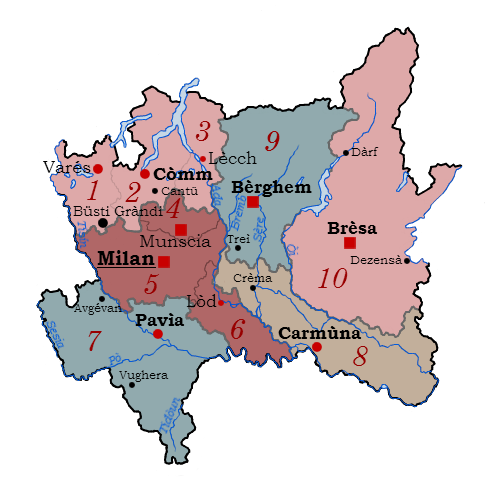
[Map of Lombardy with Lombard place names, by Athicer at DeviantArt; The Cenomani was a Celto-Gaulish tribe which occupied most of what are now the provinces of Brescia and Verona]


.
*************************


The great Lombard city of Cremona originally started as a Gaulish settlement at about 400 BC.

Multiple place names

One interesting thing to ponder are the numerous place names. For example, the Lombard province and city of Cremona. Some of the various names for Cremona:

Cremona (Italian)
Cremùna (Lombard/Cremonese)
Carmona (Emilian)
Carmùna (East Lombard?)
Crémone (French)
Crimona (Latin)
Kremun (German)


*************************


The Mysterious Abandoned Villa on Lake Como, Lombardy

The strange thing about this villa in Lake Como is the complete mystery behind it. Locals understand that this villa was constructed in roughly the 1800s, but there are no records to indicate this.  Rumors state that the home was left alone after a gruesome murder or suicide – but still, no one knows. Today, it is left largely alone and visitors are advised to stay away from it. To us, it looks like the scene of a new horror film!


*************************


Michigan law enforcement ace, the beautiful Laura Frizzo


*************************


Langobard Nation


Actual Langobard helmet


*************************


The Incredible Story of the Bugatti in the Lake | Robb Report


317,785 views

Robb Report

Published on Nov 19, 2018

According to legend, French race car driver René Dreyfus (winner of the Monaco Grand Prix in 1930) was in a liquor-fueled game of poker with Swiss playboy Adalbert Bodé in Paris in 1934. Short on cash, Dreyfus bet his 1925 Bugatti Type 22 Brescia race car and lost it to Bodé. Shortly thereafter, it found its way to the bottom of a lake, where it stayed for the rest of the century.

Subscribe to Robb Report: https://bit.ly/2rx0Icw

When Bodé returned to Switzerland, he was stopped at the border and told that he could not take the car with him. As gambler’s fortunes tend to wax and wane, Bodé was notable to get the cash together to get the car out of customs, and it was marked for destruction like any other confiscated contraband. Being a different time, Swiss authorities decided the easiest, if not the most ecologically friendly, method of disposal would be to dump it into the Lago Maggiore.

There the masterpiece of French design sat until 2009, when it was finally recovered. Though many people knew the car was somewhere in the lake, no one had yet committed to bringing it up. Unfortunately, its reemergence was brought on by tragedy when a member of the local salvage diving club was beaten to death by three young people in a street attack. In an effort to raise money for a charity dedicated to preventing youth violence, the club committed to bringing up the car.

Read More: https://bit.ly/2KgZp9Z


************


1927 Bugatti Type 35 Pur Sang Replica - Jay Leno's Garage


*************************


Fred Zamberletti, left, with Carl Eller
 and Red McCombs in 2002
Fred Zamberletti

Fred Zamberletti (May 28, 1932 – September 2, 2018) was an athletic trainer in American football.

Born in Melcher, Iowa, he was the athletic trainer for the Minnesota Vikings of the National Football League. He was the team's first athletic trainer, assuming the job in the Vikings inaugural year of 1961. He was on the sidelines for every preseason, regular season and postseason game in Vikings history until the December 24, 2011 game at Washington against the Redskins. He attended the University of Iowa. Zamberletti was named the Professional Athletic Trainer of the Year in 1986 and in 1996 the Vikings staff was honored as the NFL Athletic Training Staff of the Year. He was inducted into the Vikings Ring of Honor on December 20, 1998.[1]

Death
Zamberletti died September 2, 2018 of spinal osteomyelitis. He was 86.[2]

References
1. "Minnesota Vikings Statements on Fred Zamberletti". www.vikings.com. Retrieved 2018-09-02.
2. https://www.twincities.com/2018/09/02/legendary-vikings-trainer-fred-zamberletti-dies-at-86/

External links
U of Iowa alumni page
StarTribune 12-23-2011
 

*************************


Creamy baked mushroom risotto
Risotto - A dish of Milanese origin

Risotto

Course:    Primo
Place of origin:    Lombardy, Italy
Serving temperature: Hot
Main ingredients: Rice, broth, butter, onion, white wine, parmesan cheese

Cookbook: Risotto (recipes)

Media: Risotto

Risotto (from riso meaning "rice") is a northern Italian rice dish cooked with broth until it reaches a creamy consistency. The broth can be derived from meat, fish, or vegetables. Many types of risotto contain butter, onion, white wine, and parmesan cheese. It is one of the most common ways of cooking rice in Italy. Saffron was originally used for flavour and its attractive yellow colour. Risotto in Italy is normally a first course served before the main course, but risotto alla milanese is often served with ossobuco alla milanese as a main course.

con't....


*************************


*************************


Photo by Noemi Ventura


*************************


Mediterranean cruise - Lake Como, Lombardy

Described by Wordsworth as ‘a treasure which the earth keeps to itself’, Lake Como is easily the most beautiful of all the Italian Lakes. With its Hollywood A-list following, rich silk heritage, must-see lakeside towns and surrounding hills, mountains and forests, it’s easy to see why these crystalline waters have captured the heart of the literati and glitterati for centuries. Housed in a 19th-century building right on Lake Como’s shores, Metropole Suisse is centrally located in the town of the same name, Como. But what makes it special is the high level of personal service – the Cassani family’s 123 years of ownership has made it one of the most welcoming waterfront stops.


*************************


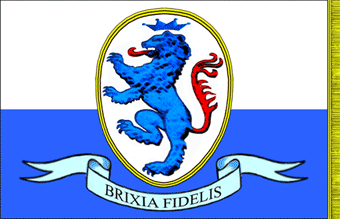
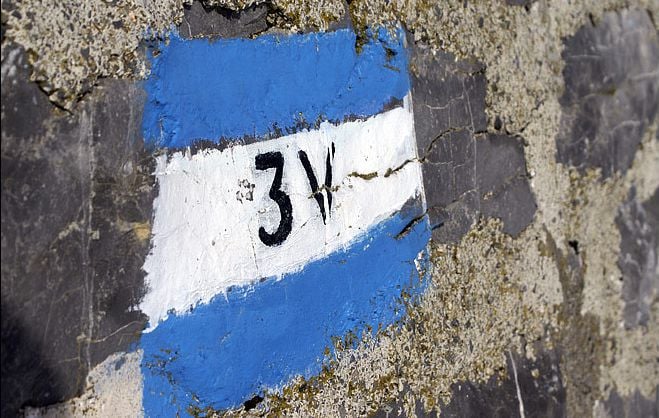
Light blue and white are the colors of the Brescian flag. "3V" stands for Tre Valli Bresciane (Three Brescian Valleys: Camonica, Trompia, and Sabbia).


'The 3V trail dedicated to Silvano Cinelli in the Brescian Valleys'

[Translated from the "Brescia A Tavola" travel website]

A single path, long and exciting, that unites the three Brescia valleys. Today we tell you about an evocative itinerary that winds through majestic landscapes, marked by blue-white signage. The 3V Trail,in 8 stages of about 5 hours each, is dedicated to Silvano Cinelli,one of the creators of this initiative. The full itinerary requires excellent physical preparation!


The first 4 stages...

The first stop is the Conche Sanctuary, almost 1000 years old. Along this ancient route of about 5 and a half hours of walking, you will meet various churches and chapels. After spending the night at the Sanctuary, the second stage leads to the Horn of sonclino, at over 1300 meters high. Between beech and rocky ridges, you can admire a magnificent view before descending to Lodrino, where the second stage ends after about 7 hours.

From Lodrino, stage 3 takes you to Alpe Pezzeda, near Collio. The summit of Mount Ario, at 1775 meters, offers an enchanting panoramic view of the Sand Valley. From here, the 4th stage crosses the Pezzeda Morning Pass. The short hike of about 3 hours ends at the Pass of the Portole, one of the highest peaks of this route, from which you can enjoy a magnificent view of the Trompia Valley.


... the last 4 stages

The fifth stage leads to the Monte Cimosco Refuge, at 1825 meters. During this stretch you leave the Sand Valley and enter Val Camonica. The route continues with the sixthstage, which in 6 hours leads to the Cross of Marone Refuge. On the summit of Mount Giglielmo, there is the spectacular monument of the Redeemer. The view of the Orobic Alps also includes the blue mirror of Lake Iseo.

Now only the last two stagesare missing. From the Cross Refuge of Marone, with 5 hours of walking you reach Polavena. From here you can take the means and go home. For the daredevils, a last 6-hour stage, from Polavena to Urago Mella, closes this magical 3V Trail and the adventure between Val Trompia, Val Sabbia and Val Camonica.


.