Showing posts with label Incontri Tra/Montani. Show all posts

Sunday, April 11, 2021

Incontri Tra/Montani - 30 Years

Incontri Tra/Montani means "Meetings Between/Mountains," and to the best of my knowledge was formed to provide a political voice to communities in the eastern Alps of Lombardy, Trentino, and also to other Alpine communities who are often overlooked. I think it's comparable to rural Upper Michigan building an "embassy" near the capitol in Lansing to provide a voice for the detached region. ITM turned 30 last year. I believe that province of Sondrio, the Brescian Tri-Valley, and the Bergamo Alps encompasses a strong cultural milieu as well. Naturally we would like to express solidarity with them.


************


http://www.incontritramontani.it/

https://www.facebook.com/Incontritramontani/

https://twitter.com/itm1990

https://incontritramontani.academia.edu/incontritramontani


************


INCONTRI TRAMONTANI - (PIEVE DI BONO-PREZZO)

gianni beordo

Trentesima edizione: Incontri Tramontani


************


Museo Scuola Rango
"Bello!"


************
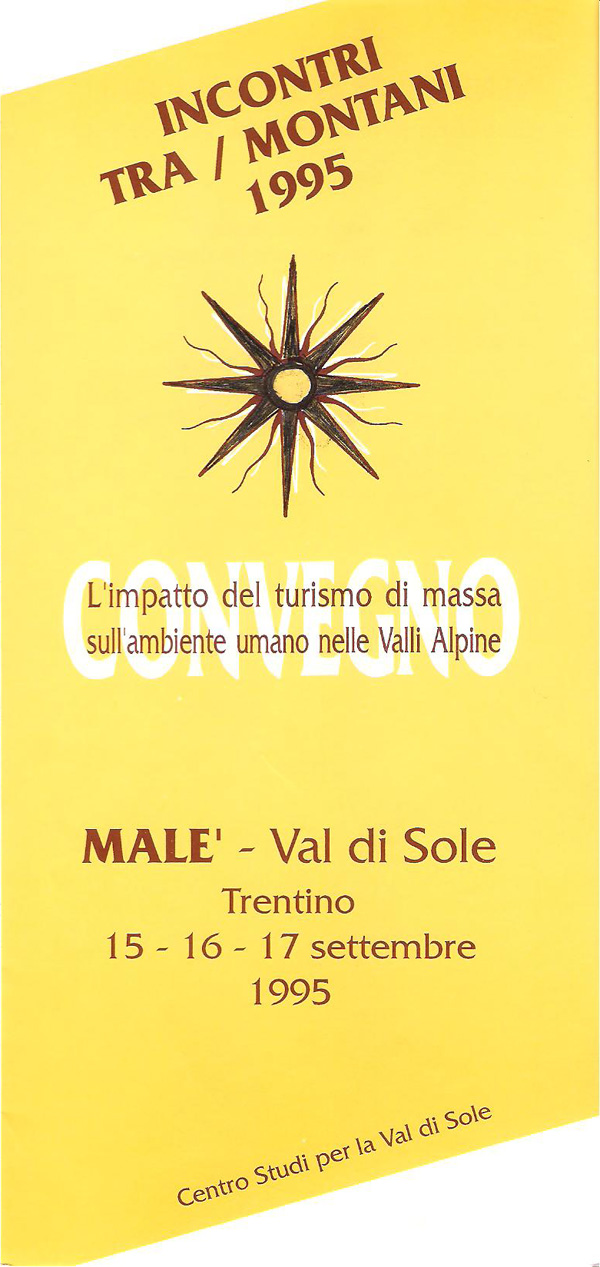
 

A brief history

Incontri Tra/Montani was born in 1990 from a chance meeting between cultural associations of Valle Camonica and Val Trompia. From the observation of a lack of communication between the valleys and from the reading of the great difficulties in which the mountain communities finds itself (exodus, destructive interventions, youth unemployment, etc.), the idea arose of an annual conference that would begin to create a network of non-institutional relations between groups operating in the Italian, Swiss, Austrian, and French Alps with the aim of promoting mutual knowledge, collaboration, exchange of analysis and possible proposals.

In the term Tra/Montani there is a double meaning: 1) The need for dialogue and the consciousness of the sunset of a civilization that was at the center of the pre-industrial economy since all medieval "machines" needed the energy produced by the fall of water.

The study and reflection meetings on issues of common interest in Alpine resorts have been organized regularly since 1990 and touch on topics of various kinds and locations that are always different.

The ITM to which the Valle Camonica, the Giudicarie Valleys, the Val di Sole, Valtellina, Val Seriana, Val Cavallina, Carnia, and Val Verzasca adhere to permanently, has no official seat, nor a statute. It is a self-managed, spontaneous, and free thinking.

Membership of the ITM Group is open to all associations, study centres and cultural groups in the Alps.

'History of the ITM' by Giancarlo Maculotti (pdf file)


The following all collaborated in the realization of the ITM:

• Associazione Comitato Organizzatore Festa di Trate - Gaverina Terme (Bergamo)
• Associazione IVS Inventario delle Vie di Comunicazione Storiche (Milano)
• Centro Studi e Ricerche Archivio Bergamasco (Bergamo)
• Centro Studi Etnografici Val Imagna S. Omobono Imagna (Bergamo)
• Centro Studi Judicaria – Tione (Trento)
• Centro Studi Val di Sole – Malè (Trento)
• Centro Studi Valchiavennaschi Chiavenna (Sondrio)
• Circolo Culturale Baradello Clusone (Bergamo)
• Circolo Culturale Ghislandi Cividate Camuno (Brescia)
• Comune di Montereale Valcellina Montereale Valcellina (Pordenone)
• Cooperativa Arca Gardone Val Trompia (Brescia)
• Cooperativa Il Chiese - Storo (Trento)
• Fondazione Progetto Poschiavo Poschiavo (Svizzera)
• Fondazione Val Verzasca Canton Ticino (Svizzera)
• L’Arcilettore, Circolo di Sondrio (Sondrio)
• Museo Etnografico S. Caterina Valfurva (Sondrio)
• Museo Etnografico Tiranese - Tirano (Sondrio)
• Pro Vita Alpina - Längenfeld (Austria)

.

Monday, September 4, 2017

Meetings Between Mountains - The Bergamo Alps


Gorno - Incontri Tra/Montani

Antenna 2 TV

To try to intervene on the physiological aphasia between the valleys, in 1990 we began to communicate the main cultural associations of our valleys. The meetings between the mountain and the mountains reached this year at the 26th edition and scheduled from Friday afternoon to Gorno.

The title of the meetings this year is "the Mines of the Alps, the future of a Millenary history": And to take part are coming speakers from all over our country. There are also many people who have booked accommodation to follow the work.

We talked to Decoder at ANTENNA2 with the following guests:
Giancarlo Maculotti, Incontri Tra/Montani (Meetings Between Mountains)
Antonio Gonella, Circolo Culturale Baradello (Cultural Circle Baradello)
Giampiero Cabinders, Sindaco di Gorno (Mayor of Gorno)
Fabrizio Scolari, Ecomuseo delle Miniere di Gorno (Gorno Mining Museum)


************


Gorno is a small town on the southern edge of the Bergamo Alps. This, along with a number of Bergamask associations involved with these meetings, I don't know at this time of this suggests that this region is to be included within this Valtellinese/Camunian aspiration for regional autonomy? Apparently there's an unofficial website associated with the Cultural Circle Baradello entitled Amici del Baradello.


************

Incontri Tra/Montani


A brief history

The Incontri Tra/Montani was born in 1990 from a chance encounter between cultural associations of the Val Camonica and Val Trompia. From the observation of poor communication between the valleys and the reading of the great difficulties in which the mountain lies (exodus, destructive interventions, unemployment etc.), was born the idea of an annual convention that began to create a network of non-institutional relations between groups operating in the Italian, Swiss, Austrian, and French Alps, with the intent to promote mutual understanding, cooperation, exchange, and analysis of possible proposals.

In between there is a double meaning/mountain: the need of the meeting and the consciousness of the sunset of a civilization that was the center of pre-industrial economy as all the energy produced by the medieval machine needed fall of the water.
The meetings of study and reflection on issues of common interest in the alpine resorts are organized regularly since 1990 and touch upon topics of various kinds and locations are always different.

The ITM Group to which adhere permanently the Valle Camonica, the Valli Giudicarie, Val di Sole, Valtellina, Val Seriana and Val Cavallina, Carnia, Val Verzasca, has no official headquarters, neither a statute. Is self-managed, spontaneous and free.

ITM Group membership is open to all associations, think-tanks and cultural groups in the Alps.


History of the ITM curated by Giancarlo Maculotti (pdf file)


The following have collaborated to the realization of Incontri Tra/Montani:


• Associazione Comitato Organizzatore Festa di Trate - Gaverina Terme (Bergamo)
• Associazione IVS Inventario delle Vie di Comunicazione Storiche - Milano
• Centro Studi e Ricerche Archivio Bergamasco - Bergamo
• Centro Studi Etnografici Val Imagna S. Omobono Imagna (Bergamo)
• Centro Studi Judicaria – Tione (Trento)
• Centro Studi Val di Sole – Malè (Trento)
• Centro Studi Valchiavennaschi - Chiavenna (Sondrio)
• Circolo Culturale Baradello Clusone (Bergamo)
• Circolo Culturale Ghislandi - Cividate Camuno (Brescia)
• Comune di Montereale Valcellina Montereale Valcellina (Pordenone)
• Cooperativa Arca Gardone Val Trompia (Brescia)
• Cooperativa Il Chiese - Storo (Trento)
• Fondazione Progetto Poschiavo - Poschiavo (Svizzera)
• Fondazione Val Verzasca - Canton Ticino (Svizzera)
• L’Arcilettore, Circolo di Sondrio – Sondrio
• Museo Etnografico S. Caterina Valfurva (Sondrio)
• Museo Etnografico Tiranese - Tirano (Sondrio)
• Pro Vita Alpina - Längenfeld (Austria)


************


Apparently the group "Valtellina nel Futuro" is no longer active or involved with ITM, as their website has been down for awhile now and their not included on the ITM list.

This shouldn't be confused with the Tyrol-Trento "Euroregion," which was created by EU Globalists to break down national sovereignty. However, this type of socially organic cultural/political meeting group is good.

.

Wednesday, January 20, 2016

Incontri Tra/Montani: Acknowledging the importance of our shared pagan past

As covered here before, Incontri Tra/Montani ("encounters between the mountains") is a meeting group between the main cultural organizations of both the Val Camonica and the Valtellina (Sondrio), for discussion regarding the logistics of forming a "Camuno-Valtellina province" including Val Camonica. It also forms a political voice for this rural mountain region.

This group formed in 2009, and their activities and ongoing meetings are covered on their website if you can either read Italian or wish to translate it. I have found it too difficult to actually translate word for word for posting here. I found one article regarding one of their 2009 meetings in which the shared pagan history of both valleys was considered. This short article was published by the Val Camonica Distretto Culturale, and also involved the Camunian cultural group Circolo Culturale Ghislandi.


This Camunian-Valtellinese shared cultural history is significant not only because it ties the two valleys together since time immemorial, but also in that there was a shared spiritual experience. I think it was at the Tonale Pass that the Pagans---Camunians, Valtellinese, Chiavennaschi, and Bergamaschi from the Alpine stretches---would all gather for the eight seasonal festivals. Presumably each would last for several days of rituals.

If I could time travel to witness one historical event, I imagine myself at perhaps a Midsummer gathering... maybe a thousand years ago. Standing with my ancestors along the high mountain pass, feeling the warm summer breeze blowing against me, amid the ominous colors of a golden glowing moon against a darkening blue twilight sky, and observing the rich colors of the high Alps as they are slightly illuminated by the dusk sun.

Perhaps this is the chief ceremony, and a high priestess is standing at a high point with an upraised staff with a small sickle attached to it. She is speaking loudly in an old dialect that I can't begin to recognize, but I somehow just know that she is of my family. I'm standing about 25 yards away. Her face is mostly shadowed, but I can see her beautiful long grayish hair draped over her robe. Although I cannot understand her words, I sense that it has something to do with the great Almother who is watching over us and this earthly paradise.


Back to 2009, this meeting was also attended by representatives from neighboring provinces, including the Swiss canton of Ticino. Among the subjects covered at this meeting was a new book entitled 'Ci Chiamavano Streghe' ("they called us witches") by Giuseppe Laterza. If I understand correctly, the idea of "duel awareness" regarding this and other shared history was emphasized.  This inquisition of the church against local native pagan culture was also present in the Valtellina.

From the article: Just remember that between May and June 1518 in Pisogne, Breno, Edolo, Cemmo and Darfo were prosecuted between 100 and 150 people, of which some 70 the judges of the Inquisition issued a death sentence, then regularly performed. Most of these people, about two-thirds, were women. It went on to say that "witchcraft" was really a scapegoat for a general fear of even the remotest speck of female "deviance" according to church doctrine. I'm guessing that could be something as simple as dancing, as pagans often did. The church and state worked together to this end. In this case, the Venetian state and local Vatican authorities.
 

This period was described as a "clash of cultures," between the urban (church and state) and the rural (Christian-Pagan harmony). Oddly, we see this cultural-political conflict in the United States even today. This internal crusade ("witch hunt") was a European cultural civil war. An estimated 110,000 "authorities," over the course of three centuries, conducted an estimated 60,000 executions. As we're beginning to see pretty clearly today, there are many millions of people today who would love to do this again worldwide... in the name of another supremacist religion.

Book details:
Title: 'They Called Us Witches'
Authors: Various Authors
Preface: Pier Luigi Milani
Curator: Andrea Richini
Editors: Giuseppe Laterza
Publication date: 2009
Price: Euro $25.00


.