Showing posts with label Lombard history. Show all posts

Tuesday, February 21, 2023

Second Punic War: Battle of Insubria

Battle of Insubria

The Battle of Insubria in 203 BC was the culmination of a major war, carried out by the Carthaginian commander Mago, brother of Hannibal Barca, at the end of the Second Punic war between Rome and Carthage in what is now northwestern Italy. Mago had landed at Genoa, Liguria, two years before, in an effort to keep the Romans busy to the North and thus hamper indirectly their plans to invade Carthage's hinterland in Africa (modern Tunisia). He was quite successful in reigniting the unrest among various peoples (Ligurians, Gauls, Etruscans) against the Roman dominance.
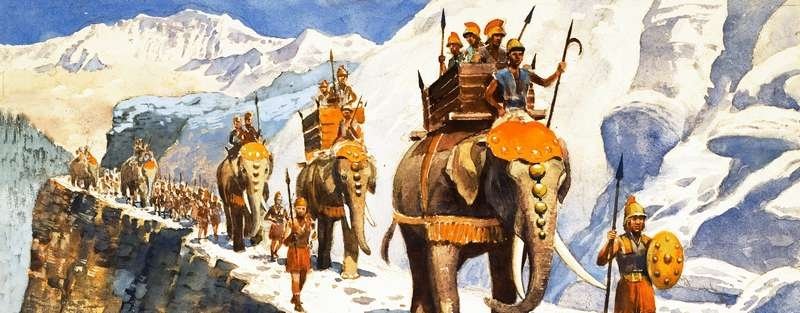
 

Hannibal famously crossing the Alps with elephants

Rome was forced to concentrate large forces against him which finally resulted in a battle fought in the land of the Insubres (Lombardy). Mago suffered defeat and had to retreat. The strategy to divert the enemy's forces failed as the Roman general Publius Cornelius Scipio laid waste to Africa and wiped out the Carthaginian armies that were sent to destroy the invader. To counter Scipio, the Carthaginian government recalled Mago from Italy (along with his brother Hannibal, who had been in Bruttium until then). However, the remnants of the Carthaginian forces in Cisalpine Gaul continued to harass the Romans for several years after the end of the war.


The Carthaginians invading Rome from the north--which occurred numerous times during the seventeen years of the Second Punic War--seems so improbable. They would have had to to have transported many elephants and tens of thousands of troops over the Strait of Gibraltar, moved north through mountainous Iberia, over a part of the eastern slopes of the Pyrenees, along the coast of southern Gaul, then in a northern direction along the edge of the Alps, then through whatever Alpine passes they could, and finally down into the Po Valley. Apparently they traveled as far east as almost to Lake Garda before turning back west, as the eastern side was Roman territory. All the while maintaining and providing food and water for the elephants, as well as food and water for the troops. Apparently they were well received by the disgruntled Gauls, Ligurians, Insubres, Etruscans, and others. It was almost like a who's who of Rome's enemies in one place. The Carthaginians used the same strategy as the Conquistadors later used in conquering the Aztecs and Incas, in inspiring their enemies' old enemies into action as allies.
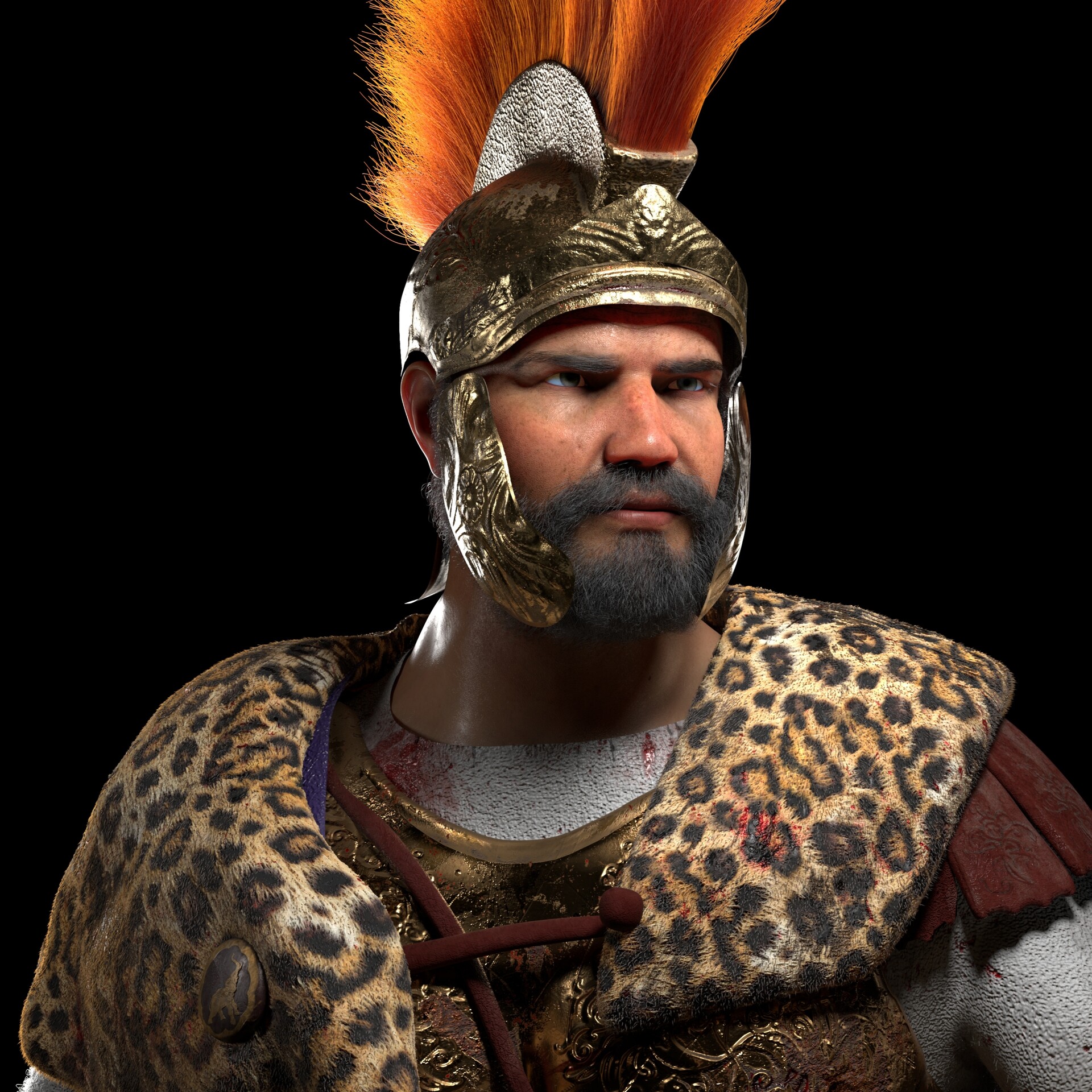

Artwork of Hannibal, although this battle was led by his brother Mago


On a side note, the elephants were of a now extinct species called the "North African forest elephant," which was much smaller than the tropical African elephant we know of today. They actually gave the elephants large quantities of alcohol to spur them on and to rage in battle! This battle took place near Mediolanum (Milan today), in the land of the Gaulish tribe the Insubes, whch had not yet been conquered by the Romans. Most historians place the number of Carthaginian troops at 21,000, but some believe that the total forces of the Carthaginians and their allies to have been as high as 30,000, with 7 elephants. Mago's brother Hannibal had brought many more over the years in different battles. On the Roman side, there were four legions plus their allies, which was approximately 35,000 troops, and I presume an additional advantage in some heavy state of the art weapons. The Punic War was a lot more than some simple skirmish someplace. It was Rome vs. Carthage, two superpowers! This was the United States vs. the Soviet Union sixty years ago!


The battle in Insubria

In 203 BC, the time came for decisive action. The proconsul M. Cornelius Cethegus and the praetor P. Quintilius Varus led an army of four legions against Mago in a regular battle in the Insubrian land (not far from modern Milan). The description by Livy in his "History of Rome" (Ab urbe condita) shows that each of the opponents deployed their forces in two battle lines. Of the Roman army, two legions were in the front, the other two and the cavalry were left behind. Mago also took care for a possible reverse, keeping in the rear the Gallic levy and the few elephants he had. Some modern estimates put his overall strength at more than 30,000.


The course of the battle showed that the first Carthaginian line performed better and the Gauls were less reliable. From the onset, the Romans made futile attempts to break the enemy's resistance and were pressed hard themselves. Then Varus moved the cavalry (3,000 or 4,000 horsemen), hoping to repulse and confuse the Carthaginian lines. However, Mago was not surprised and moved forward the elephants just in time.


The horses were stricken by fear and as a result the Roman cavalry was dispersed, chased by Mago's light Numidian cavalry. The elephants turned on the Roman infantry, which suffered heavy losses. The battle only took a bad turn for Mago when Cornelius brought into action the legions of the second line. The elephants were showered upon by darts, with most of them falling, the rest were forced to turn back against their own ranks. Mago ordered the Gauls to stop the Roman counter-attack, but they were routed.


According to Livy, all ended with a general retreating of the Carthaginians, who lost up to 5,000 men. Yet, as Livy himself states, the Romans owed their success to the wounding of the Carthaginian commander, who had to be carried away almost fainting from the field because his thigh was pierced. The victory was neither bloodless, nor complete. The first Roman line lost 2,300 men, and the second also took casualties, among them three military tribunes. The cavalry was not spared either, and many noble Equites were trampled to death by the elephants. During the night Mago withdrew his forces to the Ligurian coast, conceding the battlefield to the Romans.


Carthage was the most powerful rival in Rome's history, which is why the Romans eventually made certain to absolutely flatten Carthage. This wasn't their usual policy. This war lasted so long that it took up a major part of the lives of it's generals. Mago started out in the lower ranks, and distinguished himself during Carthage's defeat of the Romans in the Battle of the Trebia fifteen years earlier, and had become a general by the Battle of Insubria. To put that into perspective, someone forty years old was really considered rather up in years at that time. Also, the Battle of Trepia was the first major battle of the Punic Wars, and it pitted 40,000 Romans vs. 40,000 Carthaginians along the Trebia River, in either Liguria or Emilia.

To lose that major battle, and then to overcome Carthage, displayed the indomitable fighting spirit of the Romans. Carthage could very well have won the war and changed history, in the same manner as if the Soviets had defeated the Americans sixty years ago! Carthage was a Phoenician civilization, so Carthage to Phoenicia at this time would have been the same as what America was to Great Britain two hundred years ago. The Punic Wars were also like World War II, in that the battles were fought in all sorts of different locations and environments.


'Temple of Venus and Rome' (artist unknown)

For Mago the setback was severe, considering what gains a victory would have brought.

The Romans were left in command of the Po Valley and all hopes for a repetition of the events from the beginning of the war faded.

It is certain that for five years after the end of the Second Punic war the Romans had to fight the remnants of the Carthaginian forces in Northern Italy.

Mago's defeat in 203 BC had marked one of the last attempts to preserve the independence of this region from the Roman advance.

.

Monday, August 16, 2021

The Tarot: The name originally came from the Brescian "Tarocho" - Part III

Cards from the Pierpont Morgan Bergamo deck

Final thoughts

Apparently the Tarot came into Europe via Marduk, Egypt (Egypt, the Levant, and Hejaz), and the first European records of them were in Milan, Ferrara, Florence, and Bologna. With such an obscure origin, they may be a remnant of the old mystery schools which stretched from ancient western Europe (Druids?) to Greece to Egypt to India to China at one point. Also, it was very dicey with the Medieval power of the Church, and the Islamic world looming so large. The old knowledge and teachings of Hermeticism and similar ancient traditions were already present when Christian and Muslim despots arrived on the world stage as societies transitioned from native paganism to Abrahamic systems (the Middle East had been largely Indo-European with spiritual systems such as Zoroastrianism).

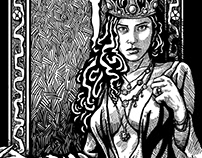
Queen Theodelinda fresco at Monza

Where the Tarot may have fit in within the ancient wisdom... I'm sure someone from some level of initiation knows. It's very curious that the modern incarnation of Tarot got its name from Brescia. The artisans of Brescia--whether producing fine clothing, luxurious silk accessories, leather products, brilliant weaponry, the finest textiles, etc--were second to none. They exported their crafts to the Near East during that time period, and perhaps that's how the Tarot came in. Brescia was then part of the Venetian Republic, and Venetian ships exported the goods overseas.

The middle card in the image above looks much like depictions of the Lombard Queen Theodelinda, and perhaps the figure on horseback as well. Compare those images to the example of the art depiction of Theodelinda on the left, from the Cathedral she had constructed at Monza, Lombardia. What other monarchical figure in Lombardia appeared like that... blonde.. monarchical.. so grand? Clearly someone important, a queen. I can't think of too many others. Was there a Queen Theodelinda card(s) on the Pierpont Morgan Bergamo deck? She ruled some seven centuries earlier.

Milanese tarocchi, c. 1500

A terrific head of state, Theodelinda could very well have been declared a Catholic saint. The Pierpont Morgan Bergamo card image would be very consistent with her artistic portrayals, downplaying her beauty, and depicting her as merely stately. Early historians had clearly described her as tall and beautiful, and she was later depicted as somewhat shorter as well. I guess it wasn't acceptable to show a woman as beautiful and physically imposing, especially if she was such a great head of state. Things were very touch-and-go when she took over alone as Queen of the Langobards. She was extremely loved by her people, and proceeded to patch things up with the Vatican and other surrounding states, pragmatically codified laws, defined the culture, and was a great patron of the arts. One of the great underappreciated female rulers in world history; one of the great underappreciated heads of state, period!

.

Sunday, August 15, 2021

The Tarot: The name originally came from the Brescian "Tarocho" - Part II

Arms for the Visconti-Sforza family

Trionfi (cards)

Trionfi (Italian: 'triumphs') are 15th-century Italian playing cards with allegorical content related to those used in tarocchi games. The general English expression "trump card" and the German "trumpfen" (in card games) have developed from the Italian "Trionfi". Most cards feature the personification of a place or abstraction.


************

History

Many of the motifs found in trionfi are found in trionfo, theatrical processions that were popular in the Italian Renaissance. The Palazzo Schifanoia in Ferrara, once owned by the ducal House of Este, contains many murals depicting these floats. Petrarch wrote a poem called I Trionfi which may have served as inspiration.

The earliest known use of the name "Trionfi" in relation to cards can be dated to 16 September 1440 in the records of a Florentine notary, Giusto Giusti. He recorded a transaction where he transferred two expensive personalized decks to Sigismondo Pandolfo Malatesta.

In a letter from 11 November 1449, Antonio Jacopo Marcello used the expression triumphorum genus for a deck that was produced sometime between 1418 and 1425. It was commissioned by the duke of Milan, Filippo Maria Visconti, painted by Michelino da Besozzo and described in an accompanying text by Martiano da Tortona.

Two decks from June 1457 seem to relate to a visit at Ferrara of the young Milanese heir of the dukedom Galeazzo Maria Sforza in July/August 1457. Each deck consisted of 70 cards — the modern Tarot deck typically has 78.

The earliest known appearance of the word "Tarocho" as the new name for the game is in Brescia around 1502).

[Depaulis, Thierry (2008). "Entre farsa et barzelletta: jeux de cartes italiens autours de 1500". The Playing-Card. 37 (2): 89–102]

************

Tarocchini

Tarocchini (plural for tarocchino) are point trick-taking tarot card games popular in Bologna, capital city of the Emilia-Romagna region of Italy and has been confined mostly to this area. They are the diminutive form of tarocchi (plural for tarocco), referring to the reduction of the Bolognese pack from 78 to 62 cards, which probably occurred in the early 16th century.

The games of Tarocchini are very complex, yet the rules have changed little over the years.

************

Visconti-Sforza tarot deck

The Visconti-Sforza tarot is used collectively to refer to incomplete sets of approximately 15 decks from the middle of the 15th century, now located in various museums, libraries, and private collections around the world. No complete deck has survived; rather, some collections boast a few face cards, while some consist of a single card. They are the oldest surviving tarot cards and date back to a period when tarot was still called Trionfi ("triumphs" i.e. trump) cards, and used for everyday playing. They were commissioned by Filippo Maria Visconti, Duke of Milan, and by his successor and son-in-law Francesco Sforza. They had a significant impact on the visual composition, card numbering and interpretation of modern decks.

************

Overview

The surviving cards are of particular historical interest because of the beauty and detail of the design, which was often executed in precious materials and often reproduce members of the Visconti and Sforza families in period garments and settings. Consequently, the cards also offer a glimpse of nobiliary life in Renaissance Milan, which the Visconti called home since the 13th century.

************

Pierpont Morgan Bergamo (card deck)

This deck, also known as Colleoni-Baglioni and Francesco Sforza, was produced around 1451. Originally composed of 78 cards, it now contains 74, i.e. 20 trumps, 15 face cards, and 39 pip cards. The Morgan Library & Museum in New York City has 35, the Accademia Carrara has 26 in its catalogue, while the remaining 13 are in the private collection of the Colleoni family in Bergamo. Trumps and face cards have a gilt background, while the pip cards are cream-coloured with a flower and vine motif. The two missing trumps are the Devil and the Tower. Modern published reproductions of this deck usually contain attempted reconstructions of missing cards.

.

Saturday, August 14, 2021

The Tarot: The name originally came from the Brescian "Tarocho" - Part I

Tarot

[The Tarot] first known as trionfi and later as tarocchi or tarock, is a pack of playing cards, used from at least the mid-15th century in various parts of Europe to play games such as Italian tarocchini; many games are still played today; in the late 18th century, some tarot decks began to be used for divination via tarot card reading and cartomancy leading to custom decks developed for such occult purposes.

************

History

The first documented tarot packs were recorded between 1440 and 1450 in Milan, Ferrara, Florence and Bologna when additional trump cards with allegorical illustrations were added to the common four-suit pack. These new decks were called carte da trionfi, triumph cards, and the additional cards known simply as trionfi, which became "trumps" in English. The earliest documentation of trionfi is found in a written statement in the court records of Florence, in 1440, regarding the transfer of two decks to Sigismondo Pandolfo Malatesta.

The oldest surviving tarot cards are the 15 or so Visconti-Sforza tarot decks painted in the mid-15th century for the rulers of the Duchy of Milan. A lost tarot-like pack was commissioned by Duke Filippo Maria Visconti and described by Martiano da Tortona probably between 1418 and 1425, since the painter he mentions, Michelino da Besozzo, returned to Milan in 1418, while Martiano himself died in 1425. He described a 60-card deck with 16 cards having images of the Roman gods and suits depicting four kinds of birds. The 16 cards were regarded as "trumps" since in 1449 Jacopo Antonio Marcello recalled that the now deceased duke had invented a novum quoddam et exquisitum triumphorum genus, or "a new and exquisite kind of triumphs". Other early decks that also showcased classical motifs include the Sola-Busca and Boiardo-Viti decks of the 1490s.

In Florence, an expanded deck called Minchiate was used. This deck of 97 cards includes astrological symbols and the four elements, as well as traditional tarot motifs.

The expansion of tarot outside of Italy, first to France and Switzerland, occurred during the Italian Wars. The most important tarot pattern used in these two countries was the Tarot of Marseilles of Milanese origin.

************

Etmology

The word Tarot and German Tarock derive from the Italian Tarocchi, the origin of which is uncertain but taroch was used as a synonym for foolishness in the late 15th and early 16th centuries. The decks were known exclusively as Trionfi during the fifteenth century.

The new name first appeared in Brescia around 1502 as Tarocho.

[Depaulis, Thierry (2008). "Entre farsa et barzelletta: jeux de cartes italiens autours de 1500". The Playing-Card. 37 (2): 89–102]


During the 16th century, a new game played with a standard deck but sharing a very similar name (Trionfa) was quickly becoming popular. This coincided with the older game being renamed tarocchi. In modern Italian, the singular term is Tarocco, which, as a noun, refers to a cultivar of blood orange. The attribute Tarocco and the verb Taroccare are used regionally to indicate that something is fake or forged. This meaning is directly derived from the tarocchi game as played in Italy, in which tarocco indicates a card that can be played in place of another card.

************

Gaming decks


The original purpose of tarot cards was to play games. A very cursory explanation of rules for a tarot-like deck is given in a manuscript by Martiano da Tortona before 1425. Vague descriptions of game play or game terminology follow for the next two centuries until the earliest known complete description of rules for a French variant in 1637. The game of tarot has many regional variations. Tarocchini has survived in Bologna and there are still others played in Piedmont and Sicily, but in Italy the game is generally less popular than elsewhere.

************

Tarocco Piemontese: the Fool card

These were the oldest form of tarot deck to be made, being first devised in the 15th century in northern Italy. Three decks of this category are still used to play certain games:

The Tarocco Piemontese consists of the four suits of swords, batons, cups and coins, each headed by a king, queen, cavalier and jack, followed by the pip cards for a total of 78 cards. Trump 20 outranks 21 in most games and the Fool is numbered 0 despite not being a trump.
 
The Swiss 1JJ Tarot is similar, but replaces the Pope with Jupiter, the Popess with Juno, and the Angel with the Judgement. The trumps rank in numerical order and the Tower is known as the House of God. The cards are not reversible like the Tarocco Piemontese.

The Tarocco Bolognese omits numeral cards two to five in plain suits, leaving it with 62 cards, and has somewhat different trumps, not all of which are numbered and four of which are equal in rank. It has a different graphical design than the two above as it was not derived from the Tarot of Marseilles.

************

Card reading

The earliest evidence of a tarot deck used for cartomancy (fortune telling) comes from an anonymous manuscript from around 1750 which documents rudimentary divinatory meanings for the cards of the Tarocco Bolognese.

.

Tuesday, July 30, 2019

Cenomani postings - Summer 2019


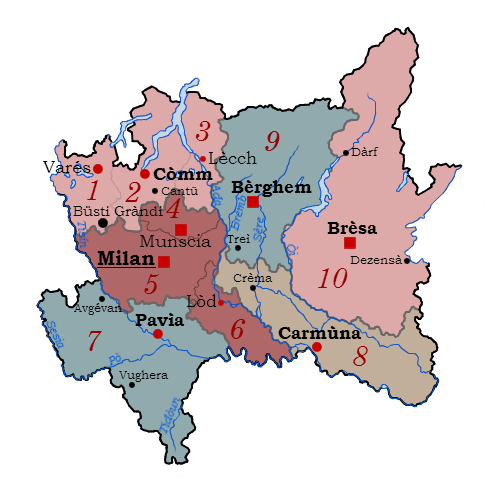
[Map of Lombardy with Lombard place names, by Athicer at DeviantArt; The Cenomani was a Celto-Gaulish tribe which occupied most of what are now the provinces of Brescia and Verona]


.
*************************


The great Lombard city of Cremona originally started as a Gaulish settlement at about 400 BC.

Multiple place names

One interesting thing to ponder are the numerous place names. For example, the Lombard province and city of Cremona. Some of the various names for Cremona:

Cremona (Italian)
Cremùna (Lombard/Cremonese)
Carmona (Emilian)
Carmùna (East Lombard?)
Crémone (French)
Crimona (Latin)
Kremun (German)


*************************


The Mysterious Abandoned Villa on Lake Como, Lombardy

The strange thing about this villa in Lake Como is the complete mystery behind it. Locals understand that this villa was constructed in roughly the 1800s, but there are no records to indicate this.  Rumors state that the home was left alone after a gruesome murder or suicide – but still, no one knows. Today, it is left largely alone and visitors are advised to stay away from it. To us, it looks like the scene of a new horror film!


*************************


Michigan law enforcement ace, the beautiful Laura Frizzo


*************************


Langobard Nation


Actual Langobard helmet


*************************


The Incredible Story of the Bugatti in the Lake | Robb Report


317,785 views

Robb Report

Published on Nov 19, 2018

According to legend, French race car driver René Dreyfus (winner of the Monaco Grand Prix in 1930) was in a liquor-fueled game of poker with Swiss playboy Adalbert Bodé in Paris in 1934. Short on cash, Dreyfus bet his 1925 Bugatti Type 22 Brescia race car and lost it to Bodé. Shortly thereafter, it found its way to the bottom of a lake, where it stayed for the rest of the century.

Subscribe to Robb Report: https://bit.ly/2rx0Icw

When Bodé returned to Switzerland, he was stopped at the border and told that he could not take the car with him. As gambler’s fortunes tend to wax and wane, Bodé was notable to get the cash together to get the car out of customs, and it was marked for destruction like any other confiscated contraband. Being a different time, Swiss authorities decided the easiest, if not the most ecologically friendly, method of disposal would be to dump it into the Lago Maggiore.

There the masterpiece of French design sat until 2009, when it was finally recovered. Though many people knew the car was somewhere in the lake, no one had yet committed to bringing it up. Unfortunately, its reemergence was brought on by tragedy when a member of the local salvage diving club was beaten to death by three young people in a street attack. In an effort to raise money for a charity dedicated to preventing youth violence, the club committed to bringing up the car.

Read More: https://bit.ly/2KgZp9Z


************


1927 Bugatti Type 35 Pur Sang Replica - Jay Leno's Garage


*************************


Fred Zamberletti, left, with Carl Eller
 and Red McCombs in 2002
Fred Zamberletti

Fred Zamberletti (May 28, 1932 – September 2, 2018) was an athletic trainer in American football.

Born in Melcher, Iowa, he was the athletic trainer for the Minnesota Vikings of the National Football League. He was the team's first athletic trainer, assuming the job in the Vikings inaugural year of 1961. He was on the sidelines for every preseason, regular season and postseason game in Vikings history until the December 24, 2011 game at Washington against the Redskins. He attended the University of Iowa. Zamberletti was named the Professional Athletic Trainer of the Year in 1986 and in 1996 the Vikings staff was honored as the NFL Athletic Training Staff of the Year. He was inducted into the Vikings Ring of Honor on December 20, 1998.[1]

Death
Zamberletti died September 2, 2018 of spinal osteomyelitis. He was 86.[2]

References
1. "Minnesota Vikings Statements on Fred Zamberletti". www.vikings.com. Retrieved 2018-09-02.
2. https://www.twincities.com/2018/09/02/legendary-vikings-trainer-fred-zamberletti-dies-at-86/

External links
U of Iowa alumni page
StarTribune 12-23-2011
 

*************************


Creamy baked mushroom risotto
Risotto - A dish of Milanese origin

Risotto

Course:    Primo
Place of origin:    Lombardy, Italy
Serving temperature: Hot
Main ingredients: Rice, broth, butter, onion, white wine, parmesan cheese

Cookbook: Risotto (recipes)

Media: Risotto

Risotto (from riso meaning "rice") is a northern Italian rice dish cooked with broth until it reaches a creamy consistency. The broth can be derived from meat, fish, or vegetables. Many types of risotto contain butter, onion, white wine, and parmesan cheese. It is one of the most common ways of cooking rice in Italy. Saffron was originally used for flavour and its attractive yellow colour. Risotto in Italy is normally a first course served before the main course, but risotto alla milanese is often served with ossobuco alla milanese as a main course.

con't....


*************************


*************************


Photo by Noemi Ventura


*************************


Mediterranean cruise - Lake Como, Lombardy

Described by Wordsworth as ‘a treasure which the earth keeps to itself’, Lake Como is easily the most beautiful of all the Italian Lakes. With its Hollywood A-list following, rich silk heritage, must-see lakeside towns and surrounding hills, mountains and forests, it’s easy to see why these crystalline waters have captured the heart of the literati and glitterati for centuries. Housed in a 19th-century building right on Lake Como’s shores, Metropole Suisse is centrally located in the town of the same name, Como. But what makes it special is the high level of personal service – the Cassani family’s 123 years of ownership has made it one of the most welcoming waterfront stops.


*************************


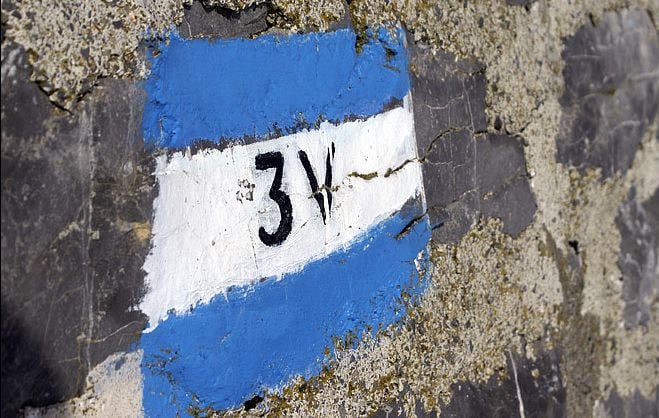
Light blue and white are the colors of the Brescian flag. "3V" stands for Tre Valli Bresciane (Three Brescian Valleys: Camonica, Trompia, and Sabbia).


'The 3V trail dedicated to Silvano Cinelli in the Brescian Valleys'

[Translated from the "Brescia A Tavola" travel website]

A single path, long and exciting, that unites the three Brescia valleys. Today we tell you about an evocative itinerary that winds through majestic landscapes, marked by blue-white signage. The 3V Trail,in 8 stages of about 5 hours each, is dedicated to Silvano Cinelli,one of the creators of this initiative. The full itinerary requires excellent physical preparation!


The first 4 stages...

The first stop is the Conche Sanctuary, almost 1000 years old. Along this ancient route of about 5 and a half hours of walking, you will meet various churches and chapels. After spending the night at the Sanctuary, the second stage leads to the Horn of sonclino, at over 1300 meters high. Between beech and rocky ridges, you can admire a magnificent view before descending to Lodrino, where the second stage ends after about 7 hours.

From Lodrino, stage 3 takes you to Alpe Pezzeda, near Collio. The summit of Mount Ario, at 1775 meters, offers an enchanting panoramic view of the Sand Valley. From here, the 4th stage crosses the Pezzeda Morning Pass. The short hike of about 3 hours ends at the Pass of the Portole, one of the highest peaks of this route, from which you can enjoy a magnificent view of the Trompia Valley.


... the last 4 stages

The fifth stage leads to the Monte Cimosco Refuge, at 1825 meters. During this stretch you leave the Sand Valley and enter Val Camonica. The route continues with the sixthstage, which in 6 hours leads to the Cross of Marone Refuge. On the summit of Mount Giglielmo, there is the spectacular monument of the Redeemer. The view of the Orobic Alps also includes the blue mirror of Lake Iseo.

Now only the last two stagesare missing. From the Cross Refuge of Marone, with 5 hours of walking you reach Polavena. From here you can take the means and go home. For the daredevils, a last 6-hour stage, from Polavena to Urago Mella, closes this magical 3V Trail and the adventure between Val Trompia, Val Sabbia and Val Camonica.


.

Monday, July 29, 2019

"Winged Victory" of Ancient Brixia


"Brescia the heavy,
"Brescia the strong,
"Brescia Lion of Italy"
-- Poet Giosuè Carducci,
Alcaic ode to Brescia’s
Winged Victory


************ 


Found in 1826 near the Capitoline Temple of Roman Brixia, the bronze statue originally portrayed Venus looking at her reflection on Ares’s shield
'The Winged Victory in Brescia: from Venus to Nike'


.

Sunday, July 28, 2019

New book about the history of Ticinese farmers in West Marin

'New book tells of West Marin’s first farmers'
 

By Silas Valentino - Point Reyes Light - February 8, 2018

It’s a timeless tale: people emigrate from their countries of origin for a chance at prosperity in America. In West Marin, many of the early settlers who established dairies and ranches with names still recognizable today hailed from the same region of Switzerland, near the border of Italy.

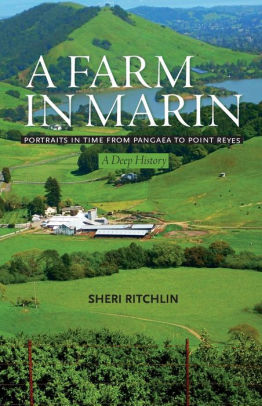
The bridge between Ticino, Switzerland and West Marin receives a thorough historical polishing in a new book by Sheri Ritchlin, “A Farm in Marin: Portraits in Time from Pangea to Point Reyes.” It’s chockablock with deeply researched information to reflect the past from both sides of the immigrant’s journey.

Ms. Ritchlin begins her investigation with the chapter called “Earth Time,” which briefly reinterprets North America’s 15 billion-year-old existence, before following migration patterns from ancient Rome to Milan and, finally, Ticino. Spliced throughout the book are personal anecdotes of her own story in West Marin and family tales from the farm she lived on.

Ms. Ritchlin, who splits her time between West Marin and Ovando, Montana, built her book on interviews with descendants, newspaper clippings, diary entries and fully reprinted, 19th-century letters from the likes of Oscar Shafter, whose family held a land empire on Point Reyes. The book, published by Pointer Oak in October, was the result of 10 years of writing and a successful Kickstarter campaign.

West Marin’s past first captured Ms. Ritchlin while she was a student at the California Institute of Integral Studies over a decade ago. She was living in a 1972 cabover camper at the Ed and Susie Grossi ranch, near the Sonoma County border, where she helped in the vegetable garden. Anecdotes of the family’s origins piqued her interest and she began her research, using the Grossis as her north star. David Rolland’s “Light on the Old Country” series in the Light from the 1990s, for which the writer traveled to Switzerland and Croatia to report on West Marin’s early ancestors, was one of the book’s inspirations.

Many West Marin ranch families immigrated to the States from the same corner of the Alps: Ticino (pronounced Ti-CHEE-no). The Italian-speaking region is located in southern Switzerland, close to Milan. While Ticino features rolling green hills akin to West Marin’s, the Swiss Alps are more rugged and sharp—think Matterhorn, not Black Mountain.

The more information Ms. Ritchlin dug up, the clearer the bridge between these places came into view.

The Swiss immigrants began arriving in waves to West Marin, following in the footsteps of their family and fellow Ticino villagers until the ’30s when the United States government slapped quotas on immigration. “Word in Ticino was, ‘Look for old man Grandi, he speaks the language and he’ll help you find a job,’” she said.

The names of the immigrants who poured into West Marin during the second half of the 19th century read like the freshman orientation of West Marin’s first graduating class: Spaletta, Martinelli, Dolcini, Grossi, Cheda and Giacomini.

“In 1860, we find Antonio Jacomeni (as spelled on the census) working on a ranch in Tomales,” she writes. The 1870 census showed that of the 320 people living in Olema, 47 were dairy workers from Ticino, including seven Cheda family members.

By 1886, the Marin Independent Journal would report that of the 8,000 Ticinesi living in California, “about one third reside in Marin County.”

“Already, the Ticinesi are beginning to leave their mark on the Marin landscape, bringing with them the humble skills that had been essential to their survival along the steep valleys of southern Switzerland and will now bring them a share of California gold,” Ms. Ritchlin writes.

Sadly, an unfortunate thread of xenophobia also connects yesteryear with today. Letters to the editor of that era revealed complaints about how these new neighbors were acquiring land and job opportunities. “California is going, and will keep on going to ruin, if these detestable Swiss, Portuguese and Chinese are not politely invited by Uncle Sam to take up their bed and walk to—well, to the shades from whence they came I suppose,” an unidentified “unemployed man” in Olema wrote to the I.J. in January 1870.

But not all reactions to the influx of immigrants were negative. Historian Dewey Livingston dug up a quote from 1881, sourced from an unknown speaker in Olema, that depicted a community beginning to meld together, if with the help of humor: “Several marriages have taken place among the Swiss population. We should give their names to an expectant public, if in the first place we could remember them, and if in the second place we could spell them.”


************


'A Farm in Marin: Portraits in Time from Pangea to Point Reyes' (By Sheri Ritchlin - 2017)


************


Businesses advertised withing the article, owned by a few of the old local Ticinese families....


.

Sunday, June 30, 2019

The 150th anniversary of the passing of Lombard hero Carlo Cattaneo

'Italy marks 150th anniversary of the death of philosopher Carlo Cattaneo'

TheLocal.it - February 7, 2019


Both Italy and Switzerland are paying tribute to the philosopher and revolutionary who helped shape modern Italy

 Italian President Sergio Matterella today paid tribute to Italian philosopher Carlo Cattaneo, who died on February 5 1869, and a series of special events was announced to commemorate his life and work

Cattaneo is best known as an influential figure in the 'Risorgimento', the Italian unification movement led by Garibaldi.

He led Milan’s city council during the 1848 uprising in Lombardy against an occupation by Austrian forces under Marshal Radetzky.

In the so-called Five Days of Milan, residents of the northern Italian city rose up and boycotted tobacco and gambling, key revenues for the Austrians – which resulted in violent street clashes.

That protest is widely seen as the one of the incidents that kickstarted the Risorgimento, and Italy's drive towards independence and a unified nation state.

READ ALSO: Everything you need to know about March 17th, Italy's Unity Day

When the Austrians returned to occupy Milan in revenge for the uprising led by Cattaneo, the Italian philosopher was forced to flee to Lugano in late 1848, where he wrote his most famous work, History of the 1848 Revolution.

He died just over 20 years later in 1869 outside the Italian-speaking Swiss city of Lugano, where he had spent the last 20 years of his life in exile.

President Mattarella today described Cattaneo as “a great figure of the Italian Risorgimento, a builder of national unity, and a multifaceted intellectual who was able to combine thought with courageous political action aimed at progress and to social justice.”


He said Cattaneo’s thinking was still relevant across Europe today.

Cattaneo "was among the first to formulate the goal of the United States of Europe, as a framework of authentic federalism capable of maintaining independence, unity, freedom and solidarity,” he said.

“Thinking that still speaks to our responsibility as Europeans, today, in the face of the great changes we are experiencing.”

Now the Carlo Cattaneo Association, the Italian-Swiss Committee for the publication of Cattaneo's works, has organised events in both countries to mark the anniversary.

A series of talks and events in schools, museums and universities will cover everything from the philosopher's impact on European thought to his contemporary relevance.

The Five Days of Milan uprising, as well as other similar revolts across the Italian peninsula in 1848, contributed to Italy's First War of Independence.

Cattaneo was elected to the Italian parliament several times after Italy's unification in 1861. Each time he refused to take up his seat, citing resistance to swearing an oath to the king. 

Cattaneo always rejected Cavour and Garibaldi's overtures to join their movement because of opposition to its patron, Victor Emmanuel II, the king of the House of Savoy in Piedmont. Cattaneo was a lifelong and staunch republican.

Cattaneo died in 1869 in Castagnola, Lugano, an Italian-speaking part of Switzerland.

As Cattaneo was an important figure for both Italy and Switzerland, the commemorative events being held from March to October 2019 is transnational.

"Catteneo is one of the most important Italian-Swiss exiles," Pietro Montorfani, head of Lugano's historical archive, told The Local.

Events are scheduled in Lugano in the canton of Ticino in Switzerland, as well as in the Italian cities of Milan and Castellanza, home to Carlo Cattaneo University.


con't....

.

Wednesday, June 12, 2019

Rick Steves' Europe - Milan and Lake Como


Milan and Lake Como

Rick Steves' Europe

Rick Steves' Europe Travel Guide | No trip to Italy is complete without Milan and Lake Como. In Milan we'll take a peek at Italy's highest fashion, fanciest delis, grandest cemetery, and greatest opera house...not to mention Leonardo's Last Supper. Then we'll cruise along Lake Como, settling down in the lakeside village of Varenna...classic honeymoon country, where Italy meets the Alps.

.

Wednesday, June 5, 2019

Lombard nationalism: Part III


Definition of Lombardy

During the ages the concept of Lombardy changed quite frequently. In Early Middle Ages the word Longobardia indicated all the Lombard Kingdom. Since the 12th century the archaic term was gradually replaced by Lombardia (as a linguistic evolution, first appeared in the Pauli Continuatio) and in the geographic view it indicated first the area of the Langobardia Maior and then only the Po Valley, where was the centers of the Lombard power. Meanwhile, Lombardia took on a political meaning, with the creation of the Lombard League and the fight with the emperors for the municipal liberties. The definition remained such until the 19th century, when the new Italian state created today's region in the territory of the so-called Austrian Lombardy, with the addition of Lomellina and Oltrepò Pavese.


Linguistically, the Lombard-speaking area is bigger than the administrative region, and also includes the provinces of Novara, Verbano-Cusio-Ossola plus a part of the Alessandria one in Piedmont, Canton Ticino and the southern valleys of Grigioni in Switzerland, and the western valleys of Trentino. It partially corresponds to the territory of the first Visconti domain in the 13th century.

Some independence parties use alternative expression, such as Historical Lombardy, in opposition to the today's administrative region. According with pro Lombardy Independence and Eurominority, it corresponds with the joined Lombard-speaking and Emilian-speaking areas.


Symbolism

The Lombard movements today have not a unique symbol recognized by all.

The statue of Legnano Warrior, erroneously identified as Alberto da Giussano, was first used in the end of 50s by the journal La Regione Lombarda, official organ of the Movimento Autonomista Regionale Lombardo. Later was adopted by the Lombard League and finally became the symbol of the Northern League; today is recognized only as a symbol of that political party.

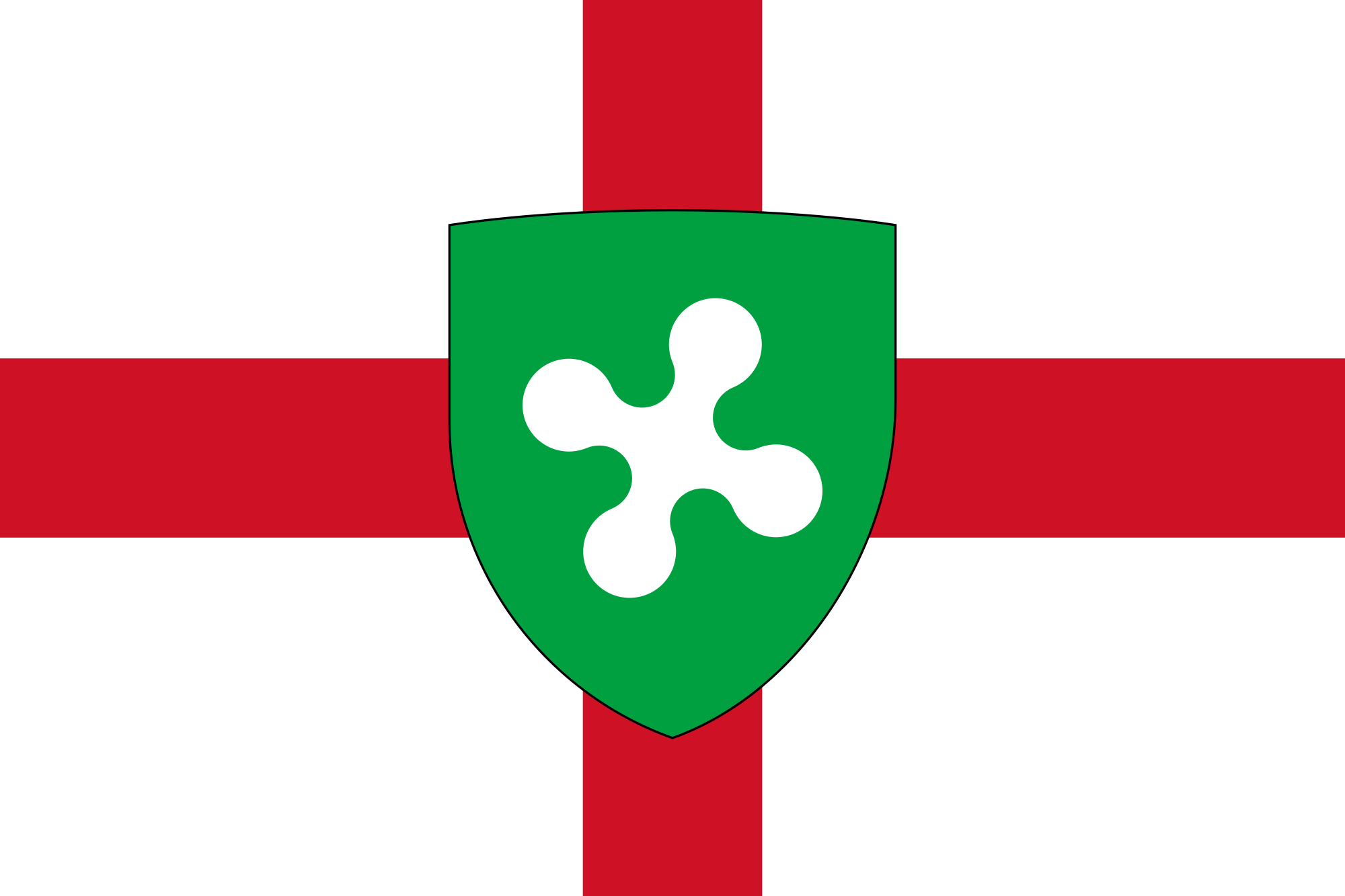
The St. George Cross is used by most independence and autonomy parties, despite some of them also use the flag of the Duchy of Milan, the Camunian rose or a flag inspired by federalist movements of 1848, with St. George Cross superimposed by green. There is also the idea of using a flag with both the red cross and the Biscione of the House of Visconti.


************ 


Lombard flag reflecting west Lombard heritage, with the Visconti family or Milanese arms....


************


Lombard flag reflecting east Lombard heritage, with the Camunian rose motif....


 .

Tuesday, June 4, 2019

Lombard Nationalism: Part II


History

Like in the rest of Europe, during the Romantic Era there was an awaken of the national sentiment in Lombardy. The napoleonic creation of the Cispadane Republic, which was later replaced by the Cisalpine one, opened the doors to the political debate. Carlo Botta, a piedmontese politician, wrote a book entitled Proposition to the Lombards about a way of free government, where he claimed the need of a constitution for the Lombard Nation, independent from the French one inspired by the Revolution. In the same years, Giuseppe Faroni proposed a draft constitution entitled Constitutional pole for the Lombard Republic.

The first independence movements appeared in the first half of the 19th century. Carlo Porta, one of the most important lombard intellectual, shows his adhesion to this idea in some writings. They are often associated to the Italians federalist movements, but they consider Lombardy as a nation instead a mere administrative division of the future state:


Che vegga Italia e la nazion lombarda strette ad un patto (That I'll see Italy and the Lombard nation close to a deal)
-- Pater Noster (dei Milanesi), a patriotic song of 1848

'Allegory of Lombardy' -- Giovanni Baratta
During the Five Days of Milan in 1848, at first insurgents only want a greater autonomy for Lombardy in the Austrian Empire, with the possibility to administrate itself. A large part of the leaders of the insurrection, such as Carlo Cattaneo, opposed to the Piedmont intervention.

After the annexation to the Kingdom of Sardinia (and the creation of the Italian state), it seems that some republicans and federalists movements want the creation of a State of Milan, because of the cultural, economical and social differences between Lombardy and the rest of Italy.


During the riots of Milan in 1898 and the other strikes in the following years (especially in 1913), when the Kingdom had to move 30,000 soldiers), some rumors of separatism came to the Italian government.

In the 1950s some small movements for autonomy appeared, such as the Movimento Autonomista Bergamasco, founded in 1947 by Guido Calderoli, that participated to the local elections in 1956, and later involved other Lombard provinces, changing first in Movimento Autonomista Regionale Lombardo (asking the creation of the Lombard Region, as required by the Italian constitution) and at last in Movimento Autonomie Regionali Padane (participating at political elections in 1958 and 1967), before disappear in 1970. Another movement is the Unione autonomisti padani, created by Ugo Gavazzeni with the union of various autonomist movements in northern Italy, that participated at political elections in 1967.From the legacy of this experiences in the 1980s was founded the Lombard League (since 1989 flowed in the Northern League). During the years, its target changes between the separatism and the ask of a greater autonomy in the Italian state. In 2018, the independence was officially abandoned by the federal secretary Matteo Salvini, after five years of ambiguity.

In the first decades of the 21st century, some cultural initiative and political parties appeared (among which Pro Lombardia Indipendenza is the best structured one).

In 2017 an advisory referendum (done simultaneously with the Venetian one) about the concession of a greater autonomy to the Lombard Region obtains the 95.3% of Yes, with the 38.3% of affluence. So the president of Lombardy, Roberto Maroni, opened the negotiations with Rome.

After the contemporary elections for the central and regional government in 2018, the new lombard president Attilio Fontana designates Stefano Bruno Galli as autonomy assessor, waiting for the formation of the new Italian government.


.