Showing posts with label occult. Show all posts

Thursday, September 29, 2022

Guido von List: Part 35 - The Mysteries of the Rûna

According to Dr. Stephen Flowers, in short, the word Rûna means “seek the mysteries.” I would suggest to anyone interested, to google "dr stephen flowers runa" and you can find numerous lectures that go into detail about Rûna. I've already posted some of that. I'm going to look at just a few different observations and possible connections. The word and concept is of Teutonic or Proto-European origin, from northern Europe but adopted into words of languages across the rest of Europe. Although possibly it may have developed on its own--but from the same basic root word--via the Proto-European languages in several of those regions over time. Within any practical study of history and language, we would call it of Teutonic origin.


*************************


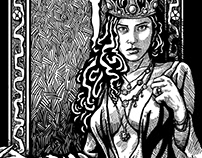
Above: Goddess Idun

From thaliatook.com

Idun, Norse Goddess of Youth, Immortality, and Beauty from the World Goddess Oracle by Thalia Took.

Nova Luna Center

Idun, Norse Goddess of Youth and Immortality by Thalia Took Idun ("She Who Renews") is the Norse Goddess of youth Who grows the magic apples of immortality that keep the Gods young. Her husband Bragi is God of poetry.


************


Excerpt from 'Guido von List: Part 1'

During the years 1888–1899 List was involved with two important literary associations. In May 1891 Iduna, which had the descriptive subtitle of "Free German Society for Literature", was founded by a circle of writers around Fritz Lemmermayer. Lemmermayer acted as a sort of "middle man" between an older generation of authors (which included Fercher von Steinwand, Joseph Tandler, Auguste Hyrtl, Ludwig von Mertens, and Josephone von Knorr) and a group of younger writers and thinkers (which included Rudolf Steiner, Marie Eugenie delle Grazie, and Karl Maria Heidt). The name Iduna was provided by List himself and is that of a North Germanic goddess of eternal youth and renewal. Richard von Kralik and Joseph Kalasanz Poestion, authors with specifically neo-Germanic leanings, were also involved in the circle.


*************************


KHPR: The Voice of Darkness

KHPR 004: Dr. Stephen Flowers on Runa

Dec. 23, 2009

ABOUT THIS EPISODE

Today we are taking a bit of a different turn. Instead of an interview, KHPR is presenting a lecture by Dr. Stephen Flowers an Ipssisimus of the Temple of Set and the Magus who uttered the word Runa, which means “seek the mysteries.” Dr. Flowers gave this lecture at the recent Conclave held in Austin, Texas and is an accomplished writer of over twenty books on Runa and related subjects.

In 1980 he founded the Rune-Gild, the world’s largest and most influential initiatory organization dedicated to Rune-Work and the Odian path. For more information on Dr. Flowers work you can visit his community website at www.edred.net. Dr. Flowers also hosts the thrice weekly Radio Free Runa podcast on this site.

As always you can email us at radams@khprvod.org  or via skype at KHPRshow and follow us on Twitter @KHPRvod. You can also sign up to receive an email whenever a new show or post is put up. Just use the subscription form to the right which includes an opt-in ability so that no one can sign you up without your knowing about it.


************************* 


Rune and Runa

Is there a connection between these words, what they symbolize, or even male and female symbolism? For starters, Rune (male) and Runa (female) are indeed given names in Scandinavia. Rune is a masculine given name derived from the Old Norse word rún, meaning "secret." It is earliest attested in a runestone as runi. That's really interesting just in of itself, and reflects a linkage. Could the masculine aspect of the mysteries manifest in signs, while the feminine aspect of it manifest inner spiritual symbolism (i.e. the Norse runes [ex. Othala] and the divine feminine energy [ex. Iduna])? There is a female given name of Japanese origin, and meanings in other languages, which I would discount as linguistic coincidence. However, I do think there are many connections which are ancient and widespread, and are linked back to the ancient travels of the Teutonic peoples.

Runa is a given name in countries around the Himalayas, which very possibly could tie into to the original Teutonic homeland north of the Himalayas, going clear back to the last glacial movement. Even a version of the triskelion is found in Tibetan Buddhist culture. How did it get there?. Runa is the name of a former civil parish in Portugal, and still goes by that name. Runa is also the name of a city in West Virginia, named after Runa McClung, the sister of an early settler. According to Wiktionary.org, Borrowed from Old Norse rún, which is from Proto-Germanic *rūnō (“letter, literature, secret”), which is borrowed either from Proto-Celtic *rūnā or from the same source as it; compare Dutch rune, German Rune and Swedish runa. This would seem to suggest a possible Proto-European origin via the Proto-Celts; however, I think most of the evidence points to a very ancient, pure Teuton origin.

The etymology on the above "rune" Wiktionary page, all point to a Norse origin. Interestingly though, in Italian, "runa" means "dart or javelin," with "runa" being the plural, and is of Latin origin... or at least that's what's stated. However, there could have been a very ancient Proto-European origin there, or it may still link to a Norse origin since everything else links to it. In the bigger picture of history, the ancient Teutons brought Rûna with them from their original homeland, in small waves across northern Europe (and their progeny down into southern Europe), and down to ancient Persia, Assyria, and Asia Minor (and their progeny down to the Indus Valley), and finally across half of northern Europe in a final huge wave (and their progeny down into southern Europe).

In Albanian, "runë" means an air-hole of a chimney, with runa as its plural form. The book 'The Tradition of Household Spirits' (Lecouteux; 2000) describes how many parts of a home--across different cultures--were once thought of as sacred (such as a chimney), and they were intimately connected with everyday spiritual traditions. In Turkish, "rün" has the general runic meaning that we usually think of... the runes. This would originate from people who long predated the invasion of Turkic tribes about nine hundred years ago. Also, other regions of the near and middle east are demographically much different than in ancient times.


*************************


"The invisible society is a secret and most august fraternity whose members are dedicated to the service of a mysterious arcanum arcanorum."
-- Lectures on Ancient Philosophy


The personal arcana

Whose to say that you can't be a "secret society" or study group of one or two? Knowledge, occult revelations, or applied symbols and concepts can be constructed brick by brick.


*************************


Haliurunas

Haliurunas, haljarunae, Haliurunnas, haliurunnae, etc., were Gothic "witches" (also called priestesses, seeresses, shamans or wise women) who appear once in Getica, a 6th century work on Gothic history. The account tells that the early Goth king Filimer found witches among his people when they had settled north of the Black Sea...

In the Wiktionary links for "rune" and "runa," within the offshoots in other European languages, often were "runa" for singular and "runas" for plural... sometimes with a double "nn." The Goths, who spread to almost every corner of Europe at various times, were originally from Scandinavia... The Land of Rûna.


Etymology

The name has been emended as the Goth-Latin forms haliurunnas, or haljarunae (and variations of the two forms) from several variants in the ms, i.e. aliorumnas, alyrumnas, aliorunas and aliuruncas.

The first element halju- is a variant of halja- 'Hell' (i.e. 'Hel, the abode of the dead'), but it has also been suggested that the first element does not refer to the realm of the dead, but instead directly to Hel, the goddess of the dead. Scardigli (1973) has analysed the second element as runnas, from *rinnan 'to run', and so the word would mean 'hell runners', i.e. female shamans. Lehmann (1986) considers this analysis preferable to Müllenhoff's who analyzed it as haljo-runas and compared it to OHG holz-rûna 'witch'.

However, others are of the same opinion as Müllenhoff, and analyse the second element as runas, and so it is considered to be cognate with Old English, hellerune ('seeress' or 'witch') and OHG hellirûna ('necromancy') and hellirunari ('necromancer'). Orel follows this interpretation and reconstructs it as the Proto-Germanic form *χalja-rūnō(n) in which the first element is *χaljō 'hel, the abode of the dead', and the second is *rūnō ('mystery, secret').

During Proto-Germanic times, the word *rūnō still referred to chanting and not to letters (rune), and in the sense 'incantation' it was probably borrowed from Proto-Germanic into Finnish where runo means 'poem'.

Klaeber and Niles et al. write the Latin-Gothic word as haljarunae and comment that the word appears in Beowulf in hwyder helrūnan where it means 'such demons', and it shows that the word would have been helrūne in the nominative singular. Neidorf adds that the use of the word in Beowulf supports the early 8th century dating of the poem, because besides the unambiguous attestation in the 6th century Getica (haljarunae), it is only attested in the 8th century Aldhelmian glosses, where it appears five times. The word is glossed consistently as divinatrix ('seeress') and phitonissa ('witch'), and twice wicca ('witch') is listed as a synonym. The appearance of the word in these early sources shows that in the 8th century helrūne and wicca were competing terms, but helrūne was out-competed very early in the Anglo-Saxon language and so the word wicca dominates with 28 attestations.

Lukman (1949) argued that Cassiodorus was inspired by a Roman account about a Germanic seeress whose name appeared in the form Auriniam, but the word haliurunna is generally considered to be an authentic Gothic word.


Account

Sixth century Goth scholar Jordanes reported in his Getica that the early Goths had called their seeresses haliurunnae (Goth-Latin).

Filimer, king of the Goths, son of Gadaric the Great, who was the fifth in succession to hold the rule of the Getae after their departure from the island of Scandza — and who, as we have said, entered the land of Scythia with his tribe — found among his people certain witches, whom he called in his native tongue Haliurunnae.

The Haliurunnae found refuge in the wilderness where they were impregnated by unclean spirits from the Steppe, and engendered the Huns, which Pohl compares with the origin of the Sarmatians as presented by Herodotus.


Beowulf


Damico (1984) connects haliurunae, which she translates as 'demons' and 'sorceresses', to the word helrūnan, which is glossed as Valkyrie, as a grim spirit of battle, and that it also appears in Beowulf as a name for Grendel, and for his mother by implication. She points out similarities between the haliurunas, the "fierce and hellish tribe", and Grendel and his mother.

She further connects them to the supernatural female powers called dísir in Scandinavian tradition who were appeased by sacrifices and adds that after the attack by the helrūnan, the Danes sacrifice at heathen temples hærgtrafum with honours of war, weorþunga.


*************************


Albruna

Albruna, Aurinia or Albrinia are some of the forms of the name of a probable Germanic seeress who would have lived in the late 1st century BC or in the early 1st century AD. She was mentioned by Tacitus in Germania, after the seeress Veleda, and he implied that the two were venerated because of true divine inspiration by the Germanic peoples, in contrast to Roman women who were fabricated into goddesses.


Name debate

Lukman (1949) claimed that Cassiodorus may have been influenced by the form aurinia and used it when writing his account on the Haliurunas in the Getica, but the word haliurunna is generally considered to be an authentic Gothic word.


Albruna

It was Wackernagel who first proposed the emendation Albrunam, and Albruna, and which was accepted by Müllenhoff, and de Vries. It has since then been the most commonly accepted form. The name is also attested independently for other women as Albrun in OHG, Ælfrun in OE and Alfrun in ON.


Western Pennsylvania German folk magic

The possible appearance of Albruna in Tacitus' work 98 AD, suggests, however, that these names may have reflected much older naming traditions.

The name element -run is a rare element in Old Germanic names. Sixth century Goth scholar Jordanes reported in his Getica that the early Goths had called their seeresses haliuru(n)nae and the word also identified in Old English, hellerune ('seeress' or 'witch') and in OHG as hellirûna ('necromancy') and hellirunari ('necromancer'), and from these forms an earlier Proto-Germanic form *χalja-rūnō(n) has been reconstructed, in which the first element is *χaljō, i.e. Hel, the abode of the dead, and the second is *rūnō ('mystery, secret'). In the Proto-Germanic period, before the introduction of runes, the word *rūnō did not yet refer to letters (rune) but it appears to have referred to chanting, and with this meaning it was probably borrowed from Proto-Germanic into Finnish where runo means 'poem'. In the daughter languages, it had various meanings in addition to runic writing. In Gothic it had the meanings 'secret' and 'decision', in Old High German it meant 'secret' and 'whisper', in Old English it referred to 'secret' and 'secret advice', and in Old Norse it meant 'secret knowledge'.

Rudolf Much translated the name as 'having secret knowledge of elvish spirits' or 'confidante of elves'. Schweizer-Sidler and Schwyzer follow Wackernagel and explain her name as 'one gifted with the divine, magical powers (runa) of the [elves]', and Simek interprets Albruna as 'the trusted friend of the elves' or 'the one gifted with the secret knowledge of the elves'. Although, Orchard cautions that most manuscripts have the name Aurinia, he considers Albruna to be "highly appropriate" and he agrees on the translation 'elf-confidante'. Morris translates her name as 'a sorceress with elf-like power' and compares it to Old English liodruna which meant 'sorceress with the help of songs' and helliruna 'a sorceress with the power of hell'.


Aurinia

Reichert has studied the name Guiliaruna, which appears as the name of a female Christian priest among the Germanic Vandals in Hippo Regius in North Africa, and he argues that Albruna can not be dismissed. He comments that it can hardly be a coincidence that a priestess is attested with a name having the second element -runa, from Proto-Germanic *rūnō, and it is probably not the name she was given at birth, but an epithet meaning 'priestess'. The first letters Gu- is a common representation of Germanic w-.


*************************


Seeress (Germanic)

In Germanic paganism, a seeress is a woman said to have the ability to foretell future events and perform sorcery. They are also referred to with many other names meaning "prophetess", "staff bearer", "wise woman" and "sorceress", and they are frequently called witches or priestesses both in early sources and in modern scholarship.


Names and terminology

Aside from the names of individuals, Roman era accounts do not contain information about how the early Germanic peoples referred to them, but sixth century Goth scholar Jordanes reported in his Getica that the early Goths had called their seeresses haliurunnae (Goth-Latin). The word also appears in Old English (OE), hellerune ("seeress" or "witch") and in Old High German (OHG) as hellirûna ("necromancy") and hellirunari ("necromancer"), and from these forms an earlier Proto-Germanic form *χalja-rūnō(n) has been reconstructed, in which the first element is *χaljō, i.e. Hel, the abode of the dead, and the second is *rūnō ("mystery, secret"). At this time the word *rūnō still referred to chanting and not to letters (rune), and in the sense "incantation" it was probably borrowed from Proto-Germanic into Finnish where runo means "poem."

In OE, hellerune ("seeress" or "witch"), or helrūn...


Projection

According to de Vries, the origin of gandr is a word gan- meaning "magic", of which there was an ablaut grade gin- (in English there is still a semantic relationship between the ablaut grades swam and swim, and sat and sit) that may be found in the name of the primordial chasm Ginnungagap ("space filled with magic powers"), and on the migration age Björketorp and Stentoften runestones, it appears in the sense "magically powerful" in Proto-Norse ginnarunaʀ ("powerful runes"


*************************


Rûna root words in Camun dialect

There are many mysteries within ancient Camunian culture. The Rosa Camuna, pentagrams, labyrinths, life runes, the horned god, stone observatories with connections to the Ophiuchus constellation (astronomy and astrology; the 13th sign of the zodiac; 13 month calendar starting in April), and much more. The Camunian dialect was isolated, therefore it has many ancient pre-Latin words. For example, the world for moon is mòn, not luna. The name for the Moon Goddess is still present in the dialect, Mòna, but after centuries of Christian zealotry, it now embarrassingly means basically "a whore."

So, if any old language had so arcane a word as Rûna, it might be Camun, which is really a sub-dialect of the Brescian dialect of Western Lombard, which itself is a branch of the Lombard language. I did find a few words with "runa," but did they follow any consistent pattern, or did they allude to anything suggesting any metaphoric pagan or mystery connections? With some of the words here, it was likely just a coincidence of spelling, but with others it may well have been part of a compound word at some point in time.

Amprunà -  reverse, overturn
Amprunàh - to tip over, lie down
Amprunàh-dó - go to bed
Cahtrunàda - to talk rubbish
Cerûna -  beautiful, healthy face
Ciacerûna - chatty
Corùna or cùrùna -  crown
Incurunasciù - coronation
Ompruna - to dish, to damage a reputation
Omprunas - topple over
Ontruna (or ontrunat ?) - deeply asleep
Patrùna or padrûna - mistress
Pirùnàt - harpoon
Poltrùna - lazy - chair with armrests (armchair)
Pultrùna - lounge chair
Sbarùnà - go to pieces
Scarùnà - driving wagons on mountain mule tracks
Scavrùnàda - picnic, excursion
Slandrùna - whore
Smarunada - gross error
Sperùnà - ram
Sperùnada - rammed
Spérunada (Bienno sub-dialect) - rammed, fork ?
Spirunà - break into shreds, use fork ?
Spirùnada - shred, forkful
Tèruna (Bienno sub-dialect) - begin to ripen (ex. grapes)
Terunàs - derogatory for a southerner

Two words, Cerûna (beautiful, healthy face) and Ciacerûna (chatty), had the exact spelling with the exact accent mark! Rûna. I suppose that it's a bit curious, if we're looking for some ancient connection to the divine feminine, that both words could allude to what maybe are female traits. Certainly "beauty" would be linked to the feminine. Some of the definitions could be interpreted as a type of regeneration of nature from death in winter (shred, overturn, ram), to life in spring (ripen, beautiful), while others could suggest a certain nobility (crown) which could hearken back to some type of spiritual nobility.

There's nothing absolutely etched in stone that states that the ancients just adored the Goddess Mòna. In an extremely harsh environment, she may have been despised for bringing winter (death) upon them! She was "a whore" ("slandrùna") perhaps? Then when she ushered back the spring (life), she was beautiful and healthy ("cerûna"). I don't know, but I'm just brain storming what could possibly have been the origin for these words. I have a little bit of a hard time imagining that they would think of the Moon Goddess as "a whore," but maybe that meaning was a bastardization of something else describing the harshness of winter, and cursing it.

.

Sunday, August 15, 2021

The Tarot: The name originally came from the Brescian "Tarocho" - Part II

Arms for the Visconti-Sforza family

Trionfi (cards)

Trionfi (Italian: 'triumphs') are 15th-century Italian playing cards with allegorical content related to those used in tarocchi games. The general English expression "trump card" and the German "trumpfen" (in card games) have developed from the Italian "Trionfi". Most cards feature the personification of a place or abstraction.


************

History

Many of the motifs found in trionfi are found in trionfo, theatrical processions that were popular in the Italian Renaissance. The Palazzo Schifanoia in Ferrara, once owned by the ducal House of Este, contains many murals depicting these floats. Petrarch wrote a poem called I Trionfi which may have served as inspiration.

The earliest known use of the name "Trionfi" in relation to cards can be dated to 16 September 1440 in the records of a Florentine notary, Giusto Giusti. He recorded a transaction where he transferred two expensive personalized decks to Sigismondo Pandolfo Malatesta.

In a letter from 11 November 1449, Antonio Jacopo Marcello used the expression triumphorum genus for a deck that was produced sometime between 1418 and 1425. It was commissioned by the duke of Milan, Filippo Maria Visconti, painted by Michelino da Besozzo and described in an accompanying text by Martiano da Tortona.

Two decks from June 1457 seem to relate to a visit at Ferrara of the young Milanese heir of the dukedom Galeazzo Maria Sforza in July/August 1457. Each deck consisted of 70 cards — the modern Tarot deck typically has 78.

The earliest known appearance of the word "Tarocho" as the new name for the game is in Brescia around 1502).

[Depaulis, Thierry (2008). "Entre farsa et barzelletta: jeux de cartes italiens autours de 1500". The Playing-Card. 37 (2): 89–102]

************

Tarocchini

Tarocchini (plural for tarocchino) are point trick-taking tarot card games popular in Bologna, capital city of the Emilia-Romagna region of Italy and has been confined mostly to this area. They are the diminutive form of tarocchi (plural for tarocco), referring to the reduction of the Bolognese pack from 78 to 62 cards, which probably occurred in the early 16th century.

The games of Tarocchini are very complex, yet the rules have changed little over the years.

************

Visconti-Sforza tarot deck

The Visconti-Sforza tarot is used collectively to refer to incomplete sets of approximately 15 decks from the middle of the 15th century, now located in various museums, libraries, and private collections around the world. No complete deck has survived; rather, some collections boast a few face cards, while some consist of a single card. They are the oldest surviving tarot cards and date back to a period when tarot was still called Trionfi ("triumphs" i.e. trump) cards, and used for everyday playing. They were commissioned by Filippo Maria Visconti, Duke of Milan, and by his successor and son-in-law Francesco Sforza. They had a significant impact on the visual composition, card numbering and interpretation of modern decks.

************

Overview

The surviving cards are of particular historical interest because of the beauty and detail of the design, which was often executed in precious materials and often reproduce members of the Visconti and Sforza families in period garments and settings. Consequently, the cards also offer a glimpse of nobiliary life in Renaissance Milan, which the Visconti called home since the 13th century.

************

Pierpont Morgan Bergamo (card deck)

This deck, also known as Colleoni-Baglioni and Francesco Sforza, was produced around 1451. Originally composed of 78 cards, it now contains 74, i.e. 20 trumps, 15 face cards, and 39 pip cards. The Morgan Library & Museum in New York City has 35, the Accademia Carrara has 26 in its catalogue, while the remaining 13 are in the private collection of the Colleoni family in Bergamo. Trumps and face cards have a gilt background, while the pip cards are cream-coloured with a flower and vine motif. The two missing trumps are the Devil and the Tower. Modern published reproductions of this deck usually contain attempted reconstructions of missing cards.

.

Saturday, August 14, 2021

The Tarot: The name originally came from the Brescian "Tarocho" - Part I

Tarot

[The Tarot] first known as trionfi and later as tarocchi or tarock, is a pack of playing cards, used from at least the mid-15th century in various parts of Europe to play games such as Italian tarocchini; many games are still played today; in the late 18th century, some tarot decks began to be used for divination via tarot card reading and cartomancy leading to custom decks developed for such occult purposes.

************

History

The first documented tarot packs were recorded between 1440 and 1450 in Milan, Ferrara, Florence and Bologna when additional trump cards with allegorical illustrations were added to the common four-suit pack. These new decks were called carte da trionfi, triumph cards, and the additional cards known simply as trionfi, which became "trumps" in English. The earliest documentation of trionfi is found in a written statement in the court records of Florence, in 1440, regarding the transfer of two decks to Sigismondo Pandolfo Malatesta.

The oldest surviving tarot cards are the 15 or so Visconti-Sforza tarot decks painted in the mid-15th century for the rulers of the Duchy of Milan. A lost tarot-like pack was commissioned by Duke Filippo Maria Visconti and described by Martiano da Tortona probably between 1418 and 1425, since the painter he mentions, Michelino da Besozzo, returned to Milan in 1418, while Martiano himself died in 1425. He described a 60-card deck with 16 cards having images of the Roman gods and suits depicting four kinds of birds. The 16 cards were regarded as "trumps" since in 1449 Jacopo Antonio Marcello recalled that the now deceased duke had invented a novum quoddam et exquisitum triumphorum genus, or "a new and exquisite kind of triumphs". Other early decks that also showcased classical motifs include the Sola-Busca and Boiardo-Viti decks of the 1490s.

In Florence, an expanded deck called Minchiate was used. This deck of 97 cards includes astrological symbols and the four elements, as well as traditional tarot motifs.

The expansion of tarot outside of Italy, first to France and Switzerland, occurred during the Italian Wars. The most important tarot pattern used in these two countries was the Tarot of Marseilles of Milanese origin.

************

Etmology

The word Tarot and German Tarock derive from the Italian Tarocchi, the origin of which is uncertain but taroch was used as a synonym for foolishness in the late 15th and early 16th centuries. The decks were known exclusively as Trionfi during the fifteenth century.

The new name first appeared in Brescia around 1502 as Tarocho.

[Depaulis, Thierry (2008). "Entre farsa et barzelletta: jeux de cartes italiens autours de 1500". The Playing-Card. 37 (2): 89–102]


During the 16th century, a new game played with a standard deck but sharing a very similar name (Trionfa) was quickly becoming popular. This coincided with the older game being renamed tarocchi. In modern Italian, the singular term is Tarocco, which, as a noun, refers to a cultivar of blood orange. The attribute Tarocco and the verb Taroccare are used regionally to indicate that something is fake or forged. This meaning is directly derived from the tarocchi game as played in Italy, in which tarocco indicates a card that can be played in place of another card.

************

Gaming decks


The original purpose of tarot cards was to play games. A very cursory explanation of rules for a tarot-like deck is given in a manuscript by Martiano da Tortona before 1425. Vague descriptions of game play or game terminology follow for the next two centuries until the earliest known complete description of rules for a French variant in 1637. The game of tarot has many regional variations. Tarocchini has survived in Bologna and there are still others played in Piedmont and Sicily, but in Italy the game is generally less popular than elsewhere.

************

Tarocco Piemontese: the Fool card

These were the oldest form of tarot deck to be made, being first devised in the 15th century in northern Italy. Three decks of this category are still used to play certain games:

The Tarocco Piemontese consists of the four suits of swords, batons, cups and coins, each headed by a king, queen, cavalier and jack, followed by the pip cards for a total of 78 cards. Trump 20 outranks 21 in most games and the Fool is numbered 0 despite not being a trump.
 
The Swiss 1JJ Tarot is similar, but replaces the Pope with Jupiter, the Popess with Juno, and the Angel with the Judgement. The trumps rank in numerical order and the Tower is known as the House of God. The cards are not reversible like the Tarocco Piemontese.

The Tarocco Bolognese omits numeral cards two to five in plain suits, leaving it with 62 cards, and has somewhat different trumps, not all of which are numbered and four of which are equal in rank. It has a different graphical design than the two above as it was not derived from the Tarot of Marseilles.

************

Card reading

The earliest evidence of a tarot deck used for cartomancy (fortune telling) comes from an anonymous manuscript from around 1750 which documents rudimentary divinatory meanings for the cards of the Tarocco Bolognese.

.

Wednesday, June 30, 2021

'The Many Faces of the Occult'


The Many Faces of the Occult

180,823 views - December 23, 2019

The Atlantic

An intimate glimpse into a diverse community of witches, druids, wizards, sacred drummers, and Christo-pagans. Read more: https://www.theatlantic.com/video/index/604084/pagans/

"Pagans" was directed by Iqbal Ahmed (https://www.iqbalahmed.com). It is part of The Atlantic Selects, an online showcase of short documentaries from independent creators, curated by The Atlantic.

Subscribe to The Atlantic on YouTube: http://bit.ly/subAtlanticYT


************


"Witchcraft is in my blood line I can’t leave it alone I love it"
-- Elissandra Weidermann


.

Thursday, June 4, 2020

Summer Solstice 2020

Summer Solstice - Monday, June 21, 2020

Northern Hemisphere, Saturday, June 20, 5:44 PM EST and 2:43 PM PST

The summer solstice is a result of the Earth's north-south axis being tilted 23.5 degrees relative to the sun. The tilt causes different amounts of sunlight to reach different regions of the planet.


*************************


Primitive polygraph tests need to go the way of the auditing machine

In 1995 a divorced 31 year old Illinois office manager and mother of two named Nanette Krenzel was brutally murdered and mutilated. Her boyfriend Jeremy Schref agreed to a polygraph test in order to eliminate himself as a suspect. He failed miserably! Only an unexpected tip, which eventually led to the real killer, saved Schref from dying in prison. Had that tip not come down for him like a penny from heaven, police investigators would not have pursued other potential suspects. They would have focused solely on him, and rigidly suspicious minds would very likely have put him away in the end. The fact that Jeremy Schref failed the test so "conclusively," displays that polygraph tests do not work, and should not be used during any investigation. Also, any good sociopath who really was guilty could pass it and be dismissed as a suspect as well.


************************* 


Snake encounters

On Saturday morning I went down to the basement to discover that a small ring-necked snake had found it's way in. They're neither poisonous or aggressive. It merely positioned itself upside down in an attempt to camouflage itself with it's golden and orange underbelly, since it would normally be in an outdoor environment. This particular ringneck was very dark brown in color, and with no ringed stripe around its neck. I collected it, drove it to the edge of San Bruno Mountain Park, and released it.

One time years ago I was driving in the rugged wooded hills of north Santa Rosa, still within the city limits, and came up to what I could only describe as a massive mostly black snake with orange rings. Since there is not supposed to be any snake native to California which is so huge, I have to assume that it was an exotic pet which somehow was released there. I stopped the car to allow it to slowly move off the road. It wasn't as large as a boa constrictor, but it was perhaps half that size. Maybe 15 feet long and thicker than a fire hose.

I can recall when I was about 16 years old, I caught what probably was a baby rattlesnake. I had caught garter snakes about the same size and was eventually able to hold them in my hands, as they can be surprisingly receptive to human handling after you have fed them and displayed that you are no threat. This little rattler was nothing like that, always coiled, hissing, and striking... and had to be released.

Around that time period, I discovered some large lizards in a particular moist spot along the hillside. I collected about five or six of them and put them in an aquarium. That was a mistake. They were like tiny crocs and were wild. They should have just been left alone. They wanted out, and with their powerful necks they could climb up some of the tubes within this aquarium and push their way out, and had to be released.

Some years ago I accidentally came across a garter sized snake while doing some concrete work. Unlike the common green garter snake, or similar reddish garters, this snake was jet black with bright red stripes down it's back; very dramatic colors. It quickly escaped to the neighbors yard, and I never saw it again. I couldn't even find any species of that color scheme.

I respect and fear the serpent. When I encountered that small harmless snake, I didn't merely think of it as putty in my hands. I thought of the danger the serpent can pose; for example in the form of a rattlesnake bite. Letting it go at least symbolically could be thought of as an attempt to appease that serpentine energy force.


*************************


Edith Atwater

On Saturday I watched the 1945 horror film 'The Body Snatcher' with Boris Karloff and Bela Lugosi. Karloff was right on character, while Lugosi was so well disguised in plain sight that I didn't even recognize him. This second tier horror film was just eerie and curious enough to keep the viewer's attention, with adequate character development and a good performance by Henry Daniell as a corrupt physician and teacher to make it a good film of its genre.

I couldn't help but be intrigued by "Meg," the physician's wife played by Edith Atwater. She was strong, intelligent, noble, and beautiful. Upon looking up the actress' name, I was surprised to discover that she was a theater actress who--although she had a good number of film credits to her name--only played in bit and a few supporting roles. "A respected stage actress, brunette Edith Atwater was another of those performers who never quite managed to break into films."

She would have been approximately 33-34 at that time, and I thought possessed a strong presence. I was also surprised to find that apparently she was not thought of as being beautiful in any way. They did lighten her hair a bit, and created something of a noble and attractive character for this film; and apparently dressed her down for future roles as stuffy, serious, socialite-type characters due to her manner. Maybe I'm crazy, but I thought she was beautiful at that point. Beauty, intelligence, strength, virtue, to me towers over even the more stereotypical beautiful, sexy, or cute women.

I like the kind of woman who, if a guy made a stupid or overtly silly or sexual comment or joke, would not give in to it and might just stare blankly back at him. I think it's entirely normal for a man or a woman to have the dominant personality within a relationship. I also think it's normal for a man or woman to give a lot of leeway to those in their life of the opposite sex, but act more aggressive towards most others of their own gender. Many in areas of contrived influence try to project reality as the opposite of that. Edith Atwater reminds me a little of a more recent actress Wendy Robie who, having played the roles of so many crazy antagonists, was actually attractive.


*************************


John Denver - Sunshine On my Shoulders

1,189,597 views

leopold coutrier


*************************


The Age of Adaline (2015 Movie) – Official Trailer - Blake Lively

7,928,335 views

Lionsgate Movies

The world has changed in the last century. Adaline has not. Starring Blake Lively, Harrison Ford, and Michiel Huisman.

After miraculously remaining 29 years old for almost eight decades, Adaline Bowman (Blake Lively) has lived a solitary existence, never allowing herself to get close to anyone who might reveal her secret. But a chance encounter with charismatic philanthropist Ellis Jones (Michiel Huisman) reignites her passion for life and romance. When a weekend with his parents (Harrison Ford and Kathy Baker) threatens to uncover the truth, Adaline makes a decision that will change her life forever.


*************************


Last night I just watched this film on a whim. I liked Brooke Lively in some films, and it sounded maybe interesting. Wow, what a film! That character was amazing, and there were so many great performances. Particularly touching was the mother-daughter bond throughout the film. I already want to see it again. It's that powerful. I first remember Brooke Lively in 'The Town', where she played a benevolent, likable, flaky character that you felt sorry for. Probably like a lot of people, I wondered how she would do in a protagonist role. I don't want to say anymore so I don't ruin it for anyone reading this who hasn't seen it.


*************************


"I loved this movie so much. Never getting tired of it. What a masterpiece!" --  Júlia Prieto, YouTube


*************************


Video Links

5 Signs You're Dealing With A Narcissist

SpaceX makes history with successful rocket launch

Joe Rogan on George Floyd and about cops

The Most VICIOUS HONEST 10 Minutes Of Your Life [IT WILL HAPPEN BEFORE 2030] David Icke

BTK Confession, full version

Samuel Little's haunting confessions

Charles Manson - Parole hearing 1992 (Full)

Lorna Byrne: The Lady Who Sees Angels Documentary Master


*************************


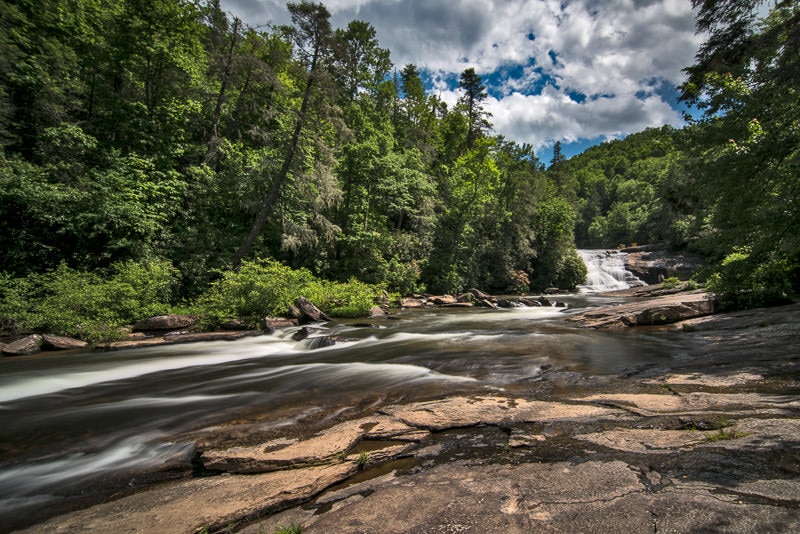
DuPont State Forest in North Carolina

Although Triple Falls in DuPont State Forest, North Carolina is now featured in Windows 10 Spotlight, and it's an interesting image of three little falls, somehow the above image though struck me more. The white/grey clouds, the blue sky, the green woods, the white water, and the brown rock. You could almost feel the warm rock upon your feet, the warm sun, and the cool rush and spray from the water.


*************************


(Vikings) Lagertha | Valhalla

2,227,230 views - January 23, 2020

Rav3n Edits

con't.... 


************


Lagertha - Born To Be Your Queen


************ 


The Lagertha character, as portrayed in the series, has been wildly popular. I recall one YouTube video where Katheryn Winnick was a guest on one of the late evening talk programs, and was looking particularly fit. One of the comments read "F*** Y*** RAGNAR"; obviously due to his treatment of her.


************


A few YouTube comments

"The Real Queen in The North." -- Rory Targaryen

"Finally! Somebody made a tribute of Lagertha that makes me feel butterflies in my stomach. All hail the queen" -- Messone Adelaide

"The show was suppose to be about ragnar and his sons. but Lagertha ended up the most loved by viewers." -- neil koch

"Lagertha = The greatest shieldmaiden of all time." -- David Branson

"Oh my god,Lagherta's death was too much for my heart handle it" -- Victor Augusto

"I'm certain the Valkyries themselves fought over the honor of being the one to escort Lagertha to Valhalla." -- Migs 42692

"This is one of the best tributes to a true warrior Queen I have ever seen. The reason I love and admire this women so much is not because she has invincible superpowers or because she is impervious to suffering but because she has overcome so much pain and challenges in her vast life which she handles with such fierce power and grace. She’s a true inspiration and role model! RIP Queen Lagatha⚔️" -- Pepper Wight Creations

"She was a Strong, & Confident Woman.  She did not have to be a bully.  To prove her strength.  A Strong, & Powerful Shield Maiden.  Now she is in the great hall." -- Nelson Lopez

"The most incredible and exciting caracter in a history series. All ail Lagertha the shildmaiden!" -- Cristiano Costa


*************************


Bonnie Tyler - It's A Heartache

7,472,017 views

Michelle


************


A lot of people must have thought Bonnie Tyler was American, especially with her distinctive voice. Actually she's Welsh.


*************************


"Normal people have no idea how beautiful the darkness is"

-- Unknown


*************************


'The 20 Richest Rockstars in the World 2020'

Emmy Wallin - WealthyGorilla.com

The 20 Richest Rockstars in the World

Below are the 20 richest singers of all time, as of 2020. We’ve used figures from Forbes, Celebrity Net Worth, and The Richest to create this compilation.


20. Robbie Williams

Net Worth: $300 Million

Robbie Williams is a British musician, and very much an icon within the British music industry. His career began as a member of the boy band “Take That”, but he was able to achieve just as much success going solo as he did with the band.

As of 2020, Robbie Williams’ net worth is estimated to be $300 Million dollars, making him the 20th richest rockstar in the world.


19. James Hetfield

Net Worth: $300 Million

James Hetfield is an American singer, guitarist, and songwriter who is most famous for being the lead singer for the popular heavy metal band, Metallica.

James Hetfield’s net worth is roughly $300 Million dollars.


18. Eric Clapton

Net Worth: $300 Million

Eric Clapton is a British rock musician who was born in Surrey, England. Clapton is a blues-rock guitarist, singer, songwriter and composer. He has been ranked as the #53 on Rolling Stone’s Top 100 Artists Of All Time. Clapton began his career when he was 17 years old, and he joined his first band called “The Roosters”.

As of 2020, Eric Clapton’s net worth is roughly $300 Million dollars, making him the 18th richest rock star in the world.

con't....


*************************


The Secrets of Pineal Gland Scientific Proof

246,855 - October 27, 2017

i24NEWS English

Trending|i24news_EN News Emily Frances


************


YouTube comments

"Your Brain spits out an electrical field that extends beyond your skull like branches on a tree, outside of your head. You can feel things with them and even see things with this invisible force field that we all have. That is how we know when someone is starring at us , ..because we can feel it ... " -- Jesse James

"Visualize what you want through your pineal gland by facing the sun with your eyes closed and focusing on desires as if they were already in your possession. "As above, So is Below."  -- BobPDXz

"It is about controlling the subconscious emotional response to be calm in the face of thought and memory.  The reason we have not been taught this is because the people in charge control us through our subconscious emotional reaction." -- Patrick Ong

"thousands of years ago we were a people of higher density a people of higher vibrational frequency pineal gland was activated all chakras were balanced..we lived as one heart one mind one love one collective consciousness..all thoughts were heart centered thoughts it was all about being of service to others..along came negative entities and hi-jacked our divine frequency and our divine masculine and feminine energies and intern we began to operate in lower densities..fast forward into the now where we are born into an ego based society where polarity and duality run the world..and our water and some foods are saturated with fluoride resulting in calcified pineal glands..well thanks to this divine cosmic window that opened up in 2012 we as collective are awakening to our higher selves our authentic and greatest versions of ourselves as we come face to face with our divinity..we are now evolving at an accelerated rate and ascending with Gaia into higher consciousness..pineal glands are now decalcified and the chakras are completely balanced..it is our time to shine..bless you all..love and light." -- Ary Munoz

"THIS ORGAN HAS A HORMONAL SIGNITURE THAT WHEN IT SECRETE,S ENOUGH OF ITS CHEMISTRY INTO THE BRAINS SYNAPSES,THIS OPENS UP THE ENERGY INTERFACE WITH PRANIC ENERGY.THE COROLLARY OF THIS PHENOMENON IS THE CRYSTALS-MAGNETITE IN THE PINEAL GLAND VIBRATE AT A HIGHER FREQUENCY.THE 2 NERVE,S THAT ARE CONNECTED FROM THIS GLAND TO YOUR PHYSICAL EYES CAN NOW LITERALLY SEE THAT FREQUENCY WHICH IS ATTUNED TO OTHER DIMENSIONS." -- Richard Conner

"Pineal Gland , The Seat of the soul!!!" -- Esoteric Fitness


*************************


Cradle Mountain-Lake St Clair National Park in Tasmania, Australia

[Featured now in Windows 10 Spotlight]


Cradle Mountain-Lake St Clair National Park covers more than 600 square miles of highland wilderness in Tasmania, an island off the southeastern coast of Australia’s mainland. Here on the ‘Island of Inspiration’ the scenery is magnificent. The Overland Track is a route that runs from Cradle Mountain to Lake St Clair, the deepest lake in Australia. Along the way, the landscape changes between alpine lakes to steep mountain peaks.


*************************


Van Halen - Panama (Music Video)

14,325,774 views - August 4, 2009

sergitogibson

con't....


*************************


Shortwave radio - The dark web of the airwaves in 2020

178,730 views - February 9, 2020

VWestlife - 102K subscribers

The Internet made shortwave radio obsolete over 20 years ago, yet it somehow still lives on today, home to Cuban propaganda, Vietnamese music, time signals, and religious groups and conspiracy theorists paying $35 an hour to get their message on the air.


*************************


YouTube comments

"Growing up in communist east Germany short wave was my window to the free world. In the early 60s listening to western stations still was a criminal offense." -- Lutz Schafer

' Shortwave radio was incredible in the 1990s in the USA. The bands were filled with incredible broadcasts. Now it takes some effort to find anything in English besides crazy preachers. One good comedy show comes on each weeknight at 10pm Eastern time on frequency 4840. Tune in and see! You`ll hear things like: "Shrimp on prozac are attacking seagulls!" ' -- Tom Jones

"Listening to shortwave reminds me of watching UHF tv with my little antenna, something I miss today." -- John Wascavage

"Thanks for invoking that fond memory.   Same thoughts here.  If you haven’t already done this, I suggest buying one of the many cheap (< $50) hi-def antennas and connecting it to your TV. Even though over the air TV broadcast stations are mostly digital, you may be surprised to see how many crystal-clear channels you receive - many in hi-def.  and several channels broadcast old shows (westerns, game shows, etc.). Grit TV is my favorite." -- Tom Mc

"Some places still have have analog low power stations, Bemidji's KSTP repeater is analog on channel 28 as far as last time I was up there.
"We get like 60 different channels over antenna here, including the low power stations - a mix of HD and SD." -- NightShade theWolf

"Man I love shortwave! Its one of the main reasons i got into ham radio!" -- NS Defect Detector Productions


*************************


Lucifer: Sympathy for the Devil | LED Live

Little Light Studios


*************************


Pump Up The Volume Original Theatrical Trailer (1990)

282,178 views - May 30, 2013

Matt M

Pump Up The Volume is a raw and witty celebration of free speech that will make you laugh, make you cheer, and make you think.


************


Very underrated film


*************************


Using a PC sound card to receive VLF radio signals

102,075 views - March 8, 2015

VWestlife - 102K subscribers

Just connect an antenna to your computer's microphone input, and you can receive VLF (Very Low Frequency) radio signals! A sound card (or built-in sound chip) with a recording sampling rate of at least 96 kHz is recommended.

con't....


************


Tuning below 150KHZ - Anything out there???

VLF RADIO
 

*************************


Air Supply - All Out Of Love (Lyrics)

25,347,340 views - August 2, 2010

BrandonCleaver22 - 145K subscribers

air supply's classic song all out of love.


*************************


 The Beautiful Teri Hatcher


*************************


Encounter between coyote and pit bull at park caught on video

268,389 views - May 29, 2020

ABC 10 News

A man recorded a confrontation between a coyote and his pit bull while at a park in Chula Vista.


************ 


This coyote easily dodged the pit bulls lunge, and during the stare down the dog must have known that this was no ordinary animal to mess with as it showed absolutely zero fear of him.


*************************


Mummified Dinosaur Remains Reveal Creature's Last Meal

Tim Binnall - CoastToCoastAM.com - June 3, 2020

Scientists studying the mummified body of an armor-plated dinosaur were surprised to find that the creature's last meal was still inside its remarkably well-preserved stomach. According to a press release, the monstrous ankylosaur is believed to have roamed western Canada over 110 million years ago and its remains were discovered in an Albertan mine back in 2011. The find was particularly intriguing to researchers due to the excellent condition of the creature's body and internal organs, specifically the stomach.

con't....


*************************


'Victim: Pit bulls "out of control" in Delaware'

Here's what to do if one attacks you

Josephine Peterson & Jessica Bies, 'The News Journal' - DelawareOnline.com -  December 27, 2018

One dog is dead and another is missing after a vicious pit bull attack at Brandywine Mills Plaza on Sunday.

The pit bull situation in Delaware is "out of control," said Jim Shanahan this week after his 7-pound rescue dog, Elvis, was mauled to death near Brandywine Mills Plaza.

It is one of several pit bull attacks reported in the state in recent years.

One dog dead, one missing after pit bull attack in Wilmington

While some people think the breed should be banned, the Humane Society of America believes "pit bulls" are just dogs and should not be considered inherently dangerous.

The breed has gained that reputation because they are among the most persecuted pets and may not be properly socialized or trained, the Humane Society said.

Instead of judging a dog by its breed, experts recommend paying attention to pets' body language when trying to determine if they will attack.

If a dog has a tensed body, stiff tail, pulled back ears, flicking tongue or an intense stare, it may bite. If in a situation with an aggressive dog, back away and do not turn and run because the dog's natural instinct is to chase.

con't....


*************************


Hitchin' a Ride

1,577,031 views - November 8, 2014

Vanity Fare - Topic

Provided to YouTube by The Orchard Enterprises

Hitchin' a Ride · Vanity Fare


.