Showing posts with label Norse. Show all posts

Saturday, September 19, 2015

The Druidic Temple of Mona


I'm currently reading the book 'Witchcraft Out of the Shadows: A Complete History' (Ruickbie; 2004), and I keep finding myself wanting to put excerpts here which are very applicable; which I did recently with the Greek legend of Medea. I found another which I can't resist. To start with, after the first chapter regarding the "Old Religion" as it existed prominently in pre-Olympian Greece (and after), chapter two is entitled 'East of Midgard: Witchcraft, Magic, and Religion Amongst the Pagan Tribes of Northern Europe'. He talks about the Germanic and Gaulish tribes, and it's fascinating to ponder the interaction between these two similar cultures. It also shows how the "Old Religion" existed within the ancient Odinic German societies. It's obvious to me the cultural overlap between the magical traditions of the proto-Europeans and the incoming Teutons. For example, the Druidic traditions developed as the two merged together; and the later Germanic invasion in the east reflected the more Teutonic spirituality.

In the subsection 'The People of the Oak', based mostly on the works of the Roman historian Tacitus, the Druids are shown to be nothing less than the "doctors, poets, priest and astronomers" of the Gaulish culture. When the Roman Emperor Claudius outlawed "Druidry" in 43 CE, it took about fifteen years to wipe it out by force. Since it was an oral tradition, little is known about it today. A few small reminders exist today, such as the mistletoe during Christmas; although it had an entirely different significance to the Druids. "...the Greek philosopher Dio Chysotomus (c. 40-112 CE) compared them to those other great mystical castes of ancient times, the Persian magi, Egyptian priests and Hindu brahmin." Apparently some Alchemists believe that the Druids were part of some type of "mystery school network" which existed from Greece and Egypt, to Phonecia, to Persia, to India, and even to China. It took years of training to become a Druid or Druidess.
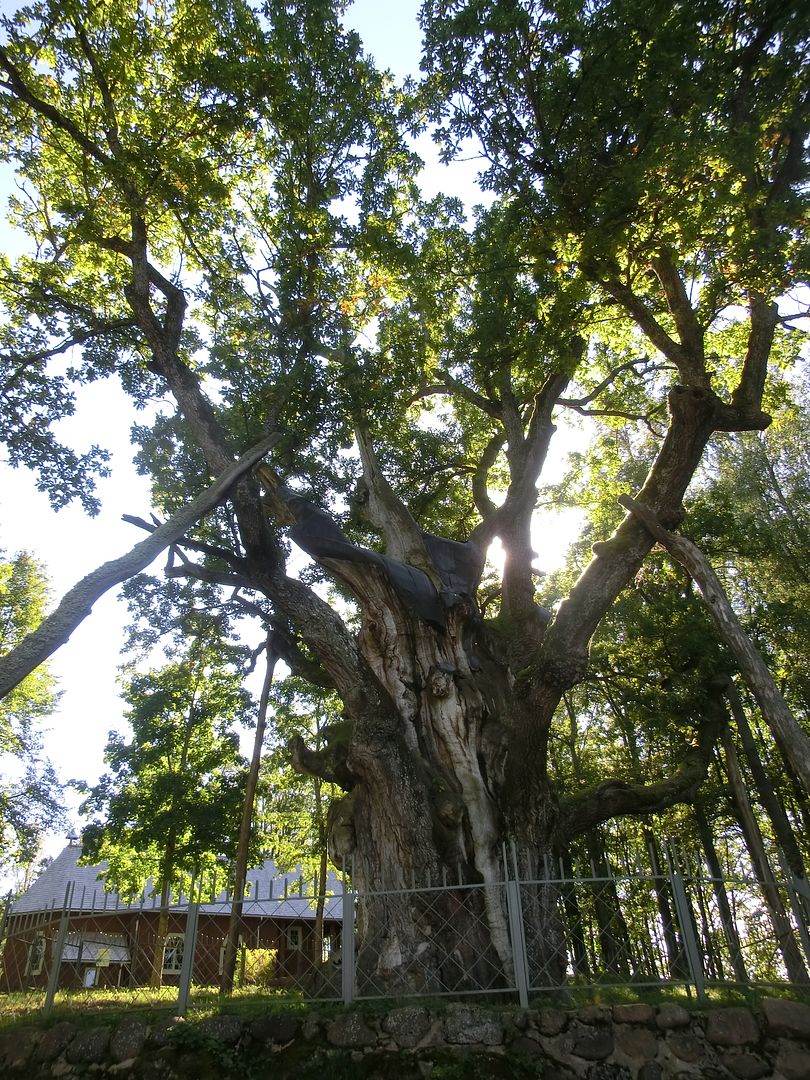
Although so little is known of the Druids, it was beautiful to read about how they held court in special "sacred groves" of oak trees. I imagined groves of grey barked oak trees in Lake County, California where I spent summers when I was a child. It was almost like the oak trees possess a certain nurturing energetic quality. Even today, when I'm in some special remote place--morning, day, late afternoon, twilight, or evening--with nobody around, I find it incredible that nobody is there to enjoy the priceless feeling, sights, mood, and tranquil energy. Perhaps the Druids knew something that we don't know? I wanted to put in one more small but important excerpt that validates something that I've suspected for a good while now:

"Julius Caesar had broken their (the Druids) power in Gaul by 58 BCE and in 60 or 61 CE the Roman legions laid wast to their holy sanctuary of Mona (Mon) on the island of what is now called Anglesey (Wales). Tacitus describes how black-robed druidesses urged on the Celtic warriors and cursed their Roman attackers with great shouts and screams. The Romans were terrible in victory and having won the field of battle, destroyed the sacred groves and massacred the druids. As a spiritual and political force they were finished and gradually declined into obscurity."

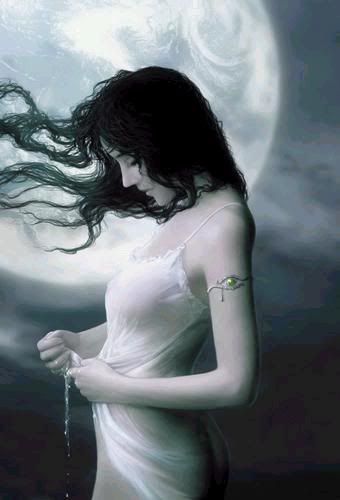
The word Mòn meant "Moon" to the ancient Camunni. In the Camunian dialect, Al Camònega means "Val Camonica," and "mòn" is present in many words in the Lombard language and Camunian sub-dialect of Brescian; likely always having some tie-in to an old phrase with a moon-connection. There is a Camunian village called Monno in Italian, but was actually called "Mòn" in the Lombard language. It literally meant "Moon," and perhaps was the site of some forgotten temple to the moon goddess. Also, as I am somewhat ashamed to admit, the word "Mòna" in Camunian--which was very likely the actual, now forgotten, ancient local name of the moon goddess--is a vulgar and slanderous name for a woman.

I have long suspected, based on what little information I have come upon regarding ancient mostly central European languages, that the proto-European word for moon was "mòn." Also, more importantly, the word for the ancient moon goddess was "Mòna." Lombardy was once part of Cisalpine Gaul, and the ancient Camunni were a very ancient proto-European people. The Welsh, like Basques and Camunians, are also a very ancient proto-European people. Wales is where this "holy sanctuary of Mona" was located. It seems to suggest that the words and spiritual concepts of Mòn and Mòna were of pre-Celtic proto-European origin. In other words, the European-wide "Old Religion." Going back to the last glacial movement, where the northern two-thirds of Europe was covered by a mile high sheet of ice, this goddess had a common origin.

The Gaulish Mòna, the Greek Hecate, the Roman Diana, the Venus of Willendorf, etc., were all of a common origin if you go back far enough. People just can't wrap their minds around the fact that the true-Mediterraneans and original Teutons arrived later. Before there were Greeks, Germans, English, etc., there was this type of "European native" and their spiritual tradition. The origin of the "Old Religion." Of course, even before Christianity, it was being merged, marginalized, and sometimes altered. For example, there was likely Alchemical influence during the Middle Ages. The word "mòn" became "moon," and the Roman-Latin "Luna" and "Lunar" replaced it in scientific and spiritual reference. Also, the "horned god" was the "father god" of the Old Religion all over Europe from Cyprus to Scotland.

Cernunnos and Mona were later local manifestations of this "god and goddess" in Gaul. Much earlier manifestations of this same "god and goddess" were "The Sorcerer" and the "Venus of Willendorf." When we go back the far in time, we must suspend our idea of geography somewhat in order to comprehend that time period. So have we finally solved the problem of finding an ancient "European name" for the Almother? Regional names, such as Hecate, only seem to confuse the issue. As for the Alfather of the Old Religion, the late Stewart Farrar used the name "Karnayna," although I don't know at this time if this was based on any ancient word or concept. I had discussed in that earlier article the problem with adopting names from local traditions, since people often just can't separate that particular locale with the larger concept. 
"Heathen" is a good working example of the "reappropriation" of a word to fit a larger concept; while the word "Asatru" has run into problems, as people can't seem to forget it's regional Icelandic roots. It then becomes "an Icelandic religion" in some people's minds. The name "Mona" would be a good candidate for reappropriation, since it is generally just a given name and a word present in non-Indo-European languages due to it's simple pronunciation (likely to develop in various languages). "Máni" was a Norse, and probably Saxon, "moon goddess." Máni means "moon" in old Norse and Icelandic. In this somewhat parallel northern tradition, there was a "sun god and moon goddess" called "Máni and Sól." This seems to clearly show the proto-European tie-in within Norse paganism.

This tie-in is not Odinic, but a regional Norse connection to the Old Religion, which I have long suspected. I could not be certain, since "Norse witchcraft" could have developed on it's own. It is much more likely an older holdover, with Odinic influence. The author of 'Witchcraft Out of the Shadows' is Leo Ruickbie from the UK.

.

Friday, May 22, 2015

Ancient Aliens - 'The Viking Gods' - Part 3


The following text apparently no longer has any type of copyright, and I wanted to save this particular writing from being lost. I would suggest using FromTextToSpeech.com for anyone who just wanted to sit back and listen rather than read. I find the "Heather" voice to be clear and easy to understand. I can recall republishing a wonderful text interview which the Odinic Rite conducted with a representative of the Slavic Faith Association from Poland a few years ago. I was very surprised that the OR discarded it. Also, I wanted to add that this isn't necessarily a "Norse Creation Myth" as much as it is a Teutonic Creation Myth. It could very well have originated in the original Teutonic homeland north the the Himalayas, probably well over 10,000 years ago, and perhaps much longer. "Nordic" is a region, while "Teutonic" is a people who lived in many regions over the course of time. 


Odinic/Asatru Creation Myth
   
In the beginning, there was Ginnungagap, the yawning void or the vast abyss. It was a region so tremendous, so limitless that it extended for ever in any direction, with space to contain a million universes and still have room for another few million. To contemplate it would make you sick with dizziness, would make you weightless, would bend your mind with terror for it had no length, no breadth, no up, no down. In the beginning there was nothing in Ginnungagap that any human thought could grasp, not a drop of water, not a blade of grass, not a even a grain of sand. There was no light, no darkness, no silence and yet no sound - only a yawning void. Although this nothingness was so vast and shapeless, it was still not empty.  It had no form but it was definitely not empty. Only the gods know this secret. After the beginning, this nothing began to be something and there were seen to be in it two contrasting regions.

First of all was a region of fire, called Muspell (also known as Muspellheim). No ordinary being could live there for the land was ablaze and the air aflame. Later the combusting fire giants were to make Muspell their home. Muspell means "Home of the Destroyers of the world".

The second of the great regions in the vast abyss of Ginnungagap was cold, bleak wilderness of ice and snow and freezing fog, called Niflheim. Niflheim like Muspell, had existed for countless ages before our earth was created. In the center of Niflheim there surged and foamed up the mighty fountain of Hvergelmir, the Roaring Cauldron. All the rivers of all time proceeded from Hvergelmir. Their names were fearsome and their forms were magic: Howling, one was called, others Storming, Frightful, Bubble-blasting. One was said to be composed entirely of chunks of ice fighting their way along in the shape of weapons - spears, javelins, swords and battle-axes.

Another tumultuous fountain in Niflheim was Elivagar or Icy Waves. Elivagar, too had welled up from its unknown source since time immemorial. Some even say that Hvergelmir and Elivagar were only different names for the one primeval fountain. However that may be Elivagar's crunching, creaking, groaning mountains of ice expanded and exploded and spread lay upon layer as glaciers all over the northern quarter of Ginnungagap. And across the ever growing sierras of ice, whirled winds of hail, blizzards and frozen torrents of rain.

Most important, there bubbled up through Elivagar a poisonous scum which set the slag which runs out of a furnace. This hardened into black ice. When the mass stopped and flowed no further it hung suspended, forming colossal icicles and icebergs log jammed up and up, one on top of another. So between them, Hvergelmir and the poisoned Elivagar completely filled the northern part of Ginnungagap. At last the yawning void which lay to the north quarter was blocked with heavy and crushing ice and frost; while in contrast, the southern sky of Ginnungagap glared with sparks and molten gases gushing out of Muspell.


It was quite obvious that after eons of time the regions of fire and ice in the yawning void must meet. When this eventually happened there arose that most amazing of all phenomena, which no one since the world began has been able to explain - Life. When the two elements came together in space, the yawning void was as mild as the windless air, but as the ice of Niflheim touched the fire of Muspell there was a tremendous explosion and a mighty booming band. The fermenting drops of venom bubbling up through Elivagar were fused to life by the fire and across the length and breadth of Ginnungagap their there formed the body of a giant. He was shaped like a man and at first he hardly moved. A broth of bubbling and boiling mud and ice gave birth to his ferocious head, his arms, his torso and his sludge-streaked legs. His later descendants, the frost giants, named him Aurgelmir which meant Mud Boiler, for they knew the secret of his creation; but others called him Ymir.

For long ages Ymir lay sleeping in his porridge of poisonous, seething mud and ice. At last his body was solid and he began to sweat. Under his armpit grew a male and a female; then one of his feet mated with the other to produce a six-headed son, Thrudgelmir, who in due course gave birth to Bergelmir, the direct ancestor of the frost giants.

Not all the ice of Niflheim was impregnated with the poison from Elivagar, and where it remained pure but was still melted by the fires of Muspell, a vast cow appeared in the thawing ice. Her belly spread across the heights as a colossal cumulus cloud and her legs were columns at the corners of space. From the udder of this great cow the giant Ymir suckled. The frost giants called her Authumla meaning Great Nurse. Authumla herself needed sustenance and she began to lick the continents of ice about her, finding them pleasantly salty to her taste. Just as a master sculptor sees in a block of marble an image which only he can release, so when Authumla  licked the ice something new began to appear.

By the evening of the first day her questing tongue had licked out the hair of a man. All next day she nuzzled and slobbered until a man's head appeared. By the third day she had licked a complete man into shape. The gods called him Buri for they claim him as their firs ancestor: he was beautiful and bright to look at, a great and mighty god. As time went on, Buri had a son called Bor, a name which means born, for all those thousands of years ago there were still not very many words available. Bor's wife was Bestla the daughter of a giant known as Balethorn. Bor and Bestla had three sons called Odin, Vili and Ve.


All these beings, the ancestors of the giants and the gods, and the universal cow Authumla, had formed the primeval form lessness Ginnungagap. Because of the venom proceeding from Elivagar some were evil. Others, like Buri, were good. But it is well known that good and evil cannot live peacefully together and before long there was a tremendous battle between the cosmic powers.

The frost giants were a dark and violent race, misshapen, monstrous and noisy. Old Ymir's son, born by the union of his foot with the other, was a glacier-like being with six-heads called Thruthgelmir or Mighty Roarer, and his son was known as Bergelmir or Rock Roarer. When they and their ancient father and grand father Ymir met in council with the notice was ugly and and Odin, Vili and Ve, the sons of Bor were irritated beyond endurance.

Odin and his two brothers quarreled with old giant Ymir and after a great battle they killed him. When he fell, hacked to pieces, so much blood flooded from his body that all his giant family were drowned except the youngest, Bergelmir, and his wife. Bergelmir swam through the billows of blood dragging his wife by the hair until he was able to scramble on to a giant mill and there they sprawled across the millstone gasping for breath. In this way, the race of frost giants and hill ogres was able to continue.

Odin, Vili and Ve dragged Ymir's carcass, still pouring volumes of blood into the middle of Ginnungap. There were so many wounds in Ymir's body that the blood flowing out formed the sea. All oceans, lakes, rivers, waterfalls, pools and streams came from Ymir's blood.

Wondering what to do with the remains, the sons of Bor decided to sculpt it into something useful, so they set to work. They pounded, kneaded, chopped and slashed his tremendous corpse, pushing and pulling his flesh this way and that as though it were clay until they were satisfied. When they had finished the first part of their gruesome task they had produce the groundwork of the earth: the rolling hills, plains, dry river beds, empty lakes, and empty sea-bed. Into all these hollows they poured Ymir's blood so that the earth lay entirely surrounded by the sea with rivers running through it. His bones they hacked and splintered to make mountain crags. They made individual rocks and seashore pebbles from his toes, double teeth and remains of broken bone. They used Ymir's hair for tree's and bushes. For soil the made out of his flesh, and the race of dwarfs appeared spontaneously rather like maggots. Bor's sons had now created the earth and the beaches and the sea but yet there was no sky. So Odin, Vili and Ve between them heaved up the mighty skull of Ymir to form a dome over the earth. Now they had to find a way to keep it in place.


Fortunately (because without a sky the earth would been a dark and miserable, not to mention uninteresting place to live in) a solution was at hand: they were able to make use of the dwarfs. Odin, Vili and Ve peremptorily ordered four of them to stand forever at the four corners of the world to hold up the sky. They called them Nordi (North), Sudri (South), Austri (East) and Westri (West). A little later on Odin created the winds by posting a giant (one of Bergelmir's sons) in the form of an eagle at eh ends of the earth to flap his wings for ever. And into the stream of air Bor's sons cast Ymir's brains to make the clouds.

The dome of the sky was now firmly fixed, but it remained dark and menacing. Freed from the supporting sky, the sons of Bor caught the glowing cinders and sparks which were thrown up and out of Muspell and poised them in the middle of the yawning gulf to light both heaven and earth. They appointed positions to all the stars: some were fixed in heaven, some were to pass backwards and forwards in regular patterns. In this way the seasons of the years were marked out, but as yet there was no sun and moon, and day was not separated from night.

Odin, Vili and Ve now gave a great grant of land encircling the outward shores of the ocean for the race of giants to settle in, calling it Jotunheim or Giant land. Finally the gods took Ymir's brows to build a circular stronghold of the cliff-like walls around the earth. They called this fortress Midgard, meaning the Middle Enclosure. 


Creation of Night and Day

Narfi, one of the first giants to colonize Jotunheim, had a stunningly beautiful daughter who was quite unlike the Viking women in appearance. She had a dark complexion and dusky hair. Her name was Nott (Night). Beautiful she was, she made herself more so by wearing bright stars in her long dark hair. Naturally enough, many men wished to marry her and being a young woman of strong character, she married three husbands, one after another.


 Nott's first husband was a handsome young fellow called Naglfari or Darkling, who may well have been a distant cousin of hers. Their marriage did not last long, but long enough for them to produce a son called Aud (Space). If you happen to be alone on a dark night with no clouds and the stars twinkling away into infinity, you will be well aware of the presence of Aud.

There was some mystery about Nott's second husband. Nobody ever called him anything else but Annar (Another). It looks suspiciously as if 'Annar' was simply a bye-name, a name employed to disguised the person's identity. People frequently speculated about who could really be or where he came from. There seems no doubt that he was not a giant and if that was the case, then he must have been a God, for no other beings have been created at that time. It is probably no was to find out whether Annar was someone of supreme importance who felt embarrassed about acknowledging a relationship by marriage to the giants. Whoever he was, Nott and her second husband Annar had a lovely daughter who was named Erda (Earth). Now, here is the surprising thing: of all the gods, Odin himself also had a daughter called Erda - so people are left to draw their own conclusions.

Night's third and last husband was Dellinger (Dawn), god of Dawn, He was definitely a relative of the gods and as his name implies, he was bright and fair. Their son Dag (Day), took after his father's side of the family and was very blond and beautiful.

It is clear that the Gods knew all about Nott and her various children and they were only too happy to work them into their scheme for the universe. The gods decided that each twenty-four hours should be divided into twelve and twelve and that half should be light and half dark. They gave Nott and her son Dag each a chariot and a pair of horses and sent them up to the heavens to drive around the earth, one after the other, once every twenty-four hours.


Nott drove first with her lead horse, Hrimfaxi (Frostymane) who each morning sprinkles the ground below with dew as he champs at his bit. The froth and glitter of his spit can be seen as it gathers in beads on the leaves and petals before dawn.

Behind, gallops Dag. His lead horse Skinfaxi (Shiningmane). The resplendence of his two shining steeds and of his own long golden hair, illumines all the earth and the sky with light.


Creation of Sun and Moon

In the old days the sun and moon, made like the other stars and planets from the flames of Muspell, swung unguided across the heavens. At that time there lived on earth a man named Mundilfari. It is not clear whether he was of the giant race of a poor relation of the gods. His name means 'the world turner' and in the beginning he man well have charged with making the world spin round - under the direction of the Gods of course. Perhaps this important work may explain his rather arrogant nature which in the end, got him into trouble.

Mundilfari had two children so bright and handsome that he thought nothing in creation could compare with them except the sun and the moon. Proudly he called the boy Mani (Moon) and the girl Sun (Sol). When the Gods heard about this they took offense. Vainglory of this kind was too much for them to bear and they snatched the children away from their father and put them to work in the heavens. It is these children we see as bright lights in the sky.

They made the girl he named Sol ride like a jockey on one of the horses pulling the chariot of the sun. The two horses drawing Sol's chariot, Arvakr and Alsvin (Early-Wake and Supreme-in-Strength), had to be protected from Sol's great heat, the Gods fixed an indestructible shield known as Svalin (Iron Cool) between the horses and Sol. Year after year, until the end of time, they follow their path across the sky, varying its height and length with the regular pattern of the changing seasons.
 

Sol's brother had to ride one of the horses of the moon, called Alsvider. But because his journeys were much more complicated than because the moon he was set to a guide of waxes and wanes each month so that it is never quite the same for two days in a row. Mani could not manage this himself and he in his turn kidnapped two other children from earth. A little boy named Bit and his sister Hiuki, had been sent up a high mountain by their father to fetch water from a well. That was the last the old man ever saw of them.

As Mani drove behind the peak in his glowing chariot, he snatched the unsuspecting children and took them along with him. On a clear night of the full moon they are both visible: people on earth call them the children in the moon and it is they who make the moon wax and wane. How exactly they do this is a puzzle. No one knows whether they draw a curtain across Mani's face, or whether they persuade him gradually to turn his head sideways and then back again.

From the earth both the son and the moon can be seen racing across the sky. This is not only because they are drawn by splendid galloping horses. They have a pressing reason for losing no time in their journey: they are both being pursued by wolves.

A long, long way away from Midgard, where it is almost always winter and dark forests stretch as far as the eye can see, in one desolate ravine where the tree trunks are corroded iron, live evil witches, troll women known as Ironwooders. Evil breeds evil. The worst of these witches became the mother of dozens of giants, all born in the form of wolves. Their brutish father was himself a wolf or at least a werewolf and it is said that he was no other than the famous Fenrir. Two of his cubs grew into such huge, terrifying animals that the powers of evil were able to set them like ravening dogs onto the sun and the ever-changing moon.


Bounding through the sky, the wolves chase the horses and the chariots as though they are rabbits or hares. One shaggy, dark wolf pursues the sun; the other just as hideous, leaps along, following the moon. Sun and moon have no hiding place from these evil beasts and are doomed to run away until the doom of the Gods.

The prophecies say that in the end the wolves will overtake Mani and Sol and swallow them up completely. 


Creation of Humans

The three sons of Bor were at first known as Odin, Vili and Ve. Though Odin developed many names during his years, he was still mainly known as Odin. Vili was sometimes known as Hoenir and Ve often called Lothur.

One morning, when all creation was new, the sons of Bor were walking together along the ocean shore. As they looked about them they could not help admiring the world they had made. The pure air sparkled with light for everything was running according to their plan - the sun was thinning, the breezes were blowing enough to cool and refresh the skin, puffy white clouds adorned the blue sky and the waves lapped pleasantly along the vast empty strand.


Empty? Well, not quite. In the distance, just beyond the waterline, the three gods made out two logs of driftwood. They had only been recently deposited on the yellow sand by the waves sweeping in from the ocean and were so near the water's edge that the tide still splashed the side of the one nearest to the sea.

Odin looked at his brothers Hoenir and Lothur and a wild idea came into his mind. Together they strode along the firm golden sand until they stood over the two logs. As the bay curved round, the sun happened to be behind them and Hoenir's shadow fell along the log nearest the water while Lothur's shadow lay along the other one.

Odin watched as the shadows of their legs and arms moved, making it look as if the logs too, were moving. He dropped down onto his knees by the log nearest the shore; it had been the trunk of some primeval elm tree. Placing his lips to the rough bark of the tree, he breathed out his divine spirit. Then he stood up and the three stepped back to watch.

Slowly, perhaps even hesitantly, the bark of the elm log began to shrivel and split and roll back until the body of a naked woman appeared. She was very beautiful but her skin was blanched like plant grown for a long time with out light and her eyes were vacant. She lay quite still without moving a limb.

Odin bent over the other log, which had come from an ash tree. Once more he breathed on the thin bark and this time the figure of a man appeared in the wood. His eyes open vacantly and he, too, lay motionless.

All this time the shadows of Hoenir and Lothur lay alone the newly released bodies. The three young Gods looked at each other and without speaking each knew what to do.
Odin had released Woman and Man and given them a soul and life. Now the other two brothers made their gifts.

As Lothur looked down on the woman he transferred to her the flush of youth, the use of her five senses and the power of understanding. Slowly she sat up, looking around the new world. Then she turned to look at the body still lying motionless and empty beside her.

Lothur then transferred his power to Man. The warmth of blood began to course through his veins and he, too, received understanding and the gifts of sight, hearing, smell, taste and touch.

Hoenir's gift was the faculty of speech.

The two new beings, the first man and the first woman, looked at each other in full understanding, rose to their feet and embraced. Odin name the man Ask (Ash) and the woman Embla (Elm), from the trees out of which they had been formed. He took off his clock and draped it over the woman and put his tunic around the man's shoulders. Together the first human beings turned away from the sea and walked hand in hand into their new world.


.

Monday, May 11, 2015

'The 13th Warrior' (1999) - movie review

'The 13th Warrior' (Wikipedia)

The 13th Warrior is a 1999 American historical fiction action film based on the novel Eaters of the Dead by Michael Crichton and is a loose retelling of the tale of Beowulf. It stars Antonio Banderas as Ahmad ibn Fadlan, Diane Venora and Omar Sharif. It was directed by John McTiernan. Crichton directed some reshoots uncredited. The film was produced by McTiernan, Crichton, and Ned Dowd, with Andrew G. Vajna and Ethan Dubrow as executive producers.

While rewatching this film a few days ago, it just hit me. This film was a reversal of 'Lawrence of Arabia. Instead of a Western gentleman and adventurer aiding the "good Muslims" against the aggression of the "bad Muslims" in a foreign exotic land, it was a Muslim gentleman and adventurer aiding the "good Vikings" against the "bad Vikings" in a foreign exotic land. Antonio Banderas plays the role of Ahmad, who after a social-political dispute in Baghdad, is exiled to serve as an ambassador to "northern barbarians" (Vikings) who were apparently living somewhere in northwestern Asia. Omar Sharif plays the role of a senior official who teaches him the ropes. An old Viking woman with a raspy voice is a type of magical seer, and further adds to the idea of the Northmen as strange and exotic.


The Vikings are portrayed as unkempt, crude, and gruff, while Ahmad was well dressed, gentlemanly, and well spoken. Although it wasn't really clear to me, after an incident he is selected as a non-Northman "thirteenth warrior" by the seer when news arrives that their particular Viking tribal home is under attack. They embark back north by ship. Ahmad soon learns their language. To Ahmad, rich dark colors, the northern climate, heavy clouds, mountains, and forests would have seemed exotic and inhospitable. The architectural designs and Odinic totems was impressive. For the record, an Odinic death prayer was portrayed in the movie.

After repelling an attack by the enemy tribe, powerful men who were adorned with the heads, furs, and claws of bears, Ahmad soon gains respect after displaying his expertise with the sword and horse. He meets a Viking woman, whom is his semi-romantic interest throughout his stay. During the first battle, he bravely saves a little Viking girl, which further raises his stock with the group. The beastly cannibalistic enemy tribe reminded me of the accounts by the Romans of a particular people whom I think they referred to as the "Scritobini" in Scandinavia. I actually made a video about them a few years ago, in an expression of primal dark imagery, entitled Scritobini Dawn of Europe.

.

Spoiler alert beyond this point

.

.

.

.


After a long struggle, the enemy is defeated. The tribal chieftain Buliwyf kills the fearsome leader of the enemy tribe in battle, although he is terminally poisoned in the process. His character was based on the Beowulf legend. The dying Buliwyf, wants the story of this struggle told so he would be remembered. Ahmad, the allegorical "Lawrence of Arabia," then returns home by ship. According to this fictional account, Ahmad writes Buliwyf's story when he is back in Baghdad. Actually, there are some old texts about the Vikings by Islamic historians and writers.

This movie was not a financial success, likely partly due to the costs of the sets  It's a good enough movie, but probably one that you would generally watch only once.

.

Wednesday, January 28, 2015

Eliwagar: Heathen folk band from Norway


Eliwagar "Mellom Fjord og Fjell"

YouTube channel Runahild


"Mellom Fjord og Fjell" will be part of the next album called "Nordafolksagn".

Videos made by Runahild and Bjørn near the Hardangerfjord and in the farm called Solås (hill of the sun).


 .

Saturday, November 5, 2011

Guido von List: Part 11

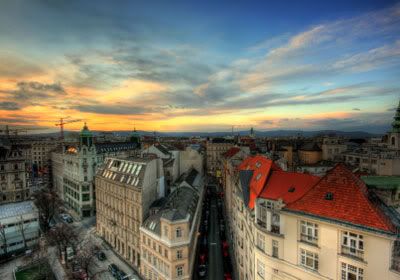
Vienna, Austria: Birthplace of Guido von List
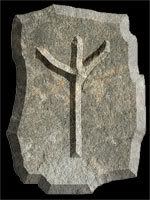
The Algiz rune

"The Life Rune"

I decided that I had to add this Listian rune because there are some definite ancient Camun ties to it. Although the runes have an ancient Cisalpine origin, this particular rune is genuinely ancient Norse in origin. One question, which I have developed over this period of time, is whether or not List's runes were actually found on lower Austrian artifacts or present in any ruins there?

I had a funny synchronistic experience today. It happened as I drove my mother to an errand. I was reading the book in the car while she was inside shopping. When she returned to the car, I was energized having just read about the Algiz rune; and in particular, of one of it's alternate names "mon." The Camunian town and comune of Monno was originally named "Mòn" in the Camunian dialect. As we drove off, she said something like "I'm going to use these "Vienna sausages" for something I'm going to make for dinner tonight." Vienna? {{BINGO}} Vienna is the birthplace of Guido von List! A classic synchronistic connection. She doesn't even know who Guido von List is.

People and animals unwittingly play out this symbolism for others. Two weeks ago today, I brought up a subject out of the blue; and one of the people who was present was startled. "Oh, it's amazing that you brought that up!" he exclaimed, and he went onto a tangent about something which was important to him. That, however, is probably more of a mild psychic connection than a synchronistic one. About a week ago, while hiking, I was thinking about some of these subjects and I saw three ravens fly by. These ravens were playing out a synchronistic symbol for me. It wasn't synchronistic for them. Just me. That seems to be how it works. A living symbol is just going about its own journey; and any symbolic meaning is an entirely separate concept. "Three ravens," or any three birds, is a very ancient symbol in European paganism. It's present in one of the crests of a family of which I descend as well. List offers a mixed scientific-mystical explanation to this. It's a natural condition of this planet, although it has no hard science to back it up.


**************************************************


The website Thora Design quickly sums up the Raido rune with the following description:

Algiz represents protection according to tradition. On another level, it represents divine inspiration and aspirations. What do the two have in common? The Valkryies are that common element. Valkryries were the warrioress, amazon-like daughters of Odin. They were the choosers of the dead on battlefields and lead the dead to the afterlife. They protected the souls of those who died, as well as those who were meant to remain alive. The tie to divine aspirations come from the fact that in some Germanic customs, it was believed that a Valkryrie was actually part of a persons higher consciousness, the "god-like" part of our own being. These all being the case, Algiz represents both protection and the divine consciousness withing each of us.


**************************************************


The Algiz is part of the ancient Nordic and Anglo-Saxon runic alphabet, often equated to the modern day z, however was traditionally pronounced yr. The letter has come to symbolize many neo-pagan religions and is often worn as a pendant. When casting rune stones it is most commonly determined to represent refusal to move on, or one's family and heritage.

*Algiz, sometimes *Elhaz, is the reconstructed Proto-Germanic name for the rune, representing the Proto-Germanic terminal -z (from PIE word-final *-s). The reconstructed word *algiz (meaning "elk") is based on the name of the Anglo-Saxon eolh ("elk") which is of the same shape but represented a different sound. Like much of the Proto-Germanic language, it is not attested in any known text.

Like the Ing-rune, *Algiz differs from the other runes because it was not named acrophonically, since the sound it represents is a suffix. The Proto-Germanic terminal z (continuing Proto-Indo-European terminal s) became obsolete, and the rune is usually transcribed as ʀ for Proto-Norse and Old Norse. The sound eventually became the terminal -r in Old Norse, but its continuation in the yr-rune (see below) shows that there was still a phonemic difference between -r and -ʀ in Old East Norse (the Swedish and Danish dialect of Old Norse) in the 11th century.


Name Proto-Germanic Old English Old Norse
*Algiz Eolh Yr
"elk" "yew"
Shape Elder Futhark Futhorc Younger Futhark
Runic letter algiz.svg Yr rune.png Runic letter yr.png
Unicode
U+16C9

U+16E6

U+16E7
Transliteration z x ʀ
Transcription z x ʀ
IPA [z] [ks] [ɻ], [r]
Position in rune-row 15 16


Elder Futhark

In the Elder Futhark, the reconstructed name *Algiz is given to the rune. *Algiz represents the sound of the letter "Z" in the Elder Futhark. In the 8th century, the Elder Futhark began to be replaced by the Younger Futhark in Scandinavia.


Gothic Futhark

In the Gothic alphabet, the Gothic letter Gothic z.png, called Ezec, is identified with the rune. Like the Elder Futhark, the sound value of the term was that of "Z" but the name of the rune is of uncertain meaning.[1]


Anglo-Saxon futhorc

Recorded in the Anglo-Saxon rune poem, the shape of the rune appears in the Anglo-Saxon futhorc alphabet, as Eolh. However, instead of representing the sounds of the letter "Z" as in the Elder Futhark and Gothic Futhark, it here represents the sound of the letter "X".[1]


     Anglo-Saxon Rune Poem                      Modern English translation[2]
Eolh-secg eard hæfþ oftust on fenne     The Elk-sedge usually lives in the fen,
wexeð on wature, wundaþ grimme    growing in the water. It wounds severely,
blode breneð beorna gehwylcne                 staining with blood any man
ðe him ænigne onfeng gedeþ.                      who makes a grab at it.


The varying forms of the rune in the Elder futhark during the centuries

Younger Futhark


As the Younger Futhark gradually began to replace the Elder Futhark, the shape of the *Algiz rune appears again as Yr "yew". The shape is also continued in another character in the Younger Futhark; Maðr ("man"), replacing the Elder Futhark rune *Mannaz.


Modern usage


Guido von List and influence

The Madr and Yr runes in Guido von List's Armanen Futharkh were very loosely based on the Younger Futhark. List's runes were later adopted and modified by Karl Maria Wiligut who was responsible for their adoptions by the NSDAP and subsequently used widely on insignia and literature during the Third Reich, notably in SS-obituaries.

Based on this association, the rune is still used by various neo-Nazi or white nationalist groups including the National Alliance.[3]


Germanic Neopaganism

Various forms of the *Algiz rune are commonly used by various Germanic Neopagan groups as a symbol of their religion.


See also


Notes
  1. ^ a b Dobbie (1942).
  2. ^ Page (1999:71).
  3. ^ From the official National Alliance website: "The Life Rune signifies life, creation, birth, rebirth, and renewal. It expresses in a single symbol the raison d’etre of the National Alliance and of the movement of Aryan renewal." The symbol is used throughout the website. "The Life Rune: an ancient symbol used by the National Alliance". Natall.com.

References


**************************************************


Guido von List's "Algiz rune" (he used different names):

man, mon, moon (ma = to mother, to increase; empty or dead).

A fifteenth I tell, which Folk-rast the dwarf
     sang before the Doors of Day
to the Ases [Aesir] for strength, to the Elves for might,
     to myself to clear my mind

In another sense, as in that of the well-known folktale, "the Man in the Moon" reveals himself in the fifteenth rune as a sanctified sign of the propagation of the human race. The primal word "ma" is the hallmark of feminine generation--"mothering"--just as the primal word "fa" is that of the masculine. Therefore, we have here "ma-ter" (mother) just as there we have "fa-ter" (father). The moon mythico-mystically serves as the magical ring Draupnir (Dripper), from which every ninth night an equally heavy ring drips (separates itself), and which was burned with Baldr; that is, Nanna, the mother of his children, was burned at the same time as Baldr.

According to mythico-mystical rules, however, nights always mean months, and so the "nine nights" mentioned above indicate the time of pregnancy. While the concepts of man, maiden, mother, husband, [Gemahl], wife [Gemählin], marriage, menstruation, etc., etc. are rooted in the primal word "ma" (just like the concept "moon," with which they are all internally connected conceptually), they nevertheless symbolize individual concepts reconnected into an apparent unity according to the principle of the multiune-multifidic multiplicity.

So too is the conceptual word for this unity rooted in the primal word "ma" and expressed "man-ask" or "men-isk," that is: man [Mensch]. Therefore--as a concept of unification--the word "man" is only of one gender (masculine), while the derogatory concept belongs to the third stage as a neuter, to which we will return later. The fifteenth rune encompasses both the exoteric and the esoteric concept of the high mystery of humanity and reaches its zenith in the warning: "Be a man!"


**************************************************


Again, the old name for the town and comune of Monno is "Mòn." Therefore, there is a definite tie-in here. Linguistically, if nothing else. As to whether that origin is Euganeian (ancient Alpine), Gaulish, or Germanic; we just don't know. On the Moon Wikipedia webpage, under "Name and etymology," it states the following:

The English proper name for Earth's natural satellite is "the Moon".[7][8] The noun moon derives from moone (around 1380), which developed from mone (1135), which derives from Old English mōna (dating from before 725), which, like all Germanic language cognates, ultimately stems from Proto-Germanic *mǣnōn.[9]

The principal modern English adjective pertaining to the Moon is lunar, derived from the Latin Luna. Another less common adjective is selenic, derived from the Ancient Greek Selene (Σελήνη), from which the prefix "seleno-" (as in selenography) is derived.[10]

  1.  N/A
  2.  NA
  3.  N/A
  4.  N/A
  5.  N/A
  6.  N/A
  7. ^ "Naming Astronomical Objects: Spelling of Names". International Astronomical Union. Retrieved 29 March 2010.
  8. ^ "Gazetteer of Planetary Nomenclature: Planetary Nomenclature FAQ". USGS Astrogeology Research Program. Retrieved 29 March 2010.
  9. ^ Barnhart, Robert K. (1995). The Barnhart Concise Dictionary of Etymology. USA: Harper Collins. p. 487. ISBN 0-06-270084-7.
  10. ^ "Oxford English Dictionary: lunar, a. and n.". Oxford English Dictionary: Second Edition 1989. Oxford University Press. Retrieved 23 March 2010.


According to Merriam-Webster.com, under the definition of Moon, it states the following of the origin of the word "moon":

Middle English mone, from Old English mōna; akin to Old High German māno moon, Latin mensis month, Greek mēn month, mēnē moon

First Known Use: before 12th century

I'm not sure if it's a certainty that the most basic root word(s) for moon has a Germanic origin, since it was present in Latin and Greek. The 12th century period is for "moon," but other words starting with an "m" may go back deep into the ancient world.

According to 20000-Names.com, "Monday" is an English name derived from the week day name, composed of the Old English elements mona "moon" and dæg "day," hence "moon day."

According to the book 'Creed of Iron' (McVan; 1997): The name "moon" means "the measurer" or one who metes out time with her phases and movements. The word "mon-th" in its origin means "a measurement of the moon."


**************************************************


According to 'Creed of Iron', the Algiz run is described as the following:


ELHAZ - elk

(z) Life, protection, connection between gods and men.

* Black tourmaline

Also known as algiz, it is symbolic of a spread hand or an elk's antlers, both being signs of active defense. A rune of protection and of purifying, it is associated with a swan or valkyrie and with striving towards one's potential. Elhaz is the life symbol and was often carved into spears for protection and victory.

[Also, it symbolizes the top chakra: The crown of the head, governing consciousness and higher self.]

**************************************************


One more time

Just as I was finishing this post, just a few minutes ago, my mother called. After a brief discussion about her plans for Sunday, she said something like "have you seen the moon tonight? It's so bright!" {{BINGO}} In addition to the connection to the moon (List: "mon"), the Algiz rune stands for "mother" (List: "ma") The moon administers time for the earth, like "mothering"; as she just administered time for me as to what time to pick her up tomorrow and to remind me to turn back my clock one hour for daylight savings. She was definitely my synchronistic connection for the day.

.