Showing posts with label the burning times. Show all posts

Wednesday, June 1, 2022

Ritus Sulphurium: The Darkest Mass - Part III

So who made up this revolutionary coalition? They were a small segment of dissidents from all of the victimized groups, including: Templars, Freemasons, Rosicrucians, Luciferians, Hermeticists, and Alchemists who were driven underground…. persecuted Jews, Catholics who were thrown under the carriage due to politics or some other alternate reason, and even a few forcefully converted crypto-Muslims…. Protestants in hiding, such as Cathars, Waldensians, Spiritual Franciscans, Hussites, and Beguines…. Druids, Odinists, Witches, and many other pagan polytheists living in the shadows…. overthrown Monarchs, Gnostic heretics, and miscellaneous others who were destroyed by the ruling order for reasons that were political and economic, or those who ended up on the wrong side of personal vendettas from the ruling class…. or simply the kith and kin of innocent people who were tortured and murdered!

All of these dissidents made up a relatively small number of people who began to network together. They wouldn’t represent the typical person from their own communities, but as individuals they were traumatized, angry, and damaged. Everything above is based on fact, and now for the speculation. Knowing now the clear pattern of their behavior over time, I believe there must have been one night that the general leadership of this revolutionary coalition were all in one place at one time to be counted, to lay out their goals, and to permanently cement their new accord. The one conclave where they could commence their movement; where they swore revenge, and vowed to someday destroy the Church forever.

Over the coming centuries, this hidden hand would operate via proxy under the guise of many revolutionary movements where only they would be the victors. Each step seemingly unconnected to the next, and the next, and the next. History has known them as Jacobins, Illuminati, British-Israel World Federation, Hellfire Club, League of the Just, Royal Institute of International Affairs, Council on Foreign Relations, Communism, Monopoly Capitalism, war profiteers, frackers, Big Pharma, Secret Intelligence Service (compartmentalized black operations cells), Black Rock, Zionism, Globalism, Process Church, Bohemian Club, Skull and Bones, Société Générale de Belgique, Fabian Socialism, Business Roundtable, Carlyle Group, Project for the New American Century, International Bank of Settlements, Frankfurt School, Hand of Death, Hollywood, Lucis Trust, Rockefeller Foundation, Neo-Conservatives, Neo-Liberals, Silicon Valley, Bohemian Club, Wall Street, Central Intelligence Agency (compartmentalized black operations cells), Club of Rome, World Economic Forum, United Nations, and more than could ever be listed here.

They can destroy any opposing movement through infiltration and slander, they can create artificial revolutions through controlled opposition, create wars and arm both sides, make the innocent guilty and the guilty innocent, conduct weather wars, and a hundred other vicious tactics to permanently run roughshod over society. They’ve either taken over from the inside or created alliances with their former enemies. They’re white leather loafers on a marble floor in an ivory tower on Wall Street manipulating a few blips on a computer screen to steal the wealth from a Midwest farmer, while at the same time they’re black boots on a concrete street a few miles away setting a hard working immigrant's business on fire. They’re more than evil; there may not be an appropriate word for them in the English language.

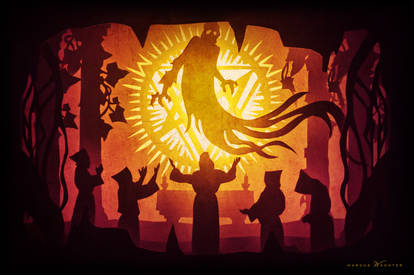
So lets just speculate that at midnight, on Saturday, May 1, 1509, this revolutionary coalition secretly met in a remote wooded location in the Sonian Forrest south of Brussels, then the capitol of a small regional state within the Holy Roman Empire, to finally set their plans in stone. The abused will become the abuser, and much worse than that abuser. Saturday literally means “Saturn’s Day.” “May 1” is their admitted date for “Revolution.” I’m aware that May 1st had a different pagan spiritual meaning, but they've co-opted it like so many other things. May 1, 1509 = 5-1-1509 = 5+1. 1+5, and 9 = 669 = 666, the numerical dimensions of Saturn’s north pole. Of course, this is probably not the date or the place, but I’m sure that there is some deep occult tie-in to whatever name, date, place, and time that it actually was. Perhaps July 15, 1506, Midsummer, such as with the ‘Cremation of Care” ritual at Bohemian Grove. I’m 99% certain that there was a DATE involved. Even if somehow there wasn't a definitive date, then they must have later installed one! It's probably some date that they've symbolically foisted upon us as part of their incessant fetish ever since. The founding of the Illuminati was in 1776 (I guess putting the exact date on the back of the dollar bill would have been too overt even for them), and that date is the exoteric, while this unknown earlier starting date is the esoteric.

All of this secret history is recorded and is a major fetish for them, that I suppose they will come out in the open with at some future point. For example, when they created the Project for the New American Century. They absolutely did not need to create that group, and with a website, with plans no less! They love to fetishize their actions. They could have created a secret temporary group with all of the same individuals to meet their goal, and it would have been much more practical; but the fetish, always the fetish! They just love to create yet another secret group! The Trilateral Commission was created by longtime Democrat hander Zbigniew Brzezinski, and has NO practical function! They merely did it for the fetish of it! So for whatever it’s worth, I’m sure they had a specific date and time for their first ritual. I’ll just speculate that it may have been called ‘Ritus Sulphurium’ (The Rite of Sulphur), as they've been such a corrosive force in the world.

.

Friday, May 6, 2022

Ritus Sulphurium: The Darkest Mass - Part II

To jump ahead to clarify one point, there are different types of Satanists today; from a simple harmless theology, to something somewhat like benevolent Paganism, to ritual mass murderers. One size doesn’t fit all. Anton Levey was either a legitimate philosopher so to speak, and simply tried to make money to fund his organization, or he was a fraud who was in it for the money, or he was an agent of the higher ups who were trying to create like a "minor league Satanism" for maybe recruitment or some other purpose. I would guess the latter. I don't know, but Leveyan Satanism is not big league Satanism. It’s like grammar school Satanism. Maybe they thought they need that. Real Satanism is the “Cult of Saturn,” which is massive. If a person just doesn’t care about anything, has no principles, is of average intelligence, and wants to be successful… just seek them out and join! I don’t suggest it, if for no other reason than they’re dishonest!

How can you follow their motto, “Do what thou wilt,” when you’re completely controlled by highly advanced mechanisms that plug you into a technocratic system? It’s impossible, so "do what thou wilt" isn't worth a damn. I’ve looked closely at their plans, and it’s nothing short of suffocating. According to the Bible, Satan is a liar, and they’ve adopted that personality! It doesn’t matter what you believe; that’s their system! Personally, I like the old Saturnian tradition, as long as it doesn't have anything to do with men in high places or the projected “bad guy from the Bible.” One size doesn't fit all. The more malevolent type, as stated previously, got started in the Middle Ages; likely initially when Christian heretics were caught numerous times in various places, having orgies with animals, and conducting rituals involving numerous bodily fluids that I won’t name. The Church felt that it had to respond to this, and perhaps also used it as a pretext to establish a stronger socio-religious-political bond, so they created the "boogey man" from the Bible... Satan! It was all blamed on "Satanism," and that was a legitimately false "Satanic panic."

The genuine ancient Saturnian traditions had long disappeared by that time, only surviving in co-opted symbolism within Catholicism, Islam, and Judaism. Saturn was once a light-purple shining northern star in what was once our binary solar system, during what the ancients referred to as “The Golden Age.” In this age, thousands of years ago, there existed a rivalry between the solar cults and the Saturn cults. As Saturn slowly fizzled out and became a dwarf star, apparently a different process than a supernova which would have killed us all, the Saturn cults faded away. The solar cults took over in a succession of traditions, leading to the Egyptian Sun cult, which became Christianity. There were other Indo-European planetary cults as well; Lunar, Martian, Venusian, and others. Later it became so convoluted that some later religions have symbolism from more than one. For example, Islam has both Saturnian and Venusian symbolism. The lower crescent symbol is actually a Venusian symbol, as it was much more prominent in the sky in past centuries.

As has occurred throughout human history, the new revolutionary coalition adapted the ancient Saturnian tradition as their organizing principle for waging war. However, they predominantly adopted the Biblical version; not the genuine Saturnian tradition! In their self-serving manner, returning to “The Golden Age” simply meant that they would begin their quest to bend the entire world to their will. Now it is true that the ancient Saturnian Priesthood, such as existed in Phoenicia-Canaan, did engage in human sacrifices… including sacrificing children. However, the early Christians did the very same thing, and it continued right through the Middle Ages! The Eucharist wasn’t always merely wine and crackers. Also, every major church and cathedral constructed during the Middle Ages has a dark secret; a small child was kidnapped and cemented alive in one of the front pillars.

So when a Christian zealot complains about Halloween, and how the Druids conducted human sacrifices; or about Easter, and how the Canaanites sacrificed people; or even Christmas, and perhaps how the ancient Teutons held brutal rites… they did the same. The various inquisitions shouldn’t be any surprise. The Medieval Church caused, by their own actions over a long period of time, a reaction; an “underground Satanic church” that has now existed for centuries. This oppression, despotism, torture, and murder caused their victims so much trauma, that a small number of very angry people got together and created SATANISM!! Now it always has, and it always will, be conflated with the ancient Saturnian Priesthood. Of course, they’ve also plagiarized from the ancient European pagan traditions, such as with the seasonal Sabbats. However, the new Satanism is still a perversion of them; a system founded and designed specifically for revenge. A terrifying legacy from damaged people of centuries past; a program intended to poison everything they touch.

.

Sunday, April 10, 2022

Ritus Sulphurium: The Darkest Mass - Part I

World history changed in one night
During the second half of the Middle Ages, long after the Dark Ages supposedly were to have ended, something sinister came across the land. Political and religious upheaval, the inquisitions, witch hunts, the Burning Times. In March of 1314, as the Grand Master of the Knights Templar was literally burning to death, he was said to have cursed the Monarchy and Church. Jacques de Molay swore vengeance! Somehow after the Templars were finished with their business in Jerusalem, they returned, massively expanded their membership, and became an incredible maritime/business/banking empire; a veritable breakaway international state! Many powerful people, including the King himself, were soon up to their eyeballs in debt to them. The Church, in particular it's own banking empire, apparently felt threatened. It's as though they found some type of lost secrets from the ancient world during their travels in the near east. The secrets of money?

de Molay swearing vengeance
Some of the revolutionary coalition mentioned throughout this whole piece were probably guilty of a whole lot of things! There are always two sides to a story, even though it's not popular today to say so. For example, written history charges the pagan Vikings with engaging in endless violent raids on Christian monasteries, forgetting that the Christians had first deliberately blocked most of their trade routes. Lets try to set aside most of the speculation of who may have been justified in their actions, or not, for now. This story is to answer the question of why the world is the way that it is today. This is the ultimate tale of the abused becoming the abuser. This is about how a small coalition of thoroughly defeated groups of people coalesced to conquer the world. There have always been those who will say that it's this group or that group; saying that it's "them" or it all goes back to "this group." Often, over the course of history, most of these are just small temporary coteries designed to fulfill one particular goal, and then disbanded.  However, in the bigger picture, it was only a very tiny segment of each victimized concern which participated from the beginning, and form the ruling families of today.


Satanism: From imagination to reality
The brutal oppression, show trials, tortures, and executions of people based on their imaginary allegiance to Satan took place between the years 1450 and 1750. The vast majority of these people had no connection to any sort've pagan tradition at all. Probably exactly ZERO of them were actually "Satanists," at least in the beginning of this. Many of those charged were done so based on economic, political, or some personal reason if truth be known. Up to 50,000 people were executed during this time, and countless others tortured. This is aside from other religious persecutions, such as the Spanish Inquisition (1478-1834) or the destruction of the Cathars and other protestant sects. The emerging revolutionary coalition must have been made up of an almost boundless number of religious, political, or economic concerns.... or even just the families of innocent people who were murdered by the symbiotic state-church structure! It may have been an old lady merely collecting herbs for some type of simple folk medicine!

The high point of the witch trials occurred between 1580 and 1630. The torture was immense! I suppose that I don't really need to delve into all of that, except to ponder that this occurred over fifteen generations! If they had started in 1722, then they would just be ending now. There were private entrepreneurs and opportunists who got into the act. When a government promotes something stupid, there will never be a lack of willing participants! One such group was the Vehmic Court in Westphalia, who hunted down and executed pagans. They could have just operated as paid assassins! They could murder someone and just say that the person was a witch or Devil worshiper, and it would then be okay. Another example, in approximately the year 1473, German Domincan Churchman Heinrich Kramer was appointed as the official inquisitor by the Archbishop of Salzburg. Henricus Inquisitor, as he was known, was responsible for the Tyrol, Salzburg, Bohemia, and Moravia. In other words, he was a paid thug put in charge of stopping the rise of the imaginary Satanic sects in those areas. He was going to "find them" whether they existed or not. He was just one of the many leaders of the inquisition across Europe for centuries! In 1487 he authored 'Malleus Maleficarum' ("Hammer of Witches"), a guide to witchcraft and how to interrogate people in order to get a confession out of them. The methods were so extreme that even some authorities of the day condemned it.

Three centuries of torture
The Spanish Inquisition was part of the larger Catholic Inquisition (or known simply as "The Inquisition"), as was the Roman, Portuguese, and other Inquisitions. These inquisitions very much included Protestant sects! Cathars, Waldensians, Spiritual Franciscans, the Hussites, and the Beguines were terrorized by the inquisitors. Any institution which could be thought of as competition to the Catholic Church, and later other dominant Protestant sects, had the screw put to them. It wasn't just the death toll, 50,000 over three centuries, as there were battles in World War II where 100,000 soldiers died in a single day. It was the aura of fear that existed over that time period, a dark cloud that just wouldn't go away. As is human nature, the fear eventually turns to anger. When the vast majority of history's conquerors finally defeated the targeted population, such as with the Roman Empire, the next step was to allow them to partake in its system and bring them into the fold. These religious zealots did not offer that at all! They just kept putting the screw to them! Even a bully in school, who wants smaller students' lunch money, is at least satiated if they hand it over to him. They're backed into a corner, but they're at least allowed a chance to get out of that corner if they cooperate. However, as stated, there was no end to the violent oppression, and anyone could be a victim if they weren't careful.

.

Thursday, August 2, 2018

'Season of the Witch' (2011) movie review

Season of the Witch (2011 film)

Season of the Witch is a 2011 American historical fantasy adventure film starring Nicolas Cage and Ron Perlman, and directed by Dominic Sena. Cage and Perlman star as Teutonic Knights who return from the Crusades to find their fatherland ruined by the Black Death. Two church elders accuse a girl (Claire Foy) of being a witch responsible for the destruction; they command the two knights to transport the girl to a monastery so the monks can lift her curse from the land. The film draws inspiration from the 1957 film The Seventh Seal. It reunited Sena and Cage, who had previously worked together on Gone in 60 Seconds.

Development on the film began in 2000 when the spec script by screenwriter Bragi F. Schut was purchased by MGM. The project moved from MGM to Columbia Pictures to Relativity Media, where the film was finally produced by Charles Roven and Alex Gartner. Filming took place primarily in Austria, Hungary, and Croatia. Season of the Witch was released on January 7, 2011, in the United States, Canada, and several other territories.


************


To start with, this film is anti-pagan so to speak. It's unclear to me as of yet as to why they system both promotes at least what they call witchcraft while at the same time depicting it as the very essence of evil on film. The film opens with a dark medieval scene of a city and landscape with the text City of Villach... 1235 A.D. Villach is located in modern day Austria. This scene depicts a Christian-administered witch trial, with phony confessions to avoid torture or death. Whether or not they confessed or not, they were put to death by hanging in the form of grotesquely throwing the women off of a bridge. At one point, the overzealous church authority, who was presiding over this kangaroo court, had to be reprimanded briefly by what appeared to be an official of the state. One of those hanged was indeed a witch, which in this movie meant a monster. So right from the get-go, a revenge motive is developed.

From that point, the film switches to the two protagonists; Teutonic Knights fighting against Muslims in the Crusades. The scene opens with an ensuing battle, with the text Gulf of Edremit... Age of the Crusades... 1552 A.D. The two knights are shown as killing machines; wiping out everything in their path. After a battle in north Africa, they observe a slaughter of innocent people by the Crusaders. They decide to desert. After returning home, they discover a countryside decimated by the Black Plague... which is portrayed as the curse of the black witch killed in the witch trial. Soon they are captured and jailed for deserting. However, they are offered a chance at freedom if they perform a service to the church by transporting an accused witch to a mountain monastery for trial.

They agree on the condition that she receives a fair trial. They don't believe that she's a witch. If they transport her, then all charges will be dropped. They embark on the journey on horseback, with the accused witch Anna inside of a horse-drawn jail carriage, and a convicted swindler from the jail as their guide. From this point, I would be giving away too much. None of the characters are especially endearing, except for the streak of nobility possessed by the two knights. They are certainly comparatively good in contrast with the spirit of the demonic black witch.

.

Spoiler alert beyond this point!

.

.

.

.

.

Anna escapes at one point, and they all eventually make it to the mountain monastery. Using a holy book showing how to fight demonic forces, they go to war with the black witch spirit. Anna is not a witch, but possessed by this demonic force. The film has a spectacular ending as they do battle with this supernatural force in the form of demonic beasts which it conjures up. I couldn't really say that this is any first rate film; probably closer to mediocre. I appreciated the dark mood of this time period, but the characters weren't well developed.

.

Saturday, November 19, 2016

"South of Heaven"


Excerpt from pages 56-57 of 'Witchcraft Out of the Shadows - A Complete History' (Leo Ruickbie; 2004):

Christianization did not just reinterpret the witch. We have seen how the witch was already someone in close association with the gods of death and the Underworld. The gods of death and the realm of the dead in Pagan theology were not necessarily evil - death was an accepted and inevitable part of life. However, when the Christians turned the Underworld into the place of eternal damnation ruled over by the fallen angel Lucifer, the witch found herself associating with demons and the souls of the damned. The realm of the ancestors, the home of the dear departed, the place where knowledge could be found and power gained became the dungeon of God and the encampment of evil. Chistianization reinterpreted the entire cosmos. The "birthplace of all sorceries" became the "root of all evil" and East of Midgard became South of Heaven.


The Yoke of the Gospel

In Rome, in 381 CE, the Senate proscribed the "worship of idols" and in Gibbon's memorable phrase Rome submitted to the "yoke of the Gospel." The real turning point occurred in 313, however. It was in that year that the then emperor of Rome, Constantine the Great (274-337), decriminalized Christianity. After a series of battles he seized complete control of the Roman Empire in 324. Constantine was followed by Theodosius in Christian piety, who zealously undertook to stamp out Paganism. The temples were closed and their property seized. The contagion spread throughout the empire. In Gaul, Martin, Bishop of Tours, led and army of monks to destroy the temples, the statues of the gods, and the sacred groves of the Pagans.

*************************

The Nebra sky disc
European-Witchcraft was of the folk and the earth

It always bears repeating, again and again, that the pre-Christian, European, magical traditions---or for that matter, any of the earth traditions---had nothing to do with Satanism, Alchemy, Freemasonry, or the mystery schools. I suspect that the conflation of Druidic tradition with the mystery schools was an attempt by people of these secret cults in northwest Europe to tie themselves to their traditions in terms of ancestry. Still, I believe that there were positive aspects of certain Freemasonic groups taking on something of a Druidic style. What I would object to is Satanists obsessing with OUR ancestors' cultural loss and suffering from the Middle Ages. They latched onto our holidays, and conflated themselves with many other facets of the old religion. What could be more antithetical to traditions based on ancestry than Satanism? In that regard, Satanism--which was created first as an imaginary enemy by Christian inquisitors--has a lot more in common with Christianity and Islam.

.

Monday, June 20, 2016

'Malleus Maleficarum' - "Hammer of the Witch"


Hammer of the witch || Malleus Maleficarum - The Book 

Unfolded Mysteries


The above video deals with the detailed study of the medieval book malleus maleficarum commonly known as hammer of the witch.


Malleus Maleficarum

The Malleus Maleficarum (commonly rendered into English as "Hammer of the Witches"; Der Hexenhammer in German) is a treatise on the prosecution of witches, written in 1486 by Heinrich Kramer, a German Catholic clergyman. The book was first published in Speyer, Germany, in 1487. Jacob Sprenger is also often attributed as an author, but some scholars now believe that he became associated with the Malleus Maleficarum largely as a result of Kramer's wish to lend his book as much official authority as possible.

Both purported writers of the work were Dominican clergy, and the work came about as “the result of a peculiarly Dominican encounter between learned and folk traditions, an encounter determined in part by the demands of inquisitorial office, and in part by the requirements of effective preaching and pastoral care.” In 1490, three years after its publication, the Catholic Church condemned the Malleus Maleficarum, although it was later used by royal courts during the Renaissance, and contributed to the increasingly brutal prosecution of witchcraft during the 16th and 17th centuries.


'Malleus Maleficarum' - Free PDF download


Vehmic Court

The Vehmic Court predated the 'Malleus Maleficarum' by as much as two centuries, although it overlapped and no doubt absorbed it in Medieval German speaking socieities. In the same way that there was great irony in that the Vehmic Court actually used ancient German pagan symbols as it's own; I was thinking that the "Hammer of the Witches" reminds me of the Odinic Hammer of Thor. Certainly some of these German magickal traditions were conflated with Odinic tradition, therefore instead of Witches being "hammered"... it could almost be a symbolic protest to these policies of this time period by attaching that to Thor's Hammer in some form. I always say that if someone takes symbols away from you which were yours to begin with.... don't be intimidated.... yank it back from them! "Recapture the flag."

*************************

8-21-16 Addition: "Vehmgericht or Vehmegericht" simply means "Vehmic Court" in German. Also, in the section "Malleus Maleficarum" within the posting in the below link 'Legacies of Charlemagne', the year 400 for the Malleus Maleficarum was incorrect (he forgot the "1" in 1400). Lastly, I cannot find any reference to Charlemagne having founded any forerunner of the Vehmic Court, as it came into existence at least four centuries after his death. 

I just wanted to make note of the "Vehmic alphabet" for further study. As covered numerous times before on this blog, the powerful symbolism used by the Vehmic Court was taken from ancient German/European traditions. This, despite the fact that they were killing pagans for the crime of having the wrong religion; right along with thieves, murderers, rapists, etc. The logical next step is to find more reference to this alphabet, and discover its actual origin.


The Vehmic Alphabet


Craig Stanton - Miskatonic Debating Club & Literary Society - excerpt from 'Legacies of Charlemagne' - August 6, 2013

According to tradition, Charlemagne established the Vehmgericht in the German Catholic areas of his kingdom after 772 AD to enforce his will upon the recently suppressed Pagan Saxon tribes. As part of his war of attrition against them, he forcibly moved over 30,000 Saxons across the Rhine and replaced them with an equivalent number of devout “West Gauls” who became known as the Westphalians.

The Vehmgericht was established by five knights who enacted vigilante justice upon any Saxons who railed against the rule imposed upon them. The word “vehm” is said to derive from the German word for tree – baum – and is indicative of the tendency of this cadre to decorate forests with the hanged bodies of their victims. In time, this bloodthirsty unit attracted the attention of another organisation with similar interests, that of quelling non-believers – the Inquisition. It can be no coincidence that the Vehmic Alphabet and that adopted by the Inquisition bear marked similarities.


.

Sunday, November 25, 2012

Guido von List: Part 21

Vehmic Court: Part 2


Vehmic court (Wikipedia)

The Vehmic courts, Vehmgericht, holy vehme, or simply Vehm, also spelt Feme, Vehmegericht, Fehmgericht, are names given to a "proto-vigilante" tribunal system of Westphalia active during the later Middle Ages, based on a fraternal organisation of lay judges called “free judges” (German: Freischöffen or French: francs-juges). The original seat of the courts was in Dortmund. The proceedings were sometimes secret, leading to the alternative titles of “secret courts” (German: heimliches Gericht), “silent courts” (German: Stillgericht), or “forbidden courts” (German: verbotene Gerichte). The courts took jurisdiction over all crimes during the Late Middle Ages, and those condemned by the tribunal were done away with by secret means. After the execution of the death sentence, the corpse was hung on a tree to advertise the fact and deter others.

The peak of activity of these courts was during the 14th to 15th centuries, with lesser activity attested for the 13th and 16th centuries, and scattered evidence establishing their continued existence during the 17th and 18th centuries. They were finally abolished by order of Jérôme Bonaparte, king of Westphalia, in 1811.

The Vehmic courts were the regional courts of Westphalia which, in turn, were based on the county courts of Franconia. They received their jurisdiction from the Holy Roman Emperor, from whom they also received the capacity to pronounce capital punishment (German: Blutgericht) which they exercised in his name. Everywhere else the power of life and death, originally reserved to the Emperor alone, had been usurped by the territorial nobles; only in Westphalia, called “the Red Earth” because here the imperial Blutbann was still valid, were capital sentences passed and executed by the Fehmic courts in the Emperor's name alone.


Etymology

The term's origin is uncertain, but seems to enter Middle High German from Middle Low German. The word vëme first appears in the Middle High German literature of the 13th century as a noun with the meaning of "punishment". A document dated to 1251 has the reference illud occultum judicium, quod vulgariter vehma seu vridinch appellari consuevit. ("It is hidden justice, that by common fashion is habitually referred to as vehma or vridinch.")

The general meaning of "punishment" is unrelated to the special courts of Westphalia which were thus originally just named "courts of punishment". But as the word entered the Southern German dialects via Saxony and Westphalia, the word's meaning in Early Modern German became attached to the activities of these courts specifically.

Jacob Grimm thought that the word is identical in origin to a homophonous word for the raising of pigs on forest pastures (Hutewald), just as the more familiar German Zucht can mean both breeding and discipline. Grimm considers the spelling with h unetymological in spite of its early occurrence in some 13th century documents, and hypothesizes a "lost root" "fëmen", connecting with Old Norse fimr and conjecturing a Gothic "fiman, fam, fêmun?".

During 18th to 19th century Romanticism, there were various misguided attempts to explain the obscure term, or to elevate it to the status of a remnant of pagan antiquity, scoffed at by Grimm's entry in his Deutsches Wörterbuch. A particularly fanciful etymology, suggested by James Skene in 1824, derives the word from Baumgericht (Lit. 'Tree law'), supposedly the remnant of a pagan "forest law" of the Wild hunt and pagan secret societies.


Origin

The Westphalian Vehmic courts developed from the High Medieval “free courts” (German: Freigerichte), which had jurisdiction within a “free county” (German: Freigrafschaft). As a result of the 14th century imperial reform of the Holy Roman Empire (Golden Bull of 1356), the Landgraviates lost much of their power, and the Freigerichte disappeared, with the exception of Westphalia, where they retained their authority and transformed into the Vehmic court.

The seat of the Vehmic court (German: Freistuhl) was at first Dortmund, in a square between two linden trees, one of which was known as the Femelinde. With the growing influence of Cologne during the 15th century, the seat was moved to Arnsberg in 1437.


Membership and procedure

The sessions were often held in secret, whence the names of “secret court” (German: heimliches Gericht), “silent court” (German: Stillgericht), etc. Attendance of these sessions was forbidden to the uninitiated, on pain of death, which led to the designation “forbidden courts” (German: verbotene Gerichte). A chairman (German: Stuhlherr) presided over the court, and lay judges (German: Freischöffen) passed judgment. The court also constituted a Holy Order.

Any free man "of pure bred German stock" and of good character could become a judge. The new candidate was given secret information and identification symbols. The “knowing one” (German: Wissende) had to keep his knowledge secret, even from his closest family (“vor Weib und Kind, vor Sand und Wind”). Lay judges had to give formal warnings to known troublemakers, issue warrants, and take part in executions.

The organization of the Fehme was elaborate. The centre of each jurisdiction was referred to as a “free seat” (German: Freistuhl), and its head or chairman (German: Stuhlherr) was often a secular or spiritual prince, sometimes a civic community, the archbishop of Cologne being supreme over all (German: Oberststuhlherren). The actual president of the court was the “free count” (German: Freigraf, chosen for life by the Stuhlherr from among the Freischöffen, who formed the great body of the initiated. Of these the lowest rank were the Fronboten or Freifronen, charged with the maintenance of order in the courts and the duty of carrying out the commands of the Freigraf. The immense development of the Fehme is explained by the privileges of the Freischöffen; for they were subject to no jurisdiction but those of the Westphalian courts: whether as accused or accuser they had access to the secret sessions, and they shared in the discussions of the general chapter as to the policy of the society. At their initiation these swore to support the Fehme with all their powers, to guard its secrets, and to bring before its tribunal anything within its competence that they might discover. They were then initiated into the secret signs by which members recognized each other, and were presented with a rope and with a knife on which were engraved the mystic letters S.S.G.G., supposed to mean Stein, Strick, Gras, grün (stone, rope, grass, green).

The procedure of the fehmic courts was practically that of the ancient German courts generally. The Freistuhl was the place of session, and was usually a hillock, or some other well-known and accessible spot. The Freigraf and the Schöffen (judges) occupied the bench, before which a table, with a sword and rope upon it, was placed. The court was held by day and, unless the session was declared secret, all freemen, whether initiated or not, were admitted. The accusation was in the old German form; but only a Freischöffe could act as accuser. If the offence came under the competence of the court, meaning it was punishable by death, a summons to the accused was issued under the seal of the Freigraf. This was not usually served on him personally, but was nailed to his door, or to some convenient place where he was certain to pass. Six weeks and three days' grace were allowed, according to the old Saxon law, and the summons was thrice repeated. If the accused appeared, the accuser stated the case, and the investigation proceeded by the examination of witnesses as in an ordinary court of law. The judgment was put into execution on the spot if that was possible.

The secret court, from whose procedure the whole institution has acquired its evil reputation, was closed to all but the initiated, although these were so numerous as to secure quasi-publicity; any one not a member on being discovered was instantly put to death, and the members present were bound under the same penalty not to disclose what took place. Crimes of a serious nature, and especially those that were deemed unfit for ordinary judicial investigation, such as heresy and witchcraft, fell within its jurisdiction, as also did appeals by persons condemned in the open courts, and likewise the cases before those tribunals in which the accused had not appeared. The accused, if a member, could clear himself by his own oath, unless he had revealed the secrets of the Fehme. If he were one of the uninitiated it was necessary for him to bring forward witnesses to his innocence from among the initiated, whose number varied according to the number on the side of the accuser, but twenty-one in favour of innocence necessarily secured an acquittal. The only punishment which the secret court could inflict was death. If the accused appeared, the sentence was carried into execution at once; if he did not appear, it was quickly made known to the whole body, and the Freischöffe who was the first to meet the condemned was bound to put him to death. This was usually done by hanging, the nearest tree serving for gallows. A knife with the mystic letters was left beside the corpse to show that the deed was not a murder.

It has been claimed that, in some cases, the condemned would be set free, given several hours' head start and then hunted down and put to death. So fearsome was the reputation of the Fehme and its reach that many thus released committed suicide rather than prolonging the inevitable. This practice could have been a holdover from the ancient Germanic legal concept of outlawry (Acht).

Legend and romance have combined to exaggerate the sinister reputation of the Fehmic courts; but modern historical research has largely discounted this, proving that they never employed torture, that their sittings were only sometimes secret, and that their meeting-places were always well known.

They were, in fact, a survival of an ancient and venerable German institution; and if, during a certain period, they exercised something like a reign of terror over a great part of Germany, the cause of this lay in the sickness of the times, which called for some powerful organization to combat the growing feudal anarchy. Such an organization the Westphalian free courts, with their discipline of terror and elaborate system of secret service, were well calculated to supply.


The spread of the Fehmic courts

The system, though ancient, began to become of importance only after the division of the duchy of Saxony on the fall of Henry the Lion, when the archbishop of Cologne, duke of Westphalia from 1180 onwards, placed himself as representative of the emperor at the head of the Fehme. The organization now rapidly spread. Every free man, born in lawful wedlock, and neither excommunicate nor outlaw, was eligible for membership.

Princes and nobles were initiated; and in 1429 even the emperor Sigismund himself became “a true and proper Freischöffe of the Holy Roman Empire.” There is a manuscript in the Town Hall of the Westphalian town of Soest, which consists of an original Vehmic Court Regulation document, along with illustrations.

By the middle of the 14th century these Freischöffen (Latin scabini), sworn associates of the Fehme, were scattered in thousands throughout the length and breadth of Germany, known to each other by secret signs and pass-words, and all of them pledged to serve the summons of the secret courts and to execute their judgment.


Decline and dissolution of the Courts

That an organization of this character should have outlived its usefulness and ushered in intolerable abuses, such as corruption was inevitable; from the mid-fifteenth century protests were raised against the enormities of the court.

With the growing power of the territorial sovereigns and the gradual improvement of the ordinary process of justice, the functions of the Fehmic courts were superseded. By the action of the Emperor Maximilian and of other German princes they were, in the 16th century, once more restricted to Westphalia, and here, too, they were brought under the jurisdiction of the ordinary courts, and finally confined to mere police duties. With these functions, however, but with the old forms long since robbed of their impressiveness, they survived into the 19th century. They were finally abolished by order of Jérôme Bonaparte, king of Westphalia, in 1811. The last Freigraf died in 1835.


Modern use of the term

Following the abandonment of the Vehmic courts, the term acquired a connotation of mob rule and lynching. In Modern German, the spelling of Feme is most common. Other variant forms are: Fehme, Feime, Veme. The verb verfemen is in current use and means "to ostracise", i.e. by public opinion rather than formal legal proceeding. A noun derived from this is Verfemter "outlaw, ostracised person".

Within the politically heated turmoil of the early Weimar Republic, the media frequently used the term Fememord to refer to right-wing political homicides, e.g. the murder of Jewish politicians such as Kurt Eisner (1919), Matthias Erzberger (1921), or Walther Rathenau (1922) by right-wing groups such as Organisation Consul. In 1926, the 27th Reichstag commission officially differed the contemporarily common Fememorde from political assassination in such that assassination was by definition exerted upon open political opponents, whereas a Fememord was a form of lethal vengeance committed upon former or current members of an organization that they had become a traitor of. This definition is also found in the common pseudo-archaic, alliterating right-wing phrase, "Verräter verfallen der Feme!" ("Traitors shall be ostracized!", i. e. killed), as it was often quoted throughout the 1920s in mass media reports regarding violent acts of vengeance among the German Right.


The Vehmic courts in fiction

Vehmic courts play a key role in the novel Anne of Geierstein or, The Maiden of the Mist by Sir Walter Scott in which Archibald von Hagenbach, the Duke of Burgundy's governor at Brisach (Switzerland), is condemned and executed by the Vehmgericht. Scott drew his inspiration from Goethe's play Goetz von Berlichingen which he had translated, incorrectly.

In William Makepeace Thackeray's novel 'Vanity Fair' "Was Rebecca guilty or not?" the Vehmgerich of tho servants' hal had pronounced against her.

A character in the Dorothy L. Sayers novel Murder Must Advertise appears at a fancy-dress party as a member of the Vehmgericht, which allows him to wear a hooded costume to disguise his identity.

In Fritz Lang's M, the locals criminals of an unnamed city (probably Berlin) capture a child murderer and hold a vigilante court.

In The Illuminatus! Trilogy, the Vehmic courts are mentioned as being connected to Nazi Werewolves as well as the Illuminati.

In A Study in Scarlet, a novel by Arthur Conan Doyle, the retribution of the Mormons is compared to that of the Vehmgericht.

The Vehmgericht also appear as antagonists in The Strong Arm, an 1899 novel set in the Holy Roman Empire by British-Canadian author Robert Barr.

Geoff Taylor's 1966 novel, Court Of Honor, features the Fehme being revived by a German officer and Martin Bormann (a featured character in other semi-historical novels with post-war 'Nazi underground' themes) in the dying days of the Third Reich.

The Freischoeffen also provided the subject for Berlioz's unfinished opera Les francs-juges, the overture to which provided the signature tune for 'Face to Face', the well-known early series of British television interviews, conducted by the Rt Hon John Freeman MBE.

.

Saturday, November 24, 2012

Guido von List: Part 20


Vehmic Court: Part 1

First I should state that Runa-Raven Press has gone out of business, so I believe that I am no longer binded to the copyright of their translation of 'History of the Aryo-Germanic Folk'. They had one or two other List books translated into English, but I didn't get a chance to purchase them. I don't think the word really got out that they were translating some of his works other than 'Secret of the Runes', and works by other author-researcher-historians like him. I'm disappointed because a publishing company is power, media, or at least a voice. There are other publishing companies with a similar foundation I believe, so we'll have to be on the look out.

No, the above image was not put there in regards to the publishing company going under. I wanted to look at one of history's great ironies: "The Vehmic Court." As stated many times in earlier sections, at the time of the rise of Christianity and the systematic and violent destruction of anything non-Christian, secret meetings ("heimliche Acht") took place among the Heathen Skalds across the German countryside in order to decide what to do. It was decided first that they must form an underground Wotanic rite, and they formulated a complex esoteric system to be attached to every aspect of society.

This system was largely based on the German-Wotanic spiritual concept of the cycle of life: "1) Birth, 2) Life, and 3) Death and to a new arising"; therefore it's symbolism was three-fold: 1) Exoteric for the unknowing, 2) Esoteric for the initiated, and 3) Deeper Esoteric. Remember, they had to do this unless they were to disappear forever without a trace. This was a form of cultural-spiritual genocide they were facing. They were forced to be "Occultic," which simply means "hidden."

Although it would be a powerful symbol to imagine the Wotanic Skalds all meeting at one place, at one time, in some candle lit cellar at midnight; but it didn't happen that way. I would guess that they probably had all-day meetings deep in the forests and on high mountain locations, where they could stand and speak their minds, and that this took place over years. Imagine the great locations, dates, names, and speeches which we will probably never know a bit about. However, we can honor and redeem them by occasionally imagining them--for the final times as leaders of their culture--standing and speaking their ancient wisdom upon the great thrones of mountains, trees, suns, and skies. In that way, they will never die.

From pages 86 and 87 of 'The Secret of the Runes':

The five-angled star, the Vehme-star, the Truthenfuss (truh = turn, fuss = foot) is the hieroglyph of "revolving or turning generation," of "rebirth"--one of the most important articles of faith in the Aryan religion. In its exoteric interpretation this sign simply says: "return," and was therefore a favorite sign used at hostels and inns, in order to convey the meaning: "whoever is a guest here should come again."

And from pages 89 and 90:


In the administration of justice, too, the old Aryan tripartition is naturally found again as (1) arising or law (Rita), (2) the existing, ruling (justice), and (3) the passing away to renewed arising (the court). Because law and justice culminate in the decisive pronouncement of the court (and consequently, as the third level, this provided the final result) the holy sign of the court was the ruoth-cross, rod-cross, or rowel- (wheel) cross which was therefore also known as the Vehme cross, consisting of a fyrfos whose hooks were bent in the circular shape of a wheel rim. As the Vehme cross it appears engraved on the blade of the great Vehme-sword as an equilateral cross enclosed by a circle. At the cross point the letter "V" appears and furthermore in the quadrants between the arms and letters "S.S.G.G." were engraved. These letters probably displaced the formerly used runes [Fehu symbol] and [Sol and Gebo symbols] (doubled), which signified: "Vehme" and the old passwords: "Strick (string), "Stein" (stone), "Gras" (grass), "Grein" (branch?), i.e., "wyd" ("white") = law; "brick" = secret; "rage" = thunder = doing = ar = right-doing; greyen = to uphold; that is: "Through law and secrecy (heimliche Acht) right-doing is upheld." In abbreviated form this is: tue gege (two s's and two g's).

In the heimliche Acht or kala all this signifies "present in the hidden," which exoterically refers to the watchfulness of the Vehme, esoterically to the omniscience of God as the highest judge. For this reason the "ruoth-cross" was the symbol of the court, and it is for this reason that the crucifix on the bench of the modern judge should be seen--not as a symbol of religion--but rather as a substitute for the "ruoth-cross." Wherever the words "Rothenkreuz" (red-cross), "Rothenburg" (red-castle), or even "roth" (red), "Rad" (wheel), "Ratt" (rat), etc., occur in place names, there is where there was at one time "marked steads of the Vehme," as, for example, near Hochroderd in the Viennese Woods. All "red crosses" that stand in lonely forests were at one time Irminsuls or Roland-columns, i.e., "mark-columns," which designate such "marked steads,"* and all "red courts" were at one time the property of the Wise of the Vehme.

*E.g., The Red Court in the eighth parish in Vienna (at one time the town of Josephstadt).

It goes on in more finite details, but I will cut it off at this point as far as 'The Secret of the Runes' on this subject. I'm just focusing on one aspect of this occult Wotanic codex, but it's quite something to ponder that all of these things were deliberated and eventually decided upon by the Heathen Skalds in one final important and long-enduring action over a period of time. Remember, these wise men were not accustomed to "hiding." Their culture was THE culture of the German people prior to that. They didn't want to just forget the holy Wotanic spots--often the former locations of Irminsuls--and they marked them in one form or another with probably the full intent that their ancestors would someday redeem them. This all sounds like a script out of some fantasy move.. only it's real!

.

Wednesday, May 9, 2012

Guido von List: Part 16

Band of the Holy Vehme

According to von List, with the rapidly approaching threat of Charlemagne's rein of terror, the skalds realized that something radical must be done in order to preserve their spiritual traditions in some form. Excerpt from page 77:

In spite of the fact that the skalds were persecuted and scorned, they collected themselves together and secretly took the German faith and the German law (Wotanism) in a concealed manner into the "hidden tribunal" (heimliche Acht) of the "fem" (five) fingers of the sword's hilt--and thus arose the band of the "Holy Vehme."

Basically what was happening was that the skalds--the now underground "heimliche Acht"--were conducting meetings in order to develop a system of which they could conceal Wotanism in every part of society. I believe they developed a system which would "grow on it's own," so that as society changed, this system would adapt and develop along with it. This system would be applied to every part of society. Everything from architecture to baking. Although it would be romantic to say that they ALL met at one time, in one place, and decided on one system; more than likely they had many regional meetings over a period of time. The "exoteric" is what something appears on the outside (for the general public); the "esoteric" is what is on the inside (for the initiated only).

Still on page 77: Out of the "Skaldic Order" the "Minnesinger Order" later emerged, as did the "German Builders' Guild" and the "German Heraldic Guild." From all this, in broad branchings, sprang the judicial sciences, poetic arts, linguistic sciences, graphic arts, etc. Because the skalds, as poets and singers, were also the maintainers and formulators of language--and because it was neccessary for them to preserve in strict secrecy the Wuotanism that they took with them underground into the "heimliche Acht" (in order not to be persecuted as heretics), they had to use the three-fold interpretation of words to have their messages delivered--even by messengers--without these or other noninitiates being able to understand the correct interpretation. Through steady skillful practice they reached such refinement in this double-edged type of poetry (called heimliche Acht or kala), that one and the same text could conceal two completely different messages, whose obvious sense (understood by everyone) would actually be secondary, while the concealed sense (kala) would contain the only real, secret message for the men of knowledge.

Exactly how this system worked, in detail, is more than I wanted to add to this series. You would need to get a copy of 'Secret of the Runes'. For example, the "three-fold interpretation of words." Suffice to say, even the process itself was based on Wotanist spirituality. These were great men; who made the best of a bad situation. Not just by their actions, but by the genius by which they accomplished it.

On "Part 14," the translation of List's work was mentioned. I would like to place the footnote on the bottom of page 77, in order to sort've "put it out there" that maybe it's time to translate some of these books! This is List's footnote, with an editors note, and it's regarding the above text:

Concerning this see my essay "Vom Wuotanismus zum Christentum," in the weekly Der Deutsche (Berlin), 1, no. 13 (1904). Compare also my essay "Von der deutschen Wuotanspriesterschaft," in Das zwanzigste Jahrhundert 4, nos. 2-5 (1893). [Ed. note: List also discusses this transition at length in his book Der Übergang vom Wuotanismus zum Christentum.]

I was also thinking, smaller essays could be put together in book form. I just purchased 'The Religion of the Aryo-Germanic Folk - Esoteric and Exoteric' (List; 1909 or 1910). This was translated in 2005, and it's only 56 pages long. It was the last copy on Amazon.com; and sold by Rûna-Raven Press.

'Die Religion der Ario-Germanen in ihrer Esoterik und Exoterik' ('The Religion of the Aryo-Germanic People in its Esoteric and Exoteric Aspects')

.