Showing posts with label Medieval history. Show all posts

Monday, October 14, 2013

‘The Book of the Holy Strega’ (book review): Part II


'The Book of the Holy Strega' (Raven Grimassi; 2012)

[original version published in 1981]

'The Book of the Holy Strega' was another book that I read earlier this year, and which does tie heavily into the subjects covered here. Although, the specific Streghe tradition has not been covered a lot here. This book was based on the concepts from a book entitled 'Aradia, or the Gospel of the Witches' (Charles Leland; 1899). Charles Leland was an American, and he was greatly aided in his research by a Strega named Maddalena Taluti from Emilia.

Grimassi covers many different subjects, and chronicles the history of Streghe traditions, folklore, legends, and misconceptions... throughout the Italian peninsula, and Greece. Also, he covers his own family Streghe tradition. Largely, the book is about the legend of Aradia. Grimassi puts many formerly confused happenings and ideas into a simpler easy-to-understand order. He also brilliantly puts words to Aradia's story without overdoing it. I strongly believe that he was the one to logically take on this task.
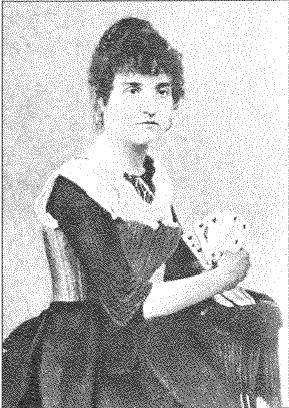
Maddalena Taluti

I recall a quote that I had read somewhere, that Leland was amazed that Italians didn't collectively embrace this tradition, which he was fascinated with. Also, Maddalena Taluti was an amazing source. She did much traveling and was very active in Stregheria. For as much as I can perceive, she sort've reminded me of Guido von List as a source of occult knowledge. A real chip off the old block... historically-speaking.

I would recommend this book for anyone interested in either Stregheria, the ancient culture of the moon goddess, the triple goddess, or the Dianic tradition... which originates back to a time very long ago, when it was all one-culture. This also could be used as a great book of highlighted quotes and teachings by Aradia, which can be read aloud. Stregheria is sometimes referred to as "Aradianism."

When reading the Aradia story, which largely took place around Lake Nemi, I found my mind wandering to my youth. Summers spent around Clear Lake in northern California. Those hot days, dry grassy hills, dotted with oak trees; and of course, the lake. As I imagined Aradia, tall and beautiful in a white gown, she and her followers appeared in my mind like that of biblical figures or other figures of historical legend... even though the teachings are very different.

.

Sunday, October 13, 2013

‘The Book of the Holy Strega’ (book review): Part 1

From the back cover:

Old legends tell of a powerful witch who lived and taught in 14th century Italy. She was known as Aradia, and by the titles The Beautiful Pilgrim, and The Holy Strega. But was Aradia a real person, and is there any true basis for her legends? Pagan scholar Raven Grimassi explores this and many other questions.

The Book of the Holy Strega is a seminal work that brings together historical and folkloric sources. Grimassi delivers a ground-breaking view of the misconceptions of “historical witchcraft” and presents a refreshing approach to understanding how fantasy became fact. Revealed in this one volume is the role of the Church in distorting witchcraft and promoting its contrived vision for political purposes.

Discover the truth about the denied culture of the witch. Examine the elements that joined together to form the witches’ gospel. The journey of exploration in the sub-culture of the witch is well guided in this pioneering text.


Grimassi reveals his own hand in assembling the published versions of the Book of the Holy Strega, and he provides the reader with an overview of the evolution of these writings. Here you will see the gospel of the witches through the eyes of those who have honored it in the past, and how it continues to speak to each generation.

Raven Grimassi is a Neo-Pagan scholar and award-winning author of over fourteen books on Witchcraft, Wicca, and Neo-Paganism. He has been devoted to the study and practice of witchcraft for over forty years. Raven is co-founder and co-director of the Fellowship of the Pentacle, a modern Mystery School tradition of pre-Christian European beliefs and practices.

Grimassi’s background includes training in old forms of witchcraft as well as Brittic Wicca, the Pictish-Gaelic tradition, and Celtic Traditionalist Witchcraft. Raven was also a member of the Rosicrucian Order, and studied the Kabbalah through the First Temple of Tifareth under Lady Sara Cunningham. His early magical career began in the late 1960s and involved the study of works by Julius Evola, Franz Bardon, Gareth Knight, Kenneth Grant, Dion Fortune, William Gray, Austin Spare, William Butler, Israel Regardie, Eliphas Levi, and William Barrett.

Raven currently lives in New England with his beautiful wife and co-author Stephanie Taylor-Grimassi. He enjoys such things as collecting Silver Age comics featuring Dr. Strange, working in the herbal garden, and occasionally relaxing on the porch with a nice cigar on a warm summer night.


.

Monday, November 26, 2012

Guido von List: Part 22


Vehmic Court: Part 3

I didn't put the name and description of the above video because the creator of it obviously thought that the Vehmic Courts were, hands down, a good thing. With the German countryside broken up into maybe 300 different states, the Vatican gave the courts borderless authority to administer justice in their name. "The Vehm mostly judged in cases of witchcraft, sorcery, rape, theft, robbery, manslaughter, and murder" --The History of Medieval Europe, Lynn Thorndike, 1917.  So, for example, the crime of "being an Odinist" seemed to have been considered worse than murder, and the person was hanged for having the wrong religion. Also from the book: "The only penalty of these criminal courts was death. If three or more members of the Vehm caught a criminal redhanded in the act, they killed him on the spot without further trial." So if they caught someone "in the act" practicing a different religion, those people would be killed on the spot.

"This impressive method of intimidating the criminal classes, which reminds us of lynchings and vigilance committees, but whose self-help and summary procedure were to a large extent a survival of primitive German custom, was favorably received by the society of the time as the Vehm was better than any other court at controlling crime, no matter who did the crime." --Lynn Thorndike

"The pentads: The holy Fem (five), the five known elements (fire, water, air, earth, ether or aether), the five recognized senses, the pentagram, the five brother, the five maidens, the five men, the five nights, the five sons, the five winters, etc." --Guido von List, page 31 of the 2005 translation of 'The History of the Aryo-Germanic Folk, 1909 or 1910

From pages 33 and 34 of the book:

"Five (5, V) fem, fim, fimf, funf, fünf. Fem means that which is homogeneous, therefore even today it indicates the guild or corporation in the Dutch word veem. It had its origin in the five correlated fingers of the hand, in the correlated five senses that form man and it signified the elven cross or the witches' foot (Drudenfuss) also signified by the pentagram (femsteor). The homogeneity also belongs to the Feme, that part of the Armanenschaft devoted to the cultivation of the law. It was the Femanen who, after the forceable Christianization under Karl, King of the Franks--or the Saxon-slayer (Slactenaere)--came more into the forefront in the defense of everything that was indigenous (homologous) in opposition to that which was foreign; asserting indigenous law against Roman (in)justice in the high secret tribunal (Acht). The symbolic holy-sign of the homologies was this very five-pointed star and it remains so in the secret script even today, just like all other things grouped by fives (fem), from which the numerical value was derived. Just as One was born frm itself, Two from One, Three and Four also from One, five--which grows out of 1 + 4--is the second odd number. From the One (Ginnungagap) grows the Four (Muspellsheim, Adhumbla, Ymir and Niflheim) which then form the Five--the homogeneous One. When we consider the Feme as a court of law we find numerous examples, e.g. the so-called Fünfe ("fives") at Nuremberg, in the Council of Five in Venice, and in our contemporary Five-Judge Colleges which have come down to us as a compilation of single courts of law. The frequent occurrence of the number five in symbolism, as well as mysticism, makes this highly meaningful."

One more time, from 'History of the Aryo-Germanic Folk':


In the administration of justice, too, the old Aryan tripartition is naturally found again as (1) arising or law (Rita), (2) the existing, ruling (justice), and (3) the passing away to renewed arising (the court). Because law and justice culminate in the decisive pronouncement of the court (and consequently, as the third level, this provided the final result) the holy sign of the court was the ruoth-cross, rod-cross, or rowel- (wheel) cross which was therefore also known as the Vehme cross, consisting of a fyrfos whose hooks were bent in the circular shape of a wheel rim. As the Vehme cross it appears engraved on the blade of the great Vehme-sword as an equilateral cross enclosed by a circle. At the cross point the letter "V" appears and furthermore in the quadrants between the arms and letters "S.S.G.G." were engraved. These letters probably displaced the formerly used runes [Fehu symbol] and [Sol and Gebo symbols] (doubled), which signified: "Vehme" and the old passwords: "Strick (string), "Stein" (stone), "Gras" (grass), "Grein" (branch?), i.e., "wyd" ("white") = law; "brick" = secret; "rage" = thunder = doing = ar = right-doing; greyen = to uphold; that is: "Through law and secrecy (heimliche Acht) right-doing is upheld." In abbreviated form this is: tue gege (two s's and two g's).

Now from the 'The History of Medieval Europe':

It was the duty of the first member of the Vehm who met him to hang him to the nearest tree, leaving by his side a knife marked with the cryptic symbols, "S.S.G.G.," to show that the Vehm had done its work.

The Vehm, or Fehm, were murdering Heathens for four or five hundred years for the crime of practicing the wrong religion--while operating as Vatican-proxies--and operating under the very symbolism which was developed by the Heathen Skalds in their secret meetings many centuries earlier. Even the secret initiation rites of the Vehm are drowning in Heathen symbolism: "They were then initiated into the secret signs by which members recognized each other, and were presented with a rope and with a knife on which were engraved the mystic letters S.S.G.G., supposed to mean Stein, Strick, Gras, grün (stone, rope, grass, green)." 

It's the same irony as American patriots being persecuted by our justice system---which legally operates today as a branch of International Maritime-Admiralty Law or International Corporate Banking Law---all the while pretending that their sole loyalty is to the United States and the Constitution. It would be my guess that the members of the Vehm, or its leadership, were not aware of the irony of the symbol of the court.

.

Sunday, November 25, 2012

Guido von List: Part 21

Vehmic Court: Part 2


Vehmic court (Wikipedia)

The Vehmic courts, Vehmgericht, holy vehme, or simply Vehm, also spelt Feme, Vehmegericht, Fehmgericht, are names given to a "proto-vigilante" tribunal system of Westphalia active during the later Middle Ages, based on a fraternal organisation of lay judges called “free judges” (German: Freischöffen or French: francs-juges). The original seat of the courts was in Dortmund. The proceedings were sometimes secret, leading to the alternative titles of “secret courts” (German: heimliches Gericht), “silent courts” (German: Stillgericht), or “forbidden courts” (German: verbotene Gerichte). The courts took jurisdiction over all crimes during the Late Middle Ages, and those condemned by the tribunal were done away with by secret means. After the execution of the death sentence, the corpse was hung on a tree to advertise the fact and deter others.

The peak of activity of these courts was during the 14th to 15th centuries, with lesser activity attested for the 13th and 16th centuries, and scattered evidence establishing their continued existence during the 17th and 18th centuries. They were finally abolished by order of Jérôme Bonaparte, king of Westphalia, in 1811.

The Vehmic courts were the regional courts of Westphalia which, in turn, were based on the county courts of Franconia. They received their jurisdiction from the Holy Roman Emperor, from whom they also received the capacity to pronounce capital punishment (German: Blutgericht) which they exercised in his name. Everywhere else the power of life and death, originally reserved to the Emperor alone, had been usurped by the territorial nobles; only in Westphalia, called “the Red Earth” because here the imperial Blutbann was still valid, were capital sentences passed and executed by the Fehmic courts in the Emperor's name alone.


Etymology

The term's origin is uncertain, but seems to enter Middle High German from Middle Low German. The word vëme first appears in the Middle High German literature of the 13th century as a noun with the meaning of "punishment". A document dated to 1251 has the reference illud occultum judicium, quod vulgariter vehma seu vridinch appellari consuevit. ("It is hidden justice, that by common fashion is habitually referred to as vehma or vridinch.")

The general meaning of "punishment" is unrelated to the special courts of Westphalia which were thus originally just named "courts of punishment". But as the word entered the Southern German dialects via Saxony and Westphalia, the word's meaning in Early Modern German became attached to the activities of these courts specifically.

Jacob Grimm thought that the word is identical in origin to a homophonous word for the raising of pigs on forest pastures (Hutewald), just as the more familiar German Zucht can mean both breeding and discipline. Grimm considers the spelling with h unetymological in spite of its early occurrence in some 13th century documents, and hypothesizes a "lost root" "fëmen", connecting with Old Norse fimr and conjecturing a Gothic "fiman, fam, fêmun?".

During 18th to 19th century Romanticism, there were various misguided attempts to explain the obscure term, or to elevate it to the status of a remnant of pagan antiquity, scoffed at by Grimm's entry in his Deutsches Wörterbuch. A particularly fanciful etymology, suggested by James Skene in 1824, derives the word from Baumgericht (Lit. 'Tree law'), supposedly the remnant of a pagan "forest law" of the Wild hunt and pagan secret societies.


Origin

The Westphalian Vehmic courts developed from the High Medieval “free courts” (German: Freigerichte), which had jurisdiction within a “free county” (German: Freigrafschaft). As a result of the 14th century imperial reform of the Holy Roman Empire (Golden Bull of 1356), the Landgraviates lost much of their power, and the Freigerichte disappeared, with the exception of Westphalia, where they retained their authority and transformed into the Vehmic court.

The seat of the Vehmic court (German: Freistuhl) was at first Dortmund, in a square between two linden trees, one of which was known as the Femelinde. With the growing influence of Cologne during the 15th century, the seat was moved to Arnsberg in 1437.


Membership and procedure

The sessions were often held in secret, whence the names of “secret court” (German: heimliches Gericht), “silent court” (German: Stillgericht), etc. Attendance of these sessions was forbidden to the uninitiated, on pain of death, which led to the designation “forbidden courts” (German: verbotene Gerichte). A chairman (German: Stuhlherr) presided over the court, and lay judges (German: Freischöffen) passed judgment. The court also constituted a Holy Order.

Any free man "of pure bred German stock" and of good character could become a judge. The new candidate was given secret information and identification symbols. The “knowing one” (German: Wissende) had to keep his knowledge secret, even from his closest family (“vor Weib und Kind, vor Sand und Wind”). Lay judges had to give formal warnings to known troublemakers, issue warrants, and take part in executions.

The organization of the Fehme was elaborate. The centre of each jurisdiction was referred to as a “free seat” (German: Freistuhl), and its head or chairman (German: Stuhlherr) was often a secular or spiritual prince, sometimes a civic community, the archbishop of Cologne being supreme over all (German: Oberststuhlherren). The actual president of the court was the “free count” (German: Freigraf, chosen for life by the Stuhlherr from among the Freischöffen, who formed the great body of the initiated. Of these the lowest rank were the Fronboten or Freifronen, charged with the maintenance of order in the courts and the duty of carrying out the commands of the Freigraf. The immense development of the Fehme is explained by the privileges of the Freischöffen; for they were subject to no jurisdiction but those of the Westphalian courts: whether as accused or accuser they had access to the secret sessions, and they shared in the discussions of the general chapter as to the policy of the society. At their initiation these swore to support the Fehme with all their powers, to guard its secrets, and to bring before its tribunal anything within its competence that they might discover. They were then initiated into the secret signs by which members recognized each other, and were presented with a rope and with a knife on which were engraved the mystic letters S.S.G.G., supposed to mean Stein, Strick, Gras, grün (stone, rope, grass, green).

The procedure of the fehmic courts was practically that of the ancient German courts generally. The Freistuhl was the place of session, and was usually a hillock, or some other well-known and accessible spot. The Freigraf and the Schöffen (judges) occupied the bench, before which a table, with a sword and rope upon it, was placed. The court was held by day and, unless the session was declared secret, all freemen, whether initiated or not, were admitted. The accusation was in the old German form; but only a Freischöffe could act as accuser. If the offence came under the competence of the court, meaning it was punishable by death, a summons to the accused was issued under the seal of the Freigraf. This was not usually served on him personally, but was nailed to his door, or to some convenient place where he was certain to pass. Six weeks and three days' grace were allowed, according to the old Saxon law, and the summons was thrice repeated. If the accused appeared, the accuser stated the case, and the investigation proceeded by the examination of witnesses as in an ordinary court of law. The judgment was put into execution on the spot if that was possible.

The secret court, from whose procedure the whole institution has acquired its evil reputation, was closed to all but the initiated, although these were so numerous as to secure quasi-publicity; any one not a member on being discovered was instantly put to death, and the members present were bound under the same penalty not to disclose what took place. Crimes of a serious nature, and especially those that were deemed unfit for ordinary judicial investigation, such as heresy and witchcraft, fell within its jurisdiction, as also did appeals by persons condemned in the open courts, and likewise the cases before those tribunals in which the accused had not appeared. The accused, if a member, could clear himself by his own oath, unless he had revealed the secrets of the Fehme. If he were one of the uninitiated it was necessary for him to bring forward witnesses to his innocence from among the initiated, whose number varied according to the number on the side of the accuser, but twenty-one in favour of innocence necessarily secured an acquittal. The only punishment which the secret court could inflict was death. If the accused appeared, the sentence was carried into execution at once; if he did not appear, it was quickly made known to the whole body, and the Freischöffe who was the first to meet the condemned was bound to put him to death. This was usually done by hanging, the nearest tree serving for gallows. A knife with the mystic letters was left beside the corpse to show that the deed was not a murder.

It has been claimed that, in some cases, the condemned would be set free, given several hours' head start and then hunted down and put to death. So fearsome was the reputation of the Fehme and its reach that many thus released committed suicide rather than prolonging the inevitable. This practice could have been a holdover from the ancient Germanic legal concept of outlawry (Acht).

Legend and romance have combined to exaggerate the sinister reputation of the Fehmic courts; but modern historical research has largely discounted this, proving that they never employed torture, that their sittings were only sometimes secret, and that their meeting-places were always well known.

They were, in fact, a survival of an ancient and venerable German institution; and if, during a certain period, they exercised something like a reign of terror over a great part of Germany, the cause of this lay in the sickness of the times, which called for some powerful organization to combat the growing feudal anarchy. Such an organization the Westphalian free courts, with their discipline of terror and elaborate system of secret service, were well calculated to supply.


The spread of the Fehmic courts

The system, though ancient, began to become of importance only after the division of the duchy of Saxony on the fall of Henry the Lion, when the archbishop of Cologne, duke of Westphalia from 1180 onwards, placed himself as representative of the emperor at the head of the Fehme. The organization now rapidly spread. Every free man, born in lawful wedlock, and neither excommunicate nor outlaw, was eligible for membership.

Princes and nobles were initiated; and in 1429 even the emperor Sigismund himself became “a true and proper Freischöffe of the Holy Roman Empire.” There is a manuscript in the Town Hall of the Westphalian town of Soest, which consists of an original Vehmic Court Regulation document, along with illustrations.

By the middle of the 14th century these Freischöffen (Latin scabini), sworn associates of the Fehme, were scattered in thousands throughout the length and breadth of Germany, known to each other by secret signs and pass-words, and all of them pledged to serve the summons of the secret courts and to execute their judgment.


Decline and dissolution of the Courts

That an organization of this character should have outlived its usefulness and ushered in intolerable abuses, such as corruption was inevitable; from the mid-fifteenth century protests were raised against the enormities of the court.

With the growing power of the territorial sovereigns and the gradual improvement of the ordinary process of justice, the functions of the Fehmic courts were superseded. By the action of the Emperor Maximilian and of other German princes they were, in the 16th century, once more restricted to Westphalia, and here, too, they were brought under the jurisdiction of the ordinary courts, and finally confined to mere police duties. With these functions, however, but with the old forms long since robbed of their impressiveness, they survived into the 19th century. They were finally abolished by order of Jérôme Bonaparte, king of Westphalia, in 1811. The last Freigraf died in 1835.


Modern use of the term

Following the abandonment of the Vehmic courts, the term acquired a connotation of mob rule and lynching. In Modern German, the spelling of Feme is most common. Other variant forms are: Fehme, Feime, Veme. The verb verfemen is in current use and means "to ostracise", i.e. by public opinion rather than formal legal proceeding. A noun derived from this is Verfemter "outlaw, ostracised person".

Within the politically heated turmoil of the early Weimar Republic, the media frequently used the term Fememord to refer to right-wing political homicides, e.g. the murder of Jewish politicians such as Kurt Eisner (1919), Matthias Erzberger (1921), or Walther Rathenau (1922) by right-wing groups such as Organisation Consul. In 1926, the 27th Reichstag commission officially differed the contemporarily common Fememorde from political assassination in such that assassination was by definition exerted upon open political opponents, whereas a Fememord was a form of lethal vengeance committed upon former or current members of an organization that they had become a traitor of. This definition is also found in the common pseudo-archaic, alliterating right-wing phrase, "Verräter verfallen der Feme!" ("Traitors shall be ostracized!", i. e. killed), as it was often quoted throughout the 1920s in mass media reports regarding violent acts of vengeance among the German Right.


The Vehmic courts in fiction

Vehmic courts play a key role in the novel Anne of Geierstein or, The Maiden of the Mist by Sir Walter Scott in which Archibald von Hagenbach, the Duke of Burgundy's governor at Brisach (Switzerland), is condemned and executed by the Vehmgericht. Scott drew his inspiration from Goethe's play Goetz von Berlichingen which he had translated, incorrectly.

In William Makepeace Thackeray's novel 'Vanity Fair' "Was Rebecca guilty or not?" the Vehmgerich of tho servants' hal had pronounced against her.

A character in the Dorothy L. Sayers novel Murder Must Advertise appears at a fancy-dress party as a member of the Vehmgericht, which allows him to wear a hooded costume to disguise his identity.

In Fritz Lang's M, the locals criminals of an unnamed city (probably Berlin) capture a child murderer and hold a vigilante court.

In The Illuminatus! Trilogy, the Vehmic courts are mentioned as being connected to Nazi Werewolves as well as the Illuminati.

In A Study in Scarlet, a novel by Arthur Conan Doyle, the retribution of the Mormons is compared to that of the Vehmgericht.

The Vehmgericht also appear as antagonists in The Strong Arm, an 1899 novel set in the Holy Roman Empire by British-Canadian author Robert Barr.

Geoff Taylor's 1966 novel, Court Of Honor, features the Fehme being revived by a German officer and Martin Bormann (a featured character in other semi-historical novels with post-war 'Nazi underground' themes) in the dying days of the Third Reich.

The Freischoeffen also provided the subject for Berlioz's unfinished opera Les francs-juges, the overture to which provided the signature tune for 'Face to Face', the well-known early series of British television interviews, conducted by the Rt Hon John Freeman MBE.

.