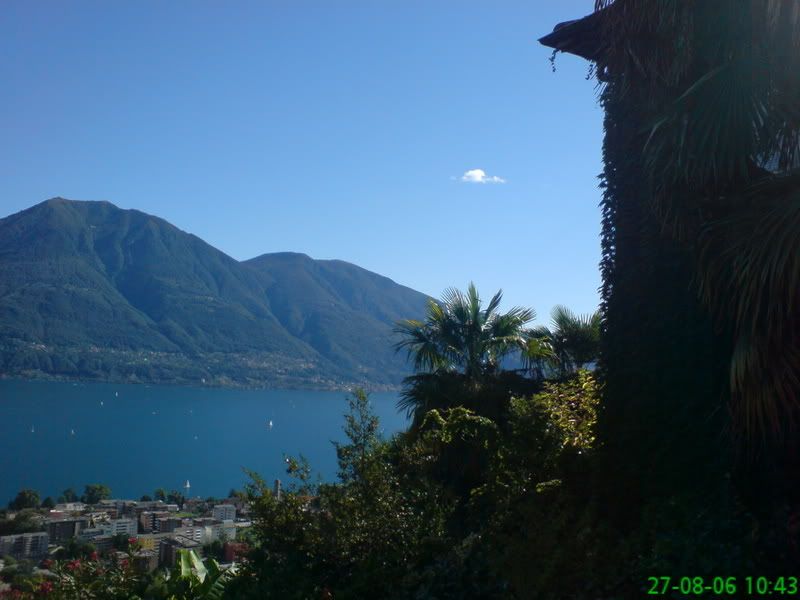
Although the ancient Camunni language and alphabet have been covered here before, there may be another way of looking at it, and in relation to the Camunian-Valtellinese link from a greater historical viewpoint. To start with, the ancient Camunic language was spoken and written in both the Val Camonica and the Valtellina, and I'm guessing that may well include the Bergamo Alps, Val Chiavenna, Val Sabbia, Val Trompia, and all the connecting valleys in the "Camuno-Valtellinese region." This ancient language was, of course, tied to the Camunian alphabet (see link). When viewing the characters of this alphabet, they appear more like Norse runes than the Phoenician-originated alphabet that we use today. The actual origin of ancient regional scripts can be confusing since some of the various characters have been adopted back and forth, often via trade routes (Greeks, Romans, Etruscans, Phoenicians, Celts). I would guess that the forgotten trading centers and roads of the Celtic world were how many ancient scripts and characters were spread back and forth between the rather isolated Teutonic world and the Mediterranean world. In other words, a trading center along the southern coast of Gaul three thousand years ago would have Gauls coming into contact with Phoenicians for example. The Gauls had access to Scandinavia and the Teutonic world, and the Phoenicians had access to the known sea routes.
The Camunian alphabet shown in the above link, includes clear recognizable symbols from both north and south, as well as those unique to the ancient Camuns/Tellines. Also, this alphabet was taken from rock carvings; therefore the difference between the various alphabet characters and symbols of the spirit or earth, is more narrow than it would at first appear. For example, the very regional Camunian rose and characterizations of the god Cernunnos. Within the alphabet is a circle with a dot in the middle, a symbol of the sun, probably originating from the sun-worshiping Teutons. Also, it possibly may have been a symbol of Odin, and maybe Tyr before that. Its ultimate origin may have been Saturn when it was illuminated in the northern sky thousands of years ago.
Also included in this alphabet are both the Norse life and death runes, and a number of other other Norse runes. Since some of the Norse runes are of Etruscan origin, I believe that a few of these characters were both adapted directly from Etruscan script (lower Lombardy was within the Etruscan sphere of influence) and also probably from frequent contact with migrating Celts from the north who settled near them. At least the life/death runes and the sun-circle were of true Teutonic origin; and Cernunnos was Gaulish. In conclusion, these are runes! By definition, being both an alphabet and spiritual symbols, they are as "runic" as the Norse runes. I have a good idea of what my next art project will be.
2-21-16 ADDITION: Regarding the 1937 German Ahnenerbe institute expedition to the Val Camonica:
In 1937, the Ahnenerbe sent the archaeologist Franz Altheim and his wife, the photographer Erika Trautmann, to Val Camonica, to study prehistoric rock inscriptions. The two returned to Germany claiming that they had found traces of Nordic runes on the rocks, supposedly confirming that ancient Rome was originally founded by Nordic incomers. .
An aerial view of Lombardy RAI http://www.expo.rai.it - Lombardy is an ancient land, which has been inhabited since Neolithic times. Viewed from above, you will discover the beauty of a landscape dominated by waterways, rivers and especially by the important lake of Como, Lake Maggiore, Lake Iseo and Lake Garda. But it is also a land of important mountains, valleys and plains. From the Alps to the Brianza foothills, we cross through many art cities, Mantua, whose historic old centre is UNESCO world heritage site, Sabbioneta, the ideal Renaissance city, Monza with its Royal Villa, Bergamo, Pavia, Brescia and still others up to Milan, which is the heart of the region, a blend of antiquity and modernity. .
While "Armanism" is a system which can be adhered to today, the "Armanenscaft" was a Germanic socio-folk system from pre-Christian times. The blog "Aryan Myth and Metahistory" is another site with many references to Guido von List.
A remote sensor camera run by Conservation CATalyst and the Center for Biological Diversity shows a jaguar roaming the Santa Rita Mountains near Tucson. The groups say this is the first publicly released video of the jaguar, named El Jefe, who is the only known wild jaguar in the United States.
A conservation group has captured rare footage from the mountains of Arizona of the only wild jaguar known to roam the United States.
The big cat had been spotted and even photographed by witnesses and researchers about 25 miles away from Tucson over the last five years.
The elusive beast was finally captured on film after a three year study by the group Conservation CATalyst managed to correctly ascertain where it might roam and snared the footage with game cameras.
Over the years, the jaguar has become such an institution in the area that a contest was held to name the creature and schoolchildren voted for the moniker 'El Jefe.'
Jaguars once thrived in the American southwest but were almost entirely wiped out over the last 150 years.
The conservation group hopes that the rare footage will raise awareness of the big cat and help prevent its habitat from being destroyed by mining interests.
Between the game camera footage captured of rare bush dogs last month and now the El Jefe film this week, we're beginning to get a little impatient with Bigfoot's camera shyness.
Death Wish Coffee Company Big Game Commercial: Storm’s a-Brewin’ QuickBooks A ship full of Vikings is an apt metaphor for the fierce strength of a cup of Death Wish Coffee – winner of Intuit QuickBooks Small Business Big Game. Find out more about Death Wish Coffee at http://www.smallbusinessbiggame.com
Run your whole business better with QuickBooks. Be sure to SUBSCRIBE to our YouTube Channel and if you have any questions, feel free to leave a comment!
On top of the obvious symbolism, the mention of "Valhalla!" leaves nodoubt that they were to have been from an Odinic culture. The source of inspiration was likely the popular cable TV series 'Vikings' which airs another season in a couple of weeks.
Among other things, the Vikings were significant because they were the last great European Pagan Empire; albeit largely a "trading empire." Although they were cast as Vikings in this ad, in my perception, the black skull and crossbones somehow suggests the Goths.
The Aprica Pass, especially when seen within a historical context, links the Valtellina (Aprica) and the Val Camonica (Edolo). This may have been the location, or one of the locations, where local pre-Christian folk-pagans would meet for the eight seasonal festivals... going back thousands of years. It's more than just another pretty place.
We at The Norroena Society are dedicated to the thorough and proper investigation of the ancestral traditions of Northern Europe as well as the promotion of our results and expansion of the Asatru faith. By keeping our hearts on the past, our minds in the present, and our eyes on the future we feel that we can maintain a strong institution of higher learning based upon a logical and spiritual understanding of our faith. con'd Sound of the Gjallarhorn (podcast) .


 The actual origin of ancient regional scripts can be confusing since some of the various characters have been adopted back and forth, often via trade routes (Greeks, Romans, Etruscans, Phoenicians, Celts). I would guess that the forgotten trading centers and roads of the Celtic world were how many ancient scripts and characters were spread back and forth between the rather isolated Teutonic world and the Mediterranean world. In other words, a trading center along the southern coast of Gaul three thousand years ago would have Gauls coming into contact with Phoenicians for example. The Gauls had access to Scandinavia and the Teutonic world, and the Phoenicians had access to the known sea routes.
 Also included in this alphabet are both the Norse life and death runes, and a number of other other Norse runes. Since some of the Norse runes are of Etruscan origin, I believe that a few of these characters were both adapted directly from Etruscan script (lower Lombardy was within the Etruscan sphere of influence) and also probably from frequent contact with migrating Celts from the north who settled near them. At least the life/death runes and the sun-circle were of true Teutonic origin; and Cernunnos was Gaulish. In conclusion, these are runes! By definition, being both an alphabet and spiritual symbols, they are as "runic" as the Norse runes. I have a good idea of what my next art project will be.