Showing posts with label Phoenician. Show all posts

Monday, February 22, 2016

Notions amid the approaching Full Snow Moon V


"Universe May Have Had No Beginning"

'Big Bang, Deflated? Universe May Have Had No Beginning'

by Tia Ghose, Senior Writer - LiveScience.com - February 26, 2015

If a new theory turns out to be true, the universe may not have started with a bang.

In the new formulation, the universe was never a singularity, or an infinitely small and infinitely dense point of matter. In fact, the universe may have no beginning at all.

"Our theory suggests that the age of the universe could be infinite," said study co-author Saurya Das, a theoretical physicist at the University of Lethbridge in Alberta, Canada.

 The new concept could also explain what dark matter — the mysterious, invisible substance that makes up most of the matter in the universe — is actually made of, Das added.

cont'd


The legend of the Ice Age Eurasian lion


When I was a child, I recall tossing a garter snake or a salamander into water a few times. Even though they had never swam before, as there was no nearby body of water, they took to it as of though they had done it all of their lives. I get the same curious thought when I see a lion in the snow. Just like the drawings of whoolly mammoths and whoolly rhinoceros' roaming the frozen Eurasian tundra of the last glacial movement, it's clear that the modern lion also is partly "whoolly" and could adapt to northern winters as they had once done. In other words, they were once entirely "whoolly"... as one can easily imagine by looking at the above photograph. That lion is not uncomfortable in the snow.

Sometimes when I see a documentary featuring African lions, they almost seem to be merely "tolerating" the tropical weather. It may seem like a strange thing to say, but I really wonder if they aren't just as comfortable living in a northern climate. If, just for the sake of discussion, say two hundred of them were released in the remote Pacific Northwest.... I think they would do just fine. Hypothetically, they would just merely be returning to an environment that they once knew. It's like the factory farm pigs who have escaped and mated with wild boars; they became hairy, wild, and adaptive in no time.


History of lions in Europe

Lions inhabited parts of Europe during and after the Holocene and even historic times and formed a subspecies called Panthera leo europaea. They lived in ancient Greece, central Germany, Turkey, Georgia, Azerbaijan, Armenia, Iran, southern Russia, coastal Saudi Arabia, western Asia, and India. It is also suggested by historical evidence, although not certain, that they lived in parts of Europe, including modern-day Portugal, Spain, southern France, up to Germany, Italy, and the Balkans beyond Greece. Their diet included cattle, deer and other herbivores. 


Fossil record

In the earliest Holocene the lion was still present in northern Spain. Until around 5500 to 3000 BCE the lion is confirmed via fossils from Hungary and from the Pontic Region of Ukraine.


Lions in ancient Greece

According to reports by Ancient Greek writers such as Herodotus and Aristotle, lions were common in Greece around 480 BCE, became endangered in 300 BCE, until their extinction in 100 BCE.

Lions feature heavily in Ancient Greek mythology and writings, including the myth of the Nemean lion, which was believed to be a supernatural lion that occupied the sacred town of Nemea in the Peloponnese.

Aristotle and Herodotus wrote that lions were found in the Balkans in the middle of the first millennium BCE. When Xerxes advanced through Macedon in 480 BCE, he encountered several lions. But while lions presumably still existed in the area between the rivers Aliakmon and Nestus in Macedonia in Herodotus' time, in the 1st century CE Dio Chrysostom wrote that they were already extinct in Europe.


Lions in the Caucasus

Lions were present in Transcaucasia until the 10th century.


Lion in the snow at The Wild Animal Sanctuary

Brandon Crain


[3-28-16 ADDITION: It probably should be noted that the White lion color variation--as well as that of the White tiger--may be a link to perhaps even the true Ice Age of 25,000 years ago. The two appear very similar to the snow leopard of the Himalayas, which would seem to add to the evidence that their white fur could be linked to an ancient cold weather past. Then of course, there are the other white furred arctic or winter-coated animals.]


Strange skulls discovered in Russia, tied to secret Nazi occult group
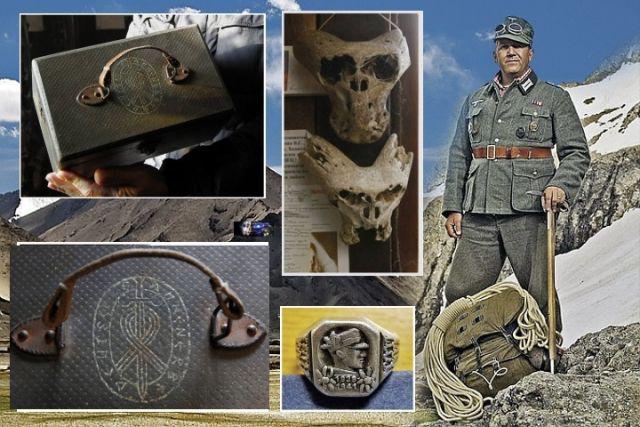

'Strange skulls discovered in Russia, tied to secret Nazi occult group institution and the search for the origin of Mankind'

In what sounds as a scene from an Indiana Jones movie, reports from Russian newspapers “Komsomolskaya Pravda” and “Rossiyskaya Gazeta” indicate that a briefcase and two Alien-like skulls were discovered in the mountains of the Caucasus region of Adygeya. Among the briefcase, its finders found two skulls belonging to an unknown creature. Ahnenerbe was probably the most secret society within the SS dedicated to the study of the occult and the supernatural forces on Earth. According to researchers, it is likely that members of the SS were interested in the mysteries of the ancient dolmens and the high amounts of radioactivity present in the region known as the Kishinski canyon.

cont'd


Ahnenerbe (Wikipedia)

Ahnenerbe (German occult)


Alien Or Demon Skulls Found In Russia?

LaGranjaHumanaMX

Discovered in the mountains of Russia a strange mysterious briefcase and two skulls. According to the journalists of the newspaper “Komsomolskaya Pravda” and “Rossiyskaya Gazeta” briefcase it has written a strange logo “Ahnenerbe” This case was recently found in the mountains of Adygea.

In the mountains of the Caucasus region of Adygeya they were found two skulls belonging to an unknown creature for science with the emblem of the Ahnenerbe, probably the most secret society within the SS, dedicated to the study of the occult and the supernatural forces.

According to researchers, it is likely that members of the SS were interested in the mysteries of the ancient dolmens and the causes of high natural radioactivity in the region of Kishinski canyon. It is also possible that they should seek the golden Kuban Rada, lost somewhere in the region during the Russian Civil War (1917-1923).

Researchers have also found a German map of the territory of Adygeya, held in 1941, and have been amazed by the accuracy and completeness it is. These found objects have aroused great interest among specialists.

Historians know many details of the operation of the Wehrmacht Edelweiss, which planted Nazi banners at the peak of Elbrus, the highest mountain in Europe, located in the republic of Kabardino-Balkaria in the Russian Caucasus. However, what it was the purpose of this secret organization in the mountains of Adygea?


Phoenicia.org

Phoenicia and Phoenician culture has influenced the world, right up to the present day, in ways that the vast majority of people will never know. Of course, Greece and Rome have the more overt influence; but Phoenicia has given us the more covert-occultic realm. The darker side, although I don't believe that it had to be that way. Certain people made it that way.

Carthage was a very powerful Phoenician colony, and when they lost the Punic Wars to Rome, they basically fizzled out of history as a distinct people and culture. In many ways, and certainly in terms of spiritual tradition, Phoenicia embodied much of what came from the civilizations which came before it. In particular, the Saturnian priesthood. They wore purple hooded robes because the rays from the star Saturn emitted a purplish light out of the northern sky before it became a dwarf star. Others present wore black robes, and many of the subtle symbols in a court of law come from their rites... including the black robe of the judge and his "bench." When students graduate, they wear square "Saturnian" caps just as initiates did in Phoenicia. The Phoenician god "EL" is the root word for virtually everything suggesting wisdom, knowledge, or rising in status; from "Elder" to "Elevator."

The Quest For The Phoenicians 

Engineering an Empire: CARTHAGE

Saturn the Occult and The Phoenicians ~TØS ~


Dusty Springfield - I Only Want To Be With You

corringhamlad's channel


.

Monday, February 15, 2016

Incontri Tra/Montani: Acknowledging the importance of our shared pagan past II - "Camunian runes"


Although the ancient Camunni language and alphabet have been covered here before, there may be another way of looking at it, and in relation to the Camunian-Valtellinese link from a greater historical viewpoint. To start with, the ancient Camunic language was spoken and written in both the Val Camonica and the Valtellina, and I'm guessing that may well include the Bergamo Alps, Val Chiavenna, Val Sabbia, Val Trompia, and all the connecting valleys in the "Camuno-Valtellinese region." This ancient language was, of course, tied to the Camunian alphabet (see link). When viewing the characters of this alphabet, they appear more like Norse runes than the Phoenician-originated alphabet that we use today.

The actual origin of ancient regional scripts can be confusing since some of the various characters have been adopted back and forth, often via trade routes (Greeks, Romans, Etruscans, Phoenicians, Celts). I would guess that the forgotten trading centers and roads of the Celtic world were how many ancient scripts and characters were spread back and forth between the rather isolated Teutonic world and the Mediterranean world. In other words, a trading center along the southern coast of Gaul three thousand years ago would have Gauls coming into contact with Phoenicians for example. The Gauls had access to Scandinavia and the Teutonic world, and the Phoenicians had access to the known sea routes.

The Camunian alphabet shown in the above link, includes clear recognizable symbols from both north and south, as well as those unique to the ancient Camuns/Tellines. Also, this alphabet was taken from rock carvings; therefore the difference between the various alphabet characters and symbols of the spirit or earth, is more narrow than it would at first appear. For example, the very regional Camunian rose and characterizations of the god Cernunnos. Within the alphabet is a circle with a dot in the middle, a symbol of the sun, probably originating from the sun-worshiping Teutons. Also, it possibly may have been a symbol of Odin, and maybe Tyr before that. Its ultimate origin may have been Saturn when it was illuminated in the northern sky thousands of years ago.

Also included in this alphabet are both the Norse life and death runes, and a number of other other Norse runes. Since some of the Norse runes are of Etruscan origin, I believe that a few of these characters were both adapted directly from Etruscan script (lower Lombardy was within the Etruscan sphere of influence) and also probably from frequent contact with migrating Celts from the north who settled near them. At least the life/death runes and the sun-circle were of true Teutonic origin; and Cernunnos was Gaulish. In conclusion, these are runes! By definition, being both an alphabet and spiritual symbols, they are as "runic" as the Norse runes. I have a good idea of what my next art project will be.

 
2-21-16 ADDITION: Regarding the 1937 German Ahnenerbe institute expedition to the Val Camonica:

In 1937, the Ahnenerbe sent the archaeologist Franz Altheim and his wife, the photographer Erika Trautmann, to Val Camonica, to study prehistoric rock inscriptions. The two returned to Germany claiming that they had found traces of Nordic runes on the rocks, supposedly confirming that ancient Rome was originally founded by Nordic incomers. 

.

Sunday, March 15, 2015

The Cult of Saturn: Part III


Variations of this Saturnian-based culture may have migrated from a possible Atlantean group of civilizations which gave way to some type of cataclysm, to Sumeria, to Phoencia, and to the early “Mystery Schools” of occult and Alchemic knowledge. This was to have included Egypt, Greece, Rome, to India and China, and to the Druidic cultures of northern Europe. Saturn worship was to have replaced the pre-Olympian Goddess Hecate in ancient Greece. Hinduism, Shintoism, Nepalese and Tibetan Buddhism all apparently have Saturnian symbolism. Apparently the Etruscans referred to Saturn as the “Wheel of Heaven,” the Gaels as Satarn, and the Bantus as Isateni. The mystery schools developed into the Templars, Freemasonry, Rosicrucianism, and similar systems.

Even if one were to examine the ancient Roman knowledge of the planets, one could ask how they were so familiar with Saturn, Mars, or Venus? They didn’t have telescopes. Planets appear to us as just stars when observing the night sky with our eyes, binocular, or telescope. In fact, the archaic name for the Italian peninsula was “Saturnia.” The Roman festival “Saturnalia” is said to be a return to “Saturn’s reign”… aka The Golden Age. The Catholic Church took on after the Roman Empire fell, and the institution features much Saturn symbolism, as well as a mixture of other ancient symbols. The Catholic Church once engaged in a bitter rivalry with the Templar/Freemasonic groups, despite the fact that both are obsessed with Saturn; and it could be said that this is another constant within these Saturn societies… blood feuds between them.


I should have mentioned, along with the many Biblical words which originate with the Phoenician God “El” rootword... the word “Hell.” An obvious attempt by the Sun cult to project negativity onto the Saturn cult, and the other side has caught up quite a bit in recent years. Also confusing is that there can be opposing camps within certain cultures and regions. For example, the ancient Egyptian word “Set” means Saturn. The Satanist Aleister Crowley appears to have delved into the Saturnian magical aspect of ancient Egypt. In other words, there seems to have been both Sun and Saturn cults in Egypt. There is a modern Satanic society called the Temple of Set.

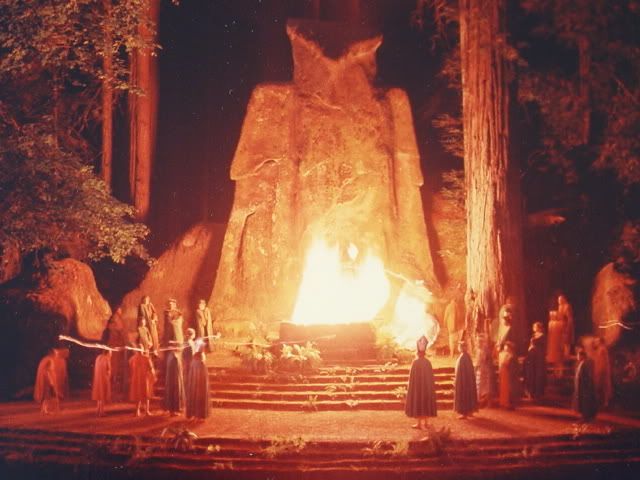
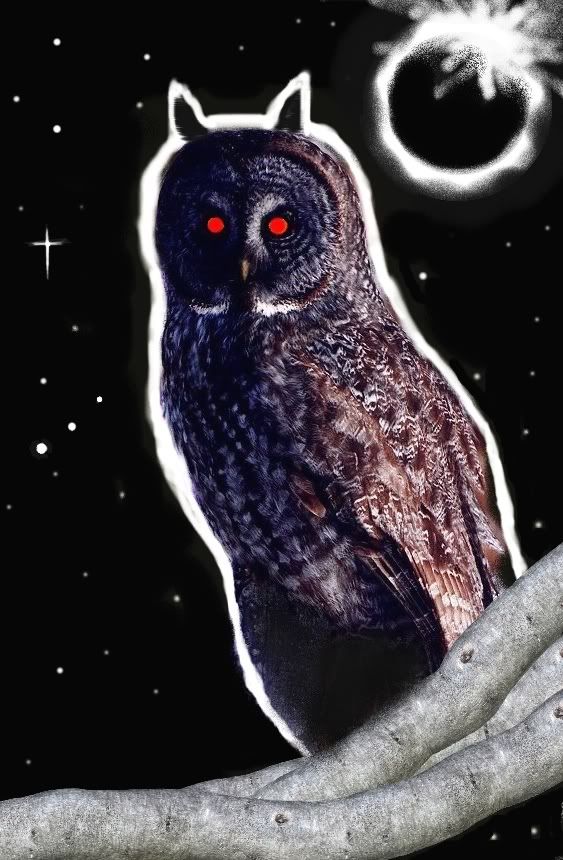
According to the Christian Bible, the Earth is six-thousand years old; or, perhaps that really meant that the star Saturn fizzled out six thousand years ago, and ushered in the “Sun only era” from a Sun cult point of view? The modern Bohemian Club is very likely Saturnian, and uses an amalgamation of symbols from the ancient Middle East. For example, they worship a forty-foot stone owl deity called “Molech” (mo-EL-ech) in ancient Babylon. Black and purple are Saturnian colors, and the priesthood of ancient Phoenicia-Canna wore black and purple robes. This is why judges and Catholic priests always wear black robes. There are probably non-Saturnians who wear black robes, but this is why the Saturnian societies wear them… because of, at the very least, the Saturnian traditional aspect.


The black and white checkered pattern, usually a floor pattern, is obviously a Saturnian symbol. This black cubed pattern is featured on the floor of Masonic lodges, and other Saturnian societies. I noticed while watching the recent horror movie 'Annabelle', a terrifying scene in a basement of an apartment building where the floor was this black and white checkerboard pattern. A basement floor would very unlikely be of this pattern. The filmmakers had a definite point to make. The black square or cube is a reflection of the hexagram located on the north pole of Saturn. When you graduate, you must wear a Saturnian square marter board on your head, with a matching robe. At the very least, this is a remnant of the Saturnian tradition, if not something more. The dollar bill has a little owl up in the right corner. The ancient symbol of a snake eating its own tail is Saturnian, and was present in many different cultures. The snake or serpent represents wisdom, and the Sun cults were always trying to wipe it out for the sake of piety.. often with eagle symbolism representing male energy over female wisdom. I can’t truly say that I am convinced that either side is “good.” Why can’t someone just like both the Sun and Saturn?

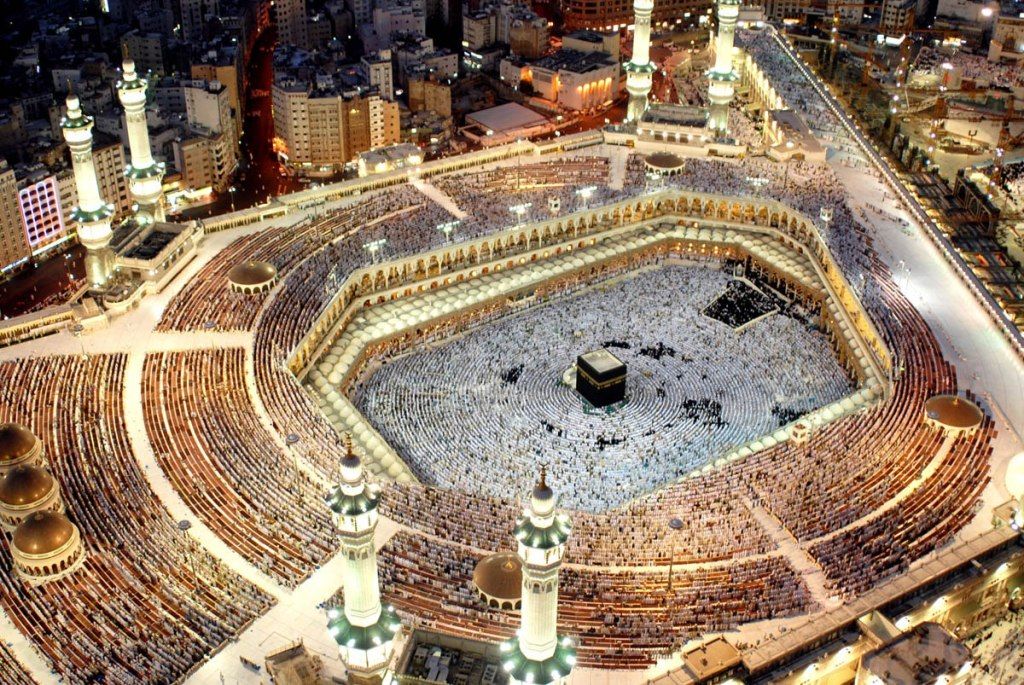
The black cube symbol is big in Islam. When hundreds of thousands of Muslims circle the giant black cube in Mecca, this is a reenactment of the storm which circles the hexagram or “cube” on the north pole of Saturn. Although Islam is overwhelmingly Saturnian in origin, the Islamic color is green. Green is the color associated with the planet Venus, and Islam uses a “Venusian crescent” as its chief symbol. This is not the Moon, but it’s how Venus usually appeared in the sky ten or fifteen thousand years ago during The Golden Age. The geometric “storm” on the north pole of Saturn is red, and the “ring of fire” or “rings” are a part of Saturnian symbolism. Rings may also represent the rings of Saturn. The symbols of ear rings, wedding rings, and crowns originate from the Saturnian tradition. I’m generalizing, since there are probably circles and rings which may not be Saturnian.

.

Wednesday, March 11, 2015

The Cult of Saturn: Part II


With two “competing” stars in the sky, a rivalry seems to have formed between the Sun cults and the Saturn cults. The Egyptian Sun cult was the basis for Christianity, with “The Son” (Sun) Jesus as its “risen savior” and “the light of the world”; who symbolically "dies" and is "reborn" every year. Part of Christianity pits “The Son” against “Satan” (Saturn). However, the Roman Emperor Constantine—as well as the early Catholic Church—took the Christian doctrine and “Saturnized” it so to speak. They didn’t do this because they were somehow evil, but because they were dedicated to Saturn… then a dwarf star. In other words, the Sun rises every day, and is the light of our world; while Saturn no longer emitted any light, and was now symbolically “dark”… “light vs. dark.” Another thought, perhaps a nova-like reaction from the dying Saturn could have melted the glaciers and caused a great flood. This could have sunk Atlantis and other civilizations, and put an end to The Golden Age?

Islam and Judaism were clearly formed from earlier Saturn cults. The Saturnian hexagram, known today as the Star of David, is a symbol of Saturn. It also represents the divine masculine (upward triangle) and the divine feminine (downward triangle). Even some mosques feature Saturnian hexagrams on the front. The geometric properties of this symbol equal 666. However, this initially wasn’t intended to be “evil” at all. Only later, after Saturn had fizzled out, were these symbols presented as being dark or evil by the church. This nitpicking went both ways as shown in the above link. There were people who in modern times did take on Satanism in a negative form. I’m generalizing, since there are competing camps even within all of these religions. To try to sift through the “good guys vs. bad guys” within these religions would perhaps take me down a rabbit hole that I don’t wish to go down right now. Unfortunately, the positive energy elements tend to cover for the negative energy elements within their own religion. That’s part of human nature.


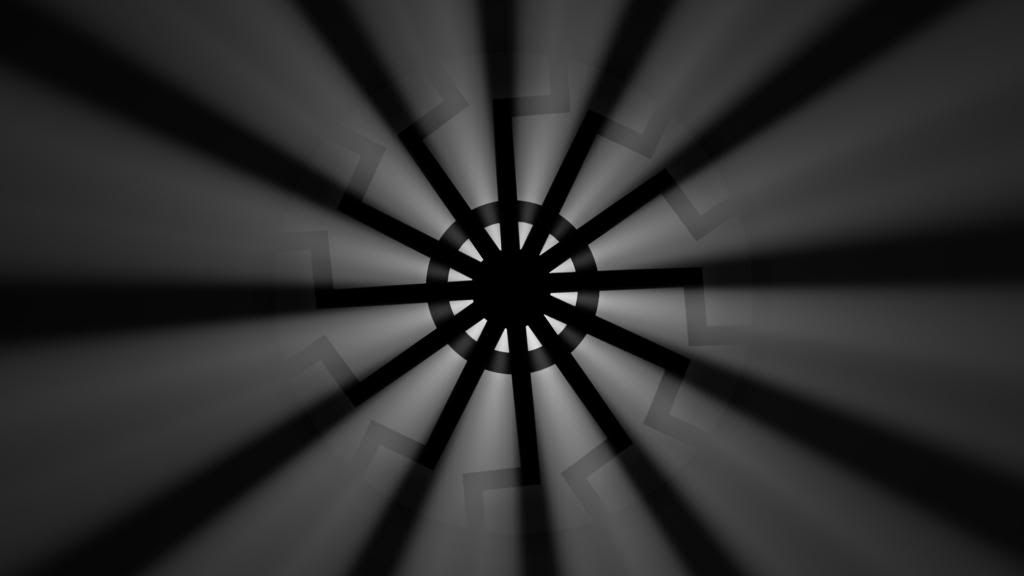
The people of the pre-Abrahamic Middle East were primarily Mediterranean, not Semitic. So in other words, Indo-European. Also, north of the Himalayas was the original Teutonic homeland. With some of these people migrating southward in ancient times, they were also part of this Sun-Saturn cultural and religious interaction. Their spirituality revolved around the "Black Sun," which could have either been the Sun, or it perhaps could have really meant Saturn. It’s not clear to me. Saturn seemingly would have been their star, long shining in the northern sky, and now “a black sun.” Saturn people always have to be the bad guys, right?; or is this some kind of grand global theater of occultic history? The Germanenorden (Teutonic Order) apparently had great knowledge of at least this early Teutonic history. It’s possible that the two-star system of The Golden Age made it possible for people to live on the North Pole, or part of it. Therefore the mythical Hyperborea could have existed, perhaps without seasons, and possibly illuminated twenty-four hours a day (day and dim). The ancient city of Arkaim likely was a Teutonic settlement. Also apparently there was a Saturnian Society in Germany, which later influenced the National Socialists, and eventually migrated to the United States and helped form NASA. We could probably at least say that it’s very likely that the early Teutonic religion was Saturnian.

We can only speculate on Atlantean civilizations, but Saturnian culture can at least be traced back to Sumeria. Another highly influential culture was the Phoenician civilization. The Phoenician-Caanenite religion and culture was most certainly over-the-top Saturnian! The God Saturn was called “El.” Apparently, during The Golden Age, Saturn emitted a certain subtle “purple haze” of light. The Phoenician priesthood (“the Elders”) wore purple robes. They used the Saturnian hexagram, the Star of Saturn. They were, in fact, “Satanists” using the ancient meaning of the word. The original Hebrew language has a common origin with the Phoenician-Caanenite language. That doesn’t mean they were the same people, but the powerful nation of Phoenicia-Caanen occupied a large area in the Near East.


The Saturnian God “El” as a rootword, is present in many languages, including English. It’s especially present in words dealing with aspects of authority, government, and education. For example, elder, elect, elected, elite, elevator, elevate, temple (tem-pel), bible (bi-bel), bell, steeple (ste-pel), cathedral (cathe-drel), electricity, element, elementary, etc. Phoenician temples featured “two towers” apparently, and are likely related to the Egyptian obelisk (o-bel-isk). The owl (ow-el) was a powerful symbol in the Babylonian (Ba-bel-on) culture, symbolized by their God Molech (Mo-el-ech); and they went on to construct the Tower of Babel (Ba-bel). Along with the Tower of Babel, there were many Biblical words which can be traced back to “El.” Israel (Is-ra-el), Elohim, Eli, Emanuel, Mary Magdalene (Mag-del-ene), etc. The Hebrew-originated Christian name Rachel comes to mind as well. I’m not certain if the Near Eastern God Baal (Ba-el) is another manifestation or name of the God El or not. Then there’s the word for God in Islam… Allah (A-el-ah). The Phoenicians traveled and traded far and wide, including England, so I wouldn't underestimate many other words as well.

.

Wednesday, January 2, 2008

Camunni Alphabet and it's Links to Other Ancients Alphabets


Angelo was good enough to update us on a recent study in Europe regarding the links and patterns of ancients alphabets from numerous peoples from Europe, Eurasia, and the Near East. There are links to the lettering system of the Camunni tribe, which are amazing. Grazia Angelo.

*************************

'Origine Degli Alphabeti Camuni'


Book presentation, Budapest, Sofitel, August 17th, 2007


The Magyar rovás

The Magyar rovás make up an alphabet of 40 letters, plus several ligatures or letters representing consonant clusters or syllables.

Some 24 rovás are similar to Vinča signs, to Germanico runes, to letters of the Asiatic runic scripts, to letters of the earliest Italic and Helladic alphabets. Some 16 letters appear to be later additions: they are rounded and/or do not comply with the 5 rules of the runic scripts (see page 45 of the book) and/or are not similar to Vinča or later European signs. These 16 letters were added to the rovás in Central Asia, when the Magyars were no longer carving hard materials, but drawing on parchment, as the Parthians did.

Out of the 24 letters that are similar to Germanico runes, 16 appear to be very similar, but some 8, which could correspond to signs added by the Celts to represent their Indo-European phonemes, are not. In particular, the phoneme [θ] was written in the North and is kept in Irish; but it was written in the south and, still similar, is kept in Greek.

The Germanico runes and the Magyar rovás could both have an ancestor in an earlier 16-letter alphabet. In fact, the original 16-letter Flavio *VUARK, but also the *Pannonico alphabet, can be easily reconstructed by comparing the rovás and the runes with some of the most ancient alphabets: Esik, Lemnos, Camuni, Veio, Marsiliana, and the Venetic and Athenian alphabets.

The Esik, Lemnos, and Camuni alphabets remain so far undeciphered. The Esik and Lemnos alphabets appear to be congruent with the limited Finno-Ugric phonology: the Esik alphabet does not contain any of the characters added in Europe by the Germans and the Celts; the Lemnos alphabet only contains some of them. These three isolate alphabets have kept some of the most ancient *VUARK characters.

In Esik (nearby "Alma Ata" = "Mother/Father of Apple", Hungarian name of the former capital city of Kazakhstan), in the grave of an Amazon Shaman Princess (J. W. Jay) buried with a rich treasure, an inscription on a silver bowl was found. The grave has been dated back to the 5th century B.C. The characters that make up this inscription consist of: 12 characters identical to 12 Flavio *VUARK characters, two *characters identical to another two of the *VUARK, and a few possible ligatures. This inscription cannot be Phoenician or Greek because some of its characters and legatures have never been written around the Mediterranean Sea (except along the western shores of the Adriatic Sea, where Pannonico populations are supposed to have migrated from Illyria). Instead, these characters and ligatures do appear in later alphabets of the Turanian plains, in the Siberian rovás, in the Magyar rovás, in the Nü Shu syllabary (Yunnan, China), and in the Kaganga script (Sumatra) (see the book "Honfoglalás... the Magyars are back home" for other cultural markers that link all these regions). The Esik script contains no characters at all that resemble any Indo-European addition: the Hungarian population that migrated to Esik could have been able, while in Europe, to keep itself separated from the Celts.

When the Camuni alphabets were carved, the Indo-European phonemes had already been added; but the corresponding characters were different from both those used in the Germanico runes and in the Magyar rovás. The Camuni alphabets prove that the Germanico and the Pannonico were alternative characters for the same [a] phoneme. The Camuni alphabets had a letter between D and E that also the Ugaritic abjad had, in the same position. This letter had disappeared from all European alphabets in the beginning of the 1st millennium B.C. (or had been moved between N and O, as it also happened in Phoenicia!). The Camuni alphabets also show an ideogram, which was copied in the Ugaritic abjad, but was never transliterated by the Semites. The Camuni alphabets have characters that do appear in the Ugaritic script, but do not appear in the Phoenician abjad. Thus, it is impossible that the Camuni alphabets could have been copied from the Phoenicians, and it would be nonsense to say that it was copied from the Romans! Instead, it is possible that the Ugaritics could have copied from Europe alphabets with features of the Camuni ones.

The Veio and Marsiliana alphabets have been found in Etruria: these two alphabets were not (not) Etruscan alphabets: the Etruscans never, or only occasionally, used some 8 letters of these alphabets. The Etruscans never added the Indo-European phonemes to their alphabet: some exceptions were graphically and phonetically unstable in time and space (the characters and the associated phonology changed with time, and from one region to another), in most cases different from the Phoenician letters, and in some cases different from any other known script (e.g.: 8 for [f]). The Marsiliana and Veio alphabets could be Pannonico alphabets, a few centuries older than their official dating (8th-7th century B.C.): in fact, they are more similar to the alphabet that the Ugaritics could have copied than to the later Phoenician abjad (see table 60 of the book).


The Germanico runes (Futhark)

The Germanico runes consisted of 24 letters. Eight of them were not stable in space and time and/or do not comply with the rules of the runes. The remaining 16 runes, more stable in time and space, represent the 16 phonemes that are still peculiar to the Finnish alphabet. The phonemes [b], [d], [γ], [w], [z], [f], [θ], (and probably [o] in ancient times) are not used, even these days, in words of Finnish origin. These phonemes were added by the Germans and correspond to the 8 letters that are graphically and phonetically unstable in time and space in the many different European runic scripts. When the German populations left Scandinavia, the Vikings started writing again with a 16-letter alphabet, congruent with a limited, Finno-Ugric, phonology.


The Flavio VUARK

All (all) the earliest European alphabets, including the most ancient Athenian and Etruscan ones, the Linear B, and the Cypriot syllabary (Facchetti, Kirkhoff, ancient scripts.com, et alia), only had the letters needed to represent those Finno-Ugric 16 phonemes. Tocharian, the so-called "Indo-European" language of the Tarim Basin, (possibly an intertwined language Hungarian/Gandhara Sanskrit), also had a limited phonology (Wikipedia). Hungarian also, in ancient time, was lacking the [b], [d], [γ] phonemes (M. Alinei).

Ancient agglutinative languages, including Sumerian according to some scholars, had (and several ones still have) a limited phonology. All the ancient European alphabets therefore derive from an original 16-letter European alphabet. The letters for the Indo-European phonemes were added later on, when the Indo-Europeans had learned how to write.

Both the Germanico runes and the Magyar rovás derive from an earlier, pre-Indo-European 16-letter *VUARK alphabet congruent with the ancient Finno-Ugric phonology, and were made up with characters identical or similar to Vinča signs. The European scripts later inherited these same *VUARK letters, with the same original phonetic values. (See table 43 of the book, which shows that all (all) the original letters of the *VUARKs and of the *Pannonico alphabet were later used by the most ancient European alphabets).

The Flavio *VUARK could have been brought to the shores of the Baltic Sea by those Hungarian populations that migrated from the Carpathian Basin northwards at the beginning of the 2nd millennium B.C.. (See the book "Honfoglalás... the Magyars are back home", page 85).

The Flavio *VUARK evolved in two different scripts: Pannonico *VUARK (from which the Magyar rovás derived) and Finnic *VUARK (from which the Germanico runes derived). There are only a few letters which make the difference between these two *VUARKs. Astonishingly, the Magyar rovás, the Mother of all alphabets, kept both variations (and also variations which shall appear in Southern Europe): and ; and ; and ; and , and ; and .... up until the 19th century A.D..

All the ancient alphabets quoted in the book had a feature in common: none of them was ever designed with any horizontal stroke. Such a strict rule could only be a religious dictate. Note also the many multiples of 8 for the number of letters of ancient alphabets (16, 24, 40).

In any case, a "reconstruction", be it linguistic or historical, is pure speculation as long as a proof of its existence, at the supposed time, is not found.


The Ugaritic abjad

The Ugaritic abjad (abjad = consonantal alphabet, without vowels) is written in cuneiform. Cuneiform was not in the tradition of the region. The local writing tradition is that of Byblos, (undeciphered), which, nevertheless, appears to have already borrowed several rovás and/or Vinča signs in the 19th century B.C. (see table 49, proel.com).

The Ugaritic script is written from left to right in a region that always, and until these days, writes right to left. In Beth Shemesh (Israel) also, the Ugaritic script was used; but it had been modified to become a right to left script, modified to fit the local tradition.

The Ugaritic abjad contains letters for vowels: the Semites did not use the vowels of the Ugaritic script and still these days do not use vowels in their scripts. The Ugaritic characters that corresponded to vowels in Europe were used by the Semites as semivowels or laryngeals; the letters for [i] and [u] were not even ever transliterated. The three vowel characters used by the Ugaritics were only used in foreign words.

No Northern Semitic script has ever transliterated eight letters of the Ugaritic script: they were alien phonemes, vowels, or ideograms (see table 55, Proel.com). Who would ever design an alphabet including letters that would never be used?

The letter order of the Ugaritic abjad is not the traditional Semitic letter order - h, l, h, m... The Beth Shemesh alphabet was also modified in order to have a Semitic letter order. The Ugaritic abjad was alien to the region in which it was written: this is why it had a short life: 2 centuries. The Ugaritic abjad cannot have been designed in Phoenicia.

The Ugaritic abjad was an attempt at writing the *Pannonico alphabet by using the cuneiform writing technique borrowed from the Acadians. It could have even been originally a secret script to be used between Pannonico traders and a friendly Levantine population (or a Pannonico "Middle East settlement"): in fact, the Pannonici would have easily understood it and the Levantines would have used their clay tablets and their writing techniques. The encryption key was very efficient: nobody has found it during 3,300 years! It is not me the monster, but all those who looked not attentively at the Ugarit tablet because it could not serve their causes. If you attentively look at the tablet, you easily see how similar it is to the ancient European scripts!

In the 11th century B.C., the Phoenicians converted again the cuneiform script into linear, using the reverse key and rules that had been used to transcribe the *Pannonico alphabet into Ugaritic: in fact, they left in the Phoenician abjad the same scribal mistakes that appear in the Ugaritic abjad: the B has only one hump. Such a B, with a single hump, was never copied by any ancient European script. Nor the head of the ox (aleph) was ever copied by the Europeans (except the Athenians. See page 59 of the book for the origin of the A). Nor the C... Et cetera. The Greeks only "copied" letters that they already used!

The Greeks did not copy the Phoenician abjad. The Athenians and the Lemnos peoples used the 16-letter alphabet as long as they were allowed to speak and write their own language, until the beginning of the first millennium B.C.: only at that time the letters needed to represent Indo-European phonemes started appearing in Greece (Kirkhoff).

The Greeks did not need to invent the vowels. In fact, the vowels existed already in the Old European *Pannonico alphabet: so much so that the Ugaritics did copy the vowels from the *Pannonico, but did not use them. The Semites used some of them as semivowels or laryngeals. They never transliterated the signs for [i] and [u].

The Europeans did not copy their alphabets from the Phoenicians; but the Phoenicians, the Greeks, and the Etruscans did copy the European *Pannonico alphabet.

The reconstructed *Pannonico alphabet did exist: in fact, the Ugaritics copied it in the 14th century B.C.. Vasil Ilyov has compiled a table in order to show the derivation of the Cyrillic alphabet from the Vinča signs (he is correct: all alphabets came from there!). The table proves that in Macedonia (region of the Vinča Culture), between 1650 and 1200 B.C (the time in which the *Pannonico was brought to Ugarit) all the characters of the *Pannonico alphabet were written in the local inscriptions.


Consequences

Gimbuteniė was right: the Vinča signs were, or generated, the "Old European" script. The Flavio *VUARK, which was the Mother of all other alphabets, derived from the Vinča signs. Most of the letters of the *VUARK survived in the Futhark and in the Magyar rovás, and most, modified by the time, still survive in the Roman alphabet that we all use every day.

The Hungarians were in Europe in the 14th century B.C.. (See "Honfoglalás... the Magyars are back home"). They brought the 16-letter Flavio *VUARK alphabet to Northern Europe, where it evolved as Germanico runes. They also brought the *Pannonico alphabet to Central Asia, where it evolved as Magyar rovás, and other Asiatic scripts.

The Europeans, who had an alphabet before the Indo-Europeans arrived in Europe, spoke agglutinative languages with a limited phonology. The Finno-Ugric substratum is responsible for most of the phonetic mutations in ancient Europe (see a further book). Gimbuteniė correctly described the "Old European" society: matriarchal, egalitarian, peace loving... She only made a mistake: those populations were not nomadic, war faring, pastoralist Indo-Europeans; they were sedentary, democratic, peace loving Hungarians. The Hungarians are the most ancient population that shows up in the History of Humanity, with an alphabet, and maybe with a script (the Tatarlaka tablet).


Michelangelo@michelangelo.cn

*************************

Original forum link:
origine degli alphabeti camuni