Showing posts with label wildlife. Show all posts

Monday, February 22, 2016

Notions amid the approaching Full Snow Moon V


"Universe May Have Had No Beginning"

'Big Bang, Deflated? Universe May Have Had No Beginning'

by Tia Ghose, Senior Writer - LiveScience.com - February 26, 2015

If a new theory turns out to be true, the universe may not have started with a bang.

In the new formulation, the universe was never a singularity, or an infinitely small and infinitely dense point of matter. In fact, the universe may have no beginning at all.

"Our theory suggests that the age of the universe could be infinite," said study co-author Saurya Das, a theoretical physicist at the University of Lethbridge in Alberta, Canada.

 The new concept could also explain what dark matter — the mysterious, invisible substance that makes up most of the matter in the universe — is actually made of, Das added.

cont'd


The legend of the Ice Age Eurasian lion


When I was a child, I recall tossing a garter snake or a salamander into water a few times. Even though they had never swam before, as there was no nearby body of water, they took to it as of though they had done it all of their lives. I get the same curious thought when I see a lion in the snow. Just like the drawings of whoolly mammoths and whoolly rhinoceros' roaming the frozen Eurasian tundra of the last glacial movement, it's clear that the modern lion also is partly "whoolly" and could adapt to northern winters as they had once done. In other words, they were once entirely "whoolly"... as one can easily imagine by looking at the above photograph. That lion is not uncomfortable in the snow.

Sometimes when I see a documentary featuring African lions, they almost seem to be merely "tolerating" the tropical weather. It may seem like a strange thing to say, but I really wonder if they aren't just as comfortable living in a northern climate. If, just for the sake of discussion, say two hundred of them were released in the remote Pacific Northwest.... I think they would do just fine. Hypothetically, they would just merely be returning to an environment that they once knew. It's like the factory farm pigs who have escaped and mated with wild boars; they became hairy, wild, and adaptive in no time.


History of lions in Europe

Lions inhabited parts of Europe during and after the Holocene and even historic times and formed a subspecies called Panthera leo europaea. They lived in ancient Greece, central Germany, Turkey, Georgia, Azerbaijan, Armenia, Iran, southern Russia, coastal Saudi Arabia, western Asia, and India. It is also suggested by historical evidence, although not certain, that they lived in parts of Europe, including modern-day Portugal, Spain, southern France, up to Germany, Italy, and the Balkans beyond Greece. Their diet included cattle, deer and other herbivores. 


Fossil record

In the earliest Holocene the lion was still present in northern Spain. Until around 5500 to 3000 BCE the lion is confirmed via fossils from Hungary and from the Pontic Region of Ukraine.


Lions in ancient Greece

According to reports by Ancient Greek writers such as Herodotus and Aristotle, lions were common in Greece around 480 BCE, became endangered in 300 BCE, until their extinction in 100 BCE.

Lions feature heavily in Ancient Greek mythology and writings, including the myth of the Nemean lion, which was believed to be a supernatural lion that occupied the sacred town of Nemea in the Peloponnese.

Aristotle and Herodotus wrote that lions were found in the Balkans in the middle of the first millennium BCE. When Xerxes advanced through Macedon in 480 BCE, he encountered several lions. But while lions presumably still existed in the area between the rivers Aliakmon and Nestus in Macedonia in Herodotus' time, in the 1st century CE Dio Chrysostom wrote that they were already extinct in Europe.


Lions in the Caucasus

Lions were present in Transcaucasia until the 10th century.


Lion in the snow at The Wild Animal Sanctuary

Brandon Crain


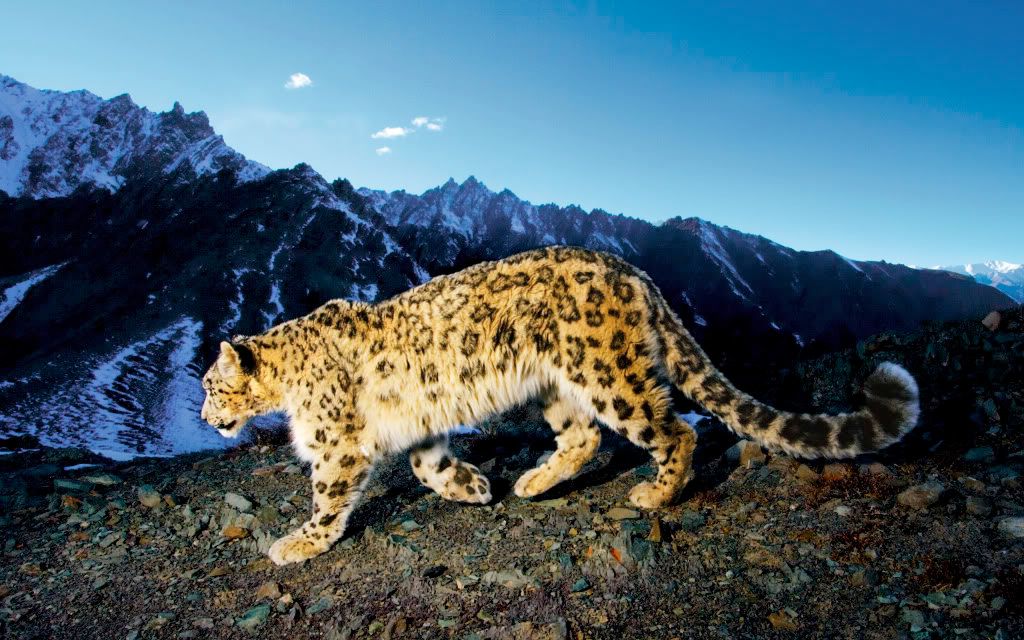
[3-28-16 ADDITION: It probably should be noted that the White lion color variation--as well as that of the White tiger--may be a link to perhaps even the true Ice Age of 25,000 years ago. The two appear very similar to the snow leopard of the Himalayas, which would seem to add to the evidence that their white fur could be linked to an ancient cold weather past. Then of course, there are the other white furred arctic or winter-coated animals.]


Strange skulls discovered in Russia, tied to secret Nazi occult group


'Strange skulls discovered in Russia, tied to secret Nazi occult group institution and the search for the origin of Mankind'

In what sounds as a scene from an Indiana Jones movie, reports from Russian newspapers “Komsomolskaya Pravda” and “Rossiyskaya Gazeta” indicate that a briefcase and two Alien-like skulls were discovered in the mountains of the Caucasus region of Adygeya. Among the briefcase, its finders found two skulls belonging to an unknown creature. Ahnenerbe was probably the most secret society within the SS dedicated to the study of the occult and the supernatural forces on Earth. According to researchers, it is likely that members of the SS were interested in the mysteries of the ancient dolmens and the high amounts of radioactivity present in the region known as the Kishinski canyon.

cont'd


Ahnenerbe (Wikipedia)

Ahnenerbe (German occult)


Alien Or Demon Skulls Found In Russia?

LaGranjaHumanaMX

Discovered in the mountains of Russia a strange mysterious briefcase and two skulls. According to the journalists of the newspaper “Komsomolskaya Pravda” and “Rossiyskaya Gazeta” briefcase it has written a strange logo “Ahnenerbe” This case was recently found in the mountains of Adygea.

In the mountains of the Caucasus region of Adygeya they were found two skulls belonging to an unknown creature for science with the emblem of the Ahnenerbe, probably the most secret society within the SS, dedicated to the study of the occult and the supernatural forces.

According to researchers, it is likely that members of the SS were interested in the mysteries of the ancient dolmens and the causes of high natural radioactivity in the region of Kishinski canyon. It is also possible that they should seek the golden Kuban Rada, lost somewhere in the region during the Russian Civil War (1917-1923).

Researchers have also found a German map of the territory of Adygeya, held in 1941, and have been amazed by the accuracy and completeness it is. These found objects have aroused great interest among specialists.

Historians know many details of the operation of the Wehrmacht Edelweiss, which planted Nazi banners at the peak of Elbrus, the highest mountain in Europe, located in the republic of Kabardino-Balkaria in the Russian Caucasus. However, what it was the purpose of this secret organization in the mountains of Adygea?



Phoenicia.org

Phoenicia and Phoenician culture has influenced the world, right up to the present day, in ways that the vast majority of people will never know. Of course, Greece and Rome have the more overt influence; but Phoenicia has given us the more covert-occultic realm. The darker side, although I don't believe that it had to be that way. Certain people made it that way.

Carthage was a very powerful Phoenician colony, and when they lost the Punic Wars to Rome, they basically fizzled out of history as a distinct people and culture. In many ways, and certainly in terms of spiritual tradition, Phoenicia embodied much of what came from the civilizations which came before it. In particular, the Saturnian priesthood. They wore purple hooded robes because the rays from the star Saturn emitted a purplish light out of the northern sky before it became a dwarf star. Others present wore black robes, and many of the subtle symbols in a court of law come from their rites... including the black robe of the judge and his "bench." When students graduate, they wear square "Saturnian" caps just as initiates did in Phoenicia. The Phoenician god "EL" is the root word for virtually everything suggesting wisdom, knowledge, or rising in status; from "Elder" to "Elevator."

The Quest For The Phoenicians 

Engineering an Empire: CARTHAGE

Saturn the Occult and The Phoenicians ~TØS ~


Dusty Springfield - I Only Want To Be With You

corringhamlad's channel


.

Friday, February 19, 2016

Notions amid the approaching Full Snow Moon IV


'Hunters Become Conservationists in the Fight to Protect the Snow Leopard'

A pioneering program recruits locals as rangers in the mountains of Kyrgyzstan, where the elusive cat is battling for survival

By Matthew Shaer - Smithsonian Magazine - March 2016

To reach the Tien Shan mountains from the Kyrgyz capital of Bishkek, you head east until you hit the shores of a vast freshwater lake called Issyk Kul, and then you turn southeast, in the direction of the Chinese border—a drive of about ten hours, if the weather is good and the roads are clear. The week I made the trip, last winter, in the company of a snow leopard scientist named Tanya Rosen, it took considerably longer. There was rain in Bishkek, and snow on the plains. Every 20 miles or so, we slowed to allow young shepherd boys, stooped like old shepherd men, to drive their sheep from one side of the ice-slick road to the other. In the distance, the mountains loomed.

cont'd


Socrates quote for the ages

"Strong minds discuss ideas, average minds discuss events, weak minds discuss people." -- Socrates


First rate early 70's TV horror

'Night Gallery' (1970-73) was similar to 'The Twilight Zone" or "The Outer Limits', except it was more truly "horror." I watched it in syndication as a child, and will always remember that sinister opening theme. It was narrated by Rod Sterling, and surprisingly only went to DVD in 2006.


"Night Gallery" TV Intro

The Rap Sheet

In 1971, Darrin McGavin starred as Carl Kolchak in a made-for-tv vampire movie entitled 'The Night Stalker', and it was truly spooky, suspenseful, and frightening. It was popular enough that in 1973, a sequel was made-for-tv entitled 'The Night Strangler', which was every bit as eerie. These two movies are still popular among die-hard horror fans. Also referenced among those two movies were other made-for-tv horror films from the 70s, such as 'The Norliss Tapes' (1973). I saw that one on YouTube recently, and it was about as good as the other two. Also, if  you look these movies up on the Internet Move Datebase, you can find the other titles, and you may find them on YouTube.

The Kolchak movies led to a very short-lived series called 'Kolchak: The Night Stalker' (1974). Although fighting a different famous monster every episode ensured a short run, I think the series paved the way for other similar series decades later. Had they used an "ongoing investigation" template, it may have worked much better. All three movies mentioned earlier are on YouTube in their entirety.

'The Night Stalker'

'The Night Strangler'

'The Norliss Tapes'


Nuuk, Greenland

Nuuk is the capitol and largest city in Greenland (pop. 16,5830). The following video gives a good idea of a drive through Nuuk. Remember, this is Greenland; just about the next thing to Antarctica.


Quick way to see Nuuk

MissDagmarMDalager


One timeless song that never gets old


The Doobie Brothers Listen to the Music
 

Welcome to Bart17112001's Channel!

.

Thursday, February 4, 2016

Large jungle cat finds its way to Tuscon


Rare Arizona jaguar roams mountains near Tucson
 

Arizona Daily Star
 

Published on Feb 3, 2016

A remote sensor camera run by Conservation CATalyst and the Center for Biological Diversity shows a jaguar roaming the Santa Rita Mountains near Tucson. The groups say this is the first publicly released video of the jaguar, named El Jefe, who is the only known wild jaguar in the United States.


Only Known Wild Jaguar in US Captured on Film (CoastToCoastAM.com)

February 3, 2016
 

A conservation group has captured rare footage from the mountains of Arizona of the only wild jaguar known to roam the United States.

The big cat had been spotted and even photographed by witnesses and researchers about 25 miles away from Tucson over the last five years.

The elusive beast was finally captured on film after a three year study by the group Conservation CATalyst managed to correctly ascertain where it might roam and snared the footage with game cameras.

Over the years, the jaguar has become such an institution in the area that a contest was held to name the creature and schoolchildren voted for the moniker 'El Jefe.'

Jaguars once thrived in the American southwest but were almost entirely wiped out over the last 150 years.

The conservation group hopes that the rare footage will raise awareness of the big cat and help prevent its habitat from being destroyed by mining interests.

Between the game camera footage captured of rare bush dogs last month and now the El Jefe film this week, we're beginning to get a little impatient with Bigfoot's camera shyness.

Source: Center for Biological Diversity


.

Wednesday, July 29, 2015

More Blue Moon musings


If you take a Bible and put it out in the wind and the rain, soon the paper on which the words are printed will disintegrate and the words will be gone.

Our Bible IS the Wind and the Rain.

-- Author Unknown

**************************************************

Pennsylvania history of magic, occultism, and folklore

Poke Runyon is a legend within American Hermeticism--aka Alchemy--and he's still going strong with weekly podcasts at Blog Talk Radio every Thursday. There's a good variety of various interesting subjects. Of course, the German magical traditions have long been prevalent in rural Pennsylvania, so this subject immediately caught my eye. I don't know of any American region where Stregheria has any particular presence, although I have have hypothesized about Upper Michigan Alpine "folk medicine."

The Hermetic Hour: Poke Runyon and Frater Julian

**************************************************

Boeing X-37

The Boeing X-37, also known as the Orbital Test Vehicle (OTV), is a reusable unmanned spacecraft. It is boosted into space by a launch vehicle, then re-enters Earth's atmosphere and lands as a spaceplane. The X-37 is operated by the United States Air Force for orbital spaceflight missions intended to demonstrate reusable space technologies. It is a 120%-scaled derivative of the earlier Boeing X-40.

Aside from obvious black ops programs, the X-37 spaceship itself is a remarkable vehicle. The importance of which has been downplayed. This spaceship is able to re-enter earth's atmosphere without being damaged just for starters. Apparently, but not fully provable yet, NASA has a fleet of these craft which has conducted many missions..far beyond what is admitted currently.


**************************************************

The Holographic Universe

The below video is part one of a five part series regarding the unfolding mainstream scientific endeavor of trying to understand matter. It's one of those videos where if you merely start to watch, you may find that you will just want to keep going. I think just watching the first video is sufficient to getting the gist of it. Did you know that during experiments, now known to be true with 100% accuracy, that electrons conduct themselves differently depending on whether or not they're being directly "watched" by someone during the experiment itself. From our understanding, this of course shouldn't be.. but it is; and this is the mainstream talking!


I don't really agree with the wording that it used however. It leaves the laymen with the impression that our physical world literally doesn't exist. A better analogy would be to focus on how matter is viewed. The majority of matter we cannot even see from our perspective. Another way to look at it is the video game example, where the more we learn about particles of matter, the more it looks like pixels of a video game. It's as if we are part of some grand (from our limited perspective) computer-simulated world, created by someone or something.

Another aspect of this is that if we look at the entirety of the known universe, especially between the galaxies, it's very empty. We only perceive it to be "full of stars and stuff." When magnifying particles down to the sub-atomic level, there are comparatively large expanses of "space" like "little universes." Therefore, how do we know that we aren't looking at this all wrong; and that we may be a "tiny universe" within say the fingernail of some "being" in a larger universe... or that the universe of this "being" isn't merely part of..... well, you get the point.

***************************************************

Iberian Lynx Documentary

The regional European lynx in Spain struggles against extinction.


.

Sunday, July 28, 2013

The Eyes of the Wolf

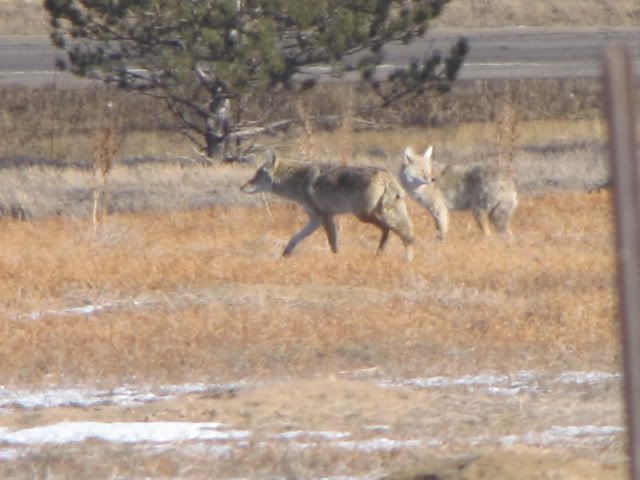
In early Spring, while hiking, I observed something that I had never seen before. I saw two coyotes in the wild, approximately 20-25 yards away. Because they didn't seem to be very interested in me, I didn't feel any particular fear. It was more like awe. The first thing I noticed were their eyes, intense and glowing. These two looked quite a bit like wolves. They were surprisingly tall for coyotes, and very fleet in their movement. I think they were looking for brush rabbits, which are plentiful in those foothills.

Coyotes are not harmless. They have been known to drag off children. They should be respected and not taken lightly. Coyotes are native to North America, while DNA studies have shown that wolves are descendants of Eurasian timber wolves who crossed over onto this continent on sheets of ice from both east and west directions, thousands of years ago. They are similar animals, mainly just smaller in size.

Looking into their eyes left an impression on me. I don't feel as comfortable when hiking at twilight, much less after dark. At one point I made direct eye contact with one of them. I saw that wild look in its eyes, perhaps measuring me. If they had attacked, I would have had no defense. I couldn't outrun them. I had no weapon. There were no trees around. A very fearful thought. One interesting thought about many animals, including canines, is that they would be almost entirely harmless if their jaws were muzzled.

While hiking this past Friday evening, very heavy fog rolled in, which made it prematurely dark. Also, it was difficult to see more than thirty yards. After dark, I have often seen "eye shine" at the end of the beam of my flashlight. It never concerned me a lot because I always knew it was either a wildcat, raccoon, skunk, or a possum. Usually foxes keep a healthy distance. The other small animals stay in close range, as long as they can stay hidden.

On this evening, as I entered a wooded area, I started to see eye shine. It had gotten dark and very foggy. As I made my way down the narrow trail, amid heavy brush, I saw the eye shine of three sets of eyes in the dark brush off to the side. I couldn't quite make out the possible size from that distance. I then thought of the coyotes. If they were coyotes, and there were three of them--and if they attacked--again, I would have no defense. I thought about those glowing eyes from the Spring experience.

I was afraid as I passed though that spot. So much so that I purposely made noise. I dragged my feet, made heavy breathing sounds, and a couple of grunts. Sounds consistent with a bear. Not that I thought any animal would think I was a bear, but to project a certain arrogance, as if I was the chief predator. It was a bluff. I was fearful of what possibly could have been three large predators, of which I had no defense.

After I left that narrow trail, and entered a wooded area, I turned off my flashlight for a moment. It was almost complete darkness. Only a small amount of light was visible directly between the treeline along the trail, due to the fog that was illuminated by the urban lights from the distance. Had my flashlight gone dead, the prospect of walking back in the complete darkness would have been terrifying. Sometimes raccoons, skunks, or other small animals don't move right away, and you could walk right into them and be bitten. Stepping on a large snake. Sometimes unusual people wander into the dark woods without carrying a flashlight. Our ancestors feared the night, for good reason. Anyone who is in a remote area at night, should always carry a flashlight so they can, at the very least, signal to another person.

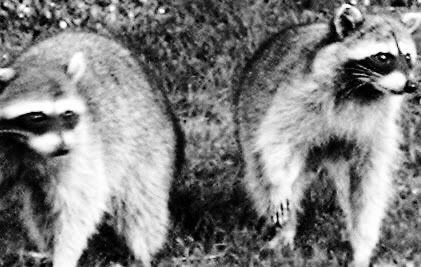
Strangely, about fifteen minutes later as I was near the end of the wooded trail, I saw raccoons on the trail in front of me. They didn't seem too happy to see me. At one point, I was startled by a loud furious growl in the brush right next to me! It had to be two raccoons in a brief skirmish. Occasionally, raccoons display aggressive behavior, even towards people. I like to describe them as "little bears."

Finally, I came upon one large one who was standing up straight in the middle of the road looking at me. At almost three feet tall, perhaps forty pounds, agitated, with large paws and sharp nails, and with powerful jaws... I had to stop! There we were, just standing and starting at each other from about ten yards. The beam of my flashlight on him and his shining eyes. Finally, I started to move forward by dragging my shoes against the ground. After about three steps, he angrily moved off to the side of the trail.

It was almost as if he were making the statement "this is our city!" For all I know, he may have been of chieftain of the clan... or maybe even the matriarch. During the day, while they're asleep, we invade their city; just as during the night, while we sleep, they invade our city. There must be some concept to them that "this is our place, and that is their place."

If I had somehow shrunk down to about three feet tall, I never would have gotten past him alive. At least with raccoons, you can gauge their mood by observing them. As long as you don't startle or corner them, they aren't a threat to a person. They could be a threat to pets. Often at twilight, at approximately that location, I observe raccoons, skunks, and wildcats together on the trail. They just sort've hang out and look at each other. Skunks sometimes walking right next to raccoons or wildcats.

Those woods wouldn't be the same without the "little bears." I keep thinking about the dialogue from the end of the movie 'Jaws'. Remember when they're paddling back to shore, after fighting the shark for days. Brody said "I used to hate the water," and Hooper responded, "I can't imagine why."

.

Monday, April 29, 2013

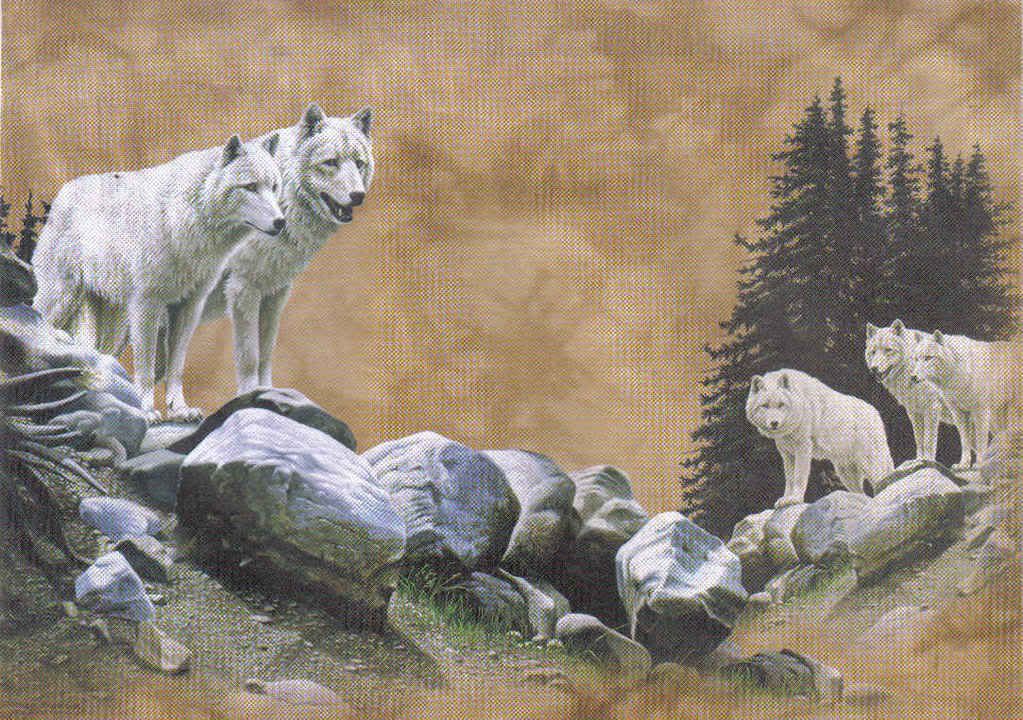
Feds say protections for gray wolves should be removed

Feds say protections for gray wolves should be removed

Peter Fimrite - San Francisco Chronicle - April 27, 2013

Gray wolves are no longer endangered and should be stripped of federal protection, argued a U.S. Fish and Wildlife Service draft regulation released to the Chronicle on Friday.

The document, which proposes removing all but a small group of Mexican wolves in the lower 48 states from the U.S. Endangered Species list, led to howls of protest from wildlife advocates. Delisting wolves, they say, would have a profound effect on California, Oregon and Washington, where the peripatetic predators are just beginning to gain a foothold. The first wolf in California in almost 90 years crossed the border from Oregon in December 2011, creating a sensation.

The solo lobo, named OR7, traveled thousands of miles through some of California’s most scenic wilderness in search of a mate. He went back to Oregon on March 13. Read more about the proposed regulation here.The document, which proposes removing all but a small group of Mexican wolves in the lower 48 states from the U.S. Endangered Species list, led to howls of protest from wildlife advocates. Delisting wolves, they say, would have a profound effect on California, Oregon and Washington, where the peripatetic predators are just beginning to gain a foothold. The first wolf in California in almost 90 years crossed the border from Oregon in December 2011, creating a sensation.

The solo lobo, named OR7, traveled thousands of miles through some of California’s most scenic wilderness in search of a mate. He went back to Oregon on March 13. Read more about the proposed regulation here.


**************************************************


Feds release wolf pairs in New Mexico, Arizona

San Francisco Chronicle - April 27, 2013


SILVER CITY, N.M. (AP) — Federal wildlife managers are releasing two pairs of Mexican gray wolves in Arizona and New Mexico in hopes of bolstering the population of the endangered predators.

The first pair was transported this week from a captive breeding facility in New Mexico to a holding pen in the Apache National Forest in southeastern Arizona. The male and female will be released once they acclimate to the area.

The other pair is being released at a remote site within the Gila Wilderness in southwestern New Mexico. The wolves were crated and packed into the backcountry Saturday on the backs of specially trained mules.

Officials with the U.S. Fish and Wildlife Service said the wolves would be placed in a temporary enclosure at a release site about a dozen miles from the Gila Cliff Dwellings National Monument. The wolves will be able to chew their way out of the enclosure.

"We continue to be committed to strategic releases that improve genetic diversity, increase the number of breeding wolves and offset illegal mortalities in the Blue Range Wolf Recovery Area," Fish and Wildlife Service Regional Director Benjamin Tuggle said in a statement.

Tuggle said he expects the releases to help the agency reach its goal of a self-sustaining wild wolf population.

Environmentalists said the releases were a positive step. They have long criticized the agency for not releasing more wolves. Still, distain for the animals continues to pulse through rural communities, where ranchers feel their livelihoods are at risk.

A subspecies of the gray wolf found in the Northern Rockies, the Mexican wolf was added to the federal endangered species list in 1976. The 15-year effort to reintroduce them in New Mexico and Arizona has stumbled due to legal battles, illegal shootings, politics and other problems.

Officials with the Fish and Wildlife Service and the Arizona Game and Fish Department said much consideration went into choosing which wolves would be released and where they would be let go. Factors included their genetics and whether they had formed a breeding bond as well as the absence of livestock, the distance from homes and whether there were enough elk and other prey.

Members of the wolf recovery team plan on putting out supplemental feed for the wolves while they learn to catch and kill native prey. Officials say that will also help anchor the wolves to the area.


.

Sunday, April 7, 2013

Trained raven interracting with it's owner


I had always heard that ravens, being of high intelligence, are able to be trained. There's the old image of Vikings having trained ravens, and apparently it's very true. The raven is a big part of Norse and Celtic mythology in particular. When listening to ravens where I live, I have often detected a myna bird-like vocalization; but what I didn't realize is that ravens can mimick sounds perfectly, like human voices, as you can see in this video. The ravens that I come into close contact with are perhaps twice as large as this bird, although it may not be full grown yet.

.

Saturday, March 2, 2013

When cougars and humans meet

Cougar policy in Calif. under review

Peter Fimrite - San Francisco Chronicle - March 1, 2013

[This article appeared as 'When cougars and humans meet' in the San Francisco Chonicle on March 2nd; see above link for images]

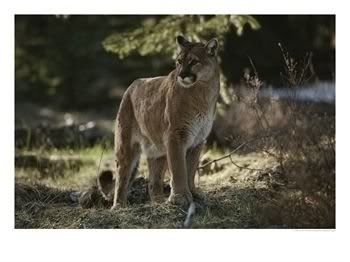
 A new state mountain lion policy that would give California wardens more options besides killing the animals was proposed Friday under pressure from legislators and residents who were outraged by several lethal encounters last year, including the shooting of two cubs.

The draft policy by the California Department of Fish and Wildlife is the first state document focusing specifically on cougars. It creates a category for the lions, called "potential human conflict response," which gives wardens more discretion to use nonlethal methods. It also establishes a team of experts from around the state for wardens to consult when dealing with the predators.

"We have seen an increase in mountain lion encounters or sightings, and we expect to see future increases in mountain lion/human encounters," said Jordan Traverso, spokeswoman for the Department Fish and Wildlife, who blamed the increase primarily on human encroachment and habitat destruction. "This is more of a comprehensive policy that gives us more options and more access to expertise in these encounters."

Game wardens shot and killed two 13-pound cubs found under a deck in Half Moon Bay on Dec. 1, creating widespread outrage. It was the most controversial of several mountain lion shootings in which many people and conservation organizations felt the wayward pumas could have been relocated instead of killed.

State Sen. Jerry Hill, D-San Mateo, introduced a bill on Jan. 25 that would require wardens to tranquilize and relocate mountain lions that wander into backyards or other human-populated areas unless they are an imminent threat.

 The widespread anger and threat of legislation prompted Fish and Wildlife director Charlton "Chuck" Bonham to order a re-evaluation of the department's puma policies. The new policy establishes a "response guidance team" of experts to assist wardens with encounters. It also increases training and directs staff to look into how rehabilitation and relocation programs might work.

There are an estimated 3,000 to 5,000 cougars in the state, and they are protected under the 1990 California Wildlife Protection Act, which also limits the ability of wardens to tranquilize, relocate and rehabilitate the felines, Traverso said.

Experts say the shy, elusive cats usually avoid people. Since 1890, mountain lions have killed 21 people in North America. That's compared with an average of 16 people a year killed by pet dogs, according to a Centers for Disease Control and Prevention study published in 2000.

Still, the muscular felines do occasionally wander into civilization, which can be a terrifying experience for the person who encounters one.

A handful of cougars are killed every year by state game wardens and local law enforcement officers. Ranchers kill 100 to 200 a year using depredation permits, which allow the killing of predators that harass livestock.

Traverso said the new policy will allow only one puma to be killed per depredation permit. She said trappers killed four lions using a single permit on two occasions last year, infuriating wildlife advocates and generating even more criticism of the department.

.

Friday, January 25, 2013

Interacting with wildlife

I currently live on an island of wilderness in an urban sea. It hugs against a mountainous park. In fact, the backyard and hillside here directly accesses the park by a couple of hundred yards. Houses are only on one side of the streets here, lots of trees and hillsides, not much traffic, and it's quiet. So, not surprisingly, there is a lot of interaction with wildlife without even going into the park. During the day, people invade the park where the animals live; and during the night, animals invade the neighborhood where the people live (racoons, skunks, possums). The border between the park and the neighborhoods surrounding it form something of an illusion of separation. It's not quite the same dynamic that one would expect to see in "the country," where small towns are dwarfed by the "countryside." Here, the urban landscape dwarfs any wild areas.

Wildlife in the park includes coyotes, foxes, racoons, wildcats (wild "house cats"), ravens, falcons, hawks, vultures, seagulls, bats, short-eared brush rabbits, possums, jackrabbits, squirrels, skunks, garter snakes, rattlesnakes, black snakes with thin red strips down it's back, and one times many years ago I saw a dead wild pig. There apparently was a mountain lion sighting a few years ago, but there are no deer. Just last Sunday, I saw two coyotes about twenty yards from me. I thought I had seen some before, but I wasn't sure. It was an amazing thing to see as they looked more like wolves than coyotes. In fact, they could have possibly been wolves; but more-than-likely they were coyotes... with perhaps some remote wolf-genes. As I looked at them, one quickly looked at me with it's wild eyes. Mostly likely, they were hunting the small brush rabbits along those foothills.

We can look at photographs or watch videos online, but there's no substitute for actually seeing, hearing, and experiencing something like this first hand. I remember last year seeing some bats flying around while it was actually still pretty light outside, and no video or television can recreate that sight... of actually seeing them flying, and literally being able to see their fury faces firsthand! For whatever reason, on that particular early evening, they came out while it was still rather light out. I was just in the right place, at the right time; which is how these experiences with wildlife often are.


The raven neighborhood

There are lots of trees here, and for whatever reason starting after the year 2000, ravens started settling here in large numbers. They drove other birds away. Just three days ago, I saw a raven trying to drive away a hawk. The hawk didn't appear very frightened, but it showed me how fiercely territorial that ravens are. Years ago I saw white feathers all about out the window, and when I looked out, two ravens were killing a sea gull. When I saw a falcon land on a chimney some weeks ago, a raven landed there too and stared at it, then another one landed, and they drove it off. I have never witnessed any aggression by them towards people. I guess they figure they're in charge of the skies here.


A rare embrace

Last summer while hiking in the park, I reached a spot where the trail travels along over a steep mountainside. There's somewhat of a feeling of being in the sky there. You are in the sky in a sense, or in relation to everything in view below. It's windy there in the late afternoons during the summer, and I saw ravens there as I approached. I thought that it was somewhat of a strange location for them to be, since it was windy and it was far from where they usually live and hunt back in the more wooded areas. Then suddenly they started flying in a circle around me... about seven or eight of them. Now this is a particular spot on the trail where you are are sort've surrounded by sky, as it on a bend or corner of this mountain which was about eight hundred feet that this spot.

They flew in a circle around me, about twelve feel from me, and for about forty-five seconds. Perhaps they recognized me from many hikes before, and being highly intelligent as they are, embraced me for this small window of time. They're not very personal in how they interact with people, and somehow I felt strangely "honored" to have been chosen by them to interact with in this dramatic way; and especially since the raven is such a large part of folklore and mythology.


A forgotten act of heroism

As stated before, so much of seeing or interacting with wildlife is timing. In 2005 while hiking, I can upon a grassy picnic area and saw fox stalking a cat. It was an orange cat which lived in the park, and whom I could tell was once a domestic cat by it's docile nature. The cat's paws were extended out along the ground, and it's head low facing the approaching fox. I had seen dead cats along the trails prior to that, and a ranger told me that the foxes were killing the cats without eating them. I decided to intervene, although you rarely--if ever--should interfere. My quickly conceived plan was to walk towards the cat and grab him by the scruff of the neck--which disables them--and carry it off the field. If this was a true wild-cat, then I would not have intervened. This cat looked somewhat docile, and I was sure that it was someone's pet at some point; and was the victim of some odd situation like "some guy dropping off his girlfriend's cat off there because she dumped him for another guy." Anyway, I just figured that he or she could used a break.

As I approached the cat, it took off running, and the fox ran after it too, and I started running and trying to stay between them hoping that the fox would quit. Luckily, the cat found a tree-like shrub to jump up into and the fox stopped close-by. I looked at the fox and we made eye-contact. His eyes were very wild, and I couldn't determine if he was angry or not. He was only about seven feet from me. He looked at the cat in the tree-shrub, then he looked at me, and after a minute he started to leave. I felt a number of varied thoughts about what I had done.. including thoughts of a symbolic or spiritual meaning to it. Had it been a person, I wouldn't have had those feelings, and it just would have felt like what it was. It's like one of those things that nobody will ever know... but you know it.

After walking the same trails a lot, and only after a long time, wildcats--who like to hang out along the open trails--start to trust me just a little bit. They stop running away. I move over to the opposite side of the trail from them, and they watch me with their wild eyes. One one occasion years ago, a mother watched me as I walked by her kittens. As I glanced at her, she looked at me with particularly wild eyes... while was partly due to her concern. In that particular instance, it wasn't "trust," but I'm still glad she didn't necessarily see me as a threat to them. I still remember how she looked as we made eye contact. She was beautiful sitting along a thick piece of sideways-angled heavy brush stem. Her short thick tabby fur and luminous wild greenish eyes looking at me.


"Little bears"

This park has a few of what I would call mini-forests. Somehow a forest, even a mini-forest, seems incomplete without bears. To me, racoons are like little bears. They way they move, how they stand on two feet, their hand-like claws. They range from somewhat scrawny to surprisingly large. I have seen some who look about forty pounds. The larger ones strike me as more bear-like with their big heads and thick round ears, and big teeth. I also like that they're not a threat to someone unless a person presents themselves as a threat to them... so they can be viewed at close range. In addition, they're generally not a big threat to pets.


The meeting of the minds

In one particular stretch the trail is paved, which is a leftover from when there were some roads and homes in the area. The old foundations have been torn out, but there are still a couple of wells and artificial-looking spots. In one particular stretch of old paved road, in the early evenings, wildcats, skunks, and racoons come onto the road together. They seem to be amused by each others presence. Animals have some very keen senses, and they must notice a lot of differences beyond mere looks. For example, the smell of other animals. Dogs and cats have such a good sense of smell that they can tell people apart by the individual scent of those people. Anyway, the just sort've look at each other, and spend some time there before they get onto the business of nocturnal hunting. I think cats are only partly nocturnal though.


Bears and mountain lions

I think most people have had the experience of camping and having bears come around. I sill find it a curious concept that theoretically, bears could attack someones campsite of they wanted to. They just don't. They only come around for food, which they can smell from great distances. It just interesting that they generally don't present a really big threat to people in the woods. When they invade the campsite looking for food, they almost appear as big, clumsy, benevolent creatures... and not 300+ pound beasts, which they really are.

Here along the Santa Cruz Mountain Range, it's common to hear about mountain lion sightings. There was one experience that I thought was interesting. A woman was hiking in a remote area, and she saw mountain lion kittens. Soon, not surprisingly, the mother came running after her. However, she only chased her a short distance. That really reflected the nature of the mountain lion. Mountain lions are not much of a threat to people, with perhaps only a dozen killings of humans in California in the past century. You would be much safer walking a trail ten feet from a hidden mountain lion than you would be walking down the streets in some urban districts. 999 times out've 1,000 they would ignore you.

Mother bears are very different. They go berserk when anyone is around their cubs. They present likely the greatest threat in the northern wilds to the average person. Coyotes are also a big danger to young children. It's interesting that wolves have been forcefully driven out've North America, while coyotes thrive in even urban areas. In any case, always keeping a healthy respect for wildlife is a good rule of thumb. A racoon, for example, can do tremendous damage to a person if they feel threatened.

1-29-13 ADDITION: I just wanted to add here one small item. Awhile back, I dropped a large piece of cooked meat on the floor. It was close to the size of a golf ball. Instead of throwing it away, I placed it out along the hillside near an established "animal path." The next morning it was gone. It was like a little mystery, and a fun interaction.

That animal path was another item worth noting. These paths are often in places where a wilderness meets a neighborhood. One such path exists just right along where I sit in a chair along the back hillside of where I live. Late Spring last year while sitting there on a warm evening, a raccoon came upon me. It looked at me, then after a few seconds let out a low growl/snarl to show it's disapproval of me blocking the trail. I found it amusing, but he/she was right. I was blocking the road. A raccoon has to make an honest living too.

.

Wednesday, November 28, 2012

'Last of the Scottish Wildcats' DVD trailer


From the Scottish Wildcat Association:

Pound for pound the Scottish wildcat is one of the most impressive predators in the world; intelligent, fearless, resourceful, patient, agile and powerful they are genuine superpredators and until as recently as the 1950s were believed to be man killers.

Surviving human persecution for five hundred more years than the British wolf and over a thousand more years than the British lynx or bear, they inspired and terrified the same Highland clans that defied the Roman and English empires. Today the wildcat continues to receive the respect of Highland farmers and gamekeepers, many of them happy to recount the tale of the wildcat mother killing herself to kill a golden eagle attacking her kittens, or stories from childhood of wildcats evading teams of watching keepers to snatch lambs from their father's fields.

Although wildcats look similar to domestic cats, these are no feral or farm cats run wild; they're Britain's only remaining large wild predator and have walked this land for millions of years before mankind arrived or domestic cats appeared. Every inch a cat in every sense of the word the Scottish wildcat epitomises the independent, mysterious and wild spirit of the Highlands like no other creature.

"They'll fight to the death for their freedom; they epitomise what it takes to be truly free I think." Mike Tomkies


'Last of the Scottish Wildcats' DVD at CoffeeFilms.com


.

Monday, October 10, 2011

During lean times, visiting local parks is a good option

Recently, I did a search for local national, state, and county parks, and was surprised to see that there are a lot of interesting-looking parks that I haven't seen before. I believe that they provide a great option, especially during recessionary times. Some of these parks sit side-by-side with heavily populated areas, yet they often are relatively unvisited. However, when you're there, you can see that people are having a great time.

This probably would have been a better message last spring, but the parks are open all year round. Only for two months or so are some of them closed only for campers. One good easy way to take a look at what parks are in your area is to go to Wikipedia, look up nearby counties, and you should see a list of county trails, county parks, state parks, and state state beaches (if any). I looked at Canadian regional districts, and didn't have much luck. In any case, it's not all that hard to find them in a direct search of your area.

One thing that amazes me about the wild areas which border urban districts, is how there is no separation between them. In the day, people roam into the animal realm; and during the night, the animals roam into the human realm. Spiritually, it's an interesting concept, that there is no wall or fence. It can't ever be forgotten, however, that they're "wild animals." Just last week I was sitting on a deck, overlooking a hillside which was basically connected to San Bruno Mountain State Park. This deck was right on the hillside, rather than placed in a higher spot. At about 10:00 PM, a racoon approached the deck. I had seen this racoon before I think, only this time it wasn't very please to see me. They're fiercely territorial, and it growled at me. They're usually about thirty or forty pounds, and have powerful jaws; and are especially dangerous when afraid or startled. I know, they look friendly, but wild animals can't be trusted.

Also, sometimes these parks can loosely be looked at as local meeting places. I mean you sometimes see the same people in these parks, who live nearby, and it could provide some connection or friendly interaction if you want it. I think people of any age can enjoy themselves out there, and I have seen that. I've seen people in their eighties hiking. Even a short hike can be nice. Sometimes people of different age groups casually interact, which is lacking in society in general. Lastly, it's a great place for pagans to spiritually connect to nature and enjoy time together.

Remote hiking experiences can be an adventure as well. Whenever, for example, I was visiting the South Lake Tahoe area, I se some serious hikers with backpacks. I hiked with a a small backpack, but I mean these are the really serious hikers. You can tell. They get to some very remote mountains and back country. However, you can find remote spots on short hikes. I enjoy being out there in any weather, except heavy rain.

.