Thursday, March 10, 2016

Countdown to the Pagan New Year - Part 3


Alpha Centauri, the next closest star system to our Sun, has been covered here before. To get there, we must have access to some type of free energy propulsion in space, and be able to travel at a high rate of speed. Perhaps even 20% the speed of light may allow for a 25-year trip. Naturally the faster the better. Trans-humanists, although I disagree with the vast majority of what they say, have theorized that human consciousness could at some point be downloaded into a machine that could operate a spaceship for as long as it takes. Personally I would like to see the plutocratic United Nations dismantled, and in its place form a cooperative world space agency. The world ought to be focusing on our closest star system a lot more. It should be firmly in our crosshairs.


Dr. Bernard Beitman - The science of coincidences

Bernard Beitman was a guest on Coast To Coast AM a few days ago, and he covered what we would call "synchronicity".... although he usually uses the term "coincidences." His name would be a good one to look up for anyone interested in the subject. Our "thoughts" are energies, and they affect the world around us in strange ways. In other words, we may be causing these coincidences, symbols, etc.

Bernard Beitman, MD is the first psychiatrist since Carl Jung to systematize the study of coincidences.

Dr. Bernard Beitman website

Coast To Coast AM guest profile

Dr. Beitman's new book: 'Connecting with Coincidence - The New Science for Using Synchronicity and Serendipity in Your Life'

Interviews and lectures on video


ISIL/ISIS destroying ancient ruins

Destruction of cultural heritage by ISIL

Deliberate destruction and theft of cultural heritage has been conducted by the Islamic State of Iraq and the Levant (ISIL, also known as ISIS - Islamic State of Iraq and Syria or IS - Islamic State) since 2014 in Iraq, Syria, and to a lesser extent in Libya. The destruction targets various places of worship under ISIL control and ancient historical artifacts. In Iraq, between the fall of Mosul in June 2014 and February 2015, ISIL has plundered and destroyed at least 28 historical religious buildings.

I have absolutely no doubt that they would love to do this worldwide. These ruins, such as the Temple to Ba'al that they blew up last August, were not constructed by their own ancestors. Their ancestors were 7th century Saudi desert tribes. This is proof that this organization would eliminate every culture--and really every person--in the world which happens to not be of their brand of Islam.


The simplest lesson that many people don't learn

If you feel mistreated, belittled, hassled, insulted, or cheated in any place of business where you spend good money, don't shop there anymore!


Old wisdom quote

"Nothing good happens after midnight." -- author unknown 


Time machine to the past


Gene Pitney - Only Love Can Break a Heart

David L. Rogers

It's a fact, and I'm pretty sure we all know this, what we don't know is why is it so hard to love again after it's been broken? You would think we would be happy to enter into it again, or maybe we are gunshy, and it does take time, a little bit goes away each and every day, until finally, they are a memory, and that's when they want you back, lol. love, whatcha gonna do, and before I forget, this ones a request by Val, thanks Val, and enjoy, Dave.


Responsible feline mother


Sparta giving birth to 6 kittens

CatMan 


"Ampersand" - Lost letter from the alphabet

'What Character Was Removed from the Alphabet?'

by Dictionary.com - February 25, 2014

....“[and symbol]” was actually part of the English alphabet. In the early 1800s, school children reciting their ABCs concluded the alphabet with the [and symbol].


Fully provable extraterrestrial life... ignored?


Red Rain in Sri Lanka | The Unexplained Files

Science Channel

Mysterious downpours of red rain were reported in Sri Lanka. During the search for an explanation investigators find evidence of strange living cells. | For more, visit
http://www.sciencechannel.com/tv-shows/the-unexplained-files/#mkcpgn=ytsci1

************

A more complete analysis from the UnknownCountry.com podcast:

Extraterrestrial Life in Red Rain


Sub-freezing glaciers at the Equator

It's always fascinated me that there is an environment, right at the Equator, which can resemble a harsh Alaskan winter. The 19,341-foot summit of Mount Kilimanjaro in tropical Africa is ice-capped. The cap is divergent and outwards splits up into individual glaciers. The average temperature in the summit area is approximately −7 °C. Also the 1,600-mile long Atlas Mountain range, running along the blazing hot Sahara Desert, appears like an Alpine environment of snowy peaks and valleys near and along its 13,000-foot+ summits. With its population made up of villages of unmixed native Berbers in local dress, they don't look unlike traditional Lapps in the summertime.


Worldwide "sky trumpets" not going away

Whatever the cause of this phenomenon, it may be the origin for the many trumpets present in ancient mythologies.


Trumpets Are Sounding Around The World (from the sky)

Billy Black

According to the Revelation 8 Prophecy, the 7 trumpets don't sound till after the son of perdition; Who opposeth and exalteth himself above all that is called God, or that is worshipped; so that he as God sitteth in the temple of God, shewing himself that he is God. (Revelation 13:3-7 and 2 Thessalonians 2:3). If you're not strong enough in faith, you might destroy yourself, trying to understand prophesy. Many bible scholars have conflicting Ideas about the order of events but rest assured, when you see the Israeli (2 state solution) peace treaty is signed, you can count 3.5 years to see them severely attacked. Revelation 13:3-7 and Revelation 13:12-17 prophesies will occur. Then (if you can survive) you can look for 2 Thessalonians 2:3 to be fulfilled.


Namesake song of the 70s

Throughout the comments, many women were named after this song (Brandy, Brandi, or Brandie).


Looking glass - Brandy you're a fine girl

Porrige hater


.

Sunday, March 6, 2016

Countdown to the Pagan New Year - Part 2

The old historical flag of Bohemia (white over red bars), along with its historical arms (white lion on red background), would make a perfect modern national flag

Why not... "Bohemia" ...?


Bohemia

Bohemia (Czech: Čechy; German: Böhmen; Polish: Czechy; French: Bohême; Latin: Bohemia) is a region in the Czech Republic. In a broader meaning, it often refers to the entire Czech territory, including Moravia and Czech Silesia, especially in historical contexts: the lands of the Bohemian Crown. Bohemia was a kingdom in the Holy Roman Empire and subsequently a province in the Habsburgs’ Austrian Empire. It was bounded on the south by Upper and Lower Austria, on the west by Bavaria, on the north by Saxony and Lusatia, on the northeast by Silesia, and on the east by Moravia. From 1918 to 1939 and from 1945 to 1992 it was part of Czechoslovakia; and, since 1993, it has formed much of the Czech Republic.


Etymology

In the 2nd century BC, the Romans were competing for dominance in northern Italy, with various peoples including the Boii. The Romans defeated the Boii at the Battle of Placentia (194 BC) and the Battle of Mutina (193 BC). After this, many of the Boii retreated north across the Alps.[4]

Much later Roman authors refer to the area they had once occupied as Boiohaemum, the earliest mention being in Tacitus' Germania 28 (written at the end of the 1st century AD). The name appears to include the tribal name Boi- plus the Germanic element *haimaz "home" (whence Gothic haims, German Heim, English home). This Boiohaemum included parts of southern Bohemia as well as parts of Bavaria (whose name also seems to derive from the tribal name Boii) and Austria. The Czech name "Čechy" is derived from the name of the Slavic tribe of Czechs who settled in the area during the 6th or 7th century AD.


Ancient Bohemia

Bohemia, like neighbouring Bavaria, is named after the Boii, who were a large Celtic nation known to the Romans for their migrations and settlement in northern Italy and other places. Another part of the nation moved west with the Helvetii into southern France, which was one of the events leading to the interventions of Julius Caesar's Gaulish campaign of 58 BC. The emigration of the Helvetii and Boii left southern Germany and Bohemia a lightly inhabited "desert" into which Suebic peoples arrived, speaking Germanic languages, and became dominant over remaining Celtic groups. Both Tacitus and Strabo refer to an area as Boiohaemum named after the Boii. The second component of this name is a Germanic word, related to modern German heim, and English "home", so the term means "Boii-home". To the south, over the Danube, the Romans extended their empire, and to the southeast in Hungaria, were Sarmatian peoples.

Kingdom of Bohemia

************

The concept, style, history, and symbolism of a nation of "Bohemia" appears to me to be much stronger than the current Czech Republic. I can't really determine any good reason that the name was changed in the first place. The modern Bohemia makes up most of today's Czech Republic. Names of nations is no exact science. France is named after the Teutonic tribe the Franks, even though the Frankish period was only a smaller part of the history of the region. The entire north of the Italian peninsula could have been named "Lombardia" due to the geographically-unifying period of Langobard rule; although that tribe was only a part of the region's history. Immigrants from old waves of immigration from specifically Bohemia were referred to--and referred to themselves--as "Bohemians." Old kings and warlords jumbled its borders, which didn't help matters any.


Underrated actor


I watched the 2006 film 'The Hoax' the other evening, and it's clear to me that Alfred Molina is one very underrated actor. Whatever the character role requires, he fits it like a glove. In this movie his character was vulnerable, and he was exactly that. Often with even the better actors, transitions appear somewhat contrived. Molina is much better than, for example, Alec Baldwin who has earned enormous sums for merely playing himself in each role.


Synchronicity, synchronicity..

Yesterday I was working on a new Vehmic symbol, with a four-part shield and a black rose in front of it. I was deep in thought, and this is usually due to my desire to make symbols, colors, and arrangement totally congruent. I decided to take a break, and walked into the living room. As I looked out the large window, I saw four little birds on the telephone wire, and I pondered that they could represent the four sections of the arms, and I amusingly dismissed it on the spot. As I then continued to walk towards the window, I saw a fifth little bird which was initially obstructed.

4 + 1 = 5

4 birds at an approximately six inch equal distance from one another (the symbolic 4-part quadratic shield) + 1  bird approximately one foot from the others (the symbolic detached black rose) = 5 (the sum of the Vehme).

The only problem with synchronicity is that you cannot truly prove it. You may only prove it to yourself, which is it's universal law. It ultimately only applies to you, and it's only message is that you're on the correct path. Even brilliant minds which have tapped into this universal symbolism, which is available to anyone, erroneously have assumed that it made them special. It does not make anyone special. It's only an acknowledgement by the universal consciousness.


'Horned Nephilim Skeletons Found In Valley Of Giants?'

BeforeItsNews.com - January 10, 2013

Several human skulls with horns protruding from them were discovered in a burial mound at Sayre, Bradford County, Pennsylvania, in the 1880′s. With the exception of the bony projections located about two inches above the eyebrows, the men whom these skeletons belonged to were anatomically normal, although at seven feet tall they were considered to be giants. Burial was believed to have been in the neighborhood of 1200 AD.

 con'd

************

I don't like to cover general mysteries here unless it's linked to a related subject. However, I have always found the horned skulls to be particularly strange.


"Love a rainy night" - perfect during current Californa storm

This one by Eddie Rabbit never gets old.


Eddie Rabbitt - I Love A Rainy Night 

Allec Joshua Ibay


Tribute to the late Eddie Rabbitt


.

Saturday, March 5, 2016

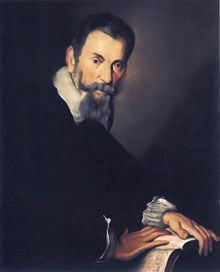
Claudio Monteverdi - Lombard pioneer of the Baroque period


Claudio Monteverdi "Missa in illo tempore : Crucifixus à 4"

Musikkhistoria

Claudio Giovanni Antonio Monteverdi (15 May 1567 (baptized) -- 29 November 1643) was an Italian composer, gambist, and singer.

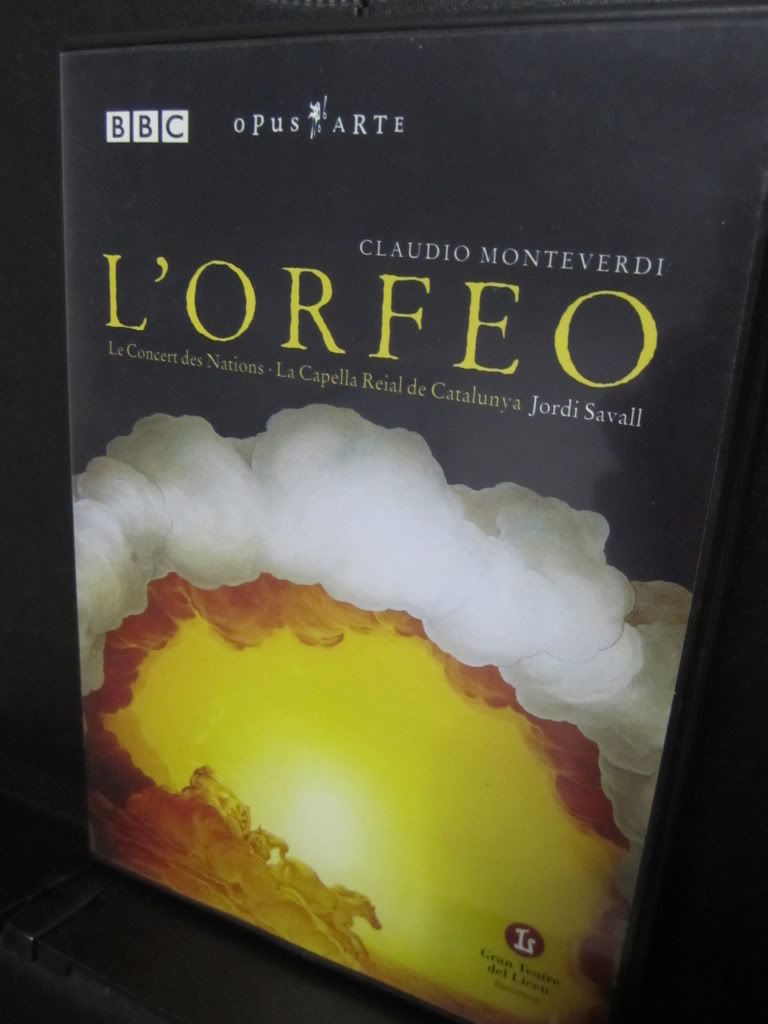
Monteverdi's work, often regarded as revolutionary, marked the transition from the Renaissance style of music to that of the Baroque period. He developed two individual styles of composition: the heritage of Renaissance polyphony and the new basso continuo technique of the Baroque. Enjoying fame in his lifetime, he wrote one of the earliest operas, L'Orfeo, which is still regularly performed.

"Missa in illo tempore : Crucifixus à 4"
Performed : Bach Collegium Japan
Dir : Masaaki Suzuki

Image : stained glass window - detail of head of Christ, Scopwick Church, Lincolnshire, England


Claudio Monteverdi
Claudio Giovanni Antonio Monteverdi (Italian; 15 May 1567 (baptized) – 29 November 1643) was an Italian composer, gambist, singer and Roman Catholic priest.

Monteverdi's work, often regarded as revolutionary, marked the change from the Renaissance style of music to that of the Baroque period period. He developed two styles of composition – the heritage of Renaissance polyphony and the new basso continuo technique of the Baroque. Monteverdi wrote one of the earliest operas, L'Orfeo, a novel work that is the earliest surviving opera still regularly performed. He is widely recognized as an inventive composer who enjoyed considerable fame in his lifetime.


Claudio Monteverdi was born in 1567 in Cremona, Lombardy. His father was Baldassare Monteverdi, a doctor, apothecary and amateur surgeon. He was the oldest of five children. During his childhood, he was taught by Marc'Antonio Ingegneri, the maestro di cappella at the Cathedral of Cremona. The Maestro’s job was to conduct important worship services in accordance with the liturgy of the Catholic Church. Monteverdi learned about music as a member of the cathedral choir. He also studied at the University of Cremona. 


His first music was written for publication, including some motets and sacred madrigals, in 1582 and 1583. His first five publications were: Sacrae cantiunculae, 1582 (a collection of miniature motets); Madrigali Spirituali, 1583 (a volume of which only the bass partbook is extant); Canzonette a tre voci, 1584 (a collection of three-voice canzonettes); and the five-part madrigals Book I, 1587, and Book II, 1590. He worked at the court of Vincenzo I of Gonzaga in Mantua as a vocalist and viol player, then as music director. In 1602, he was working as the court conductor and Vincenzo appointed him master of music on the death of Benedetto Pallavicino.

In 1599 Monteverdi married the court singer Claudia Cattaneo, who died in September 1607. They had two sons (Francesco and Massimilino) and a daughter (Leonora). Another daughter died shortly after birth. In 1610 he moved to Rome, arriving in secret, hoping to present his music to Pope Paul V. His Vespers were printed the same year, but his planned meeting with the Pope never took place.


In 1612 Vincenzo died and was succeeded by his eldest son Francesco. Heavily in debt, due to the profligacy of his father, Francesco sacked Monteverdi and he spent a year in Mantua without any paid employment. His 1607 opera L'Orfeo was dedicated to Francesco. The title page of the opera bears the dedication "Al serenissimo signor D. Francesco Gonzaga, Prencipe di Mantoua, & di Monferato, &c."

By 1613, he had moved to San Marco in Venice where, as conductor, he quickly restored the musical standard of both the choir and the instrumentalists. The musical standard had declined due to the financial mismanagement of his predecessor, Giulio Cesare Martinengo. The managers of the basilica were relieved to have such a distinguished musician in charge, as the music had been declining since the death of Giovanni Croce in 1609.

In 1632, he became a priest. During the last years of his life, when he was often ill, he composed his two last masterpieces: Il ritorno d'Ulisse in patria (The Return of Ulysses, 1641), and the historic opera L'incoronazione di Poppea (The Coronation of Poppea, 1642), based on the life of the Roman emperor Nero. L'incoronazione especially is considered a culminating point of Monteverdi's work. It contains tragic, romantic, and comic scenes (a new development in opera), a more realistic portrayal of the characters, and warmer melodies than previously heard. It requires a smaller orchestra, and has a less prominent role for the choir. For a long period of time, Monteverdi's operas were merely regarded as a historical or musical interest. Since the 1960s, The Coronation of Poppea has re-entered the repertoire of major opera companies worldwide.

Monteverdi died, aged 76, in Venice on 29 November 1643 and was buried at the church of the Frari.


.

Friday, March 4, 2016

Raven Grimassi on Coast to Coast AM tonight (Fri - Feb 4) - "Communicating with Ancestors"


Coast to Coast AM with George Noory

10:05 PM to 2:00 AM PST


Communicating with Ancestors


Date: Friday - March 4, 2016
Host: George Noory
Guests:  Raven Grimassi, Open Lines 

Neo-pagan scholar and author Raven Grimassi is a practicing witch. He'll discuss his new work exploring the realm of the ancestors and the role of reincarnation in the soul's relationship to ancestral lineage. He'll explain the interactions between ancestors, the living, and the dead, and examine how communication with the ancestors is strengthened through various techniques and ritual practices. Followed by Open Lines in the latter half. 


************

3-6-16 ADDITION: The entire program below. I tried to get through, but was unable to. I got through to ask a question the last time he was on. It's a big program, with perhaps 15 million people tuning in.


Coast To Coast AM March 4, 2016 Communicating with Ancestors 

Conflict Returns

Neo-pagan scholar and author Raven Grimassi is a practicing witch. He'll discuss his new work exploring the realm of the ancestors and the role of reincarnation in the soul's relationship to ancestral lineage. He'll explain the interactions between ancestors, the living, and the dead, and examine how communication with the ancestors is strengthened through various techniques and ritual practices. Followed by Open Lines in the latter half


.

Thursday, March 3, 2016

The violin in Lombardy: Part 4 - Antonio Stradivari: Section B


Stradivarius

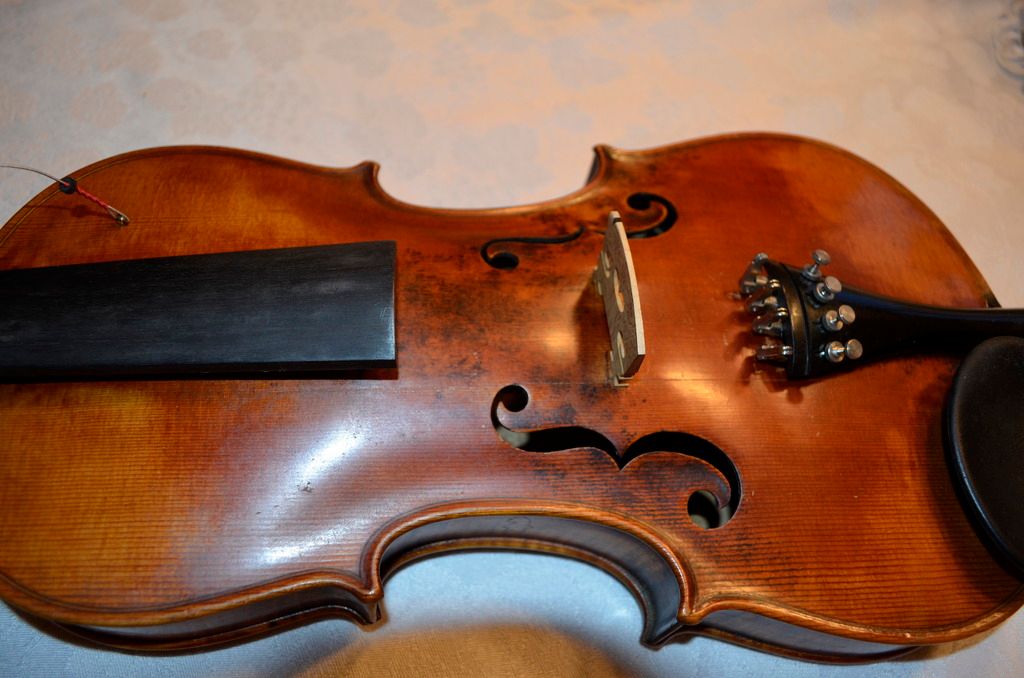
A Stradivarius is one of the violins, violas, cellos and other string instruments built by members of the Italian family Stradivari (Stradivarius), particularly Antonio Stradivari, during the 17th and 18th centuries. According to their reputation, the quality of their sound has defied attempts to explain or equal it, though this belief is disputed. The name "Stradivarius" has become a superlative often associated with excellence; to be called "the Stradivari" of any field is to be deemed the finest there is. The fame of Stradivarius instruments is widespread, appearing in numerous works of fiction.


Hellier Stradivarius

The Hellier Stradivarius of circa 1679 is a violin made by Antonio Stradivari of Cremona, Italy. It derives its name from the Hellier family, who might well have bought it directly from the luthier himself.

The Hellier Stradivarius has had a convoluted ownership history. It seems to have been in the possession of the Hellier family from the beginning of the 18th century. Sir Samuel Hellier, High Sheriff of Staffordshire 1745–49, brought the violin to England, and through various wills it was kept in the family until 1880.


Messiah Stradivarius

The Messiah-Salabue Stradivarius of 1716 is a violin made by Italian luthier Antonio Stradivari of Cremona. It is considered to be the only Stradivarius in existence in as new state. It is in the collection of the Ashmolean Museum in Oxford, England.

The Messiah, sobriquet Le Messie, remained in the Stradivarius workshop until his death in 1737. It was then sold by his son Paolo to Count Cozio di Salabue in 1775, and for a time, the violin bore the name Salabue. The instrument was then purchased by Luigi Tarisio in 1827. Upon Tarisio’s death, in 1854, French luthier Jean Baptiste Vuillaume of Paris purchased The Messiah along with Tarisio's entire collection. "One day Tarisio was discoursing to Vuillaume on the merits of this unknown and marvelous instrument, when the violinist Jean-Delphin Alard (Vuillaume's son-in-law), exclaimed: 'Then your violin is like the Messiah: one always expects him but he never appears' ('Vraiment, Monsieur Tarisio, votre violon est comme le Messie des Juifs: on l'attend toujours, mais il ne paraît jamais' ). Thus the violin was baptized with the name by which it is still known."

The Messiah was bequeathed by the family of W.E. Hill to the Ashmolean Museum in Oxford for preservation as "a yardstick for future violin makers to learn from."

The violin is in like-new condition, as it was seldom played. The tonal potential of the instrument has been questioned due to the conditions of the Hill bequest. However it was played by the famous violinist Joseph Joachim, who states in a letter of 1891 to the then owner of the Messiah, Robert Crawford, that he was struck by the combined sweetness and grandeur of the sound. Nathan Milstein played it at the Hills' shop before 1940 and described it as an unforgettable experience. It is one of the most valuable of all the Stradivari instruments.

The top of the Messiah is made from the same tree as a P.G. Rogeri violin of 1710. The tuning pegs and the tailpiece (that shows the Nativity of Christ) are not original, but were added by Vuillaume.


Axelrod quartet

The Axelrod quartet is a set of four Stradivarius instruments collected by Herbert R. Axelrod. The collection consists of the Greffuhle violin, Axelrod viola, Ole Bull violin, and Marylebone cello.

In 1997, Axelrod donated them to the Smithsonian Institution. Their value at the time was estimated at $50 million.

The Axelrod quartet is occasionally used in performances. In concert, the Servais Stradivarius, which is also in the Smithsonian's collection, is occasionally added to the Axelrod quartet.


************


Stradivari instruments


************


Carlo Bergonzi (luthier)

Carlo Bergonzi (21 December 1683 – 9 February 1747) was an Italian luthier who apprenticed with Hieronymus Amati, collaborated with Joseph Guarneri, and is considered the greatest pupil of Antonio Stradivari.

Bergonzi is the first and most noted member of the Bergonzi family, an illustrious group of luthiers from Cremona, Italy, a city with a rich tradition of stringed instrument fabricators.


Kreisler Bergonzi

The Kreisler Bergonzi is an antique violin made by the Italian luthier Carlo Bergonzi (1683–1747) from Cremona in 1740.

Of all of the extant Cremonese instruments, the Kreisler Bergonzi is one of the best preserved with its original neck and most of its original varnish. There has been very little repair work required on it. It is one of the best sounding of all Bergonzi violins.


.

Wednesday, March 2, 2016

The violin in Lombardy: Part 3 - Antonio Stradivari: Section A


Antonio Stradivari

Antonio Stradivari (1644 – 18 December 1737) was an Italian luthier and a crafter of stringed instruments such as violins, cellos, guitars, violas and harps. Stradivari is generally considered the most significant and greatest artisan in this field. The Latinized form of his surname, Stradivarius, as well as the colloquial "Strad" are terms often used to refer to his instruments. The Hills Violin Shop estimate that Antonio produced 1,116 instruments, of which 960 were violins. It is also estimated that around 650 of these instruments survive, including 450 to 512 violins.


Stradivari and the Cremonese violin making school

San Matteo, the Stradivari parish, as well as San Faustino, the Amati parish, made up the center of cremonese violin making.They exerted influence not only on one another, in terms of the shape, varnish and sound of instruments, but also on many of their contemporaries; they defined violin making standards for the next 300 years.

Even at the beginning of the 18th century, Stradivari’s influence could be seen not only in the work of Cremonese makers, but also international ones, such as Barak Norman’s, one of the first important British makers. In the 1720s Daniel Parker, a very important British luthier, produced fine violins after Stradivari’s work selling anywhere from £30,000 - £60,000 in recent auctions. Parker based his best instruments on Stradivari's` `long pattern`, having the opportunity to study one or more of the instruments. Well into the 19th century, Jean Baptiste Vuillaume, the leading French luthier of his time, also made many important copies of Strads and Guarneris.
 

In the 18th century, Cremonese luthiers were the suppliers and local players on the demand side. After Stradivari’s death, this drastically changed. Although the Cremonese luthiers remained the suppliers, the demand side consisted of collectors, researchers, imitators, profiteers and speculators. Many local players could no longer afford the sought out instruments and most of the purchased instruments would be hidden in private collections, put in museums, or would be simply put back in their cases, hoping that they would gain value over time. It is then that the so-called ‘fever’ for Stradivaris took off.

Cozio, Tarisio and Vuillaume were the fathers of this frenzy that would extend well into the 21st century. Also, soon after Stradivari’s death, most of the other major Cremonese luthiers would die, putting an end to the golden period of Cremona’s violin making, which lasted more than 150 years, starting with the Amatis and ending with the Cerutis.


Stradivarius instruments

Stradivari's instruments are regarded as amongst the finest bowed stringed instruments ever created, are highly prized, and are still played by professionals today. Only one other maker, Giuseppe Guarneri del Gesù, commands a similar respect among violinists. However, neither blind listening tests nor acoustic analysis have ever demonstrated that Stradivarius instruments are better than other high-quality instruments or even reliably distinguishable from them.

Fashions in music, as in other things, have changed over the centuries, and the supremacy of Stradivari's and Guarneri's instruments is accepted only today. In the past, instruments by Nicolò Amati and Jacob Stainer were preferred for their subtle sweetness of tone.


The Mystery of the Stradivarius _ part 1
 

haj metwally


The Mystery of the Stradivarius _ part 2

The Mystery of the Stradivarius _ part 3

The Mystery of the Stradivarius _ part 4

.

Tuesday, March 1, 2016

The violin in Lombardy: Part 2 - "Cremonese school"

Beginning in the 16th century, Cremona became renowned as a centre of musical instrument manufacture, with the violins of the Amati family, and later the products of the Guarneri and Stradivari shops. To the present day, their work is widely considered to be the summit of achievement in string instrument making. Cremona is still renowned for producing high-quality instruments.

[Crermona


The most famous violin makers (luthiers) between the 16th century and the 18th century include:

The school of Cremona, beginning in the half of the 16th century with violas and violone and in the field of violin in the second half of the 16th century

The Amati family, active 1550–1740 in Cremona

The Guarneri family, active 1626–1744 in Cremona and Venice

The Stradivari family, active 1644–1737 in Cremona

************

The violin immediately became very popular, both among street musicians and the nobility, illustrated by the fact that the French king Charles IX ordered Andrea Amati to construct 24 violins for him in 1560. One of these instruments, now called the Charles IX, is the oldest surviving violin.

************


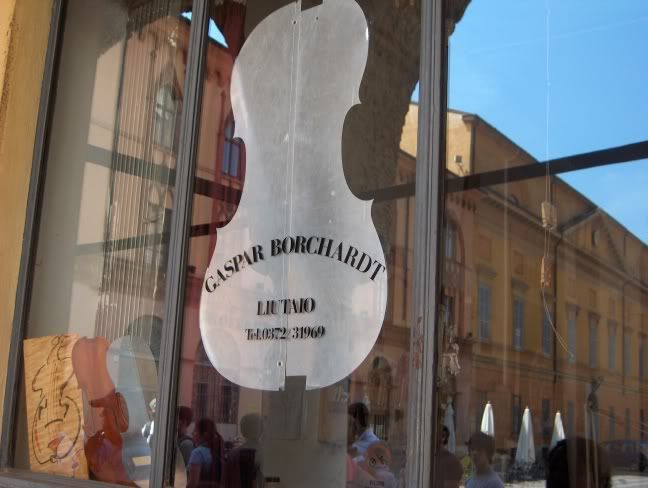
Violin shop in Cremona
To this day, instruments from the so-called Golden Age of violin making, especially those made by Stradivari, Guarneri del Gesù and Montagnana are the most sought-after instruments by both collectors and performers. The current record amount paid for a Stradivari violin is £9.8 million (US$15.9 million), when the instrument known as the Lady Blunt was sold by Tarisio Auctions in an online auction on June 20, 2011.

[Violin]


Since their invention, instruments in the violin family have seen a number of changes. The overall pattern for the instrument was set in the 17th century by luthiers like the prolific Amati family, Jakob Stainer of the Tyrol, and Antonio Stradivari, with many makers at the time and since following their templates.

************

The earliest evidence for their existence is in paintings by Gaudenzio Ferrari from the 1530s, though Ferrari's instruments had only three strings. 

************

It is not clear exactly who made these first violins, but there is good evidence that they originate from northern Italy, in the vicinity (and at the time the political orbit) of Milan. Not only are Ferrari's paintings in this area, but at the time towns like Brescia and Cremona had a great reputation for the craftsmanship of stringed instruments. The earliest documentary evidence for a violin is in the records of the treasury of Savoy, which paid for "trompettes et vyollons de Verceil", that is to say, "trumpets and violins from Vercelli", the town where Ferrari painted his Madonna of the Orange Tree. The first remaining written use of the Italian term violino occurs in 1538, who brought "violini Milanese" (Milanese violinists) to Nice when negotiating the conclusion of a war.


The oldest confirmed surviving violin, dated inside, is the "Charles IX" by Andrea Amati, made in Cremona in 1564, but the label is very doubtful. The Metropolitan Museum of Art has an Amati violin that may be even older, possibly dating to 1558 but just like the Charles IX the date is unconfirmed. One of the most famous and certainly the most pristine is the Messiah Stradivarius (also known as the 'Salabue') made by Antonio Stradivari in 1716 and very little played, perhaps almost never and in an as new state. It is now located in the Ashmolean Museum of Oxford.
 

Early makers

Instruments of approximately 300 years of age, especially those made by Stradivari and Guarneri del Gesù, are the most sought after instruments (for both collectors and performers). In addition to the skill and reputation of the maker, an instrument's age can also influence both price and quality.

The most famous violin makers, between the early 16th century and the 18th century included:

Amati family of Italian violin makers, Andrea Amati (1500–1577), Antonio Amati (1540–1607), Hieronymous Amati I (1561–1630), Nicolo Amati (1596–1684), Hieronymous Amati II (1649–1740)

Guarneri family of Italian violin makers, Andrea Guarneri (1626–1698), Pietro of Mantua (1655–1720), Giuseppe Giovanni Battista Guarneri (Joseph filius Andreae) (1666–1739), Pietro Guarneri (of Venice) (1695–1762), and Giuseppe Guarneri (del Gesu) (1698–1744)

Antonio Stradivari (1644–1737) of Cremona


[History of the violin]

.