A Stradivarius is one of the violins, violas, cellos and other string instruments built by members of the Italian family Stradivari (Stradivarius), particularly Antonio Stradivari, during the 17th and 18th centuries. According to their reputation, the quality of their sound has defied attempts to explain or equal it, though this belief is disputed. The name "Stradivarius" has become a superlative often associated with excellence; to be called "the Stradivari" of any field is to be deemed the finest there is. The fame of Stradivarius instruments is widespread, appearing in numerous works of fiction.
The Hellier Stradivarius of circa 1679 is a violin made by Antonio Stradivari of Cremona, Italy. It derives its name from the Hellier family, who might well have bought it directly from the luthier himself.
The Hellier Stradivarius has had a convoluted ownership history. It seems to have been in the possession of the Hellier family from the beginning of the 18th century. Sir Samuel Hellier, High Sheriff of Staffordshire 1745–49, brought the violin to England, and through various wills it was kept in the family until 1880.
The Messiah-Salabue Stradivarius of 1716 is a violin made by Italian luthier Antonio Stradivari of Cremona. It is considered to be the only Stradivarius in existence in as new state. It is in the collection of the Ashmolean Museum in Oxford, England.
The Messiah, sobriquet Le Messie, remained in the Stradivarius workshop until his death in 1737. It was then sold by his son Paolo to Count Cozio di Salabue in 1775, and for a time, the violin bore the name Salabue. The instrument was then purchased by Luigi Tarisio in 1827. Upon Tarisio’s death, in 1854, French luthier Jean Baptiste Vuillaume of Paris purchased The Messiah along with Tarisio's entire collection. "One day Tarisio was discoursing to Vuillaume on the merits of this unknown and marvelous instrument, when the violinist Jean-Delphin Alard (Vuillaume's son-in-law), exclaimed: 'Then your violin is like the Messiah: one always expects him but he never appears' ('Vraiment, Monsieur Tarisio, votre violon est comme le Messie des Juifs: on l'attend toujours, mais il ne paraît jamais' ). Thus the violin was baptized with the name by which it is still known."
The Messiah was bequeathed by the family of W.E. Hill to the Ashmolean Museum in Oxford for preservation as "a yardstick for future violin makers to learn from."
The violin is in like-new condition, as it was seldom played. The tonal potential of the instrument has been questioned due to the conditions of the Hill bequest. However it was played by the famous violinist Joseph Joachim, who states in a letter of 1891 to the then owner of the Messiah, Robert Crawford, that he was struck by the combined sweetness and grandeur of the sound. Nathan Milstein played it at the Hills' shop before 1940 and described it as an unforgettable experience. It is one of the most valuable of all the Stradivari instruments.
The top of the Messiah is made from the same tree as a P.G. Rogeri violin of 1710. The tuning pegs and the tailpiece (that shows the Nativity of Christ) are not original, but were added by Vuillaume.
The Axelrod quartet is a set of four Stradivarius instruments collected by Herbert R. Axelrod. The collection consists of the Greffuhle violin, Axelrod viola, Ole Bull violin, and Marylebone cello.
In 1997, Axelrod donated them to the Smithsonian Institution. Their value at the time was estimated at $50 million.
The Axelrod quartet is occasionally used in performances. In concert, the Servais Stradivarius, which is also in the Smithsonian's collection, is occasionally added to the Axelrod quartet.
************ Carlo Bergonzi (luthier) Carlo Bergonzi (21 December 1683 – 9 February 1747) was an Italian luthier who apprenticed with Hieronymus Amati, collaborated with Joseph Guarneri, and is considered the greatest pupil of Antonio Stradivari.
Bergonzi is the first and most noted member of the Bergonzi family, an illustrious group of luthiers from Cremona, Italy, a city with a rich tradition of stringed instrument fabricators.
The Kreisler Bergonzi is an antique violin made by the Italian luthier Carlo Bergonzi (1683–1747) from Cremona in 1740.
Of all of the extant Cremonese instruments, the Kreisler Bergonzi is one of the best preserved with its original neck and most of its original varnish. There has been very little repair work required on it. It is one of the best sounding of all Bergonzi violins. .
Antonio Stradivari Antonio Stradivari (1644 – 18 December 1737) was an Italian luthier and a crafter of stringed instruments such as violins, cellos, guitars, violas and harps. Stradivari is generally considered the most significant and greatest artisan in this field. The Latinized form of his surname, Stradivarius, as well as the colloquial "Strad" are terms often used to refer to his instruments. The Hills Violin Shop estimate that Antonio produced 1,116 instruments, of which 960 were violins. It is also estimated that around 650 of these instruments survive, including 450 to 512 violins.
Stradivari and the Cremonese violin making school
San Matteo, the Stradivari parish, as well as San Faustino, the Amati parish, made up the center of cremonese violin making.They exerted influence not only on one another, in terms of the shape, varnish and sound of instruments, but also on many of their contemporaries; they defined violin making standards for the next 300 years.
Even at the beginning of the 18th century, Stradivari’s influence could be seen not only in the work of Cremonese makers, but also international ones, such as Barak Norman’s, one of the first important British makers. In the 1720s Daniel Parker, a very important British luthier, produced fine violins after Stradivari’s work selling anywhere from £30,000 - £60,000 in recent auctions. Parker based his best instruments on Stradivari's` `long pattern`, having the opportunity to study one or more of the instruments. Well into the 19th century, Jean Baptiste Vuillaume, the leading French luthier of his time, also made many important copies of Strads and Guarneris.
In the 18th century, Cremonese luthiers were the suppliers and local players on the demand side. After Stradivari’s death, this drastically changed. Although the Cremonese luthiers remained the suppliers, the demand side consisted of collectors, researchers, imitators, profiteers and speculators. Many local players could no longer afford the sought out instruments and most of the purchased instruments would be hidden in private collections, put in museums, or would be simply put back in their cases, hoping that they would gain value over time. It is then that the so-called ‘fever’ for Stradivaris took off.
Cozio, Tarisio and Vuillaume were the fathers of this frenzy that would extend well into the 21st century. Also, soon after Stradivari’s death, most of the other major Cremonese luthiers would die, putting an end to the golden period of Cremona’s violin making, which lasted more than 150 years, starting with the Amatis and ending with the Cerutis.
Stradivarius instruments
Stradivari's instruments are regarded as amongst the finest bowed stringed instruments ever created, are highly prized, and are still played by professionals today. Only one other maker, Giuseppe Guarneri del Gesù, commands a similar respect among violinists. However, neither blind listening tests nor acoustic analysis have ever demonstrated that Stradivarius instruments are better than other high-quality instruments or even reliably distinguishable from them.
Fashions in music, as in other things, have changed over the centuries, and the supremacy of Stradivari's and Guarneri's instruments is accepted only today. In the past, instruments by Nicolò Amati and Jacob Stainer were preferred for their subtle sweetness of tone.
Beginning in the 16th century, Cremona became renowned as a centre of musical instrument manufacture, with the violins of the Amati family, and later the products of the Guarneri and Stradivari shops. To the present day, their work is widely considered to be the summit of achievement in string instrument making. Cremona is still renowned for producing high-quality instruments.
The most famous violin makers (luthiers) between the 16th century and the 18th century include:
The school of Cremona, beginning in the half of the 16th century with violas and violone and in the field of violin in the second half of the 16th century
The Guarneri family, active 1626–1744 in Cremona and Venice
The Stradivari family, active 1644–1737 in Cremona
************
The violin immediately became very popular, both among street musicians and the nobility, illustrated by the fact that the French king Charles IX ordered Andrea Amati to construct 24 violins for him in 1560. One of these instruments, now called the Charles IX, is the oldest surviving violin.
************
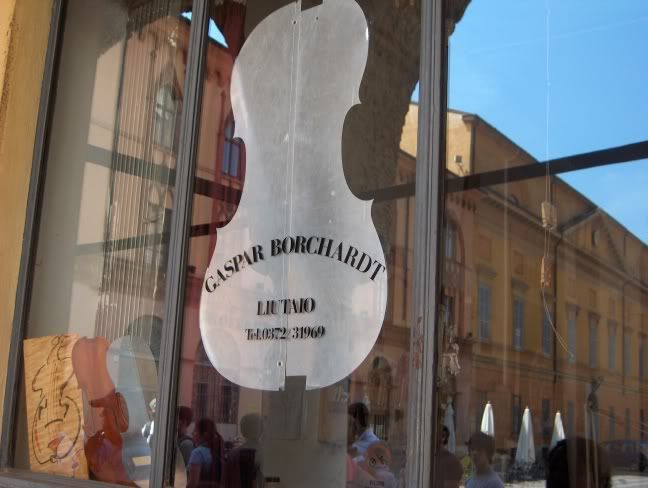
Violin shop in Cremona
To this day, instruments from the so-called Golden Age of violin making, especially those made by Stradivari, Guarneri del Gesù and Montagnana are the most sought-after instruments by both collectors and performers. The current record amount paid for a Stradivari violin is £9.8 million (US$15.9 million), when the instrument known as the Lady Blunt was sold by Tarisio Auctions in an online auction on June 20, 2011.
[Violin] Since their invention, instruments in the violin family have seen a number of changes. The overall pattern for the instrument was set in the 17th century by luthiers like the prolific Amati family, Jakob Stainer of the Tyrol, and Antonio Stradivari, with many makers at the time and since following their templates. ************
The earliest evidence for their existence is in paintings by Gaudenzio Ferrari from the 1530s, though Ferrari's instruments had only three strings. ************
It is not clear exactly who made these first violins, but there is good evidence that they originate from northern Italy, in the vicinity (and at the time the political orbit) of Milan. Not only are Ferrari's paintings in this area, but at the time towns like Brescia and Cremona had a great reputation for the craftsmanship of stringed instruments. The earliest documentary evidence for a violin is in the records of the treasury of Savoy, which paid for "trompettes et vyollons de Verceil", that is to say, "trumpets and violins from Vercelli", the town where Ferrari painted his Madonna of the Orange Tree. The first remaining written use of the Italian term violino occurs in 1538, who brought "violini Milanese" (Milanese violinists) to Nice when negotiating the conclusion of a war.
The oldest confirmed surviving violin, dated inside, is the "Charles IX" by Andrea Amati, made in Cremona in 1564, but the label is very doubtful. The Metropolitan Museum of Art has an Amati violin that may be even older, possibly dating to 1558 but just like the Charles IX the date is unconfirmed. One of the most famous and certainly the most pristine is the Messiah Stradivarius (also known as the 'Salabue') made by Antonio Stradivari in 1716 and very little played, perhaps almost never and in an as new state. It is now located in the Ashmolean Museum of Oxford. Early makers
Instruments of approximately 300 years of age, especially those made by Stradivari and Guarneri del Gesù, are the most sought after instruments (for both collectors and performers). In addition to the skill and reputation of the maker, an instrument's age can also influence both price and quality.
The most famous violin makers, between the early 16th century and the 18th century included:
Amati family of Italian violin makers, Andrea Amati (1500–1577), Antonio Amati (1540–1607), Hieronymous Amati I (1561–1630), Nicolo Amati (1596–1684), Hieronymous Amati II (1649–1740)
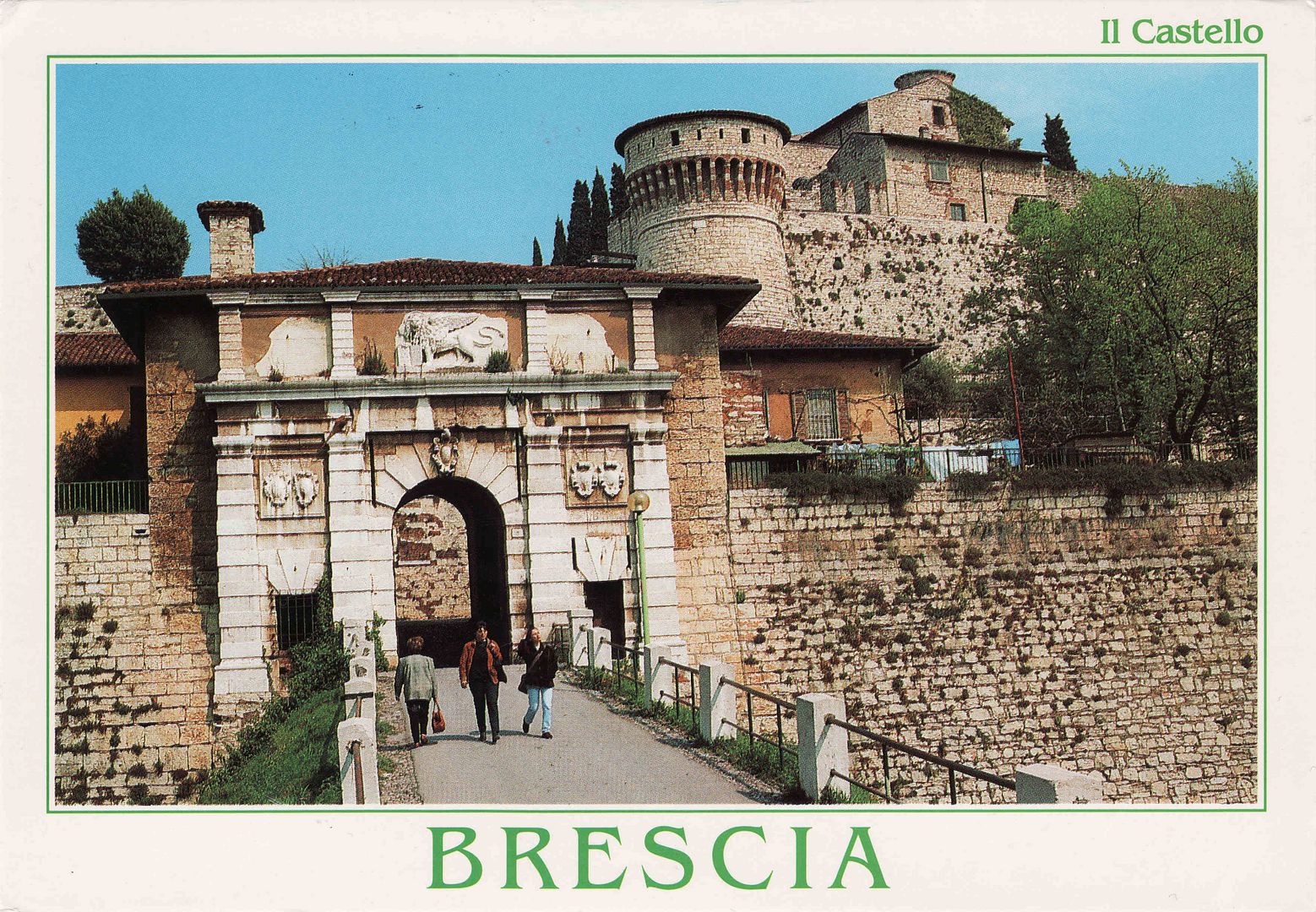
Brescia has had a major role in the history of the violin. Many archive documents very clearly testify that from 1490 to 1640 Brescia was the cradle of a magnificent school of string players and makers, all styled "maestro", of all the different kinds of stringed instruments of the Renaissance: viola da gamba (viols), violone, lyra, lyrone, violetta and viola da brazzo. So you can find from 1495 "maestro delle viole" or "maestro delle lire" and later, at least from 1558, "maestro di far violini" that is master of violin making. From 1530 the word violin appeared in Brescian documents and spread in later decades throughout north of Italy, reaching Venezia and Cremona. [Brescia]
The most famous violin makers, between the early 16th century and the 18th century included:
Micheli family of Italian violin makers, Zanetto Micheli 1490 - 1560, Pellegrino Micheli 1520 - 1607, Giovanni Micheli 1562 - 1616, Francesco Micheli 1579 - 1615, and the brother in law Battista Doneda 1529 - 1610
Bertolotti da Salò (Gasparo da Salò) family of Italian violin and double bass players and makers: Francesco 1513 - 1563 and Agostino 1510 - 1584 Bertolotti, Gasparo Bertolotti 1540 - 1609 called Gasparo da Salò [History of the violin]
Violinists and collectors particularly prize the instruments made by the Stradivari, Guarneri and Amati families from the 16th to the 18th century in Brescia and Cremona and by Jacob Stainer in Austria. According to their reputation, the quality of their sound has defied attempts to explain or equal it, though this belief is disputed.
************
The finest Renaissance carved and decorated violin in the world is the Gasparo da Salò (1574 c.)...
************
The most famous violin makers (luthiers) between the 16th century and the 18th century include:
The school of Brescia, beginning in the late 14th with liras, violettas, violas and active in the field of the violin in the first half of 16th century
The Dalla Corna family, active 1510–1560 in Brescia and Venice


 Carlo Bergonzi (luthier)