Friday, May 9, 2008

Friend in Brescia Looking to Migrate to USA


Our friend Stefano in Brescia needs help to fulfill his dream of emigrating to the USA. He is a truck driver and apparently can handle any type of truck. It's very hard for a European to become a U.S. citizen now, and he has to partake in a yearly lottery in which the odds are quite low. If he can obtain employment in the USA, then the process will be much easier. Unlike many in Europe in recent times, he is a big, big fan of this country. We would like to use this entry as a springboard to help him. If you are looking for, or happen to know someone who might be looking for a young but very experienced driver, contact him or us. Thank you.

Stefano's webpage

5/10/08 >>> I am going to add to this page as time goes on, and with more knowledge, we can just continue to proceed to the next step.

7/7/08 >>> Yahoo Answers: How can I help a European friend emigrate to the USA?


Saturday, April 5, 2008

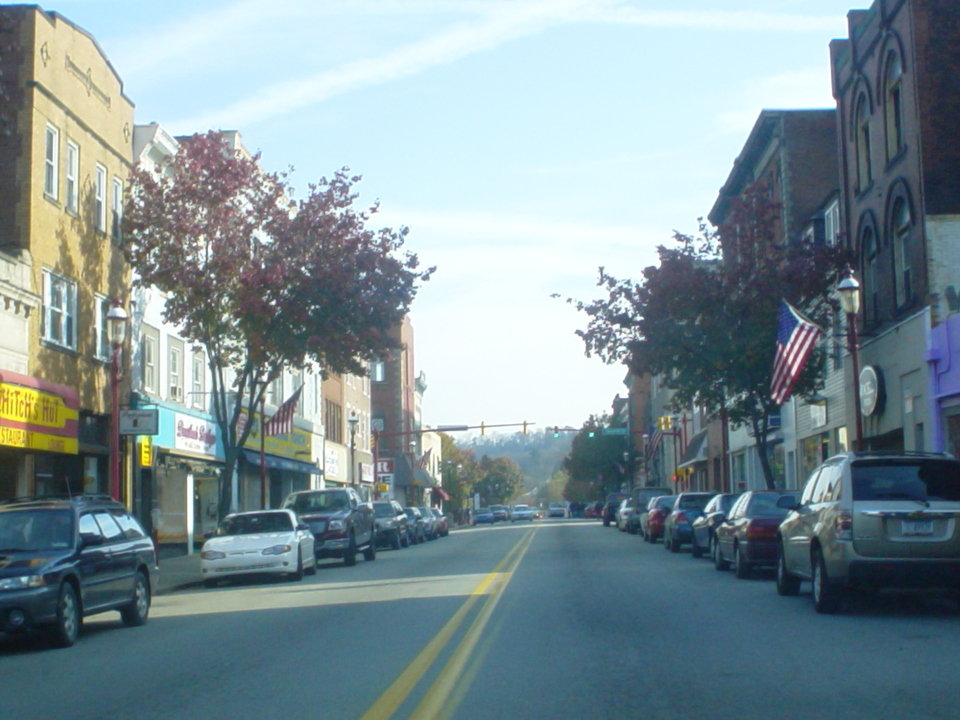
Valcamonica, Lombardia to Monongahela, Pennsylvania


This is just our first look at something which is a large area of study for us. That being the migration of immigrants from the Valle Camonica to Monongahela, Pennsylvania. Many men were employed in the mining industry, something that Camunians had much experience with.

The arms and weapons manufacturing industry was very big in Brescia for many centuries. They armed the Venetian Empire, which they were a part of, and don't forget Beretta firearms (founded in 1526).

I mainly just wanted to give our friend in Italy, Pier Luigi, a chance to put a feeler out there for his genealogical research.

I suspect it's possible that this Western Pennsylvania city's most famous native, football great Joe Montana, is of Camunian descent. His father's original surname spelling is something like "Montagna" or Italian for "mountain," further suggesting Camonica heritage. I think Pier Luigi was trying to say that there are descendants living there that he and his genealogy group (Circolo Culturale Ghislandi) would like to communicate with.

******************************
******************************

Looking for my ancestors

I'm a grandson of an Italian immigrant in Monongahela, Pennsylvania in the 19th century. I am looking for Italian people that now live in Monongahela because I and my cultural circle are interested in searching for our grandfathers who immigrated there. Can anyone help me? My name is Pier Luigi Milani and I live in a little town of Malegno, in Valley Camonica, Brescia (country), Lombardia, near to Milano in Italy. My Grandpa was Luigi Milani, dead in Monongahela or Pittsburg in 1914 and buried in Pittsburg. Also many other immigrants from Malegno are living in Monongahela. If anyone has information, please e-mail me.

My E-mail is milanipl@tin.it

Thank you, Pier Luigi Milani

Monongahela, Pennsylvania Community News

************************************************************

We also want to know much more about this unfolding history. Once again, the link to Pier Luigi's genealogy circle:

Circola Culturale Ghislandi

Friday, April 4, 2008

Franciacorta Heritage


From Wikipedia [in ‘Franciacorta’]:

“The territory of Franciacorta is a section of the Province of Brescia in the Italian Region of Lombardy. Franciacorta extends north from the plain of the river Po to the shores of Lake Iseo, and from the river Oglio on the western border to the town of Cellatica in the east. The geography of rolling hills was shaped by glacial action. The soil, glacial moraines consisting of gravel and sand over limestone, drains well, and is ideal for the cultivation of grapes and winemaking. The weather is mild and constant due to its location south of the foothills of the Alps and the tempering presence of large lakes. To publicize wine tourism the district established a Strada del Vino Franciacorta on the model of the famed German Wine Route (Weinstraße) in 2001.

“The area has been inhabited since Paleolithic times, with archaeological records left by Gauls— the Cenomani of Brixia (modern Brescia), Romans and Lombards. The name Franciacorta, attested in 1277, is thought to derive from curtes francae, the fortified courts of the Frankish empire established in the 8th century.

“There is a Cluniac foundation, the Abbazia di San Nicola, at Rodengo, which has been inhabited by Olivetan monks since 1446. Other places of interest include Passirano, with an interesting castle, and Provaglio d'Iseo, with a Romanesque church.

“Lombardia wine is the Italian wine produced in the Lombardy region of north central Italy. The region is known particularly for its sparkling wines made in the Franciacorta and Oltrepò Pavese.”

************************************************************

To be more geographically specific, the Franciacorta area is just south of the pre-Alps of the Valle Camonica. It’s amazing of just how famous this tiny area is, of course mainly for it’s wine. It would not be much trouble to find a Franciacorta brand at your local wine establishments. You could check at Beverages and More, in the Italy section under Lombardy. Sometimes you see labels under Cellatica as well.

This webpage stated “The name Franciacorta, attested in 1277, is thought to derive from curtes francae, the fortified courts of the Frankish empire established in the 8th century.” There seem to be many legends on just how this interestingly-named region got it’s name. I have heard that in Italian, Franciacorta means “small France,” which is also a likely possibility. I have also read that Franciacorta means “Free Court", a zone of free market in the Middle Ages.

************************************************************

From Wikipedia [in ‘Lombardia (wine)’]:

“Lombardia wine is the Italian wine produced in the Lombardy region of north central Italy. The region is known particularly for its sparkling wines made in the Franciacorta and Oltrepò Pavese.”

************************************************************

There are other more famous wine regions, like Tuscany and Piemonte. Lombardia is mostly known for it’s manufacturing. However, it does rank up there.

************************************************************

According to Wikipedia [in ‘Lombardia (wine)’ – History]:

“The winemaking tradition of Lombardy dates back to its settlement by Greek colonist(s?) from Athens along the Po river. Archaeological evidence suggest that these settlers traded wine with the Etruscans in nearby Tuscany.”

************************************************************

This must have been a small settlement, as I have not heard anything even remotely about Greeks settling in Lombardia. I do know that the Greeks were all over, but in Italy it was almost exclusively in the south. Etruscan settlement, at it’s peak, was right up to southern Lombardia.

************************************************************

Also according to Wikipedia [in ‘Lombardia (wine)’ – Franciacorta]:

“The Franciacorta wine zone is responsible for some of Italy's most prestigious sparkling wines. Located along the shores of Lake Iseo, vineyards are planted in well drained morainic soils. The area has a long history of producing still red and white wines but has gained most of its success in the last 40 years since it started producing sparkling wines. In 1995 the region received DOCG and created a separate DOC, known as Terre di Franciacorta for its non-sparkling wines.

“The sparkling wines of this area are composed primarily of the Chardonnay and Pinot Bianco grape with a maximum 15% of Pinot Nero allowed. The area has a Crémant style wine, known under the trademarked name Satèn, that has less carbon dioxide as the standard sparkling wine but is more "bubbly" than a frizzante. This wine is not allowed to have any Pinot Nero in the blend. The rosé sparklers are required to have a minimum 15% Pinot Nero. The vintage dated wines are required to have a minimum 85% of grapes from that year's vintage and must be aged for at least 30 months prior to release. Non-vintage wines must be aged for at least 18 months. The Franciacorta sparklers are often a little sweeter than Champagne with the brut style having up to 20 grams per liter of sugar while brut Champagne can have no more than 15 grams.

“While sparkling wine production accounts for more than half of the Franciacorta area's production, many producers have begun focusing on make red Bordeaux-style blends and Burgundian style Chardonnays aged in oak. Despite the frequent use of Pinot Nero in the sparkling wines, a still Burgundian red Pinot is not permitted under the Terre di Franciacorta DOC.”

*************************************************************
Links:

Franciacorta [Wikipedia]

Lombardia (wine) [Wikipedia]

MyFranciacorta.com [events in Franciacorta; in English]

Friday, March 7, 2008

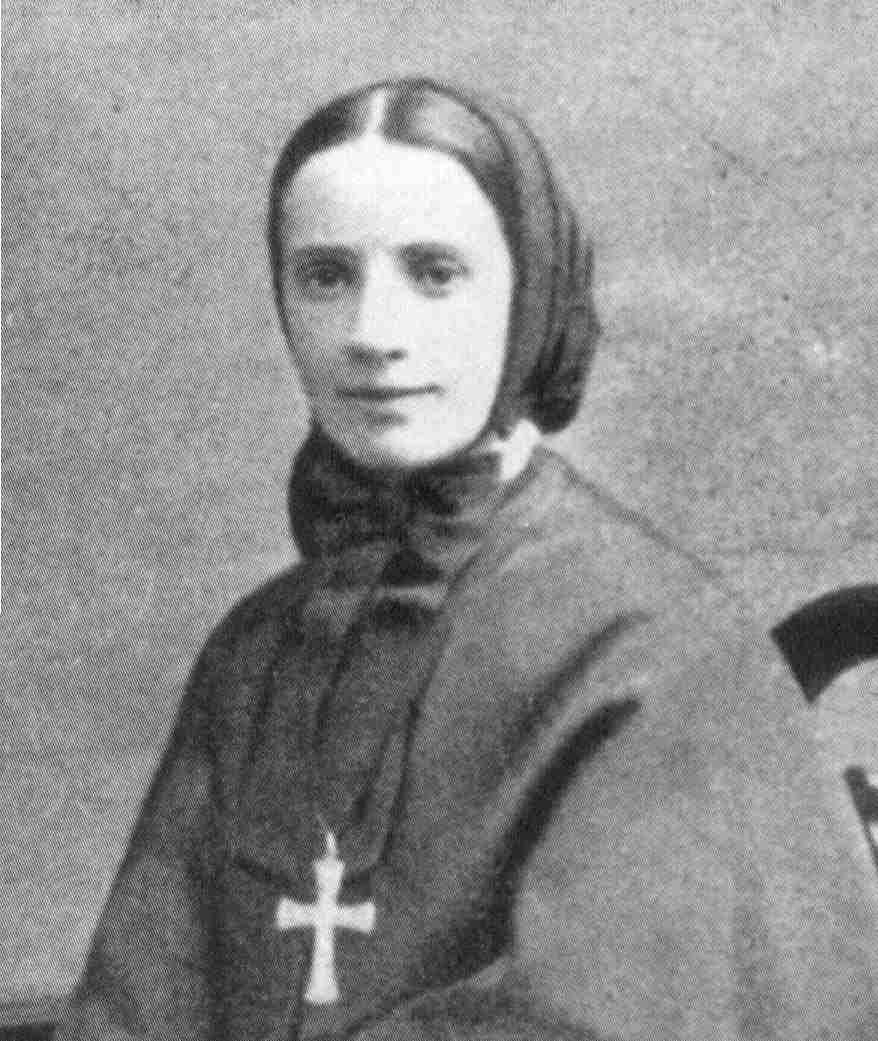
Mother Cabrini: First American Saint of Lombardian descent


Mother Cabrini is the first American Saint, recognized by the Catholic Church. She was of Lombardian descent. I will merely transfer her biography from Wikipedia here. As we now know, Wikipedia is good in some ways and not in others. However, I believe this to be the standard and accepted short biography.


Mother Cabrini

Saint Frances Xavier Cabrini (July 15, 1850 – December 22, 1917) known during her life as Mother Cabrini, was the first American citizen to be canonized by the Roman Catholic Church.

She was born Maria Francesca Cabrini in Sant'Angelo Lodigiano, in Lombardy, the youngest of thirteen children of Agostino Cabrini and Stella Oldini who were farmers. Two months premature, she remained in delicate health throughout her 67 years.

At 13, she was sent to Arluno to study under the Daughters of the Sacred Heart at the Normal School, and in 1868, at 18 she was certified as a teacher. Four years later she contracted smallpox When she tried to enter into the Daughter of the Scared Heart, Mother Giovanna Francesca Grassi refused admission even though she saw true potential in her because of her frail health. She said, "You are called to establish another Institute that will bring new glory to the Heart of Jesus." She was rejected by the Canossians as well. Instead, she supported her parents until they died and helped the family on the farm. She taught at a private school that was founded by one of her fellow sisters in Sant’Angelo. Then, in 1871, she became a public school teacher in a nearby village under the request of her pastor.

Finally, she took religious vows in 1877 and added Xavier to her name to honor the Jesuit priest, Francis Xaiver. She became the mother superior of the House of Providence orphanage in Codogno, where she taught.

In 1880, the orphanage was closed. She and six other sisters that took religous vows with her, founded the Institute of the Missionary Sisters of the Sacred Heart of Jesus (MSC) on November 14. Mother Cabrini composed the rules and constitution of the order, and she continued as its superior-general until her death.

The order established seven homes and a free school and nursery in its first five years. Its good works brought Mother Cabrini to the attention of Bishop Giovanni Scalabrini of Piacenza and of Pope Leo XIII.

Although her lifelong dream was to be a missionary in China, the Pope sent her to New York City on March 31, 1889. There, she obtained the permission of Archbishop Michael Corrigan to found an orphanage, which is located in West Park, Ulster County, NY today and is known as Saint Cabrini Home, the first of 67 institutions she founded in New York, Chicago, Seattle, New Orleans, Denver, Los Angeles, Philadelphia, [1] and in countries throughout South America and Europe. Long after her death, the Missionary Sisters would achieve Mother Cabrini's goal of being a missionary to China. After much social and religious upheaval and only a short time, the sisters left China, and subsequently a Siberian placement.

She was naturalized as an American citizen in 1909.

Mother Cabrini died of complications from malaria at Columbus Hospital in Chicago, Illinois. Though originally entombed in West Park, NY, after her death on December 22, 1917, her remains were exhumed from West Park in 1931 and are now enshrined on display under glass in the church's altar at St. Frances Cabrini Shrine, part of Mother Cabrini High School, located at 701 Fort Washington Avenue, in the Washington Heights section of Manhattan. The street to the west of the shrine was renamed Cabrini Boulevard in her honor.

She was beatified on November 13, 1938 and canonized on July 7, 1946 by Pope Pius XII. St. Frances Xavier Cabrini is the patron saint of immigrants. Her beatification miracle involved the restoration of sight to a child who had been blinded by excess silver nitrate in the eyes. Her canonization miracle involved the healing of a terminally ill nun. Her body is not incorrupt; although it is often said to be so, signage around her shrine and resting place in Washington Heights make it very clear that she is not.

The Cabrini Green housing project in Chicago is named after her, due to her work with Italian immigrants in the location. It has since become a haven for underprivileged and poor people and the MSC sisters still work there. Cabrini College, in Radnor, Pennsylvania, also bears her name.

The Cabrini Mission Foundation is an organization committed to advancing St. Frances Xavier Cabrini's mission and legacy of healing, teaching, and caring around the world.

Mother Cabrini's feast day is celebrated on December 22 by Traditionalist Roman Catholics.

Further information and links at the Mother Cabrini page at Wikipedia

Monday, February 25, 2008

The Story of Anton Nichelini & His Family


by Kathy Kernberger and Shirley Penland

St. Helena Star, Discover St. Helena, Summer 1998

Edited by Douglas A. Patterson


Between 1875 and 1910 world wide depression, poor crops and political unrest in Italy drove thousands of Italians and Swiss-Italians to the United States, with many of the Swiss-Italians settling in the San Francisco Bay area. Most sought opportunity in the large cities like San Francisco but some who knew about both farming and business chose to look for opportunity in the countryside like in Napa and Sonoma counties.

Anton’s father, Franceso Nichelini, was a prime example of this type of immigrant and Anton followed him there later on once Francesco had earned enough money for Anton’s passage. Anton was born Giuseppe Antonio Nichelini on November 22, 1862 to Francesco and Carolina Cotti Nichelini in Verscio, Canton Ticino, Switzerland. The family included six children.

At the age of nine, Anton was sent to Paris to live with his uncle Martino and aunt, Antonesca, in order to learn the art of stone masonry. While living with them, he was able to go to school, and it was thought that for a time he was an altar boy at Notre Dame Cathedral.

At the age of 17, he returned to the family home in Switzerland, an accomplished stone mason. These skills were later put to use in building his house and winery in Napa County’s Chiles Valley. The Nichelinis were one of the Patriziato or leading families in Verscio, good businessmen and, among other things, owned and operated the local grist mill. A visit to the local Catholic church in Verscio today will show that they were very influential in the church with their many crypts honored in the walls.

The records of the church in Verscio start in the year 1600 and there is a Nichelino recorded who, after his first wife died, married another woman and changed his name to Nichelini as best we can tell. All Nichelinis today are descended from him.

The romantic story, not proven, is that in the late 1500’s this fellow Nichelino lived in Nichelino, Italy, a suburb of Turino. His last name was Righetti, and he had fallen in love with a woman with whom neither family approved. So, they eloped, with sufficient money, of course, to Verscio, Switzerland, and became Patriziato. They sort of bought their way in. Supposedly, in those days in Italy one was not allowed to have the name of a town or city as one’s own name. No longer being in Italy, and wanting to have a unique name, they picked Nichelino, their home town. No one the town of Verscio had a name ending in the letter “o”. So, when he remarried, he changed the “o” to an “i”, or so the story goes.

Anton’s uncle, Giuseppe Secondo, had immigrated to San Francisco in 1849. He found gold, not in the Sierra Foothills, but in a pasta factory which he started in 1853.Guiseppe sold the pasta factory in 1865 for a tidy profit which he mentioned far and wide on his return to Switzerland.

Lured by the tales of his brother, Anton’s father, Francesco, came to San Francisco area to seek his fortune as things were looking pretty bleak at home. In 1875, he applied for a homestead grant on the Sonoma side of Mt.Veeder.

Here, he started a vineyard, built a house, and made plans for his family to join him. After he had saved enough money, he sent for some of the children to join him. In typical fashion, the mother sent the oldest child over first, his sister, even though Francesco had asked for Anton, who was younger to be in the first, as he was the most educated and able. He had to wait.

In 1882, at the age of 19, Anton arrived in Sonoma County. He thereafter changed his name to Anton, the French version of Antonio. He emphatically said that he was Swiss and not Italian, an important distinction as the Italians had just replaced the Chinese at the bottom of the local socio-economic ladder. There, he went to work for pioneer winemaker Joshua Cheuvet, who had originally come from France.

Under Chauvet’s guidance, Anton added the skills of viticulture and winemaking to those of stone mason. It also helped business that Anton was very fluent in French, Italian and German with so much of the population first generation Americans. His English textbook was a dictionary, which also helped him with pronunciation as well as understanding and meaning and he very quickly became fluent in his new country’s tongue.

In 1884, Anton decided to apply for a homestead in Napa County. He had heard about the Napa Valley from the Chauvet family, and decided to apply for a homestead of 160 acres in Chiles Valley.

Named for J. B. Chiles, the area was not well known to many people. However, he found a property that was rich in both chrome and magnacite, the later an alloy used in the making a special steel. In addition, Anton felt that hillside grapes were better for making quality wines than fruit on the valley floor. This was the place he hoped to settle and, someday, raise a family.

At that time, in order to acquire a homestead, it was necessary to become a citizen and make a certain amount of yearly “improvements” to the property. Anton, with Caterina’s later help, fulfilled these requirements and was granted a homestead by President Benjamin Harrison in 1892.

In 1890, the Chauvet family urged Anton to go to San Francisco to meet a charming young lady named Caterina Corda. Also a Swiss immigrant from Ticino, she was working at a hotel there. She claimed the Hotel owners would never let her out and it was really more like a prison.

Anton followed the Chauvet’s urgings, and three weeks later, the couple was married in Santa Rosa on July 7, 1890, with Henry Chauvet acting as Anton’s best man.

Family lore has it that Caterina, who was born in Switzerland in 1869, had fallen in love with a man in Switzerland whom her family considered “unsuitable.” Forbidden to marry him, she had come to San Francisco.

On her first “date” with Anton, as the story goes, they had gone for a ride in his buggy. During this ride, Caterina, obviously, a very forthright lady, is said to have asked Anton if he “had honorable intentions” and if so, was he going to marry her or not, and how long it would take him to do it.

After their marriage, not having a house of their own, they lived with relatives. One day, they went to see his homestead in Chiles Valley. Greatly taken with the beauty of the property, she told him “This is where I want to make our home.”

Shortly after, they moved to the small cabin, which Anton had already built on the property. The first four of their twelve children were born in this little cabin. The cabin is still on the Nichelini property today.

The decade from 1890 to 1900 was a busy one for the growing family. Anton worked as a magnacite miner for the Stanley and Bartlett Mines in Chiles Valley. He also started making wines from the vineyard which he and Caterina were expanding. Their growing family required more space than the small homestead cabin could provide.

Anton started building the hand-cut stone winery, and the family home that sits above it. It is still a familiar site for travelers on Highway 128 near the intersection of Lower Chiles Valley Road.

These buildings were completed in 1896. A gala housewarming included more than 100 guests with the as yet unfinished upstairs used as a dance floor with music provided by the Miller and Payne’s orchestra. A midnight supper completed the celebration.

Later, the upstairs was partitioned into the four bedrooms that remain today. Eight more children were born to the couple in the “new house” with Anton acting as “midwife.”

The dozen children were William, Joseph, Josephine, Ida, Rosa, Catherine, Mary, Frederic, Allen, Emma, Antoinette, and Inez.

Dates of the births spanned the years from William in 1891 to Inez in 1916.

In 1902, Father Blake, of the St. Helena Catholic Church, baptized all the five older girls at a family gathering.

“Brother Allen” became a noted football player. At a game between rivals, Napa and St. Helena, he played so well that the Napa fans forgot themselves and began cheering for the St. Helena High School team.

At St. Mary’s College, he was one of the “Galloping Gaels,” under the leadership of coach Edward Madigan. As an All American, he played on the winning team in the Shrine East-West game against President Gerald Ford.

Professionally. Allen played for both the Chicago Cardinals and Los Angeles Bulldogs. And in 1973, he was inducted into the National Professional Football Hall of Fame in Canton, Ohio. One of his helmets remains on display there.

By 1910, Anton was Superintendent of the Red Mountain Mining Company in Livermore. When World War I broke out, he returned to Chiles Valley to work for the Tulare Mining Company. He patented several commercially successful magnacite ore smelting techniques which were later successfully applied to borax mining, including mines in Death Valley where he worked for a while bringing them on line.

His own property had also had chromium deposits that he developed. In 1916, he sold four of these mines to a San Francisco group.

Heart problems caused his health to begin to fail in 1934. On November 9, 1937, Anton died at the St. Helena Sanitarium (now St. Helena Hospital) after a severe heart attack.

Caterina lived until August 19, 1952. That year, she celebrated her 83rd birthday at a party with her 11 children (her daughter Rosa died in 1932). Many of her 29 grandchildren and 24 great grandchildren also attended the party. Many people remembered both “Ma and Pa Nick” for their many acts of kindness and open hospitality.

Today, the winery which Anton and Caterina started is still family-owned, making it the oldest continuously operated family winery in Napa County.

Great grandsons Joseph and Philip Sunseri supply the grapes from vines, some of which were planted by Anton in the late 1920s. Another great grandson, Jim also supplies grapes from his Chiles Valley vineyard.

Yet, another grandson, Greg Boeger, and his son Justin Boeger, and great great granddaughter Aimee Sunseri, all UC Davis graduates, act as winemakers. Sitting literally at the edge of the road, the winery also contains Anton’s original Roman style wine press. To this press, believed to be the only one of its kind in left in tact in California, is well worth a visit. Otherwise, stay, have a glass of wine and enjoy playing bocce ball.

Our thanks to Inez Nichelini Boeger for her help in this article. Also, to Pauline Locey for her help.

Article link at NicheliniWinery.com

Wednesday, January 2, 2008

Camunni Alphabet and it's Links to Other Ancients Alphabets


Angelo was good enough to update us on a recent study in Europe regarding the links and patterns of ancients alphabets from numerous peoples from Europe, Eurasia, and the Near East. There are links to the lettering system of the Camunni tribe, which are amazing. Grazia Angelo.

*************************

'Origine Degli Alphabeti Camuni'


Book presentation, Budapest, Sofitel, August 17th, 2007


The Magyar rovás

The Magyar rovás make up an alphabet of 40 letters, plus several ligatures or letters representing consonant clusters or syllables.

Some 24 rovás are similar to Vinča signs, to Germanico runes, to letters of the Asiatic runic scripts, to letters of the earliest Italic and Helladic alphabets. Some 16 letters appear to be later additions: they are rounded and/or do not comply with the 5 rules of the runic scripts (see page 45 of the book) and/or are not similar to Vinča or later European signs. These 16 letters were added to the rovás in Central Asia, when the Magyars were no longer carving hard materials, but drawing on parchment, as the Parthians did.

Out of the 24 letters that are similar to Germanico runes, 16 appear to be very similar, but some 8, which could correspond to signs added by the Celts to represent their Indo-European phonemes, are not. In particular, the phoneme [θ] was written in the North and is kept in Irish; but it was written in the south and, still similar, is kept in Greek.

The Germanico runes and the Magyar rovás could both have an ancestor in an earlier 16-letter alphabet. In fact, the original 16-letter Flavio *VUARK, but also the *Pannonico alphabet, can be easily reconstructed by comparing the rovás and the runes with some of the most ancient alphabets: Esik, Lemnos, Camuni, Veio, Marsiliana, and the Venetic and Athenian alphabets.

The Esik, Lemnos, and Camuni alphabets remain so far undeciphered. The Esik and Lemnos alphabets appear to be congruent with the limited Finno-Ugric phonology: the Esik alphabet does not contain any of the characters added in Europe by the Germans and the Celts; the Lemnos alphabet only contains some of them. These three isolate alphabets have kept some of the most ancient *VUARK characters.

In Esik (nearby "Alma Ata" = "Mother/Father of Apple", Hungarian name of the former capital city of Kazakhstan), in the grave of an Amazon Shaman Princess (J. W. Jay) buried with a rich treasure, an inscription on a silver bowl was found. The grave has been dated back to the 5th century B.C. The characters that make up this inscription consist of: 12 characters identical to 12 Flavio *VUARK characters, two *characters identical to another two of the *VUARK, and a few possible ligatures. This inscription cannot be Phoenician or Greek because some of its characters and legatures have never been written around the Mediterranean Sea (except along the western shores of the Adriatic Sea, where Pannonico populations are supposed to have migrated from Illyria). Instead, these characters and ligatures do appear in later alphabets of the Turanian plains, in the Siberian rovás, in the Magyar rovás, in the Nü Shu syllabary (Yunnan, China), and in the Kaganga script (Sumatra) (see the book "Honfoglalás... the Magyars are back home" for other cultural markers that link all these regions). The Esik script contains no characters at all that resemble any Indo-European addition: the Hungarian population that migrated to Esik could have been able, while in Europe, to keep itself separated from the Celts.

When the Camuni alphabets were carved, the Indo-European phonemes had already been added; but the corresponding characters were different from both those used in the Germanico runes and in the Magyar rovás. The Camuni alphabets prove that the Germanico and the Pannonico were alternative characters for the same [a] phoneme. The Camuni alphabets had a letter between D and E that also the Ugaritic abjad had, in the same position. This letter had disappeared from all European alphabets in the beginning of the 1st millennium B.C. (or had been moved between N and O, as it also happened in Phoenicia!). The Camuni alphabets also show an ideogram, which was copied in the Ugaritic abjad, but was never transliterated by the Semites. The Camuni alphabets have characters that do appear in the Ugaritic script, but do not appear in the Phoenician abjad. Thus, it is impossible that the Camuni alphabets could have been copied from the Phoenicians, and it would be nonsense to say that it was copied from the Romans! Instead, it is possible that the Ugaritics could have copied from Europe alphabets with features of the Camuni ones.

The Veio and Marsiliana alphabets have been found in Etruria: these two alphabets were not (not) Etruscan alphabets: the Etruscans never, or only occasionally, used some 8 letters of these alphabets. The Etruscans never added the Indo-European phonemes to their alphabet: some exceptions were graphically and phonetically unstable in time and space (the characters and the associated phonology changed with time, and from one region to another), in most cases different from the Phoenician letters, and in some cases different from any other known script (e.g.: 8 for [f]). The Marsiliana and Veio alphabets could be Pannonico alphabets, a few centuries older than their official dating (8th-7th century B.C.): in fact, they are more similar to the alphabet that the Ugaritics could have copied than to the later Phoenician abjad (see table 60 of the book).


The Germanico runes (Futhark)

The Germanico runes consisted of 24 letters. Eight of them were not stable in space and time and/or do not comply with the rules of the runes. The remaining 16 runes, more stable in time and space, represent the 16 phonemes that are still peculiar to the Finnish alphabet. The phonemes [b], [d], [γ], [w], [z], [f], [θ], (and probably [o] in ancient times) are not used, even these days, in words of Finnish origin. These phonemes were added by the Germans and correspond to the 8 letters that are graphically and phonetically unstable in time and space in the many different European runic scripts. When the German populations left Scandinavia, the Vikings started writing again with a 16-letter alphabet, congruent with a limited, Finno-Ugric, phonology.


The Flavio VUARK

All (all) the earliest European alphabets, including the most ancient Athenian and Etruscan ones, the Linear B, and the Cypriot syllabary (Facchetti, Kirkhoff, ancient scripts.com, et alia), only had the letters needed to represent those Finno-Ugric 16 phonemes. Tocharian, the so-called "Indo-European" language of the Tarim Basin, (possibly an intertwined language Hungarian/Gandhara Sanskrit), also had a limited phonology (Wikipedia). Hungarian also, in ancient time, was lacking the [b], [d], [γ] phonemes (M. Alinei).

Ancient agglutinative languages, including Sumerian according to some scholars, had (and several ones still have) a limited phonology. All the ancient European alphabets therefore derive from an original 16-letter European alphabet. The letters for the Indo-European phonemes were added later on, when the Indo-Europeans had learned how to write.

Both the Germanico runes and the Magyar rovás derive from an earlier, pre-Indo-European 16-letter *VUARK alphabet congruent with the ancient Finno-Ugric phonology, and were made up with characters identical or similar to Vinča signs. The European scripts later inherited these same *VUARK letters, with the same original phonetic values. (See table 43 of the book, which shows that all (all) the original letters of the *VUARKs and of the *Pannonico alphabet were later used by the most ancient European alphabets).

The Flavio *VUARK could have been brought to the shores of the Baltic Sea by those Hungarian populations that migrated from the Carpathian Basin northwards at the beginning of the 2nd millennium B.C.. (See the book "Honfoglalás... the Magyars are back home", page 85).

The Flavio *VUARK evolved in two different scripts: Pannonico *VUARK (from which the Magyar rovás derived) and Finnic *VUARK (from which the Germanico runes derived). There are only a few letters which make the difference between these two *VUARKs. Astonishingly, the Magyar rovás, the Mother of all alphabets, kept both variations (and also variations which shall appear in Southern Europe): and ; and ; and ; and , and ; and .... up until the 19th century A.D..

All the ancient alphabets quoted in the book had a feature in common: none of them was ever designed with any horizontal stroke. Such a strict rule could only be a religious dictate. Note also the many multiples of 8 for the number of letters of ancient alphabets (16, 24, 40).

In any case, a "reconstruction", be it linguistic or historical, is pure speculation as long as a proof of its existence, at the supposed time, is not found.


The Ugaritic abjad

The Ugaritic abjad (abjad = consonantal alphabet, without vowels) is written in cuneiform. Cuneiform was not in the tradition of the region. The local writing tradition is that of Byblos, (undeciphered), which, nevertheless, appears to have already borrowed several rovás and/or Vinča signs in the 19th century B.C. (see table 49, proel.com).

The Ugaritic script is written from left to right in a region that always, and until these days, writes right to left. In Beth Shemesh (Israel) also, the Ugaritic script was used; but it had been modified to become a right to left script, modified to fit the local tradition.

The Ugaritic abjad contains letters for vowels: the Semites did not use the vowels of the Ugaritic script and still these days do not use vowels in their scripts. The Ugaritic characters that corresponded to vowels in Europe were used by the Semites as semivowels or laryngeals; the letters for [i] and [u] were not even ever transliterated. The three vowel characters used by the Ugaritics were only used in foreign words.

No Northern Semitic script has ever transliterated eight letters of the Ugaritic script: they were alien phonemes, vowels, or ideograms (see table 55, Proel.com). Who would ever design an alphabet including letters that would never be used?

The letter order of the Ugaritic abjad is not the traditional Semitic letter order - h, l, h, m... The Beth Shemesh alphabet was also modified in order to have a Semitic letter order. The Ugaritic abjad was alien to the region in which it was written: this is why it had a short life: 2 centuries. The Ugaritic abjad cannot have been designed in Phoenicia.

The Ugaritic abjad was an attempt at writing the *Pannonico alphabet by using the cuneiform writing technique borrowed from the Acadians. It could have even been originally a secret script to be used between Pannonico traders and a friendly Levantine population (or a Pannonico "Middle East settlement"): in fact, the Pannonici would have easily understood it and the Levantines would have used their clay tablets and their writing techniques. The encryption key was very efficient: nobody has found it during 3,300 years! It is not me the monster, but all those who looked not attentively at the Ugarit tablet because it could not serve their causes. If you attentively look at the tablet, you easily see how similar it is to the ancient European scripts!

In the 11th century B.C., the Phoenicians converted again the cuneiform script into linear, using the reverse key and rules that had been used to transcribe the *Pannonico alphabet into Ugaritic: in fact, they left in the Phoenician abjad the same scribal mistakes that appear in the Ugaritic abjad: the B has only one hump. Such a B, with a single hump, was never copied by any ancient European script. Nor the head of the ox (aleph) was ever copied by the Europeans (except the Athenians. See page 59 of the book for the origin of the A). Nor the C... Et cetera. The Greeks only "copied" letters that they already used!

The Greeks did not copy the Phoenician abjad. The Athenians and the Lemnos peoples used the 16-letter alphabet as long as they were allowed to speak and write their own language, until the beginning of the first millennium B.C.: only at that time the letters needed to represent Indo-European phonemes started appearing in Greece (Kirkhoff).

The Greeks did not need to invent the vowels. In fact, the vowels existed already in the Old European *Pannonico alphabet: so much so that the Ugaritics did copy the vowels from the *Pannonico, but did not use them. The Semites used some of them as semivowels or laryngeals. They never transliterated the signs for [i] and [u].

The Europeans did not copy their alphabets from the Phoenicians; but the Phoenicians, the Greeks, and the Etruscans did copy the European *Pannonico alphabet.

The reconstructed *Pannonico alphabet did exist: in fact, the Ugaritics copied it in the 14th century B.C.. Vasil Ilyov has compiled a table in order to show the derivation of the Cyrillic alphabet from the Vinča signs (he is correct: all alphabets came from there!). The table proves that in Macedonia (region of the Vinča Culture), between 1650 and 1200 B.C (the time in which the *Pannonico was brought to Ugarit) all the characters of the *Pannonico alphabet were written in the local inscriptions.


Consequences

Gimbuteniė was right: the Vinča signs were, or generated, the "Old European" script. The Flavio *VUARK, which was the Mother of all other alphabets, derived from the Vinča signs. Most of the letters of the *VUARK survived in the Futhark and in the Magyar rovás, and most, modified by the time, still survive in the Roman alphabet that we all use every day.

The Hungarians were in Europe in the 14th century B.C.. (See "Honfoglalás... the Magyars are back home"). They brought the 16-letter Flavio *VUARK alphabet to Northern Europe, where it evolved as Germanico runes. They also brought the *Pannonico alphabet to Central Asia, where it evolved as Magyar rovás, and other Asiatic scripts.

The Europeans, who had an alphabet before the Indo-Europeans arrived in Europe, spoke agglutinative languages with a limited phonology. The Finno-Ugric substratum is responsible for most of the phonetic mutations in ancient Europe (see a further book). Gimbuteniė correctly described the "Old European" society: matriarchal, egalitarian, peace loving... She only made a mistake: those populations were not nomadic, war faring, pastoralist Indo-Europeans; they were sedentary, democratic, peace loving Hungarians. The Hungarians are the most ancient population that shows up in the History of Humanity, with an alphabet, and maybe with a script (the Tatarlaka tablet).


Michelangelo@michelangelo.cn

*************************

Original forum link:
origine degli alphabeti camuni

Monday, December 3, 2007

Switzerland to West Marin (Part 10 of 10)


Intermarriage intertwines West Marin's Swiss families

By David Rolland

If the intertwining of Swiss immigrant families seems confusing, imagine how it must have struck Vicki Martinelli of Point Reyes Station's Martinelli family.

As a student at Tomales High in the early 1970s, she became smitten with recent graduate Fred Genazzi. The pair began dating. After a few months, the relationship started growing serious.

Then Vicki's uncle Stan delivered some startling news; he told her he thought that she and her boyfriend were related.

"You've got to be kidding," Vicki said she recalled thinking. "When that's told to you, you get a numb feeling."

Although the relationship suddenly felt "weird," Vicki said, she and Fred kept dating for another year.

Martinelli joked that at the time she figured she'd have to date people in Petaluma to ensure that bloodlines wouldn't cross. Ultimately she never did learn exactly how she and Fred Genazzi are related.

(Actually, The Light has turned up the answer. Martinelli is the great-granddaughter of Olympio Martinelli, who was the half brother of Isa Campigli, Fred Genazzi's great-grandmother. In short, Vicki and Fred are third cousins with one great-great-grandparent in common.)

The problem, Martinelli said, was that her grandparents never passed on much of their family's history. "They never told any of us ... anything about what they did when [their ancestors] got off the boat ... I think it's really sad for my generation."

Tangled genealogies

As Martinelli's story demonstrates, the genealogies of Swiss descendants are often an elusive tangle. Lineages and marriages span two continents, and unraveling family histories is a challenge even to those who work at it.

Another great-grandchild of Isa Campigli, Fred Gilardi of Point Reyes Station, built a family tree for an anthropology assignment while attending Chico State University in the 1970s.

His project left his professor and classmates awestruck. The branches of his tree included Swiss and Italian names such as Tomasi, Lafranchi, Yelmorini, Soldati, Mazza, Pomi, Giammona, Bolla, Bianchini, Sartoris, Giacomini, Grossi, Bettinelli, Scilacci, Garzoli, Muscio, Lucchesi, and Conti.

Now a teacher himself, Gilardi has assigned similar projects to elementary school students in Petaluma and West Marin, sometimes to his pupils' consternation.

"I inevitably got some poor kid who was related to the teacher and didn't want to admit it," Gilardi said with a laugh. So many immigrant families here are related that "you can't step on someone's toe without someone else yelling, 'Ouch!'" Discovering family trees

Like Gilardi, Swiss Professor Giorgio Cheda, Modesto resident Rae Codoni, and the late Lauren Cheda -- all of whom are distantly related -- spent years trying to figure out family trees.

Codoni, a cousin of Tocaloma rancher Don McIsaac, has flown to Corippo, Switzerland, several times to search church records dating back to the 16th century. He has written a book on the subject called The Corippians.

Giorgio Cheda, a professor at Locarno's Teacher's College, has studied Swiss emigration for 30 years and has interviewed West Marin residents for two books on Swiss immigration to California.

One clan's emigration

The clan that eventually included Chedas, Codonis, and Gilardis began with two teenagers from Maggia, who emigrated to West Marin in the mid-1860s: Peter Campigli and Louis Cheda.

The pair established a pattern that would be followed by generations of other young men from the Valle Maggia. First, they land jobs milking cows on dairy ranches owned or leased by earlier immigrants from their home town.

Then, after about a decade of saving money, they returned to Ticino to claim wives. Many of them returned to West Marin, gambling that the New World would be a better place to raise families.

Campigli married Isa Martinelli. Cheda married Isa' sister Nina. The two couples -- along with the Martinellis' half-brothers Santino and Olympio Martinelli -- returned to West Marin, and the family tree starting branching.

Campiglis & Genezzis

Today, it would be difficult to find Swiss or Italian descendents in West Marin who are not in some way related to the early Chedas, Martinellis, or Campiglis. Few of these family links became more entangled than those connecting today's Campigli and Genazzi families.

Two of Pietro and Isa Campigli's children, Erminia and Armando, married a brother and sister, Fred and Dora, from the immigrant Genazzi family.

Armando and Dora Campigli were the grandparents of Ed Campigli who lives in Point Reyes Station with wife Jackie. Jackie is a sister of Butch and Joe Giammona, who are of Sicilian descent, not Swiss. The brothers run an unlikely pair of businesses: City Sewer Service and Joe's Diner.

Before marrying Fred Genazzi, who had moved here from Maggia in 1896, Erminia Campigli had first been married to Silvio Codoni, the son of Joseph Codoni, who immigrated from Corippo of Ticino's Val Verzasca in 1868. (Silvio died a young man.)

Silvio Codoni's sister was Nellie McIsaac, mother of Tocaloma rancher Don McIsaac.

Fred and Erminia Genazzi in 1917 bought the Riverside Ranch in Point Reyes Station which Pietro Campigli had been leasing from the Righetti family. Son Harold Genazzi, who lives there with his wife May inherited the ranch in 1945.

Harold and May are the parents of the second Fred Genazzi, who as a youth unwittingly dated his cousin Vicki Martinelli.

The Martinelli family

Vicki Martinelli belongs to the fourth generation of a family directly descended from immigrant Olympio Martinelli, the half brother of Isa Campigli and Nina Cheda.

Nowadays all this may seem only befuddling, but years ago these extended family ties could be worked to an advantage.

As a young immigrant, Olympio Martinelli worked for his brother-in-law Louis Cheda, bought the Olema Store with his cousin Attilio Martinelli (who went on to be a county supervisor from 1920 to 1940), and then rented and later bought his father-in-law Battista Tomasini's ranch, from which Tomasini Creek and Tomisini Canyon derived their names. Olympio Martinelli and Flora Tomasini are the parents of the late Elmer Martinelli, who in 1965 opened the dump in Point Reyes Station that is now the controversial West Marin Sanitary Landfill. Elmer Martinelli's widow Hazel and their children Leroy, Patricia, and Stanley, today own the landfill with a minority co-owner, Jim Wyse.

Apples, garbage & produce

Intriguingly, the landfill owners are related to Stephen Martinelli, who in 1868 at the age of 26 founded the Martinelli Apple Juice company in Watsonville. He had left the village of Maggia only nine years earlier. As it happens, Olympio's brother Santino "Sam" Martinelli for a time worked at the apple juice company.

Still another branch of the Martinelli family settled in Bolinas, where today they operate an organic farm in Paradise Valley. They are descendants of EB Martinelli, who was a two-term state senator beginning in 1908.

Senator Martinelli's father Lorenzo Martinelli had been a fry cook during part of the John Fremont expedition which blazed a trail through the West and reached San Rafael in 1846.

Martinellis in Bolinas

EB's son Jordan Martinelli Sr., a Marin County Superior Court judge, over time bought three small ranches in Bolinas, beginning in the late 1930s.

Since then the ranches -- together called Paradise Valley Ranch -- have been used for dairy, beef, and sheep ranching.

But recently the Bolinas Martinellis have converted their ranch to new forms of agriculture. In 1983, the family leased part of their land to Warren Weber for organic vegetable growing, and last year they leased another portion to Don Murch, who now "dry farms" potatoes.

A few months ago, Peter Martinelli, great-great-grandson of immigrant Lorenzo Martinelli, followed suit by by starting Paradise Valley Ranch Organic Garden.

The Cheda family

Unlike the different branches of the Martinelli family, who still are involved in agriculture to various degrees, members of the Cheda family abandoned dairy ranching early on -- a rare move among the immigrants.

The early ranching Chedas evolved into shopkeepers, garage owners, and a prominent mortician.

Rancher Louis Cheda, whose wife Nina was a sister of Isa Campigli, was the great-grandfather of Adolph "Sonny" Cheda, who with his son Gary runs Cheda Chevrolet and garage in Point Reyes Station.

Sonny's cousin Vernon Cheda formerly owned Cheda's Market (now Beckers' deli) on Point Reyes Station's main street. Vernon's brother Leroy is a mortician with Russell and Gooch Funeral Chapel in Mill Valley.

Vernon's aunt Erma Scilacci, now 92, married Wilford "Bill" Scilacci, who in 1922 bought the Point Reyes Emporium (later the Palace Market) at auction after feed merchants seized it from his father for unpaid bills. Bill Scilacci died three years ago at age 99.

Swiss in Pt. Reyes

Scilacci's widow this week told The Light the market was one reason so many Swiss immigrant families became intertwined. Downtown Point Reyes Station, and especially the market, served as a meeting place, she said.

"Everybody was very friendly," Mrs. Scilacci recalled. "You just felt like one big family."

As with many other Swiss descendants who came to play dominant roles in West Marin, Mrs. Scilacci has enjoyed an unusually long life. At 92, she suffers from merely "a little arthritis, but that's all. I shouldn't complain."

What's the secret of her countryman's longevity? After a pause, Mrs. Scilacci answered brightly. They're made, she said, from "good old stuff."