
Monday, June 17, 2013
Italy's summer solstice
Strega Bella YouTube Channel
Midsummer/Summer Solstice
Midsummer is the period of time centered upon the summer solstice, and more specifically the European celebrations that accompany the actual solstice or take place on a day between June 21 and June 25 and the preceding evening. The exact dates vary between different cultures. Midsummer is especially important in the cultures of Scandinavia, Finland and the Baltics where it is the most celebrated holiday apart from Christmas and New Year's Eve.
.


Sunday, June 16, 2013
Church of Balder Rising - Ritual for Success
This a video from an Odinic group called the Church of Vrilology, based in New Jersey, which we have covered before. Its founder Robert Blumetti has authored a number of books, but I would like to see more on YouTube from him, or more audio interviews and lectures. There is a Vrilology channel, but there's not much there.
I am not an Odinist, but ancient traditions have a history of their own, beyond individual tribes and nations. I would loosely refer to myself, as far as direction, as a native believer in "Alpine Stregoneria." Something from the most ancient spiritual traditions of that region, and something akin to Dianic traditions.
.
Saturday, June 15, 2013
Edict of Milan
The Edict of Milan is considered one of the top 100 most significant events in world history. It was supposed to have paved the way for "religious freedom" within the Roman Empire. The defacto end result was really that it set the stage for a Christian Europe in the centuries that followed.
Edict of Milan (Wikipedia)
The document known as the Edict of Milan (Edictum Mediolanense) is found in Lactantius' De Mortibus Persecutorum and Eusebius of Caesarea's History of the Church with marked divergences between the two. In February 313, Emperor Constantine I, who controlled the western part of the Roman Empire, and Licinius, who controlled the Balkans, met in Milan and, among other things, agreed to treat the Christians benevolently. Whether or not there was a formal 'Edict of Milan' is debatable. The version found in Lactantius is not in the form of an edict; it is a letter from Licinius to the governors of the provinces in the Eastern Empire he had just conquered by defeating Maximin later in the same year and issued in Nicomedia.
.
Friday, June 14, 2013
The Ancient Pentagram – A Christian Symbol
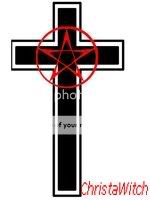
By Bryce Haymond - TempleStudy.com (LDS) - February 4, 2008
One of the more well-used and worn-out attacks from our critics has been the Church’s use of the symbol of the pentagram (a 5-pointed star) on some of our temples, most particularly on the early temples of this dispensation such as the Nauvoo Temple. In an sweeping gesture they pass these symbols off as absolute proof that Mormonism is a Satanic organization. They cannot imagine why a so-called Christian faith would even think to use such symbols when it is so clear to them that they are evil and of the devil.
Why do these critics always assume the worst, and ignore the simple evidence? It didn’t take me more than a few minutes of Googling to find the following information on the symbolism of the pentagram from several different sites:
During the times of the Hebrew Scriptures (Old Testament), the pentacle was the first and most important of the Seven Seals – an amulet whose seals represented the seven secret names of God. It was inscribed on King Solomon’s ring, which is often called Solomon’s Seal in error. Each point of the pentagram was also interpreted as referring to the five books of the Pentateuch – the first five books in the Hebrew Scriptures; the Torah.
To the Hebrews the five points of the pentagram were tied to the Pentateuch (the first five books of the bible) and represented as a whole the concept of truth.
There are many connections between the pentagram and Christianity. Before the cross, it was a preferred emblem to adorn the jewelry and amulets of early Christians (followed by an ‘x’ or a phoenix). The pentagram was associated with the five wounds of Christ, and because it could be drawn in one continuous movement of the pen, the Alpha and the Omega as one.
A ‘point down’ pentacle is nothing new, nor is it necessarily Satanic when it appears as such. Historical depictions of the pentagram were as likely to be points down as point up; a distinction between one or the other was rarely made by the ancients.
Perhaps most curious is the pentagram as it relates to early Christianity. Constantine the Roman Emperor who converted to Christianity chose to use the pentagram on his seal and amulet. Up until medieval times, the five points of the pentagram represented the five wounds of Christ on the Cross. During these times the pentagram carried no evil implications at all and in fact, in a lesser way than the cross, was symbolic of the Savior.
Up until medieval times, the five points of the pentagram represented the five wounds of Christ on the Cross. It was a symbol of Christ the Saviour. This is in stark contrast to today where the pentagram is criticized by modern Fundamentalist Christians, as being a symbol of evil. The church eventually chose the cross as a more significant symbol for Christianity, and the use of the pentagram as a Christian symbol gradually ceased.
The adoption of the pentacle as a Satanic emblem is quite recent, dating only to the latter half of the twentieth century.
Eliphas Levi (born Alphonse Louis Constant), a former Roman Catholic priest, in 1856 turned the previously harmless Jewish and Christian pentagram into a ridiculous Satanic symbol.
In the nineteenth century Eliphas Lévi, an Occultist, was the first to adapt the inverted pentagram as symbolic of evil.
Probably due to misinterpretation of symbols used by ceremonial magicians, it later became associated with Satanism and subsequently rejected by most of Christianity sometime in the twentieth century.
It’s amazing what a few minutes of Google will do. For most of human history the pentagram has symbolized good things – the heavens, stars, health, scriptures, truth, and even the Savior, Jesus Christ. The adaptation of the pentagram into a Satanic symbol is a modern invention, another attempt of the Adversary to turn everything that is good into evil (Isaiah 5:20).
FAIR also has gathered some good research on this subject.
.
Wednesday, June 12, 2013
The Sanctuary of Straw

A few evenings ago, I found myself in a location which I had never been before. You could live your whole life in a locale, and still find a place that has somehow escaped you. So much so that you need to integrate it into your internal mapping. This location was in an industrial area, mostly between a fairly steep mountain range and the warehouses along the streets. Along that area were once trains that carried goods to and from the manufacturing locations apparently. It may have been active at late as the 1950s. I was very familiar with that old railtrack system, but just not in this location which extended into some heavy wood and brush at the base of the mountain. The tracks were torn out about ten or fifteen years ago, and only a few heavy timbers alongside the trails are a reminder of what was once there.
Oddly, I had always seen one opening from the street where the tracks once crossed, but it was so overgrown that I never bothered with it. It was like a trail to nowhere, with a chain and reflectors in front of it. It was from a different entry point that I discovered this pathway though. At first it was twilight, and I stopped to take a water break in a parking lot. I noticed a trail in the distance, so I took a look. When I reached the opening to the trail behind a large warehouse, it was a sight to behold. Some lights from the industrial park illuminated the trail somewhat. The freshly cut dry grass of the trail seemed to almost glow in the darkness, and disappeared in the distance; into the trees, with the black mountain and the dark blue sky with a thin crescent moon in the backdrop.
As I looked at this almost too-good-to-be-true sight, somehow it occurred to me that my entire life was about "this place." Somehow everything made sense, and it grounded me. For some reason, ironically, I thought about what I have seen in myself and others in life; always searching for "something" along life's path. My mind was so clear that I was easily able to regress many interests and fads that I have had in my life. Some legitimate interests were never really explored, and had long disappeared among related and perhaps immature interests. Even before the information age, things just sort've came and went for a lot of people I think. Ultimately, especially for an obscure endeavor, it takes a person or people to breathe life into something to make it relevant. I think everyone has some regrets, and can think of some silly notions that they once held. Still, even in the maze of one's life--especially their youth--there are a few lost gems that can be brushed off and quickened.
I believe that you cannot force your mind to be this clear, even if you visit a special place. It will happen when it's ready to happen. The conflicts and troubles of the day usually prevent the mind from opening up. However, it does happen; and you should take advantage of it when it does. For some reason, this new sanctuary amid a location of which I was very familiar, somehow opened this door for me. You will know it because time will be compressed, meaning that something from long ago in your life will feel close. Time is suspended, and negativity is kept at bay. In other words, you can see the positive that existed; and the negative isn't allowed to get in the way of bringing it forward for reflection. That's what I experienced. Usually the mind blocks out negative periods in life, and it blocks out the interwoven positive aspects of them as well.
Needless to say, I was able to clearly see some old unique positive aspirations of mine which had long been buried in the darkness of some negative periods. I don't know if this place opened this doorway, and/or if some spirit guide led me there for some knowledge that I needed, or if it was all just mere chance? It is rather odd indeed that some positive endeavor in our lives--much like this pathway I found--can be lost in the dark corners our minds. When I say "dark," I mean the negative experiences that the mind blocks out; but is still in our memory. Not blocked out entirely, not the subconscious mind (although that can happen with trauma), but just enough of a block to repress it and the gems that may be within. It could be bad time periods, or just the common troubles of youth that the mind represses.
For some reason the city had the dry grasses and overgrowth cut along this trail, and the ground was very soft to the step, and looked like straw. It was so soft that you could comfortably roll around on it; and in a few parts you could practically sleep on it. Although there was no moonlight or urban cloudlight, the surrounding lights of the area were enough to illuminate the "straw" a bit. As I saw this glow-in-the-dark pathway disappear into the darkness, into the mountain, I felt that I had to explore it. After walking for a short while, the bright lights of a large trucking company parking lot broke through the trees. As its rays lightened the path for a stretch, I could faintly hear a few trucks and noises. My father was a truck driver for many years, and this particular spot reminded me of rural truck stops; as though his spirit was also present. Soon the trail turned dark again. The straw made it easy to see my way.
It's not a great idea to hike in a remote area at night by yourself, but I was so eager to see what was "just around the next bend." The darkness plays tricks on you sometimes. Natural features can appear to be a person or an animal. Sometimes, for brief instants, fear can overcome you. A flashlight is always a must, if for no other reason than to signal to a person that you might encounter. However, this sanctuary of straw was all mine on that night. When I got to a slightly higher elevation, there was a small break in the wood and brush, and I could see some dry grassy hillsides in the opposite direction. Amid the slightly illuminated ash-blonde hills was the freeway and some lights. At night, from this vantage point, nothing looked familiar. Just from that angle, it reminded me of rural parts of California Interstate 5; and from my location, it seemed like a lost highway, just as I was on a lost pathway.
I stopped to soak in this view of a familiar place that the night had made look so different. The dry grassy hills reminded me of the hills around the Concord Pavilion and concerts from years before, when I hanged around with a group of guys who were pretty much only interested in heavy metal music and drinking. I think sometimes people can long for the simplicity of their youth or young adulthood. It also reminded me of the grassy hills around the Shoreline Amphitheatre in the South Bay, and how we used to arrive early and wander into the thick nearby eucalyptus groves to hangout, talk, laugh, and drink. Now those groves are all gone, and police and security make certain that concertgoers park, attend, and leave in a proper manner. I could hear my old friends' voices and laughter as I gazed upon the night view.
Finally, I made it to the earlier mentioned ending point, the street. The tracks had once crossed at this point, only to continue behind another passageway of which I was familiar with. Indeed this stretch of road was also empty at night, and I walked into the wide, well-lighted, empty street for a moment. I had come full circle from one familiar location to another, like connecting the dots by finding out what is between them. Then I headed back to where I had started, with the glowing pathway of straw and the spirits as my guides through the darkness.
.
Sunday, June 9, 2013
Strege/native pagan values/symbols incorporated into early Catholicism

Strege/native pagan values/symbols incorporated into early Catholicism
There are a lot of examples from mostly Odinic or other northern European traditions, and a lot of other places, which are well documented, but I wanted to focus on ancient central Italy and outward.
1) "Mary as a Goddess" - Clearly, many Catholics wish her to be a goddess. So
many are very devoted to this idea. She is referred to as the "Queen of Heaven," I think, pretty obviously, based mainly upon the Goddess Diana. They were so spiritually imbalanced that it's not so difficult to see how this developed over time.
2) "Law and Justice" - I believe that the idea of--within a family--the Father
symbolizing "Law" and the Mother symbolizing "Justice," is a pagan-value which was adopted into the social fabric of the early Christian Church. That concept was, however, cut short beyond the family (Man=Law/Woman=Justice). I once even heard a Protestant gloat about how wonderful that "Christian value" is.
3) "Solar Cross" - This is another obvious one, with the early church adopting
pagan solar wheels as crosses to aid in religious conversions.
4) "Trinity symbols" - There are numerous examples of this, too many to regress off hand...usually variations of the triquetra and triskelion... and also aiding in religious conversions.
5) Misc symbols - The common six-pointed cross is possibly based on the
rosette/sun of the Alps symbol and a lot of other regional hexagram styles (aka "hex signs"). The eight-pointed cross is pretty clearly based on the wheel of the year. The Vatican sun symbol is a no-brainer, and there's even one with a standard Christian cross with an upward-pointing crescent moon under it.
6) Science - There were five-pointed symbols in ancient Europe, just not as
stylish as the Sumerian hexagram (aka Pentagram). The five points ARE science itself! So we have today the Hegelian Dialect of closed-minded religion (anti-nature/knowledge) and closed-minded science (anti-spirit) driving us into the future. Certainly the church feared knowledge as evil for so long and still maintain a "block" to spiritual knowledge, and modern science denies the metaphysical "fifth point" of the Vehme.
Some of these concepts were a deliberate attempt to convert the pagans, while others were crossed over in a cultural manner by officials and concerns lower down in the organization it appears.
.
Sunday, June 2, 2013
Boudicca: Celtic Pagan Warrior Queen
Even though this is part of English history, I still thought it very applicable since Boudicca was an ancient "Celtic Briton," and apparently fiercely pagan (the Druidic tradition). She was a woman, a leader, a Celt, a warrior, and a pagan to remember.

.
Subscribe to:
Posts (Atom)