Showing posts with label Celtic paganism. Show all posts

Sunday, September 22, 2013

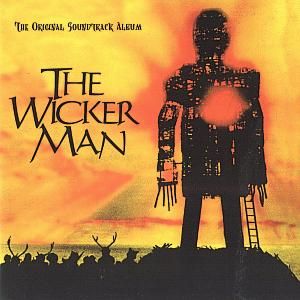
'The Wicker Man' (movie review)

'The Wicker Man' (from Wikipedia)

The Wicker Man is a 1973 British horror film directed by Robin Hardy and written by Anthony Shaffer. The film stars Edward Woodward, Christopher Lee, Diane Cilento, Ingrid Pitt, and Britt Ekland. Paul Giovanni composed the soundtrack. The film is now considered a cult classic. Inspired by the basic scenario of David Pinner's 1967 novel Ritual, the story centres on the visit of Police Sergeant Neil Howie to the isolated island of Summerisle, in search of a missing girl the locals claim never existed. Howie, a devout Christian, is appalled to find that the inhabitants of the island practise a form of Celtic paganism.

The Wicker Man is generally well regarded by critics. Film magazine Cinefantastique described it as "The Citizen Kane of horror movies", and during 2004 the magazine Total Film named The Wicker Man the sixth greatest British film of all time. It also won the 1978 Saturn Award for Best Horror Film. A scene from this film was #45 on Bravo's 100 Scariest Movie Moments. During the 2012 Summer Olympics opening ceremony, the film was included as part of a sequence that celebrated British cinema.


**************************************************

2013 marks marks forty years since 'The Wicker Man' was released. This is one movie that I can recall watching as a kid on the local Creature Features weekend horror double features. Some don't see it as a "horror movie" at all, but more of a mystery-drama-thriller. For me, this movie has a little different feel to it each time as I've viewed it over many years. Naturally now, I saw more in the pagan element to it. There was a lot of symbolism in it; more than I can spend time regressing in this text. I didn't see it as any great statement of somehow "the pagans getting revenge," however the Christian vs. Pagan theme was played up... but more in line within the artistic mystery of the movie.

Edward Woodward is a familiar face from a lot of work from the UK, and is the protagonist.. as a policeman who is lured to the remote Scottish Island to search for a missing little girl. Famed British actor Christopher Lee is well suited as the chief official or Lord of the island community of Summerisle. According to the movie, he actually owned the island. A number of those from the cast are very well-known actors. I was familiar with Britt Ekland, a Swedish actress who played one of the island women. "Summerisle" is fictional, and the film was shot on the west coast of Scotland.

One aspect to the film, which is very memorable, is the neopagan-style music. After viewing it this time, I would like to purchase the soundtrack. I really enjoy that type of music. The main theme--'Willow's Song'--reminds one strongly of the movie, but the rest could fit in well within that genre that has developed mostly since the film; although it remains something of an underground genre.

I can see that there is a lot online about this movie, and it is one of those that a big film buff could have a field day researching and collecting. It's a very unique movie, and although presented in a semi-horror movie style, in many ways it captured a certain non-violent Heathen spirit. The sun flag of "Summerisle" was a sun face on white background, and I think it is a flag of some part of that region of the world.


There was so much symbolism that I can't recall all of it, but the "Green Man Inn" pub with the green face on the sign was one. I even thought that Sergeant Howie's police cap, with the Masonic-occult checkerboard pattern on it, was a symbol of something... perhaps an irony of the Christian society that he came from. Maybe a masked clue that the "Christian society" had it's own element of deep-rooted secrecy and occultism. The island society was clearly Celtic-pagan. Another interesting symbol was the ancient symbol of Saturn, known to the modern world as the Star of David. I don't think the Celts/Druids ever used that symbol, but it was curious that they presented it. The standing stones with the simple center altar was another strong symbol.

The early scene in the Green Man Inn pub caught my attention a bit in a cultural way. The local festive patrons were singing and dancing, and the songs reminded me of some combination of Irish folk songs, fisherman's hymns, and of course pagan elements. Also, the outward expressions of pagan sexuality stood out, and frustrated the equally-dedicated Christian Sergeant Howie.

The sergeant, throughout the entire movie, just couldn't wrap his mind around the essentric local culture. Not just the frustrations he encounters during his investigation, but just the fact that they "had the nerve to even be pagan." Apparently the character was Scottish, therefore the conflict was paganism vs. mainstream society at large... and not "English vs. Scottish."


I don't want to give away the movie in case any of you haven't seen it. I'm basically just bouncing around some of the themes. This is a movie that would be fun to research in-depth.


Another strong image was the power of ritual. Costumes, masks, singing, musical instruments, etc., can have a powerful affect on the mood... and work well with ceremony. There's a certain cutesy and festive thingie with those masks... especially animal masks! It was the festival of Beltane after all. Another theme portrayed in this film, which has been shown in many other movies, is the powerful human expression of "singing upon one's own death."

If you have already seen the movie, Elaine MacIntyre gives a really charming review of it here. There is so much to read online about this film! I know I barely grazed the surface. You could watch this movie and be engrossed in the protagonist's plight; and maybe at some later point you could just watch and enjoy the music, mood, and festival of it all. I think it's a special movie that also strongly captured the time period it was from.. in sort've a rural way.

"Thriller, fantasy or musical. art house film or horror flick... undisputed cult classic. Call it what you will, there's no doubt that The Wicker Man is a truly great film. In the words of director Robin Hardy, 'there has never been a film like this' - and there probably never will." --Elaine MacIntyre

Spoiler alert beyond this point!

.


.

.

There's a certain feel to the end. The dusk sun is lowering in the ocean horizon. I felt more sorry for Sergeant Howie while viewing this time than during the times I watched in the past. I guess I thought of him as more of a victim of circumstances. As the wicker man burned... there was something eery about those flames roaring along the cool winds of the north Atlantic coast as twilight approached. That would have been a scene that existed in different environments in past milleniums. Perhaps on a mountain top, along a lake, in a forest, or on a grassy plane. A ritual of hope.
 

.

Thursday, March 5, 2009

Loose Ends: Valcamonica, Cernunnos, Wicca, Druids, and the Pentagram


We have covered some of the undeniable history of traditions of witchcraft in the Valle Camonica, and there are more areas to look at. This may not follow any consistent pattern, as we're tying in a number of related loose ends into one entry.

The above video is from the YouTube channel VeraMajestic, and is called 'Wicca vs Satanism.' It covers the issue well I think (3-2-12: this video was changed due to VeraMajestic closing her YouTube account). Wicca probably originated with the Celts, and goes back far before Christianity. A native European tradition. Intrinsically, there is nothing "Satanic" about Wicca/Witchcraft. Starting in the twentieth century, there exists some problems with undue influence in the "Wiccan Revival," with Illuminist type people infiltrating. However, the exact same thing has occurred in some areas of Christianity, and most other religions, as we have painfully seen in recent times. Also, it should be noted that the word "occult" merely means "hidden," and really has no meaning beyond that. It literally goes back to the idea of anything non-Christian being labeled "Occult!" For example, "He got involved in the occult!," has no meaning. Either he got involved in something specific, or not. Also, being called a "heathen" was once a major accusation, when it merely means something "non-Christian." An "infadel" if you will. The most important fact is that virtually all religions and faiths have had undue (mainly Illuminist) influence, and it certainly is a problem; but it's not just pagans. In fact, ironically, Wiccans have done a far better job of weeding out this negative influence than Christians have.

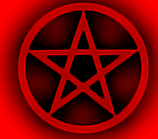
Following the lead of the video, I would like to cover the Pentagram, or also known as the Pentacle. It's basically a "Celtic Star Pentagon" (pentagon = 5 points). Satanists/Illuminists take already existing symbols and contort them to reflect the "evil side." As shown in the video, a Christian Cross, when put upside down, symbolizes Satanism. Nobody believes that the original cross is evil merely based on the fact that it can be turned upside down at any time.

The Pentagram goes back, probably with the Celts, thousands of years. Long before Christianity. It's is not at all Satanic... unless it's turned with one point downward into a "goat's head," at which time it does become a Satanic symbol, but not until. Now the above image probably isn't the best one to use because it's red and gives the wrong impression. A traditional non-Satanic/Celtic Pentagram is usually black I think.

I also wanted to at least mention Cernunnos, Celtic Reconstructionist Paganism, Celtic polytheism, Celtic mythology. Unfortunately, these bring up many false images to most people. Lets separate a little fact from fiction. Some areas, both in the Middle Ages in Europe, and in the early American colonies (Salem witch trials), were exaggerated in their scope. In other areas, it wasn't. The persecution of other forms of Christianity and Protestantism were probably far more brutal. For example, the attacks on the Cathars or the Waldensians. What was not exaggerated was the elimination and demonization of the Wiccan and Druid traditions.

From Wikipedia: "Cernunnos is a pagan Celtic god whose representations were widespread in the ancient Celtic lands of western Europe. As a horned god, Cernunnos is associated with horned male animals, especially stags and the ram-horned snake; this and other attributes associate him with produce and fertility." What has to be understood is that this was from ancient pre-Christian Europe. Fertility, the success of crops, the weather, etc., were of utmost importance. From what I have been able to gather, it was usually deer antlers that men wore.

From Wikipedia: "Archaeological sources such as inscriptions and depictions from Gaul and Northern Italy (Gallia Cisalpina) have been used to define Cernunnos. ...... Several images without inscriptions are thought to represent Cernunnos. The earliest known probable depiction of Cernunnos was found at Val Camonica in Italy, dating from the 4th century BC, while the best known depiction is on the Gundestrup cauldron found on Jutland, dating to the 1st century BC. The Cauldron was likely to have been stolen by the Germanic Cimbri tribe or another tribe that inhabited Jutland as it originated from south east Europe."

I'm only briefly going into Cernunnos, as it's involved and may confuse the issues. What is amazing is that related occult traditions, like Cernunnos, go back thousands of years in the Camunian Valley.

From Wikipedia: "Neopaganism

"In Wicca and derived forms of Neopaganism a Horned God is revered, a divinity which syncretises a number of horned or antlered gods from various cultures, including Cernunnos. The Horned God reflects the seasons of the year in an annual cycle of life, death and rebirth.

"In the tradition of Gardnerian Wicca, the Horned God is sometimes specifically referred to as Cernunnos, or sometimes also as Kernunno.

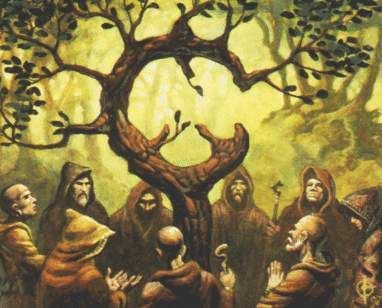
"Modern Druidry, which derives from Celtic culture, honors Cernunnos in his ancient Celto-European form as the guardian of the forests, the defender of the animal tuatha (tribes), the source of the deep forest wisdom, and the masculine half of creative energy. His restorative work in the cycle of the year is particularly celebrated at Beltaine, and is often paired with one or another of the female deities in her maiden aspect. Druids may call upon him in reference to vital, non-violent masculine divinity."

Celtic polytheism, "sometimes known as Celtic paganism, refers to the religious beliefs and practises of the ancient Celtic peoples of western Europe prior to Christianisation" (Wikipedia). Also, Celtic mythology "is the mythology of Celtic polytheism, apparently the religion of the Iron Age Celts. Like other Iron Age Europeans, the early Celts maintained a polytheistic mythology and religious structure" (Wikipedia). Lastly, Celtic Reconstructionist Paganism "is a polytheistic, animistic, religious and cultural movement. It is an effort to reconstruct and revive, in a modern Celtic cultural context, pre-Christian Celtic religions" (Wikipedia).

It should also be noted that the old Greek and Roman deities were exchanged with Northern European traditions, which is too confusing to go into now. Also, don't be afraid to go to YouTube and look some of these things up. It doesn't mean that you're becoming a Druid, a witch, an Odinist, etc. I've said it before, and I will continue to say it, the Greek-Americans have no problem at all adhering to the Orthodox Christian sect while honoring their pagan past. I think that this is the way to go. Who said that there ever had to be any conflict? Why deny what our ancestors were for thousands of years?

I wanted to end this by briefly taking a look at Druidism. From Wikipedia: "A druid was a member of the priestly and learned class in the ancient Celtic societies of Western Europe, Britain and Ireland. They were suppressed by the Roman government and disappeared from the written record by the second century CE. Druids combined the duties of priest, judge, scholar, and teacher. Little contemporary evidence for them exists, and thus little can be said of them with assurance, but they continued to feature prominently in later Irish myth and literature. Most of what is known about them comes from the Roman writers." More subjects relating to the Druids can be found at Wikipedia's Druidry categories.

4-8-09 ADDITION: I think that there are several items that could use clarification here. First, if you are new to the LAA, this had been "Bresciani nel Mondo - Northern California," and focused on issues of Brescian or Camunian origin. One such subject was the deep roots of witchcraft in the Valle Camonica, likely of predominantly Celtic origin. We still want to cover this, and any other part of the history and tradition of any other province of Lombardia (including Ticino and Grigioni). You may send us items to post if you like.

Second, it should be noted that Druidism is not the same as Wicca, although both are mainly identified with Celtic tradition. Also, that's an area where we need a little help on. How did the two interact. I'm not certain, but Druidism seems more Patriarchal, while Wicca seems more Matriarchal, so it would be interesting to find out how the two interacted, especially within a single culture.

Lastly, and this is interesting. The Runes, of Etruscan origin, not only were adopted (and modified) and used by Odinist traditions, but also by Wiccans (not sure about Druids), who used them in their practices. That would be something to look into. As stated before, the Romans destroyed virtually everything Etruscan.

8-1-09 Clarification: The third sentence of the second paragraph begins "Wicca probably originated with the Celts...." Wicca is the modern incarnation of European Witchcraft, therefore was not in existence prior to the twentieth century. It was used here as a convenient term, rather than saying "European Witchcraft." Christians probably would not like a term like "Levantine Priestcraft," and the same for other religions.

3-2-12 Addition: Loose Ends: Valcamonica, Cernunnos, Wicca, Druids, and the Pentagram - Part II

.