Showing posts with label immigration. Show all posts

Friday, December 8, 2017

A History of Valtellinese and Valchiavennasca immigration (Australia, Argentina, U.S., etc.)


[Note: The smaller Valchiavenna is most often considered a part of the Valtellina. Officially, the region is called Sondrio; after it's capitol and largest city. This translation may have unintentional errors.]


'Emigration from the Valtellina and Valchiavenna'

Published by the Istituto Comprensivo di Ponte in Valtellina

In the last years of the nineteenth century the migration of Italy suffered a mild aftershock, followed by a very strange and sudden drop in 1903 and by a new and intense wave of immigration in the first three decades of the century. It was then interrupted almost sharply since the outbreak of the first world war. This was the period of greatest exodus from the Valtellina and  Italy, and calmed only in North America during 1908-09 because of the crisis and the ebb of the Argentine market.

The migration was characterized by the behavior of the emigrants from Valtellina and Valchiavenna whom adapted to any craft. Under the pressure of this phenomenon were formed religious and immigrant associations and offices for the assistance of workers abroad. The provincial department of labor and emigration in Tirano took care of the services of everyone regardless of the religion or politics of would-be emigrants who were demanding information on countries of destination, working conditions, wages, climate, and accommodation.

The temporary decline of migratory flow was due to several factors: first of all the workers almost always returned to their place of origin, and secondly the U.S. introduced various restrictive measures for workers coming from the Mediterranean area. From 1890 to 1940, however, 70% of the Italians who emigrated to Australia came from the mountain provinces of Piedmont, Lombardy and Veneto; and between 1890 and 1930 the migration to Australia included some 15,000 peole from the Valtellina.

Arms of Mazzi di Valtellina

The countries in which these villagers were sent were the United States, Argentina, Australia and Brazil. Canada, as well as Urugray, accepted a lessor number. Argentina made broad concessions on easing visa and consular concessions. They always favored the influx of workers because, above all, the great labor requirements included mostly farm work. On the other hand, the Valtellinese and Italians preferred this country both for its climate and for its language. In Australia, however, many of them left the mines in which they pledged initially, to devote themselves to building roads and railways. Their overriding goal was to amass funds in order to carry on agriculture and livestock.

Many migrants managed to purchase property or rent land for farming. Many villagers opted for emigration to the U.S. where they worked in factories, on farms, or wine-growing plantations of California. It is from here that workers from Valtellina and Valchiavenna brought home big nest eggs. Among the emigrants,  not everyone was an honest worker in search of better luck. Somtimes among them were draft dodgers, or people with criminal records who were leaving illegally.

Provincial authorities often took care of problems related to migration. They sought to thwart foreign labor recruiters who too often unscrupulous businessmen operating in neighbouring Switzerland (Poschiavo Valley, and the Ticino) and acting as agents for companies. Their actions, considered a hindrance by the Italian authorities because it was done upon honest people by profiteering interests. This induced the Prefect of Sondrio to raise awareness among municipal authorities, for they contrasted the propaganda activities of these agents. Abducting their propaganda material would prevent their entrance into Italy, as they  finally gained control of the labor situation between Italy and Switzerland.

The latter measures were also taken because, among the large groups of emigrants who journeyed from Poschiavo to ports of northern Europe, there were many from the area of Valtellina. Even the press was sensitive to the migration phenomenon and operated to give advice concerning the necessary passports, the requirements of foreign countries, etc. One study, which examined in depth the causes and nature of migrations, was held in Valtellina by the journal 'L'Operaio' di Berna. G. Bianchi published the results of the study in a newspaper from Valtellina called 'La Montagna'

Also, an organized a series of conferences were held in the main centres of the province; and two congresses regarding emigration were held in Tirano in 1904 and 1913. The second with more than 500 participants. During the second meeting---chaired by Rinaldo Piazzi, the Mayor of Ponte in Valtellina---two major issues were discussed. One consisting of the diseases affecting villagers, and the other being organizing an evening office facility for prospective emigrants in Grosio.


.

Wednesday, June 19, 2013

The Lombard migration in North America: Part 1

[Translated from the article on the Lombardi nel Mondo website


The Lombard migration in North America

Interview with Ernesto Milani, historian and scholar of the Lombard migration in North America.

A wide-ranging interview with Ernesto Milani, historian and scholar of emigration from England to the United States and Canada: from Missouri to Vermont, from Illinois to Ontario, keeping Lombard roots alive.


What is your training under the Lombard immigration historical research in the United States?

I wrote my thesis on Italian mutual aid societies in the United States, in particular research work on the Lombard Association in Boston, Subalpina Mutual Society. Then I commenced to collect books, postcards and other material on the subject.

The first important work I've done has been on the Italian emigration (in particular, Marchigian and Venetian southern plantations of the Mississippi). From that date onwards, I have done a lot of research on the topic.

Also attended by 1976 the Hague, Italian-American Association and I have contacts with historians who make up this important Association.


How is the map of the Lombards in the United States?

The Lombards who arrived in the United States in the years of mass emigration were mostly miners and laborers. The main destinations to which this emigration was focused are St. Louis, Missouri, Herrin and Rockford, Illinois, Barre, Vermont, Iron Mountain, Michigan, Walla Walla, Washington, and then in Texas, in San Francisco (in particular in the area of San Rafael), in New Mexico and Arizona.

In Canada, however, focused in Ontario, in coal mines on the border between Alberta to British Columbia, and along the railway linking Montreal to Victoria.

The strongest emigration was from 1880 to 1920. Just to give you an example that gives the measure of the importance of the phenomenon, from Cuggiono left toward New York Harbor about 1,700 people in an era when this country had approximately 4000 people (Lombards?).

In Canada, emigration has been strong even after the war, especially from the province of Brescia and Bergamo.


How organized are Lombard associations in the United States?

There is a certain organization, but is less than elsewhere. My experience tells me that most organized associations are those of St. Louis and Harrin, where the presence of Lombard miners was very strong. St. Louis was indeed a "little Italy," and often associations were born to create mutual aid institutions, so as to share a doctor in town for example.


In what form is the Lombard identity within these communities?

The Lombard tradition in any form is maintained: for example in St. Louis there is a church dedicated to Saint Ambrose. Lombard values are family values that are conserved. Often there remains a certain knowledge of the dialect, perhaps there remains nicknames that you give people. In addition, today these are often found in Lombardy, in their region of origin, and this helps strengthen ties. This is even more true if we consider that today, rediscovering Lombardy is no longer a negative, but is part of their lives.

In Canada the preservation of identity is more relevant, since the Lombards were always less in number.


What is the social and economic situation of our emigrants?


It's hard to generalize. In any case, in St. Louis, for example, the integration was very slow, the Italians were workers until the end of World War II. Since then, things have changed and the Italians today work in all different occupations.

Of course, our communities are very engaged in catering, according to the Italian tradition in general.


Were there prejudices (positive or negative) in relation to our communities, when they arrived and began to integrate into the local social fabric?

Maybe there was, and it was more in the American South, otherwise the Lombards were not affected that much by this factor. For example, Ellis Island (the island that functioned as sorting station for immigrants in New York) the Italians on arrival were divided between southerners and northerners, and also within the north (Italy) there were differences, whereby for example the Trentini were sorted along with Tyrol.


The Lombard migration to the United States is a topic that seems to have been insufficiently studied by academia. Could more studies be carried out to give a more complete picture of this subject?

Studies are numerous but more at the individual level and provincial staff. There is also the problem of saving accounts, and this information is being lost to the point that it is now too late to intervene. The obvious reason for this is that these stories are lost when people disappear that handed down orally.


And the Lombard migration today in the United States?

It's totally different. This is an emigration of professionals, researchers, teachers or people who have implanted. There is also the emigration of those who want to change his life and put to the test in completely new environments. We are not talking about large numbers, but it is in any case a phenomenon as well.


Fabio Veneri


.

Monday, October 24, 2011

“Patihi, Patahé!” The Camuni of Brescia in Monongahela City: Part II

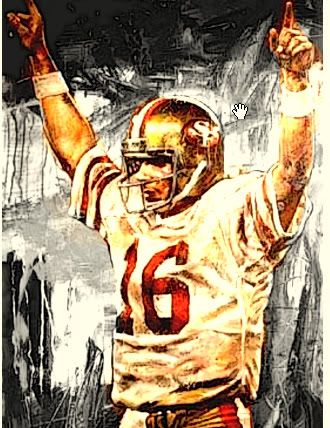
Sports legend Joe Montana, of half Camunian ancestry

Borrowed from the archives of 'Poche Parole' (May 2009), the newsletter of the Italian Cultural Society of Washington D.C.


By Terry Necciai

The second of two articles

Railroad construction went at a furious pace through the region, both before and after the Panic of 1873, and gangs of temporary workers were recruited to level the grade and lay the ties and tracks. It is particularly difficult to determine who the workers were and where they came from because of the short term nature of the work and lack of records. However, it appears that the Italian workers found other jobs as a result of the new lines. Railroad development was often justified by the expectation that each line would open up a new area for coal mining. Industrial villages cropped up almost instantaneously as each line was completed. Meanwhile, other Pittsburgh area industries, such as steel, specifically avoided hiring Italians because they thought they were less suited than the Slovaks and other Eastern Europeans for the heavy work required at the larger industrial plants, a prejudice that is on record in some of the surviving trade literature. Because the Italians had an easier time finding jobs in coal mines, they ended up scattered all over the region, in the 500 or more mining villages found within a 100 mile radius of Pittsburgh. Those who brought trade skills with them eventually struck off as entrepreneurs, serving as carpenters, blacksmiths, barbers, tailors, and grocers/fruit handlers, and also sometimes as musicians, writers, or bankers in the new villages.

The Bresciani who came to Monongahela City helped to set off a chain reaction that brought Italians from almost every other part of Italy, boosting the population within and surrounding a very small city that is still 25% Italian-American today. A small group of Calabresi who came in the 1870s may have been the first, followed in the 1890s to 1910s by other Italians from north of Rome, a large group of families from Tuscany, and smaller groups from Umbria, Piemonte, and Venice, and then by large groups from Naples, Calabria, and Sicily, with smaller groups from Abruzzi and Molise. In one of the later waves of immigration, families came from Suisio, an industrial town west of Bergamo, where the dialect was almost the same as that of Brescia. The Italian-Americans in Monongahela whose roots are in the other parts of Italy often refer to the Bresciani and Bergamaschi as the “Patihi, Patahé,” an obscure phrase that the Bresciani had apparently used as a greeting and a shibboleth (though no one from modern day Brescia seems to remember exactly what this phrase means). (My theory is that it could be derived from a word “dialect,” similar to the French “patois.” Or another possibility is “patéser” a verb in the local dialect that means the same as “soffrire” — to “suffer” or to “put up with” someone. Assuming the two words are conjugated forms of a verb, say “patihare” or “patéher,” with an “h” being substituted for a “c” or an “s,” the meaning of “se patahi, pataho” could be “if you speak the dialect, then I will” or “if you put up with [me], then I’ll put up with [you]”)

A small group apparently came about 1886, probably as a gang of young, single men looking for work. Three of the first surnames were: Milani, Pezzoni, and Carrara. Serafino Carrara came to Monongahela from Brescia in ca.1886-88, taking a job in the Catsburg Mine, and by the 1890s, his daughter Maria operated a boarding house for Italian miners on a hillside site overlooking the mine. Undoubtedly, this facility housed many of the Camuni when they first arrived. By about 1915, the Odelli family had a very popular fruit market that later became a peanut and candy store. When Joe (Gio’ann’) Odelli, Sr., rebuilt his fruit stand in 1925, he erected one of the most impressive buildings on Main Street. The Anton family, Bavarian Catholic immigrants who made open flame lamps for the coal miners, took an interest in the Brescians and sponsored the establishment of an Italian Catholic Church in 1904. It was named for St. Anthony of Padua in part to recognize the Antons as the benefactors. The Bresciani were the core group in the congregation. A few years later, in 1913, open flame lamps were blamed for a mine disaster at a mine near Monongahela, taking the lives of 97 men, of whom at least 8 or 10 were from Brescia. Legislation outlawing lamps with open flames after this disaster led to the invention of the safety lamp and then the battery-powered flashlight.

The best known Brescian-American from Monongahela is football quarterback Joe Montana (who played for Notre Dame in the 1970s and the San Francisco 49ers in the 1980s and 1990s). The name Montana is slightly Americanized, apparently from Montagni (he is also half Sicilian, through his mother, Theresa Bavuso Montana).

The Val Camonica is named for the Camunni, an ancient culture of unknown origin that became blended with the Celts of Northern Italy in pre-Roman times. Today, the inhabitants of the valley call themselves “Camuni” (with one “n”). The ancient Camunni left approximately 350,000 rock carvings on the face of the mountains, depicting pre-Roman-era life in the valley. Some are as much as 10,000 years old. To interpret the sparse written passages in the Camuno language that accompanies some of the later carvings, linguists have begun to analyze the peculiarities in the local dialect, which preserves some Camuno characteristics, differentiating it from other dialects of Northern Italy.

.

Sunday, October 23, 2011

“Patihi, Patahé!” The Camuni of Brescia in Monongahela City: Part I

Old steamers on the Monongahela River
Borrowed from the archives of 'Poche Parole' (March 2009), the newsletter of the Italian Cultural Society of Washington D.C.


Summary of a talk by ICS member Terry Necciai at the American Italian Cultural Institute of Pittsburgh, (AMICO) Feb 15, 2009

The first of two articles

“The Daily Republican, 18 November 1892 — MONONGAHELA CITY, PA — The Italians living here joined in the celebration of the town’s centennial by raising a large Italian flag. The celebrating … being over, the Italians refused to take their flag down, and trouble was brewing over the incident. It is not known what would have been the consequences had not Mayor Huston compelled the colony to put the American flag on top of the Italian banner.” (Quoted from an earlier piece in the Pittsburgh Times)

By the 1860s, engineers around the world had learned, through “coking,” how to purify coal enough to replace charcoal in the iron smelting process. In places like Pittsburgh, iron masters built large smelting furnaces in the city, speeding up manufacturing operations, making iron less costly, and replacing primitive furnaces that had operated for years in the mountains. In some mountainous areas of Italy where there was no coal and where charcoal-fired iron had been made for centuries, the transition away from charcoal triggered the demise of the local economy.

As jobs became scarce in the province of Brescia, hundreds of families immigrated to the United States. Some of the first immigrants found work in the small, aging, riverfront mines around Monongahela City, a small town an hour south of Pittsburgh, by the mid-1880s. The first immigrants may have been Bersaglieri or Alpini veterans of the Risorgimento. According to a theory put forward by Don Franco Bontempi, the current parish priest in the Brescian town of Ono San Pietro, they may have been inspired by the fact that President Lincoln had offered Garibaldi a position in the Union Army, in 1861, at a point when the fires of the Risorgimento appeared to have died down. Brescians continued to come to Monongahela until the 1920s because it was one of few places in the world where their dialect (Camuno-Brescian) could be understood. They also found their way to this one town, following friends and relatives. Even today, in certain communities in the Brescian mountains, the name “Monongahela” is well-known, perhaps because many families have kept and handed-down letters from loved ones with the name in the return address (Some Brescians refer to the Pennsylvania locality as “Mononga-elapà,” not knowing that the last two letters in the address stand for the name of the state). Most of the Brescians who came to Monongahela City were from the Val Camonica and the smaller tributary valleys to the east and west of it, an area that comprises the northern two-thirds of the province of Brescia. A 60-mile-long industrial valley in the Alps, the Val Camonica has about a hundred towns and villages clustered around iron furnaces, water-powered forges, wine presses, and other traditional manufacturing facilities. In addition to iron and other metals, as well as table wine, the valley is also known for its cheese and sausages.

Italians may have been among the earliest settlers of Western Pennsylvania. At least two travel writers, as they passed through the area in 1803 and 1806, mentioned an Italian component in local culture as if Italian immigrants were already living in Pittsburgh by then, but research has not been successful in identifying specific familes. A group Passionist Fathers came to Pittsburgh in 1845 to serve the local Catholic community, which, in the middle decades of the nineteenth century, consisted almost exclusively of Irish and German immigrants. Many immigrants from iron manufacturing areas in Germany had come by the 1840s to work in the Pittsburgh iron industry. However, it was not until after the onset of the Panic of 1873 that groups of immigrants from southern and eastern Europe began to show up in large numbers as a new pool of workers. Unstable conditions, particularly in the smaller coal mines between Monongahela City and Pittsburgh, made seasonal jobs available for incoming workers. One well-documented episode in immigration history was a shoot-out that occurred in 1874, at a mine in the village of Buena Vista about 12 miles northeast of Monongahela City and 22 miles south of Pittsburgh, between a group of Italian families who had been hired as workers to break a small-scale strike and the local people whose jobs they were hired to take. Based on their names, this group of Italians appears to have been from near the Swiss border.

.

Wednesday, August 4, 2010

Iron Mountain and the Settlement of the U.P. - Part 3


The following text is from a historical study by Northern Michigan University entitled Recorded in Stone: Voices on the Marquette Iron Range. It's from the webpage called Italians in Marquette County. This county is located in the northern U.P. It can be said that the vast majority of these "Italians" have been Piedmontese, Lombardian, or Tuscan in origin; despite the fact that they are presented in some ways as standard East Coast Italian-Americans. Still, it captures some essense of the soul of our people, who were true pioneers of the region. On the link, there are some good photographs, but I don't want to add them here, as I'm trying to get away from the habit of using other sites bandwidth, although occasionally it's necessary. There is some audio from interviews of very old-time residents of the county as well, which comes on automatically after you click on the following link.


Italians in Marquette County

By: Russell M. Magnaghi


Background

Italy was a geographic description and not a unified nation until the 1870s. With the fall of the Roman Empire, Italy deteriorated into small kingdoms and city states which were dominated by France, Spain, and Austria, not to mention the Normans and Arabs. The central part of the peninsula had come under the control of the papacy and was known as the Papal States ruled by the pope. The unification of Italy began in 1861 and was finally completed in 1870. Conditions in Italy were poor for the average peasant and many sought a new life in the Americas. It was natural that with the opening of the copper and iron mines of the Upper Peninsula, Italian immigrations would be attracted to the area.


English Era

The first known Italian to visit Marquette County was Count Paolo Andreani who visited the Lake Superior country in the summer of 1791 before the region had been given to the United States by the British. Andreani was leading a scien­tific expedition to study the shape of the earth. He took measurements at various locations enroute and is considered the first known Euro­pean to circumnavigate Lake Superior at one time. Naturally he camped at least one night at Little Presque Isle which was the principal camping site for travelers along the south shore of Lake Superior. From there they would traverse across Marquette Bay and land at Shot Point or vice versa.


The Iron Era

The Marquette Iron Range was the first of the iron ranges to be discovered by William Burt on September 19, 1844 in Negaunee. Lacking a source of laborers, immigrants were encouraged to come to the Range and help extract the iron ore. The first known Italian in Marquette at this time was Eugenio Borgi who was born in Naples in 1836 and in the summer of 1860 was working as a day laborer. Also listed on the Federal census was Mary Black, a 29 year old woman from Piedmont employed as a servant. Unfortunate­ly that is the only time that we hear of these two Italian immigrants.

In the summer of 1863 Philip and Josephine Marchetti arrived at Eagle Mills, east of Negaunee with a group of Irish. These were the pioneer Italians to the iron range Philip was from Corsica, had migrated to the Italian mainland and worked in the marble quarries. Soon after serving in the Italian Legion during the Crimean War he migrated to the United States. By October 1860 the Marchettis were living in western Massachusetts where Philip worked on railroad tunnel construction. Their daughter Mary Ann was born in Pittsfield, Massachusetts in 1860. Although they kept their property at Eagle Mills and used it as a farm, they eventually moved into Negaunee where Philip developed real estate holdings. Due to these early Italian settlers, Negaunee became the focal point on the Marquette Iron Range for the settlement of these early Italians immigrants.

Another early arrival was Batista Barasa, who was born in Quasolo, Italy in 1837. He worked in France and Spain with his brother on railroad tunnel construction before he migrated to Massachusetts and eventually to Negaunee in 1871. His brother Peter (b. 1842) came to the United States in 1877 and three years later was living in Negaunee. By 1873 there were other Italians in Negaunee: John Bastedo, a wagon maker and John Mazara, a laborer at the Jackson Mine. By the late 1870s Dominic Dighera was also a county resident. These and other early Italians were attracted to Marquette County through the efforts of Barasa or what is known as "chain migration:' One immigrant would arrive in a location and then sent letters which brought his friends and relatives. The area was developing and there was ample economic opportunity.

With the development of shaft mining the earlier immigrants – Cornish, Irish, and Germans - were no longer needed on the range and most of them began moving to newly opened mining frontiers either in the Upper Peninsula, Minnesota or in the Far West. Although there were 41 Italians in Negaunee in 1880 it was seven years later that the first large scale migration of Italians began into the County. At first the Italians were from northern Italy: Lombardy, Piedmont, Venice and the Tyrol and they settled in Negaunee. Initial­ly 50 Italians arrived; followed in the spring of 1888 by an additional 100. Although they inherited the jobs at the lowest end of the employ­ment scale as trammers or iron ore shovelers, they wrote back to Italy and encouraged others to join them. The wages and living conditions on the Marquette Iron Range were a great improvement over economic and work conditions in Italy. In the 1890s southern Italians primarily from Calabria but also from Naples and Sicily settled in Ishpeming. They experienced a similar migration process. By 1910 Italians comprised 15% - 16% of the labor force on the Range. There were a great many Italians working as miners and in many of the mines a greater proportion of the Italians were working as laborers and trammers. In 1910, of the 907 Italians with occupations, 741 or 81.6% were miners. There were also 51 Italians (6%) working on the railroad, 24 (2.8%) listed as laborers, and 20 working in the iron furnaces in Mar­quette. Most of the Italian businessmen were located in Negaunee and Gwinn at that time. There were 16 boardinghouse keepers, 11 saloonkeepers, 5 merchants, 5 bakers and 3 shoemakers. This breakdown of occupations was consistent with other Italian com­munities in the Upper Peninsula.

Although Italians were centered in Ishpeming, Negaunee and Gwinn, a small group of them headed by the DePetro family resided in Marquette. The DePetro family came to the Upper Peninsula to work on the railroad in the Sault Ste. Marie area. When they heard that the Cliffs-Dow plant in Marquette needed laborers to work in the charcoal-chemical factory, they moved west. The extended family continues to live in Marquette.


Politics

Although it was usually atypical in other areas of the United States, the Italian immigrants in Marquette County successfully became involved in local politics. Batista Barasa, who became a citizen in 1879, was elected to the Negaunee City Council when the community re­ceived its charter in 1890. Felix Chiabotto, a Negaunee merchant was elected to represent the 2nd Ward in 1897. In Ishpeming, Michael Tassin was a policeman and well-known for his efforts to get his fellow Italians to become citizens and then to vote on Election Day. These activities of the immigrants were unique considering that elsewhere in Michigan, Italian-Americans did not become involved in politics until the 1920s. In the late 1980s this interest in politics continued. Frank Valenti who was born in Italy served on the county commission. Representative Dominic Jacobetti who was born in Marquette County was serving in the Michigan House of Representatives. He had served since 1954 and held the record for the longest serving legislator serving the state in public office.


Entertainment and Recreation

The Italian love for music is well known. As early as 1884 the Marquette Mining Journal noted that an Italian band provided excellent dance music in Marquette County but nothing more was heard of this group. A number of Italian music teachers appeared in the various communities such as Nettie R. Calamata who in 1906 was offering mandolin, guitar, and banjo lessons.

The Italian Band of Negaunee was organized by January 9, 1907 when it provided music for Mike Marrietti's saloon called Hogan's Place. In the summer it provided music for picnic dances. In July 1910 it was formally organized and continued to entertain the public. In 1916 the Negaunee Star Band was led by Peter Zabotti and played social dances. In July 'Professor Joseph Bangiovanni's String Orchestra was presenting "jitney dances" in Negaunee's Cleveland Park. Nine years later Joseph Violetta was the leader of the Negaunee City Band.

The most famous band in Ishpeming's history was Vampa's Band. Professor Vampa arrived in the community in 1915 and began organiz­ing the new band. He was able to get even the most musically illiterate to read music and by January 1916 his band with thirty-four members played for the first time and was an immediate success. Vampa's Band played at the Marquette County Fair, Memorial Day and Columbus Day celebrations and at other dances and festivals given by local clubs and lodges.

Then at the peak of the band's rise to success Vampa left town for Flint and eventually Italy. In March 1919 the band was reorganized with Felix Catania of Chicago as the new director. However due to a contractual dispute Catania left Ishpeming by July. In August 1920 Vamp returned from Italy and in August 1921 a new band made its first appearance at the annual St. Rocco-St. Anthony Day festa. The band also played in local theaters, at dances and one year at the L'Anse firemen's tournament. A little later Vamp joined forces with Frank Trombley to create a short-lived symphonic orchestra with between 65 and 75 members.

The local Italians directed their entertainment and recreation toward their families. Home parties were popular with an accordion and violin or guitar providing the music on a Saturday night. During the warm summer months families organized picnics while the Italian lodges also held annual picnics. The men played bocce in backyards or saloon-side courts and got into the Italian card game of morra especially for drinks in saloons. Some of the Italians fished and hunted both as recreation and also as a means of augmenting their families' food supply.


Home Life

The first Italians who arrived on the Marquette Range were usually single men who once they got settled sent for their wives or got married. Many lived in company housing, at first, but tended to purchase their own homes when this was possible. Families took in boarders from the same village or those who were family members as a means of providing housing and also adding to the family income.

Each family maintained a garden which provided the household with much of the vegetables that the household needed during the year. Besides what was planted the women and children gathered fruits and berries and made jams and preserves from them.

If possible families kept a pig and cow. In November the pig was usually butchered, prime pieces preserved in crock jar covered with liquefied lard and the small pieces were processed into sausage. Blood sausage was also made at this time. It was sometimes said that every part of the pig was used except the squeal. The cow pro­vided milk, butter and cheese for the family and if there was a surplus it was sold to customers in the vicinity. The Italian family became self-sufficient so that they usually only had to purchase items such as coffee, sugar, or olive oil. Pasta and Italian bread could be made at home but it was usually purchased.

In the late summer orders were taken for grapes and beginning in September train loads of grapes arrived at railroad sidings in Negaunee and Ishpeming. Most families made as many as 150-200 gallons of wine which would last them through the year. Some people would take the remaining grape skins and distill them into a potent alcoholic drink called grappa. Today a number of people make sausage from family recipes but the wine making tradition has declined because of the cost incurred making your own wine.


Cultural Activities

Most of the Italian immigrants who settled on the Marquette Range were literate. As a result many of them kept in touch with the news through Italian-language newspapers. Some subscribed to papers published in New York City like the ever-popular Il Progresso while others read the long-lived Il Minatore Italiano (The Italian Miner) which was published in Laurium between 1896 and the 1930s or the transient papers such as La Democrazione Italiana of Hancock (1917) or La Sentinella (The Sentinel) published in Calumet around 1906.

In Negaunee a group of Italians organized a dramatic group. During the 1920s and 1930s the group entertained the Italian colony with popular plays produced in the Negaunee High School auditorium.

Columbus Day (October 12) was a day on which the Italians affirmed their ties with their adopted nation. From the early part of the 20th century the day has been celebrated in a variety of ways. In the early days there were elaborate parades, dinners, dances and political speeches. Since Columbus Day came close to Election Day, politicians saw it as a good time to campaign and thus attended the festivities. The last major dinners were sponsored by the Lòggia della Neve, Order of the Sons of Italy in the 1980s. Today these elaborate celebrations have dramatically declined. Only the Paisano Club of Marquette County holds a dinner for its members. Usually a talk is given promoting Italian heritage.

The Italian communities on the Marquette Iron Range never had their own Catholic Church. They made up a significant portion of the congregations of St. Anthony's Church in Gwinn, St. Paul's in Negaunee, and St. John's in Ishpeming. The most prominent Italian-American Catholic clergyman and community was the late Monsignor Louis Cappo (d. 2007) who was pastor of St. Peter Cathedral parish in Marquette. A few Italians joined some of the local Protestant churches and some of their off-spring have become clergyman.


Lodges and Clubs

The mutual beneficial societies were a characteristic feature of all Italian communities wherever immigrants settled. At a time when there were no Social Security benefits nor unemployment or disability insurance or death benefits, the Italians along with other immigrants established these societies. They traditionally paid an initiation fee and then 50 cents per month. If they were sick or injured they received $1.00 per day, their families received a benefit at death and the membership attended the funeral under pain of a severe fine.

The oldest of the Italian fraternal organization in Marquette Coun­ty was Società Fratellanza e Mútuo Soccórso/Fraternal and Mutual Aid Society which was established in Negaunee in 1890 and incor­porated on February 6, 1892. Within a few years it boasted over 500 members who paid $1.00 per month for illness and accident benefits and an additional $2.00 for death benefit which was collected when needed.

The biggest activity for the lodge was the annual picnic held in July or August. In early July 1910 their annual picnic was held in Cleveland Park where there was boating, swimming and athletic events, eating contests and the card game, morra. A seven piece band was included in the 1915 pic­nic which became a common feature. During the Italo-Turkish War in 1911-1912 the lodge sent $25 to the Italian Red Cross for the widows and children of Italian soldiers killed in the fighting. Over the years the organization was active but as the immigrants died out there was no longer any interest in such an organization. On October 15, 1962 the lodge was closed and the remaining members were paid with the assets.

Over the years a number of fraternal organizations were formed in Negaunee. Società Italiana di Mútuo Soccórso Giuseppe Maz­zini/Italian Mutual Aid Society, Giuseppe Mazzini was founded on June 24, 1908 with over 130 charter members. North Italians from Lombardy and Venice on September 10, 1911 established the Società Italiana di Mútuo Soccórso Lombarda-Veneta di Negaunee/Italian Mutual Aid Society, Lombardy-Venetia of Negaunee. They were in­corporated on March 15, 1912. They first met in Scandinavian Hall where they wrote their constitution. They held their annual picnic in Cleveland Park and participated in both July 4th and Columbus Day parades and celebrations. In 1912 the Società Unità Diposero was established and on September 28, 1913 Grove No. 3 of the United Order of the Druids was formed and in 1925 a women's branch was created. Both organizations were still active in Negaunee in the 1980s. A little known organization: Alpine Italian Club flourished around 1915. There is little information concerning this lodge except that is existed and was incorporated in Marquette County.

Four of the lodges: Mazzini, Diposero, Fratellanza, and Lombardi joined in securing plots in the Negaunee cemetery. These plots were for single members without families in the community. A large monument which is still standing was surrounded by the graves of members. When these plots were no longer in demand they were sold to private individuals.

Léga Cittadina Italiana di Mútuo Soccórso/Italian Citizen League of Mutual Aid was formed in May 1918 with 50 members and incorporated on February 23, 1919. Its goal was "of having every adult Italian parentage in Marquette County duly qualified as a citizen of the United States as well as member of the League." The lodge pro­moted attendance at citizenship classes held in the high school by the Negaunee Board of Education and there were sick and death benefits. In 1920 two-thirds of its members were from Negaunee while the rest were from Ishpeming and North Lake and there was hope of establishing a branch in Princeton.

On September 23, 1907 the Italian colony in Princeton formed the Società Guglielmo Marconi di Mútuo Soccórso. They constructed their own hall where they held their meetings, dinners, and dances. The structure stood until the early 1980s although the society had been disbanded earlier.

The Italian community is Ishpeming established a number of lodges whose histories have been intertwined over the years. On August 6, 1899 Società di Beneficènza Italiana was established, followed on February 23, 1902 by Società Operàia di Mútuo Soccórso, Umberto I. The Società di Mútuo Soccórso, San Rocco was created on September 17, 1922 by uniting the Confraternity of San Rocco formed in 1918 and the Società di Beneficènza Italiana, due to the fact that the members belonged to both lodges. The name of the Società Operàia di Mútuo Soccórso was changed to Società Operàia di Mútuo Soccórso, San Antonio di Padova on April 26, 1936. The last amalgamation of these societies took place on September 20, 1942 when the two remaining were united and renamed: Società Americana ­Italiana di Mútuo Soccórso, San Rocco e San Antonio di Padova. Into the 21st century the San Rocco Society as it is popularly known continues to celebrate the feast day of St. Rocco in mid-August.

In the past the celebration was elaborate as witnessed in August 1943 when Frank Vallela was the chairman:

*9:30 a.m. music

*10:00 a.m. parade through Ishpeming to St. John's Church 11:15 a.m. High Mass, St. John's

*12:30 p.m. parade through Ishpeming

*2:00 p.m. public picnic with band music and events: women's nail driving contest, "coins in the pan," and the greased pole contest in which the lucky individual who reached the top won $5.00 which was placed there

*7:00 p.m. Negaunee City Band

*8:00 p.m. Negaunee Turners, an aerobatic and musical set 9:45 p.m. Negaunee Turners

In the late 1980s and the 1990s the St. Rocco festival was re-emerging and held a small celebration in the St. John church yard. However by the early 21st century a rather elaborate celebration had developed and attracts both Italian-Americans and the general public as a major event in Marquette County. Hundred usually attend the celebration attracted by the food, music and dance.

Italians from the Neapolitan community of Montefalcone in Beneven­to in Ishpeming formed a society of their own on June 5, 1910 which was appropriately named: Società Napoletana di Mútuo Soccórso ...Composto di Falconese. The first president was Leonardo Avella. The organization continued in existence until the early 1970s when it too was disbanded.

The Italian-American Federation of the Upper Peninsula was organ­ized in October 1909 in Calumet. Its purpose was to unite the numerous Italian societies throughout the region and over the years a number of Marquette County societies were members. Over the years a number of its conventions were held in Negaunee and Ishpeming where there were parades and grand celebrations. However over the years interest in the organization declined and in September 1982 it was formally disbanded in Iron Mountain.

With the decline and termination of most of the old lodges a new idea was brought forth by Monsignor David Spelgatti of Ishpeming. A new organization should be organized to help preserve the Italian ethnici­ty which still existed in the county. In 1964 the Paisano Club of Up­per Michigan was formed with the goals of commemorating, preser­ving and highlighting the traditions of the Italian immigrants and their American-born children. Since that time the club has flourished with branches forming in Dickinson and Gogebic Counties. In 1982 Presi­dent Leonard Altobello and Msgr. Spelgatti were successful in their efforts to secure Professor Russell M. Magnaghi of Northern Michigan University to carry out the necessary research to preserve the history of the immigrant experience in Upper Michigan. As a result of this encouragement and generous financial assistance, artifacts, photographs, published and unpublished material along with 150+ oral interviews on tape have been preserved. To date the Paisano Club is the only organization in the state of Michigan to conduct such an ex­tensive research project on immigrant history.

The last of the ethnic organizations to be formed in the county was the Lòggia della Neve/Lodge of the Snow of the Order of the Sons of Italy. It was established in May 1981 and continued into the late 1980s. It provided money for charitable organizations, scholarships and had an annual recognition dinner held in October to also commemorate Columbus Day. Thus we see that the Italian heritage in Marquette Coun­ty continues to be maintained. However the future of these ethnic organizations is precarious due to the many interests facing young people many of whom come from mixed ethnic backgrounds and do not which to call their focused nationality.


Bibliography

Anonymous. “The Italian Immigrant.” Harlow’s Wooden Man 10:2 (Spring 1974): 3 and 9.

Magnaghi, Russell M. Miners, Merchants and Midwives, Italians in Michigan’s Upper Peninsula. Marquette, Mich.: Belle Fontaine Press, 1987.

---. Italians in Michigan. East Lansing: Michigan State University Press, 2001.

Developed for the NMU Archives on-line project. Completed 07/08/2008)

**************************************************

One interesting excerpt to consider was the following: "North Italians from Lombardy and Venice on September 10, 1911 established the Società Italiana di Mútuo Soccórso Lombarda-Veneta di Negaunee/Italian Mutual Aid Society, Lombardy-Venetia of Negaunee. They were in­corporated on March 15, 1912. They first met in Scandinavian Hall where they wrote their constitution. They held their annual picnic in Cleveland Park and participated in both July 4th and Columbus Day parades and celebrations. In 1912 the Società Unità Diposero was established and on September 28, 1913 Grove No. 3 of the United Order of the Druids was formed and in 1925 a women's branch was created. Both organizations were still active in Negaunee in the 1980s. A little known organization: Alpine Italian Club flourished around 1915. There is little information concerning this lodge except that is existed and was incorporated in Marquette County."

It's actually very rare to hear about any association, past or present, in relation with Lombardian heritage in the United States, so that makes this somewhat remarkable. Also, that wasn't necessarily that long ago in a historical American sense. Only about 97 years or so. Also curious was the Druidic order. That could possibly, although unlikely, be a connection to the Gaulish Druidic history. Also, names like Del Club Alpino or Alpine Italian Club seem to tie into our heritage as well.

The article also confirms that it was in 1909 that the Italian American Federation of the Upper Peninsula was formed, as an umbrella group, and disbanded in 1982. However the Paisano Club, formed in 1964, has taken up the task of recording this part of the history of the region.

One subject that we will cover soon is the resurgence of "Swiss Clubs" in California. They are mostly Ticinese of Lombardian ancestry, and wouldn't it be great to see these expressions of Lombardian ancestry in California and the Great Lakes region get together someday.

.

Tuesday, August 3, 2010

Iron Mountain and the Settlement of the U.P. - Part 2


[This remarkable Catholic church was built by Iron Mountain's Italian community in 1902. Although it looks almost contemporary, the design is based on Renaissance parish churches in Italy.]


Italian North Side - Iron Mountain

(from Hunts' Guide to Michigan's Upper Peninsula)


It's not like it used to be in this tidy, tight-knit neighborhood that grew up just after the turn of the century north of the Chapin Mine and downtown. Today descendants of Italian miners have lost their language and intermarried. There are lots of non-Italian names among the parishioners of Immaculate Conception Church, built by Italian immigrant volunteers in 1902.

[The wine press on the roof is the symbol Bimbo Constantini gave his neighborhood gathering place. The outline of the pig on the front is a clue to the porketta sandwiches made here.]

But this trim working-class neighborhood has the feel of a cherished way of life where camaraderie and shared meals still mean a lot. New aluminum siding on these modest, well-kept homes is a point of neighborhood pride. There are still a few inspiringly serious vegetable gardens maintained by the older generation, with plum tomatoes staked and cut back for maximum growth in the precious summer warmth. Some small grocery stores remain, underscoring Iron Mountain's reputation for its ethnic food.

In March of 2000 the North Side of Iron Mountain basked in the national spotlight as its own Tom Izzo coached the Spartans of Michigan State to the national collegiate basketball championship. Izzo's Awnings and Izzo's Shoe Hospital, owned by relatives, appeared in Detroit papers. Newspaper stories professed amazement at how well the little guy from the U.P. meshed with the big black players from Flint.

The press, in its common way of not looking beyond the superficial stereotype, failed to see the similarities. Like Izzo, the "Flintstones" came from strong families with working-class backgrounds that emphasized team playing. True, the U.P. is entirely white except for Native Americans and a few college students and Asian and African-American professors and other professionals. But middle-aged people who grew up in the U.P. learned to deal with schoolmates from widely varying backgrounds. Maybe that has something to do with the coincidence that Detroit Lions coach Steve Mariucci was a high school, and Northern Michigan University classmate of his friend Tom Izzo. A number of restaurants have little shrines to these famous native sons. A more lasting legacy is the state-of-the-art Izzo-Mariucci Fitness Center and meeting space on Carpenter and West, near Iron Mountain High School, built with money the coaches raised.

To explore the Italian North Side, drive along Vulcan, the north side's main street. It parallels U.S. 2. Get there by turning east onto Third at Hardee's, or onto Margaret across from the A&W.


Highlights of the neighborhood include:

• BIMBO'S WINE PRESS (L'Torchio di Vino), once a typical corner bar, became a center of local Italian-American culture and sports when the late Bimbo Constantini, a neighbor and retired teacher, purchased it. (See Restaurants.)

• CRISPIGNA'S ITALIAN MARKET is a small grocery/liquor store that uses old family recipes to make its own ravioli (sold frozen), Italian sausage, and red sauce. It carries imported Italian food, candy, and wines. It's also a Western Union office and Greyhound depot. After the Crispignas' daughter lived in Italy, she came back deciding to join the family business and help remodel it with a stylish continental rusticity. On Margaret at U.S. 2, kitty-korner from the A&W. 774-0266. Open 10-5:30 Central Time. Handicap accessible.

• The IMMACULATE CONCEPTION CHURCH is not to be missed on any north side tour. It's an authentic bit of vernacular Italian architecture, complete with big scrolled volutes on the front façade and an attached campanile (bell tower). The stuccoed interior is peaceful and rather spare, not the heavily ornamented neo-Baroque style often seen in Catholic churches of that era.

This homemade elegance is the result of the church's unusual history. Father Giovanni Sinopoli, part of a Catholic order founded to minister to Italian immigrants, came to Iron Mountain from Italy in April, 1902. Immediately he set about organizing volunteers to construct a new church. Sandstone was quarried on nearby Millie Hill, just east of the Chapin Pit. A mere nine months later the church was dedicated.

The parochial school next door, now used mainly for parish religious classes, is where Tom Izzo and Steve Mariucchi were first-graders together. 500 Blaine at Vulcan. (906) 774-0511. Front and side entrances both open 8 a.m.-4 p.m. or so, Central Time. Parking in rear off Stanton. Mass at 5:15 Tues, 12:10 Wed, 8 a.m. Thurs & Fri, 4 p.m. Sat, and 9 and 11 a.m. Sun, all Central Time. Wheelchair access: front and side entrances.

**************************************************

Also from the Hunts' Guide to Michigan's Upper Peninsula is a good page on Iron Mountain. What comes into focus is that the Lombardian/Piedmontese settlement seems to have been on the western portion of the U.P., both on the north and south sides.

On page 351 of the book 'The American Immigration Collection' (Foerster; 1969), we get some insight on the heritage of Calumet (in the north U.P.) ninety years ago: "In the metalliferous mines, the work of the Italians has been of almost equal consequence. In the early days of Calumet exploitation, half a century ago, some Piedmontese and Tuscan miners were employed; a recent estimate, which I take to be somewhat exaggerated, places at 8000 the number of Italians in the copper region of northern Michigan. Miners of copper and silver are, or have been, numerous in the Cobalt district of Colorado, and in several counties of California. In all these regions, their numbers have fluctuated much, a curcumstance not unfavorable in an industry whose workplaces are isolated and for whose product the demand varies broadly. In partial explanation of the decline of Italian miners in the Calumet district in the years before the war, it has been suggested that they have been unwilling to work amid the perils of the ever deepening mines. Iron miners have long been established on the peninsula of Upper Michigan, in Marquette, Dickenson, and Gogebic counties. The Iron Mountain colony follows after Calumet in age and importance."

**************************************************

On pages 214 to 216 of the book 'Michigan Genealogy: Sources & Resources' (McGinnis; 2005), we get further insight on the heritage of the western U.P. eighty to one hundred twenty years ago: "Italians: When the French first explored Michigan, Italy did not exist as a nation. Italians who wanted to come to the New World often traveled to France first and came under the French flag. "A number of Italians in Michigan's colonial past came as administrators, chroniclers, explorers, fur traders, and soldiers." Many of these Italians' names became "frenchified," and it is often difficult to determine their Italian origin. The first, and perhaps best known, Italian in Michigan was Alfonso Tonti, officiallly known as Alphonse de Tonty. Tonty was Cadillac's send-in-command when Detroit was established in 1701. He served as governor or commandant at Detroit from 1704 to 1706 and again from 1717 to 1728. His daughter, Therese, was the first European child born in Michigan.

It wasn't until the mid-19th century that Italian immigrants began arriving in noticeable numbers in Michigan. Many came to work in the iron and copper mines in Gogebic, Houghton, Marquette,and Menominee counties in the Upper Peninsula. "In 1860 the earliest Italians--Joseph and Vitale Coppo, Joseph Gatan, Bart Quello--were mining in the Hancock area." They had come to the Upper Peninsula from the Canavese area of Piedmont by way of Canada. Soon chain migration brought thousands of other Italians, many of them single men without their families, to the Upper Peninsula. In 1890, about 3,000 Italians lived in Michigan, but 2,386 of those lived in the Upper Peninsula. (Another 340 worked in Detroit, with the rest living in Flint, Grand Rapids, Saginaw, Macomb County, and Oakland County.) "[By] 1910 there were some 10,000 Italians living in the Copper County alone." Calumet and Iron Mountain had the two largest Italian communities. Between 1890 and 1930, many Italians in the Upper Peninsula moved to Detroit due to labor unrest in the mining industries and increased opportunities in Detroit's auto industry.

Many of the Italians in the Upper Peninsula came from northern Italy. In Houghton County, for example, they came from Piedmont, especially from Canavese north of Turin; Lombardy; and Luca in Tuscany. In Gogebic County, they came from Piedmont, Tyrol, Abruzzi, and Sicily, while those in Menominee County came primarily from the province of Venice. Other northern Italian provinces represented in the Upper Peninsula included Abbruzze, Calabria, and Umbria. However, the Italians in Ishpeming in Marquette County tended to come from southern Italy.

Michigan cities in the Lower Peninsula with early Italian communities included Flint, Pontiac, Lansing, Muskegon, Saginaw, and Grand Rapids, where many Italians migrated from the coal-mining region of Pennsylvania to work in the Grand Rapids area plaster quarries.

Italians in Detroit: In 1855, there were about a dozen Italians in Detroit, most from northern Italy. More immigrated from Genoa and Lombardy, and in 1883, several Sicilians came to Detroit from Cleveland. They had worked as fruit merchants and quickly opened similar businesses in Detroit. By 1897, there were 207 Italian families--1,103 adults and 630 children--in Detroit,most of these Lombards and Sicilians. By 1910 there were about 8,000 Italians in Detroit and 16,000 in 1920. "In 1930, out of 43,087 Italians in the state, 73 percent resided in Wayne County and only 11 percent in the mining counties." Detroit's "Little Italy" was located along Gratiot Avenue, and another Italian community was near Gratiot and Harper.

Sources: Several resources are available to assist Michigan researchers with Italian roots:

* Magnaghi's 'Italians in Michigan' (2001) gives an overview of Italian settlement throughout the state, and Magnaghi's 'Miners, Merchants, and Midwives: Michigan's Upper Peninsula Italians (1987) focuses on the Upper Peninsula

* Vismara's article, "Coming of the Italians to Detroit," published in the January 1918 issue of 'Michigan History' magazine, has much information about Detroit's early settlers

* Italians of the Upper Peninsula of Michigan has census records and other information

.

Saturday, July 31, 2010

Iron Mountain and the Settlement of the U.P. - Part 1

Although we have covered the Lombardian heritage of the Ironwood area, actually the larger population and percentage of specifically Lombardian settlement was in Iron Mountain over on the eastern Upper Peninsula (U.P.) of Michigan. Iron Mountain, like Ironwood, is close to the northern border with Wisconsin, and it also has a long history of mining.

Today, with a population of 8,000+, Iron Mountain is about 20% "Italian," and apparently that is largely Lombardian in origin. The welcome sign upon entering Iron Mountain states "Welcome to Iron Mountain - Proud Hometown of Tom Izzo & Steve Mariucci."

Tom Izzo is the head mens basketball coach of the Michigan State Spartans, one of the most successfull teams under his reign, including a national championship in 1999-2000; while Steve Mariucci is a former 2-time NFL head coach with the San Francisco 49ers and Detroit Lions, and former head coach of the University of California Golden Bears. He is best known for developing a young Brett Favre while a quarterback coach with the Green Bay Packers, and also for coaching the 49ers to the second biggest playoff comeback victory in NFL history in 2001 (his 49er record was 60-43 overall).

I have no way to determine if Izzo or Mariucci, both "Italian-Americans," are of Lombardian descent or not. I would think they would be, but perhaps not. There were also many Piedmontese who had settled in the U.P. In any case, both are actually from Iron Mountain.

Iron Mountain is located in Dickenson County, which apparently has the same heritage. With a population of 27,000+, and about 17% "Italian," there are likely some several thousand people of Lombardian descent in the county.

From Wikipedia's Iron Mountain webpage: "Iron Mountain hosts a few points of interests such as the Millie Hill bat cave, The Cornish Pump, and is located adjacent to Pine Mountain ski jump/ski resort, one of the largest artificial ski jumps in the world. It shares Woodward Avenue with the neighboring town, Kingsford. In addition, Iron Mountain is known for its pasties, Bocce Ball Tournaments, World Cup Ski Jumps, and Italian cuisine. Iron Mountain was also named a "Michigan Main Street" community by Michigan Governor Jennifer Granholm in 2006. It is one of only thirteen such communities in the State of Michigan in 2008. It is also the hometown of Michigan State University men's basketball coach Tom Izzo."

Iron Mountain is also the birthplace and hometown of Gene Ronzani, the former head coach of the Green Bay Packers from 1950 to 1953. A former college football standout at Marquette University (on the northern coast of the U.P. along Lake Superior) as a halfback and quarterback, he had spent many years as a player for the Chicago Bears (1933 to 1938 & 1944 to 1945). He was also a college standout in basketball and track.

It would be a pretty good guess that Ronzani was of Lombardian descent, but we're sometimes left to speculate about certain things. We're not likely to receive any research grant to study such things anytime soon, as actually some other heritage groups do get. It's still fun to piece together, in this case, the history of Iron Mountain and the U.P.

There does seem to be a "Lombardian connecton" in and around the Great Lakes region, especially in the western portion. We know there were a sizable number of Lombardian immigrants in Duluth, for example, a port city along eastern Lake Superior. This is a subject that we've barely grazed the surface of. Finding information about some of these subjects, particularly about immigration from Lombardy, is like pulling teeth! I actually had found the reference to immigrants from Lombardy in Duluth in a very old newspaper article from the early part of the 20th century.


It should be mentioned that Lombardi nel Mondo has done some good research on the subject of Lombardian heritage in the United States, but they seem to only be interested in enriching this history to their own Lombardia-based organization, and have shown little interest in communication with any of us. Hopefully this policy will change. In the meantime, we will just continue to keep trying to piece together this heritage the best we can.

From the website called the Michigan Family History Network, here is a page entitled "Upper Peninsula Italians." It goes on to state that these individuals were mostly from Houghton County, in the northern U.P., which is actually another old area of settlement of immigrants mostly from Piemonte going back to even the late 19th century. Just quickly, we should be grateful to Wikipedia for being such an organizing element for laymen researchers. Especially the quick geographical searches of counties and towns. Google has started to make available old news articles from even obscure newspapers, so that's another source to keep in mind. I mean, that could have great potential for key word searches.

In the above link, we see the name Count Paolo Andreani, who was a Lombardian explorer of the Great Lakes, and who visited the U.P. in 1791. Ironically, the U.P. was very desolate then, but starting a century later, became a place of settlement for Lombardian immigrants. Andreani was the first known European to circumnavigate Lake Superior. Now between him and Beltrami, we have two key explorers of this general region, both of Lombardian descent. There is a lot more to say about Count Andreani, so we'll save that for another entry.

Another organization which had done some local research in the U.P. is the Italian American Federation of the Upper Peninsula, which was an umbrella organization of mutual benefit societies in the U.P. going back to at least 1922. I don't even know if the organization is still in existence. The following is a webpage from the Northern Michigan University research archives, and makes reference to a lot of old sources regarding "Italians" in the U.P. It's interesting that it makes mention of an association called Del Club Alpino, which was located in Calumet (in the northern U.P.). We should keep in mind that the Finnish, German, Lombardian, Polish, etc., immigrants in the U.P., starting in the late 19th century, were really more pioneers. Settling a rough terrain without any help. I mean actually building the cities, roads, farms, etc., from scratch. The link goes on to state regarding Del Club Alpino: "Membership roll and dues book for the club in Calumet. Many members were original or early settlers in the Copper Country, most of whom were from the Piedmontese villages (north of Turin) or Pont and Locana Canavese in Northern Italy."

What is apparent, even in merely scanning that last link, is that there are endless trails to follow. All we can do now is touch upon some of these subjects and try to draw some kind of picture, both locally and in terms of the bigger picture. If you happen to have any insight into any area of interest regarding this subject, feel free to contact us at camun@live.com. Perhaps it would be easier to go ahead and put the information in text form and we can enter it here.

.

Monday, May 12, 2008

Ticinese Migration to Australia and New Zealand


Ticino Migration to Australia and New Zealand


The Movement Away From Home

AUSTRALIA - The first two Ticinesi migrants (in 1851) paid their own way to Australia. Two more left in 1852 and it was perhaps the successful return of two of them in 1854 which caused the general exodus of 1855 when1073 arrived in Australia. A few of their Italian cousins who had lived in Ticino for many years were granted loans to leave and some of their relatives even joined them direct from Italy. So, the overall migration lasted for almost 100 years.

The Ticinesi who migrated to Australia were, mostly, from the south west of Canton TICINO (or TESSIN in German) in the villages in dead-end valleys.

From the two western regions - Valle Maggia and Locarno; and Lugano and Mendrisio in the south but in the 1851-1856 period 1661 of them emigrated to Australia. Records show that only 48 of these were Ticinesi women being only 1.8% of the total of 2660 migrants.

Amongst the migrants the most common given names were Giuseppi (254), Pietro (208), then Giovanni (172), Giacomo (135), Antonio (97), Carlo (88) and Battista (71).

NEW ZEALAND - Gentilli makes a little comment on the migration in, "Of special interest is the small flow of Ticinesi to the New Zealand gold fields. Very few were mentioned in Swiss records or in letters from Australia (CHEDA 1976), a few founded names families in New Zealand. At least two enterprising ones organized groups to NZ together."


Traveling Out

In 1852-3 the ships to Australia were mostly British, and in 1854-55 German, Belgian and French ships leaving Europe commonly traveled via the Canary Islands and south (parallel to the Brazilian coast) swinging south east with the Roaring Forties trade winds passing some 500km south of Cape Town. From then on it was, very often, a fast and stormy passage across the Southern Ocean until they were south of Albany when sailing ships turned north towards their destinations of Adelaide, Geelong, Port Phillip (Melbourne) and Tasmania or Sydney.

From the early 1860s a block of farming land could be obtained in Victoria so easily that to the Ticinesi migrants it seemed like a dream.

By far the greatest number of Ticinesi disembarked in Port Phillip Bay (or at Williamstown a short distance across the bay) and, after obtaining provisions, made for the excitement and hardships of the Victorian gold fields around Bendigo and Ballarat 160km to the north west.

The Ticinesi were deeply religious and of the Victorian Ticinesi who married they tended to marry Irish or English Catholic girls who, as English-speakers, taught their husbands English and named their children according to their Swiss heritage but mothers brought them up to their standards and records show that the Ticinesi contributed a large number of well brought up children to Australia.

However, young deaths due to disease and a fair proportion of unmarried Ticinesi men kept the next generation well below replacement level.

A spate of naturalizations (nearly half of the total) occurred in the 1890s for the young men of the 1850s were now near to retirement and the British citizenship was a prerequisite for the pension. The Swiss Government had always accepted dual citizenship so with retirement and old age poverty was a real concern. So much so that the benevolent Swiss Society of Victoria and the more-affluent and culturally inclined Swiss Club of Melbourne were formed.


Long Term Results

A small number of Ticinesi migrants prospered but, ultimately, most just survived (and some families were not even able to pay back the loans to their Swiss community back home). Of the many who became publicans they still had credit problems due to their penchant for extending credit to family and friends.

The Ticinesi at home received some very unfavorable reports from the migrants in Australia. After 1856 those who left Ticino for Australia were more likely to join a relative established as a farmer, or seek a paid job in the mining industry, with the hope to be promoted to underground mining.

The first generation of immigrants lacked the means, and perhaps the experience and even the farsightedness, needed to encourage children to improve their social standing as soon as possible.


Passenger Lists and Other Resources

Visit Victorian Government's Record Centres at http://www.vicnet.net.au/~provic/

LONDON and LIVERPOOL lists are available, generally, in the repository in the port of arrival (e.g. the Public Records Office City Office in Melbourne, Australia).

Five Useful Centres - ships' Passenger Lists are available in the Victorian PRO for ships arriving in Melbourne (where by far the greatest majority of Ticinesi landed in Australia). One index list is for "Assisted" and one for "Unassisted" migrants into Australia. Unless you know which group your ancestor was in you will have to search both card indexes but most migrants appear to have been unassisted passengers for many Ticinesi had obtained local funding to make the trip. To see these indexes (and associated Passenger Lists on microfilm) visit the PRO, City Search Room, Level 2, Casselden Place, 2 Lonsdale Street, Melbourne, 3000 (Phone 03 9285 7999). It is on the corner of Spring Street and inside the Commonwealth Public Service building - in there look for the Melbourne Archive Centre (which also holds the Australian National Archives). If you are outside the Melbourne metropolitan area use Freecall 1800 657 452.

There is the Laverton Repository at 57 Cherry Tree Lane, Laverton North, 3026, 03 93693244. It is some 15km southwest of Melbourne city and holds the land/rates documentation from gold mining towns where most of the Ticinesi lived 1850+.

The Administration and Probate office is on the 1st Floor, 417 Little Bourke St, Melbourne, 3000 on Phone 03 9603 7222. Probate documents are held at the Laverton Repository and will be couriered into the city PRO, City Search Room, for you.

Births, Deaths and Marriages are at 295 Queen Street, Melbourne, 3000, on 03 9603 5800

The Victorian (La Trobe) State Library is at 328 Swanston Street which holds photos and drawings plus other details of SOME early migrant ships. Once there ask about seeing "The Argus" newspaper microfiche (in the buildings in Russell Street behind the library) where the shipping information gives lists of stores on board ships arriving - they are most interesting!

The Australian Institute of Genealogical Studies is situated at 6 Lavelle St, Blackburn, 3130 on Phone 03 9877 3789. The Genealogical Society of Victoria is at 252 Swanston Street, Melbourne, 3000, on Phone 03 9663 7033.

There is also the Italian Historical Society (which focuses on Italian-born migrants and descendants rather than people of Swiss-Italian origin) based at the Italian Resource Centre, 185 Faraday Street, Carlton, 3053 on Phone 03 9349 1144


A List of Ticinesi Names in Australia and New Zealand

There is a wealth of information in the way of graphs and maps in The Settlement of Swiss Ticino Immigrants in Australia, (1988) by the late Doctor Joseph GENTILLI. This superb 134-page text is available from the School of Earth and Geographical Sciences, University of Western Australia, Entrance 1, Fairway, Crawley, Western Australia, 6009.

Cost AUST$16.50 (inc gst) plus $7.00 postage and handling within Australia (cheques made out to the University of Western Australia). For overseas researchers the cost would be AUST$16.50 (inc gst) plus postage and handling of $22.75 for airmail or alternatively $14.50 for surface mail. Payment (made out to the University of Western Australia) by Bank Draft ONLY (in Australian dollars). Obtain advice from Elaine Waters ewaters@segs.uwa.edu.au.

Passenger Lists record some 45 Ticinesi returning home for good, others to marry and then return to Australia. Some, who returned in the 1880s, took small parties of young Ticinesi relatives and acquaintances back to Australia with them - for the attraction of cheap land was now more appealing than the lure of gold.

Migration to Australia practically ceased after 1876 but emigration to California continued.


Bibliography on the Ticinesi (Italian and English)

The book L'emigrazione Ticinesi in Australia (1976) by Giorgio CHEDA was published by Dado in Locarno with a second edition in 1979. There appears to be little real information useful to genealogists in this text and we understand that no English version has been published.

Two other references enthusiasts could look into are:- "The Ticinesi in Australia" by A. Pagliaro in Italians in Australia, Conference Proceedings, Vaccari Foundation, Melbourne, 1985 (2nd edition 1987) a copy of which is probably held by the La Trobe Library, State Library of Victoria, Melbourne; and,

The Caligari Papers which are held by the Genealogical Society of Victoria at 252 Swanston Street, Melbourne, VIC, 3000 on (03) 9663 7033.


Much of the credit for the information on these pages goes to Doctor Joseph Gentilli, the publication GEOWEST and the Department of Geography at the University of Western Australia under Professor John Dodson and is most gratefully acknowledged.


Ticino Migration to Australia and New Zealand

Friday, May 9, 2008

Friend in Brescia Looking to Migrate to USA


Our friend Stefano in Brescia needs help to fulfill his dream of emigrating to the USA. He is a truck driver and apparently can handle any type of truck. It's very hard for a European to become a U.S. citizen now, and he has to partake in a yearly lottery in which the odds are quite low. If he can obtain employment in the USA, then the process will be much easier. Unlike many in Europe in recent times, he is a big, big fan of this country. We would like to use this entry as a springboard to help him. If you are looking for, or happen to know someone who might be looking for a young but very experienced driver, contact him or us. Thank you.

Stefano's webpage

5/10/08 >>> I am going to add to this page as time goes on, and with more knowledge, we can just continue to proceed to the next step.

7/7/08 >>> Yahoo Answers: How can I help a European friend emigrate to the USA?


Monday, December 3, 2007

Switzerland to West Marin (Part 10 of 10)


Intermarriage intertwines West Marin's Swiss families

By David Rolland

If the intertwining of Swiss immigrant families seems confusing, imagine how it must have struck Vicki Martinelli of Point Reyes Station's Martinelli family.

As a student at Tomales High in the early 1970s, she became smitten with recent graduate Fred Genazzi. The pair began dating. After a few months, the relationship started growing serious.

Then Vicki's uncle Stan delivered some startling news; he told her he thought that she and her boyfriend were related.

"You've got to be kidding," Vicki said she recalled thinking. "When that's told to you, you get a numb feeling."

Although the relationship suddenly felt "weird," Vicki said, she and Fred kept dating for another year.

Martinelli joked that at the time she figured she'd have to date people in Petaluma to ensure that bloodlines wouldn't cross. Ultimately she never did learn exactly how she and Fred Genazzi are related.

(Actually, The Light has turned up the answer. Martinelli is the great-granddaughter of Olympio Martinelli, who was the half brother of Isa Campigli, Fred Genazzi's great-grandmother. In short, Vicki and Fred are third cousins with one great-great-grandparent in common.)

The problem, Martinelli said, was that her grandparents never passed on much of their family's history. "They never told any of us ... anything about what they did when [their ancestors] got off the boat ... I think it's really sad for my generation."

Tangled genealogies

As Martinelli's story demonstrates, the genealogies of Swiss descendants are often an elusive tangle. Lineages and marriages span two continents, and unraveling family histories is a challenge even to those who work at it.

Another great-grandchild of Isa Campigli, Fred Gilardi of Point Reyes Station, built a family tree for an anthropology assignment while attending Chico State University in the 1970s.

His project left his professor and classmates awestruck. The branches of his tree included Swiss and Italian names such as Tomasi, Lafranchi, Yelmorini, Soldati, Mazza, Pomi, Giammona, Bolla, Bianchini, Sartoris, Giacomini, Grossi, Bettinelli, Scilacci, Garzoli, Muscio, Lucchesi, and Conti.

Now a teacher himself, Gilardi has assigned similar projects to elementary school students in Petaluma and West Marin, sometimes to his pupils' consternation.

"I inevitably got some poor kid who was related to the teacher and didn't want to admit it," Gilardi said with a laugh. So many immigrant families here are related that "you can't step on someone's toe without someone else yelling, 'Ouch!'" Discovering family trees

Like Gilardi, Swiss Professor Giorgio Cheda, Modesto resident Rae Codoni, and the late Lauren Cheda -- all of whom are distantly related -- spent years trying to figure out family trees.

Codoni, a cousin of Tocaloma rancher Don McIsaac, has flown to Corippo, Switzerland, several times to search church records dating back to the 16th century. He has written a book on the subject called The Corippians.

Giorgio Cheda, a professor at Locarno's Teacher's College, has studied Swiss emigration for 30 years and has interviewed West Marin residents for two books on Swiss immigration to California.

One clan's emigration

The clan that eventually included Chedas, Codonis, and Gilardis began with two teenagers from Maggia, who emigrated to West Marin in the mid-1860s: Peter Campigli and Louis Cheda.

The pair established a pattern that would be followed by generations of other young men from the Valle Maggia. First, they land jobs milking cows on dairy ranches owned or leased by earlier immigrants from their home town.

Then, after about a decade of saving money, they returned to Ticino to claim wives. Many of them returned to West Marin, gambling that the New World would be a better place to raise families.

Campigli married Isa Martinelli. Cheda married Isa' sister Nina. The two couples -- along with the Martinellis' half-brothers Santino and Olympio Martinelli -- returned to West Marin, and the family tree starting branching.

Campiglis & Genezzis

Today, it would be difficult to find Swiss or Italian descendents in West Marin who are not in some way related to the early Chedas, Martinellis, or Campiglis. Few of these family links became more entangled than those connecting today's Campigli and Genazzi families.

Two of Pietro and Isa Campigli's children, Erminia and Armando, married a brother and sister, Fred and Dora, from the immigrant Genazzi family.

Armando and Dora Campigli were the grandparents of Ed Campigli who lives in Point Reyes Station with wife Jackie. Jackie is a sister of Butch and Joe Giammona, who are of Sicilian descent, not Swiss. The brothers run an unlikely pair of businesses: City Sewer Service and Joe's Diner.

Before marrying Fred Genazzi, who had moved here from Maggia in 1896, Erminia Campigli had first been married to Silvio Codoni, the son of Joseph Codoni, who immigrated from Corippo of Ticino's Val Verzasca in 1868. (Silvio died a young man.)

Silvio Codoni's sister was Nellie McIsaac, mother of Tocaloma rancher Don McIsaac.

Fred and Erminia Genazzi in 1917 bought the Riverside Ranch in Point Reyes Station which Pietro Campigli had been leasing from the Righetti family. Son Harold Genazzi, who lives there with his wife May inherited the ranch in 1945.

Harold and May are the parents of the second Fred Genazzi, who as a youth unwittingly dated his cousin Vicki Martinelli.

The Martinelli family

Vicki Martinelli belongs to the fourth generation of a family directly descended from immigrant Olympio Martinelli, the half brother of Isa Campigli and Nina Cheda.

Nowadays all this may seem only befuddling, but years ago these extended family ties could be worked to an advantage.

As a young immigrant, Olympio Martinelli worked for his brother-in-law Louis Cheda, bought the Olema Store with his cousin Attilio Martinelli (who went on to be a county supervisor from 1920 to 1940), and then rented and later bought his father-in-law Battista Tomasini's ranch, from which Tomasini Creek and Tomisini Canyon derived their names. Olympio Martinelli and Flora Tomasini are the parents of the late Elmer Martinelli, who in 1965 opened the dump in Point Reyes Station that is now the controversial West Marin Sanitary Landfill. Elmer Martinelli's widow Hazel and their children Leroy, Patricia, and Stanley, today own the landfill with a minority co-owner, Jim Wyse.

Apples, garbage & produce

Intriguingly, the landfill owners are related to Stephen Martinelli, who in 1868 at the age of 26 founded the Martinelli Apple Juice company in Watsonville. He had left the village of Maggia only nine years earlier. As it happens, Olympio's brother Santino "Sam" Martinelli for a time worked at the apple juice company.

Still another branch of the Martinelli family settled in Bolinas, where today they operate an organic farm in Paradise Valley. They are descendants of EB Martinelli, who was a two-term state senator beginning in 1908.

Senator Martinelli's father Lorenzo Martinelli had been a fry cook during part of the John Fremont expedition which blazed a trail through the West and reached San Rafael in 1846.

Martinellis in Bolinas

EB's son Jordan Martinelli Sr., a Marin County Superior Court judge, over time bought three small ranches in Bolinas, beginning in the late 1930s.

Since then the ranches -- together called Paradise Valley Ranch -- have been used for dairy, beef, and sheep ranching.

But recently the Bolinas Martinellis have converted their ranch to new forms of agriculture. In 1983, the family leased part of their land to Warren Weber for organic vegetable growing, and last year they leased another portion to Don Murch, who now "dry farms" potatoes.

A few months ago, Peter Martinelli, great-great-grandson of immigrant Lorenzo Martinelli, followed suit by by starting Paradise Valley Ranch Organic Garden.

The Cheda family

Unlike the different branches of the Martinelli family, who still are involved in agriculture to various degrees, members of the Cheda family abandoned dairy ranching early on -- a rare move among the immigrants.

The early ranching Chedas evolved into shopkeepers, garage owners, and a prominent mortician.

Rancher Louis Cheda, whose wife Nina was a sister of Isa Campigli, was the great-grandfather of Adolph "Sonny" Cheda, who with his son Gary runs Cheda Chevrolet and garage in Point Reyes Station.

Sonny's cousin Vernon Cheda formerly owned Cheda's Market (now Beckers' deli) on Point Reyes Station's main street. Vernon's brother Leroy is a mortician with Russell and Gooch Funeral Chapel in Mill Valley.

Vernon's aunt Erma Scilacci, now 92, married Wilford "Bill" Scilacci, who in 1922 bought the Point Reyes Emporium (later the Palace Market) at auction after feed merchants seized it from his father for unpaid bills. Bill Scilacci died three years ago at age 99.

Swiss in Pt. Reyes

Scilacci's widow this week told The Light the market was one reason so many Swiss immigrant families became intertwined. Downtown Point Reyes Station, and especially the market, served as a meeting place, she said.

"Everybody was very friendly," Mrs. Scilacci recalled. "You just felt like one big family."

As with many other Swiss descendants who came to play dominant roles in West Marin, Mrs. Scilacci has enjoyed an unusually long life. At 92, she suffers from merely "a little arthritis, but that's all. I shouldn't complain."

What's the secret of her countryman's longevity? After a pause, Mrs. Scilacci answered brightly. They're made, she said, from "good old stuff."