Showing posts with label America. Show all posts

Sunday, October 25, 2015

Thoughts upon the Festival of Thesmophoria - Part 2


Animals don't listen to critics

I had been meaning to post this for some months. Earlier this year in Vero Beach, Florida, a large bobcat went right into the ocean and caught a small shark. Animals listen to their own instinct. No little voice came into this cat's mind that said "you can't do that." He or she just seized the situation.


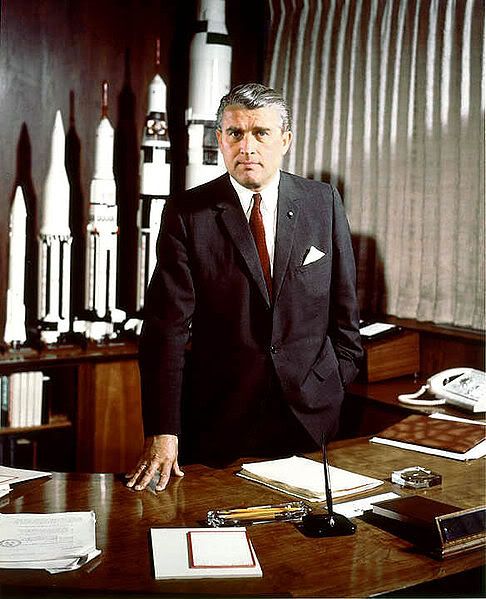
Was Wernher von Braun a great American?

This hush-hush issue has been so convoluted over the years that it would seem to be a silly question by those who would emphatically answer either yay-or-nay! According to "Nazi-hunter Wikipedia": According to NASA, he is, "without doubt, the greatest rocket scientist in history," as well as the "Father of Rocket Science." If Wernher von Braun was American-born, he would be among the greatest American heroes, but he was a member of both the Nazi Party as well as the SS. Apparently, he was required to join the party for political reasons; and he likely had to be an SS member due to his scientific genius. It's just one of those strange quirks of history.


Extremely thought-provoking quote that applies to virtually everyone

"Isn't it strange that we talk least about the things we think about most?" 
-- Charles Lindbergh


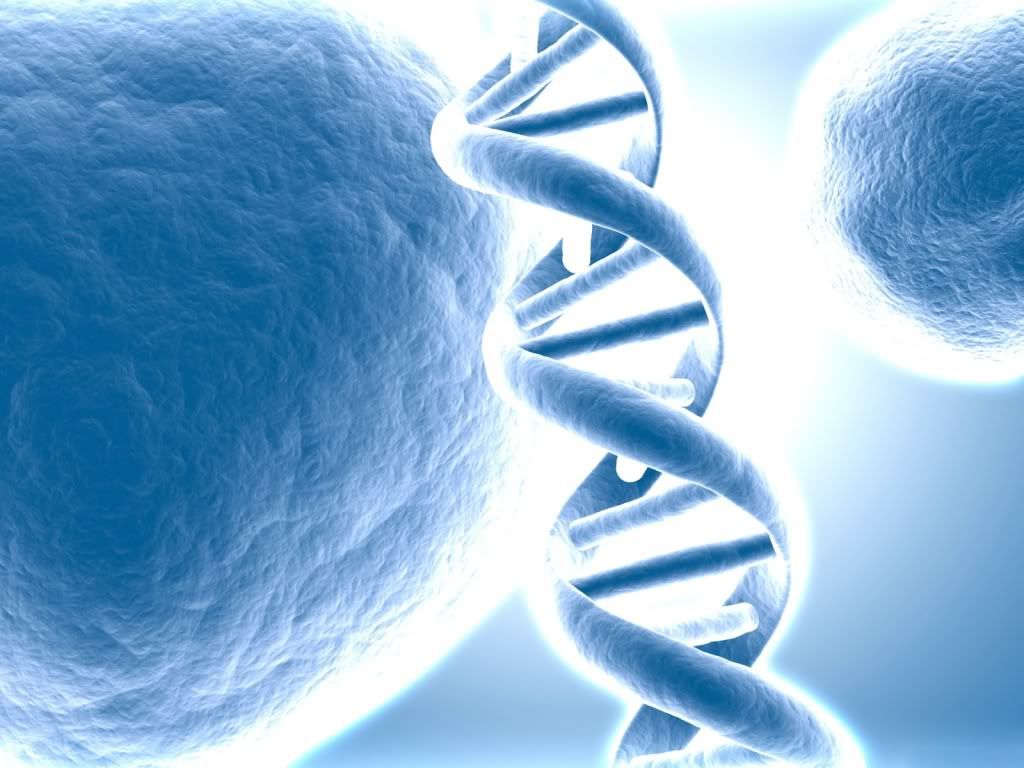
An insect actually exists that can very literally inject its own DNA into your own genetics!!

'Gene-swapping means you have alien DNA inside you'

Martha Henriques - BBC.com - June 19, 2015

What if a gene from an insect insinuated itself straight into your DNA? What if more than a hundred genes from bacteria did? Would that make you some kind of horrible Franken-human?

No. It would make you exactly what you are today.

It turns out that genes are quite capable of hopping from one organism into a completely different species. Not only do these genes jump, but when they land in a new host they can actively change it. This can give the host species new abilities, sending it down a new evolutionary path. Even humans play host to alien genes, and it seems they have shaped our evolution.


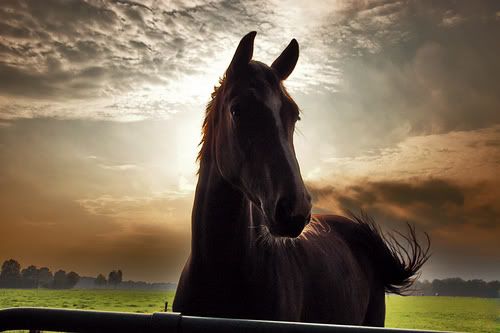
The "black horse" in Celtic mythology, astrology, and symbolism... and recent sightings of flying black horses?

'Celtic Black Horse Meaning: Astrology, Mythology, and Tattoos'

Celtic Black Horse Meaning
 

The Celts believed the Black Horse was a symbol meaning death and dark forces. It represented the strength of maturity to handle what life brings.
 

The Black Horse was a messenger of esoteric knowledge. He was a keeper of secrets and mysteries.

AstrologyOfTheAncients.com


.

Monday, October 24, 2011

“Patihi, Patahé!” The Camuni of Brescia in Monongahela City: Part II

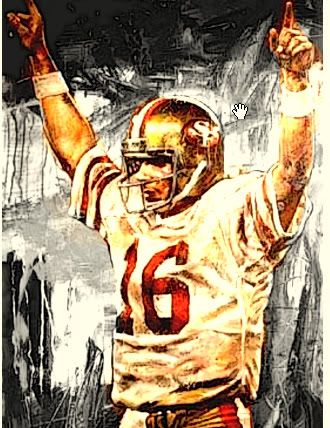
Sports legend Joe Montana, of half Camunian ancestry

Borrowed from the archives of 'Poche Parole' (May 2009), the newsletter of the Italian Cultural Society of Washington D.C.


By Terry Necciai

The second of two articles

Railroad construction went at a furious pace through the region, both before and after the Panic of 1873, and gangs of temporary workers were recruited to level the grade and lay the ties and tracks. It is particularly difficult to determine who the workers were and where they came from because of the short term nature of the work and lack of records. However, it appears that the Italian workers found other jobs as a result of the new lines. Railroad development was often justified by the expectation that each line would open up a new area for coal mining. Industrial villages cropped up almost instantaneously as each line was completed. Meanwhile, other Pittsburgh area industries, such as steel, specifically avoided hiring Italians because they thought they were less suited than the Slovaks and other Eastern Europeans for the heavy work required at the larger industrial plants, a prejudice that is on record in some of the surviving trade literature. Because the Italians had an easier time finding jobs in coal mines, they ended up scattered all over the region, in the 500 or more mining villages found within a 100 mile radius of Pittsburgh. Those who brought trade skills with them eventually struck off as entrepreneurs, serving as carpenters, blacksmiths, barbers, tailors, and grocers/fruit handlers, and also sometimes as musicians, writers, or bankers in the new villages.

The Bresciani who came to Monongahela City helped to set off a chain reaction that brought Italians from almost every other part of Italy, boosting the population within and surrounding a very small city that is still 25% Italian-American today. A small group of Calabresi who came in the 1870s may have been the first, followed in the 1890s to 1910s by other Italians from north of Rome, a large group of families from Tuscany, and smaller groups from Umbria, Piemonte, and Venice, and then by large groups from Naples, Calabria, and Sicily, with smaller groups from Abruzzi and Molise. In one of the later waves of immigration, families came from Suisio, an industrial town west of Bergamo, where the dialect was almost the same as that of Brescia. The Italian-Americans in Monongahela whose roots are in the other parts of Italy often refer to the Bresciani and Bergamaschi as the “Patihi, Patahé,” an obscure phrase that the Bresciani had apparently used as a greeting and a shibboleth (though no one from modern day Brescia seems to remember exactly what this phrase means). (My theory is that it could be derived from a word “dialect,” similar to the French “patois.” Or another possibility is “patéser” a verb in the local dialect that means the same as “soffrire” — to “suffer” or to “put up with” someone. Assuming the two words are conjugated forms of a verb, say “patihare” or “patéher,” with an “h” being substituted for a “c” or an “s,” the meaning of “se patahi, pataho” could be “if you speak the dialect, then I will” or “if you put up with [me], then I’ll put up with [you]”)

A small group apparently came about 1886, probably as a gang of young, single men looking for work. Three of the first surnames were: Milani, Pezzoni, and Carrara. Serafino Carrara came to Monongahela from Brescia in ca.1886-88, taking a job in the Catsburg Mine, and by the 1890s, his daughter Maria operated a boarding house for Italian miners on a hillside site overlooking the mine. Undoubtedly, this facility housed many of the Camuni when they first arrived. By about 1915, the Odelli family had a very popular fruit market that later became a peanut and candy store. When Joe (Gio’ann’) Odelli, Sr., rebuilt his fruit stand in 1925, he erected one of the most impressive buildings on Main Street. The Anton family, Bavarian Catholic immigrants who made open flame lamps for the coal miners, took an interest in the Brescians and sponsored the establishment of an Italian Catholic Church in 1904. It was named for St. Anthony of Padua in part to recognize the Antons as the benefactors. The Bresciani were the core group in the congregation. A few years later, in 1913, open flame lamps were blamed for a mine disaster at a mine near Monongahela, taking the lives of 97 men, of whom at least 8 or 10 were from Brescia. Legislation outlawing lamps with open flames after this disaster led to the invention of the safety lamp and then the battery-powered flashlight.

The best known Brescian-American from Monongahela is football quarterback Joe Montana (who played for Notre Dame in the 1970s and the San Francisco 49ers in the 1980s and 1990s). The name Montana is slightly Americanized, apparently from Montagni (he is also half Sicilian, through his mother, Theresa Bavuso Montana).

The Val Camonica is named for the Camunni, an ancient culture of unknown origin that became blended with the Celts of Northern Italy in pre-Roman times. Today, the inhabitants of the valley call themselves “Camuni” (with one “n”). The ancient Camunni left approximately 350,000 rock carvings on the face of the mountains, depicting pre-Roman-era life in the valley. Some are as much as 10,000 years old. To interpret the sparse written passages in the Camuno language that accompanies some of the later carvings, linguists have begun to analyze the peculiarities in the local dialect, which preserves some Camuno characteristics, differentiating it from other dialects of Northern Italy.

.

Sunday, March 29, 2009

Bresciani nel Mondo - Northern California changes it's name, approach

Bresciani nel Mondo - Northern California has changed it's name to the Lombardian-American Alliance - Northern California. This is part of an effort to move towards the idea of a Tuscan American Association type of national organization. For further reading: 'From Bresciani nel Mondo to Lombardian-American Alliance.'

Saturday, March 28, 2009

From Bresciani nel Mondo to Lombardian-American Alliance

After much careful thought, we're changing our approach in this endeavor. "Bresciani nel Mondo - Northern California" was to be a very small group, and partly to encourage the idea of a worldwide Bresciani nel Mondo. However, we believe that it would be much more pragmatic to focus on the Lombardi nel Mondo concept, which would appeal to a larger group of people here locally, and in this country.

Lombardi nel Mondo is a worldwide association for people of Lombardian decent. Their linkup heritage groups are on five continents. In Argentina, there are many Lombardian groups, all over that country. However, in North America, the Chicago-based committee leaves a whole lot to be desired. They make almost no attempt to reach out to those who share their own heritage. Unless they don't really want to reach out to Americans, in which case: "why are they even here in the first place??" They have a very strange website, which 1) is only in Italian; 2) is offline most of the time; 3) is very difficult to navigate; and, 4) changes it's URL every few months. For this North American regional committee: the official languages here (N. America) are English, Spanish, and French. I think, but I'm not positive, that they're funded by the region of Lombardia. I don't get it. What are they trying to accomplish here?

One model for the Lombardi nel Mondo groups, is that they have two groups in one. Lombardi nel Mondo and, for example, Bergamaschi nel Mondo. I think for us here, we need to stick with one name, and that being with the larger quasi-ethnic group. Also, we're hyphenating it to "Lombardian-American." There are, for example, Sicilian clubs with this hyphenation, as they consider themselves, or it's at least put it out there, the concept of a separate ethnic group "Sicilian-American." Of course, they would outnumber us ten, or twenty to one in this country. It would be to our advantage to promote the concept of "Lombardian-American." A Lombardian-American should be a European-American of Lombardian or Italian Swiss decent. Therefore, for example, a person with connections to "The Hill" in St. Louis, with Sicilian and Lombardian roots, may consider themselves a "Lombardian-American." Or, Irish, Polish, Greek, etc., you get the point.

We would still like to associate with "our" (?) regional continental committee, but we don't really need to. It's a little embarrassing that we had set up some blueprints for networking that have quickly become defunct (ex-Camunari Circle - San Francisco Metro). The idea, as it now stands, is to form a national Lombardian-American Alliance, with a Lombardian National Council made up of regional leaders and other important individuals (ex-a professor). This may exist in thought-form only for now. A blueprint. Here, of course, we will be renamed to the "Lombardian-American Alliance - Northern California." Part of our goal is to facilitate this organizing process.