Showing posts with label Lombardians. Show all posts

Sunday, March 2, 2014

An almost bronze, South Tyrol, Valtellina, and eight medals

An "almost bronze"

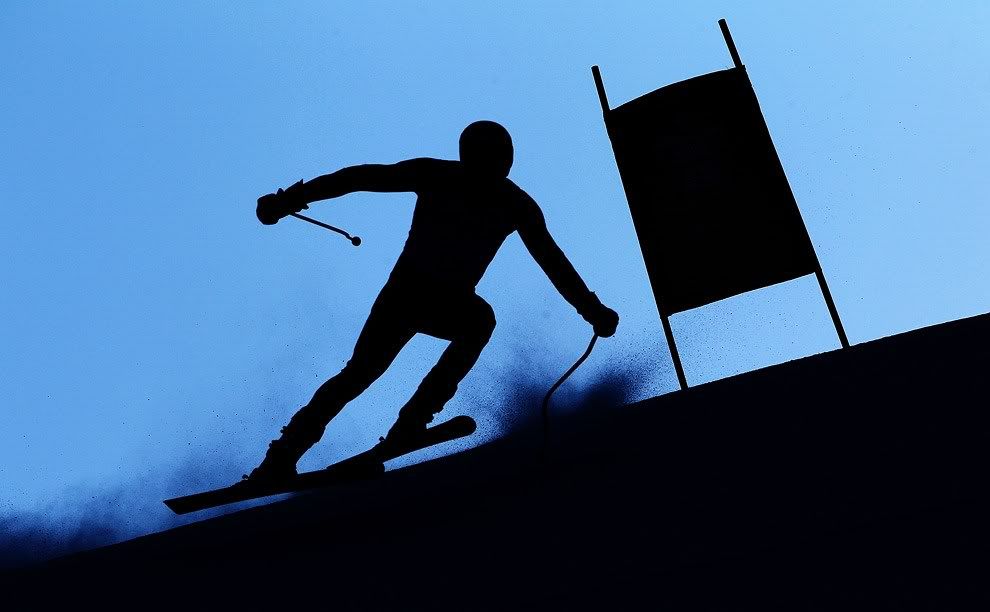
Nadia Fanchini from the Val Camonica, missed a bronze medal in the woman's giant slalom by eleven hundreths of a second. If nothing else, she at least finally proved that she was one of the best downhill skiers in the world.


Tyrolian-Italian medalists

Tyrolian-Italian medalists included Christof Innerhofer (silver & bronze), Armin Zöggeler (bronze), Lukas Hofer (bronze), Karin Oberhofer (bronze), Dorthea Wierer (Bronze), Dominik Windisch (bronze), and Caroina Kostner (bronze). I think that it's remarkable for that region to have won more medals for Italy in these winter games than the rest of the regions combined.


Valtelline-Lombard medalists

Adrianna Fontana from the Valtellina in Lombardy, won a bronze medal in the woman's 500 metres in short track speed skating. The Italian woman's short track speed skating team in the woman's 3000 metre relay included Arianna Fontana (Valtellina), Lucia Peretti (Valtellina), Martina Valcepina (Valtellina), Elena Viviani (?). They won the bronze medal. Valtelline Evelina Raselli won a bronze medal for Switzerland (see below).

If it weren't for the South Tyrol and the Valtellina, Italy wouldn't have won any medals I don't think. There were also Lombards who contributed to the Swiss medal count.


Lombard-Swiss medalists

Dario Cologna won two gold medals in cross country skiing (men's 30 kilometre skiathlon & men's 15 kilometre classical). Sandro Viletta won the gold in alpine skiing's men's combined event. Evelina Raselli from Poschiavo (a part of the Valtellina on the Swiss side of the border) and Nicole Bullo from Ticino were part of the Swiss woman's hockey team that won a bronze. There were several other medalists who may have been Lombard, but hailed from other areas of the country.

.

Wednesday, June 19, 2013

The Lombard migration in North America: Part 1

[Translated from the article on the Lombardi nel Mondo website


The Lombard migration in North America

Interview with Ernesto Milani, historian and scholar of the Lombard migration in North America.

A wide-ranging interview with Ernesto Milani, historian and scholar of emigration from England to the United States and Canada: from Missouri to Vermont, from Illinois to Ontario, keeping Lombard roots alive.


What is your training under the Lombard immigration historical research in the United States?

I wrote my thesis on Italian mutual aid societies in the United States, in particular research work on the Lombard Association in Boston, Subalpina Mutual Society. Then I commenced to collect books, postcards and other material on the subject.

The first important work I've done has been on the Italian emigration (in particular, Marchigian and Venetian southern plantations of the Mississippi). From that date onwards, I have done a lot of research on the topic.

Also attended by 1976 the Hague, Italian-American Association and I have contacts with historians who make up this important Association.


How is the map of the Lombards in the United States?

The Lombards who arrived in the United States in the years of mass emigration were mostly miners and laborers. The main destinations to which this emigration was focused are St. Louis, Missouri, Herrin and Rockford, Illinois, Barre, Vermont, Iron Mountain, Michigan, Walla Walla, Washington, and then in Texas, in San Francisco (in particular in the area of San Rafael), in New Mexico and Arizona.

In Canada, however, focused in Ontario, in coal mines on the border between Alberta to British Columbia, and along the railway linking Montreal to Victoria.

The strongest emigration was from 1880 to 1920. Just to give you an example that gives the measure of the importance of the phenomenon, from Cuggiono left toward New York Harbor about 1,700 people in an era when this country had approximately 4000 people (Lombards?).

In Canada, emigration has been strong even after the war, especially from the province of Brescia and Bergamo.


How organized are Lombard associations in the United States?

There is a certain organization, but is less than elsewhere. My experience tells me that most organized associations are those of St. Louis and Harrin, where the presence of Lombard miners was very strong. St. Louis was indeed a "little Italy," and often associations were born to create mutual aid institutions, so as to share a doctor in town for example.


In what form is the Lombard identity within these communities?

The Lombard tradition in any form is maintained: for example in St. Louis there is a church dedicated to Saint Ambrose. Lombard values are family values that are conserved. Often there remains a certain knowledge of the dialect, perhaps there remains nicknames that you give people. In addition, today these are often found in Lombardy, in their region of origin, and this helps strengthen ties. This is even more true if we consider that today, rediscovering Lombardy is no longer a negative, but is part of their lives.

In Canada the preservation of identity is more relevant, since the Lombards were always less in number.


What is the social and economic situation of our emigrants?


It's hard to generalize. In any case, in St. Louis, for example, the integration was very slow, the Italians were workers until the end of World War II. Since then, things have changed and the Italians today work in all different occupations.

Of course, our communities are very engaged in catering, according to the Italian tradition in general.


Were there prejudices (positive or negative) in relation to our communities, when they arrived and began to integrate into the local social fabric?

Maybe there was, and it was more in the American South, otherwise the Lombards were not affected that much by this factor. For example, Ellis Island (the island that functioned as sorting station for immigrants in New York) the Italians on arrival were divided between southerners and northerners, and also within the north (Italy) there were differences, whereby for example the Trentini were sorted along with Tyrol.


The Lombard migration to the United States is a topic that seems to have been insufficiently studied by academia. Could more studies be carried out to give a more complete picture of this subject?

Studies are numerous but more at the individual level and provincial staff. There is also the problem of saving accounts, and this information is being lost to the point that it is now too late to intervene. The obvious reason for this is that these stories are lost when people disappear that handed down orally.


And the Lombard migration today in the United States?

It's totally different. This is an emigration of professionals, researchers, teachers or people who have implanted. There is also the emigration of those who want to change his life and put to the test in completely new environments. We are not talking about large numbers, but it is in any case a phenomenon as well.


Fabio Veneri


.

Friday, August 3, 2007

Giacomo Beltrami Biography

Giacomo Beltrami was one of the greatest Lombards in American history.

Giacomo Costantino Beltrami (1779 – January 6, 1855) was an Italian jurist, author, and explorer, best known for claiming to have discovered the headwaters of the Mississippi River in 1823 while on a trip through much of the United States (later expeditions determined a different source, however). Beltrami County in Minnesota is named for him, as are some other sites in the state. He had an extensive network of notable figures for friends and acquaintances, such as members of the powerful Medici family.

Early life

Beltrami was the 16th of 17 children, born in the city of Bergamo in the northern Italian region of Lombardy. His exact birthdate is unknown because a fire in the area destroyed baptismal records in 1793. He apparently had a fair amount of schooling in literature, law, and other subjects before leaving to become a soldier for the Cisalpine Republic in 1797. The republic was an extension of France at the time, and Beltrami worked his way into the Napoleonic government after becoming a Mason. Years later, when the Le Marche province again came under purview of the papal government, he was questioned for his activities.

In 1809, Beltrami befriended Giulia Spada dei Medici. When she died at the age of 39 in 1820, he put together a collection of different writings in her honor. He was distraught by her death, and this, combined with pressures about his background during French occupation, led him to begin traveling. He visited a number of different cities in Europe, reaching Liverpool, England in 1822. From there, he set out to the United States on a voyage that proved to be very treacherous. He finally arrived in Philadelphia, Pennsylvania after more than two months on the ocean in December 1822 or January 1823.


Exploring North America


In the U.S. he also began visiting a number of different cities. He eventually began a voyage down the Ohio River with the intention of following it to the Mississippi and then south to New Orleans, Louisiana. However, while onboard he met with Lawrence Tagliaferro, who was planning to travel upriver on the Mississippi. Beltrami soon became obsessed with the idea of finding the river's source. In 1823, the two later joined with Stephen H. Long as they traveled upriver to Fort St. Anthony.


Beltrami followed Long and Tagliaferro as they went about exploring and mapping, and interacting with the local Native American tribes. However, in July, after about three months of this, tension began to grow between Beltrami and the others. He eventually split from their expedition in August, when the group had reached Fort Pembina, and instead set off with some Chippewa Indian guides on his personal quest to find the source of the river. After only a week and a half, his guides abandoned him and he had to seek help from other natives that he came across.


On August 28, he found what he believed was the source of the Mississippi, as well as the Red River of the North. He named the place Giulia after his departed friend, and named eight other nearby lakes after her children. He began the return trip downriver, arriving back at Fort St. Anthony two days later. Beltrami then continued south to his original destination of New Orleans, finally arriving in December.


In the city, he began writing an account of his travels thus far. By late January, it was completed, and it was published a few months later.


Beltrami himself was away from the discussion for about a year, however, as he had gone on another voyage through Mexico. He collected Aztec objects, classified plants and animals, and observed the area's political system. Particularly because of his work with flora, he would eventually be included in several scientific societies of France.


He returned to New Orleans in 1825, but soon left to return to Philadelphia where many copies of his book were being stored. The Catholic church was also displeased, and condemned him and his work.By November, he was hob-nobbing with elites at festivities surrounding the opening of New York's Erie Canal.


Return to Europe


After some trips to Haiti, Santo Domingo, and elsewhere, Beltrami made a return trip across the Atlantic in 1826, arriving in London in the late part of the year. He moved to Paris two years later, and joined several scientific societies through the early 1830s.


In 1834, Beltrami moved to Heidelberg, Germany and befriended Josef Anton Mittermaier, a notable jurist of the time. A few years later he finally returned to his estate in Filottrano. He attempted to have his books published in Italy, but the church-led government denied his requests. In his final years, he patterned his life on that of Franciscan monks, and called himself "Fra Giacomo." Most of his time was spent working in his house and garden. He died there in 1855.

Great References

Giacomo Beltrami in Wikipedia (with many links)


Giacomo Costantino Beltrami, 1779-1855. Washington University, St. Louis. Michael J. Martin


Improbable Explorer: Giacomo Beltrami's Summer of Discovery

Giacomo Costantino Beltrami. Civica Biblioteca di Bergamo (2000)