Showing posts with label Lombards. Show all posts

Sunday, June 28, 2015

Valtellinese Emigration to Australia (1860-1960)

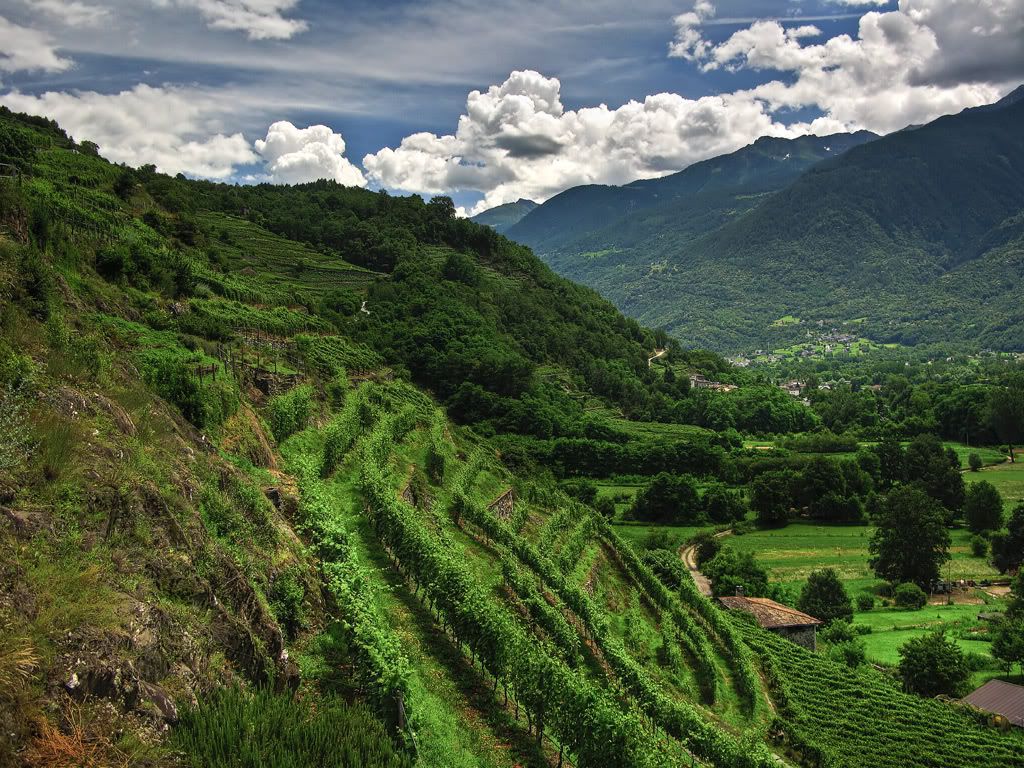
The beautiful Valtellina


The Valtellina is an Alpine valley which runs about 80 miles east-west, and is about 50 miles from the cities of Brescia and Bergamo, and the flat lands of the Po; so it's rather isolated from a historical point of view. The northernmost village of the Val Camonica, Edolo, is close to the village of Aprica of the Valtellina. The Aprica pass separates the two. The two valleys, their cultures, and their histories are very similar. The following article is from the Lombardi nel Mondo website. I did my best to translate it, often rewriting muddled portions in an attempt to get at what I thought was the true meaning. It at least gives some idea of the old experiences. You almost have to think of... perhaps movies which show very desolate locations, maybe set in the late 1800s. 'Butch Cassidy and the Sundance Kid', in the sequence when they went down to Bolivia, comes to mind. Beyond the east coast cities of Australia, maybe 100 miles inland, are the farmlands; and maybe that's part of where this took place. Of course, in 1860 or 1890, this was a very underdeveloped area. Later in the article, I think they were referring to maybe the 1940s or 50s. I remember of reading some really old accounts of what overseas employers, from the perspective of Europeans, thought of workers from certain regions... and what types of work they're good at. I recall something like.. people from the Italian Alps, Slovaks, Hungarians, etc. are good at heavy work. In other words, in contrast to modern perceptions, they didn't drag people all the way over from the middle of the rural Alps on the other side of the planet just to do very hard work that Aborigines or some little islanders could do.


'Valtellinese Emigration to Australia (1860-1960)'

From letters of migrants and third party migration development

From this we can understood the early migrations from the Valtellina, deepening the meanings and expectations of this history. Perhaps, as they had feared opponents of immigration, some of the early migrants to Australia were attracted by widespread tales of gold or of a country of plenty from emigration agents, but any such illusion was short-lived. The temporary emigrants were not on their way to a generic "Australia," but headed for specific locations, looking for a specific job. In Australia you could make some good gains, but at the price of a very hard effort and lack of any attractiveness and with great personal sacrifice. More often than not they found themselves engaging in grueling logging work in remote areas, cutting sugar cane in tropical heat, or risking their lives in underground mines. The rhetoric used by emigrants in the description of their travels is revealing: "making sacrifices" was the term used to talk about these migrations. Australia had become famous not as a country of plenty, but as a place of hard work. Since they were temporary migrants, they departed without knowing the language; and they did not come with women or families, and they did not sell their lands before leaving. Their goal was to make the highest profit in the shortest possible time, in the hope of a quick return home. They probably started with few illusions. The idea was to get through the burden of the work load stoically, sit tight and hope that they can maintain their  health and safety. Normally there was no intention to settle permanently.

The presence of Lombards in Australia, and more generally of people originating from Italy, was noted by the consuls and consular agents of Italians after the discovery of gold in the State of Victoria in 1851. The Valtellinese presence was known in those areas and to the agents of the shipping companies which operated in moving Swiss citizens not far from the border from Valtellina, in the Valley of Poschiavo in the Canton of

Rural Australia
Graubunden. Historically, these were the most common destinations of seasonal emigrants of Valtellina. After the first pioneers, Australia became part of the recognized world, and this recognition greatly influenced the development of future migrations. In Italy the chance to earn money were few, even in periods of greater well-being; as contrasted to the reputation of Australia as a source of earnings. Among other things, it was becoming a regular destination of those who hoped to increase their wealth, and not just of those most desperately in need. It was temporary migrants who intended to make a fortune. They were farmers and--with a majority of males being of working age, 20s or 30s--half of them were married, many with children. The desire of these people was to get out of the cycle of poverty, which neither the government, nor the charity institutions had eased. The bad harvests, the high cost of living, the lack of work, and the heavy load of fees and taxes were all factors responsible for departures. At that time the news of those who returned from Australia were "excellent," unlike those coming from America.

Returnees had described the unfavorable treatment accorded to them by the authorities and employers in America, while Australia had proved very hospitable. In the Valtellina, a culture of migration had developed, especially to Australia; thereby ensuring that in years to come, the majority of emigrants would follow already beaten paths. Several routes were opened in Australia since 1890. The most important would lead migrants to Western Australia, to regions where there was a focus on extractive activities and of the harvesting of timber. Especially after World War II, the northern regions of Queensland opened up in the sugar cane plantations. For many years the migrants made significant progress from the fruit of their labor, to the point that they began to consider settling permanently in the country. It was starting to become apparent that with these changes, people were deciding to make Australia their home. Their lives were simple but decent, and of which their old traditions and habits continued on. It was similar to their old village life, and less like Anglo-Saxon proletarian life. They toiled all day in the fields, pulling plows, but when they returned home in the evening to a nice home, bath, dinner, and a car to drive to town to the cinema. At the tables were always their native cuisine; lots of macaroni, salads, and buttered bread, along with cups of tea.

Source: Jacqueline Templeton, 'From the Mountains to the Bush: Emigration of Valtellinese in Australia (1860-1960) from the Letters of Migrants'; Tirano Museum, 2001


.

Thursday, May 28, 2015

Italy runestones and Langbarðaland


Guðlaug had the stones raised in memory of Holmi, her son. He died in Lombardy.

Guðlaug let ræisa stæina at Holma, sun sinn. Hann do a Langbarðalandi. 

-- Old Norse transcription of "U 141" runestone (see image)
 
Apparently his mother requested that two runestones be carved and erected in honor of her son who died while serving in the Byzantine "Varagian Guard."

************************************************** 

The Italy runestones with English translation
 

BirkaViking
 

The Italy runestones with English translation from the Scandinavian runic-text database.

The young men who applied for a position in the Varangian guard were not uncouth roughnecks, as in the traditional stereotype, but instead, it appears that they were usually fit and well-raised young warriors who were skilled in weapons. They were the kind of warriors who were welcome as the elite troops of the Byzantine Emperor, and who the rulers of Kievan Rus requested from Scandinavia when they were under threat.


**************************************************

Italy runestones (Wikipedia)


The Italy Runestones are three or four Varangian Runestones from 11th-century Sweden that talk of warriors who died in Langbarðaland ("Land of the Lombards"), the Old Norse name for Italy. On these rune stones it is southern Italy that is referred to (Langobardia), but the Rundata project renders it rather anachronistically as Lombardy (see the translations of the individual stones, below).

The rune stones are engraved in Old Norse with the Younger Futhark, and two of them are found in Uppland and one or two in Södermanland.


Langbard duchies Spoleto and Benevento in blue
The memorials are probably raised in memory of members of the Varangian Guard, the elite guard of the Byzantine Emperor, and they probably died while fighting in southern Italy against the local Lombard principalities or the invading Normans. Many of their brothers-in-arms are remembered on the 28 Greece Runestones most of which are found in the same part of Sweden.

The young men who applied for a position in the Varangian guard were not uncouth roughnecks, as in the traditional stereotype, but instead, it appears that they were usually fit and well-raised young warriors who were skilled in weapons. They were the kind of warriors who were welcome as the elite troops of the Byzantine Emperor, and who the rulers of Kievan Rus' requested from Scandinavia when they were under threat. 


Interpretations

Johan Peringskiöld (d. 1720) considered the Fittja stone and the Djulefors stone to refer to the Lombard migration from Sweden, whereas Celsius (1727) interpreted them in a strikingly different manner. He noted that the name Longobardia was not applied to Italy until after the destruction of the Kingdom of the Lombards in 774. He claimed that the kingdom had been taken over by Varangians from Byzantium in the 11th and 12th centuries, and noted that in Barbarossa's campaign in Italy there were many Scandinavian warriors. The stones would have commemorated Swedish warriors who died in Barbarossa's war. This view was also espoused by Brocman (1762) who considered Holmi to have died in the 12th century for either the Byzantine Emperor or ruler of the Holy Roman Empire.


von Friesen (1913) noted that it is not Lombardy in northern Italy that is intended, but Langobardia in southern Italy, which was ruled by the Byzantine Emperor during the 11th century. The Greeks had to fight several battles against the Normans in southern Italy during the mid-11th century. It is likely that Holmi, who is mentioned on two stones, took part in these battles as a member of the Byzantine Emperor's elite unit, the Varangian Guard, since they use a name based on the Greek name for the region.


**************************************************

It would be curious to know what contact may have occurred between the Vikings and the Langbard Kingdom, since the kingdom's demise and the start of what is considered the "Viking Age" were only a few years apart. It's also possible that, since these warriors probably died in Southern Italy, the location was in the southern Langobard duchies of Spoleto and Benevento. These two states continued on after Langbard was destroyed by Charlemagne. These Vikings likely had been Christianized by this time, as this was the on the verge of or past the point of the Viking Age. They had been brought into the Christian fold.

Inga raised this stone in memory of Óleifr, her son. He ploughed his stern to the east, and met his end in the land of the Lombards.

Inga ræisti stæin þannsi at Olæif sun sinn. Hann austarla arði barði ok a Langbarðalandi andaðis.


-- Old Norse transcription of "Sö 65" runestone (see image)

.


Wednesday, June 19, 2013

The Lombard migration in North America: Part 1

[Translated from the article on the Lombardi nel Mondo website] 


The Lombard migration in North America

Interview with Ernesto Milani, historian and scholar of the Lombard migration in North America.

A wide-ranging interview with Ernesto Milani, historian and scholar of emigration from England to the United States and Canada: from Missouri to Vermont, from Illinois to Ontario, keeping Lombard roots alive.


What is your training under the Lombard immigration historical research in the United States?

I wrote my thesis on Italian mutual aid societies in the United States, in particular research work on the Lombard Association in Boston, Subalpina Mutual Society. Then I commenced to collect books, postcards and other material on the subject.

The first important work I've done has been on the Italian emigration (in particular, Marchigian and Venetian southern plantations of the Mississippi). From that date onwards, I have done a lot of research on the topic.

Also attended by 1976 the Hague, Italian-American Association and I have contacts with historians who make up this important Association.


How is the map of the Lombards in the United States?

The Lombards who arrived in the United States in the years of mass emigration were mostly miners and laborers. The main destinations to which this emigration was focused are St. Louis, Missouri, Herrin and Rockford, Illinois, Barre, Vermont, Iron Mountain, Michigan, Walla Walla, Washington, and then in Texas, in San Francisco (in particular in the area of San Rafael), in New Mexico and Arizona.

In Canada, however, focused in Ontario, in coal mines on the border between Alberta to British Columbia, and along the railway linking Montreal to Victoria.

The strongest emigration was from 1880 to 1920. Just to give you an example that gives the measure of the importance of the phenomenon, from Cuggiono left toward New York Harbor about 1,700 people in an era when this country had approximately 4000 people (Lombards?).

In Canada, emigration has been strong even after the war, especially from the province of Brescia and Bergamo.


How organized are Lombard associations in the United States?

There is a certain organization, but is less than elsewhere. My experience tells me that most organized associations are those of St. Louis and Harrin, where the presence of Lombard miners was very strong. St. Louis was indeed a "little Italy," and often associations were born to create mutual aid institutions, so as to share a doctor in town for example.


In what form is the Lombard identity within these communities?

The Lombard tradition in any form is maintained: for example in St. Louis there is a church dedicated to Saint Ambrose. Lombard values are family values that are conserved. Often there remains a certain knowledge of the dialect, perhaps there remains nicknames that you give people. In addition, today these are often found in Lombardy, in their region of origin, and this helps strengthen ties. This is even more true if we consider that today, rediscovering Lombardy is no longer a negative, but is part of their lives.

In Canada the preservation of identity is more relevant, since the Lombards were always less in number.


What is the social and economic situation of our emigrants?


It's hard to generalize. In any case, in St. Louis, for example, the integration was very slow, the Italians were workers until the end of World War II. Since then, things have changed and the Italians today work in all different occupations.

Of course, our communities are very engaged in catering, according to the Italian tradition in general.


Were there prejudices (positive or negative) in relation to our communities, when they arrived and began to integrate into the local social fabric?

Maybe there was, and it was more in the American South, otherwise the Lombards were not affected that much by this factor. For example, Ellis Island (the island that functioned as sorting station for immigrants in New York) the Italians on arrival were divided between southerners and northerners, and also within the north (Italy) there were differences, whereby for example the Trentini were sorted along with Tyrol.


The Lombard migration to the United States is a topic that seems to have been insufficiently studied by academia. Could more studies be carried out to give a more complete picture of this subject?

Studies are numerous but more at the individual level and provincial staff. There is also the problem of saving accounts, and this information is being lost to the point that it is now too late to intervene. The obvious reason for this is that these stories are lost when people disappear that handed down orally.


And the Lombard migration today in the United States?

It's totally different. This is an emigration of professionals, researchers, teachers or people who have implanted. There is also the emigration of those who want to change his life and put to the test in completely new environments. We are not talking about large numbers, but it is in any case a phenomenon as well.


Fabio Veneri


.

Thursday, September 29, 2011

Sweet Lombardy


Sweet Lombardy - Italy

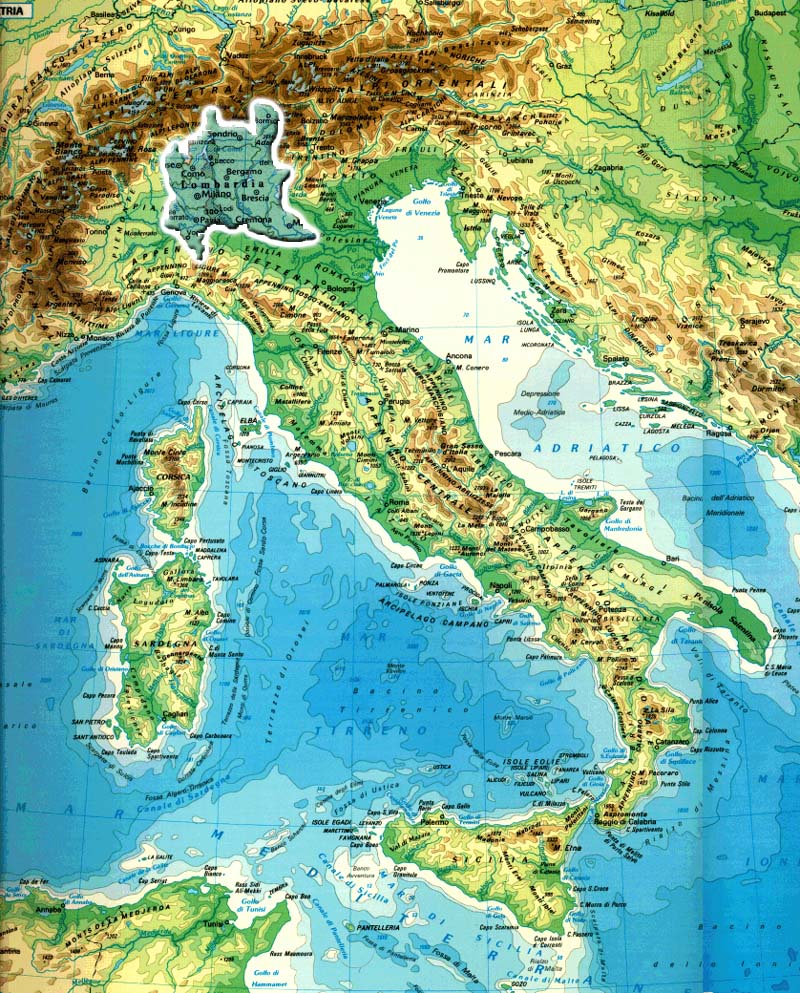
Lombardy (Italian: Lombardia Italian pronunciation: [lombarˈdiːa], Western Lombard: Lumbardìa, Eastern Lombard: Lombardia) is one of the 20 regions of Italy. The capital is Milan. One-sixth of Italy's population lives in Lombardy and about one fifth of Italy's GDP is produced in this region, making it the most populous and richest region in the country. Major tourist destinations in the region include the historic, cultural and artistic cities of Milan (which is Italy's second top tourist destination), Brescia, Mantua, Pavia, Cremona and Bergamo, and the lakes Garda, Como, Maggiore and Iseo.

The official language, as in the rest of Italy, is Italian. The traditional local languages are the various dialects of Lombard (Western Lombard and Eastern Lombard), as well as some dialects of Emilian, spoken in some parts of the provinces of Mantua, Pavia and Cremona. These are not widely spoken due to intense immigration from other parts of Italy whose local dialects were not intelligible with Italian.


Geography

Lombardy is bordered by Switzerland (north: Canton Ticino and Canton Graubünden) and by the Italian regions of Emilia-Romagna (south), Trentino-Alto Adige/Südtirol and Veneto (east), and Piedmont (west). Three distinct natural zones can be fairly easily distinguished in the Lombardy region: mountains, hills and plains - the latter being divided in Alta (high plains) and Bassa (low plains).

The most important mountainous area is an Alpine zone including the Lepontine and Rhaetian Alps, (Piz Zupo, 3,996 m), the Bergamo Alps, the Ortles and Adamello massifs; it is followed by an Alpine foothills zone Prealpi, which include the main peaks are the Grigna Group (2,410 m), Resegone (1,875 m) and Presolana (2,521 m). The great Lombard lakes, all of glacial origin, lie in this zone. From west to east these are Lake Maggiore, Lake Lugano (only a small part is Italian), Lake Como, Lake Iseo, Lake Idro, then Lake Garda, the largest in Italy. South of the Alps lie the hills characterized by a succession of low heights of morainic origin, formed during the last Ice Age and small barely fertile plateaux, with typical heaths and conifer woods. A minor mountainous area lies south of the Po, in the Appennines range.

The plains of Lombardy, formed from alluvial deposits, can be divided into the Alta - an upper, permeable ground zone in the north and a lower zone characterized - the Bassa - by the so-called line of fontanili (the spring waters rising on impermeable ground). Anomalous compared with the three distinctions already made is the small region of the Oltrepò Pavese, formed by the Apennine foothills beyond the Po River. A large number of rivers, all direct or indirect tributaries of the Po, cross the plains of Lombardy. Major rivers, flowing west to east, are the Ticino, the outlet of Lake Maggiore, the Olona, the Lambro, the Adda, outlet of Lake Como, the Mincio, outlet of Lake Garda, and the Oglio, the Lake Iseo outflow. There is a wide network of canals for irrigation purposes. In the plains, intensively cultivated for centuries, little of the original environment remains. The rare elm, alder, sycamore, poplar, willow and hornbeam woods and heaths are covered now by several protected areas. In the area of the great Alpine foothills lakes, however, grow olive trees, cypresses and larches, as well as varieties of subtropical flora such as magnolias, azaleas, acacias, etc. The mountains area is characterized by the typical vegetation of the whole range of the Italian Alps. At a lower levels (up to approximately 1,100 m) oak woods or broadleafed trees grow; on the mountain slopes (up to 2,000--2,200 m) beech trees grow at the lowest limits, with conifer woods higher up. Shrubs such as rhododendron, dwarf pine and juniper are native to the summital zone (beyond 2,200 m).

The climate of this region is continental, though with variations depending on altitude or the presence of inland waters. The continental nature of the climate is more accentuated on the plains, with high annual temperature changes (at Milan an average January temperature is 1.5 °C and 24 °C in July), and thick fog between October and February. The Alpine foothills lakes exercise a mitigating influence, permitting the cultivation of typically Mediterranean produce (olives, citrus fruit). In the Alpine zone, the valley floor is relatively mild in contrast with the colder higher areas (Bormio, 1,225 m, --1.4 °C average in January, 17.3 °C in July). Precipitations are more frequent in the Prealpine zone (up to 1,500--2,000 mm annually) than on the plains and Alpine zones (600 mm to 850 mm annually). The numerous species of endemic flora (the Lombard native species) are typical mainly of the Lake Como area.

.

Monday, December 20, 2010

Minnesota: "Beltrami Country"

Although we have covered the history of Giacomo Beltrami, the famous explorer from Lombardy, it's worth noting that Minnesota has a number of place names in his honor. Like so many subjects, it always seems like we can't quite do them justice. Beltrami lived an incredible and adventurous life.

First, there is Beltrami County, Minnesota, in the north of the state. Next, there is the city of Beltrami, Minnesota, in the northwest of the state. Lastly, there is a neighborhood named Beltrami in the state's largest city, Minneapolis.

There are likely many other names of streets, parks, etc., which bear his regional iconic name. Beltrami explored the American frontier starting in the 1820s. This country wasn't very old at that time, and Minnesota was largely unexplored by Americans. It's hard to imagine that today, but it had really been less than fifty years since the Revolutionary War.

Now, as we look back today, from a "Lombardian-American" perspective, it's ironic that there was significant later immigration from Lombardy to that Great Lakes region. Places like Duluth, Minnesota and Iron Mountain, Michigan; and other places more eastward, on the American and Canadian sides of the lakes. There's a whole history that we need to dig through. We're really just painting some very broad strokes here. There were a couple of notable Lombard Catholic missionaries in the Wisconsin area, who were sent to teach and convert the local natives. One even wrote a book to help preserve their disappearing language. I don't recall their names offhand, but I can see a definite pattern, over a long period of time, of Lombards in this northern-Midwest area.

[Left: Early Duluth]

I know that I've repeated this theme a number of times, but getting information in this area of study is like pulling teeth. As patterns develop, it's both exciting and frustrating. I can say with reasonable certainty that nobody has written about Lombardian history in North America, except Lombardi nel Mondo in Italian-only publications.

One local exception is a book about "The Hill" in St. Louis, I don't recall the name offhand, which was a Milanese/Lombardian district within nineteenth century St. Louis. I had posted a very interesting article about the history of The Hill in an earlier website, which dealt with specifically Lombard culture there, but I may have lost it unfortunately. However, there is the book, and we can eventually find the information again.

.

Friday, August 3, 2007

Giacomo Beltrami Biography

Giacomo Beltrami was one of the greatest Lombards in American history.

Giacomo Costantino Beltrami (1779 – January 6, 1855) was an Italian jurist, author, and explorer, best known for claiming to have discovered the headwaters of the Mississippi River in 1823 while on a trip through much of the United States (later expeditions determined a different source, however). Beltrami County in Minnesota is named for him, as are some other sites in the state. He had an extensive network of notable figures for friends and acquaintances, such as members of the powerful Medici family.

Early life

Beltrami was the 16th of 17 children, born in the city of Bergamo in the northern Italian region of Lombardy. His exact birthdate is unknown because a fire in the area destroyed baptismal records in 1793. He apparently had a fair amount of schooling in literature, law, and other subjects before leaving to become a soldier for the Cisalpine Republic in 1797. The republic was an extension of France at the time, and Beltrami worked his way into the Napoleonic government after becoming a Mason. Years later, when the Le Marche province again came under purview of the papal government, he was questioned for his activities.

In 1809, Beltrami befriended Giulia Spada dei Medici. When she died at the age of 39 in 1820, he put together a collection of different writings in her honor. He was distraught by her death, and this, combined with pressures about his background during French occupation, led him to begin traveling. He visited a number of different cities in Europe, reaching Liverpool, England in 1822. From there, he set out to the United States on a voyage that proved to be very treacherous. He finally arrived in Philadelphia, Pennsylvania after more than two months on the ocean in December 1822 or January 1823.


Exploring North America


In the U.S. he also began visiting a number of different cities. He eventually began a voyage down the Ohio River with the intention of following it to the Mississippi and then south to New Orleans, Louisiana. However, while onboard he met with Lawrence Tagliaferro, who was planning to travel upriver on the Mississippi. Beltrami soon became obsessed with the idea of finding the river's source. In 1823, the two later joined with Stephen H. Long as they traveled upriver to Fort St. Anthony.


Beltrami followed Long and Tagliaferro as they went about exploring and mapping, and interacting with the local Native American tribes. However, in July, after about three months of this, tension began to grow between Beltrami and the others. He eventually split from their expedition in August, when the group had reached Fort Pembina, and instead set off with some Chippewa Indian guides on his personal quest to find the source of the river. After only a week and a half, his guides abandoned him and he had to seek help from other natives that he came across.


On August 28, he found what he believed was the source of the Mississippi, as well as the Red River of the North. He named the place Giulia after his departed friend, and named eight other nearby lakes after her children. He began the return trip downriver, arriving back at Fort St. Anthony two days later. Beltrami then continued south to his original destination of New Orleans, finally arriving in December.


In the city, he began writing an account of his travels thus far. By late January, it was completed, and it was published a few months later.


Beltrami himself was away from the discussion for about a year, however, as he had gone on another voyage through Mexico. He collected Aztec objects, classified plants and animals, and observed the area's political system. Particularly because of his work with flora, he would eventually be included in several scientific societies of France.


He returned to New Orleans in 1825, but soon left to return to Philadelphia where many copies of his book were being stored. The Catholic church was also displeased, and condemned him and his work.By November, he was hob-nobbing with elites at festivities surrounding the opening of New York's Erie Canal.


Return to Europe


After some trips to Haiti, Santo Domingo, and elsewhere, Beltrami made a return trip across the Atlantic in 1826, arriving in London in the late part of the year. He moved to Paris two years later, and joined several scientific societies through the early 1830s.


In 1834, Beltrami moved to Heidelberg, Germany and befriended Josef Anton Mittermaier, a notable jurist of the time. A few years later he finally returned to his estate in Filottrano. He attempted to have his books published in Italy, but the church-led government denied his requests. In his final years, he patterned his life on that of Franciscan monks, and called himself "Fra Giacomo." Most of his time was spent working in his house and garden. He died there in 1855.

Great References

Giacomo Beltrami in Wikipedia (with many links)


Giacomo Costantino Beltrami, 1779-1855. Washington University, St. Louis. Michael J. Martin


Improbable Explorer: Giacomo Beltrami's Summer of Discovery

Giacomo Costantino Beltrami. Civica Biblioteca di Bergamo (2000)

Tuesday, May 29, 2007

Lombard or Lombardian?


The Lombards were a Germanic tribe which conquered Northern Italy in the 6th century. I have heard that they were only about 30,000 strong, but I haven't been able to confirm this. They ruled for about 200 years. It was called the "Kingdom of the Lombards" or "Langbard." Their capitol was based in modern Pavia or what they called "Ticinium," and their base of operation was basically in modern "Lombardy."

I will go into the Lombards at some future time, but I wanted to just spend a little time discussing the confusion of all the names relating to the Lombards. Since they conquered almost all of Northern Italy, every Northern Italian is sort've a "Lombard" in a sense. Then there is Lombardy proper, and this is where the confusion mainly lies.

First of all, lets look at the ancient roving nation of the Lombards. They were called, depending what language you speak: the Lombards, the Longobardi, the Langobards, the Langobardi, the Langbärten, Longobards, the Langbards, and many others. They finally founded their kingdom called Langbard, the Kingdom of the Lombards, Langbardorum, and other similar names.

Second, this is all separate from the Italian region and former nation (1859) of Lombardia, or Lombardy in English. The plural name for modern Lombards is, depending on your language: Lombards, Lumbards, Lombardi, and others. To avoid all this confusion, for English speakers at least, we should refer to the ancients as "Lombards." We should refer to the nation they established as the "Kingdom of the Lombards." We should refer to the modern Italian region as "Lombardia," and to the people as "Lombardians."

"Lombard" should really refer to the ancient tribe only. I have no idea as to why Lombardia had to be modified to Lombardy. The German-speaking nation of
Österreich was modified to "Austria" for English-speakers, Bayern was modified to "Bavaria" as well, so why is "Lombardia" so difficult to pronounce? Also, "Lombardians" is a good modern English name for the inhabitants.

The actual pronunciation for Lombardia is "Lom-bar-DEE-ah," but can be simply read straight though in English. It's sort've a forgivable mispronunciation. Even Brescia, pronounced "Breh-shee-ah," can be read in English as "Bressia," without insult, as there are many names that you and I can't pronounce properly, but a fair attempt is acceptable. There's a big difference between that, and a butchering of a word! lol

[Update 9-27-08: I wanted to add what our Lombardian friend Alessio Mezzenzana wrote to us: "In one of your blogs you write that the number of langobarden was 30,000. This is not correct.according to karin priester: the minimum nuber is 150.000 - 200.000. And wilfried menghin writes of 120.000 Langobards. You must have mistaken it with the horde number."]

[Update 12-5-08:
"Estimates of the number range between about fifty thousand and two hundred thousand adult males, so we may be talking about a population of four or five hundred thousand people altogether." –Professor Thomas Noble, Chairperson, Department of History, University of Notre Dame, on the Lombard invasion population numbers in 568 A.D. during verbal interview for the History Channel's 'Barbarians II: The Lombards']