Showing posts with label Spoleto. Show all posts

Thursday, May 28, 2015

Italy runestones and Langbarðaland


Guðlaug had the stones raised in memory of Holmi, her son. He died in Lombardy.

Guðlaug let ræisa stæina at Holma, sun sinn. Hann do a Langbarðalandi. 

-- Old Norse transcription of "U 141" runestone (see image)
 
Apparently his mother requested that two runestones be carved and erected in honor of her son who died while serving in the Byzantine "Varagian Guard."

************************************************** 

The Italy runestones with English translation
 

BirkaViking
 

The Italy runestones with English translation from the Scandinavian runic-text database.

The young men who applied for a position in the Varangian guard were not uncouth roughnecks, as in the traditional stereotype, but instead, it appears that they were usually fit and well-raised young warriors who were skilled in weapons. They were the kind of warriors who were welcome as the elite troops of the Byzantine Emperor, and who the rulers of Kievan Rus requested from Scandinavia when they were under threat.


**************************************************

Italy runestones (Wikipedia)


The Italy Runestones are three or four Varangian Runestones from 11th-century Sweden that talk of warriors who died in Langbarðaland ("Land of the Lombards"), the Old Norse name for Italy. On these rune stones it is southern Italy that is referred to (Langobardia), but the Rundata project renders it rather anachronistically as Lombardy (see the translations of the individual stones, below).

The rune stones are engraved in Old Norse with the Younger Futhark, and two of them are found in Uppland and one or two in Södermanland.


Langbard duchies Spoleto and Benevento in blue
The memorials are probably raised in memory of members of the Varangian Guard, the elite guard of the Byzantine Emperor, and they probably died while fighting in southern Italy against the local Lombard principalities or the invading Normans. Many of their brothers-in-arms are remembered on the 28 Greece Runestones most of which are found in the same part of Sweden.

The young men who applied for a position in the Varangian guard were not uncouth roughnecks, as in the traditional stereotype, but instead, it appears that they were usually fit and well-raised young warriors who were skilled in weapons. They were the kind of warriors who were welcome as the elite troops of the Byzantine Emperor, and who the rulers of Kievan Rus' requested from Scandinavia when they were under threat. 


Interpretations

Johan Peringskiöld (d. 1720) considered the Fittja stone and the Djulefors stone to refer to the Lombard migration from Sweden, whereas Celsius (1727) interpreted them in a strikingly different manner. He noted that the name Longobardia was not applied to Italy until after the destruction of the Kingdom of the Lombards in 774. He claimed that the kingdom had been taken over by Varangians from Byzantium in the 11th and 12th centuries, and noted that in Barbarossa's campaign in Italy there were many Scandinavian warriors. The stones would have commemorated Swedish warriors who died in Barbarossa's war. This view was also espoused by Brocman (1762) who considered Holmi to have died in the 12th century for either the Byzantine Emperor or ruler of the Holy Roman Empire.


von Friesen (1913) noted that it is not Lombardy in northern Italy that is intended, but Langobardia in southern Italy, which was ruled by the Byzantine Emperor during the 11th century. The Greeks had to fight several battles against the Normans in southern Italy during the mid-11th century. It is likely that Holmi, who is mentioned on two stones, took part in these battles as a member of the Byzantine Emperor's elite unit, the Varangian Guard, since they use a name based on the Greek name for the region.


**************************************************

It would be curious to know what contact may have occurred between the Vikings and the Langbard Kingdom, since the kingdom's demise and the start of what is considered the "Viking Age" were only a few years apart. It's also possible that, since these warriors probably died in Southern Italy, the location was in the southern Langobard duchies of Spoleto and Benevento. These two states continued on after Langbard was destroyed by Charlemagne. These Vikings likely had been Christianized by this time, as this was the on the verge of or past the point of the Viking Age. They had been brought into the Christian fold.

Inga raised this stone in memory of Óleifr, her son. He ploughed his stern to the east, and met his end in the land of the Lombards.

Inga ræisti stæin þannsi at Olæif sun sinn. Hann austarla arði barði ok a Langbarðalandi andaðis.


-- Old Norse transcription of "Sö 65" runestone (see image)

.


Wednesday, April 16, 2014

'Odin worship of the Lombards & Benevento': Part 1


This text was taken from the Traditional Stregheria Yahoo Group forum. My comment is the third one. It's easy to forget that the Langbard "duchies" of Spoleto and Benevento in Southern Italy continued on long after Charlemagne destroyed the Langobard Kingdom.

**************************************************

Hey everyone. I hope you are all having a wonderful holiday season!!!!  :O)

So, I have a short topic for discussion, if anyone might find it interesting? 

I was wondering what any of you who share an interest might think, and/or if there are experts on the subject here, about the Lombard worship of Odin in Benevento, the "golden viper" of Duke Romualdo and his father King Grimoaldo and the rites being performed in the sacred wood there, versus the older Pagan traditions being practiced there before (and continuing during) Lombard rule?  Especially since it was during this time that the story of the Walnut tree being cut down, etc., comes to us.   I.e., Nerthus vs Diana, conflation of serpent veneration between cultures, conflation of other rites and customs, etc.   Any thoughts?


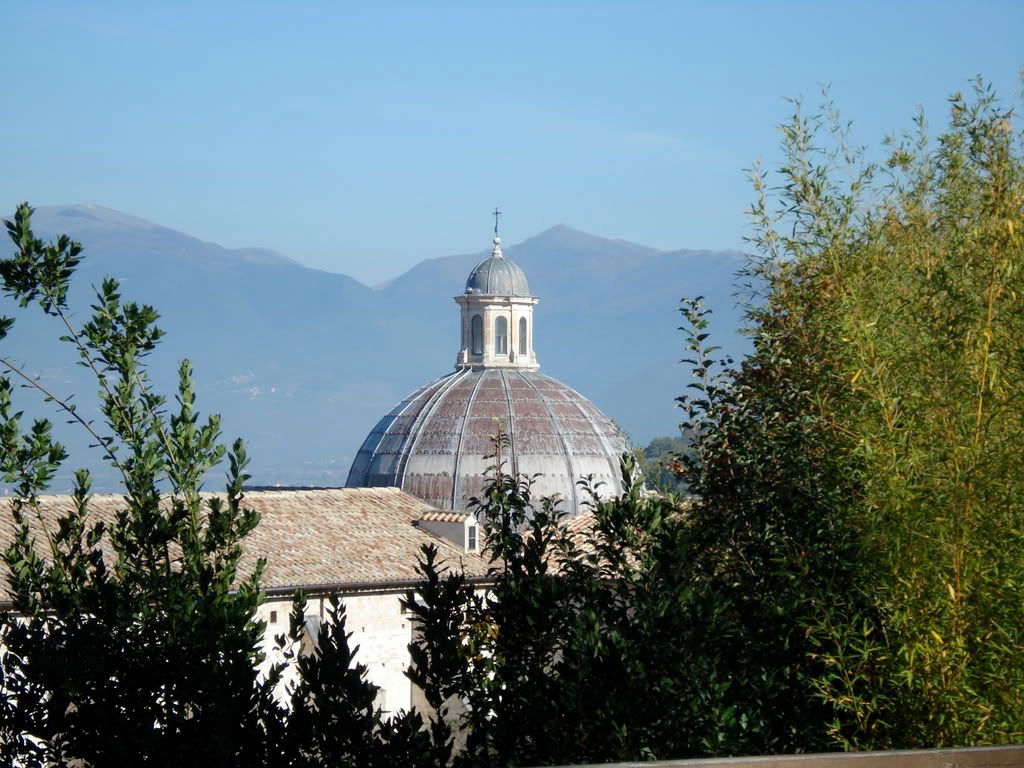
Spoleto
If this has already been discussed here in the past, my apologies.  I am having a horrible time trying to navigate Yahoogroups now, don't like it and have moved away from it myself.  I still value these groups I am still on as a member, though, but Yahoo has made it hard (or more likely I am just an computer illiterate dinosaur, lol) to find old threads quickly and easily..... 

Thanks!  Love, Li


**************************************************

Holiday Blessings to All!
As Sicily was invaded by about four or five other nations/cultures I am sure there is more cross-over than we would think. I know, for instance, that a burial site of a Celtic king was found in Italy, so I would imagine it wouldn't be too much of a stretch to assume that Sicily also has many influences including the Viking-originated Odin-worshippers.


[CR]

**************************************************


Hi Li,

There were about half a million Langobards and their allies who invaded the north, and most were Germanic pagans (aka “Odinists” – although they referred to him as Godan). They seemed to continue with it until the rein of Queen Theodelinda, who promoted the Catholic Church.
That’s a good question, what about the southern duchies? I could be wrong, but it seems to me that in the north the Langobards were mainly living in the centers of power.. the cities; so it doesn’t appear to have influenced the ‘old religion’ in the countryside.. such as the Valtellina.

Just the info that you shared is fascinating. I had never heard of that before. Long before, in many places in Europe, Odin (also Tyr possibly) was conflated with the local “horned god.” Cernunnos was very likely one such result from that; and Sirona possibly may have originated from the old goddess with Freya perhaps.

Some of this various “combining” can be confusing... and may well have led to very local goddesses and gods with their real origin lost in time. In some cases, unfortunately, the heads of some of the old statues were broken off to make way for a new deity; and the culprits weren’t just Christians either. I find it amazing that the Old Religion has survived so many influences largely unchanged. Even the Etruscans were really just another incoming “influence.” So different regions have different flavors of the same basic thing.

I wish I could add something to what you presented. I can already see that there are items on this subject online to look at, as here:
http://www.tizianoweb.com/1/strega_alberti_1468277.html
In some forest locations in central Europe, a “red cross” was placed at the exact locations of formerly sacred Odinic sites, such as Irminsuls, which Charlemagne had demolished. Apparently this was a way of disguising it; forcing it to become underground… “occultic.”

~Merry Blood Moon~

Camunlynx


.