Tuesday, June 9, 2015

'Stregheria and Vernacular Magic in Italy: A Comparison' by Sabina Magliocco - Part 3


There are two principal strains of healing in Italian vernacular culture: healing through the use of herbs, and spiritual healing. In some cases, both may be practiced by the same individual. Of the two, healing with herbs is considered less a matter of spiritual ability than of practical knowledge. Spiritual healing, in contrast, is believed to be more connected with personal power. This is variously called la forza (power), la virtù (virtue; also attribute); or il segno (the sign), and is generally believed to be inborn. But power alone is useless without the prayers, magical formulae and techniques that make up the cunning person’s craft. Knowledge and power are passed on through an initiation, most commonly at midnight on Christmas Eve mass, during the elevation of the host -- that magical moment of transformation in the Catholic liturgical year at which the world is transformed by the birth of the Savior, and the host is transformed into his body -- and thus, by association, any transformation can take place. The knowledge takes the form of prayers that call upon a saint or the Madonna, and in some cases an accompanying technique, which varies according to the nature of the spiritual cure. These formulas and techniques are secret; they cannot be passed on to others without the healer losing her or his power, and they can only be passed on at the appointed time in the ritual cycle. Often, this is the only initiation and training necessary for the transmission of simple charms. Healing knowledge and power are typically passed down within the family; in some cases, family members – typically a group of siblings or cousins – must work together in order to bring about the cure.
As scholars have documented for other parts of Europe, spirits figure prominently as the helpers of Italian cunning folk. While many ordinary Italians living in traditional communities admit to belief in spirits, and occasionally even to contact with them, cunning folk seem to possess an intensified ability to commune with them above and beyond that of ordinary people. In many areas, healing is essentially conceptualized as a battle against malevolent spirits – whether those of the unquiet dead, witches, or others. Healers need spiritual allies in these battles, and many healers claim to have them in the form of spirits who guide and help them in their craft. The nature of these spirits, once again, is highly localized as well as idiosyncratic: they may be saints, personal ancestors, or helpful dead. They may appear to the healer in dreams and visions: trance and ecstatic states are a fundamental part of communicating with the spirits; they are doorways into the spiritual world for healers and magic workers. When cunning folk rely on saints or the Virgin Mary as helpers, they may maintain shrines to them, participate actively in the organization of festivals in their honor, and play active roles in religious sororities and fraternities that raise money for the feasts. Cures for certain illnesses may take place only on specific feast days or in the context of saints’ festivals. Thus, healing is closely connected to the seasonal and economic cycle of the community, and to the Catholic liturgical calendar.

Italian cunning folk may use a variety of tools in their work which suggest a connection to Stregheria and Neo-Pagan Witchcraft. They commonly keep notebooks in which charms and prayers are recorded – the forerunners of modern-day books of shadows. Some use weapons of various types (daggers, swords, bayonets and even guns) to frighten evil spirits or symbolically cut away certain illnesses, such as worms. Ropes or cords may be used in binding spells and charms, while other tools may be entirely idiosyncratic.


The Italian cunning tradition has a number of traits that suggest that some aspects of modern Stregheria may derive from it in part, and that many Italian Americans who see themselves as carriers of Stregheria grew up in families that preserved aspects of the rural Italian enchanted worldview. Like modern Neo-Paganism and revival witchcraft, this way of life was organized around a ritual year that followed the cycle of the seasons; the moon and sun influenced rhythms of work and production. Women were recognized as life-givers and nourishers, and were closely involved in the maintenance of shrines to a feminine divine figure, the Virgin Mary. Their immigrant ancestors may have been carriers of a tradition of healing that involved herbal and magical practices. They may have kept notebooks of charms and prayers that were precursors of today’s Neo-Pagan books of shadows. Their tools may have included knives, swords and other weapons designed to frighten away malevolent spirits, and their craft involved communication with helpers who took the form of ancestor spirits. Since these traditions could often be conflated with witchcraft in popular narratives, it is possible that this link persisted into the second, third and fourth generation after immigration, giving contemporary Streghe the impression that their ancestors belonged to an organized, hierarchical but secret society of witches. But Italian cunning craft also differs from modern Neo-Pagan Stregheria in important ways. It is emphatically not a pagan religion; there is no mention of a goddess and god, nor are deities ever drawn down into the bodies of practitioners. It exists within a largely Catholic worldview, albeit one permeated with ancestor spirits, magical practice and other elements that mark it as vernacular, rather than ecclesiastical, in nature. Absent, too, is the Wiccan ritual framework, and while there may be certain similarities between the Wiccan year cycle and that of rural Italy, that is because the former is based largely on the Irish agro-pastoral cycle, which shares a common heritage with that of other parts of Europe, including Italy.

But could an ancient pre-Christian religion involving the veneration of Diana have survived in Italian peasant tradition, only to be brought to North America by Italian immigrants? The lack of written evidence makes any answer to this question hypothetical at best, but from the historical record, such a scenario would be very unlikely. Three factors make the survival of a pagan religion in Italy into the 20th century, and its transmission through written documents such as Leland’s Aradia, improbable: the strong presence of Christianity throughout the peninsula from fairly early after the fall of the Roman Empire; the lack of a unified Italian culture and language until the late 19th century; and the relative isolation and lack of resources of the peasant classes – the very ones who are said to have preserved the religion, according to the Neo-Pagan mythos.


Stregheria and Italian vernacular magic and healing are, then, quite different but interconnected traditions. Many Italian Americans who today see themselves as carriers of Stregheria grew up in families that preserved aspects of the enchanted worldview in an immigrant context. While Stregheria may be helping contemporary Italian Americans rediscover aspects of their roots and feel pride in their ethnic identity, its form, structure and cultural context are markedly different from those of the enchanted worldview and its associated practices in Italy. Yet Stregheria should not be interpreted as inauthentic, fake or contrived, for innovation and reclamation are part of the process of tradition. The enchanted worldview cannot exist in the context of contemporary urban North America; Italian Americans need new ways to construct and preserve ethnic identity, and for some, Stregheria satisfies those needs.

.

Monday, June 8, 2015

'Stregheria and Vernacular Magic in Italy: A Comparison' by Sabina Magliocco - Part 2


Italian vernacular magic, by contrast, is neither a religion nor a formalized system of practice. It is both a worldview and a set of customs tied to the agro-pastoral cycle which is strongly embedded in the lives of its practitioners, almost never on a self-conscious level. For most of its carriers, it is simply an ordinary way of doing things and behaving. While it may have historical roots in pre-Christian practices, it is emphatically not a pagan tradition, but firmly embedded within a Roman Catholic cultural matrix. In my more recent work, I have called it “the enchanted worldview,” playing on Max Weber’s trope of the disenchantment of the world.

The enchanted worldview in Italy is rooted in specific pre-market economic and social systems. Because of subsistence activities associated with the land, time is organized according to seasonal cycles; these are reflected in the ritual year, which is dominated by Catholic liturgical forms. These almost always are locally interpreted in ways that connect them to the economic cycle: for example, in Campania, where wheat and hemp crops have been replaced by tobacco, which has a similar growing season, the ritual year begins at planting time near St. Martin in mid-November, and extends until the end of the harvest season at St. Cosimo and Damiano in October. In pastoral areas such as Sardinia and the Apennine, May and September, the months that frame transhumance, are emphasized in local ritual practices. The exact shape of the ritual year thus differs markedly from one area to another. The symbols – the Madonnas and saints – are the same, but each township differs in the way it situates these characters within its symbolic and economic system. The enchanted worldview is not only rooted in the ritualyear cycle; it is all-pervading in the individual’s life cycle. It begins at birth and penetrates every phase of life and every rite of passage, from the moment of birth, when most Italian babies who are not born with a caul (la camicia, or “shirt,” in Italian) are given a fine lawn shirt by a relative, often a godparent, to protect them against evil influences, to funerals, where a variety of beliefs about the otherworld are made manifest through practice.


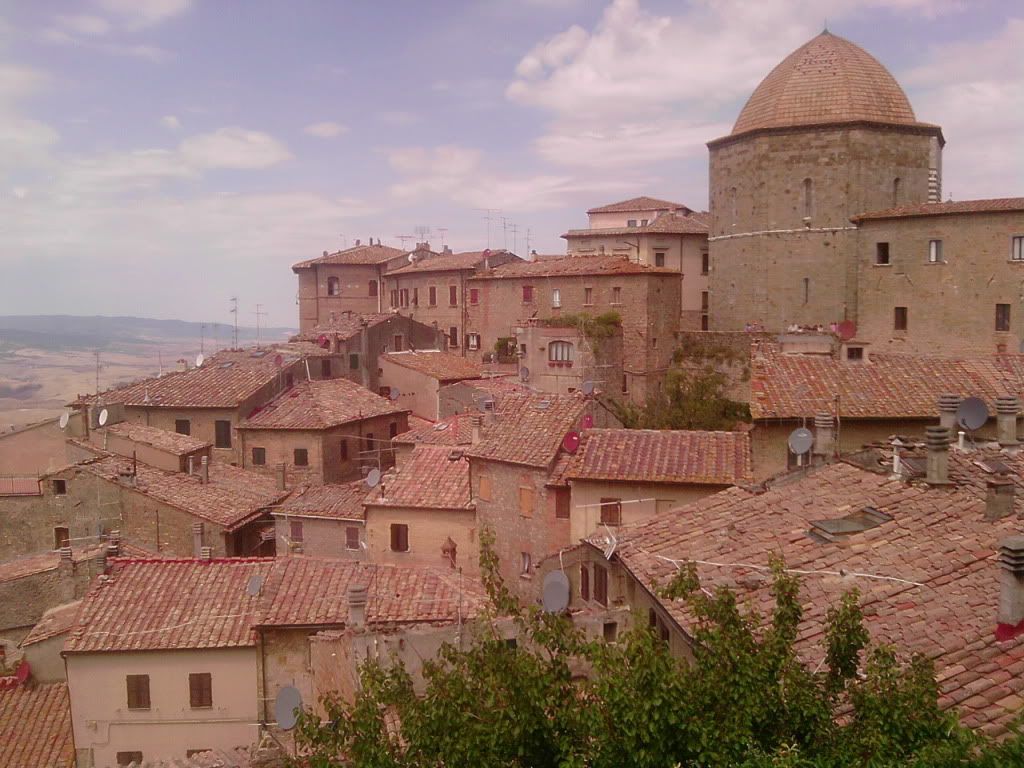
Volterra, Tuscany; birthplace of Aradia
The core of Italian vernacular religion and magic is thus the correlation of its symbolic systems with local economic and social structures. The primary connection is never with the dominant structures of church and state. Hegemonic structures may or may not coincide with indigenous ones, but where there is no match, they are simply ignored. If a particular element does not make sense in terms of local understandings of time, space, and the nature of the world, people will treat it as though it does not exist, as if it were of no consequence. As a result, the landscape of the enchanted worldview in Italy is everywhere local.

Despite its exquisitely local character, the enchanted worldview exists throughout Italy, in both northern and southern regions, with significantly more commonalities than one might think, given the differences in language, culture and economy that characterize Italy’s twenty regions. Certain concepts are ubiquitous: for example, the evil eye and its diagnosis and cures are found in all regions, and are very similar throughout. Yet the enchanted worldview defies systematization. Beliefs and practices are nowhere standardized, or even organized into an easily articulated set of principles; they are part of everyday life, part of praxis. German ethnologist Thomas Hauschild, who spent nearly twenty years studying magic in Basilicata, a region in the south of Italy, wrote: “There is no system, only practice” (Hauschild, 2003:19). The practice is the system. Practices and beliefs exist within a particular
cosmology, but its details seldom preoccupy its technologists. Thus, a structure like that described by Grimassi, with orderly branches in various parts of Italy, each with its own leader and systematic body of lore, is inherently foreign to the enchanted worldview in Italy.

Diana - Goddess of the Hunt
The main characteristic of the enchanted worldview is a belief in the omnipresence of spiritual beings that can influence human lives. These beings include the dead, saints, and the Virgin Mary and Jesus (who are, after all, nothing more than particularly powerful dead). Spirits such as folletti, linchetti and monachelli also appear, echoing some of the spiritual flora and fauna in Grimassi’s works, but they are often troublesome, rather than helpful: they tangle the manes of horses, frighten donkeys and confuse travelers who cross their paths. Some spirits are associated with certain kinds of illnesses, although exact relationships are generally determined by local lore. For instance, in Basilicata, the unquiet dead are said to cause skin diseases such as erysipelas and St. Anthony’s Fire (herpes zoster); in Campania, children who fail to thrive are said to be taken by witches on their night flights, and worn out with flying and dancing; in Emilia Romagna, Puglia and Sardinia, spiders and/or insects are responsible for a range of illnesses from tarantismo to argismo to arlìa. Some scholars suggest these insects once embodied ancestor spirits who then possessed their victims through the bite or sting (De Martino, 2005 [1961]). Even spirits such as saints and the Madonna, who belong to a greater Catholic pantheon, are everywhere localized: the Madonna is usually worshipped in one or more of her local manifestations, and the devout have their personal favorites based on each Madonna’s attributes and the qualities she “stands over,” or rules, and their own individual needs or interests.

Everywhere in Italy, there are experts who specialize in interfacing with the spirit world. These are the Italian equivalents of British and European cunning folk, and much of their work consists in the diagnosis and cure of spiritual illness. Their names vary according to region; they may be known as guaritori (healers), donne che aiutano (women who help), praticos (knowledgeable or wise people), fattucchiere (fixers), maghi (sorcerers), and by numerous other dialectical terms; but they seldom call themselves streghe (witches). This term is overwhelmingly negative in Italian folklore, and almost always refers
to a person who brings harm to others. Italian folklore is rich in legends about witches who fly through the air to their legendary gatherings around the walnut tree of Benevento, shrink themselves so small they can fit through keyholes, suck breath or blood from victims, and cause all manner of illness and mischief to their neighbors. Clearly, these activities refer to folkloric witches; they have never been practiced by actual human beings. Occasionally, however, healers may be accused of being streghe by those who believe themselves to be victims of black magic, or by clients who have failed to be healed by the cunning person’s cures.

.

Sunday, June 7, 2015

'Stregheria and Vernacular Magic in Italy: A Comparison' by Sabina Magliocco - Part 1


'Stregheria and Vernacular Magic in Italy: A Comparison' by Sabina Magliocco


The distinction between contemporary Stregheria and traditional Italian magic, healing and spiritual practice has lately been the subject of lively debate on a number of listserves and websites. In this brief essay, I will attempt to summarize some of my academic publications on this theme for a non-scholarly audience, and to encourage further research, questions and discussion on this topic. I should state at the outset that my approach is academic: as an anthropologist and folklorist, I consider both Stregheria and Italian vernacular magic as important facets of culture in their own right. My intention is not to support or deny the authenticity of either, but to help readers understand both in the contexts in which they developed, and how the former grew from the latter in the context of the Italian American diaspora.

Stregheria is an Italian American variety of Neo-Pagan Witchcraft. It owes its origins to Aradia, or the Gospel of the Witches (1889), a collection of spells, rhymes and legends which amateur folklorist Charles G. Leland claimed came from a Florentine fortune-teller named Maddalena. According to Leland, Maddalena belonged to a family of witches who practiced a form of pagan religion centered on the worship of the moon goddess Diana. Leland interpreted the materials he collected according to popular folklore theories of the late 19th century: as survivals of ancient pagan religions, specifically those of the Romans and Etruscans, whose civilizations had once dominated central Italy. He dubbed witchcraft la vecchia religione (the old religion). Right from the start, Leland’s work was controversial. Some of the materials in it –

the conjuration of lemons and pins, for instance – have analogues in Italian folklore. Other snippets appear to be versions of popular Italian children’s rhymes, rewritten to suit Leland’s ideology. And the character of Aradia does seem to be based on a figure from medieval Italian folklore: the biblical Herodias (Erodiade in Italian), popularly believed to fly through the air at night at the head of a ghostly procession. But these bits of folklore do not appear anywhere else in Italian tradition as part of a single text. If The Gospel of the Witches had been an authentic document from a folk tradition, some other version of it would have been collected at some point by Italian folklorists or historians. Yet no other similar text has ever been found by Italian ethnologists. For that reason, Leland’s Aradia has always been suspected to be a fake. More recently, historian Robert Mathiesen has proposed a new explanation: that Aradia be interpreted as a dialogic and intersubjective text – a product of the close interaction between Leland and Maddalena, during which Maddalena selected and re-interpreted bits of folklore in ways that would interest her wealthy patron. The result was a document that incorporated many elements of folklore, but strung them together in unusual ways, giving them a unique and atypical interpretation.

Despite the controversies surrounding it, Leland’s text became quite influential: it equated folk magic to an ancient religion involving the veneration of a goddess, and located this all in Italy. Leland clearly influenced Gerald B. Gardner, who is widely credited with the development of Wicca in its present form, and through Gardner, an entire generation of Witches. Among the first to openly identify as a practitioner of Italian witchcraft was Leo Louis Martello (1933-2001). Martello claimed to have been initiated by a family member as a young man. He described a secret hereditary tradition based on a Sicilian version of the myth of Proserpina (Persephone). Along with priestess Lori Bruno, also a hereditary practitioner, he founded the Trinacrian Rose of New York City, one of the first Italian American covens in North America.

But the real heir of Leland is Raven Grimassi, the architect of Stregheria. Like Martello and Bruno, Grimassi claims to have been initiated into a family tradition of magical practice which he describes as hereditary, domestic, and secret. Grimassi’s mother comes from the region of Campania, outside Naples. She belongs to a family whose members practiced a number of magical
traditions, including the removal of the evil eye, the making of medicinal liqueurs and oils, and divination. Like the traditions described by Martello, Bruno and a number of Italian ethnologists, it consisted of a set of secret teachings limited to family members, passed on only to those who were felt to have some innate magical ability and interest. But it is not this tradition that Grimassi writes about in his works The Ways of the Strega (1995), Hereditary Witchcraft (1999), and Italian Witchcraft (2000). Instead, he presents an elaboration of what Leland described: a religion similar to Wicca in structure and practice, with Italian flavor added through the names of deities, spirits, and sabbats. According to him, Italian Witches divide themselves into three clans: the Fanarra of northern Italy, and the Janarra and Tanarra of central Italy. No mention is made of southern Italy, despite the fact that the majority of Italian immigrants to North America, including Grimassi’s mother, originated there. Each tradition is directed by a leader known as a Grimas. Like the names of the three Strega clans, the word “Grimas” does not occur in Italian or in any of its dialects. Italian American Streghe worship in circles called boschetti (“groves”) led by a High Priestess and Priest. The meet on full and new moons and observe eight sabbats. They venerate a lunar goddess and a horned god based on the Etruscan deities Uni and Tagni, also known as Tana and Tanus, Jana and Janus, Fana and Faunus. Ancestor spirits known as Lasa watch over each family, and various nature spirits such as Fauni, Silvani, Folletti and Linchetti play key roles in Stregheria. The guardians of the four directions are known as Grigori. While Grimassi’s books have been very influential in the United States, individual Stregheria covens that are not descended from his may not necessarily follow his teachings. As in all Neo-Pagan Craft, there is a wide range of variation and adaptation among groups and individuals. The common thread that links all Stregheria covens seems to be their efforts to give their practice an Italian flavor, whether through the types of deities venerated, the food served at rituals, or the adaptation of Italian and Italian American cultural practices to a Pagan context.

Grimassi’s genius is creative, rather than scholarly. He never claims to be reproducing exactly what was practiced in Italy, admitting that Streghe have “adapted a few Wiccan elements into their ways” (1995:xviii). He openly acknowledges that he is expanding on his family tradition, adding elements to it to restore it to what he imagines was its original state. But from his attempts to restore a tradition, a brand new tradition has emerged: one that bears little resemblance to anything that was practiced in Italy or in Italian American ethnic communities.

While based on Italian folk magic, historical accounts and folklore collections, Stregheria is, like most revival Witchcraft, a modern tradition. Folklorist Robert Klymasz, writing about what happens to folklore as a result of immigration to a new culture, identified three layers of folklore that are present in any ethnic community. These include the traditional, with clear links to Old World forms; the transitional, in which some elements from the Old World crystallize, while others adapt to the new context; and innovational, in which new folklore is developed to make up for older forms that have been lost (Klymasz, 1973). Stregheria belongs to the last category. It has some points in common with Italian vernacular magic, which I will outline below; but there are more differences than similarities. Its true value lies in its ability to provide contemporary Italian Americans with a new context in which to interpret folk magical practices that have remained in their families for many generations, giving these traditions a new life. In the process, it plays a vital role in helping to create and maintain identity for its practitioners.


.

Saturday, June 6, 2015

Some pagan music on the eve of Vestalia


'Gleipnir' by Adrian von Ziegler

Pagan Metal - Gleipnir

Adrian von Ziegler YouTube channel

Facebook / iTunes / Bandcamp:
http://www.facebook.com/AdrianvonZiegler
http://itunes.apple.com/artist/adrian
http://adrianvonziegler.bandcamp.com/

Real CD's / Twitter / Merchandise:
http://www.cdbaby.com/Artist/Adrianvo
http://twitter.com/#!/AdrianVZiegler
http://adrianvonziegler.spreadshirt.com/

This Song now is clearly Pagan Metal, It's probably the hardest Song I've made so far. I tried to concentrate on Rhythms, but at the same Time not to lose Focus on the Melodies. I hope you like it.
© Copyright of all Audio belongs to Adrian von Ziegler.

THE MEANING OF GLEIPNIR:
In Norse Mythology Gleipnir is the Binding, which holds the mighty Fenriswolf until Ragnarök, when it will break and let Fenris devour Odin.


'A Pagan Storm' by Wolfchant

Wolfchant - A Paganstorm

VerbranntesFleisch YouTube channel

A good german Pagan Metal Band

"A Pagan Storm" by Wolfchant (Google PlayiTuneseMusicAmazonMP3)


'Huldresagn' by Eliwagar

Eliwagar Huldresagn 


Runahild YouTube channel

Video filmed and produced by Ragnhild Jensen, with some good ideas from Inge Solsvik too. We are very thankful for their amazing help :) 


"Huldresagn" (the Huldra's Tale/Legend) is a new song from the upcoming album of the same name that will come out in the late autumn 2014.

Ragnhild and Inge are both from the music project Less is Dead, you can check them out here:

https://www.facebook.com/pages/Less-is-Dead/346313838793149?fref=ts


**************************************************
 
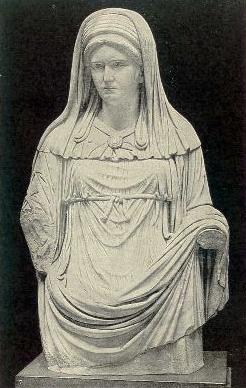
Virgo Vestalis Maxima
Vesta (mythology)

Vesta is the virgin goddess of the hearth, home, and family in Roman religion. Vesta's presence is symbolized by the sacred fire that burned at her hearth and temples. Her closest Greek equivalent is Hestia.

The importance of Vesta to Roman religion is indicated by the prominence of the priesthood devoted to her, the Vestal Virgins, Rome's only college of full-time priests.


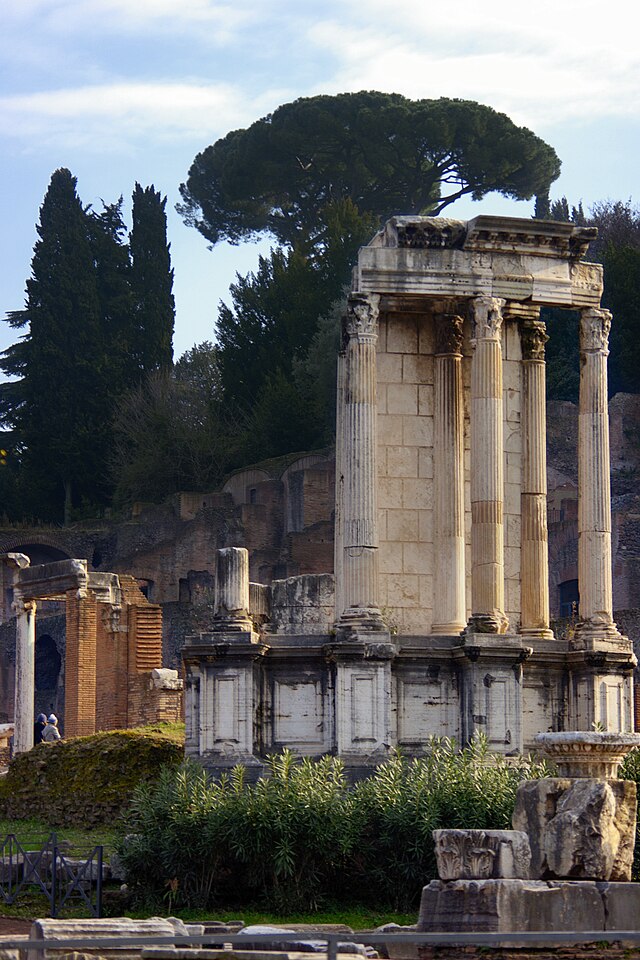
Ruins of the Temple of Vesta

What was Vestalia?

The Roman celebration of Vestalia was held each year in June, near the time of Litha, the summer solstice. This festival honored Vesta, the Roman goddess who guarded virginity. She was sacred to women, and alongside Juno was considered a protector of marriage.

The Vestalia was celebrated from June 7 to June 15, and was a time in which the inner sanctum of the Vestal Temple was opened for all women to visit and make offerings to the goddess.


.

Friday, June 5, 2015

Everyday windows to the past III


Our power of imagination

'Only Love Can Break A Heart' by Gene Pitney (1962) is another song that really captures a certain time-space. It can be fun to sort've time machine back certain special locales for oneself in your mind. I think this exercise can spiritually center a person. If something was better in another time, then why was it better? It's a way to learn about oneself, and maybe where you might want to go in the future. If you really think of it, most of the homes, roads, buildings, and landscapes haven't changed much. All it takes is a good imagination to back-date the imagery and mood. What better aid than music? It doesn't mean that you're stuck in the past by merely using your powers of time-space-place imagination when you wish to.


Indian Motorcycles

Indian is an American brand of motorcycles originally produced from 1901 to 1953 in Springfield, Massachusetts, US. Hendee Manufacturing Company initially produced the motorcycles but the name was changed to The Indian Motocycle Manufacturing Company in 1928.

The Indian factory team took the first three places in the 1911 Isle of Man Tourist Trophy. During the 1910s Indian became the largest manufacturer of motorcycles in the world. Indian's most popular models were the Scout, made from 1920 to 1946, and the Chief, made from 1922 to 1953.

The Indian Motocycle Manufacturing Company went bankrupt in 1953. Various organizations tried to perpetuate the Indian Brand name in subsequent years, with limited success. In 2011 Polaris Industries purchased Indian Motorcycles and moved operations from North Carolina and merged them into their existing facilities in Minnesota and Iowa. Since August 2013, Polaris have marketed three modern Indian motorcycles that reflect Indian's traditional styling.


Apparently the Indian Motorcycle Company didn't go bankrupt because the product wasn't good anymore; but due to to poor decisions, planning, and strategy. It still is puzzling though, since it appears that their best models were among their latest. After a long and confusing period of attempts to bring them back, along with mergers and buyouts, they finally are back and viable under the name Indian Motorcycle Manufacturing Company. I think part of their problem was that they couldn't merely start producing antique-looking models and be taken seriously, but they seem to have it on track now. They look good.


Antique radios

The old models from the 30s or 40s are nice, but I really like the brands from the 50s and 60s. Also, the old juke boxes. I think it's great that companies are manufacturing new inexpensive radios in the old styles, which--lets face it--are so much more stylish than the modern brands. They had those old wood or chrome finishes, the dials, those particular woven speaker covers. I always remember a line from the movie 'Point Break' where surfing guru "Bodhi" (Patrick Swayze) sees "Johnny Utah's" (Keanu Reaves) fancy surf board and says "hey, that looks like a 57 Chevy I used to have."

.

Thursday, June 4, 2015

Swiss-Italian Immigrants Found Marin "Just Like Home"


Swiss-Italian Immigrants Found Marin "Just Like Home"

By Marilyn L. Geary - 'Anne T. Kent California Room Community Newsletter' - April 09, 2013

[Above, clockwise from back left: Isadore, Arcangelo, Giacondo and Romeo Cerini; undated] 

When Giocondo Cerini arrived in Tomales in 1910, he found so many family members, friends, and acquaintances that he said “it was just like home,” according to a 1994 interview in the Point Reyes Light.  His aunt Carrie Piezzi, along with two of his brothers and many fellow Swiss-Italians, were there to welcome him.

Giocondo was born in 1894 in Giumaglio, a small village in the Vallemaggia region of the Ticino Canton in Switzerland.  Giocondo’s brothers Isadore and Romeo had left Giumaglio in 1901, their sister Adele in 1904, sister Caterina (America) in 1906, and brother Arcangelo emigrated in 1914.  Of the eight children born to Giovanni Cerini and Angelina Piezzi Cerini in Giumaglio, six left home to settle in the ranch lands of Marin and Sonoma counties.

On arrival in Marin, Giocondo worked on the dairy ranch of Maurizio Sartori, a pattern followed by many immigrants who worked for compatriots until they saved enough money to lease or purchase their own ranches. Along with two of his brothers, Arcangelo and Romeo, Giocondo saved enough money to purchase the historic John Keys ranch in Tomales. Brother Isadore operated a garage in town. Unfortunately the two sisters died not long after arrival, America from consumption at age 18 and Adele probably from complications of childbirth.


The Cerini family is just one of hundreds in the Vallemaggia that lost family members to Australia and America. During a period of some eighty years, from the 1850s through the turn of the century, over 27,000 emigrants left Ticino to find a better life. Despite obstacles, many of the immigrants succeeded through hard work and determination to own and operate successful dairy ranches in California.

For more on the history of local Swiss-Italian ranchers and their ancestral home, join Marilyn L. Geary for an illustrated presentation April 18th, 2013 from Noon to 1pm in the Marin County Civic Center, Room 330, San Rafael.  


**************************************************

Paull Morton wrote:

Interesting article

I am from Perth , Australia and my Great Great grandfather Natale Cerini emigrated to Bendigo goldfields in Victoria , Australia from Giumaglio at age 14 with a cousin Pietro Cerini also 14 and another G. Cerini (Giacomo or Guiseppe perhaps?) in the 1850`s


**************************************************

Claudio Caccia wrote:

I am from Maggia (a Comune that since 2010 includes the ex-Comune od Giumaglio), Vallemaggia, Switzerland and by pure coincidence I read the article above and the comment. We must somehow be related, since my Grandma Maria Cerini (married Genazzi, born in Giumaglio July 16th 1890, died in Maggia January 29th, 1995) was the sister of the above mentioned Isidoro, Arcangelo, Giocondo, Romeo, Adele, Caterina (America) and the other brother that remained here in Switzerland! By the way, I remember my Grandma saying she was ment to leave too, but here mother desperately needed her here. A big hello to all of you


.

Wednesday, June 3, 2015

Sun Moon abstractions II

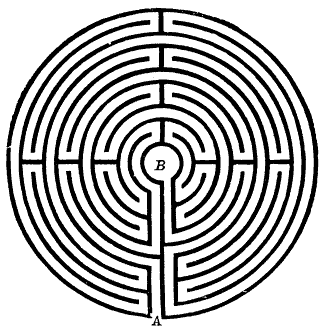
Labyrinths

The labyrinth was both an important symbol and ground marking to the ancient Camunni; and also to other peoples. The Labyrinth Society website has a Labyrinth Locator where you may try to find one in your area. I actually found a ground labyrinth last year, made of stones, on the edge of private property near a nearby public trail. Finding it was quite a surprise, as it was sort've hidden just off the beaten path. When I am able to visit, I always clean it up a bit. As you can imagine, I'm not in a big hurry to make everyone aware of this location.


Cultural meanings

Prehistoric labyrinths are believed to have served as traps for malevolent spirits or as defined paths for ritual dances. In medieval times, the labyrinth symbolized a hard path to God with a clearly defined center (God) and one entrance (birth). In their cross-cultural study of signs and symbols, Patterns that Connect, Carl Schuster and Edmund Carpenter present various forms of the labyrinth and suggest various possible meanings, including not only a sacred path to the home of a sacred ancestor, but also, perhaps, a representation of the ancestor him/herself: "...many [New World] Indians who make the labyrinth regard it as a sacred symbol, a beneficial ancestor, a deity. In this they may be preserving its original meaning: the ultimate ancestor, here evoked by two continuous lines joining its twelve primary joints."


One can think of labyrinths as symbolic of pilgrimage; people can walk the path, ascending toward salvation or enlightenment. Many people could not afford to travel to holy sites and lands, so labyrinths and prayer substituted for such travel. Later, the religious significance of labyrinths faded, and they served primarily for entertainment, though recently their spiritual aspect has seen a resurgence.

Many newly made labyrinths exist today, in churches and parks. Modern mystics use labyrinths to help them achieve a contemplative state. Walking among the turnings, one loses track of direction and of the outside world, and thus quiets the mind. The Labyrinth Society provides a locator for modern labyrinths all over the world.


In addition, the labyrinth can serve as a metaphor for situations that are difficult to be extricated from, as an image that suggests getting lost in a subterranean dungeon-like world. Octavio Paz titled his book on Mexican identity The Labyrinth of Solitude, describing the Mexican condition as orphaned and lost.


Emerald Tablet

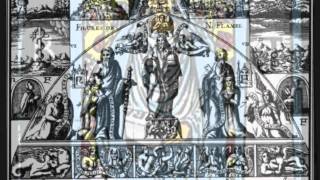
Hermeticism, Alchemy, and Western Ceremonial Magic--apparently, largely all the same thing--is a subject which has been covered here often. I can't seem to find an image which I can say is the authentic Emerald Tablet, as there are many replicas. Perhaps the name is more of a concept name, rather than an actual piece.

The Emerald Tablet, also known as the Smaragdine Table, or Tabula Smaragdina, is a compact and cryptic piece of Hermetica reputed to contain the secret of the prima materia and its transmutation. It was highly regarded by European alchemists as the foundation of their art and its Hermetic tradition.

Below is one of the many translations, by English physicist, mathematician, and Alchemist Isaac Newton. I'm surprised that the tablet has fourteen points, rather than that ever-present number thirteen. There is a relationship between Hermeticism/Alchemy and Freemasonry/Rosicrucianism; although I do not know if this nexus is deep, or more casual. I'm guessing it's the former.


Newton's translation

A translation by Isaac Newton is found among his alchemical papers that are currently housed in King's College Library, Cambridge University.


1.  Tis true without lying, certain and most true.

2.  That which is below is like that which is above and that which is above is like that which is below to do the miracles of one only thing....

3.  And as all things have been and arose from one by the mediation of one: so all things have their birth from this one thing by adaptation.

4.  The Sun is its father, the moon its mother, the wind hath carried it in its belly, the earth is its nurse.

5.  The father of all perfection in the whole world is here.

6.  Its force or power is entire if it be converted into earth.

7.  Separate thou the earth from the fire, the subtle from the gross sweetly with great industry.


8.  It ascends from the earth to the heaven and again it descends to the earth and receives the force of things superior and inferior.

9. By this means you shall have the glory of the whole world....

10.  And thereby all obscurity shall fly from you.

11.  Its force is above all force. For it vanquishes every subtle thing and penetrates every solid thing.

12.  So was the world created.

13.  From this are and do come admirable adaptations whereof the means (or process) is here in this. Hence I am called Hermes Trismegist, having the three parts of the philosophy of the whole world....

14.  That which I have said of the operation of the Sun is accomplished and ended.


Meditation bad for you?

I came across the following article last week. I doubt that it's actually bad for you, but I think that a person can sometimes just be too spiritual... too many rules to live by. Often projects or problems have messy solutions. Evolutionary struggle must be part of life's equation.

'The dark side of meditation and mindfulness: Treatment can trigger mania, depression and psychosis, new book claims'


The Number Nine

Although this video comes from an Odinic path, the number "9" is also a very important number in European witchcraft.

In the legend of the Holy Strega we encounter a set of nine scrolls, and in this number we find lunar symbolism. Nine is a triple form of the number three, and three represents the triformis goddess of witchcraft: Hecate, Diana, and Proserpina. Therefore the nine scrolls, as a mystical element of Aradia's legend, represent the teachings of the lunar cult. --Raven Grimassi, 'The Book of the Holy Strega


9 Laws of magic


Nikola Tesla, the greatest scientist of modern times, stated that the numbers three, six, and nine are the key to the universe; almost as a natural amendment to the Pythagoras statement that number rules the universe.


Nikola Tesla 3 6 9


Tomb of Dracula

The Tomb of Dracula is a horror comic book series published by Marvel Comics from April 1972 to August 1979. The 70-issue series featured a group of vampire hunters who fought Count Dracula and other supernatural menaces.


In the 70s, my father would rent a camper every year--as he had a six-week summer vacation--and we would drive to the Midwest from California to visit relatives. I recall that this was my favorite comic book. Comics were huge then, and were all in color, and inexpensive. This comic series led to the Blade and van Helsing movies years later.

If it's possible for a comic book to provoke strong emotion and mystery, then 'The Tomb of Dracula' did just that. It's wasn't really "for kids," as there was a lot of violence and killing. In 2010 the entire series, with many hundreds of pages, became available in book form with several improved-full-color volumes.

.