Monday, November 21, 2011

Camillo Golgi: Nobel Prize in Physiology or Medicine 1906


Camillo Golgi: Nobel Prize in Physiology or Medicine 1906

A Camunian from Corteno, Val Camonica


[Thanks to Etrusco-Umbro-Gallic]


Camillo Goldi Wikipedia page


Camillo Golgi (July 7, 1843 – January 21, 1926) was an Italian physician, pathologist, scientist, and Nobel laureate.

Born
Died
January 21, 1926 (aged 82)
Pavia, Italy
Citizenship
Nationality
Fields
Notable awards


Biography

Camillo Golgi was born in the village of Corteno, Lombardy, then part of the Austrian Empire. The village is now named Corteno Golgi in his honour. His father was a physician and district medical officer. Golgi studied at the University of Pavia, where he worked in the experimental pathology laboratory under Giulio Bizzozero, who elucidated the properties of bone marrow. He graduated in 1865. He spent much of his career studying the central nervous system. Tissue staining techniques in the later half of the 19th century were inadequate for studying nervous tissue. While working as chief medical officer in a psychiatric hospital, he experimented with metal impregnation of nervous tissue, using mainly silver (silver staining). He discovered a method of staining nervous tissue which would stain a limited number of cells at random, in their entirety. This enabled him to view the paths of nerve cells in the brain for the first time. He called his discovery the "black reaction" (in Italian, reazione nera), which later received his name (Golgi's method) or Golgi stain. The reason for the random staining is still not understood.

The black reaction consisted in fixing silver chromate particles to the neurilemma (the neuron membrane) by reacting silver nitrate with potassium dichromate. This resulted in a stark black deposit on the soma as well as on the axon and all dendrites, providing an exceedingly clear and well contrasted picture of neuron against a yellow background. The ability to visualize separate neurons led to the eventual acceptance of the neuron doctrine.[1]

In addition to this discovery, Golgi discovered a tendon sensory organ that bears his name (Golgi receptor). He studied the life cycle of Plasmodium and related the timing of tertian and quartan fevers seen in malaria with the life cycle of the organisms now named Plasmodium vivax and Plasmodium malariae, respectively.[2] Using his staining technique, Golgi identified the intracellular reticular apparatus in 1898 which bears his name, the Golgi apparatus.

In renal physiology Golgi is renowned for being the first to show that the distal tubulus of the nephron returns to its originating glomerulus, a finding that he published in 1889 ("Annotazioni intorno all'Istologia dei reni dell'uomo e di altri mammifieri e sull'istogenesi dei canalicoli oriniferi". Rendiconti R. Acad. Lincei 5: 545–557, 1889.).

Golgi, together with Santiago Ramón y Cajal, received the Nobel Prize in Physiology or Medicine in 1906 for his studies of the structure of the nervous system. In 1900 he was named senator by king Umberto I[3]

Golgi died in Pavia, Italy, in January 1926.


[Right: Drawing by Camillo Golgi of a hippocampus stained with the silver nitrate method.]


Monuments in Pavia

In Pavia several landmarks stand as Golgi’s memory.
  • A marble statue, in a yard of the old buildings of the University of Pavia, at N.65 of the central “Strada Nuova”. On the basament, there is the following inscription in Italian language: "Camillo Golgi / patologo sommo / della scienza istologica / antesignano e maestro / la segreta struttura / del tessuto nervoso / con intenta vigilia / sorprese e descrisse / qui operò / qui vive / guida e luce ai venturi / MDCCCXLIII – MCMXXVI" (Camillo Golgi / outstanding pathologist / of histological science / precursor and master / the secret structure / of the nervous tissue / with strenuous effort / discovered and described / here he worked / here he lives / here he guides and enlightens future scholars / 1843 – 1926).
  • "Golgi’s home", also in Strada Nuova, at N.77, a few hundreds meters away from the University, just in front to the historical “Teatro Fraschini”. It is the home in which Golgi spent the most of his family life, with his wife Lina.
  • Golgi’s tomb is in the Monumental Cemetery of Pavia (viale San Giovannino), along the central lane, just before the big monument to the fallen of the First World War. It is a very simple granite grave, with a bronze medallion representing the scientist’s profile. Near Golgi’s tomb, apart from his wife, two other important Italian medical scientists are buried: Bartolomeo Panizza and Adelchi Negri. People are still inspired by him today.

Eponyms

References
1.      ^ The MIT Encyclopedia of the Cognitive Sciences (1999) The MIT Press Bradford book, by Kathleen S. Rockland p 353
2.      ^ Golgi C. "On the cycle of development of malarial parasites in tertian fever: differential diagnosis between the intracellular parasites of tertian and quartant fever. Archivio per le Scienza Mediche. 13: 1730196. 1889. Title translated from the Italian
  • Paolo Mazzarello (2010), Golgi: A Biography of the Founder of Modern Neuroscience, Translated by Aldo Badiani and Henry A. Buchtel, New York: Oxford University Press, ISBN 970195337846
  • De Carlos, Juan A; Borrell, José (2007), "A historical reflection of the contributions of Cajal and Golgi to the foundations of neuroscience.", Brain research reviews 55 (1): 8–16, 2007 August, doi:10.1016/j.brainresrev.2007.03.010, PMID 17490748
  • Muscatello, Umberto (2007), "Golgi's contribution to medicine.", Brain research reviews 55 (1): 3–7, 2007 August, doi:10.1016/j.brainresrev.2007.03.007, PMID 17462742
  • Kruger, Lawrence (2007), "The sensory neuron and the triumph of Camillo Golgi.", Brain research reviews 55 (2): 406–10, 2007 October, doi:10.1016/j.brainresrev.2007.01.008, PMID 17408565
  • Dröscher, A (1998), "The history of the Golgi apparatus in neurones from its discovery in 1898 to electron microscopy.", Brain Res. Bull. 47 (3): 199–203, 1998 October, doi:10.1016/S0361-9230(98)00080-X, PMID 9865850
  • Fabene, P F; Bentivoglio, M (1998), "1898–1998: Camillo Golgi and "the Golgi": one hundred years of terminological clones.", Brain Res. Bull. 47 (3): 195–8, 1998 October, doi:10.1016/S0361-9230(98)00079-3, PMID 9865849
  • Mironov, A A; Komissarchik, Ia Iu; Mironov, A A; Snigirevskaia, E S; Luini, A (1998), "[Current concept of structure and function of the Golgi apparatus. On the 100-anniversary of the discovery by Camillo Golgi]", Tsitologiia 40 (6): 483–96, PMID 9778732
  • Farquhar, M G; Palade, G E (1998), "The Golgi apparatus: 100 years of progress and controversy.", Trends Cell Biol. 8 (1): 2–10, 1998 January, doi:10.1016/S0962-8924(97)01187-2, PMID 9695800
  • Bentivoglio, M (1998), "1898: the Golgi apparatus emerges from nerve cells.", Trends Neurosci. 21 (5): 195–200, 1998 May, doi:10.1016/S0166-2236(98)01229-6, PMID 9610881

External links
 .

Sunday, November 20, 2011

Guido von List: Part 12

The following quote was taken from the Runic script Wikipedia page:

Historically, the runic alphabet is a derivation of the Old Italic alphabets of antiquity, with the addition of some innovations. Which variant of the Old Italic family in particular gave rise to the runes is uncertain, suggestions including Raetic, Etruscan or Old Latin candidates. All these scripts at the time had the same angular letter shapes suited for epigraphy which would become characteristic of the runes. The process of transmission of the script (the oldest inscriptions being found in Denmark and Northern Germany, not near Italy) is also unknown. A "West Germanic hypothesis" suggests transmission via Elbe Germanic groups, while a "Gothic hypothesis" assumes transmission via East Germanic expansion.

As you can plainly see, there is a definite tie-in with our culture, especially via the old Raetic alphabet. This connection may not have been apparent in Guido von List's day. The perception was that everything south of the Alps was "Roman," without taking into account that the early Roman political strategy was to destroy anything Etruscan, Gaulish, or other local cultural groups in this territory.

The following text was taken from 'The Secret of the Runes', page 68, regarding the original definition, and eventual decline, of the Runes:

.....it has been proven that the runes were more than our letters are today, more even than mere syllable- or word-signs, that is, they were "holy signs" or "magical characters." They were , in a certain way of thinking, something similar to the "spirit sigils" (not "spirit seals"!) of later times, which played a conspicuous role in the notoerious "Hellish Conjuration of Dr. Faust." Actually they were nothing less than "collectors" for the purpose of auto-suggestion, "media" for concentrated thought and intensive meditation. The characterization as "holy-signs" is therefore fully justified, as is the other name "runes," that is, the "rowning [whispering], the "slightly speaking ones."

Only after these beginnings did those runes, and a number of others that the "Runatals thattr Odhins" does not name, gradually shrivel up into letters in our sense of the word--that is, into empty, inarticulate phonetic signs. The great still-uncounted mass of the other "holy signs" or "hieroglyphs," which were not simplified into insubstantial phonetic signs, but which were rather--as has already been stated--often developed with ongoing elaboration into the most elegant ornamental motifs with the characteristic preservation of the basic lines of their primary forms, and which also expanded their names and symbolic values, formed the Aryan system of hieroglyphs or pictographs which remained a secret of the skalds. Until now, no one had thought to decipher or read them, because no one recognized these widely disparate signs as hieroglyphs.

First it would also do well to ascertain where those--until now silent or in the best case misinterpreted--"holy signs" or "hieroglyphs" are to be found, this in order to prove the context of the special formations of individual signs (corresponding to the kind of the areas in which they are found), and finally to establish through their names the primal-words and ideas that they represent, and from these to form a basis for their decipherment and reading.

This particular area of text later goes into root words (see earlier runic examples in this series), or what List called "primal words," of which many other words stem from; and as they tie into the ancient runic system. On some level, List was partial to his German roots. However, we must realize that this area of study was new at that time, and it appeared wholley Germanic then. I see certain Listian "primal words" which are very similar to certain words and syllables in the Camunian dialect, like "mon," "bor," and "ur." Some of these may have had a Celto-Alpine origin, or even an origin with the mysterious ancient Alpine peoples who predated them. Of course, some could have a Norse, Slavic, or other origin.

Just to follow up with the previous primal word examples. "Mòn" is the original Camunian name for the village of Monno; which is interesting because variations of this word, in numerous ancient language origins, generally means "Moon." "Mon," usually as a prefix, is common within the Camunian dialect. Even the name for Valle Camonica in the Camunian dialect is "Al Camònega." "Mon" is a primal word associated with the Norse life rune (also with "the Moon" meaning); however, the connection is most likely just linguistic. Although, the Langobards did bring the runes back to the Italian peninsula, so there's a possibility of a greater connection there. "Borha" (bor) means business or exchange in Camunian; with "bor" being an indirect primal word associated with the Gibor rune. Lastly, "Urdèn" (ur) means order in Camunian; and although it would be fun to ponder whether or not this could linguistically tie into the name Odin, it appears not to. "Ur" is an important primal word associated with the Ur rune, which may be the most primal word associated with the runes. It stands for "the primordial," which the ancient pagan Camunni may have associated with "the order of nature." The suffixes "ur" and "ura" are very common in the Camunian dialect.

I just think much of this text from this part of the book would be difficult to deeply understand unless it was all placed here, and it would be easier for someone to just get the book. Also, some of it, again, showed a pro-Germanic partiality that could be misinterpreted due to the wording. After looking at hundreds of Camunian surnames and words, they appear to likely be of Alpine and Gaulish origin, with some Roman (Latin) and German influence. However, the Lombard language can sound French, but that could be due to the similar "Romanized Gaulish" linguistic direction.

.

Saturday, November 5, 2011

Guido von List: Part 11

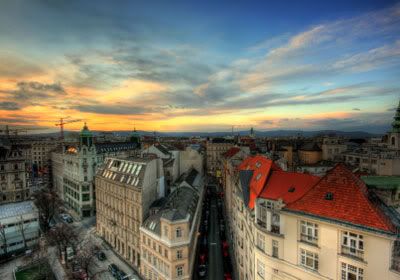
Vienna, Austria: Birthplace of Guido von List
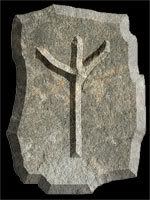
The Algiz rune

"The Life Rune"

I decided that I had to add this Listian rune because there are some definite ancient Camun ties to it. Although the runes have an ancient Cisalpine origin, this particular rune is genuinely ancient Norse in origin. One question, which I have developed over this period of time, is whether or not List's runes were actually found on lower Austrian artifacts or present in any ruins there?

I had a funny synchronistic experience today. It happened as I drove my mother to an errand. I was reading the book in the car while she was inside shopping. When she returned to the car, I was energized having just read about the Algiz rune; and in particular, of one of it's alternate names "mon." The Camunian town and comune of Monno was originally named "Mòn" in the Camunian dialect. As we drove off, she said something like "I'm going to use these "Vienna sausages" for something I'm going to make for dinner tonight." Vienna? {{BINGO}} Vienna is the birthplace of Guido von List! A classic synchronistic connection. She doesn't even know who Guido von List is.

People and animals unwittingly play out this symbolism for others. Two weeks ago today, I brought up a subject out of the blue; and one of the people who was present was startled. "Oh, it's amazing that you brought that up!" he exclaimed, and he went onto a tangent about something which was important to him. That, however, is probably more of a mild psychic connection than a synchronistic one. About a week ago, while hiking, I was thinking about some of these subjects and I saw three ravens fly by. These ravens were playing out a synchronistic symbol for me. It wasn't synchronistic for them. Just me. That seems to be how it works. A living symbol is just going about its own journey; and any symbolic meaning is an entirely separate concept. "Three ravens," or any three birds, is a very ancient symbol in European paganism. It's present in one of the crests of a family of which I descend as well. List offers a mixed scientific-mystical explanation to this. It's a natural condition of this planet, although it has no hard science to back it up.


**************************************************


The website Thora Design quickly sums up the Raido rune with the following description:

Algiz represents protection according to tradition. On another level, it represents divine inspiration and aspirations. What do the two have in common? The Valkryies are that common element. Valkryries were the warrioress, amazon-like daughters of Odin. They were the choosers of the dead on battlefields and lead the dead to the afterlife. They protected the souls of those who died, as well as those who were meant to remain alive. The tie to divine aspirations come from the fact that in some Germanic customs, it was believed that a Valkryrie was actually part of a persons higher consciousness, the "god-like" part of our own being. These all being the case, Algiz represents both protection and the divine consciousness withing each of us.


**************************************************


The Algiz is part of the ancient Nordic and Anglo-Saxon runic alphabet, often equated to the modern day z, however was traditionally pronounced yr. The letter has come to symbolize many neo-pagan religions and is often worn as a pendant. When casting rune stones it is most commonly determined to represent refusal to move on, or one's family and heritage.

*Algiz, sometimes *Elhaz, is the reconstructed Proto-Germanic name for the rune, representing the Proto-Germanic terminal -z (from PIE word-final *-s). The reconstructed word *algiz (meaning "elk") is based on the name of the Anglo-Saxon eolh ("elk") which is of the same shape but represented a different sound. Like much of the Proto-Germanic language, it is not attested in any known text.

Like the Ing-rune, *Algiz differs from the other runes because it was not named acrophonically, since the sound it represents is a suffix. The Proto-Germanic terminal z (continuing Proto-Indo-European terminal s) became obsolete, and the rune is usually transcribed as ʀ for Proto-Norse and Old Norse. The sound eventually became the terminal -r in Old Norse, but its continuation in the yr-rune (see below) shows that there was still a phonemic difference between -r and -ʀ in Old East Norse (the Swedish and Danish dialect of Old Norse) in the 11th century.


Name Proto-Germanic Old English Old Norse
*Algiz Eolh Yr
"elk" "yew"
Shape Elder Futhark Futhorc Younger Futhark
Runic letter algiz.svg Yr rune.png Runic letter yr.png
Unicode
U+16C9

U+16E6

U+16E7
Transliteration z x ʀ
Transcription z x ʀ
IPA [z] [ks] [ɻ], [r]
Position in rune-row 15 16


Elder Futhark

In the Elder Futhark, the reconstructed name *Algiz is given to the rune. *Algiz represents the sound of the letter "Z" in the Elder Futhark. In the 8th century, the Elder Futhark began to be replaced by the Younger Futhark in Scandinavia.


Gothic Futhark

In the Gothic alphabet, the Gothic letter Gothic z.png, called Ezec, is identified with the rune. Like the Elder Futhark, the sound value of the term was that of "Z" but the name of the rune is of uncertain meaning.[1]


Anglo-Saxon futhorc

Recorded in the Anglo-Saxon rune poem, the shape of the rune appears in the Anglo-Saxon futhorc alphabet, as Eolh. However, instead of representing the sounds of the letter "Z" as in the Elder Futhark and Gothic Futhark, it here represents the sound of the letter "X".[1]


     Anglo-Saxon Rune Poem                      Modern English translation[2]
Eolh-secg eard hæfþ oftust on fenne     The Elk-sedge usually lives in the fen,
wexeð on wature, wundaþ grimme    growing in the water. It wounds severely,
blode breneð beorna gehwylcne                 staining with blood any man
ðe him ænigne onfeng gedeþ.                      who makes a grab at it.


The varying forms of the rune in the Elder futhark during the centuries

Younger Futhark


As the Younger Futhark gradually began to replace the Elder Futhark, the shape of the *Algiz rune appears again as Yr "yew". The shape is also continued in another character in the Younger Futhark; Maðr ("man"), replacing the Elder Futhark rune *Mannaz.


Modern usage


Guido von List and influence

The Madr and Yr runes in Guido von List's Armanen Futharkh were very loosely based on the Younger Futhark. List's runes were later adopted and modified by Karl Maria Wiligut who was responsible for their adoptions by the NSDAP and subsequently used widely on insignia and literature during the Third Reich, notably in SS-obituaries.

Based on this association, the rune is still used by various neo-Nazi or white nationalist groups including the National Alliance.[3]


Germanic Neopaganism

Various forms of the *Algiz rune are commonly used by various Germanic Neopagan groups as a symbol of their religion.


See also


Notes
  1. ^ a b Dobbie (1942).
  2. ^ Page (1999:71).
  3. ^ From the official National Alliance website: "The Life Rune signifies life, creation, birth, rebirth, and renewal. It expresses in a single symbol the raison d’etre of the National Alliance and of the movement of Aryan renewal." The symbol is used throughout the website. "The Life Rune: an ancient symbol used by the National Alliance". Natall.com.

References


**************************************************


Guido von List's "Algiz rune" (he used different names):

man, mon, moon (ma = to mother, to increase; empty or dead).

A fifteenth I tell, which Folk-rast the dwarf
     sang before the Doors of Day
to the Ases [Aesir] for strength, to the Elves for might,
     to myself to clear my mind

In another sense, as in that of the well-known folktale, "the Man in the Moon" reveals himself in the fifteenth rune as a sanctified sign of the propagation of the human race. The primal word "ma" is the hallmark of feminine generation--"mothering"--just as the primal word "fa" is that of the masculine. Therefore, we have here "ma-ter" (mother) just as there we have "fa-ter" (father). The moon mythico-mystically serves as the magical ring Draupnir (Dripper), from which every ninth night an equally heavy ring drips (separates itself), and which was burned with Baldr; that is, Nanna, the mother of his children, was burned at the same time as Baldr.

According to mythico-mystical rules, however, nights always mean months, and so the "nine nights" mentioned above indicate the time of pregnancy. While the concepts of man, maiden, mother, husband, [Gemahl], wife [Gemählin], marriage, menstruation, etc., etc. are rooted in the primal word "ma" (just like the concept "moon," with which they are all internally connected conceptually), they nevertheless symbolize individual concepts reconnected into an apparent unity according to the principle of the multiune-multifidic multiplicity.

So too is the conceptual word for this unity rooted in the primal word "ma" and expressed "man-ask" or "men-isk," that is: man [Mensch]. Therefore--as a concept of unification--the word "man" is only of one gender (masculine), while the derogatory concept belongs to the third stage as a neuter, to which we will return later. The fifteenth rune encompasses both the exoteric and the esoteric concept of the high mystery of humanity and reaches its zenith in the warning: "Be a man!"


**************************************************


Again, the old name for the town and comune of Monno is "Mòn." Therefore, there is a definite tie-in here. Linguistically, if nothing else. As to whether that origin is Euganeian (ancient Alpine), Gaulish, or Germanic; we just don't know. On the Moon Wikipedia webpage, under "Name and etymology," it states the following:

The English proper name for Earth's natural satellite is "the Moon".[7][8] The noun moon derives from moone (around 1380), which developed from mone (1135), which derives from Old English mōna (dating from before 725), which, like all Germanic language cognates, ultimately stems from Proto-Germanic *mǣnōn.[9]

The principal modern English adjective pertaining to the Moon is lunar, derived from the Latin Luna. Another less common adjective is selenic, derived from the Ancient Greek Selene (Σελήνη), from which the prefix "seleno-" (as in selenography) is derived.[10]

  1.  N/A
  2.  NA
  3.  N/A
  4.  N/A
  5.  N/A
  6.  N/A
  7. ^ "Naming Astronomical Objects: Spelling of Names". International Astronomical Union. Retrieved 29 March 2010.
  8. ^ "Gazetteer of Planetary Nomenclature: Planetary Nomenclature FAQ". USGS Astrogeology Research Program. Retrieved 29 March 2010.
  9. ^ Barnhart, Robert K. (1995). The Barnhart Concise Dictionary of Etymology. USA: Harper Collins. p. 487. ISBN 0-06-270084-7.
  10. ^ "Oxford English Dictionary: lunar, a. and n.". Oxford English Dictionary: Second Edition 1989. Oxford University Press. Retrieved 23 March 2010.


According to Merriam-Webster.com, under the definition of Moon, it states the following of the origin of the word "moon":

Middle English mone, from Old English mōna; akin to Old High German māno moon, Latin mensis month, Greek mēn month, mēnē moon

First Known Use: before 12th century

I'm not sure if it's a certainty that the most basic root word(s) for moon has a Germanic origin, since it was present in Latin and Greek. The 12th century period is for "moon," but other words starting with an "m" may go back deep into the ancient world.

According to 20000-Names.com, "Monday" is an English name derived from the week day name, composed of the Old English elements mona "moon" and dæg "day," hence "moon day."

According to the book 'Creed of Iron' (McVan; 1997): The name "moon" means "the measurer" or one who metes out time with her phases and movements. The word "mon-th" in its origin means "a measurement of the moon."


**************************************************


According to 'Creed of Iron', the Algiz run is described as the following:


ELHAZ - elk

(z) Life, protection, connection between gods and men.

* Black tourmaline

Also known as algiz, it is symbolic of a spread hand or an elk's antlers, both being signs of active defense. A rune of protection and of purifying, it is associated with a swan or valkyrie and with striving towards one's potential. Elhaz is the life symbol and was often carved into spears for protection and victory.

[Also, it symbolizes the top chakra: The crown of the head, governing consciousness and higher self.]

**************************************************


One more time

Just as I was finishing this post, just a few minutes ago, my mother called. After a brief discussion about her plans for Sunday, she said something like "have you seen the moon tonight? It's so bright!" {{BINGO}} In addition to the connection to the moon (List: "mon"), the Algiz rune stands for "mother" (List: "ma") The moon administers time for the earth, like "mothering"; as she just administered time for me as to what time to pick her up tomorrow and to remind me to turn back my clock one hour for daylight savings. She was definitely my synchronistic connection for the day.

.

Wednesday, October 26, 2011

Centurion (movie review)

I viewed the movie 'Centurion' (2010) last evening, and thought there were enough cultural tie-ins to put a review here. The movie was from the UK, and I think they did a pretty good job with it. The movie, set about 2,000 years ago in what is now the Scottish Highlands, was similar to "a Roman versus Pictish Braveheart." The one big difference was that there was no effort to turn either side into either protagonists or antagonists. It was chiefly from a Roman perspective.


Centurion is a 2010 British film directed by Neil Marshall. It centres on the supposed disappearance of the Ninth Legion in Caledonia. The movie stars Michael Fassbender, Olga Kurylenko and Dominic West.


Plot

It is AD 117 and the Roman garrisons are struggling to contain the Picts, the original inhabitants of the Scottish Highlands. The Picts, under their king, Gorlacon, are perfecting guerrilla warfare and are eliminating Roman outposts one by one. Centurion Quintus Dias is the only survivor of a Pictish raid and is taken prisoner by Vortix. In the meantime, Agricola, the Roman governor of Britannia wants to obtain favour with the central administration, hoping to secure a transfer back to the comforts of Rome. He dispatches the Ninth Legion to the front under General Titus Flavius Virilus, with orders to eradicate the Pict threat, providing him with a Brigantian scout, a mute woman, Etain.


**************************************************


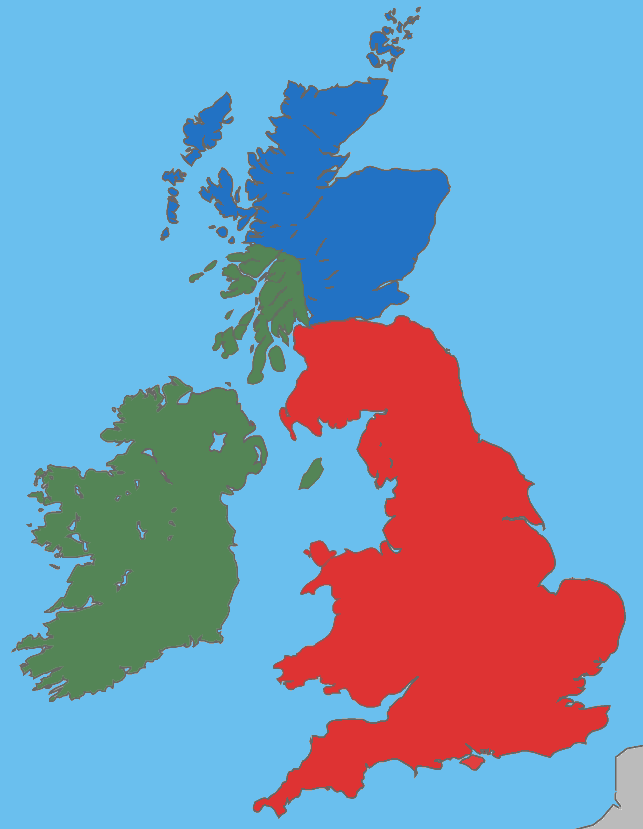
One interesting parallel with our culture is that the Picts were not Gaels. They were not Celts, but from a people who predated the Gaels in Scotland. A very ancient Atlanto-Mediterranean people. The vast majority of Scotland--or as the Romans called it: "Caledonia"--was their domain at this point. Gaels, originally from Ireland, occupied the far west end of Caledonia. Therefore, there is an interesting parallel to our culture with the very ancient Euganei people, and the Celto-Gaulish people who arrived later; and with the Euganeians and the Cisalpine Gauls both opposing the Romans. So I suppose that a Scottish person could take pride in both their Pictish and Gaelic heritage in the same manner that we would take pride in both our Euganeian (ancient Camunnian) and Gaulish heritage.

Pict homeland in blue
I thought that the acting and cinematography were very good. It was a particularly violent movie, and the characters reflected a world in which life was not worth much. In other words, they appeared like people who knew that they could die at any time. There wasn't much time for sentiment as the mortal struggle continued right to the very end. The mountainous Caledonian landscape was portrayed as rugged and beautiful. I would guess more beautiful, just in terms of the landscape, than it is today. For one thing it was more forested in ancient times; and inhabited by an equally rugged people. Most of the scenery appeared to be of the Scottish Highlands, or at least was intended to be. It was wonderfully dark, gloomy, cold, and wet. I would say that the Picts reminded me of the ancient Camunni.

Arianne
With all the good acting and characters, one which stood out with me was the character of Arianne (Emogen Poots), an exiled Pictish woman, thought to be a witch, who risked her life to help several Roman soldiers. She reminded me, very plausibly, of a beautiful, rugged, and self-sufficient young woman; both dainty and tough. She seemed to have managed a positive outlook despite a very rough life; which I found inspirational. Arianne, with her dark green dress, somehow reminded me more of a Welsh woman; however, Emogen Poots is actually English. The Romans in her home seemed to be taken in with her self-determinism and hospitable manner, and showed a great respect for her. While I'm on the subject, the movie portrayed a couple of Pictish warrior women, which I believe is historically accurate. I'm not sure about the Norse or Germanic peoples, but Celts and other ancient cultures did have a few of the stronger females serving as warriors.

The movie is based on the true story of the disappearance of the Roman Ninth Legion. A legion recruited in Roman Hispania (modern Spain/Portugal), and sent to Roman Britannia. It should be noted that the Roman Empire never conquered Pictish Caledonia or Gaelic Hibernia (Ireland). In reality, the Picts were the protagonists. They had every right to defend their homeland. I definitely recommend this movie. By the way, a "Centurion" was a Roman officer.

.

Tuesday, October 25, 2011

“Patihi, Patahé!” The Camuni of Brescia in Monongahela City: Part III


On Saturday, while attending the Stanford-Washington college football game, someone pointed out to me that #5 on the sidelines of the Washington Huskies football team was freshman quarterback Nick Montana; son of legendary NFL quarterback Joe Montana. Near the end of the game, he was able to take some snaps; and it occurred to me the article I had found regarding the immigrants from the Camunian Valley who had settled in Monongahela, Pennsylvania, and possibly the most famous Camunian descendant Joe Montana. I thought it was time that I entered it here.

The author, and historic preservation consultant--Terry Necciai--did a great job researching and putting that article together. It was short, but touched upon all the major elements of the Camunian and Brescian Tri-Valley heritage. Maybe the one exception was Beretta Firearms, in continuous business in Val Trompia since 1526; and possibly the actual inventor of the "hand-held cannon" itself, but it was a fascinating read nevertheless.

One interesting coincidence is that Monongahela City is called "Mon City," and in the Val Camonica, the town and comune of Monno was named "Mòn" in the Camunian dialect. Perhaps more coincidental than that are the three-letters "MON" in "ca-MON-ica"; in relation with their settling largely in one city... "Mon City." I don't know, I think that's quite a coincidence in itself, considering that it was the one city in North America that they settled in... in relatively large numbers.

I can see from further reading that we need to cover more material regarding the Monongahela area and it's history. Naturally, it would be great if Camunian descendants from the Monongahela region could hook up with us here, and we could connect with a lot more of our history. I suspect that most of our history would center around the Great Lakes region, and from my own research, it appears that the Pacific Northwest is another area to look at.

It was so interesting to actually learn a little about how Camunians, in an area where they had a large population, interacted with people from other cultures. The greeting "Patihi, Patahé" really captured the spirit of this, from a rough existence in Western Pennsylvania. It was curious, as the author stated, that this phrase is not well-known in modern Brescia/Valcamonica. Apparently, this could be explained from another century-plus of the Italian language overriding the local Brescian and Camunian dialect.

If you happen to be of Camunian ancestry from the Monongahela area, or elsewhere on this continent, feel free to connect with us! We're really more of a larger family clan, than "hyphenated Americans." Remember, all of our Camunian ancestors, yours and mine, were practically "family." So whether we live in Monongahela, Pittsburgh, Montreal, Seattle, Sacramento, or Denver; we're like long lost cousins.

~Patihi, Patahé~

.