Showing posts with label ancient Romans. Show all posts

Tuesday, February 21, 2023

Second Punic War: Battle of Insubria

Battle of Insubria

The Battle of Insubria in 203 BC was the culmination of a major war, carried out by the Carthaginian commander Mago, brother of Hannibal Barca, at the end of the Second Punic war between Rome and Carthage in what is now northwestern Italy. Mago had landed at Genoa, Liguria, two years before, in an effort to keep the Romans busy to the North and thus hamper indirectly their plans to invade Carthage's hinterland in Africa (modern Tunisia). He was quite successful in reigniting the unrest among various peoples (Ligurians, Gauls, Etruscans) against the Roman dominance.
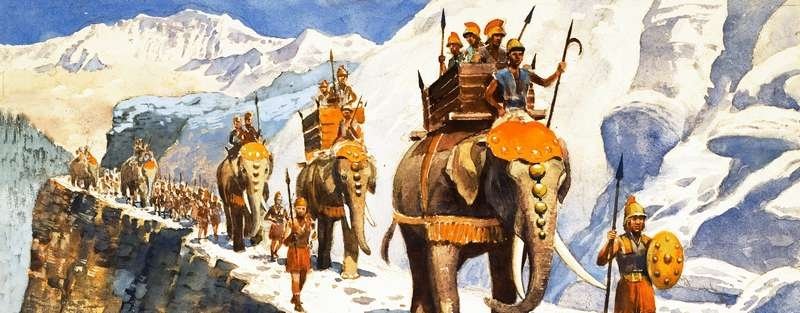
 

Hannibal famously crossing the Alps with elephants

Rome was forced to concentrate large forces against him which finally resulted in a battle fought in the land of the Insubres (Lombardy). Mago suffered defeat and had to retreat. The strategy to divert the enemy's forces failed as the Roman general Publius Cornelius Scipio laid waste to Africa and wiped out the Carthaginian armies that were sent to destroy the invader. To counter Scipio, the Carthaginian government recalled Mago from Italy (along with his brother Hannibal, who had been in Bruttium until then). However, the remnants of the Carthaginian forces in Cisalpine Gaul continued to harass the Romans for several years after the end of the war.


The Carthaginians invading Rome from the north--which occurred numerous times during the seventeen years of the Second Punic War--seems so improbable. They would have had to to have transported many elephants and tens of thousands of troops over the Strait of Gibraltar, moved north through mountainous Iberia, over a part of the eastern slopes of the Pyrenees, along the coast of southern Gaul, then in a northern direction along the edge of the Alps, then through whatever Alpine passes they could, and finally down into the Po Valley. Apparently they traveled as far east as almost to Lake Garda before turning back west, as the eastern side was Roman territory. All the while maintaining and providing food and water for the elephants, as well as food and water for the troops. Apparently they were well received by the disgruntled Gauls, Ligurians, Insubres, Etruscans, and others. It was almost like a who's who of Rome's enemies in one place. The Carthaginians used the same strategy as the Conquistadors later used in conquering the Aztecs and Incas, in inspiring their enemies' old enemies into action as allies.
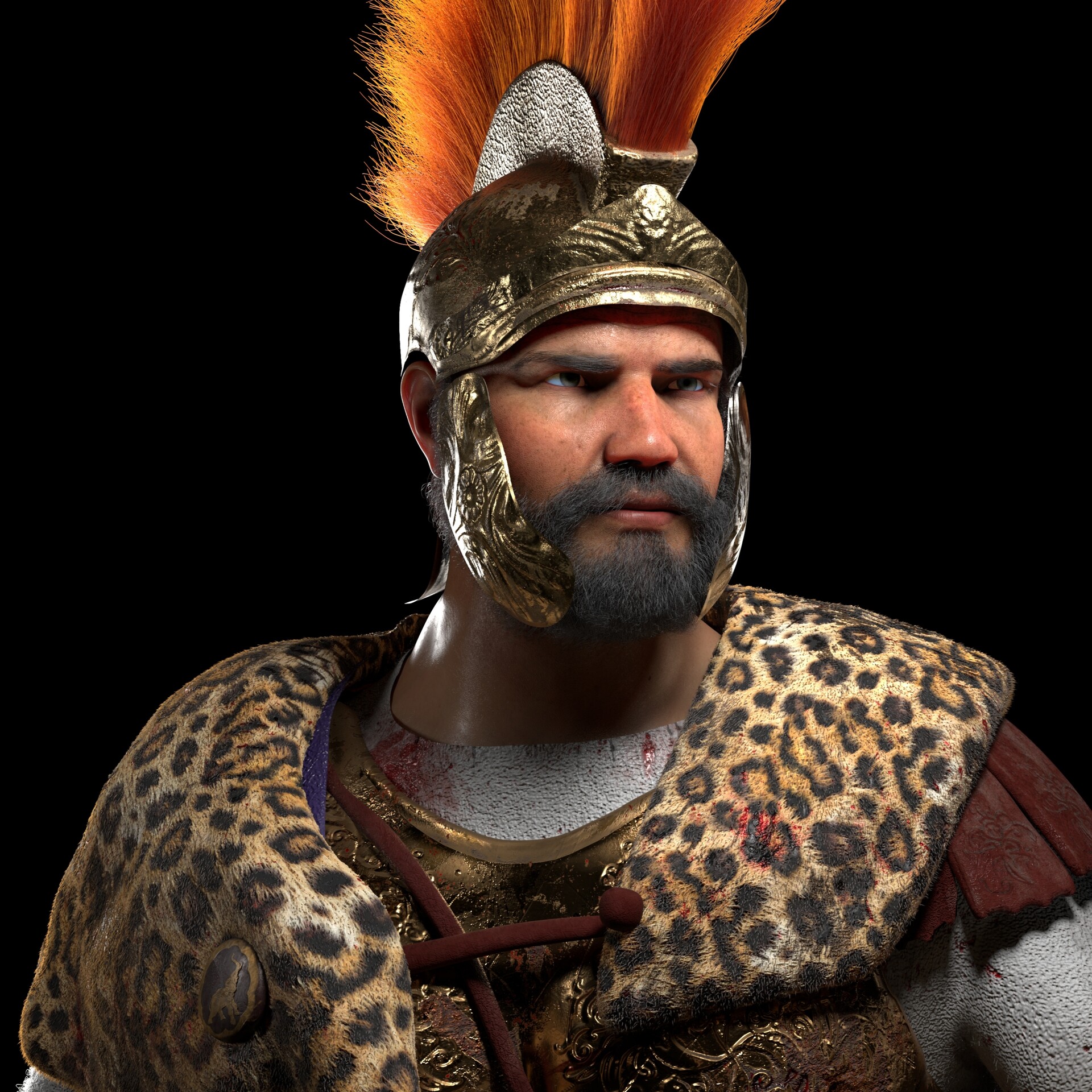

Artwork of Hannibal, although this battle was led by his brother Mago


On a side note, the elephants were of a now extinct species called the "North African forest elephant," which was much smaller than the tropical African elephant we know of today. They actually gave the elephants large quantities of alcohol to spur them on and to rage in battle! This battle took place near Mediolanum (Milan today), in the land of the Gaulish tribe the Insubes, whch had not yet been conquered by the Romans. Most historians place the number of Carthaginian troops at 21,000, but some believe that the total forces of the Carthaginians and their allies to have been as high as 30,000, with 7 elephants. Mago's brother Hannibal had brought many more over the years in different battles. On the Roman side, there were four legions plus their allies, which was approximately 35,000 troops, and I presume an additional advantage in some heavy state of the art weapons. The Punic War was a lot more than some simple skirmish someplace. It was Rome vs. Carthage, two superpowers! This was the United States vs. the Soviet Union sixty years ago!


The battle in Insubria

In 203 BC, the time came for decisive action. The proconsul M. Cornelius Cethegus and the praetor P. Quintilius Varus led an army of four legions against Mago in a regular battle in the Insubrian land (not far from modern Milan). The description by Livy in his "History of Rome" (Ab urbe condita) shows that each of the opponents deployed their forces in two battle lines. Of the Roman army, two legions were in the front, the other two and the cavalry were left behind. Mago also took care for a possible reverse, keeping in the rear the Gallic levy and the few elephants he had. Some modern estimates put his overall strength at more than 30,000.


The course of the battle showed that the first Carthaginian line performed better and the Gauls were less reliable. From the onset, the Romans made futile attempts to break the enemy's resistance and were pressed hard themselves. Then Varus moved the cavalry (3,000 or 4,000 horsemen), hoping to repulse and confuse the Carthaginian lines. However, Mago was not surprised and moved forward the elephants just in time.


The horses were stricken by fear and as a result the Roman cavalry was dispersed, chased by Mago's light Numidian cavalry. The elephants turned on the Roman infantry, which suffered heavy losses. The battle only took a bad turn for Mago when Cornelius brought into action the legions of the second line. The elephants were showered upon by darts, with most of them falling, the rest were forced to turn back against their own ranks. Mago ordered the Gauls to stop the Roman counter-attack, but they were routed.


According to Livy, all ended with a general retreating of the Carthaginians, who lost up to 5,000 men. Yet, as Livy himself states, the Romans owed their success to the wounding of the Carthaginian commander, who had to be carried away almost fainting from the field because his thigh was pierced. The victory was neither bloodless, nor complete. The first Roman line lost 2,300 men, and the second also took casualties, among them three military tribunes. The cavalry was not spared either, and many noble Equites were trampled to death by the elephants. During the night Mago withdrew his forces to the Ligurian coast, conceding the battlefield to the Romans.


Carthage was the most powerful rival in Rome's history, which is why the Romans eventually made certain to absolutely flatten Carthage. This wasn't their usual policy. This war lasted so long that it took up a major part of the lives of it's generals. Mago started out in the lower ranks, and distinguished himself during Carthage's defeat of the Romans in the Battle of the Trebia fifteen years earlier, and had become a general by the Battle of Insubria. To put that into perspective, someone forty years old was really considered rather up in years at that time. Also, the Battle of Trepia was the first major battle of the Punic Wars, and it pitted 40,000 Romans vs. 40,000 Carthaginians along the Trebia River, in either Liguria or Emilia.

To lose that major battle, and then to overcome Carthage, displayed the indomitable fighting spirit of the Romans. Carthage could very well have won the war and changed history, in the same manner as if the Soviets had defeated the Americans sixty years ago! Carthage was a Phoenician civilization, so Carthage to Phoenicia at this time would have been the same as what America was to Great Britain two hundred years ago. The Punic Wars were also like World War II, in that the battles were fought in all sorts of different locations and environments.


'Temple of Venus and Rome' (artist unknown)

For Mago the setback was severe, considering what gains a victory would have brought.

The Romans were left in command of the Po Valley and all hopes for a repetition of the events from the beginning of the war faded.

It is certain that for five years after the end of the Second Punic war the Romans had to fight the remnants of the Carthaginian forces in Northern Italy.

Mago's defeat in 203 BC had marked one of the last attempts to preserve the independence of this region from the Roman advance.

.

Saturday, December 25, 2021

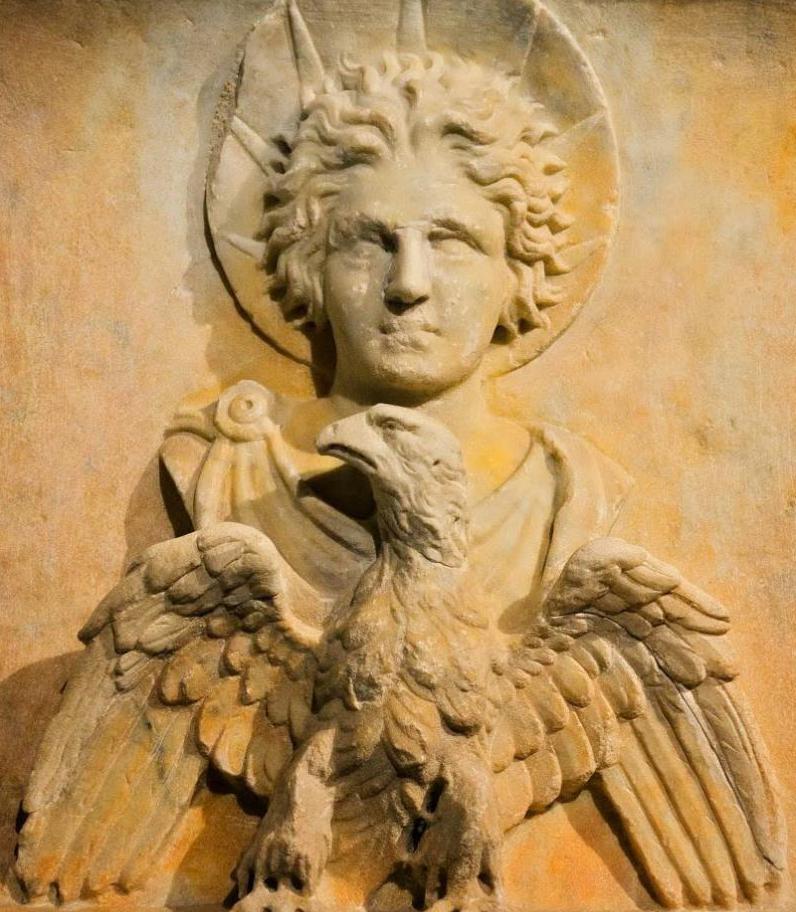
Winter Solstice 274 CE: Roman Temple to Sol Invictus ("the Unconquerable Sun") is dedicated by Emperor Aurelian

Temple of the Sun (Rome)

The Temple of the Sun was a temple in the Campus Agrippae in Rome. It was dedicated to Sol Invictus on December 25, 274,[1] by the emperor Aurelian[2] and funded by spoils from his campaign against Palmyra. It was the fourth temple dedicated to the god in Rome – the other three were in the Circus Maximus, on the Quirinal Hill and in Trastevere.[3] If still in use by the 4th-century, it would have been closed during the persecution of pagans in the late Roman Empire.

It is believed that the temple was already in ruins by the sixth century, as eight of its porphyry columns were apparently sent to Constantinople at some point to be used in either the construction or the rebuilding of Hagia Sophia during the emperor Justinian's reign.


************


This temple was dedicated when the noonday sun was first observed to begin its return northward. The date of this dedication was later used by Christians as the date for Christmas.


Sol Invictus


************


.

Tuesday, May 26, 2015

Ancient Camunian petroglyph standing stone - 3,000 BCE

I couldn't find much information about this standing stone. Apparently it was carved and erected by the ancient Camunni tribe somewhere between the 2nd and 3rd millennium BCE. Evidently it was relocated to a museum, which appears to be the Teglio Antiquarium Tellinum (Archaeological Museum). The location was said to be Cornal, Val Camonica; although it wasn't clear as to whether or not this was the original location, or the location of the museum itself. It may be a very small village or more of a type of place name in the old language. The flat square stone, resembling an Odinic runestone, was described as an "idol statue with graffiti."


I feel a bit cheated, since this a beautiful very ancient artifact, and I want to know more about it. The "graffiti" looks something like a labyrinth, which was an important symbol to the Camunni. It may be of something else, although it's not clear. It does look very interesting and meaningful. It's at least as thought provoking as one image of an ancient Camunnian warrior doing battle with a Spartan-like helmet, sword, and shield. Remember, the Camunni weren't afraid to do battle with the Romans.

[Petroglyph standing stone in case the above link doesn't hold]


1937 National Socialist expedition to Val Camonica

The Ahnenerbe was an institute in Nazi Germany purposed to research the archaeological and cultural history of the Aryan race. Founded on July 1, 1935, by Heinrich Himmler, Herman Wirth, and Richard Walther Darré, the Ahnenerbe later conducted experiments and launched expeditions in an attempt to prove that mythological Nordic populations had once ruled the world.

In 1937, the Ahnenerbe sent the archaeologist Franz Altheim and his wife, the photographer Erika Trautmann, to Val Camonica, to study prehistoric rock inscriptions. The two returned to Germany claiming that they had found traces of Nordic runes on the rocks, supposedly confirming that ancient Rome was originally founded by Nordic incomers.

Wikipedia displays the following image as an example of Camunic runes in Val Camonica. What is interesting is that--despite the fact that the Camunni were an Alpine/proto-European people, and not Teutonic--the ancient Camunic alphabet is made up of some symbols which appear to be of Teutonic origin. For example, the Life rune and the Death rune (see letter "Z"). Although some of the Norse runes actually have their origin in the Italian peninsula, those two particular runes are of Norse origin. Also, there's a type of "double-Life rune" as well (see letter "S).

If you compare the runes from the Camunic alphabet above to the Teutonic/Odinic runes, clearly some are the same. For the record, the Camunic alphabet is from the first century BCE in the Val Camonica and the Valtellina. Although it can be confusing, some of these ancient symbols moved around; perhaps via the old trading routes. Although I believe that the National Socialists got the eastern Teutonic origins--including very ancient symbology--largely correct; the idea of "Teutonic Romans" was an embarrassing falsehood. 

The Romans would seem to have been primarily a shorter, heavy-boned Alpine type with true-Mediterranean admixture. This is why the old statues didn't particularly appear to be Mediterranean; for example, with Roman noses. I use the term "Alpine" loosely, since I'm referring to a more widespread stock 3,000 years ago.

.

Monday, August 11, 2014

The Arctic Home in the Vedas: Part 19 - "Sun vs. Saturn"


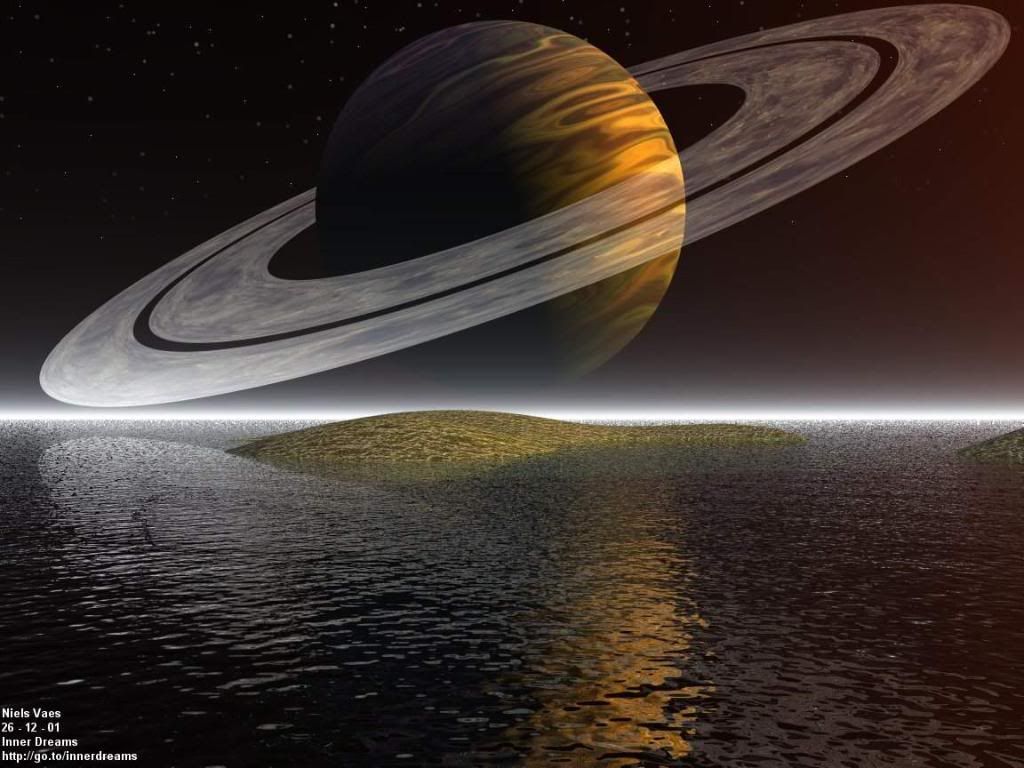
In the very ancient world, largely in the Middle East, there were two major competing religious cults. This would have been from about 15,000 years ago to the time of the Sumerian civilization (today Iraq), and up to the time of the Aryan civilization (today Iran). Prior to about 15,000 years ago, there were literally two stars in our sky: The Sun and Saturn. Saturn was apparently the closer and brighter of the two, and lit up the northern sky, and the Earth's North Pole was not only habitable, but light twenty-four hours a day during the "Golden Age." I suspect that Saturn, which is today a dwarf star, was only brighter from the perspective of northern peoples; and was probably a bit hazy.

As discussed before, both the six-pointed Hexagram (today, the "Star of David) and the Pentagram (today used as the symbol of Wicca and other similar groups) were symbols representing Saturn then. Both symbols were Sumerian, and both are literally found on Saturn itself! How that could be is one of the great questions of human existence, and speculating would take away from the facts here. The "Talisman of Saturn" and other similar coin-like artifacts feature the Pentagram on one side and the six-pointed Hexagram on the other. The Aryan civilization was a "Sun cult," and used symbols of the Sun.. such as Swastikas and the Black Sun. The National Socialists were aware of this, and adopted some of this symbolism. As stated many times here, the real "Aryans" were a mix of true-Mediterranean and pure Teutonic; which would make them Indo-European, but not Germanic, Indian, Iranian, etc. This is about ancient cults, not necessarily racial or ethnic types.


There were sixteen Sun-cults in that general region over thousands of years that we know of, all with the same astrotheological/mythological theme. The ancient Egyptian religion was number fifteen, with the god Horace representing the Sun; and number sixteen was Christianity, with Jesus ("the Son"; "the light of the world") allegorically representing the Sun.

Judaism actually began as an ancient Hebrew Saturn-cult, and the six-pointed Hexagram wasn't chosen as its symbol a millennium ago by accident. There are some very negative things written in the Talmud regarding Jesus, but that didn't have anything to do with any man. It was common lashing out against a rival Sun-cult. The Christian Sun-cult lashed back with a depiction of "Satan," which was just another name for "Saturn." Most Christians and Jews today know nothing about this. It wasn't Christians vs. Jews, it was Sun-cult vs. Saturn cult. Naturally Satanism is a Saturn-cult, and Satanic groups use an inverted Pentagram.

Islam developed later, and clearly originated as a Saturn-cult. The Islamic black cube is a Saturnian-Hexagram, and the six-pointed Hexagram as-well-as the Pentagram are used. The Islamic state of Morocco features a Pentagram on its national flag. There are even Mosques with the "Star of David" featured on the outside front. When looking at all of these institutions, and how they've interacted over history, you can get a glimpse of the Sun-cult vs. Saturn-cult phenomenon. Saturday and Sunday? Yes, they mean "Saturn's Day" and "Sun's Day."

The pre-Roman Italian peninsula was known as "Saturnia." Not surprisingly, one of the main Roman festivals was "Saturnalia," which was three days to honor the deity Saturn from Roman mythology. Part of the celebration was a human sacrifice at the Temple of Saturn. Wikipedia: "In Roman mythology, Saturn was an agricultural deity who was said to have reigned over the world in the Golden Age...." Bingo! That's it. The ancient legends, such as that of "Hyperborea," were based on reality. See thunderbolts.info and 'Symbols of an Alien Sky' for the scientific proof. The Roman Catholic Church has maintained its Saturnian roots; while Protestants broke away as Sun-cults.


The old saying "old legends die hard" couldn't be more applicable than with the Sun vs. Saturn rivalry. These ancient cults and mystery schools are so ingrained in the world that they refuse to bury the hatchet! The "cult of Saturn" wishes to return to the "Golden Age," which sounds more like an excuse to take over. We're just expected to go along with all of this nonsense. The dramatic role of Saturn in human history has been kept a secret for a long time. The Sun-cults apparently want to make the Book of Revelation come true; while the Saturn-cults apparently want to make the Golden Age come true. How do we know that this isn't all a role-playing charade, with all the main players just play-acting their parts?


Saturn vs the Sun, Black Cube and the Saturnian Cult – Santos Bonnaci

Zen Gardner - ZenGardner.com - August 1, 2013

Here’s some terrific information you won’t come across as well strung together and condensed as this. The remarkable Santos Bonacci has many youtube clips to enjoy and learn from. That he can reel off such in depth, perceptive and detailed information is a real testament to the power of researching with a passion for Truth in full-on conscious awareness. It’s there for the having, and people like this give us all a head start in the many amazing fields of knowledge we need to become familiar with in order to better understand and heal the world we’re living in. – Zen


.

Wednesday, January 15, 2014

The Arctic Home in the Vedas: Part 14 - "Thule, Saturn, & an alternative explanation"


Thule, Saturn, & an alternative explanation: Part 3

The 80's musical track from the above video is entitled 'Hyperborea' by a German band called Tangerine Dream, which has been active from 1967 to the present. The theme song ('Betrayal') from the 1977 movie 'Sorcerer' was produced by them, as well as over sixty other film tracks. Anyway, I thought the above video captured the allure of what now seems clear to me to have been a real place; although there's no proof as of yet that it was a great civilization. At the very least, this ancient land of legend--and it's latter migrating peoples--are a big part of Indo-European history.

The "Arctic Home in the Vedas" is not just about Teutonic origins, but may say just as much about the very ancient proto-European culture. as well as the original pre-Greek and Roman Mediterranean civilizations. All three of those subraces are not given proper respect as far as their true origins. The Tarim mummies are just the tip of the iceberg. In hindsight, Bal Gangadhar Tilak was quite a pioneer; and the evidence proving him correct is mounting.

The ancient Greeks must have had periodic contact with these Teutons who were migrating outward after the last glacial movement. Perhaps some of them may even have contributed to ancient Greece and Assyria. I'm going to present this year some stunning information that may blow this thing out've the water as far as at least part of the Arctic circle being a livable place four or five thousand years ago. Much of this Greek-Teutonic contact likely occurred at the early stages of Greek civilization, where the legend developed.


This Hyperborean hypothesis seems to point to the logical location of northern Central Asia for what was probably some of the later settlements... like the Tarim Basin. It seems as though Greek conventional thinking later placed the Teutons as being from a location more like the British Isles; but they probably had it correct early on. Starting about three thousand years ago, some of these Teutons were migrating into Europe and merging with the proto-European/Alpine peoples; thus forming the "Celtic cultures." This is probably what confused them. It still confuses us today! Teutons were then associated with mary parts of the north from ancient Briton to ancient Tibet.


Hyperborea (Wikipedia)

In Greek mythology the Hyperboreans (Ancient Greek: Ὑπερβόρε(ι)οι, pronounced [hyperbóre(ː)ɔi̯]; Latin: Hyperborei) were a mythical people who lived "beyond the North Wind". The Greeks thought that Boreas, the god of the North Wind (one of the Anemoi, or "Winds") lived in Thrace, and therefore Hyperborea indicates a region that lay far to the north of Thrace.

This land was supposed to be perfect, with the sun shining twenty-four hours a day, which to modern ears suggests a possible location within the Arctic Circle. However, it is also possible that Hyperborea had no real physical location at all - for according to the classical Greek poet Pindar,

neither by ship nor on foot would you find
the marvellous road to the assembly of the Hyperboreans.


Pindar also described the otherworldly perfection of the Hyperboreans:

Never the Muse is absent
from their ways: lyres clash and flutes cry
and everywhere maiden choruses whirling.
Neither disease nor bitter old age is mixed
in their sacred blood; far from labor and battle they live.


Early sources


Herodotus

The earliest extant source that mentions Hyperborea in detail is Herodotus's Histories (Book IV, Chapters 32–36), written circa 450 BC. However, Herodotus recorded three earlier sources that supposedly mentioned the Hyperboreans, including Hesiod and Homer, the latter purportedly having written of Hyperborea in his lost work Epigoni: "if that be really a work of his." Herodotus also wrote that the 7th century BC poet Aristeas wrote of the Hyperboreans in a poem (now lost) called Arimaspea about a journey to the Issedones, who are estimated to have lived in the Kazakh Steppe. Beyond these lived the one-eyed Arimaspians, further on there were gold-guarding griffins, and beyond these the Hyperboreans. Naturally, Herodotus used to assume the location of Hyperborea somewhere in the Northeast Asia.

Pindar, Simonides of Ceos and Hellanicus of Lesbos, contemporaries of Herodotus in the 5th century BC, also all briefly described or referenced the Hyperboreans in their works.


Location of Hyperborea

The Hyperboreans were believed to live beyond the snowy Riphean Mountains which Homer first referenced in his Iliad (15. 171; 19. 358)[7] or beyond the home of Boreas.

According to Pausanias: "The land of the Hyperboreans, men living beyond the home of Boreas."

Homer placed Boreas in Thrace, and therefore Hyperborea in his opinion was somewhere to the north of Thracian territory, perhaps Dacia. Sophocles (Antigone, 980–987), Aeschylus (Agamemnon, 193; 651), Simonides of Ceos (Schol. on Apollonius Rhodius, 1. 121) and Callimachus (Delian, [IV] 65) also placed Boreas in Thrace. Other ancient writers however believed the home of Boreas or the Riphean Mountains were in a different location. For example, Hecataeus of Miletus believed that the Riphean Mountains were adjacent to the Black Sea. Alternatively Pindar placed the home of Boreas, the Riphean Mountains and Hyperborea all near the Danube. Heraclides Ponticus and Antimachus in contrast identified the Riphean Mountains with the Alps, and the Hyperboreans as a Celtic tribe (perhaps the Helvetii) who lived just beyond them. Aristotle placed the Riphean mountains on the borders of Scythia, and Hyperborea further north. Hecataeus of Abdera and others believed Hyperborea was Britain.

Later Roman and Greek sources continued to change the location of the Riphean mountains, the home of Boreas, as well as Hyperborea, supposedly located beyond them. However all these sources agreed these were all in the far north of Greece or southern Europe. The ancient grammarian Simmias of Rhodes in the 3rd century BC connected the Hyperboreans to the Massagetae and Posidonius in the 1st century BC to the Western Celts, but Pomponius Mela placed them even further north in the vicinity of the Arctic.

In maps based on reference points and descriptions given by Strabo, Hyperborea, shown variously as a peninsula or island, is located beyond what is now France, and stretches further north-south than east-west. Other descriptions put it in the general area of the Ural Mountains.


Later classical sources


Plutarch, writing in the 1st century AD, connected the Hyperboreans with the Gauls who had sacked Rome in the 4th century BC (see Battle of the Allia).

Aelian, Diodorus Siculus and Stephen of Byzantium all recorded important ancient Greek sources on Hyperborea, but added no new descriptions.

The 2nd century AD Stoic philosopher Hierocles equated the Hyperboreans with the Scythians, and the Riphean Mountains with the Ural Mountains. Clement of Alexandria and other early Christian writers also made this same Scythian equation.


Ancient identification with Britain

Hyperborea was identified with Britain first by Hecataeus of Abdera in the 4th century BC, as in a preserved fragment by Diodorus Siculus:

In the regions beyond the land of the Celts there lies in the ocean an island no smaller than Sicily. This island, the account continues, is situated in the north and is inhabited by the Hyperboreans, who are called by that name because their home is beyond the point whence the north wind (Boreas) blows; and the island is both fertile and productive of every crop, and has an unusually temperate climate.

Hecateaus of Abdera also wrote that the Hyperboreans had a 'circular temple' on their island, and some scholars have identified this with Stonehenge. This is further supported by the fact that Stonehenge has been known as Apollo's Temple since classical antiquity, and Hyperborea in Greek legend was related to Apollo.

Pseudo-Scymnus, around 90 BC, wrote that Boreas dwelled at the extremity of Gaulish territory, and that he had a pillar erected in his name on the edge of the sea (Periegesis, 183). Some have claimed this is a geographical reference to northern France, and Hyperborea as the British Isles which lay just beyond the English Channel.

Ptolemy (Geographia, 2. 21) and Marcian of Heraclea (Periplus, 2. 42) both placed Hyperborea in the North Sea which they called the "Hyperborean Ocean."


Legends

Alone among the Twelve Olympians, Apollo was venerated among the Hyperboreans, the Hellenes thought: he spent his winter amongst them. For their part the Hyperboreans sent mysterious gifts, packed in straw, which came first to Dodona and then were passed from tribe to tribe until they came to Apollo's temple on Delos (Pausanias). Abaris, Hyperborean priest of Apollo, was a legendary wandering healer and seer. Theseus visited the Hyperboreans, and Pindar transferred Perseus's encounter with Medusa there from its traditional site in Libya, to the dissatisfaction of his Alexandrian editors.

Along with Thule, Hyperborea was one of several terrae incognitae to the Greeks and Romans, where Pliny, Pindar and Herodotus, as well as Virgil and Cicero, reported that people lived to the age of one thousand and enjoyed lives of complete happiness. Hecataeus of Abdera collated all the stories about the Hyperboreans current in the fourth century BC and published a lengthy treatise on them, lost to us, but noted by Diodorus Siculus (ii.47.1–2). Also, the sun was supposed to rise and set only once a year in Hyperborea; which would place it above or upon the Arctic Circle, or, more generally, in the arctic polar regions.

The ancient Greek writer Theopompus in his work Philippica claimed Hyperborea was once planned to be conquered by a large race of soldiers from another island (some have claimed this was Atlantis), the plan though was abandoned because the soldiers from Meropis realized the Hyperboreans were too strong for them and the most blessed of people; this unusual tale, which some believe was satire or comedy, was preserved by Aelian (Varia Historia, 3. 18).

Apollonius wrote that the Argonauts sighted Hyperborea, when they sailed through Eridanos.


Physical appearance


Greek legend asserts that the Boreades, who were the descendants of Boreas and the snow-nymph Chione (or Khione), founded the first theocratic monarchy on Hyperborea. This legend is found preserved in the writings of Aelian: "This god [Apollon] has as priests the sons of Boreas (North Wind) and Chione (Snow), three in number, brothers by birth, and six cubits in height [about 3 metres]."

Diodorus Siculus added to this account: "And the kings of this (Hyperborean) city and the supervisors of the sacred precinct are called Boreadae, since they are descendants of Boreas, and the succession to these positions is always kept in their family."

The Boreades were thus believed to be giant kings, around 3 metres tall, who ruled Hyperborea.

No other physical descriptions of the Hyperboreans are provided in classical sources. However, Aelius Herodianus, a grammarian in the 3rd century, wrote that the mythical Arimaspi were identical to the Hyperboreans in physical appearance (De Prosodia Catholica, 1. 114) and Stephanus of Byzantium in the 6th century wrote the same (Ethnica, 118. 16). The ancient poet Callimachus described the Arimaspi as having fair hair but it is disputed whether the Arimaspi were Hyperboreans.


.