Showing posts with label Islam. Show all posts

Saturday, April 16, 2016

'Dracula Untold' (2014) - movie review; and the Romanians who saved Europe

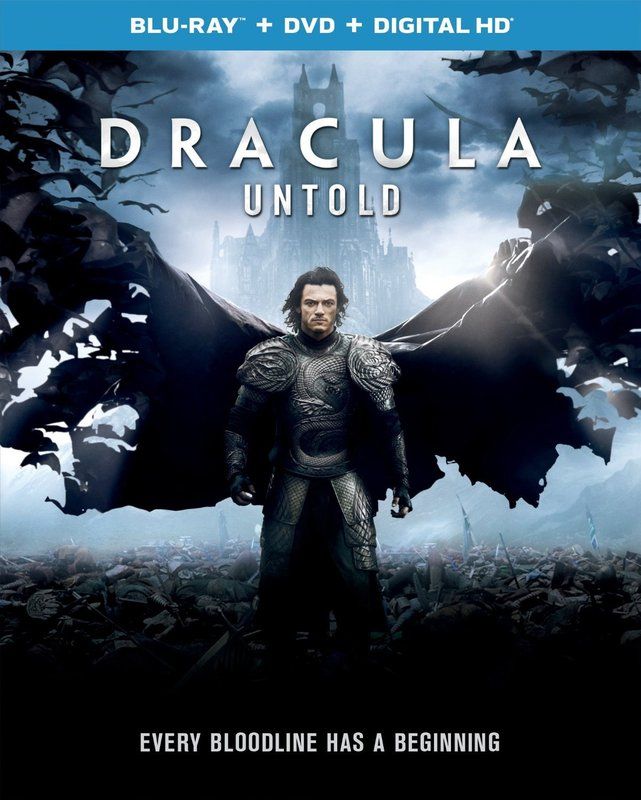
'Dracula Untold'

Dracula Untold is a 2014 American dark fantasy action horror film directed by Gary Shore in his feature film debut and written by Matt Sazama and Burk Sharpless.[4] Rather than focus on Irish novelist Bram Stoker's 1897 novel Dracula, the film creates an origin story for its title character, Count Dracula, by re-imagining the story of Vlad the Impaler. Luke Evans portrays the title character, and Sarah Gadon, Dominic Cooper, Art Parkinson, and Charles Dance appear in supporting roles.

Principal photography began on August 5, 2013, in Northern Ireland. Universal Pictures released the film on October 10, 2014, in cinemas and IMAX. The film is the first installment of the rebooted Universal Monsters Cinematic Universe,[5] followed by The Mummy in 2017.

Despite mixed critical reviews, with praise towards Luke Evans's performance and the story, and criticism directed at the characterization, Dracula Untold was a box office success grossing $217 million worldwide.

A few days ago I rewatched 'Dracula Untold', this time with the idea of examining the local Romanian legend and folklore... or even the European legend and folklore aspect of it. This can at times conflate with old pagan mythology. The overall Dracula legend is a fantasy based on combining the real historical character of "Vlad the Impaler" with old vampire folklore. I thought it was an interesting dark twist for a fantasy tale. My earlier pondering of some older native pagan tradition somehow rising to stop the Ottoman Muslim expansion had no basis in the movie or in actual history. However, it seems odd to me that Vlad Dracul was a member of an apparently Christian and "monarchical chivalric order for selected nobility" called the Order of the Dragon.
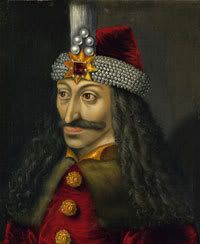

Serpentine symbolism is very seldom a part of Christianity. Serpent, dragon, or snake symbolism represents "knowledge," and is often conflated with the snake in the Garden of Eden. As to whether or not this order was a Freemasonic or Alchemical secret society, it seems possible. The Order of the Dragon used both Christian and serpentine symbolism. The society was present in Europe, especially Germany and Italy. One curious symbol is the red amulet worn by Vlad Dracul. Once I saw a plastic red Dracula amulet necklace on sale for Halloween. Illustrations of the real Vlad Dracul show him either wearing this red amulet as a necklace or as part of his royal headdress. Adding to the legend is that his name "Dracul" (House of Draculesti) sounds a little like "Draco".. such as a dragon; although I'll take that as mere coincidence.

Although extremely brutal, in many ways we must view him as a hero. He literally stopped the Ottoman Empire by becoming even more brutal than they were. The Dracula legend of popular culture, as well as his own extreme actions, have probably prevented him from attaining the status of a true hero... such as a William Wallace. He is a folk hero today in both Romania and Bulgaria. As the old saying goes "he did what had to be done." The Romanians saved Europe. Vlad Dracul was a Charles Martel on perhaps an even grander scale. The Romanians were facing a much larger and more dangerous enemy in the Ottomans. The Battle of Calugareni took place well over a century later.

Battle of Calugareni

The Battle of Calugareni was one of the most important battles in the history of early modern Romania. It took place on 23 August (13 August on old style calendar) 1595 between the Wallachian army led by Michael the Brave and the Ottoman army led by Sinan Pasha. It was part of the Long War, fought between Christian and Ottoman forces at the end of the 16th - beginning of the 17th centuries.

The whole Ottoman forces were estimated at about 100,000 men, but not all of their troops were on the battlefield at Calugareni. It seems that about 30,000-40,000 Ottoman soldiers were involved in the battle.

Michael the Brave had in total about 16,000 men and 12 large field cannon, with Transylvanian (Székely) detachments.[5] Being heavily outnumbered, Michael the Brave strategically positioned his forces near a swampy field (near Neajlov River) that would negate the Ottoman's military superiority. South of the village of Călugăreni, where the Câlniştea river flows into Neajlov river, the terrain is a muddy marsh, surrounded by forests. A narrow bridge over the Neajlov river was a mandatory pass point. The battle had three different phases.


Islam vs Christianity - 23 August 1595 Battle of Calugareni ( Part 1)

IuliCata82Romania

IULIAN ROMANIA ^^^ Battle of Călugăreni was one of the most important battles in the history of early modern Romania. It took place on 23 August 1595 between the Wallachian army led by Michael the Brave and the Ottoman army led by Sinan Pasha.The whole Ottoman force was estimated to have between 70,000 and 100,000 troops.Michael the Brave had in total about 16,000 men and 12 large field cannons.Mihai continued his attacks deep within the Ottoman Empire, taking the forts of Nicopolis, Ribnic, and Chilia and even reaching as far as Adrianople. At one point his forces were only 24 kilometers from Constantinople. The Order of Michael the Brave, Romania's highest military decoration, was named after Michael !!!


Islam vs Christianity - 23 August 1595 Battle of Calugareni ( Part 2)
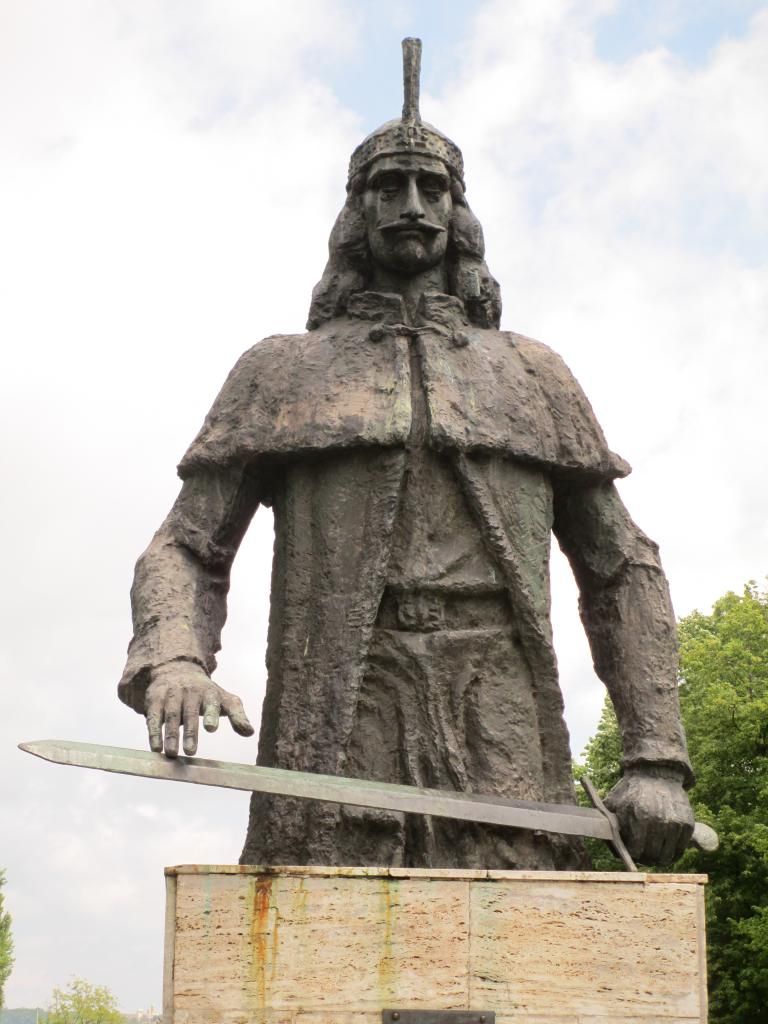


Vlad Dracul

'Dracula Untold' (2014) - movie review

The movie begins in Transylvania in 1442. The landscape was shown as dark, foreboding, and beautiful. Romania is indeed beautiful, as like an Oregon within Europe. Vlad Dracul was portrayed as the benevolent Prince of Wallachia, a forerunner of modern Romania. By his side, his wife Mirena; a strong noble character who finally dies in the soon-to-be struggle. He was entitled "Son of the Dragon," although I don't know if that is what Dracul really means; and as the "Prince of Transylvania." He grew up under Ottoman oppression, and had served as a forced conscription for the Ottomans; who had a practice of forcing regional rulers to give them young boys to train and use as cannon fodder for their own wars of expansion. I don't know how historically accurate this movie is, but I'll just go with it. He was something of a legendary warrior in his own service as a boy/young man, and had a long relationship with the Ottoman representatives who would soon invade his countryside again, particularly Sultan Mehmed whom he fought with as a conscription. They all grew up together in a sense, and now they were men.

The theme of the movie can be reflected by an interesting quote from Vlad Dracul in the movie: "Sometimes the world no longer needs a hero. Sometimes what it needs is a monster." It shows his transformation from a benevolent prince, to "Vlad the Impaler." The concept that an enemy can be so vicious that you must become like them in order to survive and defeat them. I think that's probably true. After the Ottomans returned, they demanded in no uncertain terms that the Prince hand over to them one thousand boys--including his own son--for military service to the Sultan.

Spoiler alert beyond this point!


.

.


While at first the Prince reluctantly went along with the Sultans demands, he changed his mind just as he was handing his son over to a small group of Ottomans whom he slayed all by himself. The war was on. This was similar to the dramatic scene in 'Braveheart' when the Scots finally let loose on an oppressive English Lord and a small group of his armed guard. The image of a boy finally standing up the class bully; a concept as old as mankind. I suppose you could say that any "bully" would be best served if they merely struck "fear" upon their victim, but not to the point of "desperation."

The Prince then enters a cave in the mountains where a cursed undead man, a vampire, dwells. This vampire cannot leave the cave until he can turn another man into a vampire. I don't recall all of the terms of this curse, but that's the basic gist of it. Vlad agrees to allow this vampire to kill him. He goes through a period where he is dead in the cave, then rises from the dead and leaves the cave... a clear allegorical "Jesus." However, you could also say that he allegorically "struck a deal with the Devil" as well. There is also a strong allegorical concept, shown in many movies, of an oppressed people "rising from under the ground" to face their enemy.

The deal was that he would remain "undead" with all of these dark powers for a period of three days, just as Jesus died for three days before coming back to life, and if he could avoid drinking human blood then he would return to being a moral again. If not, then he would remain undead, and the vampire from the cave would have to remain condemned to the cave. With these new powers, he could now turn into a pack of bats and fly and attack as a pack. He became almost indestructible, but could only go out when the sun went down. I took this all as to mean that the Wallachians, represented by the prince, regaining their ancient courage. This would actually be the reverse of the Christian concepts of "loving your enemies" or "turning the other cheek." There's also something of an Alchemical tie-in to all of this... "the dark arts" which were not necessarily evil, but can be used for good or evil. The symbolism of "bats" I took to mean as the resistors becoming "creatures of the night"... of which bats well represent.
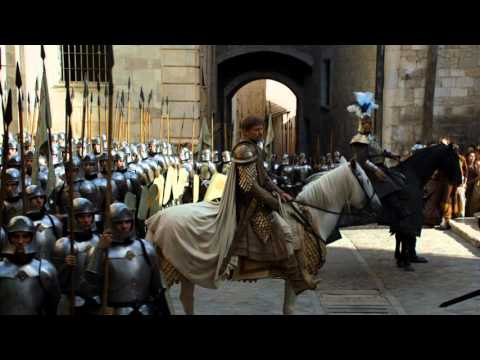


There was a reference, I think perhaps by the Sultan, of "100,000" Turks will march on Europe"... apparently in reference to an unfolding plan. After the Sultan sees a large number of Ottoman troops impaled on poles, one of the wounded soldiers presented him with a message from the Prince: "Vlad Dracul hopes that you enjoy the view." There's nothing quite like some malevolent person or force getting a real taste of their own medicine. When the full Ottoman army finally does march upon Romania, the Sultan has them wear blindfolds so they cannot see all the impaled Turks on sticks. Apparently this sight really did instill fear upon the Ottomans at that time, but I'm not sure if they actually wore blindfolds.

After creating some new vampires from people who were dying anyway, the Prince and the Walllachians went on to defeat the Ottoman army. This allegory of "vampires" I think represented, as like with the "werefolf" legend, people who transform themselves in spirit into wild animals... often in order to face an enemy. The Vlad Dracul of the movie, as well as the other vampires, finally allows himself to die in the sunlight... becoming a martyr. It sort've reminds me of the old saying "it's not always the popular guy who gets the job done."

.

Monday, May 11, 2015

'The 13th Warrior' (1999) - movie review

'The 13th Warrior' (Wikipedia)

The 13th Warrior is a 1999 American historical fiction action film based on the novel Eaters of the Dead by Michael Crichton and is a loose retelling of the tale of Beowulf. It stars Antonio Banderas as Ahmad ibn Fadlan, Diane Venora and Omar Sharif. It was directed by John McTiernan. Crichton directed some reshoots uncredited. The film was produced by McTiernan, Crichton, and Ned Dowd, with Andrew G. Vajna and Ethan Dubrow as executive producers.

While rewatching this film a few days ago, it just hit me. This film was a reversal of 'Lawrence of Arabia. Instead of a Western gentleman and adventurer aiding the "good Muslims" against the aggression of the "bad Muslims" in a foreign exotic land, it was a Muslim gentleman and adventurer aiding the "good Vikings" against the "bad Vikings" in a foreign exotic land. Antonio Banderas plays the role of Ahmad, who after a social-political dispute in Baghdad, is exiled to serve as an ambassador to "northern barbarians" (Vikings) who were apparently living somewhere in northwestern Asia. Omar Sharif plays the role of a senior official who teaches him the ropes. An old Viking woman with a raspy voice is a type of magical seer, and further adds to the idea of the Northmen as strange and exotic.


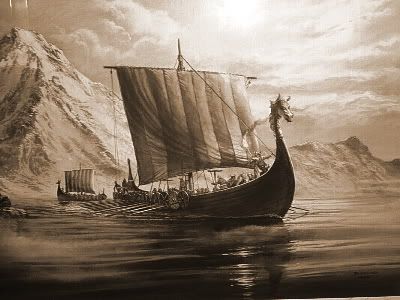
The Vikings are portrayed as unkempt, crude, and gruff, while Ahmad was well dressed, gentlemanly, and well spoken. Although it wasn't really clear to me, after an incident he is selected as a non-Northman "thirteenth warrior" by the seer when news arrives that their particular Viking tribal home is under attack. They embark back north by ship. Ahmad soon learns their language. To Ahmad, rich dark colors, the northern climate, heavy clouds, mountains, and forests would have seemed exotic and inhospitable. The architectural designs and Odinic totems was impressive. For the record, an Odinic death prayer was portrayed in the movie.

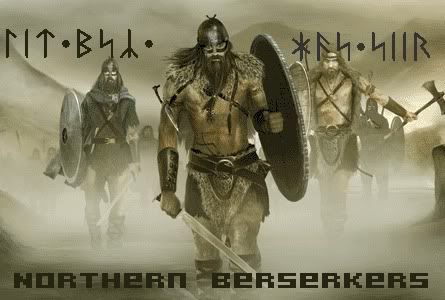
After repelling an attack by the enemy tribe, powerful men who were adorned with the heads, furs, and claws of bears, Ahmad soon gains respect after displaying his expertise with the sword and horse. He meets a Viking woman, whom is his semi-romantic interest throughout his stay. During the first battle, he bravely saves a little Viking girl, which further raises his stock with the group. The beastly cannibalistic enemy tribe reminded me of the accounts by the Romans of a particular people whom I think they referred to as the "Scritobini" in Scandinavia. I actually made a video about them a few years ago, in an expression of primal dark imagery, entitled Scritobini Dawn of Europe.

.

Spoiler alert beyond this point

.

.

.

.


After a long struggle, the enemy is defeated. The tribal chieftain Buliwyf kills the fearsome leader of the enemy tribe in battle, although he is terminally poisoned in the process. His character was based on the Beowulf legend. The dying Buliwyf, wants the story of this struggle told so he would be remembered. Ahmad, the allegorical "Lawrence of Arabia," then returns home by ship. According to this fictional account, Ahmad writes Buliwyf's story when he is back in Baghdad. Actually, there are some old texts about the Vikings by Islamic historians and writers.

This movie was not a financial success, likely partly due to the costs of the sets  It's a good enough movie, but probably one that you would generally watch only once.

.

Sunday, March 15, 2015

The Cult of Saturn: Part III


Variations of this Saturnian-based culture may have migrated from a possible Atlantean group of civilizations which gave way to some type of cataclysm, to Sumeria, to Phoencia, and to the early “Mystery Schools” of occult and Alchemic knowledge. This was to have included Egypt, Greece, Rome, to India and China, and to the Druidic cultures of northern Europe. Saturn worship was to have replaced the pre-Olympian Goddess Hecate in ancient Greece. Hinduism, Shintoism, Nepalese and Tibetan Buddhism all apparently have Saturnian symbolism. Apparently the Etruscans referred to Saturn as the “Wheel of Heaven,” the Gaels as Satarn, and the Bantus as Isateni. The mystery schools developed into the Templars, Freemasonry, Rosicrucianism, and similar systems.

Even if one were to examine the ancient Roman knowledge of the planets, one could ask how they were so familiar with Saturn, Mars, or Venus? They didn’t have telescopes. Planets appear to us as just stars when observing the night sky with our eyes, binocular, or telescope. In fact, the archaic name for the Italian peninsula was “Saturnia.” The Roman festival “Saturnalia” is said to be a return to “Saturn’s reign”… aka The Golden Age. The Catholic Church took on after the Roman Empire fell, and the institution features much Saturn symbolism, as well as a mixture of other ancient symbols. The Catholic Church once engaged in a bitter rivalry with the Templar/Freemasonic groups, despite the fact that both are obsessed with Saturn; and it could be said that this is another constant within these Saturn societies… blood feuds between them.


I should have mentioned, along with the many Biblical words which originate with the Phoenician God “El” rootword... the word “Hell.” An obvious attempt by the Sun cult to project negativity onto the Saturn cult, and the other side has caught up quite a bit in recent years. Also confusing is that there can be opposing camps within certain cultures and regions. For example, the ancient Egyptian word “Set” means Saturn. The Satanist Aleister Crowley appears to have delved into the Saturnian magical aspect of ancient Egypt. In other words, there seems to have been both Sun and Saturn cults in Egypt. There is a modern Satanic society called the Temple of Set.

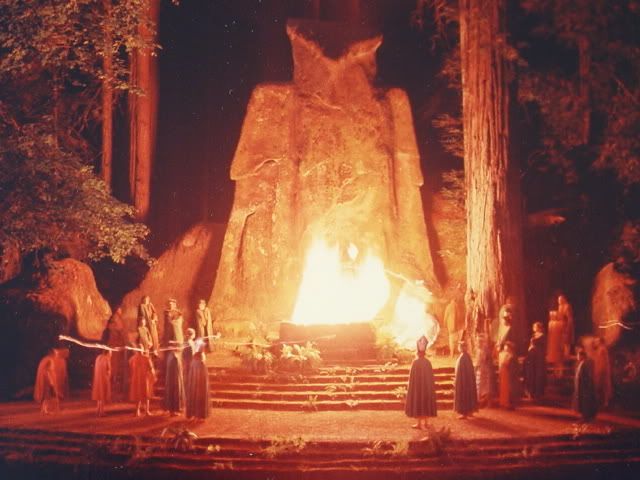
According to the Christian Bible, the Earth is six-thousand years old; or, perhaps that really meant that the star Saturn fizzled out six thousand years ago, and ushered in the “Sun only era” from a Sun cult point of view? The modern Bohemian Club is very likely Saturnian, and uses an amalgamation of symbols from the ancient Middle East. For example, they worship a forty-foot stone owl deity called “Molech” (mo-EL-ech) in ancient Babylon. Black and purple are Saturnian colors, and the priesthood of ancient Phoenicia-Canna wore black and purple robes. This is why judges and Catholic priests always wear black robes. There are probably non-Saturnians who wear black robes, but this is why the Saturnian societies wear them… because of, at the very least, the Saturnian traditional aspect.


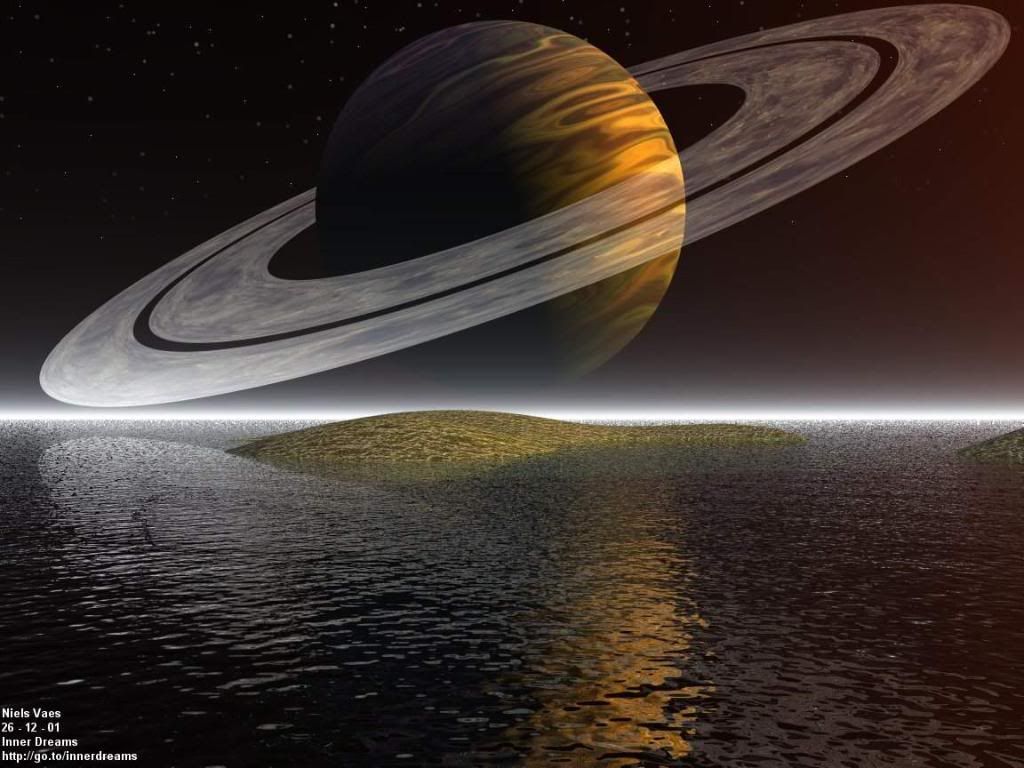
The black and white checkered pattern, usually a floor pattern, is obviously a Saturnian symbol. This black cubed pattern is featured on the floor of Masonic lodges, and other Saturnian societies. I noticed while watching the recent horror movie 'Annabelle', a terrifying scene in a basement of an apartment building where the floor was this black and white checkerboard pattern. A basement floor would very unlikely be of this pattern. The filmmakers had a definite point to make. The black square or cube is a reflection of the hexagram located on the north pole of Saturn. When you graduate, you must wear a Saturnian square marter board on your head, with a matching robe. At the very least, this is a remnant of the Saturnian tradition, if not something more. The dollar bill has a little owl up in the right corner. The ancient symbol of a snake eating its own tail is Saturnian, and was present in many different cultures. The snake or serpent represents wisdom, and the Sun cults were always trying to wipe it out for the sake of piety.. often with eagle symbolism representing male energy over female wisdom. I can’t truly say that I am convinced that either side is “good.” Why can’t someone just like both the Sun and Saturn?

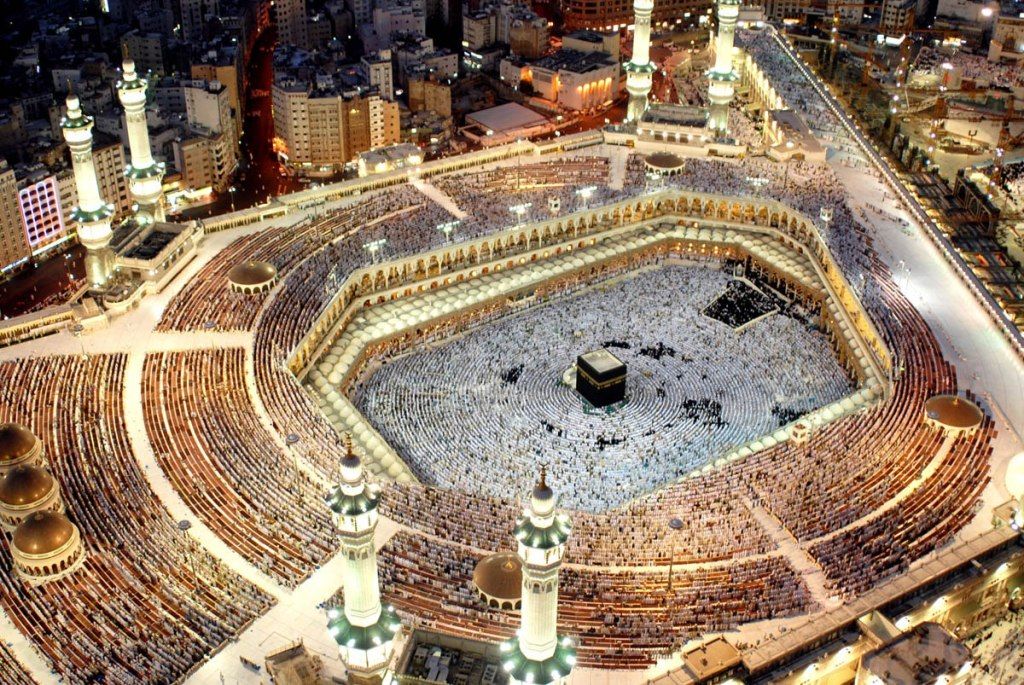
The black cube symbol is big in Islam. When hundreds of thousands of Muslims circle the giant black cube in Mecca, this is a reenactment of the storm which circles the hexagram or “cube” on the north pole of Saturn. Although Islam is overwhelmingly Saturnian in origin, the Islamic color is green. Green is the color associated with the planet Venus, and Islam uses a “Venusian crescent” as its chief symbol. This is not the Moon, but it’s how Venus usually appeared in the sky ten or fifteen thousand years ago during The Golden Age. The geometric “storm” on the north pole of Saturn is red, and the “ring of fire” or “rings” are a part of Saturnian symbolism. Rings may also represent the rings of Saturn. The symbols of ear rings, wedding rings, and crowns originate from the Saturnian tradition. I’m generalizing, since there are probably circles and rings which may not be Saturnian.

.

Friday, August 15, 2014

The problems with Atheism


[8-26-14: I should have mentioned before that the above video is a Polytheists reaction to an Atheist (Richard Dawkins). A point of view which I haven't seen a lot of; from YouTuber OtherGonzo.]

You may have seen them, perhaps on YouTube. Bill Maher, the late Christopher Hitchens, Richard Dawkins, Sam Harris, Matt Dillahunty, the late George Carlin, "the Amazing Atheist," and others. They seem to have it all figured out, “religion is the problem with the world.” They have an answer for everything. “Christianity is immoral,” “Mother Theresa did more harm than good," etc.; they’ve obviously done a lot of thinking. Denouncing all religion as make-believe, they proclaim that they are “of science,” and that it’s time for mankind to let go of all fairy tales and progress as a species into the future... into "the age of reason." But is it really all just that simple?

First off, if the powers-that-be wanted to put the screw to them, they could be marginalized overnight. Therefore they certainly have some degree of system approval. In other words, they are politically-correct. That fact doesn’t intrinsically ruin their argument, but it should at least diminish the smugness of a Sam Harris… who really gets a kick out’ve himself as he bucks the system with his brand of wit, humor, and intellect. In reality, he or Bill Maher are not “bucking the system.” Atheism, if not popular, is system approved… and becoming more so all the time. Because of this approval, they are on the rise. Without this approval, they would be just another small faint marginalized voice trying to be heard, no matter how right or wrong they may be.

Atheists often declare that they are “of science.” What science? That’s like someone saying that they are “of religion,” “of politics,” or “of economics.” Because I have not yet heard them clarify this point, I must assume that they are “of mainstream Western science.” The “science” that—upon discovering fossils, ruins, and artifacts which cannot be placed into their established doctrines—hides them away in secret warehouses so nobody can see them. Hidden away by ego-driven careerists so they don’t have to admit that they were wrong all along. At least closed-minded religious zealots don’t hide evidence as a matter of policy!


Is an archeological dig all that different from a crime scene? In both, evidence must be carefully gathered and sifted through to find the truth. The one big difference is that in a crime scene, someone can be arrested and indicted for being caught hiding evidence! In mainstream Western science, however, this practice is considered okay. On top of this undefined “of science” logic problem for Atheists, they do ignore evidence as we will see. In this regard, Sam Harris has a lot in common with John Hagee.

Atheists seem to judge all religions or spiritual traditions upon the “Abrahamic standard.” In other words, they’re angry at Christians and Muslims, and they help mask over it by attacking every religion or spiritual tradition in the world. Abrahamic religions are not Earth-based—not “of the world”--and don’t share the scientific compatibility that most Earth-based spiritual traditions do. When Matt Dillahunty wants to express his anger for his father for cutting off all ties with him for not being a Christian… part of that expression is to attack Buddhists. Isn’t there just something inherently wrong about that? To me, that’s even worse than what his father did to him!

If these people are “of science,” why do they punish (belittle, mock, humiliate, etc.) ancient spiritual traditions which are highly compatible with “scientific progress?” In fact, these traditions have helped advance it over the ages. Isn’t there something illogical—dare I say evil--about attacking someone who is part of the apparent dynamic that you proclaim to be a proponent of? “Atheism” is often not only a word for people who are “not Theist,” but it can be a cold, blunt, and bloodless way of viewing the world... or science… because the real truth is that we most often don’t know the secrets of the universe!

Matt Dillahunty seems to generally be a nicer person than John Hagee, who I just saw on TV the other day standing on top of a building in Jerusalem proclaiming that the Chinese army will be invading Israel from the east in a couple of years in the Battle of Armageddon, etc., etc. However, even Hagee doesn’t resort to the foul-mouthed displays which Dillahunty conducts when he’s frustrated with someone who disagrees with him. Just for the record, Chuck Missler and Michael Newdow are two examples of a Christian and Atheist who are very reasonable. Also, just for the record, the YouTube Atheist "Cult of Dusty" makes some good arguments; however, he would be much more effective if every other word out've his mouth wasn't a four-letter word. Clearly the positive trend of using "alternative f-words" instead of THE F-word hasn't reached him yet.

Another problem is that for some peoples around the world, their religion or spiritual tradition IS their culture! I know, that’s a gray area sometimes, but many times they are of a benevolent and folk-based nature. What is “the culture” of Atheists? Ever hear of “Atheist music?” I know, that can also be a gray area, and perhaps we can all at least agree that Atheism is not “a culture.” Still, that brings up another problem… a non-culture attacking a culture? Even with Christianity and Islam aside, the non-culture of Atheism attacking people who actually have a culture… doesn’t that strike you as something based in jealousy? If not, why don’t they only focus on those who actually condemn them? Perhaps if they actually had "a culture" of their own, they might not have so much time on their hands to attack others so much? How can a non-culture have get-togethers? A non-demograhic demographic?

As I have stated in other posts, the true purpose of the coming Christian vs. Atheist conflict in our society, is to prevent the scientific study of Metaphysics. There is a Mount Everest of proof of a Metaphysical world! It can be measured, recorded, and tied to clear patterns using scientific method. Personally, I am infinitely more impressed with the American Society for Psychical Research than I am for the Freedom from Religion Foundation. In reality, one conducts non-biased research of Metaphysical science; and the other has an absolute vested interest in opposing any study of this most important science… even though they claim to be “of science.” How can anyone be “of science” if they’re opposing the mere study of a particular branch of science for political purposes? That's intellectual dishonesty as well. Matt Dillahunty likes to say to Christians, “the burden of proof is on you,” yet why don’t Atheists actually look at the huge amount of metaphysical evidence rather than giggle at Christian mythology? No evidence!? Where have you been!!??


Most spiritual traditions don’t operate anything like “organized religion,” yet Atheists treat them the same as the massive Christian or Muslim movements around the world. I would have much more respect for any folk-tradition—dare I say true-diversity—than I do for monocultural organizations like the Atheistic Universal Life Church, which opposes true-diversity. Atheists, like many Christians and Muslims, oppose any true-diversity.

A few well-known scientists have given their name to Atheism in recent years. However, virtually none of those individuals ever actually invented anything. They are what I would consider people who have great memorizational ability, but not truly great minds. They’re the types of people who literally hide away archeology in storage rooms because it doesn’t fit their established model of the world… and then call that “science.” Religion is not “the problem with the world.” The cause and effect from the symbiotic-relationship between closed-minded religion and closed-minded science is really the problem.

Metaphysical science should be studied without any prejudice—from Deist, Theist, or Atheist—in all scientific, corporate, and academic institutions. Consciously or unconsciously, “organized religion vs. Atheism” is the Hegelian dialect construct which is blocking the advancement of the human species.

**************************************************

8-26-14 ADDITION - Recently I left a comment in response to an Atheist to a Christopher Hitchens video which I wanted to add here:

Perhaps a welcome "slant" to counterbalance the slant that we get the other 99.7% of the time. A "slant" nevertheless. He said a few things which were not true. He stated at the end that "all religions" placed shame upon sexuality. Stunningly, wildly, breathtakingly untrue. Abrahamic religion has spent the last two thousand years stamping out every earth and fertility based native spiritual tradition.... and now as an added bonus for centuries of mass murder and genocide, the victims are expected to be judged by Abrahamic principles? "Abrahamic religion vs. Atheism" is a Hegelian dialectic by which both sides play as "thesis" against "antithesis." They're not opposites, but opposames... both at war with free thought.. and opposing even the mere study of metaphysical science while at the same time falsely claiming to embrace science. Atheism is not free thought! A true free thinker is a complex thinker who continuously listens to all evidence and continuously integrates new knowledge from all sources without prejudice. Atheists have a vested interest (aka "DOGMA") to silencing anything to do with metaphysics. That is absolutely NOT free-thought.

.

Monday, August 11, 2014

The Arctic Home in the Vedas: Part 19 - "Sun vs. Saturn"


In the very ancient world, largely in the Middle East, there were two major competing religious cults. This would have been from about 15,000 years ago to the time of the Sumerian civilization (today Iraq), and up to the time of the Aryan civilization (today Iran). Prior to about 15,000 years ago, there were literally two stars in our sky: The Sun and Saturn. Saturn was apparently the closer and brighter of the two, and lit up the northern sky, and the Earth's North Pole was not only habitable, but light twenty-four hours a day during the "Golden Age." I suspect that Saturn, which is today a dwarf star, was only brighter from the perspective of northern peoples; and was probably a bit hazy.

As discussed before, both the six-pointed Hexagram (today, the "Star of David) and the Pentagram (today used as the symbol of Wicca and other similar groups) were symbols representing Saturn then. Both symbols were Sumerian, and both are literally found on Saturn itself! How that could be is one of the great questions of human existence, and speculating would take away from the facts here. The "Talisman of Saturn" and other similar coin-like artifacts feature the Pentagram on one side and the six-pointed Hexagram on the other. The Aryan civilization was a "Sun cult," and used symbols of the Sun.. such as Swastikas and the Black Sun. The National Socialists were aware of this, and adopted some of this symbolism. As stated many times here, the real "Aryans" were a mix of true-Mediterranean and pure Teutonic; which would make them Indo-European, but not Germanic, Indian, Iranian, etc. This is about ancient cults, not necessarily racial or ethnic types.


There were sixteen Sun-cults in that general region over thousands of years that we know of, all with the same astrotheological/mythological theme. The ancient Egyptian religion was number fifteen, with the god Horace representing the Sun; and number sixteen was Christianity, with Jesus ("the Son"; "the light of the world") allegorically representing the Sun.

Judaism actually began as an ancient Hebrew Saturn-cult, and the six-pointed Hexagram wasn't chosen as its symbol a millennium ago by accident. There are some very negative things written in the Talmud regarding Jesus, but that didn't have anything to do with any man. It was common lashing out against a rival Sun-cult. The Christian Sun-cult lashed back with a depiction of "Satan," which was just another name for "Saturn." Most Christians and Jews today know nothing about this. It wasn't Christians vs. Jews, it was Sun-cult vs. Saturn cult. Naturally Satanism is a Saturn-cult, and Satanic groups use an inverted Pentagram.

Islam developed later, and clearly originated as a Saturn-cult. The Islamic black cube is a Saturnian-Hexagram, and the six-pointed Hexagram as-well-as the Pentagram are used. The Islamic state of Morocco features a Pentagram on its national flag. There are even Mosques with the "Star of David" featured on the outside front. When looking at all of these institutions, and how they've interacted over history, you can get a glimpse of the Sun-cult vs. Saturn-cult phenomenon. Saturday and Sunday? Yes, they mean "Saturn's Day" and "Sun's Day."

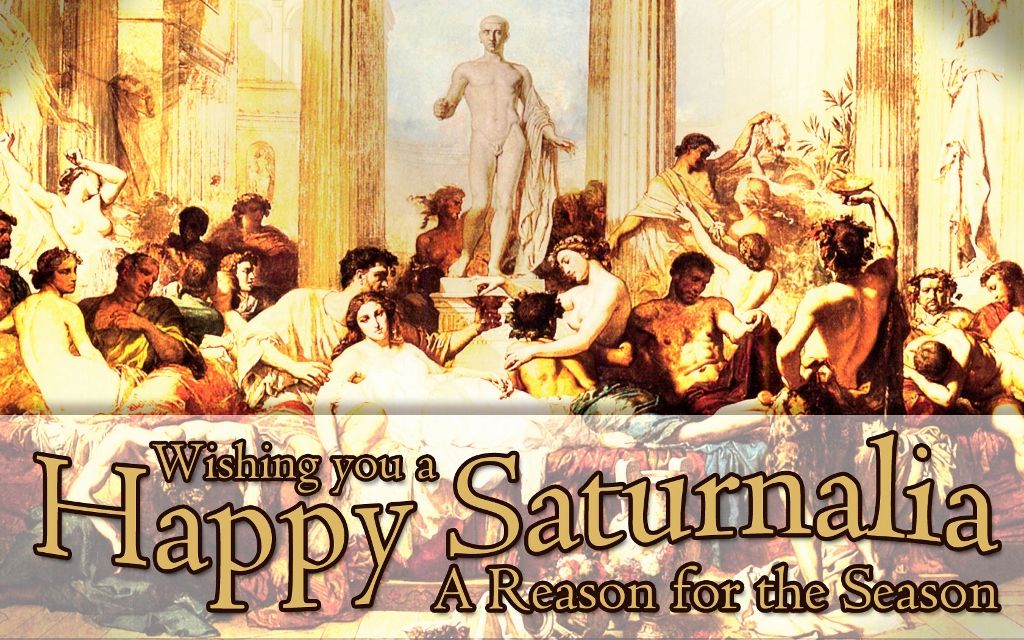
The pre-Roman Italian peninsula was known as "Saturnia." Not surprisingly, one of the main Roman festivals was "Saturnalia," which was three days to honor the deity Saturn from Roman mythology. Part of the celebration was a human sacrifice at the Temple of Saturn. Wikipedia: "In Roman mythology, Saturn was an agricultural deity who was said to have reigned over the world in the Golden Age...." Bingo! That's it. The ancient legends, such as that of "Hyperborea," were based on reality. See thunderbolts.info and 'Symbols of an Alien Sky' for the scientific proof. The Roman Catholic Church has maintained its Saturnian roots; while Protestants broke away as Sun-cults.


The old saying "old legends die hard" couldn't be more applicable than with the Sun vs. Saturn rivalry. These ancient cults and mystery schools are so ingrained in the world that they refuse to bury the hatchet! The "cult of Saturn" wishes to return to the "Golden Age," which sounds more like an excuse to take over. We're just expected to go along with all of this nonsense. The dramatic role of Saturn in human history has been kept a secret for a long time. The Sun-cults apparently want to make the Book of Revelation come true; while the Saturn-cults apparently want to make the Golden Age come true. How do we know that this isn't all a role-playing charade, with all the main players just play-acting their parts?


Saturn vs the Sun, Black Cube and the Saturnian Cult – Santos Bonnaci

Zen Gardner - ZenGardner.com - August 1, 2013

Here’s some terrific information you won’t come across as well strung together and condensed as this. The remarkable Santos Bonacci has many youtube clips to enjoy and learn from. That he can reel off such in depth, perceptive and detailed information is a real testament to the power of researching with a passion for Truth in full-on conscious awareness. It’s there for the having, and people like this give us all a head start in the many amazing fields of knowledge we need to become familiar with in order to better understand and heal the world we’re living in. – Zen


.