Showing posts with label Greeks. Show all posts

Tuesday, June 3, 2014

‘300’ (2006) – movie review


I don’t just review any movie. I try to stay somewhat on topic here, with either a cultural or spiritual tie-in. The Spartans had some strong similarities with the Langobards. Both were societies which were based on war and the warrior ethic… “Warrior Socities.” In both societies, boys were trained for war from an early age.

One difference is that the Langobards didn’t use “eugenics,” although it’s probably safe to say that the greatest Langobard warriors probably had more children than most. The Winnili/Langobards had no problem with “odds.” Their kill/loss ratio was staggering, and possibly unequaled in history. The better-known Spartans, however, produced the greatest single known battle effort in the history of warfare.

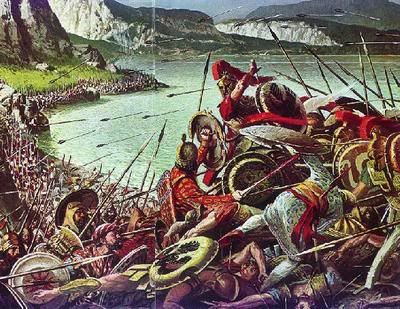
The movie was about the Battle of Thermopylae in 480 BC, where Spartan King Leonidas leading 300 Spartans against what was described as a Persian imperial army of millions.  Although exaggerated, the odds were in fact incredible. The battle has been described by some as “saving Western civilization,” which may cloud the harder reality that it certainly was part of saving Greek civilization at that time. The movie portrayed other items which were not accurate, of which I will avoid. Most of which are more-or-less obvious.

This battle was just a part of the “Greco-Persian Wars”(499-449 BC). YouTube has documentaries galore about these wars and the Battle of Thermopylae. It could also be noted that, along with the Langobard comparison, there is a clear comparison to the Samurai. The Samurai were another example of a “Warrior Society,” with similar traits to the Spartans. One trait that the Spartans and Samurai had in common was that they seemed to literally wish to die in the glory of battle. They actually would seek it, if the historical accounts are true. The Spartans at Thermopylae at least, must have had absolutely no fear of death.


King Leonidas
Battle of Thermopylae

A Greek force of approximately 7,000 men marched north to block the pass in the summer of 480 BC. The Persian army, alleged by the ancient sources to have numbered over one million but today considered to have been much smaller (various figures are given by scholars ranging between about 100,000 and 150,000), arrived at the pass in late August or early September. The vastly outnumbered Greeks held off the Persians for seven days (including three of battle) before the rear-guard was annihilated in one of history's most famous last stands.

During two full days of battle the small force led by Leonidas blocked the only road by which the massive Persian army could pass. After the second day of battle a local resident named Ephialtes betrayed the Greeks by revealing a small path that led behind the Greek lines. Leonidas, aware that his force was being outflanked, dismissed the bulk of the Greek army and remained to guard the rear with 300 Spartans, 700 Thespians, 400 Thebans and perhaps a few hundred others, most of whom were killed.


300 is a 2007 American fantasy action film based on the 1998 comic series of the same name by Frank Miller and Lynn Varley. Both are fictionalized retellings of the Battle of Thermopylae within the Persian Wars. The film was directed by Zack Snyder, while Miller served as executive producer and consultant. It was filmed mostly with a super-imposition chroma key technique, to help replicate the imagery of the original comic book.

The plot revolves around King Leonidas (Gerard Butler), who leads 300 Spartans into battle against the Persian "god-King" Xerxes (Rodrigo Santoro) and his invading army of more than 300,000 soldiers. As the battle rages, Queen Gorgo (Lena Headey) attempts to rally support in Sparta for her husband. The story is framed by a voice-over narrative by the Spartan soldier Dilios (David Wenham). Through this narrative technique, various fantastical creatures are introduced, placing 300 within the genre of historical fantasy.


Queen Gorgo
The film has a certain cinematic quality that is difficult to describe, but it’s as though one is watching it through a dark fuzzy lens, into historical abyss. The Persian armies must have had segments which were not ethnic Persians, who were from other territories of the Persian Empire.. but that point was however much exaggerated in the film. The film starts out making it very clear how Spartan boys were raised to be fighting machines. R. Lee Ermey couldn’t have done a better job of creating killing machines. They were trained to engage in pure evolutionary struggle, to ignore pain, and were constantly tested to their limits. “Respect and Honor” was their slogan, according to the movie; which reminded me of “Strength and Honor” from ‘Gladiator’.

King Leonidas was basically the main protagonist, along with his wife Queen Gorgo. The two are engaged in a political conflict, not only with the invading Persians, but with “bought-off traitors” within Spartan politics. Another quote from the movie, I think from the narrator Dilios, the only survivor of the 300, retelling the story: “Only the hard and strong may call themselves Spartans.”

Before going to war, a Spartan King must go through a religious rite in which he seeks guidance from the wise men of Greek polytheism. The movie portrays them as diseased and “monster-like”; which is the only real item from the movie that I would criticize. I know some people were not happy about what was a similar portrayal from the cable tv series ‘Vikings’, in which the Odinic Skalds were shown to be hideous.

The only other Greek polytheist concept that I remember from the film was was a scene which showed Persian ships sinking in a storm of rain, thunder, and lightning before they could land. One of the Spartans credited the Greek god Zeus for this happening. The opening battle was the most dramatic scene, with the Spartans killing Persians soldiers (or Persian Emperor Xerxes' imperial troops) at will using amazing fighting skills and bravery. The historical record shows that they killed a minimum of ten-to-one! It really could have been twenty-to-one.

Prior to I think the second battle, the narrator Dilios says: “We do what we were trained to do, what we were bred to do, what we were born to do.” Unlike some historical exaggerations, this quote was literally accurate.

Slight spoiler alert beyond this point...

.

.

.

'Battle of Thermopylae'
After Leonidas and the 300 sacrificed their lives down to the last man, which allowed for Sparta the time to gather themselves, the stage was set for the big battle. An army of ten thousand Spartan warriors were lined up to do battle with an army of thirty thousand Persians. The narrator Dilios, for the purpose of the movie speaking in real time, gave a short speech to the army. He finishes with the following: “Give thanks, men, to Leonidas and the brave 300! TO VICTORY!”

When viewing it, I thought he said “Take Leonidas and the brave 300 to victory!" Actually, that line would have worked too! Good movie.

.


Saturday, January 18, 2014

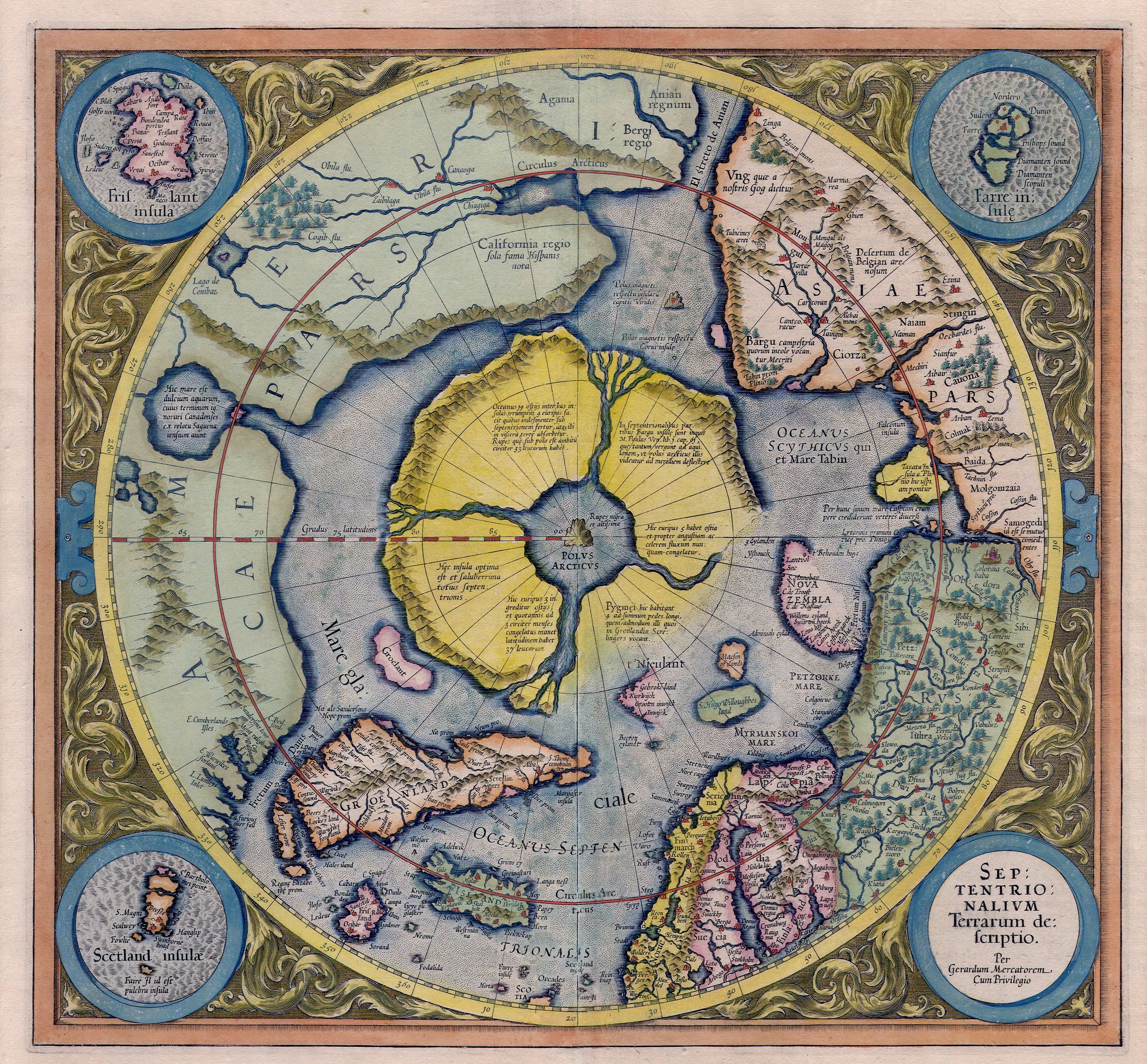
The Arctic Home in the Vedas: Part 15 - "Thule, Saturn, & an alternative explanation"


Thule, Saturn, & an alternative explanation: Part 4


From east to west: Celts as Hyperboreans

Six classical Greek authors also came to identify these mythical people at the back of the North Wind with their Celtic neighbours in the north: Antimachus of Colophon, Protarchus, Heraclides Ponticus, Hecataeus of Abdera, Apollonius of Rhodes and Posidonius of Apamea. The way the Greeks understood their relationship with non-Greek peoples was significantly moulded by the way myths of the Golden Age were transplanted into the contemporary scene, especially in the context of Greek colonisation and trade. As the Riphean mountains of the mythical past were identified with the Alps of northern Italy, there was at least a geographic rationale for identifying the Hyperboreans with the Celts living in and beyond the Alps, or at least the Hyperborean lands with the lands inhabited by the Celts. A reputation for feasting and a love of gold may have reinforced the connection.


Abaris the Hyperborean

A particular Hyperborean legendary healer was known as "Abaris" or "Abaris the Healer" whom Herodotus first described in his works. Plato (Charmides, 158C) regarded Abaris as a physician from the far north, while Strabo reported Abaris was Scythian like the early philosopher Anacharsis (Geographica, 7. 3. 8).


Modern interpretations

As with other legends of this sort, details can be selectively reconciled with modern knowledge. Above the Arctic Circle, from the spring equinox to the autumnal equinox (depending on latitude), the sun can shine for 24 hours a day; at the extreme (that is, the Pole), it rises and sets only once a year, possibly leading to the erroneous conclusion that a "day" for such persons is a year long, and therefore that living a thousand days would be the same as living a thousand years.

Since Herodotus places the Hyperboreans beyond the Massagetae and Issedones, both Central Asian peoples, it appears that his Hyperboreans may have lived in Siberia. Heracles sought the golden-antlered hind of Artemis in Hyperborea. As the reindeer is the only deer species of which females bear antlers, this would suggest an arctic or subarctic region. Following J.D.P. Bolton's location of the Issedones on the south-western slopes of the Altay mountains, Carl P.Ruck places Hyperborea beyond the Dzungarian Gate into northern Xinjiang, noting that the Hyperboreans were probably Chinese.

Amber arrived in Greek hands from some place known to be far to the north. Avram Davidson proposed the theory that Hyperborea was derived from a logical (though erroneous) explanation by the Greeks for the insects, which apparently originated in a warm climate, found embedded inside the amber arriving in their cities from cold northern countries.

Unaware of the explanation offered by modern science (i.e. that these insects had lived in times when the climate of northern Europe was much warmer, their bodies preserved unchanged in the amber) the Greeks came up with the idea that the coldness of northern countries was due to the cold breath of Boreas, the North Wind. So if one travelled "beyond Boreas" one would find a warm and sunny land.


Identification as Hyperboreans

Northern Europeans (Scandinavians), when confronted with the classical Greco-Roman culture of the Mediterranean, identified themselves with the Hyperboreans, neglecting the traditional aspect of a perpetually sunny land beyond the north. This idea was especially strong during the 17th century in Sweden, where the later representatives of the ideology of Gothicism declared the Scandinavian peninsula both the lost Atlantis and the Hyperborean land. The north of the Scandinavian peninsula is crossed by the Arctic Circle, north of which there are sunless days during the winter and sunlit nights during the summer. Western European culture equally self-identified as Hyperborean; thus Washington Irving, in elaborating on Astoria in the Pacific Northwest, was of the opinion that

While the fiery and magnificent Spaniard, inflamed with the mania for gold, has extended his discoveries and conquests over those brilliant countries scorched by the ardent sun of the tropics, the adroit and buoyant Frenchman, and the cool and calculating Briton, have pursued the less splendid, but no less lucrative, traffic in furs amidst the hyperborean regions of the Canadas, until they have advanced even within the Arctic Circle.

In this vein the self-described "Hyperborean-Roman Company" (Hyperboreisch-römische Gesellschaft) were a group of northern European scholars who studied classical ruins in Rome, founded in 1824 by Theodor Panofka, Otto Magnus von Stackelberg, August Kestner and Eduard Gerhard. Friedrich Nietzsche referred to his sympathetic readers as Hyperboreans in The Antichrist (written 1888, published 1895): "Let us look each other in the face. We are Hyperboreans – we know well enough how remote our place is." He quoted Pindar and added "Beyond the North, beyond the ice, beyond death – our life, our happiness."

The term "Hyperborean" still sees some jocular contemporary use in reference to groups of people who live in a cold climate. Under the Library of Congress Classification System, the letter subclass PM includes "Hyperborean Languages", a catch-all category that refers to all the linguistically unrelated languages of peoples living in Arctic regions, such as the Inuit.


Hyperborean Indo-European hypothesis

John G. Bennett wrote a research paper entitled "The Hyperborean Origin of the Indo-European Culture" (Journal Systematics, Vol. 1, No. 3, December 1963) in which he claimed the Indo-European homeland was in the far north, which he considered the Hyperborea of classical antiquity. This idea was earlier proposed by Bal Gangadhar Tilak (whom Bennett credits) in his The Arctic Home in the Vedas (1903) as well as the Austro-Hungarian ethnologist Karl Penka (Origins of the Aryans, 1883).


Hyperborea in modern esoteric thought

H.P. Blavatsky, René Guénon and Julius Evola all shared the belief in the Hyperborean, polar origins of Mankind and a subsequent solidification and devolution. According to these esoterists, Hyperborea was the Golden Age polar center of civilization and spirituality; mankind does not rise from the ape, but progressively devolves into the apelike condition as it strays physically and spiritually from its mystical otherworldly homeland in the Far North, succumbing to the demonic energies of the South Pole, the greatest point of materialization (see Joscelyn Godwin, Arktos: The Polar Myth).

Robert Charroux first related the Hyperboreans to an ancient astronaut race of "reputedly very large, very white people" who had chosen "the least warm area on the earth because it corresponded more closely to their own climate on the planet from which they originated". Miguel Serrano was influenced by Charroux's writings on the Hyperboreans.


Cultural references

George MacDonald's At the Back of the North Wind features a feminine version of Boreas, named "North Wind", who takes a sickly boy, "Diamond", to "the back of the North Wind", which she herself cannot enter. More than two chapters are devoted to a description of MacDonald's Hyperborea and how Diamond got there.

Dante's Paradise, in his Divine Comedy, is the subject of Hyperborean allusions: it is figured geographically north of Purgatory; and, great and little bears (symbols of the polar north) appear above the summit of Mount Purgatorio.

In Herman Melville's Moby Dick, Ishmael suggests that, among other things, the painting in the Spouter Inn in Chapter 3 could be "a Hyperborean winter scene."

Clark Ashton Smith authored a series of short stories known as the Hyperborean cycle (1931–58). Some elements were borrowed by H. P. Lovecraft in what later became known as the Cthulhu Mythos.

In Robert E. Howard's Conan stories (1932–36), Hyperborea is a land to the north-east of Conan's native Cimmeria.

The "Hyperboreans" (Hyperboreisch-römische Gesellschaft) were a group of northern European scholars who studied classical ruins in Rome, founded in 1824 by Theodor Panofka, Otto Magnus von Stackelberg, August Kestner and Eduard Gerhard.

Australian artist Norman Lindsay in July 1923 first exhibited his etching Hyperborea in Sydney. A month later he published two essays about Hyperborea, the first in Vision, No. 2, in which he said that only a picture or a poem could describe Hyperborea. The essays were later combined as Hyperborea: Two Fantastic Travel Essays by Fanfrolico Press in 1928.

Friedrich Nietzsche referred to those who followed his philosophy as "Hyperboreans" in The Antichrist (translated by Anthony M. Ludovici.)

German electronic music pioneers Tangerine Dream released an album with the title Hyperborea in 1983.

Hyperborea and its inhabitants are referenced several times in the back history of Hellboy comic book universe, particularly in the B.P.R.D series.

In Stephen King's "Dark Tower" series, Calvin Tower calls Jake Chambers "Hyperborean Wanderer."

Ruins of the Hyperborean civilization play a role in the plot of Indiana Jones and the Fate of Atlantis.

In The Last Olympian by Rick Riordan Hyperborean Giants are fighting for Kronos and, with Prometheus, give Percy Jackson Pandora's Box, containing hope. In Rick Riordan's subsequent book The Son of Neptune, Percy Jackson and his friends also encounter the giants in Alaska on their quest to free the god of death, Thanatos.

The Hyperboreans are the subject of the title track of album Hyperboreans by Jackie Oates, an English folk music singer/songwriter.

The Hyperboreans are the subject of the many songs by Bal-Sagoth, an English symphonic black metal band.

The 1977 film Sinbad and the Eye of the Tiger wove a number of related references into the plot. Hyperborea was the name given to an island far in the North Sea, described in the film by the witch Zenobia as being "past the Celtic Isles". The island had been home to the Arimaspi and contained a pyramid structure called The Shrine of the Four Elements, located in a temperate valley hidden amongst the ice of the Arctic Circle.

Several of the characters in Ulysses by James Joyce refer to themselves as Hyperborean, referring to their Celtic ethnicity.


References

Portions of this article were formerly excerpted from the public domain Lemprière's Classical Dictionary, 1848.

Bridgman, Timothy M. (2005), Hyperboreans. Myth and history in Celtic-Hellenic contacts, Studies in Classics, New York and London: Routledge

.