Showing posts with label German tradition. Show all posts

Saturday, July 6, 2019

Guido von List: Part 33 - More on the Vehme star rose in German countries

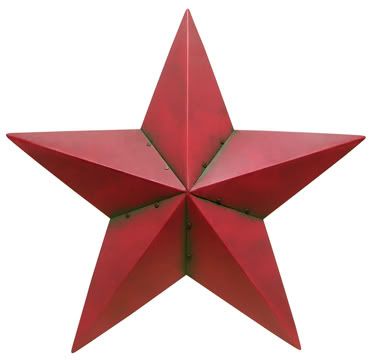
This is in regards to List's "vehme star rose," which is a pentacle... a pentagram within a circle of nature; different than a barnstar or welcome star. While the barnstar represents the "hospitality" aspect of Heathenry, the vehme star rose is used for "protection." In the book 'The Tradition of Household Spirits' (Lecouteuz; 2000), Chapter 3 'The Openings of the House', page 51, it states: "In the Germanic countries, a pentagram was drawn on the door along with the naive inscription, 'If fever comes, I won't be in' or 'Fever, don't come in, so-and-so isn't here!' "

The first part of the chapter focuses on traditions and folklore regarding doors and the doorway, much of it from the Medieval German culture when old spiritual traditions had largely been eliminated or changed to new Christian meanings. I suspect, in some instances, there was a full 180-degree shift in the meaning; a Heathen, Hexerei, or other pagan symbol was replaced with a cross or other Christian symbol, or protective rites and charms from German witchcraft were changed and used to actually keep "witches" out.

From page 52: "In 1411, Hans Vintler remarked in this regard that 'many evil folk enter at night through locked doors', and we know from other sources that witches and spirits (Walridersken, Scgrättele, Alp, Mahr) enter through the keyhole, which should therefore have their keys left in them at night. Also from page 52: "In Appenzell canton in Switzerland, it is said that 'witches can slip inside through the keyhole' (Häxa chönid dör-ena schlüselloch döra schlüffa)." Another example from page 53: "To prevent witches from entering, a new broom should be placed upside down behind the door, and if a pentacle is drawn upon the door, witches will keep their distance (Swabia)."

It wasn't just German-speaking lands as far as the rituals to "ward off witches," but throughout mainly the Alps, and central and eastern Europe. It should be stated that these symbols weren't just scribbled on or above a door; they were beautifully engraved and finished into the wood. One example from the book shows a dark red six-pointed star within a circle with a white background, as-well-as a dark blue four-petaled "Celtic rose" within a circle with a white background; both perfectly melded and finished into the heavy dark brown wooden door frame. The red six-pointed star was not a rosette, but more of a standard "star shape" with the points slightly thinned out near the end. 


************


7-7-19 ADDITION:

Now that we know what the Minnesinger Order was, it still leaves us with the mystery of the German Builders Guild and the German Heraldic Guild. There was a 'German Builders Guild' magazine ('Deutsche Bauhütte') which was published from 1897 to 1942. The name itself sounds like a type of craft union, or perhaps an architectural contractors association.

German Builders Guild

'Deutsche Bauhütte' was the title of a magazine for and about architecture, which was published in Hanover from 1897 to 1942 by Curt R. Vinzentz.

Its first editor-in-chief was the architect F. Rudolf Vogel. One of her editorial staff was the German architect and painter Konrad Wittmann (1891-1951).

The magazine had changing subtitles, such as the central bulletin for the German construction industry.


Supplements

The following titles can be assigned to the magazine as a supplement:

'Der Betonbau' (The concrete construction)
 

'Architektonische Details' (Architectural details)
 

'Studien alter Bauweise' (Studies of old construction)
 

'Raumstudien' (Spatial studies)
 

'Musterblätter aus Bauindustrie und Kunsthandwerk' (Sample sheets from the construction industry and handicrafts)
 

'Das Miethaus' (The rental house)

.

Thursday, October 17, 2013

Guido von List: Part 26 - The Mystery of the Vehme: Entry B


Barnstar (Wikipedia)

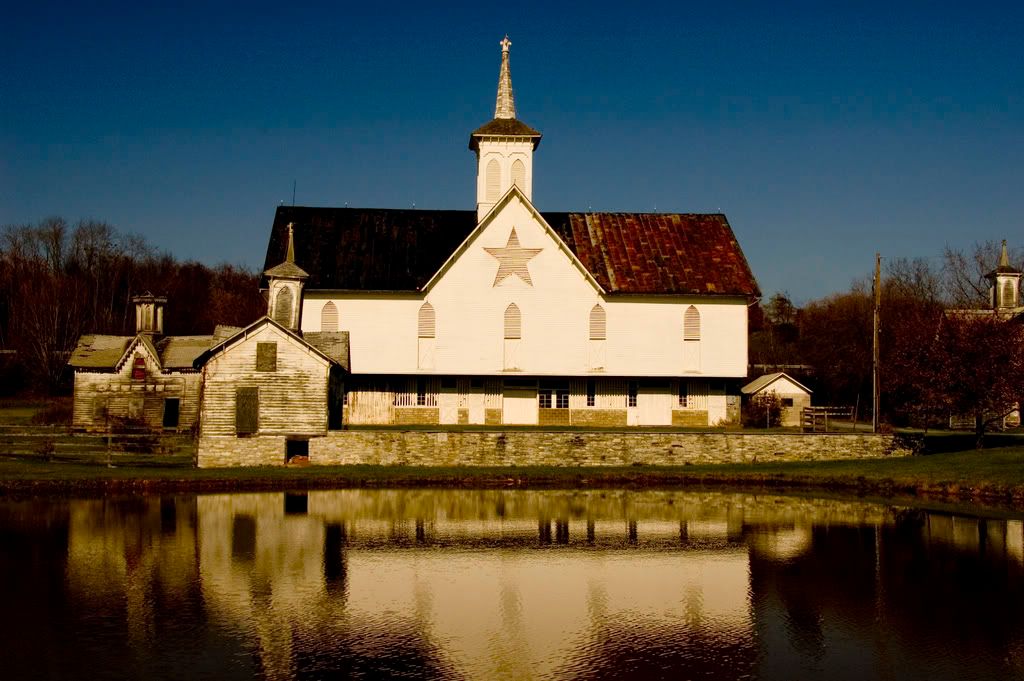
A barnstar (or barn star, primitive star, or Pennsylvania star) is a decorative painted object or image, often in the shape of a five-pointed star but occasionally in a circular "wagon wheel" style, used to adorn a barn. They have no structural purpose, but may be considered lucky, akin to a horseshoe mounted over a doorway. They are especially common in Pennsylvania and frequently seen in German-American farming communities.


History

Barnstars were meant to represent the mark of the builder, but became more frequently used for aesthetic purposes and were added to the building after construction was complete. Enthusiasts have traced a number of wooden barnstars to individual builders in the Pennsylvania area, where numerous examples can still be seen.


Barnstars were used in the United States during the 18th century and as late as 1870 in Pennsylvania, where their popularity increased greatly following the Civil War. Their regular use preceded that time, however, and stars were commonplace on large buildings, particularly factories, in pre-war Richmond, Virginia.[1]

Barnstars remain a very popular form of decoration and modern houses are sometimes decorated with simple, metal, five-pointed stars which the makers describe as "barn-stars". They are often deliberately distressed or rusted, alluding to the traditional decoration.


If you connected the barnstar with the hex signs within Pennsylvania Dutch culture, then you are correct. All of this has an origin in pre-Christian German magical societies and Heathenry, but later revived into Christian society... just as Guido von List described. The above link continues...


Other star-shaped plates
On older buildings in the Pennsylvania Dutch area of the United States it is still possible to find barnstar-like building adornments which are painted, rather than wooden or metal, known as hex signs. Strictly speaking, they are defined apart from barnstars and visually bear only passing resemblance, but the two are often confused and their names are even regarded as interchangeable.[1] Some hex signs incorporate star shapes, while others may take the form of a rosette or contain pictures of birds and other animals.[5]

The term barnstar has been incorrectly applied to star-shaped anchor plates that are used for structural reinforcement, particularly on masonry buildings from the 18th and 19th centuries. These are made of cast iron and are used as tie plates serving as the washers for tie rods. The tie-rod-and-plate assembly serves to brace the masonry wall against tilting or lateral bowing.

Some Wiki-based communities give their users an award called a "barnstar", as a continuation of the "barn raising" metaphor. This originated on MeatballWiki. The image that is frequently used for this purpose is actually a photo of one of the structural tie plates described above, not of a barnstar proper.


Pow-wow (folk magic) [Wikipedia]

Pow-wow, called Braucherei in Deitsch, is a system of American folk religion and magic associated with the Pennsylvania Dutch.


"Hexerei" is the German magical-spiritual tradition; but "Braucherei or Speilwerk" is heavily tied to Christian practice. This sounds very suspiciously like... "permission from daddy"... to play with magic. A little modern reminder and leftover from the "burning times." There are, of course, examples of this from all Christian societies. The above link goes into much greater detail and history.

There have been many complex underground pagan traditions tied to Christian cultures, "hiding in plain sight," and not just German or European. I fully understand the power in symbolism of this.. and how it has become so habit forming over the centuries. The pagan spirit has become so institutionalized within Christianity! I recall a news article from earlier this year, of a man in another country who was released from prison after a lengthy prison sentence. He was begging the authorities to "allow him to stay." That is "institutionalized."

Still, I understand. It's a fun and creative endeavor to craft symbolism within something. It draws upon a unique individual expression. The rural tradition of "Upper Michigan folk medicine," brought there originally by women from the Italian Alps, survives within a Catholic culture. Those women would, of course, say that they're good Catholics.


Pennsylvania Dutch Pow-wow (YouTube)

Powwow: Braucherei (YouTube)

.

Monday, October 7, 2013

Guido von List: Part 25 - The Mystery of the Vehme: Entry A


The five-angled star, the Vehme-Star, the Truthenfuss* (truh = turn, fuss = foot) is the hieroglyph of "revolving or turning generation," of "rebirth"--one of the most important articles of faith in the Aryan religion. In its exoteric interpretation this sign simply says: "return," and was therefore a favorite sign used at hostels and inns, in order to convey the meaning: "whoever is a guest here should come again."

*List: Truthenfuss, standard modern German: Drudenfuss, the foot of a Drude; pentagram. Drude: "a dangerous female numen of the night," cf. Old Norse Thrudhr, old English dhrydh: "a wood maiden." Cf. further Jacob Grimm, Teutonic Mythology. vol. 1, pp. 422-23.

[excerpt from pages 86 and 87 from 'Secret of the Runes']

 
I recall when I first read this, in particular the words "a favorite sign used at hostels and inns," I didn't have any historical point of reference. It may have been because I was thinking "pentagram symbol," rather than "five-pointed star." A few days ago I saw a home with a black star on its porch on a television program, and it finally hit me. He meant "star," not "symbol!" I have seen those stars on homes, usually black and contoured as the symbol below is, but I didn't make the connection.

One person on a Christian forum answered this question this way: Google "Amish Barn Star" It is a symbol of good luck. Nothing sinister, just a decorating fad. There's also the apparent truth of the pentagram having once been a symbol of Christianity.

 
From Yahoo Answers:

It's supposed to keep evil away or a an old amish good luck charm are the reasons I have been told the most.

I've also read that it has military meaning:
Blue 5-angel star= Family member currently serving in a War
Gold 5-angel star= Lost a Family member in a War
Brown 5-angel star= Veteran of the military
Red 5-angel star= Family member wounded in combat

Some people do just use it for decoration.

 
Excerpt from another Christian forum:

Five-pointed stars on houses?

Does anyone know the meaning of (presumably plastic) 5-pointed stars mounted on the fronts of houses, usually next to the doors? They appear to be plastic and I've seen them in various colors. White is common. There is only one per house. They have a radius of about one foot. I saw a lot of them when we traveled through KY, TN, NC and into Georgia about 2 weeks ago. There are a few of them here in the Chicago suburban area. I'm aware that the five-pointed star is a symbol of witchcraft and wonder if the inhabitants of these houses are proclaiming that.

While I don't know what those stars mean today, when I was a child living in Illinois, a star in someone's window meant that it was a "safehouse". They were homes along the routes students walked on the way to school, and if there was a problem going back and forth to school, a child could run to that house for safety. I would be very surprised if in our day and age, the star meant it was a safehouse.

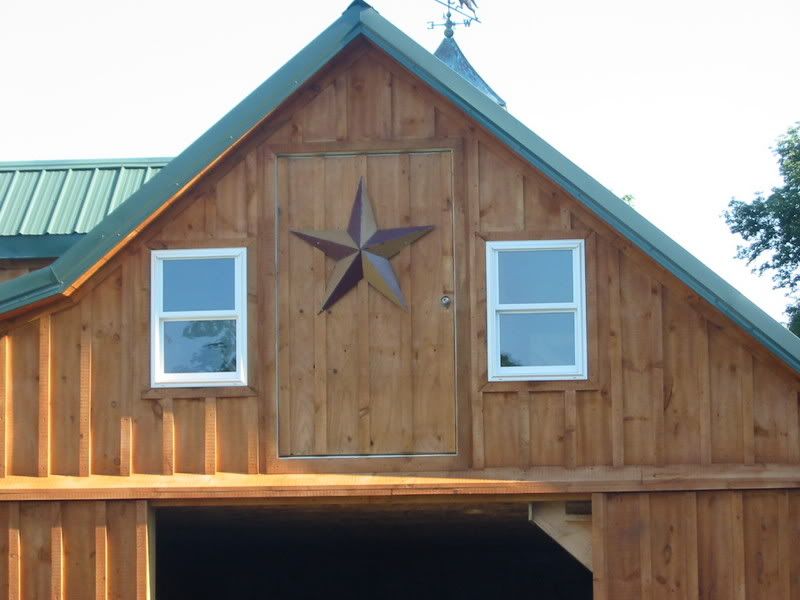
There are probably a number of meanings that developed separately over time, but the most solid origin for at least the American star tradition--which ties directly to the German-speaking countries--is the "Amish barn star." Not surprisingly, these stars are particularly popular in western Pennsylvania, which ties directly to the German/Dutch "hex signs" which we have covered here on the Hexology series. Yes, this is the link to List's vehme tradition in today's world. Also, they are easy to purchase online with a simple "barn star" or "Amish barn star" search. This "American tradition" isn't as popular here in California, which is why I failed to make the connection sooner. They come in many colors, including this nice eggshell-colored one.

Within Amish culture, which no longer even exists in Switzerland, we see some of the old German country traditions. I'm slightly embarrassed that a lot of connections here have escaped me, even though I have been close to them here and there in my life. California descendants of the "dust bowl" era, which are in the millions--and who can trace their roots back to Oklahoma and Texas--brought many folk traditions and cultural expressions with them which exist to this day. I can recall seeing some of this symbolism in country-style stores over the years... including the barn star. This star is of ancient Heathen origin; although the related pentagram has some Christian roots.

.

Wednesday, March 14, 2012

Hexology: Part III

Barn with a hex signs in Oley Township, Berks County, Pennsylvania
Hexology ties into so many areas that I will need to skip many to proceed, although there are a few areas which should be mentioned. One is the "fraktur," which is the name of Pennsylvania German folk art. This goes back to the 1700s and is the name of the art form of which the hex symbols developed out of. Another area is the "tree of life" symbolism within many hex signs, which shows a clear and direct connection to "Wuotanism," as it's known in Germany. That really is a major item because it's a direct tie-in to the spirituality of the ancient world; although it's largely a cultural and decorative thing in Pennsylvania.

Pennsylvania Dutch Country is located in the eastern part of the state, and it's worth mentioning that Monogahelia is in western Pennsylvania. The Monogahelia area is the home to the largest concentration of people of Camun ancestry on this continent. Although the "tree of life" element of the hex signs ultimately tie into the Norse Yggdrasil and general Germanic paganism; this is also tied into the "flower of life" from ancient Cisalpine culture. The flower of life is represented by the symbol of the "sun of the Alps," so there is a clear tie-in there; and of course, the sun of the Alps is a very strong theme in hexology.

It can't be stressed enough that when a hex sign is an eight-pointed star with a sun of the Alps inside of it, the tie-in to our ancient Camuno-Gaulish culture is crystal clear. Each point of the star represents one of the Sabbats, or the eight seasonal festivals on the wheel of the year (Camunic witchcraft); while the sun of the Alps is basically a Gaulish symbol for the sun (Cisalpine Gaulish). I have read where the sun of the Alps symbol was referred to as "a hex symbol," period, with no mention of sun of the Alps. Again, this symbol was basically a pre-Germanic, Celtic symbol; which apparently found it's way into German culture after the Teutonic tribes overran most of the Alpine region.

There is a growing interest in hexology, with some newer books and probably with new ones on the way. However, it should be mentioned that there is one book entitled 'Hexology, the History and the Meaning of the Hex Symbols' (Zook & Ott; 1971), which is only fourteen pages, but always comes up when the subject is mentioned. One other one is 'Hexology: The Art and Meaning of the Pennsylvania Dutch Hex Symbols' (Herrera; 1964). Hunter Yoder mentions other names and books in the interview on Part II.

While reading that interview, it occurred to me something that I've thought about before. So many "Westerners," most often from the English-speaking world, look elsewhere for spirituality. Actually we "have it made" in that department, and really don't need to look beyond our own cultures. Logically, making a comparative study of other spiritual traditions, would be part of the process. Even Guido von List looked to India for this purpose. Since reading 'The Secret of the Runes', I have wondered what von List would have thought about the "Celtic roots" of his homeland? This was not known during his lifetime.

Hunter Yoder used some terms which I thought were interesting. Among them were "radical traditionalist," and "folk magic," which I thought were interesting. I have liked the term "native believer." The person who believes in the native spiritual traditions of their ancestors. There are a lot of interesting items on Yoder's website, including a series his did on local Pennsylvania public television, which I have yet to watch. I get a strong impression that Guido von List would approve.

.