Showing posts with label German folk traditions. Show all posts

Thursday, December 29, 2022

La Festa dell’ Inverno: Winter 2023 - Part 2


Post Xmas

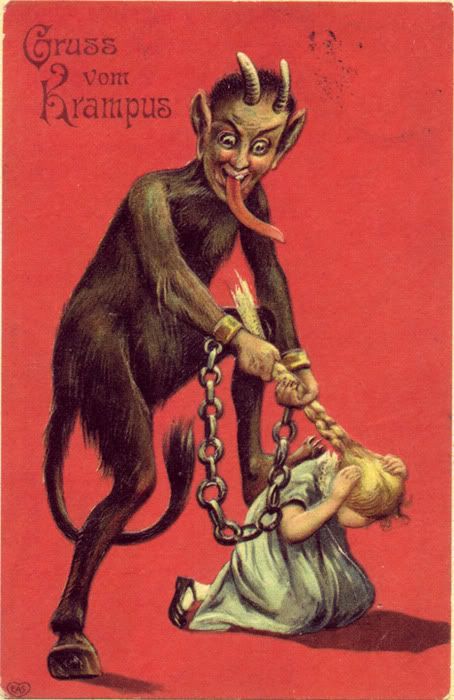
I had actually wanted to get this out, with a lot more content, before Xmas.... but I just didn't get to it. On the subject of Krampus.... Krampus is not just from German mythology, but from surrounding countries and regions as well. According to Wikipedia... "Krampus appears in the folklore of Austria, Bavaria, Croatia, the Czech Republic, Hungary, Northern Italy, Autonomous Province of Trento and South Tyrol, Slovakia, and Slovenia." [Book: 'Celebrating Life Customs around the World: From Baby Showers to Funerals' by Victoria Williams; 2016]. Although German in origin, it ultimately comes from Norse mythology, and likely traveled within the folklore of Germanic tribes and bands such as Goths, Cimbrians, etc.

It seems strongest in the eastern Alps. However, although it's fun to be able to lay some sort've ancestral tie-in to the Krampus legend, the Italian Alps is ripe with many other mythological legends that I'll cover at some other time. On one video, someone suggested that the Krampus legend "migrated" to Trento, the Dolomites, etc. from the Austrian-Hapsburg Empire. This, of course, is absolute nonsense, as the Austrian occupiers were hated in Trento, Lombardy, and the Tri-Veneto! I didn't want to argue the point since it was just all just in fun. Clearly, this cultural migration was due to several small soft migrations of Germanic peoples over the centuries.


*************************


Video Links

10 Most Disturbing Cults That Are Still Active - YouTube

10 Popular Celebs Linked to Cults - YouTube

'SATANISTS NEXT DOOR' | Our cameras capture a secret ritual as a 'curse' is cast | 7NEWS Documentary - YouTube

Celebrities Who Have Been Involved In The Occult - YouTube

The Hole - Scientology's Prison Camp - YouTube

"Going Clear" Writer Lawrence Wright Talks Scientology and Tom Cruise - YouTube

The Leonard Lake Tapes - YouTube

Cat Tales | Full Documentary | NOVA | PBS - YouTube

What This Trail-Cam Recorded, Will Horrify You! - YouTube

Trail Cam Captures What No One Was Supposed To See #2 - YouTube

Aliens & UFOs: Dolores Barrios and the "Venusians" that visited a UFO conference in 1954!! - YouTube

Stuttering John Trashes Jackie Martling in His Autobiography (w/ Bob Levy) - YouTube

Man Dies In Motorcycle Crash And Is Shown The Human Incarnation Process (NDE) - YouTube

The Most Brutal Punishments of Genghis Khan - YouTube

The Satanic Ceremony Nobody Seemed To Notice - YouTube

Dead For 2 Minutes; Woman Is Shown Our Purpose During A Trip Through The Afterlife (NDE) - YouTube

LeMat Revolver - Loading & Firing - YouTube

Lucifer and the Black Sun - ROBERT SEPEHR - YouTube

Satanist leads prayer at Pensacola council meeting - YouTube

Unforgettable encounter with super cute Koala wanting kisses, cuddles... and water - YouTube

Pagan Origins of Christmas & Tradition History - Full Documentary - YouTube

RARE DOCUMENTARY: Vril and Thule Society; Antarctica; Advanced Civilizations

Admiral Byrd's Strange Adventures- the secrets of his lost diaries


 *************************


"Inaction is the holiday of fools"
-- Better Ideas, 'Inaction Is A Slow Death' (YouTube)


 *************************


Outsiders & Outcasts (For Those That Don't Belong)

Einzelgänger

1.69M subscribers

142,303 views  - November 12, 2020

From the moment we are born as human beings, the people around us prepare us to fit the herd. We start out as being part of a family, and then we expand our social life with friends, acquaintances, colleagues, and, in many cases, a significant other. People tend to work together and spend time with each other, and thus, they form a well-oiled machine called society.

Living among the herd has many benefits, like safety, security, access to other people including potential mates, and a shared identity that creates a sense of self. But in some cases, the herd doesn’t want you anymore, and you become an outcast. Or you don’t want the herd anymore, and you become a recluse. Or, perhaps, a little bit of both.

No matter what the reason is: some people just don’t seem to belong. And when you don’t belong, you’re an outsider; an outcast. So, how do we handle being an outsider? What about those that don't belong?

This video explores the fate of those outsiders and outcasts that live outside the herd.

con't....


************


 "The more I'm surrounded by people the more I feel alone."
-- Hideaki Page

How to Connect with People When You Feel like an Outsider | Eckhart Tolle

The Outsider's Guide to the Social World

To Anyone Who Feels Like They Don't Belong

Hated, Ignored, Rejected & Happy: A Video for Outcasts (based on Black Mirror’s ‘Nosedive’)

How To Handle Feeling Left Out


*************************
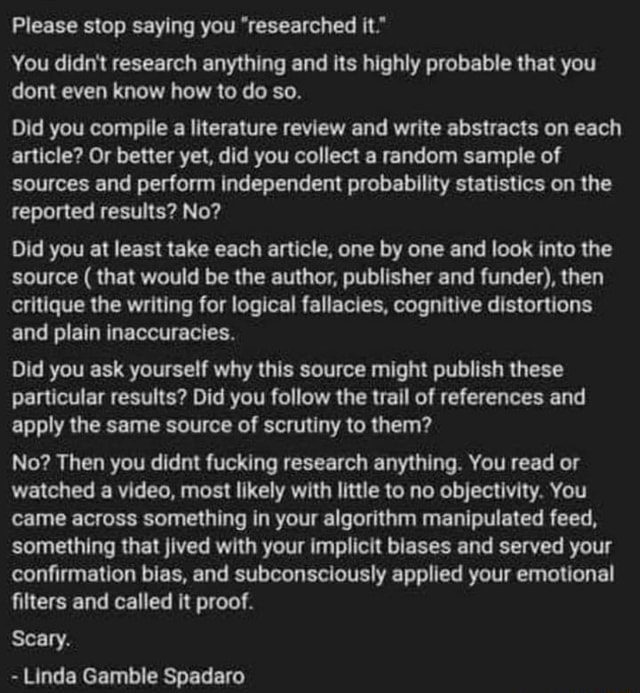


Lets make the public library popular again!

Somebody sure needed to state what's on the above image! Sometimes some closed minded right or left wing ideologue is presented with some fool-proof fact(s) that stops them in their tracks, and they immediately do a cowardly "quick google search" in order to justify their position with some scant counter argument, and they use it as justification for some destructive belief that they just can't exorcise from their minds. A real critical thinker---at least in their own mind!---challenges their beliefs by looking at it from the opposite camp, or a whole assortment of other checks to test it's validity. The main point that I wanted to make is that we all need to start physically going to the library again! Also, in our library systems are special research rooms, where records and other information can be found that we should all know about. Maybe we all need to make note that 2023 would be a good time to start using our library system a lot more!


 *************************


Top 10 Rammstein Songs

WatchMojo.com

24.9M subscribers - 3.3M views

Massive pyrotechnics and hardcore industrial music. What a show. Join http://www.WatchMojo.com as we count down our picks for the Top 10 Rammstein Songs.

con't....


************


"a top 10 is not enough for rammstein"
-- starforce224

"The beauty of Rammstein, to me as a native English-speaker, is the fact that I have no idea what the hell they are singing.  I just love the way it sounds."
-- jeffwads

"Till Lindemann easily has the perfect voice for metal music. Man i love Rammsteins music"
-- TheCarBrothers

.

Saturday, July 6, 2019

Guido von List: Part 33 - More on the Vehme star rose in German countries

This is in regards to List's "vehme star rose," which is a pentacle... a pentagram within a circle of nature; different than a barnstar or welcome star. While the barnstar represents the "hospitality" aspect of Heathenry, the vehme star rose is used for "protection." In the book 'The Tradition of Household Spirits' (Lecouteuz; 2000), Chapter 3 'The Openings of the House', page 51, it states: "In the Germanic countries, a pentagram was drawn on the door along with the naive inscription, 'If fever comes, I won't be in' or 'Fever, don't come in, so-and-so isn't here!' "

The first part of the chapter focuses on traditions and folklore regarding doors and the doorway, much of it from the Medieval German culture when old spiritual traditions had largely been eliminated or changed to new Christian meanings. I suspect, in some instances, there was a full 180-degree shift in the meaning; a Heathen, Hexerei, or other pagan symbol was replaced with a cross or other Christian symbol, or protective rites and charms from German witchcraft were changed and used to actually keep "witches" out.

From page 52: "In 1411, Hans Vintler remarked in this regard that 'many evil folk enter at night through locked doors', and we know from other sources that witches and spirits (Walridersken, Scgrättele, Alp, Mahr) enter through the keyhole, which should therefore have their keys left in them at night. Also from page 52: "In Appenzell canton in Switzerland, it is said that 'witches can slip inside through the keyhole' (Häxa chönid dör-ena schlüselloch döra schlüffa)." Another example from page 53: "To prevent witches from entering, a new broom should be placed upside down behind the door, and if a pentacle is drawn upon the door, witches will keep their distance (Swabia)."

It wasn't just German-speaking lands as far as the rituals to "ward off witches," but throughout mainly the Alps, and central and eastern Europe. It should be stated that these symbols weren't just scribbled on or above a door; they were beautifully engraved and finished into the wood. One example from the book shows a dark red six-pointed star within a circle with a white background, as-well-as a dark blue four-petaled "Celtic rose" within a circle with a white background; both perfectly melded and finished into the heavy dark brown wooden door frame. The red six-pointed star was not a rosette, but more of a standard "star shape" with the points slightly thinned out near the end. 


************


7-7-19 ADDITION:

Now that we know what the Minnesinger Order was, it still leaves us with the mystery of the German Builders Guild and the German Heraldic Guild. There was a 'German Builders Guild' magazine ('Deutsche Bauhütte') which was published from 1897 to 1942. The name itself sounds like a type of craft union, or perhaps an architectural contractors association.

German Builders Guild

'Deutsche Bauhütte' was the title of a magazine for and about architecture, which was published in Hanover from 1897 to 1942 by Curt R. Vinzentz.

Its first editor-in-chief was the architect F. Rudolf Vogel. One of her editorial staff was the German architect and painter Konrad Wittmann (1891-1951).

The magazine had changing subtitles, such as the central bulletin for the German construction industry.


Supplements

The following titles can be assigned to the magazine as a supplement:

'Der Betonbau' (The concrete construction)
 

'Architektonische Details' (Architectural details)
 

'Studien alter Bauweise' (Studies of old construction)
 

'Raumstudien' (Spatial studies)
 

'Musterblätter aus Bauindustrie und Kunsthandwerk' (Sample sheets from the construction industry and handicrafts)
 

'Das Miethaus' (The rental house)

.

Thursday, February 18, 2016

Notions amid the approaching Full Snow Moon III


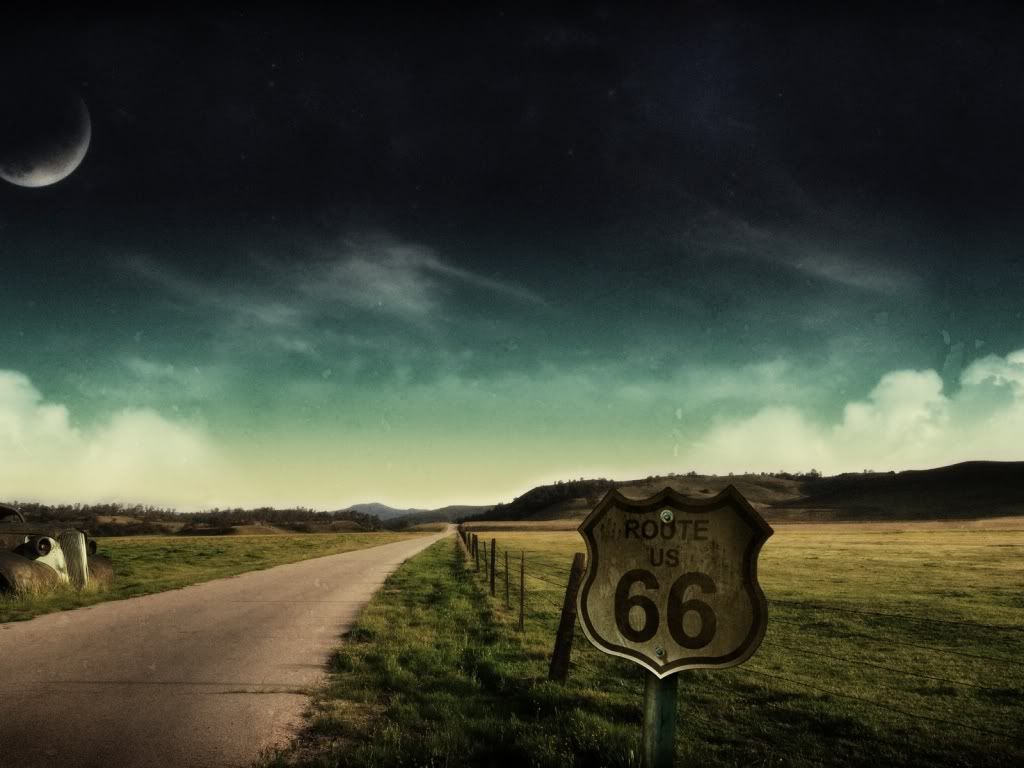
Route 66 - The spiritual connection

U.S. Route 66, established in 1926, was the main auto route opening up the west from Chicago to L.A. It travels through Illinois, Missouri, Kansas, Oklahoma, Texas, New Mexico, Arizona, and southern California. As the hit song goes, "Get your kicks, on Route 66." Even though my family took a more northern route to northern California, I still see the highway as a historical symbol of this east-west trek. It was one of the reasons for the incredible growth of Los Angeles in the 50s and 60s, as opposed to the slower growth of the San Francisco area.

The 2,000 mile highway has been the backdrop to countless movies. The 1983 comedy 'Vacation' and the 1986 thriller 'The Hitcher' come to mind off the top of my head. Clearly its part of the psyche of the country, whether or not we're even conscious of it or not. It's not just about the highway as it is today, but imagine a family traveling across its vast rural stretches over the many decades. Traveling on a hot early evening during the summer, perhaps even prior to air conditioning, looking forward to the next road stop. Imagine life along the highway, in one of those towns, the endless motorists stopping in.

There were probably many people on the run, down on their luck, victimized somehow, or big dreamers who got on it to "just head west." The concept of freedom; "the promised land" just "a little further west." It wasn't enough to only go part way, but somehow they had to go all the way. Some probably should have stopped short, as they eventually ended up on skid row, or many dreamers ended up another tragedy. It's almost a little like "the crossroads." It's more than just a stretch of road. Just as in nature, it has a duality to it.


Route 66- John Mayer (with lyrics)

amjdamjd


A hidden gem by Patsy Cline


PATSY CLINE - In Care of the Blues (1957 Original)

verycoolsound


Who's hotter at The Weather Channel - Jen Carfagno or Maria LaRosa?

It's funny, this YouTuber is obsessed with the women on The Weather Channel.


Jen Carfagno and Maria LaRosa (both also have legs (15) wow! (HD))

Paul

Great segment(s) from "Weather Center Live" of Jen Carfagno & Maria LaRosa. (6/26/15)


The Hex Factory interviews

Recently, I've been downloading all types of podcasts and articles into my iPod for some very long and tedious work I've had to do. For text, I copy and paste it into FromTextToSpeech.com where I can make mp3's out of them; some even an hour or longer. With the "Alice" voice, it's just like a person reading them to you, and I did this with three text interviews so far from Hunter Yoder (TheHexFactory.com). They were great.

Jack Montgomery - A very interesting and unique current and historical American perspective, especially from the standpoint of German-speaking folk culture where it developed (Pennsylvania, Ohio, the Carolinas, etc.). Also, aspects of German neopagan influence under the surface.

Robert Taylor - A perspective from an artist and musician who's lived a very interesting life; and it gives an insight into one of many ways that one can reach their true calling in this modern non-congruent American culture.

Wyatt Kaldenberg - Great insights into the blunt reality of Odinism and American/world politics. I mean, I believe that he's correct in his conclusions.

Although I love books and text, I enjoy these interviews and long articles more just having them read to me like this. The spirit of the words really come through.


Kamchatka - A beautiful unknown northern land

It's amazing that Russia has so much open and underpopulated land, and sitting right above billions of people in Asia. The pristine Kamchatka Peninsula sits north of Japan and west of Alaska, and its landscape is much like Alaska. I was surprised to read that its people are overwhelmingly Russian (origin from Russia proper) and Ukrainian, with very few Siberian native types. The former Soviet Union tried to populate every corner of its massive landmass, and under Communism it's didn't work especially well, but they did it to a large extent. There are many photos and documentaries about Kamchatka's wilderness and wildlife, but the below video shows its capitol and largest city Petropavlovsk-Kamchatsky. Although rather backwards currently, I still feel like the northern gods are present in this land.


Discovering Kamchatka

cucumax

.

Tuesday, February 16, 2016

Notions amid the approaching Full Snow Moon I


A full moon on a "moon day"

This coming full snow moon falls on a Monday ("moon's day): Monday, February 22. However, it's something of a tweener in North America, as it will occur between Sunday and Monday nights. Here on the west coast, it will occur at 10:20 AM. I would lean towards Monday evening. To find your time, click here.


Krampus revisited

According to Wiccan blogger Aldora (KitchenWiccan.com), Krampus---the quasi-Christmas Devil, popularized this past Christmas due to a horror movie---did not originate from any Pagan tradition. 'The Krampus – has no Pagan Roots!' (12-8-15):

The Krampus, where did it come from? Where did it originate? I can tell you he’s very much alive in Austria & Croatia! Associated within the Germanic belief systems with St.Nikolaus, same origin of the North American Santa Claus. I haven’t been able to find any information attaching such a creature to Pagan roots.

I don't know that we could ever know for certain, since the early Christian church conflated many country legends and traditions with Christian beliefs... usually with "the Devil." They used to attach science with the Devil! I would guess that Krampus has origins in either local pagan tradition or folk legend.


Tarzan TV series 1966-1968

This year is the 50ith anniversary of the not-especially-memorable Tarzan TV series from the late 60s. I recall watching it from the very late 70s and early 80s, and it was wonderfully cheesy. Ron Ely (Tarzan) was in great shape, but he spoke and acted just like your neighbor three doors down the street. The scenery looked a whole lot more like southern California than tropical Africa. The innocent and vulnerable part of "art." Somewhat uniquely, it didn't feel like the 60s... but more like the 80s. The equivalent Batman series, comparatively from the same time period, was indeed very 60s.


1st U.S. sanctioned Satanic ritual

This is from last December in Lansing, Michigan. Although somewhat interesting to listen to, Satanist groups are vastly different; therefore who are the real "Satanists?" They range from quite benevolent to truly evil, from theist to atheist to merely a philosophy. In this way, they really aren't all that different than a couple of religions that I can think of. As I've covered here before, it all goes back to the ancient Sun cults versus Saturn cults... when Saturn was our second star. I believe in planetary-body equality myself.


Crazy Jesse Duplantis

When channel surfing along the Christian networks, the word "boring" comes to mind. However, there is one Cajun pastor in Louisiana who really breaks the mold. It's not "religious eccentricity" either. This guys a real character; more like a stand up comic.


.

Wednesday, June 13, 2012

Guido von List: Part 19

I think that I will wrap this series up for now, but I will add a part 20 to review another work that I'm looking at of which there is a copyright issue. I just wanted to clarify a few items. Regarding when I wrote that Wiccans didn't have any interest in von List, I should point out that it would not be an exaggeration to say that elements of "Celtic Wicca" have some overlap with some elements of those who call themselves specifically "Asatru"; and it may tie into aspects of "Norse witchcraft. I would think that von List would have approved of part of this direction.

Curiously, List isn't mentioned nearly as much as one would think among many Odinist concerns; and that may be because he focused on many magical aspects of heathen reconstructionism, of which they don't want to bother delving into. Part of the reason may be the perception of "political correctness." I say perception because, in this case, it isn't based on fact.

Often I think that I wasn't doing justice to 'The Secret of the Runes', but there's no way to really go "halfway" with it. There was an entire section at the end which went into the German baking tradition. It was very complex, and I wasn't able to really review it. I have noticed that most of those concerns who--despite clear evidence to the contrary--continue to demonize Guido von List, are either "single-issue zealots" or are what I would call "spiritual neuters." Their mythology is of the utmost importance; while all others are "demonic." They may even want to attack him as a "heathen," and not for anything else, but using other dishonest reasoning. Even beyond that, I have also noticed among religious extremists that they're actually afraid to criticize the other major religions, but attack the little ones.

It may be safer to turn a blind eye to the demonization of Guido von List. However, our very own ancestors in the Camunian Valley, only a few centuries ago, were demonized as well. Some were put to death as a result. Now isn't that worth at least considering first?


2-19-13 ADDITION: I had typed out some text from 'Secret of the Runes', which I misplaced. I wanted to add it here to shore this posting up, since it was a bit lacking compared to the others in the series.

Guido von List regarding the symbology of the fiddle:

This is the old skaldic magical instrument of awakening which introduced the song, and since “song” (bar) also means “life,” the fiddle was one of the many ideographs (hieroglyphs, symbols) of rebirth, and it is for this reason that it is often found in graves as a sacred gift. Therefore it is not necessarily so that the dead man in whose grave a fiddle is found was a fiddle player. “flutes and fiddles” enticed people to dance, to the excitement of its ascetic temperament—because they served as magical instruments to arouse the human fyr (fire) of awakening with the Christian symbol of awakening “the trumpet of judgement.”


Further clarification from Wotanist blogger Wotans Krieger on his posting regarding the Gibor rune: 

"Flutes and fiddles" enticed people to dance, to the excitement of love, and was therefore banned by the Church-with its ascetic temperament-because they served as magical instruments to arouse the human fyr[fire] of love.

So the Church replaced the Wotanic symbol of awakening with the Christian symbol of awakening "the trumpet of judgement".

.

Wednesday, May 9, 2012

Guido von List: Part 16

Band of the Holy Vehme

According to von List, with the rapidly approaching threat of Charlemagne's rein of terror, the skalds realized that something radical must be done in order to preserve their spiritual traditions in some form. Excerpt from page 77:

In spite of the fact that the skalds were persecuted and scorned, they collected themselves together and secretly took the German faith and the German law (Wotanism) in a concealed manner into the "hidden tribunal" (heimliche Acht) of the "fem" (five) fingers of the sword's hilt--and thus arose the band of the "Holy Vehme."

Basically what was happening was that the skalds--the now underground "heimliche Acht"--were conducting meetings in order to develop a system of which they could conceal Wotanism in every part of society. I believe they developed a system which would "grow on it's own," so that as society changed, this system would adapt and develop along with it. This system would be applied to every part of society. Everything from architecture to baking. Although it would be romantic to say that they ALL met at one time, in one place, and decided on one system; more than likely they had many regional meetings over a period of time. The "exoteric" is what something appears on the outside (for the general public); the "esoteric" is what is on the inside (for the initiated only).

Still on page 77: Out of the "Skaldic Order" the "Minnesinger Order" later emerged, as did the "German Builders' Guild" and the "German Heraldic Guild." From all this, in broad branchings, sprang the judicial sciences, poetic arts, linguistic sciences, graphic arts, etc. Because the skalds, as poets and singers, were also the maintainers and formulators of language--and because it was neccessary for them to preserve in strict secrecy the Wuotanism that they took with them underground into the "heimliche Acht" (in order not to be persecuted as heretics), they had to use the three-fold interpretation of words to have their messages delivered--even by messengers--without these or other noninitiates being able to understand the correct interpretation. Through steady skillful practice they reached such refinement in this double-edged type of poetry (called heimliche Acht or kala), that one and the same text could conceal two completely different messages, whose obvious sense (understood by everyone) would actually be secondary, while the concealed sense (kala) would contain the only real, secret message for the men of knowledge.

Exactly how this system worked, in detail, is more than I wanted to add to this series. You would need to get a copy of 'Secret of the Runes'. For example, the "three-fold interpretation of words." Suffice to say, even the process itself was based on Wotanist spirituality. These were great men; who made the best of a bad situation. Not just by their actions, but by the genius by which they accomplished it.

On "Part 14," the translation of List's work was mentioned. I would like to place the footnote on the bottom of page 77, in order to sort've "put it out there" that maybe it's time to translate some of these books! This is List's footnote, with an editors note, and it's regarding the above text:

Concerning this see my essay "Vom Wuotanismus zum Christentum," in the weekly Der Deutsche (Berlin), 1, no. 13 (1904). Compare also my essay "Von der deutschen Wuotanspriesterschaft," in Das zwanzigste Jahrhundert 4, nos. 2-5 (1893). [Ed. note: List also discusses this transition at length in his book Der Übergang vom Wuotanismus zum Christentum.]

I was also thinking, smaller essays could be put together in book form. I just purchased 'The Religion of the Aryo-Germanic Folk - Esoteric and Exoteric' (List; 1909 or 1910). This was translated in 2005, and it's only 56 pages long. It was the last copy on Amazon.com; and sold by Rûna-Raven Press.

'Die Religion der Ario-Germanen in ihrer Esoterik und Exoterik' ('The Religion of the Aryo-Germanic People in its Esoteric and Exoteric Aspects')

.

Thursday, March 15, 2012

Hexology: Part IV


The above video is part one of eleven of the Hunter Yoder series on Pennsylvania public television. As it finishes, the next part will show somewhere on the screen, or you can simply find the whole series on the FrankBlank231 channel on YouTube. I think I will just wrap this up for now. I could just go on and on, as there are so many facets to Hexology. It's so enriching to briefly emerse yourself in something new that actually has always been part of your folk soul. Below are a few more links:


Symbol Meanings
 

The Symbol
Its Meaning


Circle
Eternity or Infinity
Distelfink (Bird)
Good Luck and Happiness
Dove
Peace and Contentment
Eagle
Good Health, Strength and Courage
Four Pointed Star
Bright Day
Heart
Love and Kindness
Horse Head
Protect Animals from Disease and Building from Lightning
Maple Leaf
Contentment
Oak Leaf
Strength
Quarter Moons (4)
Four Seasons of the Year
Raindrops
Abundance, Fertility, Rain
Rosette
Good Luck. Keep Away Bad Luck and Evil
Star
Good Luck
Triple Star
Success, Wealth and Happiness
Tulip
Faith
Tulips (Trinity - 3)
Faith, Hope and Charity
Twelve Pointed Rosette
A Joyous Month for Each Month of the Year
Unicorn
Virtue and Piety. Belief in God
Wavy Border
Smooth Sailing Through Life


3-20-12 ADDITION: I have started to view this Hexology series, and I noticed that Hunter Yoder referred to the sun of the Alps symbol as a "rosette." I don't know if it's a rosette or not. However, when there's a distinct symbol, it's usually called only by it's proper name. Rosettes are a much larger category. On one hand, the sun of the Alps isn't a greatly-known symbol, such as the triskelion or the triquetra; on the other hand, it would seem that he should know exactly what it is since it's on so many hex signs. So, when do we challenge experts on certain items? I'm quite certain on this one however. It's an Alpine symbol, of either proto-European or Gaulish origin; and which has been found occasionally in other places, such as Portugal or north Germany. It's rare for a symbol to be unique to only one place, like the Rosa Camuna basically is.

.