Showing posts with label European folklore. Show all posts

Wednesday, February 22, 2023

Esoteric Analysis of The Wicker Man (2006 & 1973) plus Midsommar

Esoteric Analysis of The Wicker Man (2006 & 1973) plus Midsommar

MovieSalt

VISIT US AT: WWW.SALTRADIOMINISTRIES.COM

Email: saltradioministries@gmail.com

con't....


************


This is deep! This woman knows her stuff! There's nothing I can add; she said it ALL. There could be the idea that she created this content as part of her ministry, but I give credit where credit is due. I look at it from a non-Christian, non-Masonic, non-Kabbalistic, folk pagan point of view.


.

Monday, October 31, 2022

Tales of Halloween - All Hallows Eve 2022

Tales of Halloween | Full Movie | Awesome Horror Anthology | Greg Grunberg | Halloween 2022

Movie Central

3.48M subscribers

 75,207 views  Oct 21, 2022

Tales of Halloween - Ten stories from horror's top directors. Ghosts, ghouls, monsters, and the devil delight in terrorizing unsuspecting residents of a suburban neighborhood on Halloween night.

2015.  Stars: Greg Grunberg, Adrienne Barbeau(voice), Hunter Smit, Barry Bostwick, Cameron Easton

con't....


*************************


'All Hallows' Eve'

The pumpkin grinned from ear to ear,
“The moon is bright, the sky is clear;
This is the night we’ve waited for,
When elves come knocking on the door,

“When witches ride their broomsticks high
And ghosts and goblins fill the sky.
Then Jack and Jill, with fairy queen,
Will dance and sing: it’s Halloween.”

-- Constance B. Osborne


*************************


"Strange Things In The Woods" ft John DeSouza 10/28/22

October 29th, 2022.

Quite Frankly

21,403 subscribers

Friday night and we are going to skim through some relevant headlines, including a follow up on the immediate fallout from the Twitter sale, Paul Pelosi's hammer fight, and some audience submissions for Obese Disney titles. Then we welcome back Retired FBI paranormal investigator, John DeSouza, who recently contributed to David Paulides' latest installment to the Missing 411: The UFO Connection. Should be plenty of time in the second half to take some calls, and read through some entries on our Strange Things You've Seen in the Woods forum thread (very relevant to tonight's main topic). Halloween fun continues all weekend, including Saturday Night.

con't....


************


"I was out in the ranges stalking  when an animal bedded down under shrubs caught wind of me and stood up. It looked like a cross between a Brahman bulll and a zebra and we locked eyes. Slowly I  moved my hand towards my quiver, but the very second I touched an arrow, the thing turned tail and bolted down the hill.

"Needless to say, there are no Brahman nor zebra where I hunt. Haven't seen it since, but still have NO IDEA what I was looking at."

-- TheStinkingBishop


*************************


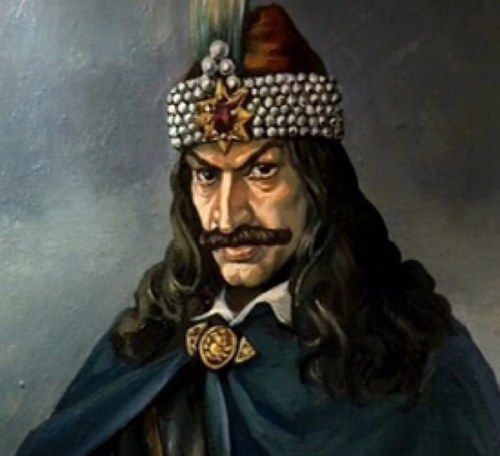
~Vlad Dracul~

Hero for All-Hallows Eve


Order of the Dragon


Vlad the Impaler - Dracula The Man & Myth Documentary

The People Profiles

442K subscribers

319,316 views - August 10, 2022

con't....


************


"That was BRILLIANT!!! I’ve never seen such a riveting portrait. What a strange time and place he lived in! In some ways he was more interesting than the myth. Truth is stranger than fiction."
-- Jaywill909

"I am sincerely impressed not only by the care for the exact pronounciation of all names (well done!), but also by the amount of research done and the exhaustive presentation of all historical facts. New subscriber here, keep up the great work!"
-- Angelfeather100

"Wow, this is one of the best documentaries I have ever seen on Vlad Tepes. It rivals the one done some years ago covering the book 'In Search of Dracula'."
-- jfnuyen

"Vlad the Impaler is what we now call Super-Hero"
-- Cro-Magnum

"I live in Canada my great auntie was from Romania she used to tell us kids stories about Vlad the Impaler in the early 1980s I still remember it"
-- Ryan Donovan

"Rise up Great Vlad Dracula, Europe needs you, rise up..."
-- D4Disdain

"This man was and is a hero for The West!!!"
-- jimsy7al

"Why no one makes a movie based on the real story as it is fascinating!"
-- C A F É B E A T S


*************************


'Terrifying close-up of an ant's face gives horror movie monsters a run for their money'

Angelica Stabile - Fox News via MSN - October 21, 2022

It turns out that zooming in on an ant’s face is an absolute nightmare.

A close-up photograph of an ant was sent in as a submission to the 48th annual Nikon Small World Photomicrography Competition — and the results are freaky.

The tight shot of the tiny insect, captured by Dr. Eugenijus Kavaliauskas of Taurage, Lithuania, shows the ant’s beady red eyes, angry expression and what appears to be long, sharp teeth.

con't....


*************************


Lake of Fire!!

Close-up photograph of current erupting Hawaii volcano looks like the pit of Hell !

[Source: AP via MSN - 'Hawaii's Big Island gets warning as huge volcano rumbles']


*************************


*************************


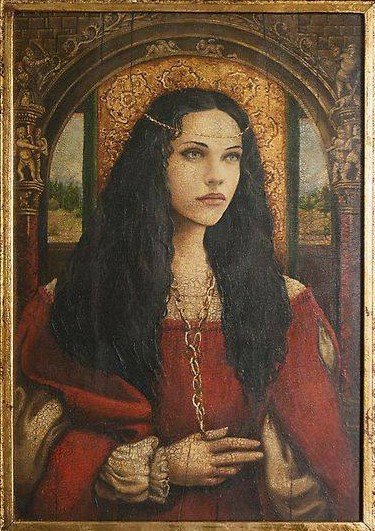
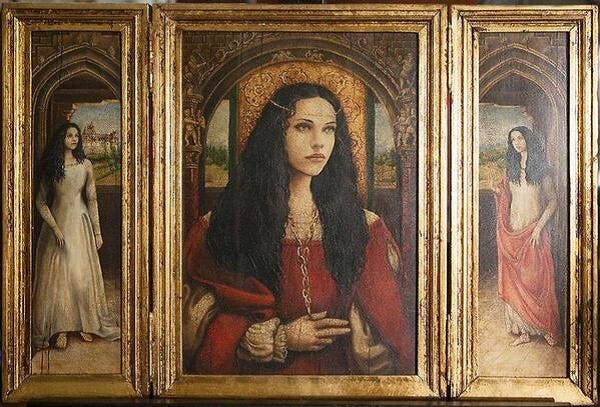
Justina Szilágyi - Wife of Vlad Dracul


This would have made her Queen of Wallachia


*************************


The Mysterious Origin of Halloween - Randall Carlson

After Skool

2.42M Subscripers

208,233 views - October 24, 2022

Halloween is seen in our modern age as a day lacking in any historical meaning. It has become known for scary movies, candy, costumes and mischief. But there is a deep, universal tradition behind Halloween, also known as the Festival of the Dead, All Souls Day or Feast of the Ancestors. This festival is observed around the world, in the northern and southern hemispheres at the SAME time of year. In this video, we take a dive down the rabbit hole with Randall Carlson to uncover the mysterious origin of Halloween.

con't....


*************************


Libera Me

Mental Set

103,139 views - October 8, 2010

From "Interview with the Vampire" (1994)


************


'Libera me, Domine' (English translation)

Gabriel Fauré


'Free me, Lord'

Free me, Lord, from eternal death,
on that terrible day, on that day.
When the skies are to be moved,
when the skies are to be moved, and the earth.
As you'll come to judge the aeon/world by fire.
 
Terrified, terrified I have been caused to become,
and I fear, as the tremor will come
and the rage is going to come.
 
That day, the day of rage,
danger and misery
That day, the great
and bitter, very bitter day.
 
Bestow us eternal rest, Lord,
and constant light may shine for them, may shine for them.
 
Free me, Lord, from eternal death,
on that terrible day, on that day.
When the skies are to be moved,
when the skies are to be moved, and the earth.
As you'll come to judge the aeon/world by fire.
 
Free me, Lord, from eternal death.
Free me, Lord.


************


Libera me

"Libera me" ("Deliver me") is a responsory sung in the Office of the Dead in the Catholic Church, and at the absolution of the dead, a service of prayers for the dead said beside the coffin immediately after the Requiem Mass and before burial. The text asks God to have mercy upon the deceased person at the Last Judgment. In addition to the Gregorian chant in the Roman Gradual, many composers have written settings for the text, including Tomás Luis de Victoria, Anton Bruckner (two settings), Giuseppe Verdi, Gabriel Fauré, Maurice Duruflé, Igor Stravinsky, Benjamin Britten, Sigismund von Neukomm, Orlande de Lassus, Krzysztof Penderecki, Antonio Salieri, Lorenzo Perosi, Arnold Rosner and Patrick Gowers (first stanza only). The Christian technical thrash band Believer also used the entire text in the operatically sung section of "Dies Iræ (Day of Wrath)" in their 1990 album Sanity Obscure.


************


"Halloween music"

Danse Macabre - Camille Saint-Saens
Devil Went Down to Georgia - Charlie Daniels Band
Skeletons in my Closet - Alice Cooper
Witchy Woman - Eagles
Dark Shadows Theme- Robert Cobert
This is Halloween - Danny Elfman
Monster Mash - Bobby Pickett
Halloween - Misfits
Hallow's Eve - Hallows Eve
Hellbound / Second Sight Seance - Christopher Young
Iron Maiden Studio version - Iron Maiden
Vedergällningen - Garmarna
Burzum - Dunkelheit
Type O Negative - Black No. 1 (Little Miss Scare)
Helloween - Halloween
The Legend of Wooly Swamp - Charlie Daniels Band
Stigmata Martyr - Bauhaus
Hurdy Gurdy Man - Donovan
Time of The Season - Zombies
Season of The Witch - Donovan
"The Future" and "You Want it Darker" - Leonard Cohen
Purple People Eater by Sheb Wooley
Monsters' Holiday - Buck Owens
Night On Bald Mountain - Fantasia (1941)
Haunted House - Jumpin' Gene Simmons (not the one from KISS)
The Cramps - Human Fly
Ghostbusters - Ray Parker Jr.
I Put a Spell on You - Credence Clearwater Revival
Spooky - Atlanta Rhythm Section
Witchy Woman (Eagles) - Doctor Sleep
Demented Are Go - Shadow Crypt
Last Caress - The Misfits
London Dungeon - Prong
This is Halloween - Leo Moracchioli
House of 1000 Corpses - Rob Zombie
Då Som Nu För Alltid - Kent
They're Coming to Take Me Away -  Butcher Babies
A.F.I. - "Totalimmortal" - A.F.I.
Temptation - Cradle Of Filth
The Death of Love -  Cradle Of Filth
The Blood - Such Fun - The Blood
My Dark Place Alone - Murderdolls
Necrodaemon Terrorsathan 2020 - Belphegor
Conjuring The Dead - Belphegor
We Are the Truth - Mushroomhead
Twilight Zone - Manhattan Transfer
Lil' Red Riding Hood - Sam the Sham & the Pharoahs
Halloween Music - Dark Castle of Mystbane - Fantasy & World Music by the Fiechters
Halloween Music - Haunted Organ | Dark, Vampire - Fantasy & World Music by the Fiechters
Spooky Carnival Music - Antique Carousel of Fright  - Fantasy & World Music by the Fiechters


*************************


          Autumn’s Spell

                The fields of wheat are seas of gold
                Along the open country road.
                The orchard’s wealth clings to the vine,
                Clustered fruit for sweet, red wine.

                The cornstalks’ silken, tasseled heads
                Stand tall above the melon beds;
                The golden pumpkin waits its fate
                To be a jack-o’lantern’s face,

                While in the cornfield at his post,
                Reluctant scarecrow’s playing host
                To crows who taunt his haystack head
                And raid, like beggars, the harvest bed.

                The harvesttime is a holiday
                Of brilliant colors, costumes gay,
                So Autumn, weave your magic spell
                Ere winter’s white shrouds hill and dell.

                -- Edith Elaine Williamson


.

Thursday, September 29, 2022

Guido von List: Part 35 - The Mysteries of the Rûna

According to Dr. Stephen Flowers, in short, the word Rûna means “seek the mysteries.” I would suggest to anyone interested, to google "dr stephen flowers runa" and you can find numerous lectures that go into detail about Rûna. I've already posted some of that. I'm going to look at just a few different observations and possible connections. The word and concept is of Teutonic or Proto-European origin, from northern Europe but adopted into words of languages across the rest of Europe. Although possibly it may have developed on its own--but from the same basic root word--via the Proto-European languages in several of those regions over time. Within any practical study of history and language, we would call it of Teutonic origin.


*************************


Above: Goddess Idun

From thaliatook.com

Idun, Norse Goddess of Youth, Immortality, and Beauty from the World Goddess Oracle by Thalia Took.

Nova Luna Center

Idun, Norse Goddess of Youth and Immortality by Thalia Took Idun ("She Who Renews") is the Norse Goddess of youth Who grows the magic apples of immortality that keep the Gods young. Her husband Bragi is God of poetry.


************


Excerpt from 'Guido von List: Part 1'

During the years 1888–1899 List was involved with two important literary associations. In May 1891 Iduna, which had the descriptive subtitle of "Free German Society for Literature", was founded by a circle of writers around Fritz Lemmermayer. Lemmermayer acted as a sort of "middle man" between an older generation of authors (which included Fercher von Steinwand, Joseph Tandler, Auguste Hyrtl, Ludwig von Mertens, and Josephone von Knorr) and a group of younger writers and thinkers (which included Rudolf Steiner, Marie Eugenie delle Grazie, and Karl Maria Heidt). The name Iduna was provided by List himself and is that of a North Germanic goddess of eternal youth and renewal. Richard von Kralik and Joseph Kalasanz Poestion, authors with specifically neo-Germanic leanings, were also involved in the circle.


*************************


KHPR: The Voice of Darkness

KHPR 004: Dr. Stephen Flowers on Runa

Dec. 23, 2009

ABOUT THIS EPISODE

Today we are taking a bit of a different turn. Instead of an interview, KHPR is presenting a lecture by Dr. Stephen Flowers an Ipssisimus of the Temple of Set and the Magus who uttered the word Runa, which means “seek the mysteries.” Dr. Flowers gave this lecture at the recent Conclave held in Austin, Texas and is an accomplished writer of over twenty books on Runa and related subjects.

In 1980 he founded the Rune-Gild, the world’s largest and most influential initiatory organization dedicated to Rune-Work and the Odian path. For more information on Dr. Flowers work you can visit his community website at www.edred.net. Dr. Flowers also hosts the thrice weekly Radio Free Runa podcast on this site.

As always you can email us at radams@khprvod.org  or via skype at KHPRshow and follow us on Twitter @KHPRvod. You can also sign up to receive an email whenever a new show or post is put up. Just use the subscription form to the right which includes an opt-in ability so that no one can sign you up without your knowing about it.


************************* 


Rune and Runa

Is there a connection between these words, what they symbolize, or even male and female symbolism? For starters, Rune (male) and Runa (female) are indeed given names in Scandinavia. Rune is a masculine given name derived from the Old Norse word rún, meaning "secret." It is earliest attested in a runestone as runi. That's really interesting just in of itself, and reflects a linkage. Could the masculine aspect of the mysteries manifest in signs, while the feminine aspect of it manifest inner spiritual symbolism (i.e. the Norse runes [ex. Othala] and the divine feminine energy [ex. Iduna])? There is a female given name of Japanese origin, and meanings in other languages, which I would discount as linguistic coincidence. However, I do think there are many connections which are ancient and widespread, and are linked back to the ancient travels of the Teutonic peoples.

Runa is a given name in countries around the Himalayas, which very possibly could tie into to the original Teutonic homeland north of the Himalayas, going clear back to the last glacial movement. Even a version of the triskelion is found in Tibetan Buddhist culture. How did it get there?. Runa is the name of a former civil parish in Portugal, and still goes by that name. Runa is also the name of a city in West Virginia, named after Runa McClung, the sister of an early settler. According to Wiktionary.org, Borrowed from Old Norse rún, which is from Proto-Germanic *rūnō (“letter, literature, secret”), which is borrowed either from Proto-Celtic *rūnā or from the same source as it; compare Dutch rune, German Rune and Swedish runa. This would seem to suggest a possible Proto-European origin via the Proto-Celts; however, I think most of the evidence points to a very ancient, pure Teuton origin.

The etymology on the above "rune" Wiktionary page, all point to a Norse origin. Interestingly though, in Italian, "runa" means "dart or javelin," with "runa" being the plural, and is of Latin origin... or at least that's what's stated. However, there could have been a very ancient Proto-European origin there, or it may still link to a Norse origin since everything else links to it. In the bigger picture of history, the ancient Teutons brought Rûna with them from their original homeland, in small waves across northern Europe (and their progeny down into southern Europe), and down to ancient Persia, Assyria, and Asia Minor (and their progeny down to the Indus Valley), and finally across half of northern Europe in a final huge wave (and their progeny down into southern Europe).

In Albanian, "runë" means an air-hole of a chimney, with runa as its plural form. The book 'The Tradition of Household Spirits' (Lecouteux; 2000) describes how many parts of a home--across different cultures--were once thought of as sacred (such as a chimney), and they were intimately connected with everyday spiritual traditions. In Turkish, "rün" has the general runic meaning that we usually think of... the runes. This would originate from people who long predated the invasion of Turkic tribes about nine hundred years ago. Also, other regions of the near and middle east are demographically much different than in ancient times.


*************************


"The invisible society is a secret and most august fraternity whose members are dedicated to the service of a mysterious arcanum arcanorum."
-- Lectures on Ancient Philosophy


The personal arcana

Whose to say that you can't be a "secret society" or study group of one or two? Knowledge, occult revelations, or applied symbols and concepts can be constructed brick by brick.


*************************


Haliurunas

Haliurunas, haljarunae, Haliurunnas, haliurunnae, etc., were Gothic "witches" (also called priestesses, seeresses, shamans or wise women) who appear once in Getica, a 6th century work on Gothic history. The account tells that the early Goth king Filimer found witches among his people when they had settled north of the Black Sea...

In the Wiktionary links for "rune" and "runa," within the offshoots in other European languages, often were "runa" for singular and "runas" for plural... sometimes with a double "nn." The Goths, who spread to almost every corner of Europe at various times, were originally from Scandinavia... The Land of Rûna.


Etymology

The name has been emended as the Goth-Latin forms haliurunnas, or haljarunae (and variations of the two forms) from several variants in the ms, i.e. aliorumnas, alyrumnas, aliorunas and aliuruncas.

The first element halju- is a variant of halja- 'Hell' (i.e. 'Hel, the abode of the dead'), but it has also been suggested that the first element does not refer to the realm of the dead, but instead directly to Hel, the goddess of the dead. Scardigli (1973) has analysed the second element as runnas, from *rinnan 'to run', and so the word would mean 'hell runners', i.e. female shamans. Lehmann (1986) considers this analysis preferable to Müllenhoff's who analyzed it as haljo-runas and compared it to OHG holz-rûna 'witch'.

However, others are of the same opinion as Müllenhoff, and analyse the second element as runas, and so it is considered to be cognate with Old English, hellerune ('seeress' or 'witch') and OHG hellirûna ('necromancy') and hellirunari ('necromancer'). Orel follows this interpretation and reconstructs it as the Proto-Germanic form *χalja-rūnō(n) in which the first element is *χaljō 'hel, the abode of the dead', and the second is *rūnō ('mystery, secret').

During Proto-Germanic times, the word *rūnō still referred to chanting and not to letters (rune), and in the sense 'incantation' it was probably borrowed from Proto-Germanic into Finnish where runo means 'poem'.

Klaeber and Niles et al. write the Latin-Gothic word as haljarunae and comment that the word appears in Beowulf in hwyder helrūnan where it means 'such demons', and it shows that the word would have been helrūne in the nominative singular. Neidorf adds that the use of the word in Beowulf supports the early 8th century dating of the poem, because besides the unambiguous attestation in the 6th century Getica (haljarunae), it is only attested in the 8th century Aldhelmian glosses, where it appears five times. The word is glossed consistently as divinatrix ('seeress') and phitonissa ('witch'), and twice wicca ('witch') is listed as a synonym. The appearance of the word in these early sources shows that in the 8th century helrūne and wicca were competing terms, but helrūne was out-competed very early in the Anglo-Saxon language and so the word wicca dominates with 28 attestations.

Lukman (1949) argued that Cassiodorus was inspired by a Roman account about a Germanic seeress whose name appeared in the form Auriniam, but the word haliurunna is generally considered to be an authentic Gothic word.


Account

Sixth century Goth scholar Jordanes reported in his Getica that the early Goths had called their seeresses haliurunnae (Goth-Latin).

Filimer, king of the Goths, son of Gadaric the Great, who was the fifth in succession to hold the rule of the Getae after their departure from the island of Scandza — and who, as we have said, entered the land of Scythia with his tribe — found among his people certain witches, whom he called in his native tongue Haliurunnae.

The Haliurunnae found refuge in the wilderness where they were impregnated by unclean spirits from the Steppe, and engendered the Huns, which Pohl compares with the origin of the Sarmatians as presented by Herodotus.


Beowulf


Damico (1984) connects haliurunae, which she translates as 'demons' and 'sorceresses', to the word helrūnan, which is glossed as Valkyrie, as a grim spirit of battle, and that it also appears in Beowulf as a name for Grendel, and for his mother by implication. She points out similarities between the haliurunas, the "fierce and hellish tribe", and Grendel and his mother.

She further connects them to the supernatural female powers called dísir in Scandinavian tradition who were appeased by sacrifices and adds that after the attack by the helrūnan, the Danes sacrifice at heathen temples hærgtrafum with honours of war, weorþunga.


*************************


Albruna

Albruna, Aurinia or Albrinia are some of the forms of the name of a probable Germanic seeress who would have lived in the late 1st century BC or in the early 1st century AD. She was mentioned by Tacitus in Germania, after the seeress Veleda, and he implied that the two were venerated because of true divine inspiration by the Germanic peoples, in contrast to Roman women who were fabricated into goddesses.


Name debate

Lukman (1949) claimed that Cassiodorus may have been influenced by the form aurinia and used it when writing his account on the Haliurunas in the Getica, but the word haliurunna is generally considered to be an authentic Gothic word.


Albruna

It was Wackernagel who first proposed the emendation Albrunam, and Albruna, and which was accepted by Müllenhoff, and de Vries. It has since then been the most commonly accepted form. The name is also attested independently for other women as Albrun in OHG, Ælfrun in OE and Alfrun in ON.


Western Pennsylvania German folk magic

The possible appearance of Albruna in Tacitus' work 98 AD, suggests, however, that these names may have reflected much older naming traditions.

The name element -run is a rare element in Old Germanic names. Sixth century Goth scholar Jordanes reported in his Getica that the early Goths had called their seeresses haliuru(n)nae and the word also identified in Old English, hellerune ('seeress' or 'witch') and in OHG as hellirûna ('necromancy') and hellirunari ('necromancer'), and from these forms an earlier Proto-Germanic form *χalja-rūnō(n) has been reconstructed, in which the first element is *χaljō, i.e. Hel, the abode of the dead, and the second is *rūnō ('mystery, secret'). In the Proto-Germanic period, before the introduction of runes, the word *rūnō did not yet refer to letters (rune) but it appears to have referred to chanting, and with this meaning it was probably borrowed from Proto-Germanic into Finnish where runo means 'poem'. In the daughter languages, it had various meanings in addition to runic writing. In Gothic it had the meanings 'secret' and 'decision', in Old High German it meant 'secret' and 'whisper', in Old English it referred to 'secret' and 'secret advice', and in Old Norse it meant 'secret knowledge'.

Rudolf Much translated the name as 'having secret knowledge of elvish spirits' or 'confidante of elves'. Schweizer-Sidler and Schwyzer follow Wackernagel and explain her name as 'one gifted with the divine, magical powers (runa) of the [elves]', and Simek interprets Albruna as 'the trusted friend of the elves' or 'the one gifted with the secret knowledge of the elves'. Although, Orchard cautions that most manuscripts have the name Aurinia, he considers Albruna to be "highly appropriate" and he agrees on the translation 'elf-confidante'. Morris translates her name as 'a sorceress with elf-like power' and compares it to Old English liodruna which meant 'sorceress with the help of songs' and helliruna 'a sorceress with the power of hell'.


Aurinia

Reichert has studied the name Guiliaruna, which appears as the name of a female Christian priest among the Germanic Vandals in Hippo Regius in North Africa, and he argues that Albruna can not be dismissed. He comments that it can hardly be a coincidence that a priestess is attested with a name having the second element -runa, from Proto-Germanic *rūnō, and it is probably not the name she was given at birth, but an epithet meaning 'priestess'. The first letters Gu- is a common representation of Germanic w-.


*************************


Seeress (Germanic)

In Germanic paganism, a seeress is a woman said to have the ability to foretell future events and perform sorcery. They are also referred to with many other names meaning "prophetess", "staff bearer", "wise woman" and "sorceress", and they are frequently called witches or priestesses both in early sources and in modern scholarship.


Names and terminology

Aside from the names of individuals, Roman era accounts do not contain information about how the early Germanic peoples referred to them, but sixth century Goth scholar Jordanes reported in his Getica that the early Goths had called their seeresses haliurunnae (Goth-Latin). The word also appears in Old English (OE), hellerune ("seeress" or "witch") and in Old High German (OHG) as hellirûna ("necromancy") and hellirunari ("necromancer"), and from these forms an earlier Proto-Germanic form *χalja-rūnō(n) has been reconstructed, in which the first element is *χaljō, i.e. Hel, the abode of the dead, and the second is *rūnō ("mystery, secret"). At this time the word *rūnō still referred to chanting and not to letters (rune), and in the sense "incantation" it was probably borrowed from Proto-Germanic into Finnish where runo means "poem."

In OE, hellerune ("seeress" or "witch"), or helrūn...


Projection

According to de Vries, the origin of gandr is a word gan- meaning "magic", of which there was an ablaut grade gin- (in English there is still a semantic relationship between the ablaut grades swam and swim, and sat and sit) that may be found in the name of the primordial chasm Ginnungagap ("space filled with magic powers"), and on the migration age Björketorp and Stentoften runestones, it appears in the sense "magically powerful" in Proto-Norse ginnarunaʀ ("powerful runes"


*************************


Rûna root words in Camun dialect

There are many mysteries within ancient Camunian culture. The Rosa Camuna, pentagrams, labyrinths, life runes, the horned god, stone observatories with connections to the Ophiuchus constellation (astronomy and astrology; the 13th sign of the zodiac; 13 month calendar starting in April), and much more. The Camunian dialect was isolated, therefore it has many ancient pre-Latin words. For example, the world for moon is mòn, not luna. The name for the Moon Goddess is still present in the dialect, Mòna, but after centuries of Christian zealotry, it now embarrassingly means basically "a whore."

So, if any old language had so arcane a word as Rûna, it might be Camun, which is really a sub-dialect of the Brescian dialect of Western Lombard, which itself is a branch of the Lombard language. I did find a few words with "runa," but did they follow any consistent pattern, or did they allude to anything suggesting any metaphoric pagan or mystery connections? With some of the words here, it was likely just a coincidence of spelling, but with others it may well have been part of a compound word at some point in time.

Amprunà -  reverse, overturn
Amprunàh - to tip over, lie down
Amprunàh-dó - go to bed
Cahtrunàda - to talk rubbish
Cerûna -  beautiful, healthy face
Ciacerûna - chatty
Corùna or cùrùna -  crown
Incurunasciù - coronation
Ompruna - to dish, to damage a reputation
Omprunas - topple over
Ontruna (or ontrunat ?) - deeply asleep
Patrùna or padrûna - mistress
Pirùnàt - harpoon
Poltrùna - lazy - chair with armrests (armchair)
Pultrùna - lounge chair
Sbarùnà - go to pieces
Scarùnà - driving wagons on mountain mule tracks
Scavrùnàda - picnic, excursion
Slandrùna - whore
Smarunada - gross error
Sperùnà - ram
Sperùnada - rammed
Spérunada (Bienno sub-dialect) - rammed, fork ?
Spirunà - break into shreds, use fork ?
Spirùnada - shred, forkful
Tèruna (Bienno sub-dialect) - begin to ripen (ex. grapes)
Terunàs - derogatory for a southerner

Two words, Cerûna (beautiful, healthy face) and Ciacerûna (chatty), had the exact spelling with the exact accent mark! Rûna. I suppose that it's a bit curious, if we're looking for some ancient connection to the divine feminine, that both words could allude to what maybe are female traits. Certainly "beauty" would be linked to the feminine. Some of the definitions could be interpreted as a type of regeneration of nature from death in winter (shred, overturn, ram), to life in spring (ripen, beautiful), while others could suggest a certain nobility (crown) which could hearken back to some type of spiritual nobility.

There's nothing absolutely etched in stone that states that the ancients just adored the Goddess Mòna. In an extremely harsh environment, she may have been despised for bringing winter (death) upon them! She was "a whore" ("slandrùna") perhaps? Then when she ushered back the spring (life), she was beautiful and healthy ("cerûna"). I don't know, but I'm just brain storming what could possibly have been the origin for these words. I have a little bit of a hard time imagining that they would think of the Moon Goddess as "a whore," but maybe that meaning was a bastardization of something else describing the harshness of winter, and cursing it.

.

Sunday, July 29, 2018

Why I Fear Neopagan "Liberation" II - OUR culture is "none of our business" party line


This is in regards to a lecture given by an individual in modern academia, in California no less, who is involved in neopaganism and folklore in a state-sponsored (itself merely a front) effort to steer society in a certain direction. This person is someone whom I incorrectly--even unfairly--characterized once, but whom I have posted certain works by; therefore I don't want to use their name here, but you can see who they are by clicking onto the link of the lecture in question. I have no animosity against this person, as they are simply another paid system thug put upon us. If it wasn't this person, it would be another. In other words, I'm opposing the sponsored message by those in high places, not this particular passive-aggressive thug.

Without going into great detail, as I took no notes while I listened on my iPod yesterday, I wanted to interpret the main theme of this lecture. When our Masonic and Kabbalistic overlords, who plot and finance these movements, liberate an idea.... they want it to go their way! They don't want to go through all of this trouble just to have some opportunistic entity, not down with their whole program, to benefit in any way. In this instance, they probably see folk-Asatru as the greatest threat to this program. Any "neopagan" movement which is of European origin must be monitored very carefully; but any other neopagan movement is of no concern.

In this lecture, this individual made it crystal clear in the exoteric that 1) "We are all of mixed race"; 2) No particular folklore belongs to any one people; 3) People in "the west" should be very careful of "stealing" the traditions of others due to the history of oppression/destruction of those cultures; and 4) The idea that traditions and folklore belong to any one race or ethnicity is "dangerous". The esoteric message is 1) People of European origin are of mixed race and have no business having any traditions of their own; 2) Traditions and folklore of European origin belong to all people; 3) People of European origin should keep their hands off of other people's pagan traditions and should feel inherent guilt and shame (unless they adopt this program of course); and 4) When traditions and folklore are ever thought of as belonging to people of European origin, it's Neo-Naziism.

NONE of this would apply to, for example, Sikhs; whom go about their way without worrying about all of this state-sponsored BS in the slightest! Basically they want people of European origin to adopt all sorts of goofy individual practices, most often revolving around feminism and homosexuality, in a more-or-less non-collective manner and share it with the world (the world being their only collective). Meanwhile, they should be focusing on "cliqueing up" with other pagans in an effort to establish a host of clandestine goals laid out by the invisible string-pulling financiers at the top. The overlords do attack other races in various ways, but it might sound ingenuine if I delved into that.

There could be a manner in which Neopagan folk collectives, of various spiritual folk traditions, could see each other as having common interests across racial lines. In other words, there are other potential allies of other races. There are even some vague expressions of that that exist now. Unfortunately, it would be a difficult endeavor if we are always under attack and are barely able to express our own identity. Still, I think it should be noted as a long-term goal.

"The battleline between good and evil runs though the heart of every man." -- Aleksandr Solzhenitsyn

.

Thursday, June 23, 2016

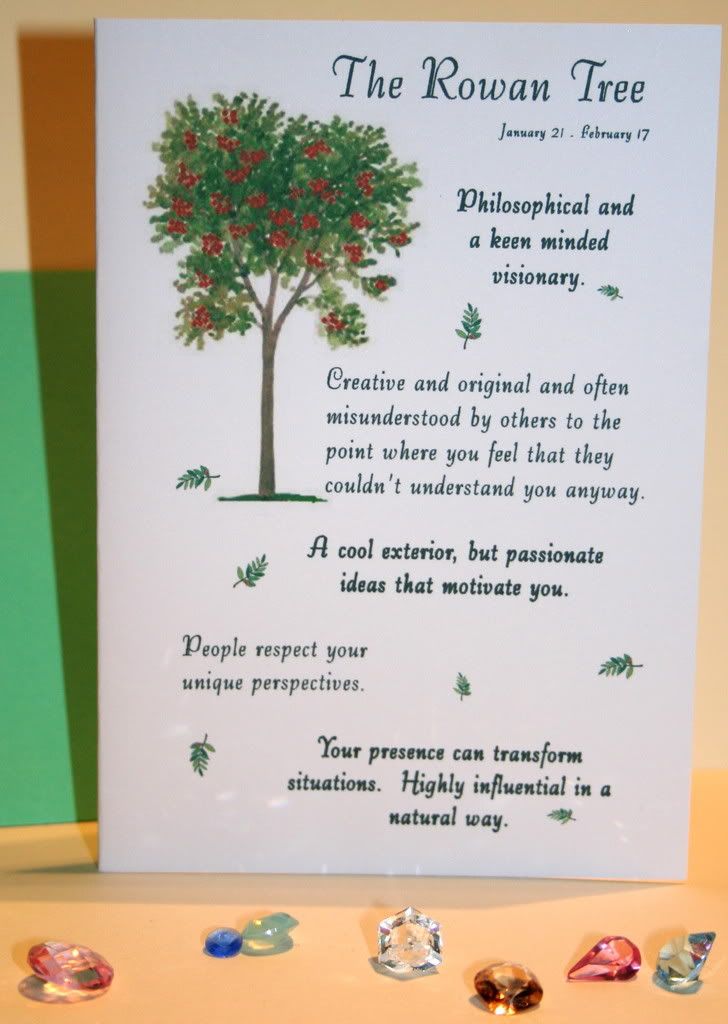
The Rowan Tree in European mythology and folklore


The Rowan Tree

Wholesome Day

The rowans or mountain-ashes are shrubs or trees in genus Sorbus.

They are native throughout the cool temperate regions of the Northern Hemisphere, with the highest species diversity in the mountains of western China and the Himalaya.

Formerly, when a wider variety of fruits were commonly eaten in the European and North American culture, Sorbus counted among the home fruits, though Sorbus domestica is all but extinct in Britain, where it was traditionally revered.

In the Canadian provinces of Newfoundland, Labrador and Nova Scotia, this species is commonly referred to as a "dogberry" tree.

Rowans are mostly small deciduous trees 10–20 m tall, though a few are shrubs.

The fruit has a 4 to 8 mm diameter and is bright orange or red in most species, but pink, yellow or white in some Asian species.

The fruit are soft and juicy, which makes them a very good food for birds, particularly waxwings and thrushes, which then distribute the rowan seeds in their droppings.

The fruit are eaten by about 60 bird species and several mammals.

The wood is dense and used for carving and turning and for tool handles and walking sticks.

Rowan fruit are a traditional source of tannins for vegetable dyes.

The fruit of European Rowan can be made into a slightly bitter jelly which in Britain is traditionally eaten as an accompaniment to game, and into jams and other preserves, on their own, or with other fruit.

The fruit can also be a substitute for coffee beans, and have many uses in alcoholic beverages.

It is used to flavour liqueurs and cordials and to produce country wine and to flavour ale.

The European rowan has a long tradition in European mythology and folklore.

It was thought to be a magical tree and give protection against malevolent beings.

The tree was also called "wayfarer's tree" or "traveller's tree" because it supposedly prevents those on a journey from getting lost.


Mythology and folklore

The European rowan (Sorbus aucuparia) has a long tradition in European mythology and folklore. It was thought to be a magical tree and give protection against malevolent beings. The tree was also called "wayfarer's tree" or "traveller's tree" because it supposedly prevents those on a journey from getting lost. It was said in England that this was the tree on which the Devil hanged his mother.

British folklorists of the Victorian era reported the folk belief in apotropaic powers of the rowan-tree, in particular in the warding off of witches. Such a report is given by Edwin Lees (1856) for the Wyre Forest in the English West Midlands. Sir James Frazer (1890) reported such a tradition in Scotland, where the tree was often planted near a gate or front door. According to Frazer, birds' droppings often contain rowan seeds, and if such droppings land in a fork or hole where old leaves have accumulated on a larger tree, such as an oak or a maple, they may result in a rowan growing as an epiphyte on the larger tree. Such a rowan is called a "flying rowan" and was thought of as especially potent against witches and their magic, and as a counter-charm against sorcery. In 1891, Charles Godfrey Leland also reported traditions of rowan's apotropaic powers against witches in English folklore, citing the Denham Tracts (collected between 1846 and 1859).

In Norse mythology, the goddess Sif is the wife of the thunder god Thor. Sif has been linked with Ravdna, the consort of the Sami thunder-god Horagalles. Red berries of rowan were holy to Ravdna, and the name Ravdna resembles North Germanic words for the tree (for example, Old Norse reynir). According to Skáldskaparmál the rowan is called "the salvation of Thor" because Thor once saved himself by clinging to it. It has been theorized that Sif was once conceived in the form of a rowan to which Thor clung.

In Neo-Druidry, the Rowan is known as the Portal Tree. It is considered the threshold, between this world and otherworld, or between here and where ever you may be going, for example, it was placed at the gate to a property, signifying the crossing of the threshold between the path or street and the property of someone. According to Elen Sentier, in her book, "Threshold is a place of both INGRESS (the way in) and EGRESS (the way out). Rowan is a portal, threshold tree offering you the chance of 'going somewherere ... and leaving somewhere."

In Newfoundland, popular folklore maintains that a heavy crop of fruit means a hard or difficult winter. Similarly, in Finland and Sweden, the number of fruit on the trees was used as a predictor of the snow cover during winter, but here the belief was that the rowan "will not bear a heavy load of fruit and a heavy load of snow in the same year", that is, a heavy fruit crop predicted a winter with little snow.

However, as fruit production for a given summer is related to weather conditions the previous summer, with warm, dry summers increasing the amount of stored sugars available for subsequent flower and fruit production, it has no predictive relationship to the weather of the next winter.

In Malax, Finland the reverse was thought. If the rowan flowers were plentiful then the rye harvest would also be plentiful.[citation needed] Similarly, if the rowan flowered twice in a year there would be many potatoes and many weddings that autumn.[citation needed] And in Sipoo people are noted as having said that winter had begun when the waxwings (Bombycilla garrulus) had eaten the last of the rowan fruit.

In Sweden, it was also thought that if the rowan trees grew pale and lost color, the fall and winter would bring much illness.


Rowan Totem

Protection against enchantment, psychic power, self-control


American Folkloric Witchcraft - November 1, 2011

The Rowan is sometimes referred to as the “Tree of Life” or the “Lady of the Mountain,” this tree is thought to protect against enchantment. The wood of this tree was often used for rune staves (sticks which are engraved with the Ogham or runs and used as a divinatory tool) and as a divining rod for metal.

Also used as a generally protective talisman, the branches of the Rowan Tree are hung over the doors of houses and barns to protect the inhabitants. It is planted in cemeteries in Wales to guard over the spirits of the dead. Babies’ cradles are often made of Rowan wood, as it is thought to keep death and harm away from the young. Some references claim that Rowan wood protects one from the Faery.

The Rowan berry has a pentagram in its center and is red in color. A necklace strung of the berries is said to protect the wearer from harm.

Rowan indicates an ability to contain control of your senses, provides protection from harm and a protection when engaged in battle. The element associated with the Rowan is Fire, and its gender association is male.


.

Saturday, June 18, 2016

Strawberry Moon Wanderings 2

Timeless face - Carole Lombard

Lombard Name Meaning

French and English (also common in Ireland): ethnic name for someone from Lombardy in Italy. The region is named for the Germanic tribe which overran the area in the 6th century ad. Their name is attested only in the Latinized form Langobardi, but is clearly a Germanic name meaning ‘long beards’. Early immigrants from Lombardy to London were often involved in banking and moneylending, and the name came to be used from the 14th century onward as a generic term for a financier.


Alchemical crazies!

From NAZI Germany to NASA southern California; Aleister Crowley, Wernher von Braun, Jack Parsons and company. It must be tough to be a high ranking Mason. They have so much fun behind the scenes, and all of it has to be kept an eyes-wide-shut / hidden-in-plain-sight secret. When he wasn't working on rocket science, Jack Parsons was a wild one.... "All work and no play makes jack a dull boy."


All of Nasa's lies and nonsense boil down to this disturbing video

Captain Obvious

What you're about to see and witness will prove beyond a shadow of a doubt that Nasa is a complete CGI Occult institution by Captain Obvious.


HexFest in New Orleans

Although this years date has now passed, I still wanted to make mention of HexFest... a gathering of magickal traditions. This type of collective gathering is good, as opposed to spending all of one's spiritual life feeling so bashful about being white and the like. This is where European, American, West African, Native American, and other traditions can gather in a positive manner as a multi-collective.. in old magickal New Orleans.


Nikola Tesla The wonder of 3 6 9.

notregme


What is Fire?

It's Okay To Be Smart

Why does fire burn? What's the chemistry and physics of a flame? This week, learn about the beautiful science happening inside a flame!


Gin Wigmore - Kill of the night (Lyrics)

Stars and Things ♥


'Disinformation Part 1: 
How trolls control 
an internet forum'

An Insider’s Guide to Online Disinformation

Milicent Cranor - WhoWhatWhy.org - January 27, 2016

You may well wonder about the material we have chosen to present below.  For one thing, it has been around for a while, though mostly on obscure websites. For another, its authors are unknown. More important, we cannot say how accurate, overall, is the analysis offered in it.

Nonetheless, it is tantalizing — and raises some important issues, no matter its provenance.

The document claims to reveal the techniques — dirty tricks, really — that are practiced by trolls, saboteurs, provocateurs, disinformants, spies and other government operatives, as well as their fellow  practitioners of the dark arts.

One thing is certain: we’ve all experienced the frustration of dealing with this phenomenon. We just don’t always recognize it for what it is.

con'd


West African God Obatala: Alive and well in Brazil

Obatala

Obatala (known as Obatalá in Latin America) is an Orisha. He is the Sky Father and the creator of human bodies, which were brought to life by Olorun's smooth breath. Obatala is the father of all Orishas and also the owner of all ori. Any Orisha may claim an individual, but until that individual is initiated into the priesthood of that Orisha, Obatala still owns that head. Obatala's wife is Yembo (known as Yemú in Latin America).

Obatala is Olorun's second son. He is the one authorized by Olorun to create land over the water beneath the sky, and it is he whom according to the yoruba mythology founded the first Yoruba city, Ife. Obatala is Olorun's representative on earth and the shaper of human beings.

************

Obatalá (also known as Ochalá or Oxalá; Orichalá or Orixalá) is the oldest "Orisha funfun" ("white deity"), referring to purity, both physically and symbolically as in the "light" of consciousness. In Candomblé, Obatalá has been syncretized with Our Lord of Bonfim and is the subject of a large syncretic religious celebration, the Festa do Bonfim, which takes place in January in the city of Salvador and includes the washing of the church steps with a special water, made with flowers. In Santería, Obatalá is syncretized with Our Lady of Mercy and Jesus Of Nazareth.

'Obatala Festival: Honoring Orisha Deity Obatala Across the World'

Video: Obatala Festival in Brazil


'Bats and Vampiric Lore in Père Lachaise Cemetery'

Allison Meier - AtlasObscura.com - May 27, 2014

The symbolism of cemeteries can be rather ominous, with skulls and flying souls and the refrain of memento mori — remember that you will die. By the 19th century, however, most cemeteries in Western Europe and the United States had moved to a gentler Victorian iconography, focusing on eternal life with inverted flames still burning in the dark, and weeping angels with their beautiful carved faces demurely turned to the ground. Yet in Père Lachaise Cemetery in Paris, opened in 1804, a curious dark symbol repeats itself: the bat.

con'd


Open Satanic ritual marked opening of Gotthard Tunnel

I don't really know why the Swiss elites used all ethnic Swiss/German performers here, since they're one of the European states that wants to displace its native population. Maybe they get their rocks off by whoring us spiritually. Anyway, this is their religion, and should never be confused with native European magickal traditions. Also, there's at least a theoretical difference between "Satanic elitism" (Cult of Saturn) and what at least could be respectful expressions of ancient Saturnian spirituality. In other words, why just give them Saturnian spiritual tradition... why not just yank it back from them!? These elites need to start hearing the word "NO." It belongs to everyone. If you're a Christian and you believe that God created Saturn, then it belongs to you to. It's part of the heritage of the whole world.


WAS IN ALLER WELT!? Satansverehrung bei der Gotthard-Tunnel Eröffnung 01.06.2016

Deine EINZIGE Rettung!!!


Necromanteion

The Nekromanteion was an ancient Greek temple of necromancy devoted to Hades and Persephone. According to tradition, it was located on the banks of the Acheron river in Epirus, near the ancient city of Ephyra. This site was believed by devotees to be the door to Hades, the realm of the dead. The site is at the meeting point of the Acheron, Pyriphlegethon and Cocytus rivers, believed to flow through and water the kingdom of Hades. The meaning of the names of the rivers has been interpreted to be "joyless", "burning coals" and "lament."

************

This sounds like another ancient tradition which was conflated into the Christian pantheon ("the gate to hell").


Necromanteion of Acheron - Saitonikolis

Nikos Chalkiadakis

Necromanteion or Nekyomanteion : an ancient temple of necromancy
devoted to Hades and Persephone.


Gary Jules - Mad World (song+lyrics)

dyerseve mx

************

This was an interesting cover of a 1982 Tears for Fears song. I believe that this was produced by Michael Andrews and Gary Jules for the 2001 film 'Donnie Darko'.

.