Sunday, October 2, 2022

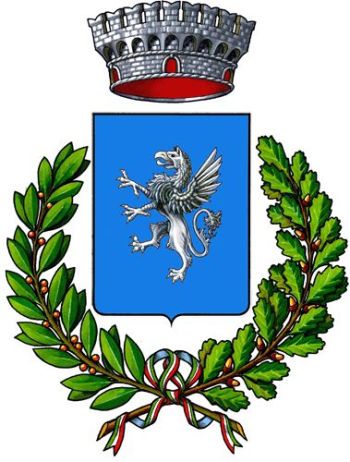
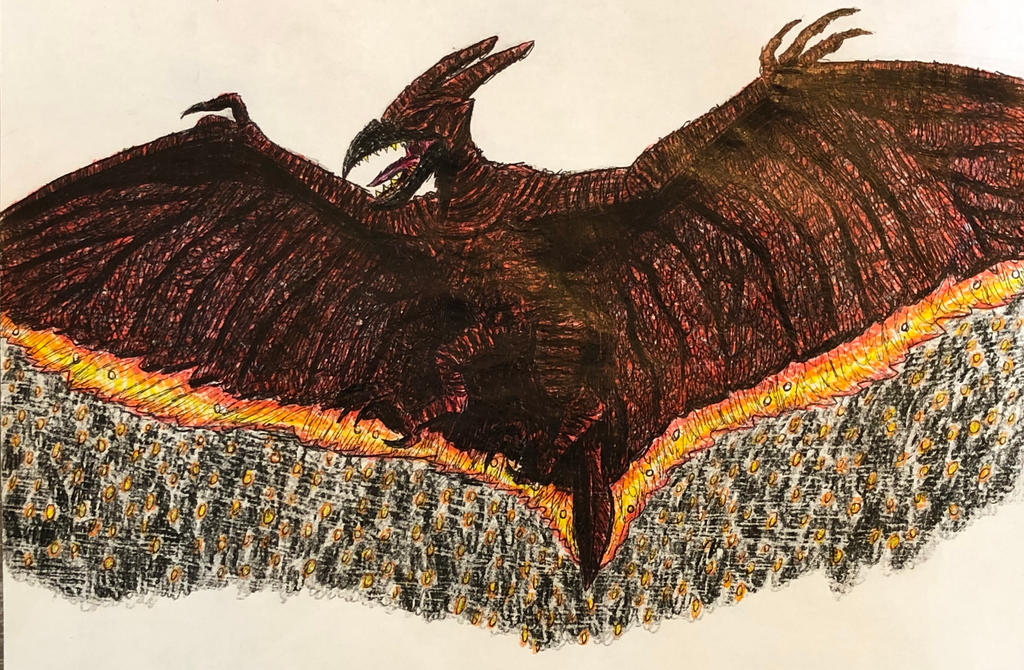
Are lions and eagles on hearaldry, actually dragons?


Double-headed Lombardo-Venetian eagle, apparently of Masonic origin


*************************


Arms of Sirmione in the

province of Brescia


*************************


Eagle on past German flag


*************************


Brescian lion


*************************


Venetian lion


*************************


Above: South Tyrolian eagle.... Below: "Rodan" of Japanese movie fame


*************************


Classic German eagle


.

Saturday, October 1, 2022

Equinozo di Autunno 2022 - Part 4

10 Most MYSTERIOUS Secret Places On Earth!

8,918 views - September 23, 2022

Origins Explained

3.66M subscribers


*************************


Links


Video

John Wesley Hardin: The Deadliest Outlaw of the Wild West - YouTube

GOTH GIRL Picked On IN SCHOOL, What Happens Is Shocking | Dhar Mann - YouTube

Jeff & David Icke - The AI Takeover And The Subjugation Of Humanity - YouTube

Be Kind, You Don't Know Their Story, Help Someone Today


Articles

Genome Sequencing Reveals European Lineage Of A Carthaginian

Nordic Witchcraft in Transition: Impotence, Heresy and Diabolism in 14th-century Bergen


*************************


Haliurunas - Gothic Witches

[Above: Nordic, Icelandic and Germanic Magical and Mystical Symbols]


Haliurunas

Haliurunas, haljarunae, Haliurunnas, haliurunnae, etc., were Gothic "witches" (also called priestesses, seeresses, shamans or wise women) who appear once in Getica, a 6th century work on Gothic history. The account tells that the early Goth king Filimer found witches among his people when they had settled north of the Black Sea, and that he banished them to exile.


Etymology

The name has been emended as the Goth-Latin forms haliurunnas, or haljarunae (and variations of the two forms) from several variants in the ms, i.e. aliorumnas, alyrumnas, aliorunas and aliuruncas.

An illustration of a later North Germanic counterpart of the Haliurunas, who was buried with the wand from Klinta by Mats Vänehem (Swedish History Museum)

The first element halju- is a variant of halja- 'Hell' (i.e. 'Hel, the abode of the dead'), but it has also been suggested that the first element does not refer to the realm of the dead, but instead directly to Hel, the goddess of the dead. Scardigli (1973) has analysed the second element as runnas, from *rinnan 'to run', and so the word would mean 'hell runners', i.e. female shamans. Lehmann (1986) considers this analysis preferable to Müllenhoff's who analyzed it as haljo-runas and compared it to OHG holz-rûna 'witch'.

However, others are of the same opinion as Müllenhoff, and analyse the second element as runas, and so it is considered to be cognate with Old English, hellerune ('seeress' or 'witch') and OHG hellirûna ('necromancy') and hellirunari ('necromancer'). Orel follows this interpretation and reconstructs it as the Proto-Germanic form *χalja-rūnō(n) in which the first element is *χaljō 'hel, the abode of the dead', and the second is *rūnō ('mystery, secret').

During Proto-Germanic times, the word *rūnō still referred to chanting and not to letters (rune), and in the sense 'incantation' it was probably borrowed from Proto-Germanic into Finnish where runo means 'poem'.

Klaeber and Niles et al. write the Latin-Gothic word as haljarunae and comment that the word appears in Beowulf in hwyder helrūnan where it means 'such demons', and it shows that the word would have been helrūne in the nominative singular. Neidorf adds that the use of the word in Beowulf supports the early 8th century dating of the poem, because besides the unambiguous attestation in the 6th century Getica (haljarunae), it is only attested in the 8th century Aldhelmian glosses, where it appears five times. The word is glossed consistently as divinatrix ('seeress') and phitonissa ('witch'), and twice wicca ('witch') is listed as a synonym. The appearance of the word in these early sources shows that in the 8th century helrūne and wicca were competing terms, but helrūne was out-competed very early in the Anglo-Saxon language and so the word wicca dominates with 28 attestations.

Lukman (1949) argued that Cassiodorus was inspired by a Roman account about a Germanic seeress whose name appeared in the form Auriniam, but the word haliurunna is generally considered to be an authentic Gothic word.


Seeress (Germanic)

In Germanic paganism, a seeress is a woman said to have the ability to foretell future events and perform sorcery. They are also referred to with many other names meaning "prophetess", "staff bearer", "wise woman" and "sorceress", and they are frequently called witches or priestesses both in early sources and in modern scholarship.

They were an expression of the pre-Christian shamanic traditions of Europe, and they held an authoritative position in Germanic society. Mentions of Germanic seeresses occur as early as the Roman era, when, for example, they at times led armed resistance against Roman rule and acted as envoys to Rome. After the Roman Era, seeresses occur in records among the North Germanic people, where they form a reoccurring motif in Norse mythology. Both the classical and the Norse accounts imply that they used wands, and describe them as sitting on raised platforms during séances.

Ancient Roman and Greek literature records the name of several Germanic seeresses, including Albruna, Veleda, Ganna, and, by way of an archaeological find, Waluburg. Norse mythology mentions several seeresses, some of them by name, including Heimlaug völva, Þorbjörg lítilvölva, Þordís spákona, and Þuríðr Sundafyllir. In North Germanic religion, the goddess Freyja has a particular association with seeresses, and there are indications that the Viking princess and Russian saint, Olga of Kiev, was one such, serving as a "priestess of Freyja" among the Scandinavian elite in Kievan Rus' before they converted to Christianity.

Archaeologists have identified several graves that appear to be the remains of Scandinavian seeresses. These graves contain objects such as wands, seeds with hallucinogenic and aphrodisiac properties, and a variety of items indicating high status.

Societal beliefs about the practices and abilities of seeresses would contribute to the development of the European concept of "witches", because their practices survived Christianization, although the practitioners became marginalized, and evolved into north European mediaeval witchcraft. Germanic seeresses are mentioned in popular culture in a variety of contexts. In Germanic Heathenry, a modern practice of Germanic pagan religion, seeresses once again play a role.


************


Remnants of ancient Proto-European witchcraft?

I remember in the 1958 film 'The Vikings', a seeress was portrayed. Now I really don't know if that was a carryover from earlier Proto-European culture, something inherent to Asatru (used as a catch-all term here), or something that just developed on its own. I think regionally, it was probably a combination of thing. The Haliurunas were Gothic witches, but among Goths who had settled north of the Black Sea, or what is now Ukraine. The Goths spread out everywhere during the great Germanic migrations. When we look at accounts of witchcraft that existed in ancient Greece, it was separate from the Greece pantheon of gods, just as in the above example where this witchcraft apparently was separate from Asatru.


*************************


American Death Cults: A Jay Myers Documentary

Jim Crenshaw

September 27, 2022 - 69,09 subscribers

Throughout American history there have been a number of disturbing cults some linked to shadowy secret societies and intelligence agencies. This Documentary examines a few of them.

Source: JayM_Documentaries: https://www.bitchute.com/channel/jaym_documentaries/


*************************


Bathory - In Nomine Satanas

136,136 views - January 11, 2022

Bathory

50.7K subscribers

In Nomine Satanas · Bathory

Jubileum III

℗ 1998 Black Mark Prod./B.Forsberg


*************************


THE FINAL CUT IS THE DEEPEST.....

Vengeance is all I seek
Bathed in blood, you're dead to me
 

Vengeance is all I seek
Bathed in blood, you're dead to me
 

Vengeance is all I seek
Bathed in blood, you're dead to me
 

Shrouded in nothingness
Watch as the life that you love
 

Now fades in the dark and I sink deep further from sanity
Righteous and content bathed in vengeance


************


I got this above poem from someone online. I'm not sure exactly what to make of it, but it sounded interesting... from someone's perspective about something very dark.


*************************


"The Blood Countess"

The above music by 'Bathory' and the above quote seem to both lead directly to Countess Elizabeth Báthory, a Medieval Hungarian noblewoman who was accused of crimes that would make her one of the worst serial killers in history. According to Wikipedia, "Báthory and four of her servants were accused of torturing and killing hundreds of girls and women between 1590 and 1610. Her servants were put on trial and convicted, whereas Báthory was confined to her home. She was imprisoned within Castle of Csejte." According to legend, she often bathed in her victims blood. Apparently many historians believe that she was the victim of a witch-hunt, and just the nature of the accusation sounds vampiric and especially being in central Europe.

Elizabeth Bathory – The ‘Blood Countess’

FULL MOVIE: The Blood Queen (Countess Bathory: The Lady of Csejte)


*************************


"The only way to deal with an unfree world is to become so absolutely free that your very existence is an act of rebellion."

-- Albert Camus


*************************


Valda Hansen

I've heard people refer to Jamie Lee Curtis as "the original scream queen," which I assume goes back to the film 'Halloween' (1980). I think that title is purposely fleeting in its usage. After all, Fay Wray in the original 'King Kong" (1933) goes back a lot longer, and there were silent film actresses long before that. However, when it comes to the more overt scream queens, maybe Valda Hansen should come to mind. She is best known for appearing in Ed Wood films starting in the 1950s.

Valda also appeared in numerous films which were not in her official filmography. She also appeared in many horror, mystery, and true crime magazines. Those were the defacto "websites" of their day, a bit outside the fray of the mainstream. Although a bit racy, at least for that time, apparently she never crossed the line into anything even remotely disreputable. She just really wanted to be an actress, and missed the post 1980 boom in the number of films and opportunities where numerous actresses and actors could make well over a hundred films in the B-circuit.

Her parents were immigrants; her father from Denmark, and her mother from France. The 5'6" young woman with the pin-up looks, who was originally from down there in Los Angeles, was actually discovered by Ed Wood while performing in a play. Apparently her personality was just as she appeared and photographed... a charmer. After twenty years or so, she actually didn't retire in 1975, but there just weren't opportunities for a little-known actress over forty. If she isn't well-known, then she is at least something of a horror genre cult figure.

I think the 1994 film 'Ed Wood', although there was no character of her in the film, did spark interest in Ed Wood films... and that led to some discovering of her work. She had a less-than-ten-second role in the 1972 film 'The Great Northfield Minnesota Raid', but it was enough time to show sort've an artistic view of her perfect body. Sadly, Valda Hansen passed away at only sixty of cancer, probably unnecessarily. $800 was raised for her to have a mole on her leg removed, and she didn't receive treatment after that because she didn't have any health plan. In the 1992 documentary about Ed Wood entitled 'Flying Saucers Over Hollywood: The 'Plan 9' Companion', linked below, she was interviewed and still looked cute and with that lively-innocent personality. She passed away the next year.


Valda Hansen - Wikipedia

Valda Hansen - IMDb

valda hansen - Google Search

Valda Hansen Photos - Valda Hansen Picture Gallery - FamousFix

Monster-Vision - Valda Hansen appreciation post: | Facebook

Valda Hansen (center), Darwin Joston (right), on-set of the Film, "Cain's Way", aka "Cain's Cutthroats", Colby Productions, 1970 Stock Photo - Alamy

Flying Saucers Over Hollywood: The 'Plan 9' Companion - YouTube


The Ed Wood Summit Podcast #18: Robert Monell on Valda Hansen

The Ed Wood Summit Podcast


I was privileged to talk with cult film scion Robert Monell about his friend Valda Hansen, and related topics. We went back in time in every way, from Skype to batting around early '60s home movie footage of a clearly-smitten Ed, to groundbreaking stories detailing unknown aspects of her work.


************


Tex Arkana: Where's Valda Hansen buried?

Joseph @Tex Arkana: Apparently the family decided not to be public in any way regarding Valda. I think that was a mistake, as certain people may have been moved by her work, her personality.

Tex Arkana @Joseph"  She was cute as a button and had plenty of charisma. She was cursed by poor Ed’s reverse Midas touch


************


Cult Movies magazine, No. 11 (1994): A continuing examination

"Valda Hansen: Farewell to the White Ghost" (pgs. 54-55)


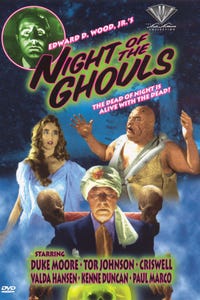
Actress Valda Hansen (1932-1993) was the blonde bombshell who vampily portrayed the con artist known as the White Ghost in Ed Wood's Night of the Ghouls in 1959. After years removed from the public spotlight, Valda briefly resurfaced in the 1990s to reminisce fondly about Eddie in Nightmare of Ecstasy and the documentary Flying Saucers Over Hollywood. She died of cancer at the age of 60 in July 1993, a year before this issue was released. Her death, in fact, had already merited mention in Cult Movies #8. "Farewell to the White Ghost" is a fond goodbye to the departed starlet, written by Cult Movies publisher Buddy Barnett, based on an interview with Hansen by Cult Movies editor-in-chief Mike Copner.

Valda Hansen is one of those intriguing peripheral figures in the Wood story, a very sexy actress who might have been a big star had she gotten a few lucky breaks. Drew Friedman was sufficiently interested in Hansen to devote one of his Ed Wood trading cards to her. "Farewell to the White Ghost" helps to flesh her out a little more. Ed first discovered Valda when she was a teenage stage actress. It was he who suggested she peroxide her naturally-tawny hair in order to look older.

Personally, I think it's noteworthy that Eddie's other great loves, Dolores Fuller and Kathy Wood, were also blondes. Hansen's promising '50s career as a studio contract player, unfortunately, was derailed by her scandalous romance with George White, a film editor many years her senior. After White's death, Hansen left showbiz for other pursuits. It was a "torrid affair" with B-movie mainstay Tony Cardoza, himself a supporting player in Night of the Ghouls, which brought her back to motion pictures in the 1970s with such credits as Wham! Bam! Thank You, Spaceman! (1975). She speaks with kindness and generosity about both Ed Wood and Bela Lugosi, though she does relate the canard that Lugosi drank formaldehyde. (This is an urban myth that wound up in the Ed Wood screenplay.)


Of Ed Wood, who clearly had a crush on her, Valda says:

Ed was very metaphysical.  I don't care about all this stuff about him being the world's worst director, who cares, but he was a very metaphysical person. He used to call me late into the night, he always called me lover. He'd say, "Lover, only you understand what I'm going through tonight, only you. My soul is in torment. Do you understand, lover?" He was always a little drunk at the time. But, I understood him. He used to talk about death and his feelings about death. He used to reminisce about Bela Lugosi and missed opportunities of [Ed's] career. But, he was very metaphysical and believed strongly in life after death. I believe he's still with us, I've sensed his presence many times.


1959: Night of the Ghouls

Public Domain Archive


Premiered Jul 25, 2022

This movie is in the Public Domain.

Night of the Ghouls is a horror film written and directed by Ed Wood. The film was shot between April and May 1958.According to actors Paul Marco and Valda Hansen, the film had a local preview in March 1959 at the Vista Theatre in Hollywood where it played on a double bill with the 1959 Lana Turner movie Imitation of Life (which premiered on March 17, 1959). It was never sold to television, and was thought for years to be a lost film. It was only released directly to video as Night of the Ghouls by Wade Williams in 1984.

The film features some reoccurring cast members and characters from Wood's 1955 Bride of the Monster, including Tor Johnson reprising his role of Lobo and Paul Marco again playing the character of Kelton the cop, while the Amazing Criswell plays himself in the frame story of the film. Another returning character is Police Captain Robbins of Homicide, although the character was played by Harvey B. Dunn in Bride, and by Johnny Carpenter in Night.


*************************


Precious and Few - Climax 1972

60s70sTheBest


109,210 views  - Jun 1, 2016

"Precious and Few", by American Pop rock band Climax, peaked at #3 on the Billboard Hot 100 singles chart, and #1 on Cashbox magazine's Top 100 singles chart. The recording sold over one million copies and was certified gold in 1972. It was their biggest hit during the group's six year tenure. The song was actually first recorded and released in 1970 and then archived under that label until it was re-tooled, along with their other material, under a new label turning it into a high-powered ballad with lead singer Sonny Geraci. It should be noted that Climax was the first band to record "Rock and Roll Heaven" that was later recorded by The Righteous Brothers and rejuvenating the duo's career.


*************************


Fay Wray in 'King Kong' (1933)

One of the first big Hollywood films


*************************


"When a man lies, he murders some part of the world"

-- Paul Gerhardt, German Hymm writer 


.

Thursday, September 29, 2022

Guido von List: Part 35 - The Mysteries of the Rûna

According to Dr. Stephen Flowers, in short, the word Rûna means “seek the mysteries.” I would suggest to anyone interested, to google "dr stephen flowers runa" and you can find numerous lectures that go into detail about Rûna. I've already posted some of that. I'm going to look at just a few different observations and possible connections. The word and concept is of Teutonic or Proto-European origin, from northern Europe but adopted into words of languages across the rest of Europe. Although possibly it may have developed on its own--but from the same basic root word--via the Proto-European languages in several of those regions over time. Within any practical study of history and language, we would call it of Teutonic origin.


*************************


Above: Goddess Idun

From thaliatook.com

Idun, Norse Goddess of Youth, Immortality, and Beauty from the World Goddess Oracle by Thalia Took.

Nova Luna Center

Idun, Norse Goddess of Youth and Immortality by Thalia Took Idun ("She Who Renews") is the Norse Goddess of youth Who grows the magic apples of immortality that keep the Gods young. Her husband Bragi is God of poetry.


************


Excerpt from 'Guido von List: Part 1'

During the years 1888–1899 List was involved with two important literary associations. In May 1891 Iduna, which had the descriptive subtitle of "Free German Society for Literature", was founded by a circle of writers around Fritz Lemmermayer. Lemmermayer acted as a sort of "middle man" between an older generation of authors (which included Fercher von Steinwand, Joseph Tandler, Auguste Hyrtl, Ludwig von Mertens, and Josephone von Knorr) and a group of younger writers and thinkers (which included Rudolf Steiner, Marie Eugenie delle Grazie, and Karl Maria Heidt). The name Iduna was provided by List himself and is that of a North Germanic goddess of eternal youth and renewal. Richard von Kralik and Joseph Kalasanz Poestion, authors with specifically neo-Germanic leanings, were also involved in the circle.


*************************


KHPR: The Voice of Darkness

KHPR 004: Dr. Stephen Flowers on Runa

Dec. 23, 2009

ABOUT THIS EPISODE

Today we are taking a bit of a different turn. Instead of an interview, KHPR is presenting a lecture by Dr. Stephen Flowers an Ipssisimus of the Temple of Set and the Magus who uttered the word Runa, which means “seek the mysteries.” Dr. Flowers gave this lecture at the recent Conclave held in Austin, Texas and is an accomplished writer of over twenty books on Runa and related subjects.

In 1980 he founded the Rune-Gild, the world’s largest and most influential initiatory organization dedicated to Rune-Work and the Odian path. For more information on Dr. Flowers work you can visit his community website at www.edred.net. Dr. Flowers also hosts the thrice weekly Radio Free Runa podcast on this site.

As always you can email us at radams@khprvod.org  or via skype at KHPRshow and follow us on Twitter @KHPRvod. You can also sign up to receive an email whenever a new show or post is put up. Just use the subscription form to the right which includes an opt-in ability so that no one can sign you up without your knowing about it.


************************* 


Rune and Runa

Is there a connection between these words, what they symbolize, or even male and female symbolism? For starters, Rune (male) and Runa (female) are indeed given names in Scandinavia. Rune is a masculine given name derived from the Old Norse word rún, meaning "secret." It is earliest attested in a runestone as runi. That's really interesting just in of itself, and reflects a linkage. Could the masculine aspect of the mysteries manifest in signs, while the feminine aspect of it manifest inner spiritual symbolism (i.e. the Norse runes [ex. Othala] and the divine feminine energy [ex. Iduna])? There is a female given name of Japanese origin, and meanings in other languages, which I would discount as linguistic coincidence. However, I do think there are many connections which are ancient and widespread, and are linked back to the ancient travels of the Teutonic peoples.

Runa is a given name in countries around the Himalayas, which very possibly could tie into to the original Teutonic homeland north of the Himalayas, going clear back to the last glacial movement. Even a version of the triskelion is found in Tibetan Buddhist culture. How did it get there?. Runa is the name of a former civil parish in Portugal, and still goes by that name. Runa is also the name of a city in West Virginia, named after Runa McClung, the sister of an early settler. According to Wiktionary.org, Borrowed from Old Norse rún, which is from Proto-Germanic *rūnō (“letter, literature, secret”), which is borrowed either from Proto-Celtic *rūnā or from the same source as it; compare Dutch rune, German Rune and Swedish runa. This would seem to suggest a possible Proto-European origin via the Proto-Celts; however, I think most of the evidence points to a very ancient, pure Teuton origin.

The etymology on the above "rune" Wiktionary page, all point to a Norse origin. Interestingly though, in Italian, "runa" means "dart or javelin," with "runa" being the plural, and is of Latin origin... or at least that's what's stated. However, there could have been a very ancient Proto-European origin there, or it may still link to a Norse origin since everything else links to it. In the bigger picture of history, the ancient Teutons brought Rûna with them from their original homeland, in small waves across northern Europe (and their progeny down into southern Europe), and down to ancient Persia, Assyria, and Asia Minor (and their progeny down to the Indus Valley), and finally across half of northern Europe in a final huge wave (and their progeny down into southern Europe).

In Albanian, "runë" means an air-hole of a chimney, with runa as its plural form. The book 'The Tradition of Household Spirits' (Lecouteux; 2000) describes how many parts of a home--across different cultures--were once thought of as sacred (such as a chimney), and they were intimately connected with everyday spiritual traditions. In Turkish, "rün" has the general runic meaning that we usually think of... the runes. This would originate from people who long predated the invasion of Turkic tribes about nine hundred years ago. Also, other regions of the near and middle east are demographically much different than in ancient times.


*************************


"The invisible society is a secret and most august fraternity whose members are dedicated to the service of a mysterious arcanum arcanorum."
-- Lectures on Ancient Philosophy


The personal arcana

Whose to say that you can't be a "secret society" or study group of one or two? Knowledge, occult revelations, or applied symbols and concepts can be constructed brick by brick.


*************************


Haliurunas

Haliurunas, haljarunae, Haliurunnas, haliurunnae, etc., were Gothic "witches" (also called priestesses, seeresses, shamans or wise women) who appear once in Getica, a 6th century work on Gothic history. The account tells that the early Goth king Filimer found witches among his people when they had settled north of the Black Sea...

In the Wiktionary links for "rune" and "runa," within the offshoots in other European languages, often were "runa" for singular and "runas" for plural... sometimes with a double "nn." The Goths, who spread to almost every corner of Europe at various times, were originally from Scandinavia... The Land of Rûna.


Etymology

The name has been emended as the Goth-Latin forms haliurunnas, or haljarunae (and variations of the two forms) from several variants in the ms, i.e. aliorumnas, alyrumnas, aliorunas and aliuruncas.

The first element halju- is a variant of halja- 'Hell' (i.e. 'Hel, the abode of the dead'), but it has also been suggested that the first element does not refer to the realm of the dead, but instead directly to Hel, the goddess of the dead. Scardigli (1973) has analysed the second element as runnas, from *rinnan 'to run', and so the word would mean 'hell runners', i.e. female shamans. Lehmann (1986) considers this analysis preferable to Müllenhoff's who analyzed it as haljo-runas and compared it to OHG holz-rûna 'witch'.

However, others are of the same opinion as Müllenhoff, and analyse the second element as runas, and so it is considered to be cognate with Old English, hellerune ('seeress' or 'witch') and OHG hellirûna ('necromancy') and hellirunari ('necromancer'). Orel follows this interpretation and reconstructs it as the Proto-Germanic form *χalja-rūnō(n) in which the first element is *χaljō 'hel, the abode of the dead', and the second is *rūnō ('mystery, secret').

During Proto-Germanic times, the word *rūnō still referred to chanting and not to letters (rune), and in the sense 'incantation' it was probably borrowed from Proto-Germanic into Finnish where runo means 'poem'.

Klaeber and Niles et al. write the Latin-Gothic word as haljarunae and comment that the word appears in Beowulf in hwyder helrūnan where it means 'such demons', and it shows that the word would have been helrūne in the nominative singular. Neidorf adds that the use of the word in Beowulf supports the early 8th century dating of the poem, because besides the unambiguous attestation in the 6th century Getica (haljarunae), it is only attested in the 8th century Aldhelmian glosses, where it appears five times. The word is glossed consistently as divinatrix ('seeress') and phitonissa ('witch'), and twice wicca ('witch') is listed as a synonym. The appearance of the word in these early sources shows that in the 8th century helrūne and wicca were competing terms, but helrūne was out-competed very early in the Anglo-Saxon language and so the word wicca dominates with 28 attestations.

Lukman (1949) argued that Cassiodorus was inspired by a Roman account about a Germanic seeress whose name appeared in the form Auriniam, but the word haliurunna is generally considered to be an authentic Gothic word.


Account

Sixth century Goth scholar Jordanes reported in his Getica that the early Goths had called their seeresses haliurunnae (Goth-Latin).

Filimer, king of the Goths, son of Gadaric the Great, who was the fifth in succession to hold the rule of the Getae after their departure from the island of Scandza — and who, as we have said, entered the land of Scythia with his tribe — found among his people certain witches, whom he called in his native tongue Haliurunnae.

The Haliurunnae found refuge in the wilderness where they were impregnated by unclean spirits from the Steppe, and engendered the Huns, which Pohl compares with the origin of the Sarmatians as presented by Herodotus.


Beowulf


Damico (1984) connects haliurunae, which she translates as 'demons' and 'sorceresses', to the word helrūnan, which is glossed as Valkyrie, as a grim spirit of battle, and that it also appears in Beowulf as a name for Grendel, and for his mother by implication. She points out similarities between the haliurunas, the "fierce and hellish tribe", and Grendel and his mother.

She further connects them to the supernatural female powers called dísir in Scandinavian tradition who were appeased by sacrifices and adds that after the attack by the helrūnan, the Danes sacrifice at heathen temples hærgtrafum with honours of war, weorþunga.


*************************


Albruna

Albruna, Aurinia or Albrinia are some of the forms of the name of a probable Germanic seeress who would have lived in the late 1st century BC or in the early 1st century AD. She was mentioned by Tacitus in Germania, after the seeress Veleda, and he implied that the two were venerated because of true divine inspiration by the Germanic peoples, in contrast to Roman women who were fabricated into goddesses.


Name debate

Lukman (1949) claimed that Cassiodorus may have been influenced by the form aurinia and used it when writing his account on the Haliurunas in the Getica, but the word haliurunna is generally considered to be an authentic Gothic word.


Albruna

It was Wackernagel who first proposed the emendation Albrunam, and Albruna, and which was accepted by Müllenhoff, and de Vries. It has since then been the most commonly accepted form. The name is also attested independently for other women as Albrun in OHG, Ælfrun in OE and Alfrun in ON.


Western Pennsylvania German folk magic

The possible appearance of Albruna in Tacitus' work 98 AD, suggests, however, that these names may have reflected much older naming traditions.

The name element -run is a rare element in Old Germanic names. Sixth century Goth scholar Jordanes reported in his Getica that the early Goths had called their seeresses haliuru(n)nae and the word also identified in Old English, hellerune ('seeress' or 'witch') and in OHG as hellirûna ('necromancy') and hellirunari ('necromancer'), and from these forms an earlier Proto-Germanic form *χalja-rūnō(n) has been reconstructed, in which the first element is *χaljō, i.e. Hel, the abode of the dead, and the second is *rūnō ('mystery, secret'). In the Proto-Germanic period, before the introduction of runes, the word *rūnō did not yet refer to letters (rune) but it appears to have referred to chanting, and with this meaning it was probably borrowed from Proto-Germanic into Finnish where runo means 'poem'. In the daughter languages, it had various meanings in addition to runic writing. In Gothic it had the meanings 'secret' and 'decision', in Old High German it meant 'secret' and 'whisper', in Old English it referred to 'secret' and 'secret advice', and in Old Norse it meant 'secret knowledge'.

Rudolf Much translated the name as 'having secret knowledge of elvish spirits' or 'confidante of elves'. Schweizer-Sidler and Schwyzer follow Wackernagel and explain her name as 'one gifted with the divine, magical powers (runa) of the [elves]', and Simek interprets Albruna as 'the trusted friend of the elves' or 'the one gifted with the secret knowledge of the elves'. Although, Orchard cautions that most manuscripts have the name Aurinia, he considers Albruna to be "highly appropriate" and he agrees on the translation 'elf-confidante'. Morris translates her name as 'a sorceress with elf-like power' and compares it to Old English liodruna which meant 'sorceress with the help of songs' and helliruna 'a sorceress with the power of hell'.


Aurinia

Reichert has studied the name Guiliaruna, which appears as the name of a female Christian priest among the Germanic Vandals in Hippo Regius in North Africa, and he argues that Albruna can not be dismissed. He comments that it can hardly be a coincidence that a priestess is attested with a name having the second element -runa, from Proto-Germanic *rūnō, and it is probably not the name she was given at birth, but an epithet meaning 'priestess'. The first letters Gu- is a common representation of Germanic w-.


*************************


Seeress (Germanic)

In Germanic paganism, a seeress is a woman said to have the ability to foretell future events and perform sorcery. They are also referred to with many other names meaning "prophetess", "staff bearer", "wise woman" and "sorceress", and they are frequently called witches or priestesses both in early sources and in modern scholarship.


Names and terminology

Aside from the names of individuals, Roman era accounts do not contain information about how the early Germanic peoples referred to them, but sixth century Goth scholar Jordanes reported in his Getica that the early Goths had called their seeresses haliurunnae (Goth-Latin). The word also appears in Old English (OE), hellerune ("seeress" or "witch") and in Old High German (OHG) as hellirûna ("necromancy") and hellirunari ("necromancer"), and from these forms an earlier Proto-Germanic form *χalja-rūnō(n) has been reconstructed, in which the first element is *χaljō, i.e. Hel, the abode of the dead, and the second is *rūnō ("mystery, secret"). At this time the word *rūnō still referred to chanting and not to letters (rune), and in the sense "incantation" it was probably borrowed from Proto-Germanic into Finnish where runo means "poem."

In OE, hellerune ("seeress" or "witch"), or helrūn...


Projection

According to de Vries, the origin of gandr is a word gan- meaning "magic", of which there was an ablaut grade gin- (in English there is still a semantic relationship between the ablaut grades swam and swim, and sat and sit) that may be found in the name of the primordial chasm Ginnungagap ("space filled with magic powers"), and on the migration age Björketorp and Stentoften runestones, it appears in the sense "magically powerful" in Proto-Norse ginnarunaʀ ("powerful runes"


*************************


Rûna root words in Camun dialect

There are many mysteries within ancient Camunian culture. The Rosa Camuna, pentagrams, labyrinths, life runes, the horned god, stone observatories with connections to the Ophiuchus constellation (astronomy and astrology; the 13th sign of the zodiac; 13 month calendar starting in April), and much more. The Camunian dialect was isolated, therefore it has many ancient pre-Latin words. For example, the world for moon is mòn, not luna. The name for the Moon Goddess is still present in the dialect, Mòna, but after centuries of Christian zealotry, it now embarrassingly means basically "a whore."

So, if any old language had so arcane a word as Rûna, it might be Camun, which is really a sub-dialect of the Brescian dialect of Western Lombard, which itself is a branch of the Lombard language. I did find a few words with "runa," but did they follow any consistent pattern, or did they allude to anything suggesting any metaphoric pagan or mystery connections? With some of the words here, it was likely just a coincidence of spelling, but with others it may well have been part of a compound word at some point in time.

Amprunà -  reverse, overturn
Amprunàh - to tip over, lie down
Amprunàh-dó - go to bed
Cahtrunàda - to talk rubbish
Cerûna -  beautiful, healthy face
Ciacerûna - chatty
Corùna or cùrùna -  crown
Incurunasciù - coronation
Ompruna - to dish, to damage a reputation
Omprunas - topple over
Ontruna (or ontrunat ?) - deeply asleep
Patrùna or padrûna - mistress
Pirùnàt - harpoon
Poltrùna - lazy - chair with armrests (armchair)
Pultrùna - lounge chair
Sbarùnà - go to pieces
Scarùnà - driving wagons on mountain mule tracks
Scavrùnàda - picnic, excursion
Slandrùna - whore
Smarunada - gross error
Sperùnà - ram
Sperùnada - rammed
Spérunada (Bienno sub-dialect) - rammed, fork ?
Spirunà - break into shreds, use fork ?
Spirùnada - shred, forkful
Tèruna (Bienno sub-dialect) - begin to ripen (ex. grapes)
Terunàs - derogatory for a southerner

Two words, Cerûna (beautiful, healthy face) and Ciacerûna (chatty), had the exact spelling with the exact accent mark! Rûna. I suppose that it's a bit curious, if we're looking for some ancient connection to the divine feminine, that both words could allude to what maybe are female traits. Certainly "beauty" would be linked to the feminine. Some of the definitions could be interpreted as a type of regeneration of nature from death in winter (shred, overturn, ram), to life in spring (ripen, beautiful), while others could suggest a certain nobility (crown) which could hearken back to some type of spiritual nobility.

There's nothing absolutely etched in stone that states that the ancients just adored the Goddess Mòna. In an extremely harsh environment, she may have been despised for bringing winter (death) upon them! She was "a whore" ("slandrùna") perhaps? Then when she ushered back the spring (life), she was beautiful and healthy ("cerûna"). I don't know, but I'm just brain storming what could possibly have been the origin for these words. I have a little bit of a hard time imagining that they would think of the Moon Goddess as "a whore," but maybe that meaning was a bastardization of something else describing the harshness of winter, and cursing it.

.

Friday, September 23, 2022

Equinozo di Autunno 2022 - Part 3


Sculpture hall of Louvre museum, Paris

PARIS, FRANCE - AUGUST 30, 2015: Sculpture hall of the Louvre museum, Paris, France. Louvre is the most-visited museum in the world

depositphotos.com

Aigduuuhr


*************************


Video Links

Homeland Security Officer REVEALS What He Witnessed - YouTube

CERN - They now admit they are communicating with "entities" from the other side - Anthony Patch

Incredible Recent Discoveries in Antarctica! - YouTube


*************************


The Earth 300,000 Years Ago | 300,000 Subscribers Special

2,826,682 views - November 1, 2020

Ben G Thomas


547K subscribers

What was our planet like 300,000 years ago? What sort of animals were around? What was the climate and geography like? And which human species were alive?

con't....


*************************


'Everything You Need to Know About the Angel Number 777'

Yes, it's lucky.

By Jaliessa Sipress - Cosmopolitan.com - August 24, 2022

You’re in the back of an Uber and you can’t stop thinking about that promotion—Will you get it? Will they choose someone else? Did you say the right thing in the interview? In the midst of your racing thoughts, you look out the window just in time to see a black Mercedes with 777 on the license plate.

You’ve heard that repeating numbers mean something *spiritual* somewhere, and honestly, with the rush that just went through your body when you spotted the 777, right as you worried about that promotion, you wonder: What does it all mean?!


What are angel numbers?

Well, repeating numbers are angel numbers, a sequence of numbers that come with a message. Angel numbers are related to numerology, and they are significant signs and symbols from the universe offering advice on what’s going on in your life, and what could happen in your future. When you see another repeating number (like 1111), a palindromic number (like 1221), or a number with special significance to you (like your mom’s birthday), this could offer some direction to help you on your path. Especially if it’s caught at an important moment, trust that that 12:12 isn’t just a cool coincidence, it’s a sign.

con't....


*************************


Das Rheingold, WWV 86A: Entry of the Gods into Valhalla

Zubin Mehta - Topic

Das Rheingold, WWV 86A: Entry of the Gods into Valhalla · Zubin Mehta · Richard Wagner · New York Philharmonic Orchestra

Wagner: Highlights from "The Ring"


************


Das Rheingold

Music drama by Richard Wagner

Alberich's seizure of the Rhine gold, as depicted in Scene 1 of the 1876 production

Librettist: Richard Wagner
Language: German
Based on: Nordic and German legends
Premiere: September 22, 1869
National Theatre Munich

Das Rheingold (pronunciation (help·info); The Rhinegold), WWV 86A, is the first of the four music dramas that constitute Richard Wagner's Der Ring des Nibelungen, (English: The Ring of the Nibelung). It was performed, as a single opera, at the National Theatre Munich on 22 September 1869, and received its first performance as part of the Ring cycle at the Bayreuth Festspielhaus, on 13 August 1876.


*************************


Southern Wasatch Mountains Utah

This was featured on Windows 10 Spotlight about a week ago

Spectacular Bing images


************


Wasatch Range

Highest point
Peak: Mount Nebo
Elevation: 11,928 ft (3,636 m)

Geography
Wasatch Range is located in Utah
Wasatch Range
States: Utah and Idaho
Parent range: Rocky Mountains

The Wasatch Range (WAH-satch) or Wasatch Mountains is a mountain range in the western United States that runs about 160 miles (260 km) from the Utah-Idaho border south to central Utah. It is the western edge of the greater Rocky Mountains, and the eastern edge of the Great Basin region. The northern extension of the Wasatch Range, the Bear River Mountains, extends just into Idaho, constituting all of the Wasatch Range in that state.

In the language of the native Ute people, Wasatch means "mountain pass" or "low pass over high range." According to William Bright, the mountains were named for a Shoshoni leader who was named with the Shoshoni term wasattsi, meaning "blue heron."


*************************


 The beautiful Yvonne De Carlo


************


Yvonne De Carlo

Margaret Yvonne Middleton (September 1, 1922 – January 8, 2007), known professionally as Yvonne De Carlo, was a Canadian-American actress, dancer and singer. She became a Hollywood film star in the 1940s and 50s, made several recordings, and later acted on television and stage.

Born in Vancouver, British Columbia, De Carlo was enrolled by her mother in a local dance school when she was three. By the early 1940s, she and her mother had moved to Los Angeles, where De Carlo participated in beauty contests and worked as a dancer in nightclubs. She began working in motion pictures in 1941, in short subjects. She sang "The Lamp of Memory" in a three-minute Soundies musical and in 1942 signed a three-year contract with Paramount Pictures, where she was given uncredited bit parts in important films. Her first lead was for independent producer E. B. Derr in the James Fenimore Cooper adventure Deerslayer in 1943.

She obtained her breakthrough role in Salome, Where She Danced (1945), a Universal Pictures release produced by Walter Wanger, who described her as "the most beautiful girl in the world." The film's publicity and success turned her into a star, and she signed a five-year contract with Universal. Universal starred her in its lavish Technicolor productions, such as Frontier Gal (1945), Song of Scheherazade (1947), and Slave Girl (1947). Cameramen voted her "Queen of Technicolor" three years in a row. Tired of being typecast as exotic women, she made her first serious dramatic performances in two film noirs, Brute Force (1947) and Criss Cross (1949).

The first American film star to visit Israel, De Carlo received further recognition as an actress for her leading performances in the British comedies Hotel Sahara (1951), The Captain's Paradise (1953), and Happy Ever After (1954). Her career reached its peak when eminent producer-director Cecil B. DeMille cast her as Moses' Midianite wife, Sephora, her most prominent film role, in his biblical epic The Ten Commandments (1956),[5] for which she won a Laurel Award for Topliner Supporting Actress.[6] Her success continued with other notable starring roles in Flame of the Islands (1956), Death of a Scoundrel (1956), Band of Angels (1957), and The Sword and the Cross (1958), in which she portrayed Mary Magdalene.

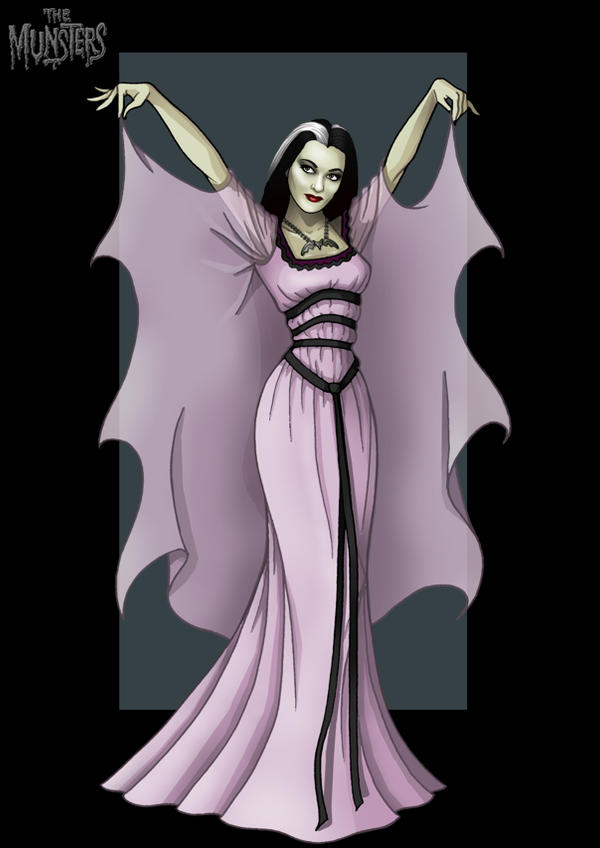
She starred in the CBS sitcom The Munsters (1964–1966),[7] playing Herman Munster's glamorous vampire wife, Lily, a role she reprised in the feature film Munster, Go Home! (1966) and the television film The Munsters' Revenge (1981). In 1971, she played Carlotta Campion and introduced the popular song "I'm Still Here" in the Broadway production of the Stephen Sondheim musical Follies. Yvonne, her best-selling autobiography, was published in 1987. A stroke survivor, De Carlo died of heart failure in 2007. She was awarded two stars on the Hollywood Walk of Fame for her contributions to motion pictures and television.


 ************


Yvonne De Carlo - Documentary


 *************************


Cosmos


July 10th: NASA’s First Close Up Fly-Over of Jupiter’s Great Red Spot –“Three Times the Size of Earth”
 

Sarah Mertz


dailygalaxy.com


************


Great Red Spot

The Red Spot is a persistent high-pressure region in the atmosphere of Jupiter, producing an anticyclonic storm that is the largest in the Solar System. Located 22 degrees south of Jupiter's equator, it produces wind-speeds up to 432 km/h (268 mph). Observations from 1665 to 1713 are believed to be of the same storm; if this is correct, it has existed for at least 357 years. It was next observed in September 1831, with 60 recorded observations between then and 1878, when continuous observations began.


************


Scientists Make Unexpected Discovery On Jupiter | Real Images - YouTube


*************************


Planet of the Apes (5/5) Movie CLIP - Statue of Liberty (1968) HD

1,715,117 views

Movieclips

CLIP DESCRIPTION:

Taylor (Charlton Heston) understands that he's on Earth when he finds the wreckage of the Statue of Liberty.

con't....


************


"Possibly the most iconic ending in movie history."
-- Tom McFarland

"I was 11 when I saw this movie and I've never forgotten the horror gasp from the audience of this ending. It's etched in my mind forever."
-- Steve Jorfi

"When I saw this as a youngster it really scared me. I was sad at the destroyed Statue of Liberty and after the movie my father told me about nuclear war. I lost some innocence watching this film."
-- Chris L.

"One of the best, most shocking scenes in the history of movie making."
-- Timotheus

"No other movie has ever had an ending this powerful and this shocking.  Still makes me gasp every time I see it."
-- Bryan Nelson

"Taylor falling to his knees in the sand as the Statue of Liberty watches from above has got to be one of the greatest shots in cinematic history"
-- O Benbenisti

"I remember watching the movie with my father in the theater when it came out.  I was in grammar school at the time.  Everyone who saw it previously kept their mouths SHUT.  The gasps from the audience were unbelievable at the conclusion.  NOBODY saw it coming!  ALL you had at the end was that iconic scene with the derelict Statue Of Liberty, fade to Black, then the credits rolled.  Absolutely NO music JUST the waves of the ocean crashing to the shore.  Iconic scene and one of the BEST movie endings EVER!"
-- Charles Kuckel

"One of the most iconic scene in the cinematography without a doubt."
-- Sergio Ramón Rodríguez Cajiga

"I was sixteen when I saw this at the theater.One of the best endings to a movie ever."
-- BOND0930

"There are so many combinations that make this scene so great. Heston yelling, camera movements and the sound of the ocean as it intensifies. The sound of the ocean is telling us that its alive and well and it will outlast man and machine through the test of time."
-- GTX


************


My YouTube response to the last comment above

I noticed that the "flame piece" on the statue was missing; the spark of human civilization was long gone. Also, the beautiful Captain Stewart was to have been the "New Eve." She was probably first in her class, first in everything, 170 IQ, etc. However, it ended up being the simple, innocent Nova ("the sun" representing "the new torch" "the new horizon") who became the "New Eve." As Taylor agonized on the sand on his knees, Nova was standing and holding the reins of the horse and looking up at the statue which she couldn't comprehend.... maybe symbolizing "lets move forward."


*************************


Rock the Boat

2,035,432 views - January 25, 2017

The Hues Corporation - Topic


*************************


"No quarter" - A new escalation

No quarter flags have been adopted by some police and their supporters as s symbol of fighting crime. According to the "No quarter" Wikipedia page: "The phrase no quarter was generally used during military conflict to imply combatants would not be taken prisoner, but killed." The above image caught my eye before I even knew what it represented. Of course, it's a type of pirate-inspired flag. What could go wrong? It does go on to say: "According to some modern American dictionaries a person who is given no quarter is "not treated kindly" or 'treated in a very harsh way.'" I suppose the latter is the actual intent, although anyone looking it up will see the former first, and that could very well be after a violent incident.


ZeroFoxTrot.com

Exact page link with quote

"Inspired by the one officer we all wish we had in our midst. Fly his colors proud and send a clear message."


International humanitarian law

"Under international humanitarian law, "it is especially forbidden ... to declare that no quarter will be given." This was established under Article 23 (d) of the 1907 Hague Convention IV - The Laws and Customs of War on Land.[10] Since a judgment on the law relating to war crimes and crimes against humanity at the Nuremberg Trials in October 1946, the 1907 Hague Convention, including the explicit prohibition to declare that no quarter will be given, are considered to be part of the customary laws of war and are binding on all parties in an international armed conflict."


*************************


An exoplanet exists in our closest star system!

Yes, that's it above! An Earth!! It's called "Proxima Centauri b," and it's in the Alpha Centauri binary star system. The actual star in which it orbits is called "Proxima Centauri.". Proxima Centauri b is officially a "potentially habitable planet" according to the weekly journal 'Nature'. It's 4.2 light years away, or 266,000 times the distance between the Earth and the Sun (92.96 million miles). Unfortunately, that means that the distance between the Earth and Proxima B is between 24 and 25 trillion miles. The only planetary body that is even close for human habitatin is Saturn's moon Titan, which has an average temperture of -290 F. In comparison, the average temperature of Antarctica -70 F.

Proxima Centauri b

.