The Streghe Treguenda known as the Festival of Cornucopia is one of the eight festivals of Stregheria. Apparently it's celebrated on August eve and officially on August 1. This--the first of the three festivals marking the beginning of the harvest season--is the equivalent of Celtic/Druidic Lughnasadh, Teutonic/Heathen Freyfaxi, as well as Wiccan, Slavic, and other Pagan traditions.
************************* Cornucopia -- La Festa Di Cornucopia -- August Eve The celebration of anticipation of plenty. This is the time of the First Harvest. God is preparing to sacrifice himself so that the world can continue. Even as we begin our harvest, we plant the seeds of rebirth. For those seeds which are planted now and nurtured over the cold winter will become the strong plants of spring.
Vikingsholm Castle SGT Hartsock Take a look at one of South Lake Tahoe's absolutely gorgeous places to visit, Vikingsholm Castle, in Emerald Bay ************************* Vikingsholm ************************* Stephen McNallen: "Sheila and I spent as couple of days recently at Lake Tahoe, on the California-Nevada border. It’s an inspiring setting, with deep blue water reflecting a deep blue sky – and it’s a wonderful place to regain perspective after a rough week at work. Besides the natural beauty – there’s Vikingsholm! Yes, even on our down-time Asatru is always on our minds. Vikingsholm is a modern rendition of an early medieval (1200’s or so) Scandinavian building, complete with carved dragons and authentic period architecture. If you come out for the AFA’s Midsummer gathering, you ought to take a side trip to visit it."
Most Beautiful and Amazing Visiting Places In Alaska, USA Nagaraju A Alaska, northwest of Canada, is the largest and most sparsely populated U.S. state. It's known for its dramatic, diverse terrain of wide-open spaces, mountains and forests, with abundant wildlife and many small towns. It’s a destination for outdoor activities including skiing, mountain biking and kayaking. Massive Denali National Park, home to Mt. McKinley (aka Denali), North America’s highest peak, is a site of animal-viewing tours.
Maize I suspect that most people still don't realize that "corn" (maize) is native to North America, and only became large and practical after a long period of early genetic engineering by Amerindians. Initially maize was a small barely edible crop.
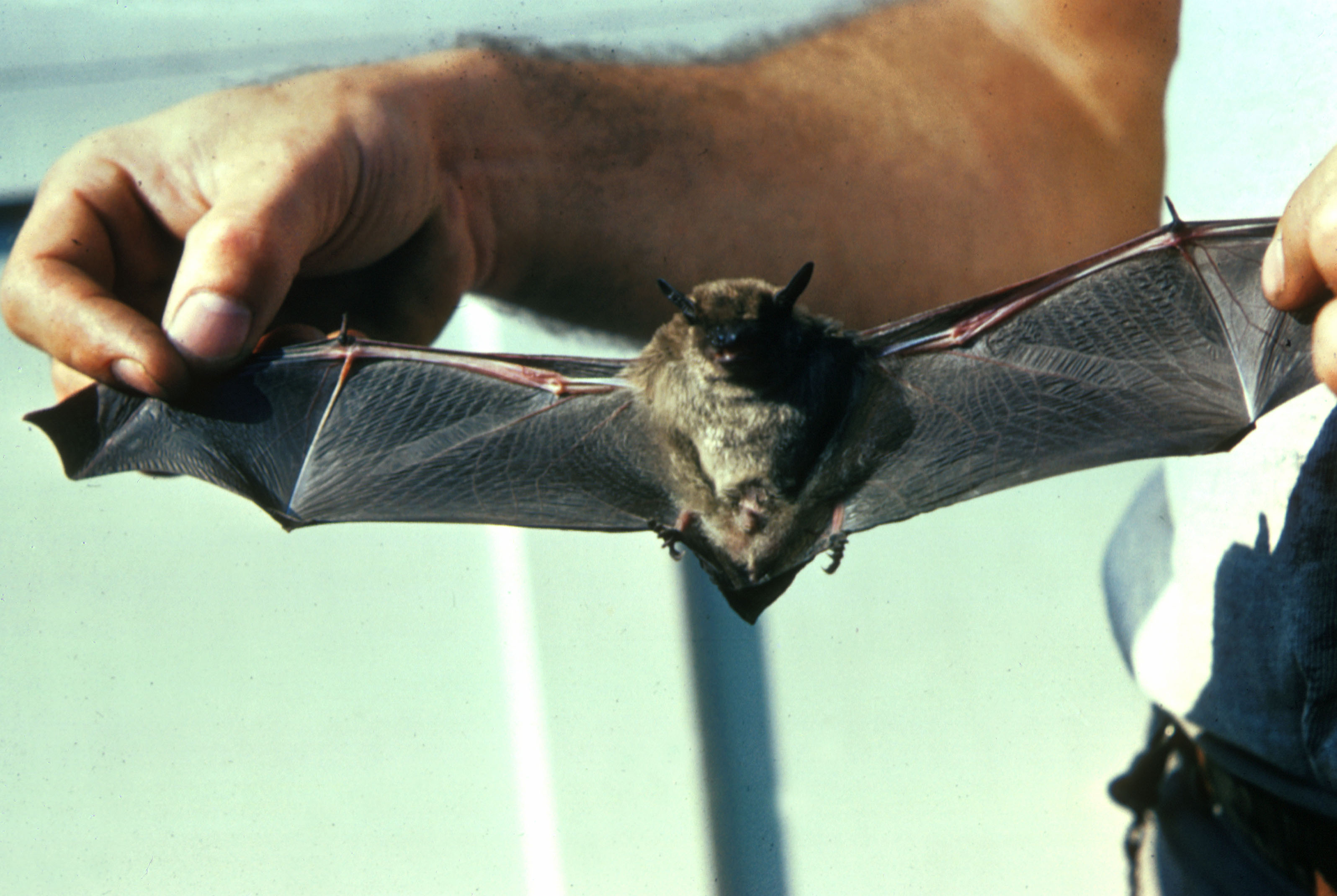
Little brown bat While hiking along the coast--at close to twilight during those warm late Indian Summers--I have on a few occasions observed bats who were out and about while it was still quite light out. They were flying so low that I could actually make out the detail of their fury faces! They were "little brown bats," which are very hardy bats who can live almost anywhere. These natives of North America are common in more northern climates, including Alaska. They seem to be more solitary, as opposed to the great hordes of bats that exist in more southern climates. If you click on the above image--then click on full size and block out the wings--it looks like a stereotype for a movie monster. Actually, they're totally harmless; and as long as they don't find their way into a home or garage where they could become a pest.
Outlander - Dance of the Druids Trolleza Troll Real mammoth footage? If this is a hoax, then it's a very clever and interesting one. There was another recent sighting of a mammoth supposedly caught on film which actually turned out to be a bear carrying a fish. This video looks real, although I suspect that it isn't.
REAL Woolly MAMMOTH sighting footage caught on tape! (Yakutsk city, Sakha Republic, Siberia 1943) Absolutely Incredible REAL Woolly MAMMOTH sighting footage caught on tape! (Yakutsk city, Sakha Republic, Siberia 1943) After the conclusion of the WW2 Battle of Stalingrad, Nazi Party member and official photographer for the NSDAP, Holger Hildebrand, was captured by the Red Army at the Battle of Stalingrad. He and thousands of other Wehrmacht soldiers were later sent on a death march towards Siberia; this mammoth footage is understood to have been taken during that journey. (Hildebrand is believed to have died a prisoner of war at a Soviet forced labor camp in late 1945. His Granddaughter later came into possession of the footage when his belongings were repatriated to Germany from Russia decades after his death.)
Witches -THE DAWNING… Unfolded Mysteries The video deals with the beginning of the witchcraft in europe and in non European countries, a detailed study of the background of the theological believes and the other possibilities that raised the belief and flourised witchcraft during the mediaval period that transformed itself into popular culture of present times has been shown through this video.
NASA Speechless! ENORMOUS Mystery Space Object Outshines Galaxy! 6/16/16 secureteam10
The Titans Unfolded Mysteries The video deals with the names of the Greek Titans.The Titans were the predecessors of the Olympians. ************************* Titan (mythology) In Classical Greek mythology, the Titans and Titanesses were members of the second order of divine beings, descending from the primordial deities and preceding the Olympian deities. Based on Mount Othrys, the Titans most famously included the first twelve children of the primordial Gaia (Mother Earth) and Uranus (Father Sky). They were giant deities of incredible strength, who ruled during the legendary Golden Age, and also comprised the first pantheon of Greek deities. Among the first generation of twelve Titans, the females were Mnemosyne, Tethys, Theia, Phoebe, Rhea, and Themis and the males were Oceanus, Hyperion, Coeus, Cronus, Crius, and Iapetus.
King Tut's DNA Results Planet X News King Tut DNA Results Caucasian, Royal blood of Tutankhamun, Pharaoh of ancient Egypt, Mummies of China ************************* King Tut is related to most Western European men today (British, Spanish, French), which seems to suggest a proto-European connection (not specifically Germanic). Many like to jump to conclusions, especially those who only hold racial motivations regarding this issue. King Tut and his family could have been atypical. People should just compile the evidence first. Most Egyptian art seems to suggest a particular type of small light-boned Mediterranean strain, although the old paint can change color over time. Everything has to be factored in. This issue(s) is still inconclusive. Remember a few years ago when a few Etruscan DNA results came in which reflected ancient Anatolian markers.. and suddenly everyone was a Turk! This despite the fact that the Turkic stock only entered what has been European/Byzantine territory (modern Turkey) long after the Roman/Byzantine era hand ended.
Tangerine Dream - Betrayal (Sorcerer Theme) Przemysław Bryk Music: Betrayal (Sorcerer Theme) from album "Sorcerer" by Tangerine Dream Movie: Sorcerer (a.k.a. Wages of Fear) by William Friedkin
************************* This instrumental song is entitled 'Sorcerer' and it was produced by a German electronic music collective called Tangerine Dream for the 1977 American film 'Sorcerer' starring Roy Scheider. This song is an equivalent to the instrumental song 'Chase' by Giorgio Moroder from the film 'Midnight Express' the following year. The footage from the film here can be a little distracting to the music. Although largely regarded as a good film, oddly this movie doesn't seem to have gotten any play on television over the years. .
The Harvest Moon is coming this weekend! The moon has been waxing larger each night, and full moon is the night of September 29-30, 2012. In traditional skylore, the Harvest Moon is the full moon closest to the autumnal equinox. For us in the Northern Hemisphere, the autumnal equinox came on September 22. That makes the September 29-30 full moon the Harvest Moon.
There’s also a name for the next full moon after the Harvest Moon. It’s called the Hunter’s Moon, and it’ll come this year on October 29.
Officially, the crest of the full Harvest Moon will happen on September 29, 2012 at 10:19 p.m. CDT (3:19 on September 30 Universal Time). Depending upon your time zone, the full moon will be September 29 or 30. But the moon will appear round and full on all the nights around this full moon.
So don’t just look for the Harvest Moon on the night of September 29 or 30. Look for the moon to be bright and full-looking for several nights at the end of September, 2012. If you live far enough north – for example, in the northern states, Canada or Alaska – the Harvest Moon will continue to shine from dusk until dawn into early October. This procession of moonlit nights is what characterizes the Harvest Moon.
Why is the Harvest Moon special?
Harvest Moon is just a name. It’s the name for the full moon nearest the autumnal equinox. In the Northern Hemisphere, you’ll always see the Harvest Moon in either September or October. In the Southern Hemisphere, a moon with these same characteristics always comes in March or April.
But the Harvest Moon is more. Nature is particularly cooperative around the time of the autumn equinox to make the full moonrises unique around this time.
Here’s what happens. On average, the moon rises about 50 minutes later each day. But when a full moon happens close to the autumnal equinox, the moon (at mid-temperate latitudes) rises only about 30 minutes later daily for several days before and after the full Harvest moon. Why? The reason is that the ecliptic – or the moon’s orbital path – makes a narrow angle with the evening horizon around the time of the autumn equinox. The narrow angle of the ecliptic results in a shorter-than-usual rising time between successive moonrises around the full Harvest Moon.
These early evening moonrises are what make every Harvest Moon special. Every full moon rises around sunset. After the full Harvest Moon, you’ll see the moon ascending in the east relatively soon after sunset for several days in a row at northerly latitudes. The lag time between successive moonrises shrinks to a yearly minimum, as described in the paragraph above. Because of this, it seems as if there are several full moons – for several nights in a row – around the time of the Harvest Moon.
Want to know the time of moonrise in your location? My favorite source of that information is this Custom Sunrise Sunset Calendar. Once you get to that page, be sure to click the box for ‘moon phases’ and ‘moonrise and moonset times.’
Is the Harvest Moon bigger, or brighter or more colorful?
Not necessarily, but the actual size of the Harvest Moon depends on the year. The Harvest Moon has the reputation of being especially big and bright and orange. But it isn’t really the Harvest Moon’s size or brightness that distinguishes it from other full moons. In fact, the 2012 Harvest Moon is a touch smaller than an average-sized full moon.
Still, you might think otherwise. That’s because the Harvest Moon has such a powerful mystique. Many people look for it shortly after sunset around the time of full moon. After sunset around any full moon, the moon will always be near the horizon. It’ll just have risen. It’s the location of the moon near the horizon that causes the Harvest Moon – or any full moon – to look big and orange in color.
The orange color of a moon near the horizon is a true physical effect. It stems from the fact that – when you look toward the horizon – you are looking through a greater thickness of Earth’s atmosphere than when you gaze up and overhead. The atmosphere scatters blue light – that’s why the sky looks blue. The greater thickness of atmosphere in the direction of a horizon scatters blue light most effectively, but it lets red light pass through to your eyes. So a moon near the horizon takes on a yellow or orange or reddish hue.
The bigger-than-usual size of a moon seen near the horizon is something else entirely. It’s a trick that your eyes are playing – an illusion – called the Moon Illusion. You can lengthy explanations of the Moon Illusion by googling those words yourself.
How the Harvest Moon got its name
So why is this moon – the moon closest to the autumnal equinox – called the Harvest Moon?
The shorter-than-usual time between moonrises around the full Harvest Moon means no long period of darkness between sunset and moonrise for days in succession. In the days before tractor lights, the lamp of the Harvest Moon helped farmers to gather their crops, despite the diminishing daylight hours. As the sun’s light faded in the west, the moon would soon rise in the east to illuminate the fields throughout the night.
Who named the Harvest Moon? That name probably sprang to the lips of farmers throughout the Northern Hemisphere, on autumn evenings, as the Harvest Moon aided in bringing in the crops. The name was popularized in the early 20th century by the song below. Shine On Harvest Moon By Nora Bayes and Jack Norworth (1903) Shine on, shine on harvest moon Up in the sky, I ain’t had no lovin’ Since January, February, June or July Snow time ain’t no time to stay Outdoors and spoon, So shine on, shine on harvest moon, For me and my gal. Bottom line: The Harvest Moon will come in late September in 2012. The Harvest Moon is the full moon closest to the autumnal equinox, which in 2012 comes on September 22. So the full moon of September 29-30 is 2012′s Harvest Moon. October 1 will have a beautiful bright full-looking moon, too. The Harvest Moon is not really bigger, brighter or more pumpkin-colored than other full moons, but it’s special because, at this time of year in the Northern Hemisphere, the time between successive moonrises is shorter than usual. Enjoy.
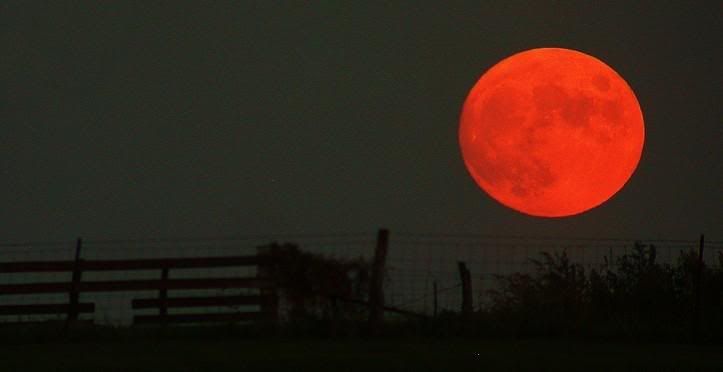
The gigantic, orange globe sitting on the horizon may look like a celestial pumpkin, but it will actually be the harvest moon. (It is also known as the wine moon, the singing moon, or the elk call moon.)
The harvest moon happens once a year. It is the full moon nearest to the autumnal equinox. This lunar phenomenon is often mistaken for the hunter’s moon. The hunter’s moon, which is also known as the blood or sanguine moon, is the first full moon after the harvest moon.
All full moons make their appearance around the time of sunset. But unlike the ascension of other full moons, there is no period of darkness between sunset and the moonrise of the harvest moon.
This special moon got its name because the immediate moonlight allowed farmers to continue harvesting even after the sun had set.
(If you ever get an email claiming that it will look like there are two moons in the sky, arm yourself with information; here’s the real story.)
The harvest moon can seem larger, brighter, more colorful, and just all around more dramatic than the moon we’re used to seeing. The lovely, autumn color of the harvest on the horizon is caused by light from the moon passing through a greater amount of atmospheric particles. This is true for all celestial bodies when they are low in the sky.
Don’t be alarmed if you experience what’s known as Moon Illusion. This is an optical illusion noted since ancient times where the moon appears larger closer to the horizon than it does higher up in the sky.
On lunar topics, consider the word honeymoon. What does the “moon” part of it actually refer to? It’s not a happy story, but it is fun. Learn the answer, here