This band named itself after the supreme god of the Etruscan pantheon, "Voltumna" (also called "Veltha"), which I just covered a bit on the other blog ('Etruscan women, mythology, and the god Veltha'). Black Metal music is a lot like the old Heavy Metal music in that some of it is truly good, while most you would probably have to really like the genre to appreciate. This particular song wouldn't be my first choice to promote, but I love the theme! The 'Disciplina Etrusca' was the text of ancient Etruscan polytheism, which was made up of the three "books of fate."
Beyond the larger Black Metal genre, are the sub-genres of "Celtic Black Metal," "Viking Black Metal," etc., etc. One thing this music offers is a clear link to folk-identity, in this case "Etruscan Black Metal." The band's lyrical theme is defined as "Etruscan Paganism, Mythology, Modern Decay"; and it's genre as Black/Death Metal. This additionally suggests a type of Gothic element to it. Dark symbolism can be beautiful, and could be an outlet for people, primarily younger people, who feel alienated by society. This song is brand new; just released today in fact. The band is from Viterbo, Latium, and has been around since 2009. Viterbo was one of the city-states of the Etruscan civilization. In a Western society which makes a special point to squash identity (individual and collective), I think it's great that people can turn to their ancestors for inspiration and strength. It's not just Black Folk Metal, but there are many other genres which are folk-oriented in this manner. I mean something a little beyond a band merely playing folk music from a certain culture. There's often a rebel-aspect to it.
If you don't like Black Metal, maybe seek out some of the other types of music within this concept. There's one band from Sardinia called Atrium Animae which is under a genre called "Atmospheric Neoclassical Darkwave," which is hauntingly beautiful.. and is based on what appears to be a Medieval Catholic style. There is Irish Black Metal, Odinic music of many sounds, Slavic, you name it. You might find something you like within one of these folk-spiritual-identity sub-genres.
I like music of just about every texture and harmony, but I don't like "sad music." There are enough things in this life to be sad or depressed about; especially when we lose people. Something inspirational is great, especially when there's that blood-folk connection with a spiritual tie-in. Black Metal is almost like fighting music. Perhaps we need some of that in our lives, because often life is a war. Evolutionary struggle.
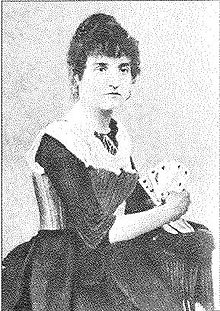
In the history of Witchcraft there is perhaps no figure more mysterious than the Witch known as Maddalena. As described by folklorist Charles Leland in several of his books, Maddalena was an Italian fortune teller and Witch. She supplied Leland with a great deal of Italian Witch lore including the text Leland later published as the Gospel of the Witches in 1899. Maddalena was also known to folklorists Roma Lister and Lady de Vere (to who she was introduced as "Margherita").
New findings related to Maddalena have recently come to light through some research I conducted at the Library of Congress. At the Pantheacon conference, on February 17th, 2008, I presented a copy of a page from The International Folklore Congress: Papers and Transactions, 1891. On page 454, Maddalena's name appears as a contributor to an exhibit presented by Charles Leland. Her name is given as Maddalena Taluti. In the modern Pazzaglini translation of Aradia, contributing writer professor Robert Mathiesen wrote that he believed Maddalena's last name to be Talenti. In light of new findings he is incorrect, but he does state that her name was almost illegible in the document he examined. According to Leland, in his book Etruscan Roman Remains, Maddalena was originally from the town of Rocca Casciano, which is now called Rocca San Casciano. It is located in the Province of Forli-Cesena in the Italian region of Emilia-Romagna. She reportedly traveled a great deal, making a living telling fortunes and selling charms. According to Leland, Maddalena claimed to have been trained in a family tradition of Italian Witchcraft, which was passed on to her by aunts and by her step-mother.
The Aradia material obtained for Leland differs greatly from the material that Maddalena had previously supplied to him. In the book Etruscan Roman Remains, Leland describes the Witches of Italy as being both good and bad. By contrast the Aradia material portrays Witches in a negative light. It is noteworthy that he describes a group that he calls the "beautiful witches of Benevento." Concerning Maddalena herself, Leland describes her as:
"a young woman who would have been taken for a Gypsy in England, but in whose face, in Italy, I soon learned to know the antique Etruscan, with its strange mysteries, to which was added the indefinable glance of the Witch. She was from the Romagna Toscana, born in the heart of its unsurpassingly wild and romantic scenery, amid cliffs, headlong torrents, forests, and old legendary castles. I did not gather all the facts for a long time, but gradually found that she was of a Witch family, or one whose members had, from time to immemorial, told fortunes, repeated ancient legends, gathered incantations, and learned how to intone them, prepared enchanted medicines, philtres, or spells. As a girl, her Witch grandmother, aunt, and especially her stepmother brought her up to believe in her destiny as a sorceress, and taught her in the forests, afar from human ear, to chant in strange prescribed tones, incantations or evocations to the ancient gods of Italy, under names but little changed, who are now known as folletti, spiriti, fate, or lari - the Lares or household goblins of the ancient Etruscans."
After receiving material from Maddalena, which became the foundation for the books Legends of Florence and Etruscan Roman Remains, Leland made another request. In 1886, Leland asked Maddalena to try and locate a text that he had heard of that was a type of Witches gospel. Eleven years later she sent him some material that Leland published as Aradia; or the Gospel of the Witches. It is noteworthy that Maddalena had fulfilled Leland's previous requests for material within a short period of time. The fact that it took her ten years to present the Aradia material strongly suggests that she was originally unaware of it. This further suggests that the tradition it represented was not the one she personally practiced.
The tradition that Maddalena most likely practiced is reflected in Leland's books Etruscan Roman Remains, Legends of Florence, and Legends of Virgil. The portrayal of Witches and Witchcraft in Leland's Gospel of Aradia does not reflect the same image as his earlier works. This is another indication that the material came from a system outside of Maddalena's own knowledge and experience.
A letter from Leland to his niece, which I presented a copy of at the Pantheacon conference, describes Maddalena performing a ritual in which she invokes a goddess and a god. During the invocation, Maddalena reportedly went into convulsions, and Leland had to send out for two pints of brandy in order to restore her back to normal. This speaks to Maddalena as a genuine practitioner of the Old Religion. Leland goes on in the letter to say that if ever there was a true depiction of the witch, Maddalena demonstrated it through her magic.
In the book Aradia, Leland notes that he lost touch with Maddalena after receiving a letter from her that she was marrying her shoemaker (Lorenzo Bruciatelli) and immigrating to America. As a result of this comment, the view has been held that Leland never heard from Maddalena again, and what became of her is unknown. Fortunately, another recent discovery by me came in the form of a letter found in the archives of the Library of Congress (buried in a stack of old letters). The letter, written by Leland to his niece, mentions that Maddalena did not move to America, but left her husband and went to Genoa to make a living there on her own. She wrote to Leland letting him know what happened, and she asked him if he could send her ten francs as she was in a difficult financial situation. He complied, but it seems that the two never met again after this communication.
As the materials discovered in my research continue to be read and documented, many more interesting tid-bits no doubt await those who are interested in Leland, Maddalena, and Aradia. .