Showing posts with label Aryans. Show all posts

Sunday, September 27, 2020

The Arctic Home in the Vedas: Part 25 - Jötunheim linguistic roots

Excerpt from 'The Tradition of Household Spirits' (Lecouteux; 2000), Chapter 3 ('The Openings of the House'), 'The Windows', page 62:


Originally the window was an opening that allowed some light to enter the building as well as to aerate it. The English "window," which derives from the Norse vindauga, "wind eye," and which has a parallel in the Sanskrit vātyāana, "wind passage," allows us to grasp the concept.


There is a clear linguistic connection---literally separated by thousands of years---from the Teutonic homeland of Jötunheim in ancient northern Eurasia, to the Aryan (ancient Persian) invasion of India (2,000 BCE), to modern English! This ancient tongue no doubt spread wherever the Teutons traveled or invaded. This would include the Tarim Basin, Arkaim, ancient Persia, ancient Tibet, Assyria, Phoenicia, and obviously around Europe. English text from the early Middle Ages looks like modern German. As the English language developed, the letter "W" emerged out of "V," but of course to the present day it's still read with a "VEE" sound by German speakers.


************


Excerpt from 'The Arctic Home in the Vedas: Part 18 - "Arkaim" ':


Arkaim

Arka = "Earth"

Im = "Sky"

"The place where the sky touches the Earth"

Odin, the Teutonic "sky god"

Arkaim: "The place where the sky touches the Earth"... "The place where Odin connects with his people"... long ago... on that vast central Asian plain... which may have been a woodland. Unlike the Saturn-worshiping Sumerians, Arkaim was a temple of the Sun.


************


Bollywood actress with ancient Teutonic DNA
Sanskrit

Sanskrit is an Indo-Aryan or Indic language of the ancient Indian subcontinent with a 3,500-year history. It is the primary liturgical language of Hinduism and the predominant language of most works of Hindu philosophy as well as some of the principal texts of Buddhism and Jainism. Sanskrit, in its variants and numerous dialects, was the lingua franca of ancient and medieval India, predominantly modern day Bangladesh, Nepal, North India and Pakistan. In the early 1st millennium CE, along with Buddhism and Vedism, Sanskrit migrated to Southeast Asia, parts of East Asia and Central Asia, emerging as a language of high culture and of local ruling elites in these regions.

Modern Sanskrit is traceable to the 2nd millennium BCE in a form known as Vedic Sanskrit, with the Rigveda as the earliest-known composition.The phonology, grammatical forms of Sanskrit has remained similar to the Vedic language. A more refined and standardized grammatical form called Classical Sanskrit emerged in the mid-1st millennium BCE with the Aṣṭādhyāyī treatise of Pāṇini. An ancient Proto-Dravidian language has been found to influence the Vedic Sanskrit language. The broader definition of Sanskrit refers to the whole range of mutually intelligible Old Indo-Aryan dialects spoken in North-western India at the time of the composition of the Vedas and thus can be treated as the ancestor of the Prakrits and Pali, and consequently, of all Modern Indo-Aryan languages like Hindi, Marathi, Bengali, Punjabi, Gujarati, Sindhi, Kashmiri, Kumaoni, Garhwali, Urdu, Dogri, Maithili, Konkani, Assamese, Odia, and Nepali. On the other hand, the standardized Classical and Epic Sanskrit was a literary language and not the ancestor of any Indo-Aryan language. Sanskrit has significantly influenced the phonology, lexicology, morphology and grammatical systems of South Indian languages of Kannada, Telugu, Tamil and Malayalam.

Sanskrit is an Old Indo-Aryan language. As one of the oldest documented members of the Indo-European family of languages, Sanskrit holds a prominent position in Indo-European studies. It is related to Greek and Latin, as well as Hittite, Luwian, Old Avestan and many other living and extinct languages with historical significance to Europe, West Asia, Central Asia and South Asia. It traces its linguistic ancestry to the Proto-Indo-Aryan, Proto-Indo-Iranian and Proto-Indo-European languages.


************


Triskelion of Tibet


The Triskellion is a very ancient symbol, which may have initially symbolized the early sky gods, the sun, the rotating nature of the universe, and the cycle of life. This symbol has been found wherever Teutonic peoples have roamed, and which had also been perpetrated by culturally Celtic or Proto-European peoples as well. To the right, a triskelion from Tibet in the northern Himalayan Plateau.


************


Yazidi people of northern Iraq


This 20 year old Yazidi woman committed suicide. ISIS has been exterminating them (their religion is Armenian Orthodox) and using their women as sex slaves. In other words, they just want to impoverish, punish, murder, rape, and just generally devour them in every way imaginable. It's something to look up and consider. Our government and mainstream media doesn't care very much.


Saturday, April 13, 2019

The Arctic Home in the Vedas: Part 24 - "Aryan Invasion of India"


Aryan Invasion of India: Myth or Reality?

Survive the Jive

DNA evidence has shed new light on the origins of the Indian people, the Hindu religion and the Sanskrit language. Pastoralists of the Andronovo culture from the Bronze age steppe invaded India from the North West and brought Indo-European languages to the Indian subcontinent. These pastoralists were ethnically white people, and they mixed with Indians to create the modern genetic diversity of India.


This theory has been developed over 200 years, and has often been attacked as a colonial fable or even as Nazi propaganda, but now genetic science has vindicated the Victorian scholars who said the roots of the Aryans lay in the Corded Ware culture of Europe.

This channel depends on your support:
Paypal: https://www.paypal.me/survivethejive
Patreon: https://www.patreon.com/survivethejive


************

The original Teutonic homeland was in northern west Asia and north of the Himalayas, then migrating into Europe in small waves which formed the widespread Celtic cultures. Later, a large scale migration occurred which overwhelmed Scandinavia and the German-speaking regions which we know today. They also migrated southward into ancient Persia and mixed with ancient Mediterraneans, which formed the dynamic Aryan civilization ("Ancient Persians").

These were "pure" Teutons so to speak, and I'm guessing that they mostly took after the Teutonic side since True-Mediterranean mixes tend to pass on Teutonic traits very well. As to whether or not they contributed to Sumeria, Babylon, and Mesopotamia.... I have no idea. The evidence seems to suggest that they did strongly influence Assyrians, later Persians, the Indus Valley, India, and other civilizations. Everything in this video--based on DNA evidence--fits my theory. There's still an unwillingness to acknowledge that the Teutonic people originated in the northern stretches of ancient western/central Asia.

.

Wednesday, January 24, 2018

Dr. Stephen E. Flowers interview - New book on Zoroastrianism


Dr. Stephen E. Flowers (Jordan Maxwell show) - Nov 10 2017 - Persian Magi, Mazdan, Zarathustra

One Eno

Source: http://www.americanfreedomradio.com/Jordan_Maxwell_17.html


*************************

Zoroastrianism was an Indo-European spiritual tradition dating back to the second century BCE. It goes back to the Aryan civilization of ancient Persia. He also announced that Llewellyn will soon republish 'Fire & Ice: Magical Teachings of Germany's Greatest Secret Occult Order' 22. Currently a new copy is $191 on Amazon; $91 being the lowest price for even a used copy.

'Original Magic: The Rituals and Initiations of the Persian Magi' (Flowers; Paperback; October 17, 2017)

Dr. Stephen E. Flowers page at Amazon

Dr. Flowers is also associated with the following projects:

The Woodharrow Institute for Indo-European Studies

Lode Star (Indo-European, Germanic, Mazdan and Left Hand Path traditions)

.

Tuesday, March 17, 2015

The Cult of Saturn: Part V

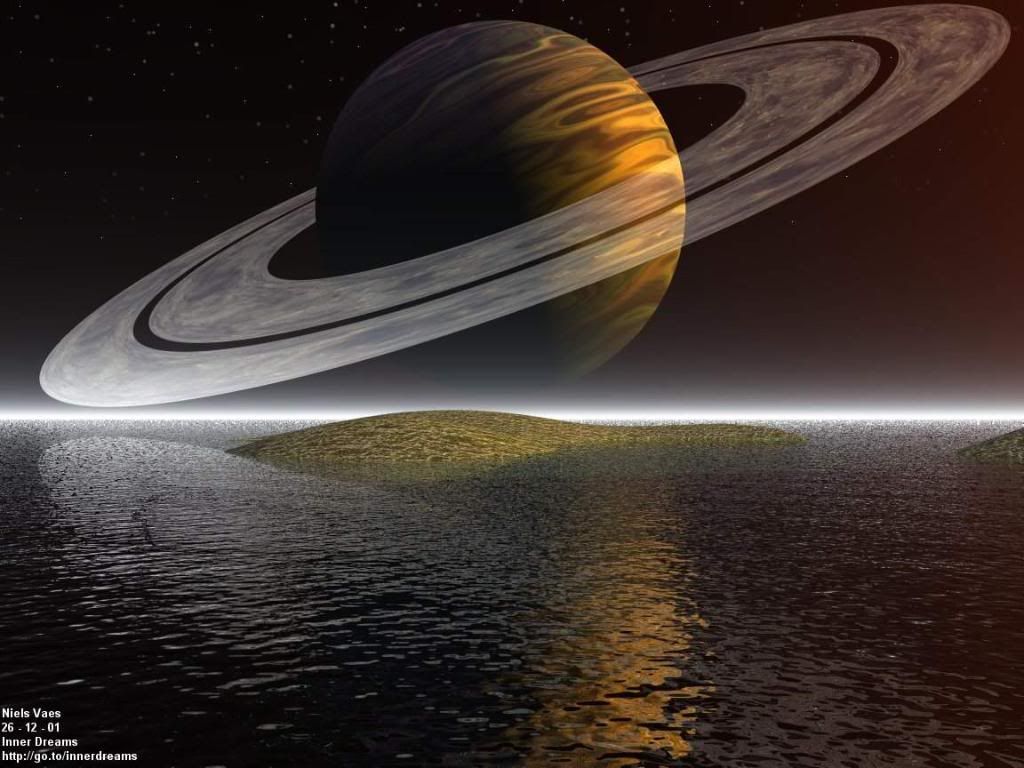
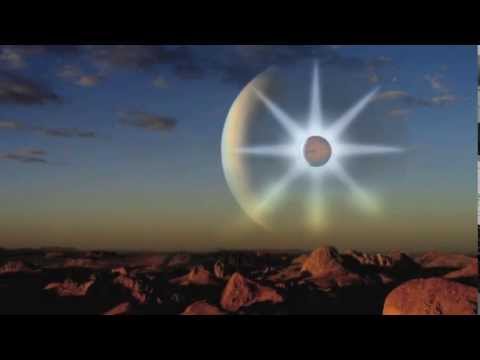
The “electric universe” theory is a related but separate concept from the idea that our solar system rearranged only in the thousands of years ago. During The Golden Age, some of the planets were to have appeared as dramatically as the Moon currently appears in our sky. Saturn sat motionless in the northern sky, much closer to the Earth. It could also be said that Saturn appears like an “eye” when viewed from top to bottom so to speak. Also, Mars with Venus behind it was to have appeared like an eye as well; with Mars as the “pupil”.. with Venus appearing subtly in the background, often appearing as a “bottom rocker.” Apparently, these ancient “sun wheels” had either five, six, or eight points of electrical discharge emanating from them, giving rise to the many ancient symbols from around the world.
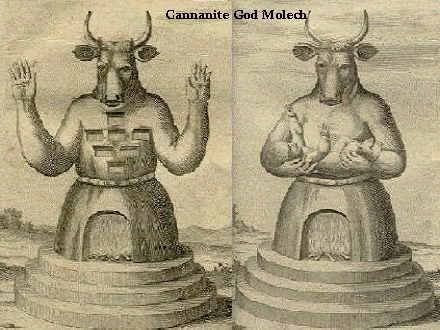
The rays of electrical discharge surrounding the Mars-Venus configuration was to have created the appearance of “horns” as like a bull or an owl. This would explain the archetypes from, for example, Babylon (“bull worhip") and Phoenicia-Canna (“owl worship”). Also, the obsession with “the horns” within the Cult of Saturn. Instead of being privy to this as part of our fascinating collective history, we are forced to endure adult infants in popular mainstream culture using these symbols in an unhealthy way.. while at the same time this history is being kept hidden from us. Also, the ancient worldwide symbol of the dragon or serpent was to have originated from the appearance of the electrical interaction between Mars and Venus.

According to Arthur C. Clarke, who was a part of this milieu, the “monolith” from the 1968 film ‘2001: A Space Odyssey’ was actually a representative of the pyramid. However, the pyramid would have been too overt a symbol to use. The filmmaker Stanley Kubrick, who produced and directed ‘2001’, has been described as either an insider of this milieu.. or someone who tried to “expose” this systemic underworld. He was a person commissioned, through his work, to facilitate the ancient Saturnian code of allowing the information to become available for “those who wish to know.”

The Black Sun
Kubrick passed away on March 7, 1999, which is exactly 666 days before January 1, 2001. Of course, this may be a simple coincidence. However, there are hundreds of such examples; which, if someone were able to spend a few million dollars and assemble them all to feed into a computer, would be statistically impossible with the odds being in the many trillions. There are other Pythagorean-numerical coincidences surrounding certain historical events which are extremely eery, and seemingly would be impossible to artificially coordinate. This is why this “Cult of Saturn” series is next to impossible to adequately write. Nobody could possibly put it all together correctly in a manner which would truly illuminate the magnitude of the system. I can’t do it. I’ve just grazed the surface here.

I should have been more clear earlier that the “black sun” symbol, associated with the National Socialists, apparently originated with the early Saturnian religious expression of Teutonic peoples when they lived in the northern part of west/central Asia during the last glacial movement. Other possible Saturnian symbols from this expression were the more circular forms of both the swastika and the triskelion. Often it’s not clear whether or not a symbol represents the Sun or Saturn. I think that it’s at least very likely that the black sun wheel is Saturnian. There is a lot more evidence of a very ancient Teutonic/Hyperborean homeland in the far north during The Golden Age, than there is evidence of any super Teutonic civilization. Those are two different ideas. However, the ancient Persian/Aryan civilization was of a true-Mediterranean and Teutonic mix.

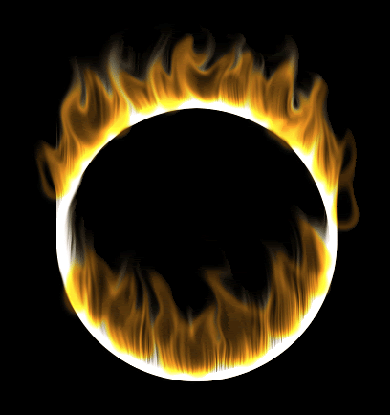
Here is one amazing image of the hexagram on the north pole of Saturn, with the "ring of fire" at the center; which could also form another symbolic perception of an "eye." In the Johnny Cash song entitled "Ring of Fire," the lyrics clearly reflect someone "going to Hell." However, that negative idea originated from a Christian (Solar cult) point of view. Since the word "Hell" originated from the Saturnian God "El," and since the "ring of fire" is located on Saturn's north pole, a person visiting the "ring of fire" would literally be "going to El" in a benign sense.

.

Monday, August 11, 2014

The Arctic Home in the Vedas: Part 19 - "Sun vs. Saturn"


In the very ancient world, largely in the Middle East, there were two major competing religious cults. This would have been from about 15,000 years ago to the time of the Sumerian civilization (today Iraq), and up to the time of the Aryan civilization (today Iran). Prior to about 15,000 years ago, there were literally two stars in our sky: The Sun and Saturn. Saturn was apparently the closer and brighter of the two, and lit up the northern sky, and the Earth's North Pole was not only habitable, but light twenty-four hours a day during the "Golden Age." I suspect that Saturn, which is today a dwarf star, was only brighter from the perspective of northern peoples; and was probably a bit hazy.

As discussed before, both the six-pointed Hexagram (today, the "Star of David) and the Pentagram (today used as the symbol of Wicca and other similar groups) were symbols representing Saturn then. Both symbols were Sumerian, and both are literally found on Saturn itself! How that could be is one of the great questions of human existence, and speculating would take away from the facts here. The "Talisman of Saturn" and other similar coin-like artifacts feature the Pentagram on one side and the six-pointed Hexagram on the other. The Aryan civilization was a "Sun cult," and used symbols of the Sun.. such as Swastikas and the Black Sun. The National Socialists were aware of this, and adopted some of this symbolism. As stated many times here, the real "Aryans" were a mix of true-Mediterranean and pure Teutonic; which would make them Indo-European, but not Germanic, Indian, Iranian, etc. This is about ancient cults, not necessarily racial or ethnic types.


There were sixteen Sun-cults in that general region over thousands of years that we know of, all with the same astrotheological/mythological theme. The ancient Egyptian religion was number fifteen, with the god Horace representing the Sun; and number sixteen was Christianity, with Jesus ("the Son"; "the light of the world") allegorically representing the Sun.

Judaism actually began as an ancient Hebrew Saturn-cult, and the six-pointed Hexagram wasn't chosen as its symbol a millennium ago by accident. There are some very negative things written in the Talmud regarding Jesus, but that didn't have anything to do with any man. It was common lashing out against a rival Sun-cult. The Christian Sun-cult lashed back with a depiction of "Satan," which was just another name for "Saturn." Most Christians and Jews today know nothing about this. It wasn't Christians vs. Jews, it was Sun-cult vs. Saturn cult. Naturally Satanism is a Saturn-cult, and Satanic groups use an inverted Pentagram.

Islam developed later, and clearly originated as a Saturn-cult. The Islamic black cube is a Saturnian-Hexagram, and the six-pointed Hexagram as-well-as the Pentagram are used. The Islamic state of Morocco features a Pentagram on its national flag. There are even Mosques with the "Star of David" featured on the outside front. When looking at all of these institutions, and how they've interacted over history, you can get a glimpse of the Sun-cult vs. Saturn-cult phenomenon. Saturday and Sunday? Yes, they mean "Saturn's Day" and "Sun's Day."

The pre-Roman Italian peninsula was known as "Saturnia." Not surprisingly, one of the main Roman festivals was "Saturnalia," which was three days to honor the deity Saturn from Roman mythology. Part of the celebration was a human sacrifice at the Temple of Saturn. Wikipedia: "In Roman mythology, Saturn was an agricultural deity who was said to have reigned over the world in the Golden Age...." Bingo! That's it. The ancient legends, such as that of "Hyperborea," were based on reality. See thunderbolts.info and 'Symbols of an Alien Sky' for the scientific proof. The Roman Catholic Church has maintained its Saturnian roots; while Protestants broke away as Sun-cults.


The old saying "old legends die hard" couldn't be more applicable than with the Sun vs. Saturn rivalry. These ancient cults and mystery schools are so ingrained in the world that they refuse to bury the hatchet! The "cult of Saturn" wishes to return to the "Golden Age," which sounds more like an excuse to take over. We're just expected to go along with all of this nonsense. The dramatic role of Saturn in human history has been kept a secret for a long time. The Sun-cults apparently want to make the Book of Revelation come true; while the Saturn-cults apparently want to make the Golden Age come true. How do we know that this isn't all a role-playing charade, with all the main players just play-acting their parts?


Saturn vs the Sun, Black Cube and the Saturnian Cult – Santos Bonnaci

Zen Gardner - ZenGardner.com - August 1, 2013

Here’s some terrific information you won’t come across as well strung together and condensed as this. The remarkable Santos Bonacci has many youtube clips to enjoy and learn from. That he can reel off such in depth, perceptive and detailed information is a real testament to the power of researching with a passion for Truth in full-on conscious awareness. It’s there for the having, and people like this give us all a head start in the many amazing fields of knowledge we need to become familiar with in order to better understand and heal the world we’re living in. – Zen


.

Friday, November 30, 2012

The Arctic Home in the Vedas: Part 8


The Tarim mummies, in the bigger picture, were merely the last breath of the proto-Norse peoples in north-central Asia. I would place the original home of these proto-Norse peoples in about what is modern Kazakhstan; and if we were to follow Bal Gangadhar Tilak's true hypothesis in 'The Arctic Home in the Vedas', then it may have even existed along the Kara Sea in northern Eurasia. It's even conceivable that the ice cap covered part of this northern sea, and some people may have lived above above it. At the least, some people could have lived along this northern coast and would have literally lived slightly above the Arctic Circle. If this were true, then Tilak's hypothesis surrounding the Vedic hymns could be proven true scientifically.

The ice sheet (see map), even at the height of the last ice age, covered the British Isles and about half of central Europe. However, when it reaches about Russia, it directs northward and the Eurasian ice cap ends in the middle of the north coast of Asia. It's very possible that people could, as Tilak hypothesized, have lived up there. Also, the last glacial movement was about fifteen-thousand years after the height of the last ice age. It's very likely that it was comparatively even more habitable then.

Another possibility is that they were trapped up there. Look at the map again, there's quite an uneven ice sheet. Regions far north were more habitable than regions further south, and it's possible that an ice sheet may have left a large "island of habitable land" which was enclosed by ice sheets. When the book was published a century ago, many people probably dismissed it because it was too groundbreaking for it's time. In other words, the Tarim mummies were not from northern Europe; they were home. They were the last remnants of the ones who stayed behind. Fifteen or twenty thousand years ago, the proto-Norse or proto-Germanic people may have all lived in a habitable region in northern Eurasia, enclosed by sheets of ice. The Eurasian ice sheet to the west, and the Himalayan ice sheet to the south.

If they did live way up there, then we need only to look at the Eskimos for some idea of how they could have survived. Also, there is a lot of meat and fur on a woolly mamoth, a woolly rhinoceros, or a yak; and they were roaming all over that tundra back then. I would guess that those pure proto-Norse were tall, strong, white-skinned, had very light blonde hair, pale blue eyes, straight noses, and generally the physical Scandinavian stereotype. Only much later--amid the melting ice of post-ice age Europe--when they encountered the native Alpine peoples, did more slightly tanner, ash blonde haired, basic-blue eyed people come about; and of course, combinations closer to the Alpines. Still today, we can occasionally see people who are extremely-fair "throw backs."

During the 1938–1939 German expedition to Tibet, I believe that they were looking for "The Arctic Home in the Vedas." The Tibet Autonomous Region, which is twice the size of modern Tibet, may have seemed like the most logical area to look at. That highland region was probably largely covered by the Himalayan ice sheet or at least a harsh landscape up to about ten-thousand years ago. I believe that ancient Kazakhstan, and probably north of it, is the logical location of the age old question of where is the location of the original homeland of the Aryan people. However, they weren't "Aryan" then.

The Aryans came about in ancient Persia, when some of the migrating proto-Norse encountered native or migrating true-Mediterranean (not Semitic) peoples. Among many technological advances and spiritual concepts, the Sanskrit language and text developed from these Aryans of ancient Persia. The ancient Swastika, which was originally a solar symbol and spiritual symbol of geometry and mathmatics, was brought by the true-Mediterraneans into ancient Persia. Similar symbols developed in different locations, so I think this is still an unanswered question. It's pretty easy to see how all of this has been so confusing, to so many, for so long.

To make it easier to understand, this "Aryan hypothesis" seems to have basically involved only three racial/sub-racial types. Two who were collectively to become "European" at a later incarnation, proto-Norse and true-Mediterraneans, and the native people(s) of India. This was at a time long before Mongol, Semitic, and Turkic expansion. Civilization was founded by true-Mediterraneans in Sumeria, and expanded around the general area of the ancient Middle and Near East. When some of them migrated to the high mountainous plateau of ancient Persia, they encountered some of the proto-Norse migrating from the north. They blended into a special kind of civilization. The science and technology of the true-Mediterraneans, and the language and earth-based spirituality of the proto-Norse.

.

Saturday, November 17, 2012

The Arctic Home in the Vedas: Part 6


The Arctic Home in the Vedas (Wikipedia)

The Arctic Home in the Vedas is a book on the origin of Aryans by Lokmanya Bâl Gangâdhar Tilak, a mathematician turned astronomer, historian, journalist, philosopher and political leader of India during 1880 to 1920. It propounded the theory that the North Pole was the original home of Aryans during pre-glacial period which they had to leave due to the ice deluge around 8000 B.C. and had to migrate to the Northern parts of Europe and Asia in search of lands for new settlements. In support to his theory Tilak has presented certain Vedic hymns, Avestic passages, Vedic chronology and Vedic calendars with interpretations of the contents in detail.

The book was written at the end of 1898, but was first published in March 1903 in Pune.


Background

Man was believed to be post-Glacial and the theory of Asiatic Home of Aryans prevailed. The age of the oldest Vedic period, however, was carried back to 4500 BC by scholars including the author himself after scientific astronomical research in correlation with the evidence found in the Vedic hymns.

The Author held the view that further study of Vedic hymns and Avestic passages might reveal the long vista of primitive Aryan antiquity.


Summary of Tilak’s polar theory

*  Neolithic Aryan race in Europe cannot be regarded as autochthonous, nor European Aryans descended from the Paleolithic man. Hence, question of the original Aryan home is still unsettled.

*  In the early geological ages, the Alps were low, the Himalayas not yet upheaved, Asia and Africa were represented only by a group of islands and an equable and uniform climate prevailed over the whole surface of the globe. In those days, however, a warm climate prevailed in the Arctic region.

*  The close of the Pliocene and the whole of the Pleistocene period were marked by violent changes of climate bringing on what is called the Glacial and Inter-Glacial epochs. A succession of cold and warm climates must have characterized these Glacial and Inter-Glacial periods which were also accompanied by extensive movements of depression and elevation of land, the depression taking place after the land was weighed down with the enormous mass of ice.

*  Thus a period of glaciations was marked by elevation, extreme cold and the invasion of the ice-caps over regions of the present Temperate zone; while an inter-glacial period was accompanied by depression of land and milder and congenial climate which made even the Arctic regions habitable.

*  According to the latest geological evidence, the last Glacial period must have closed and Post-Glacial must have commenced at about 10,000 years ago or 8,000 BC. There were at least two Glacial and one Inter-Glacial period, and the geographical distribution of land and water on the earth during the Inter-Glacial period was quite different from what it is at present. It was the coming on of the Glacial age that destroyed this genial climate and rendered the regions unsuited for the habitation of tropical plants and animals.

*  At the North Pole, one sees the heavenly dome above seems to revolve around one like a potter's wheel. The stars will not rise and set but move round and round in horizontal planes during the long night of six months. The Sun, when it is above the horizon for six months; would also appear to revolve in the same way but with some difference. The Northern celestial hemisphere will alone be visible spinning round and round and the Southern half remain invisible. The Sun going into the Northern hemisphere in his annual course will appear as coming up from the South. Living in the temperate and tropical zones, however, one sees all heavenly objects rise in the East and set in the West, some passing over the head, others traveling obliquely.

*  The long dawn of two months is a special and important characteristic of the North Pole. As we descend southward, the splendor and the duration of the dawn will be witnessed on a less and less magnificent scale. But the dawn occurring at the end of the long night of two, three or more months will still be unusually long, often of several days duration.

*  All these characteristics of an Arctic home are clearly recorded in several Vedic hymns and Avestic passages and they come to us sometimes as the description of the prevailing conditions or the day-to-day experience or stories told by the earlier generation and sometimes as myths.


Chronology of the post-glacial period

*  10,000 to 8000 BC – The destruction of the original Arctic home by the last Ice Age and the commencement of the post-Glacial period.

*  8000 to 5000 BC – The age of migration from the original home. The survivors of the Aryan race roamed over the northern parts of Europe and Asia in search of lands suitable for new settlements. Tilak calls it as ‘Pre-Orion Period’.

*  5000 to 3000 BC. - The Orion period, when the vernal equinox was in Orion. Many Vedic hymns can be traced to the early part of this period and the bards of the race seem to have not yet forgotten the real importance of the traditions of the Arctic home inherited by them. It was at this time that first attempts to reform the calendar and the sacrificial system appear to have been systematically made.

*  3000 to 1400 BC – The Krittika period, when the Vernal equinox was in Pleiades. The traditions about the original Arctic home had grown dim by this time and very often misunderstood, making the Vedic hymns more and more unintelligible.

*  1400 to 500 BC – The Pre-Buddhistic period, when the Sutras and the Philosophical systems made their appearance.


Contents

The book has about 500 pages containing a Preface by the Author and thirteen chapters.

1. ‘Prehistoric Times’
2. The Glacial Period
3. The Arctic Regions
4. The Night of the Gods
5. The Vedic Dawns
6. Long Day and Long Night
7. Months and Seasons
8. The Cow’s Walk
9. Vedic Myths— The Captive Waters
10. Vedic Myths— The Matutinal Deities
11. The Avestic Evidence
12. Comparative Mythology.
13. The Bearing of our Results on the History of Primitive Aryan 

     Culture and Religion.
*  At the end, a General Index and Index of Vedic and Avestic 

    Passages are given.


Evidence in support of the theory

1) Vedic Evidences


*  Particulars of Hymns and Verses in ten Mandalas of Rigveda are given. 

    For example Hymn 1, Verse 2, Page 459.
*  Particulars of Passages in Taittiriya Samhita are given. 

    For example Passage I, 3, 9, 2, Page 91.
*  Particulars of Hymns in Vajasaneyi Samhita are given.
*  Particulars of Sama Veda Samhita are given.
*  Particulars of Atharva Veda Samhita are given.
*  Particulars of Aitareya Brahmana are given.
*  Particulars of Kaushitaki Brahmana are given.
*  Particulars of Taittiriya Brahmana are given.
*  Particulars of Shatapatha Brahmana are given.
*  Particulars of Tandya Brahmana are given.
*  Particulars of Shadvimsha Brahmana are given.
*  Particulars of Taittiriya Aranyaka are given.
*  Particulars of Upanishads are given.


2) Avestic Evidences


*  Particulars of Vendidad passages are given.
*  Particulars of Yashts passages are given.
*  Particulars of Yasna passages are given.


Influence

The Arctic Home in the Vedas has been cited in the works of Julius Evola and Savitri Devi.


References

The Arctic Home in the Vedas by B.G. Tilak, edition 1925.


External links

Text of The Arctic Home in the Vedas


.

Thursday, November 15, 2012

The Arctic Home in the Vedas: Part 4


Indus Valley Civilization

From Wikipedia:

(also known as the Harappan Civilization, as the first of its cities to be unearthed was located at Harappa)

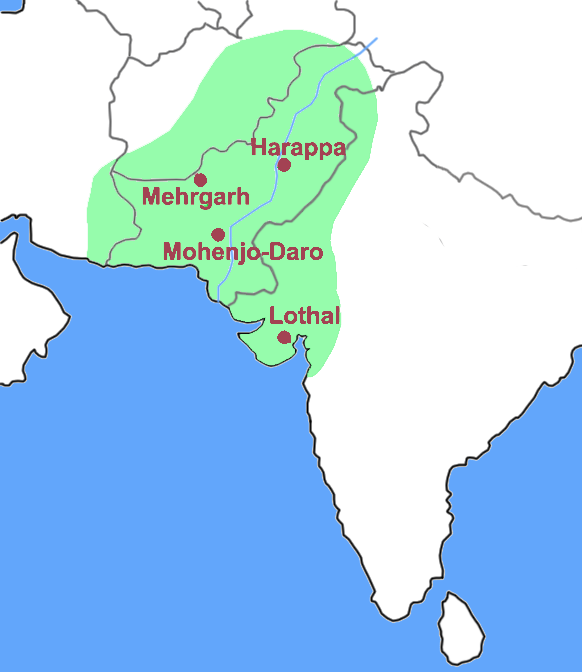
The Indus Valley Civilization (IVC) was a Bronze Age civilization (3300–1300 BCE; mature period 2600–1900 BCE) that was located in the northwestern region of the Indian subcontinent, consisting of what is now mainly present-day Pakistan and northwest India. Flourishing around the Indus River basin, the civilization extended east into the Ghaggar-Hakra River valley and the upper reaches Ganges-Yamuna Doab; it extended west to the Makran coast of Balochistan, north to northeastern Afghanistan and south to Daimabad in Maharashtra. The civilization was spread over some 1,260,000 km², making it the largest ancient civilization.

The Indus Valley is one of the world's earliest urban civilizations, along with its contemporaries, Mesopotamia and Ancient Egypt. At its peak, the Indus Civilization may have had a population of well over five million. Inhabitants of the ancient Indus river valley developed new techniques in handicraft (carnelian products, seal carving) and metallurgy (copper, bronze, lead, and tin). The civilization is noted for its cities built of brick, roadside drainage system, and multistoried houses.


Religion

Some Indus valley seals show swastikas, which are found in other religions worldwide, especially in Indian religions such as Hinduism, Buddhism, and Jainism. The earliest evidence for elements of Hinduism are alleged to have been present before and during the early Harappan period. Phallic symbols interpreted as the much later Hindu Shiva lingam have been found in the Harappan remains.

Many Indus valley seals show animals. One motif shows a horned figure seated in a posture reminiscent of the Lotus position and surrounded by animals was named by early excavators Pashupati (lord of cattle), an epithet of the later Hindu gods Shiva and Rudra.

In view of the large number of figurines found in the Indus valley, some scholars believe that the Harappan people worshipped a Mother goddess symbolizing fertility, a common practice among rural Hindus even today. However, this view has been disputed by S. Clark who sees it as an inadequate explanation of the function and construction of many of the figurines.

Ram Prasad Chanda, who supervised Indus Valley Civilisation excavations, states that, “Not only the seated deities on some of the Indus seals are in Yoga posture and bear witness to the prevalence of Yoga in the Indus Valley Civilisation in that remote age, the standing deities on the seals also show Kayotsarga (a standing or sitting posture of meditation) position. The Kayotsarga posture is peculiarly Jain. It is a posture not of sitting but of standing. In the Adi Purana Book XV III, the Kayotsarga posture is described in connection with the penance of Rsabha, also known as Vrsabha.”

Christopher Key Chappel also notes some other possible links with Jainism. Seal 420, unearthed at Mohenjodaro portrays a person with 3 or possibly 4 faces. Jain iconography frequently depicts its Tirthankaras with four faces, symbolizing their presence in all four directions. This four-faced attribute is also true of many Hindu gods, important among them being Brahma, the chief creator deity. In addition, Depictions of a bull appear repeatedly in the artifacts of the Indus Valley. Lannoy, Thomas McEvilley and Padmanabh Jaini have all suggested that the abundant use of the bull image in the Indus Valley civilization indicates a link with Rsabha, whose companion animal is the bull. This seal can be interpreted in many ways, and authors such as Christopher Key Chappel and Richard Lannoy support the Jain interpretation.


Legacy (See: Iron Age India)

In the aftermath of the Indus Civilization's collapse, regional cultures emerged, to varying degrees showing the influence of the Indus Civilization. In the formerly great city of Harappa, burials have been found that correspond to a regional culture called the Cemetery H culture. At the same time, the Ochre Coloured Pottery culture expanded from Rajasthan into the Gangetic Plain. The Cemetery H culture has the earliest evidence for cremation; a practice dominant in Hinduism today.


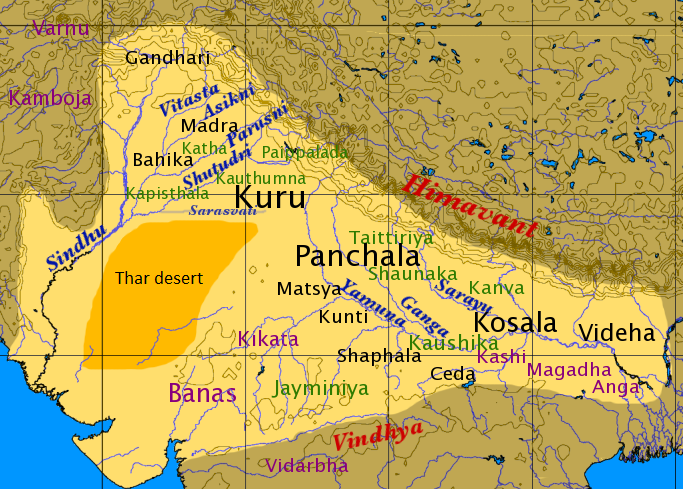
[Compare: Map of the Indus Valley Civilization and Map of the Vedic Period]


Right: "The Five Elements in Sanskrit" (see Akasha)

From Wikipedia:

Five elements

Many traditions hold a belief in the five classical elements, although they are seen as symbolic as representations of the phases of matter. These five elements are invoked during many magical rituals, notably when consecrating a magic circle. The five elements are air, fire, water and earth, plus aether (or spirit), which unites the other four.


"The five-angled star, the Vehme-Star, is the hieroglyph of 'revolving or turning generation', of "rebirth"--one of the most important articles of faith in the Aryan religion." --Guido von List; 'The Secret of the Runes'

"Briefly, then, it's main outliners (earth-based/month-birth classification system) are as follows: the assertion that all human beings are born under the direct sway of one or other of the four principal elements, i.e. Earth, Air, Fire or Water--and that all must and do live and act in accordance with the general characteristics of these essential forces. Some authorities insist upon a pre-Odinic, a pre-Norse paganism, which gave to these four elements definite personalities, and deified them severally as Ymir (Earth; pronounced "Imyer"), Kari (Air), Loki (Fire) and Hfler (Water; pronounced "Fler" or "Fleer"). Students of Norse mythology wil recognize in Ymir and Loki (Earth and Fire) two of the leading Nordic gods, these probably being descended to a later evolution of the same idea." --Margaret Baillie-Sanders (UK), 'Your Birthday Month and You', 1932

* Sumerian pentagram: "The five elements are air, fire, water and earth, plus aether (or spirit), which unites the other four." --Wikipedia

* Germanic vehme-star: "From the One (Ginnungagap) grows the Four (Muspellsheim, Adhumbla, Ymir and Niflheim) which then form the Five--the homogeneous One." --Guido von List, 'The Religion of the Aryo-Germanic Folk'


Vedic period

From Wikipedia:

The Vedic period (or Vedic age) was a period in history during which the Vedas, the oldest scriptures of Hinduism, were composed. The time span of the period is uncertain. Philological and linguistic evidence indicates that the Rigveda, the oldest of the Vedas, was composed roughly between 1700 and 1100 BCE, also referred to as the early Vedic period. The end of the period is commonly estimated to have occurred about 500 BCE, and 150 BCE has been suggested as a terminus ante quem for all Vedic Sanskrit literature.

Transmission of texts in the Vedic period was by oral tradition alone, and a literary tradition set in only in post-Vedic times. Despite the difficulties in dating the period, the Vedas can safely be assumed to be several thousands of years old. The associated culture, sometimes referred to as Vedic civilization, was probably centred early on in the northern and northwestern parts of the Indian subcontinent, but has now spread and constitutes the basis of contemporary Indian culture.

After the end of the Vedic period, the Mahajanapadas period in turn gave way to the Maurya Empire (from ca. 320 BC), the golden age of classical Sanskrit literature.

*************************

The origin of the Vedic civilization and its relation to the Indus Valley civilization, Indo-Aryan migration and Gandhara Grave culture remain controversial and politically charged in Indian society, often leading to disputes on the history of Vedic culture.

[See also: California textbook controversy over Hindu history]

It should be noted, again, that these "Aryans" were very likely ancient Mediterraneans (not Semitic, Turkic, or Mongol-influenced; all of which expanded at a much later time) who were partially descended from the Ice Age proto-Norse of a much earlier time; and whom had adopted, to a large degree, their language. Light hair and eyes were probably fairly common among them.


Historical Vedic religion

From Wikipedia:


The religion of the Vedic period (1500 BC to 500 BC) (also known as Vedism, Vedic Brahmanism, ancient Hinduism or, in a context of Indian antiquity, simply Brahmanism) is a historical predecessor of modern Hinduism.[3] Its liturgy is reflected in the mantra portion of the four Vedas, which are compiled in Sanskrit. The religious practices centered on a clergy administering rites. This mode of worship is largely unchanged today within Hinduism; however, only a small fraction of conservative Śrautins continue the tradition of oral recitation of hymns learned solely through the oral tradition.


History

 
Texts dating to the Vedic period, composed in Vedic Sanskrit, are mainly the four Vedic Samhitas, but the Brahmanas, Aranyakas and some of the older Upanishads (Bṛhadāraṇyaka, Chāndogya, Jaiminiya Upanishad Brahmana) are also placed in this period. The Vedas record the liturgy connected with the rituals and sacrifices performed by the 16 or 17 Śrauta priests and the purohitas. According to traditional views, the hymns of the Rigveda and other Vedic hymns were divinely revealed to the rishis, who were considered to be seers or "hearers" (Śruti means "what is heard") of the Veda, rather than "authors". In addition the Vedas are said to be "apaurashaya", a Sanskrit word meaning "uncreated by man" and which further reveals their eternal non-changing status.

The mode of worship was worship of the elements like fire and rivers, worship of heroic gods like Indra, chanting of hymns and performance of sacrifices. The priests performed the solemn rituals for the noblemen (Kshatriyas) and wealthy Vaishyas. People prayed for abundance of children, rain, cattle (wealth), long life and an afterlife in the heavenly world of the ancestors. This mode of worship has been preserved even today in Hinduism, which involves recitations from the Vedas by a purohita (priest), for prosperity, wealth and general well-being. However, the primacy of Vedic deities has been seconded to the deities of Puranic literature.

The Vedic period is held to have ended around 500 BC, Vedic religion gradually metamorphosizing into the various schools of Hinduism, which further evolved into Puranic Hinduism. However aspects of the historical Vedic religion survived in corners of the Indian subcontinent, such as Kerala where the Nambudiri Brahmins continue the ancient Śrauta rituals, which are considered extinct in all other parts.


[See also: Vedic priesthood]


Hindu astrology

From Wikipedia:


Hindu astrology (also known as Indian astrology, more recently Vedic astrology, also Jyotish or Jyotisha, from Sanskrit jyotiṣa, from jyótis- "light, heavenly body") is the traditional Hindu system of astronomy and astrology.

History

Jyotiṣa is one of the Vedanga, the six auxiliary disciplines used to support Vedic rituals.


Sanskrit literature

From Wikipedia:


Literature in Sanskrit begins with the Vedas, and continues with the Sanskrit Epics of Iron Age India; the golden age of Classical Sanskrit literature dates to late Antiquity (roughly the 3rd to 8th centuries AD).

.